JOURNAL OFLIBRARIANSHIPANDINFORMATIONSCIENCE, 29 (3) SEPTEMBER1997 131 Professor Judith Elkin is Dean of the Faculty of
Computing and Information Studies and Director of the Centre for Information Research and Training at the University of Central England in Birmingham. She is a member of the Library and Information Commission and its research subcommittee and has recently been involved in creating the Commission’s 2020 Vision Statement. Her research interests lie in the fields of public and school libraries, chil -dren’s and multicultural literature and equal opportunities.
Derek Law is Director of Information Services and Systems at King’s College London and has worked in a number of higher education libraries over the last 25 years. He was the UFC’s subject advisor in LIS and was a mem -ber of the Joint Information Systems Committee, chairing its Information Services Subcommittee. He is a member of the Library and Information Commission and chairs its International Subcommittee.
A d d r e s s : University of Central
England in Birmingham, Perry Barr, Birmingham B42 2SU, UK.
T e l : (0121) 331 5610. F a x : (0121) 331 6281.
E - m a i l : j u d i t h . e l k i n @ u c e . a c . u k E-mail: [email protected]
Assessment Exercise:
the Library and
Information
Management Panel
JUDITH ELKIN and DEREK LAW
Reports on the 1996 Research Assessment Exercise (RAE), the fourth such exer-cise aimed at providing funding councils of UK universities (including for-mer polytechnics) with the necessary data to rate the quality of UK academic research for predetermined units of assessment in order to fund research selec-tively. Previous RAEs were conducted in 1986, 1989, and 1992 (for a report of the 1992 RAE see JOLIS 26 (3) Sep 94, 141-7 (LISA ref. 9409765)). Reports gen-erally on the work of the Library and Information Management Panel in agree-ing criteria specific to their assessment task, particularly the five principal modes of publication: research monographs; articles in scholarly periodicals; refereed conference papers; published research reports; and book chapters. Discusses the methodology used by the Panel, research submissions received and the overall results.
The 1996 Research Assessment Exercise (RAE) has come and gone and now that the funding mechanism has been announced, departments can begin to assess the consequences of their ratings. This paper considers what was being assessed and why and the lessons to be learnt for any forthcoming exercise. There is a ten-dency to view the RAE simply in terms of publications. However the handbook listing criteria also specifically highlighted the other factors that would be taken into account: the extent of postgraduate research activity; evidence of esteem by external funders; evidence of vitality of the department and prospects for continuing development.
The 1992 Exercise caused some panellists some heartache for it specifically measured a ‘snapshot’ at a particular moment in time. The panels were forbidden to assess whether departments were on the way up or the way down or even stagnating. In 1996 however, Panels were enjoined to assess the research culture of the department/unit, its future prospects and also its likely ability to deliv-er ambitions and promises. The 1992 forward plans wdeliv-ere considdeliv-ered as part of the 1996 review and the discrepancies considered. A comparison with the 1992 Exercise is offered.
1996 RESEARCH ASSESSMENT EXERCISE
which are now within the university sector.
The 1996 RAE followed broadly the same approach as in 1992: the information supplied by HEIs provided the basis for peer review assessment of research quality by a number of specialist panels. The assessments were carried out on the basis of written submissions in a standard form which included quantitative and descriptive elements. The defi-nition of research was:
Research for the purpose of the RAE is to be understood as original investigation undertaken in order to gain knowledge and understanding. It includes work of direct relevance to the needs of commerce and industry, as well as to the public and voluntary sectors; scholarship*; the invention and generation of ideas, images, performances and artefacts including design, where these lead to new or substantially improved materials, devices, products and processes, including design and construction. It excludes routine testing and analysis of materials, components and processes, e.g. for the maintenance of national standards, as distinct from the development of new analytical techniques. (Scholarship embraces a spectrum of activities including the development of teaching material; the latter is excluded from the RAE). (HEFCE, 1994)
Although account was be taken of the full range of research, it was made clear that there would be no separate submission and assessment of basic/strategic and applied research. Panels were asked to give full recognition to work of direct relevance to the needs of commerce and industry, as well as to the public and voluntary sectors. All research, whether applied, basic or strategic, was to be given equal weight: panels were to be concerned only with the quality of the work submitted for review (HEFCE, 1995a).
The guidance notes to panellists emphasized that:
This is a peer review exercise. As members of assessment panels, you were appointed individually on the basis of your standing and experience in research, and are asked to exercise your professional judgement in assessing the research described in the submissions...You are asked to assess the quality of the research, and in particular its level of academic excellence, rather than the quantity or its relevance to particular user groups. That is not however to say that panels should give less weight to research work of immediate relevance to the needs of commerce, industry or other user groups: such work should be assessed for its quality equally with other forms of research output. The definition of research underpinning the exercise is broad and inclusive and covers the full range of academic excellence.
Following the 1992 Exercise, one Institution sought to have its rating reconsidered through the process of judicial review. Although the Funding Council won the case, its
procedures were criticized in the judgement. Prior to the 1996 Exercise, panels were therefore asked to consider, set and publish their criteria for assessment. Some attempt was made to cluster these around common formats. The guidance notes stated:
The ratings should be made in the light of the panel’s published statement of assessment criteria and on the basis of: the information in the written submission and selective reading of works listed in these; any advice the panel may seek from other panels, sub-panels or specialist advisers; information or advice requested from “assessors”; exceptionally, other information requested by the panel. Due weight should be attached to information given by departments in Forms RA5 and RA6 . Form RA5 should give a clear account of a department’s research strategy and plans for the future. Form RA6 should include any information which the submitting HEI considers significant but was not able to include elsewhere in its return, as well as the additional data requested by the panel. It will be important to take what is said in these returns into account in interpreting the evidence in the remainder of the return. This may be especially significant where a department is recently established; has recently undergone a major change in its staffing or research strategy; or includes significant numbers of staff not listing four works on RA2 in a discipline where a high output is regarded as normal. (HEFCE, 1996a)
THE LIBRARY AND INFORMATION
MANAGEMENT PANEL (UNIT OF
ASSESSMENT 61)
The Library and Information Management Panel for 1996 contained only two members of the previous panel. In 1992, media studies had been included but now had its own panel; one panellist was included to cover other areas such as business information systems, while the depart-ments of library and information studies were more strong-ly represented. The workings of the 1992 Panel and an analysis of the Library and Information Management find-ings was reported in the Journal of Librarianship and Information Science (Elkin and Law, 1994).
The first task of the panel was to agree criteria specific to this unit of assessment for agreement by the Funding Council and subsequent publication in the autumn prior to submissions being prepared. The published criteria for the Library and Information Panel attempted a definition of the area it expected to be covered by the Unit of Assessment:
management, business information studies, health information management, scientific information systems; information storage and retrieval; information policy and related areas; librarianship; library studies, archive studies and records management. (HEFCE, 1995b)
The Panel emphasized that, in assessing the quality of cited publications, it would judge the degree of impact (that is the extent to which general understanding is increased) that work had had or, in the case of recently pub-lished work, was likely to have, in the discipline or profess-ional practice, on a natprofess-ional or internatprofess-ional level. Evidence of submissions was to be based primarily on the quality of research as evidenced in the publications (RA2). However the following measures would also be taken into consid-eration:
a. Extent of postgraduate research activity, as indicat-ed by the number of research students and research studentships (RA3a and RA3b).
b. Evidence of esteem by external funders, as indicated by research income (RA4).
c. Evidence of vitality of the department and prospects for continuing development (RA5 and RA6).
The five principal modes of publication to which the Panel expected to attach most importance were:
1. Research monographs 2. Articles in scholarly journals 3. Refereed conference papers
4. Published research reports (giving less weight to in-house publications)
5. Chapters in books.
The Panel announced that it intended to read widely from the full range of works cited, with the greatest weight attached to articles published in scholarly journals with a rigorous editorial and refereeing standard for all works cited. It agreed to give equal weighting to electronic or other media. The Panel emphasised that it would look for evi-dence of a research culture and the impact of research on practice and the research culture of the unit on the discipline. It expected to see evidence of this research culture detailed in RA5 and RA6. Well-defined objectives would be viewed as more impressive than descriptions of intent.
The final range of submissions received some months later was interesting. As well as the traditional LIS depart-ments and research centres based around library and infor-mation services (De Montfort, Bath and University of Central Lancashire), three information systems depart-ments chose to submit to the panel. Within submissions from previously submitting institutions, the growth of health information was very noticeable. In addition a large number of submissions (16) were referred and reviewed for the Computing Panel and the Business Studies Panel, while
a few archive related submissions came from the History Panel. The Library and Information Management panel passed parts of five submissions to another panel for advice - Celtic Studies.
INITIAL CONSIDERATIONS OF LIM
PANEL
The 1996 RAE was different from the 1992 exercise because panels were urged to take into account the culture of the submitting departments, taking a retrospective and prospec-tive view as well as the ‘snapshot’ offered by the publica-tions. There was no summary counting of publications per research active staff submitted, but four rather than two cita-tions per individual were allowed and indeed encouraged, indicating a clear concern for quality rather than quantity. Another difference was that criteria specific to the indi-vidual panels had been published in advance.
There were, however, still a range of general issues which needed to be agreed by the whole panel at an early meeting, once the scope of the submissions was known and before extensive reading began, particularly in the light of the independence given to panels to reflect the nature of specific disciplines but also in response to guidance notes to panels emanating from the funding councils’ joint RAE manage-ment. At an early meeting there was general exploration of the precise interpretation to be put on the weighting to be given to the management/evaluation/monitoring of the research process within institutions; whether there should be a maximum rating for a submission with no research stu-dents or no stustu-dents at all; no research income or little research income; a single person submission? What was to be the balance in terms of the exercise taking a snapshot , a retrospective or prospective view of the submitting depart-ment? How much weight was to be given to cited publica-tions; how much to the narrative? How did the panel manage what was clearly not a level playing field to start with: departments that had done well in the past but appeared to have stagnated or declined, compared with departments with plans/strategies clearly in place with integration of teaching/research students, with clear man-agement of student research and methodology and depart-ments that were relatively new but clearly moving forward? What about departments new to the RAE, e.g. UCE, Bath College of HE; Thames Valley University, Queen Margaret College which did not submit in 1992 or Liverpool John Moores which received no funding in 1992?
The range of submitting institutions was interesting and broke down into:
- very focused research departments with postgraduate students only e.g. Sheffield, City;
- departments with a wide spectrum of research, usually the departments with both undergraduate and postgraduate students e.g. Loughborough, UCE, Aberystwyth, Newcastle, Manchester;
- specialist Research Centres with no academic department and few or no research students e.g. De Montfort, Bath, Central Lancashire;
- research focused on libraries/learning centres with no research students, e.g. Bath College;
- information systems departments or clusters, e.g. Salford, University of the West of England, La Sainte College.
It was agreed that an over-riding factor in any rating would be based on a balanced view of the whole submis-sion, with RA5 and RA6 viewed as measures for the esteem in which a department was held, but also as a gauge of its research culture. Whilst it would depend on the way in which individual submissions were worded, credit would be given to departments where there was evidence of a research strategy, a managed approach and the integra-tion of resources, including research students. It was noted that some submissions implied management of research at an institutional level, but there was little evidence that this pervaded individual departments. It was agreed that in general it was considered a weakness, although the panel recognised that output measures should be balanced against this. A lack of research income would also be counted neg-atively in a submission unless well explained. The panel was however very aware that there was a range of possible attainment within the discipline, and that panel members should be conscious of what was achievable in the various areas covered.
METHODOLOGY ADOPTED BY LIM
PANEL
The panel followed the 1992 practice of ensuring that all sub-missions were looked at in great detail, by at least two panel members who attempted to read all the publications cited. The word ‘attempted’ is used deliberately. The abil-ity of institutions to supply listed items was patchy, some existed only as lecture overheads or manuscripts, some turned out to be unavailable private research reports and, generally speaking, the standard of bibliographic citation reflected badly on the unit of assessment from whom per-fection in citation might reasonably have been expected. All panel members were expected to be familiar with all sub-missions in general terms, particularly the narrative ele-ments in RA5 and RA6, which took on a much greater significance than in 1992.
Several panel meetings were held to discuss submis-sions. A first pass through them with very detailed dis-cussion produced both a rough hierarchy of institutions (perhaps more accurately a series of clumps of institutions) and a series of questions which were answered over the summer while further reading took place. The amount of reading that all panel members undertook was considerable and the great majority of cited publications, where available,
was read at least once. Immediately after the summer a fur-ther two day meeting was held at which the precise band-ing and final ratband-ing was established. There was a great deal of debate and detailed discussion but remarkable una-nimity over the final ratings, with only one or two excep-tions. As with all such exercises many of the ratings seem very straightforward while a small number on the margin of two grades consume a great deal of time. It is perhaps worth noting that the criteria were converted into a check-list and the panel secretary (a member of the Funding Council’s staff) carried out a formal process to confirm that each criterion was assessed for each submission.
The panel was initially chosen for a breadth of both institutional knowledge and a range of sub-disciplines of the subject. As a result almost no material was referred to other panels for comment, Celtic being the most obvious excep-tion. That said, the quality of the submission was important and, predictably, some were very good and some were very bad. The panellists migh have been forgiven for won-dering whether this reflected either the quality controls in the institutions or the understanding of the process. In the end, the view the panel took of research culture was prob-ably the critical criterion.
SUBMISSIONS TO THE LIM PANEL
Twenty four submissions were made to the Panel (one was later withdrawn). Of these three could be seen as Information Systems submissions (Salford, West of England and La Sainte), the others from the more recognized Library and Information Science field, either Departments and School of LIS or research centres allied to information services; 214.2 (FTE) research active staff were returned, compared with 123.8 in 1992. The information systems submissions account-ed for 20.8 of these; the rest were made up of submissions from LIS departments not submitting in 1992, e.g.UCE (18); Queen Margaret College (7) and a steady increase in all other submissions, apart from Loughborough which showed a drop from 16.5 to 14.8 (largely justified by excluding aca-demics currently undertaking PhDs). Significant increases in numbers of returned research active staff were seen from De Montfort, with 13.0 as opposed to 2.0 in 1992; Manchester Metropolitan, with a rise from 5.0 to 10.2; University of Northumbria at Newcastle, with a rise from 6.0 to 12.0 and Robert Gordon’s, with a rise from 10.8 to 14.0. This shows the significant increase in research active staff to be within the new university sector, with only slight increases amongst the old universities, with City showing the highest rise, from 7.7 to 10.0, followed by Sheffield from 11.0 to 12.5 (see Annex Two). Presumably, some of the increase in the new univer-sities reflects the fact that they had had funding for research for the first time, post 1992.
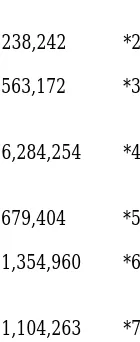
slightly differently and the figures were not broken down within individual submissions. However it does show a con-siderable increase in the UK government as a source of research income (£6 284 254 from £2 290 494). Is this as a result of Follett and the Electronic Libraries (eLib) pro-gramme or other underlying trends, particularly the increase in health information and funding from the health author-ities? The figures also show that European funding has remained static, at around £1 350 000; funding from the char-ities has significantly increased (£563 172 from £182 907), but money from industry has declined (from £761 338 in 1992 to £679 404 in 1996). The latter may be a false trend, how-ever, as Teaching Companies schemes were returned under “other” which accounted for £1 042 263 and may have skewed the figures.
The research income figures do not show the vast range amongst individual departments, with two institutions having nil returns and the highest total research income for one department over the four year period being £3 361 818.
The total number of research assistants returned was 75.55 (FTE) in 17 institutions, ranging from 11.98 to 0.10, with six institutions with nil returns. The number of research students supervised was 209.13 (FTE) in 20 institutions, with three institutions showing a nil return.
The final publication of ratings belies the considerable discussion and debate on all submissions, in the light of the published criteria. Below are gathered some of the unat-tributable (to individuals or institutions) comments which might indicate some problem areas faced by the panel and evident in final ratings.
Submissions in 1996 were returned on software provid-ed by the funding councils, so a common format and pre-sentation removed some of the enormous variety in quality of presentation seen in 1992. Submissions were, however, still enormously variable in terms of accuracy of citation (abysmal in some cases), spelling, use of acronyms, citation in the narrative (RA5 and RA6) and ability to demonstrate any research culture or management thereof. This includ-ed a certain arrogance or overconfidence in some submis-sions, demonstrating complacency and apparent unpreparedness to expose a research culture, research plans or where the department was going. Some submissions appeared not to have referred to the published criteria or the guidance for submissions at all.
In terms of cited publications, it was unclear why some “research active” staff had not been able to cite four publi-cations in the designated six year period (Library and Information Management was included in the humanities disciplines for the purpose of the exercise, thus six rather than four years was allowed). The expectation was that where departments returned as research active any signif-icant number of staff with no discernible output and no con-vincing explanation for this, it would be reflected in the overall rating awarded, as indicating a lack of depth in a department. Particular care was taken to identify new
researchers with a limited set of publications, for that rea-son. But did departments with established staff who appeared to have published little since 1993/4 e.g. 2/3 publications pre 1994 really expect high ratings in a fast-moving discipline?
Scholarly works, including ‘think pieces’ were considered to be useful research where they were felt to have furthered understanding within the field or where they had opened up new themes or provided background to new areas of research. A small number of http addresses were included, although there was rather less citing of electronic publica-tions than might have been expected in this discipline.
In reaching decisions, the whole range of criteria was used:
- range of publications in refereed journals, etc.;
- level of research income (depending to a certain extent on the profile of the department, e.g. certain sub-areas likely to be less income-generating than others);
- reasonable number of research students and completed PhDs plus a rounded narrative, which demonstrated a clear research ethos and management and support of the whole research process.
Preference was given to submissions with clearly stated future research plans which demonstrated substantial progress since 1992, ideally in line with the 1992 research plans, unless otherwise stated and explained, and with quality esteem indicators consistent with the narrative.
In debate, the most used descriptions of the highest rated departments were coherence, clear leadership, strong development paths, strong research culture, demonstrating a clear strategy of maintaining existing strengths, with research well managed locally, both at Faculty and University levels and with a commitment to research devel-opment. It was interesting to note the importance given to the integration of teaching and research within submis-sions. The top rated and middle-rated departments all strongly supported the close integration of research and teaching and the synergy that was possible within a strong research culture.
Some of the middle-ranking submissions showed con-siderable improvement since 1992, with research expand-ed, focused and maturexpand-ed, perhaps with an enhanced depth of research. Where management of research was consistent and cohesive, with well planned monitoring and reasonable objectives, this was acknowledged in the final rating.
Comments on some of the lower rated submissions were more likely to be: unfocussed, unconvincing, confused, repetitive, lack of cohesion, vision, leadership, little evi-dence of any development since 1992, narrative over-egged and not supported by evidence from published works, lit-tle evidence of research management/ evaluation/moni-toring, confusing, acronym-laden, unfathomable: ‘cross
between Playschool and regional railway timetable - lacks
cohesion, coherence, management.’ Other areas deemed
as overall negative influences on the final rating were a heavy concentration on training, seminars, papers pre-sented (but not subsequently published), reviews, abstracts, editorials, open and distance learning materials and OHPs, with no indication of research content, sweeping general-izations and claims unsubstantiated by evidence.
In several submissions, the final assessment reflected the view that the submission was largely based on infor-mation and development activities within the institution and for the benefit of the institution, with the international or national impact being largely in the practice arena, rather than research. Where developmental aspects outweighed research elements and the latter had not been exploited and there were no plans to do so, the final rating was inevitably relatively low. Systems and services were not deemed to be research when simply described, but it was felt that research could be undertaken in the intellectual process of developing and informing the effect of a system or process on, for example, the audience.
Given a general increase in volume measures, it became clear that departments had to have moved ahead simply to achieve a similar rating. Discussion after the results were announced suggested that at least some departments had unrealistic ambitions on how much they could achieve in such a short period of time.
One problem area which institutions should beware of in the next exercise and one which may be penalized by HEFCs, was the plethora of joint citations and multi-author-ing. This was viewed as acceptable, where not duplicated for each individual author and probably to be encouraged in some circumstances, such as working with research stu-dents but had a negative influence where, for example, six authors cited a three page journal article in a moderately rated journal or four ‘research active’ staff all returned one short conference paper (unpublished). There is clearly a line to be drawn between collborative research, which the fund-ing councils wish to encourage, and mere repetition to meet volume levels of citation.
Credence was given to institutions which had undergone considerable change between 1992 and 1996, but, where core research groups could demonstrate resilience, despite con-siderable staff or structural changes, this was taken to demonstrate the presence of a robust research culture which could survive adversity.
Undoubtedly, some institutions did not play to their potential strengths, although the Exercise, particularly with the published guidance and criteria and extended narrative element, gave every opportunity for individual submis-sions to exploit such strengths, individuality and potential. The need to balance inputs and outputs was felt to be a sig-nificant part of the research management process. But in some cases, it was difficult to see what had been done with a very high research income; in others there was little evi-dence of outputs, despite the apparent inputs.
Similarly, the panel membership was well and widely known. It was therefore surprising in such a small world as LIS to find submissions which may charitably be described as over-gilding the lily. Some naievity was required to sup-pose that the panel with its wide experience would fail to notice this or have a clear view of the relative value of var-ious professional activities and committee memberships of various organizations or other measures of esteem.
In an effort to help the objectivity of the exercise, fund-ing decisions were quite deliberately not considered by HEFCs until the ratings were known. Subsequent com-ment and correspondence in the press suggests that the prior decision by SHEFC to announce that it would not fund Grade 2s, may have influenced decisions in some panels, while some panel chairs, at least, would have con-sidered the distinction between 5 and 5* ratings more closely had differential funding been anticipated. Earlier guidance to panel chairs had suggested that starring grade 5 was intended to maintain rather than increase selectivi-ty. There appears to be an emerging feeling as a result of the exercise that, in future exercises, 5 and possibly 4 rat-ings should only be possible on category A submissions, i.e. 95-100% staff submitted as ‘research active’. A lower return than that would be deemed not to demonstrate research culture in any depth. Certainly such issues have been dis-cussed, for example at CVCP.
RATINGS FOR LIM
The final ratings are given as Annexe 2, which also shows the result from the 1992 Exercise and the number of full time equivalent (FTE) ‘research active’ staff returned in indi-vidual submissions for 1992 and 1996. The tables for research funding by subject area shows that Library and Information Management achieves funding for 1997/98 of £1.3 million, 1.3% change by comparison with 1996/97 and 45% difference in volume of eligible research staff by com-parison with 1996/97 (submissions rated 1 or 2 in the 1996 RAE omitted) (THES 28 February 1997).
RESULTS OVERALL
The 1996 RAE revealed more and better research. 192 uni-versities and colleges sent 2896 RAE submissions to the Higher Education Funding Council for England, compared with 2700 submissions from 172 institutions in 1992. The number of active researchers whose work was assessed rose by 5000 to just over 55 000, with the greatest rise in the new universities, where they rose by 45% compared with 5% in the old universities. Bahram Bekhradnia, HEFCE Head of Policy, said:
would not figure in research funding if we were to restrict ourselves to research universities. (THES, December 20, 1996, p.1)
The leader in the same issue underlines this point:
It is, as it should be, possible to establish excellent research teams anywhere two or three are gathered together. This would be unlikely if we were to adopt a rigid hierarchy with designated research universities. (THES, December 20, 1996, p.11)
It goes on to question whether the overall rise in both level of research activity and quality of research is due to general grade drift rather than genuine improvement or even academics’ skills at ‘mastering whatever game is in town’ or that ‘the great research game has got more people out of bed earlier and in front of their word processors.’ It acknowledges that the ‘research output from British uni-versities has increased and its quality has probably not diminished, despite the temptation to salami-slice find-ings, recycle articles into books…and ride piggyback on research students.’
GENERAL REACTIONS TO THE EXERCISE
The general response to the Exercise was that it had been well received and the assessment process appeared to com-mand general acceptance within the research community as being fair, well-informed and extremely thorough.
The 1997/1998 allocations of funding announced on 28th February 1997, introduced measures to promote sta-bility in 1997/1998 and support the top research in the long term, by phasing in research allocations resulting from the 1996 Research Assessment Exercise (T H E S, February 28, 1996, p.10). The top-graded departments have been funded at a 20% premium. The system for sharing out research cash to universities was a radically more selective system than that used in 1992, with 5* departments ing a Q value of 4.05 (compared with 4 in 1992); 5s attract-ing a Q value of 3.375 (4 in 1992); 4s a Q value of 2.4 (3 in 1992); 3a a Q value of 1.5 (2 in 1992); 3b a Q value of 1 (2 in 1992); 2 a Q value of 0 (1 in 1992) (THES January 24, 1997, p.1). This announcement was accompanied by the headline: ‘Research formula will reward elite’ highlighting the fact that these values will widen the funding gap between top-performing and lower-ranking university departments, with the ratio between grade 3s and the top grade now dou-ble what it was in 1992. Even so, all higher ratings, apart from the 5* lose ground against the previous exercise.
Money distributed on the basis of the RAE results will account for around 97% of the total research funding pot. Of the £704 million earmarked for research in 1997/98, £684 mil-lion will be distributed according to QR, assessed by grades from the RAE, the number of eligible research staff and the weighting given to different subjects according to their cost
band. This shows an underlying increase of 6% in the allo-cation to quality research.
Despite the large sums involved, there is still consider-able concern, as indicated in the leader in the T H E S ( 2 1 . 2 . 9 7 ) , commenting on British government spending on science, Gearing up for a rich research base, warns that:
...without a new major new source of money, things are going to become increasingly grim...getting new money means forging new relationships and ways of working, especially with the private sector... The research assessment exercise provides a basis for funders’ judgements about where to put their money, which in many cases will buttress the personal judgements they make already. This makes it harder for low-rated departments to appeal to corporate backers while a minority become more attractive. The departments that appeal to industry are likely to be the ones that have already appealed successfully to the research councils. For Britain as a home for science-based industry this may be the best outcome, but it is ominous for the
departments outside the charmed circle.
CONCLUDING REMARKS
One other issue remained (at least for the chairman of the LIM panel) irritatingly unresolved from 1992; the propriety of, or ability of, part-time researchers who work in libraries to be submitted for assessment. The Panel asked for a num-ber of staff returns to be audited. Some staff were revised from Category A to Category C staff, others, quite proper-ly within the rules, were not: a variety of contractual con-ditions and institutional practice means that some staff are submitted and others not. The whole issue of Category C staff and practitioner research is very unsatisfactorily addressed by the exercise. The position of Category C staff also caused concern to other panels, with an apparent pro-liferation of people with a more or less loose connection to the research process, like visiting professors, emeritus pro-fessors, etc.
It is probably correct to see the growth of health infor-mation, information systems and the number of referrals from the Computing Panel as a broadening of the infor-mation management base rather than a series of tactical sub-missions - but when a discipline becomes pervasive it also becomes diffuse. A small number of returns submitted staff from cognate departments or related disciplines. There are some issues to do with the integrity and coherence of LIS as a discipline which the LIS schools and the profession needs to address more aggressively before the next assess-ment exercise.
Perhaps one last thought. Where departments had made significant improvement it tended to be those who had acted decisively after the last RAE thus allowing change to become embedded before submissions were made. If the next RAE is conducted in the same way we are already one
year into the process and departments need to consider very carefully but very quickly how to shape their strategies for next time - and informed opinion suggests there will be a next time!
June 1997
REFERENCES
Elkin, J. and Law, D. (1994) Research assessment exercise 1992; Library and Information Management and Communications and Media Studies Panel. J o u r n a l of Librarianship and Information Science, 2 6 , ( 3 ), September 1994
HEFCE (1994) Circular 1/94: 1996 Research Assessment Exercise. HEFCE, SHEFC, HEFCW, DENI, June 1994 HEFCE (1995a) RAE 2/95: 1996 Research assessment exercise: guidance on submissions. HEFCE, SHEFC, HEFCW, DENI
HEFCE (1995b) RAE 96 3/95: 1996 Research assessment exer -cise: criteria for assessment. HEFCE, SHEFC, HEFCW, DENI, November 1995
HEFCE (1996a) Guidance 1996/1: Guidance to panel chairs and members: conduct of the assessment phase. HEFCE, SHEFC, HEFCW, DENI, 3 May 1996
HEFCE (1996b)) Circular 1/96: 1996 Research assessment exer -cise: the outcome. HEFCE, SHEFC, HEFCW, DENI, December 1996
Research formula will reward elite The Times Higher Education Supplement, January 24, 1997, p.1
ANNEX ONE. THE RATING SCALE
New Assessment New Description Old Description Old Assessment
Rating Points Rating Points
5* Research quality that equates
to attainable levels of international excellence in a majority of sub-areas of activity and attainable levels of national
excellence in all others
5 Research quality that Research quality that 5
equates to attainable levels equates to attainable levels of international excellence of international excellence in some sub-areas of in some sub-areas of activity and to attainable activity and to attainable levels of national excellence levels of national excellence in virtually all others in virtually all others
4 Research quality that Research quality that equates 4
equates to attainable levels to attainable levels of national of national excellence in excellence in virtually all sub-virtually all sub-areas of areas of activity, possibly activity, possibly showing showing some evidence of some evidence of international international excellence or to excellence or to international or to international level in level in some and at least national some and at least national level in a majority. level in a majority.
3a Research quality that equates Research quality that equates to 3
to attainable levels of national attainable levels of national excellence in a substantial excellence in a majority of the substantial majority of the sub-areas of activity, or to sub-areas of activity, or to international level in some. international level in some
and to national level in others together comprising a majority.
3b Research quality that equates Research quality that equates 3
to attainable levels of national to attainable levels of national excellence in the majority of sub- excellence in a majority of the the majority of sub-areas of activity sub-areas of activity, or to
of activity. international level in some.
2 Research quality that equates Research quality that equates to 2
to attainable levels of national attainable levels of national excellence in up to half the excellence in up to half the
sub-areas. sub-areas of activity.
1 Research quality that equates to Research quality that equates to 1
attainable levels of national attainable levels of national excellence in none, or virtually excellence in none, or virtually none, of the sub-areas of activity. none, of the sub-areas of activity.
(HEFC, 1994)
ANNEX TWO. THE OUTCOME: UNIT OF ASSESSMENT 61:
LIBRARY AND INFORMATION MANAGEMENT
Proportion Category A
1996 1992 of staff Research active
Institution Rating Rating selected staff (FTE) % selected
1996 (1992)
University of Bath 2 3 A 5.4 (4.3) 100
Bath College of HE 1 - E 1.0 ( - ) 25
University of Brighton 3b 3 C 7.0 (6.0) 73.68
University of Central England 3b - A 18.0 ( - ) 100
in Birmingham
University of Central Lancashire 2 2 A 5.0 (3.0) 100
City University 5* 5 A 10.0 (7.7) 100
De Montfort University 3b 3 C 13.0 (2.0) 68.42
La Sainte Union College of HE 1 - A 2.0 ( - ) 100
Leeds Metropolitan University 2 - E 5.0 ( - ) 33.33
Liverpool John Moores 2 1 E 8.4 (5.0) 28.57
University
Loughborough University 5 4 C 14.8 (16.5) 76.68
Manchester Metropolitan 3b 2 C 10.2 (5.0) 62.20
University
University of Northumbria 3a 2 C 12.0 (6.0) 63.16
at Newcastle
University of Salford 4 2 A 8.8 ( - ) 100
University of Sheffield 5* 5 A 12.5 (11.0) 100
Thames Valley University 1 1 E 3.0 (3.0) 33.33
University College London 2 2 B 8.6 (8.2) 88.66
University of West of England, 3b 2 C 10.0 ( - ) 71.45
Bristol
Queen Margaret College 3b - B 7.0 ( - ) 87.50
Robert Gordon University 3a 2 B 14.0 (10.8) 91.80
University of Strathclyde 4 4 A 7.0 (7.0) 100
University of Wales, 3b 4 B 21.5 (19.3) 92.31
Aberystwyth
The Queens University of Belfast 3a 2 A 10.0 (9.0) 100
Weighted average: 3.735 Total: 214.2 123.8
(A = 95-100% B = 80-94% C = 60-79% D = 40-59%
Table 1. Research income in LIM
1992-1996 1992 Exercise
Total 10,162,295 *1
Sources of grants
OST Research Councils 238,242 *2 53,240
UK based Charities 563,172 *3 182,907
UK Central Government Bodies/
Local, Health and Hospital Authorities 6,284,254 *4 2,290,494
UK Industry, Commerce and Public
Corporations 679,404 *5 761,338
EU Government bodies 1,354,960 *6 1,340.335*
EU other/other overseas, including
Teaching Company Schemes 1,104,263 *7
*EC and overseas
*1 = 2 institutions returning nil income *2 = 3 institutions only
*3 = 8 institutions only *4 = 20 institutions only *5 = 14 institutions only *6 = 14 institutions only *7 = 11 institutions only
ANNEX THREE
Members of the Panel
Derek Law (Chair), Kings College, London
Professor Judith Elkin (Vice chair), University of Central England in Birmingham Professor John Feather, Loughborough University
Professor Bob Galliers, Warwick University
Professor Colin Harris, Manchester Metropolitan University Professor Stephen Robertson, City University
Professor Tom Wilson, University of Sheffield Clair Murphy (secretary)