keV electron flux models for geostationary orbit.
White Rose Research Online URL for this paper: http://eprints.whiterose.ac.uk/146498/
Version: Accepted Version
Article:
Boynton, R.J. orcid.org/0000-0003-3473-5403, Amariutei, O.A., Shprits, Y.Y. orcid.org/0000-0002-9625-0834 et al. (1 more author) (2019) The system science
development of local time dependent 40 keV electron flux models for geostationary orbit. Space Weather. ISSN 1542-7390
https://doi.org/10.1029/2018sw002128
This is the peer reviewed version of the following article: Boynton, R. J., Amariutei, O. A., Shprits, Y. Y., & Balikhin, M. A. ( 2019). The system science development of local time dependent 40 keV electron flux models for geostationary orbit. Space Weather, which has been published in final form at https://doi.org/10.1029/2018SW002128. This article may be used for non-commercial purposes in accordance with Wiley Terms and Conditions for Use of Self-Archived Versions.
Reuse
Items deposited in White Rose Research Online are protected by copyright, with all rights reserved unless indicated otherwise. They may be downloaded and/or printed for private study, or other acts as permitted by national copyright laws. The publisher or other rights holders may allow further reproduction and re-use of the full text version. This is indicated by the licence information on the White Rose Research Online record for the item.
Takedown
If you consider content in White Rose Research Online to be in breach of UK law, please notify us by
The system science development of local time
1dependent 40 keV electron flux models for
2geostationary orbit
3R. J. Boynton,1 O. A. Amariutei,2 Y. Y. Shprits,3,4 M. A. Balikhin,1
R. J. Boynton, Department of Automatic Control and Systems Engineering, University of
Sheffield, Mappin Street, Sheffield S1 3JD, UK. ([email protected])
Abstract. At Geosynchronous Earth Orbit (GEO), the radiation belt/ring
4
current electron fluxes with energies up to several hundred keV, can vary widely
5
in Magnetic Local Time (MLT). This study aims to develop Nonlinear
Au-6
toRegressive eXogenous (NARX) models using system science techniques,
7
which account for the spatial variation in MLT. This is difficult for system
8
science techniques, since there is sparse data availability of the electron fluxes
9
at different MLT. To solve this problem the data are binned from GOES 13,
10
14, and 15 by MLT, and a separate NARX model is deduced for each bin
11
using solar wind variables as the inputs to the model. These models are then
12
Systems Engineering, University of
Sheffield, Sheffield S1 3JD, United
Kingdom.
2Department of Material Science and
Engineering, University of Sheffield,
Sheffield S1 3JD, United Kingdom.
3Helmholtz Centre Potsdam, GFZ
German Research Centre for Geosciences,
Potsdam, 14473, Germany.
4Department of Earth, Planetary, and
Space Sciences, University of California, Los
conjugated into one spatiotemporal forecast. The model performance
statis-13
tics for each model varies in MLT with a Prediction Efficiency (PE) between
14
47% and 75% and a correlation coefficient (CC) between 51.3% and 78.9%
15
for the period from 1 March 2013 to 31 December 2017.
1. Introduction
The radiation belt/ring current electrons with energies from tens of keV to several MeV
17
can pose a serious threat to the satellites that our society is becoming increasingly reliant
18
[Horne et al., 2013a]. Therefore, models that are able to forecast the periods when the
19
radiation belts or ring current electrons will be hazardous to these spacecraft are highly
20
valuable to the satellite operators. Increases in the number of these electrons can lead
21
to various problems on the satellite. High energy electrons, typically above 1 MeV, can
22
cause deep dielectric charging, which can irrevocably damage the electronic components
23
onboard the satellite [Baker et al., 1987; Wrenn et al., 2002; Gubby and Evans, 2002;
24
Lohmeyer and Cahoy, 2013; Lohmeyer et al., 2015]. 1 keV to 100 keV energy electrons
25
can also be problematic to satellite operators, as they can contribute to surface charging,
26
particularly at ∼ 10 keV, which interferes with the satellite electronic systems [Olsen,
27
1983; Mullen et al., 1986; O’Brien and Lemon, 2007; Thomsen et al., 2013; Ferguson,
28
2018; Sarno-Smith et al., 2016]. This can potentially turn off vital systems onboard the
29
spacecraft, which may be the cause of the anomaly on the Galaxy 15 spacecraft when it
30
stopped responding to any ground commands [Loto’aniu et al., Aug. 2015].
31
The dynamics of the radiation belts are known to be due to a balance between transport,
32
acceleration and loss processes. The solar wind is known to drive the acceleration through
33
wave-particle interactions and radial diffusion [Friedel et al., 2002], while magnetopause
34
shadowing [Kim and Chan, 1997; Bortnik et al., 2006; Turner et al., 2012] and
precipita-35
tion through wave particle interaction [Bailey, 1968; Bortnik et al., 2006] lead to the loss
36
of these energetic electrons. However, the radiation belt models based on first principles
struggle to provide accurate forecasts of the radiation belt electron fluxes [Horne et al.,
38
2013b].
39
An alternative approach to first principles based forecast models is the system
identi-40
fication or machine learning approach, where the models are automatically derived from
41
input-output data by computer algorithms. These algorithms include linear prediction
42
filters [Baker et al., 1990; Rigler et al., 2004], dynamic linear models [Osthus et al.,
43
2014], neural networks [Koons and Gorney, 1991;Freeman et al., 1998;Ling et al., 2010],
44
and Nonlinear AutoRegressive Moving Average with eXogenous inputs (NARMAX) [Wei
45
et al., 2011; Boynton et al., 2013a, 2015]. Neural networks and NARMAX methodologies
46
are more suited to modelling the radiation belts, as the system is nonlinear with respect
47
to the solar wind input. Linear prediction filters and dynamic linear models are only
48
suitable for linear systems or local linearities within a nonlinear system. NARMAX and
49
neural networks have both been shown to provide accurate models for geospace systems
50
[Freeman et al., 1998; Boynton et al., 2011a, 2015], however, the advantages that
NAR-51
MAX methodologies have over neural networks are that it is physically interpretable and
52
less prone to overfitting. This study uses the NARMAX methodology to model the 40
53
keV electron fluxes observed by the Geostationary Operational Environmental Satellites
54
(GOES), situated in Geostationary Earth Orbit (GEO).
55
The > 2 MeV electrons at Geostationary Earth Orbit (GEO) have been modelled
56
using NARMAX, which results in a high forecast accuracy and a forecast horizon of
57
one day [Boynton et al., 2015]. Balikhin et al. [2016] showed that the NARMAX model
58
provides forecasts superior to the one provided by the National Oceanic and Atmospheric
59
Administration (NOAA), which employs the model by Baker et al.[1990]. Higher energy
electrons take time to be accelerated after responding to the solar wind variations [Li
61
et al., 2005; Balikhin et al., 2012; Boynton et al., 2013b]. This means that it is possible
62
to forecast the dynamics of the high energy electrons further into the future than the
63
lower energies. Boynton et al. [2016a] developed NARMAX models for the electron flux
64
energy ranges observed by the third generation GOES (40 keV, 75 keV, 150 keV, 275 keV,
65
475 keV, > 800 keV and > 2 MeV ). The developed models predict the daily averaged
66
electron fluxes and were shown to provide an accurate forecast. Although the models
67
provide a good forecast of the average conditions over a day in time and an orbit in
68
space, they will be unable to forecast any spatial variations over the orbit. For the high
69
energies, the electron fluxes are uniform in Magnetic Local Time (MLT) along the same
70
drift shells. Due to the distorted dipole, the electron fluxes measured by GOES will
71
vary in MLT as GEO does not follow drift shells or stay fixed at constant geomagnetic
72
latitudes. The tens to hundreds of keV electrons that populate the ring current, provide
73
the seed population of the radiation belts, and also drive the whistler mode chorus waves,
74
which lead to both the acceleration of the energetic electrons and loss by precipitation.
75
The injections of the tens to hundreds of keV electrons cause a fast localized electron
76
flux variation on shorter time scales (less than 24 hours), which theBoynton et al.[2016a]
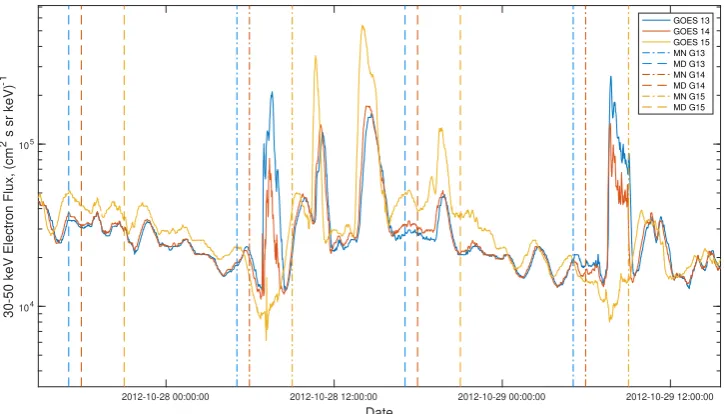
77
models would average out. The Inner Magnetosphere Particle Transport and Acceleration
78
Model (IMPTAM) [Ganushkina et al., 2013, 2014, 2015] can provided a nowcast of the
79
short time scale variations using current values of geomagnetic indices [Ganushkina et al.,
80
2015]. An empirical model of the 1 eV to 40 keV has been developed by [Denton et al.,
81
2016] as a function of local time, energy, and the strength of the solar wind electric field.
The aim of this study is to develop a reliable model that is able to forecast the short
83
spatiotemporal variations of the 40 keV electron fluxes. The NARMAX methodology used
84
to deduce the models is described in detail in Section 2, while the instrumentation and
85
data are discussed in Section 3. In Section 4.1, the data are truncated every 1 hour MLT
86
and 24 models are developed at each MLT. The performance and details of the models
87
are discussed in Section 5 and the conclusions from this study are presented in Section 6.
88
2. NARMAX methodology
NARMAX is a system identification methodology [Leontaritis and Billings, 1985a, b]
89
and was initially developed in the field of system science. In control theory, an
applica-90
tion of system science, a mathematical model of the system is needed in order to build a
91
robust controller. However, with complex engineering systems, the derivation of such a
92
mathematical model from first principles often leads to assumption which are not valid
93
and, hence, a poor controller. System identification aims to automatically derive a
math-94
ematical model that governs the system’s dynamics from input-output data. NARMAX
95
is able to deduce models for a wide range of nonlinear systems and was originally applied
96
to complex engineering systems [Billings, 2013]. The potential of the methodology to
97
develop nonlinear models from data has since been utilised by a diverse range of
scien-98
tific fields. It has been used in analyzing the adaptive changes in the photoreceptors of
99
Drosophila Flies [Friederich et al., 2009], modelling the tide at the Venice Lagoon [Wei
100
and Billings, 2006], the dynamics of Synthetic bioparts [Krishnanathan et al., 2012], and
101
the Belousov-Zhabotinsky chemical reaction [Zhao et al., 2007]. In geospace the method
102
was first used to model the Dst index and analyze the dynamics in the frequency domain
103
also been developed, using single inputs [Zhu et al., 2006], multiple inputs [Zhu et al.,
105
2007], and wavelets [Wei et al., 2004]. Boynton et al. [2011b] utilized the NARMAX
106
model structure detection methodology to identify a solar wind coupling function for
geo-107
magnetic storms, which was derived from first principles byBalikhin et al.[2010] and then
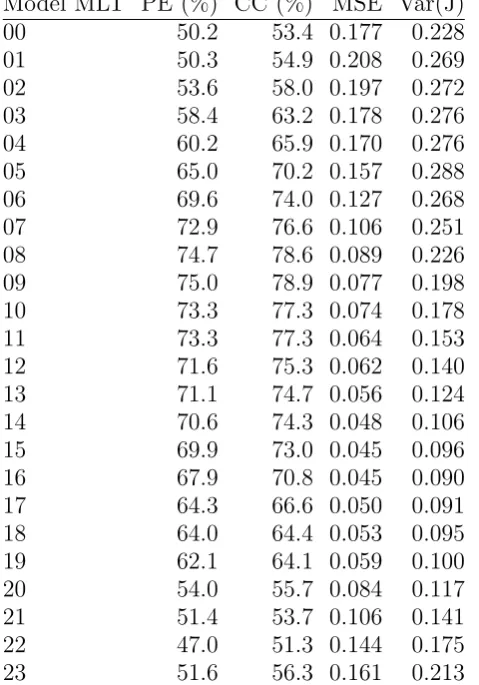
108
employed as an input to model the Dst index [Boynton et al., 2011a]. The method of using
109
the physical interpretability of the NARMAX model structure detection has since been
110
used in many other studies to identify relationships between the solar wind and various
111
aspects of the magnetosphere. Examples include studies of SYM-H index Beharrell and
112
Honary [2016], proton fluxes at GEO [Boynton et al., 2013c], the electron fluxes [Balikhin
113
et al., 2011; Boynton et al., 2013b], and electron flux dropouts at GEO [Boynton et al.,
114
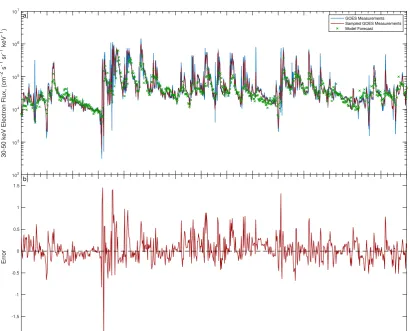
2016b] and at the GPS orbit [Boynton et al., 2017].
115
A Multi-Input Single-Output (MISO) NARMAX model was used in this study to model
116
the electron fluxes. This is represented by
117
ˆ
y(t) = F[y(t−1), ..., y(t−ny),
u1(t−1), ..., u1(t−nu1), ...,
um(t−1), ..., um(t−num), ...,
e(t−1), ..., e(t−ne)] (1)
where an estimate of the output ˆy at time t is a nonlinear function F of past outputs
118
y, inputs u, and residual, e = y−yˆ. m is the number of system inputs and ny, nu1,...,
119
num, ne are the maximum time lags for the output, each of the m inputs, and the error,
120
respectively.
For this study, the nonlinear function F was chosen to be a nonlinear polynomial.
122
When this polynomial is expanded there will be many monomials, most of which have no
123
influence on the system and keeping them would most likely lead to an overfit model. To
124
overcome this problem,Billings et al.[1988] developed the Forward Regression Orthogonal
125
Least Squares (FROLS) algorithm, which detects a small model structure from the larger
126
polynomial and estimates the coefficients for each of the detected monomials. The model
127
structure is detected using the Error Reduction Ratio (ERR), which indicates the influence
128
that a monomial has on the output variance. This study employs the Iterative Orthogonal
129
Forward Regression (IOFR) algorithm, which is a variant of the original FROLS. This is
130
more likely to detect the optimal model when the data is oversampled [Guo et al., 2014].
131
A more detailed description of the NARMAX methodology is described byBillings [2013]
132
orBoynton et al. [2018].
133
3. Instruments and data
The data used in this study are from the third generation GOES MAGnetospheric
Elec-134
tron Detector (MAGED) [Hanser, 2011]. The data for these instruments can be accessed
135
from http://www.ngdc.noaa.gov/stp/satellite/goes/dataaccess.html. The MAGED has 9
136
telescopes covering a range of different directions and measures the differential electron
137
fluxes in 5 energy channels: 40 keV, 75 keV, 150 keV, 275 keV and 475 keV [Hanser,
138
2011]. The time period used to derive and test the models was from 1 January 2011 to
139
13 December 2017. Three GOES spacecraft have carried this instrument, GOES 13, 14
140
and 15. These spacecraft were situated at GEO at various longitudes over North America
141
and were in operation at different times during this period.
The following MAGED data have been removed from this study due to anomalies:
143
GOES 13 on telescope 6 throughout this period; GOES 14 between 30 March 2010 and
144
2 May 2010 on telescopes 2, 5, and 8; and GOES 15 between 25 November 2017 and 31
145
December 2017 on telescope 1.
146
Solar wind data were used as input data for training and testing the models. The
1-147
minute solar wind velocity, density and Geocentric Solar Magnetospheric (GSM) IMF data
148
were obtained from the OMNI website (http://omniweb.gsfc.nasa.gov/ow min.html).
149
4. Individually binned MLT models
The method of choice of applying system identification to spatially varying systems
150
with different physics occurring in different locations is often to bin the data into different
151
spatial bins and then develop an individual model for each of the spatial bins. This
152
raises two questions: What should be the size of the spatial bin? And what should be
153
the temporal resolution of the data? With most system science applications to geospace
154
the temporal resolution is usually the resolution of the output, e.g., the Dst index has a
155
resolution of 1 hour and is modelled with a 1 hour resolution [Klimas et al., 1996]. The
156
temporal sampling frequency should be fast enough to extract the desired information
157
from the signal. Shannon’s theorem states that if the desired information has a frequency
158
fc then to recover the desired information a sampling frequency of at least 2fc is required.
159
Oversampling is not beneficial for system science modelling as the model will require the
160
inclusion of more lags, which will overcomplicate the model and increases the computation
161
time. The same is true for sampling the spatial frequency. Therefore, we need to know the
162
spatial and temporal frequency of the high flux variations of keV electrons. The electron
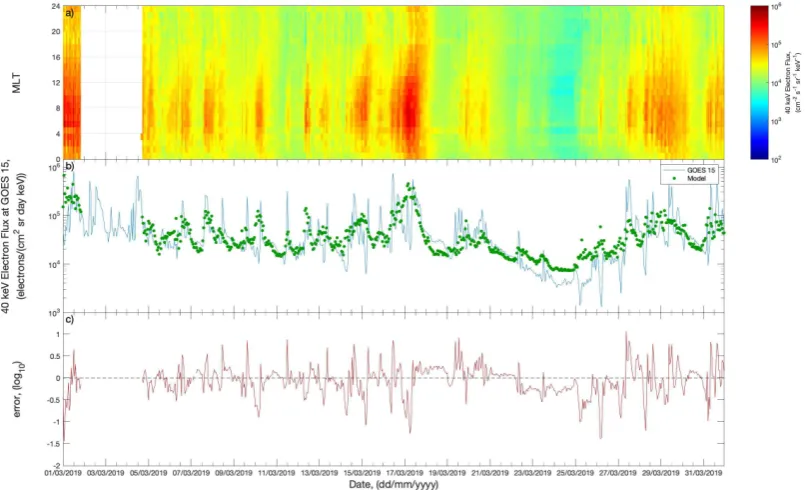
163
losses are due to either precipitation to the atmosphere from pitch angle scattering or
magnetopause shadowing with radial diffusion. Both these mechanisms should occur at
165
a wide range of MLT but take place over a short time period. Increases in electron flux
166
from radial diffusion will transpire over longer periods of time and increases from enhanced
167
convection will occur over a wide range of MLT at the same time. The mechanism that
168
leads to the high spatiotemporal frequency variations is due to the substorm associated
169
injections from the plasma sheet. The spatial and temporal scales at which injections
170
can occur are known to vary from one substorm to another [Sergeev and Tsyganenko,
171
1982; Ganushkina et al., 2013; Gabrielse et al., 2014], and further studies are required to
172
determine the azimuthal extent of the injection fronts. However, this study still requires
173
a spatiotemporal sampling frequency to deduce the electron flux model.
174
Figure 1 shows the 40 keV electron flux from the MAGED onboard GOES 13 (blue),
175
14 (orange) and 15 (yellow) from 27 October 2012 to 29 October 2012 and when each
176
of the spacecraft is at midday (GOES 13 blue dashed, 14 orange dashed, and 15
-177
yellow dashed) and midnight (GOES 13 - blue dot dashed, 14 - orange dot dashed, and
178
15 - yellow dot dashed). During this period, GOES 13 is 1 hour MLT ahead of GOES 14
179
and 4 hours MLT ahead of GOES 15. Up until 06 UTC on 28 October 2012, all three
180
measurements follow the same trend, with GOES 13 and 14 recording almost exactly
181
the same values and GOES 15 having a small offset. GOES 13 and 14 then observe an
182
increase of electron fluxes of approximately one order of magnitude at a post midnight
183
MLT that lasted 2 hours in time, which is not measured by GOES 15 at the pre midnight
184
MLT. This spatiotemporally localized bump in the electron flux time series is most likely
185
caused by an injection of energetic electrons from the plasma sheet. There are then a
186
series of peaks in the electron fluxes observed by all three spacecraft with GOES 13 and
14 again observing almost exactly the same values and GOES 15 having an offset. Then
188
another bump in the fluxes probably caused by an injection was observed by GOES 13
189
and 14 but not GOES 15. This increase lasted ∼ 2 hours and was observed by GOES
190
13 from 2.2 to 4.3 MLT and by GOES 14 from 1.3 to 3.4 MLT, while at the same time
191
GOES 15 moved from 22.2 to 0.3 MLT. These two potential injection structures both had
192
a temporal length of ∼2 hours and a spatial width larger than 1 hour MLT, but did not
193
extend 4 hours MLT back from GOES 13 to GOES 15. Inspecting longer periods of data
194
in which all three spacecraft are in operation does show structures with narrower temporal
195
widths but a structure observed by the middle spacecraft is almost always observed by
196
one of the other two spacecraft. Therefore, a sampling of 1 hour MLT and 1 hour time
197
was selected as a good compromise between sampling the majority of high spatiotemporal
198
frequency injections and model complexity since a higher resolution will lead to more
199
temporal lags. Electron flux enhancements through convection and radial diffusion will
200
both be oversampled in space, since convection will occur simultaneously over a broad
201
range of MLT and radial diffusion will take place at all MLT simultaneously.
202
4.1. Spatiotemporally sampled 40 keV electron flux model
The GOES 13, 14 and 15 40 keV electron flux data from the MAGED were sampled at
203
1 hour time resolution and at 1 hour MLT, smoothing over 12 minutes MLT around each
204
hour MLT, and averaging over the 9 telescopes from each spacecraft with pitch angles
205
between 20◦ and 160◦ (excluding the errors mentioned in Section 3). This resulted in
206
24 time series datasets for each MLT, which were then individually modelled using the
207
NARMAX methodology described in Section 2. Here, the time series of the electron flux at
208
one of the 24 MLTs is the output data,J(M LT, t). Most of the points in each of the time
series datasets were empty since for the majority of the time there will be no spacecraft
210
in the MLT bin. The input data employed were the solar wind velocity v(t), density
211
n(t), square root of the pressure √p(t), and the IMF factor Bf(t) = BT(t) sin6(θ(t)/2)
212
(whereBT(t) =
p
By(t)2+Bz(t)2andθ = tan−1(By(t)/Bz(t))) deduced byBoynton et al.
213
[2011b] and Balikhin et al. [2010]. The output lags were selected as the value 24 hours
214
previous. This is the most consistent data point that will be available, since any other
215
output lag will most likely be empty in the constructed time series dataset. The input
216
time lags were selected as 1, 3, 5,..., 23 hours as it has been shown that 10 to 100 keV
217
electrons have short response times with solar wind variations compared to MeV electrons
218
[Li et al., 2005; Boynton et al., 2013b]. The noise terms were not included in the model
219
because these data were sparse. This reduces the NARMAX model to the following NARX
220
model:
221
ˆ
J(M LT, t) = F[J(M LT, t−24),
v(t−1), v(t−3), ..., v(t−23),
n(t−1), n(t−3), ..., n(t−23),
√
p(t−1),√p(t−3), ...,√p(t−23),
Bf(t−1), Bf(t−3), ..., Bf(t−23)] (2)
The nonlinear function F was chosen to be a third degree polynomial, thus, the model
222
can include linear monomials of the lagged inputs and outputs as well as cross coupled
223
combinations of the lagged inputs and outputs.
224
The IOFR algorithm was run for each of the 24 datasets using the same NARX model
225
on data from 00:00 UTC 1 January 2011 to 23:00 UTC 28 February 2013. These models
were then assessed statistically on data from 1 March 2013 to 31 December 2017 using the
227
Prediction Efficiency (PE), Eq. (3), Correlation Coefficient (CC), Eq. (4), Mean Square
228
Error (MSE), and the variance of the observed flux, which are commonly used to assess
229
models [Temerin and Li, 2006;Li, 2004;Boynton et al., 2011a;Wei et al., 2004;Boynton
230
et al., 2015; Rastatter et al., 2013]. The equations for PE and CC are:
231
EP E =
1− N X t=1
(y(t)−yˆ(t))2
N
X
t=1
(y(t)−y¯)2 100% (3)
ρyyˆ =
N
X
t=1
(y(t)−y¯) ˆy(t)−y¯ˆ
v u u t N X t=1
(y(t)−y¯)2
N
X
t=1
h
ˆ
y(t)−y¯ˆ2i
100% (4)
EM SE =
N
X
t=1
(y(t)−yˆ(t))2 (5)
Here, EP E is the PE, ρ is the CC, EM SE is the MSE, y(t) is the measured output at
232
time t, ˆy is the estimated output from the model, N is the length of the data and the
233
bar signifies the average. The model performance statistics of each of these models are
234
displayed in Table 1. The PE for each model varies by 47% and 75% while the CC varies
235
between 51.3% and 78.9%. The highest PE and CC occur at 09 MLT and decreases to the
236
lowest PE and CC at 22 MLT. The MSE and variance have a similar sinusoidal pattern
237
with both having a minimum at 16 MLT of 0.045 and 0.090 respectively and the MSE
238
having a maximum at 01 MLT of 0.208, while the maximum of the variance is 0.288 at
239
05 MLT.
Figure 2 shows the model estimate of the 40 keV electron fluxes from 1 November 2017
241
to 30 November 2017 for different MLT. During this period, the model forecasts a number
242
of enhancements that are most intense at dawn MLTs and are lowest at evening MLTs.
243
Even though all the estimates at each MLT are from a different model, the structure of the
244
plots is consistent. A surface plot of the forecast is good for showing the evolution of the
245
fluxes but will be not be able to illustrate the performance of the model compared to the
246
observed fluxes, since, at each point in time, there will only be a few MLT measurements.
247
Figure 3 (a) shows a comparison of the model with GOES 13 measurements for the same
248
1 November 2017 to 30 November 2017 period displayed in Figure 2. The 1 minute GOES
249
13 data is presented in blue, the spatiotemporal sampled GOES data in red and the
250
model forecast at the GOES 13 location shown in green. Panel (b) displays the error
251
between the sampled GOES 13 40 keV electron flux and the model forecast at the GOES
252
13 location. The model forecast is shown to follow the enhancements and decreases of
253
the measured electron flux data with a MSE of 0.083 log10 for the displayed period. The
254
model is able to forecast the large variations, for example, the decrease and the increase
255
on 3 November 2017, but struggles to reproduce the higher frequency variations. A video
256
of the variations in electron flux at different MLT for the period in Figures 2 and 3 are in
257
the supplementary material.
258
5. Discussion
One advantage of NARMAX methodologies over neural network machine learning
tech-259
niques, other than its resilience to overfitting, is that the models are physically
inter-260
pretable. The resulting models from the NARMAX algorithm are polynomials consisting
261
were selected for the model, it is possible to gain some understanding into the underlying
263
physical processes of the system [Balikhin et al., 2010; Boynton et al., 2011b; Balikhin
264
et al., 2012; Boynton et al., 2013b; Billings, 2013]. The model for the 01 MLT 40 keV
265
electron fluxes is
266
ˆ
J(01M LT, t) = 3.21×10⁻⁴
Bf(t−1)v(t−1) + 2.57 + 1.78×10⁻³v(t−5)
+4.02×10⁻²B
f(t−5)−4.51×10⁻³Bf2(t−1)
+1.07×10⁻²J2(01M LT, t−24)−1.46×10⁻¹p(t−3)
+5.91×10⁻²Bf(t−21) + 4.72×10⁻¹√p(t−3) + 1.47×10⁻³v(t−17)
−4.69×10⁻³Bf(t−20)Bf(t−21)−3.74×10⁻²Bf(t−1)√p(t−1)
+7.35×10⁻²B
f(t−13)−3.41×10⁻²Bf(t−13)√p(t−14)
−5.87×10⁻³Bf2(t−7) + 5.16×10−
2
Bf(t−7)
−1.34×10⁻⁶v(t−8)v(t−9) (6)
One interesting point about the models deduced by the algorithm using the initial NARX
267
model structure in Eq. (2) is that only the 01 MLT, 04 MLT, and 18 MLT models
268
out of the 24 models included the autoregressive J(M LT, t− 24) term out of the 24
269
models. The autoregressive monomials in each of the three NARX models only have a
270
small contribution to the variance of the output, indicated by the small ERR. The other
271
models, with no past output terms and only consisting of exogenous terms, are known as
272
Volterra Series models. The lack of autoregressive terms and the small ERR contribution
273
when they are selected in the model means that the hourly MLT electron flux changes
274
significantly from their value 24 hours ago.
The variable that is selected in all the models, and appears as a factor of the monomial
276
that has the highest ERR in each of the models, is the IMF factor Bf. The monomial
277
with the highest ERR controls most of the output variance. The solar wind velocity is
278
the second most selected variable and it is in all the models in either the first or second
279
highest ERR monomial, often coupled withBf. The square root of the solar wind pressure
280
is chosen by the algorithm in 23 of the models (not the 23 MLT model) and the solar
281
wind density is only selected in 14 of the models but both are rarely selected in the top
282
five terms in order of ERR (three times for both pressure and density) and, thus, only
283
have a small contribution to the variance of the output.
284
The IMF factorBf was automatically identified in a solar wind-magnetosphere coupling
285
function by using the NARMAX FROLS methodology and then derived analytically from
286
first principles by Balikhin et al. [2010]. This derivation is based on the geometry of
287
the dayside magnetosphere reconnection with the solar wind. Therefore, the fact that the
288
models attribute most of the variation of the electron fluxes to the IMF factor implies that
289
the reconnection is the most important process. On the surface, this is in contrast to the
290
higher energies where solar wind velocity [Paulikas and Blake, 1979] or density [Balikhin
291
et al., 2011] was found to have the most influence. However, these studies investigated
292
the daily averages of electron fluxes and solar wind, which will average out the turning
293
of the IMF southward over the day, since these time scales are quite short (∼ 1 hour).
294
With the increased temporal resolution the turning of the IMF southward will not be
295
averaged out and and will have more influence. This averaging out over the timescales of
296
the IMF variations is also true for the study by Boynton et al. [2013b] where they also
297
found that southward IMF only had a small influence on the daily averaged 10 to 100 keV
electron fluxes. For example, if there is a high velocity solar wind event taking place over
299
several days and there are several periods of time when the IMF is southward for an hour,
300
the IMF may average out to be insignificant, while the velocity remains high. Therefore,
301
choosing a different time resolution may change the importance of the parameters.
302
The performance of the different electron flux models show a pattern with the MLT,
303
with the highest performance in terms of CC and PE in the late morning and the lowest
304
performance just before midnight. The lower performance just before midnight could
305
be due to the model not performing very well at forecasting the higher spatiotemporal
306
frequency injections that occur in this region. The MSE also exhibits a pattern with MLT
307
but it is shifted compared to PE and CC, with the highest MSE at 01 MLT and the lowest
308
at 15 and 16 MLT. The shift between PE and CC variation with MLT and the MSE MLT
309
variation is mainly due to the difference in the electron flux variance at each MLT, since
310
both PE and CC are normalized by the variance of the measured electron fluxes.
311
The highest performance in terms of PE and CC occur at dayside MLTs, where the
312
increases in the fluxes will mostly be due to convection or radial diffusion and are unlikely
313
to be caused by substorm particle injections. From Figure 3, the model estimates the
314
majority of the structures that last over half a day but a magnified figure would show more
315
detail. Figure 4 displays two magnified sections of Figure 3, panel (a) from 10 November
316
2017 to 12 November 2017, and panel (b) from 20 November 2017 to 22 November 2017.
317
The Figures show that the model follows the general trend of the measured GOES 13
318
data during this period. There is a sharp peak in the 1 minute GOES 13 measurements
319
(blue) on 10 November 2017 at 0400 UTC, which is averaged out in the sampled GOES
320
measurement (red), however, the model (green) does show an increase. Overall, the model
underperforms in forecasting the high spatial and temporal frequency variations, such as
322
the three peaks between 0600-1800 UTC on 11 November 2017, but follows the slower
323
variations. An increased temporal resolution of 30 minutes may help in identifying the
324
fast substorm associated injections. The inputs to the model are measured at L1 and using
325
a 1 hour time lag in the model, which may lead to changes in the solar wind occurring
326
inside the hour. For example, a fast flow of solar wind can transit from L1 to the bow
327
shock in under 30 minutes, which will cause a change in the magnetosphere that the 1
328
hour lags in the model will be unable to take into account. Therefore, in the training of
329
the model, these changes in solar wind cannot be identified as drivers of the changes in
330
the electron fluxes. However, a consequence of including shorter lags in the model will be
331
to reduce the forecast horizon of the model. Also, the averaging of the solar wind over the
332
hour, particularly the fast turning of the solar wind southward, may nullify the drivers
333
of the substorm, therefore, it will not be identified in the model. This problem could be
334
solved by including the maximum of the value of the solar wind parameters as inputs as
335
well as the average value, however, this would increase the computational complexity of
336
identifying the model due to an increased amount of monomials to search through.
337
Another option to spatially model the electron fluxes is to employ MLT as an input
338
into the model, rather than sampling the data in space and developing a separate model
339
for each spatial bin. However, this approach was not selected because at different MLTs
340
there should be different dynamics, and it would be better to isolate the individual physical
341
processes in the different models corresponding to each region.
342
A model of the 40 keV electron fluxes through all MLTs at geostationary orbit is not only
343
useful to satellite operators, who would be able to have a greater situational awareness of
the environment and be able to apply any mitigation procedures to help protect their space
345
based assets. The model could also be used as an outer boundary condition to physics
346
based radiation belt models such as the Versatile Electron Radiation Belt (VERB) model
347
[Subbotin et al., 2011], Comprehensive Inner Magnetosphere-Ionosphere (CIMI) model
348
[Fok et al., 2014] or IMPTAM [Ganushkina et al., 2015].
349
The models developed in this study have been implemented to run in real time. A figure
350
of the real time output of this model is shown in Figure 5, which shows the model output
351
across all MLT in panel (a), the model output at the location of GOES 15 vs GOES 15
352
data, and (c) the error between the measured and model for March 2019. The model
353
performance for this period were a PE of 48.5% and a CC of 66.3%. The data gap at the
354
start of the month is due to a missing solar wind inputs, which were not available from
355
NOAA Space Weather Prediction Center (SWPC) at the time the forecast was made.
356
6. Conclusions
A data based spatiotemporal model has been developed for the 40 keV electron fluxes
357
at GEO. This model is comprised of 24 individual NARX models of the form shown
358
in Equation (2), where the output of each model is the electron fluxes for that region
359
of space in MLT at GEO. When the 24 models are conjugated together into the final
360
model, they give a forecast of the spatiotemporal evolution of the 40 keV electron fluxes
361
at GEO. At this energy, the electron fluxes can vary significantly over a narrow range of
362
MLTs due to substorm associated injections making it very challenging to model. The
363
development of a data based model using system science techniques is complicated by
364
the sparse availability of the electron fluxes at different MLT. This problem was solved
365
by binning the data from GOES 13, 14, and 15 by MLT and then deducing a separate
model for each bin then conjugating these to produce one spatiotemporal forecast. The
367
performance of this forecast was then assessed on a period from 1 March 2013 to 31
368
December 2017 where the PE varied between 47% and 75% and the CC varied between
369
51.3% and 78.9% at different MLTs.
370
The models developed in this study will be implemented online at the University of
371
Sheffield Space Weather Website (http://www.ssg.group.shef.ac.uk/USSW2/UOSSW.html)
372
to provide a real time forecast of the GEO 40 keV electron fluxes through all MLTs. This
373
will allow both satellite operators and scientists to have access to the outputs of the
374
models, which will also be archived.
375
Acknowledgments. The MAGED data can be accessed from
376
http://www.ngdc.noaa.gov/stp/satellite/goes/dataaccess.html. The solar wind data and
377
geomagnetic indices data were from the OMNI website (http://omniweb.gsfc.nasa.gov/ow min.html).
378
The real time data were from the NOAA SWPC. The work was performed within the
379
project Rad-Sat and has received financial support from the UK NERC under grant
380
NE/P017061/1.
381
References
Bailey, D. K., Some quantitative aspects of electron precipitation in and near the auroral
382
zone, Rev. Geophys., 6(3), 289–346, 1968.
383
Baker, D., R. Belian, P. Higbie, R. Klebesadel, and J. Blake, Deep dielectric charging
384
effects due to high-energy electrons in earth’s outer magnetosphere, Journal of
Electro-385
statics,20(1), 3–19, 1987.
Baker, D. N., R. L. McPherron, T. E. Cayton, and R. W. Klebesadel, Linear prediction
387
filter analysis of relativistic electron properties at 6.6 re, J. Geophys. Res., 95(A9),
388
15,133–15,140, 1990.
389
Balikhin, M. A., O. M. Boaghe, S. A. Billings, and H. S. C. K. Alleyne, Terrestrial
390
magnetosphere as a nonlinear resonator, Geophys. Res. Lett.,28(6), 1123–1126, 2001.
391
Balikhin, M. A., R. J. Boynton, S. A. Billings, M. Gedalin, N. Ganushkina, D. Coca, and
392
H. Wei, Data based quest for solar wind-magnetosphere coupling function, Geophys.
393
Res. Lett., 37(24), L24,107, 2010.
394
Balikhin, M. A., R. J. Boynton, S. N. Walker, J. E. Borovsky, S. A. Billings, and H. L.
395
Wei, Using the narmax approach to model the evolution of energetic electrons fluxes at
396
geostationary orbit, Geophys. Res. Lett., 38(18), L18,105, 2011.
397
Balikhin, M. A., M. Gedalin, G. D. Reeves, R. J. Boynton, and S. A. Billings, Time scaling
398
of the electron flux increase at geo: The local energy diffusion model vs observations,
399
J. Geophys. Res.,117(A10), A10,208–, 2012.
400
Balikhin, M. A., J. V. Rodriguez, R. J. Boynton, S. N. Walker, H. Aryan, D. G. Sibeck,
401
and S. A. Billings, Comparative analysis of noaa refm and snb3geo tools for the forecast
402
of the fluxes of high-energy electrons at geo, Space Weather, 14(1), 2015SW001,303–,
403
2016.
404
Beharrell, M. J., and F. Honary, Decoding solar wind-magnetosphere coupling, Space
405
Weather, n/a, 2016SW001,467–, 2016.
406
Billings, S., M. Korenberg, and S. Chen, Identification of non-linear output affine systems
407
using an orthogonal least-squares algorithm., Int. J. of Systems Sci., 19, 1559–1568,
408
1988.
Billings, S. A., Nonlinear System Identification: NARMAX Methods in the Time,
Fre-410
quency, and Spatio-Temporal Domains, Wiley, 2013.
411
Boaghe, O. M., M. A. Balikhin, S. A. Billings, and H. Alleyne, Identification of nonlinear
412
processes in the magnetospheric dynamics and forecasting of dst index, J. Geophys.
413
Res.,106(A12), 30,047–30,066, 2001.
414
Bortnik, J., R. M. Thorne, T. P. O’Brien, J. C. Green, R. J. Strangeway, Y. Y. Shprits,
415
and D. N. Baker, Observation of two distinct, rapid loss mechanisms during the 20
416
november 2003 radiation belt dropout event, J. Geophys. Res., 111(A12), A12,216–,
417
2006.
418
Boynton, R., M. Balikhin, H.-L. Wei, and Z.-Q. Lang, Machine Learning Techniques
419
for Space Weather, chap. Applications of NARMAX in Space Weather, pp. 203–237,
420
Elsevier, 2018.
421
Boynton, R. J., M. A. Balikhin, S. A. Billings, A. S. Sharma, and O. A. Amariutei, Data
422
derived narmax dst model, Annales Geophysicae, 29(6), 965–971,
doi:10.5194/angeo-423
29-965-2011, 2011a.
424
Boynton, R. J., M. A. Balikhin, S. A. Billings, H. L. Wei, and N. Ganushkina, Using the
425
narmax ols-err algorithm to obtain the most influential coupling functions that affect
426
the evolution of the magnetosphere, J. Geophys. Res., 116(A5), A05,218, 2011b.
427
Boynton, R. J., M. A. Balikhin, S. A. Billings, and O. A. Amariutei, Application of
428
nonlinear autoregressive moving average exogenous input models to geospace: advances
429
in understanding and space weather forecasts,Ann. Geophys.,31(9), 1579–1589, 2013a.
430
Boynton, R. J., M. A. Balikhin, S. A. Billings, G. D. Reeves, N. Ganushkina, M. Gedalin,
431
O. A. Amariutei, J. E. Borovsky, and S. N. Walker, The analysis of electron fluxes at
geosynchronous orbit employing a narmax approach, J. Geophys. Res. Space Physics,
433
118(4), 1500–1513, 2013b.
434
Boynton, R. J., S. A. Billings, O. A. Amariutei, and I. Moiseenko, The coupling between
435
the solar wind and proton fluxes at geo, Ann. Geophys.,31(10), 1631–1636, 2013c.
436
Boynton, R. J., M. A. Balikhin, and S. A. Billings, Online narmax model for electron
437
fluxes at geo, Ann. Geophys., 33(3), 405–411, 2015.
438
Boynton, R. J., M. A. Balikhin, D. G. Sibeck, S. N. Walker, S. A. Billings, and N.
Ganushk-439
ina, Electron flux models for different energies at geostationary orbit, Space Weather,
440
14(10), 2016SW001,506–, 2016a.
441
Boynton, R. J., D. Mourenas, and M. A. Balikhin, Electron flux dropouts at geostationary
442
earth orbit: Occurrences, magnitudes, and main driving factors,J. Geophys. Res. Space
443
Physics, 121(9), 2016JA022,916–, 2016b.
444
Boynton, R. J., D. Mourenas, and M. A. Balikhin, Electron flux dropouts at l 4.2 from
445
global positioning system satellites: Occurrences, magnitudes, and main driving factors,
446
J. Geophys. Res. Space Physics, 122(11), 11,428–11,441, doi:10.1002/2017ja024523,
447
2017.
448
Denton, M. H., M. G. Henderson, V. K. Jordanova, M. F. Thomsen, J. E. Borovsky,
449
J. Woodroffe, D. P. Hartley, and D. Pitchford, An improved empirical model of electron
450
and ion fluxes at geosynchronous orbit based on upstream solar wind conditions, Space
451
Weather, 14(7), 511–523, doi:10.1002/2016sw001409, 2016.
452
Ferguson, D. C., Chapter 15 - extreme space weather spacecraft surface charging and
453
arcing effects, in Extreme Events in Geospace, edited by N. Buzulukova, pp. 401–418,
454
Elsevier, 2018.
Fok, M. C., N. Y. Buzulukova, S. H. Chen, A. Glocer, T. Nagai, P. Valek, and J. D.
456
Perez, The comprehensive inner magnetosphere-ionosphere model, J. Geophys. Res.
457
Space Physics, 119(9), 7522–7540, doi:10.1002/2014JA020239, 2014.
458
Freeman, J. W., T. P. O’Brien, A. A. Chan, and R. A. Wolf, Energetic electrons at
459
geostationary orbit during the november 3-4, 1993 storm: Spatial/temporal morphology,
460
characterization by a power law spectrum and, representation by an artificial neural
461
network, J. Geophys. Res., 103(A11), 26,251–26,260, 1998.
462
Friedel, R., G. Reeves, and T. Obara, Relativistic electron dynamics in the inner
mag-463
netosphere - a review, Journal of Atmospheric and Solar-Terrestrial Physics, 64(2),
464
265–282, 2002.
465
Friederich, U., D. Coca, S. A. Billings, and M. Juusola, Data modelling for analysis of
466
adaptive changes in fly photoreceptors, Neural Information Processing, PT 1,
Proceed-467
ings,5863, 34–38, 2009.
468
Gabrielse, C., V. Angelopoulos, A. Runov, and D. L. Turner, Statistical characteristics
469
of particle injections throughout the equatorial magnetotail, J. Geophys. Res. Space
470
Physics, 119(4), 2512–2535, doi:10.1002/2013ja019638, 2014.
471
Ganushkina, N. Y., O. A. Amariutei, Y. Y. Shprits, and M. W. Liemohn, Transport of the
472
plasma sheet electrons to the geostationary distances, J. Geophys. Res. Space Physics,
473
118(1), 82–98, 2013.
474
Ganushkina, N. Y., M. W. Liemohn, O. A. Amariutei, and D. Pitchford, Low-energy
475
electrons (5-50 kev) in the inner magnetosphere,J. Geophys. Res. Space Physics,119(1),
476
246–259, 2014.
Ganushkina, N. Y., O. A. Amariutei, D. Welling, and D. Heynderickx, Nowcast
478
model for low-energy electrons in the inner magnetosphere, Space Weather, 13(1),
479
2014SW001,098–, 2015.
480
Gubby, R., and J. Evans, Space environment effects and satellite design, Journal of
At-481
mospheric and Solar-Terrestrial Physics,64(16), 1723–1733, 2002.
482
Guo, Y., L. Guo, S. Billings, and H.-L. Wei, An iterative orthogonal forward
re-483
gression algorithm, International Journal of Systems Science, 46(5), 776–789, doi:
484
10.1080/00207721.2014.981237, 2014.
485
Hanser, F. A., Eps/hepad calibration and data handbook,Tech. rep., Tech. Rep.
GOESN-486
ENG-048D, Assurance Technol. Corp., Carlisle, Mass., 2011.
487
Horne, R. B., S. A. Glauert, N. P. Meredith, D. Boscher, V. Maget, D. Heynderickx, and
488
D. Pitchford, Space weather impacts on satellites and forecasting the earth’s electron
489
radiation belts with spacecast, Space Weather, 11, 1–18, 2013a.
490
Horne, R. B., S. A. Glauert, N. P. Meredith, H. Koskinen, R. Vainio, A. Afanasiev,
491
N. Y. Ganushkina, O. A. Amariutei, D. Boscher, A. Sicard, V. Maget, S. Poedts,
492
C. Jacobs, B. Sanahuja, A. Aran, D. Heynderickx, and D. Pitchford, Forecasting the
493
earth’s radiation belts and modelling solar energetic particle events: Recent results from
494
spacecast, J. Space Weather Space Clim., 3, A20, 2013b.
495
Kim, H.-J., and A. A. Chan, Fully adiabatic changes in storm time relativistic electron
496
fluxes, J. Geophys. Res., 102(A10), 22,107–22,116, 1997.
497
Klimas, A. J., D. Vassiliadis, D. N. Baker, and D. A. Roberts, The organized nonlinear
498
dynamics of the magnetosphere, J. Geophys. Res., 101(A6), 13,089–13,113, 1996.
Koons, H. C., and D. J. Gorney, A neural network model of the relativistic electron flux
500
at geosynchronous orbit, J. Geophys. Res., 96(A4), 5549–5556, 1991.
501
Krishnanathan, K., S. R. Anderson, S. A. Billings, and V. Kadirkamanathan, A
data-502
driven framework for identifying nonlinear dynamic models of genetic parts,ACS Synth.
503
Biol.,1(8), 375–384, doi:10.1021/sb300009t, 2012.
504
Leontaritis, I. J., and S. A. Billings, Input-output parametric models for non-linear
sys-505
tems part i: Deterministic non-linear systems., Int. J. Control,41 (2), 303–328, 1985a.
506
Leontaritis, I. J., and S. A. Billings, Input-output parametric models for non-linear
sys-507
tems part ii: Stochastic nonlinear systems, Int. J. Control, 41 (2), 329–344, 1985b.
508
Li, X., Variations of 0.7-6.0 mev electrons at geosynchronous orbit as a function of solar
509
wind, Space Weather, 2(3), S03,006, 2004.
510
Li, X., D. N. Baker, M. Temerin, G. Reeves, R. Friedel, and C. Shen, Energetic electrons,
511
50 kev to 6 mev, at geosynchronous orbit: Their responses to solar wind variations,
512
Space Weather,3(4), S04,001–, 2005.
513
Ling, A. G., G. P. Ginet, R. V. Hilmer, and K. L. Perry, A neural network-based
geosyn-514
chronous relativistic electron flux forecasting model, Space Weather, 8(9), S09,003–,
515
2010.
516
Lohmeyer, W., and K. Cahoy, Space weather radiation effects on geostationary satellite
517
solid-state power amplifiers, Space Weather, 11(8), 476–488, 2013.
518
Lohmeyer, W., A. Carlton, F. Wong, M. Bodeau, A. Kennedy, and K. Cahoy, Response
519
of geostationary communications satellite solid-state power amplifiers to high-energy
520
electron fluence, Space Weather, 13(5), 2014SW001,147–, 2015.
Loto’aniu, T. M., H. J. Singer, J. V. Rodriguez, J. Green, W. Denig, D. Biesecker, and
522
V. Angelopoulos, Space weather conditions during the galaxy 15 spacecraft anomaly,
523
Space Weather,13(8), 484–502, Aug. 2015.
524
Mullen, E. G., M. S. Gussenhoven, D. A. Hardy, T. A. Aggson, B. G. Ledley, and
525
E. Whipple, Scatha survey of high-level spacecraft charging in sunlight, J. Geophys.
526
Res.,91(A2), 1474–1490, 1986.
527
O’Brien, T. P., and C. L. Lemon, Reanalysis of plasma measurements at geosynchronous
528
orbit, Space Weather, 5(3), doi:10.1029/2006sw000279, 2007.
529
Olsen, R. C., A threshold effect for spacecraft charging, J. Geophys. Res., 88(A1), 493–
530
499, 1983.
531
Osthus, D., P. C. Caragea, D. Higdon, S. K. Morley, G. D. Reeves, and B. P. Weaver,
532
Dynamic linear models for forecasting of radiation belt electrons and limitations on
533
physical interpretation of predictive models, Space Weather,12(6), 426–446, 2014.
534
Paulikas, G. A., and J. B. Blake, Effects of the solar wind on magnetospheric dynamics:
535
Energetic electrons at the synchronous orbit, Quantitative Modeling of Magnetospheric
536
Processes, Geophys. Monogr. Ser.,21, 180–202, aGU, Washington, D. C., 1979.
537
Rastatter, L., M. M. Kuznetsova, A. Glocer, D. Welling, X. Meng, J. Raeder, M.
Wilt-538
berger, V. K. Jordanova, Y. Yu, S. Zaharia, R. S. Weigel, S. Sazykin, R. Boynton,
539
H. Wei, V. Eccles, W. Horton, M. L. Mays, and J. Gannon, Geospace environment
540
modeling 2008-2009 challenge: Dst index, Space Weather,11(4), 187–205, 2013.
541
Rigler, E. J., D. N. Baker, R. S. Weigel, D. Vassiliadis, and A. J. Klimas, Adaptive linear
542
prediction of radiation belt electrons using the kalman filter, Space Weather, 2(3), doi:
543
10.1029/2003sw000036, 2004.
Sarno-Smith, L. K., B. A. Larsen, R. M. Skoug, M. W. Liemohn, A. Breneman,
545
J. R. Wygant, and M. F. Thomsen, Spacecraft surface charging within
geosyn-546
chronous orbit observed by the van allen probes, Space Weather, 14(2), 151–164, doi:
547
10.1002/2015sw001345, 2016.
548
Sergeev, V., and N. Tsyganenko, Energetic particle losses and trapping boundaries as
549
deduced from calculations with a realistic magnetic field model, Planetary and Space
550
Science,30(10), 999–1006, 1982.
551
Subbotin, D. A., Y. Y. Shprits, and B. Ni, Long-term radiation belt simulation with
552
the verb 3-d code: Comparison with crres observations, J. Geophys. Res., 116(A12),
553
A12,210–, 2011.
554
Temerin, M., and X. Li, Dst model for 1995 - 2002, J. Geophys. Res., 111(A4), A04,221,
555
2006.
556
Thomsen, M. F., M. G. Henderson, and V. K. Jordanova, Statistical properties of the
557
surface-charging environment at geosynchronous orbit,Space Weather, 11(5), 237–244,
558
doi:10.1002/swe.20049, 2013.
559
Turner, D. L., Y. Shprits, M. Hartinger, and V. Angelopoulos, Explaining sudden losses
560
of outer radiation belt electrons during geomagnetic storms, Nat Phys, 8(3), 208–212,
561
2012.
562
Wei, H. L., and S. A. Billings, An efficient nonlinear cardinal b-spline model for high
563
tide forecasts at the venice lagoon,Nonlinear Processes In Geophysics, 13(5), 577–584,
564
2006.
565
Wei, H. L., S. A. Billings, and M. Balikhin, Prediction of the dst index using
multireso-566
lution wavelet models, J. Geophys. Res.,109(A7), A07,212, 2004.
Wei, H.-L., S. A. Billings, A. Surjalal Sharma, S. Wing, R. J. Boynton, and S. N. Walker,
568
Forecasting relativistic electron flux using dynamic multiple regression models,Annales
569
Geophysicae, 29(2), 415–420, doi:10.5194/angeo-29-415-2011, 2011.
570
Wrenn, G. L., D. J. Rodgers, and K. A. Ryden, A solar cycle of spacecraft anomalies due
571
to internal charging, Ann. Geophys., 20(7), 953–956, 2002.
572
Zhao, Y., S. A. Billings, and A. F. Routh, Identification of the belousov-zhabotinskii
re-573
action using cellular automata models, International Journal of Bifurcation and Chaos,
574
17(5), 1687–1701, doi:10.1142/S0218127407017999, 2007.
575
Zhu, D., S. A. Billings, M. Balikhin, S. Wing, and D. Coca, Data derived continuous time
576
model for the dst dynamics, Geophys. Res. Lett., 33(4), L04,101, 2006.
577
Zhu, D., S. A. Billings, M. A. Balikhin, S. Wing, and H. Alleyne, Multi-input data derived
578
dst model, J. Geophys. Res., 112(A6), A06,205, 2007.
Model MLT PE (%) CC (%) MSE Var(J)
00 50.2 53.4 0.177 0.228
01 50.3 54.9 0.208 0.269
02 53.6 58.0 0.197 0.272
03 58.4 63.2 0.178 0.276
04 60.2 65.9 0.170 0.276
05 65.0 70.2 0.157 0.288
06 69.6 74.0 0.127 0.268
07 72.9 76.6 0.106 0.251
08 74.7 78.6 0.089 0.226
09 75.0 78.9 0.077 0.198
10 73.3 77.3 0.074 0.178
11 73.3 77.3 0.064 0.153
12 71.6 75.3 0.062 0.140
13 71.1 74.7 0.056 0.124
14 70.6 74.3 0.048 0.106
15 69.9 73.0 0.045 0.096
16 67.9 70.8 0.045 0.090
17 64.3 66.6 0.050 0.091
18 64.0 64.4 0.053 0.095
19 62.1 64.1 0.059 0.100
20 54.0 55.7 0.084 0.117
21 51.4 53.7 0.106 0.141
22 47.0 51.3 0.144 0.175
23 51.6 56.3 0.161 0.213
Table 1. Table showing the PE, CC, MSE for each MLT model and the variance of the
[image:32.595.194.434.193.536.2]2012-10-28 00:00:00 2012-10-28 12:00:00 2012-10-29 00:00:00 2012-10-29 12:00:00 Date
104 105
30-50 keV Electron Flux, (cm
2 s sr keV)
-1
[image:33.595.117.480.84.291.2]GOES 13 GOES 14 GOES 15 MN G13 MD G13 MN G14 MD G14 MN G15 MD G15
Figure 1. The 40 keV electron flux observed by the MAGED onboard GOES 13 (blue), 14
(orange) and 15 (yellow) between 27 October 2012 and 29 October 2012. The figure also shows
when each of the spacecraft is at midday (GOES 13 - blue dashed, 14 - orange dashed, and 15
yellow dashed) and midnight (GOES 13 blue dot dashed, 14 orange dot dashed, and 15
-yellow dot dashed).
Figure 2. The model estimated 40 keV electron flux at all MLT from 1 November 2017 to 30
[image:33.595.87.515.462.653.2]Date
102
103
104
105
106
107
30-50 keV Electron Flux, (cm
-2
s
-1 sr -1 keV
-1
)
a) GOES Measurements
Sampled GOES Measurements Model Forecast
01/11/2017 03/11/2017 05/11/2017 07/11/2017 09/11/2017 11/11/2017 13/11/2017 15/11/2017 17/11/2017 19/11/2017 21/11/2017 23/11/2017 25/11/2017 27/11/2017 29/11/2017 01/12/2017
Date
-2 -1.5 -1 -0.5 0 0.5 1 1.5
Error
[image:34.595.100.511.152.483.2]b)
Figure 3. (a) The 40 keV electron flux observed by the MAGED onboard GOES 13 (blue), the
sampled GOES 13 40 keV electron flux (red) and the model forecast at the GOES 13 location
for November 2017. (b) The error between the sampled GOES 13 40 keV electron flux and the
2017-11-10 00:00:00 2017-11-10 12:00:00 2017-11-11 00:00:00 2017-11-11 12:00:00 2017-11-12 00:00:00 Date
104 105 106
30-50 keV Electron Flux, (cm
-2 s
-1
sr
-1 keV
-1) a) GOES MeasurementsSampled GOES Measurements
Model Forecast
2017-11-20 00:00:00 2017-11-20 12:00:00 2017-11-21 00:00:00 2017-11-21 12:00:00 2017-11-22 00:00:00
Date 103
104 105 106
30-50 keV Electron Flux, (cm
-2 s
-1
sr
-1
keV
-1) b) GOES Measurements
[image:35.595.89.515.169.526.2]Sampled GOES Measurements Model Forecast
Figure 4. The 40 keV electron flux observed by the MAGED onboard GOES 13 (blue), the
sampled GOES 13 40 keV electron flux (red) and the model forecast at the GOES 13 location
Figure 5. The real time output from the 40 keV electron flux model: (a) in MLT and time (b)
at the GOES 15 location (green) vs GOES 15 data (blue), and (c) the error between the sampled