Transfer Pricing
and Developing
Countries
Final Report
June 2011
EuropeAid – Implementing the Tax and Development policy agenda
Transfer pricing and
developing countries
Final report
A project implemented by PwC
Contents
List of figures and tables ... III Abbreviations and acronyms ... IV
1. Executive Summary ... 1
2. Introduction ... 5
3. About this report ... 6
4. The importance and pitfalls of TP ... 8
5. Activities by international organisations in the field of TP ... 10
5.1.The OECD Guidelines ... 10
5.2.The UN TP Manual ... 12
5.3.The work of other international organisations ... 13
6. Preconditions for TP reform ... 13
7. Selected countries and TP reform ... 15
7.1.Introductory remarks ... 15
7.2.Economic and political preconditions ... 15
7.2.1. GDP growth, economic sectors and financial markets ... 15
7.2.2. Trade liberalisation and international business relationships ... 18
7.2.3. FDI and the importance of MNEs in local economies ... 19
7.3.Legal preconditions ... 20
7.3.1. Corporate income taxation and special tax regimes ... 20
7.3.2. Existing network of tax treaties ... 21
7.3.3. Existing TP legislation in selected countries ... 22
7.3.3.1. Introductory remarks: state of play in selected countries ... 22
7.3.3.2. TP legislation in selected countries ... 22
7.3.3.3. Scope of TP legislation in place ... 24
7.3.3.4. TP documentation requirements ... 25
7.4.Capacities of local tax administrations ... 26
7.4.1. Public debt and revenue collection ... 26
7.4.2. Structure and capacities of local tax administrations ... 26
7.4.3. Experience with TP enforcement, audits and penalties ... 27
7.4.4. Internal training facilities and communication channels ... 28
8. Recommendations for future donor support in selected countries ... 31
8.1.Introductory remarks ... 31
8.2.Universal and country-specific recommendations ... 32
8.2.1. Universal recommendations for selected countries ... 32
8.2.2. Country-specific recommendations: Kenya ... 33
8.2.3. Country-specific recommendations: Ghana ... 34
8.2.4. Country-specific recommendations: Honduras ... 35
8.2.5. Country-specific recommendations: Vietnam ... 36
8.3.Costs of TP reform and potential impact of increased tax collections in selected countries ... 37
8.3.1. Interview/research findings for selected countries ... 37
8.3.2. Cost/impact estimations based on publicly available data ... 38
9. A general approach to TP reform in developing countries ... 39
10.Concluding remarks on TP and developing countries ... 41
References ... 43
Appendix A: List of developing countries ... 47
Appendix B: Country Study Honduras ... 50
Appendix C: Country Study Ghana ... 51
Appendix D: Country Study Kenya ... 52
Appendix E: Country Study Vietnam ... 53
Appendix F: Case Studies ... 54
Appendix G: Questionnaire ... 63
Appendix H: Required donor support in selected countries ... 66
Appendix I: Estimated impact on tax collections resulting from TP reform in selected countries ... 76
Appendix J: Examples from Kenya ... 89
Appendix K: Special tax and incentive schemes in selected countries ... 91
Appendix L: List of tax treaties signed by selected countries ... 94
Appendix M: Donor support to date in the selected countries ... 98
Appendix N: Cost-benefit analysis of TP reform in selected countries ... 101
List of figures and tables
Figure 1: Basic preconditions for implementing TP reform ... 14
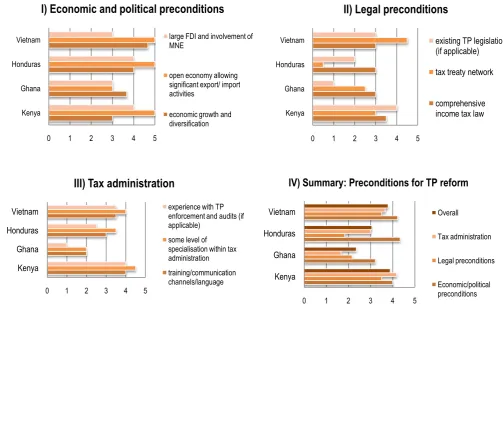
Figure 2: Overview of the preconditions for TP reform in selected countries ... 30
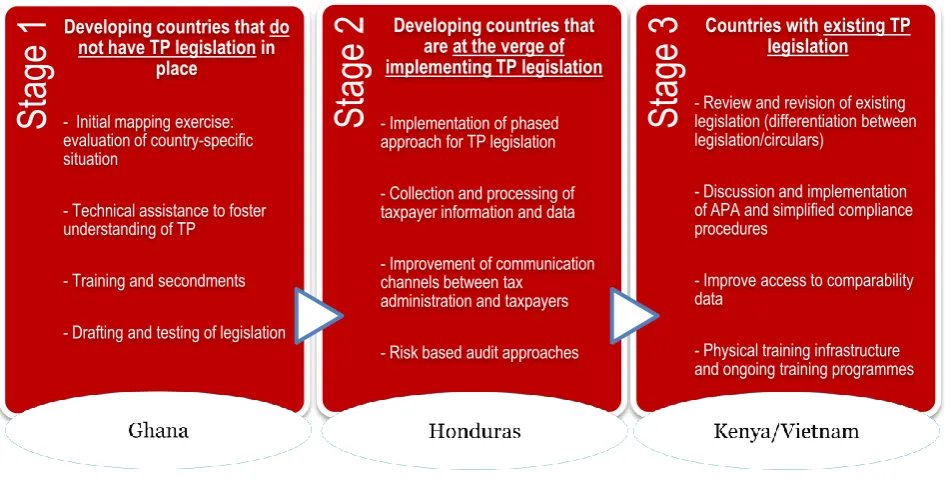
Figure 3: Staged approach to introducing TP reform ... 40
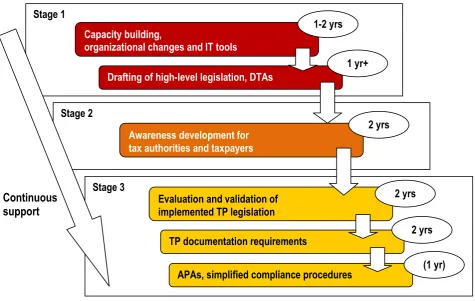
Figure 4: Roadmap to TP reform ... 42
Table 1: GDP growth levels for selected countries ... 16
Table 2: Tax revenues as a share of GDP (%) for selected countries ... 16
Table 3: Capital-intensive investments by Sector – Vietnam ... 17
Abbreviations and acronyms
ADB Asian Development Bank
AfDB African Development Bank
APA advance pricing agreement
ATAF African Tax Administration Forum
CAIS Central American Integration System
CIAT Inter-American Center of Tax Administrations
COHPUCP Colegio Hondureño de Profesionales Universitarios de Contaduría Publica
CPM cost plus method
CUP comparable uncontrolled price
DESA United Nations‟ Department of Economic and Social Affairs
DR-CAFTA Dominican Republic-Central America-United States Free Trade Agreement
DTA double taxation agreements
EAC East African Community
EC European Commission
EITI Extractive Industries Transparency Initiative
EU European Union
FDI foreign direct investment
FTA free trade agreement
GBP pound sterling
GDP gross domestic product
GIZ Deutsche Gesellschaft für Internationale Zusammenarbeit (formerly GTZ)
GTSP Global Tax Simplification Program
GTZ Gesellschaft für Technische Zusammenarbeit
HR human resources
IADB Inter-American Development Bank
IBFD International Bureau of Fiscal Documentation
IFC International Finance Corporation
IMF International Monetary Fund
IT Information Technology
ITC International Tax Compact
JV joint venture
LTO Large Taxpayer Office
M&A mergers and acquisitions
MAP mutual agreement procedure
MDGs Millennium Development Goals
MNE multinational enterprise
OECD Organisation for Economic Cooperation and Development
OECD Model Convention OECD Model Tax Convention on Income and on Capital
OECD Guidelines OECD Transfer Pricing Guidelines for Multinational Enterprises and Tax administrations
PSM profit split method
RPM resale price method
TIEA tax information exchange agreement
TNMM transactional net margin method
TP transfer pricing
TP Manual United Nations Transfer Pricing Practical Manual for Developing Countries
UAE United Arab Emirates
UN United Nations
UN Expert Committee Committee of Experts on International Cooperation in Tax Matters
UN Model Treaty UN Model Double Taxation Convention between Developed and Developing Countries
UK United Kingdom
USA United States of America
VAT value added tax
WB World Bank
we PwC
1.
Executive Summary
The Communication of the European Commission („EC‟) on „Tax and Development – Cooperating with Developing Countries in Promoting Good Governance in Tax Matters‟ highlighted the need to support developing countries‟ capacity in mobilising domestic resources for development in line with the principles of good governance in taxation. It is in this context that PwC has been asked to conduct a study on transfer pricing („TP‟) and developing countries. We welcome the initiative of the EC as it has the potential to promote a uniform set of TP practices which are adhered to globally. Such development would favourably affect the business environment for international trade and activities of multinational enterprises („MNEs‟), thereby further contributing to investment and growth in developing countries.
Generally, TP is high on the agenda because globalisation has lifted the level of cross-border trade between related entities to new heights. It is estimated that, worldwide, about 2/3 of all business transactions take place within a group.1 This is
particularly relevant for developing countries as their economies have recently opened up or are in the process of opening up, attracting large amounts of foreign direct investment („FDI‟) from MNEs. In the absence of TP legislation,2 both tax
administrations and MNEs have only limited guidance they can refer to when determining TP in related-party transactions. However, we find that developing countries encounter particular problems when dealing with TP. Local tax administrations are often inexperienced with regard to TP and lack basic understanding in the field. For substantiating TP, for example comparables are difficult to identify because there are fewer organised companies in any given sector in developing countries. In addition, there are no databases which allow information to be extracted on comparable transactions or companies in order to verify TP between related parties. Further problems exist in gathering taxpayer information due to the absence of documentation requirements or the inability to enforce existing requirements. Equally, tax administrations sometimes lack the capacity to process and evaluate such information, partly because of the lack of technical expertise or because they do not have the necessary resources at their disposal to process the data.
Several international organisations work actively on the provision of guidance in the area of TP, and some of them have particularly addressed the needs of developing countries. The Organisation for Economic Cooperation and Development („OECD‟) has made considerable efforts to establish common ground in TP matters based on the OECD Transfer Pricing Guidelines for Multinational Enterprises and Tax Administrations („OECD Guidelines‟). The United Nations („UN‟) published new working drafts of its envisaged United Nations Transfer Pricing Practical Manual for Developing Countries („TP Manual‟) on 31 May 2011, which are concerned with the practical implementation of TP rules in accordance with the arm‟s
length principle. With respect to international organisations, the importance of platforms for tax administrations must be highlighted, as they help foster cooperation and the exchange of best practices, also in the area of TP.
This report provides an overview on the possibilities for adopting and implementing TP legislation in developing countries and identifies possible ways to support developing countries with regard to its enactment. In order to carry out the study, we focused on four countries, which were selected by the EC. These countries are Ghana, Honduras, Kenya and Vietnam („selected countries‟) and are all in different stages with regard to TP legislation. While Kenya and Vietnam have some kind of specific TP legislation in place, Honduras is about to adopt TP legislation shortly and Ghana currently has no TP-specific framework in place.
In order to provide sound recommendations on further action and assistance with regard to TP reform in the selected countries, we have developed a generally applicable framework of preconditions which should be considered before pursuing TP reform in developing countries. More precisely, the necessary preconditions encompass:
i. economic and political preconditions (e.g. economic growth and diversification, open economy, FDI);
ii. legal preconditions (e.g. comprehensive income tax law, tax treaty network, existing TP legislation if applicable);
iii. preconditions related to the tax administration (e.g. some level of specialisation within the tax administration).
We have structured our analysis around the preconditions selected for the purposes of this study and analysed the suitability of the selected countries for TP reform. With regard to existing TP legislation, our research indicates that, despite strong affinity to the OECD standards, the scope of existing TP legislation or draft TP legislation is in part significantly broader as regards the definition of related parties than is outlined in the OECD Guidelines. From a TP policy perspective, and despite the doubtlessly valid reasoning behind such provisions, defining „related parties‟ very broadly may increase the administrative burden for both tax administration and taxpayers and thereby hamper investment and growth.
Our findings indicate that there are significant differences between the selected countries with respect to existence of the necessary preconditions, which has been
influential in our conclusions and recommendations. While the current corporate income tax system in the selected countries would generally justify the initiation of TP reform, we feel that only Kenya and Vietnam can draw upon a sufficiently large treaty network and tax administration capacities to successfully pursue and implement comprehensive TP reform at the current stage. For Ghana and Honduras, we believe that donor support and assistance should
0 1 2 3 4 5
Kenya Ghana Honduras Vietnam
Summary: Preconditions for TP reform
Overall
Tax administration
Legal preconditions
focus on improving certain preconditions as outlined in this report before the road to comprehensive TP reform is embarked upon.
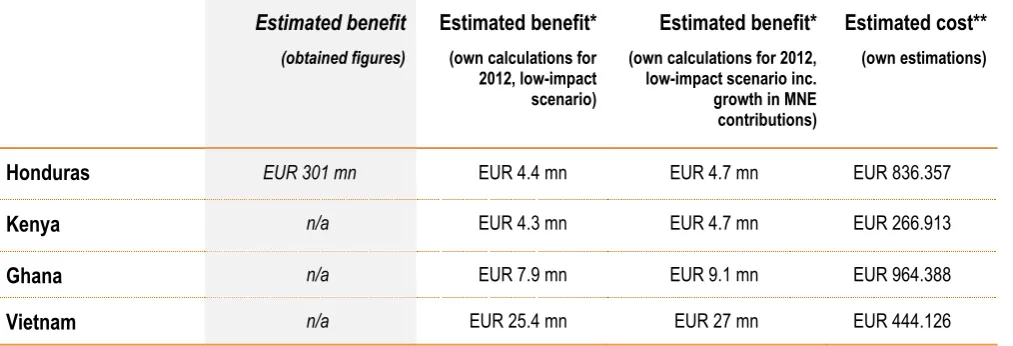
Based on our field research, we suggest a comprehensive list of possible forms of assistance to the selected countries when pursuing or paving the way for TP reform. Based on these findings, we have estimated, based on assumptions, the possible costs of introducing TP reform, e.g. setting up a specialist TP team, providing specialist training courses, as well as the provision of required materials/facilities (if applicable). Due to the lack of statistical data on the potential benefits of introducing TP reform, we have carried out a high-level economic analysis to quantify the potential impact that TP reform can have on tax collections from MNEs. Even for our low-impact scenario, we find that the potential increase in tax collections should outweigh the anticipated costs of TP reform.
Estimated benefit (obtained figures)
Estimated benefit
(own calculations for 2012, low-impact scenario)
Estimated benefit
(own calculations for 2012, low-impact scenario inc. growth in MNE contributions)
Estimated cost
(own estimations)
Honduras EUR 301 mn EUR 4.4 mn EUR 4.7 mn EUR 836.357
Kenya n/a EUR 4.3 mn EUR 4.7 mn EUR 266.913
Ghana n/a EUR 7.9 mn EUR 9.1 mn EUR 964.388
Vietnam n/a EUR 25.4 mn EUR 27 mn EUR 444.126
Based on our findings and additional research we have carried out, we have developed a general framework setting out support activities we consider appropriate depending on the state of play with respect to TP in developing countries. However, it is generally important to closely assess the country-specific situation and determine the applicable stage for each developing country by reference to the catalogue of preconditions for TP reform as outlined in this report.
i. Developing countries with no TP legislation in place
We find that the demand for donor support in developing countries that have no TP legislation (i.e. neither adopted nor drafted) is high. Assistance should be provided to establish a fundamental understanding of TP principles, methods and tax treaties within the local tax administration. Assistance is also needed with respect to the drafting of TP legislation. In this context, it can be particularly helpful to provide tax administrations with examples of existing TP legislation in other countries. A selected group of tax officials should be given the possibility of deepening their understanding of TP, e.g. by observing TP practices in other countries during secondments.
ii. Developing countries close to adopting TP legislation
pursuing a phased approach. For that purpose, local tax administrations could be assisted in drafting mandatory questionnaires to gather the most-relevant taxpayer information on inter-company transactions or to gradually implement documentation requirements. Support will be necessary to ensure that this newly available data is processed efficiently. Shortly before/after implementation of the TP legislation, funding could be provided to facilitate and improve communication between taxpayers and tax administrations, e.g. to organise information sessions and support facilities. Given the lengthiness of the negotiations, tax administrations should furthermore be assisted in initiating/conducting negotiations for the conclusion of tax treaties.
iii. Countries that have TP legislation in place
The group of developing countries with TP legislation needs to be subdivided into those that have TP legislation and those that have published TP rules in the form of circulars. We generally recommend that countries should be assisted in adopting TP legislation, as this provides taxpayers with greater certainty. In general, for developing countries that already have some kind of TP legislation in place, it may be important to offer technical assistance to review and revise the existing legislation. Together with this, developing countries can be supported in drafting more-sophisticated TP legislation such as advance pricing agreements („APA‟) and simplified compliance procedures.3 Assistance is furthermore necessary to
improve access to data on comparable transactions, e.g. by developing and administering own (regional) databases. The development of structured training programmes and the establishment of a physical training infrastructure can equally support developing countries at this stage. Also, countries can be assisted in enhancing their existing network of tax treaties and responding to new developments regarding trade flows.
* * *
Both the selected countries and developing countries in general to a large extent require technical assistance to build up TP expertise. We emphasise that there is a strong need for long-term assistance and ongoing cooperation on an international scale. The donor support initiatives should eventually aim at lifting the TP legislation and its application in developing countries to a common international standard. In our opinion, this is vital to reduce economic uncertainty and foster investment and growth. It is important to understand that TP reform should not be done under the guise of anti-abuse legislation but rather aim at improving the existing rules on corporate income taxation. The majority of taxpayers want to comply with local TP requirements in developing countries, and seek guidance on how to apply appropriate remuneration for related-party transactions to reduce tax risks.
3 This refers to administrative simplification measures, e.g. statutory provisions that apply to a given category of taxpayers and relieve those taxpayers from certain
2.
Introduction
It is nowadays commonly acknowledged that taxation is an important factor for economic development and the relationship between states and their citizens.4 Additionally, tax revenues are crucial for developing countries5 in order to build basic
structures and increase quality of life. However, tax policy choices are influenced by a country‟s economic structure and depend on administrative capacities, which significantly limits the options available to developing countries.6 It is in this
context that the growing involvement of MNEs in developing countries has put questions on TP high on the agenda for governments and international organisations that seek to promote growth, development and trade.
As a result of insufficiently sophisticated tax administration structures and processes, many developing countries capture only 40% of their tax potential.7 Consequently, developing countries need to establish tax systems that are effective and
efficient in mobilising revenue. This needs to be combined with minimising disincentives to investment and unbalanced costs of compliance, which lead to costly misallocations of resources. Developing countries need to ensure that they distribute the tax burden equitably.
In 2000, the world‟s political leaders agreed eight Millennium Development Goals („MDGs‟) to tackle extreme poverty and share the benefits of globalisation more equitably.8 In order to meet the goals by 2015, it is generally accepted that the
initiative‟s success will require helping developing countries strengthen their tax systems and increase domestic revenues. Increasing domestic revenue not only creates additional space to support MDG-related spending; it also allows countries to assume ownership for their policy. A related EC Communication was adopted in April 2010,9 highlighting the need to
support developing countries‟ capacity in mobilising domestic resources for development in line with principles of good governance in the area of tax. This was supported by the Council in its conclusions of June 2010 and has been supported by the European Parliament.
In order to assist developing countries in the implementation of TP legislation, the EC has proposed to offer support in adopting the internationally accepted OECD Guidelines. This would help developing countries in increasing their domestic tax collection by processing tax information better and ensuring tax compliance for all economic actors, in line with international standards. While the importance of TP legislation and enforcement for the collection of tax revenues is generally acknowledged, donor support remains relatively limited in this regard.
4 OECD (2008), “Governance, Taxation and Accountability- issues and practices”, DAC Guidelines and Reference Series, www.oecd.org. 5 For the term “developing countries”, we refer to the classification of the World Bank, see Appendix A.
6 Bird, R., and Zolt, E., (2003) “Introduction to Tax Policy Design and Development”, Draft prepared for a course on Practical Issues of Tax Policy in Developing Countries,
World Bank, 28 April-1 May 2003.
7 International Tax Compact (2011), “Benefits of a computerized integrated system for taxation”, iTax case study, Bonn, February 2011. 8 UN (2000), Resolution adopted by the General Assembly, 55/2 United Nations Millennium Declaration, 8th plenary meeting, 8 September 2000.
3.
About this report
This study was commissioned by the European Commission within the framework of its Tax and Development Agenda and with the financial support of the European Parliament. It is in this context that PwC („we‟) have been
asked to conduct research on TP and developing countries. We feel that the rationale behind the study, i.e. the analysis of possible ways to support developing countries in enacting TP legislation, is vital from both a development and a business perspective. Several developing countries are planning to introduce TP legislation to capture additional income from international related-party transactions. If countries decide to introduce such legislation on their own, there is a danger that this will lead to the emergence of a large diversity in TP legislation in various countries across the globe. The study has the potential to promote a uniform set of TP rules that are adhered to globally. We are of the opinion that such development would favourably affect the environment for international trade and MNE activities, thereby further contributing to investment and growth in developing countries. It is for this reason that PwC decided to participate in this study and assist in verifying whether a common denominator is available in the field TP.
The main purpose of this report is to provide an overview on the possibilities for adopting and implementing TP legislation in developing countries and to identify possible ways to support developing countries in this respect. To perform the analysis, four developing countries in Asia (Vietnam), Africa (Kenya and Ghana) and the Americas (Honduras) were selected by the EC. While Kenya and Vietnam have some kind of specific TP legislation in place, Honduras is about to adopt TP legislation shortly and Ghana currently has no TP-specific framework in place.10
In order to carry out the analysis, we addressed the following issues:
Why is TP important and what are the problems developing countries face with regard to TP? What international guidance exists for developing countries with respect to TP?
What is the economic situation and general tax environment in the selected countries?
What policies do selected countries currently pursue in the area of TP and what are the legal foundations? What experiences do the selected countries have with respect to tax reform processes?
What likely impact of increasing tax collections and costs can the selected countries expect from TP reform? What kind of assistance have the selected countries already received in the area of TP and what would be the best forms of future donor assistance?
10 It should be noted, however, that the arm‟s length principle is enshrined in Ghana‟s anti-avoidance legislation. Although the local tax administration already possesses
What conclusions and recommendations can be drawn from the example of the selected countries with regard to TP and developing countries in general?
Methodology
A detailed work plan, including the different steps of this project, was agreed with the EC in October 2010 and was followed by launch of the study in January 2011. As indicated above, it was agreed to focus on four developing countries, which were selected to serve as illustrative examples for the different stages of TP reform. This report offers an overview on the findings of these individual country studies11 and the additional research we have undertaken to gain an understanding of
the tax environment, state of play with regard to TP legislation and audit practices, as well as reform capacities in the selected countries. This additional research also covered other developing countries such as China and India, for which we have prepared case studies. We have furthermore integrated a case study on the United States of America („USA‟) to illustrate the timeline and development of TP reform over a longer period of time.12
We conducted local interviews with revenue authorities, donor organisations, civil society organisations, academics and business representatives from different industries, e.g. the automotive and pharmaceutical sector, during February to April 2011. To prepare for these interviews, we developed a standardised questionnaire addressing the topics mentioned above. This questionnaire was amended according to local circumstances and additional country-specific questions were raised based on these initial queries.13 The interview partners were selected based on their functions in the revenue authorities or
their experience/knowledge of the local tax and business environment. Based on our field interviews and our TP experience in the selected countries, we furthermore collected data on the assistance required by local tax administrations with regard to TP reform. These tables, which offer a comprehensive overview of our recommendations, provide an indication with regard to the estimated costs of introducing and implementing TP legislation in the selected countries.14
To provide an estimate of the budgetary impact of MNE activity and the possible increase of corporate income tax collections by introducing TP legislation, we have prepared calculations to quantify the potential impact of increasing tax collections by TP reform in the selected countries. For this purpose, we have taken publicly available sources of quantitative data and referenced these sources accordingly. We did not factor in the possible impact of increased tax collection on the local investment climate. Furthermore, our estimations of increased tax collections do not take into account possible additional revenues from other sources than corporate income tax, such as customs revenues. It should, therefore, be noted that these calculations cannot be seen as anything other than indicative estimates.15
11 For the individual country studies, see Appendices B–E. 12 For the individual case studies, see Appendix F.
13 For the questionnaire, see Appendix G. Please refer to the individual country studies for information regarding the interview partners. For reasons of confidentiality, the
information on interview partners could not be stated publicly in some cases.
The draft study has been discussed with a group of stakeholders on 3 May 2011; the final study was presented to a larger group of stakeholders and representatives of the local revenue authorities from Ghana, Honduras and Vietnam on 5 July 2011. Based on our discussions and the comments we have received subsequently (inter alia, from the OECD and UN), we have incorporated further aspects into it. We would stress that, given the restraints regarding time and budget, our report‟s findings only give an outline of TP in the broader context of developing countries. Nevertheless, we believe that the four selected countries represent a suitable core group because they are at different stages of drafting, adopting or enforcing TP legislation in their respective jurisdictions. Hence, even though a broad statement on TP and developing countries based on this report might be inappropriate, the findings do provide a strong basis to assess the challenges faced by developing countries and distil recommendations regarding future action and donor support in the area of TP.
4.
The importance and pitfalls of TP
Globalisation and economic growth have driven the level of inter-company transactions to new heights. It is estimated that more than 2/3 of all business transactions worldwide take place within groups, a figure that is likely to grow further in the future.16 In particular, developing countries are observing immense growth in intra-group transactions due to the fact that
their economies are still in the process of opening up and attract large amounts of FDI.
Therefore, TP is not only of importance to business but also for tax administrations, which have to implement or adapt their national TP legislation and practices accordingly. International consistency in TP is beneficial to creating a basic structure of taxable persons and events, which ensures proper application of the arm‟s length principle. The UN has stressed that “...
consistency is an important goal to be aimed at in terms of encouraging investment in a country and international trade that assists a country’s development, although it is ultimately for each country to adopt an approach that works in its domestic
legal and administrative framework, and is consistent with its treaty obligations”.17 However, application of the arm‟s length
principle18 to the domestic realities of developing countries generates several questions. Not just the high level of MNEs‟
integration and their ever-evolving business models, but also the increase in intra-group trades in intangibles/services as well as the use of sophisticated financing arrangements pose difficult questions in practice.
16 WB (2011a), “Transfer Pricing Technical Assistance Global Tax Simplification Program”, Presentation given by Rajul Awasthi in Brussels, 24 February 2011. 17UN (2011), “Transfer Pricing Practical Manual for Developing Countries” (TP Manual), Working Draft Chapter I, n° 8.4, http://www.un.org/esa/
ffd/tax/documents/bgrd_tp.htm.
18 The arm‟s length principle represents the international standard that OECD member countries have agreed should be used for determining transfer prices for tax
Developing countries often lack the necessary legal framework to enforce TP and sanction non-compliance and misconduct. This often includes the fact that local financial accounting provisions, which usually form the basis for tax accounting, are not sufficiently comprehensive. Furthermore, it is widely accepted that applying TP requires skill and judgment by both taxpayers and tax authorities. Especially regarding TP expertise, developing countries often face difficulties due to information „gaps‟. Local tax administrations may fail to collect necessary information due to the absence of documentation requirements, be unable to enforce such requirements or lack the capacity to process and evaluate such information. Additionally, there is the problem of human resource „gaps‟, meaning that the few TP or large-taxpayer experts that there are within tax administrations may leave the organisation because of changes in governing structures or more competitive employment opportunities in the business environment.
The arm‟s length principle is furthermore becoming increasingly difficult and complex to administer as TP audits need to be performed on a case-by-case basis and are often costly tasks for both tax authorities and taxpayers.19 One of the
foundations of the arm‟s length principle is comparative pricing; however, proper comparability is often difficult to find in developing countries. The fact is that the traditional TP methods20 rely directly on comparables, which have to be similar to
those of the tested party. It is often extremely difficult, especially in developing countries, to obtain adequate information on comparables, for the following reasons:21
There tend to be fewer organised companies in any given sector than in developed countries.
Existing databases for TP analysis focus on data from developed countries. This data may not be comparable or useful in performing benchmarking studies for companies operating in developing countries (at least without resource and information-intensive adjustments) and, in any event, are usually costly to access.
The economies of developing countries may just have opened up or be in the process of opening up. There are many „first movers‟ who have come into existence in many sectors and areas hitherto unexploited or unexplored; in such cases, there is an inevitable lack of comparables.
In some cases, the problem of being unable to determine and justify the adequacy of related-party transactions is faced not only by tax administrations but also by taxpayers.22 This often results in increasingly difficult tax audits. It is difficult to set
down an exhaustive list of the common reasons for TP adjustments in tax audits in both developed and developing countries. However, these grounds usually include the deemed non-arm‟s length nature of inter-company transactions,23
covering ongoing transactions relating to goods (tangible and intangible) and services to on/off transactions such as the
19 See UN (2011), op cit., no. 10.9.
20 Comparable uncontrolled price method, resale price method, cost plus method; see OECD (2010a), TP Guidelines, Chapter II and section 5.1.
21 See UN (2011), “Transfer pricing: practical manual for developing countries”, Working Draft, no. 10.6, http://www.un.org/esa/ffd/tax/documents/bgrd_tp.htm.
22 The difficulties of comparability in TP have also been recognised by the OECD in the past, see “Invitation to comment on comparability”, May 2006,
http://www.oecd.org/dataoecd/59/38/36651642.pdf.
23 Norwegian Government Commission on capital flight from developing countries (2008), “Tax havens and development” (preliminary report), submitted 18 June 2009,
transfer of property; and business restructurings are also implicated. Although the difference in the corporate income tax rate between the different parties in a transaction should not impact the arm‟s length nature of the dealings, it is often used by revenue authorities as a trigger for further scrutiny. In addition, some tax authorities, e.g. the Kenyan Revenue Authorities,24 make use of non-publicly available information for validating TP, to the disadvantage of bona fide taxpayers
that do not have access to such data and hence are not able to verify such comparisons. This generates legal and economic uncertainty for taxpayers, which potentially precludes commitments with respect to investment decisions and business development.
In cases of dispute betweenrevenue authorities of two countries on an appropriate arm‟s length remuneration, mutual agreement procedures („MAPs‟) are commonly used to avoid taxation of the same profits in two jurisdictions. However, these MAPs are usually based on bilateral double taxation agreements („DTAs‟) and can likewise be time-consuming and technical in their nature. Resources, monetary and otherwise, may be limited not only for the tax administration but also for the taxpayer (especially for small and medium-sized enterprises), which may be subject to detailed TP documentation requirements. Taxpayers might not have the possibility to consult upfront with the tax administration to achieve compliance, which represents a problem in the absence of case law.
In addition, developing countries are also under pressure from developed countries where the counterparties of local companies involved in related-party transactions are subject to taxation. Developing countries are expected to improve TP enforcement and enhance the level of transparency with regard to related-party transactions. This also requires a robust information exchange mechanism between countries, which should be based on solid legal grounds and comply with international standards. Developing countries still lag behind in DTAs containing a clause on the exchange of information or specific tax information exchange agreements („TIEAs‟), which represent a relatively new tool to improve cooperation between tax authorities in TP matters. Generally, bilateral or multilateral exchange of information with developing countries is nonetheless negatively impacted by the information „gaps‟ outlined above.
5.
Activities by international organisations
in the field of TP
5.1.
The OECD Guidelines
The OECD has made considerable efforts in offering an international standard for levelling the playing field in the area of TP. The members of the OECD, which are mainly developed countries but also include some developing countries, have
24 Wright, T.N., (2010) “Kenyan Practitioner decries government‟s aggressive tactics in transfer pricing audits”, Tax Management Transfer Pricing Report 920,
agreed common methods and practices in the area of TP, which are outlined in the OECD Guidelines.25 In particular, the
OECD Guidelines outline five methods to determine the arm‟s length nature of transfer prices:
1.Comparable uncontrolled price (CUP) method; which is based on the comparison of prices charged in a controlled transaction to the price charged in an uncontrolled transaction in comparable circumstances for comparable products and services.
2.Resale price method (RPM);which is based on the resale price at which a product purchased from a related party is sold to an independent enterprise. The transfer price of the inter-company transaction is calculated by deducting the resale price margin from the resale price in the uncontrolled transaction.
3.Cost plus method (CPM); which uses the costs incurred by the supplier of property/services in a controlled transaction. A mark-up taking into consideration the functions performed, risks assumed and assets employed is added to the costs to determine the arm‟s length price in the controlled transaction.
4.Transactional net margin method (TNMM); which examines the net profit margin relative to an appropriate base (e.g. cost, sales, assets) realised from a controlled transaction.
5.Profit split method (PSM);which is based on identification and appropriate split of the profit realised by related entities from a controlled transaction.26
Due to the sophistication of the guidance and the economic importance of the participating countries, the OECD Guidelines have the potential to serve as a universally recognised approach to TP. Furthermore, the OECD has a Global Relations programme, which promotes global dialogue on TP and aims at promoting good practice, building country transfer pricing capacity and feeding non-OECD country views into the OECD‟s work in this area.
From an economic perspective, the establishment of global standards and methods in the area of TP should be clearly advocated. Overall, double taxation is detrimental to economic development and is more likely to occur if there are mismatches in country approaches to TP. Harmonisation of TP helps to facilitate bilateral and multilateral cooperation (e.g. in the area of exchange of information) and reduces the risk of double taxation through the promotion of advance pricing agreements („APAs‟) and MAPs. It also provides MNEs with more certainty for estimating what kind of consequences their activities and transactions trigger in terms of local taxation. International adherence to the OECD Guidelines may help foster development through investment.
In this context, the OECD is actively advocating the development of a functional, efficient tax system in developing countries. Through the work of the Informal Task Force on Tax and Development, which was set up in January 2010,27 the
25 Developing countries which are currently members of the OECD include Chile, Mexico and Turkey. The OECD also closely works with developing countries in Africa,
Asia and Latin America. The OECD‟s approaches to TP are adhered to by the OECD member states and in principle do not bind states that are not directly affiliated to the organisation.
26 For the comprehensive provisions on the different methods, please refer to the OECD Guidelines. For the CUP method, Chapter II, nos. 2.13 et seq.; for the RPM, nos.
2.21 et seq.; for the CPM, nos. 2.39 et seq.; for the TNMM, nos. 2.58 et seq.; and for the PSM, nos. 2.108 et seq.
27 OECD (2010b), Co-Chairs‟ Statement of Joint Meeting on Tax and Development between the Committee on Fiscal Affairs (CFA) and the Development Assistance
OECD aims to help developing countries in gathering the necessary data to analyse how their local tax administrations collect tax revenues and how good governance can be further strengthened. The OECD has published additional guidance with respect to the relation between governance and taxation,28 which stresses the role of the taxation system in national
development. Furthermore, the OECD has developed draft TP legislation for developing economies,29 which is based on
the international standards promoted through the OECD Guidelines.
The OECD is establishing a Global Forum on Transfer Pricing, which will meet for the first time in 2012. It is envisaged that this Forum will be designed to provide a place for government officials from OECD and non-OECD countries to share their expertise and exchange their views on theoretical and administrative aspects of TP. The OECD has also developed informal explanatory notes on a number of aspects of TP (the first five of these deal with TP methods, comparability, comparability adjustments, arm‟s length range and location savings (not yet finalised)).
5.2.
The UN TP Manual
The United Nations („UN‟) has produced the United Nations Model Double Taxation Convention between Developed and Developing Countries („UN Model Treaty‟) in order to provide developing countries with a foundation when negotiating and signing DTAs with developed countries. In addition, the work of the UN Department of Economic and Social Affairs („DESA‟) pursues the objective of assisting countries in their economic, social and environmental development. Within the DESA, the Committee of Experts on International Cooperation in Tax Matters („UN Expert Committee‟) has been dedicated to working specifically on issues arising for developing countries with regard to TP and international cooperation.
In 2009, the UN Expert Committee initiated its work on the UN Transfer Pricing Manual for Developing Countries („TP Manual‟) and published new working drafts on 31 May 2011.30 The TP Manual is designed to respond to the specific needs
of developing countries and offers a step-by-step approach to adopting and implementing TP legislation in developing countries. The different sections of the guide deal with the basic questions regarding TP, and provide information on how to draft TP legislation and set up special TP units, how to identify and work with TP databases, how to pursue simplified strategies for verifying the arm‟s length nature of a related-party transaction plus compliance strategies for different sized companies. In its draft, the UN Expert Committee establishes a clear reference to existing guidelines and endorses the various elements of the principles stated in the OECD Guidelines (e.g. the arm‟s length principle).
Conceptually, the TP Manual emphasises that TP as such is not necessarily abusive and should not therefore be regarded as a measure for tax avoidance.31 It is important to highlight this since, in many developing countries, TP legislation is
28 OECD (2008), Governance, Taxation and Accountability; OECD (2010c), “Citizen-State Relations: Improving Governance Through Tax Reform”, Citizen-State
Relations, http://www.oecd.org/dataoecd/19/60/46008596.pdf.
29 OECD (2010d), “Transfer Pricing Legislation – A suggested approach”, Centre for Tax Policy and Administration, November 2010,
http://www.oecd.org/dataoecd/41/6/45765682.pdf.
introduced in conjunction with anti-avoidance regulations and therefore runs the risk of being generally regarded as a tool to circumvent taxation.
5.3.
The work of other international organisations
In addition to the OECD and the UN, other international organisations have recognised the need to support developing countries in building capacity in taxation matters. The International Monetary Fund („IMF‟) has committed to financing local projects in low-income countries to progress towards the MDGs. In that context, the IMF has provided advice and technical assistance to countries but also granted significant amounts of funding and helped mobilise donor support.
The World Bank („WB‟) has also confirmed the need to support developing countries in adopting tax governance and TP legislation. For that purpose, the WB has initiated a Global Tax Simplification Programme („GTSP‟) to improve the efficiency and simplicity of tax administration and processes, an area identified as one of the top-three major constraints that business faces in today‟s economic environment. On that basis, the GTSP provides technical assistance on setting up/improving TP legislation and including TP risk criteria in designing risk-based assessments for tax audits.
It is important to mention that capacity-building is also fostered by regional tax forums such as the Inter-American Centre of Tax Administrations („CIAT‟) and the African Tax Administration Forum („ATAF‟). These platforms for mutual cooperation are used by tax administrations to share views on tax matters and best practices, and can make a substantial contribution towards levelling the playing field in the area of TP. As examples, Ecuador and Uruguay have introduced specific methods to evaluate the exportation of commodities based on experience shared by the Argentinean tax authorities. The ATAF, currently composed of 30 African member countries, was created as a programme addressing African needs and strategies. It seeks to encourage partnerships between African countries and receives support from donor partners like the African Development Bank („AfDB‟) and the OECD. In the recent past, several seminars and training sessions organised by the ATAF have dealt with the subject of TP.
6.
Preconditions for TP reform
As developing countries open up their economies, the need arises to establish a sound corporate income taxation system,32
which is the foundation for TP legislation. To an even greater degree, certain preconditions and basic requirements with regard to a national tax system should be in place before introducing and implementing TP reform.
32 See Tanzi, V., and Zee, H., (2001) „Tax Policy for Developing Countries‟, International Monetary Fund, Economic Issues no. 27, March 2001,
It is important to stress that TP only represents one of a number of different legislative and administrative measures that have an impact on related-party transactions. These measures include thin capitalisation rules,33 money exchange controls
and general anti-abuse legislation. Indeed, the existence of a general anti-abuse framework is often observed in countries that do not yet have comprehensive TP legislation in place (e.g. Ghana). However, in-depth analysis of these measures is not within the scope of this report.
The preconditions for TP reform can be divided into three main categories, which form the pillars of TP reform. These include the economic and legal preconditions, as well as the preconditions with regard to the organisation and capacities of the national tax administration (see Figure 1). The aptitude of developing countries for TP reform should be assessed in line with these items.
Figure 1: Basic preconditions for implementing TP reform
1. Economic and political preconditions
political stability
economic growth and diversification (*)
open economy allowing significant export/import activity (*) large FDI and involvement of MNEs (current /outlook) (*)
infrastructure (transport/ communication), skilled workforce/educational system
2. Legal preconditions
comprehensive accounting rules comprehensive income tax law (*)
understanding of administrative simplification measures
adherence to the internationally accepted OECD taxation principles (neutrality, efficiency, certainty and simplicity, effectiveness and fairness, flexibility)
legal system providing for cross-border flows of capital and assets tax treaty network (*)
legal infrastructure: courts system, appeal procedures existing TP legislation (if applicable) (*)
3. Tax administration
trained staff (*)
competitive salary packages training facilities (*)
language abilities (*)
taxpayer education/assistance channels (*)
effective processes of tax return filing and data processing effective tax collection processes
monitoring of tax revenues
effective tax procedures (administrative/ judiciary)
tools for exchange of information within the tax administration information technology
some level of specialisation within tax administration (*) internal controls
experience with tax reform
experience with TP enforcement and audits (if applicable) (*) bilateral/multilateral cooperation with other tax administrations
(*) Preconditions selected for further analysis in this study.
7.
Selected countries and TP reform
7.1.
Introductory remarks
The most important results of our study on TP in developing countries are outlined in this section. Please note that this section only gives a comparative overview and summarises our findings. For the full country studies that we have carried out, we refer to the more-detailed appendices, which are attached to this report.
In order to discuss the possibilities available to the selected countries with regard to TP reform, we structure our analysis along the lines of the clusters of preconditions for TP identified in the previous section, i.e. the economic and political preconditions, legal preconditions and capacities of local tax administrations. Our assessment will be impacted by the fact that a number of these preconditions are interrelated or out of the scope of this report. However, at the end of our analysis, we provide an opinion on the state of play in the selected countries and assess whether they can be regarded as suitable candidates for donor support for TP reform. Throughout the report, we integrate information on TP and other developing countries whenever feasible to provide a broader picture on TP in developing countries.
7.2.
Economic and political preconditions
7.2.1.
GDP growth, economic sectors and financial markets
Table 1: GDP growth levels for selected countries34
Country 2006 2007 2008 2009 4-yr average
Ghana 4.6% 6.5% 8.4% 4.7% 6.1%
Honduras 6.7% 6.2% 4.1% -2.1% 3.8%
Kenya 6.3% 7.0% 1.6% 2.6% 4.4%
Vietnam 8.2% 8.5% 6.3% 5.3% 7.1%
The tax to GDP ratio (see Table 2) in the selected countries has been subject to slight fluctuations over recent years but still remains low compared to the OECD average (34%–35%).35 This was one of the reasons why this study was launched with
a view to investigating how to increase the tax to GDP ratio in developing countries.
Table 2: Tax revenues as a share of GDP (%) for selected countries36
Country 2005 2006 2007 2008 4-yr average
Ghana 23.8% 22.9% 20.5% 21.3% 22.1%
Honduras 15.9% 16.3% 15.2% 14.5% 15.5%
Kenya 18.9% 17.9% 17.4% 18.7% 18.2%
Vietnam 26.2% 27.1% 26.2% 26.4% 26.5%
Historically, the selected countries have produced agricultural products, raw materials and minerals. In fact, agriculture still contributes to a significant share of GDP and export earnings in many areas.37 It represents one of the five biggest industry
sectors in Kenya, together with the wholesale, trade, transport, communications, manufacturing and education industries. Equally, in Ghana, agriculture represents a large proportion of national industry (30.2% of GDP), together with industry (18.6%) and services (51.1%). During the past few years, substantial oil and gas deposits have been found on the Ghanaian coast and are likely to significantly change the economic structure of that West African country. Overall, both Kenya and Ghana suffer from a large shadow economy.38
Agriculture also makes a large contribution to the economy of Honduras, and the country has historically depended on the export of commodity goods such as bananas, coffee, timber, shrimp, gold and palm oil. Today, Honduras‟ economy is
34 Annual percentage growth rate of GDP at market prices based on constant local currency, see IMF (2011), World Economic Outlook database April 2011,
http://www.imf.org/external/pubs/ft/weo/2011/01/weodata/index.aspx.
35 OECD (2010), Revenue Statistics 2010 – Special feature: Environmental Related Taxation, OECD Publishing, http://dx.doi.org/10.1787/rev_stats-2010-en-fr. 36 WB (2011b), “The World Bank Open Data Catalogue”, Tax Revenue (% of GDP), www.data.worldbank.org.
37 As an example, the agricultural sector in Kenya averaged about 23% of the country‟s GDP between 2006 and 2009 and contributed to more than 60% of export
earnings; see Kenya National Bureau of Statistics (2010), Economic Survey 2010, http://www.knbs.or.ke.
38 Estimates on the contribution of informal enterprises (i.e. the informal sector) to non-agricultural GDP is significant for both Kenya (25% in 1999) and Ghana (58% in
largely diversified due to high levels of international trading in agricultural commodities and manufacturing, making the country the most open economy in Central America.39
In Vietnam, the agricultural sector, including forestry and fishing, contributed to about 21% of GDP in 2009. This marks a decrease compared to 2000, when nearly 25% of the national economy was made up of agriculture, forestry and fishing, and is accompanied by an increase in industry and construction activities (from 37% in 2000 to 40% in 2009). Capital intensive investments in Vietnam are mainly observed in the manufacturing sector (49%), followed by the property (25%), construction and hotel/restaurant sectors (all 6%, see Table 3).
Table 3: Capital-intensive investments by Sector – Vietnam40
Sector No. of projects Registered capital in USD mn (in EUR mn)
Manufacturing 7,418 96,253.92 (68,576.46) Property 353 48,209.85 (34,347.29) Construction 705 11,634.35 (8,288.94) Hotel and Restaurant 300 11,364.71 (8,096.83) Electricity, gas, water production and distribution 63 4,870.37 (3,469.91) IT 645 4,791.11 (3,413.44) Art and Entertainment 125 3,461.36 (2,466.06) Logistics 301 3,183.01 (2,267.75) Agriculture, Forestry and Aquaculture 482 3,096.12 (2,205.84) Mining 69 2,959.85 (2,108.76) Wholesale and Retail 496 1,669.24 (1,189.26) Finance, Banking and Insurance 73 1,321.48 (941.49) Others 1,418 3,135.98 (2,234.24)
In line with economic growth, financial markets, financial services and insurance services in the selected countries have seen a considerable increase, triggering various reforms that have been carried out to improve the efficiency of the commercial banking system. For example, Vietnam restructured financial institutions and transformed state-owned banks into independent businesses starting in 1998. A number of additional changes in policies and regulations were announced in 2010 and aim to further modernise the sector by, inter alia, revising banking laws and introducing higher minimum capital requirements for banks. In Ghana, the regulation of banks and insurance companies is comparatively advanced today,
39 WB (2011), “Honduras Country brief”, http://web.worldbank.org/WBSITE/EXTERNAL/COUNTRIES/LACEXT/HONDURASEXTN/0,,contentMDK:21035522~
pagePK:141137~piPK:141127~theSitePK:295071,00.html.
40 As of 22 February 2011; Vietnam Investment Review (2011), “Investment Update”, 28 March – 3 April 2011. We did not obtain similarly detailed data for the other
making the issuance of licences to run such businesses and offer such services subject to a suitability process and constant monitoring once a licence is granted.
7.2.2.
Trade liberalisation and international business relationships
In recent years, economic reforms and trade liberalisation have been driven forward in almost all developing countries to restructure economies, increase wealth and attract investment. In Vietnam, this tendency has resulted in a variety of different economic reforms, which have been implemented since 1986 under the „Renovation‟ policy and aimed at building a multi-sector economy, whereby the focus lies on economic management and financial, monetary and administrative reforms. Since 1996, growing investments have been made in producing goods for export, infrastructure construction, producing import substitutes and in labour-intensive industries.
This tendency of opening up local economies has been further reinforced because some countries have actively pursued policies to increase cross-border trade by entering into FTAs or joining international trade organisations such as the WTO. For instance, in Honduras, trade liberalisation through a total of nine FTAs has facilitated the establishment of new industries such as pharmaceuticals, telecommunications and textile manufacturing, which increasingly make significant contributions to the GDP.
Honduras has furthermore signed a treaty creating a regional trading scheme, serving as a basis for regional trade agreements (Central American Integration System, „CAIS‟). Additionally, the country, together with other Central American States, has entered into multilateral FTA negotiations with strong trading nations/regions such as Canada and the European Union. The most important FTA Honduras has entered into is the DR-CAFTA,41 which was signed among the
central American states, the Dominican Republic and the United States. The agreement has eliminated tariffs and reduced barriers to the provision of services. The practice of increasing trade cooperation has also been observed in the case of developing countries in the region of South Asia, where a number of emerging economies, e.g. Vietnam, have become members of the Association of South East Asian Nations („ASEAN‟) and signed a number of bilateral FTAs. Negotiations for an EU-ASEAN Free Trade Agreement commenced in May 2007.
Ghana mainly has trade relationships with Nigeria, China, the US, the United Kingdom, the Netherlands, Ivory Coast, France and India. Relatively weak regional trade integration in Africa, as a result of which more than 80% of Africa‟s total exports go to Europe, Asia and America,42 also becomes apparent when looking at the trade relationships of Kenya. Its
main trading partners are Uganda, the UK, Tanzania, the Netherlands, the United States and Pakistan. However, together
41 Dominican Republic-Central America-United States Free Trade Agreement.
42 Economic Commission for Africa (2010), “New Report on Assessing Regional Integration in Africa Features Intra-African Trade at the ADB Annual Meetings”, Press
with four other African countries, Kenya has established the East African Community („EAC‟),43 which launched its own
common market in 2010 and seeks, inter alia, to boost intra-African trade.
7.2.3.
FDI and the importance of MNEs in local economies
The assessment of MNE activity in the selected countries is an important step in the analysis for the need for TP reform. It not only allows conclusions to be drawn with regard to the relevance of TP and, hence, the potential impact on tax collections of investing in TP reform, it also highlights specific economic sectors that should potentially receive special attention when TP legislation is drafted. Certain sectors involve very specific business transactions of increasing complexity, such as the frequent transfer of intangible assets or finance transactions.
Overall, MNEs play a significant role in the economies of the selected countries. In Honduras, it is estimated that they represent approximately 24% of total GDP. In Kenya, it is estimated that MNEs account for a significant percentage of the large taxpayer population, which contributes to about 75% of total tax revenues.44 Many MNEs in Kenya began their
operations in the early 1990s, but a significant share of them already started to invest when the country attained independence (1963). In some industry sectors, especially agriculture, manufacturing, transport and financing, a strong MNE presence can be observed. Even though MNEs have traditionally operated as fully-fledged entrepreneurs in Kenya, some have recently opted to lower the risk profile of their local entities by transferring functions and value-addition processes out of Kenya. This is due to activities such as manufacturing being centralised in other countries like Egypt, South Africa and the United Arab Emirates („UAE‟).
MNEs‟ activities and investments often target specific industries. In Ghana, in the past five years, MNEs have increasingly invested and are now mainly active in the sectors of transport and communication (49% of GDP), banking (18%), mining/quarrying (15%) and real estate (6%). Additional sectors of MNE importance include insurance, construction, manufacturing, distribution and oil/gas/petroleum. Most MNEs have 100% foreign-owned investments; however, those in the mining industry are not usually 100% owned, since the laws of Ghana require a minimum holding by the government. Related-party transactions include trade in tangible goods and intra-group financing, but MNEs also provide or receive management and technical services, know-how, patents and other property rights. In 2009, MNE contributed about 21.13% of the total revenues from corporate income taxation in Ghana.45
43 The members of the EAC are Burundi, Kenya, Rwanda, Tanzania and Uganda, see http://www.eac.int/.
44 Both direct and indirect taxation. Receipts from corporate income tax contribute 19% of total tax revenue (average 2005–2010) (estimates obtained from the Treasury
Department of the Kenyan Ministry of Finance).
45 Information obtained from the Larger Taxpayer Unit of the Ghanaian Revenue Authorities. Unfortunately, it was not possible to obtain figures on MNE contributions to
In Vietnam, MNEs were observed to be increasingly active in the country following introduction of the Law on Foreign Investment in 1987. They have invested in a variety of different industries, ranging from manufacturing to water supply and waste management.
7.3.
Legal preconditions
7.3.1.
Corporate income taxation and special tax regimes
Most developing countries have implemented a tax on corporate profits and require taxpayers to calculate their tax base for corporate income taxation purposes. The countries selected for the study, Ghana (25%), Honduras (25%), Kenya (30%) and Vietnam (25%), all levy income tax on business profits (standard rates). In fact, many developing countries use multiple rates, which mostly apply to specific economic sectors, and also exclude some sectors completely from taxation (tax breaks). Some have noted that these special schemes are detrimental to the functioning of market forces in developing economies.46
Overall, the taxation systems have undergone considerable changes during the last few years, but it is not possible to identify a common pattern for the selected countries. For example, Vietnam lowered its corporate income tax rates from 32% in 200347 to 25% in 2009 in a conscious effort to reduce the level of company taxation. In contrast, Honduras
comprehensively overhauled its tax system in 2010, inter alia by expanding the tax base and eliminating a large number of tax exemptions.
In order to encourage FDI, some developing countries have introduced tax incentives and special tax regimes, including temporary import regimes.48 The ultimate intent behind these schemes is often to increase employment and the average
skill levels of the local labour force. The existence of tax incentive schemes influences considerations on TP reform because, while partially successful in attracting investment, they lead to a fragmentation of the income tax regime. In particular, this can influence the effects of different pricing policies between related companies, even in a domestic context, and increase the benefit of implementing TP.49
46 Tanzi, V., and Zee, H., (2000) “Tax Policy in Emerging Markets: Developing Countries”, IMF Working Paper, WP/00/35. 47 25% for foreign-invested companies and foreign parties to business cooperation contracts.
48 A very prominent example of this is Mexico, where, due to an in-bound programme set up in 1965 (commonly referred to as the “Maquila programme”), a large amount
of FDI in manufacturing activities was attracted to the country. Tax incentives were given by way of an exemption from general income tax and VAT. See Mexican Bank for Foreign Trade (Bancomecxt) (2002), “Basic Guide for Foreign Investors 2002/2003”, 4th edition, Mexico, http://portal.sre.gob.mx/singapur/
pdf/BasicGuideForForeignInvestors.pdf. For an overview of existing tax incentive schemes in the selected countries, see Appendix K.
49 It was not within the scope of this report to investigate the budgetary relation between tax incentive schemes and TP. However, due to the indicated interrelation of both