An alternative perspective
for ITT:
Learning to Learn and its
basis in personal beliefs
about knowledge
Edited by Linda Rush
Contributions:
Linda Rush, Graham Rogers and Ian Phillips
Edge Hill University
Annie Fisher
University College Plymouth St Mark & St John
Laura Osborne
University College Plymouth St Mark & St John
Peter Kahn
University of Liverpool
Contents
Executive Summary List of Tables and Figures About the authors
Part I
An agenda for Learning to Learn in ITT
Chapter 1: Introducing Learning to Learn (Linda Rush)
Chapter 2: Tensions within ITT, and practitioner responses (Linda Rush)
Part II
Learning to Learn: the ITT practitioner’s perspective
Chapter 3: The role of personal beliefs about knowledge (
Laura Osborne)
Chapter 4: The beliefs of primary postgraduate trainee teachers about the role of dialogue in teaching and learning (
Annie Fisher)
Chapter 5: Learning to learn and learning to teach for undergraduate students in Primary Education with History (
Graham Rogers)
Chapter 6: Developing a thinking skills approach with secondary postgraduate trainee teachers (
Ian Phillips)
Part III
The environment for Learning to Learn
Chapter 7: Conclusions towards an enabling framework for the ITT provider (Linda Rush and Peter Kahn)
Acknowledgements
Peter Kahn for editorial support, particularly with Part II and Annie Fisher for editorial support with Chapter 2
Jenny Moon for her introduction to the role of epistemology in teacher learning
Guy Claxton for inspiring and supporting our thinking about the use and application of L2L as a pedagogic concept within the context of ITT
Executive Summary
This paper reports on a series of on-going investigations of learning to learn in the context of Initial Teacher Training (ITT). Generated from an ESCalate funded project (see Appendix 1), the work has a particular focus on exposing important connections between trainee teachers’ personal beliefs about knowledge (epistemological beliefs), conceptions of learning, and the conceptions underpinning their pedagogy when working with children in school. These seem to have emerged as key issues particularly pertinent to expanding the capacity to learn of trainees within ITT. Yet, to date, they have received little attention within research on Learning to Learn (L2L), given its more immediate focus within the school setting. We believe, however, that the climate is now ripe for research focusing on the context of lifelong learning, in particular teacher trainee learning in ITT. Thus, connections underpinning these various beliefs and conceptions, central as they are to teacher education are critically
explored, addressing, in particular, fundamental issues such as dialogue, self-identity, and the influence of the emerging professional context of practice.
The continuing nature of the investigations is significant; beginning investigation into the field of L2L in HE has raised more questions than it has currently answered. As a
consequence, four papers which were originally written to support a BERA symposium event (2007) in respect of the investigations have been reworked to highlight and tease out concepts connected to the fundamental issues above; they are thus not presented as ‘traditional’
completed research projects. These investigations are presented in Part Two of the report. With a view to sitting the individual investigations within a meaningful context, the first part of the report offers an overarching context. Part One first of all provides an overview of the Learning to Learn agenda, giving further impetus to the rationale. Particular reference is made here to a special edition of The Curriculum Journal (2007) which focuses on the L2L agenda in Europe, including drivers and definitions. Attention is paid, too, to Guy Claxton’s Keynote speech at the 2006 BERA annual conference: ‘Expanding the Capacity to Learn: A new end for education?’ Insights into the nature of learning that can be aligned with
expanding the capacity to learn are gained by drawing on a select sample of articles, identified because of their particular focus on L2L. This leads us to consider the current situation within ITT, highlighting as we do a set of key pedagogic concerns that we believe require an
‘informed’ response by all practitioners currently working within ITT. It is evident that there are tensions between such a perspective and current learning experiences of trainee teachers highlighted. However, if practices associated with the Learning to Learn agenda are to
become embedded within ITT, then it is essential that the tensions we highlight are addressed. Part Two then presents the four investigations that stem from the initial overarching
ESCalate project. The first of these (Chapter 3) centres on the personal epistemological beliefs of teacher trainees and the role that students beliefs’ about knowledge can have both for them as students in Higher Education, and as developing classroom practitioners. It examines the dimensions of learning power in relation to the author’s personal beliefs, and is developed through a wide-ranging literature review which links the students’ ability to engage meaningfully in L2L with the growth of their epistemology, or their theories of knowledge. The second investigation (Chapter 4) explores the potential of the role that classroom dialogue plays in cognitive development of students on a PGCE programme in Primary Education. It establishes strong links with Lucas and Claxton’s notion of lifelong learning capacities in terms of 5 Rs, specifically ‘reflection’ and ‘reciprocity’ in the context of dialogue; and examines the extent to which teaching and modelling of these L2L strategies enables embeddedness in postgraduate students’ own pedagogic repertoire. It thus presents an interesting snapshot of these students as they struggle towards contextual knowing.
knowledge construction. It focuses on students following an undergraduate course in Primary Education with History, and examines ways of developing pedagogic practice that not only creates a nurturing L2L environment, but also challenges learners and promotes collaborative inquiry and risk-taking.
Finally Chapter 6 offers a discussion of the potential for an enhanced relationship between critical thinking and subject pedagogy in the context of secondary postgraduate trainee teachers. It situates this within a framework encompassing metacognition and the epistemology of history as an academic discipline. This paper considers how far student teachers viewed a thinking skills activity as a series of clever teaching strategies rather than a considered approach to student learning.
List of Tables and Figures
About the authors
Annie Fisher is Senior Lecturer at University College Plymouth St Mark & St John with responsibility for its PGCE secondary English.
Peter Kahn is Educational Developer in the Centre for Lifelong Learning at the University of Liverpool.
Laura Osborne is Senior Lecturer at University College Plymouth St Mark & St John with responsibility for its PGCE secondary Science
Ian Phillips is the History PGCE Course Leader and a Teaching and Learning Fellow at Edge Hill University.
Graham Rogers is a Reader in Educational Development, Principal Lecturer in History and History Subject Study Co-ordinator in the Faculty of Education at Edge Hill University.
Part I
Chapter 1
Introducing Learning to Learn
Learning to Learn as a response to the knowledge society
Fredriksson and Hoskins (2007) in their introductory article: The development of learning to learn (L2L) in a European context, explain how the concept of L2L has been identified by the European Council (2006) as one of the basic skills for success in the knowledge society. Rapid changes in the work place, linked to changing technology and societal needs as a result of globalisation are posited as reasons for this focus. Such rapid change, Fredriksson and Hoskins (2007) argue, demand that citizens have the capacity to learn to learn “if they are to maintain their full and continued participation in employment and civil society or risk exclusion” (p. 127). Learning to Learn is thus being viewed here as a “quintessential tool for lifelong learning”; one which education and training need to provide the learning
environments for the development of.
Fredriksson and Hoskins (2007) explain how “In developing their ideas around the new skills needed in a less uniform society and in recognition of the need for people to live together in tolerance and respect” (p. 127), the Education Council (the body within the European Union composed of ministers of education) set up a working group comprising national experts and representatives from stakeholder organisations in 2002, charging it with the task of looking further into the issue of key competencies. This resulted in a
recommendation on key competencies for lifelong learning being developed and adopted, including the following definition of the concept of Learning to Learn:
‘Learning to learn’ is the ability to pursue and persist in learning to organise one’s own learning, including through effective
management of time and information, both individually and in groups. This competence includes awareness of one’s learning process and needs, identifying available opportunities, and the ability to overcome obstacles in order to learn successfully. This
competence. (Education Council, 2006, para. 5, annex in Fredriksson and Hoskins, 2007, p.129).
The above definition of L2L, comprises both affective and cognitive dimensions. Fredriksson and Hoskins explain that the affective dimension refer to social skills such as ‘learning relationships’, ‘motivation’, ‘confidence’, ‘learning strategies’, and the ‘ability to overcome obstacles’. The cognitive dimensions are concerned with the ‘capacity to gain’, ‘process and assimilate new knowledge’ and ‘students organising their own learning’. Although distinct, Fredriksson and Hoskins acknowledge that, in reality, both dimensions do overlap. Furthermore, the definition emphasises that the combined skills should be able to be used in multiple different contexts by the individual who has them – thus referring to this competence as general rather than specific subject-related competence. The definition also emphasises life-long (from birth to death) and life-wide (taking into account the breadth of learning opportunities such as work, family, community and specific learning environments such as school or adult education) learning dimensions of this competence by referring to building on ‘prior learning and life experience’ and emphasising the multiple environments where this competence can be utilised.
Rawson (2000), too, argues that one of the main drivers for the inclusion of ‘learning to learn’ on the skills agenda is the position accorded to it as an essential life skill (Smith, 1990 in Rawson, p. 225). Drawing on Stefani (1998), he posits that “within a changing world, lifelong learning is seen as essential for individual and societal survival and viability” (p. 225). However, Rawson (2000) in his article ‘Learning to learn: more than a skill set’ raises the question of whether L2L should be regarded as purely a skill, or set of skills, linked as skills often are to a functional/instrumentalist educational ideology. Rawson develops the position that L2L, to be effective, involves far greater depth of personal learning than skill development alone and that there are important pedagogic implications relevant to the encouragement of this deeper level of learning. Such thinking is supported by others (Hargreaves 2005; Poerksen, 2005; Moon, 2007).
Claxton in discussing the question of what motivates the idea that ‘expanding the capacity to learn’ is a valid end for twenty-first century education further explains that “some of the initial interest in ‘learning to learn’ reflected national government’s anxieties about economic competitiveness” (2006, p. 2) and that such thinking has led to a narrow focus “on ‘lifelong learning’ as the continual updating of vocational knowledge and skills (p. 2)”. Claxton asserts that too narrow a focus on lifelong learning for an employment agenda ignores the wider reality that many young people are not coping well with the general challenges of twenty-first century living. He argues that young people seem to lack the necessary personal resources to cope with the high levels of challenge, complexity and individual responsibility that the twenty-first century promotes. Believing that “we are in a century of choice, problem-solving and learning, and that it is the job of education to strengthen the ability of pupils and students to make good choices, skilfully to solve problems and to learn powerfully” (p.3), he argues that the fundamental purpose of education is to increase the resources that young people possess to cope with life; giving them whatever-it-is we think they will need in order to thrive:
…Though it draws heavily on the accumulations of culture, education is fundamentally a preparation for the future, not a veneration of the past. And so the aims of education have to change. There is no such thing as ‘best practice’ – or even ‘next practice’ – in abstract. You cannot say what is good teaching, good school organisation, good leadership, until you have specified what it is you want youngsters to gain, in the light of the particular world they are being readied for…Only if you tell me what your end is can I tell if your means are good or bad… It is education’s most basic job to expand all young people’s emotional and intellectual resources to cope with life… (pp.3-4)
that includes words like attitudes, dispositions, qualities, values, emotional tolerances, habits of mind (p. 4). As a way forward, Claxton offers two new phrases. They are ‘epistemic mentality’ which he defines as the sum total of the cognitive habits of mind that go to make up one’s capacity to learn and ‘epistemic identity’ - the sum total of the emotional and personal attitudes, beliefs and tolerances that expand or contract one’s capacity to learn. Expanding young people’s capacity to learn, as a goal of education could, Claxton argues, potentially help to give young people the confidence and capability they often lack in dealing with a host of real-life complexities and uncertainties and demands. But, he believes that we are very far from realising this potential arguing that some of the very early attempts to respond to the ideal have been little more than techniques bolted on to ‘business as usual’ to boost exam performance, and, as such, have supplemented the means but not the ends. To make the reality of students’ school experience match the L2L rhetoric more closely, Claxton argues that “we have to dig deeper, and not be afraid of talking about the character traits and habits of mind that is our intention to help young people cultivate” (p.4).
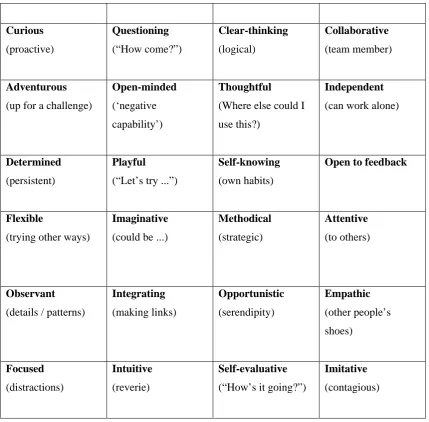
In an attempt to help us think more critically about the ways education and training can provide the learning environments for the development of L2L, Claxton turns to the notion of the powerful learner: ‘the Explorer’, ‘the Investigator’, ‘the Sceptic and ‘the Finder-Outer’ (p. 5); and then proceeds to unpack these characteristics through focusing on the learning
dispositions – or character traits – that make possible powerful learning. Table 1 shows the kinds of things that people regularly associate with being a capable learner, which, Claxton reminds us, is not the same thing at all as being a successful student. Claxton explains how other researchers, such as Costa in California, and David Perkins’ group at Harvard have designed similar lists, with cognitive neuroscience, experimental psychology and
sociocultural studies all making a contribution to underpinning the theoretical basis for such dispositions. Claxton highlights how cognitive neuroscientists, now believe that our brains have evolved to make us disposed to learn by imitation and that a disposition towards imitation is seen as one of the main ways in which cultural habits of thinking and learning transmit themselves from generation from generation. Drawing on Vygotsky, Claxton further highlights that habits of mind are contagious and that a tolerance for hazy or non-articulate ways of knowing is also essential to learning. He goes onto explain that people who are more receptive to their own hunches and inklings are likely to be better problem solvers than those who must have everything clear-cut. Such thinking demands a particular classroom
climate/ethos – one in which mistakes are allowed to be made, indeed, are welcomed, and time is given towards learners being able to digest their learning and be in receipt of feedback.
In clarifying the nature of these dispositions and what is actually being ‘expanded’ Claxton explores the distinction between learning skills and learning dispositions. Claxton explains, when you have learned a skill, you are able to do something you couldn’t do before. But you may not spontaneously make use of that ability when it is relevant in the future, if you do not realise its relevance; or if you still need a degree of support or encouragement that is not available. Claxton’s point here is that it is not much use being able if you are not ready and willing. Claxton posits that to become better disposed – to develop the disposition – involves two kinds of learning in addition to mastering the skill. First, Claxton argues, we can broaden or refine our sense of when it is appropriate to use this particular ability (to become more ready). And secondly, we can strengthen our inclination to make use of the ability regardless of whether other people are encouraging us (to become more willing). So when talking of dispositions, Claxton believes that we are not talking about a new kind of psychological entity that needs to be distinguished from skills: rather a disposition is merely an ability that you are actually disposed to use.
Curious Questioning Clear-thinking Collaborative (proactive) (“How come?”) (logical) (team member)
Adventurous Open-minded Thoughtful Independent
(up for a challenge) (‘negative (Where else could I (can work alone) capability’) use this?)
Determined Playful Self-knowing Open to feedback
(persistent) (“Let’s try ...”) (own habits)
Flexible Imaginative Methodical Attentive
(trying other ways) (could be ...) (strategic) (to others)
Observant Integrating Opportunistic Empathic
(details / patterns) (making links) (serendipity) (other people’s shoes)
Focused Intuitive Self-evaluative Imitative
(reverie) (contagious)
[image:11.595.84.514.69.491.2](distractions) (“How’s it going?”)
Table 1.1 Positive Learning Dispositions
Competing definitions
useful purpose. Thus the picture that emerges in seeking to map out the territory covered by the notion of Learning to Learn is one that is contested.
The approach of the DEMOSworking group broadly aligns with the approach taken by Claxton, in defining Learning to Learn not as a single entity or skill, but as a family of learning practices that enhance one’s capacity to learn; whilst acknowledging that a more precise specification of the family of practices that constitute Learning to Learn must await both further psychological research and educational developments. Associated with this is the notion of the individual student’s ‘learning power’; described as ‘a complex mix of
dispositions, lived experiences, social relations, values, attitudes and beliefs that coalesce to shape the nature of the individual’s engagement with any particular learning opportunity of individual students’ (Deakin Crick et al., 2004 in Hargreaves, 2005).
While we will operate from the broad perspective on Learning to Learn articulated by both Claxton and the DEMOS report, it will also be important to relate the debate to those related terms current within the sector, particularly critical thinking and perspective forming associated with metacognition. As well as avoiding potential confusion, this will allow us to draw on understanding developed within these more established fields. Before considering the pedagogy of Learning to Learn, and the contribution that Learning to Learn might make to ITT, it is thus important to consider the contribution of these fields.
The contribution of metacognition and higher level learning
The DEMOS report placed meta-cognition at the core of the family of practices that they identified as comprising Learning to Learn. Meta-cognition, here, is defined as the capacity to monitor, evaluate, control and change how one thinks and learns. In less formal terms, Learning to Learn can thus be associated with reflecting on one’s learning and intentionally applying the results of one’s reflection to further learning. It involves:
• understanding the demands that a learning task makes • knowing about intellectual processes and how they work • generating and considering strategies to cope with the task
• getting better at choosing the strategies that are the most appropriate for the task
• monitoring and evaluating the subsequent learning behaviour through feedback on the extent to which the chosen strategies have led to success with the task.
(DEMOS report, p. 7)
According to Flavell (in Jackson, 2004) “metacognition is higher order thinking to actively control the cognitive processes engaged in thinking and acquiring knowing. It is central to learning.” (p. 391) Jackson goes onto examine that part of metacognition that is concerned with how we control or regulate ourselves in order to learn and learn better. In doing so, he draws on the term metalearning, first used by Biggs (1985) to describe the ‘state of being aware of and taking control of one’s own learning’. Metalearning here is viewed as high-level thinking about learning, and how we acquire it. Flavell in viewing metacognition as central to learning goes onto argue that “It involves thinking about thinking and it must therefore include thinking about learning” (p. 394)
and transfer of learning from one situation to another. To achieve this level of learning, Bateson argues that the learner needs to develop the ability firstly to conceptualise the problem or issue to be addressed (what it is and what it is not) before deciding upon an appropriate solution. This clearly involves an expansion of viewpoint, however limited, to enable ‘corrective change’ and is probably at the level considered as the remit for higher education.
Rawson goes onto discuss that “resolute questioning of external apparent givens and internal perceptions and the mutual influence of the one on the other appears an essential element for the form of Learning to learn that is being developed here [by Bateson].” (p. 227). Further understanding about the concept of L2L is supported by drawing on Mezirow’s (1991) concept of ‘meaning perspectives’, or ‘personal paradigms for understanding ourselves and relationships’ and his suggestion that world-views can be held at a more personal and contextual level. Rawson argues that learning to learn might involve developing the ability to become more critically aware of our own/personal focused, specific perspectives and how they may be changed. He makes reference to Johnson-Laird’s (1983) description of the mind turning in on itself, first to create and then to question a kind of summary of its capabilities. Attention is also paid by Rawson to Bruner (1987) and his support of the possibility of a progressive widening or ‘decentering’ (away from oneself) of one’s frame of reference, for making and understanding meaning – an expansion of consciousness. This view suggests that learning to learn might involve the development not only of a questioning stance in relation to external and internal worlds but also a desire to understand their mutual interaction.
The model of learning to learn that is being developed by Rawson requires the learner to be involved in a self-reflexive process of learning: a conscious examination of his or her learning processes, or as Roth (1996, p. 1 in Rawson) describes: ‘building awareness of the self as learner’. Similarly, Terry (1997, p. 278 in Rawson) discusses the learners in
formulating ‘new ways of understanding reality, of interacting with others and of perceiving their own identities’. Such thinking is further supported by Johnson-Laird (1983 in Rawson) who talks of the need for learners to bring to the surface, and examine, the ‘tacit mental processes’ that have been employed to construct ‘mental models of the world’. The view of learning to learn that is being argued for by Rawson involves a deep and very personal learning process, central to which is the ability to think or act critically.
Lessons from critical thinking
In seeking to address such second-order or higher-level notions of learning, we thus also need to address the field of critical thinking more directly. With a view to supporting the promotion of critical thinking, a number of definitions are posited by Moon (2007) highlighting its technical nature, its component processes or fundamental elements and its sequential nature. Of particular interest is Brookfield’s description of critical thinking in relation to pedagogical issues where, from the outset, there is a concern not to capture a tight definition but to facilitate the development of critical thinking in the ‘classroom’. Brookfield (1987 in Moon, 2007) views critical thinking as a process that involves identifying and challenging assumptions, questioning the status quo and exploring alternatives. Brookfield’s approach typifies the ‘pedagogical approach’ to critical thinking. He advocates processes of trying to awaken, prompt, nurture and encourage the process. Critical thinking here, it is argued, should be fostered through the engagement of students’ interests and motivation via a facilitated environment.
student’s ability to think critically, or in pedagogy. Barnett (1977 in Moon, 2007) is the exception to this in implying that we should consider critical thinking as a process of
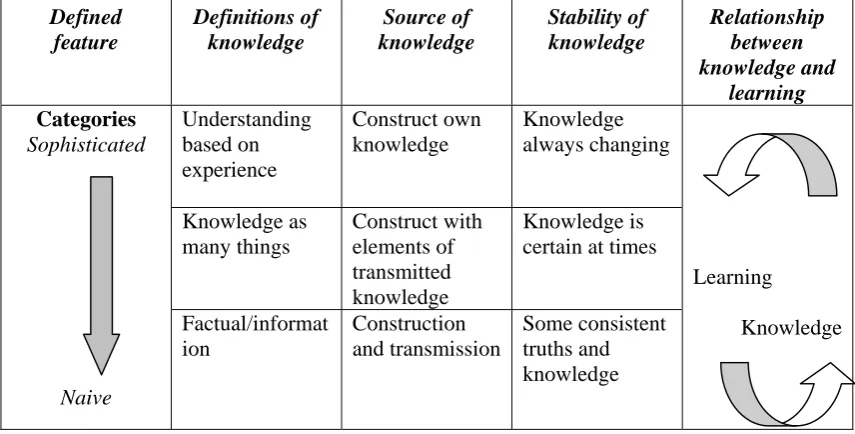
development towards ‘critical being‘, with the developing manner in which students conceive of the nature of knowledge, that is their personal beliefs about epistemology, playing a crucial role in this process.
The term ‘epistemology’ is a central one here. It describes the learner’s view of the nature of knowledge, that is, their conception of knowledge. Moon (2006, p. 7) argues that work on critical thinking and work on epistemology are closely linked stating that:
Critical thinking is a capacity to work with complex ideas whereby a person can make effective provision of evidence to justify a reasonable judgement. The evidence, and therefore the judgement, will pay appropriate attention to the context of the judgement.
Adopting such a broad definition of critical thinking aligns quite naturally with epistemological issues, highlighting: (1) the influence of the student’s conception of knowledge in their ability to think critically; and, given the identification of stages in the development of an individual’s conception of knowledge (2) the capacity for critical thinking should be seen as a developmental process. It is important also to emphasise Barnett’s notion of critical being, taking us, as it does, beyond a focus on conceptions of knowledge to considerations of ontology that is the nature of being. Barnett goes onto argue that it will be important to recognise this in shaping pedagogy for ITT.
Implications for pedagogy
The challenge remains, however, to embed such a family of learning practices within
pedagogy. How can schools expand the capacity to learn? Recently, attention has been turned to the development of what are called ‘infusion’ or ‘epistemic change’ programmes (Claxton, 2006 ). These infusion approaches are exploring ways in which the school as a whole, and its classrooms in particular, can become settings in which the various constituent elements of learning capacity are acknowledged, discussed, understood and systematically strengthened. Their guiding question is: what would it mean to organise your classroom and your pedagogy in such a way that every day your students were learning to learn more robustly, more
broadly, and more flexibly and skilfully?
Epistemic culture
Claxton (2006, p. 9) argues that an epistemic culture will need to attend to the following areas of its operation, as indicated in Table 2. The language employed in the school will need to change. Activities will need to be selected, designed and framed so that they deliberately focus on stretching each aspect of learning capacity, with a screen for content and a screen for learning practices. Wild topics will be required that give students freedom to develop their emerging capacity for learning to learn. Transparency will be required as to intentions to expand learning capacity, with students actively involved in making the culture even more effective in doing. Students will need to be encouraged to look for out-of-school applications and modifications of the learning dispositions, so that a continual transfer of thinking occurs. There will need to be a sense of progression, so the dispositions continue to get stronger, broader and richer. And modelling of the learning dispositions will be required on the part of teachers,
Activities – a potentiating milieu
Split-screen thinking – the warp and weft Wild topics – rich, real, responsible
Transparency and involvement – students as epistemic co-workers Application – to other contexts
[image:15.595.145.453.67.206.2]Progression – stronger, broader, deeper… Modelling – walking the learning talk
Table 2: Aspects of an epistemic culture
Addressing the whole person
It is apparent already in this epistemic culture that a number of fundamental issues need to be addressed. Rawson (2000) raises pedagogic issues that concern power and knowledge; involvement; and design. He identifies twofurther pedagogic areas, however, to be explored (one implicit and one explicit) as necessary precursors to the ultimate discussion of how L2L might be encouraged: personal development and assessment. Rawson argues that his view of learning to learn embraces more than solely intellectual activity. From the outset it involves an awareness of individual learning styles, but at a deeper level, which is of particular concern for him, it involves understanding and dealing with personal perspectives and aspects of self that interfere, positively or negatively, with the achievement of personal potential. Rawson references Roger’s (1994) view that the significant nature of learning involved can only be as the result of a combination of logic and intuition, intellect and feelings, concept and
experience, idea and meaning, i.e. involving the whole person. In terms of personal
development, the demands placed upon and the commitment and involvement required of, the learner in the learning process now begins to be more defined. What is clearly involved is a rather more holistic view of the student and the education process than is currently normally evidenced in higher education. The learning involved not only covers the development of the whole person but also requires the engagement of, and exploration of, the whole person. To more fully understand what is involved in L2L, we need a framework for understanding personal development. The second area, implicit and not unrelated, is concerned with the examination of an aspect of higher education that offers considerable potential leverage for encouraging, or otherwise, learning to learn. Rawson argues the area of assessment not only offers this potential but also is inextricably linked with learning to learn. Paper 3 goes on to discuss the nature of learning behaviour in ITT students in HE, and draws upon Rawson’s notion of ‘design’ in relation to pedagogic approaches.i
Constructivist paradigms
Rawsons thinking is encapsulated in Poerksen’s (2005) paper: Learning how to learn, where he describes the central ideas of Heinz von Foerster and related authors on constructivist model(s) of education, learning and teaching. Heinz von Foerster’s constructivism is fundamentally opposed to any view that involves nicely portioned transfer of knowledge: it foregrounds the human learner as the active and autonomous maker of knowledge.
Constructivism, here, is understood as an epistemology of fundamental ignorance and promotes the following key propositions:
Variations of listening
that we have failed to understand each other. In higher education we have to find ways of making successful communication more probable by presenting students with powerful reasons to change. A university teacher who creates these situations for the potential for personal change, must learn to listen in a special way – not merely seeking affirmation. The distinction between knowledge and ignorance
The traditional picture, which engenders anxiety and frustration and thus poisons the climate of learning in universities, is that students know little and – explicitly or implicitly – the tutors as the guardians of truth and certainty. They are the ones who know, who have the authority to decide. Such a communicative matrix anchored in the distinction between knowledge and ignorance puts dialogue at risk; it is not a good basis for arousing creativity, passion, patience, perseverance, and curiosity.
The universalisation of the dialogical principle
The dialogical principle states that the creation of knowledge and spirit of dialogue seems to be particularly appropriate to the epistemology of constructivism. A successful dialogue acknowledges that there is not just the one reality but a multi-verse of different interpretations as we argue and contradict one another, or attempt to harmonise views, or synthesise, or plaster over contradictions. The result of a dialogue worthy of its name is not the victory or defeat of one side or another, but mutual understanding based on mutual respect.
Such an approach clearly has implications also for the role that the teacher plays in supporting the construction of understanding. Poerksen thus goes on to posit four key role models, linking as these do to sustaining an epistemic culture within a school:
• The maieutic method, like Socrates, reflecting the teacher who does not teach, but, rather, creates conditions in which the hunger for knowledge is fuelled and the delight in personally achieved knowledge and independently constructed insight can be actively experienced.
• The moderator - Should the disorientation of Socratic teaching increase beyond reasonable limits and threaten to become unproductive, then the moderator aspect of tutor steps in. The moderating dimension will try to keep dialogues going and the desire for answers alive.
• Learning as cooperative researcher
• The perturbation agent - Whenever there is premature consensus, intellectually unprofitable petrification or boring and subjection-orientated quarrelling, then the time for irritation agents has come.
We can see for instance, that Socratically inspired teaching searches out the questions most suitable to agitate their partner’s minds, to disturb, upset, and astonish them. The tutor does not set out to solve problems, but to generate them, assuming the role of problem designers. Moderators then attend to the contours of the dialogues and insist on definitions and
terminological precision whenever necessary. They will prevent dialogues from drifting off into marginal areas that seem unpromising. They will point out existing knowledge canons of excellence but avoid presenting them as collections of ultimate truths whose validity is context-independent. The constructivist model of learning creates environments in which learning takes place because the partners – the students – recognise and experience it to be necessary. The central principle of the maieutic procedure is to create the problems that generate answers and solutions that are, finally, to be tackled and discussed.
The purpose of the discussion at this point in the report is, however, to consider pedagogic issues that might inform the introduction of Learning to Learn perspectives into ITT. An alternative perspective is painted by Kantz (2000) in his discussion of the Canadian curricular initiative in Ontario. Ontario’s curriculum framework is based on essential learning outcomes grouped into four ‘programme areas’, each of which includes several subject domains. Along with this focus on outcomes, the policy advocates an integrated approach to curriculum as well as a number of changes to traditional assessment, evaluation and reporting practices. This outcomes-based model of education focuses on results as opposed to teaching objectives, or time spent on areas of study.
Interestingly, in Kantz’s extended discussion of the epistemology at work in an outcomes-driven curriculum model, he argues that an outcomes-outcomes-driven curriculum is one that confirms an entity view of knowledge. Here ‘knowledge is seen as a free standing attribute of the environing world that only secondarily comes into passive possession of those who, because they happen to be in the right place at the right time, automatically end up with some portion of unmitigated truth directly embossed upon the recording equipment of their minds’ (Boyes and Ball, 1990: 377 in Kantz, 2000). Considered in this light, knowledge is certain and permanent, and viewed as right or wrong: this is diametrically opposed to the notion of the development of critical thinking, and as such, all that the concept of learning to learn stands for. Thus, the use of learning outcomes needs to be carefully deployed.
Achieving an epistemological redefinition within an ITT context is not easy since this runs counter to that which is popular. Kantz argues it might be productive to begin with teachers, who act as mediators between child and the formal curriculum and draws on the practice of Nola Lyons (1990) who teaches the various epistemological descriptions to her teachers in training, asking them to critique teaching episodes, texts and curriculum projects in
epistemological terms. Such an activity, Lyons believes, “opens the window to what she calls ‘dilemmas of knowing’ as the future teachers begin to realise their pedagogical choices are mediated by (nested in) implicit epistemological assumption.” (p. 141). Whilst promoting multiple viewpoints this, Kantz suggests, is in itself not enough. He goes onto urge that students (and tutors) must be encouraged to make judgements (interpretations) and with judgements come reasons for those judgements. This alternative pedagogy frames teachers as information managers, cultivating the conditions under which learners are able to approach ‘competence’. Competence, in this view, is defined as a process of knowledge construction. Assessment becomes synonymous with learning and is best accomplished by students themselves as they engage in the belief evaluation process. Learners form and revise their beliefs on the basis of evidence accumulated in the cultural store. Taken together, these redefinitions of competency, epistemology and pedagogy offer, as Kantz posits, a richer version of the holy trinity: one that curriculum will need to support if it is to carry out its mandate successfully.
Towards an alternative perspective for ITT
While some insight has been gained into the theoretical perspectives and pedagogy associated with the family of learning practices linked with Learning to Learn, it clearly still remains a challenge to embed these practices within the sector. Until now this has largely occurred through direct work with teachers, including associated continuing professional development for teachers, building as this has on the associated research. This has resulted in the
development of material and teaching approaches for use in schools.
Initial Teacher Training, though, also plays a key role in determining the nature of practices employed within schools, given the way in which it helps to shapes the
Education Academy accordingly funded a project entitled ‘Making real the Learning to Learn (L2L) rhetoric embedded in an Initial Teacher Education Learning and Teaching Strategy’, focused on practice within the University of Chester. This led to further funding from
ESCalate for a wider project involving other institutions, carried out between September 2006 and July 2007, entitled ‘A critical exploration of a Learning to Learn perspective and its Pedagogical Impact on Teaching in ITT’. It is this latter project that has led to this report.
The project that has given rise to this report sought to critically explore how the notion of Learning to Learn – understood as a family of learning practices that enhance one’s capacity to learn – could be evoked in ITT. The project further sought to identify current pedagogic thinking and practice within ITT, and, working from this initial basis, to introduce ITT tutors to a vision of what Learning to Learn might look like within their own practice as providers of ITT, to develop and test out (with the support of experts in the Learning to Learn field) ideas for ITT tutors to employ within their practice.
The project thus aimed, after an initial phase of identifying tutors who would be ready to champion Learning to Learn approaches within their own practice, to help frame a series of small-scale action research projects. Four such action research projects went ahead, and it is these projects that provide the basis for Part II of this report. These projects, as well as informing each other, would thus provide a test-bed for Learning to Learn within ITT. This would ensure the development of insight into the challenges involved in introducing Learning to Learn into ITT more widely, while also allowing for the creation of practices and resources to support this. This report is thus framed by the objectives for the overall project. However, we must at this point emphasise that the report outlines what is the first investigation into Learning to Learn, as such, within the context of ITT. And this is despite the extensive research base directly associated with Learning to Learn, and also the extensive body of relevant practice and resources situated within schools; as was evident to the project director in initiating the project. One therefore wonders whether there might be factors at work against the establishment of practice within ITT that is rooted in L2L perspectives. ITT indeed operates under a different set of constraints to those present for schools.
Any attempt to introduce Learning to Learn into ITT will thus clearly needs to be aware of potential constraints, and ready to address these constraints directly. It is important, then, that this project in seeking to introduce the Learning to Learn perspective within ITT also serves to highlight these constraints. Insight for ITT teachers that relate to practical strategies for embedding Learning to Learn within their curricula and teaching are thus likely to be insufficient.
Before introducing the small-scale action research projects that constitute the heart of this report (in Chapters 4-6 of this report, along with material produced as part of a further investigation in Chapter 3), we thus explore the context that ITT presents to the project. As we shall see, this will involve exploring a number of tensions evident within ITT. The exploration is shaped in part by the responses of practitioners involved in the early stages project. This context is important in understanding the course of the project as it developed, and in making sense of the small-scale action research projects that concern the practice of individual teacher educators. This exploration will further enable us in Part III of the report to address, more briefly, issues that will need to be addressed at the institutional level, informing those responsible for the design of entire ITT programmes. This, indeed, returns us to the challenge faced by the project based at the University of Chester, focusing on Learning to Learn in relation to a Learning Teaching Strategy for a suite of programmes in ITT. References
Hargreaves, A. (2005) About Learning DEMOS Report of the Learning Working Group, London
Jackson, N. (2004) Developing the concept of metalearning. Innovations in Education and Teaching International Vol. 41 No. 4, 2004 pp. 391-402
Kantz, S. (2000) Competency, epistemology and pedagogy: curriculum’s holy trinity. The Curriulum Journal Vol. 11 No. 2 Summer 2000 pp. 133 - 144
Moon, J., (2006) We Seek it here… a new perspective on the elusive activity of critical thinking: a theoretical and practical approach. ESCalate Discussion Paper.
Poerksen, B. (2005)Learning how to learn. Kybernetes Vol. 34 No. 3/4, 2005 pp. 471-484 Rawson, M. (2000) Learning to Learn: more than a skill set. Studies in Higher Education
Chapter 2
Tensions within ITT, and
practitioner responses
Challenges and tensions within the ITT culture
The introduction of the Teacher Training Agency (TTA) in 1994 had a major impact on Initial Teacher Training, with powers granted to the TTA enabling it to determine practice across the whole sector. Alongside this the professionalism of teacher educators has arguably been questioned by successive documents and papers, not least during the last nine years, which has seen not only the introduction of a National Curriculum for Initial Teacher training, but three substantial revisions to this curriculum. It is important to note that as a consequence, a new language has emerged. Teacher education is now teacher training; students are trainees; the curriculum is expressed as a set of standards for qualified teacher status (QTS) and subject knowledge is termed ‘content’; the expansion of school-based routes and employment
schemes means that training institutions are often referred to as ‘providers’ within what is a competence-based model.
Implications follow for the way student teachers and student educators are perceived, creating distance between those educational programmes of Higher Education Institutions which encourage an approach to teacher education based upon reflective practice and the now prescribed routes which are based on training and the assessment of standards (although previous DfEE Circulars purported to raise the profile of reflection). Burgess (***) indeed argues that the process of consultation with the TTA has been firmly based in the tradition of teacher criticism, assuming that teachers do not work hard enough, that their work is not focused, and that they do not keep up-to-date with new technology. In the following discussion, particular attention is paid to the shift from more open models of competence to clearly specified standards, and to the impact of a mandated national curriculum for ITT.
From competence to standards
McCulloch (1994, in Burgess 2000) argues that a competence-based approach to ITT provides an opportunity to demonstrate that teaching and learning in higher education can be reflective and systematic, allowing student teachers to develop the key skills and knowledge required for their future role in the classroom. However, earlier definitions of competence were unclear. A later definition referred to:
basis of competence in teaching – that is reflectivity. (Hextall et al., 1991: 82)
The above definition reflects Taylor’s (1991) suggestion that the most effective means of ensuring skill transfer is for technique (knowing how) to be underpinned by reflection (knowing why). In recognition of the interplay between practice and reflection was central to effective performance, many HEIs adopted models of teacher education which were based on the reflective practitioner. The focus changed, however, when, in 1998, the TTA introduced the move from more open notions of professional competence to clearly specified national standards that aim to offer a guarantee that, whatever route into teaching is chosen, the threshold level of competence will be the same for all qualified teachers. It is worth noting that the standards carrying the award of QTS are separate from any academic qualification that students might achieve such as a PGCE. There is thus scope through this for a wedge to be driven between academic and professional achievement.
Mandated curriculum
Clark (2005) states that in order to comply with the requirements for teacher registration, ITT providers are usually expected to introduce student teachers to the mandated curriculum. Often this is done uncritically, so students tend to accept rather than examine the underlying epistemological model which partitions knowledge into distinct ‘pillars of wisdom’. In New Zealand, the Teachers Council ensure that teacher education programmes depend in part on ‘demonstrating knowledge of current curricula and the subjects being taught’, including ‘knowledge of content of what is being taught’ and ‘knowledge of relevant curriculum documents’ (NZ Teachers Council, 2002, p. 18). Clark goes onto say that mandated curricula will have some universal features of concern to a wide international audience. Two of the most fundamental problems are philosophical in nature:
• how, in broad terms, should the curriculum be structured • what, in detail, should it consist of?
All too often, pre-service teacher preparation programmes accept the official position as a given rather than subjecting it to critical scrutiny, leaving student teachers indoctrinated into the ‘bureaucratic’ view of the world. Clark challenges the perceived wisdom about curriculum structure and content by highlighting the lack of any good epistemological reasoning for thinking that knowledge is partitioned, and that a partitioned curriculum rests on insecure philosophical foundations. He also argues that it is of vital importance for student teachers that they confront those challenges to that which they are expected to learn unquestioningly and, further, it is vital that academic staff in teacher education programmes likewise do so in the interests of teacher education worthy of the name. A focus on the role of epistemology in helping to shape teaching approaches is thus likely to be a key element in inducting beginning teachers into alternative perspectives.
Curriculum inclusion/exclusion
The drift towards a partitioned curriculum is further accentuated by decisions relating to the inclusion and exclusion of what is to be learnt within the curriculum; this is because of a tendency to not exclude what is already in, and include additional content which is either excluded. There may be social/political demands for its inclusion or new material which is deemed academically worthy of inclusion. This leads to problems of curriculum
overcrowding and the need for decisions about what curriculum content is of most worth. To avoid such judgements being arbitrary or capricious, a set of criteria is required which gives direction to the way decisions are made. Clark (2005), referencing Project 2061, highlights a fundamental principle: do not teach more increasingly poorly but teach less increasingly better. It is evident here that sufficient space needs to be made available if the family of practices associated with Learning to Learn are to be incorporated into the curriculum. A partitioned curriculum works directly against this possibility. By concentrating on few topics, teachers can introduce ideas gradually, in a variety of contexts, reinforcing and extending them as students mature. Students will end up with rich insights and deeper understandings than they could hope to gain from a superficial exposure to more topics than they can assimilate (AAAS, 1990, p. 3)
In preparing the young for some 60 or more years of future adult life, it demands that content should consist of deeper concepts, theories and principles of lasting significance rather than content of no more than the passing interest of the day – the former provides a structure for lifetime understanding, problem solving and future learning in a way the latter does not. In order to bring about the necessary curriculum reforms, a number of premises need to be taken into consideration:
• Reform necessarily takes a long time • Collaboration is essential
• Teachers are central
• Comprehensive approaches are needed
• Reform must focus on the learning needs of all children • Positive conditions for the reform must be established
HEIs are, though, required to introduce student teachers into the details of such a partitioned curriculum, and it would be ill advised for an institution to fail to do so. But at the same time a clash is potentially evident in relation to the understanding and attitudes held by ITT tutors, who would be expected to possess deeply held and clearly articulated views in relation to the nature of effective pedagogy; views that would be. The project indeed began to face a range of challenges at an early stage.
Practitioner concerns with the learning of trainee teachers
The situation with ITT described above indeed provided a challenging environment within which to conduct a project advocating the Learning to Learn agenda. From the outset, the project suffered from timetabling problems in relation to planned staff development as set out in the original project proposal. Issues to do with re-validation and short OFSTED inspections were prioritised by the senior management teams above engagement with the project.
than it being holistic, coherent and integrated as part of whole school staff development. Unfortunately, many of the individuals involved with initial L2L experimentation have not had the time or energy to record any formal reflections on their activity. No reflective journals have been kept and strategic meetings as a project team have not been possible. Evidence of thinking on their practice was, however, captured in an initial questionnaire and during the staff development days themselves.
The fixed nature of the ITT curriculum
An initial questionnaire was given to ITT practitioners across four institutions as part of the initial phase of the project (see Appendix 2). Drawing on responses from one institution (but representative of feedback from all four), practitioners intimated that their work was being adversely affected by government policy and external scrutiny which they believed sought to micro-manage curricula and pedagogy. A common belief amongst the practitioners was that much of what is done in ITT is more akin to training, not educating and that practice was far too tied to mechanisms and systems that viewed ‘quality’ in respect of learning in a very narrow, instrumental sense. Indeed, the Standards were viewed as the ultimate benchmark of ‘quality’.
These practitioners believed that the curriculum they were delivering was to a significant extent ‘fixed’ in that the attention being paid to the Standards, as set out by the TTA, tended to emphasise content delivery, not the process of learning. Others felt that consideration of the curriculum in respect of it being ‘fixed’ was not easy to respond to; one practitioner stating:
… the meaning of a ‘fixed curriculum’ needs to be considered in the first instance – what does this mean? For the most part many of us are just too damn busy doing too much, running around like headless chickens in what is supposed to be an educational establishment having no time to think about underlying philosophies and the meaning of life!
Another practitioner believed that:
It [the curriculum] can become fixed when in my case the programme runs on two campuses with different tutors, under different conditions, different timetabling arrangements etc and I have to ensure parity of provision.
Others felt that the curriculum is more likely to be viewed as being ‘fixed’ by those tutors who are insecure in doing things differently. Such views, presumably, could be aimed both at the experienced practitioner, used to designing and delivering the curriculum in a very didactic way, or at the tutor, new to the HE context. Conversely, one practitioner particularly valued the way that drama education and enactive learning encouraged the resistance of fixity and the importance of specific context in determining what could be taught and learnt and how. Whilst acknowledging this individual’s response, the majority of practitioners believed that their practice was being constrained and that tensions prevailed between their personal visions for trainee learning and actual practice.
It is important to note here that the practitioners engaging with the initial staff development, aligned to the overarching project, espoused sophisticated teaching philosophies. For example, in response to the question: How would you describe your philosophy of teaching and learning? As well as one view that was strongly influenced by a socio-constructivist model of learning, responses to this question included:
Education, as opposed to training or indoctrination, requires that those who are taught exercise meaningful control over what is to be learnt.
Open, needs based
coming to know.” Another practitioner discussed their teaching philosophy as being “Inclusive, Reflective, Challenging, Questioning, Open minded.
Constraints on espoused teaching philosophies
A different group of ITT practitioners, meanwhile, on being asked to visualise what ‘effective learning’ looks like to them, as part of a staff development day at their institution, presented the following small-group views of effectiveness:
Perspective 1
• Use of multiple-staff as part of programme teams
• Notion of (smaller/strategic) in-puts & larger out-puts and that there are multiple views of what these (in-puts & out-puts) might be
• Valuing of ‘experiences’
• Importance placed on ‘active listening’ (on behalf of students & tutors (?)) • Valuing of ‘questioning’ & ‘researching’
• Functional element of training in terms of employment and on-going learning • Attention paid to the use of a broad range of resources and the promotion of
‘interaction’
• Learning takes place in a ‘pleasant environment’
• Careful attention paid to how the aforementioned is organised in terms of a strategy
Perspective 2
• Problem-solving approach taken • Notion of independent learner promoted
• Learning in groups valued with an emphasis placed on communicating with one another (open discourse?)
• Desire to promote ‘active learners’ who engage as researchers – analytical and deep thinking
• Importance placed on promoting enthusiastic learners • Mindful of learner’s starting points
Perspective 3
• Careful attention paid to the starting points of our learners & mindful of the work-life balance of our learners
• Desire to see learners interacting and drawing on a wide-range of resources
• From the out-set we see learning leading to graduation & employment and on-going engagement as learners
Perspective 4
• Student-centred approach taken towards learning
• Friendly, enthusiastic tutors
• Expectation that all students engage as ‘active learners’ who are in dialogue with one another
• Important links made between the way students learn and children in classrooms • Importance placed on tutor modelling good learning behaviour
• Inclusive approach taken
Whilst, much over-lap was observed between these small-group perspectives, it was felt important by all practitioners involved in the exercise to consider the ways in which the variety of overlapping perspectives could be conflated into some meaningful whole. It was agreed that the range of terminology being deployed needed expanding on and making real sense of. The importance of making clear to one another and, most importantly, to the trainees, what we as ITT practitioners mean by ‘student centred’, ‘active learning’,
‘experiences’, ‘researchers’, ‘analytical’ and so on was also highlighted. The embedding of illustrative examples of pedagogic practice within a clearly articulated philosophy was viewed as a very powerful way of communicating ideas.
As part of this particular staff development session, the ITT practitioners highlighted perceived constraints and possible ways forward in respect of their espoused teaching philosophy. For example, whilst the notion of enquiry-based teaching appeared to be high on the agenda, it was strongly believed that such practice needed making more explicit and coherent across the curriculum. Furthermore, the practitioners believed that such an approach to student learning demanded that tutors encourage students’ attention towards the process of learning, not the product.
Identified constraints were seen in terms of shortage of time generally (stuffed
curriculum), the turnover of programme team members and student lack of ‘engagement’ with such learning. Possible ways forward were suggested: (1) to give students more time for such learning and induction into the notion of such learning; and (2) to engage tutors with
professional development on this style of teaching-learning methodology. It was also felt that attention needed to be paid to the alignment of assessment with enquiry-based teaching-learning – maybe drawing on examples from other disciplines. Further constraints that were identified in respect of the promotion of a more enquiry-based learning were concerned with: (1) the amount of information students have to manage; and (2) the lack of distinction between various bits of documentation trainees tend to be in receipt of. Tutors also felt that, whilst much importance was being placed on differentiation, the enactment of such thinking was problematic because of time tabling issues for students & tutors; a lack of time for colleagues to talk freely with one another, and a lack of explicitness to trainees about the differentiated approach being taken.
Shaping practitioner responses
Given this overall picture, the way forward for the project was clearly constrained by the overall environment for ITT. The project thus progressed primarily at the level of individual practitioners carrying out small scale investigations into their own practice. The initial phase, however, still helps to set the scene for the four individual practitioner responses that
followed, highlighting issues of relevance at this level. In particular we highlight the
The focus on content within both the ITT and the national curriculum poses challenges for embedding Learning to Learn in both contexts; however it is apparent also that a focus on theories of knowledge will be of particular help in navigating a route by which relevant practices might be introduced. Given also that the student teachers that are now commencing their training are part of the first wave of SAT’s taught children, one might in any case expect issues of epistemology would need to be addressed directly. Where absolute views of
knowledge are held, then the tendency is for trainee teachers to see themselves as passive receptors of knowledge. In this, it will be important to emphasise the subjects themselves that inevitably shape curricula; and in light of this to expose, in partnership with the students, relationships between ‘learning in the discipline’ and classroom practice.
The learning approaches involved clearly will play a key role in generating such insight, with existing experience that trainees bring with them an essential resource in this. It is essential that tutors find ways to shifts attitudes which might see an ITT course as a means of supplying answers to questions related to curriculum content and delivery, and classroom organisation, with any ‘real’ learning taking place during teaching practice. In this also it will be important to shift the attitude of the trainees, so that they themselves are able to challenge views and shape their own learning in partnership with their tutor; it is likely that dialogue will need to be incorporated into the learning experience if this is to occur. As Daly (2004, p. 197) suggests, we need ‘social place[s] where meanings are forged and where the teacher is also the learner’. There needs to be a shift in thinking, so that students perceive the ways in which knowledge is formed through a complex web of social and collaborative interactions between partners.
The mismatch that many ITT tutors experience between their own philosophies and the manner in which they are required to teach also points towards the need to focus on
foundational issues. Again epistemology emerges as a key issue within this mismatch, as does the importance of understanding the professional identity of the teacher. It is essential for this that tutors view themselves as learners – hence the importance of practitioner research as a way forward, affecting as this does the tutors wider professional commitments; although other strategies at the ITT programme level may also be effective in offering a focus for
professional commitment, as we shall see in Chapter 7. Personal commitment, it is clear, provides a means to stimulate the creative responses that are essential in such a constrained environment, where the status quo mitigates against any embedding of Learning to Learn practices. If the use of dialogue, for instance, is seen as beyond the scope of the programme, given a need to spend time covering content then an important route to embedding Learning to Lean practices will have been ruled out. Creative responses are clearly essential, but these stem in significant from a willingness to explore possibilities, and to develop new approaches.
In this it will be important to adopt a holistic view of the student and the education process, at least one that is more evidently holistic than is at present normally evidenced in higher education. The learning involved not only covers the development of the whole person but also requires the engagement of, and exploration of, the whole person. To more fully understand what is involved in L2L, we need a framework for understanding personal development.
This initial work will, however, also be of assistance in framing lessons that we draw in the concluding chapter that concern wider issues in further moves to embed the family of learning practices associated with Learning to Learn within ITT, and that we draw from these practitioner investigations.
While progress was slow in relation to the initial outcomes of the overall project, it is evident that with the practitioner investigations the project has moved to a deeper level involving ‘assimilation’. Here the emphasis shifts from receiving information to taking action within ITT programmes, albeit on a more modest scale than originally envisaged. The shift to this second stage of the project has individual members of staff offering their own
rather than any institutional commitment, constrained as such commitment seems to have been by the environment for ITT.
References
Part II
Learning to Learn: the ITT
practitioner’s perspective
We are thus in a position now to introduce more fully the four practitioner investigations that are at the heart of this project; although the continuing nature of these investigations is important in that they each raise, as well as seek to provide answers to, questions. These four chapters that follow are based on papers written to support a symposium at the practitioner day for the British Educational Research Association conference in 2007.
The first of these chapters (by Laura Osborne) sets the scene by exploring more fully the personal epistemological beliefs of teacher trainees and the role that students beliefs’ about knowledge can have both for them as students in Higher Education, and as developing classroom practitioners. Incorporating a personal rationale by the practitioner, it develops a wide-ranging literature review which questions the relationship of students’ ability to engage meaningfully in L2L with the growth of their epistemology. The paper presented at the BERA symposium also included a study of the personal beliefs of a set of trainee teachers, although we only include the literature review element of the study. Given, however, that the remaining practitioner investigations included actual interventions within the classroom, we have
decided to present here only this element of the wider practitioner research project. This study thus serves to provide a more adequate theoretical understanding of personal beliefs about knowledge, before we move to address these issues within the more practical ITT context.
It is important to note that the stimulus for this work stemmed from the authors own perception of a focus on content rather than process within ITT. She was keen to explore specific learning to learn strategies and notions within her own teaching in the belief that the strategies she was currently employing were not as effective as she would wish and that they did not always fit with her philosophy for teaching and learning. There are thus clear links between the reasons for her own commitment to this investigation and the perspectives that we have charted more widely in relation to ITT practitioners more generally. She was aware, also, that such understanding would also need to complement practices she might introduce falling with within the field of Learning to Learn, including: the need for active and
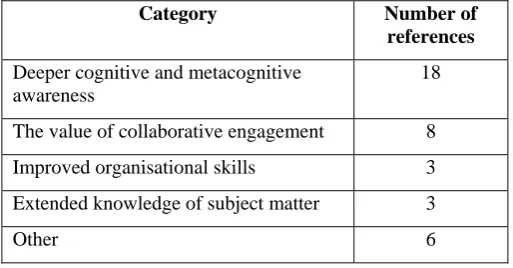
independent learners, focusing on transformation rather than transmission, and opportunities for full and frank discourse. Through this investigation, in fact, she came to realise the extent to which she based her assumptions on her own surface and non-critical reflections of her own practice. The move towards integrating Learning to Learn perspectives within her practice thus had import for her own identity as a teacher.
engagement might be, simply, that the shortness of the postgraduate course leads trainees to wish to be ‘told’, rather than to engage in speculation, critical thinking, or reflective dialogue, themselves. The study thus considers the potential for classroom dialogue to play a role in cognitive development. She explores ways in which primary postgraduate trainee teachers responded to a series of key sessions that sought to promote dialogue and a questioning stance. This chapter further establishes strong links with Lucas and Claxton’s notion of lifelong learning capacities in terms of five ‘Rs’, specifically focusing on ‘reflection’ and ‘reciprocity’ in the context of dialogue. It examines the extent to which teaching and
modelling of these L2L strategies became embedded in postgraduate students’ own pedagogic repertoire.
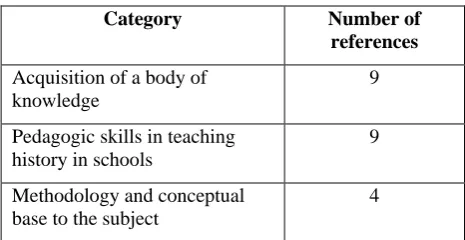
The impetus for Chapter 5 (by Graham Rogers) was concerned with the competing influences (both negative and positive) on the perceptions of undergraduate students in Primary Education with History in relation to ‘learning to teach’ within the academic domain of history over the course of a first year module. Graham wished to illuminate how these influences impact on students’ wider conceptions of learning, teaching and ultimately professional practice itself. The role that disciplinary-based programmes can play in forming trainee teachers is thus an important aspect of this study, relating as this issue does to moves within the sector away from such courses in ITT for primary education. The see in this chapter that a discipline-based course offers significant scope to explore issues that relate to links between epistemology and the capacity of students to introduce learning to learn practices within their teaching. The study finally also explores the students developing professional identity as they progressed through a subject-study course in history that itself incorporated adopted practices from Learning to Learn; as well as their more immediate responses to these practices.
Finally in this part of the report, Chapter 6 (by Ian Phillips) introduces a Learning to Learn approach with secondary postgraduate trainee teachers in history. He employs terminology that refers to ‘thinking skills’ within this chapter, given the way in which this particular term was already in use within the subject community history. He considers conceptions of
Learning to Learn via an exploration of the kinds of learning conditions that are best suited to promoting deeper ways of engaging learners within knowledge construction. This, the last of the small-scale investigations included within the report, further offers discussion of the potential f