Computational Complexity of Solution Concepts
MSc Thesis
(Afstudeerscriptie
)
written byFrank Nebel
(born December 22nd, 1982 in Aschaffenburg, Germany)
under the supervision ofDr Ulle Endriss, and submitted to the Board of Examiners in partial fulfillment of the requirements for the degree of
MSc in Logic
at theUniversiteit van Amsterdam.
Date of the public defense: Members of the Thesis Committee: February 5th, 2010 Dr St´ephane Airiau
1 Introduction 4
1.1 Area of Research . . . 4
1.2 Motivation and Goals . . . 6
1.3 Thesis Overview . . . 7
2 Preliminaries 9 2.1 Coalitional Games . . . 9
2.2 Basic Definitions, Properties and Theorems . . . 10
2.3 Solution Concepts for Coalitional Games . . . 12
2.3.1 Power Indices . . . 13
2.3.2 Stability Solution Concepts . . . 16
2.4 Computational Complexity . . . 18
2.5 Representation of Games . . . 21
3 Shortest Path Games and Related Games 25 3.1 Market Games . . . 25
3.2 Linear Production Games . . . 26
3.3 Flow Games . . . 27
3.3.1 Network Flow Games (NFG) . . . 27
3.3.2 Specific Flow Games . . . 27
3.3.3 Generalizations of Flow Games . . . 28
3.4 Some Graph-based Games . . . 29
3.4.1 Minimum Cost Spanning Tree Game (MCSTG) . . . 29
3.4.2 Vertex Connectivity Games (VCG) . . . 29
3.4.3 Spanning Connectivity Game (SCG) . . . 29
3.5 Shortest Path Games . . . 30
3.5.1 Basic Concepts of Shortest Path Games . . . 30
3.5.2 Notions and Properties . . . 32
3.6 Characteristics for Graph-based and Shortest Path Games . . . 32
3.6.1 General Characteristics . . . 32
3.6.2 Specific Characteristics . . . 34
3.7 Variants of Shortest Path Games . . . 35
4 Properties and Relations 38 4.1 Market Games and Linear Production Games . . . 38
4.2 Flow Games . . . 39
4.2.1 Pseudo Flow Games . . . 39
4.2.2 Flow Games with Committee Control . . . 39
4.3 Properties of Shortest Path Games . . . 40
4.4 Relations between the Different Classes of Coalitional Games . . . 45
4.5 Summary . . . 46
5 Complexity Results for Graph-based Games 48 5.1 Complexity Problems . . . 49
5.2 Complexity Results for (Monotonic) Simple Games . . . 50
5.3 Complexity Results for Shortest Path Games . . . 52
5.4 Complexity Results for Related Games . . . 62
6 Interpretation and Discussion of Results 63 6.1 Results for Shortest Path Games . . . 64
6.2 Case Study of Graph-based Coalitional Games . . . 67
7 Conclusion 71 7.1 Summary . . . 71
Over the last few years a series of papers has been published that analyse the computational complex-ity of solution concepts applied to different types of coalitional games, which are expressed by more or less concise representation languages. However, the coalitional games that have been analysed in a computational context typically have fixed and restricted characteristics and were studied in isolation from each other. For instance, results for related classes of games, like graph-based games, have not been systematically compared with respect to computational complexity or expressive power.
If we are exclusively interested in a specific type of game, this is certainly adequate, whereas a one by one analysis of complexity theoretic problems is impractical when we want to analyse a wide range of more or less distantly related coalitional games. To tackle this issue, we want to motivate in this thesis a more abstract approach, which is based on the characteristics of related types of coalitional games. For this reason, we have chosen an interesting graph-based coalitional game, namely shortest path game, to demonstrate the proposed approach on a sample game.
In particular, we study the computational complexity of solution concepts applied to different variants of shortest path games, as well as the expressive power of those variants. Based on these results, we then analyse the influence of different characteristics of shortest path games with respect to both aspects. Furthermore, we conduct a case study, where we relate our results on shortest path games to known results on different types of graph-based coalitional games.
But apart from having an interesting sample game, we want to stress that shortest path games are worthwhile to consider for their own sake as well.
Introduction
In this thesis we study computational issues of graph-based coalitional games: On the one hand we analyse the influence of different characteristics on complexity-theoretic problems and on the other hand we consider complexity-theoretic problems over different types of graph-based coalitional games. At first, we want to give an overview of the research area our thesis is part of, and then we motivate our work conducted in this area.
1.1
Area of Research
The research area is an interdisciplinary area that offers new insights in problems arising in eco-nomics, social science, etc., by transferring these problems into coalitional games and by analysing these games in a game-theoretic environment. A survey of various coalitional games, which corre-spond to interesting problems in operations research, is given in Borm, Hamers and Hendrickx [13].
Having transferred a problem into a coalitional game, a manifold of results and methods of cooper-ative game theory can be used to solve the problem. The basic idea is that by applying well-known solution concepts to coalitional games, new or more efficient means to solve the original problem can be found. Here, we are especially interested in problems regarding the distribution of costs or gains. An important question that arises in this context and that attracted quite some attention in the last 15 years is the following: Is it feasible to apply this problem solving strategy (procedure) to analyse a particular problem in a game-theoretic context? To answer this question appropriately, it is necessary to analyse the computational complexity of solution concepts with respect to the particular coalitional game that corresponds to the given problem. Thus, we are interested if the application of solution concepts is efficient for a particular type of game.
We would like to mention some publications in this area [49, 24, 43, 44, 31, 18, 40, 10, 27, 1, 4, 7, 2, 6, 28] (ordered chronologically) that analyse the computational complexity of solution concepts applied to different types of coalitional games, which are expressed by different representation lan-guages. The nature of our work shows similarities in results and organization to the work of Bachrach and Rosenschein [6, 7], Aziz [1] and Aziz, Lachish, Paterson and Savani [3]. In Figure 1.1, we sketched the different fields of research that are involved, like economics, social choice, etc., and their interrelations to give an overview of the area.
On the right-hand side of this figure, we can see different kinds of coalitional games, which originate from problems in economics and social choice. Looking at the bottom we have the machinery of
Figure 1.1: Overview of Research Area
cooperative game theory, namely solution concepts and properties that are used to analyse given coalitional games. Another important part involved in this area of research are the representation languages, which are used to represent coalitional games (left-hand side).
The central elements, represented by points in the stylized cloud, are the complexity results, which depend basically on three aspects, namely which class of coalitional games is involved, which kind of representation language is chosen and which solution concept is applied. Given their nature, they might be referred to as “triplets” (G, S, R), where G is a particular class of coalitional games, S
is a solution concept and R is the representation language used. Note that we do not actually work with fully-expressive representation languages, but with particular game representations of coalitional games of a specific type. Nevertheless, it can be interesting in some situation to consider different types of game representations for particular classes of games, especially when these game represen-tations express precisely the same class of coalitional games.
1.2
Motivation and Goals
Translating economical problems into coalitional games and analysing them with the machinery of cooperative game theory is a promising problem solving strategy, but we have to consider, as men-tioned above, issues of complexity to actually decide if it is feasible. For many problems, like flow problems or weighted voting systems the corresponding coalitional games are such that important so-lution concepts are often intractable (see for example [6, 1]). This suggests the following questions:
• Is it the case that most solution concepts for coalitional games are actually intractable?
• What influence do characteristics of coalitional games have on the expressive power of games and on the complexity-theoretic results of solution concepts?
• Are there any heuristics or indicators how characteristics influence the computational complex-ity?
• Is there a tendency towards tractable or intractable results for interesting sub-classes of games, like graph-based or voting-based coalitional games?
These questions are quite general and much more research has to be done before these questions can be answered in a satisfactory way. So, as a first step, we decided to concentrate our research on well-defined and restricted types of coalitional games to show that these questions are interesting and worthwhile to consider, at least for restricted types of coalitional games. Here, in this thesis we are for example interested in what influence different characteristics of coalitional games might have on the expressive power of games and computational complexity of solution concepts applied to these games. Due to the fact that different coalitional games have often quite different representations and therefore different characteristics, we focused our research on a specific type of coalitional games, namely graph-based games. The reasons why we selected this type of coalitional games are the following:
• Graph-based games are particularly interesting to solve network-based problems of all sorts, which often occur in operations research.
• They offer a manifold of characteristics that can be analysed.
• Several graph-based games have already been treated in the literature over the last two years [24, 3, 6, 7]. This allows us to compare complexity-theoretic results over different graph-based games.
In our studies we observed that most graph-based representations of coalitional games, which can be found in the literature, are quite restricted games. So, we were curious to analyse which effect the consideration of different characteristics of graph-based games would have. Given that there are a lot of characteristics for graph-based games in general, we had to focus on a particular type of graph-based game, which has to be analysed exhaustively by considering all variations of interesting characteristics for this type of game. At this point, it is therefore necessary to be systematic, because only by an extensive analysis of all involved factors of interest, we are able to give a meaningful interpretation of the final results. For this reason we looked for a promising type of graph-based game to show how different characteristics influence the computational complexity of solution concepts.
• In the literature [33, 58], there are two different definitions of shortest path games, which have quite different properties (e.g. expressive power). We think that this is a good indication that shortest path games are a promising candidate to analyse the effect of different characteristics of graph-based games on complexity-theoretic results. Based on this analysis, we hope to find some hints about the influence of characteristics on graph-based games in general.
• The second reason why we have chosen shortest path games is that they are similar to various graph-based games that have already been treated in the literature [6, 3, 45, 36, 11, 29]. Hence, our intention was to extend the corpus of complexity-theoretic results for graph-based games, which allows us to discuss if there is a difference between graph-based games or if they are similar when it comes to the complexity of solution concepts.
Having selected shortest path games to be analysed, our agenda and motivation in this thesis is twofold:
• We want to determine the computational complexity of various solution concepts with respect to different variants of shortest path games. Based on these results, we want to analyse how different characteristics of shortest path games influence the computational complexity of solu-tion concepts. For this reason, we fix a particular solusolu-tion concept and vary over systematically defined variants of shortest path games, which have different configurations of characteristics. We are especially interested in characteristics of shortest path games, which reduce intractable problems to tractable ones. Furthermore, we want to determine the expressive power of various variants of shortest path games and compare them with other coalitional games.
• Given the results for shortest path games and results from the literature, we want to see how flow games, shortest path games, minimum cost spanning tree games, etc., graph-based games that share basic characteristics, are related to each other with respect to the computational complex-ity of the corresponding triplets. We hope that this might give us some insight about complexcomplex-ity problems for graph-based coalitional games in general, and maybe even heuristics to estimate the computational complexity of solutions concepts applied to graph-based coalitional games.
1.3
Thesis Overview
Due to the interdisciplinary character of our work, we intended this thesis to be self-contained to keep it accessible for researchers from different areas, who are interested in our work. The rest of this thesis is organized as follows:
In Chapter 2 we introduce the concept of a coalitional game, as well as basic definitions, properties and theorems in cooperative game theory that will be used in later chapters. Then we give an overview of solution concepts for coalitional games, which are divide in two groups: the power indices and the stability concepts. Due to the central role of computational complexity in our work, we give a short account of computational complexity in general and more specifically with respect to coalitional games. The last issue of this chapter is the representation of coalitional games and the importance of game representations for complexity-theoretic considerations.
production games and market games. In later chapters, when we prove properties and complexity results for different coalitional games, we will often refer to models defined in this chapter. Having introduced the models, we determine characteristics common to various types of graph-based coali-tional games, but especially shortest path games and discuss their influence with respect to expressive power and computational complexity. We preselect a set of characteristics, which we would like to consider for shortest path games and introduce systematically several variants of shortest path games, which are based on the set of preselected characteristics.
In the following chapter we determine some basic properties of coalitional games, which we defined in Chapter 3. Then we analyse how expressive the different types of coalitional games are and how they relate to each other with respect to expressive power.
In Chapter 5 we analyse the computational complexity of solution concepts applied to different vari-ants of shortest path games, as well as the computational complexity to determine player-based prop-erties for these games. Our focus is on power indices, but we also consider an important stability concept in our analysis. Then we present some complexity results for various graph-based coalitional games from the literature.
In the next chapter we discuss the results of the previous chapter: We summarize and interpret on one hand the results for the different variants of shortest path games and discuss the complexity-theoretic influence of different characteristics, and on the other hand, we conduct a case study of various graph-based coalitional games, which all share basic characteristics. In this case study we compare the various results and discuss possible complexity-theoretic implications for graph-based coalitional games in general.
Preliminaries
In this chapter we give an overview of various concepts and notions of different areas of mathematics, computer science and social choice. We start by introducing the predominant notion in this thesis, namely the notion of a coalitional games and we furthermore present some basic notions of coop-erative game theory. Then we introduce some definitions, properties and theorems in coopcoop-erative game theory that will be important for our line of work. This is followed by a detailed account of an essential part of cooperative game theory, namely the study of solution concepts. Here, we will distinguish between two types of solution concepts: power indices and stability concepts. Due to the fact that a main part of our work is about the computational complexity of solution concepts applied to coalitional games, we give a condensed introduction of the area of computational complexity. Fi-nally, we conclude this chapter by giving a short account of different representations for games and the connection between game representations and computational complexity.
2.1
Coalitional Games
We now introduce basic notions of cooperative game theory (also sometimes referred to as coalitional game theory). As the term “coalitional” already indicates, the main modeling unit of a coalitional game is the group of players involved. So, given a set of players N, a coalitional game defines, expressed informally, how well each coalitionS⊆N (or group) of players can do for itself. Contrary to traditional game theory, it is not of concern how players make individual choices within a coalition, how they coordinate, and what are their individual outcomes.
Stated quite general, cooperative game theory is used basically to answer two questions, namely which coalitions will form and how should such a coalition divide its payoff among its players. The answer to the first question is often “the grand coalition” (including all players of a game), whereas this also depends on the right choice for the second question.
We have two main classes of coalition games, with and without transferable utility. Our focus will be on coalitional games with transferable utility, where the payoffs to a coalition may be freely re-distributed among its members. This is, of course, only possible if there is a universal currency that is used for exchange in the system. So, as a result of this setting each coalition can be assigned a single value as its payoff. Another important notion, apart from transferable utility, is the notion of side payments. In this thesis we concentrate on games withside payments (SP). We will give a short introduction how both concepts are related and what role do they play. To see the effect of the “side
payment” property we give a short overview of the distinct behaviours. In the case of a coalitional game with side payments we can express a possible outcome of a coalition by one real number, the total payoff achievable by the coalition. So, utilities of players in the outcome of a game can be sum-marized. In contrast, a game without side payments states the payoff to each player in the coalition separately in the outcome, without summarizing it. Games with side payments require special consid-eration of the underlying utility theory, namely the assumption of “transferable utility”. Having both, SP and TU, this implies that utility appears to be transferred at a one to one rate between players. More information about utility theories in coalitional games can be found in [9, 42].
When we speak of coalitional games in this thesis we always implicitly assume that they have both properties: transferable utility and side payments. A coalitional game is given by specifying a value for every coalition, or more formally:
Definition 2.1.1. Acoalitional gamewith transferable utility (TU-game) is a pairhN, vi, where
• N is the set of players; and
• v : 2N →
R+0 is a function (characteristic function) that maps each group of playersS⊆N to
a positive real-valued payoff.
Due to the shape of functionv, coalitional games, which are represented in this way are in character-istic function formand are often calledcharacteristic function games. We often use the simple term “game” or “coalitional game”, when we want to refer to coalitional game with transferable utility as defined above. For the sake of brevity, we will abuse the notation to sometimes refer to gamehN, vi
asv. An outcomein a coalitional game specifies the payoffs (utilities) the players receive and a so-lution conceptassigns to each coalitional game a set of “reasonable” outcomes. We will give a more detailed account of solution concepts later in this section. A thorough and complete introduction to cooperative game theory can be found in [20, 26, 48].
2.2
Basic Definitions, Properties and Theorems
We start to introduce some properties of coalitional games.
Definition 2.2.1. A gamevismonotonicif for allS, T ⊆N,S⊆T impliesv(S)≤v(T).
A fundamental type of a coalitional game, considered in cooperative game theory, is a simple game.
Definition 2.2.2. A coalitional gamehN, viis called asimple game1 ifv(S)∈ {0,1}for allS ⊆N
andv(∅) = 0,v(N) = 1.
Simple games are well suited to model situations of voting and committee control. Especially mono-tonic simple games, often called (simple) voting games are interesting in this context, because the definition already captures the basic building blocks for most voting systems.
Definition 2.2.3. A coalition S ⊆ N in a simple game is called winningifv(S) = 1, and losingif
v(S) = 0.
Now we want to introduce some player-based properties of coalitional games.
A player in a coalitional game is called a null player2, if he or she contributes nothing to any coalition.
Definition 2.2.4. A null playeris a player i ∈ N such that for all coalitions S ⊆ N \ {i} we have
v(S∪ {i}) =v(S).
A dummy player is defined as follows:
Definition 2.2.5. Adummy playeris a playeri∈N such that for all coalitionsS ⊆N\ {i}we have
v(S∪ {i}) =v(S) +v({i}).
A player is a veto player in a simple coalitional game if no coalition can win without the involvement of this player.
Definition 2.2.6. A veto player in a simple game is a player i ∈ N such that for all coalitions
S ⊆N \ {i}we havev(S) = 0.
A similar, but more general definition of a veto player can also be given for non-simple coalitional games. In a non-simple game, a playeri ∈ N is a veto player if no coalition can achieve any gains without the involvement of playeri.
Definition 2.2.7. A playeri∈N in a simple gamehN, viiscriticalin a winning coalitioni∈S ⊆N
if the player’s removal from that coalition would make the coalition lose:v(S) = 1butv(S\{i}) = 0. A pair of coalitions(S∪ {i}, S)is called aswingfor playeri∈N in a simple gamehN, vi, ifS∪ {i}
is winning andS ⊆N \ {i}is losing
Definition 2.2.8. A coalitionS in a simple game is called aminimal winning coalitionifv(S) = 1
and for everyT ⊂S,v(T) = 0.
The concept of a minimal winning coalition is interesting, because it represents a very important kind of coalition, a coalition with maximal power, but minimal effort. Hence, a limit in some sense.
We can generalize this concept to minimal profitable coalitions:
Definition 2.2.9. A coalitionSin a coalitional game is called aminimal profitable coalitionifv(S)>
0and for everyT ⊂S v(T) = 0.
Balancedness and Totally-Balancedness
We now introduce the concept of balancedness, a basic and significant concept in the theory of coali-tional games and directly connected to an important solution concept, namely the core.
Given a coalitionS, we define the vector1S ∈R|N|by (1S)i =
1 ifi∈S
0 otherwise
Definition 2.2.10. A collection of numbers between zero and one (weights for each coalition),(λS)S∈2N
is abalanced collection of weightsif we haveP
S∈2N λS∗1S = 1N
A TU-gamehN, viisbalancedif for each balanced collection of weights, we haveP
S∈2NλS∗v(S)≤
v(N).
The intuition behind balancedness is the following: Players can distribute one unit of working time to any coalition. But by doing this, they cannot generate more value than the grand coalition (see [19]).
Another, but more indirect insight can be gained by considering the core of a coalitional game, which is strongly related to the balancedness property. The core of a game is a significant solution concept in cooperative game theory and will be presented later in this thesis (see Section 2.3.2). Now to the connection of both concepts: Bondareva [12] and Shapley [52] proved independently the following result, which is now called the Bondareva-Shapley theorem.
Theorem 2.2.11. A game has a non-empty core iff it is balanced .
For any S ⊆ N let v|S denote the induced subgame v restricted to S. Based on this notion of a subgame, we can define the property of totally balancedness:
Definition 2.2.12. A coalitional game istotally balancedif for allS ⊆N v|S is balanced, i.e. all its subgames have non-empty cores.
Proposition 2.2.13. There are monotonic games that are not balanced.
An example is given in the proof of Proposition 4.2.2, where we show that a particular monotonic game is not balanced.
Then we have the following well known result, which relates the emptiness of the core with the concept of a veto player for simple games.
Theorem 2.2.14. A simple gamev is balanced (has a non-empty core) iffv has veto players. ([20], Theorem 1.10.6)
2.3
Solution Concepts for Coalitional Games
In this section we introduce notions and concepts to talk about “reasonable” outcomes in coalitional games. In general, each solution concept defines for each coalitional game hN, via setF of alloca-tions. Expressed more formally, we have the following definition for solution concepts:
Definition 2.3.1. A functionΨ : 2N×
R2
|N|
→ P(R|N|)which assigns to every|N|-person coalitional
gamehN, via possibly empty subsetΨ(N, v)ofR|N|is called asolution concept.
Each element of the setΨ(N, v)is a vector of payoffs, which are assigned to each player. So, each vector ofΨ(N, v)specifies a different way how to divide the payoff (of the grand coalition) between the players. We call a functionxfromN toR(written as x∈R|N|) anallocationand denote itsi-th
component byx(i)orxi. Given a coalitionS, we abbreviate
P
i∈Sx(i)byx(S). A solution concept Ψis called aone-point solution concept3 if|Ψ(N, v)| = 1for every game hN, vi. We introduce the
following notion for a one-point solution concept: Fori∈N,Ψi(N, v)isi’s payoff.
In cooperative game theory there are different solution concepts, which capture outcomes that are in a way stable or fair. A more complete account of solution concepts in coalitional games can be found in [48].
Before we start to introduce examples of popular solution concepts we would like to give an overview of properties, which are applicable to solution concepts and present different types of payoff alloca-tions. Some common properties are:
• Feasibility: x(N)≤v(N),
• Efficiency:x(N) =v(N),
• Individual rationality:for alli∈N xi ≥v(i), • Group rationality:for allS ⊆N x(S)≥v(S),
• Existence:for any game, the solution concept exists.
• Uniqueness: When we define a solution concept on a set of games, we might want to know if this solution is unique under special conditions. The Shapley-Shubik index is an example for a unique solution concept.
• Computational ease:The solution concept can be calculated efficiently.
We continue by presenting important types of payoff allocations:
We know that an allocation assigns to each player some payoff. In what follows next, we discuss the meaningful types of allocations in the context of coalitional gameshN, vi. To do this on an objective ground, we focus on several properties of an allocation x, which have been mentioned above, and which link the allocations with the characteristic functionv.
We call an allocation apre-imputationif it is efficient (thus feasible as well). A pre-imputation is an
imputation if it also satisfies the individual rationality property. So, an imputation is a distribution of the payoff which the grand coalition can achieve (efficiently) such that no player has an individ-ual interest in rejecting it (individindivid-ual rationality). Imputations play an important role, because most solution concepts are actually imputations or at least pre-imputations.
If we consider how to distribute the payoff of the grand coalition, it is clearly the case that only imputations should be considered as meaningful. As the reader may have noticed, we focus heavily on the notion of a grand coalition for our definitions. This is the reason, because many coalitional games are superadditive, additive or monotonic and therefore the grand coalition achieves the highest payoff for these games. In this thesis for example, we will focus exclusively on monotonic games.
Given a coalitional game, the goal is typically to find a “fair” imputation, i.e., the share each player receives is proportional to his or her contribution, or “stable”, in the sense that it provides as little or no incentive for a group of players to abandon the grand coalition and form a coalition of their own. There is a manifold of different solution concepts, which formalize notions of fairness and stability. Now we present several of these solution concepts.
Solution concepts are divided in two main classes, namely the power indices and the stability con-cepts. We will start with power indices, which play a major role in this thesis.
2.3.1
Power Indices
In principal, a power index allows a more detailed view on power distributions in voting situations and give insights that are not obvious on the surface. Despite their origin, power indices are not restricted to voting games, but can also be used to determine the power of players for many other types of monotonic coalitional games.
We introduce the following power indices: Shapley-Shubik index, Banzhaf index, Deegan and Packel index and the Public Good index. Note that the Shapley-Shubik and Banzhaf power indices are defined on monotonic games, whereas the Deegan-Packel index and the Public Good index are defined for monotonic simple games only.
Shapley-Shubik Power Index
Lloyd Shapley and Martin Shubik introduced the Shapley-Shubik index [53] in 1954 to measure the powers of players (parties) in a voting game (voting system). The original Shapley-Shubik index has been defined for monotonic simple games (voting games), but can also be generalized for monotonic coalitional gameshN, vi.
Definition 2.3.2. Given a monotonic coalitional gamehN, vi, theShapley-Shubik-Indexof playeri
is given byϕi(N, v) = |Nκi|!, where theShapley-Shubik valueκiis equal to
P
S⊆N\{i}|S|!(|N| − |S| −
1)![v(S∪ {i})−v(S)].
We now give an interpretation of this formula: A coalition is assembled by starting with an empty coalition and adding one player at a time. The players to add are chosen uniformly at random.
For any such sequence of inclusions of players, we consider player i’s marginal contribution at the time the player is added to the coalition. If the player i ∈ N is added to the coalitionS, his or her contribution isv(S∪ {i})−v(S). Now we have to multiply this quantity by the|S|!different ways the setS could have been formed prior to player i’s addition and by the (|N| − |S| −1)! different ways the remaining players could be chosen and added afterwards. Then we finally sum over all possible coalitionsS, thus the corresponding marginal contributions, and divide it by|N|!. Note that by dividing by|N|!we basically average over all the sequences by which the grand coalition can be build up from the empty coalition. This process basically captures theaverage marginal contribution
of playeri.
The Shapley-Shubik index is strongly based on marginal contributions of coalitions, a notion that is applicable and meaningful for any kind of monotonic coalitional games and therefore the generaliza-tion of the Shapley-Shubik index introduced above is indeed reasonable.
Banzhaf Power Index
The Banzhaf power index was originally defined by John Banzhaf [8] in the context of weighted voting games. The intention was to measure the political power of each member of a voting system. The Banzhaf index can be defined, similarly to the Shapley-Shubik index, for monotonic coalitional games. Expressed informally, the index is easily derived by counting for each player the number of winning coalitions it participates in, but which are not winning if the player is not participating anymore.
Definition 2.3.3. Given a monotonic coalitional game hN, vi, the Raw-Banzhaf-Index(also called
Banzhaf value) ηi(v) of player i is the number of swings of player i (ηi(v) = #{S ⊆ N \ {i} |
v(S∪ {i})−v(S) = 1}= 2n1−1
P
S⊆N\{i}[v(S∪ {i})−v(S)]). If we assign probability 2n1−1 to each
coalitionS ⊆N \ {i}, the swing probability
βi(N, v) = η2ni(−v1)
Comparing both indices, Shapley-Shubik and Banzhaf, we can immediately see that both indices reflect the player‘s expected marginal contribution to the value of a coalition. However, the underlying probabilistic model of coalition formations is different. Instead of assuming that players join the coalition at random order and thus all permutations of the agents are equally likely, the Banzhaf index assigns equal probability to all2npossible coalitions.
Note that the Shubik index and the Banzhaf index are normalized versions of the Shapley-Shubik value and Banzhaf value respectively.
Deegan-Packel Power Index
A refinement of the Banzhaf index was introduced by Deegan and Packel [22]. The reason for this refinement is the following: The authors claimed that only minimal winning coalitions should be considered to establish the power of a voter, and they based this claim on the assumption that rational players want to maximize power and therefore only minimal winning coalitions are reasonable. To incorporate these ideas into the power index, they assumed that all minimal winning coalitions are equiprobable and all the voters belonging to the same minimal winning coalition should basically obtain the same power. Hence, the Deegan-Packel power index gives a measure of power that satisfies certain conditions:
• Minimality: Only minimal winning coalitions will be victorious,
• Equiprobability: Each minimal winning coalition has an equal probability of forming, and
• Solidarity: Players in a minimal winning coalition divide the power equally
In many cases these conditions are reasonable. Expressed formally, the index is defined as follows:
Definition 2.3.4. TheDeegan-Packel power indexof a playeriin the simple gamehN, viis give by:
pi(N, v) = |M1(v)|
P
S∈Mi(v)
1
|S|
where we denote byM(v)the set of minimal winning coalitions ofvand byMi(v)the subset ofM(v)
formed by coalitionsS ⊆N such thati∈S.
Note that contrary to the Shapley-Shubik and Banzhaf index, the Deegan-Packel index cannot be extended to arbitrary coalitional games (see [38]).
With the Deegan-Packel index, players should look for minimal winning coalitions that are minimal in the cardinality of the coalition. A different index based on minimal winning coalitions is the Pub-lic Good index. For this power index, the size of the minimal winning coalition does not matter to measure power.
Public Good Power Index (PGI)
Definition 2.3.5. Given a simple gamehN, vi, the PGI assigns to each playeri∈N the real number:
δi(N, v) =
|Mi(v)|
P
j∈N|Mj(v)|, where we denote byMi(v)the set of minimal winning coalitions that include
playeri∈N of gamehN, vi.
As stated by Holler in [39], the PGI index is only defined for monotonic simple games. Note that although only MWC are taken into account for calculating the PGI, it is not claimed that no other coalitions will be formed.
General Properties of Power Indices
We prove now a direct correspondence between the null-player property of coalitional games and the different power indices. For the Shapley-Shubik and Banzhaf index this result follows immediately, but we would like to check, if it holds for the other two indices as well. So, for completeness we will give a proof for all four indices.
Proposition 2.3.6. For the Shapley-Shubik-index, the Banzhaf index, the Deegan-Packel index and the Public Good Index: For all monotonic coalitional gameshN, vi(simple monotonic games in the case of the Deegan-Packel and Public Good Index) playeriis a null-player inviff the corresponding index of playerifor gamev is equal to0.
Proof. We prove both directions separately:
⇒: Letibe a null-player in gamev , i.e. v(S∪ {i}) = v(S)Shapley-Shubik and Banzhaf index, it follows immediately thatϕi(v) =βi(v) = 0. This is, because there are no marginal contributions for
playeri. We can also verify immediately thatMi(v) =∅and thereforepi(v) = 0andδi(v) = 0.
⇐: Let the index for gamevand playeribe0. We assume for the sake of a contradiction that player
i∈N is not a null-player. Then, there is a coalitionS ⊆N such thatv(S∪ {i})6=v(S). Given that
v is a monotonic game, we have thatv(S∪ {i}) >0andv(S) = 0. Hence, v(S∪ {i})−v(S)≥ 1
and therefore ϕi(v) 6= 0and βi(v) 6= 0. This means we reached a contradiction for the case of the
Shapley-Shubik and Banzhaf index.
For the other two indices, we know thatT =S∪{i}is a winning coalition andSis a losing coalition, but we do not know if it is a minimal winning coalition. But it can easily be shown that there is a minimal winning coalitionT0 ⊆T such thati∈T0:
We just iterate through all playersjinSand check ifv(T) = 1andv(T\ {j}) = 0. If this is the case, we continue with the next player in the iteration. Otherwise, If this is not the case, thenv(T) = 1still holds, butv(T \ {j})is equal to1instead of0. So, we removej fromT and continue with the next player in the iteration.
After this process is terminated, we have a new coalition T0 ⊆ T such that for all players a ∈ T0,
v(T0) = 1andv(T0\{a}) = 0. So, given thatvis monotonic, it is clearly the case thatT0is a minimal winning coalition. So, due to the fact thati ∈T0 we know that bothM(v)andMi(v)are non-empty.
Thus,pi(v)6= 0andδi(v)6= 0and we reached a contradiction for the Deegan-Packel and PGI index
as well.
2.3.2
Stability Solution Concepts
and therefore “oversee” the possibility that sometimes smaller coalitions can be more attractive for subsets of players, even if they lead to a lower overall value.
In the context of stability, we want to know if the players would be willing to form the grand coalition given the way the payments are divided, or would some players prefer smaller coalitions instead. An example of a situation where smaller coalitions can be more attractive for subsets of players is the following: Let us consider a voting game where an amount of money should be divided between four partiesA, B, C andD. To implement a distribution 51% of the votes are necessary. So, if AandC
have40and20, then they could split the amount of money66,7−33,3. This is clearly better than a grand coalition whereB andDwould also receive their parts.
The concept of astable setof a game (also know as the von Neumann-Morgenstern solution) was the first stability concept proposed for games with more than 2 players (see [57]). To give the reader a flavour of what stability concepts are, we present some more details. Before we continue, we first want to introduce the notion of domination between two imputations of a game. We say that an imputationxisdominatedby an imputationy, writtenyx, if for some coalitionS.
• v(S)≥y(S),
• y(i)> x(i)for alli∈S
Intuitively, the first condition states that the imputation y offers to the coalitionS a payoff that can actually be achieved, while the second one states thatyoffers to each member ofSstrictly more than the imputationx. So, for coalitionS the imputationyis then more attractive than the imputationx. Definition 2.3.7. A subsetY of the setXof imputations of a coalitional game with transferable payoff
hN, viis astable setif it satisfies the following two conditions:
• Internal stability: No payoff vector inY is dominated by another vector inY.
• External stability: All payoff vectors outside of Y are dominated by at least one vector in the set.
The advantage of this general concept is that it can be used in a wide variety of coalitional games. An important property of stable sets is: A stable set may not exists, and if it exists it is typically not unique.
The problem of stable sets is that they are difficult to find. This and other difficulties have led to the development of many new solution concepts:
• The core
• The least-core
• The strong epsilon-core
• The kernel
In this thesis, we concentrate on one of the most important stability concept, namely the core. The others concept are important stability concepts as well, but will not be used in what follows.
We introduced above the notion of an imputation, an efficient and individual rational allocation. How-ever, an imputation does not need to be a “stable” allocation. This means that there might be some coalition of players, which would reject it if they could achieve a larger combined payoff by cooper-ating. This lack of stability immediately imposes a third property of an allocationxthat strengthens the property of individual rationality:
• group rationality:x(S)≥v(S)for all coalitionsSofN.
We can now define the fundamental concept of a corefor a coalitional game:
Definition 2.3.8. Let hN, vibe a cooperative game. Then the core ofv is defined as: Core(v) := {x∈Rn|xis an imputation that satisfies group rationality}
Intuitively, an imputation lies in the core if it is a distribution of the payoff of the grand coalition such that no group of players is interested in rejecting it. Some properties of the core are:
• The core of a game may be empty.
• If the core is non-empty, it does not necessarily contain a unique vector.
• The core is contained in any stable set and if the the core is stable it is the unique stable set (see [26])
2.4
Computational Complexity
In Chapter 5 we are going to analyse the computational complexity to apply solution concepts on different types of coalitional games. Remember, a solution concept defines for each coalition game
hN, via class F of imputations. When we now analyze solution concepts for particular coalitional games from a computational perspective, there are at least three natural computational problems that can be taken into account.
1. Decide whether a proposed allocation is “fair” according toF: “Given an imputationx, does it belong toF?”
2. Given the present coalition situation, are there any fair allocations at all? “IsF nonempty?”.
3. Is it possible to find an element of the solution concept in polynomial time.
we also answer the question why it makes sense to analyse the computational complexity for coali-tional games nevertheless. Because of the importance of computacoali-tional issues for solution concepts, Deng and Papadimitriou [24] suggested that computational complexity should be taken into account as another measure to compare different solution concepts.
An important aspect to consider is that coalitional games with transferable utility, as defined above, are characteristic functionsvwith codomainR+0. So, when we analyse complexity-theoretic problems involving coalitional games, we assume for technical reasons that the codomain isQ+0 instead. We now present different types of problem statements, which we are going to encounter later in this work, namely decision, function and counting problems.
CORE-MEMBERSHIP(DECISION)
Instance:A gamev and an imputationx
Question:Isx∈Core(v)?
SHAPLEY-SHUBIKINDEX (FUNCTION)
Instance:A gamev, playeri∈N
Solution:The Shapley-Shubik index for playeri(ϕi(v))
#BANZHAF VALUE(COUNTING)
Instance:A gamev, playeri∈N
Solution:Number of coalitions in the set{S ⊆N \ {i} |v(S∪ {i})−v(S) = 1}.
After presenting the different types of problem statements, we are going to introduce the basic con-cepts and notions of computational complexity. We concentrate on three classes of computational complexity, namelyP,N P and#P.
The two most fundamental complexity classes are:
• P =S
k>1TIME(nk): P is the class of problems that can be solved in polynomial time by a
deterministic algorithm; and
• N P =S
k>1NTIME(n
k): N Pis the class of problems for which a proposed solution can be
verified in polynomial time.
Apart from these two classes there is another powerful class of functions,#P (pronounced “number P” or “sharp P”), which was introduced by Valiant [56]. This complexity class is defined in the following way:
Definition 2.4.1. LetQbe a polynomially balanced, polynomial-time decidable binary relation. The
counting problem associated with Q is the following: Given x, how many y are there such that
Phrased slightly differently, the class can be defined as follows:#P is the complexity class consisting of all the functionsf : Σ∗ → N such that there exists a non-deterministic polynomial time Turing machineM and for all inputsx∈Σ∗,f(x)is the number of accepting paths ofM.
The main reason why we are not only interested in N P, but also #P is the following: To deter-mine the number of solutions of a problem is at least as hard as determining if there is at least one solution. So, #P-complete problems are at least as hard (but possibly harder) than N P-complete
problems. This gives us a more fine grained distinction of the computational complexity of different solution concepts and therefore motivates the application of this rather unknown complexity class. Furthermore, it is quite common in this research area to use the complexity class#P.
Finally, we would like to remind the reader of notions like hardness and completeness. We start by refreshing the reduction concept:
The notion of polynomial time reduction is defined in the following way: A problem P reduces to a problem P0 if we can translate any instance of P into an instance ofP0. This allows us to apply the problem solver for P0 to obtain an answer to the original problem (question) of type P. If the translation process is polynomial, then we can state that problemP0 is at least as hard as problemP. This is the case because aP’-solver can solve any instance ofP, and possibly a lot more.
To formally prove that a problemP0 is at least as hard as a problemP we have to execute two tasks: 1. We have to show how to translate anyP-instance into aP0-instance in polynomial time, and
then
2. Show that the answer to theP-instance should beYESiff aP0-solver answers withYESto the translated problem.
Based on these concepts, the notion of hardness and completeness can be formally introduced. LetC
be a complexity class:
• A problem P is C-hard iff any P0 ∈ C is polynomial-time reducible toP. That means that
C-hard problems include the hardest problems inside the classC and even harder ones.
• A problemP isC-completeiff P isC-hard andP ∈ C. That means that they are the hardest problems inC, and exclusively those problems.
To sum it up, a standard way to prove that P is C-hard proceeds as follows: We have to find a
C-completeproblem P0 that is reducible to P, i.e. any instance of P0 can be transformed to P in polynomial time and the answers to both problems are corresponding. If this is the case, we can immediately deduce from the fact thatP0 is C-completeand by transitivity of the reduction relation that anyP00 ∈ C is polynomial time reducible toP. ThusP isC-hardby definition.
2.5
Representation of Games
In this section we give an overview of the application and significance of representations of coalitional games. We furthermore distinguish between the notion of a coalitional game and the representation of a coalitional game and introduce some useful notations.
We introducedN-player coalitional games with transferable utility (in Definition 2.1.1) as character-istic function gameshN, vi, wherev : 2N →
R+0 assigns to each coalition a non-negative real value.
By using this formal definition of a coalitional game, we neglected so far the fact that coalitional games, corresponding to real world examples, may have different representations. But this is a very important aspect when we are interested in the computational complexity of a problem, because an explicit representation is based on a table of2N rows, thus a structure of exponential size with respect
to the number of players. Hence, the representation of a coalitional game plays an important role, not only with respect to the equivalence of coalitional games, but also in the context of computational complexity.
Consequently, it is imperative to have an appropriate representation for TU-games when the computa-tional complexity of a problem should be analysed. Of course, it is not possible to have an appropriate game representation for all existing coalitional games, but for many interesting real-world problems, this is fortunately not a problem as stated by Megiddo [45]. He observed that for many coalitional games the game value can actually be calculated through a succinctly defined structure (game repre-sentation), and for these games he suggested that solutions could be found in polynomial time. As will be clear later, most of the games we introduce for our work are actually representable by graphs, thus we work with polynomial structures.
Apart from complexity-theoretic considerations, we are also interested in the expressive power and succinctness of representations of games. In Section 3, for example, we are going present and in-troduce various classes of game representations that represent the same class of coalitional games, namely all totally balanced games. Having several ways to describe a coalitional game, it is interest-ing to analyse the differences and similarities between different types of game representations.
The following four criteria, which are also applicable to game represenations, are standard properties to analyse different representation languages (see for example [14, 55]):
• Expressivity: The range of coalitional games covered by a particular game representation. Or, what classes of coalitional games are covered by this particular type of game representation?
• Succinctness: Is the representation succinct? Is one game representation more succinct than the other?
• Efficiency/Complexity: What is the computational complexity of related decision problems?
• Simplicity: Is the representation language easy to use to describe problems we would like to express?
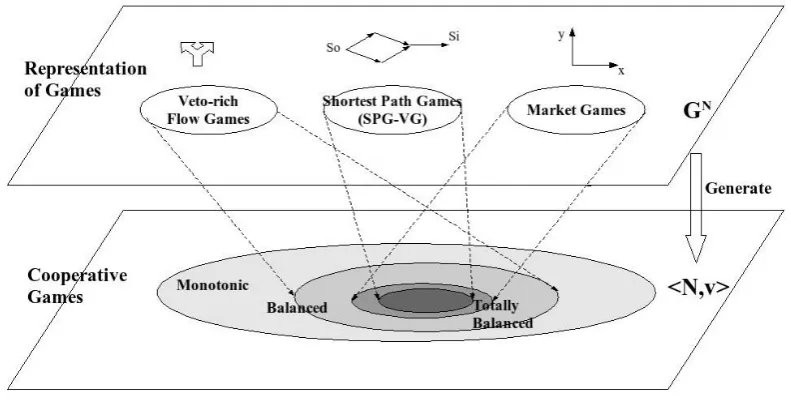
Figure 2.1: Representation of Coalitional Games
• Upper Layer:In this layer, a coalitional game is given in its original representation, thus in its actual problem domain. So, we can talk about concepts like shortest paths, maximal flow, etc. of a game.
• Lower Layer: In this layer, coalitional games are represented in characteristic function form
hN, vi. This is an elegant way to work with coalitional games, stripped from representation details, as a formal concept in cooperative game theory. The definitions and propositions, like for example balancedness, monotonic, null-player, etc., are all based on this basic representation of coalitional games.
Having talked about representations of coalitional games, we now introduce an appropriate notation to distinguish games from game representations:
We writeGN, GN
1 , GN2 , etc. to denote particular game representations for coalitional games, which
are defined for the set of individuals N in a particular representation language (or game definition). We then refer to the characteristic function of the coalitional game represented byGN asv
GN. For
convenience, we introduce the following notion: we say that a gamev is aZ game (e.g. v is a flow game), if v := vGN, where GN ∈ Z (GN is a flow game representation). Thus, the actual type of
the game represenation used to generate the game is known, but the explicit game representation is concealed. This is common in the literature, where the notions of game and game representation are not separated in a formal way. Note that in situations where the distinction between games and game representations is essential, we will exercise the appropriate care, otherwise the intended meaning can easily be deduced from the context.
We now introduce important notions involving games and game representations:
Given a game representationGN, we can not only generate the characteristic function formhN, v GNi
For example, in Chapter 3 we will introduce several classes of shortest path games and compare them with respect to different aspects in later chapters.
Apart from this more fine-grained comparison of games, we also want to be able to compare coali-tional games independent of their actual game representation or determine general properties of games. This is easily done by mapping a given game representation GN to the corresponding char-acteristic function formhN, vGNi, i.e. generatingvGN fromGN and comparing it (in the lower layer)
with coalitional games generated from other game representations or by determining if the game has particular properties. Note that if a game representation GN is of characteristic function form (GN =hN, vi), then we can just writev instead ofvGN.
We now define equivalence over game representations:
Definition 2.5.1. We shall say that twoN-player game representationsGN
1 andGN2 with transferable
utility are equivalent (GN
1 ∼ GN2 )if the characteristic functionsvGN
1 andvGN2 , which are generated
byGN
1 andGN2 respectively are equal (vGN
1 =vGN2 ), i.e. for allS ⊆N,vGN1 (S) =vGN2 (S).
We continue by introducing the notion of a “class” of game representations. A class can be defined in two ways:
1. We can define a class “extensionally” as a class of particular game representations (this also includes the characteristic function formhN, vi).
2. We can define a class “intentionally” via a property, e.g., the class A of representations in characteristic function formhN, visuch thatv is monotonic. Put otherwise, it is the classAof gameshN, visuch thatv is monotonic.
Due to the fact that we can easily generate the class of games from a given class of game repre-sentation, we often abuse notation when we say that A is the class of flow games or shortest path games.
We call two classes of game representations A and B equivalent if for allGN
1 ∈ A, there exists a
game representationGN
2 ∈B such thatGN1 ∼GN2 and vice versa. A classB of game representations
captures another classA of game representations if for anyGN1 ∈ A, there exists a gameGN2 ∈ B
such thatGN
1 ∼GN2 .
We want to express the following relation between two classes of game representations A and B
(AvB):
• IfBis anextensionallydefined class of game representations, then we apply the capture relation defined above.
• IfB is anintentionallydefined class of game: This means that for every gameGN ∈ A , the
characteristic functionvGN generated fromGN has propertyB.
The notation for “@” and “=” is defined accordingly. We concentrate in this thesis on the following intentionally defined classes of games: monotonic games (MO), balanced games (BG) and totally balanced games (TBG).
Definition 2.5.2. A representation of a simple game is considered reasonableif, for a simple game
Shortest Path Games and Related Games
In this chapter we given an overview of different variants of shortest path games, and we furthermore present various graph-based games, like flow games, minimum cost spanning tree games, etc., as well as other interesting coalitional games, like market and linear production games. For each type of game representation, which we consider in our work, we also introduce a formal model. This is essential in the following chapters, when we prove properties and complexity results and determine how the various classes relate to each other.
Market games and linear production games are not directly involved in the research we conduct, but they are nevertheless interesting in a more indirect way. Both types of game representations, with their corresponding games, characterize an important class of coalitional games, namely the class of totally balanced games. This is also the case for flow games. As will be seen later, various variants of shortest path games are actually totally balanced as well. So, they can be related to the other coalitional games via the class of totally balanced games. We furthermore present a direct correspondence, which can be used to transform games, given as a flow, market or linear production games into one of the other two game representations. The correspondence between these classes of coalitional games may offer useful indications regarding properties and results for totally balanced games.
We start with a general introduction to market games, linear production games and flow games, where flow games receive some extra attention. Then we present some additional graph-based coalitional games, which have been analysed in the literature with respect to computational complexity of solu-tion concepts. We continue by determining characteristics for shortest path games and other graph-based coalitional games. Afterwards we introduce different variants of shortest path games, which are based on several preselected characteristics. More details to market games, linear production games and flow games can be found in [20, 54].
For the first reading, we would advise the reader to study Section 3.5, as well as the consequent sections in detail and only skim through the previous sections to get a flavour of the different models. For the rest of this thesis, we will often refer to the different models of coalitional games introduced in this chapter, which can then be studied in detail, if the reader is interested.
3.1
Market Games
Shapley and Shubik [54] introduced a class of coalitional games, the so called market games (MG). Before we present this type of monotonic coalitional game, we have to introduce the concept of a
market. The model is defined as follows:
Amarketis a mathematical model denoted by the tuplehT, G, A, Ui:
• T is a finite set, the set of traders.
• Gis the non-negative orthant of a finite-dimensional vector space, often called the commodity space.
• A={ai :i∈T}is an indexed collection of points inG, which are the initial endowments and
• U = {ui : i ∈ T}is an indexed collection of continuous, concave utility functions fromGto
the real numbers.
If we want to indicate that all players have equal tastes, i.e. for all i ∈ T, ui ≡ u, we can denote
the market by the more specific tuplehT, G, A,{u}i. If S is any subset of T (S ⊆ T), an indexed collectionXS ={xi :i∈S} ⊂Gsuch thatP
Sx
i =P
Sa
i will be called afeasible S-allocationof
the markethT, G, A, Ui.
A markethT, G, A, Uican be used to “generate” a gamehN, viin a natural way. We setN =T, and definev by
v(S) =maxXSPi∈Sui(xi), allS ⊆N,
where the maximum runs over all feasibleS −allocations. Any game that can be generated in this way, based on some market, is called amarket game. The motivation to introduce this class of games is due to the fact that they characterize totally balanced game, a class of games that is quite interesting for our work. The same holds for linear production games, which will be presented next.
3.2
Linear Production Games
Linear production games (LPG) were introduced by Owen [46] and are widely used in the context of resource allocation and payoff distribution. They are |N|-person games in which the value of a coalition can be obtained by solving linear programming problems. We now introduce their formal model:
There are m kinds of resources and n kinds of products, which can be produced out of the given resources. The amount of resources of thek-th kind needed to produce a unit of productj is denoted byajk.
The actual resources are not valued, i.e., there is no primary demand for them and therefore they cannot be sold on the market. However, there is a secondary demand for these resources. They can be used to produce goods which can be sold at a given market price. The market prices are contained in vector~c. Furthermore each player is initially given a vector~bi = (bi
1, ..., bim)of resources.
The value of a coalitionS ⊆N is the maximum value (profit) the coalition can achieve having all the resources possessed by the members of the coalition. The maximum value can be obtained by solving the following linear programming problem for coalitionS:
• v(S) =maxx≥0(c1x1+...+cnxn)such that • a1jx1+a2jx2+...+anjxn≤Pi∈Sb
i
3.3
Flow Games
We first introduce the standard model for flow games and then introduce more general, as well as more specific types of flow games.
3.3.1
Network Flow Games (NFG)
The class ofnetwork flow games(NFG) (often called flow games) was first introduced by Kalai and Zemel [41]. It is defined as follows:
The game consists of a directed network flow graphG=hV, Ai, with capacities on the arcsc:A→
R+0 and two special vertices, namely the source s and the sink t. Every arc e ∈ A has a certain
capacityc(e) ≥ 0and belongs to exactly one playeri ∈ N. In most definitions of flow games it is allowed that a player i ∈ N owns several arcs. For every vertex x ∈ V let B(x)denote the set of edges which start in xand End(x) the set of arcs which end inx. For each S ∈ 2N let G
S be the
network obtained fromGby keeping all the vertices but removing all arcs which are not owned by a member ofS. The new set of arcs is denoted byAS. TriviallyGN =GandAN =A.
Aflowfrom source to sink in such a network is a function f fromAStoR+0 such that the following
conditions are fulfilled:
• 0≤f(e)≤c(e)for eache ∈ASand • ∀x∈V \ {s, t}:P
e∈B(x)f(e) =
P
e∈End(x)f(e)
This means that thevalueof a flow is the net amount flowing out of the source and into the sink. This is expressed as follows:
Definition 3.3.1. Thevalueof a flow in a flow networkhV, A, c, s, tiis formally defined as
P
e∈B(s)f(e)−
P
e∈End(s)f(e) =
P
e∈End(t)f(e)−
P
e∈B(t)f(e).
Based on these notions we can formally define a flow game as follows:
Definition 3.3.2. Given a networkhV, A, c, s, ti, aflow gamev(S)based on this network is defined by the value of the maximum flow from sourcesto sinktinGS.
Note that we call a gamev a flow game if there exists a networkGsuch thatv(S) = FG(S)for every
coalitionS.
3.3.2
Specific Flow Games
Cardinal Network Flow Games (CNFG)
Using the same environment as given above, but restricting the game such that every player owns exactly one arc, we can define a restricted class of flow game, called cardinal network flow game
Threshold Network Flow Games (TNFG)
Apart from the standard (value-based) definition of flow games, Bachrach and Rosenschein [6] intro-duced the variant of a simple coalitional game of network flow, which has a threshold k. Based on this threshold, given a coalitionS, which controls the arcsAS(in this case a player owns exactly one
arc), it can be easily checked whether the coalition allows a flow of k fromSoto Si. The coalition wins if it allows such a flow, and loses otherwise:
v(S) =
1 ifASallows a flow ofk fromSotoSi; 0 otherwise;
We use the shortcutTNFGwhen referring to this game.
Connectivity Games (CG)
A simplified version of the threshold network flow game is the connectivity game (CG), a game where a coalition tries to establish a path from source to target. More precisely, a connectivity game is a threshold network flow game where each of the arcs has identical capacity, c(e) = 1, and the target flow value isk = 1. In such a scenario, the goal of a coalition is to have at least one path from
SotoSi:
v(S) =
1 ifAScontains a path fromSotoSi; 0 otherwise;
3.3.3
Generalizations of Flow Games
Pseudo Flow Games (PFG)Kalai and Zemel [41] defined a pseudo-flow game (PFG), which is a flow game where some arcs are public. This means that these arcs are owned by all the players in the game.
Flow Games with Committee Control (FGCC)
Curiel, Derks and Tijs [21] introduced flow games with committee control (FGCC), which are defined as follows: In flow games with committee controlthe arcs are not owned by players as it is the case of standard flow game, but are controlled by committees consisting of subsets of players. Committee control can be effectively modeled with the aid of simple games. So, to every arc e ∈ A a simple gameweis assigned and a coalitionSis said to control edgeeiffwe(S) = 1. If all the simple games
wehave veto-players, we call the resulting game aveto rich flow game.
Analogue to the flow games above, the network GS is obtained from Gby keeping all the vertices
and removing all arcs, which are not controlled byS. Again,AS denotes the resulting set of arcs and
GN =G,EN =E. The actual gamev(S)is defined to be the value of a maximum flow inGS.
3.4
Some Graph-based Games
In this section we present some graph-based games from the literature.
3.4.1
Minimum Cost Spanning Tree Game (MCSTG)
The following problem, called aminimum cost spanning problemwas introduced by Claus and Kleit-man [17]: A networkG := hV, Ai is given whose set of nodes isN ∪ {0}. The set N = {1, ..., n}
corresponds to the set of consumers and0to the central supplier. The weightw(i, j) = w(j, i)of an arc (i, j) ∈ A denotes the cost of connectingi toj. The minimum cost required to connect all the consumers to the central supplier (using arcs of the network) is the weight of the shortest spanning tree ofG. Based on this environment, they proposed the following question: How should the total cost of a shortest spanning treeT be allocate to the consumers? The structure of the problem is ideal for a game-theoretic analysis, and there are actually several definitions of coalitional games to solve this problem. The definition, which can be seen as the standard definition, is the one proposed by Bird [11] and Claus and Granot [16]. It is defined as follows:
Based on the environment above, theminimum cost spanning tree game,MCSTGgame for short, is a game on the setN = {1, ..., n}of players, the grand coalition, that is to be connected to the supply node0. Thecostc(S)of a coalitionS ⊂N is by definition the weight of a minimum spanning tree in the subgraph induced byS∪ {0}. So, for everyS ⊂N, letv(S) = c(S).
3.4.2
Vertex Connectivity Games (VCG)
Avertex connectivity domainconsists of a graphG =hV, Ei, where the vertices are partitioned into primary verticesVp ⊆ V, backbone verticesVb ⊆ V, and standard verticesVs ⊆ V. We require that
Vp∩Vb =∅,Vb∩Vs=∅,Vp∩Vs=∅, and thatV =Vp∪Vb∪Vs, so this is indeed a partition.
Given a vertex connectivity domain, Bachrach, Rosenschein and Porat [7] defined avertex connectiv-ity game (VCG). In this game, each player controls one of the standard servers. A coalition wins if it connects all pairs of primary vertices (so that it is able to send information between any two such primary servers). Let |Vs| = n, and consider a set of n players N = (a1, ..., an), so that agent ai
controls vertex vi ∈ Vs.Given a coalition S ⊆ N the set of vertices that S controls is denoted as
V(S) = {vi ∈ Vs |ai ∈ S}. CoalitionS can use either the vertices inV(S)or the always available
backbone vertices Vb. In this model, it is assumed that the coalition can also use any of the primary
vertices Vp as well. A set of vertices V0 ⊆ V fully connects Vp if for any two vertices u, v ∈ Vp
there is a path(u, p1, p2, ..., pk, v)fromutovgoing only through vertices inV0, for for alliwe have
pi ∈V0.
More formally: A vertex Connectivity Game is a simple coalitional game, where the value of a coalitionS ⊆N is defined as follows:
v(S) =
1 ifV(S)∪Vb∪Vpfully connectsVp
0 otherwise
3.4.3
Spanning Connectivity Game (SCG)
Aziz, Lachish, Paterson and Savani [2] defined a coalitional game, calledspanning connectivity game
can introduce what a spanning connectivity game is, we introduce what a multigraph is:
A multigraph is a graph, which is permitted to have multiple edges, that is, edges that have the same start and end nodes. Hence, two vertices may be connected by more than one edge. Formally a multigraph G := hV, E, si consists of an underlying graph hV, Ei with a multiplicity function
s:E →N. So, for every edgei∈E, we havesiedges in the multigraph.
For each connected multigraph hV, E, si, a spanning connectivity game hE, vi with players E and characteristic functionv can be defined : For allS ⊆E:
v(S) =
1 if there exists a spanning treeT = (V, E0)such thatE0 ⊆S
0 otherwise
In this definition players are assigned to exactly one edge and each edge belongs to one player. Fur-thermore, it can easily be verified that spanning connectivity games are simple and monotone.
3.5
Shortest Path Games
To give a demonstration of the influence of characteristics of graph-based games, we had to select a promising sample type of a coalitional game, which offers various different characteristics that can be analysed in a complexity-theoretic context. For a start, shortest path games are a promising candidate, because there are two different types of shortest path games in the literature, which have quite different properties (e.g. expressive power). As indicated in the introduction, we introduce shortest path games also for another reason: They are similar to other graph-based games in the literature, which have been analysed from a computational perspective.
Shortest path games are a class of coalitional games that has not been considered, to our knowledge, in the context of computational complexity yet. There are two different game-theoretic approaches to the problem of shortest path problems, which have been introduced by Fragnelli, Garc´ıa-Jurado, and M´endez-Naya [33] and Voorneveld and Grahn [58].
We first introduce a strongly restricted variant of a shortest path game to give a flavour of the type of game representation that we are going to consider. Based on this basic pattern of how shortest path games are modeled, we present both variants from the literature and furthermore introduce a wider range of different variants including threshold versions of shortest path games. So, we introduce a framework of shortest path games, where each game possesses specific characteristics, which we are going to present and analyse in this section.
3.5.1
Basic Concepts of Shortest Path Games
Before we introduce the different variants of shortest path games, we want to give a detailed account of the basic construction ideas of this type of coalitional game. We start by giving an overview of a shortest path problem and the corresponding coalitional game.