COMPARISON OF
SEVOFLURANE AND PROPOFOL FOR
LARYNGEAL MASK AIRWAY INSERTION
IN ADULT PATIENTS
A STUDY OF 60 CASES
DISSERTATION SUBMITTED FOR THE DEGREE OF
DOCTOR OF MEDICINE
BRANCH – X (ANAESTHESIOLOGY)
MARCH - 2008
THE TAMILNADU
BONAFIDE CERTIFICATE
This is to certify that this dissertation entitled “COMPARISON OF SEVOFLURANE AND PROPOFOL FOR LARYNGEAL MASK
AIRWAY INSERTION IN ADULT PATIENTS” is bonafide record
work done by Dr. B. VELMURUGAN under my direct supervision and
guidance, submitted to the Tamil Nadu Dr. M.G.R. Medical University in partial fulfillment of University regulation for MD, Branch X – Anaesthesiology.
DR.A. RAJA MANOHARAN., M.D., D.A.,
Professsor and Head
Department of Anaesthesiology, Madurai Medical College and
DECLARATION
I Dr.B.VELMURUGAN solemnly declare that this
dissertation titled “COMPARISON OF SEVOFLURANE AND PROPOFOL FOR LARYNGEAL MASK AIRWAY INSERTION IN
ADULT PATIENTS” has been done by me. I also declare that this
bonafide work or a part of this work was not submitted by me or any other for any award, degree, diploma to any other University board either in India or abroad.
This is submitted to The Tamilnadu Dr. M. G. R. Medical University, Chennai in partial fulfillment of the rules and regulation for the award of Doctor of Medicine degree Branch –X (Anaesthesiology) to be held in March 2008.
ACKNOWLEDGEMENT
I am greatly indebted to Dr. A.RajaManoharan, M.D., D.A, Professor
and Head of the Department of Anaesthesiology, Madurai Medical College,
Madurai for his guidance and encouragement in preparing this dissertation.
My heartful thanks to Dr. I. Chandrasekaran, M.D., D.A, Additional
Professor of Anaesthesiology, Madurai Medical College, Madurai for his
guidance in doing this work.
My sincere thanks to Dr. SP. Meenakshi Sundaram, M.D., D.A,
Additional Professor of Anaesthesiology, Madurai Medical College, Madurai
for his able assistance in completing this study.
I also thank my Additional Professors Dr. S.C. Ganesh Prabhu. M.D.,
D.A, and Dr.T. Thirunavukarasu. M.D., D.A., for their constant support and
guidance in performing this study.
I also thank my Assistant Professors and post graduate colleagues, for
their kind co-operation in doing this study.
My profound thanks to Dr. V.Raji, M.D., Dean, Madurai Medical
College and Government Rajaji Hospital, Madurai for permitting to utilize the
clinical materials of this hospital in the completion of my dissertation.
I gratefully acknowledge the patients who give their consent and
CONTENTS
Sl.No. Title Page No.
1. Introduction 1
2. Aim of the Study 3
3. Anatomy 4
4. The Laryngeal Mask Airway (LMA) 10 5. Pharmacology
a) Sevoflurane b) Propofol c) Midazolam d) Fentanyl
29 33 38 41 6. Review of Literature 46 7. Materials and Methods 51 8. Observations and Results 55
9. Discussion 66
10 Summary 71
11. Conclusion 73
INTRODUCTION
Laryngeal mask airway, a new supraglottic airway device that has been added to the anaesthesiologists armamentarium, was invented by Dr. Archie Brain in 1983. Initially laryngeal mask airway was recommended as a better alternative to face mask for airway management in anaesthetized patients. Soon after its introduction into the clinical practice in 1988, the laryngeal mask airway has been found to be a more effective ventilating device than the face mask. LMA causes less stimulation of protective airway reflexes and the cardiovascular system than the endotracheal tube.
For successful laryngeal mask airway insertion and placement, intravenous induction agents like propofol and thiopentone along with opioids, midazolam and lignocaine are used.
AIM OF THE STUDY
To compare sevoflurane (8%) and propofol (2 mg/kg) as an induction agent for the laryngeal mask airway insertion. The induction time, overall ease of LMA insertion, placement and haemodynamic changes are taken as parameters and compared.
Fentanyl and Midazolam are used as common adjuvants in both the groups in the same doses.
ANATOMY
ORAL CAVITY
The oral cavity or buccal cavity, consists of a narrow vestibule outside the teeth and an inner large oral cavity proper. The oral cavity proper is bounded in front and laterally by the alveolar arches, teeth and gums; behind it communicates with the pharynx at the oropharyngeal isthumus. It’s roof is formed by the hard and soft palates. Its floor is mainly formed by the anterior region of the tongue and the remainder by the mucosa lying on the mylohyoid anteriorly and laterally between the base of the tongue and the internal surface of the mandible on to which it is reflected.
PALATE
The palate or the oral roof is divisible into two regions, the hard palate and soft palate.
Hard Palate
Soft Palate :
It is a mobile flap suspended from the posterior borders of the hard palate, sloping down and backwards between the oral and nasal parts of the pharynx. It is a thick fold of mucosa enclosing an aponeurosis, muscular tissue vessels, nerves, lymphoid tissue and mucous glands. In its usual position, released and pendant, its anterior surface is concave with a median raphe, its posterior surface is convex and continues with the nasal floor. Its anterosuperior border is attached to the hard palate’s posterior margin, its sides blend with the pharyngeal wall and its inferior border is free hanging between the mouth and pharynx. A median conical process, the uvula projects downwards from its posterior border.
Nerve Supply :
The sensory nerve issue from the greater, lesser palatine and nasopalatine branches of the maxillary nerve and also the glossopharyngeal nerve posteriorly. Parasympathetic post ganglionic secretomotor fibres arising from the fascial nerve supply the palatine mucus glands via the pterygopalatine ganglion. It is also possible that some parasympathetic fibres pass to the posterior parts of the soft palate from the glossopharyngeal nerve perhaps synapsing in the otic ganglion. Sympathetic fibres run from the carotid plexus along the arterial branches supplying this region.
All the palatine muscles are supplied by nerve fibres which leave the medulla in the cranial part of accessory nerve and reach the pharyngeal plexus via the vagus and possibly glossopharyngeal nerve except for the tensor vali palati which is innervated by the mandibular nerve.
PHARYNX :
Oropharynx :
Oropharynx extends from the soft palate to the upper border of the epiglottis. It opens into the mouth through the oropharyngeal isthumus. It’s lateral wall consists of the palatopharyngeal arch and palatine tonsils. Posteriorly it is in level with the body of second and upper part of the third cervical vertebrae.
Laryngopharynx :
Laryngeal part of the pharynx extends from the superior border of epiglottis to the inferior border of cricoid cartilage where it becomes continuous with the esophagus. In its incomplete anterior wall is the laryngeal inlet and below this is the posterior surface of the arytenoids and cricoid cartilage. A small pyriform fossa on each side of the inlet is bounded medially by the aryepiglottic fold and laterally by the thyroid cartilage and thyrohyoid membrane.
Muscles :
palatopharyngeus. All the above mentioned muscles pass obliquely into the muscular wall.
Nerve supply of the pharynx :
Innervation is mainly from the pharyngeal plexus. The principal motor element is the cranial part of the accessory nerve, which through vagal branches supplies all pharyngeal and palatine muscles except the stylopharyngeus (glossopharyngeal nerve) and the tensor valitympani (mandibular nerve). The main sensory nerves are the glossopharyngeal nerve and vagus. The mucosa of nasopharynx is supplied by maxillary nerve via the pterygopalatine ganglion. The mucosa of the soft palate and the tonsil is supplied by the lesser palatine and glossopharyngeal nerve.
Nerve supply of Larynx :
Nerve Sensory Motor Superior laryngeal
(internal division)
Epiglottis, base of tongue, supraglottic mucosa, thyroepiglottic joint, cricothyroid joint
None
Superior laryngeal (External division)
Recurrent laryngeal Subglottic mucosa, muscle spindles
Thyro arytenoid, lateral crico arytenoid, inter arytenoid (adductor), Posterior cricoarytenoid (abductor)
TRACHEA :
LARYNGEAL MASK AIRWAY
History and Concepts :
Endotracheal intubation has a long history as one of the most wide accepted techniques in anaesthesia. But after the invention of LMA, routine use of endotracheal intubation has been replaced by insertion of LMA.
Dr. A.I.J. BRAIN viewed the mechanical aspects of endotracheal intubation in which an artificial tube is inserted into the trachea, the natural tube, and a cuff being inflated to form a gas tight seal. He found that in engineering terms, this solution to the problem of forming a gas tight junction between two tubes is rather unsatisfactory, since it necessarily involves a degree of constriction at the point of junction unless the outer tube (trachea) itself is expanded to compensate. He felt, ideally, it is desirable that both tubes are of the same internal diameter at the point of their junction, since this has clear advantages in terms of gas flow without constriction in the tubes. This involves connecting them end to end since the option of expanding the anatomical tube (trachea) is not possible.
gas-tight seal. He examined the postmortem specimens of adult male and female larynx to assess how such a joint might be achieved. He examined the shape of the pharynx by making plaster of paris casts from these specimens (cadavers). He noted that an airtight seal could be effected against the perimeter of the larynx posteriorly by an elliptical cuff inflated in the hypopharynx. This observation led to the concept of laryngeal mask airway.
The Prototype of the Laryngeal Mask :
A prototype of the laryngeal mask was constructed by Dr. BRAIN, by forming a shallow mask with an inflatable rubber cuff joined to a tube communicating with the lumen of the mask at right angles. The rubber cuff of a Goldman paediatric dental mask was stretched onto the diagonally cut endotracheal end of portex 10 mm clear plastic tube and fixed in position using acrylic glue. The resulting apparatus resembles a spoon.
border of the mask aperture was always longer than that of between the upper border of thyroid cartilage and lower border of cricoid cartilage.
DESIGN AND DESCRIPTION :
The laryngeal mask airway is designed to secure the airway by establishing end to end circumferential seal around the laryngeal inlet with an inflatable cuff. It is an useful advance in airway management filling a niche between the face mask and tracheal tube in terms of both anatomical position and the degree of invasiveness.
Description :
Standard Laryngeal Mask Airway :
orient it after placement. At the machine end of the tube is a standard 15 mm connector.
The LMA is made from the medical-grade silicone to with stand repeated steam autoclaving and contains no latex. The LMA incorporates polysulfone connector and propylene valve. The LMA is available in 8 sizes. More than one size should always be available because the correct size cannot always be predicted accurately. When there is a doubt, a larger rather than a smaller size should be chosen for the first attempt.
Size ID (mm) OD (mm) Length (cm) Cuff volume Patient size
1 5.25 8.2 8.8 Upto 4 ml Neonates / infants upto 5 kg 1.5 6.1 9.6 10 Upto 7 ml Infants between 5-10 kg
2 7 11 11 Upto 10ml Infants and children between 10-20 kg
2.5 8.4 13 12.5 Upto 14 ml Children between 20-30 kg
3 10 15 16 Upto 20 ml Children, small adults over 30 kg
4 10 15 16 Upto 30 ml Normal adults weighing 50-70 kg
5 11.5 16.5 18 Upto 40 ml Adults weighing 50-70 kg 6 11.5 16.5 18 Upto 50 ml Large adults over 100 kg
Modified Versions :
LMA Unique :
This is a disposable LMA for single use, available as a presterilized pack in sizes 3, 4 and 5. The cuff of this LMA is made from PVC. It has been designed for use in emergency airway management inside and outside the operating room.
LMA safe guard
It is a new variant of LMA unique recently introduced by Intavent company for the purpose of easy department recognition. Different colour coding of pilot balloon indicates various departments in the hospital. Dark blue - Theatres
Pale Blue - Day case surgery Yellow non metallic- MRI Room
Green - Cardiopulmonary resuscitation
Flexible LMA :
It is likely to be displaced during rotation of the head or repositioning of the tube than standard LMA. The wire reinforcement makes the tube more resistant to kinking and compression than standard LMA.
Short Tube LMA :
It has a tube that is 2 cm shorter than the standard LMA. It is designed to allow proper positioning of tracheal tube passed through it. An endotracheal tube passed into the standard LMA may not reach the level of the mid trachea because of the length of LMA tube. The short tube LMA has been designed to circumvent this problem. It is available in size 3.
Intubating LMA:
This curve avoids the need for head and neck manipulation and permits the intubating LMA to be placed with the head in neutral position. The minimum internal diameter of the tube is 13 mm with a wall thickness of < 1 mm. This accepts upto 8 mm internal diameter cuffed tracheal tube. Stainless steel was chosen because of its compatibility with silicon, high strength, malleability, ease of sterilization and cleaning and absence of toxicity. The tube is covered with a silicone sheeth to minimize trauma and facilitate secure bonding with the mask portion, giving an outer diameter of 17.6mm. There is an integral stainless steel 15 mm connector which corresponds to the proximal end of the tube. This permits its use as a standard LMA and avoids risk of accidental disconnection.
Specially manufactured straight, soft, wire reinforced cuffed silicone tracheal tubes are used when intubating through the intubating LMA. Silicone significantly retains the curvature imposed by passage through the metal airway tube, even when the tubes are warmed to 37oC.
The tracheal tube is marked transversely with a depth marker to show the user, the point at which the tip of tracheal tube is about to lift away the EEB. In addition, a longitudinal line similar to the black line on an LMA tube is provided to serve as a guide to the orientation of the tracheal tube level. The pilot balloon and valve are small enough to pass easily through the metal tube of the intubating LMA, and the tracheal tube connector is removable in order that the intubating LMA could be removed from the patient when intubation has been achieved.
LMA PRO – SEAL
The LMA proseal has four main components, cuff, inflation line with pilot balloon, airway tube and drain tube. The cuff is made of a softer material than the standard LMA. The mask has a main cuff that seals around the laryngeal opening and a rear cuff that acts to increase the seal. Attached to the mask is an inflation line terminating in a pilot balloon which inflates and deflates the mask via a valve. Within the mask, a drain tube provides a conduit that communicates with the upper oesophageal sphincter. The airway tube is wire reinforced which resists kinking and terminates with a standard 15 mm airway connector. The position of the drain tube inside the cuff is designed to prevent the epiglottis from occluding the airway tube. This eliminates the need for aperture bars.
position without the need to use Magill’s forceps. The double tube arrangement reduces the likelihood of device rotation; the revised cuff profile, together with the two tubes, results in the device being more securely anchored in place.
The LMA pro-seal can be introduced with the help of the introducer or using the thumb and forefinger in the same manner as that used for standard LMA.
ANATOMY
When LMA is correctly positioned, the upper part of the mask lies under the base of the tongue, allowing the epiglottis to rest within the bowl of the mask. The LMA sits in the hypopharynx at the junction of the gastrointestinal and respiratory tracts, where it forms a circumferential low pressure seal around the glottis when inflated it lies with the tip resting against the upper esophageal sphincter, the sides facing the pyriform fossa. Epiglottic down folding occurs in 12% to 60% of cases but is rarely associated with clinical airway obstruction. Over pressure (>25 cm H2O) applied by ventilation may displace the LMA and
expose the oesophagus.
When positioned correctly, the tip of the LMA cuff lies at a variable depth behind the cricoid cartilage, the application of cricoid pressure may therefore potentially reduce the ease of insertion of the LMA.
Inspection Before Use :
Before it is used, the LMA should be inspected carefully. The first step is to examine the tube. It should be transparent so that particles or fluids within it can be seen. The interior of the tube should be free from obstruction or foreign particles and the exterior should be free from cracks, abrasions or foreign material. When the tube is flexed at 180o, kinking should not occur.
The next test is to examine the aperture. The epiglottic bars should be probed gently to make certain that they are not damaged and the space between them is free from particulate matter. In the next step the valve should be tested and replaced if the cuff reinflates spontaneously after being completely deflated.
The integrity of the cuff should be verified by inflating with a volume of air 50% greater than the recommended maximum volume. Any herniation, thinning of the wall or asymmetry in an indication to discard the LMA.
The next step is to check the pilot balloon diameter with the cuff 50% over inflated, the balloon should be elliptical, not spherical. The transverse diameter should not exceed 14.5 mm at its widest point. Excessive width of pilot balloon indicates weakness and imminent rupture.
Preparation of Mask :
Laryngeal Mask Airway Insertion :
Principle
LMA insertion can be considered in the context of swallowing. In swallowing, the tongue acts as a semicircular ram sweeping and flattening the food bolus around the curved wall formed by the palate and posterior aspect of the pharynx. Mask insertion is achieved by a similar action with the index finger substituting the action of the tongue. Insertion is relatively unstimulating because of avoidance of instrumentation and manipulation of structures associated with noxious reflex responses. The insertion of LMA does not require the use of a laryngoscope or a muscle relaxant.
Standard Technique of Insertion :
It appears to offer superior results in terms of functional and final anatomical position in adults, an important consideration when using LMA as an aid to intubation.
even when it is lying against the posterior pharyngeal wall. The deflated cuff should also be wrinkle free to facilitate its passage and avoid bruising tissues.
Lubrication should be applied to the posterior surface of the cuff just before insertion, taking care to avoid getting lubricant on the anterior surface. This prevents the cuff tip from folding on to itself on-contact with palate and also results in a lower incidence of retching and coughing on emergence. After adequate general or topical anaesthesia and or complete muscle relaxation the patient’s neck is flexed and the head extended (sniffing position) by pushing the head from behind with the non-dominant hand. An assistant should open the mouth by pulling the lower jaw downwards. With experience, the operator can open the mouth with the third finger of the dominant hand.
The device is advanced using the index finger at the junction of the mask and the tube. It is essential that the tip of the cuff does not roll over while advancing the LMA.
A change in direction will be felt as the cuff tip follow the posterior pharyngeal wall downwards. The LMA is pushed as far as possible into the hypopharynx by the index finger. When the mask is fairly advanced resistance will be felt.
The tube is then held by the non dominant hand to prevent the mask from moving out of position as the index finger is withdrawn.
The cuff is then inflated with an appropriate volume of air. The tube usually moves out of the mouth slightly and the tissues overlying the thyroid and cricoid cartilage bulge slightly when the cuff is inflated. This confirms the mask position. The tube should not be held or connected to the breathing system during inflation.
OTHER TECHNIQUES
180 degree technique :
The LMA is inserted with the laryngeal aperture pointing cephalad and rotating it to 180o as it enters the pharynx.
Partial inflation technique :
This has increased the success rate in some studies. It may result in less sore throat but the incidence of down folding and trapping of epiglottis is increased.
Maintenance of Anaesthesia with LMA
Both spontaneous breathing and intermittent positive pressure ventilation can be achieved through the LMA. If laryngospasm, wheezing, swallowing, coughing, straining or breath-holding occurs, anaesthesia should be deepened or muscle relaxant administered. The patients upper abdomen should be periodically observed for signs of distension.
Removal of LMA :
patient can phonate or open his mouth on command. The onset of swallowing is a useful predictor that such a level of wakefulness is imminent.
Advantages of LMA over Endotracheal Tube :
1. Placement of LMA is easier when compared to intubation
2. LMA is a relatively non-invasive airway when compared to tracheal tube
3. The respiratory system is less disturbed because the cords are not penetrated
4. The haemodynamic changes, intracranial and intraocular pressure changes are less during LMA insertion than during intubation.
5. The resistance to airflow is less in the standard LMA than that of corresponding tracheal tube.
6. Less anaesthetic depth is required.
7. Less anaesthesia is requires to tolerate LMA than tracheal tube 8. Insertion of LMA does not cause significant bacteremia when
compared to nasal intubation.
Disadvantages of LMA :
2. Increased risk of gastrointestinal aspiration 3. LMA is unsafe in prone or jack knife position 4. Use of LMA in morbidly obese patients is unsafe
5. Limits maximum positive pressure ventilation that can be applied during ventilation.
Complications :
1. Accidental dislodgement can occur 2. Airway obstruction and airway injury
3. Nerve Injury - Palsies of hypoglossal, recurrent laryngeal and lingual nerves have been reported after the use of LMA.
Indications :
1. It includes routine, elective cases were tracheal intubation is not required or is required only because the surgery interferes with maintenance of the airway with a face mask.
3. Useful in elective eye surgeries since changes in intraocular pressure are smaller when compared to intubation.
4. In patients having daily radiotherapy under general anaesthesia, the use of LMA can avoid repeated tracheal intubation.
SEVOFLURANE
[1,1,1,3,3,3, hexafluoro -2- (fluoromethoxy) propane]
Sevoflurane was first synthesized in the late 1960s by R.F. Wallin and coworkers. It was first used in humans in 1981. It became the most popular inhalational agent in 1990.
Physical Properties :
Sevoflurane is colorless, nonflammable and liquid at room temperature. It is pleasant to inhale. Its boiling point is 58.5o C and saturated vapour pressure is 21.3 kpa (160 mm Hg) at 20oC. It has a blood gas solubility coefficient of 0.69 and hence induction and recovery will be very rapid. It is less soluble in rubber and plastic anaesthetic circuits. MAC of sevoflurane in adults varies between 1.7–2.1 which may be reduced by N2O, opioid drugs and hypnotics.
Pharmacokinetics :
The anaesthetic concentrations are rapidly achieved since the blood gas partition coefficient is low. At 30 min after the start of the anaesthesia, FA/FI for sevoflurane was 0.85 compared to that of 0.73 for
inorganic fluoride ions and organic fluoride metabolite hexa fluroisopropanol (HFIP) which is excreted by the kidneys.
Pharmacodynamics :
Central Nervous system effects :
Sevoflurane significantly reduces cerebral metabolic rate for oxygen. MAP and CPP are better maintained with sevoflurane than with isoflurane. At minimal MAC, it does not increase the cerebral blood flow. The cerebrovascular response to carbondioxide and cerebral autoregulation are both preserved under sevoflurane anaesthesia.
Respiratory system :
Sevoflurane is suitable for inhalational induction since it has no irritant effects on the airway and blood gas solubility coefficient also low. It is a respiratory depressant, causes reduction in tidal volume and minute ventilation. Sevoflurane abolishes the hypoxic pulmonary vasoconstriction in a dose dependent manner. Though it is a bronchodilator it is not effective as halothane in attenuating changes in airway resistance.
Cardiovascular system :
thereby reducing the cardiac output and systemic vascular resistance. It also causes reduction in pulmonary arterial pressure which is not dose dependent. Hepatic and renal blood flows are well preserved upto 1 MAC. It doesn’t sensitise the myocardium to epinephrine. It is also a coronary vasodilator.
Neuromuscular effects :
Sevoflurane produces dose dependent muscle relaxation and also potentiates the action of neuromuscular blocking agents. It prolongs the train of four recovery. But it has no effect on recovery of post tetanic twitch which suggests its action is mainly on the post junctional region of the neuromuscular junction.
Advantages :
It has low blood gas solubility coefficient hence induction and recovery are quicker.
It offers good haemodynamic stability
It contains no chloride ions and hence no effect on the ozone layer ie. environmental friendly.
Of the halogenated anaesthetic agents currently in widespread use, sevoflurane is the only agent which is not metabolished to trifluroacetic acid which has been implicated in hepatotoxicity.
Disadvantages :
When sevoflurane is exposed to sodalime or Baralyme, it is absorbed and degraded into fluoromethyl 2-2- difluoro-1-Vinyl ether (compound A) and fluromethyl-2-Methoxy 2-2 difluero-1-ethyl ether (compound B) which causes renal and lung damage.
Exposure to 1.25 MAC at a flow rate of 2 litre per minute for 4-8 hours may produce renal injury.
PROPOFOL
Propofol is 2, 6, di-isopropylphenol which was introduced into clinical practice in 1977 as 1% solution solubilized in cremophor EL. Due to anaphylactoid reactions associated with cremophor EL the drug was reformulated in an emulsion.
Physiochemical Properties :
Propofol is an alkylphenol oil at room temperature, insoluble in aqueous solution but highly lipid soluble. The present formulation consists of 1% propofol, 10% soyabean oil, 2.25% glycerol and 1.2% egg phosphatide. It has pH of 7.0 and appears viscous, milky white substance. Its pKa is 11.
Pharmacokinetics :
Pharmacodynamics :
CNS : Propofol in adequate dosage causes rapid onset of unconsciousness in 11-15 secs by enhancing the GABA activated chloride channel. Propofol is not antianalgesic. The excitatory phenomenon such as involuntary movements may be seen with induction. It produces dose related depression in EEG. The effect of propofol on epileptogenic EEG activity is controversial. Propofol reduces the cerebral blood flow and CMRO2. Propofol decreases ICP in patients with
either normal or elevated ICP. Intraocular pressure is also reduced with propofol. Patients on awakening from anaesthesia appear to have less post operative sedation, are alert and show no hang over. Psychomotor function following propofol anaesthesia is good and recovery is rapid. Propofol produces low incidence of nausea, vomiting and headache.
Respiratory System :
tracheal intubation and insertion of LARYNGEAL MASK AIRWAY easier than with thiopentone.
Cardiovascular system :
The prominent effect of propofol is a decrease in arterial blood pressure during induction of anaesthesia. The decrease in arterial blood pressure is associated with decrease in cardiac output and stroke volume and systemic vascular resistance. The decrease in systemic pressure following induction is due to both vasodilation and myocardial depression. The heart rate does not change significantly after the induction dose of propofol. It is suggested that propofol either resets or inhibits the baro receptor reflex. Propofol should be cautiously administered to patients with limited cardiac reserve or hypovolemia in whom a fall in peripheral vascular resistance or cardiac output might be disadvantageous.
Hepatic and Renal function :
Coagulation :
Propofol does not alter tests of cogulation or platelet function.
Site of injection :
Pain on injection of propofol occurs in fewer than 10% of patients, when it given into a large arm vein than into a small dorsal vein.
Other effects :
Propofol does not block the secretion of cortisol following single dose or as continuous infusion. Excitatory responses such as hypertonous, tremor, hiccough or spontaneous movements may be seen. Propofol does not trigger malignant hyperthermia. Propofol reduces IOP markedly more than thiopentone on induction. The vehicle for propofol does not contain antibacterial preservative, hence strict asepsis to be maintained when handling the drug.
Dosage and Administration :
1. Induction of General Anaesthesia
1.0 – 2.5 mg / kg reduced in patients over 55 years of age.
Indications :
1. Induction and maintenance of general anaesthesia 2. For sedation during surgery
3. For outpatient anaesthesia 4. For sedation in ICU
5. To treat nausea in post operative period or following chemotherapy
MIDAZOLAM
Midazolam is an imidazobenzodiazepine derivative, synthesized by Fryer and Walser in 1976.
Chemical Properties :
Midazolam has a fused imidazole ring that is different from classic benzodiazepines. The imidazole ring accounts for the basicity, stability in an aqueous solution and rapid metabolism. The pK of midazolam is 6.15 which permits the preparation of salts that are water soluble. The parentral solution of midzolam used clinically is buffered to an acidic pH of 3.5. This is important because midazolam is characterized by a pH dependent ring opening phenomena in which the ring remains open at values of < 4, thus maintaining water solubility of the drug. The ring closes at pH values of > 4 as when the drug is exposed to physiologic pH, thus converting midazolam to highly lipid soluble drug.
Mechanism of action :
Midazolam appear to produce all their pharmacological effects by facilitating the action of gamma aminobutyric acid (GABA) the principal inhibitory neurotransmitter in central nervous system. It binds with GABAA receptor and enhances the opening of chloride gating channels
of the post synaptic cell membrane and rendering post synaptic neurons more resistant to excitation. This resistance to excitation is presumed to be the mechanism by which midazolam produce anxiolysis, sedation, anticonvulsant, and skeletal muscle relaxant effects.
Pharmacokinetics :
Midazolam is highly protein bound about 95%. The drug follows the usual distribution pattern to vessel rich tissues and later to the poorly perfused fat. Elimination is then dependent on hepatic biotransformation, which converts it into 4-hydroxymidazolam, a metabolite almost devoid of pharmacological activity. The initial redistribution is shorter and elimination phase (t ½ β = 2.3 hrs) is also rapid, contributing to more rapid recovery.
Effects on organ systems :
Central nervous system :
Cardiovascular system :
Midazolam produces decrease in systemic blood pressure and increase in heart rate. Cardiac output is not altered by midazolam, suggesting that blood pressure changes are due to decrease in systemic vascular resistance.
Respiratory system :
Midazolam produces dose-dependent decrease in ventilation. Patients with chronic obstructive pulmonary disease experience greater midazolam induced depression of ventilation.
Clinical Uses :
1. In preoperative medication 2. For intravenous sedation
3. Induction and maintenance of anaesthesia
4. It is a potent anticonvulsant for the treatment of grandmal seizures.
Dose :
Premedication : 0.5 mg / kg oral, 0.05-0.1mg/kg IM Induction : 0.05 – 0.15 mg / kg IV
FENTANYL
Fentanyl is a phenylpiperdine derivative synthetic opioid agonist that is structurally related to pethidine. As an analgesic, fentanyl is 75 to 125 times more potent than morphine.
Mechanism of action :
Fentanyl acts as an agonist at stereospecific opioid receptors at presynaptic and post synaptic sites in the central nervous system and outside the CNS in peripheral tissues. The principal effect of opioid receptor activation is a decrease in neurotransmission. This decrease in neuro transmission occurs largely by presynaptic inhibition of neurotransmitter (Acetylcholine, dopamine norepinephrine, substance P) release.
Effects of opioid receptors :
Mu1 Mu2 Kappa Delta
Analgesia (supraspinal, spinal) Euphoria, miosis Bradycardia, hypothermia Urinary retention low abuse potential
Decreased GI mobility, nausea vomiting Analgesia (Spinal) Depression of ventilation Physical dependence Constipation Spinal Analgesia Dysphoria sedation Miosis Supraspinal and spinal analgesia Physical dependence Urinary retention Pharmacokinetics :
(40%) are taken up by red blood cells because the pKa of Fentanyl is high (8.4) at physiologic pH, it exists mostly in the ionized form.
Fentanyl is primarily metabolized in liver by N-dealkylation and hydroxylation. Fentanyl has a high hepatic clearance and a high hepatic extraction ratio. Norfentanyl, the primary metabolite is detectable in the urine for up to 48 hrs after IV fentanyl.
Fentanyl has a longer elimination half time 3.1 to 6.6 hours. This longer elimination half time reflects a larger volume of distribution 335 liters. The context sensitive half time is 260 minutes for 4 hour infusion.
Effects on organ system :
Cardiovascular system :
Fentanyl slows atrioventricular node conduction and prolong AV node refractory period. Fentanyl also has depressant effect on baroreceptor reflex control of heart rate. These effects will lead on to bradycardia. In comparison with morphine, fentanyl even in large doses does not evoke the release of histamine. As a result, dilatation of venous capacitance vessels leading to hypotension is unlikely.
Central nervous system :
neuro excitation or arousal. Seizure activity has been described to follow rapid IV administration of fentanyl.
Fentanyl can increase muscle tone and may cause muscle rigidity. This side effect is probably related to a catatonic state which can be induced by opioids.
Respiratory System :
Fentanyl has dose-dependent depression of respiration, primarily through a direct action on brain stem respiratory centres. Fentanyl also decrease hypoxic ventilatory drive.
Fentanyl has therapeutic effects like antimuscarinic, antihistaminergic and antiserotoninergic actions and may be effective in patient with bronchial asthma. Fentanyl has depressant effect on upper airway, tracheal and lower respiratory airway reflexes.
Gastro intestinal tract
Like other opioids fentanyl produce nausea, vomiting, decrease GI motility and produces biliary spasm.
Clinical uses and dose :
2. For maintenance of anaesthesia intermittent boluses of 25-50 μg every 15-30 mts or constant infusion of 0.5-5 μg/kg/hr.
3. Can be used as high dose opioid anaesthesia in opioid induction. Dose varies between 20 and 50μg/kg
4. Dose of 2-5 μg/kg can be used to attenuate hypertensive response before intubation.
Preparations :
Fentanyl is available as 2 ml and 10ml ampoules, each ml provides fentanyl citrate equivalent to 50 μg of fentanyl.
Transdermal fentanyl patches are available in 25, 50, 75, 100
μg/hour sizes that provide drug for 2-3 days.
REVIEW OF LITERATURE
1. RAVIKUMAR KOPPULA, ANITHA SHENOY, 2005 (J Anaesth Clinical Pharmacol), assessed the quality and ease of LMA insertion following induction of anaesthesia with either Propofol 2.5 mg/kg or 8% sevoflurane with fentanyl as co-induction agent in both groups. They observed that the time to loss of verbal contact was faster with sevoflurane than with propofol and the clinical conditions for LMA insertion were equally good with both techniques of induction.
3. KATI I et al, 2003 (The Tokohu Journal of experimental Medicine), compared the haemodynamic changes, LMA insertion time and complications in patients anaesthetized with 6% sevoflurane in 50% N2O and O2 or propofol 2.5 mg/kg. LMA insertion time was found to be significantly longer in sevoflurane group than in propofol group and mean arterial blood pressure was significantly lower within each group. Apnea was significantly higher in propofol group than in sevoflurane group. They concluded that sevoflurane is an alternative to propofol for induction of anaesthesia and has a lower incidence of apnea.
5) LIAN KAH TI et al, 1999(Anaesthesia and analgesia), performed a prospective randomized controlled trial to compare the quality and ease of LMA insertion after a single vital capacity breath of 8% sevoflurane or IV propofol 3 mg/kg in unpremedicated patients. Their result showed that, LMA was inserted more rapidly in propofol group of patients than sevoflurane group, greater incidence of initially impossible mouth opening in the sevoflurane group, the degree of attenuation of laryngeal reflexes was similar, apnea was more frequent in propofol group, both groups had stable haemodynamics profiles and good patient satisfaction. They concluded that sevoflurane vital capacity breath induction compares favourably with IV propofol induction for LMA insertion in adults. However, prolonged jaw tightness after the sevoflurane induction of anaesthesia may delay LMA insertion.
sevoflurane - N2O and propofol provided comparable conditions for LMA insertion.
7. SAHAR M SIDDIK et al, 2005 (Anaesthesia and Analgesia) investigated the incidence of LMA insertion at the first attempt and the incidence of side effects after LMA insertion using the combination of sevoflurane and propofol as compared with either sevoflurane or propofol alone for induction of anaesthesia in 83 unpremedicated patients of ASA physical status I & II. Results showed that induction of anaesthesia using the combination of sevoflurane and propofol resulted in the most successful LMA insertion at first attempts and was associated with significant decrease in apnea as compared with propofol group.
9. NAKAZAWA K et al, 1999 (European Journal of Anaesthesiology),used pretreatment with fentanyl and midazolam for LMA insertion using propofol in 60 patients. They observed that blood pressure in fentanyl group was significantly lower than in midazolam group and pretreatment with midazolam 0.05 mg/kg with propofol 2.5mg / kg provides safe and satisfactory conditions for LMA insertion.
MATERIALS AND METHODS
This is a prospective randomized study conducted at Government Rajaji Hospital, attached to Madurai Medical College, Madurai.
After obtaining approval by the ethics committee and informed consent, a total of 60 patients belonging to ASA physical status 1 and 2 of either gender and aged between 15-65 yrs, scheduled for elective general and urological procedures were enrolled for this study. Patients requiring endotracheal intubation, morbidly obese, anticipated difficult airway with Mallampatti class 3 & 4, pregnant patients and those with history of gastro esophageal reflex were excluded from this study.
All patients were kept on overnight starvation. They were premedicated with inj. glycopyrrolate 0.2 mg IM 30 minutes prior to induction of anaesthesia. The patients were randomly allocated to one of the two groups.
Group S : Inhalation induction using 8 % sevoflurane Group P : Intravenous induction with propofol 2 mg / kg
Monitoring consisted of pulse rate, oxygen saturation (SPO2) and non invasive blood pressure at one minute intervals up to 5 minutes of induction.
Group P :
Patients received propofol 2mg / kg body weight with 100% O2 via face mask through Magill’s circuit.
Group S :
Patients received 8% sevoflurane( concentration calibrated Drager-vapor 19.n Drager-vaporizer) with 50 % N2O and O2 each at fresh gas flow rate
of 6 lit/ min. through Magill’s circuit. The patients were instructed to take breaths as deep as possible. (modified vital capacity breath )
The loss of verbal contact was considered as the desired end-point for induction in both the techniques, which was assessed by the response to calling out the patient’s name. After loss of response to verbal contact, appropriate size LMA was inserted by the same person having 4years of experience in anaesthesiology and 2 years of experience in LMA insertion. The LMA was inserted by the standard technique as described by Dr. Brain. During LMA insertion, the person who inserts the LMA will assess the ease of LMA insertion.
The following observation are made
1. The time for induction ie. The time (in secs) taken from induction of anaesthesia to loss of verbal contact.
They were graded on a three point scale using the following variables.
Sl.No. Clinical Finding Grade Description 1. Jaw muscle relaxation 3
2 1
Full Partial Difficult 2. Ease of LMA insertion 3
2 1
Easy Difficult Impossible
3. Coughing 3
2 1
Nil Transient Persistent
4. Gagging 3
2 1
Nil Transient Persistent 5. Laryngospasm / Airway
obstruction 3 2 1 Nil Partial Total 6. Patient movements 3
2 1
The overall conditions for LMA insertion were assessed as
excellent, satisfactory or poor on the basis of the total score obtained by summing up the individual scores of each components. Maximum total score 18. Excellent if 18, satisfactory if 16&17, and poor if <16.
3. Haemodynamic parameters, (blood pressure and pulse rate) were recorded at baseline, and every minute for five minutes after induction.
After insertion of LMA, the cuff has inflated with the prescribed volume of air. Size 3 or 4 LMA was used in this study. After securing the LMA, anaesthesia was maintained with 66% N2O in Oxygen,
halothane and non depolarizing muscle relaxants.
Statistical Tools
The information collected regarding all the selected cases were recorded in a Master Chart. Data analysis was done with the help of computer using Epidemiological Information Package (EPI 2002) developed by Centers for Disease Control and Prevention (CDC), Atlanta for W.H.O.
OBSERVATION AND RESULTS
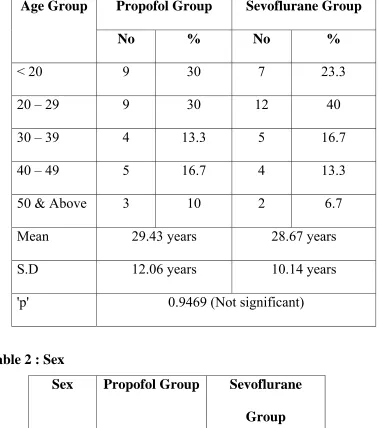
Table 1 : Age
Propofol Group Sevoflurane Group Age Group
No % No %
< 20 9 30 7 23.3 20 – 29 9 30 12 40 30 – 39 4 13.3 5 16.7 40 – 49 5 16.7 4 13.3 50 & Above 3 10 2 6.7
[image:60.612.141.443.499.703.2]Mean 29.43 years 28.67 years S.D 12.06 years 10.14 years 'p' 0.9469 (Not significant)
Table 2 : Sex
Propofol Group Sevoflurane Group Sex
No % No %
Table 3 : Weight
Weight in Kgs
Propofol Group
Sevoflurane Group
Mean 50.57 49.6 S.D 6.79 7.72
'p' 0.6668 (Not Significant)
The demographic data of the patients included in this study showed no significant difference between both groups in terms of age, sex and weight.
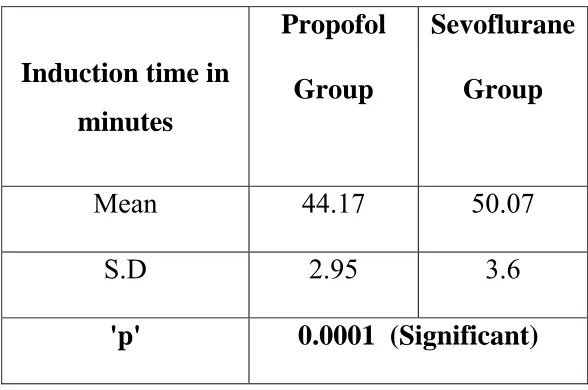
Table 4 : Induction Time
Induction time in minutes
Propofol Group
Sevoflurane Group
Mean 44.17 50.07
S.D 2.95 3.6
'p' 0.0001 (Significant)
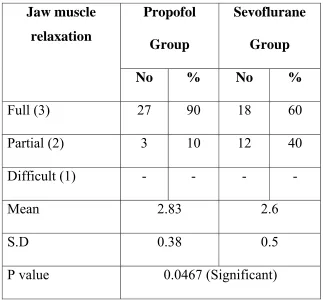
[image:61.612.162.456.454.649.2]Table 5 : Jaw muscle relaxation
Propofol Group
Sevoflurane Group Jaw muscle
relaxation
No % No %
Full (3) 27 90 18 60 Partial (2) 3 10 12 40 Difficult (1) - - - -
Mean 2.83 2.6
S.D 0.38 0.5
P value 0.0467 (Significant)
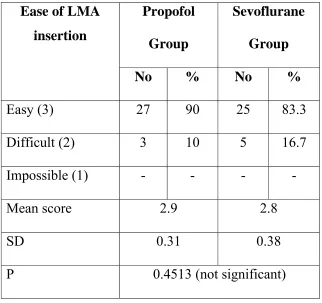
Table 6 : Ease of LMA insertion
Propofol
Group
Sevoflurane
Group Ease of LMA
insertion
No % No %
Easy (3) 27 90 25 83.3 Difficult (2) 3 10 5 16.7 Impossible (1) - - - - Mean score 2.9 2.8
SD 0.31 0.38
P 0.4513 (not significant)
Table 7 : Coughing
Propofol
Group
Sevoflurane
Group Coughing
No % No %
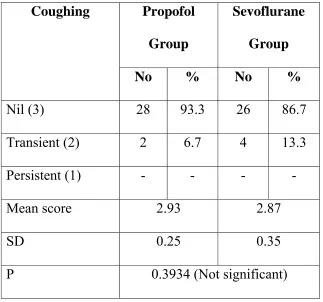
Nil (3) 28 93.3 26 86.7 Transient (2) 2 6.7 4 13.3 Persistent (1) - - - - Mean score 2.93 2.87
SD 0.25 0.35
P 0.3934 (Not significant)
Table 8 : Gagging
Propofol Group
Sevoflurane Group Gagging
No % No %
Nil (3) 30 100 30 100 Transient (2) - - - - Persistent (1) - - - - Mean score 3 3
Table 9 : Laryngospasm / Airway obstruction
Propofol Group
Sevoflurane Group Laryngospasm /
Airway
obstruction No % No %
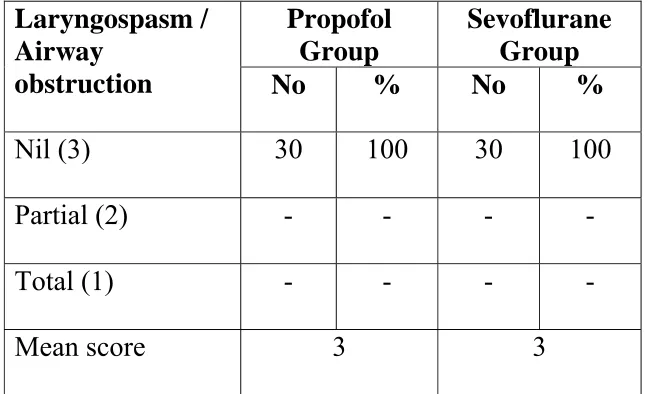
Nil (3) 30 100 30 100 Partial (2) - - - - Total (1) - - - - Mean score 3 3
[image:65.612.148.472.402.599.2]Table 10 : Patient movements
Propofol Group
Sevoflurane Group Patient
movements
No % No %
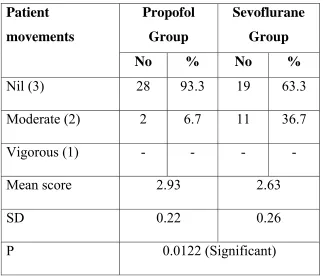
Nil (3) 28 93.3 19 63.3 Moderate (2) 2 6.7 11 36.7 Vigorous (1) - - - - Mean score 2.93 2.63
SD 0.22 0.26
P 0.0122 (Significant)
Table 11 : Number of attempts
Propofol Group
Sevoflurane Group No. of attempts
No % No %
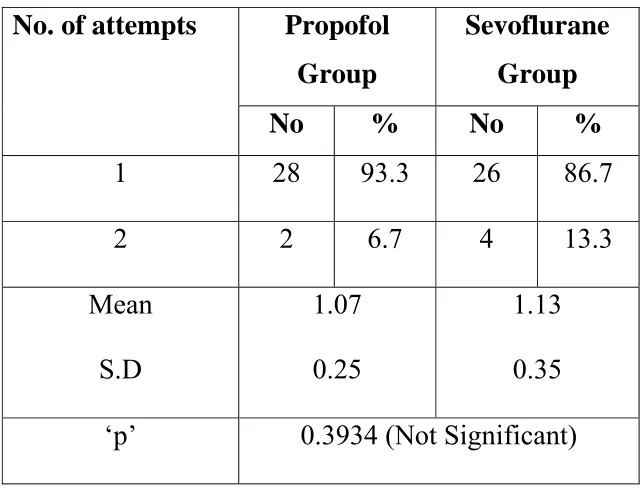
1 28 93.3 26 86.7
2 2 6.7 4 13.3
Mean S.D
1.07 0.25
1.13 0.35 ‘p’ 0.3934 (Not Significant)
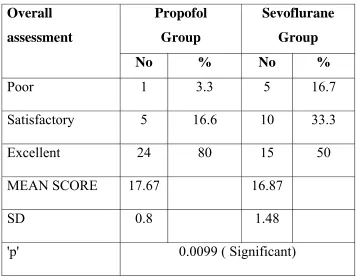
Table 12 : Overall assessment
Propofol Group
Sevoflurane Group Overall
assessment
No % No %
Poor 1 3.3 5 16.7
Satisfactory 5 16.6 10 33.3 Excellent 24 80 15 50 MEAN SCORE 17.67 16.87
SD 0.8 1.48
'p' 0.0099 ( Significant)
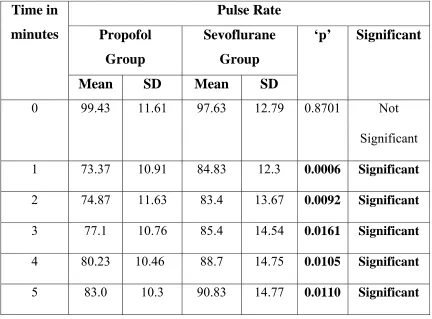
Table 13 : Pulse Rate
Pulse Rate Propofol
Group
Sevoflurane Group Time in
minutes
Mean SD Mean SD
‘p’ Significant
0 99.43 11.61 97.63 12.79 0.8701 Not
Significant
1 73.37 10.91 84.83 12.3 0.0006 Significant
2 74.87 11.63 83.4 13.67 0.0092 Significant
3 77.1 10.76 85.4 14.54 0.0161 Significant
4 80.23 10.46 88.7 14.75 0.0105 Significant
5 83.0 10.3 90.83 14.77 0.0110 Significant
There was no significant difference between Group P and Group S in the baseline pulse rate, But group P patients showed a marked decrease in pulse rate, after induction upto 5 minutes, which is statistically
Table 14 : Mean Arterial Pressure
Mean Arterial Pressure
Propofol Group
Sevoflurane Group Time in
minutes
Mean SD Mean SD
‘p’ Significant
0 95.7 6.97 94.63 8.92 0.5338 Not Significant
1 73.83 5.02 83.97 7.91 0.0001 Significant
2 74.63 5.01 83.47 8.05 0.0001 Significant
3 76.43 4.49 83.17 8.57 0.0018 Significant
4 78.87 4.48 88.7 9.35 0.0001 Significant
5 82 4.93 90.97 8.87 0.0001 Significant
Baseline mean arterial pressure in both groups showed no
DISCUSSION
The common method of anaesthetic induction for laryngeal mask airway insertion is the use of intravenous propofol which has the advantage of rapid onset, short duration of action and depression of airway reflexes. However adverse effects have been associated with propofol including hypotension, greater respiratory depression (apnea) and pain on injection. Recently sevoflurane has been widely used as an agent for inhalational induction. It is suitable for quick inhalational induction in high concentrations because of its low blood gas solubility and minimal respiratory irritant effect.
Induction Time :
The time to loss of verbal contact, indicating the end point of induction was 44.17+2.95 sec in group P compared to 50.07 + 3.6 sec in Group S. This correlates well with the study PRIYA et al who showed
that the induction time in group P was 41.7 + 10.1 sec and in Group S was 51.1+10.4 sec. Hence the induction was more rapid with IV propofol than with 8% sevoflurane.
KATI et al also found that induction was significantly longer in
sevoflurane group as compared to propofol group. In a related study,
MUZI et al also achieved insertion of LMA after sevoflurane induction
in 1.7 minutes which was longer than with propofol group.
Successful insertion at first attempt :
The successful insertion at first attempt was more in group P (93.3%) than group S (86.7%) which was statistically insignificant (p=0.3934). This is also comparable to study by RAVIKUMAR KOPPULA et al who had successful insertion at first attempt in 95% in
Patient’s response to LMA insertion :
A full jaw muscle relaxation was achieved in 90% of patients in Group P and 60% of patients in Group S. This is similar to study by
PRIYA et al who had adequate jaw opening in 82% in Group P and 54%
in Group S. This is due to the well known effect on jaw muscles by propofol whereas inhalational anaesthetics may cause an increased muscle tone and spasticity. Therefore, for a similar end point of induction ie. loss of verbal contact, there may be greater jaw muscle relaxation with propofol.
Moderate movements, either head or limbs, are present only in 6.7% of patients in Group P compared to 36.7% in Group S which is statistically significant. This is similar to the study by MARY E MOLLOY et al who had head or limb movements in 34% of patients in
Group S and 9.3% in Group P.
The other adverse responses like coughing, gagging and laryngoscopasm were did not reach statistical significance in this study which is similar to MARY & MOLLOY et al study who showed that
O2. IAN SMITH et al also revealed that inhalational induction with
sevoflurane was not associated with clinical signs of respiratory irritation, coughing, laryngospasm or excessive oral secretions. KOPPULA et al
also showed coughing in only one patient and no incidence of gagging and laryngospasm which also correlates with this study.
Overall conditions for LMA insertion :
Excellent inserting conditions with minimal adverse reactions were seen in more number of patients in Group P. In group P excellent conditions were seen in 84% of the patients whereas in Group S in 50% of patients. Analysis of the total scores for conditions for LMA insertion was done. The mean score in Group P was 17.67 + 0.8 and in Group S was 16.87 + 1.48 with ‘p’ value of 0.0099 which is statistically significant. This is similar to the study by PRIYA et al for whom the
mean score was 17.5 + 0.77 in Group P and 16+1.15 in Group S (p=0.012). Hence LMA insertion was superior with propofol than with sevoflurane.
Haemodynamic Parameters :
comparable with the study done by THWAITES A et al who showed
induction of anaesthesia with propofol was associated with a decrease of approximately 20 mm of Hg in MAP occurred within 2 minutes and persisted for atleast 10 minutes in contrast to the decrease in MAP with sevoflurane was only 10 mm of Hg and MAP had returned to the baseline values within 5-7 minutes.
This results also correlates well with study of PRIYA et al who
SUMMARY
The aim of this study is to compare the induction time, overall ease of LMA insertion and haemodynamic changes in sevoflurane and propofol group. Sixty adults of ASA I & II physical status patients undergoing elective surgery requiring LMA insertion were randomly allocated to induction with either 8% sevoflurane or propofol 2 mg / kg after receiving fentanyl 2 μ / kg and midzolam 0.05 mg/kg IV irrespective of the groups. The time for induction ie. loss of verbal contact was noted in both groups. Then immediately LMA was inserted during which ease of LMA insertion, jaw relaxation and other adverse responses were also noted. Pulse rate and mean arterial pressure were measured before induction of anaesthesia and upto 5 minutes after induction.
CONCLUSION
BIBLIOGRAPHY
1. A.THWAITES, S.EDMENDS AND I.SMITH : Inhalation induction with sevoflurane ; a double blind comparison with propofol. British Journal of Anaesthesia 1997 ; 78 : 356-61. 2. BAKER CE AND SMITH I – Sevoflurane ; a comparison
between vital capacity and tidal breathing techniques for the induction of anaesthesia and laryngeal mask airway placement Anaethesia 1995 ; 54 ; 841-4.
3. Brain AIJ – The intavent laryngeal mask instruction manual, 2nd
ed. 1991.
4. BRAIN AIJ. The Intavent Laryngeal Mask instruction Manual, 2nd ed 1991.
5. BRAIN. A.I.J : The laryngeal mask – A new concept in airway management : British Journal of Anaesthesia ; 55 : 801 – 804, 1983.
6. BRAIN. A.I.J., Mc.GHEE, Mc, ATEER.I. J. et al ; the laryngeal mask airway – development and preliminary trails of a new type of airway ; Anaesthesia 40 ; 356-361, 1985.
8. HWANS. JOO, WILLIAM J PERKS – Sevoflurane versus propofol for Anaesthetic induction ; A meta-analysis – Anaesth Analg 2000 ; 91 ; 213-9.
9. ISMAIL KATI, DEMIREL, EMIN SILAY, YAGMUR AND ISMAIL COSKUNER ; The Tokohu Journal of experimental Medicine : vol 200 (2003), No.3, PP 111-118.
10. J.K. L. HUI, A.H. CRITCHLEY, M.K. KARMAKAR AND P.K.K. LAM – co administration of Alfentanil – Propofol improves laryngeal mask airway insertion compared to fentanyl – propofol – Can J. Anaesth, May I, 2002; 49 (5) ; 508-512. 11. Jerry A, Dorsch, Susan E.Dorsch – Understanding Anaesthesia
Equipments – 4th edition.
12. K. NAKAZAWA, Y. HIKAWA, M. MAEDA, N. TANAKA, S.ISHIKWA, K. MAKITA AND K. AMAHA ; Laryngeal mask airway insertion using propofol without muscle relaxants ; a comparative study of pretreatment with midazolam or fentanyl- European Journal of Anaesthesiology (1999), 16 ; 550-555.
airway insertion in adults ; Anaesthesia and analgesia, 1999, vol 188 No.4, pp 908-912.
14. M. LOPEZ, J. BRIMACOMBEMB, B. CLAR. Sevoflurane versus propofol for induction and maintenance of anaesthesia with laryngeal mask airway in children. Paediatric anaethesia, Nov 1999, vol 9 issue 6 P 485.
15. MARIE – JOSE COLAS AND RENE MARTIN ; Vital capacity and patient controlled sevoflurane induction ; Canadian Journal of Anaesthesia 52 : 891(2005).
16. MARY E. MOLLOY, DONAC J. BUGGY AND PATRICK SCANLON ; Propofol or Sevoflurane for laryngeal mask airway insertion CAN J ANAESTH 1999 / 46 : 4 / PP 322-326.
17. Moyle JTB, Davey A, edited by crispiion ward- Ward’s Anaesthetic equipment – 4th edition.
18. MUZI M, ROBINSON BJ, EBERT TJ; Induction of anaesthesia and Tracheal intubation with sevoflurane in Adults ;Anaesthesiology 1996 ; 85 : 536-43.
airway insertion 15 adults ; J Anaesth Clinical Pharmacol 2005 ; 21(3) ; 271-274.
20. REVES J. G., FRAGEN R. J., VINIK H.R., GREEN BLATT D.J., Midazolam ; Pharmacology and uses ; Anaesthesiology, 62 ; 310-24, 1985.
21. Robert K Stoelting – Pharmacology and physiology in Anaesthetic practice.
22. Ronald D Miller – Anaesthesia. 6th edition
23. SAHAR M SIDDIK, SAMAR K TAHA, PATRICIA G, DEEB, MARIE ROSE A MUALEEM, ANIS S. BARAKA : A Comparison of sevoflurane propofol versus sevoflurane or Propofol for laryngeal mask airway insertion in Adults ; Anaesth Analg 2005 ; 100 ; 1204 – 1209.
24. SANDRA LESAGE, PIERRE DROLET, LOUIS PHILIPPE FORTIER AND DANIEL AUDY ; Fentanyl – Midazolam premedication improves sevoflurane induction ; Canadian Journal of Anaesthesia 53 : 26246(2006).
26. SIVALINGAM P, KANDASAMY R, MADHAVAN G AND DAKSHINAMOORTHI P – conditions for laryngeal mask insertion. A comparison of propofol versus sevoflurane with or without Alfentanil – Anaesthesia 1999 ; 54 ; 271-5.
27. SMITH CHARLES E ; LEVER JONATHAM ; SANKAR SUDAH ; PICHAK ALFRED ; NAGEN JOAN F ; J. Clinic Anaesth, 2000 Aug ; 12 (5) ; 392-6. Sevoflurane – N2O versus Propofol / isoflurane N2O during surgery using laryngeal mask airway in adults.
28. Thomas EJ Healy and Paul R Knight, Wylie and Churchill – Davidson’s a practice of Anaesthesia – 7th edition.
29. V. PRIYA, J.V. DIVATIA AND D.DASGUPT – A Comparison of Propofol versus Sevoflurane for laryngeal mask airway insertion. Indian J. Anaesthesia 2002 ; 46 (1) : 31-34.
30. WILSON I.G., FELL.D., ROBINSON S.L., SMITH G. Cardiovascular responses to insertion of to the laryngeal mask Anaesthesia 1992 ; 47 ; 300-2.
sevoflurane Anaesthesia for Adults – Acta Anaesthesiologica Taiwanica 2001, 39 : 2, 83-88.
PROFORMA
COMPARISON OF SEVOFLURANE VERSUS PROPOFOL FOR LMA INSERTION IN ADULTS
Patient Name: Age : Sex : Address : IP No.: Wt :
Diagnosis : Surgery : ASA Risk : Air way :
Preoperative Clinical features :
Premedication : Induction Agent : Adjuvants : Observation :
Sl.No. Clinical Finding Grade Description 1. Jaw muscle relaxation 3
2 1
Full Partial Difficult 2. Ease of LMA insertion 3
2 1
Easy Difficult Impossible
3. Coughing 3
2 1
Nil Transient Persistent
4. Gagging 3
2 1
Nil Transient Persistent 5. Laryngospasm / Airway
obstruction 3 2 1 Nil Partial Total 6. Patient movements 3
2 1
Nil Moderate Vigorous III – Analysis of haemodynamic changes :
Time after start of anaesthetic induction (minutes)
0 1 2 3 4 5
BP
PR
MASTER CHART GROUP S - (SEVOFLURANE)
S.No. NAM
E
IP No. Age Sex Weight Induction Time Jaw
r
e
laxation
LMA insertion Coughing Gagging Laryngospasm Movements Attempts Inserting condtion Pu
lse R a te M ean art .p res s u re Pu lse R a te M ean art .p res s u re Pu lse R a te M ean art .p res s u re Pu lse R a te M ean art .p res s u re Pu lse R a te M ean art .p res s u re Pu lse R a te M ean art .p res s u re
years kgs sec. /min mmHg /min mmHg /min mmHg /min mmHg /min mmHg /min mmHg
1 Indrani 2741 33 F 45 55 full easy n n n M 1 satisfactory 92 104 81 91 84 93 86 91 89 98 89 99 2 Amutha 3944 27 F 48 50 full easy n n n n 1 excellent 104 82 90 78 88 77 90 75 98 80 98 82 3 Ponraj 4778 16 M 43 56 partial easy t n n M 1 poor 92 87 78 80 68 76 76 76 80 82 80 83 4 Lakshmanan 4681 52 M 51 54 full easy n n n n 1 excellent 96 90 78 83 59 81 64 81 68 85 74 86 5 Sakunthala 3476 25 F 42 52 full easy n n n n 1 excellent 92 101 79 87 80 86 80 88 82 91 85 95 6 Rajalaksmi 6164 32 F 67 50 full easy n n n n 1 excellent 112 105 96 93 90 91 90 95 92 97 92 101 7 Ilayaraja 5493 16 M 40 50 partial easy n n n n 1 satisfactory 103 98 90 88 88 90 92 89 92 96 94 98 8 Rajendran 1090 22 M 60 48 full easy n n n n 1 excellent 79 87 74 75 72 74 69 73 78 75 80 82 9 Jeyakodi 5027 50 F 65 45 full easy n n n n 1 excellent 112 95 94 82 90 87 88 86 94 93 98 94 10 Rabiyath 6370 32 F 52 43 full easy n n n n 1 excellent 114 114 102 95 100 94 104 93 110 104 113 106 11 Valarmathy 3955 33 F 40 52 full easy n n n n 1 excellent 92 101 82 94 79 89 84 88 86 95 89 97 12 Gomathy 4158 35 F 45 50 full easy n n n n 1 excellent 82 83 68 70 62 70 64 71 64 73 66 77 13 Muthaiah 4807 28 M 52 56 partial easy n n n M 1 satisfactory 64 87 56 82 53 78 57 75 59 88 59 95 14 Joshi 4985 26 M 60 45 partial diff n n n n 1 satisfactory 111 103 99 93 100 94 108 96 116 98 118 97 15 Raja 501426 22 M 54 48 full easy n n n M 1 satisfactory 74 83 70 73 69 71 60 70 62 78 64 80 16 Angulakshmi 503086 25 F 34 58 partial diff t n n M 2 poor 86 83 80 74 72 70 70 67 75 71 78 75 17 Chinnaponnu 21456 45 F 52 52 partial easy n n n n 1 satisfactory 88 90 64 73 69 77 70 79 72 82 76 85 18 Lalinabanu 21464 23 F 45 50 full easy n n n n 1 excellent 96 89 82 79 81 79 86 76 88 82 91 85 19 Periyatchi 22466 17 F 50 46 partial diff t n n M 2 poor 88 101 70 97 71 91 70 91 78 97 80 97 20 Sangili 23903 40 M 60 52 full easy n n n n 1 excellent 102 108 90 97 92 94 94 91 94 101 96 102 21 Rathinam 25522 45 M 45 48 full easy n n n n 1 excellent 112 106 100 91 101 96 106 95 110 101 110 101 22 Jeyapriya 20404 20 F 42 44 full easy n n n n 1 excellent 98 97 86 89 88 89 94 87 96 99 98 101 23 Sujatha 22507 40 F 52 48 partial diff t n n M 2 poor 112 105 102 90 100 89 96 92 102 99 106 102 24 Muthuselvi 22136 27 F 55 50 partial diff t n n M 2 poor 112 87 106 76 100 77 106 81 106 81 108 83 25 Senthilselvi 24102 19 F 46 48 full easy n n n n 1 excellent 104 95 86 82 86 83 91 81 94 87 97 89 26 Lakshmi 15654 28 F 50 52 partial easy n n n M 1 satisfactory 106 92 92 81 96 83 96 83 98 85 98 89 27 Karthik 15064 26 M 50 52 full easy n n n n 1 excellent 98 87 80 82 82 77 84 76 86 81 86 83 28 Rathna 16863 19 F 40 50 full easy n n n M 1 satisfactory 90 83 81 75 84 73 87 71 88 78 90 77 29 Muthusamy 17532 18 M 53 48 partial easy n n n M 1 satisfactory 106 95 89 80 94 86 96 88 98 91 102 92 30 Geethaselvi 16818 19 F 50 50 partial easy n n n n 1 satisfactory 112 101 100 89 104 89 104 90 106 93 110 96