Rochester Institute of Technology
RIT Scholar Works
Theses Thesis/Dissertation Collections
11-22-2009
In dreams
Jesse BickelFollow this and additional works at:http://scholarworks.rit.edu/theses
This Thesis is brought to you for free and open access by the Thesis/Dissertation Collections at RIT Scholar Works. It has been accepted for inclusion in Theses by an authorized administrator of RIT Scholar Works. For more information, please [email protected].
Recommended Citation
R
⋅
I
⋅
T
IN DREAMS
By
Jesse Bickel
A Thesis Submitted in Partial Fulfillment of the Requirements
for the Degree of Master of Fine Arts
Department of Woodworking and Furniture Design
College of Imaging Arts and Sciences
Rochester Institute of Technology
Rochester, NY
November 22, 2009
Committee Approval:
November 22, 2009
Don ArdayDepartment Chair
November 22, 2009
Rich TannenChief Advisor
November 22, 2009
Andy BuckAssociate Advisor
November 22, 2009
Michael RogersAbstract
Dreams are a nightly phenomenon that everyone experiences. They are full of vivid imagery, imagination, and emotion. Using dreams as a rich source of inspiration I created wooden objects and furniture for the bedroom, the place where dreams occur. Even though dreams vary from person to person, there are common themes that can be found regardless of culture or gender. I tried to combine those themes with unique and specific imagery from my own dreams.
Capturing the intangible quality of dreams proved to be difficult. A dream is like a memory, at times clear and intense, or contrastingly brief and forgettable. The subject matter can be on the tip of your tongue and yet you cannot recall any of it. Trying to grasp that concept and realizing the implications involved took awhile. I discovered that I could not recreate dreams, but what I could do was create a kind of visual journal. I kept a dream journal throughout this experience and soon noticed that I was not really
recording my dreams. I was writing down enough information to jog my mind into remembering the dream, which I could then reconstruct in my head. I attempted to do the same thing with physical objects to create a physically tangible, yet still fleeting world.
One focus of mine was to create artwork that many people could relate to and experience. A more personal goal was to delve into a new world of inspiration and form unlike any I had previously experienced and travel through a journey of self-discovery in my
“This world that we create for ourselves is limitless, a place where we can problem solve, play out fantasies and discover ourselves. It is all truly inspiring to put it mildly.”
Thesis Statement
In my experience, the bedroom is the most common venue for dreams to come to life. This investigation will be focused on creating furniture and other objects for the bedroom that are inspired by dreams. The existing literature on dreams expresses widespread belief that there are common themes that present themselves cross-culturally. The actual
imagery, subject matter, and interpretations of these dreams vary individually from person to person. My body of work will incorporate my more personal dream imagery as well as the more common themes. However, my intention is for the viewer to interpret these objects based on their own individual experiences and associations, just like their own dreams.
Extensive research will assist me in deciphering my dreams and a better understanding of the more universal themes to fully incorporate them into my work. This research
Thesis
Sometimes dreams can be so vivid you wake up and it feels as though it just happened. You second-guess better judgment and all ideas of logical thinking. Did you just live through a whole day or was it just a dream? Other times you wake up distressed, knowing that you just had a terrible nightmare, but cannot remember anything. The only way you know is that sick feeling of dread. It is that concept that is so fascinating. How can something be so real, vivid, full of life and yet be so intangible at the same time? How does the mind work to create these fantasies in our heads? At times it can be an ally to our memories and fantasies while simultaneously it has the potential to be so
self-destructive. It can invade our sleep and create horrible nightmares that affect us mentally and physically.
Throughout history the mysterious quality of dreams has been a source of interest and inspiration. In many cultures dreams are regarded as insightful and foretell great events. Several notable leaders have had a dream that decided the fate of a country or themselves. Artists, such as Dali and Chagall, have been inspired by the surreal world of dreams. Many musicians have incorporated dream related lyrics into their music and there have been numerous movies on the subject such as, Waking Life, The Good Night, and The Cell. Children’s stories, such as Alice in Wonderland, have also been a popular avenue for many authors. Books offering to decode your dreams and unconscious thoughts seem to frequent the self-help and psychology sections as well as various bargain bins.
Jung believed that the key to dreams is the unconscious mind. He viewed it as a separate part of the brain, independent from the conscious mind and the foundation of the dream world. He states, “We all hear, see, smell and taste many things without noticing them at the time, either because our attention is deflected or because the stimulus is too slight to leave a conscious impression. The unconscious, however has taken note of them…” (Jung 34). These experiences that the unconscious has recorded crop up in our dreams and work to create a world that is entirely personal to us, a reason Jung states why books about dream symbolism really do not mean anything. You cannot generalize what objects, people, or places signify in dreams. What you can do is see the similarities between dreams, while keeping in mind that the associations and meanings they bring vary from person to person. Some common dream themes include: being chased by something, falling, flying, being injured or dying, being naked or inappropriately dressed in public, being lost or trapped, or sex with a colleague or stranger. While these are the more widely experienced themes, what they reveal about the person who had them will vary upon their own experiences and state of mind (Jung 66).
Although experiences do vary from person to person, most aspects of human culture and civilization can be traced through evolution. We all experience the same range of
emotions as our early ancestors, although the causes for those emotions are vastly
different now. Once it was survival that prompted action, now it is money or email. I find the connection between our dream state of mind and the early stages of brain
Jung also believed there is a history to our minds and their various evolutionary stages present themselves in our dreams. He states that our minds still retain the fears and experiences of the early animals that developed alongside us. These images, which he terms “collective images,” are the same triggers that Garfield attributes to causing dreams of being chased by something. Sigmund Freud had a similar belief about the evolution of the human mind. His term “archaic remnants” parallels Jung’s “collective images.”
In his book, Concerning the Spiritual in Art, Kandinsky speaks of “primitives” and states, “…these artists sought to express in their work only internal truths, renouncing in consequence all consideration of external form” (Kandinsky 1). Kandinsky is addressing a much more modern idea of “primitives” than the upright-walking early hominid. His definition of primitive lies closer to tribal societies. However, I believe this to be a fairly accurate statement concerning “primitive art.” I also believe that is why it is so
interesting, provocative, and emotional. Maybe this is what our subconscious is doing in our dreams as well; it is searching for inner truths. Regardless of form or subject matter, our dreams may be trying to tell our conscious self things we are not ready to recognize or acknowledge in our waking life.
The amazing imagery found in dreams is much more imaginative than anything we might come up with in the conscious state. As Jung states, “in the “primitive’s” world things do not have the same sharp boundaries they do in our “rational” societies” (Jung 45).
Therefore, our dreams are much more explorative and imaginative, a place where our unconscious mind runs wild. Dreams are full of emotions, random forms, people, places, and scenarios that may all be trying to convey some deeper meaning.
I suppose that dreams can be a source of unconscious desires and afflictions, but they can also be just a compilation of the day’s events mixed with memories, as I have
of one dream I could recall up to four separate dreams per night. I began to see patterns in the subject matter. I recorded the date with each dream and was surprised to see how much the day’s events as well as old memories affected my sleep. Ordinary days, holidays, and special occasions were well integrated into my dreams. Even though they were mostly a random compilation of images and ideas, my dreams were incredibly real and therefore both frightening and amazing simultaneously. They were a whole separate world where anything was possible.
Jung himself was captivated by that “other world” and the unlimited boundaries of the human mind. He believed that we never fully comprehend anything we experience. Our five senses and conscious logical thinking only bring us so far and then it is left to the mind to continue beyond (Jung 23). So experiencing something physically and recreating it in a dream world are two different things. One uses the conscious mind and the other the unconscious mind. The separation between the mental and the physical and the conscious and unconscious is the real mystery of dreams. As I stated earlier, dreams are so vivid and real, yet so intangible. William Dement, a well-respected sleep researcher states, “We experience a dream as real because it is real…the miracle is how, without any help from the sense organs, the brain replicates in the dream all the sensory information that creates the world we live in when we are awake” (“Real meaning of Dreams”).
It is proven that everyone has dreams, whether or not they remember them, they do have them. Setting out on this thesis I knew I wanted to make objects/furniture that many people could relate to and experience regardless of their culture or background. Not everyone believes they are creative or imaginative, but they experience the same emotions and fears that can occur in dreams. If they do not immediately relate to an object maybe they could have an unconscious reaction to it. What if they see a piece that makes them uncomfortable or happy and they do not know why, like waking up after a dream. It could be something thought-provoking that they think about for weeks to come, or as simple as an idea on the tip of their tongue they cannot seem to vocalize.
using my own dream experiences I felt I could explore my subconscious mind and the world I create for myself on a nightly basis. The dream journal combined with the exploration of work could possibly help me figure out why I tend to gravitate toward the subject matter and imagery I do. As an artist I felt this information could be invaluable to me in the future.
I began by thinking about my own nightly experiences and subject matters of my dreams. However, my focus quickly turned to a more basic question; where do dreams occur? It seemed like a logical place to start, the bedroom. What is the most private room in the house? The one you keep your most prized possessions in, the one you retreat to every night to wash away the day’s stresses. For most children it is the only space they can claim as truly theirs. For me, it is all of those things, but mostly it is where I dream every night. Starting at the source seemed to make the objects and where they would be
displayed richer in personal importance, as well as the implications they carry.
So, how could I turn the vivid yet intangible experiences of dreams into physical objects? That is a question that I resettled with every day. What angle do I take? Fearful? Curious? Fantastical? I know when I started all of this, I had no idea. Even halfway through I still was not sure. After making some pieces I realized that if I was more specific and sure of my intentions that the work would be stronger. However, the first piece I made,
“Guardians,” is still one of my favorites. There is an honesty to it and myself that I find very self-satisfying. Not worrying about the thesis or what would best convey the dream world opened up my mind on many levels. I needed to physically make something to get out of the sketchbook and just get my hands busy. By doing so I made something that was straight out of my dreams, my imagination.
the evolutionary trail that will lead to a new species? Would the baby be more human than fish or more fish than human? In my dreams, creatures often appear that are a combination of creatures from my waking life. In real life species cannot interbreed. But in dreams, a whole new world of possibilities opens up. What a fascinating thought! What if you could breed with another species and gain their assets, or their weaknesses? What a world that would be!
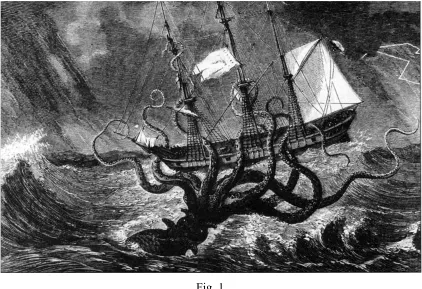
[image:11.612.96.518.278.567.2]I have always admired and been inspired by images depicting mythical creatures from someone’s imagination, especially older block prints and line drawings from the past.
Fig. 1
Depicted here is a monster known as a Kraken attacking a ship. I love the graphic qualities of the single-toned image full of various line thicknesses. Using hatch marks to shade with is a simple and strong technique to create an image. The images have an expressive and dramatic quality about them that I wanted to bring to a physical object. Through samples of colors and textures I settled on a surface treatment for the
samples for different surface treatments went beyond anything I could sketch on paper. This process helped immensely throughout the body of work. The surface I created for the fish is hatchy and expressive yet at a distance it appears to create a uniform surface. The surface references age, a passage of time, and to some, appears burnt. It gives the “Guardians” a rather creepy, ambiguous vibe. What are they guarding? How long have they been there? Are they merely representational statues or are they servants of some legion, faithfully guarding something very valuable through time, wind, rain, and famine?
With this piece I had the chance to create my own mythology. Through the research of the many mythologies of various cultures and civilizations I realized that no two are alike, although they can be similar in subject matter. The subject matter of dreams and what they represent are also unique to the people or locality. Considering these
differences, it seemed much more valuable and interesting to let the viewer create his or her own story behind the figures. If I could create a more ambiguous piece, they could then add their own imagination and experiences to bring the figures to life in their own mind. Everyone’s personal experiences are what make their dreams unique and specific to them. Because of this, the feedback I received from people is varied and unique. It seems that one specific body part of the figures resonated more from person to person and it highly influenced the way the individual viewed the piece. Some people gravitated toward the belly and saw a male with a pregnant female figure; others perceived that one fish was severely malnourished. Several individuals thought the belly buttons and feet were cute, while others thought they were creepy and disturbing. Some viewed the graphic qualities of the eyes and fins to be details on two representational statues. A few people still perceived the bases as charred remains that the figures were standing in, looking up at the sky as if they were looking for hope or answers, and in some cases, food.
believe they would have ever been interpreted as a possible living thing, but rather only as a representation of something.
When I finished making these figures they seemed to be the guardians of the dream realm. They signified a change in thought processes. Stepping through them changed one’s perspective and mindset. They were not necessarily a physical object, but more the manifestation of an idea in your head. Not quite tangible and not purely imagined, like a dream. Dreams are so real in your mind but you cannot recreate them or truly experience them again. You can write your dreams down in a journal but that is merely a way to “document” the general ideas and images present in the dream. It is in the reading of the journal where things come to mind and to life again, an experience I had many times while keeping my dream journal throughout this body of work. The words spark the images you experienced in your mind, but it is not the dream that was written down, just the idea. The dream itself is an intangible thing, a feeling, an emotion. I feel that the “Guardians” merely try to depict the idea and state of mind I was in at the time. They are a physical journal with the objective of causing that spark of remembrance.
can and will. So how would you get to that world? What would be the way in? Is it your mind, your bed, a journal, or another avenue… a physical avenue?
In my first sketches for a piece involving a mirror, I thought about reflections and how the figure present in the mirror was just as much a part of the piece as the frame. In my initial research, I was looking at dream symbolism and even though there are no universal symbols, there was something that peaked my interest. Many experts believe that when a house appears in someone’s dream, it is usually a metaphor for the state of their own person, mentally and physically. For example: if the house was burning or in disrepair, then the person was sick or feeling overwhelmed by something in their waking life. I thought that was an interesting idea to tackle. However, after showing my initial sketches to my committee I realized that there was no personal aspect to the piece. It was an expansion on someone else’s idea using imagery I found hard to relate to and incorporate fully with my ideas. It was also mentioned to me that a mirror could be thought of as a portal. I felt immediately connected to this notion that a mirror was not just one-sided. It brought out my imagination and possibilities in a way the more scientific, researched approach had not. The mirror could be that avenue into the other world.
Instantly I started thinking about the dream world one could enter through a portal. This quickly turned into the possibility of what might be trying to come out at someone from that world. I wanted the idea behind this piece to relate to many people. The most common theme in dreams is being chasing by something. The entity chasing people varies from animals, to other people, shadows, and even ideas. They can be stress-induced and generally are different from culture to culture and location to location. For example: people in Hawaii dream of being chased by sharks, while people in Africa dream of being chased by lions. In this case, it is a two-headed bird that is chasing after someone.
something rarely found in real life. At this point the sketching and the ideas started to affect my dreams rather than my dreams affecting the work, which was very interesting and also became quite useful. The thoughts in my dreams were more uninhibited than my controlled sketches. Color choices started coming straight from my dreams and I openly implemented them in my work.
process of falling out of the sky. What fate awaits you through the portal to your worst nightmare? That fate changes for everyone who views it and is something people must create for themselves. An elusive quality I could not create, and I happily rely on the viewer’s imagination to complete the story. No one can terrify us more than our own imaginations. We know what buttons to push best.
The “Gateway” really solidified for me the notion of creating another world, and objects or creatures from it. Suddenly, I found my inspiration and direction and started sketching much more imaginative ideas and subject matter. I saw the connection between the imagination and dreams. That is what dreams are, uninhibited imaginations. As this concept became more and more evident to me I started feeding my imagination by constantly immersing myself in fairytales, children’s books, picture books, and a vast array of unique imagery. Through all of this I found myself drawn more to the surreal and disturbing stories and imagery. Twisted stories that describe horrible villains and
bloodthirsty beasts intrigued and disturbed me and made for great inspiration. It was similar to the way people are drawn to horrific car accidents and scary movies. Even though they would frighten me and give me horrible nightmares I felt compelled to read them. As I recorded all of these experiences in my dream journal I learned quickly that someone could mold his or her dreams and thoughts by what they expose themselves too. By reading these darker stories before going to sleep at night, it was much more likely for me to have nightmares and darker dreams. In most of the stories I read animals played a major role. It seemed like a staple in the recipe for what made a good fairy tale and animals, as always, continued to play an integral role in my dreams.
I was immersed in making things everyday at the shop and I was immersed in books and fiction the moment I got home at night. I was living, breathing and sleeping my thesis. All of the constant inspiration made it much easier for ideas to come. They felt natural and real. This was when I truly found my path and started heading down it full throttle.
even to yourself? Something that would solidify that it was not a figment of your
imagination… that you had real, if not physical experiences there. I started thinking about what would be sufficient evidence… an object, a keepsake, a trophy? My third piece started out as just that, a trophy. There are many possibilities for a trophy item. While I was in a friend’s garage I saw a set of antlers lying on the floor in a corner. They were very provocative to me, a remnant of a once living thing. How did they get there? Were they hunted and cut from the animal’s body or were they found in the woods? It made me think of all the remains you see in museums of creatures from the past long extinct. Even though you will never see those creatures in real life, they did exist. They were once alive and what is left now is the only record of their existence. Without the sometimes, meager pieces of their structure we would never know they even existed. They would not be there to feed our imaginations or answer our questions about evolution and survival. A remnant of an alien form could prove to someone that you had experienced another place or time.
I was more inspired by the wall-mounted antlers or busts you see on a hunter’s wall, the great prize for their conquest. However, I wanted to keep it limited to the “antlers,” and not the bust. I thought it would be much more interesting to let the viewer fill in the blanks and imagine his or her own creature. In my research I found out that antlers are shed every year and can be picked up by anyone after they have fallen, while horns are an integral part of the animal, permanently attached with a vital artery running through them. Tusks, the third protrusion, are actually overgrown teeth. I felt that the use of horns was a much more powerful image because of the implications their presence carried. For someone to acquire the horns the animal is either severely wounded or dead, likely the latter. The horns would represent more of an action, a battle, and a conquest. They also display ideas of gender-specific qualities: power, status, and dominance over another species.
or a creature from some nightmare that will never terrorize you again? These are all important questions that I have been asking myself and I hope the viewers will find themselves wondering the same things when confronted with the trophies. I am no hunter myself. I believe I have a very high regard for all living things, but in the depths of my worst nightmare I do not know what I am capable of.
Before making the first set of horns, I viewed many images of various horns and was fascinated by the ones that curled over themselves and created a massive tangle of bone and texture. They had a quality about them that was so real and natural. It was obvious that they were a constantly growing and evolving form attached to a continually maturing creature. I wanted to create that same snake-like evolution of form and texture. The form needed elements of oddness to it to enhance the unworldly dream reference. In the first set, “Trophy”, the horns get smaller and then larger again instead of the normal thick to thin composition. For the bone of the horns I bleached basswood to get a very hazy, almost translucent-looking material. What I did not expect was that the bleaching
combined with the texture actually seemed to create a new material. The wood no longer looked like wood, which made the object more real and intriguing. I kept the piece of skull minimal so that the viewer could imagine his or her own creature. The texture itself works to create a sense of age and passage of time through a building up of layers to create the winding form. I see wisdom and maturity when I look at this piece. There is also a softness to the shaping and the overall form that is almost innocent and invokes a sense of empathy with the animal. I imagine a massive, yet docile animal, grazing on fantastical foliage while a hunter of sorts is silently stalking it. The actual form combined with the color and surface treatment all work to make this a very successful piece. It has a solidity and heaviness to it, while it also appears weightless and almost ghost-like. The plaque is grounded in this world, but are the horns?
unfinished to me. In my research, I found that almost all of the specimens in an individual or museum collection were in fact mounted on plaques. I believe this was for
preservation purposes as well as the aesthetics of display. Some of the samples also seemed to come from hunters’ collections, through donations, or other acquisitions. To me, this confirmed that a plaque to mount them on was appropriate. I also believe that the shapes, colors, and treated edges of the plaques would lead to various interpretations of the piece being a specimen or a trophy. Personally, I find the associations with a trophy item very intriguing, especially when it involves a body part of another living thing. Either way, both cases do usually involve more than one set of horns or antlers. I began to add several other pieces to the “collection.” I focused on the form, texture, and color as with the first one. Each piece was individual, but I also thought about the composition as a whole for the final display of the collection.
A comment that was made about “Trophy” was how much the horns did not look like wood. They looked like another material, which added to the fantastical aspect of the piece. The horns were more believable as an actual animal when they seemed real and not constructed by an easily recognizable material. This was something I really tried to carry throughout the trophies. The more I could make the horns look like another material, the better.
the skull brings associations of western culture and the desert. The weathered horns seem to have been lying around while the skull got more and more bleached by the sun in some forgotten land. This set was possibly not hunted at all, but picked up by a person passing by. This mental image is what led to the title, “Remains.”
From there, I moved on to the third set, “Found Object.” I changed my approach with this set and instead of giving the animal more of a presence I wanted to simplify the form to create a very ambiguous piece of horn and bone. Is it part of a head, back, tail, or some other component of a creature? I believe the title emphasizes this notion as well. Someone might see it as more of a specimen, something discarded by one creature and acquired by another. The format of the piece is vertical to balance with the first two trophies that have more horizontal compositions. The treatment of the horns came from looking at many African safari trophies. Most of the animals had very long, rich, black horns. I wanted the form and color to be the first thing one notices and on closer
inspection, the faint texture on the horns. I find the smaller scale of this piece to be very humble and interesting. It silently hangs on the wall, taking a back seat to the more elaborate forms of the other trophies, but still as a quiet and resonant aura.
still present from when the creature was just a baby and has progressively gotten bigger as the animal matured. The two protrusions on either side of the base of the spike are meant to be the remains of a mouth. Maybe in life there were formidable teeth or some sort of channel that would capture the food that struck the spike while the beast was swimming.
The reaction I got from this piece was unexpected. Although most people said it was the most threatening of all the sets so far, many did not see a skull at all. The common associations were a tail or part of vertebrae. After it was completed, a fellow student in the wood department came in and was very surprised by the form. He told me about a comic book series and how the main character had a protective battle helmet that was very similar to my piece. (See Figures 2 and 3 for comparison.)
Fig. 3
He went on to explain the character whose helmet it was. His name was “Dream” and he controlled the dream realm and everything that happens to someone when they are
sleeping. When he is in his own world, the dream world, he cannot be harmed because he controls all that goes on. However, if he ventures out of his world to places like Hell he puts on his battle helmet to protect himself. I was so amazed at the parallels between the comic book and my thesis topic that I immediately read a volume from the series
Sandman on “Dream” and his adventures. The subject matter and imagery was very inspiring and I went on to read other fictional novels written by the same author, Neil Gaiman. I found his style of writing and specifically the worlds he created incredibly intriguing, unique, and relevant to my work.
Originally, I thought that by keeping the skull plate minimal the viewers would be more able to imagine their own creature. I then considered dinosaurs and all of the skeletons that were preserved and yet there are still so many unanswered questions. What was their skin like, in texture or color? Did they have feathers or appendages that do not show in skeletons? I thought I could create a whole skull and there still would be room for expansion. With the fifth set, “Conquered” I set out to create a much more massive creature with the size of the horns and the size of the skull. I also wanted the skull to protrude more from the wall. However, through slight mistakes and miscalculations the skull got narrower and narrower, about a third of what was intended. I am pleased with the final object and felt very comfortable with the changes as they took place, accepting them and seeing where it took me. The inspiration for the skull was from the unique and almost prehistoric qualities of the skull of a bull terrier.
I believe those qualities came through and the skull is very ancient looking and resembles a dinosaur. The width and thicknesses of the horns suggest a large adult, one that plays a strong role in leading the clan. The texture on the horns is meant to be visually rough while being physically smooth. I tried to create a multitude of possibilities with the different sized horns as well. It is up to the viewer if one set is still growing, if it is a simple mutation or if two sets are needed for a specific purpose to the animal. Maybe it is a gender-specific quality to the species. The strong, distinct brow lines and shaping of the skull gives the animal a sense of dominance, character, and authority that makes the title much more meaningful. The piece entitled “Conquered;” really implies a rise and fall that is very powerful. This was clearly a hunted victim. Torn down in his prime and hung on the wall where his presence is somewhat degraded but ironically still strong and regal.
A source of research for these pieces were actual trophies and mounted plaques at nearby hunting stores. On one visit, I saw a mother deer and fawn mounted side by side on a heart-shaped plaque. Immediately I felt a strong empathy for the small family. However, it was very interesting to see more than one animal mounted on the same plaque. I really got a sense of the species, rather than an individual. I decided to make a piece that incorporated this notion. The more I worked on the piece the more I liked the idea of depicting more than one example of the same species. It had the element of multiples, a pack or family. It also implied the passage of time, birth, and multiple generations, which became the title for the set, “Generations.” I kept the forms simple so I could work with them on a smaller level, although it was still difficult. I tired to combat the cutesy size with pointy, devil shaped horns and a scorched treatment to the wood. I do not believe that helped much as people are still captivated by the actual scale of the piece. However, it is not completely unsuccessful for them to still appear as “cute.” It was mentioned that it is nice to have the gruesome aspect of the subject matter taken away, much like a fairy tale is depicted for children. It only heightens the sense of fantasy in the trophies.
coming back to one piece in my head many times, unable to solve the problem of fluidly integrating concept with actual functionality. I found incorporating function much more difficult than simply exploring form. At the beginning of the year, my statement clearly indicated that I was setting out to make bedroom furniture. Initially my ideas lead away from function, which was very helpful to me. I was able to truly narrow down the direction I was heading in with the more sculptural pieces and sort out my ideas and inspirations. However, after those pieces I felt I was ready to tackle the one piece that eluded me the whole time, the one piece most necessary in a bedroom, a bed. The bed was constantly in the background for me and I jumped around from various ideas and sketches the whole year.
The horns are an item that was brought back from the dream world. Well, if you go into that other world what would you take with you? I started thinking about survival items: maps, a compass, weapons, a shield, food, clothing. Then I considered the exploration side, the bed is the vessel that will take you to that other world, in sleep and imagination. What would you need to explore that other world? I started thinking about ships and documenting new experiences with notebooks, journals, sketchbooks, collecting various samples, walking sticks, nets, and good luck charms. The more I thought the more complicated the idea got. Too complicated. I tried to narrow it down to the simplest idea. What is the one thing you like to have when going somewhere you have never been… a map. What if the whole bed was a map? How do you map out a place that changes constantly? Every night your dreams take you to different places. How do you map out the thoughts in your head? Do you separate the good from the bad from the ridiculous? Being able to navigate the map properly is very important as well. Is there a key involved? Is it obvious or is it hidden throughout the map so that the only one who can navigate it successfully is the person whose dream world it depicts? Or can it be navigated at all?
I was not interested in a metaphorical bed. There is a lot to consider in a piece as large as a bed: structure, comfort, size, and as much as I tried it just was not working out. I
thought I would put my efforts into a smaller piece to wrestle with the issue of function in a more manageable size.
As I had learned, reading various novels before bedtime affected my dreams
exponentially. The books became a huge part of the work. I would spend many hours in the bookstore looking up all sorts of fictional storybooks, novels, and picture books. I purchased them based on the subject matter, the blurb on the back, and the other authors who recommended them to obtain the weirdest, most interesting and unique reading material. I decided to incorporate these books into the smaller piece to challenge myself with function and get a better sense of what the bed could be through this other object. I settled on the idea of a small cabinet to hold the book I was currently reading. I began with more animal imagery, an owl. I saw the connection between the commonly associated wisdom and knowledge of an owl and the insight you can gain from books. After the piece was fully drawn out, I was encouraged to step away from animal imagery. I was a little hesitant because I wanted the show to be cohesive and everything up to this point included some sort of animal. I also knew it was necessary for me to try something else before I got stuck in a rut where I could not think of new answers to the same problems.
cabinet. The goal was for the texture to be very subtle and unassuming and only after further investigation would someone realize the connection to it and what the piece contained.
Another aspect I wanted to explore in this piece was a change of perspective, distortion, and proportion. In a dream, things are often unreal, impossible, and alter one’s sense of what is normal or recognizable. I wanted to achieve that in a piece of furniture as well. I added small stairs at the bottom of the piece to change the scale and made the piece smaller at the base to change the perspective. When you get up close to the cabinet to use the hinged doors you are in the position to look straight down the piece while it gets smaller, as if you were standing on a big building looking down from the roof. The effect is not as extreme as in real life, but similar to feelings of vertigo.
Ironically, after finishing the cabinet, I went back to sketching the bed using the same ideas as before. It took over a week for me to realize that my train of thought was leading to one dead end after another. At a committee meeting an important question was asked of me, “Where do the books go once you have read them?” (The cabinet is only made to hold one current book at a time). I really liked the idea of incorporating more books into the bed. Instead of objects and weapons protecting the dreamer, it was knowledge and imagination that was preparing the dreamer for the dream world, a build up of past characters, scenery, storylines, and fictional places. Again, I went back to sketching to figure out how to incorporate a bookcase with the bed. I ran through idea after idea. Daybeds, settees, upholstery, none of it seemed fluid or even cohesive with the rest of the body of work. There was more pressure, as well. I needed to design something I could build fast. Time was running out and the show was coming up quickly. I was adamant about having a bed in the body of work.
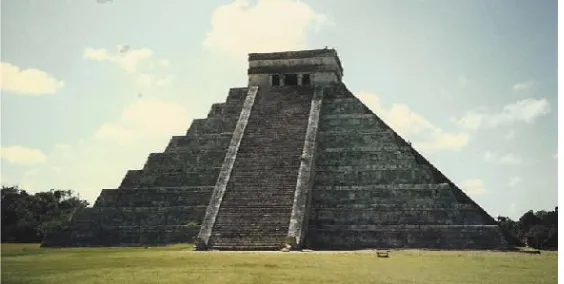
It took showing my ideas to someone and having them say point blank, “I thought you were supposed to learn about your bed through your cabinet? Why did you even make it then?” Something finally clicked and I began sketching using the same inspirations for the cabinet. It all made sense. I kept the letter texture, the more chunky features, and the references to architecture. Other people as well as myself believed that the cabinet looked like a temple, so I researched temples and pyramids. I found the Aztec and Mayan
temples and structures very inspiring and mysterious.
The final sketches of the bed lifted the dreamer above the books, like the Pyramids. The structures would get smaller and smaller until they reached into the sky with the most important function or ritual occurring at the top level. I made the mattress smaller and lighter in color from the base to create another level mimicking the step pyramids. I tried many samples of color choices, mostly with sandy earth tones and browns inspired by the desert locations of pyramids, and ended up going back to the previous samples for the cabinet. The yellows and golds seemed to work very well. I definitely wanted to keep the colors subtle and monochromatic. I knew that the splash of various colors from the book spines could not contrast or compete with the bed. The bed is there to hold the books and should be understated and reserved in color and simple in form. It is also there to lift the viewer up into a new world of time, place and thought. There is a hierarchy of objects and importance. The dreamer needs the knowledge from the books to take them into the dream world. The dreamer relies on that knowledge and uses it for support in the dream world while being physically supported by the books in the real world. This notion lead to the title, “Dreamer’s Defense.”
I chose a fabric for the mattress, lighter in color, but heavy in texture in order to contrast with the smooth, painted wood. The fabric and its texture reminded me of a durable canvas, or a textile that might have been used on mummies. When I think of the Aztec and Mayans temples I think of rituals and human sacrifice, mysterious occurrences that our society now could never understand the meanings behind. A person is laid out on the bed, but for what reason. I know I would go there to dream but there is a slight hesitancy to think of the other implications and associations this bed structure can bring.
For the letter texture on the underside of the bed, I reversed the colors that were on the cabinet and tried to accentuate it as well as move one’s eye around the piece by
However, as a happy accident, when you lay on the bed the books are in a perfect position for easy access to peruse them while never leaving the bed itself.
The bed was the culmination of this experience for me, and the piece that ties the body of work together. It sets the scene and mood for the imagination to take hold of someone and create new experiences while they are fast asleep in a far away place.
The first sentence of my statement states “… the bedroom is the most common venue for dreams to come to life.” At first, that sentence was meant only to give myself a setting and boundaries to place the objects I would make into a specific context. Now I believe I missed a key section of that sentence, for dreams to come to life. To make objects that could evoke the emotions, imagination, and realness of dreams and truly bring them to life could bring out the child in everyone. To create different worlds for people to enjoy rather than their own reality opens to limitless possibilities.
A large part of the dream world is the surreal quality of it. Dreams transcend time, space, and physical notions of the self and objects. The aspect that nothing is what it seems is hard to capture in a physical object. I began with the “Guardians” to try and create the otherworldly aspects of dreams with the blending of two separate species. They are thought provoking and mysterious. The most important aspect is that they are open to interpretation, and people can readily come up with their own mythologies about them.
To think of the dream world as real and tangible adds a new level to the world you could enter and therefore it becomes more frightening. I remember hearing many urban legends when I was a child about how if someone died in their dream they died in real life. Some nights I was scared to go to sleep wondering what fate would befall me. Children with their unencumbered imaginations truly see the world differently and experience more real and raw beliefs and emotions. They feel with all their heart, they believe with all their heart. To capture that quality and bring people back to the imaginations and experiences of childhood was difficult but exciting to attempt. To expand upon someone’s
tangible for the viewer so they could really relate and react to objects that I made. I wanted the objects to evoke memories, fears, and joys. The mind and imagination of the viewer is just as much a part of my work as the pieces themselves. This is evident in “Gateway” and the trophies. People’s imaginations expand upon what I have provided for them.
The night of the thesis show was very intriguing. I got to see firsthand people
experiencing my work. I received many comments about the trophies, which seemed to affect the most people. One person said I gave them all spirits. Another said that
everything looked like they had a story, a rich history. Many gave me their mythologies of the trophies, which was fascinating in their contrast to mine and wonderful that they could so readily come up with their own histories of the pieces. The “softness” or lack of grotesqueness in the trophies was also apparent at the show. They were viewed mostly as fantastical and whimsical objects that seem to evoke more thought than empathy. I tried very hard to make the wood in the trophies look like anything but wood. I believe that helped immensely for people to so readily view the “animals” as once real or alive, as opposed to the “Guardians” where you can make out the wood that they consist of. They come across more as a statue of a creature than an actual creature.
One woman related to me her reaction to “Gateway.” She said it reminded her of an episode of the TV show, TheTwilight Zone. In the episode there was a mirror above a dresser in a bedroom and if someone looked into it a portal opened and they were
immediately swept into another time and place. My piece reminded her so much about it that she said she would have trouble sleeping that night. I was delighted that my work had brought to mind that memory for her and affected her that much.
Many said that “Night-time Ritual” and the jumbled letters on the front reminded them of the dream world in Alice in Wonderland. I think in the end people responded most to the pieces they could relate to and create their own stories for. The three most popular were the “Guardians,” the different sets of trophies, and “Night-time Ritual.” Another
have quietly intervened in my dreams and sketches to create my trophies? Are my dreams so tied to my more primitive ancestors? What would Patricia Garfield think about my work? Or Jung?
Almost every small child at the show was drawn toward the bed and tried to grab books off the shelves so their parents could read them a story. It was at the perfect height for them, something I had never considered. Immediately the children associated all the books as a ritual of bedtime, something I think adults neglect to see quite so quickly, if at all.
The reactions and emotions I saw at the show were rewarding, but more importantly, informative. If I were to continue with this theme in my work I now have an arsenal of information on its effect on people, both old and young that could make the next body of work all that much stronger.
When I started down this dream path I had no idea where I would end up. My initial research was thorough but seemed to leave me more inspired than point me in a specific direction. How would I depict my ideas, what would the work look like? It was all very intimidating, mysterious, and confusing. The requirements I put upon myself were daunting to say the least. I do not think I have ever pushed myself or my work harder and I know it made the work all that much stronger. I believe I also learned a lot about myself through this experience.
making this handful of objects I see much more potential and variety in ways to express those same ideas now.
When I think about where my work will go from here it is a very exciting train of
thought. This new source of inspiration from stories rich with imagery combined with the surreal world of dreams has the potential to provide me with unlimited imagery and ideas. I also found it liberating to make objects more than furniture. It opened up a range of possibilities for me. Making pieces that had no basis in furniture archetypes was very interesting as well. I found it very appealing to think of ways to twist and alter what is thought of as “normal” functional furniture. This could be recreating the standard format of a piece, such as a bed with my version “Dreamer’s Defense” or building something for a specific and unique function, like “Night-time Ritual.”
Works Cited
"Discover the Meaning Of Dreams using Personal Dream Analysis." Discover the Meaning Of Dreams using Personal Dream Analysis. 3 Oct. 2008
<http://www.realmeaningofdreams.com>.
Jung, Carl Gustav. Man and His Symbols. New York: Dell, 1968.
Kandinsky, Wassily. Concerning the Spiritual in Art. Mineola: Dover, 1977.
"Universal Dreams - Patricia Garfield , Ph. D. ." Patricia Garfield, Ph. D. Universal Dreams. 10 Jan. 2008 <http://www.patriciagarfield.com/publications/udreams_99dreamtime16.htm>.
Illustration Credits
Fig. 1 Ellis, Richard. Monsters of the Sea. New York: The Lyons Press, 2006.
Fig. 2 Dringenberg, Mike, Harlan Ellison, Neil Gaiman, and Kelley Jones. The Sandman Vol. 4: Season of Mists. ...New York: Vertigo, 1992.
Fig. 3 Photo: Jesse Bickel
Fig. 4 Dog Fan, D . "Greetings!." Bull Terrier Puppies Blog. 7 Dec. 2008 <http://bullterrierpuppiesblog.com/>.
Fig. 5 Myers, Pz. "Pharyngula: Tandem repeats and morphological variation." ScienceBlogs. 7 Dec. 2008
<http://scienceblogs.com/pharyngula/2007/10/tandem_repeats_and_morphologic .php>.
Fig. 6 Aiken/Widom. "Mayan temple, Chichen Izza, Yucatan ." Aiken/Widom Family Travel Log and Photo. 7 Dec. 2008