i
DESIGN OF COMPLEMENTARY FREQUENCY SELECTIVE SURFACE ON GLASS DESIGN FOR WIRELESS COMMUNICATION APPLICATION
MUHAMMAD AMIRUL RASYID BIN DAHLAN
THIS REPORT IS SUBMITTED IN PARTIAL FULFILMENT OF REQUIREMENTS FOR THE BACHELOR DEGREE OF ELECTRONIC
ENGINEERING (WIRELESS COMMUNICATION) WITH HONOURS
FACULTY OF ELECTRONIC ENGINEERING AND COMPUTER ENGINEERING
UNIVERSITI TEKNIKAL MALAYSIA MELAKA
ii
DESIGN OF COMPLEMENTARY FREQUENCY SELECTIVE SURFACE ON GLASS DESIGN FOR WIRELESS COMMUNICATION APPLICATION
1 3 / 1 7
MUHAMMAD AMIRUL RASYID BIN DAHLAN
iii
“I hereby declare that the work in this project is my own except for summaries and quotations which have been duly acknowledge”
Signature : ………..
Author : …...………
Date : ……….
MUHAMMAD AMIRUL RASYID BIN DAHLAN
iv
“I acknowledge that I have read this report and in my opinion this report is sufficient in term of scope and quality for the award of Bachelor of Electronic Engineering and
Computer Engineering (Wireless Communication) with Honours.”
Signature : ………...
Supervisor’s Name : ……….
Date : ……….
PM. DR. MOHAMAD ZOINOL ABIDIN BIN ABD. AZIZ
v
Dedicate with love to my family members especially my beloved parents, Mr. Dahlan Bin Kasman and Madame Sanisah Binti Salleh
vi
ACKNOWLEDGEMENTS
First and foremost, I would like to express my gratitude to the most Gracious and Most Merciful ALLAH S.W.T for giving me all the courage and guide me through my journey of learning. I would also have this opportunity to express my sincere gratitude goes to my supervisor, PM. DR. Mohamad Zoinol Abidin Bin Abd. Aziz for this guidance and supervision for completing my final year project throughout these two semesters as a final year student.
Not to forget my beloved family for giving me all support throughout my studies in Universiti Teknikal Malaysia Melaka (UTeM) for this whole four years. Next, I would to thank the faculty itself for providing all aspects of help and facilities that has made me a competent student of Universiti Teknikal Malaysia Melaka (UTeM)
vii
ABSTRACT
Modern houses use energy efficient building materials like metal shielding and energy saving windows to improve the thermal efficiency. Such energy efficient building materials creates the barrier for outdoor-to-indoor RF signals propagation which is one of the challenging problems in the field of cellular communication. One of the newer passive techniques which is operator independent and does not have additional network burden, is the use of complementary frequency selective windows.
Frequency selective windows consist of Frequency Selective Surface (FSS) etched on the metal coating of the energy saving windows, allowing cellular frequencies to pass through them while blocking the thermal radiation. FSS possess frequency selective behavior based on the element geometry. In order to improve the performance of FSS, Complementary approach has been used which it produce strong fields in the separation region. As a result, good angular and polarisation stability can be achieved
viii
ABSTRAK
Rumah dan bangunan moden pada masa kini menggunakan bahan yang berkesan untuk membina bangunan seperti logam dan tingkap penjimat tenaga untuk meningkatkan kecekapan pengawalan haba. Tetapi bangunan yang menggunakan bahan yang bekesan dalam pengawalan haba akan menyebakan gangguan kepada singal radio frekunsi dimana menjadi masalah untuk kepada komunikasi tanpa wayar untuk beroperasi. Satu teknik terbaharu yang mampu beroperasi secara sendiri dan tidak mendatangkan masalah sampingan yang di namakan tinggkap dengan permukaan yang mampu menapis frekusni tertentu (FSS).
Tingkap dengan permukaan yang mamou menapis frekunsi tertentu ini di ukir pada permukaan tingkap yang mempunya salutan logam diatasnya, membenarkan frekunsi untuk perhubungan tanpa wayar untuk melalui tingkap tersebut di samping mampu menahan radiasi haba dari berlaku. Teknik ini mampu berfungsi untuk memilih frekunsi tertentu bedasarkan bentuk geometrinya. Bagi meningkatkan prestasi teknik ini, satu penambahbaikan telah dilakukan dengan menggunakan teknik permukaan yang mampu menapis frekunsi tertentu dengan permukaan yang lengkap (CFSS). Teknik ini mampu menghasilkan keputusan yang baik walaupun berada di medan yang berasingan. Hasilnya, kestabilan sudut yang baik dan polarisasi boleh dicapai
ix
TABLE OF CONTENT
CHAPTER TITLE PAGE
BORANG PENGESAHAN STATUS LAPORAN ii STUDENT’S DECLARATION FORM iii SUPERVISOR’S DECLARATION FORM iv
DEDICATION v
ACKNOWLEDGEMENT vi
ABTRACT vii
ABSTRAK viii
TABLE OF CONTENT ix
LIST TABLE xiv
LIST OF FIGURE xv
LIST OF ABBREVIATIONS xxii
1 INTRODUCTION 1
1.1 Introduction 1
1.2 Project Background 1
x
1.4 Scope of Project 5
1.5 Problem Statements 6
2 LITERATURE REVIEW 7
2.1 Introduction 7
2.2 Radio Wave Propagation 8
2.2.1 Indoor Cellular Coverage 9
2.2.2 Outdoor-to-Indoor Coverage 9
2.2.3 Outdoor-to-Indoor Repeater 11
2.2.4 Single-Cell Strategy 11
2.2.5 Multi-Cell Strategy 12
2.3 Cellular Mobile Technology 12
2.3.1 Global System for Mobile (GSM) 13
2.3.1.1GSM Architecture 13
2.3.1.2 Frequency Planning 14
2.3.1.3 Mobility Management 14
2.3.2 Universal Mobile Telecommunication 15
System (UTMS)
2.3.2.1UTMS Architecture 15
2.3.2.2Frequency Allocation 15
2.3.2.3Mobility Management 19
2.3.2.4Radio Frequency Allocation 26
in Finland
2.4 FSS Theory 17
2.4.1 Complementary Array 19
2.4.2 Design Parameter for FSS 20
2.4.2.1 Periodic Array Spacing 20
2.4.2.2 Element Types 21
2.4.2.2.1 Center Connected 21
2.4.2.2.2 Loop Types 22
2.4.2.2.3 Solid Interior 22
2.4.2.2.4 Combination 23
xi
2.4.4 Complementary Frequency Selective 24
Surface (CFSS)
2.4.4.1 Advantage CFSS 24
2.4.4.2 Application of CFSS 25
3 METHODOLOGY 26
3.1 Computer Simulation Technology (CST) 28
3.1.1 Step 1 28
3.1.2 Step2 28
3.1.3 Step 3 29
3.1.4 Step 4 29
3.1.5 Step 5 29
3.1.6 Step 6 30
3.1.7 Step 7 30
3.1.8 Step 8 30
3.1.9 Step 9 31
3.1.10 Step 10 31
3.1.11 Step 11 31
3.1.12 Step 12 32
3.1.13 Step 13 32
3.1.14 Step 14 32
3.1.15 Step 15 33
3.1.16 Step 16 33
3.1.17 Step 17 33
3.1.18 Step 18 34
3.1.19 Step 19 34
3.1.20 Step 20 34
3.1.21 Step 21 35
3.1.22 Step 22 35
3.1.23 Step 23 35
3.1.24 Step 24 36
3.1.25 Step 25 36
xii
3.1.27 Step 27 37
3.1.28 Step 28 37
3.1.29 Step 29 37
3.1.30 Step 30 38
3.1.31 Step 31 38
3.1.32 Step 32 38
3.1.33 Step 33 39
3.1.34 Step 34 39
3.1.35 Step 35 39
3.2 Combination of Unit Elements 40
3.3 Fabrication 41
3.3.1 Fabrication Process 52
3.4 Measurements 53
4 RESULT AND ANALYSIS 46
4.1 Preliminary Results 46
4.1.1 Step 1 Results 47
4.1.2 Step 2 Results 47
4.1.3 Step 3 Results 48
4.1.4 Step 4 Results 48
4.1.5 Step 5 Results 49
4.1.6 Step 6 Results 49
4.1.7 Step 7 Results 50
4.1.8 Step 8 Results 50
4.1.9 Step 9 Results 51
4.1.10 Step 10 Results 51
4.1.11 Step 11 Results 52
4.1.12 Step 12 Results 52
4.1.13 Step 13 Results 53
4.1.14 Step 14 Results 53
4.1.15 Step 15 Results 54
4.1.16 Step 16 Results 54
4.1.17 Step 17 Results 55
xiii
4.1.19 Step 19 Results 56
4.1.20 Step 20 Results 56
4.1.21 Step 21 Results 57
4.1.22 Step 22 Results 57
4.1.23 Step 23 Results 58
4.1.24 Step 24 Results 58
4.1.25 Step 25 Results 59
4.1.26 Step 26 Results 59
4.1.27 Step 27 Results 60
4.1.28 Step 28 Results 60
4.1.29 Step 29 Results 61
4.1.30 Step 30 Results 61
4.1.31 Step 31 Results 62
4.1.32 Step 32 Results 62
4.1.33 Step 33 Results 63
4.1.34 Step 34 Results 63
4.1.35 Step 35 Results 64
4.2 Optimized Design Results 64
4.3 Experimental Results 66
4.4 Results Discussion 67
4.4.1 Simulation Results 68
4.4.2 Experimental Results 70
4.4.3 Results Comparisons 71
5 CONCLUSION AND RECOMMENDATION 73
5.1 Conclusion 73
5.2 Recommendation 74
REFERENCES 75
xv
LIST OF TABLES
TABLE NO. TITLE PAGE
Table 2.1 GSM Frequency 14
Table 2.2 900 MHz Frequency Band 16
Table 2.3 1800 MHz Frequency Band 16
xvi
LIST OF FIGURES
FIGURE NO. TITLE PAGE
Figure 2.1 Multipath radio wave propagation phenomenon 9
Figure 2.2 Basic approaches of outdoor-to-indoor coverage [15] 10
Figure 2.3 Single cell strategy [15] 11
Figure 2.4 Multiple cells strategy [15] 12
Figure 2.5 GSM Architecture [17] 13
Figure 2.6 UTMS Architecture [20] 15
Figure 2.7 Four types of EM filters [26] 18
Figure 2.8 FSS with dipole as unit cell [28] 18
Figure 2.9 Array of slots [28] 19
Figure 2.10 Complementary Array [28] 20
Figure 2.11 Granting lobe phenomenon [24] 21
Figure 2.12 Center connected or N-Poles [28] 22
Figure 2.13 Loop Types [28] 22
Figure 2.14 Solid Interior or Plate Type [28] 22
Figure 2.15 Combinations [28] 23
Figure 2.16 Schematic representing of CFSS structure unit cell area 24
xvii
Figure 3.1 The overall Process of Methodology 27
Figure 3.2 The glass design in CST 28
Figure 3.3 Front Circular Patch 28
Figure 3.4 Back Circular Patch 29
Figure 3.5 Front Circular Ring Patch 29
Figure 3.6 Back Circular Ring Patch 29
Figure 3.7 Front Circular Ring Patch with Circular Patch. 30
Figure 3.8 Back Circular Ring Patch with Circular Patch 30
Figure 3.9 Front Dual Circular Ring Patch. 30
Figure 3.10 Back Dual Circular Ring Patch. 31
Figure 3.11 Front Dual Circular Ring Patch with Circular Patch. 31
Figure 3.12 Back Dual Circular Ring Patch with Circular Patch 31
Figure 3.13 Front Triple Circular Ring Patch 32
Figure 3.14 Back Triple Circular Ring Patch 32
Figure 3.15 Front Circular Slot 32
Figure 3.16 Back Circular Slot 33
Figure 3.17 Front Circular Ring Slot. 33
Figure 3.18 Back Circular Ring Slot 33
Figure 3.19 Front Circular Ring Slot with Circular Slot. 34
Figure 3.20 Back Circular Ring Slot with Circular Slot. 34
Figure 3.21 Front Dual Circular Ring Slot. 34
Figure 3.22 Back Dual Circular Ring Slot. 35
[image:17.595.115.517.94.759.2]Figure 3.23 Front Dual Circular Ring Slot with Circular Slot. 35
xviii
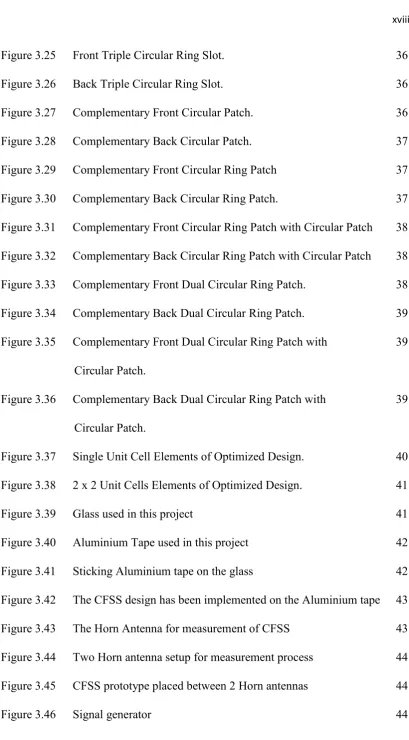
Figure 3.25 Front Triple Circular Ring Slot. 36
Figure 3.26 Back Triple Circular Ring Slot. 36
Figure 3.27 Complementary Front Circular Patch. 36
Figure 3.28 Complementary Back Circular Patch. 37
Figure 3.29 Complementary Front Circular Ring Patch 37
Figure 3.30 Complementary Back Circular Ring Patch. 37
Figure 3.31 Complementary Front Circular Ring Patch with Circular Patch 38
Figure 3.32 Complementary Back Circular Ring Patch with Circular Patch 38
Figure 3.33 Complementary Front Dual Circular Ring Patch. 38
Figure 3.34 Complementary Back Dual Circular Ring Patch. 39
Figure 3.35 Complementary Front Dual Circular Ring Patch with 39
Circular Patch.
Figure 3.36 Complementary Back Dual Circular Ring Patch with 39
Circular Patch.
Figure 3.37 Single Unit Cell Elements of Optimized Design. 40
Figure 3.38 2 x 2 Unit Cells Elements of Optimized Design. 41
Figure 3.39 Glass used in this project 41
Figure 3.40 Aluminium Tape used in this project 42
Figure 3.41 Sticking Aluminium tape on the glass 42
Figure 3.42 The CFSS design has been implemented on the Aluminium tape 43
Figure 3.43 The Horn Antenna for measurement of CFSS 43
Figure 3.44 Two Horn antenna setup for measurement process 44
[image:18.595.114.524.23.764.2]Figure 3.45 CFSS prototype placed between 2 Horn antennas 44
xix
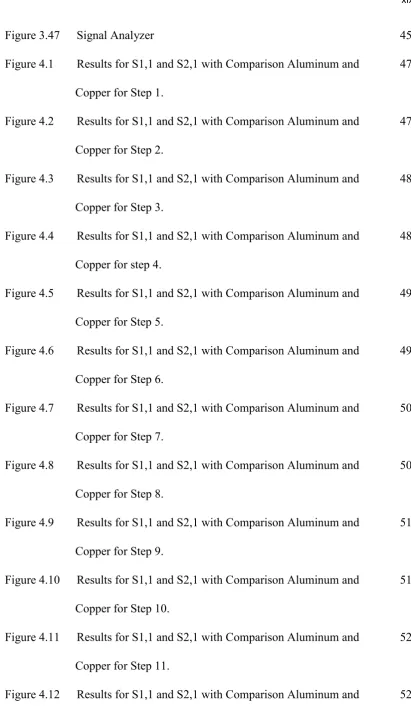
Figure 3.47 Signal Analyzer 45
Figure 4.1 Results for S1,1 and S2,1 with Comparison Aluminum and 47
Copper for Step 1.
Figure 4.2 Results for S1,1 and S2,1 with Comparison Aluminum and 47
Copper for Step 2.
Figure 4.3 Results for S1,1 and S2,1 with Comparison Aluminum and 48
Copper for Step 3.
Figure 4.4 Results for S1,1 and S2,1 with Comparison Aluminum and 48
Copper for step 4.
Figure 4.5 Results for S1,1 and S2,1 with Comparison Aluminum and 49
Copper for Step 5.
Figure 4.6 Results for S1,1 and S2,1 with Comparison Aluminum and 49
Copper for Step 6.
Figure 4.7 Results for S1,1 and S2,1 with Comparison Aluminum and 50
Copper for Step 7.
Figure 4.8 Results for S1,1 and S2,1 with Comparison Aluminum and 50
Copper for Step 8.
Figure 4.9 Results for S1,1 and S2,1 with Comparison Aluminum and 51
Copper for Step 9.
Figure 4.10 Results for S1,1 and S2,1 with Comparison Aluminum and 51
Copper for Step 10.
Figure 4.11 Results for S1,1 and S2,1 with Comparison Aluminum and 52
[image:19.595.110.522.43.764.2]Copper for Step 11.
xx
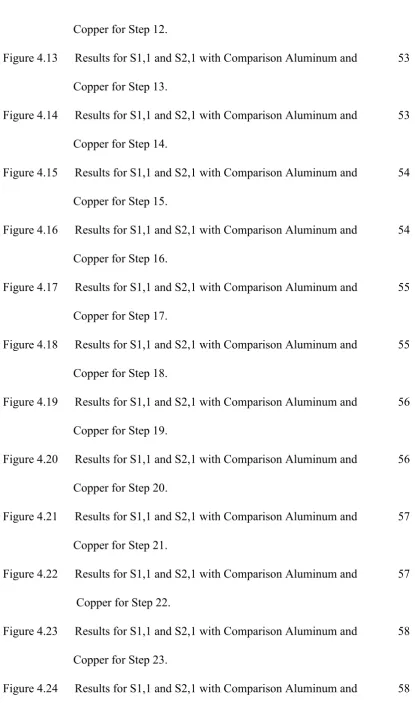
Copper for Step 12.
Figure 4.13 Results for S1,1 and S2,1 with Comparison Aluminum and 53
Copper for Step 13.
Figure 4.14 Results for S1,1 and S2,1 with Comparison Aluminum and 53
Copper for Step 14.
Figure 4.15 Results for S1,1 and S2,1 with Comparison Aluminum and 54
Copper for Step 15.
Figure 4.16 Results for S1,1 and S2,1 with Comparison Aluminum and 54
Copper for Step 16.
Figure 4.17 Results for S1,1 and S2,1 with Comparison Aluminum and 55
Copper for Step 17.
Figure 4.18 Results for S1,1 and S2,1 with Comparison Aluminum and 55
Copper for Step 18.
Figure 4.19 Results for S1,1 and S2,1 with Comparison Aluminum and 56
Copper for Step 19.
Figure 4.20 Results for S1,1 and S2,1 with Comparison Aluminum and 56
Copper for Step 20.
Figure 4.21 Results for S1,1 and S2,1 with Comparison Aluminum and 57
Copper for Step 21.
Figure 4.22 Results for S1,1 and S2,1 with Comparison Aluminum and 57
Copper for Step 22.
Figure 4.23 Results for S1,1 and S2,1 with Comparison Aluminum and 58
[image:20.595.112.528.49.765.2]Copper for Step 23.
xxi
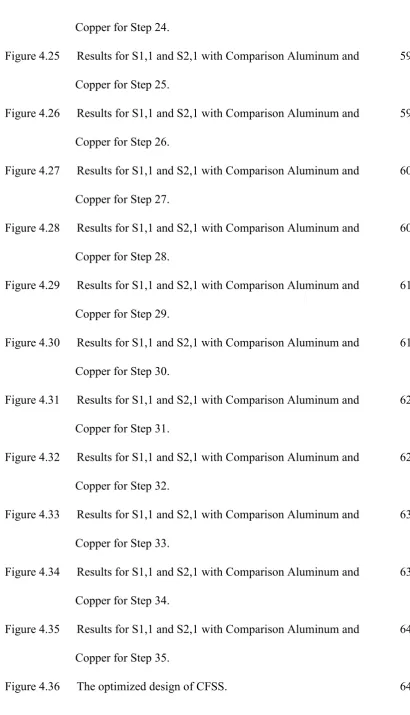
Copper for Step 24.
Figure 4.25 Results for S1,1 and S2,1 with Comparison Aluminum and 59
Copper for Step 25.
Figure 4.26 Results for S1,1 and S2,1 with Comparison Aluminum and 59
Copper for Step 26.
Figure 4.27 Results for S1,1 and S2,1 with Comparison Aluminum and 60
Copper for Step 27.
Figure 4.28 Results for S1,1 and S2,1 with Comparison Aluminum and 60
Copper for Step 28.
Figure 4.29 Results for S1,1 and S2,1 with Comparison Aluminum and 61
Copper for Step 29.
Figure 4.30 Results for S1,1 and S2,1 with Comparison Aluminum and 61
Copper for Step 30.
Figure 4.31 Results for S1,1 and S2,1 with Comparison Aluminum and 62
Copper for Step 31.
Figure 4.32 Results for S1,1 and S2,1 with Comparison Aluminum and 62
Copper for Step 32.
Figure 4.33 Results for S1,1 and S2,1 with Comparison Aluminum and 63
Copper for Step 33.
Figure 4.34 Results for S1,1 and S2,1 with Comparison Aluminum and 63
Copper for Step 34.
Figure 4.35 Results for S1,1 and S2,1 with Comparison Aluminum and 64
[image:21.595.110.521.51.767.2]Copper for Step 35.
xxii
Figure 4.37 The S1,1 result for optimized design 65
Figure 4.38 The S2,1 result for optimized design 66
Figure 4.39 The optimized design of CFSS implemented on glass by 66
using aluminum tape.
Figure 4.40 The result for S2,1 of optimized experimental design 67
Figure 4.41 Simulation result S1,1 of optimized design 68
Figure 4.42 Simulation result for S2,1 of optimized design 68
Figure 4.43 Experimental results for optimized design which have 70
3 transmit power
xxiii
LIST ABBREVIATION
2G Second Generation
3G Third Generation
3GPP Third Generation Partnership Project
AuC Authentication Centre
BCCH Broadcast Control Channel
BCH Broadcast Channel
BPL Building Penetration Loss
BSC Base Station Controller
BSS Base Station Subsystem
BTS Base Transceiver Station
CCH Control Channel
CN Core Network
CPCH Common Packet Channel
CS Circuit Switched
xxiv
CFSS Complementary Frequency Selective Surface
DAS Distributed Antenna System
dB Decibel
DCH Dedicated Channel
DSSS Direct Sequence Spread Spectrum
EGSM Extended GSM
EIR Equipment Identity Register
EM Electromagnetic
ETSI European Telecommunications Standards Institute
EU European Union
FDD Frequency Division Duplexing
FSS Frequency Selective Surfaces
GGSN Gateway GPRS Support Node
GMSC Gateway Mobile Switching Centre
GPRS General Packet Radio Service
GSM Global System for Mobile Communications
HLR Home Location Register
HS-DSCH High Speed Downlink Shared Channel
IMEI International Mobile Equipment Identity
IPCC International Panel on Climate Change
ISDN Integrated Services Digital Network
LTE Long Term Evolution
Mcps Megachips per second