A PRE EXPERIMENTAL STUDY TO ASSESS THE
EFFECTIVENESS OF STRUCTURED TEACHING
PROGRAMME ON THE LEVEL OF KNOWLEDGE
REGARDING ATTENTION DEFICIT
HYPERACTIVITY DISORDER AMONG PRIMARY
SCHOOL TEACHERS IN A SELECTED SCHOOL,
AT ERODE DISTRICT
BY
301331854
A DISSERTATION SUBMITTED TO THE
TAMILNADU Dr.M.G.R. MEDICAL UNIVERSITY,
CHENNAI, IN PARTIAL FULFILLMENT OF THE
A PRE EXPERIMENTAL STUDY TO ASSESS THE
EFFECTIVENESS OF STRUCTURE TEACHING
PROGRAMME ON THE LEVEL OF KNOWLEDGE
REGARDING ATTENTION DEFICIT
HYPERACTIVITY DISORDER AMONG PRIMARY
SCHOOL TEACHERS IN A SELECTED SCHOOL
AT ERODE DISTRICT
BY 301331854
Research Guide :---Prof. Mrs.M.KAVIMANI, R.N, R.M, M.S.N(Phd)
Clinical Speciality Guide :---Asst. Prof. Mrs.Jothimani, R.N, R.M, M.S.N
SUBMITTED IN PARTIAL FULFILLMENT OF THE
REQUIREMENT FOR THE AWARD OF THE DEGREE OF MASTER OF SCIENCE IN NURSING FROM THE TAMILNADU Dr.M.G.R. MEDICAL UNIVERSITY, CHENNAI.
DECLARATION
I hereby declare that the present dissertation titled “A pre experimental study to assess the effectiveness of Structured teaching programmeon the level of knowledge regarding Attention Deficit Hyperactivity Disorder among primary school teachers in a selected school at Erode district”, outcome of the original research work undertaken and carried out beme, under the guidance of Research Guide Prof. Mrs. M. KAVIMANI, R.N, R.M, MSc(N)(Phd) Principal, Shiv Parvathi Mandradiar Institute of Health Sciences, College of Nursing and the Clinical Specialty Guide Asst. Prof. Mrs. JOTHIMANI, R. N, R. M, M.S.N,HOD
I also declare that the material of this has not found in any way, the basis for the award of any degree/ diploma in this University or any other University.
DECLARATION
I hereby declare that the present dissertation titled“A pre experimental study to assess the effectiveness of Structured teaching programme on the level of knowledge regarding Attention Deficit Hyperactivity Disorder among primary school teachers in a selected school at Erode district” is a bonafied work done by 301331854 at Shiv Parvathy Mandradiar Institute of Health Sciencesin partial fulfillment of the university rules and regulations for award of Master of Science in nursing under my guidance and supervision during the October 2015.
Signature of the Guide and Head of the Department
CERTIFIED THAT THIS IS THE BONAFIDE WORK OF
301322054
AT THE SHIVPARVATHI MANDRADIAR INSTITUTE OF
HEALTH SCIENCES, COLLEGE OF NURSINGSUBMITTED IN
PARTIAL FULFILMENT OF THE REQUIREMENT FOR THE
AWARD OF THE DEGREE OF MASTER OF NURSING FROM THE
TAMILNADU Dr.M.G.R. MEDICAL UNIVERSITY, CHENNAI.
Examiners:
1. _________________________
2. __________________________
Dedica
My Lo
ated to…
ACKNOWLEDGEMENT
I praise and thank God Almighty for giving me the strength to complete this task and for the real treasure of courage, endurance and abundant blessings throughout my career and my personal life.
I raise my heart in gratitude to God Almighty; he has been my shepherd and guiding force behind all my efforts. His omnipresence has been my anchor through the hard time.
Apart from the effort of me, the success of my study comes from every soul who encouraged and guides me in all the aspects. With profound sentiments and gratitude, I the Investigator of this study own my heartfelt gratitude to all those who have contributed for the successful completion of this dissertation.
I lend this opportunity to express my sincere heart full thanks to our Honorable Chairman (late) Mr.Shivakumar Mandradiar, Shiv Parvathi Mandradiar Institute of Health Science, College of Nursing, Palayakottai for providing me a prospect for my post graduation with necessary amenities to uplift my professional life.
It is my privilege to owe my sincere indebtedness and humble regards to my beloved Prof. Mrs. M. Kavimani MSc(N),(Phd),Principal, SPMIHS, Palayakottai, for her patience, motivation, enthusiasm, and immense knowledge. Her guidance helped me in all the time of research and writing of this project. I feel motivated and encouraged every time during the course of my study. Without her encouragement and guidance this project would not be materialized.
It’s my pleasure and privilege to express my deep sense of gratitude to our respectiveProf. Mrs. Jothimani,MSc(N)H.O.D of Psychiatric Nursing, SPMIHS, Palayakottai. The investigator feels that words would not be sufficient to express her gratefulness towards her for having not spared herself, being patiently available always, the timely correction, suggestions and ideas which have contributed to the concretization of this research.
I am indeed thankful toProf. Dr. K. Dhanapal, Bio-statistician, SPMIHS, Palayakottai, for his guidance in carrying out the necessary statistical analysis and presentation of the data in the study.
I would like to give my very special thanks to all the teaching staff and non teaching staff of SPMIHS, for their contribution during my course of my study.
A memorable note of gratitude toMs. B. Vanitha, Librarian SPMIHS for the timely help, kind cooperation and attention for completing the project work successfully.
providing a wonderful opportunity for conducting the study and I am very grateful to all the teachers of the schools for their kind cooperation during the study period.
I would like to convey my warm and heartfelt thanks to all the participants who have willingly shared their precious time during the process of data collection. Without their kind cooperation nothing is possible for me to go ahead with this study.
Words are beyond expression for the meticulous, I express my love and gratitude to my beloved my parents Mr.Ambikapathy ,Mrs.Meenakshi, Mr.Rajendran andMrs.Saroja who supported me in all my ways and my Husband Mr.Anandan for their care, support, unending love, special prayers, constant encouragement and strength which made my study, a dream come true and who made me to be happy and cheerful during the study.
I extend my sincere thanks to every soul who helped me directly or indirectly in making this study a successful one, but not mentioned in this acknowledgement.
Above all I bow my head in reverence toGod Almighty for guiding me to reach the steps and complete my study. His omnipresence has been my anchor through the fluctuating hard times and making it all possible.
Thanks to all
TABLE OF CONTENTS
CHAPTER
NO
CONTENTS
PAGE
NO
I INTRODUCTIONBackground of the study Need for the study Statement of the Problem Objectives of the Study Hypothesis Operational Definitions Assumptions Delimitations Conceptual framework 1 7 15 15 15 16 18 18 19
II REVIEW OF LITERATURE
Studies related to the prevalence of Attention Deficit Hyperactivity Disorder
Studies related to knowledge regarding Attention deficit Hyperactivity Disorder among school teachers Studies related to the effectiveness of Structured teaching programme on Attention Deficit Hyperactivity Disorder among school teachers
23
25
CHAPTER
NO
CONTENTS
PAGE
NO
III RESEARCH METHODOLOGY
Research Approach Research Design Variables Settings Population Sample Sample Size Sampling Technique Sampling Criteria
Development of the Tool Description of the Tool Validity
Reliability Pilot Study
CHAPTER
NO
CONTENTS
PAGE
NO
IV DATA ANALYSIS AND INTERPRETATION
Data on selected demographic variables of primary school teachers
Data on pre test and post test level of knowledge regarding Attention Deficit Hyperactivity Disorder among primary school teachers
Data on effectiveness of Structured Teaching Programme regarding Attention Deficit Hyperactivity Disorder among primary school teachers
Data on association between post test level of knowledge and the selected background variables among primary school teachers explained by Chi square
53
58
60
63
V SUMMARY, FINDINGS, DISCUSSION,
CHAPTER
NO
CONTENTS
PAGE
NO
VI REFERENCES
Text Books Journals
Electronic Sources
80 82 84
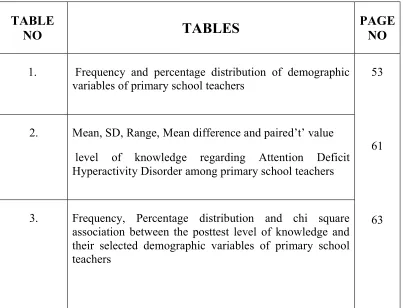
LIST OF TABLES
TABLE
NO
TABLES
PAGE NO
1. Frequency and percentage distribution of demographic variables of primary school teachers
53
61
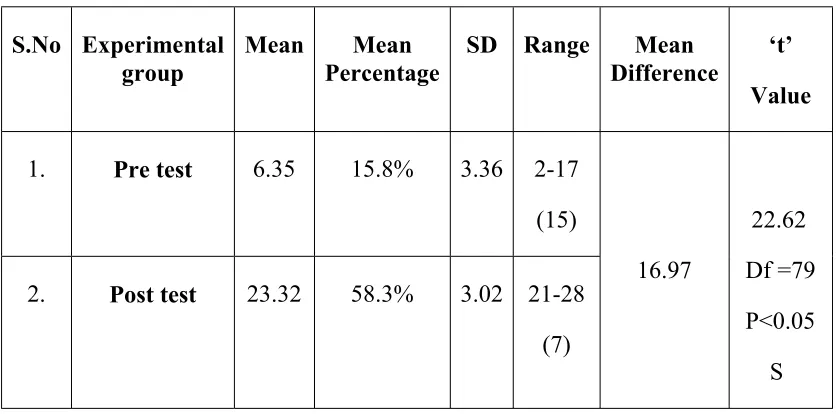
63 2. Mean, SD, Range, Mean difference and paired’t’ value
level of knowledge regarding Attention Deficit Hyperactivity Disorder among primary school teachers
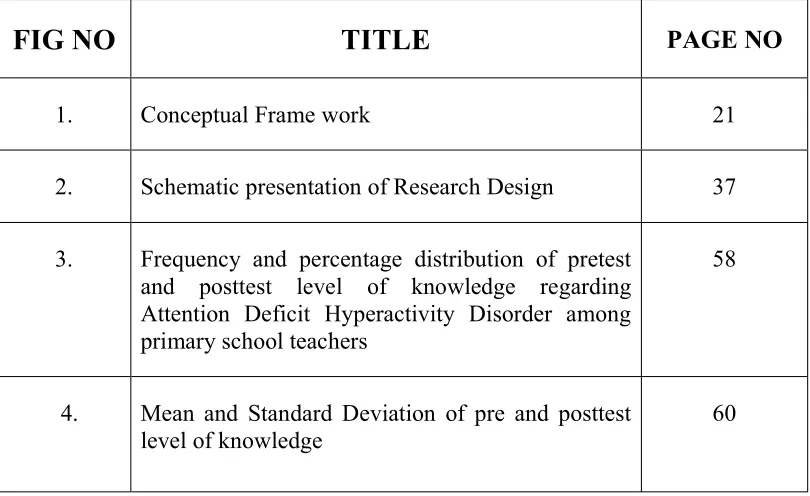
[image:14.612.123.527.170.478.2]LIST OF FIGURES
FIG NO
TITLE
PAGE NO1. Conceptual Frame work 21
2. Schematic presentation of Research Design 37
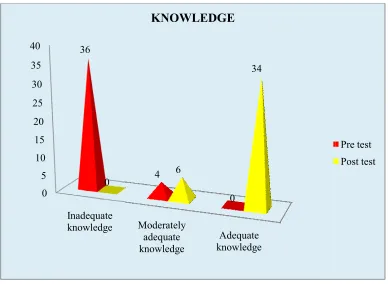
3. Frequency and percentage distribution of pretest and posttest level of knowledge regarding Attention Deficit Hyperactivity Disorder among primary school teachers
58
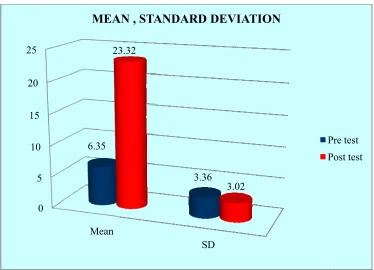
4. Mean and Standard Deviation of pre and posttest level of knowledge
[image:15.612.122.527.172.420.2]LIST OF APPENDICES
NO CONTENT PAGE
NO.
1. Letter seeking permission to conduct main study 85
2. Letter granting permission to conduct main study 86
3. Letter seeking experts opinion for the content validity of the tool used for the study
87
4. Content validity certificate 89
5. List of experts 90
6. Consent Form for study participants 91
7. Lesson plan on Attention Deficit Hyperactivity Disorder 92
8. Tools for Data Collection
Structured Questionnaire in English
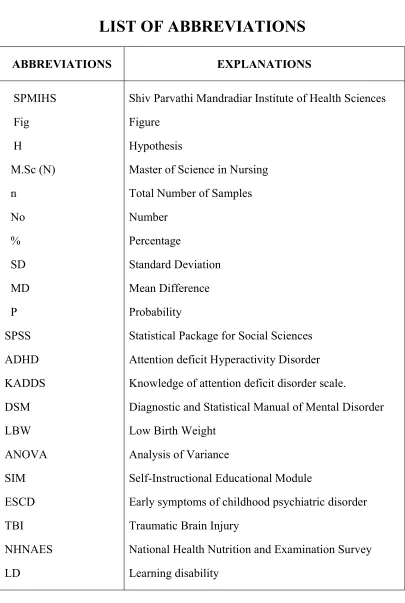
LIST OF ABBREVIATIONS
ABBREVIATIONS EXPLANATIONS SPMIHS Fig H M.Sc (N) n No % SD MD P SPSS ADHD KADDS DSM LBW ANOVA SIM ESCD TBIShiv Parvathi Mandradiar Institute of Health Sciences Figure
Hypothesis
Master of Science in Nursing Total Number of Samples Number
Percentage
Standard Deviation Mean Difference Probability
Statistical Package for Social Sciences Attention deficit Hyperactivity Disorder Knowledge of attention deficit disorder scale.
Diagnostic and Statistical Manual of Mental Disorder Low Birth Weight
Analysis of Variance
Self-Instructional Educational Module
[image:17.612.121.526.97.700.2]ABSTRACT
A pre experimental study to assess the effectiveness of structured teaching programme on the level of knowledge regarding Attention Deficit Hyperactivity Disorder among the primary school teachers in a selected school at Erode District was done by 301331854 as a partial fulfillment of the requirement of the Degree of Master of Science in Nursing at Shiv Parvathi Mandradiar Institute of Health Science, under the Tamil Nadu Dr. M. G. R. Medical University, Chennai, October 2015.
The Objectives of the study were
To assess the pretest and posttest level of knowledge regarding attention deficit hyperactive disorder among primary school teachers
To assess the effectiveness of structured teaching programme on the level of knowledge regarding attention deficit hyperactive disorder among primary school teachers
The Research Hypothesis formulated and tested were:
H1: There is a significant difference between the pretest and posttest level of
knowledge regarding attention deficit hyperactivity disorder among primary school teachers.
H2: There is a significant association between the posttest level of knowledge
regarding attention deficit hyperactivity disorder among primary school teachers and their selected demographic variables.
Review of literature was done regarding Attention Deficit Hyperactivity Disorder in the following heading,
Studies related to the prevalence of Attention Deficit Hyperactivity disorder
Studies related to knowledge regarding Attention deficit hyperactivity disorder among school teachers
Studies related to the effectiveness of Structured teaching programme on Attention deficit hyperactivity disorder among school teachers
purposive sampling technique, 40 samples in the experimental group Data was collected by using Structured Questionnaire , for a period of One month.
The data collected were edited, tabulated, analyzed and interpreted manually. The obtained over all posttest mean score 23.32 was more than the pretest mean score 6.35. The obtained mean difference was 16.97.The standard deviation of pretest and posttest was 3.36 and 3.02 respectively and there was no significant association between posttest level of knowledge and their selected demographic variables.
CHAPTER I
INTRODUCTION
BACKGROUND OF THE STUDY
“Good timber does not grow with ease; the stronger the wind, the stronger the trees.”
-J.Willare Marriott
increase by more than 50% internationally to become one of the five most common causes of morbidity and disability among children. Attention deficit hyperactivity disorder is becoming a serious public health problem affecting a large number of children and adults. It is persistent and debilitating inattention, over activity, and Impulsivity. The variable incidence of Attention deficit hyperactivity disorder, which ranging from 2%to 16% and Attention deficit hyperactivity disorder is diagnosed much more often in boys than in girls. It is very important to know more about Attention deficit hyperactivity disorder because it can have a significant social impact on patient’s lives, causing disruption at school, work, home and in relationships.
Hyperactivity disorder, which ranging from 2%to 16% and Attention deficit hyperactivity disorder is diagnosed much more often in boys than in girls. It is very important to know more about Attention deficit hyperactivity disorder because it can have a significant social impact on patient’s lives, causing disruption at school, work, and home in relationships.
Families of children and adolescents with attention-deficit hyperactivity disorder may be indirectly affected by the disorder; parent-reported impact on themselves or the family may include: parental stress; parental emotional/mental health problems; sibling conflict; disruption to family cohesion; and less time available to spend on family activities.
tended to report impairment at school compared with parents of children without Attention deficit hyperactivity disorder.
B.K.Rao (2010) stated that kids diagnosed with Attention deficit hyperactivity disorder have difficulty in making and maintaining friendships and also have conflictual relations with their parents due to behavioral problems like lying, stealing, stubbornness and demanding behavior.
Wolfe & Mash, (2006) found that Attention deficit hyperactivity disorder have wide-ranging effects on the lives of the people with the disorder. Adolescents with Attention deficit hyperactivity disorder often have severe problems in many areas of performance, including educational success and interaction with peers.
Adults with Attention deficit hyperactivity disorder have been found to have occupational difficulties which may impact on their productivity in the workplace and their reputation as an employee, with high job turnover or unemployment frequently observed. A US community-based study 2013 found that adults with self-reported Attention deficit hyperactivity disorder were less likely to be in full-time employment compared with healthy adults (34% vs 57%, respectively; p≤0.001).
they were significantly less likely to have a good current relationship with their parents compared with controls.
According to Science journal of public health (2015)a study was done in Lebanon among 1781 school children aged (5-11 years) found the prevalence of Attention deficit hyperactivity disorder was 22.3%, a study was done in USA, and California found the prevalence of Attention deficit hyperactivity disorder was20.4% in school aged children. Prevalence of Attention deficit hyperactivity disorder Symptoms in Preschool-aged Iranian Children Of 1403children aged 3-6 years, was according to their parent evaluation 25.8%, and according to their teacher evaluation17 %(14). In Egypt, a study of the prevalence of Attention deficit hyperactivity disorder among children from Delta region was 20.4%.
A meta-analysis carried out by Karen Bardossi (2015) estimated
Attention deficit hyperactivity disorder affects 7.2% of children worldwide. The recent studies done in USA stated that 5.9 million children between the
ages of 3-17 years are suffering from Attention deficit hyperactivity disorder.
Children in North America appear to have a higher rate of Attention deficit
hyperactivity disorder than children in Africa and the Middle East. It is
estimated thatAttention deficit hyperactivity disorderaffects between 5.4-8.7%
of children in Africa. Rates in Germany and Spain are estimated 4.8% and
6.8% of the participants had an Attention deficit hyperactivity disorder
respectively.In the UK, surveys of children between the ages of 5 and 15 years
found that 3.62% of boys and 0.85% of girls hadAttention deficit hyperactivity
A new study ledby Professor Jeannette Ickovics, Director of CARE (Community Alliance for Research and Engagement 2015) at the Yale School of Public Health has found that Middle-school children who consume heavily sweetened energy drinks are 66% more likely to be at risk for hyperactivity and inattention symptoms.
The research published in theJournal of the Federation of American
Societies for Experimental Biology (2015) found that a commonly used pesticide may alter the development of the brain’s dopamine system which is responsible for emotional expression and cognitive function and increase the risk of attention deficit hyperactivity disorder in children.
Studies by Robson and co-authors have shown that children with Attention deficit hyperactivity disorder at age 6 were 2.7 times more likely than controls to have nocturnal enuresis.
In a study Led by Soren Dalsgaard from Aarhus University in
DenmarkPeople with attention deficit hyperactivity disorder (ADHD) have a lower life expectancy and are more than twice as likely to die prematurely as those without the disorder and accidents are the most common cause of death
in people with Attention deficit hyperactivity disorder because of their
inattention while driving.
Dr. Brinkmanand his colleagues studied data on more than 2,500 teens between the ages of 12 and 15 from the data came from the (2000-2004
five-times increased likelihood of using tobacco and alcohol and initiated use at
a younger age than those who had neither disorder. Having Attention deficit
hyperactivity disorder alone was associated with an increased likelihood of tobacco use but not alcohol use.
A study, which followed almost 7000 children in Finland, found that
those who had Attention deficit hyperactivity disorder symptoms at age eight
had significantly higher odds of being obese at age 16. Children who had Attention deficit hyperactivity disorder symptoms were also less physically active as teenagers.
A study published online in the Journal of the American Academy of Child and Adolescent Psychiatry 2013 revealed a significantly higher prevalence of substance abuse and cigarette use by adolescents with attention
deficit hyperactivity disorder (ADHD) histories than in those withoutAttention
deficit hyperactivity disorder.
Recently, in an Iowa State University study, Researchers noted that
more severe symptoms of inattention and Attention deficit hyperactivity disorder behavior were found in students who played video games for more than one hour, but it is unclear whether playing video games for more than one hour leads to an increase in Attention deficit hyperactivity disorder symptoms, or whether adolescents with Attention deficit hyperactivity disorder symptoms spend more time on video games.
who may be experiencing sub-clinical or mild levels of Attention deficit hyperactivity disorder.
Karande et al., (2007) studied children with Attention deficit hyperactivity disorder and Specific Learning Disability in Mumbai. The study observed that the average age at which children were identified was 11.36 years. There was a gap of 5.8 years between noticing learning and behavioral difficulties and actually making a diagnosis. This delay could be attributed to the observation that teachers and parents in India often take a maturational perspective especially with boys who display behavioural difficulties.
The survey conducted in2011byAssociated Chambers of Commerce and Industry of India in 10 major cities. 1,000 school teachers and doctors were interacted. Teachers said that in every single class they have one to three children who are diagnosed with Attention deficit hyperactivity disorder. 46 per cent of doctors or health care providers found that children at the age of four are more prone to this disease. They concluded that prevalence of children diagnosed with Attention deficit hyperactivity disorder has gone up from four per cent to 11 per cent in the past six years and more boys are affected by Attention deficit hyperactivity disorder than girls.
NEED FOR THE STUDY
teach learners the skills and knowledge that form part of the curriculum but they also have to teach them to behave in a manner that meets organizational, cultural and social expectations. However, the work of the teacher becomes much more demanding when there are learners in the classroom that have Attention Deficit Hyperactivity Disorder.
Noam & Hermann, (2002)stated that Schools play important roles in the psychosocial development of the child as they constitute frames where developmental domains engage and transform
Attention deficit hyperactivity disorder is believed to have a noticeable impact on social, economic, educational, and health care delivery systems. The impact this disorder has on the family unit and in adult life needs considerable research effort to clarify what aspects of family it impacts and in what ways.
Small, clinic-based studies have shown that adults with Attention deficit hyperactivity disorder consistently exhibit problems with interpersonal relationships, often have difficulty with employment, and frequently have comorbid or secondary conditions that further debilitate. Perhaps many of the disabilities and poorer outcomes associated with Attention deficit hyperactivity disorder actually are more strongly associated with conditions that are highly comorbid with Attention deficit hyperactivity disorder (such as Conduct Disorder) and result in significantly higher economic consequences to society.
According toKos, Rich dale, & Hay, (2006);behaviors associated with Attention deficit hyperactivity disorder, such as inattention, impulsivity, and hyperactivity, are noticeable in classrooms because school settings require children to behave in ways that are at odds with the symptoms of the disorder.
Stroh (2008) identified that teachers as the most frequent initial referral source by recommending to parents that their child receive assessment for Attention deficit hyperactivity disorder.
Cormier(2008)concluded that teachers are often responsible for implementing and evaluating interventions for Attention deficit hyperactivity disorder in the classroom.
According to Kleynhans (2005), teachers recognize that children with Attention deficit hyperactivity disorder are restless and the teachers learn about Attention deficit hyperactivity disorder through actual classroom experiences of teaching often confirmed the diagnosis in the children with Attention deficit hyperactivity disorder.
Kleynhans, (2005); stated that the psychologist or medical practitioner needs thorough information from school personnel to assist in making a diagnosis; therefore, the teacher’s perspective is important in making a diagnosis.
Hala A Malik Al-Hakeem(2013)indicated that the educational system does not pay enough attention to Attention deficit hyperactivity disorder students. It also shows that teachers have not been adequately prepared to deal with such cases and the main source of teachers’ knowledge about Attention deficit hyperactivity disorder was from magazines and newspapers and not from courses and seminars.
According to Decaires-Wagner & Picton, (2009) to put inclusive education into practice a teacher needs to accommodate and recognize the unique diversities of the children in class. To-do this effectively the teacher needs to be fully informed about these diversities. In creating welcoming and accommodating classrooms for all learners, it is important for teachers to organize their environments according to the diversity of needs of the learners in the class. Therefore the knowledge teachers have about Attention deficit hyperactivity disorder may also influence how they communicate with and teach children diagnosed with Attention deficit hyperactivity disorder.
Holz & Lessing, (2002) stated that having abettor understanding may prevent the teachers from developing negative views of these learners or labeling them.
Tannock & Martinuseen, (2011) mentioned that Attention deficit hyperactivity disorder symptoms are typically at their most prominent during the elementary stage. Consequently, elementary teachers are most likely to be among the first people to notice these symptoms as the school setting provides a daily contact with students. They play a major role in identifying students.
According to Wrestling, (2010)students with Attention deficit hyperactivity disorder were found to be one of the most challenging categories of students for the special education teachers. Thus, they are likely to be even more challenging and devastating for regular classroom teachers. Equipping regular teachers with adequate and sufficient knowledge about the disorder and with methods to manage the behaviour of Attention deficit hyperactivity disorder students is an insisting demand to promote successful classroom practices.
Ghanizadeh, Bahredar and Moeini (2006)found that Iranian teachers lack sufficient knowledge and have weak tolerant attitudes towards students with Attention deficit hyperactivity disorder. More than 50% of Iranian teachers believed that Attention deficit hyperactivity disorder is due to parental spoiling, whereas one third of them thought it was caused by excessive sugar intake.
In contrast, Norvilitis and Fang (2005) found Chinese and American teachers and graduate students more knowledgeable. They reported that 60% of the Chinese teachers and 48% of the American teachers agreed that Attention deficit hyperactivity disorder is biologically based.
According to Louw, Oswald & Perold, (2009) closer working relationship between classroom teachers, psychologists and medical practitioners would be likely to enhance the diagnostic process, and to improve the efficacy of medication management, as well as the treatment process of Attention deficit hyperactivity disorder.
According toPerold etal.,(2010): Rodrigo, Perera, Eranga, Williams & Kuruppuarachchi, 2011 the knowledge score regarding Attention deficit hyperactivity disorder below 50%.
Aguiar et al., 2014; Barnett, Corkum,& Elik, (2012); Jones & Chronis-Tuscano, (2008); Syed & Hussein, (2010) stated that short term interventions and web based interventions have been shown to rapidly improve knowledge about Attention deficit hyperactivity disorder, with benefits lasting for at least 6 months.
West, Taylor, Houghton & Hudyma, (2005) found that teacher’s knowledge and beliefs about Attention deficit hyperactivity disorder might influence the classroom practices, which in turn influence the performance of students with Attention deficit hyperactivity disorder.
classes with one teacher who will be primarily responsible for their education and welfare for that year.Education bring awareness among the masses, opens avenues for opportunities as well self-advancement and improvement. In order to compete with the surrounding world, children are prepared from very early childhood. Every single child that means girls as well as boys should be able to complete full course of primary education. This is possible only when the children are active and attentive and able to control their behavior in the class room where they learnt to accommodate outside world. If the children have any problem in these three things they cannot complete the course of education and we have to suspect whether the children are affected by Attention Deficit Hyperactivity disorder.
Based on the review of literature and the observation made by the investigator that school teachers play central roles in reporting symptoms, advising parents to seek assessment, and assisting children with Attention deficit hyperactivity disorder to achieve academically and socially. Teachers are seen as some of the most valuable sources of information with regard to referral and diagnosis of this disorder. Inaccurate information about this serious disorder can lead to teachers making inaccurate referrals, giving incorrect advice to parents and failing to address the disorder effectively in the classroom. They are also responsible for creating an environment that is conducive to academic, social and emotional success for children with Attention deficit hyperactivity disorder.
based pre-service educational programs do not adequately prepare the teachers to have sufficient knowledge and skill for identifying a wide variety of symptoms related to mental health disorders. Hence, this study was undertaken to find out the possibility of improving knowledge of primary school teachers on Attention deficit hyperactivity disorder.
STATEMENT OF THE PROBLEM
A pre experimental study to assess the effectiveness of structured teaching programme on the level of knowledge regarding Attention Deficit Hyperactive Disorder among primary school teachers in a selected school at Erode district.
OBJECTIVES OF THE STUDY
To assess the pretest and posttest level of knowledge regarding attention deficit hyperactivity disorder among primary school teachers
To assess the effectiveness of structured teaching programme on the level of knowledge regarding attention deficit hyperactivity disorder among primary school teachers
To find out the association between the posttest level of knowledge regarding attention deficit hyperactivity disorder among primary school teachers and their selected demographic variables.
HYPOTHESIS
H2: There is a significant association between the posttest level of knowledge regarding attention deficit hyperactive disorder among primary school teachers and their selected demographic variables.
OPERATIONAL DEFINITIONS
Assess
In this study, it refers to make a judgment about the value of structured teaching programme contains information’s regarding Attention Deficit Hyperactivity Disorder.
Effectiveness
In this study ,it refers to the systematic determination of merit , worth and significance of structured teaching programme containing information’s regarding Attention Deficit Hyperactivity Disorder on the knowledge of primary school teachers regarding attention deficit hyperactivity disorder in children assessed by structured questionnaire.
Structured Teaching Programme
Structured teaching programme was prepared to enhance the knowledge of primary school teacher regarding attention deficit hyperactive disorder which consist of the following content
Importance of knowing about Attention deficit hyperactivity disorder
Definition of attention deficit hyperactivity disorder
Incidence of attention deficit hyperactivity disorder
Types of Attention deficit hyperactivity disorders
Causes of Attention deficit hyperactivity disorder
Pathophysiology of Attention deficit hyperactivity disorder
Symptoms of Attention deficit hyperactivity disorder
Diagnosis of Attention deficit hyperactivity disorder
Treatment of attention deficit hyperactivity disorder
Condition associated with Attention deficit hyperactivity disorder
Prognosis of Attention deficit hyperactivity disorder
Conclusion
Knowledge
Primary school teachers
In this study, it refers to the qualified teachers teaching between Ist standard to 5th standard including both sex.
Attention deficit hyperactivity disorder
In this study, it refers Attention Deficit Hyperactivity Disorder is a problem of not being able to focus, being overactive, not being able to control behavior or a combination of these.
ASSUMPTIONS
The primary school teachers have inadequate knowledge regarding attention deficit hyperactive disorder in primary school children.
The structured teaching programme will enhance the knowledge regarding attention deficit hyperactive disorder among primary school teachers.
DELIMITATIONS
The study is limited to the period of 4 weeks.
The study is limited to primary school teachers
The study is limited to one primary school
CONCEPTUAL FRAMEWORK
A concept is an abstract idea or normal image of phenomena or reality. Conceptualization is a process of forming idea which utilized and forms conceptual frame work for development research design.
A frame work is a basic structure or outline of abstract. The present study aims at developing and evaluating structured teaching programmed in terms of improving the knowledge regarding Attention deficit hyperactivity disorder.
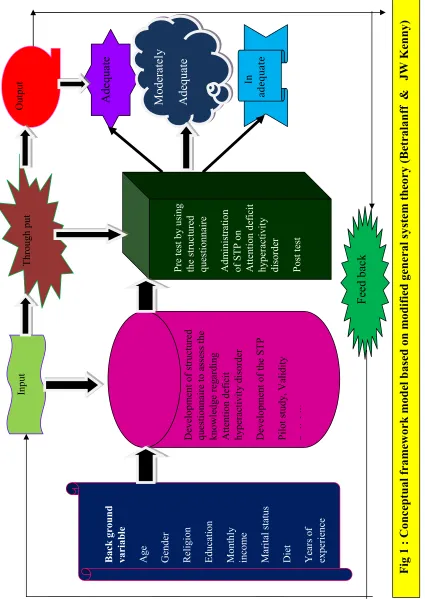
The conceptual framework based on Betralanff’s theory (1968) the general system theory. In this theory the main focus is on the discrete parts and their interrelationship, which consists of input, throughput and output. “System” as a complex interaction, which means that systems consist of two or more converted elements, which form an organized whole and which interact with each other. In this study Inputis considered to be information related to Attention deficit hyperactivity disorder. It includes
Development of the structured questionnaire regarding Attention deficit hyperactivity disorder
Pre – test by using the structured questionnaire
Administering Structured Teaching Programme on Attention deficit hyperactivity disorder
Post-test
According to the systems theory Output refers to energy, matter and information that leave a system. In the present study “output” is considered to be the gain in knowledge obtained through the processing of the post-test. It will be received in the form of post-test knowledge scores.
According to systems theoryFeedback refers to output that is returned to the system that allows it to monitor itself overtime in an attempt to move closer to a steady state known as equilibrium or homeostasis. Feedback may be positive, negative or neutral. For the present study ‘feedback’ is related to the effectiveness of teaching programme and that will be obtained by Testing Relationship between pre – test and post – test knowledge scores.
21
ground le ion ion hly e alsta
tus o f ien ce Input Dev elopm ent of stru ctu red quest ion nai re to asse ss the k nowledg e reg arding Atten ti on de fi ci t hy peract iv ity dis o rd er Dev elopm ent of th e S T P Pilo t study , V al idi ty Rl ib il i T h roug h put Pre tes t by using the str uct u re d quest ion nai re Adm inistr at ion of S T P on Atten ti on de fi ci t hy peract iv ity diso rde r Post tes t O u tput Adequate Moderatel y Adequate In adequate Feed bac k nceptu al fra m ew
ork model b
ased on m odifi ed gene ral sy stem theo ry (Betrala
nff &
J
W Ken
ny
[image:41.612.91.516.107.706.2]CHAPTER – II
REVIEW OF LITERATURE
Review of literature is an important step in the development of a research project. It involves the systematic identification location, scrutiny and summary of written materials that contain information on research problem.
“The literature is reviewed to summarize knowledge for use in practice or to provide a basis for conducting study.” - Nancy Burns 2002
“A literature review is an account of what has been already established or published on a particular research topic by accredited scholars and
researchers.” -University of Toronto, 2001
This chapter attempts to preset a broad review of the studies conducted, the methodology adopted and conclusion drawn by earlier investigation, it helps to study the problem in depth. The literature reviewed for the present had been presented under the following heading
Studies related to prevalence of Attention Deficit Hyperactivity Disorder.
Studies related to Knowledge regarding Attention Deficit Hyperactivity Disorder among school teachers
STUDIES
RELATED
TO
PREVALENCE
OF
ATTENTION DEFICIT HYPERACTIVITY DISORDER
Ferranti catala et-all (2012)did a cross sectional observational epidemiological studies to assess the quantity the overall prevalence of ADHD among children and adolescents in Spain by means of a systematic review and meta-analysis. They selected under 18 years old samples. The results revealed that fourteen epidemiological studies (13,026) subjects were selected, the overall pooled – prevalence of ADHD was estimated at 6.8% (95 confidence interval 4.9-8.8%) representing 361, 580 children and adolescence in the community. There was significant heterogeneity (p<0.001) which was incompletely explained by sub group analysis and Meta regression. The study concluded that the prevalence of ADHD among children and adolescents in Spain is consistent with previous studies represents a first step in estimating the national burden of ADHD that will be essential to building –based programs and services.
Psychiatric disorder were assessed by a structured interview adapted for preschool children and by questionnaire. The most common disorder were oppositional defiant disorder and attention deficit hyperactivity disorder. Generalized anxiety disorder and depressive disorders were reported in less than 1% of the sample. Race and ethnicity differences were not significant. Gender differences showed ADHD inattentive type more common among boys. The overall comorbidity rate was 6.4%.
Abdul Bari Bener (2005)conducted a cross sectional descriptive study to identify Attention Deficit Hyperactivity Disorder among primary school children in the state of Qatar. A total of 2000 primary school students aged between 6-12 years were selected and 1541 students were willing participate in the study. An Arabic questionnaire and Conner’s classroom rating scale for ADHD symptoms were used to collect the data. The study indicated that 112 boys and 33 girls scored above the cutoff for ADHD symptoms, thus giving an overall prevalence of 9.4%. Children who had a higher score for ADHD symptoms who had school poor performance than those with lower scores. The study concluded that ADHD were found to be a common problem among school children in Qatar.
STUDIES RELATED TO KNOWLEDGE REGARDING
ADHD AMONG SCHOOL TEACHERS
Marsha Youssef etal (2015)conducted a cross sectional descriptive survey that made use of convenience sampling design to assess primary and
secondary school teachers’ knowledge regarding attitudes towards ADHD in
Trinidad &Tobago, Overall 277 teachers were participated in the study.
Self-reported questionnaire was used to collect the data and it was analyzed by
using SPSS version 17. Differences in mean were tested using ANOVA. They
reported that Teachers knowledge about ADHD was low with the mean total
knowledge score being less than 50% correct and the study demonstrated
positive attitude toward ADHD. The researcher recommended that in service
Hasan Al-Oman etal (2014) investigated Jordanian teacher’s knowledge and their attitude towards children with ADHD. The research design adopted for this study was cross sectional descriptive study design. A standardized self-report questionnaire was completed by a convenience sample of 130 teachers recruited from 13 primary schools in Zarqa city, Jordan.Data was analyzed by using SPSS version 16. The study found that there was a gap in the knowledge that extended across all aspects of ADHD causes and management and the teacher’s attitude towards children with ADHD was also lower than they expected and they had many misconceptions about the causes and management of ADHD. The study stressed the need for implementing special programme targeting school teachers and reforming pre service teachers training to meet the needs of children with ADHD.
Moldavsky M etal (2014) performed a thematic analysis of comments passed by primary school teachers who participated in a case-vignette study investigating the ability of teachers to recognize ADHD in Iran. The study aimed to assess the attitude of primary school teachers about children with ADHD and the role of pharmacological management given to ADHD. 496 teachers were selected by convenient sampling from 110 schools completed the questionnaire. Descriptive and Inferential statistics were used to analyze the data. The study reported that the teacher’s knowledge about specialist services are inadequate and 125 teachers reported that medication is not at all necessary to treat ADHD. The researcher recommended that health services should support teachers about the management of ADHD related behaviors in school and provide information to increase teachers’ ability to identify the need for a referral to specialist health services.
difference in the prevalence of ADHD between the children belonging to lower (16.33%) and middle socioeconomic class (6.84%). The study indicated that the importance of early identification and thus helping in early intervention of this disorder.
Anil Shetty etal (2013)did a cross sectional descriptive study to assess the awareness and knowledge of ADHD in the elementary school teachers and the variables influencing the knowledge of ADHD in India. 312 teachers participated in the study were selected by purposive sampling and given a self-reported questionnaire. Descriptive and inferential statistics were used to analyze the data. 268 teachers were aware of the term ADHD and their knowledge of ADHD ranged from poor to adequate. 28(9%) of teachers had prior training. Only 92(29%) of the teachers had a good understanding of ADHD. The study concluded that teaching experience and prior training had a positive bearing on knowledge and majority of teachers queried felt that their knowledge was inadequate and were willing to be trained on features of ADHD.
arrange and workshops and courses directed towards the teachers to help them to identify and deal with such students.
Karen Weller Swanson (2012) conducted a quantitative descriptive comparative study to examine the level of knowledge regarding attention deficit hyperactivity disorder among middle school teachers in South Texas and to compare the knowledge level among three specific knowledge areas: General knowledge of ADHD, Knowledge of symptoms/diagnosis of ADHD and knowledge of treatment for ADHD.The three subscales were measured by Knowledge of Attention Deficit Disorder Scale. 107 teachers from Hispanic middle schools randomly selected for the study. Collected data was analyzed by SPSS, General linear model procedure, Univar ate analysis of variance. The study found that teacher’s knowledge was inadequate about the causes, nature and outcome of ADHD. Though they were familiar with the symptoms of ADHD and they had difficulty to identify a particular student with ADHD. The investigator recommended that further research to be carried out to examine individual special education program success in identification and instruction with special needs and to observe excellent teacher professional development programs that positively impact student academic success.
extra information about ADHD. SPSS version 16.0 is used to analyze the data. The study reported that the teachers had a relatively reasonable amount of knowledge. 56% said that stimulant medication gives the good result and 72.2% agreed that special diet are considered effective. 62.9% reported children with ADHD need psychological help. 88.9% said structuring the child’s environment is enough to treat the child. Two third of the sample disagreed that punishment is an effective treatment and all the participants stresses that parents involvement is essential in the intervention process and 85.7% recommended a combination of medication and behavior management for treatment. Most of the teachers had a positive attitude towards the intelligence of the children with ADHD. 33 teachers perceived students with ADHD to have talents. 32 teachers had evenly opposite perception about the tendency of students with ADHD to have difficulties in their relationship with peers.
Department of Psychiatry, University of Kelaniya, Sri Lanka(2011)
conducted a cross sectional study to assess the knowledge and attitude towards ADHD among primary school teachers in Tapaha district. 202 Samples were selected by using stratified sampling method in randomly selected schools. Self-structured questionnaire is used to collect the data and it is analyzed by using SPSS version 15. The study concluded that only minority had adequate knowledge about the presentation of ADHD and its treatment but three-fourths had a positive attitude towards behavioral therapy. The majority of the teachers showed good understanding about the ill effects of ADHD and the teacher’s role in management and counterproductive effects of punishment.
Non probability purposive sampling was used to select the samples. Standardized questionnaires comprised of Demographic data, ADHD experiences and the Knowledge of Attention Deficit Disorder scale, KADDS were distributed to participating teachers. Results were reported using frequency, percentage, mean and standard deviation. Association between demographic factors and ADHD experiences and the KADDS score was identified by logistic regression analysis. The study concluded that knowledge regarding ADHD was inadequate.
STUDIES RELATED TO STRUCTURED TEACHING
PROGRAMME
ON
ADHD
AMONG
SCHOOL
TEACHERS
LizaThankam Daniel etal(2013)did a pre experimental one group pre and posttest design to assess the knowledge of primary school teachers regarding ESCD before and after the administration of SIM on ESCD, to find out the association between knowledge gain score of primary school teachers regarding ESCD and selected variables, to find out the acceptance of SIM on ESCD by primary school teacher’s. 35 primary school teachers were selected by total enumeration sampling from four different schools at Delhi. A structured questionnaire was used to collect the demographic data. After the pretest assessment the subjects were asked to study the SIM on ESCD for 15 days and the post test conducted on 16 the day. Data were analyzed using statistical package STATA 9.0 version. Mean pretest knowledge score of subjects was 9.71±4.1, whereas the mean post-test knowledge score of subjects was 15.60±3.3 indicated that STP was effective. The demographic variables family income, Type of school, In-service education programme attended in the past, marital status, religion, significantly associated with pretest knowledge score. The study interpreted SIM on ESCD was an acceptable educational module and also practicable and viable method for the use of primary school teachers.
between the pretest knowledge and attitude scores with the selected demographic variables. There was a significant positive correlation between knowledge and attitude.
CHAPTER III
RESEARCH METHODOLOGY
Methodology is a significant part of any research which enables the researcher to organize the procedure of collecting reliable data for the problem under study or investigation. This chapter deals with the description of methodology and the various steps adopted to collect and organize data for the study.
According to Polit and Beck (2004) research methods are the techniques used by the researcher to structure a study to gather and analyze information relevant to research question.
The methodology section includes the research approach, research design, variables, settings, population, sample, sample size, sampling technique, sampling criteria, development of the tool, description of the tool, validity, reliability, pilot study, data collection procedure, plan for analysis and ethical consideration.
RESEARCH APPROACH
The selection of research is the basic procedure for the research of enquiry. Quantitative Evaluative approach was considered as appropriate for the present study. Evaluative research is generally an applied research that involves the findings out of how well a program, practice, procedure or policy is working. It involves the collection and analysis of information relating to the functioning of a program or intervention with aim of assessing the effectiveness.
RESEARCH DESIGN
According to Kothari, a research design is the arrangement of conditions for collection and analysis of data in a manner that aims to combine relevance to the research purpose with economy in procedure.
RESEARCH DESIGN NOTATION
GROUP PRE TEST INTERVENTION POST TEST
Experimental O1 X O2
Symbol used:
O1 = Pretest to assess the level of knowledge regarding Attention Deficit
Hyperactivity Disorder among primary school teachers in a selected school, Erode district.
X = Administration of structured teaching programme regarding attention deficit hyperactivity disorder.
O2= Posttest to assess the level of knowledge regarding Attention Deficit
SCHEMATIC PRESENTATION ON RESEARCH DESIGN:
Target Population Teacher education students
Accessible population
Primary school Teachers working in a selected school,Palliyuthu .
Samples N = 40
Pretest
Intervention
Structured teaching programme on ADHD
Data analysis
Descriptive and Inferential statistics Background Variable -Age -Religion -Gender -Hometown locality -Source of health information -Previous experience regarding ADHD
Sampling
Convenient sampling technique
VARIABLES
Variables are qualities, properties or characteristics of person, things, or situations that change or vary.
Chinn and Kramer stated that “Variables are concepts at different level of abstracts that are concisely defined to promote their measurement or manipulation within study”. Variables are classified as Independent and dependent variable, Research variable, Demographic variable and Extraneous variable.
Dependent variable:
It is the focus of the study and reflects the empirical aspects of the concepts being studied.
Dependent variable – Level of Knowledge regarding attention deficit hyperactivity disorder.
Independent variable:
Variable causing change is referred to the dependent variable. It is the intervention or treatment that the investigator performs to see the resulting change in the dependent variable.
Extraneous variables:
Existing characteristics of the research subjects such as Age, Gender, Religion, Educational status, Monthly Income in Rupees, Marital status, Residential area, Type of family, any history of ADHD in family, Years of Experience in handling primary school.
SETTING OF THE STUDY
According toPolit and Beck (2004) setting is the more specific places where data collection occurs. The selection of setting was done on the basis of feasibility of conducting the study, availability of subjects and cooperation of the authorities. The school selected for the study was Navarasam Matriculation Higher Secondary School, Palliyuthu at Erode district. Totally 920 primary school children were studying there. Among them Boys were 482 and Girls were 438. 46 teachers were taking class for the students studying Ist to Vth standard.
POPULATION
Accessible populationrefers to the aggregate of cases which confirm to the designed criteria and which is accessible to the researcher as the pool of subject or object. In this research the accessible populations were the primary school teachers working in a Navarasam Matriculation Higher Secondary School, Palliyuthu, and Erode district.
SAMPLE
Polit and Beck (2012) stated that a sample consists of the subset of the population selected to participate in the research study. The sample for the study were primary school teachers who met the inclusion criteria.
SAMPLE SIZE
Sample size is the number of participants in the study. The sample size is determined based on the type of study, variables being studied, the statistical significance required, and availability of samples and feasibility of conducting the study. The sample size for this study was arbitrarily decided to be 40.
SAMPLING TECHNIQUE
SAMPLING CRITERIA
In sampling criteria the researcher specifies the characteristics of the population under the study by detailing the inclusion and exclusion criteria. Inclusion criteria are characteristics that each sampling element must possess to be included in the sample. Exclusion criteria are characteristics that could confound or contaminate the results of the study therefore such participants are excluded from the study.
SAMPLING CRITERIA
Inclusion criteria.
Primary school teachers who are willing to participate.
Primary school teachers including males and females.
Primary school teachers who know to read, write, understand Tamil or English
Exclusion criteria
The primary school teachers who had been exposed to similar
DEVELOPMENT OF THE TOOL
The tool is a written device that a researcher uses to collect the data. After careful and detailed review of literature the researcher prepared and developed back ground data and structured questionnaire as a tool for the present study.
DESCRIPTION OF THE TOOL
Description of the tool refers to the explanation of the content of the tool. The researcher listed the number of items and the scoring for each item in the tool. The tool consists of two parts:
PART – I
Demographic variables : It consists of back ground variables such as Age, Gender, Religion, Educational status, Monthly Income in Rupees, Marital status, Residential area, Type of Family, Years of Experience in handling primary school children, previous knowledge regarding ADHD, If yes, Source of information.
PART – II
disorder, 2 items regarding pathophysiology of attention deficit hyperactivity disorder, 6 items regarding symptoms of attention deficit hyperactivity disorder, 3 items regarding the diagnosis of attention deficit hyperactivity disorder, 3 items regarding the treatment given to attention deficit hyperactivity disorder, 2 items regarding the conditions associated with attention deficit hyperactivity disorder.
The Knowledge regarding attention deficit hyperactivity disorder was measured in terms of knowledge score. Each correct answer was given a score of one mark and wrong answer or unanswered was given a score of zero. The maximum score was 29. To interpret the level of knowledge the scores were distributed as follows:
Score Percentage Interpretation
0-10 2.85- 34 .4% Inadequate knowledge
11 – 20 37.9- 68.9 % Moderately adequate knowledge
21 – 29 72.4- 100 % Adequate knowledge
Development of structured teaching programme
The steps to prepare Structured Teaching Programme regarding Attention Deficit Hyperactivity Disorder were:
Review of literature
Framing the outline of the content.
Preparation and organization of content.
Deciding the method of instruction and AV aids.
Preparation of the final draft.
Editing the structured teaching programme and evaluating the structured teaching programme on Attention Deficit Hyperactivity Disorder.
Review of literature:
An extensive literature review was undertaken from research and non-research materials, internet sources, and journals etc., regarding attention deficit hyperactivity disorder.
Framing the outline of the content:
Preparation and organization of the content:
Content of the structured teaching programme on alternative and contemporary modalities was prepared and organized under various headings according to the specific objectives. Information’s regarding Attention Deficit Hyperactivity Disorder was organized under various headings such as, Definition of attention deficit hyperactivity disorder, causes, pathophysiology, signs and symptoms, diagnosis of Attention deficit hyperactivity disorder, treatment given to Attention deficit hyperactivity disorder, conditions associated with Attention deficit hyperactivity disorder, etc.
Deciding the method of instruction and AV aids:
The method of instruction adopted was lecture method with the help of AV aids
Preparation of the final draft of structured teaching programme regarding Attention Deficit Hyperactivity Disorder:
Editing the Structured Teaching Programme
The prepared structured teaching programme was edited by professional editors.
Description of Structured Teaching Programme
Structured teaching programme was prepared to enhance the knowledge of primary school teachers regarding alternative and contemporary modalities which consist of the following content.
Introduction
Importance of knowing about Attention Deficit Hyperactivity Disorder
Definition of ADHD
Incidence of ADHD
Types of ADHD
Causes of ADHD
Pathophysiology of ADHD
Symptoms of ADHD
Diagnosis of ADHD
Treatment of ADHD
Conditions associated with ADHD
Prognosis of ADHD
VALIDITY OF THE TOOL
Content validity represents the universe of content which provides the framework and basis for formulating the items that will adequately represent the content.
The constructed tool along with objectives, blue print and criterion checklist was submitted to five experts in the field of Psychiatric Nursing and medicine for content validity.
The selection of experts was done based on their experience and clinical expertise. The experts were requested to give their opinions regarding relevancy, accuracy and appropriateness of the items for further modifications. Based on the suggestions given by the experts, modification and rearrangement of few items were done.
Content validity of the Structured Teaching Programme regarding Attention Deficit Hyperactivity Disorder:
RELIABILITY OF THE TOOL
Reliability of research instrument is defined as the extent to which the instrument yields the same results on repeated measures. The reliability of a measuring tool can be assessed in the aspects of stability, internal consistency, and equivalence depending on the nature of the instrument and aspects of the reliability concept.
The method adopted for the present study was test- retest method to measure the homogeneity of the tool using Karl Pearson’s correlation coefficient formula reliability coefficient was r=0.92 and the tool was found to be statistically reliable for the main study.
PILOT STUDY
Pilot study is a small scale version of the proposed study conducted to refine the methodology. It is conducted similar to the proposed study, using similar subjects, the similar setting, the same treatment, the same data collection and the same analysis technique.
The Purpose of the Pilot Study:
To find out the feasibility of conducting the final study
To evaluate the tool constructed.
The pilot study was conducted in St. Antony Matriculation Higher Secondary School, Palliyuthu, at Erode district. Five was placed in primary school teachers were selected using convenient sampling technique. The subjects for the pilot study possessed the same characteristics as that of the sample for the final study, but were not included in the main study. Prior to the study permission was obtained from the concerned authority. The selected subjects were informed of the purpose of the study and consent was obtained. Assessment of knowledge was done by using structured questionnaire. Post-test was conducted using the same structured questionnaire on the seventh day of pre-test and after the administration of structured teaching programme regarding Attention Deficit Hyperactivity Disorder. The time taken to complete one questionnaire was 30 minutes. The collected data were analyzed using descriptive and inferential statistics. After conducting the pilot study, it was found that the study was feasible. The concerned authority and the sample were found to be cooperative, the questionnaire and the structured teaching programme contains information regarding Attention Deficit Hyperactivity Disorder were relevant and the time and cost of the study was within the limit.
DATA COLLECTION PROCEDURE
Phase I: Screening Phase
Phase – II: Data collection Phase
Before collecting the data, permission was obtained from the concerned authority. Keeping in mind the ethical aspect of research, the data was collected after obtaining the informed consent of the sample. The samples were assured anonymity and confidentiality of information provided by them. The researcher collected the data from the subjects. Pre-test was conducted on the month of June followed by administration of regarding Attention Deficit Hyperactivity Disorder. Post-test was conducted on June to evaluate the effectiveness of structured teaching programme regarding Attention Deficit Hyperactivity Disorder.
Phase – III: Termination Phase
The tool was verified for completion. The clients were assured about the confidentiality of the data. The clients were made comfortable. This phase lasted for a period of 2 minutes per client.
PLAN FOR DATA ANALYSIS
Data analysis is the systematic organization and synthesis of research data and testing of the research hypothesis using that data.
Description of the subjects with respect to demographic variables was presented in terms of frequency and percentage.
Mean, Standard Deviation, and Mean difference, Range was used to evaluate the knowledge level of primary school teachers regarding attention deficit hyperactivity disorder.
Statistical significance of the effectiveness of structured teaching programme was analyzed using Paired ‘t’ test.
Data on association between post test score of the primary school teachers and the selected background factors were explained by using chi- square (2).
ETHICAL CONSIDERATIONS
CHAPTER – IV
DATA ANALYSIS AND INTERPRETATION
Data analysis is the systemic organization and synthesis of research data and the testing of research data and also the testing of research hypothesis using data. Interpretation is the adequate exposition of the facts presented in terms of purpose of the study.
This chapter deals with the analysis and interpretation of the data collected after the distribution of structured teaching programme regarding Attention Deficit Hyperactivity Disorder to the Primary school teachers working in Navarasm Matriculation Higher Secondary School, Palliyuthu at Erode district. The data collected were edited, tabulated, analyzed and interpreted and the findings obtained were presented in the form of tables and diagrams under the following sections.
THE
DATA
ANALYSIS
WERE
PRESENTED
AS
FOLLOWS
Section I: Data on selected demographic variables of primary school teachers in experimental group
Section III: Data on Effectiveness of structured teaching programme regarding Attention deficit Hyperactivity Disorder in increasing the level of knowledge among primary school teachers
Section IV:Data on association between the posttest level of knowledge and the selected demographic variables among primary school teachers
SECTION I: DATA ON SELECTED DEMOGRAPHIC VARIABLES OF PRIMARY SCHOOL TEACHERS IN EXPERIMENTAL GROUP
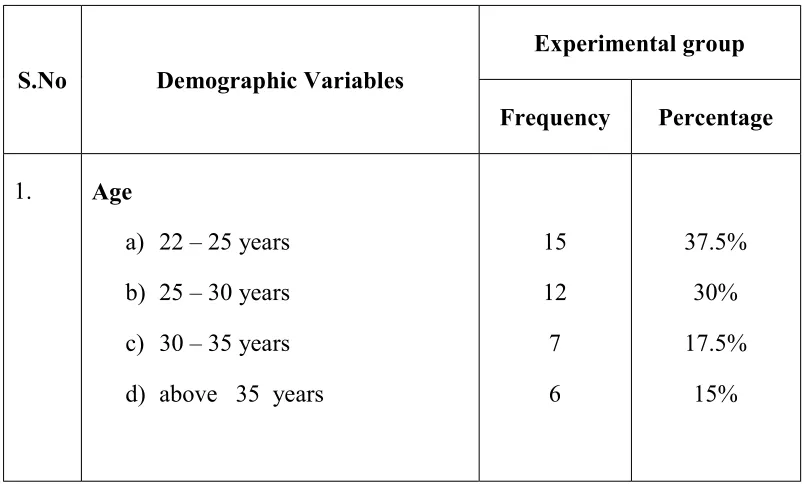
[image:73.612.121.523.423.665.2]TABLE 1: FREQUENCY, PERCENTAGE DISTRIBUTION OF DEMOGRAPHIC VARIABLES OF PRIMARY SCHOOL TEACHERS
Table No: 1
S.No Demographic Variables
Experimental group Frequency Percentage
1. Age
a) 22 – 25 years
b) 25 – 30 years
c) 30 – 35 years
d) above 35 years
15
12
7
6
37.5%
30%
17.5%
2. Gender a) Male b) Female 0 40 0 100% 3. Religion a) Hindu b) Christian c) Muslim d) Others 25 13 2 0 62.50% 32.50% 5% 0
4. Educational status
a) Diploma in teacher education b) Degree in teacher education
c) Master in teacher education
d) Others 22 15 3 0 55% 37.5% 7.5% 0
5. Monthly Income in Rupees
a) 6000-10000
b) 10001-15000
c) 15001-16000
d) Above 16000
20 10 8 2 50% 25% 20% 5%
6. Marital status
7. Residential area a) Rural b) Urban 32 8 80% 20%
8. Type of family
a) Nuclear family b) Joint family
c) Extended family
30 10 0 75% 25% 0
9. Any history of ADHD in family
a) Yes b) No 0 40 0 100%
10. Years of experience in handling primary school
a) 1-3 years b) 3-6 years c) 6-9 years
d) Above 9 years
6 7 12 15 15% 17.5% 30% 37.5%
11. Previous knowledge regarding ADHD a) Yes b) No 15 25 37.5% 62.5%
12. If yes, Source of information
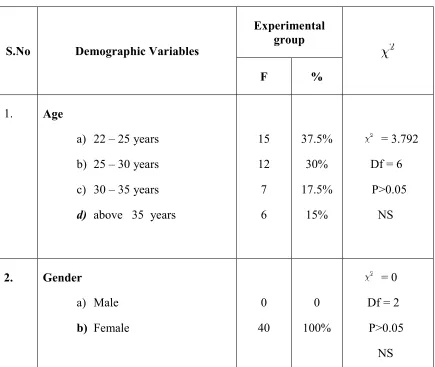
Table No I: Shows the frequency and percentage distribution of demographic variables of primary school teachers.
Regarding Age majority 15(37.5%) were in the age group between 22-25 years, 12(30%) were distributed in the age group between 22-25-30 years, only 7(17.5%) belong to the age group between 30-35 years and 6(15%) were fallen in the category of above 35 years.
Regarding Gender, all the participants 40(100%) were females.
Regarding Religion, majority 25(62.5%) were Hindus, 13(32.50%) were Christians, only 2(5%) were Muslims, no one belong to other religion.
Regarding Educational status, majority 22(55%) completed diploma in teacher education, 15(37.5%) had completed degree in teacher education, 3(7.5%) had completed master in teacher education.
Regarding Monthly Income, majority 20(50%) were getting monthly salary between 6000-10000 rupees, 10(25%) were getting monthly salary between 10001-15000 rupees, 8(20%) were getting monthly salary between 15,001- 16,000 rupees, only 2 (5%) were earning above 16,000 rupees.
Regarding marital status, Majority 24(60%) got married, 16(40%) were single, no one belong to the category of separated and divorced.
Regarding Type of family, majority 30(75%) were living in nuclear family, 10(25%) were living in joint family and no one belong to extended family.
Regarding any history of ADHD in family, majority 40(100%) had no history of ADHD in family.
Regarding Years of experience in handling primary school,Majority 15(37.5%) had more than 9 years of experience, 12(30%) had 6-9 years of experience, 7(17.5%) had 3-6 years of experience, 6(15%) had 1-3 years of experience.
Regarding previous knowledge about ADHD, majority 25(37.5%) didn’t know about Attention Deficit Hyperactivity Disorder, 15(37.5%) had known about Attention Deficit Hyperactivity Disorder.
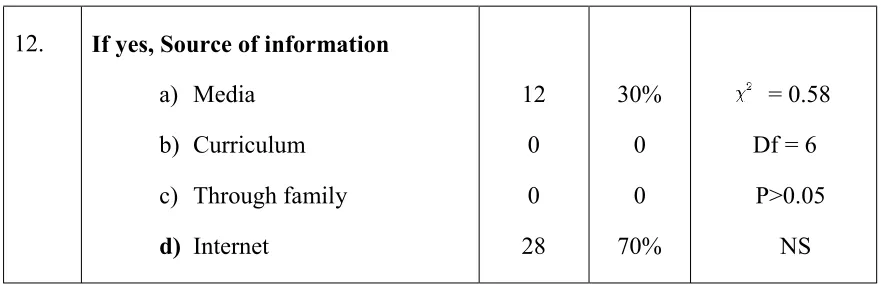
Regarding Source of Information regarding Attention deficit Hyperactivity Disorder,majority 28(70%) had known about Attention Deficit Hyperactivity Disorder through internet, 12(30%) had known about Attention Deficit Hyperactivity Disorder through media, and no one had information through curriculum and through family.