City, University of London Institutional Repository
Citation:
Kyratsis, Y., Ahmad, R. and Holmes, A. H. (2010). Understanding the Process of Innovation Adoption in 12 NHS trusts – technology selection, procurement andimplementation to help reduce HCAIs. London: Medical Research Council.
This is the published version of the paper.
This version of the publication may differ from the final published
version.
Permanent repository link:
http://openaccess.city.ac.uk/4761/Link to published version:
Copyright and reuse: City Research Online aims to make research
outputs of City, University of London available to a wider audience.
Copyright and Moral Rights remain with the author(s) and/or copyright
holders. URLs from City Research Online may be freely distributed and
linked to.
City Research Online: http://openaccess.city.ac.uk/ [email protected]
1
Understanding the Process of Innovation Adoption in 12 NHS trusts –
technology selection, procurement and implementation to help
reduce HCAIs
Report Commissioned by the Department of Health
Centre for Infection Prevention and Management, Imperial College London
2
Executive summary
Introduction
This study was commissioned by the Department of Health (DH) and looks at 12 trusts, recipients of the „DH Health Care Associated Infection (HCAI) Technology Innovation Award for outstanding contributions to fighting infections 2009‟ (HCAI Technology Innovation Award). The award sum was £150,000 for each Strategic Health Authority (SHA) regions. The award was split equally amongst three trusts in one of the SHA region. Hence nine trusts received £150,000 each, and three received £50,000 each in February 2009. The trusts were given free reign to use the award to procure technologies that could help reduce HCAIs. The trusts were nominated by each SHA on the basis of having excelled in either turnaround or “best in class” concerning infection prevention performance in the fiscal year 2008/9.
The award was given as part of the DH‟s HCAI Technology Innovation Programme which aims to speed up the development and adoption of new technologies that could help combat HCAIs, particularly MRSA and C. difficile. The Programme was launched in January 2008, is being run by the Department of Health in collaboration with the NHS1 and comprises several work-streams including: Smart Ideas, Showcase Hospitals, Design Bugs Out, Smart Solutions, Product Surgeries2
Whilst a number of technologies exist to address HCAIs and a number of programmes are in place to facilitate innovation adoption, overall, the NHS has been a slow adopter of innovative technology. This award provided an invaluable opportunity to add to learning about the adoption of technologies in the area of Infection Prevention and Control (IPC).
Study objectives
The aims of this study are to understand the impact of differing organisational capacity and contextual circumstances on technology selection, the subsequent procurement and implementation of the technologies.
1 HCAI Technology Innovation Programme was formally acknowledged in the DH HCAI strategy for 2008 - “Clean
Safe Care” – chapter 6:
http://www.clean-safe-care.nhs.uk/ArticleFiles/Files/CleanSafeCare_ReducingInfectionsAndSavingLives_Strategy.pdf 2
3 The study of each trust covered three distinct phases of technology adoption:
(a) decision making: focusing on aspects such as how the decision to spend the award monies has been reached, who was involved and what factors affected the choice of technology;
(b) procurement: focusing on issues such as the ease and process of procurement; (c) adoption: focusing on implementation issues and measures of „success‟.
The scope of this study does not include technology impact evaluation on trust HCAIs.
Methods
We employed a case study research design with each trust and technology as units of analysis. The sample as described above was predefined with one attribute in common as recipients of the HCAI award. We followed the processes of decision making, procurement and implementation, up to August 2010 for each technology and then carried out a cross case analysis to illicit learning from these processes. The research methods were qualitative, with primary data collection using a semi-structured interview schedule. Interviews were face to face at two or more data collection points. Telephone interviews and electronic interviews were used to gather data on progress between field visits. Secondary data sources, including trust and DH reports and other sources of performance data such as the Health Protection Agency (HPA), Monitor and Care Quality Commission were used to understand the context. We conducted over 100 interviews across the 12 trusts from July 2009 to August 2010, with clinical and non-clinical managers, members of trusts‟ executive boards, health professionals including nurses, doctors (within IPC and general ward staff involved in the implementation of the selected technologies), clinical biochemists, clinical microbiologists, and staff from domestic services, estates and facilities departments.
The data was analysed using an integrated approach3. Such an approach employs both an
“inductive or ground-up” development of codes as well as a “deductive organising framework as
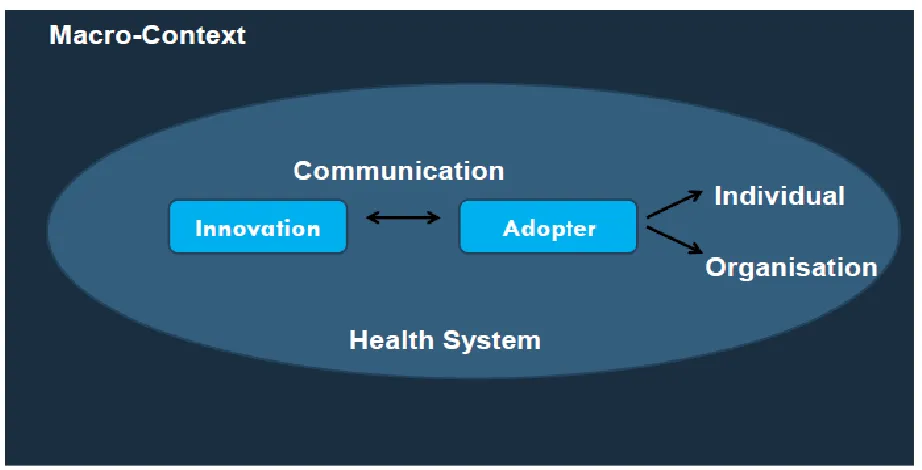
a start-up list” (Bradley et al, 2007: 1762). As a conceptual organising analytic device we employed the conceptual framework for the adoption of complex health innovations previously employed to understand multi-level innovation adoption4. This approach focuses on contextual
3
Bradley et al, (2007) Qualitative Data Analysis for Health Services Research: Developing Taxonomy, Themes, and Theory. Health Services Research 2007 August; 42(4): 1758–1772
4
4 factors; (1) attributes of the innovation (2) attributes of the adopter, (3) the communication of these attributes through various media, and (4) the role of individuals, teams, professional groups and organisations in the adoption process. At the same time a more “ground-up” coding was also applied, enabling themes under the above four broad conceptual domains to emerge as well as independent themes.
Figure 1: A Conceptual Framework for the Adoption of Complex Health Innovations
Findings
1
Technologies selected and IPC priority areas
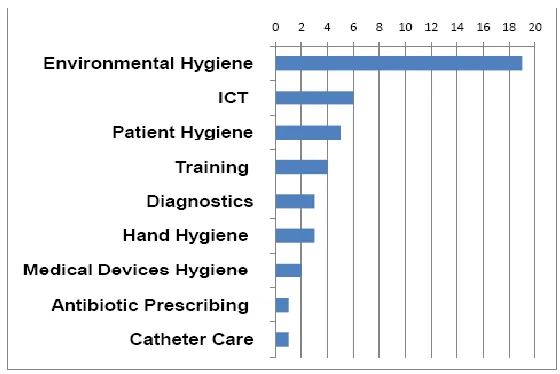
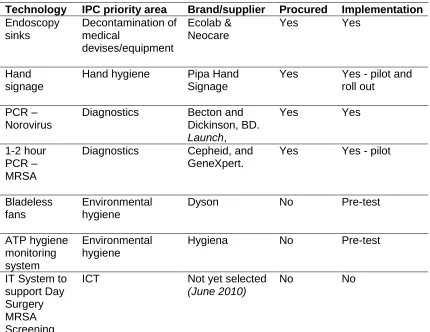
1.1.1 Across the 12 trusts a total of 38 technology selections were made of 34 different technologies. The majority of trusts (nine) selected three or more individual technologies. Two trusts used the award to procure one technology. The selected technologies spanned the full range of IPC priority areas, with technologies to address environmental hygiene being most common.
5
1.1.2. Of the 38 technology selections 15 selections of products with a „Rapid Review Panel Recommendation 1‟ (RRP 1) at the time of the award, were made56.
[image:6.612.164.444.193.380.2]Ten trusts had previously adopted one or more RRP 1 products with two trusts having implemented all six RRP 1 products
Figure 2 Selected technologies by IPC priority area
2
Key considerations in technology selection
Whilst we present here separately the themes which emerged under the broad categories of our framework, interactions betweenthe dimensions have consequences for adoption success.
2.1
Attributes of the technology
5
The Rapid Review Panel (RRP) is an independent arms-length review panel convened in 2004 by the Health Protection Agency (HPA) at the request of the DH. The panel provides a prompt assessment of new and novel equipment, materials and other products or protocols that may be of value to the NHS in improving hospital infection control and reducing HCAIs. www.clean-safe-care.nhs.uk
6
An RRP 1 rating is defined as a product for which 'Basic research and development, validation and recent in use evaluations have shown benefits that should be available to NHS bodies to include as appropriate in their cleaning, hygiene or infection control.
6
2.1.1 Innovativeness: Innovativeness was considered a combination of the „hardware‟ and „software‟ associated with the technology. Some trusts used simple technology „hardware‟ (material tool) with new „software‟ (processes and practices) and viewed the concept to be the innovation rather than the technology „hardware‟ in isolation.
“I‟m not quite sure how they‟ll [DH] take it because it‟s not exactly high tech...it‟s not...what someone would call innovative. It depends in which way you look; I look upon it as being innovative. A lot of people out there might not, but I think it‟s the whole, it has to be sold on the whole concept, with the whole package” [Trust 1; Urinary Catheter Packs].
Within this, technologies were considered according to their newness to the NHS sphere. Few trusts aimed for „radical‟ or „cutting edge‟ technologies in the NHS context, with the majority of selected technologies being new for their individual trusts. This perhaps reflects the abundance of new technologies in the realm of HCAIs which have been expedited through the various DH HCAI Technology Innovation Programme workstreams.
Each of the adoption studies needs to be taken within the context of recent technology adoption within each trust. There is variation in innovation history of trusts which influenced how newness of the technologies was approached by trusts.
2.1.2 Cost: Cost considerations made in selecting technologies were around the short –term and long-term costs. High running costs were the main financial considerations as the award was one off. Trusts used three main strategies to maximise this funding opportunity: (a) by selecting high cost technologies that would have been unfeasible without the award; (b) by procuring technologies with low on-costs for sustainable solutions; (c) by selecting a number of different technologies to allow local trial within the trust to inform future procurement decisions. Whilst business cases were made for some of the technologies, demonstrating short-term cost-effectiveness was a challenge for some technologies:
7
per test [PCR Norovirus] it‟s more expensive [to do it in-house]; but if it reduces your closed bed days, your ward closures by 48 hours, then there‟s no comparison because however much that costs,…overall it will reduce the cost but it‟ll cost more for the department [Trust 2; Microbiologist]
2.1.3. Effectiveness: Evidence of effectiveness of technologies was considered for each of the 38 technology selections. However the sources of evidence and definitions of effectiveness varied. The main sources of evidence used were peer reviewed literature, technologies in use in other trusts, professional networks, supplier information, the Rapid Review Panel rating of technologies, and central DH‟s HCAI Technology Innovation Programme initiatives. The fact that a product had received an RRP 1 from the HPA was deemed by some trusts to constitute „evidence‟ of effectiveness. Others looked for findings from the Showcase Hospital evaluations, and others felt both recommendation and evaluations to be inadequate evidence. On definition of effectiveness, this ranged from local opinion including patient perceptions, ease of use by staff, to controlled trials data. Many trusts noted that for these technologies, no particular technology could be solely or directly attributable to reducing HCAIs. Impact was attributable to ongoing multifaceted approaches. Four trusts viewed this funding opportunity to specifically develop methodologies to evaluate the technology interventions. Nine trusts intended to write up findings for wider dissemination. One trust appointed a research nurse to manage the implementation and evaluation process.
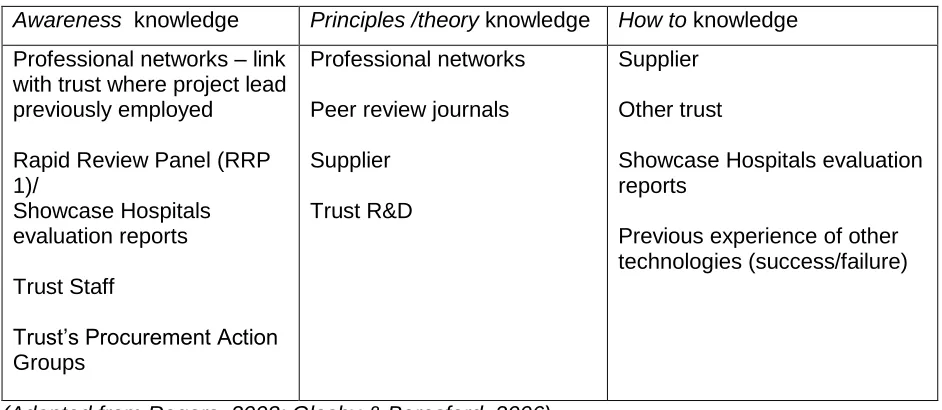
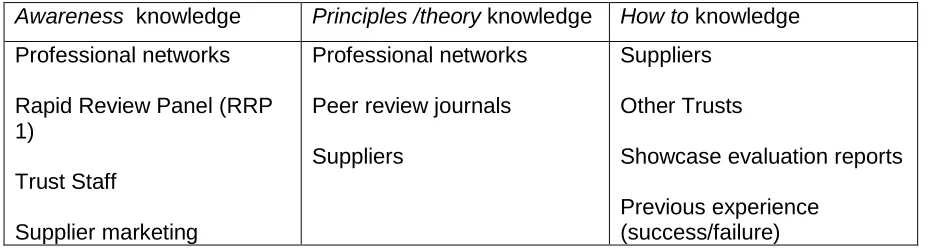
2.1.4 Types and sources of knowledge: On wider knowledge sought in making decisions we mapped to three types of knowledge required to make effective innovation adoption decisions7 8 9; awareness knowledge, principles / theory knowledge, and „how to‟ knowledge. Overall the „how to‟ knowledge was given less priority when compared to the other types of knowledge and this had implications for implementation. Practical issues such as requirements for dedicated fixed power supplies for technologies and hidden costs for replacement parts became apparent after procurement in those cases where
7
Rogers, E (2003) Diffusion of Innovations 5th Edition, Free Press
8
Glasby, J. and Beresford, P. (2006) Who knows best? Evidence-based practice and the service user contribution, Critical Social Policy, 26(1), 268-284
9
8 „how to‟ knowledge had not been adequately sought.
2.2
Attributes of the adopter & context
2.2.1 Trust size: The trust size and the size of the core IPC team had a greater impact on the
process adopted by the trust in making the technology selection decision rather than the technology type. For example, none of the larger trusts (with sizeable IPC teams) consulted with staff outside of the core IPC team to generate ideas for consideration. Conversely, smaller in size trusts with small IPC teams relied more so on the cooperation of directorate/ward staff for generation of ideas and technology implementation.
2.2.2 PFI sites: PFI status was seen as a barrier by two of the trusts. Specifically, Hydrogen Peroxide Vapour Decontamination System was discounted by one trust as this would have implications for PFI contracts requiring expensive adjustments. The same technology was discounted by another trust because the PFI provider had raised concerns of the technology causing damage to buildings in the long term. However, other PFI sites in our sample had adopted the technology previously. These trusts attributed the relationship with the contactors being conducive to joint working and raising quality. In addition, with the exception of one trust, PFI status did not impact on decision making when the technology was procured as a fully managed service, which implied minimal training or involvement of the PFI personnel. Other options needed to be considered by one trust for hand signage, due to PFI considerations.
2.2.3 Ability to evaluate: Across the cases, but particularly in the teaching trusts, the „ability
9
2.2.4 Pro-innovation culture: Across the trusts there were a range of trust-wide programmes to encourage innovation across disciplines. The extent to which IPC teams were engaged with these wider activities varied. Whilst this pro-innovation culture was largely a positive influence, there were instances of disjointed efforts. Cross-departmental collaboration is essential, especially if innovations are to be rolled out trust-wide. For example in Trust 10, the Intensive Care Unit team already had invested in a Faecal Management System, however the IPC team selected another similar system with essentially the same functionality as were unaware of this previous procurement.. ; This gives rise to duplication of training, inconsistencies and issues of compatibility for staff and patients. Pro-innovation was consistent with a non-blaming open and honest culture. For example, in Trusts 5 and 11 support staff were confidently able to monitor all staff for „bare below the elbows‟, whilst in other trusts nurses did not feel able to raise this issue with doctors.
2.2.5 Professional groups and evidence: By considering the interplay between technologies and adopters across various professional and functional groups within the trusts we identified that the same technologies had been defined and interpreted differently by dissimilar categories of adopters. The perceived benefits and weaknesses of the technologies reviewed by the trusts, as well as the „evidence‟ supporting them and the sources and type of evidence sought varied across adopter categories. For instance, clinical microbiologists and clinical matrons or infection control nurses looked at the same technologies differently and made dissimilar judgments about the value of specific technologies, or valued dissimilar sources and types of evidence. Professional training, experience and role, as well as personal interests of adopters all shaped technology selection decisions across the trusts studied.
10 only possible as a medical microbiologist.
“I‟m a microbiologist by background but, and this is something that I learnt right at the beginning when I took on this post, when you actually become a clinical manager or a clinical leader you have to drop your knowledge of your own...because that professional background starts interfering... I think that is important for clinicians who become either leaders or managers of any sort, that they really have to let the expert professionals guide and say, this is what we need to do, and the role of the manager or leader is just to facilitate”
(Trust1)
“We do get a lot of brochures through the post, and they do send them to the wrong people as far as they get to the Chief Exec and get to the Chief Nurse, and they just all look wonderful, and I think it‟s a real, real problem for trusts that perhaps have a DIPC who‟s not a microbiologist, [to have the expert knowledge to judge for the validity of technology effectiveness claims / evidence]” (Trust 10)
2.3 The communication process
11 of the process was seen as an opportunity to raise the profile of IPC. Communicating effectively the rationale for technology selection, (including results of any evaluations) and the implementation strategy to key people, who are involved in or can influence implementation, facilitated staff engagement. The use of existing trust forums for such communication efforts streamlined information flow across the trust. Informing patients and the public about adopting innovative technologies was deemed a useful tool for raising the profile of trusts and facilitating patient involvement, but was lacking in the majority of cases. For example, Trust 7 did not invest in patient communication activities and in retrospect realised that patients „took the new technologies for granted‟ and did not appreciate the extra effort and resources invested by the trust. In contrast, Trust 11 invested significantly in patient communication when introducing the individual patient MRSA decolonisation packs. This resulted in high patient involvement, and better informed patients and as reported by staff, less patients blaming the hospital for catching MRSA .
3
Learning from the decision making process
12 the trust-wide roll out of the technology.
3.2 When was the technology first considered? For some trusts preparatory work for technologies considered before the award informed decision making whilst others viewed the award as a starting point. We identified technologies predetermined before the award and those emergent after the award notification.
Extremes in approaches had definite strategic or cultural reasons underpinning the approach. For example one trust with a highly „predetermined‟ and „exclusive‟ approach was guided by an identified IPC priority area. The trust with the most inclusive approach to decision making reflected the trust‟s culture and leadership style.
4
Learning from the procurement process
4.1 Procurement frameworks or direct to supplier: For the trusts which used the NHS Supply Chain (all when the product was available) or other national procurement frameworks; procurement was described as smooth and efficient. For the remainder of products all technologies were procured direct from the supplier and knowledge of regional procurement frameworks was weak.
4.2 Involvement of trust procurement teams: Procurement Action Groups or similar models were found in the majority of the trusts. However involvement of the procurement team varied, from up front and early involvement to delayed involvement. Consistently, where procurement links were made late, the process was protracted as important considerations had been overlooked. Late involvement was due to inexperience of IPC individuals in procuring products, or the perception that the procurement team would act as a barrier to adoption. This is another example of insufficient attention to „how to‟ knowledge.
13
5
Enablers and barriers to implementation
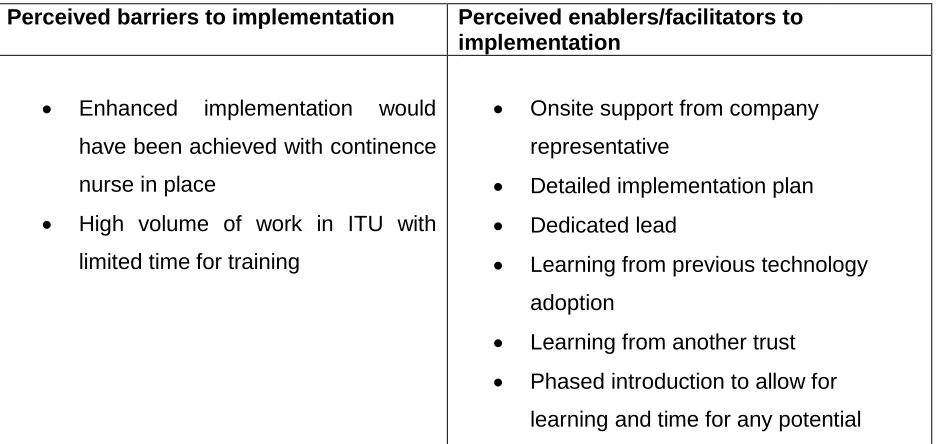
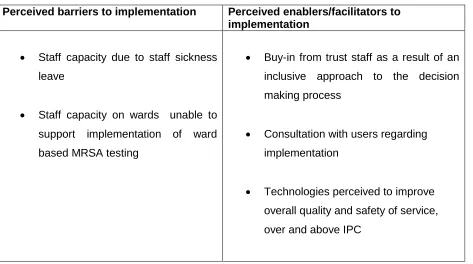
5.1 Capacity: Consistently the biggest barrier encountered during implementation was lack of staff capacity within IPC and also trust-wide in intended implementation wards / units. Many trusts commented on the short notice of the award having an impact on decision making. For example where decision making and procurement were not completed until early winter, the window for implementation of certain technologies was missed due to winter pressures compounded by flu outbreak. Implementation therefore was delayed until late spring / summer in these trusts. Adopting and implementing innovative technologies was an additional task on top of routine operations which stretched the trust innovation co-ordinator; the impact was higher on trusts with small IPC teams.
5.2 ‘How to’ knowledge: The second significant barrier, above any structural or cultural barriers to implementation which emerged was insufficient attention to the „how to knowledge‟. Where detailed implementation plans had been formulated addressing this area and had been discussed with the supplier, managers in implementing units and technology users within the trust, implementation followed smoothly. None of the trusts reported resistance by staff and this may be attributable to consistency of the decision making processes with organisational culture.
5.3 The regulatory framework: In the context of the project the regulatory framework within the specified area (HCAI) was a strong enabler for the adoption of innovative technology, as HCAIs are high on the agenda both trust-wide and nationally. However, there were conflicts with other regulations / national performance targets for the trusts which raised barriers to technology adoption and implementation. For example admitting patients within four hours in A&E created tension with the need to test for MRSA.
14 coupled with well structured and managed implementation plans. Early engagement of frontline clinical staff and technology users in decision making led to technology modification and adaptation to fit the local context at implementation stage. Early engagement and regular steering of the process by a core group of managers, responsible for the service areas, facilitated the implementation process. Cross departmental team working, champions and endorsement from senior management were evident to varying degrees across the trusts, but all helped implementation.
5.5 Learning through training: Training was in some cases underestimated particularly where the technology was viewed as incremental (versus radical) and / or „simple‟ and „focal‟ (versus complex and multifaceted). For example, in Trust 7 introduction of single use patient admittance packs would have been smoother with better induction and training of staff. In addition training intentions were sometimes not realised due to staff capacity constraints, for example pressures on ITU staff in Trust 1 meant that training was delayed. Learning from previous technology adoption particularly in conducting evaluations was a valuable resource for IPC teams.
5.6 Technology – adopter interface: Technologies which consist of many components or processes involving a high number of diverse stakeholders appeared to be more complex and demanding during implementation. For example, the aim to diversify users involved in diagnostics to widen access to MRSA testing failed. In Trust 2, ward based, matron-led diagnostics was aborted due to incompatibility with roles and workload. The trust reverted to technology adoption in the microbiology laboratory.
15 strategy was demonstrated in Trust 6, with use of the trust-wide Information Management platform, and development of a module specific to IPC consistent with the prevailing system.
5.8 Enabling Technologies: Pre-existing or co-adopted technologies facilitate implementation of new technologies by resolving issues of structural compatibility. For example, the introduction of the Patient Group Direction protocol facilitated the trust-wide standardisation and subsequent implementation of individual patient MRSA packs in Trust 11. The adoption of a universal adapter prior to the introduction of the disposable BP cuffs and SpO2 sensors in Trust 7 provided for structural compatibility irrespective of the type and brand of monitors and enabled the rolling out of the disposable packs to all trust wards. In Trust 6 wireless technology created an enabling environment for portable laptops for real-time data capture and monitoring.
6. Key Learning
In summary our key learning for stakeholders in the innovation landscape in addressing HCAIs, which are generalisable to innovation adoption across the NHS, are as follows:
6.1
For trusts
Early involvement of the trust procurement team is essential to ensure effective and sustainable innovation decisions.
Coordinating activities across in-house innovation programmes can promote locally relevant learning and avoid duplication. Organisational learning will be important to inform future adoption decisions.
Encouragement and support for staff to visit other NHS Trusts and attend specialised conferences / workshops is important. In conjunction with staff participation in professional forums/networks exposure to innovation dissemination events encourages knowledge exploration and exploitation of such knowledge by trusts. Dedicated funding and time for training is important.
16 Understanding the „how to‟ knowledge through appropriate channels requires as much
investment as is currently given to the ‟principles / theory knowledge‟. Identifying appropriate individuals to obtain this knowledge is critical.
IPC is evolving from a highly technical service to one that requires a more strategic and general management approach. This also needs to be reflected in how adoption decisions are made, who is involved, and implications for implementation need to be considered early on.
6.3
For industry/suppliers
Providing „how to‟ knowledge alongside principle / theory knowledge appropriate to staff who will be using the technologies is important to successful adoption. This includes appraising the adopting environment for structural compatibility.
Work with national and trust procurement to create sustainable solutions.
6.4
Future research
Longitudinal research of technology adoption in NHS trusts will build on and complement previous work such as the Showcase Hospitals work stream. Such studies will provide learning beyond the trialling and short-term implementation of technologies, focussing on technology routinisation and sustainability.
Effective procurement models and processes are central to the technology adoption process. However this process requires deeper exploration and understanding.
17
Contents
Executive summary ... 2
ACKNOWLEDGMENTS ...33
1. INTRODUCTION ...34
1.1 Background to the Project ...34
1.2 Project Overview – Research Setting ...34
1.3 Aims and Objectives of the Research ...35
1.4 Layout of the report ...35
2. METHODS ...36
2.1 Data Generation Collection ...37
2.1.1 Data Sources ...37
2.1.2 Primary Data Sample ...37
2.1.3 Data Collection and Management ...38
2.1.4 Data Analysis...38
3 FINDINGS - OVERVIEW OF THE TECHNOLOGIES...39
4. Case study – Trust 1 ...49
4.1 Context ...49
4.1.1 General Context ...49
4.1.2 Trust Performance ...49
4.1.3 Infection Prevention and Control Context ...50
4.1.3.1 Trust performance on mandatory HCAI indicators ...50
4.1.3.2 Previous trust IPC interventions ...51
4.2.1 HCAI Technology Innovation Award: Trust IPC Areas of priority and technologies selected. ...52
4.2.2 Urinary Catheter Pack - technology selection, procurement and implementation ...53
4.2.3 Trust Evaluation of the Technology ...60
18
4.2.4.1. The decision making process ...61
4.2.4.2 Evidence ...62
4.2.4.3 Procurement ...64
4.2.4.4 Context ...64
4.2.4.5 Implementation ...65
5. Case study – Trust 2 ...67
5.1 Context ...67
5.1.1 General Context ...67
5.1.2 Trust Performance ...67
5.1.3 Infection Prevention and Control Context ...68
5.1.3.1 Trust performance on mandatory HCAI indicators ...69
5.1.3.2 Previous trust IPC interventions ...69
5.2.1 HCAI Technology Innovation Award: Trust IPC Areas of priority and technologies selected. ...70
5.2.2 Individual technology selection, procurement and implementation ...72
5.2.2.1. Endoscopy sinks ...73
5.2.2.2. Hand hygiene signage ...75
5.2.2.3. PCR – Norovirus ...78
5.2.2.4. PCR – MRSA testing machine ...79
5.2.2.5. Bladeless fans ...81
5.2.2.6. ATP hygiene monitoring system...82
5.2.2.7. ICT system ...83
5.2.3 Trust evaluation of the technology ...84
5.2.4 Discussion ...85
5.2.4.1. The decision making process ...85
5.2.4.2 Evidence ...86
19
5.2.4.4 Context ...88
5.2.4.5 Implementation ...89
6. Case study – Trust 3 ...91
6.1Context ...91
6.1.1 General Context ...91
6.1.2 Trust Performance ...91
6.1.3 Infection Prevention and Control Context ...92
6.1.3.1 Trust performance on mandatory HCAI indicators ...92
6.1.3.2 Previous trust IPC interventions ...92
6.2.1 HCAI Technology Innovation Award: Trust IPC Areas of priority and technologies selected. ...93
6.2.2 Technology selection, procurement and implementation ...94
6.2.3 Trust evaluation of the technology ...96
6.2.4 Discussion ...96
6.2.4.1. The decision making process ...97
6.2.4.2 Evidence ...97
6.2.4.3 Procurement ...98
6.2.4.4 Context ...98
6.2.4.5 Implementation ...99
7. Case study – Trust 4 ... 100
7.1 Context ... 100
7.1.1 General Context ... 100
7.1.2 Trust Performance ... 100
7.1.3 Infection Prevention and Control Context ... 101
7.1.3.1 Trust performance on mandatory HCAI indicators ... 101
20
selected. ... 103
7.2.2 Technology selection, procurement and implementation ... 105
7.2.2.1 Ultra Violet (UV) Air Sterilisation Units - Medixair ... 105
7.2.2.2 Hygiene Monitoring System - CleanTraceTM / 3MTMATP ... 107
7.2.2.3 Chlorhexidine Gluconate (CHG) Dressing (disk) - Biopatch® ... 108
7.2.3 Trust evaluation of technologies... 109
7.2.4 Discussion ... 112
7.2.4.1 Decision making process ... 112
7.2.4.2 Evidence ... 113
7.2.4.3 Procurement ... 114
7.2.4.4 Context... 115
7.2.4.5 Implementation ... 115
8. Case study – Trust 5 ... 116
8.1Context ... 116
8.1.1 General Context ... 116
8.1.2 Trust Performance ... 116
8.1.3 Infection Prevention and Control Context ... 117
8.1.3.1 Trust performance on mandatory HCAI indicators ... 118
8.1.3.2 Previous IPC interventions ... 118
8.2.1 HCAI Technology Innovation Award: Trust IPC Areas of priority and technologies selected. ... 119
8.2.2 Individual technology selection, procurement and implementation ... 121
8.2.2.1 Ultrasconic tanks ... 121
8.2.2.2 Evaluation of two Hygiene Monitoring System (ATP) - 3M™ Clean-Trace™ and Health Edge ... 124
8.2.2.3 Microbiology testing: MALDI-TOF ... 127
21 8.2.4 Discussion ... 130
22 10.1 Context ... 146
24 12.2.4 Discussion ... 212
25 13.2.4.5 Implementation ... 241 14. Case study – Trust 11 ... 244 14.1 Context ... 244 14.1.1 General Context ... 244 14.1.2 Trust Performance ... 244 14.1.3 Infection Prevention and Control Context ... 245 14.1.3.1 Trust performance on mandatory HCAI indicators ... 245 14.1.3.2 Trust infection prevention and control interventions ... 245 14.2.1 HCAI Technology Innovation Award: Trust IPC Areas of Priority and Technologies Selected. ... 245 14.2.2 Individual technology selection, procurement and implementation ... 248 14.2.2.1 Sage® Antiseptic (2% CHG) Body Cleansing Washcloths ... 248 14.2.2.2 3M™Clean-Trace™ATP Hygiene Monitoring System - UV Light Technology Hygiene Inspection System ... 252 14.2.2.3. Individual Patient MRSA Decolonisation Packs ... 257 14.2.3 Trust Evaluation of the Technologies ... 262 14.2.4 Discussion ... 263 14.2.4.1 The decision making process ... 263 14.2.4.2 Evidence ... 264 14.2.4.3 Procurement ... 265 14.2.4.4 Context ... 265 14.2.4.5 Implementation ... 267 15. Case study – Trust 12 ... 270
27 A2.4 Field Visits – Respondents Trust 4 ... 323 A2.5 Field Visits – Respondents Trust 5 ... 323 A2.6 Field Visits – Respondents Trust 6 ... 323 A2.7 Field Visits – Respondents Trust 7 ... 324 A2.8 Field Visits – Respondents Trust 8 ... 324 A2.9 Field Visits – Respondents Trust 9 ... 324 A2.10 Field Visits – Respondents Trust 10 ... 325 A2.11 Field Visits – Respondents Trust 11 ... 325 A2.12 Field Visits – Respondents Trust 12 ... 326 References ... 327
List of Tables
30
List of Boxes
Box 1 Areas for potential cost savings (source: Trust Audit, 2008) ...54 Box 2 Anticipated benefit of technology...56 Box 3 Perceived innovativeness ...56 Box 4 Endoscopy project team- anticipated benefit of customised endoscopy sinks ...73 Box 5 Anticipated benefit of technology...78 Box 6 Considerations made for two ATP products ...83 Box 7: Discounted technology ... 104 Box 8 Anticipated benefit of technology... 108 Box 9 Evaluation of Medixair air sterilisation unit (Source: Trust technologies report) ... 109 Box 10 Clean-Trace ATP monitoring system (Source: Trust technologies report) ... 111 Box 11 Technologies considered ... 120 Box 12 Anticipated benefit of technology ... 122 Box 13 Perceived innovativeness... 122 Box 14 Anticipated benefit of technology ... 125 Box 15 Perceived innovativeness... 125 Box 16 Anticipated benefit of technology - MALDI-TOF ... 127 Box 17 Perceived innovativeness - MALDI-TOF ... 127 Box 18 Anticipated benefit of VitalPAC Infection Manager System ... 140 Box 19 Perceived innovativeness of VitalPAC ... 141 Box 20 Anticipated benefit of Toughbooks ... 141 Box 21: Perceived Innovativeness of Bioquell HPV Decontamination System ... 154 Box 22: Perceived Benefit of Bioquell HPV Decontamination System ... 154 Box 23: Perceived Weaknesses of Bioquell HPV Decontamination System ... 156 Box 24: Perceived Innovativeness of Single Patient Use Packs ... 162
31 Box 31: Perceived Implementation Enablers ... 177 Box 32: Perceived Innovativeness of Lenovo ThinkPad® X- 200 Portable PC Tablets... 186 Box 33: Perceived Benefit of Lenovo ThinkPad® X- 200 Portable PC Tablets ... 186 Box 34: Perceived Innovativeness of Medigenic® smart flat PC keyboards ... 191 Box 35: Perceived Benefit of Medigenic® smart flat PC keyboards ... 192 Box 36: Perceived Weaknesses of Medigenic® smart flat PC keyboards ... 192 Box 37: Perceived Innovativeness of Count Up Posters ... 195 Box 38: Perceived Benefits of Count Up Posters ... 195 Box 39: Perceived Implementation Barriers ... 201 Box 40: Perceived Implementation Enablers ... 202 Box 41 Enablers and barriers to implementation ... 209 Box 42: Perceived Innovativeness of ATP Hygiene Monitoring Systems ... 222 Box 43: Perceived Benefit of ATP Hygiene Monitoring Systems ... 223 Box 44: Perceived Weaknesses of ATP Hygiene Monitoring Systems ... 223 Box 45: Perceived Innovativeness of DIFFICIL-S ... 227 Box 46: Perceived Benefit of DIFFICIL-S ... 227 Box 47: Perceived Innovativeness of Bowel Management System... 228 Box 48: Perceived Benefit of Bowel Management System ... 228 Box 49: Perceived Benefit of Sage Antiseptic Body Washcloths ... 230 Box 50: Perceived Implementation Barriers ... 241 Box 51: Perceived Implementation Enablers ... 242 Box 52 Perceived Innovativeness of the Sage antiseptic body cleansing washcloths... 249 Box 53 Perceived Benefit / Relative Advantage of the Sage antiseptic body cleansing
32 Box 63: Perceived Benefit / Relative Advantage of Sterinis HPV Decontamination System .... 276 Box 64: Perceived Innovativeness of Virusolve+ Disinfectants & Cleaning Solutions ... 278 Box 65: Perceived Benefit / Relative Advantage of Virusolve+ Disinfectants & Cleaning
Solutions ... 278 Box 66: Perceived Weaknesses of Virusolve+ Disinfectants & Cleaning Solutions ... 279 Box 67 Perceived Innovativeness of UV light kit and ATP Hygiene Monitoring System ... 283 Box 68 Perceived Benefit / Relative Advantage of UV light kit and ATP Hygiene Monitoring System ... 284 Box 69: Perceived Implementation Barriers ... 293 Box 70: Perceived Implementation Enablers ... 293 Box 71 Example of an incremental approach ... 306
List of Figures
33
ACKNOWLEDGMENTS
Dr Yiannis Kyratsis, Dr Raheelah Ahmad and Professor Alison Holmes (The National Centre for Infection Prevention and Management, Imperial College, London), the authors of this study, would like to thank the following for making the study possible as follows: the research participants in each of the 12 trusts for giving their time generously for interviews; Sue Smalley from the Department of Health for her continuous support during the project; the Department of Health (Purchasing and Supply Agency) for providing funding for the project.
34
1. INTRODUCTION
1.1 Background to the Project
Infection control is one of the biggest challenges facing the NHS today. In England 8.19% of all patients within the NHS acquire an infection (Smyth et al, 2008). The reporting of MRSA blood stream infection and C. difficile are mandatory and there are national and local targets for reduction. New technologies and products have the potential to make a real difference in reducing levels of Health Care Associated Infections (HCAIs). Despite the significant health and financial impact and the availability of „evidence based‟ technologies and interventions, such innovations are not always adopted. A prime example of the „evidence-practice gap‟. Although a number of programmes are in place to facilitate innovation adoption, the NHS has been a slow adopter of innovative technology. In addition to identifying those products which work best, as the Department of Health (DH) is doing through its HCAI Technology Innovation Programme, there is also a need to ensure that once identified, effective new methods and technologies are adopted and disseminated widely across the NHS.
In healthcare organisations adoption of innovations into daily practice and their diffusion do not occur readily, or in a linear manner, even when benefits are backed by robust evidence. This may be due to a variety of contextual, health system, organisational and professional factors. Understanding these factors is key for organisational success in addressing complex challenges, such as infection prevention and control, but it is also essential for improving the dissemination of effective new technologies in all areas of healthcare.
Initiatives informed by simplistic situational analysis may experience resistance, as the most important causes of resistance to the uptake and assimilation of innovations are overlooked. This research aims to address this knowledge gap.
1.2 Project Overview – Research Setting
35 trusts in one of the SHA regions. Hence nine trusts received £150,000 each, and three received £50,000 each in February 2009. The trusts were given free reign to use the award to procure technologies that could help reduce HCAIs. The trusts were nominated by each SHA on the basis of having excelled in either turnaround or “best in class” concerning infection prevention performance in the fiscal year 2008/9.
The award was given as part of the DH‟s HCAI Technology Innovation Programme which aims to speed up the development and adoption of new technologies that could help combat HCAIs, particularly MRSA and C. difficile. The Programme was launched in January 2008, is being run by the DH in collaboration with the NHS10 and comprises several work-streams including: Smart Ideas, Showcase Hospitals, Design Bugs Out, Smart Solutions, Product Surgeries11
1.3 Aims and Objectives of the Research
The aims of this study are to understand the impact of differing organisational capacity and contextual circumstances on technology selection, the subsequent procurement and implementation of the technologies.
The study of each trust covered three distinct phases of technology adoption:
(a) decision making: focusing on aspects such as how the decision to spend the award monies has been reached, who was involved and what factors affected the choice of technology;
(b) procurement: focusing on issues such as the ease and process of procurement; (c) adoption: focusing on implementation issues and measures of „success‟.
The scope of this study does not include technology impact evaluation on trust HCAIs.
1.4 Layout of the report
This report is organised into 17 chapters. After the introduction, we present the research
10 HCAI Technology Innovation Programme was formally acknowledged in the DH HCAI strategy for 2008 - “Clean
Safe Care” – chapter 6:
http://www.clean-safe-care.nhs.uk/ArticleFiles/Files/CleanSafeCare_ReducingInfectionsAndSavingLives_Strategy.pdf 11
36 methodology. Chapter 3 provides an overview of the technologies selected by the 12 trusts. The individual case studies for each of the trusts follow from Chapters 4 to 15. Within the individual cases we present some contextual information for the trust, and then look at each of the selected technologies in turn. In Chapter 16 we synthesise main findings of the cross case analysis. We conclude this report with implications in Chapter 17. The appendices include additional information regarding methodology. In keeping with consent for this research, the trusts are not named.
2. METHODS
We employed a case study research design with each trust and technology as units of analysis. The sample of trusts was predefined with one attribute in common as recipients of the HCAI award. We followed the processes of decision making, procurement and implementation, up to August 2010 for each technology and then carried out a cross case analysis to illicit learning from these processes. The research methods were qualitative, with primary data collection using a semi-structured interview schedule.
37
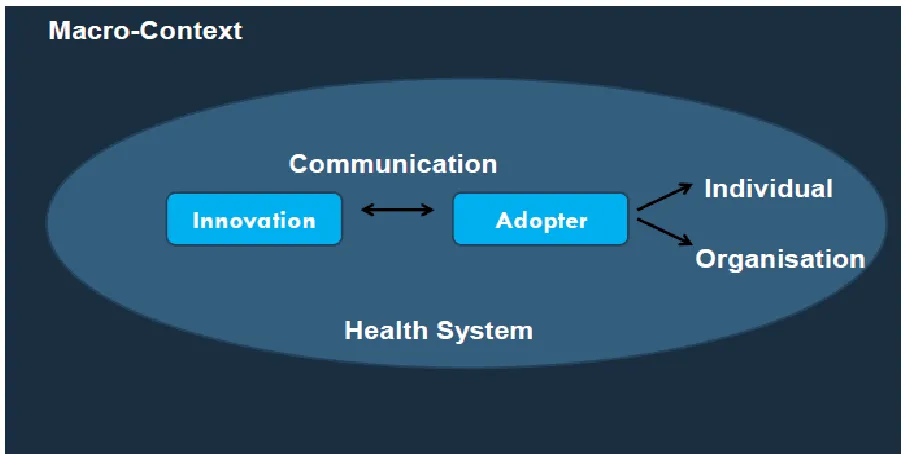
Figure 3: A Conceptual Framework for the Adoption of Complex Health Innovations
2.1 Data Generation Collection
2.1.1 Data Sources
We used trust annual reports, websites and newsletters as secondary data sources. In addition we accessed government regulatory and monitoring frameworks including Health Protection Agency, Care Quality Commission, and Monitor.
2.1.2 Primary Data Sample
38 clinical biochemists, clinical microbiologists, and staff from domestic services, estates and facilities departments.
2.1.3 Data Collection and Management
Our primary data was generated through face to face interviews, email progress reports and telephone interviews. This data was gathered at the beginning, middle and end of the project. Field work commenced in May 2009 and was concluded August 2010. Data collection and field interviews were conducted by two members of the research team, namely Dr Yiannis Kyratsis and Dr Raheelah Ahmad. Face to face interviews were conducted at trust sites, and were audio recorded. Two respondents declined consent to record the interview and the researchers took hand notes.
A semi-structured interview schedule was used for the field visit interviews (Appendix 1
Interview topic guide), with more structured questions in follow up interviews. This allowed emergent themes to be compared across the trusts. All interviews were transcribed and stored with a unique identifier maintaining confidentiality of research respondents.
2.1.4 Data Analysis
The data was analysed using an integrated approach12. Such an approach employs both an
“inductive or ground-up” development of codes as well as a “deductive organising framework as
a start-up list” (Bradley et al, 2007: 1762). As a conceptual organising analytic device we employed the conceptual framework for the adoption of complex health innovations previously employed to understand multi-level innovation adoption13. This approach focuses on: (1) contextual factors, (2) attributes of the innovation, (3) attributes of the adopter, (4) the communication process, and (5) the role of individuals, teams, professional groups and organisations in the adoption process. At the same time a more “ground-up” coding was also applied, enabling themes under the above four broad conceptual domains to emerge as well as independent themes. Transcripts were coded using qualitative data analysis software, Nvivo 8.
12
Bradley et al, (2007) Qualitative Data Analysis for Health Services Research: Developing Taxonomy, Themes, and Theory. Health Services Research 2007 August; 42(4): 1758–1772
13
39
3 FINDINGS - OVERVIEW OF THE TECHNOLOGIES
We present here the technologies selected across the 12 trusts. In total 38 technology selections were made with 34 different technologies. We reflect on broad technology selection decisions, as we have grouped together technologies perceived by trusts as comprising one selection. In this taxonomy we have also excluded some specific technologies which were considered by trusts as not representing a „core technology selection‟, for example, a fax machine. The breakdown of technology selections per trust is summarised in Table 1.
.
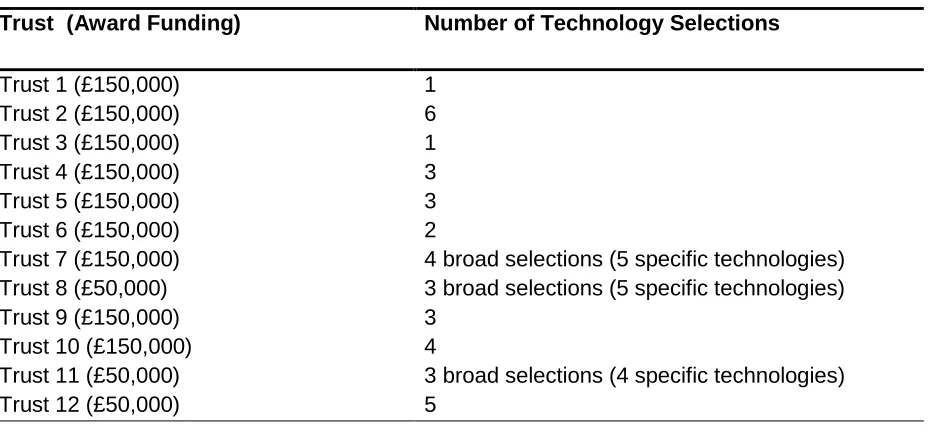
[image:40.612.78.544.348.568.2]Two trusts made one technology selection, while the majority of trusts made three or more. Trust 2 made the maximum technology choices with six technologies. Trusts 8, 11 and 12 selected technologies using an overall budget of £50,000 (the award was split equally amongst three trusts in one of the SHAs),while the remaining nine trusts used a £150,000 budget.
Table 1: Technology Selections per Trust
Trust (Award Funding) Number of Technology Selections
Trust 1 (£150,000) 1
Trust 2 (£150,000) 6
Trust 3 (£150,000) 1
Trust 4 (£150,000) 3
Trust 5 (£150,000) 3
Trust 6 (£150,000) 2
Trust 7 (£150,000) 4 broad selections (5 specific technologies) Trust 8 (£50,000) 3 broad selections (5 specific technologies)
Trust 9 (£150,000) 3
Trust 10 (£150,000) 4
Trust 11 (£50,000) 3 broad selections (4 specific technologies)
Trust 12 (£50,000) 5
Total: 38 broad selections (42 specific technologies)
In Table 2, we provide a brief description of the 34 different technologies selected, the Infection Prevention and Control (IPC) priority area which each technology seeks to address and the trusts which selected each of these technologies.
40 sources14 15 and our own conceptualisation. Some technologies do not fit neatly into one category; however, we provide a broad mapping of areas of investment. For example, the ATP Hygiene Monitoring System may be grouped under „environmental hygiene‟ (as an audit tool to monitor environmental cleanliness) and „training‟ (as a training aid tool to educate staff and/or the public).
14
Weston, D., (2008), Infection Prevention and Control: Theory and Practice for Healthcare Professionals, Wiley-Blackwell
15
41
Table 2: Technologies Overview
Technology description IPC priority area Selected
ATP Hygiene Monitoring System
Brand / supplier: SystemSURE PlusTM / HygienaTM
ATP hygiene monitoring is based on the measurement of Adenosine Triphosphate (ATP), the energy molecule in all living cells. In addition to micro-organisms, the system detects organic residues left on surfaces after cleaning and/or sanitation. The system comprises a handheld luminometer and swabs. It works through collection and quantification of ATP remaining in organic residues post cleaning. The result is given in RLU (relative light units). The product received an RRP Recommendation 1 by HPA (December 2009).
Environmental hygiene / Training
Trust 2 Trust 10
(selection made prior to award; technology used
by trust for comparative evaluation in the
scope of this project)
ATP Hygiene Monitoring System Brand / supplier: CleanTraceTM / 3MTM
ATP hygiene monitoring is based on the measurement of Adenosine Triphosphate (ATP), the energy molecule in all living cells. In addition to micro-organisms, the system detects organic residues left on surfaces after cleaning and/or sanitation. The system comprises a handheld luminometer and swabs. It works through collection and quantification of ATP remaining in organic residues post cleaning. The result is given in RLU (relative light units). The product received an RRP Recommendation 1 by HPA (8th January 2008).
Environmental hygiene / Training Trust 4 Trust 9 Trust 10 Trust 11 Trust 12
ATP Hygiene Monitoring System
Brand / supplier: Genie /Health Edge Consumables Ltd
ATP hygiene monitoring is based on the measurement of Adenosine Triphosphate (ATP), the energy molecule in all living cells. In addition to micro-organisms, the system detects organic residues left on surfaces
Environmental hygiene / Training
42 after cleaning and/or sanitation. The system comprises a handheld
luminometer and swabs. It works through collection and quantification of ATP remaining in organic residues post cleaning. The result is given in RLU (relative light units).
Comprehensive (All in one) Care Foley Catheter Tray Brand / supplier: BARD®
The technology comprises a sealed aseptic pack containing a LUBRI-SIL® Hydrogel coated all silicone pre-connected Foley Catheter and additional equipment required for the complete procedure16. The packs do not contain silver coated catheters also manufactured by BARD, which have achieved an RRP 117.
Catheter care (Urinary catheter) Trust 1
Bladeless Fans
Brand / supplier: Dyson
Fans with no blades to enhance safety and ease of cleaning.
Environmental hygiene Trust 2
Endoscopy sinks
Brand / supplier: Ecolab® (detergent),NeocareTM (sinks)
Custom built sinks for cleaning endoscopy equipment. The three main features of the sinks are: temperature gauge, chemical dosing measure, height adjustable.
Medical Devices Hygiene Trust 2
16
chambered urinemeter, bed bag and leg bag. The other contents of the pack are: 1 x waterproof surface protection blanket
1 x patient protection fenestrated underpad 1 x STATLOCK® Foley Stabilisation Device
2 pairs of gloves, cleansing solution, cleansing gauze swabs 1 x syringe of urethral lubricant, apron, refuse bag
1 x prefilled 10mL syringe of sterile water and 1 x empty 10mL syringe 17
43
PCR testing – Norovirus
Brand / supplier: SmartCycler®/ Becton and Dickinson
Molecular platform and PCR machine for Norovirus
Diagnostics Trust 2
PCR testing – MRSA
Brand / supplier: GeneXpert® System / Cepheid
Real-time PCR testing molecular platform for MRSA providing test results from prepared biological samples in 30-40 minutes
Diagnostics Trust 2
Hand Signage (Talking)
Brand / supplier:Hand Signage / Pipa HealthCare
Talking and flashing Hand Signage placed outside wards and clinical areas with the aim to promote hand hygiene
Hand hygiene
Trust 2
Hand Signage Posters
Brand / supplier: Local Supplier
Hand hygiene Trust 7
Non-chlorine based disinfectant
Brand / supplier: CLEANKILL DIFFICIL-S® / Clinimax
Environmental Hygiene Trust 10
Faecal management system
Brand / supplier: Zassi (ActiFlo) Bowel Management System /Hollister
The product is designed for the diversion of faecal matter for patients requiring stool management, to provide access for colonic irrigation and to administer enema/medications. It has demonstrated effectiveness in
Environmental Hygiene / Patient Hygiene
44 containing faeces and preventing faecal contamination of the
environment. The product received an RRP Recommendation 1 by HPA (September 2007)
Infection control IT surveillance system Brand / supplier:ICNet® / ICNet International
Information Management and Communication
Trust 3
Individual Patients MRSA Decolonisation Pack Brand / supplier: In-house product pack
The MRSA decolonisation pack for use by individual patients comprises the following: (a) Patient information leaflet re pre-operative screening; (b) Instructions to MRSA positive patients for skin decolonisation regime; (c) Patient Group Direction (PGD) for the supply of MRSA decolonisation medication; (d) Pre-labelled aqueous Chlorhexidine 4% skin cleanser (Hibiscrub) in containers for individual patient use; (e) Mupriocin 2% nasal ointment (Bactroban) for individual patient use.
Patient Hygiene Trust 11
Antiseptic Body Cleaning Washcloths 2% Chlorhexidine Gluconate Brand / supplier: Sage®
The product is a rinse and alcohol free antiseptic body cleansing washcloths with 2% Chlorhexidine gluconate. Based upon the evidence supplied to the HPA Rapid Review Panel concerning intensive care patients the product has demonstrated a reduction in skin colonisation with nosocomial pathogens leading to a reduction in surgical site infections and infection transmissions. The product received an RRP Recommendation 1 by HPA (14 April 2008)
Patient Hygiene Trust 11 Trust 10
Hydrogen Peroxide Vapour (HPV) Decontamination System Brand / supplier:Sterinis® / Gloster Sante Europe
Environmental and Medical Devices Hygiene
45 The hydrogen peroxide vapour (HPV) disinfection system disinfects
hospital areas and equipment which can be sealed off during the decontamination process.
Hydrogen Peroxide Vapour (HPV) Decontamination System Brand / supplier:Bioquell®
The hydrogen peroxide vapour (HPV) disinfection system disinfects hospital areas and equipment which can be sealed off during the decontamination process. Bioquell‟s hydrogen peroxide vapour (HPV) disinfection system was awarded Rapid Review Panel (RRP) Recommendation 1 by HPA (26 October 2007).
Environmental and Medical Devices Hygiene
Trust 7 Trust 9
Hydrogen Peroxide Vapour (HPV) Decontamination System with Silver (Ag+)
Brand / supplier:BioGienie® / HygienicsTM
The hydrogen peroxide vapour (HPV) disinfection system disinfects hospital areas and equipment which can be sealed off during the decontamination process. The product uses Sterusil Biocidal Disinfectant H202 5% with silver (Ag+cation 50ppm)
Environmental and Medical Devices Hygiene
Trust 6
Non Chlorine-based Cleansing / Disinfectant Brand / supplier:Virusolve+® / Cairn Technology Virusolve+ RTU Ready to use spray disinfectant
Virusolve+ Concentrate Cleansing & Disinfection Solution Virusolve+ Impregnated disinfectant wipes
Environmental Hygiene Trust 12
Hand Inspection Ultra Violet (UV) light inspection kit Brand / supplier: DaRo UV Systems
46 Hand Inspection Cabinets using UV light & Glow and Show cream
training aid units
Hand Inspection Ultra Violet (UV) light Brand / supplier: UV Light Technology
Hand Hygiene / Training Trust 11
Ozone Sanitizer Machines Brand / supplier: OTEX / JLA
The OTEX medical sanitiser machine produces the naturally occurring gas ozone, which fills the room to be treated contributing to infection control and removing odours. The sanitiser is fitted with a UVC light
Environmental Hygiene Trust 9
Electronic Data Management System for the Evaluation of Cleaning Schedule
Brand / supplier: Maximiser® / Expolink
Environmental Hygiene / Information Management and Communication
Trust 7
Single Use Patient Admittance Packs: Disposable Blood Pressure Cuffs & Pulse Oximeter Probes
Brand / supplier: Designed in-house: FlexiPort™ / Welch Allyn (BP Cuffs) & Masimo Set / LNOP® (SpO2 sensors)
Patient Hygiene/ Medical Devices Hygiene
Trust 7
Chlorhexidine Gluconate (CHG) Dressing (disk) to prevent Catheter-Related Blood Stream Infections (CRBSI)
Brand / supplier:Biopatch® /Johnson & Johnson
Biopatch® Disk is a dressing for use in reducing CRBSI. It is designed to continually release CHG over 7 days, providing 360º protection around the catheter
Catheter care (venous catheters) / patient hygiene
47
Ultra Violet (UV) Air Sterilisation Units Brand / supplier:Medixair / GE Healthcare
Environmental hygiene Trust 4
Microbiology testing: mass spectrometry analysis machine Brand / supplier: MALDI TOF / AB SCIEX
Diagnostics Trust 5
Infection Manager Software System
Brand / supplier: VitalPAC / The Learning Clinic
The VitalPAC software records, stores, and analyses vital signs data, enabling clinicians to monitor the condition of their patients in real time – The VitalPAC Infection Manager System is specifically designed for Infection Prevention and Control.
Information Management and Communication
Trust 6
Portable PC Tablets
Brand / supplier:ThinkPad® X- 200 / Lenovo
Information Management and Communication
Trust 8
Portable PC Tablets
Brand / supplier: Toughbook CF-H1 / Panasonic
Alcohol resistant, hospital specification PC tablet
Information Management and Communication
Trust 6
Ultrasonic Cleaning tanks Brand / supplier: MediSonic™
Medical Devices Hygiene Trust 5
Smart flat infection control PC Keyboards (for all portable computer carts and PACS machines)
48
Brand / supplier: Medigenic® / Esterline Advanced Input Systems
The Medigenic keyboard has a flat design and smooth surfaces to be quickly and easily wiped clean with ordinary hospital disinfectants. It also includes the Medigenic Alert System: an indicator which flashes / bleeps when cleaning is required to help monitor and promote good infection control practices
Digital Camera (as training aid for Infection Control) Brand /supplier:DSC-W210 / Sony
Training Trust 12
Digital Count Up Posters/Boards (showing MRSA / CDI free days for each ward)
Brand / supplier: Local Supplier
49
4. Case study – Trust 1
4.1 Context
4.1.1 General Context
Trust 1 is an Acute and specialist trust and is affiliated with a university. The trust is one of the largest in the country, employing over four and half thousand full time staff and serves a population of approximately 750,000 people from a wide range of backgrounds across a wide area. The trust delivers its services from two district general hospitals, one of which is managed under a PFI contract18; both sites operate an A&E department in addition to providing acute services consisting of all the major specialties of large district general hospitals. During 2009/10 the trust as a whole dealt with 571,075 booked outpatient appointments, 187,058 attendances at A&E and a total of 128,535 inpatient admissions and reported a financial turnover of just under £400 million. The trust also reports a history of success in innovation and was named „Innovative Trust of the Year‟ in 2009 for submitting the highest number of ideas to NHS Innovations in London19.
4.1.2 Trust Performance
The trust was the only one to receive a double „weak‟ rating for both quality of services and financial management in the Care Quality Commission‟s performance ratings for 2008/0920.
Table 3 The Care Quality Commission Assessment
2005/06 2006/07 2007/08 2008/09
18 One of the sites is managed by Catalyst Healthcare – a consortium that includes Bovis Lend Lease,
Sodexho Investment Services and Uberior Infrastructure Investments, the contract runs for 36 years (Source: Trust Website, News 2007)
19
Trust Annual Report and Accounts 2009-10 20
50
Quality of services Fair Fair Fair Weak
Quality of financial management
Weak Weak Weak Weak
The results for the most recent Patient Environment Action Team Assessments (PEAT, 2010) are outlined in the Table 4 below21, showing improvements on the previous year for food, privacy and dignity at hospital A from „Acceptable‟ to „Good‟.
Table 4 PEAT inspection results
Environment Score Food Score Privacy & Dignity
Hospital A Good Good Good
Hospital B Good Excellent Good
4.1.3 Infection Prevention and Control Context
The Infection Prevention and Control team under the Director of Infection Prevention & Control, consists of the Infection Control Doctor (ICD) and the Head of Infection Prevention and Control; responsible for 3 infection control nurses (including 1 senior infection control nurse) 2 administrative co-ordinators, and 1 Infection Prevention and Control Facilitator. The team is supported by microbiological services, with advice available on a 24 hours basis. The nursing team was fully established at the end of August 2008 and the budget allocation for infection control activities was £383,931 for 2008/0922.
4.1.3.1 Trust performance on mandatory HCAI indicators
21
Patient Environment Action Team (PEAT) Assessment 2010, National Patient Safety Agency
51
Table 5 Trust performance on HCAI indicators23
2007/08 2008/09 2009/10
MRSA bacteraemia 40 (target, Max no of cases 46)
47 (target, Max no of cases 40)
28 (target, Max no of cases 39)
Clostridium difficile 218 (target, Max no of cases: 597)
126 (target, Max no of cases: 219)
80 (Target, max no of cases: 145)
4.1.3.2 Previous trust IPC interventions
In 2007/08 the trust implemented the Infection Prevention & Control Action Plan. The trust focussed on increasing education and training of all staff through acquisition of the “Infection Control Passport” and increased practical training for junior doctors. The Passport was primarily designed to deal with infection prevention & control with an emphasis on issues related to the isolation of C. difficile positive patients. By 2009, 732 staff members had been trained of which, 620 have been assessed.
Recent IPC technologies have centred around high impact interventions. Business cases prepared by the IPC team for standardisation of intravenous peripheral and central line packs have been accepted and implemented as follows:
- Off the shelf peripheral packs including single use tourniquets - July 2007
- Custom-made central venous catheter packs - July 2008
- Custom-made peripheral packs - September 2008
Following a number of arterial line bacteraemias it was agreed that arterial packs would be introduced in the trust. In addition the trust introduced ChloraPrep for all line insertions and was involved in trials for 3 types of single use tourniquets (Saint /VYGON and Tounastrip). For environmental cleaning the trust has 24 steam cleaning machines for the wards. Communication products include 10 talking cones with a flashing light purchased for use during ward closures due to outbreaks; recorded messages are triggered as the infrared beam is broken. The IPC team was also involved in developing 60 peripheral access trolleys. The trust has used ATP monitoring since 2009, using the Hygiena system sure plus.
23