ARTICLE
Cite this: DOI: 10.1039/x0xx00000x
Received 00th January 2012, Accepted 00th January 2012
DOI: 10.1039/x0xx00000x
www.rsc.org/
Two Alternative Approaches to Access Mixed
Hydride-Amido Zinc Complexes: Synthetic,
Structural and Solution Implications†
Andrew J. Roberts,
aWilliam Clegg,
bAlan R. Kennedy,
aMichael R.
Probert,
bStuart D. Robertson*
aand Eva Hevia*
aUsing bis(amide) Zn(HMDS)2 (HMDS= 1,1,1,3,3,3-hexamethyldisilazide) as a precursor, this
study explores the synthesis of N-heterocyclic carbene stabilized mixed amido-hydride zinc complexes using two alternative hydride sources, namely dimethylamine borane (DMAB) and phenylsilane PhSiH3. Hydride-rich zinc cluster Zn4(HMDS)2H6·2IPr (1) (IPr=
1,3-bis(2,6-di-isopropylphenylimidazol-2-ylidene), which can be envisaged as a co-complex of IPr·ZnH2 and
(HMDS)ZnH, is obtained when DMAB is employed, with the concomitant formation of heterotrileptic bis(amido)borane [HB(NMe2)(HMDS)] and H2 evolution. NMR studies in d8-THF
show that although the bulky carbene IPr does not bind to the zinc bis(amide), its presence in the reaction media is required in order to stabilise hemiamide (apropos zinc), 1. Reactions using the slightly less sterically demanding NHC IXy (IXy = 1,3 -bis-(2,6-dimethylphenyl)-imidazol-2-ylidene) led to the isolation and structural elucidation of the carbene adduct Zn(HMDS)2·IXy (2).
Contrastingly, mixtures of equimolar amounts of PhSiH3 and the bis(amide)(60oC, 3 h, hexane)
afforded monomeric heteroleptic hydride (HMDS)ZnH·IPr (3). NMR studies, including DOSY experiments, revealed that while the integrity of 3 is retained in polar d8-THF solutions, in lower
polarity C6D6 it displays a much more complex solution behaviour, being in equilibrium with the
homoleptic species ZnH2·IPr, Zn(HMDS)2 and IPr.
Introduction
Metal hydride species1 are currently at the forefront of metal research due to their widespread utility as reagents for chemical transformations such as deprotonation/metallation and reduction2 as well as their potential in other socio-economically important fields such as energy storage.3 Of particular importance for the latter application are lightweight, environmentally benign, high-abundance metals as these are more economically viable and have better gravimetric hydrogen storage capacity. Binary metal hydride species, however, have a number of drawbacks such as pyrophoricity and poor solubility (which in turn leads to low reactivity). Consequently, neutral or anionic co-ligands must be incorporated to lower the aggregation state, aiding solubility. Among the most studied of the early main group metal hydrides are those of magnesium and zinc, primarily using either bulky monoanionic ligands such as -diketiminate (nacnac) and its derivatives,4 or neutral N-heterocyclic carbenes5 to sterically protect the metal– hydrogen bond (Figure 1). Bimetallic magnesium/alkali-metal hydride clusters have also been reported containing the
secondary amido diisopropylamide6 or 1,1,1,3,3,3-hexamethyldisilazide [HMDS, N(SiMe3)2] anion.7
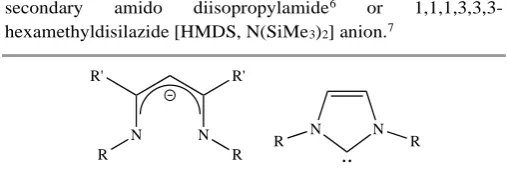
Figure 1 Nacnac anion (left) and N-heterocyclic carbene (right) typically used as aggregation-lowering co-ligands in metal hydride complexes
Running in parallel to this research has been that of the amine boranes (RNH2·BH3; R2NH·BH3), which contain protic and hydridic hydrogen atoms in close proximity to one another, making them primed for hydrogen release under the correct conditions,8 as well as precursors for the synthesis of B-N oligomers9 and polymers.10 Again, the use of main group metals in this area for environmental and economic reasons is pervasive with prominent contributions arising from the groups of Harder,11 Hill12 and Wright.13 While magnesium amidoboranes have been successfully prepared and extensively studied,14 zinc amidoboranes have never been reported,
N N
R R
R' R'
N N
[image:1.595.301.555.468.554.2]although Harder has suggested that these are intermediate species on the way to the monomeric zinc hydride complex [CH{C(Me)N(Dipp)}2ZnH] which can be obtained in good yields by salt metathesis of [CH{C(Me)N(Dipp)}2ZnCl] and a potassium amidoborane. 4c
[image:2.595.310.548.178.395.2]Our interest in this area was stimulated by the excellent recent work of Okuda,5b-e and Rivard,5f who have reported both neutral and cationic NHC-stabilized zinc hydride species (specifically with a focus on alkyl zinc/zinc halide reagents), some of which are effective catalysts for hydrosilylation reactions (Figure 2). Diverging from Harder’s approach, these compounds can be prepared using phenylsilanes as hydride sources. Given the considerable carbophilicity of zinc, we surmised that zinc amides [specifically Zn(HMDS)2], with their relatively weaker and kinetically activated Zn-N bonds (compared to Zn-C bonds),15 might provide a novel, more facile access point to zinc hydride complexes while also considering that NHCs might stabilize the as yet elusive zinc amido-boranes better than nacnac anions. We present our findings of these studies herein.
Figure 2 Crystallographically characterized molecular NHC-stabilized neutral and cationic zinc hydride species. SIMes = 1,3-bis(2,4,6-trimethylphenyl)imidazol-4,5-dihydro-2-ylidene, Cp* = pentamethylcyclopentadienyl, IPr = 1,3-bis(2,6-diisopropylphenyl)imidazol-2-ylidene, IMes = 1,3-bis(2,4,6-trimethylphenyl)imidazol-2-ylidene, ImMe2iPr2 =
1,3-diisopropyl-4,5-dimethylimidazole-2-ylidene, DMAP = 4-dimethylaminopyridine, OTf = triflate. References: A, 5g; B, 5b; C, 5b; D, 5f; E, 5c; F, 5f; G, 5f; H, 5e; I, 5d.
Results and discussion
We commenced synthetic studies by reacting an equal stoichiometry of dimethylamine borane (DMAB) with Zn(HMDS)2 in THF solution. This mixture immediately precipitated an insoluble white product despite the presence of a vast excess of Lewis donating solvent. Addition of tetramethylethylenediamine (TMEDA), the potentially tetradentate donor tris[2-(dimethylamino)ethyl]amine (Me6TREN), or the unsaturared N-heterocyclic carbene IPr (IPr = 1,3-bis(2,6-diisopropylphenyl)imidazol-2-ylidene) did not re-dissolve this precipitate. However, we did discover that adding a molar equivalent of IPr to the solution of Zn(HMDS)2 prior to the introduction of the amine borane, followed by removal of THF, addition of hexane and reintroduction of THF dropwise with stirring, resulted in a homogenous solution. Storage of this solution at -30oC deposited a small crop of colourless crystals which were revealed by synchrotron single-crystal X-ray
diffraction to be the zinc mixed amido-hydrido cluster Zn4(HMDS)2H6·2IPr (1) (Scheme 1a and figure 3; note that a non-interacting molecule of THF is present in the crystal structure). This synthesis could be improved by using less polar cyclohexane as the reaction medium, with a larger crop of crystals being deposited upon standing at room temperature. Interestingly, the crystals grown from the cyclohexane solution (that is, in absence of THF) gave essentially the same unit cell parameters as those with the THF molecule of solvation, suggesting its presence is not influencing the crystal packing.
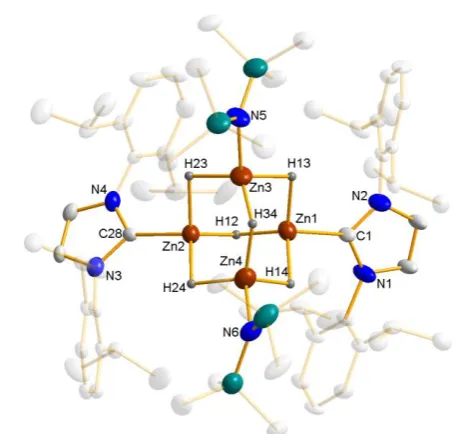
Figure 3 Molecular structure of complex Zn4(HMDS)2H6·2IPr (1) with 50%
probability ellipsoids. All non-hydridic hydrogen atoms and THF molecule of solvation have been removed for clarity. Peripheral carbon atoms have been made more transparent for clarity. Selected bond parameters (Å and o): Zn1-H12
1.82(3), Zn1-H13 1.81(3), Zn1-H14 1.82(3), Zn2-H12 1.82(3), Zn2-H23 1.83(3), Zn2-H24 1.82(3), Zn3-H13 1.81(3), Zn3-H23 1.82(3), Zn3-H34 1.83(3), Zn4-H14 1.81(3), Zn4-H24 1.82(3), Zn4-H34 1.83(3), Zn1-C1 2.040(8), Zn2-C28 2.035(9), Zn3-N5 1.944(6), Zn4-N6 1.939(7).
Comprising an adamantyl-like {Zn4H6}2+ core, this complex can be envisaged as a co-complex of IPr·ZnH2 and (HMDS)ZnH. Interestingly, although a handful of tetranuclear zinc hydride complexes have been reported,16 all of them contain terminal hydride ligands, whereas in 1 each hydride is acting as a bridge between two zinc centres such that the core is a tetrahedral Zn4 cluster with the six hydride ligands slightly displaced from the six edges of the tetrahedron. A similar bridging coordination mode has recently been found in the lower nuclearity NHC-stabilized cationic cluster {Zn3H4(IMes)3(THF)}{BPh4}2.5e The hydride ligands in 1 were located and refined with fixed isotropic displacement parameters, with the only restraint applied on their positions being that the Zn-H bonds should be approximately equal in length (which resulted in Zn-H bond lengths of 1.820.01 Å; the length was not specified as part of the refinement input). This value is marginally longer than the Zn-H-Zn distances reported by Coles for a {Zn5H6} cluster (mean 1.775 Å)16d and of the bridging hydride-zinc distances in B (mean 1.712 Å), C H
Zn IPr DMAPDMAP
+
OTf
-H
Zn H
Zn NHC R
NHC R
H
Zn H
Zn H Zn
H
IMes IMes
THF IMes 2+
2[BPh4]
-R = H, NHC = IPr (B) R = H, NHC = IMes (C) R = H, NHC = ImMe2iPr2 (D)
R = Et, NHC = IMes (E) R = I, NHC = IPr (F)
(H)
Zn H
N N N
N
Zn
tBu
tBu
N N N
N
tBu
tBu H
(I) Zn H
h3-Cp*
SIMes
[image:2.595.41.292.298.425.2](1.759 Å), E (mean 1.775 Å), F (mean 1.78 Å) and H [1.65(3)-1.75(4) Å]. Zn-C(carbene) and Zn-N(HMDS) bond distances are consistent with other such crystallographically characterized bonds (vide infra).
We note at this juncture that a magnesium analogue of complex 1 has been reported previously by Hill and co-workers.5a The metal-hydride, metal-amide and metal-carbene bond lengths are understandably shorter in our zinc complex compared to the magnesium derivative due to zinc’s smaller size (covalent radius 1.22 Å for Zn vs 1.41 Å for Mg). This is most clearly seen in the Zn-carbene bonds, which have a mean value of 2.038 Å, almost 8% shorter than in the Mg complex [2.2063(19) Å]. The Zn-N (mean 1.966 Å) and Zn-H (mean 1.82 Å) are marginally shorter than the corresponding Mg-N and Mg-H bond distances [2.0049(17) and 1.871(mean) Å respectively]. It is of interest that the magnesium complex was prepared by reaction of Mg(HMDS)2·IPr with phenylsilane at 60oC. However, when we attempted the preparation of 1 using this approach, we obtained instead a mononuclear mixed hydrido-amido complex (vide infra).
1H NMR spectra of 1 in C
7D8 solution exhibit single sets of signals for the IPr, hydride and HMDS groups. DOSY NMR studies showed that all these different ligands present in 1 belong to the same sized species, as the cross points for all their resonances are aligned in the second dimension (Figure S1, average diffusion coefficient 1.19 x 10⁹ m2s1). The hydride resonance appears as a broad singlet at 3.35 ppm, which is just slightly downfield of those recently reported for related dimeric mixed alkyl-hydride zinc species [{(IMes)ZnMeH}2] (at 2.75 ppm). 5c The most informative resonance in the 13C{1H} NMR spectrum is that for the carbenic carbon which is found at 181.0 ppm, consistent with the retention of the Zn-Ccarbene interaction in solution.17
Scheme 1
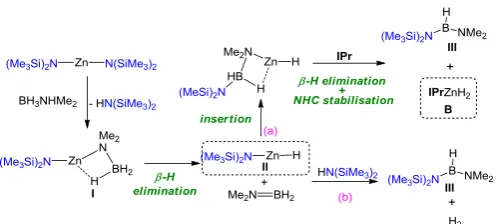
Considering the heteroleptic constitution of 1, we found that this compound could reproducibly be obtained in up to 46% crystalline yield when the reaction was carried out using a 3:4:2 ratio of DMAB, Zn(HMDS)2 and IPr respectively (see Figures S2 and S3 for 1H and 13C NMR spectra). In order to shed some light on the formation of 1 and the fate of the original amine borane, multinuclear (11B and 1H) NMR studies were carried out on the remaining filtrate from this reaction mixture. The 11B NMR spectrum (see Figure S4, ESI) revealed the formation of a
Scheme 2: Proposed pathway for the formation of 1
As mentioned above, an Mg-analogue of 1 has been previously prepared, using a Mg(HMDS)2·IPr adduct as a precursor.5a In the absence of any characterized NHC adducts of zinc bisamides,21 we also focused on the initial step of the reaction, specifically the reaction of Zn(HMDS)2 with IPr. However, we were unable to prepare an IPr-stabilized complex of Zn(HMDS)2. A 1H NMR spectroscopy study in d8-THF showed that these two reagents do not interact, as shown in Figure S6. This suggests that pre-coordination of the carbene to the metal is not necessary, but rather the free carbene is available in solution to protect the sterically unencumbered metal once the reaction to produce the metal-hydride bond has occurred. This means that the synthesis of clusters such as 1 or its Mg derivative can potentially be carried out in a more atom-efficient manner, using only half a molar equivalent of NHC per metal (mirroring the stoichiometry of the product, see equation 1) without requiring the preformation of a coordination adduct between the carbene and the relevant metal bisamide.
IPr would appear to be only slightly too sterically encumbered to access the Lewis acidic metal centre of Zn(HMDS)2, as moving to the moderately less bulky carbene IXy [1,3-bis(2,6-dimethylphenyl)imidazol-2-ylidene, which bears methyl rather than isopropyl arms at the ortho positions of the flanking aromatic group] resulted in NHC adduct 2 being formed after stirring the two together in hexane/THF at room temperature. Determined by X-ray diffraction studies, the molecular structure of 2 is shown in Figure 4.
At 2.100(5) Å, the Zn-carbene distance is at the long end of reported three-coordinate zinc atoms coordinated by an NHC22 as might be expected given our observation that the carbene is only just sterically unencumbered enough to access the zinc centre. The Zn-N distances (av. 1.967 Å) are consistent with Zn(HMDS)2·ItBu (av. 1.957 Å) and the zinc centre is distorted trigonal planar (= 360.0o). Compared to free Zn(HMDS)
[image:4.595.44.296.54.166.2]2,23 the coordinating carbene understandably forces the N-Zn-N angle from 175.2o to 123.0(2)o, which is indeed tighter than that seen in the less bulky ItBu adduct [131.4(2)o].24 Likewise, the Zn-N bonds are elongated on going from a two-coordinate (av. 1.833 Å) to a three-coordinate complex (av. 1.967 Å). The carbene is considerably rotated to minimize steric clashing of the flanking aromatic groups with the silylamide ligands (the C3N2 ring plane is oriented at 62.4o with respect to the N-Zn-N plane).
Figure 4 Molecular structure of one of the two crystallographically independent molecules of complex Zn(HMDS)2·IXy (2) with 50% probability ellipsoids. All
hydrogen atoms and a disordered THF molecule of crystallisation have been removed for clarity. The second Zn(HMDS)2·IXy molecule has disordered HMDS
ligands. Selected bond parameters (Å and o): Zn1-C13, 2.100(5); Zn1-N1,
1.973(3); Zn1-N2, 1.961(4); N1-Zn1-N2, 123.0(2), N1-Zn1-C13, 119.9(1); N2-Zn1-C13, 117.1(2).
In C6D6 solution, 2 appears to maintain its structural composition as evidenced by the marginal downfield shift of the HMDS methyl resonance from 0.20 in free Zn(HMDS)2 to 0.22 ppm in 2 as well as the shift of the methyl and backbone resonances from 2.14 and 6.42 to 2.11 and 5.84 ppm. Furthermore, there is the characteristic movement of the carbenic carbon resonance from 218.9 ppm in free IXy to 186.4 ppm when coordinated (see Figures S7 and S8 for full details). We then turned our attention to the reaction of Zn(HMDS)2 with the primary silane PhSiH3 rather than DMAB (Scheme 1b). Equimolar amounts of the two reagents were stirred in hexane at 60oC for 3 hours, again in the presence of initially non-interacting IPr. Upon cooling, a crop of crystals of (HMDS)ZnH·IPr (3) were obtained in a 54% crystalline yield. 3 was characterized by multinuclear NMR spectroscopy (1H and 13C) and CHN microanalysis. Interestingly, although, under the reaction conditions investigated, it appears that only one of the amido groups of the zinc precursor is activated towards the Si-H/Zn-HMDS exchange reaction, when the reaction is carried out using an excess of the silane (5 molar equivalents) or using the more polar solvent THF, the formation of the homoleptic species [{IPrZnH2}2] (B)5b occurs preferentially.
X-ray crystallographic studies established the molecular structure of 3 (Figure 5). Contrasting with that previously described for tetranuclear cluster 1, this complex exhibits a monomeric arrangement showing that the combined steric bulk of HMDS and IPr are sufficient to protect and stabilize the three coordinate zinc centre.
to another mononuclear three-coordinate complex with a
terminal Zn-H bond, namely Harder’s
[image:5.595.303.553.52.344.2][CH{C(Me)N(Dipp)}2ZnH] [1.46(2) Å].4c The presence of a bulky, labile neutral donor and a non- chelating HMDS ligand may well confer greater latent reactivity on 3 with respect to the latter whose chelating monoanionic -diketiminate ligand is robust and generally non-reactive.
Figure 5 Molecular structure of complex (HMDS)ZnH·IPr (3)with 50% probability ellipsoids. All hydrogen atoms other than zinc-bound hydride have been removed for clarity. Selected bond parameters (Å and o): C1, 2.081(2);
Zn1-H1A, 1.53(3); Zn1-N3, 1.924(2); C1-Zn1-N3, 125.9(1); C1-Zn1-Zn1-H1A, 107.9(1); N3-Zn1-H1A, 126.2(1).
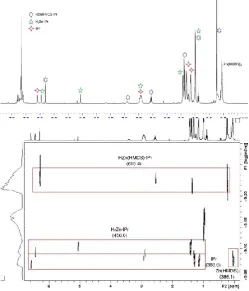
The 1H and 13C NMR spectra of 3 in d8-THF are consistent with the molecular structure. The terminal hydride resonance appears at 3.20 ppm; cf complex A, 3.73 ppm; complex I, 4.14 ppm in d8-THF (figure S9 and S10). Interestingly, using the arene solvent C6D6, which a priori could be considered a much more ‘innocent’ solvent due to its lesser coordinating ability, the solution behaviour of complex 3 is significantly less straightforward (see Figure 6). Focusing on the region around 6 ppm in the 1H NMR spectrum (chosen as the carbene backbone resonance is found here as a clear singlet with no competing resonances nearby), it is clear that there are three distinct carbenes in solution (two of which appear to be coordinated to a metal, corroborated by the 13C NMR spectrum which shows resonances at 191.7 and 180.8 ppm, indicative of such coordination). By comparison with the spectra of some known species, we were able to identify two different known species, namely Zn(HMDS)2 and free IPr (Figure 6a). The identity of the other two carbene-containing species was not instantly clear, although one set of carbene resonances was similar to those reported for [ZnH2·IPr]2.5b A 1H DOSY NMR experiment (Figure 6b),25 which separates different components in solution according to their diffusion coefficient (and by extrapolation their molecular weight/volume) in a manner which can be considered as ‘NMR chromatography’, allowed us to definitively assign resonances to each of four components in the solution. A set of resonances corresponding to the molecular structure (HMDS)ZnH·IPr was identified as the final IPr-containing species, leading us to propose that the following equilibrium (equation 2) is occurring in solution.
Figure 6 (a, top) 1H NMR spectrum and (b, bottom) 1H DOSY NMR spectrum of
crystals of HZn(HMDS)·IPr (3) in C6D6 solution. Values in parentheses represented
the theoretical molecular weight of the quoted species.
[image:5.595.73.296.142.285.2](that is, we approached the equilibrium from the other side), which revealed a similar spectrum to that previously seen for crystals of 3 (see figure S11 for details). The presence of Zn(HMDS)2 is paramount to this deaggregation as it is not witnessed when only IPr is added to [ZnH2·IPr]2 (Fig. S11a)but rather only occurs once the Zn(HMDS)2 is added, evidenced by the loss of the two hydride resonances of [ZnH2·IPr]2 and the concomitant development of the hydride resonance of ZnH2·IPr (fig. S11b).
Experimental
General experimental All reactions and manipulations were performed under a protective argon atmosphere using either standard Schlenk techniques or a glove box. Hexane and THF were dried by heating to reflux over sodium benzophenone ketyl and then distilled under nitrogen prior to use. Cyclohexane was distilled over CaH2 and stored over 4Å molecular sieves. DMAB and PhSiH3 were purchased commercially from Sigma-Aldrich and used as received. (HMDS)2Zn,26 IXy and IPr27 were prepared by literature methods. NMR spectra were recorded on a Bruker AV 400 MHz spectrometer operating at 400.13 MHz for 1H and 100.62 MHz for 13C. All 13C spectra were proton decoupled. 1H and 13C spectra were referenced to the residual solvent signal.
X-ray crystallography Crystallographic data were measured on a Rigaku Saturn 724+ (1, using synchrotron radiation at
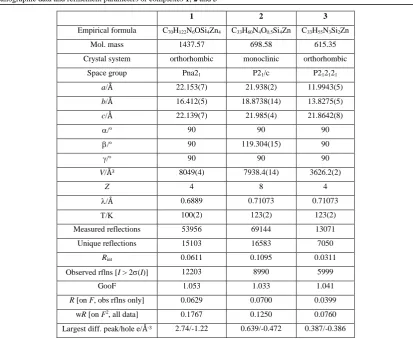
beamline I19 of Diamond Light Source) or Oxford Diffraction Gemini S laboratory based diffractometer (2 and 3, using MoK radiation). Structures were solved and refined on F2 against all independent reflections by the full-matrix least-squares method using the SHELXS and SHELXL programs.28 All non-hydrogen atoms were refined using anisotropic displacement parameters. Hydride scattering factors were used for the 6 bridging H atoms in the core of complex 1. Selected crystallographic details and refinement details are given in Table 1. CCDC-1042314 to CCDC-1042316 contain the supplementary crystallographic data for this paper. These can be obtained free of charge from the Cambridge
Crystallographic Data Centre via
www.ccdc.cam.ac.uk/data_request/cif.
Synthesis of [Zn4H6HMDS2•2IPr] 1
[image:6.595.93.507.54.393.2]A Schlenk tube was charged with Zn(HMDS)2 (193 mg, 0.5 mmol) and IPr (97 mg, 0.25 mmol) to which 5 mL cyclohexane was added. DMAB (22 mg, 0.37 mmol) was added to this mixture with stirring at room temperature, resulting in a brown homogeneous mixture within 5 minutes. After stirring for 30 minutes at room temperature the stirring was stopped. Crystals were visible within 5 hours. (79 mg, 46 %). 1H NMR (400.13 MHz, 300 K, C7D8) δ (ppm) = 0.13 (s, 36H, Si(CH3)3), 0.98 (d, 24H, CH3, 3JHH = 6.8 Hz), 1.34 (d, 24H, CH3, 3JHH = 6.8 Hz), 2.55 (sept, 8H, iPr-CH, 3JHH = 6.8 Hz), 3.35 (s, 6H, Zn-H), 6.33 (s, 4H, imidazole backbone CH), 7.14 (d, 8H, m-CH, 3JHH = 7.8
Table 1 Crystallographic data and refinement parameters or complexes 1, 2 and 3
1 2 3
Empirical formula C70H122N6OSi4Zn4 C33H60N4O0.5Si4Zn C33H55N3Si2Zn
Mol. mass 1437.57 698.58 615.35
Crystal system orthorhombic monoclinic orthorhombic
Space group Pna21 P21/c P212121
a/Å 22.153(7) 21.938(2) 11.9943(5)
b/Å 16.412(5) 18.8738(14) 13.8275(5)
c/Å 22.139(7) 21.985(4) 21.8642(8)
/o 90 90 90
/o 90 119.304(15) 90
/o 90 90 90
V/Å3 8049(4) 7938.4(14) 3626.2(2)
Z 4 8 4
/Å 0.6889 0.71073 0.71073
100(2) 123(2) 123(2)
Measured reflections 53956 69144 13071
Unique reflections 15103 16583 7050
Rint 0.0611 0.1095 0.0311
Observed rflns [I > 2(I)] 12203 8990 5999
GooF 1.053 1.033 1.041
R [on F, obs rflns only] 0.0629 0.0700 0.0399
wR [on F2, all data] 0.1767 0.1250 0.0760
Hz), 7.28 (t, 4H, p-CH, 3JHH = 7.7 Hz). 13C{1H} NMR (100.62 MHz, 300 K,C7D8) δ (ppm) = 6.5 (Si(CH3)3), 24.0 (iPr-CH3), 25.4 (iPr-CH3), 29.0 (iPr-CH), 124.8 (m-CH), 124.9 (NHC-CH), 131.2 (p-CH), 135.1 (i-C), 144.9 (o-CH), 181.0 (NHC-C).Elemental analysis (%) for C66H114N6Si4Zn4: calcd: C 58.05, H 8.42, N 6.15; found: C 58.74, H 8.36, N 5.81.
Synthesis of Zn(HMDS)2·IXy (2)
To Zn(HMDS)2 (193 mg, 0.5 mmol) in 5 mL of n-hexane was added IXy (138 mg, 0.5 mmol) and the mixture stirred for 30 minutes at room temperature, yielding a brown mixture. THF was added dropwise until a solution was obtained (approx. 0.3 mL). The solution was stirred for 15 minutes before cooling to -35 °C, giving orange crystals. Removing solvent in vacuo yielded a brown sticky solid presenting identical NMR data. (245 mg, 74 %). 1H NMR (400 .13MHz, 300 K, C
6D6) δ (ppm) = 0.22 (s, 36H, Si(CH3)3), 2.11 (s, 12H, CH3), 5.87 (s, 2H, imidazole backbone CH), 6.92 (d, 4H, m-CH, 3JHH = 7.6 Hz), 7.02 (t, 2H, p-CH, 3JHH = 7.6 Hz). 13C{1H} NMR (100.62 MHz, 300 K, C6D6) δ (ppm) = 7.0 (Si(CH3)3), 19.5 (CH3), 123.3 (imidazole backbone CH), 129.3 (m-CH), 129.9 (p-CH), 135.9 (o-CH), 137.6 (i-C), 186.4 (NHC-C). Elemental analysis (%) for C33H60N4O0.5Si4Zn: calcd: C 56.74, H 8.66, N 8.02; found: C 57.14, H 9.28, N 8.16.
Synthesis of (HMDS)ZnH·IPr (3)
A Schlenk tube was charged with Zn(HMDS)2 (193 mg, 0.5 mmol) and IPr (194 mg, 0.5 mmol) to which 15 mL n-hexane was added. PhSiH3 (0.06 ml, 0.5 mmol) was added to this mixture with stirring at room temperature. The mixture was heated to 60°C for 3 h, leading to a light brown homogeneous mixture. The reaction was slowly cooled to room temperature, producing a crop of light brown crystals. (116 mg, 54 %). 1H NMR (400.13 MHz, 300 K, d8-THF) δ (ppm) = -0.32 (s, 18H, Si(CH3)3), 1.08 (d, 12H, CH3, 3JHH = 6.7 Hz), 1.27 (d, 12H, CH3, 3JHH = 6.7 Hz), 2.60 (m, 3H, iPr-CH, 3JHH = 6.8 Hz), 3.20 (s, 1H, Zn-H), 7.24 (d, 4H, m-CH, 3JHH = 7.6 Hz), 7.34 (t, 2H, p-CH, 3JHH = 7.9 Hz), 7.35 (s, 2H, imidazole backbone CH). 13C{1H} NMR (100.62 MHz, 300 K, d8-THF) δ (ppm) = 6.31
(Si(CH3)3), 24.3 (iPr-CH3), 25.3 (iPr-CH3), 29.4 (iPr-CH), 125.2 (m-CH), 126.4 (NHC-CH), 131.2 (p-CH), 135.9 (i-C), 145.6 (o-CH), 180.3 (NHC-C). Elemental analysis (%) for C33H55N3Si2Zn: calcd: C 64.41, H 9.01, N 6.83; found: C 64.48, H 9.43, N 6.54.
Conclusions
Access to two novel and distinct heteroleptic amido(hydride) Zn species has been gained by reacting a mixture of the zinc bis(amide) Zn(HMDS)2 and the unsaturated N-heterocyclic carbene IPr with two different hydride sources, namely dimethylamino borane (DMAB) and silane PhSiH3. The former affords tetranuclear cluster 1 which can be described as a co-complex of IPr·ZnH2 and (HMDS)ZnH and whose formation is likely to occur via a transient Zn amidoborane species, resulting from the deprotonation of DMAB by the zinc amide precursor.
1H NMR monitoring of the reaction revealed the formation of a
single boron species, heteroleptic bis(amido) borane [HB(NMe2)(HMDS)] along with H2 evolution. Although the N-heterocyclic ligand IPr does not bind to Zn(HMDS)2, its presence appears to be crucial for the stabilization of 1. Contrastingly, using silane PhSiH3 under harsher reaction conditions, only one of the amido arms of the zinc precursor
undergoes Si-H/Zn-HMDS metathesis to form
(HMDS)ZnH·IPr (3), which exhibits a complex and intriguing behaviour in benzene solutions. These findings illustrate the structural diversity of this family of heteroleptic zinc hydride species as well as their intricate solution chemistry, which can play an important role when assessing their reactivity.
Acknowledgements
The authors gratefully acknowledge the Royal Society of Edinburgh (BP Trust Fellowship to S.D.R.), the European Research Council (ERC Starting Grant to E.H.), and the EPSRC (grant award no. EP/L027313/1) for their kind sponsorship of this research. We thank Diamond Light Source for access to synchrotron facilities (beamline I19).
Notes and references
a WestCHEM, Department of Pure and Applied Chemistry, University of
Strathclyde, Glasgow, G1 1XL, UK.
b School of Chemistry, Newcastle University, Newcastle upon Tyne, NE1
7RU, UK.
E-mail: [email protected]; [email protected] † Dedicated to the memory of Professor Ken Wade, a pioneer and an inspiration to Inorganic chemists
Electronic Supplementary Information (ESI) available: NMR
spectroscopic data and X-ray data in crystallographic file (CIF) format for compounds 1, 2 and 3. CCDC reference numbers 1042314 – 1042316. See DOI: 10.1039/b000000x/
1. S. Aldridge and A. J. Downs, Chem. Rev., 2001, 101, 3305-3365. 2. For an example of the synthesis and utilization of active forms of
binary alkali-metal hydrides in metalation and reduction reactions see R. Pi, T. Friedl, P. v. R. Schleyer, P. Klusener and L. Brandsma, J. Org. Chem., 1987, 52, 4299-4303.
3. (a) L. Schlapbach and A. Züttel, Nature, 2001, 414, 353-358; (b) F. Schüth, B. Bogdanovic and M. Felderhoff, Chem. Commun., 2004, 2249-2258; (c) B. Sakintuna, F. Lamari-Darkrim and M. Hirscher, Int. J. Hydrogen Energ., 2007, 32, 1121-1140; (d) I. P. Jain, C. Lal and A. Jain, Int. J. Hydrogen Energ., 2010, 35, 5133-5144.
4. (a) H. Hao, C. Cui, H. W. Roesky, G. Bai, H.-G. Schmidt and M. Noltemeyer, Chem. Commun., 2001, 1118-1119; (b) S. P. Green, C. Jones and A. Stasch, Angew. Chem. Int. Ed., 2008, 47, 9079-9083; (c) J. Spielmann, D. Piesik, B. Wittkamp, G. Jansen and S. Harder, Chem. Commun., 2009, 3455-3456; (d) S. Schulz, T. Eisenmann, D. Schuchmann, M. Bolte, M. Kirchner, R. Boese, J. Spielmann and S. Harder, Z. Naturforsch., 2009, 64b, 1397-1400; (e) S. Harder, J. Spielmann, J. Intemann and H. Bandmann, Angew. Chem. Int. Ed., 2011, 50, 4156-4160.
Momeni, M. W. Lui, R. McDonald, M. J. Ferguson, M. Miskolzie, A. Brown and E. Rivard, Angew. Chem. Int. Ed., 2014,
53, 9347-9351; (g) P. Jochmann and D. W. Stephan, Angew. Chem. Int. Ed., 2013, 52, 9831-9835.
6. P. C. Andrikopolous, D. R. Armstrong, A. R. Kennedy, R. E. Mulvey, C. T. O'Hara and R. B. Rowlings, Eur. J. Inorg. Chem., 2003, 3354-3362.
7. D. J. Liptrot, M. S. Hill and M. F. Mahon, Chem. Eur. J., 2014,
20, 9871-9874.
8. (a) A. Staubitz, A. P. M. Robertson, M. E. Sloan and I. Manners, Chem. Rev., 2010, 110, 4023-4078; (b) A. Staubitz, A. P. M. Robertson and I. Manners, Chem. Rev., 2010, 110, 4079-4124. 9. R. J. Less, R. L. Melen and D. S. Wright, RSC Advances, 2012, 2,
2191-2199.
10. H. C. Johnson, E. M. Leitao, G. R. Whittell, I. Manners, G. C. Lloyd-Jones and A. S. Weller, J. Am. Chem. Soc., 2014, 136, 9078-9093 and references therein.
11. (a) J. Spielmann, G. Jansen, H. Bandmann and S. Harder, Angew. Chem. Int. Ed., 2008, 47, 6290-6295; (b) S. Harder, J. Spielmann and B. Tobey, Chem. Eur. J., 2012, 18, 1984-1991.
12. (a) D. J. Liptrot, M. S. Hill, M. F. Mahon and D. J. MacDougall, Chem. Eur. J., 2010, 16, 8508-8515; (b) M. S. Hill, M. Hodgson, D. J. Liptrot and M. F. Mahon, Dalton Trans., 2011, 40, 7783-7790; (c) P. Belham, M. S. Hill, D. J. Liptrot, D. J. MacDougall and M. F. Mahon, Chem. Commun., 2011, 47, 9060-9062. 13. (a) H. J. Cowley, M. S. Holt, R. L. Melen, J. M. Rawson and D. S.
Wright, Chem. Commun., 2011, 47, 2682-2684; (b) M. M. Hansmann, R. L. Melen and D. S. Wright, Chem. Sci., 2011, 2, 1554-1559; (c) R. J. Less, H. R. Simmonds, S. B. J. Dane and D. S. Wright, Dalton Trans., 2013, 42, 6337-6343.
14. (a) J. Spielmann, M. Bolte and S. Harder, Chem. Commun., 2009, 6934-6936; (b) For an excellent overview of the thermal decomposition of magnesium amido-borane complexes see: J. Spielmann, D. F.-J. Piesik and S. Harder, Chem. Eur. J., 2010, 16, 8307-8318; (c) J. Spielmann and S. Harder, Dalton Trans., 2011,
40, 8314-8319; (d) S. Harder, J. Spielmann and J. Intemann, Dalton Trans., 2014, 43, 14284-14290.
15. D. R. Armstrong, A. M. Drummond, L. Balloch, D. V. Graham, E. Hevia and A. R. Kennedy, Organometallics, 2008, 27, 5860-5866.
16. (a) M. Krieger, B. Neumüller and K. Dehnicke, Z. Anorg. Allg. Chem., 1998, 624, 1563-1564; (b) W. Marciniak, K. Merz, M. Moreno and M. Driess, Organometallics, 2006, 25, 4931-4933; (c) B. Gutschank, S. Schulz, D. Bläser, R. Boese and C. Wölper, Organometallics, 2010, 29, 6133-6136; (d) For a related {Zn5H6}
cluster see: M. P. Coles, S. M. El-Hamruni, J. D. Smith and P. B. Hitchcock, Angew. Chem. Int. Ed., 2008, 47, 10147-10150; (e) For a related {Zn5H4} cluster see: M. Kahnes, H. Görls, L.
González and M. Westerhausen, Organometallics, 2010, 29, 3098-3108.
17. (a) P. L. Arnold, I. J. Casely, Z. R. Turner, R. Bellabarba and R. B. Tooze, Dalton Trans., 2009, 7236-7247; (b) D. R. Armstrong, S. E. Baillie, V. L. Blair, N. G. Chabloz, J. Diez, J. Garcia-Alvarez, A. R. Kennedy, S. D. Robertson and E. Hevia, Chem. Sci., 2013, 4, 4259-4266.
18. This chemical shift is close to that of the related species (sBu2N)B(H)-HMDS which resonates at 35.2 ppm: W. R. Nutt
and R. L. Wells, Inorg. Chem., 1982, 21, 2473-2476.
19. Although the formation of a Zn bis(amidoborane) intermediate, as the result of the reaction of Zn(HMDS)2 with 2 equivalents of
DMAB, cannot be discounted, considering the stoichiometry and mild reaction conditions employed such a scenario sounds unlikely.
20. G. R. Fulmer, A. J. M. Miller, N. H. Sherden, H. E. Gottlieb, A. Nudelman, B. M. Stoltz, J. E. Bercaw and K. I. Goldberg, Organometallics, 2010, 29, 2176-2179.
21. We note that during the preparation of this manuscript the first NHC adduct of Zn(HMDS)2 was reported, using ItBu as the
carbene. See: A. Baishya, M. K. Barman, T. Peddarao and S. Nembenna, J. Organomet. Chem., 2014, 769, 112-118.
22. A search of the CCDB for 3-coordinate zinc(II) bound to an NHC yielded 23 Zn-C bond lengths in the range 1.981(6) [(Ph2CHO)2Zn·IPr; P. Jochmann and D.W. Stephan, Chem. Eur.
J., 2014, 20, 8370-8378] to 2.118(5) Å [tBu2Zn·IPr; D.R.
Armstrong, S.E. Baillie, V.L. Blair, N.G. Chabloz, J. Diez, J. Garcia-Alvarez, A.R. Kennedy, S.D. Robertson and E. Hevia, Chem. Sci., 2013, 4, 4259-4266] with a mean value of 2.056 Å. 23. G. Margraf, H.-W. Lerner, M. Bolte and M. Wagner, Z. Anorg.
Allg. Chem., 2004, 630, 217-218.
24. ItBu is reported as being more sterically demanding than IPr in a high coordination number complex but less sterically demanding when the metal has a lower coordination number, such as in Zn(HMDS)2·NHC: H. Clavier and S. P. Nolan, Chem. Commun.,
2010, 46, 841-861.
25. D. Li, I. Keresztes, R. Hopson and P. G. Williard, Acc. Chem. Res., 2009, 42, 270-280.
26. H. Bürger, W. Sawodny and U. Wannagat, J. Organomet. Chem.,
1965, 3, 113-120.