Loughborough University – 20th - 23rd April 2009
The nature of engineering change in a
complex product development cycle
William F. Rowell1, Alex H. B. Duffy2, Iain M. Boyle3 and Nick Masson4
1 University of Strathclyde, Scotland, [email protected] 2 University of Strathclyde, Scotland, [email protected] 3 University of Strathclyde, Scotland, [email protected] 4 Babcock Marine (Rosyth) Ltd, Scotland, [email protected]
Abstract
The complex dynamics of modern business mean companies are constantly exposed to rapid and radical change. The way by which a company copes with change, can act as an insight into its propensity for sustainable profitability and hence predicted longevity. In complex product development cycles, engineering change must be managed as efficiently and effectively as possible. This paper presents a case study of one hundred engineering changes, taken over a sixty seven day period, of a complex product development cycle, during the detailed design phase of the project. It establishes the specific engineering change process utilised as a reactive process, which takes a mean of 126 days to complete its impact analysis phase and compliments this with a review of change stimuli and effects. It was found that the stimuli behind change are frequently not understood, with 68.4% reasons being classified as “other”. The most effected entities were found to be the bill of materials, baseline and structural changes respectively; however it was found that each specific stimulus had a unique effect profile, which differed from the cumulative effect profile for all change stimuli.
Key words – Engineering change management, change stimulus, change effect
1 Introduction
The success of the engineering change management process within an engineering organisation is paramount. It can act as a measure of a product development’s propensity for profitability, with efficiently and effectively managing change throughout a product development cycle being a strategically significant objective. In the engineering industry a number of different approaches to engineering change management exist, ranging from ad hoc informal analysis to sophisticated computer-based management systems [1]. Whatever the mechanism behind the change management process, the overall goal is the same: to integrate changes into the product development cycle with the least disruption as possible. Most of these processes rely on reactively determining the impact of a change once a stimulus has occurred. Whilst this method can be implemented successfully within existing development models, it does expose the project to risk due to spikes in resource loading, associated with both administration and implementation, causing the engineering change process to take a longer time than planned.
Complex product development cycles can be especially difficult entities to manage. Engineering changes can inject turbulence into a previously stable operation, changing entities rapidly and severely. Whilst engineering change pervades industry there exists a dearth of comprehensive studies of the actual nature of change in practice. Consequently, to truly understand the complexities of engineering change management an initial data capture of engineering changes needed to be performed, to establish the nature and trends of change within a complex product
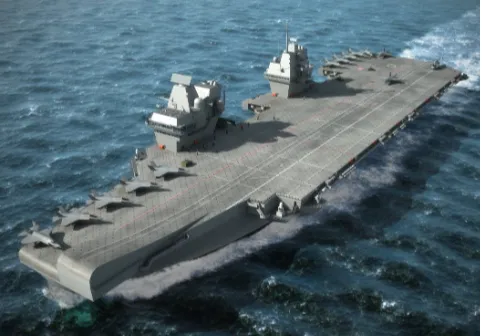
development cycle. This paper presents the initial data capture of one hundred engineering changes, based around the design phase of the Royal Navy’s next generation aircraft carriers (CVF) (Figure 1). This case was selected as the development of this complex structure is being undertaken concurrently at several locations by a variety of different organisations throughout the United Kingdom. Therefore, whilst the project case remained the same, the changes originated from a number of different sources, representing a rich opportunity for data capture on this subject.
[image:1.612.324.565.490.658.2]th rd
2 Background
Change is a ubiquitous phenomenon. Whether analysed from a social constructivist or positivist stance change has the power to alter both cognitive and physical understandings and perceptions. Aristotle (384 BC – 322 BC) argued that there can be no time without change, viewing time as both a dimension and a measure of change. With this knowledge, in a time critical platform development environment, the importance of understanding the behaviour of change is essential. Current understanding of change behaviour is centred on management processes and organisational shifts. Work into change within an engineering context has been mainly focussed on changes that effect engineering artefacts, assessing attributes such as dimensional alterations (e.g. [2]) and material requirements (e.g.[3]). However a holistic view of an engineering project identifies that there is a coupling between management and design [4]. Therefore to assess the impact upon only a single one of these concerns is to neglect a significant portion of an integrated product development cycle.
[image:2.612.324.567.257.332.2]With the concept of change inferring time [5], time must therefore be some function of change. Furthermore, change infers a difference in state. Whilst a variance can exist in a single time frame, a change must have at least two time frames to be considered. Therefore a change must have an initial state and an end state that are different, and a time difference across which this change has taken place. To illustrate this (Figure 2), if an entity at the initial time, ti, is in an initial state, si, then after an amount of time, ta, it is in another state, sa, then the effect of that change is the difference between si and sa. The effect of the change is therefore si - sa, or sa-i, where the effect of a change is only fully understood when both si and sa have both been perceived and quantified.
Figure 2 - Definition of a change
The ubiquitous nature of change is reflected extensively within modern engineering projects. For example, it was identified [6] that in excess of 50% of the original requirements changed during a cellular telephone feature product development cycle for the Japanese market. Furthermore, the automobile industry is currently undergoing a revolutionary paradigm shift from mass production to mass customisation [7]. This paper focuses on engineering change, such as modifications to function, behaviour or structure [8], which can impact upon a wide range of project management concerns. However, unlike [9], it analyses engineering changes throughout the design phase, rather than focussing on post design release.
2.1 Cause and effect
Change by itself does not just occur spontaneously, it must be stimulated to have an effect. The stimulus for change is what triggers the transition from an initial to a final state. It can therefore be postulated that a change effect can only be experienced if a change stimulus has come into effect, as there can be no change without a cause for it in the first place. A change therefore is the actual consequence of a change stimulus or stimuli.
Above, it has been assumed that either a single stimulus or multiple stimuli can cause a single change, however the reverse of the relationship is also true. A single stimulus can create multiple effects, and multiple stimuli can create multiple effects as well (Figure 3). This can increase the complexity of change management, as it presents an increased number of potential change cases.
Figure 3 - Cause and effect cases
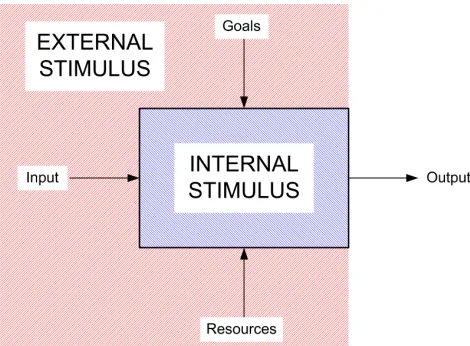
Two types of change stimulus have however been identified: internal and external. Internal changes tend to be involuntary, representing mistakes, assumptions or inaccuracies, which are identified and amended accordingly. External changes, on the other hand, are stimulated by entities out with the boundary of consideration. In a design environment, these stimuli can be categorised into three types: inputs, goals and resources [4] (Figure 4). If the behaviours of the entities are known then the interactions between these entities can be mapped and potential interactions plotted.
[image:2.612.327.562.497.670.2]Loughborough University – 20th - 23rd April 2009
3 Research objective and methodology
The objective of the research was to build up specific information regarding the nature of engineering change within a complex product development cycle to determine what, if any, trends can be extracted. The research method used in this study follows [10] case study approach adopting a positivist philosophical stance. It analyses the changes from a detached information viewpoint, analysing only historical data, opting not to collect information through interviews or protocol analysis. This study has been undertaken without the knowledge of the parties who have input information into the product development cycle, to find the nature of engineering change in a manner that is unbiased, whilst also attempting to ensure the author’s impartiality.
The case selected for this study was the design phase of the Royal Navy’s next generation aircraft carriers (CVF). The CVF project aims to deliver the two biggest and most powerful surface warships ever built for the Royal Navy [11]. This represents a significant challenge for a number of reasons, including: ambitious engineering specifications, novel design approaches and strict budgetary and schedule requirements. These challenges, twinned with the large physical distance between the development teams, the decade of design development and the innovative alliance structure represents a significantly large and complex engineering project, and a suitable case for this study.
In this case study one hundred, consecutive engineering change requests have been analysed over a sixty seven day period, starting in autumn 2008, after they have completed the impact analysis phase. The method aimed to investigate the nature of engineering changes within a complex product development cycle. With the development time potentially spanning two decades and the several industrial participants, each utilising extended supply chains, the CVF project was identified as an appropriate case to satisfy the specific research objective of this study. Furthermore, with the number of engineering changes throughout the life-cycle of the project being predicted to enter into the tens of thousands, this opportunity represents a rich resource for a research project of this type.
4 Results
4.1 The engineering change process
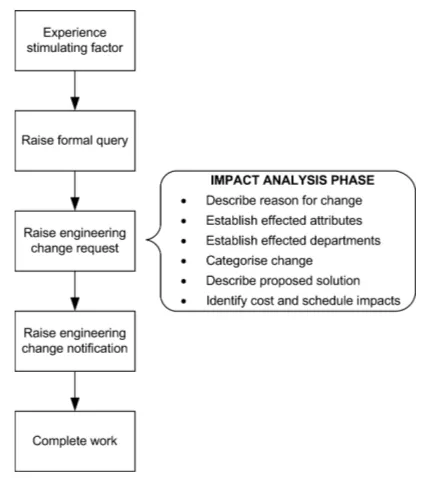
[image:3.612.337.548.126.365.2]Within the CVF project, the development teams adhere to a strict process to facilitate engineering changes. The engineering change process employed is similar in style to a number of change processes found in literature, such as [12] change management process. It comprises of a number of stages, which can be broken down into five general steps (Figure 5).
The motivation for a change is the starting point for the process. Here a stimulating factor is experienced, sufficiently motivating an actor to investigate a certain entity or system. If the stimulating factor is found to be
significant then it is raised as a formal query and presented to an open forum. This open forum, reachable by the development team within the project, acts as a support network to help define problems and find solutions to these. If however no solution is found, then it progresses to the raise engineering change request stage.
Figure 5 – Simplified view of the engineering change process
An engineering change request (ECR) represents an opportunity for change management teams to build up a full picture of the impact of a change on the various departments. During this impact analysis phase a formal template is populated with relevant information to be filled in by the change originator, with help from the relevant change management team representative. This includes: categorising change; establishing the effected departments; establishing the effected attributes; describing the reason for the change; describing the proposed solution, and identifying the cost and schedule impacts. This form is then classified depending on the predicted urgency and severity of the change. It is then circulated to the effected departments for their specific impact analysis before being returned with the relevant information of their impact on man hours, cost and effected entities to the change manager.
th rd
associated budgets in an enterprise change notification (ECN). Finally once the ECN has been approved, this is sent out to the effected parties for the work to be completed. This is a typical reactive type change management process, as the impact of a potential change is assessed once a known problem has been encountered.
[image:4.612.333.560.54.198.2]To highlight the nature of traditional reactive change management processes a review of the time it takes for an ECR to be turned into a ECN has been carried out. This data is taken from the original date of ECR creation and cross referenced with when the ECN was raised. The following graph (Figure 6) shows the spread of times that it takes an ECR to pass through the impact analysis phase and become an ECN.
Figure 6 – Length of time an engineering change resides in the impact analysis phase
From this review of the time an engineering change takes in the impact analysis phase, it can be seen that there is a spread of results. The mean number of days for this phase is 126 days, with the median at 96 days and a standard deviation of 112 days. With future trends moving towards an increased complexity twinned with a further reduction in product development cycle [13], this length of time a change spends in the impact analysis phase could have an increased detrimental impact upon numerous project management considerations.
4.2 Change stimuli
[image:4.612.53.285.238.377.2]The change management process utilised in this case, requires the change originator to identify their motivation for causing a change. Whilst it has been discussed the nature of cause and effect and the multiple potential relationships between these, it may seem paradoxical that only a single change cause is permitted per engineering change request. Nevertheless it is a requirement to identify the change cause in the process. Figure 7 details the breakdown of this for the reviewed ECRs.
Figure 7 – Causes of change
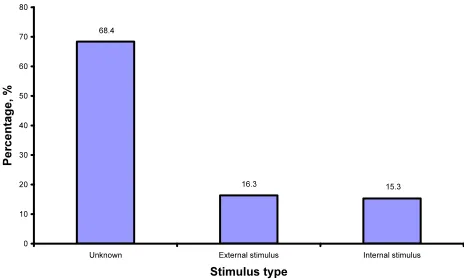
A review of the result has identified the key areas of change stimulus within this large scale complex project. The first aspect which stands out is that 68.4% of change stimuli come from other design changes and other changes. In the change cause classification these two changes represent the most ambiguous of all the categories. The next largest cause is incompatibility at 13.3%. This cause represents the internal change stimuli, caused through developmental errors and assumptions which are being identified and eliminated through the design phase. This twined with contract errors / omissions produces a total of 15.3% of all change being stimulated by internal mechanisms. Combining contract scope change, cost saving, safety, Ministry of Defence requirement, baseline maintenance, production improvement, PA2 requirement, re-programme and transfer of work represents a 16.1% share in the external change stimulus type. Figure 8 depicts the values of the different stimulus types.
[image:4.612.329.561.455.595.2]Loughborough University – 20th - 23rd April 2009 goals, 31.3% comes from knowledge of input, and the final
12.5% comes from knowledge of resources.
Figure 9 – Percentage spread of external stimulus knowledge attributes
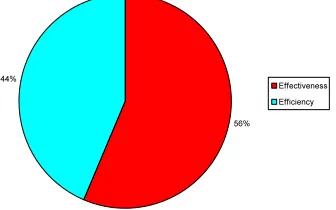
Furthermore, cross-referencing O’Donnell and Duffy’s [2] knowledge classifications against their E2 model of design performance, enables the actual motivation to be achieved, identifying whether an efficiency or an effectiveness stimulus is the true motivation behind the change. Figure 10 quantifies the percentage of the efficiency and effectiveness changes that have been experienced. From this classification it can be identified that 56% of all changes emanate from effectiveness stimuli, whilst 46% emanate from efficiency stimuli.
[image:5.612.319.572.51.188.2]Figure 10 – Performance analysis of change stimulus Compiling the knowledge obtained through the review of change cause, a table has been produced to provide these results in a more compact manner (Table 1).
Table 1 – Change cause review Change cause Percentage, % Stimulus type
External attribute
[2]
Performance classification
[2] Other design
change 35.7 Unknown - -
Other change 32.7 Unknown - -
Incompatibilit
y 13.3 Internal - -
Contract
change scope 4.1 External Goal Effectiveness
Cost saving 2.0 External Goal Effectiveness
Safety 2.0 External Goal Effectiveness
MOD
requirement 2.0 External Input Efficiency
Contract errors
/ omissions 2.0 Internal - -
Baseline
maintenance 2.0 External Input Efficiency
Production
improvement 1.0 External Goal Effectiveness
PA2
requirement 1.0 External Input Efficiency
Re-programme 1.0 External Resources Efficiency
Transfer of
work 1.0 External Resources Efficiency
Legal
requirements 0.0 External Goal Effectiveness
Re-plan 0.0 External Resources Efficiency
4.3 Change effects
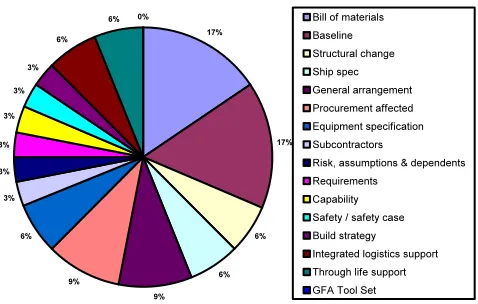
An optional part of the engineering change process is for the change originator to identify the effect of the change: the realisation of a change cause. Here the change originator is presented with a number of general classifications and allowed to select any number of these classifications to denote an effect. Figure 11 presents the results of a review of the analysed ECRs.
Figure 11 – Effects of change
In total 209 effects were identified from the 100 engineering change cases. Analysing the change effects it can be seen that three of these contribute to just under half of the total quantity of effected entities. The bill of materials is the most often effected entity at 20.1%, the baseline is the next most effected at 19.6% and structural changes represents 9.6%. The ship specification, general arrangement and procurement effected categories then each represent 8.1% of the total effects. The equipment specification is effected 6.2% of the time, with subcontractors effected 5.7% of the time. Risk, assumptions and dependents, requirements and capability are also effected 2.9%, 2.9% and 2.4% respectively, with the final 5.3 % being made up of safety / safety case, build strategy, integrated logistics support, through life support and GFA tool set.
4.4 Linking change effects to change stimuli
[image:5.612.53.284.72.216.2] [image:5.612.329.561.306.448.2] [image:5.612.89.257.403.508.2]th rd
specific behavioural characteristics can be obtained. To further the nature of engineering change in a complex product development cycle, a review was undertaken to ascertain what, if any, critical links existed between change stimuli and change effects. In this analysis each stimulus was reviewed and presented alongside the effects that it had attributed to it. This was attempted to obtain any trends that could be established between what effects each stimulus is most likely incur.
The first three change stimuli have been mapped and are presented below:
Figure 12 – Effect profile of the other design change stimulus
Figure 13 – Effect profile of the other change stimulus With the ambiguity of the other (Figure 12) and other design (Figure 13) change categories, and the lack of understanding about the categorisation of these, then perhaps the most appropriate stimulus to analyse was is in fact that of incompatibility. See Figure 14.
Figure 14 – Effect profile of the incompatibility stimulus A review of the effect profile of the incompatibility stimulus has returned some interesting results. As with the overall review of effect of change it can be seen that the incompatibility stimulus primarily effects the bill of materials and baseline. However, including structural change this only makes up 40% of the total, representing a 9.3% reduction from the overall effect of change results. Furthermore, the general arrangement and procurement are increasingly effected, along with integrated logistics support and through life support, when analysed against the overall effect of change profile. The other effects maintained similar profiles to the overall effect of change profile.
5 Discussion
This paper presented the nature of engineering change within a complex product development cycle, through the application of case study methodology on the CVF project. Following a review of one hundred consecutive engineering changes taken over a sixty seven day period, the stimulating factors and effects of these have been analysed and presented to highlight these behaviours. The nature of engineering change in a complex product development cycle, obtained through this study have been realised in four categories: the engineering change process; change stimuli, change effects, and the linking of change effects to change stimuli.
The engineering change process was found to draw similarities with traditional, reactive engineering change processes. The five stage model closely reflects currently available systems in literature. This was characterised by a mean of 126 days, in which engineering changes resided in the impact analysis phase of the process, highlighting the complexity of examined case. The standard deviation of the results is 112 days, which means that there is however a wide spread of results across the examined cases.
[image:6.612.326.565.48.200.2] [image:6.612.50.287.202.348.2] [image:6.612.50.288.380.541.2]Loughborough University – 20th - 23rd April 2009 stimuli type could not be modelled against the double
bubble model of change stimuli, and hence neither against [2] the performance criteria. It can be suggested that this has been found for two reasons: lack of originator understanding of change case or diversity of change stimuli. Lack of understanding of the change case could alter the outcome as the change originator could be unable to accurately define the cause and therefore incorrectly identifies this, or that the change stimuli are so diverse that they cannot be easily classified. Further investigation into this phenomena is therefore required, utilising more involved methods of investigation such as action research or protocol analysis.
Conversely, the investigation of change effects has enabled more confident conclusions to be drawn. In total 209 effects were identified from one hundred engineering changes analysed. The most effected attributes were found to be the bill of materials, baseline and structure respectively, representing just under 50% of the total effects. This could prove valuable as it could enable change managers to profile resource in these key areas.
The final step in the methodology aimed to identify the critical links between change effects and change stimuli. In this contribution it has been found that the effect profile of certain stimuli can vary from one another and do not always follow the overall scheme of change causes. This has practical application as once a change stimulus has been realised, an appropriate level of resource can be provided to the most likely areas of impact.
However there are some concerns regarding the accuracy of the information provided. Whilst the reviews of the ambiguous other and other design change stimuli classification are based on 73 and 70 effects respectively, in total there were only 32 effects identified as originating from the incompatibility stimulus. This reduced further for the other change stimuli which had a smaller percentage of overall change cause total and therefore these were not included in the review.
Whilst this study has been valuable in identifying the nature of engineering changes in a complex product development cycle, there are aspects which could be improved. This study has only been produced during the detailed design phase of the CVF project, spanning sixty seven days. To improve accuracy and reliability of results, it can be suggested that this study should be extended to encompass a cross-section of other recent UK shipbuilding programmes and longitudinally through the various phases involved in a product development cycle.
6 Conclusion
The complexity of a large scale, new product development has been reflected by the intricacies of the nature of engineering change. Consequently, managing engineering change efficiently and effectively is a strategically significant objective. Changes have been identified to take a
significant amount of time to proceed through reactive based engineering change management systems, with the mean time that an engineering change resides in the impact analysis phase of the process standing at 126 days.
A review of change stimuli found that understanding where change comes from is an area of ambiguity. 68.4% of change causes were classified as other or other design change in the existing scheme, raising concerns over the actual origins of change and individuals’ understanding of the change case. This could potentially be one of the factors contributing to the difficulties experienced in engineering change management. From the classifiable change stimuli, it was found that 16.3% and 15.3% came from external and internal stimuli respectively. Of the external stimuli, 56.3% were attributed to changes in goals, 31.3% to inputs, and 12.5% to resources. This then identified that 56% of external change stimuli was for effectiveness improvements with efficiency improvements representing 44% of the total.
The effects of a change were also reviewed. It was found that one hundred engineering change stimuli created 209 effects. Of these effects, 20.1% of these effected the bill of materials, 19.6% effected the baseline, and 9.6% effect the structure, representing the largest effect entities, at 49.3% of the total effects.
Finally, the critical relationships between change stimuli and change effects were formalised for the three most significant change causes. This identified that each of the reviewed change stimuli had a different effect profile, drawing similarities with the overall effect profile, with some subtle differences. This is of benefit as it enables a change manager to quickly identify the most commonly effected entities within the project, enabling the appropriate resources to be provided to these areas.
7 Acknowledgements
The ideas expressed in this paper have benefitted from discussions and strong links between representatives at the University of Strathclyde, Glasgow, Scotland, and Babcock Marine (Rosyth) Ltd., Rosyth, Fife, Scotland. In particular, thanks must be expressed to Sean Donaldson, Philip Crichton and Andrew Mitchell. Furthermore, thanks must also be expressed to all the industrial partners within the Aircraft Carrier Alliance for providing data to facilitate this study, alongside the EPSRC and Systems Engineering Doctorate Centre (SEDC) for supplying the appropriate funding.
8 References
[1] HUANG, G. Q. & MAK, K. L. (1999) Current practices of engineering change management in UK manufacturing industries. International Journal of Operations & Production Management, 19, 21 - 37.
th rd
history of product structure changes. International Journal of Computer Integrated Manufacturing, 21, 19-32.
[3] WÄNSTRÖM, C. & JONSSON, P. (2005) The impact of engineering changes on materials planning. Journal of Manufacturing Technology Management, 17, 561 - 584. [4] O'DONNELL, F. J. & DUFFY, A. H. B. (2002) Modelling design development performance. International Journal of Operations & Production Management, 22,
1198-1221.
[5] CHUNG, C. H. (2006) Decision support systems for change management. International Journal of Information Systems and Change Management, 1, 36 - 47.
[6] WANG, W. (2008) The nature of evolutionary artefact and design process knowledge coupling. Department of Design, Manufacture and Engineering Management. Glasgow, The University of Strathclyde.
[7] FRICKE, E. & SCHULZ, A. P. (2005) Design for changeability (DfC): Principles to enable changes in systems throughout their entire lifecycle. Systems Engineering, 8.
[8] WANG, W., DUFFY, A. & HAFFEY, M. (2007) A post-positivism view of function behaviour and structure. International conference on engineering design, ICED '07. Paris, France.
[9] HUANG, G. Q., YEE, W. Y. & MAK, K. L. (2003) Current practice of engineering change management in Hong Kong manufacturing industries. Journal of Materials Processing Technology, 139, 481-487.
[10] YIN, R. K. (2003) Case study research - Design and Methods, Thousand Oaks, California, SAGE Publications. [11] EVANS, M. (July 26, 2007) Go-ahead for £4bn aircraft carriers. The Times. London, Times Newspapers. [12] IBBS, C. W., WONG, C. K. & KWAK, Y. H. (2001) Project change management system. Journal of Management in Engineering, 17, 159-165.