1
“COMPARISON OF MATERIAL PROPERTIES USED
FOR INTERIM PROSTHESIS IN FIXED DENTAL
PROSTHESIS”-AN INVITRO STUDY
Dissertation submitted to
THE TAMILNADU Dr. M.G.R MEDICAL UNIVERSITY
In partial fulfillment for the degree of
MASTER OF DENTAL SURGERY
BRANCH I – PROSTHODONTICS AND CROWN & BRIDGE
2
ACKNOWLEDGEMENT
I express my profound gratitude and respect to my guide Dr. P.MANIMARAN, M.D.S., HEAD OF THE DEPARTMENT, Postgraduate
Department of Prosthodontics for his invaluable counsel and encouragement not
only for this study but throughout my postgraduate course .I will always be indebted to him for his wholehearted support extended to me.
I am extremely thankful to DR.SIVAKUMAR, M.D.S., Principal, J.K.K.Nataraja Dental college & Hospital for his kind help and permitting me to
use the facilities in the institution
I am thankful to, Dr. J. HARI, M.D.S., Reader, Postgraduate Department of Prosthodontics for giving me constant guidance, support and for giving a final
shape to this study. This dissertation has been the fruitful outcome of his immense patience support, expert guidance and advice. guidance right from the beginning till end of this study.
I am thankful to Dr.P.S.PRABU, M.D.S., Reader for all the inspiration and guidance he has provided throughout my postgraduation.
I am thankful to Dr. RAJKUMAR M.D.S., Senior Lecturer, Postgraduate Department Of Prosthodontics, for his instant help, support and motivation
rendered throughout this study.
I am thankful to Dr.JEGADESH M.D.S., and Dr.T.BALAMURUGAN M.D.S., Senior Lecturer, Postgraduate Department Of Prosthodontics, for their
3
I thank my juniors Dr. ABIRAMI, DR.LENIN for their concern and support.
I thank Mr. Muthukumar, M.E., Lecturer, Taguchi Metrological lab, Kongu Engineering College, Erode, for allowing me to work with Coordinate
Measuring Machine in their premises.
I express my sincere thanks to Dr. Kumaresan, Principal, Minerva College of Arts & Science for helping me out in doing the statistical analysis of the
study results.
I thank Mr.Kumaresan, M.E., Lecturer, IIT CHENNAI, for allowing me to work with Microhardness tester in their premises.
4
CONTENTS
S.NO TITLE PAGE NO.
1. INTRODUCTION 1
2. REVIEW OF LITERATURE 5
3. MATERIALS & METHODS 32
4. TABLES AND GRAPHS 42
5 STATISTICAL ANALYSIS 53
6. RESULTS 67
7. DISCUSSION 72
8. SUMMARY & CONCLUSION 86
5
6
INTRODUCTION
The significance of the provisional (treatment) restoration among the procedures required for successful completion of a fixed partial denture is often overlooked. Perhaps the inaccurate assignment of the term “temporary” to the interim restoration has generated the misconception that, eventual placement of the permanent restoration will immediately and miraculously remedy the detrimental effects of a poorly conceived and fabricated transitional restoration. The treatment with provisional restorations is an integral part of restorative treatment procedures with fixed prosthetic restorations i.e. crowns and bridges.
Provisional has to fulfill important functions within the timeframe between preparation of a tooth and until fitting respectively luting of the final fixed metal or ceramic restoration. A well-made provisional fixed partial denture should provide a preview of the future prosthesis and enhance the health of the abutments and periodontium. The provisional restoration is often intended for diagnostic and therapeutic purposes, being a test structure where all the necessary functional, occlusal, and esthetic adjustments can be carried out to optimize incorporation of the definitive prosthesis. This is subsequently made on the basis of the information recorded from the provisional restoration, whose occlusal surface is made of resin and can be shaped and carved in accordance with the patient’s stomatognathic dynamics.
7
arch relationships, prevent migration of abutments, allow evaluation of vertical dimension, aid in developing and also evaluating occlusal scheme, provide comfort, function and maintain periodontal health while, the final restoration is being made. They also help to gain patient’s confidence and have favorable influence on the ultimate success of the final restoration.
A satisfactory temporary restoration can be made from auto polymerizing acrylic resin. However, the placement of unpolymerized acrylic resins on dentin and the gingivae may lead to thermal irritation from the exothermic polymerization reaction to the resin or chemical irritation from free or residual monomer. To combine reduced tissue toxicity and thermal irritation of the conventional resin systems with the ease of processing acrylic resins, new interim restorative materials that contains no methyl methacrylate has been introduced like
Visble light cure resin, bis-acrylic composite resins &visible and chemical cure (Dual cure) resins. The requirements for satisfactory provisional restorations differ only slightly from definitive crowns and fixed partial dentures (FPDs). Nevertheless, the fabrication time should be short and the time of use be limited from a few weeks to 6 months.
8
because provisional resin restorations may be worn over a long period to assess the results of periodontal and endodontic therapies, and also during the restorative phase of implant restorative and reconstructive procedures.
9
10
AIMS & OBJECTIVES
The objectives of this study were
To find out the Flexural strength, compressive strength,microhardness,colour stability and polymerization shrinkage of three provisional materials namely, 1.REVOTEC LC
2.PROTEMP 4
3.TEMSPAN
This study was done with following aims and objectives..
o To evaluate the flexural strength values of three different provisional composite restorative materials.
o To evaluate the compressive strength of three different provisional composite restorative materials .
o To evaluate the color stability of three different provisional composite restorative materials at different immersion periods in a standardized coffee solution.
o To evaluate the change in micro hardness of three different provisional composite restorative materials at different immersion periods
11
12
REVIEW OF LITERATURE
David R Fredrick27 (1975) , discussed the rationale and requirements of the
provisional restoration in fixed prosthetic dentistry. The importance of this phase of restorative dentistry and a survey of techniques for making interim restorations were gleaned from a review of the literature. A method for the fabrication of a provisional fixed partial denture using an acrylic resin block is described. The technique provides a means of fabricating the interim restoration without the use of diagnostic casts and laboratory processing casts.
M.D. Gross40 (1977) carried on colorimetric measurements on four
composite resins before and after controlled immersion treatments. Solutions used for immersion were distilled water as a control, solution of distilled water and tea, and solution of distilled water and coffee. Specimens were immersed in three separate solutions at 55°C for 12 days. Of all the materials coffee produced greater color changes than the other two solutions.
Cathy Ameye17 (1981) studied the possible color and marginal differences
between the clinical behavior of restorative resins. Two conventional and three micro-filled resins were inserted in the patient and evaluated after 6 month, one and a half years. The loss of color stability and marginal adaptation were directly proportional to the clinical age, micro-filled resins were found to be more color stable.
Janet G. Bauer47 (1983), Evaluated surface roughness, porosity, and
13
Raformer techniques.The remaining techniques gave intermediate surface finishes. The compound index with affixed sheath material technique produced the poorest of these surfaces.The finish produced by the compound index with affixed sheath material, the composite resin instrument, and the composite resin instrument moistened with alcohol may be undesirable.
Yukimasa Hachiya100 (1984) studied the influence of various polising
systems on color stability of composite resins. Two different composite resins were evaluated for this study.After polymerization, finishing and polishing were performed at 15 minutes and 48 hours. Finishing was done with jet finishing carbide burs, carborundum points no 20 and white point. The polishing agents were silicon points brown and silicon point blue in an electrical engine. Silicon cup blue produced least susceptible discoloration, when compared to other systems.
Anthony G.Gegauff and Pryor HG9 (1987) the purpose of this study was
to evaluate the fracture-resistance of six provisional restoration materials polymerized at atmospheric pressure and in a pressure pot. It was found that the fracture resistance of the epimine and two PMMA > composite > PR’MA resins. Pressure curing, although reduced the internal porosity, did not significantly increase the fracture toughness of the six resins.
Antony H.L. Tjan10 (1987) The purpose of this study was to compare
14
Catherine J. Binkley18 (1987) This article describes a method of making
reinforced heat-processed acrylic resin provisional restorations. A base framework is waxed, cast and opaqued. The framework is incorporated in the body resin during processing and incisal resin is added to improve esthetics.
Khan Z, R. Razavi55 (1988), This study compared the mechanical
properties and surface characteristics of the Triad VLC fixed partial denture material with those of a conventional methyl methacrylate fixed partial denture material. Triad VLC material was found to have similar mechanical properties but wear and abrasion resistance superior to an acrylic resin temporary crown and fixed partial denture material.
Stephen F. Rosenstiel89 (1988) In this study, the effects of various
cementing agents on the hardness of commercially available provisional resins were measured.ZOE had a statistically significant softening effect. Softening effect was more pronounced on Snap and Trim which are Poly R methacrylate resins. It was less so on alike and Jet (PMMA) and on Protemp(Bis GMA).
Wang RL96 (1989) the purpose of this study was to compare four acrylic
15
Rees J.H, P.H. Jacobsen74 (1989), The purpose of this study was to adapt the Dilatometer method for external-energy-cured composites for determining volumetric polymerization shrinkage. Six materials were investigated: Aurafill, Silar, Concise, Heliomolar, P-30, and Occlusin. Measurements were taken over one hour, and results ranged from 0.9 to.24 volume percent.The method not only avoids the use of mercury, but also requires no expensive electronic monitoring equipment. The method was found to be simple and accurate, and was concluded to be ideally suited to measure polymerization shrinkage of externally activated materials.
Jack H. Koumjian, Arthur Nimmo43 (1990) Conducted a study to evaluate
the transverse strengths of provisional resins under varied conditions. Uniform samples were made from seven resins and tested immediately after the set of the material, after 7 days of dry storage, and after 7 days of wet storage. The fractured samples from the 7-day wet storage group were repaired with the same provisional material and the sample was made from and fractured again to determine transverse strength for repaired samples. Five of the resins tested demonstrated statistically similar strength in the 7-day wet group. Two were found to be significantly weaker. Absorption of water resulted in a slight, but insignificant decrease in strength. Transverse strengths varied widely in the repaired group, and all materials showed a statistically significant reduction compared with the 7-day wet storage group.
Koumjian HJ, Firtell ND et all,45 (1991) studies the color stability of seven
16
evaluation, four materials showed significantly less staining than did the other three resins tested. It was also concluded that all materials showed some degree of stain at the 9 week evaluation.
Jerald Blum, Saul Weiner48 (1991) Studies of intracoronal resinous
restorations have demonstrated marginal changes resulting from thermal gradients, but extracoronal provisional crowns differ in design and use. This study examined the effects of thermo cycling on the margins of poly methyl methacrylate resin crowns.Cold thermocycling resulted in only limited deterioration, but the changes after hot thermocycling was more pronounced. Tooth preparation designs did not influence the effect of thermocycling.
Donna L. Dixon, Karl G. Ekstrand, Larry C. Breeding32 (1992) ten
specimens each of ( 1 ) Lucitone 199, short-and long-cured, (2) Accelar 20, and (3) Traid materials were broken using a 3-point load on an Instron Universal testing machine after processing and air drying. Five specimens of each resin also were broken after storage in deionized distilled water at 37° C for 30, 60 and 90 days. Triad material demonstrated the lowest transverse strengths of all three materials overall. However, Triad material was unaffected by water storage. The other resins all showed decreased strengths with water storage.
Douglass B.Roberts34 (1992) This article describes a procedure for making
17
Timothy M.Campbell93 (1992) A die made from vinyl polysiloxane is a
great aid for making interim restorations and for establishing correct gingival contours for finer restorations. This article describes the rationale and procedures for such a procedure.
Y.I. Osman, C.P. Owen101 (1993) this study tested five auto polymerizing
provisional resin materials under conditions that related the stresses acting on them to those acting on a fixed partial denture. The highest values for fracture resistance were displayed by Snap poly (ethyl methacrylate) material. However the fracture resistance of the other materials in decresing order was as follows: the poly (methyl methacrylate) materials, Caulk temporary bridge resin and G-C Unifast temporary resin; the composite material, Protemp; and the Epimine material, Scutan.
Chung-Ming Hung20 (1993) This in vitro study suggested that significant
changes occurred at the margins of acrylic resin provisional crowns after thermocycling and occlusal loading. These alterations included widening of the marginal gap with a loss of cementation at the crown-die interface and modifications in axial dimension. However, this experimental model possesses certain limitations in regard to simulation of the oral environment. Thermocycling and occlusal loading of provisional acrylic resin crowns in an artificial oral environment resulted in significantly enlarged marginal gaps and changes in axial contour.
Abdul-Haq Suliman1 (1994) Polymerizntion shrinkage of two posterior
18
because of polymerization shrinkage. Greater cuspal deformations were measured with the technique than with interferometry because of differences in experimental design.
Didier Dietschi , Gaetano Campanile et all,31(1994)
They evaluated the color stability of 10 brands of modern light-cured composites including hybrids, microfine hybrids and microfilled when subjected, to various physiochemical and staining conditions such as thermo cycling, post curing, polishing or immersion in saline, prior to staining with E110 food dye, vinegar and erythrosine. According to CIE L*a*b* system calorimetric evaluation was performed after one and three weeks. Among the colorants, erythrosine caused the maximum discolouration, polishing caused less discoloration, signifying the resistance of modern composites to discoloration because of improved structure and manipulation.
Doray GP, Wang X, Powers MJ, Burgess O.J.33 (1997)
19
Robinson GF, Haywood BV, Myers M76 (1997), They evaluated five
commercially available provisional restoration materials and polycarbonate crowns in vitro by placing them in five different bleaching agents that contained 10 percent Carbamide peroxide. Specimens were analysed after 14 consecutive days of simulated NGVB(night guard vital bleaching) treatment and made the following conclusions, that all bleaching solution that contained 10% carbamide peroxide discolored all methacrylate provisional restoration materials, regardless of the base material of the bleaching agent. The bisacryl composite resin and the Polycarbonate crown were not discolored by any of the bleaching agent used.
Anthony H. L. Tjan,8 (1997) This in vitro study compared vertical
discrepancies of margins for complete crowns made with six provisional materials (Provipont, Protemp Garant, Unifast LC, Triad VLC, Splintline, and ~et). A direct technique was used to fabricate 60 provisional complete crowns on prepared molars. A measuring microscope was used to measure vertical marginal discrepancies at ×100. This study indicated that provisional crowns fabricated with Splintline and Protemp Garant interim restorative materials recorded the least marginal discrepancies.
Robert Scotti, Mascellani CS, Forniti F.75 (1997) did an in vitro study in
20
using a spectrophotometer. It was found that polymethyl methacrylates was color stable in all staining solutions, while the others showed color changes in different staining solutions. It was also noted that color instability was found to be less in artificial saliva and in combination of artificial saliva and tea than the other two solutions.
Kazumoto Hoshiai, Tanaka Y, Hiranuma K53 (1998) compared a new auto curing temporary acrylic resin (Unifast II) with four temporary restorative materials in terms of color and dimensional accuracy. Five specimens measuring 50mm in diameter and 4mm thick were prepared for each material using a mold. Baseline color measurement was done for the specimens using a CIELAB uniform color scale. After this the specimens were preserved in three conditions i.e. 23ºC in air, 37ºC in water and 60ºC in air. After two weeks color measurement was done again. Five specimens of each material were fabricated for comparing the dimensional accuracy and transverse strength and modulus. For measuring dimensional accuracy a microscope was used and for measuring transverse strength and modulus. Instron Universal Testing Machine was used. It was found that Unifast II showed better color stability and dimensional stability and had no significant transverse strength difference from two of the other materials being compared and had no significant transverse modulus difference from three of the other materials being compared.
Hirobumi Uchida and Jayalaxmi42 (1998) did a study to provide the
21
exposure with a Minolta Chromameter. The total color change as well as changes in the lightness and chromacity values were measured in the CIE L*a*b* scale and analyzed to monitor color degradation. It was concluded that lighter shades of composition were likely to be subjected to higher color degradation through environmental effects of ultraviolet light exposure.
Michele F, Ireland61 (1998) this study recorded and compared the flexural
elastic moduli and moduli of rupture of four materials used to make provisional restorations. Samples underwent a standard 3 point bend test on an Instron universal testing machine at a crosshead speed of 0.5cm / minute. Stress strain curves were generated, and the values for flexural elastic moduli and moduli of rupture were calculated. Provipoint DC resin exhibited the significantly highest elastic modulus and modulus of rupture values at the 24 hour test time. The Provipoint DC resin exhibited the greatest decrease in flexural elastic modulus and modulus of rupture values over time. Triad demonstrated the highest modulus of rupture, except for the modulus of rupture demonstrated by the Provipoint resin at 24 hours. Triad also exhibited no difference in modulus of rupture among three test times.
Scott R Okubo82 (1998) this study was evaluated to compare the ability of a
22
matches (48% correct) the authors concluded that shade determination by visual means was inconsistent. Accuracy of a new colorimeter in matching porcelain shade guide teeth was only slightly better.
Yannikakis AS, Zissis JA, Polyzois LG99 (1998) studied the color stability
of provisional resin restorative materials. The materials used were a heat cured polymethyl methacrylate material, two dual cured (chemically-light) composite based resins, chemically cured, a bisacryl composite based resins, and two chemically cured polymethyl methacrylate resin. Two staining solutions in the form of tea and coffee were used in the study. Heat cured polymethyl methacrylate and chemically cured polymethyl methacrylate displayed the best color stability over the 3 immersion periods and among both the solutions. Bisacryl composite resins resulted in intermediate staining. It was also found that coffee solution exhibited more staining capacity that the tea solutions.
Paolo Baldissara66 (1998) This in vitro study evaluated the marginal
23
Kawara. M, O. Komiyama, S. Kimoto52 (1998) There have been many reports on fatal distortion of heat-activated acrylic denture-base resin which is still widelyused in the field of removable prosthodontics. However, these reports have failed to report quantitatively on polymerization and thermal shrinkage factors. In the present study, attempts were made to verify that the shrinkage of heat activated acrylic denture-base resin was caused mainly by thermal contraction after processing.
Daniel Galindo26 (1998) Extensive prosthodontic treatment often requires
fabrication of long term provisional restorations. Numerous materials and techniques have been described for prolonged insertion of interim restorations. This article describes a procedure for fabrication of long term reinforced heat processed provisional restorations based on a diagnostic wax up.
P.K. Vallittu69 (1998) studied the load required to fracture a three-unit
24
Shahram Emtiaz, Dennis P. Tarnow86 (1998) This article describes a
modification of the design of a cast metal reinforced acrylic resin provisional restoration for extensive, long term reconstruction with implants, because some of the treatments rendered to patients require temporization for upto 2 years.
Kenneth G. Boberick54 (1999) Efficient fabrication of a clinically
acceptable provisional restoration for a fixed partial denture is an important part of treatment success. Fabrication of provisional restorations that uses the indirect technique produces accurate fitting provisional restorations without the chemical and thermal irritation associated with direct fabrication. With a typodont model, an indirect method is presented that uses an elastic cast for fabrication of multiple unit provisional restorations for fixed partial dentures. The cast is available within 6 minutes of impression making, can be trimmed with a sharp scalpel, and provides flexibility that allows easy separation of the acrylic provisional from the cast. The cast can also be used to evaluate the clinical acceptability of the preparations before impression making. This method has also been successfully used for the fabrication of acrylic provisional restorations for onlay preparations.
Ana M.Diaz-Arnold7 (1999) evaluated the microhardness of 5 prosthodontic
25
Xavier Lepe98 (1999) This study evaluated the retention of provisional
restorations made with 2 materials and cemented with 4 temporary cements. material. Recently extracted molars were prepared with a flat occlusal surface, 4-mm axial length and 20-degree angle of convergence. Specimens were distributed into equivalent groups. Provisional crowns were constructed for each preparation with polymethyl methacrylate (Temporary Bridge Resin) or bis-acrylic composite (Protemp Garant) and later cemented with Temp-Bond, Temp-Bond NE, Temrex, and an experimental calcium hydroxide temporary cement. A second group with Temrex was evaluated using half the recommended liquid. A cementing force of 2.5 kg for 5 minutes was used. After initial bench set followed by 24 hours in room temperature water, the crowns were removed with an Instron mechanical testing machine at 0.5 mm/min.
A 2-factor ANOVA was used with a=.05 (n = 10). Mode of debonding was analyzed with a nonparametric chi-square test of association.To conclude the polymethyl methacrylate crowns were 19.3% more retentive than the composite crowns .There was nostatistically significant difference among the 4 temporary cements when the manufacturer's mixing instructions were followed (P=.186). However, the thicker consistency Temrex was more retentive than the recommended Temrex mix and Temp-Bond.
Naomi Tanoue64 (1999) His study examined properties of a prosthetic
26
in an oven (Conquest Automatic Curing Unit); (2) exposure in a photopolymerizing unit with a xenon stroboscopic light source (Dentacolor XS); and (3) exposure in a photopolymerizing unit with 2 metal halide lamps (Hyper LII). Knoop hardness, water solubility, and depth of cure were determined for groups of 5 specimens, according to standardized testing methods. Data were compared using analysis of variance and the Duncan new multiple range test.
Denture in terms of the physical properties of the materials, these reinforcements considerably increased the fracture resistance of the provisional fixed partial denture.
Pekka K. Vallittu68 (1999) conducted a study to describe and test a novel
27
Joseph B. Dennison49 (2000) conducted a study to investigate the effect of
sequentially increasing light intensity on the polymerization shrinkage of 2 composites, a hybrid and a micro fill. Knoop hardness test was used to evaluate effectivenss of the cure with each intensity increase. 4 groups of 12 samples were measured for polymerization shrinkage by using a linometer. The authors concluded that curing composites for 10 seconds at 25% intensity, 10 seconds at 50% and 20 seconds at 100% significantly reduced polymerization shrinkage while not compromising depth of cure.
David S. Ehrenberg25 (2000) Resin materials used for provisional crowns
tend to develop enlarged marginal gaps over time. With the advent of new interim resin materials in dentistry that are used for longer clinical periods,controlled comparative analysis of the structural stability of these materials in the oral environment is required.. This study analyzed marginal gap size changes resulting from occlusal loading and thermal cycling and related these results to material properties. There were significant differences between different brands of resin materials used for provisional crowns. Each must be evaluated individually for stability in the oral environment.
Ralph Gunner Luthardt71 (2000) compared the handling, fitting, plaque
28
Doray GP, Li D, Powers MJ34 (2001) studied the color stability of
provisional restorative materials after accelerated aging. Eleven provisional restorative materials, consisting of 4 acrylic resin and 7 resin composites were evaluated in the study. Baseline color measurements before aging were made on a reflection spectrophotometer. After making baseline color measurements, specimens were aged in an accelerated aging machine by exposure to a filtered xenon are at an irrandiance of 0.55 W/m ² /nm at 340nm. Color of specimens was measured after each aging interval using the reflection spectrophotometer. The results showed that seven of the eleven materials tested had perceptible color changes after accelerated aging of 60kj/m ². Six of the materials with perceptible color change were resin composites, and four of these resin composites had more severe clinically unacceptable color change. Only one of the material with perceptible color change was an acrylic resin.
Jacob John MDS, Shivaputrappa A46 (2001) the purpose of this invitro
study was to determine whether the flexural strength of commercially, available heat polymerized acrylic denture base material could be improved through reinforcement with 3 types of fibres, reinforced with glass, aramid or nylon fibres. The results were analyzed with l-way analysis of variance. All the reinforced specimens showed better flexural strength than the conventional acrylic resin. Specimens reinforced with glass showed the highest flexural strength followed by aramid and nylon.
Stober T, Gilde H, Len P90 (2001) examined the color stability of seven
29
wine and a 0.1% turmeric solution. Color testing was done using a castor colorimeter. It was found that red wine and turmeric solution caused the most severe cases of discoloration. Tea, coffee, mouth rinse and UV irradiation caused invisible, or visible and to some extent clinically unacceptable.
Henry M. Young41 (2001) Provisional crowns traditionally have been
associated with problems such as poor occlusion, contour, fit, and finish. Fabrication procedures should be uncomplicated and predictable within a realistic time frame. The purpose of this study was to compare the quality of provisional restorations fabricated by dental students from 2 different materials (bis-acryl composite resin and PMMA) and identify the advantages and disadvantages associated with each material. Bis-acryl composite resin (Integrity) was significantly superior to PMMA (C&B Resin and Snap) as a provisional restorative material.
Debra R. Haselton28 (2002) compared the flexural strength of 5
methacrylate-based resins and 8 Bis-acryl resins used to fabricate provisional crowns and fixed partial dentures. It was concluded that within the limitations of the study, flexural strengths were material than category-specific. Some, but not all, bi-acryl resins demonstrated significantly superior flexural strength over traditional methacrylate resins.
Wolfgang Buchalla97 (2002) studied and evaluated the color and
30
David R. Burns24 (2003) The topic of provisional fixed prosthodontic
treatment involves a multifaceted array of clinical activities, special knowledge, material selection, and management.Contemporary treatment incorporates both natural teeth and dental implants. This literature review provides a comprehensive summary of published reports on this topic. It characterizes clinical methods and provides clinicians with an understanding of the nature of materials used with this clinical activity. Dentistry continues to struggle with the limitations of existing materials available for fixed prosthodontic provisional treatment. Clinical techniques and indications are reasonably well characterized, but future research activities will need to focus on technological advancements to provide improved materials that demonstrate improved biocompatibility, ease of use and modification, and physical properties.
Musanje L, B.W. Darvell63 (2003) the purpose of this study was primarily
31
Schulze AK, Marshall JS, Ganksy AS, Marshall WG81 (2003) conducted
a study to investigate the color stability and microhardness of five chemically and five light curing composites as a function of accelerated aging from light exposure. It was found that each material showed a significant increase in hardness after aging treatment. No significant difference was found between the hardness changes in light cured and chemically cured materials. A significant correlation between hardness values and color changes could not be established. It was concluded that light curable materials may be more esthetically acceptable.
Senay Canny83 (2003) compared the effect of current bleaching agents (10%
carbamide peroxide and 10% hydrogen peroxide) on the color of light polymerized hybrid, macrofilled and polyacid-modified composites. Two-light-polymerized bybrid composites, one microfilled and 2 polyacid-modified composites were used and hybrid composited were the controls. The color of eight specimens were analyzed by the use of spectrometer before and after immersion in bleaching agents for eight hours each for fourteen days and were determined for each material and compared by the use of Kruskal-Wallis test, followed by the Mann-Whitney U test (P. <. 05). In comparison to 10% carbamide peroxide, 10% hydrogen peroxide caused more color changes in the composites tested.
Susanne S, Scherrer91 (2003) the purpose of their study was to compare the
32
considered more pertinent than monotonic tests as their predictive value, it is concluded that flexure strength data alone may not provide relevant information for long-term clinical performance. The materials resistance to fatigue loading should also be determined.
Sham KSA, Chu SCF, Chai J, Chow WT87 (2004) measured the color
stability of five provisional prosthodontic materials. Three different kinds of materials namely polyethyl methacrylate resins, polymethyl methacrylate resin and bisacryl methacrylate resin were tested for their color stability after dipping in distilled water and coffee for twenty days and after exposure to ultraviolet radiation for twenty four hours. The color change was measured using a colorimeter. The results showed that bisacryl methacrylate resins were more color stable in distilled water and on exposure to ultratiolet radition but were less color stable in coffee as compared to Plyethyl methacrylate resins and polymethyl methacrylates resins.
Tamer, A Hamza, Stemphen F.Rosenstiel92 (2004) the aim of this study
33
Vichi A, Ferrari M, Davidson LC94 (2004) conducted a study to test the
influence of exposure to water on the color stability of three different resin based composites. The samples were studied with a spectrophotometer equipped with an integrating sphere. For color determinations, a 50% gray card was used as background and the datas were recorded .After the initial measurements, the samples were stored for 30 days in a 60ºC water bath and then measured again under the same conditions. The results showed that all the materials showed a certain degree of discoloration due to aging in water. The authors concluded by saying that water acts as a discoloring agent to varying degrees for all the materials used.
Sakaguchi R.L, B.D. Wiltbank, N.C. Shah 80 (2004), The objective of this
study is to compare four methods for measuring polymerization shrinkage strain of composites and to develop a rational basis for comparing data from different methods and laboratories. Methods used were Dilatometry, modified bonded disk, strain gage, and a new linear transducer method .Shrinkage strain magnitudes at 60 and 300 s for the 4 methods were statistically different. The modified bonded disk method measured the highest shrinkage values.
Cornelis J. Kleverlaan*, Albert J. Feilzer21(2005), The aim of this study
34
Debra R. Haselton30 (2005) The purpose of this in vitro study was to
measure the color change of 12 provisional prosthodontic materials after immersion in artificial saliva and artificial saliva–coffee solutions for 1, 2, and 4 weeks. Results indicated the presence of strong interaction between material and storage solution regardless of the aspect of color considered (P,.0001 for DE, DL*, Da*, and Db*). Coffee solution relative to saliva solution had the most significant impact on color change for Luxatemp, Protemp, and Temphase materials at 4 weeks, but the greatest overall color change for both coffee and saliva solutions was found for Provipont (DE = 9.40 coffee; 8.51 saliva) and the least overall color change for both solutions was found for Zeta CC (DE= 0.31 coffee; 0.23 saliva).
Ahmet Umut Guler3 (2005) conducted a study to investigate the effect of
35
Guler UA, Yilmaz F, Kulumk T, Guler E, Kurt S2 (2005) studied the
effects of different drinks of stainability of resin composite provisional composite materials. The materials studied were light polymerized resin composite materials, bisacryl composite material, Micro hybrid resin composite and reinforced micro fill composite. The solutions used were water, coffee, coffee with sugar, tea with sugar, coffee with artificial creamer and sugar, cola, red wine or sour cherry juice. Color of all the specimens was measured before and after exposure with a colorimeter. It was found that for all the materials least change occurred in water, cola and sour cherry juice groups and highest color change occurred in red wine groups. The reinforced microfill composite material was found to be significantly more color stable than autopolymerized bisacryl, light polymerized composite material and micro hybrid material. The largest color difference was observed in the light polymerized composite material.
Debra R. Haselton RD, Arnold DMA, Dawson VD30 (2005) measured the
36
Lee KY102 (2005) conducted a study to measure the correlation between
color-difference values calculated with CIELAB and CIEDE 2000 formulas after polymerization and thermo cycling of two resin composites. Color measurement was made for each specimen before polymerization and after polymerization. Color was remeasured after the polymerized samples were thermo cycled between 5 and 55ºC in distilled water for 3000 cycles with a dwell time of 15 seconds. Color was measured using a spectrophotometer and color difference by the CIELABformula was calculated and color difference by the CIEDE 2000 formula was calculated. It was found that there was significant correlation between color change values calculated by the two formulas after polymerization and thermocycling.
E.CAL, P. GUNERI36 (2007) the purpose of this study was to evaluate the
staining characteristics of mouth rinses on provisional acrylic resins. The staining potentials of a hybrid rinse, chlorhexidine gluconate rinse and a benzydamine hydrochloride rinse were investigated. Distilled water was used as the negative control. Color measurements were done with CIELAB system. All the test solutions produced perceptible staining on the provisional material. Hybrid rinse caused the highest staining and was followed by chlorhexidine gluconate rinse. The third highest staining was observed with benzydamine hydrochloride rinse. Where as control caused least staining.
Markus Balenhol60 (2007) conducted a study to investigate the flexural
37
10 min after mixing for all material tested. The mechanical properties significantly depend on the time after mixing. The DC does only partially reflect the mechanical stability of a t-c & b material. Hence DC does not allow drawing conclusions about the mechanical properties equally for all materials.
Edward J. Givens37 (2008) the purpose of the study was to test the marginal
fit and color stability of three provisional restorative materials and a control. Two auto cure materials and one dual cure material were tested against SNAP, a polyethyl methacrylate control. A maxillary right central incisor invorine tooth was prepared for a full coverage ceramic crown, with a 1.5mm chamfer margin. For color stability, 10mm diameter x 2mm thick discs were fabricated and immersed clinically in tea for 1 week in a Tucillo / Nielsen apparatus. Color measurements were recorded for each specimen at baseline and after staining. The authors concluded that dual-cure temporary material exhibited significantly more discrepancy at the margin that the auto-cure bis-acryl materials or acrylic control. Protemp Garant exhibited clinically noticeable change in shade after 1 week in staining solution.
Markus Balenhol59 (2008) studied the flexural strength and flexural
modulus of four (3 bis acrylate and 1 PMMA) provisional crown and bridge
38
significantly depend on the time after mixing. Composite resin based materials are preferred versus methacrylate resins due to more favorable mechanical properties. If a high mechanical strength is indispensable directly after fabrication of a provisional, a dual-curing provisional crown and bridge material is recommended.
Akio Izumida, Masanobu Yoda4 (2008), studied about hard resins for
crowns and bridges that are widely used for esthetic restorations. The objective of this study was to evaluate the mechanical properties of new commercial hard resins and to compare the results with those of the other hard resins previously investigated. PR and EP Epricord®: EP, Kuraray, Co., Ltd., Osaka, Japan and Prossimo PR GC, Co., Ltd., Tokyo, Japan) did not show dramatically better physical properties. However, the results of each examination in this study may be acceptable clinically. The results of each investigation changed according to the products used, and proper use for each case and application was suggested.
Chen Z.F Edmond19 (2008) This article describes a technique for the
fabrication of an immediate implant supported provisional restoration using a fractured natural tooth. The technique can be used with many implant systems and only simple materials and components are required.
39
40
MATERIALS USED FOR THE STUDY
1.
TEMPSPAN - is a dual cure system consisting of Bisphenol-A diethoxy
methacrylate based material.
2.
PROTEMP 4 -is a chemically cured 2 component system, consisting of
Bis – GMA based material.
3.
REVOTEK LC -is a light cured single component composite resin
consisting of Urethane dimethacrylate resins (UDMA).
4.
Coffee powder (Nescafe, New Delhi, India)
5.
Polishing – Tungsten Carbide, Pumice and diamond polishing paste
6.
Artificial saliva
7.
Distilled water
Instruments
1.
Stainless steel mold used to prepare the specimens.
41
Equipments
1.
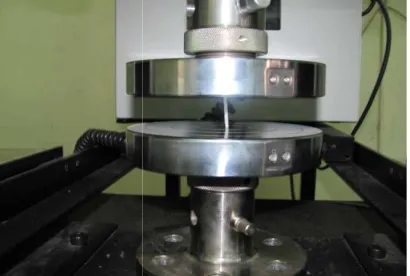
Universal testing machine (fig 13)
Manufactured by Llyods company, England (Model INSTRON
3382) to test the Flexural strength and compressive strength samples.
2.
Knoops hardness tester (fig 17)
Model 420 MVD Walpert Wilson Instrument, to test the
samples for microhardness.
3.
Spectrophotometer (fig 19)
Minolta CM 3600d-Japan ,to test the samples for color analysis.
4.
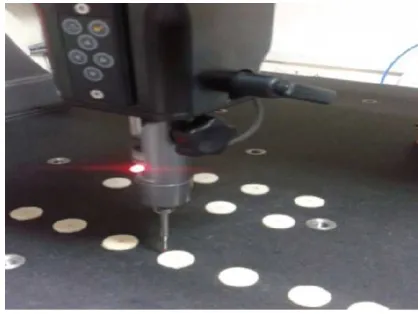
Coordinate measuring machine (fig 21)
42 FABRICATION OF SPECIMENS
GROUP 1(Light cure-Revotek LC)
SPECIMEN A
GROUP 2 (Self cure-Protemp4) [Size 25×2×2 mm] GROUP 3 (Dual cure-Tempspan)GROUP 1 (Light cure-Revotek LC)
SPECIMEN B
GROUP 2 (Self cure-Protemp4) [Size 20 mm dia GROUP 3 (Dual cure-Tempspan) circle, 2mm thick]
GROUP 1 (Light cure-Revotek LC)
SPECIMEN C
GROUP 2 (Self cure-Protemp 4) [Size 20mm dia circle GROUP 3 (Dual cure-Tempspan) with Vshaped notchesat 4 corners]
COMPARING FLEXURAL AND COMPRESSIVE TEST
COMPARING MICROHARDNESS AND COLOUR STABILITY TEST
COMPARING
43
FABRICATION OF SPECIMEN A- Used for calculating flexural and
compressive strength. Specimen A size was standardized with
25mm x 2mm x
2mm (American national Standards Institute / American Dental Association
specification no 27). (Fig 2).The specimens were fabricated for each material
with use of stainless steel mould, which was Laser cut for the above
mentioned dimension, sandwiched between 2 glass slabs. A weight of 2.5 kg
was applied.
According to the above mentioned standardization three different
materials were used to form three groups containing 10 samples each.
Specimen A Group 1 Light cure material – REVOTEK LC
Group 2 Self cure material – PROTEMP 4
Group 3 Dual cure material – TEMPSPAN
FABRICATION OF SPECIMEN B- Used for calculating colour stability
and microhardness. Specimen B size was standardized with
20mm diameter
cicles, 2mm thickness.(fig 4). The specimens were fabricated for each
material with use of this stainless steel mould . The mould was placed on top
of a glass slab. Vaseline was applied to the mould and onto the glass slab for
easy separation of the specimen from the mould. The materials were mixed
according to the manufacturers recommendations and loaded into the mould.
Another glass slab with a plastic matrix was later placed on top of the mould.
Specimen B Group 1 Light cure material – REVOTEK LC
Group 2 Self cure material – PROTEMP 4
44
FABRICAT ION OF SPECIMEN C- Used for calculating polymerization
shrinkage. Specimen C were standardized with stainless steel plate 2mm in thickness. Six circles of 20mm diameter were machined to form the mold space. V shaped notches with a 2mm diameter at open end of V were made at 4 corners of the circles to help us in measuring the shrinkage in 2 dimensions (fig 6). The specimens were fabricated for each material with use of this stainless steel mould .The mould was placed on top of a glass slab. Vaseline was applied to the mould and onto the glass slab for easy separation of the specimen from the mould. The materials were mixed according to the manufacturers recommendations and loaded into the mould. Another glass slab with a plastic matrix was later placed on top of the mould.
Specimen C Group 1 Light cure material – REVOTEK LC
Group 2 Self cure material – PROTEMP 4
45
METHODOLOGY
MEASURING FLEXURAL STRENGTH
All 3 group materials with 10 samples each of specimen A (total 30 samples) were fabricated to undergo flexural strength test using an Universal testing machine. The specimens were grossly trimmed using tungsten carbide bur and then polished with sandpaper and diamond abrasive polishing paste. After this the specimens were soaked in artificial saliva at 37˚C for 10 days.
Later all specimens were placed on top of the platform of the Universal Testing Machine (INSTRON, MODEL NO 3382, Lloyds’, England) to undergo a 3 point bend test. The width of the 2 supporting pins, were 2mm in diameter and the third pin was also 2 mm in diameter. The pins supporting the specimen were placed at a distance of 10mm support separation. A load of 10 kN load cell at a crosshead speed of 0.75mm/min was applied. The force at fracture was recorded in Newton’s and calculated in MPa with the use of testing machine software. Analysis of variance was applied to the data, and multiple comparisons were made with Duncan’s multiple range test and paired t tests.
MEASURING COMPRESSIVE STRENGTH
46
The sample was placed on a flat platform and another flat metal plate attached to the machines loading cell was kept in such a way that it just touched the specimen without applying any amount of force on it. A load of 10 kN load cell at a crosshead speed of 0.75mm/min was applied. The force the sample could withstand till the start of deformation was recorded in Newton’s and calculated in MPa with the use of testing machine software.Analysis of variance was applied to the data, and multiple comparisons were made with Duncan’s multiple range test and paired t tests.
MEASURING MICROHARDNESS
All 3 group materials with 10 samples each of specimen B (total 30 samples) were fabricated to undergo microhardness testing using an Knoop hardness tester. The specimens were grossly trimmed using tungsten carbide bur and then polished with sandpaper and diamond abrasive polishing paste.
The specimens were later stored in artificial saliva solution which was renewed every other day. Baseline Knoop Hardness (KHN) was measured 24 hours after fabrication with a microhardness tester, (Model 420 MVD Walpert Wilson Instrument)
The specimen was placed on the platform of the tester and a 10gm indenter load was applied. The measurements were automatically calculated by the tester. Three baseline microhardness measurements were obtained from each specimen. Knoop hardness was again measured after 10 days.
47 EVALUATING COLOUR STABILITY
All 3 group materials with 10 samples each (total 30 samples) of specimen B were fabricated to undergo evaluation for colour stability using Spectrophotometer. The specimens were grossly trimmed using tungsten carbide bur and then polished with sandpaper and diamond abrasive polishing paste.
Preparation of Staining Solution
The staining solution was prepared in the following concentrations Coffee Nescafe, New Delhi, India): For preparation of coffee solution 2.8g of coffee was weighed in an electronic weighing machine and added to 150ml of boiling distilled water.
Immersion of Specimens in Staining Solution
To evaluate the color stability in coffee solution, 10 specimens of each group were immersed in coffee solution at 37°C. Color measurements were made before immersion (To) (i.e. the baseline measurements) 7 days (T7), and 10 days (T10) after immersion. The solution was changed every two days. The specimens were rinsed with distilled water for five minutes and blotted dry with tissue paper before color measurement. The following equation was used to measure colour stability,
∆ E= (∆ L*² + a*² + b*² ) ½
Where ∆ L*, ∆ a*, ∆ b* are the differences in L*, a* and b* values before
48
shade, a* represents the amount of red-green color and b* represents the amount of yellow-blue color. Absolute color measurements are made in L*, a*, b* coordinates. For baseline color measurement ,each specimen was placed on the measuring head of spectrophotometer and covered with the black cover.
Before each measurement session the spectrophotometer was calibrated according to manufacturer recommendations by using the supplied white calibration standard. The spectrophotometer automatically calculated the mean color measurement of 10 specimens of each material. This measurement was taken as the baseline measurement for the corresponding material to evaluate the color change after dipping in coffee solution.The mean and standard deviation estimated from the specimens for each subgroup was statistically analyzed.
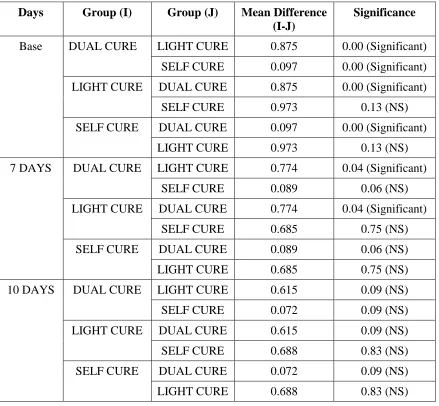
Mean values were compared by one-way analysis of variance (ANOVA). Multiple range test by Tukey-HSD procedure was employed to identify the significant groups at 5% level.
MEASURING POLYMERISATION SHRINKAGE
All 3 group materials with 10 samples each of specimen C (total 30 samples) were fabricated to undergo evaluation for polymerization shrinkage.The specimens were grossly trimmed using tungsten carbide bur and then polished with sandpaper and diamond abrasive polishing paste.
49
50
Fig 1-Light cure material
Fig 3-Dual cure material
Fig 5- Diamond polishing paste
51
Light cure material- REVOTEK LC Fig 2-Self cure material
Dual cure material-TEMPSPAN Fig 4-Dispensor Gun
Diamond polishing paste Fig 6-Artifical salivary solution Self cure material-PROTEMP
Dispensor Gun
Fig 7- Stainless steel mold for Flexural strength and Compressive strength
[image:52.595.123.324.78.232.2]specimens
[image:52.595.127.321.301.458.2]Fig 9- Stainless steel mold for Colour stability specimens
Fig 11- Stainless steel mold for Polymerisation shrinkage specimens
52
Stainless steel mold for Flexural strength and Compressive strength
specimens
Fig 8- Specimen A samples
Stainless steel mold for stability specimens
Fig 10-Specimen B samples
Stainless steel mold for
Polymerisation shrinkage specimens Fig 12 – Specimen C sample
Specimen A samples
Specimen B samples
[image:52.595.364.551.510.662.2]Fig 13–Universal testing machine
Fig 15–Sample under
Fig 17-Knoops hardness tester
420 MVD Walpert Wilson Instrument)
53
Universal testing machine-Instron Fig 14 –Sample on Instron platform
Sample under flexural load Fig 16–Sample under compressive load
Knoops hardness tester – (Model
420 MVD Walpert Wilson Instrument) Fig 18-Sample being analysed Sample on Instron platform
Sample under compressive load
[image:53.595.124.328.273.415.2] [image:53.595.359.564.275.413.2] [image:53.595.363.556.475.614.2] [image:53.595.124.330.477.614.2]54
[image:54.595.93.315.89.233.2]Fig 19-–Spectrophotometer unit Fig 20 – sample evaluation
Fig 21- Coordinate measuring machine – TESA Micro Hite 3D
Fig 22-X,Y,Z coordinates of Coordinate Measuring Machine
[image:54.595.118.286.278.445.2] [image:54.595.324.534.289.444.2] [image:54.595.206.415.512.669.2]55
56
FLEXURAL- READINGS
Specimen A with all 3 group of ten samples each (total 30 samples) were subjected to flexural strength testing using universal testing machine. The readings are tabulated as follows
SPECIMEN A GROUP 1 GROUP 2 GROUP 3 SAMPLES Light cure Self cure Dual cure 1 26.19137 121.9501 68.82778 2 21.57911 129.0546 77.96288 3 28.50491 135.2219 65.31237 4 25.56706 127.0401 70.85462 5 33.29041 106.2244 75.67683 6 22.70566 132.0921 68.4831 7 35.62076 149.0438 71.8735 8 37.05691 158.2091 78.2071 9 25.84362 132.4769 54.7403 10 21.57911 129.0546 77.96288
COLOUR GRAPHIC REPRESENTATION OF THE MEAN OF THE
FLEXURAL STRENGTH VALUE CHANGES OF 3 GROUPS AT
DIFFERENT TIME INTERVAL MEASUREMENTS
28.48
132.37
70.22
0 50 100 150 200
Light Cure Self Cure Dual Cure
Flexural
57
COMPRESSIVE STRENGTH
Specimen A with all 3 group of ten samples each (total 30 samples) were subjected to compressive strength testing using universal testing machine. The readings are tabulated as follows
SPECIMEN A GROUP 1 GROUP 2 GROUP 3 SAMPLES Light cure Self cure Dual cure
1 19.1771 24.11673 24.75511 2 8.50726 24.53717 17.15621 3 16.04461 36.62242 27.38691 4 9.34074 13.97753 20.20485 5 13.60918 29.74461 13.34171 6 14.18653 15.1197 20.77218 7 9.15516 28.19418 25.36552 8 10.71157 16.34115 24.55018 9 12.40925 33.11136 27.62508 10 11.72572 31.4576 13.95376
COLOUR GRAPHIC REPRESENTATION OF THE MEAN OF THE
COMPRESSIVE STRENGTH VALUE CHANGES OF 3 GROUPS AT
DIFFERENT TIME INTERVAL MEASUREMENTS
12.49 25.32 23.51 0 5 10 15 20 25 30
Light Cure Self Cure Dual Cure
Compressive Strength
58
MICRO HARDNESS READINGS
Specimen B with all 3 group of ten samples each (total 30 samples) were subjected to micro hardness testing using knoop hardness tester. The readings are tabulated as follows
SPECIMEN B 24 hours
10th day Group 1
Light cure
Sample 1 5.1 5.3 Sample 2 5.3 5.6 Sample 3 5.5 5.6 Sample 4 5.2 5.5 Sample 5 5.4 5.2 Sample 6 5.8 5.4 Sample 7 5.6 5.4 Sample 8 5.6 5.8 Sample 9 5.5 5.6 Sample 10 5.4 5.8
SPECIMEN B 24 hours
10th day Group 2
Selfcure
Sample 1 9.1 9.4 Sample 2 9.2 9.6 Sample 3 9.7 9.5 Sample 4 9.6 8.7 Sample 5 9.5 8.9 Sample 6 8.7 9.1 Sample 7 8.7 9.7 Sample 8 8.9 9.6 Sample 9 9.1 9.5 Sample 10 9.1 8.9
SPECIMEN B 24 hours
10th day Group 3
Dual cure
59
COLOUR GRAPHIC REPRESENTATION OF THE MEAN OF THE
MICROHARDNESS VALUE CHANGES OF 3 GROUPS AT DIFFERENT
TIME INTERVAL MEASUREMENTS
5.44
9.16
5.89 5.52
9.29
5.98
0 1 2 3 4 5 6 7 8 9 10
1st Day 10th Day
60
COLOUR STABILITY
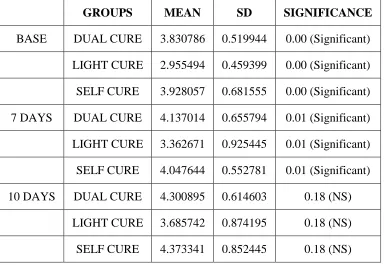
Specimen B with all 3 group of ten samples each ( total 30 samples) were subjected to colour analysis using spectrophotometer immediately after sample fabrication. The same 30 samples were subjected to colour analysis after 7 days and after 10 days. The readings are tabulated as follows
Samples
Base Base Base 7 days 7 days 7 days 10 days 10 days 10 days
Dual Cure
Light
cure Self cure
Dual Cure
Light
cure Self cure
Dual Cure
Light
cure Self cure
61 Specimen B with all 3 group of ten samples each (total 30 samples) were subjected to colour analysis using spectrophotometer
BASE – LIGHT CURE
Samples L a b E
1 2.14 -1.87 1.57 3.246752 2 2.59 -1.84 1.68 3.593898 3 2.88 -1.81 1.25 3.623948 4 2.09 -1.39 1.01 2.705605 5 2.37 -1.48 0.89 2.932473 6 2.77 -1.5 1.01 3.308021 7 1.54 -1.58 1.25 2.535843 8 1.87 -1.52 1.22 2.701055 9 1.65 -1.56 1.21 2.572975 10 1.2 -1.58 1.23 2.334374
7 DAYS – LIGHT CURE
Samples L a b E
1 2.63 -0.32 2.59 3.705051 2 0.6 -0.33 3.05 3.125924 3 1.17 0.08 2.18 2.475419 4 0.81 -0.16 1.16 1.423833 5 3.34 -0.37 2.72 4.323297 6 2.97 -0.49 3.06 4.292389 7 2.83 -0.89 2.89 4.14163 8 0.99 -0.04 3.1 3.254489 9 2.57 -0.54 1.25 2.908436 10 2.94 -0.55 2.62 3.976242
10 DAYS – LIGHT CURE
Samples L a b E
62
BASE – SELF CURE
Samples L a b E
1 2.82 -0.09 3.55 4.534644 2 2.57 -0.3 2.48 3.584034 3 2.46 -0.45 2.36 3.438561 4 1.53 -0.063 1.91 2.448054 5 2.7 -2.51 2.07 4.227884 6 2.54 -2.01 2.8 4.281553 7 2.57 -2.53 2.9 4.627721 8 2.16 -0.51 3.12 3.828851 9 0.68 -2.38 3.91 4.627624 10 1.12 -1.8 3.01 3.681644
7 DAYS –SELF CURE
Samples L a b E
1 3.12 -1.67 3.5 4.977278 2 1.5 -1.67 2.57 3.412301 3 1.91 -1.97 2.68 3.835544 4 1.01 -2.12 2.57 3.481293 5 1.12 -2.51 2.68 3.838867 6 2.36 -2.01 2.25 3.830431 7 3.87 -2.53 2.01 5.041617 8 3.52 -0.51 1.91 4.037152 9 2.12 -1.68 2.78 3.878814 10 2.5 -2.16 2.5 4.143139
10 DAYS –SELF CURE
Samples L a b E
63
BASE – DUAL CURE
Samples L a b E
1 2.73 1.57 1.44 3.46286 2 3.28 1.4 2.3 4.243631 3 2.01 1.59 1.54 2.98995 4 2.9 1.66 1.81 3.800224 5 3.01 1.69 1.97 3.974557 6 3.85 1.48 1.8 4.500322 7 2.29 1.57 2.1 3.481235 8 2.06 1.23 2.6 3.537867 9 3.48 1.35 2.81 4.672152 10 2.31 1.48 2.4 3.645065
7 DAYS – DUAL CURE
Samples L a b E
1 3.94 -0.63 3.02 5.004088 2 4 -0.71 2.09 4.56861 3 2.81 -0.09 2.1 3.509159 4 3 -0.3 2.37 3.834958 5 4.5 -0.45 2.2 5.029165 6 3.94 -0.063 2.12 4.474591 7 3.91 -0.89 1.01 4.135251 8 1.06 -0.71 2.65 2.941122 9 3.12 -0.61 2.12 3.821112 10 3.37 -0.63 2.16 4.052086
10 DAYS – DUAL CURE
Samples L a b E
64
COLOUR GRAPHIC REPRESENTATION OF THE MEAN OF THE
COLOUR CHANGES OF 3 GROUP DIFFERENT TIME INTERVAL
MEASUREMENTS
3.83
2.96
3.93 4.14
3.36
4.05 4.30
3.69
4.37
0.00 0.50 1.00 1.50 2.00 2.50 3.00 3.50 4.00 4.50 5.00
Dual Cure Light Cure Self Cure
65
POLYMERISATION SHRINKAGE
Specimen c with all 3 group of ten samples each (total 30 samples) were subjected to evaluation of polymerization shrinkage using coordinate measuring machine. Readings are tabulated as follows,
VOLUME OF SPECIMEN –
LIGHT CURE (GROUP 1)
Samples 5 mins 10 mins 120 mins
1 724.6436 628.1361 622.8797 2 713.4286 624.4176 618.3414 3 721.6 653.7143 653.3485 4 717.0024 659.6539 651.8286 5 721.2979 688.7918 686.7874 6 722.2286 569.5222 617.893 7 722.4853 692.6463 669.1143 8 715.5783 715.3143 693.183 9 725.9171 681.4201 681.4201 10 713.8844 662.466 661.8629
DELTA V –
LIGHT CURE (GROUP 1)
Samples 5 mins 10 mins 120 mins
1 -0.0005 13.3175 14.04287 2 1.547172 13.83065 14.66916 3 0.419519 9.787717 9.838198 4 1.053991 8.968052 10.04794 5 0.461213 4.947039 5.223636 6 0.332776 21.40619 14.73104 7 0.297346 4.415118 7.662524 8 1.250507 1.286944 4.341055 9 -0.17624 5.964332 5.964332 10 1.484272 8.579988 8.66321
VOLUME OF SPECIMEN –
SELF CURE (GROUP 2)
Samples 5 mins 10 mins 120 mins
1 724.6436 653.1098 629.2002 2 685.1639 658.6807 658.0215 3 678.1594 661.3178 659.3284 4 703.753 678.8571 678.5429 5 691.9976 655.8683 652.1038 6 723.9238 657.6522 652.7186 7 727.0481 681.0571 677.5001 8 715.125 668.6629 653.4165 9 685.1639 656.2606 622.7383 10 704.5854 645.9489 625.7241
DELTA V –
SELF CURE (GROUP 2)
Samples 5 mins 10 mins 120 mins
66 VOLUME OF SPECIMEN –
DUAL CURE (GROUP 3)
5 mins 10 mins 120 mins
724.6436 690.1714 688.2857 722.7333 684.4579 684.4579 731.0113 653.7143 653.7143 716.3656 706.6242 694.5714 730.1949 688.4158 687.7891 713.4286 712.0024 689.7327 722.4853 675.686 672.7185 699.6907 695.1858 687.5976 725.9171 687.9758 687.3503 713.8844 676.4063 670.8413
DELTA V –
DUAL CURE (GROUP 3)
5 mins 10 mins 120 mins
-0.0005 4.756648 5.016875 0.263126 5.545114 5.545114 -0.87923 9.787717 9.787717 1.141865 2.486178 4.14945
-0.76658 4.998922 5.085405 1.547172 1.743979 4.817185 0.297346 6.755632 7.165143 3.442992 4.06467 5.111835 -0.17624 5.05965 5.14596 1.484272 6.656227 7.424199
COLOUR GRAPHIC REPRESENTATION OF THE MEAN OF THE
POLYMERISATION SHRINKAGE VALUE CHANGES OF 3 GROUPS AT
DIFFERENT TIME INTERVAL MEASUREMENTS
2.85 8.68 10.17 0.67 9.25 9.52 0.64 5.19 5.92 0.00 2.00 4.00 6.00 8.00 10.00 12.00
Self Cure Dual Cure Light Cure
67
STATISTICAL ANALYSIS
68
MATERIAL GROUPS
Group 1 Light cure-Revotek
Group 2 Self cure-Protemp
Group 3 Dual cure-Tempspan
ANALYSIS FOR FLEXURAL STRENGTH
In this study the Flexural strength values of provisional composite
restorative materials were calculated at 10 days after immersing in artificial
saliva using a Universal testing machine –Manufactured by Llyods company,
England (Model INSTRON 3382).The mean, standard deviation and test of
significance of mean values of the three materials were tabulated and
69
Mean, Standard Deviation and Test of significance of mean changes
between groups I, II and III at 10
th dayof testing
Students paired t-test was used to calculate the p-value
Sample Mean S.D. p value
LC 28.48 5.58 0.00 (Sig)
SC 132.37 14.94 0.00 (Sig)
DC 70.22 7.29 0.00 (Sig)
Using ANOVA there is significant difference among the groups at p<0.001.
GROUP 1 Light cure-Revotek- The mean and standard deviation is 28.48±5.58
which is statistically significant at p<0.001.
GROUP 2 Self cure-Protemp- The mean and standard deviation is 132.37±14.94
which is statistically significant p<0.001.
GROUP 3 Dual cure-Tempspan - The mean and standard deviation is 70.22±7.29
70
FLEXURAL STRENGTH-POST HOC TEST FOR MULTIPLE
COMPARISON BY TUKEY HSD METHOD
Group (I) Group (J) Mean Difference (I-J) Significance
SELF CURE LIGHT CURE 137.88 0.00 (Significant) DUAL CURE 68.81 0.00 (Significant) LIGHT CURE SELF CURE -137.88 0.00 (Significant) DUAL CURE 69.07 0.00 (Significant) DUAL CURE SELF CURE -68.81 0.00 (Significant) LIGHT CURE -69.07 0.00 (Significant)
Using post hoc multiple comparison,Tukey HSD method, we found significant difference between Protemp, Revotek LC and Tempspan at p < 0.001.
Group 1- Multiple comparisons of flexural strength were made, Self cure- Protemp
showed statistically significant difference in values from Revotek LC and Dual cure Tempspan at p < 0.001.
Group 2- Multiple comparisons of flexural strength were made, Light cure- Revotek
showed statistically significant difference in values from Self cure- Protemp and dual cure Tempspan at p < 0.001.
Group 3- Multiple comparisons of flexural strength were made, Dual cure
71
ANALYSIS for Compressive strength
In this study the Compressive strength values of provisional composite
restorative material were calculated at 10 days after immersing in artificial
saliva using a Universal testing machine –Manufactured by Llyods
company, England (Model INSTRON 3382)
The mean, standard deviation and test of significance of mean values