1
Using technology for student
feedback: Lecturer perspectives
Thesis submitted in accordance with the requirements of
the University of Liverpool for the degree of Doctor of
Education by Lydia Jane Arnold
2
Acknowledgements
Thanks are due to my family, Adrian, Spencer and Jacob, who have offered unconditional and immeasurable support, and who have made significant sacrifices for my doctoral studies.
Thanks to friends and wider family for patiently tolerating my absence and frequent periods of half presence, for extending hospitality and asking for nothing by return, and for all practical assistance.
Thanks to Ian Willis and Kathleen Kelm for mentoring and motivating me in the first phase of this journey. Thanks to my supervisor Janet Strivens for encouragement, feedback and helpful dialogue.
3
ABSTRACT
The purpose of this research is to investigate lecturers’ experiences of choosing and using technology for feedback in the context of UK higher
education. The study takes a critical realist perspective and utilises a narrative interview methodology. Analysis is undertaken using two complementary approaches. First a connecting strategy explores the themes within each participant’s account, and then a categorising strategy looks at similarities and differences between cases. As a product of the analysis, portraits are created to encapsulate each individual lecturer’s experience. The findings provide a thick description of the deliberations undertaken by lecturers in the formation of feedback practice and in the associated technology selection. Participants come from a range of discipline areas and from five different institutions. They use technologies that incorporate text, audio and audio-visual media. The findings demonstrate that practice is shaped by underlying beliefs about how students use feedback, differing conceptions of academic identity,
perspectives of students’ technology expectations, the search for efficiencies, changes in the types of teaching undertaken, professional history, and
technological confidence. Individual lecturers are shown to exercise different reflective modes and they mediate the influences on practice in the context of personal priorities. Social networks are shown to be very important in framing feedback and technology related concerns. The practice landscape is shown to be contentious as lecturers hold views about each other’s feedback
diligence and technology use. Engagement with technology impacted on lecturers’ perceptions of the quality of feedback being produced. It also
4
INTRODUCTION ... 7
CHAPTER 1 RATIONALE: PRACTICE BASED MOTIVATION ... 7
RATIONALE: CONTRIBUTION TO KNOWLEDGE ... 9
PURPOSE ... 9
THESIS STRUCTURE ... 10
TERMINOLOGY ... 11
LITERATURE REVIEW ... 12
CHAPTER 2 WHAT IS FEEDBACK? ... 12
THE FEEDBACK CHALLENGE ... 16
TECHNOLOGY AS PART OF THE SOLUTION ... 19
LECTURERS, FEEDBACK AND TECHNOLOGY ... 24
GENERATING THE RESEARCH QUESTIONS ... 35
THEORETICAL FOUNDATIONS ... 37
CHAPTER 3 ONTOLOGICAL FOUNDATIONS ... 37
KEY FEATURES OF CRITICAL REALISM ... 38
ARCHER AND CRITICAL REALISM ... 42
THE INTERNAL CONVERSATION ... 44
ARCHER’S THEORY AND THE RESEARCH DESIGN ... 46
RE-FRAMING THE RESEARCH QUESTIONS ... 47
RESEARCH DESIGN ... 49
CHAPTER 4 NARRATIVE INQUIRY: FEATURES, RATIONALE AND CHALLENGES ... 49
INTERVIEW ... 50
SAMPLING AND DESIGN ... 52
ANALYSIS ... 55
BLENDING THE TWO STRANDS OF ANALYSIS ... 60
ETHICAL CONSIDERATIONS ... 61
SUMMARY ... 62
FINDINGS: ROBSON UNIVERSITY ... 63
CHAPTER 5 INSTITUTIONAL CONTEXT AND PARTICIPANT INFORMATION ... 64
MOTIVATIONS, BELIEFS AND CONCERNS OF LECTURERS... 75
INITIAL MOTIVATION ... 75
FEEDBACK ORIENTATION ... 79
TECHNOLOGY ORIENTATION ... 89
THE UNDERLYING INFLUENCE OF BIOGRAPHY ... 95
THE COMPLEXITY OF EFFICIENCY... 96
NEGOTIATING THE TECHNOLOGY SELECTION ... 99
THE INSTITUTIONAL LANDSCAPE ... 106
SOCIO-CULTURAL PROCESSES INFLUENCING PRACTICE ... 106
IMPACT ... 124
SUMMARY ... 127
FINDINGS: EXTERNAL CASES ... 135
CHAPTER 6 THE PARTICIPANTS ... 135
MOTIVATIONS, BELIEFS AND CONCERNS OF LECTURERS... 140
FEEDBACK ORIENTATION ... 140
TECHNOLOGY SELECTION: A NEGOTIATED PROCESS ... 144
THE INSTITUTIONAL LANDSCAPE ... 148
QUALITY MANAGEMENT AND THE ROLE OF GREY SPACE ... 149
WORKLOAD PRESSURES ... 151
THE ROLE OF THE COURSE TEAM ... 152
PROFESSIONAL DEVELOPMENT ... 154
5
SUMMARY ... 155
CONCLUSION AND RECOMMENDATIONS ... 157
CHAPTER 7 RESEARCH SUMMARY ... 157
ANSWERING THE RESEARCH QUESTIONS ... 158
LIMITATIONS OF THE STUDY ... 169
RECOMMENDATIONS FOR PRACTICE ... 170
REFERENCES ... 176
APPENDIX 1 INTERVIEW SCHEDULES ... 200
INTERVIEW SCHEDULE FOR HOME INSTITUTION PARTICIPANTS ... 200
INTERVIEW SCHEDULE FOR LECTURER’S WHO ARE NOT USING TECHNOLOGY IN FEEDBACK ... 202
INTERVIEW SCHEDULE FOR EXTERNAL PARTICIPANTS ... 203
APPENDIX 2 SUMMARY POINTS UNDERPINNING THE CONNECTING ANALYSIS (SNAPSHOTS OF FORMATIVE NOTES) ... 204
APPENDIX 3 NARRATIVE PORTRAIT EXAMPLE: RUTH’S STORY... 207
6
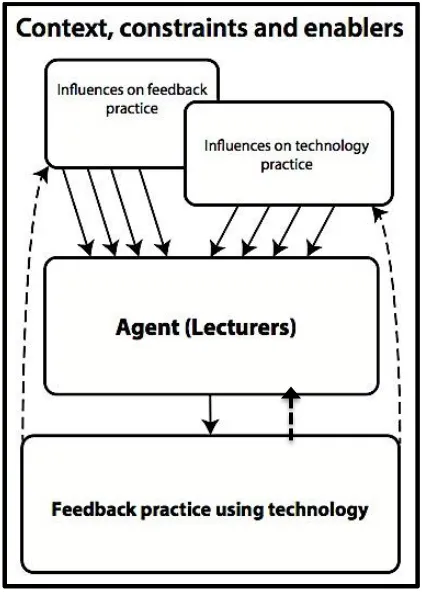
Figure 3.1 Faculty as agent in the digital feedback experience ... 47
Figure 5.1 The formation of feedback practice through technology at Robson University ... 132
Table 2.1 Benefits and challenges of different feedback technologies... 20
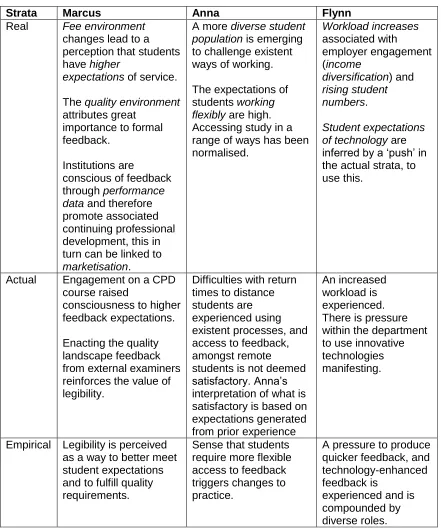
Table 3.1 Stratification in relation to lecturer engagement with technology enhanced feedback. ... 40
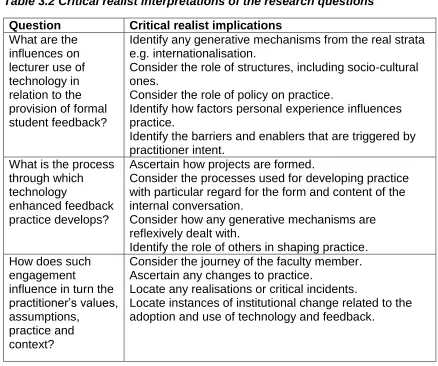
Table 3.2 Critical realist interpretations of the research questions ... 48
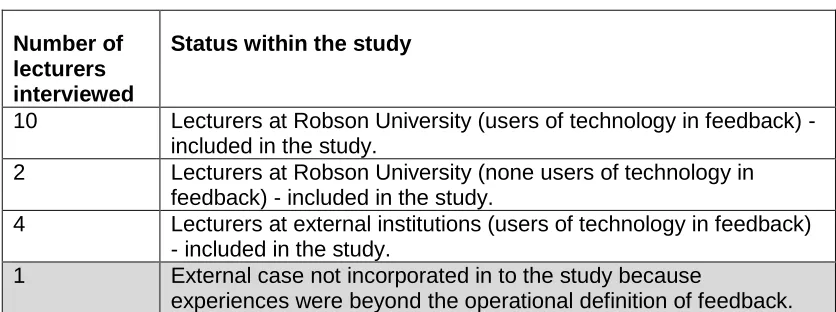
Table 4.1 Interviewees reasons for inclusion or exclusion from the study ... 55
Table 4.2 The role of the narratives ... 58
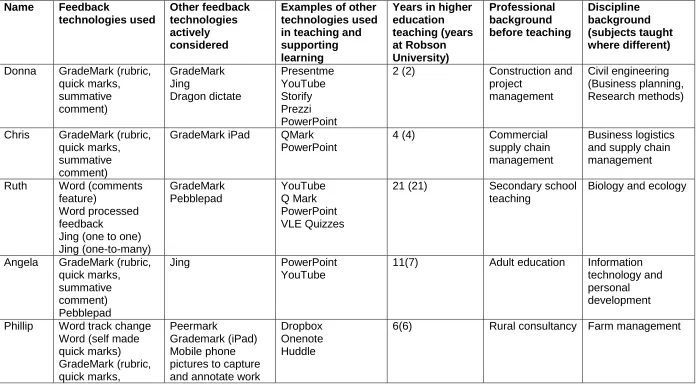
Table 5.1 Technologies used by participants for feedback in the research .... 66
Table 5.2 A biographical summary of research participants ... 69
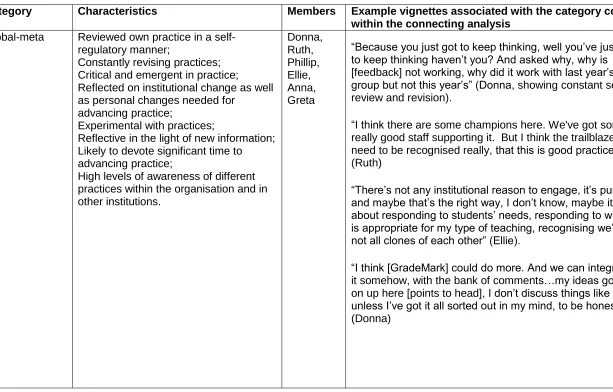
Table 5.3 Types of reflection evident in the research participants ... 73
Table 5.4 The origins of trigger factors for three lecturers in the study ... 78
Table 5.5 Feedback beliefs of lecturers at Robson University ... 86
Table 5.6 Technology orientations of lecturers at Robson University ... 90
Table 5.7 Conceptions of efficiency ... 98
Table 5.8 Benefits and challenges of different feedback technologies as perceived by Robson University lecturers ... 104
Table 5.9 A summary of lecturers responses to quality challenges ... 119
Table 5.10 Archer’s (2003) three-step mediation process and how it relates to the development of feedback practice at Robson University ... 133
Table 6.1 A biographical summary of research participants ... 136
Table 6.2 Technology Orientations Summary ... 144
Table 6.3 Institutional policy and its relationship to summative assessment practices ... 151
Table 7.1 A summary of influences on lecturers’ choice and use of technology in feedback ... 161
Table 7.2 The relationship between influences on technology use in higher education identified in literature and those identified in the research .... 164
Box 2.1 A summary of Tang and Harrison’s (2011) categories of feedback approach ... 27
Box 2.2 Geoghagen’s (1994) barriers to technology diffusion in higher education ... 31
7
INTRODUCTION
CHAPTER 1
Feedback is widely considered to be a powerful learning mechanism (Black & Wiliam, 1998; Hattie & Timperley, 2007; Price, Handley, Millar, & O'Donovan, 2010) as it helps students to assess their own performance and to make appropriate improvements. Nicol, Thomson and Breslin describe feedback as a “troublesome issue in higher education” (2014, p. 102). It is a constant source of concern for students, as well as for teachers and decision makers. Concern mainly focuses on two questions: How can we ensure that feedback is effective? And, how can we make sure that feedback is used? Individual teachers, and institutions of higher education, sometimes turn to technology to provide ‘better’ and quicker feedback on student assessments (see for
example: Bourgault, Mundy, & Joshua, 2013; Crook et al., 2012; Stannard, 2008). Research into this emerging practice is predominantly focused on the student experience; less is known about why and how individual teaching practitioners engage with technology for feedback. This study aims to address this point.
Rationale: Practice based motivation
I am an Educational Developer in a small specialist agri-food university, located in the UK, hereafter this will be referred to as Robson University. My work role includes academic staff development, teaching, managing
technology enhanced learning projects, curriculum development, and, promoting innovative pedagogy. Land (2001) identified that academic
developers serve the needs of different groups, through different means and with a differing degree of priority given to each. I identified with the managerial orientation to educational development, which prioritises serving the needs of the institution. I also have a tendency to act as an internal consultant to meet the needs of colleagues. A further theme within my work is the promotion of reflective practice. It is important to be explicit about these professional tendencies as they shape the concerns that give rise to this research.
8
Within Robson University, feedback has been a matter for cross-institutional attention by both the Students’ Union and by Senior Management.
Consequentially encouraging ‘good’ feedback practice has become a greater part of my own role in recent years. At a strategic level there has been a growing interest in exploring the potential that technology holds for this purpose (see HAU, 2015).The institution has a modest number of
practitioners who use different forms of technology for feedback; they use word processing tools, audiovisual media and specialist assessment
management facilities (notably the GradeMark feature of the Turnitin system). Amongst approximately 130 academic staff, it is estimated by the e-learning team at Robson University that around 20%1 are involved in giving feedback through technology.
With an institutional staff development culture that respects autonomy, the promotion of new pedagogic practices, including the use of technology in feedback, relies heavily on advocacy. In turn this requires a deep
understanding of the benefits and challenges of different tools and an
understanding of the nuances of the practice landscape. It is from this position that my personal motivation for this research began. I wanted to better
understand the practice with which I was increasingly involved. My aspiration to be better informed does not imply an uncritical acceptance of technology.
Through earlier research within my doctoral studies, I became more
empathetic to some of the challenges that teaching staff experienced when developing their practice. I recognised the contextual complexity in which practice was formed, as well as the emotional transitions that teachers undertook as practice changed. This research is guided by the search for knowledge but also by the potential to generate an appreciation of different perspectives. The idea that research can promote empathy is recognised in the concept of empathetic validity, which is “the potential of the research in its processes and outcomes to transform the emotional dispositions of people towards each other, such that more positive feelings are created between them” (Dadds, 2008 p. 208).
1
9
Rationale: Contribution to knowledge
Despite its pedagogic power, feedback remains an Achilles heel in student satisfaction across the higher education sector. Students repeatedly indicate lower levels of satisfaction with feedback that with any other aspect of their student experience (see HEFCE, 2013). At the same time, feedback is also a significant source of workload pressure for lecturers (Norton, Norton, & Sadler, 2012). Teaching staff increasingly face institutional pressure to improve student satisfaction with feedback (as reflected by Soosay, 2011). Despite the great importance of feedback, literature tends to focus on student rather than lecturer perspectives (Evans, 2013). If feedback is a partnership, as Nicol suggests that it is (2010), then the outlook of each partner should be understood for completeness. Particularly, if lecturers are to be effectively supported then more needs to be known about their experience and concerns.
A lack of explicit consideration of teacher perspectives is also recognisable in the literature relating to technology for feedback; research tends to focus on the benefits and limitations of particular technologies for students. This research seeks to make a direct contribution to addressing this gap by
exploring the experiences of lecturers who use technology in the provision of student feedback.
Purpose
The primary purpose of the study is to inform academic development practice and institutional decision-making in my own organisation and beyond. As higher education institutions consider how technology can assist the provision of feedback, there is limited evidence on which decisions can be made. More understanding of the reality of technology based feedback practices could inform the formulation of organisational approaches to this issue.
10
Thesis structure
The thesis is organised as an evolving journey. Chapter 2 begins by reviewing the concept of feedback and in so doing sets some parameters for the study. It then considers the true complexity of the feedback challenge faced within higher education, predominantly in the UK but with reference to other national contexts, and it explores what is specifically known about lecturer
perspectives on student feedback and technology use. The chapter reviews how tutors are currently employing technology to assist with feedback and it offers a fuller critique of the existing literature in this area. It concludes by recognising gaps in our knowledge of this area of practice and by articulating three research questions.
Chapter 3 articulates the theoretical framework for the research. It justifies the choice of a critical realist approach with respect to my own worldview and the nature of the research problem. Margret Archer’s (1995; 2003; 2007) work relating to the internal conversation and morphogenesis is presented as a bridge between the ‘bigger picture’ concepts of critical realism and the more focused research questions. Archer’s ideas are used to inform a framework which is generated to identify where the research should look for answers. Archer’s work is also cited in subsequent chapters to bring further clarity to aspects of lecturer experiences and interactions.
Chapter 4 outlines the research design. It justifies the use of a narrative interview method as a means to get to the heart of lecturers’ experiences and it explains the rationale for using both connecting and categorising strategies in the analysis. The chapter identifies some of the ethical dilemmas faced in the research execution and shows some of the tensions associated with researching one’s own workplace.
11
that causes and relationships can only be understood in context (Maxwell, 2012a).
Chapter 7 synthesises the main findings from the internal and external cases and draws recommendations for educational developers and for higher education institutions, as well as for further research. The focus of these recommendations fits with the stated aspirations of the research to influence personal and institutional practice as well as to open out the discourse.
Terminology
12
LITERATURE REVIEW
CHAPTER 2
This chapter presents a review of literature to inform the development of the research questions and to provide the backdrop for the discussion of findings. It introduces the sprawling concept of feedback in higher education and locates the type of feedback that will be considered within the study. The chapter then reports on widely experienced challenges in this area of academic practice and the idea that technology might help is considered. Given the limited literature relating specifically to feedback through
technology, the review focuses on two constituent areas: i) lecturer experiences and perceptions of feedback practices, and ii) lecturer
experiences and perceptions of learning technologies. A gap in the literature is highlighted in relation to lecturers’ experiences of generating feedback using digital tools, and in relation to lecturers’ experiences of giving feedback more broadly. The need for a wider constituency of lecturer voices in the literature around both technology and feedback is offered as an important factor in the rationale for the study. Areas where new research could make a contribution to knowledge are located with reference to gaps in the current discourse. The chapter concludes with the initial formulation of the research questions. These questions undergo a minor revision in chapter 3 when they are re-considered alongside the adopted epistemology.
What is feedback?
“There is no generally agreed definition of assessment, and few studies have systematically investigated the meaning of assessment feedback” (Evans, 2013 p.71). Feedback is central to learning and “at the heart of pedagogy” (Black & Wiliam, 1998 p. 16) yet it is a term that “does not have clarity of meaning” (Price et al., 2010 p. 278), instead meaning is largely assumed to be implicit (Scott, 2014). Given this opacity it is necessary to explore what is meant by the concept and to form an operational definition for the study.
13
(2007 p. 81) add that the source of the feedback information can include “teacher, peer, book, self, [and] experience”.
Ellery (2008) maintains that the primary purpose of feedback should be to bridge the gap between what is understood and what needs to be understood. This requires reference points to make clear the expectations of the
performance; these reference points may be culturally embedded in the academic community (Bitchener, Basturkmen, & East, 2010). Hounsell (2003 in Tang & Harrison, 2011) emphasises feedback as something that influences and accelerates learning, though Black & Wiliam (1998) stress that feedback can improve performance only in certain conditions, for example when
feedback is timed to give sufficient opportunity to implement improvements. Sadler (1998) noted that feedback can differ in its emphasis e.g. on accuracy or content, and in its communicative features e.g. its motivational tone.
Fernández-Toro, Truman, and Walker (2013) observed disciplinary variances; in their study, feedback in the context of language assessment emphasised the development of skills whilst in disciplines related to technology, feedback was more centred around content. Feedback can be corrective, as in righting grammar or a mathematical calculation, or it could be questioning, prompting the recipient to think deeper about an aspect of their performance. It might describe a performance or evaluate it (Sadler, 1998).
Hattie & Timperley (2007) recognise that feedback “is a “consequence” of action” – it is reactive. At the same time feedback is often imagined as a pro-active function that can improve a learner’s next steps. To recognise this future looking approach the term feed-forwards is sometimes used (e.g. Duncan, 2007; Tong, 2011; Vardi, 2013).
Feedback can be conceptualised as a continuing cycle rather than as a series of discrete events (Barker & Pinard, 2014; Beaumont, O'Doherty, & Shannon, 2011; Cramp, 2011). This cycle is inherently linked to the notion of a learning journey, as an individual can continually adjust and moderate their
14
latter incorporates more systematic and pre-planned approaches.
Feedback can be seen as an active two-way process (Black & Wiliam, 1998; Cartney, 2010; Cramp, 2011; Evans, 2013). Nicol (2010) claims that the quality of student engagement with feedback is possibly more significant to further learning than the quality of the actual feedback. Students may not always be prepared for this engagement as they may have had limited prior training on how to actually use feedback (Robinson, Pope, & Holyoak, 2013). While partnership is held up as the ideal, lecturers are sometimes skeptical that students are willing partners (this point is explored in more detail later in this chapter).
Feedback is an emotional business. It can stir an emotional response in the recipient (Cramp, 2011; Dowden et al., 2013; Harrison, Könings, Schuwirth, Wass, & Vleuten, 2014; Pekrun, Cusack, Murayama, Elliot, & Thomas, 2014; Poulos & Mahony, 2008) and in turn this can impact the recipient’s ability to engage productively with the message of the feedback (Boud & Falchikov, 2007). Feedback and emotion are undoubtedly intertwined but they remain under-researched (Hounsell, 2007; Pekrun et al., 2014). Higgins, Hartley and Skelton (2001) argue that feedback should be treated as a more holistic process that recognises the role of individual lecturer and student identity. They propose foregrounding the deeper values and emotions of the agents involved in the process. No literature pertaining to lecturer emotions was located.
15
fees; they were surprised that feedback was not one of the areas of changed expectation highlighted by students. The absence of ‘feedback’ amongst the student concerns must be viewed critically though, since Ramsden (2008) suggests that students tend to have limited perceptions of what to expect at university. Ramsden (2008, p.3) also warns that “there is a risk of creating a self-fulfilling prophecy” about the consumer mindset of students. It is clear that feedback is linked by some to fee concerns, however more research is
needed to understand this.
The national discourse around feedback in the UK is steeped in the language of rights and responsibilities. The QAA (2011) refer to student feedback
entitlements, while universities explicitly set out their own expectations of both staff and students in relation to feedback. Students’ expectations around feedback are being messaged strongly by their unions; pro-active campaigns for high quality feedback are occurring on university campuses across the UK (see for example NUS, 2011; NUS, n.d.). Scott (2014) posits that student expectations of feedback may be shaped by a generational mind-set, which is conditioned by internet-enabled instant responses on many aspects of life.
An operational definition of feedback
Fusing Black and Wiliam (1998) and Ellery’s (2008) definitions, feedback can be conceived as information on performance, which has the aim of generating improvement. While feedback is an on-going and barely separable function within learning and teaching, the practice based motivation for this study, explored in Chapter 1, places the primary concern of this inquiry with the type of feedback that is part of the formal assessment process. A formative or summative demarcation does not capture this, since some tutors might deliberately plan to give more formative and less summative feedback in support of a formal piece of assessment. Adopting Kahu’s (2008)
formal/informal boundary offers a helpful dividing line for this study; feedback that is in the moment shall not be considered, whereas feedback that is scheduled shall be. Additionally, the feedback within this study shall relate to a piece of formal assessment or a constituent component i.e. it must generate a contribution to the final outcome of a unit of work or module.
16
diet of UK higher education students is hugely varied and may incorporate tasks as varied as essays, presentations, web-folios, reports, portfolios, reflective diaries and posters. It is not known whether lecturers opt for the use of technology in some types of performance over others. Furthermore it is not known whether lecturers design their assessment with technology-based approaches to feedback in mind. Excluding one or another type of
performance, with the exception of examinations, would limit the study without a sound basis for doing so. Finally, this study shall focus on feedback from lecturers only, it will not cover self-review or peer feedback.
One of the limitations of this discussion is that it has not considered cultural differences in feedback. To do so is beyond the scope of this study, but it is important to acknowledge that conceptions of feedback are culturally rooted (Chen, May, Klenowski, & Kettle, 2014) and the range of views expressed within this review emerge only from an Anglophone perspective.
The feedback challenge
17
productive. Price et al. (ibid.) suggest that lecturers rarely step back and ask whether this incongruity has underlying causes.
Some procedural features of feedback are widely accepted as good practice. These include ensuring feedback is legible, timely, constructive, accessible and understandable (Ball, 2009; Bols & Wicklow, 2013; Kahu, 2008; Nicol, 2010; Scott, 2014). Nicol summarises a view which is dominant in the literature: “Feedback should be of sufficient quantity; timely; it should focus on learning not marks; it should be related to assessment criteria and be understandable, attended to and actually used by students to make improvements on their work” (2009 p. 337).
Despite how much we know about feedback, our ability to maximise its benefits remains a persistent challenge (Beaumont et al., 2011; Price et al., 2010). Students are consistently dissatisfied (Price, Carroll, O'Donovan, & Rust, 2011). Feedback is recurrently noted as the weakest area in students’ perceptions of their university experience (HEFCE, 2013) and the Quality Assurance Agency (QAA) review of institutional audits recognised feedback as being inconsistent and often insufficient (QAA, 2008). QAA also noted a gap between policy and practice on feedback within institutions (QAA, 2011), while individual institutional surveys have revealed feedback dissatisfaction amongst students (Hunter & Hill, 2011; Maggs, 2014). The UK’s students are not alone in experiencing a lack of satisfaction with feedback; this is a
problem for higher education across the globe (Hounsell, 2007; Hyland, 2013; Nicol, 2010).
18
particularly in the early part of a student’s journey (Cramp, 2011). Now “written feedback, which is essentially a monologue, is now having to carry much of the burden of teacher–student interaction” (Nicol, 2010 p. 503). Widespread expansion of student numbers has also limited the opportunity to personalise feedback, as lecturers simply don’t have time to offer customised feedback to their many students (Vardi, 2013).
Responses to the feedback challenge
Higher education institutions and individual teachers have taken action to both improve the quality of feedback commentary (see for example Ball, 2009) and to support students in their use of feedback (see for example Blair & McGinty, 2013; Cartney, 2010; Duncan, 2007; Parkin, Hepplestone, Holden, Irwin, & Thorpe, 2012). Perhaps as a consequence of such redoubled efforts, lecturers increasingly believe feedback to be high quality, despite the enduring student view to the contrary (Robinson, Pope, & Holyoak, 2013). However, it is important to be aware that initiatives in response to student discontent can simply “provide more of the same type of feedback [and can] lead to greater dissatisfaction” (Price et al., 2011, p. 482). Nicol, Thomson and Breslin (2014, p.103) describe how the sector’s efforts to enhance feedback through “well-meaning” interventions have been “disappointing” with an increase in workload but no impact on either learning or satisfaction. Price et al. (2013) recognise the futility of changes made to improve feedback, adding that the deep and interconnected nature of feedback requires a more holistic agenda for change.
re-19
imagine curriculum and assessment strategies. The JISC Viewpoints project (Sheppard, 2013) is an example of a recent intervention that sought to advocate meticulous and systematic planning of assessment and feedback within the context of the whole student journey.
Technology as part of the solution
This review now moves to consider how technology is currently being used in feedback. Lunt and Curren (2010) identify that the dominant hand-written feedback culture is no longer appropriate to cope with high numbers of students, adding that technology could be a powerful part of a teacher’s response to the feedback challenge. Tong (2011) describes his own confidence in the potential of technology for enabling feed-forward and for enabling known ‘good feedback’ principles to be fulfilled.
Principles and practice of digital feedback
Electronic forms of feedback are being utilised in different national contexts, examples can be found in the UK, Norway and Australia (see Debuse, Lawley, & Shibl, 2008; Mathisen, 2012; Peacock, Scott, Murray, & Morss, 2012). The use of technology in feedback is not new. Fitzgerald (2011) highlights examples of audio feedback from 2001, but overall universities have been slow to exploit this technology (Lunt & Curran, 2010).
Technologies that have existed for some time are still being regarded as novel in a feedback context (see Maggs, 2014; Parr, 2013).
Lumadue and Fish (2010) note that some media-rich technologies might trigger a paradigm shift in feedback, by creating efficiencies for teachers and a more engaging medium for students. However, in light of the earlier
discussion about the structural and complex nature of feedback, there is insufficient evidence within Lumadue and Fish’s work to show that
technologies alone hold the power to revolutionise the feedback landscape. Nevertheless, their enthusiastic portrayal of the untapped potential of
20
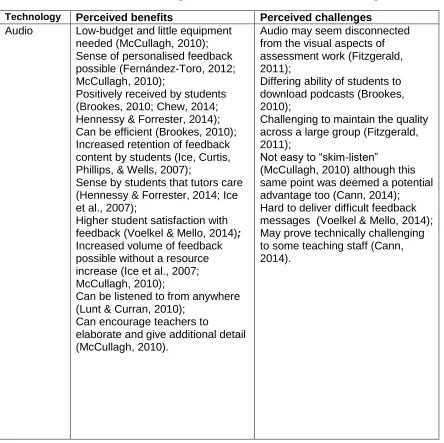
Literature reveals that lecturers engage with digital approaches to feedback in an effort to: create efficiencies (Debuse et al., 2008); raise the standard of feedback through, for example, increased clarity of meaning; and to add variety to the student’s feedback diet (Fitzgerald, 2011; Mathisen, 2012). The benefits and challenges of technology for use in feedback vary according to the technology employed and the circumstances in which they are used. The importance of context was evident in Fitzgerald’s (2011) study, which notes that producing high quality audio feedback in the context of large groups was especially challenging in terms of the time it took. Table 2.1 below exemplifies some advantages and disadvantages of different technology enabled
[image:20.595.84.528.319.762.2]feedback approaches.
Table 2.1 Benefits and challenges of different feedback technologies
Technology Perceived benefits Perceived challenges
Audio Low-budget and little equipment needed (McCullagh, 2010); Sense of personalised feedback possible (Fernández-Toro, 2012; McCullagh, 2010);
Positively received by students (Brookes, 2010; Chew, 2014; Hennessy & Forrester, 2014); Can be efficient (Brookes, 2010); Increased retention of feedback content by students (Ice, Curtis, Phillips, & Wells, 2007);
Sense by students that tutors care (Hennessy & Forrester, 2014; Ice et al., 2007);
Higher student satisfaction with feedback (Voelkel & Mello, 2014); Increased volume of feedback possible without a resource increase (Ice et al., 2007; McCullagh, 2010);
Can be listened to from anywhere (Lunt & Curran, 2010);
Can encourage teachers to
elaborate and give additional detail (McCullagh, 2010).
Audio may seem disconnected from the visual aspects of assessment work (Fitzgerald, 2011);
Differing ability of students to download podcasts (Brookes, 2010);
Challenging to maintain the quality across a large group (Fitzgerald, 2011);
Not easy to “skim-listen”
(McCullagh, 2010) although this same point was deemed a potential advantage too (Cann, 2014); Hard to deliver difficult feedback messages (Voelkel & Mello, 2014); May prove technically challenging to some teaching staff (Cann, 2014).
21 Audio visual Dual coding helps student
engagement (Mathisen, 2012); Efficient to create (Jones et al., 2012; Hope, 2011);
Allows supportive resources to be signposted and explained (Jones et al., 2012);
Engaging for students, bringing about deeper feedback
engagement (Hope, 2011)
Transmission based rather than dialogical (Jones et al., 2012); Can be time consuming for the tutor (Haxton & McGarvey, 2011)
Text based Legibility improvement; Efficient where pre-prepared comment banks are used (Buckley & Cowap, 2013; Heinrich & Milne, 2012);
When retained the opportunity for dialogue is greater – a permanent record can provide the basis for discussion (Parkin et al., 2012); Feedback volume may be
increased (Heinrich & Milne, 2012).
Concern for time spent on-screen (Maggs, 2014; Spencer, 2006); Rigid interfaces can act as a deterrent for tutors (Burrows & Shortis, 2011; Spencer, 2006) and students (Stone, 2014);
High cognitive load on markers (Johnson & Greatorex, 2008); Fails to encourage dialogue (Stone, 2014).
Rubrics Efficiencies in calculating grades and offering feedback (Atkinson & Siew, 2013; Nordrum, Evans, & Gustafsson, 2013);
Consistency of judgment and can be used to generate statistics about mark distribution (Atkinson & Siew, 2013; Nordrum et al., 2013).
Can be associated with low levels of personalisation;
Efficiencies can require significant set-up;
Favours lecturers who have existing criteria based marking (Atkinson & Siew, 2013; Nordrum et al., 2013).
Video Can be replayed to establish clarity; helps students absorb more feedback;
Reusable video clips allows for demonstrations as a correctional mechanism;
Tendency for a greater volume of feedback (Crook et al., 2012).
Can be time intensive to create and download;
Generic videos can feel impersonal (Crook et al., 2012).
The call for criticality and representation
22
Practitioner evaluation of small scale use of technology for feedback (for example: Brookes, 2010; Cann, 2014; Crook et al., 2012; Fitzgerald, 2011; Hennessy & Forrester, 2014; Haxton & McGarvey, 2011; Lunt & Curran, 2010; Voelkel & Mello, 2014; Watkins et al., 2014).
Evaluation of feedback technologies specifically for distance learners (Ice et al., 2007);
Evaluation of institutional adoption of assessment and feedback technologies (Ellis & Reynolds, 2013);
Comparisons of the student experience for different types of feedback (Bourgault et al., 2013; Chew, 2014).
The literature search for publications relating to lecturer use of technology in feedback included terms that related to “learning technology”, specific
technologies (e.g. “audio”, “screencast” with “feedback”), “assessment feedback”, “lecturer experiences of technology”, and “attitudes to feedback technology in higher education”. Moreover when it became apparent that a limited range of studies were available and that the findings had a bias towards practitioner studies, the search was broadened to actively seek out critical studies by using terms such as “feedback technology challenges” and “feedback technology critique”. The process of finding literature did not solely focus on tools, but on attitudes and experiences relating to both technology and feedback. Discussion within my own professional networks with other educational developers and higher education colleagues, who had an interest in feedback, provided an additional safeguard to ensure that my search for a wider range of literature was thorough. The dominance of practitioner studies about specific tools is therefore thought to reflect the balance of the discourse rather than a specific bias in the literature search process.
23
is important to avoid a distortion of the discourse, particularly to prevent both a conflation of the benefits of technology and a sense that particular ‘hi-tech’ practices may be more widespread than in reality. Moreover a failure to represent a wider group of lecturer experiences could be associated with
othering by absence, since Todorov (1984 cited in Krumer-Nevo and Sidi, 2012) associates othering with how much is known about a particular group.
As well as the gaps in literature that are significant on the grounds of
representation, there are also gaps based on the lack of critical voices about the technology use. Mathisen (2012) argues for a critical approach to
investigating technology use in feedback. He encourages us to take a step back from the technological optimism evident in much of the current research and to assess why technology is being used. Similarly Lunt and Curran (2010, p.755) note the risk of ‘hype’; they question whether a “halo effect” of new technology is causing disproportionate enthusiasm because it offers some relief to the persistent problem of feedback. There is a further danger of benefit conflation in the way that data for evaluative studies is collected; despite espousing positive views about technology within the context of research, teachers don’t always utilise them (Shelton, 2014).
Clapham (2012) recommends a more critical look at learning technology, particularly through a consideration of the reality of teacher experiences. Kregor et al. (2012) find frustration amongst lecturers who see the student centred philosophy of learning technology as being sometimes at their own expense; capturing these voices is especially important to gain a full and honest appraisal of this emerging area of practice.
Amongst the literature on technology for feedback, the experience of lecturers appears to be less well represented than the experience of students. There is a tendency to evaluate tools, rather than focusing on the more holistic
24
also Watkins et al. (2014) describe a change that occurs within lecturers when moving to technology based feedback approaches. Watkins et al. (ibid.)
recognise that technology can be a trigger for lecturers to re-examine their practice, and to engage students in dialogue so to inform their own
understanding of what constitutes good feedback. Their research was based around a survey of over 250 student experiences of GradeMark feedback, however the observations related to the lecturer perspective reflect their own experience of personal change. Whether such changes would be evident amongst a wider pool of lecturers is not clear.
Lecturers, feedback and technology
Given the scarcity of literature relating directly to lecturer use of technology enabled feedback, this review transfers attention to the two component parts: First, it examines how lecturers are represented within the literature on
feedback per se, and then second how lecturers are represented in studies relating to the use of teaching and learning technologies.
Lecturers’ experiences of feedback
According to Evans’s (2013) meta-study on assessment feedback literature, research on lecturers’ relationships with feedback is limited. Evans reviewed 460 papers on feedback from a twelve-year period and only 7.1% had an exclusive focus on the lecturer perspective, compared to 57% that were solely student focused. Evans (ibid.) observed that around one third of literature she explored contained the perspectives of staff and students. Within this sub-set, Evans does not indicate whether there is a predominance of one or the other voice, but in my own experience of reviewing literature on feedback I have observed a tendency for the predominant perspective to be student centred, with a more minor reflection of the practitioner researcher offering a personal perspective on their own experience to represent a lecturer view. For
example, this was shown to be the case with Watkins et al. (2014) and
Higgins, Hartley and Skelton (2002); these papers are further explored later in this chapter. Evans is not alone in making observations about faculty
underrepresentation: the same point is made by Bailey & Garner (2010), ; Li & De Luca (2014) and Topping (2010). The limited coverage of lecturer
25
perceptions of feedback is needed to improve lecturer development in this area (Tang & Harrison, 2011) and to bring about changes to feedback practice (McDowell, White, & Davis, 2004). More research in to lecturer experiences could then serve improvement, and ensure completeness of coverage.
According to Ellery (2008), lecturer approaches to feedback can be viewed as an extension of one’s pedagogic beliefs about the learning process, for
example behaviourist foundations lead to an emphasis on summative and norm referenced approaches and constructivist approaches lead to a more personalised approach. McDowell, White and Davis (2004) suggest that changing one’s feedback practice cuts much deeper than using new approaches, but rather involves deeper conceptual shifts in pedagogic
outlook. Whether there are any such pedagogic shifts associated with the use of technology for feedback remains unknown.
Watling et al. (2013) conducted focus groups and interviews with fifty students in three discipline areas and found that feedback which is associated with particular professional fields, explicitly medicine, music or teacher education, is most effective when it complements the specialised context and cultures of the related occupation. Creating a good fit with the professions occurs through having credible voices giving feedback and by ensuring feedback is situated. Building on this work, Harrison et al. (2014, p. 1) interview seventeen
students, all from a medical background, and argue that “[s]ocio-cultural influences and barriers to feedback need to be understood before attempting to provide feedback after all assessments”. Both of these studies focused on the student view; the extent to which teachers actively fashion feedback to complement professional cultures is unknown. Both papers cited here call for more research in this area.
Higgins, Hartley and Skelton (2002) undertook research to explore student perceptions of feedback; they conducted nineteen interviews and considered responses to ninety-four questionnaires. When they located feedback
26
the reasons for differences in experience. In their deliberations they recognised four different feedback approaches amongst lecturers:
1. A concentration on suggesting revisions;
2. A concentration on justifying the grade via evaluative remarks; 3. Provision of limited feedback because of doubts about students’
receptiveness;
4. Provision of limited feedback for students who reached an acceptable level of performance, as it is thought superfluous.
Higgins, Hartley and Skelton were not clear how individual lecturers came to hold these views and it is unclear whether these categories are contextually or temporally fixed or variable. Tang and Harrison (2011, p. 585) respectfully point out that “[Higgins, Hartley, and Skelton’s categories] were speculation, and empirical research is needed to probe tutor perceptions on roles of
feedback in a more systematic manner”. While Higgins, Hartley and Skelton’s typology lacks rigorous evidence it does evoke the question of whether or not there are feedback orientations or attitudinal predispositions amongst
lecturers.
The appendage of teachers’ voices to Higgins, Hartley, and Skelton’s (2002) paper and the research of Watling et al. (2014) typifies the limited recognition of faculty in feedback discourse. Tang and Harrison (2011) provide one of the few dedicated investigations of teacher perceptions of feedback. They use survey data, from over fifty teachers who support a university English course, along with eight follow-up interviews. Their work identified three different categories of feedback outlook, shown at Box 2.1. Each category embodies distinct pedagogic beliefs. As well as areas of difference Tang and Harrison observed some commonality in beliefs specifically in relation to the value of corrective feedback. Tang and Harrison’s (2011) categories were formed from a relatively small sample in one subject area, and therefore cannot be
27
Box 2.1 A summary of Tang and Harrison’s (2011) categories of feedback approach
Hyland (2013) also identified diverse lecturer beliefs around feedback. He observed that some lecturers have limited confidence that students use feedback, while others believe it is a powerful learning trigger. He noted that the power of feedback is considered variable, and dependent on student use. He also reports differences in emphasis between feedback content, style and structure, but he did not explain what might underpin these. Hyland’s study was based upon twenty interviews. Participants were teachers in an English speaking university in Hong Kong, specifically the teachers in the study were teaching academic writing to those whose first language was not English. Although the context is very specific and the transferability of these ideas is not assumed, Hyland’s work does draw further attention to the existence of differences in feedback perceptions and tendencies. Like Tang and Harrison’s (2011) work, the focus is on espoused beliefs rather than enacted practices. Very limited literature was found to relate an individual’s feedback beliefs to their feedback actions. Through deep reflection on his experience of training new teachers, and using case examples, Hewitt (2010) identifies the
i. Traditional–autonomous–global (TAG), wherein:
tutors have a limited confidence that students use feedback tutors do not engage with colleagues on feedback
tend to feedback on higher order ideas rather than minutiae.
ii. student-centred (SC), wherein:
tutors believe that good tutor feedback guides improvement tutors believe all students needed tutor feedback
tutors offer suggestions for the development of assignments.
iii. traditional-local (TL), wherein:
tutors have limited confidence that students use feedback tutors tend to feedback on detailed points relating to report
28
importance of internal factors in determining the feedback approaches
adopted by new teachers in the classroom. While Hewitt’s work is concerned with feedback of a type that is outside of the scope of this research (he is concerned with spontaneous feedback in school classrooms), his
identification of the internal deliberative processes associated with feedback choice is significant. He describes feedback strategies as being available to teachers and notes that more mature practitioners come to distinguish which strategies to adopt and when. Using Wheeler's (1998 cited in Hewitt, 2010) metaphor of a kitbag of teaching tools and methods, Hewitt argues that
individual values and beliefs will ultimately inform and shape which strategy is pulled from the bag at any one time. Hence, he sees the teaching kitbag something that is not independent from self, but rather something that must be negotiated within each individual.
Bailey and Garner (2010) begin to describe the process of moving from feedback strategies and beliefs to feedback actions. They describe how lecturer choices about feedback are a product of the relationship between an individual’s pedagogic beliefs and the institutional policy on feedback.
Through a process of decision-making, lecturers evaluate the constraints of the policy framework that they are operating in, and the potential benefits of actions in this context.
Extending the idea that feedback is a product of self and context, Price, Carroll, O’Donovan and Rust (2011) shed some more light on the situated factors that could interact with individual values in the development of
practice. Their meta-study revealed that “[assessment] culture is supported or destroyed by the institution’s ‘cultural web’ (Johnson and Scholes 2002), [which involves] leadership commitment, power and organisational structures, control systems, as well as a powerful underbelly of informal stories, symbols, rituals and routines often hidden ‘beneath the waterline’ of formal policies and processes” (2011 p. 488). Precisely how these variables play out to generate practitioner decisions is unknown. This generates yet more questions,
including: Are some influences more important than others? What happens
29
Summary of lecturer’s perspectives on feedback
After a consideration of literature around the lecturer perspective of feedback it is clear that:
i. The lecturer perspective on feedback is explored much less than the student view;
ii. Research on lecturers’ use of tools for feedback is largely the domain of enthusiastic practitioners; there is a lack of representation of other voices and a lack of critical perspectives in the literature base.
iii. A range of influences may be at work in shaping feedback perspectives of lecturer, these include: the organisational context, culture and
leadership; the policy environment with respect to feedback; personal values; and discipline based factors;
iv. How this range of influences, and possibly other factors not identified here, combine in the decision making process and experiences of lecturer is unclear. All of the literature cited focuses on one or more component influences, but none reflect all of the factors as an inter-related whole;
v. There is a tendency in the research to focus on espoused theory rather than theory in action; the possibility of a gap must not be discounted; vi. In the area of feedback, Hewitt concludes, “the “why choose this rather
than that?” is as important as the awareness that there exists a “this” and “that”” (2010 p.284). It appears in the literature that we only have a partial view of how lecturers reach decisions when choosing one
approach over another.
This collation of summary points provides a rationale for research relating to lecturer perspectives of feedback and particularly feedback through
technology. The review now turns to consider lecturer experiences with learning technology per se, to understand how this theme could be
30
Lecturers’ experiences of technology
The review now discusses what is known about lecturers’ relationships with technology. This begins by considering how and why individuals adopt new technologies.
Rogers (2003, though first published in 1962), in his seminal work “Diffusion of Innovations”, identified the steps involved in the process of technology take up. First individuals acquire knowledge about an innovation, they are then persuaded of the benefits and make a decision to engage, next they try it out and confirm the decision through experience, or where expectations were not met, they might reverse the decision to engage. These steps appear to hold for a range of technologies, but little is known about the precise nature of priorities and concerns within each stage when applied to decisions around teaching and learning, and particularly feedback, in higher education. Rogers also hypothesised about what comes first, innovation or need; he drew
examples of needs first adoption, and innovation driven adoption, which drives adoption by the creation of need. Just as Price, Carroll, O’Donovan and Rust (2011 p. 488) highlighted social factors as a possible influence on
feedback, Rogers emphasised the role of social context in innovation
adoption, stressing that the social system could enable or impede adoption. The role of opinion leaders and change agents was thought by Rogers to be particularly important in speeding up the adoption of desirable innovations and slowing down less desirable innovations.
Rogers (ibid.) distinguished users of technology by different categories
according to when they adopted a new innovation, the groups are: innovators, early adopters, early majority, late majority and laggards. Each group is
31
gap between early adopters and the early majority is like a ‘chasm’ and the diffusion of technology may cease as this boundary is encountered.
The work of Rogers (2003) and Moore (ibid.) has been applied to a higher education context by numerous researchers (including Anderson, Varnhagen, & Campbell, 1998; Bryant, 2006; Kardasz, 2013). Bryant’s (2006) research showed that in higher education diffusion of technology is irregular, and dependent upon context, but closing the gap between users and non-users was assisted by collegial structures when the technology was not disruptive. Geoghagen (1994) offered four points of explanation for why the chasm has not always been bridged in higher education; all were corroborated by further research undertaken by Anderson, Varnhagen and Campbell (1998). The reasons are shown in Box 2.2. Whether these factors feature in the
experience of those developing feedback practice with technology is unclear.
Box 2.2 Geoghagen’s (1994) barriers to technology diffusion in higher education
1. A lack of discrete support for different types of technology user: “We seem to have assumed a sort homogeneity (in quality if not degree) of faculty willingness to experiment with and use instructional technology, thereby ruling out the possibility of recognising qualitatively distinct subgroups with different attitudes toward technology and its use in instruction” (Geoghegan, 1994, p. 11).
2. A relationship between technologists (central support units and early adopters) creates conditions that favour further innovation amongst early adopters at the expense of the mainstream.
3. “Alienation of the mainstream” (1994, p.12) occurs as innovators win praise and esteem for advancing teaching and learning, while those faculty with different objectives observe the cost and resources of this activity, and feel its disruption (for example by increased routine workload as others invest in innovation).
32
Lecturer views, experiences and choices of technology are influenced by the perceived usefulness of the technology and by user self-efficacy, or
confidence (Buchanan, Sainter, & Saunders, 2013). “Those lecturer members who have high levels of self-efficacy with respect to the technologies in
question may be more likely to accept their use in practice” (Buchanan et al., 2013 p.2). Hodges (2008) adds that self-efficacy is a situated concept, and consequently it may vary across contexts, for example a move from face-to-face situations to an online environment could impact an individual’s
confidence and impetus to use technology. The beliefs of individuals are also important to efficacy, yet studies have often focused on local or technological barriers to adoption rather than the deeper human experience (Kregor et al., 2012). This echoes the feedback research landscape wherein values, identity and beliefs are not well considered.
Literature provides many suggestions of factors that influence technology use, including: pedagogic trends (Ottestad, 2010), national policy (Belshaw, 2012), the rise of technology in society at large (Littlejohn, Beetham, & McGill, 2012) and the subsequent alignment of local policy (Gu et al., 2012), teacher
training policy (Andersson & Grönlund, 2009), student expectations (Knight & Findlay, 2013), reward and recognition (Hanson, 2003), individual lecturer characteristics including career stage (Opre, Zaharie, & Opre, 2008),
pedagogic values (Kregor et al., 2012), and private theories (Churchill, 2006). To understand lecturer experiences of choosing and using technology for feedback it is necessary to understand what factors exert influence on the choices made. It would be valuable to understand which are the dominant influences, why some factors may be more significant and how any
antagonistic influences are resolved. An appreciation of this process may enable better support to be developed, barriers to be addressed and empathy to be generated.
The ways in which individuals come to make choices with regard to
33
Hueros, & Ordaz, 2013). The model assesses technological acceptance, as a proxy for behaviour, by combining a measure of the technology’s perceived usefulness with a measure of the technology’s perceived ease of use
(Sanchez et al., 2013). In another model, the decomposed model of planned behaviour, intent and perceived levels of control are considered as the most important factors for determining technology behaviour (Ajjan & Hartshorne, 2008; Taylor & Todd, 1995). Here intent is seen as a complex product of attitudes, social norms and self-efficacy. These widely applied models are useful in the context of feedback technology to help signpost and frame where we might look for clues to help understand lecturers’ experience.
These models are steeped in a positivist conception of cause and effect and have been criticised for over-simplifying the issue of technology behaviour, employing determinism and rejecting agency (Bagozzi, 2007; Yousafzai, Foxall, & Pallister, 2007). Bagozzi (2007) recognises that a lot can change between an individual developing the intention to behave in a certain way and the point of undertaking the said behaviour, consequently intention is not necessarily a good measure of behaviour. Bagozzi (ibid.) also recognises that the TAM and other models do not fully account for emotions and the important role they play in shaping technology behaviours; he recognises that emotion can influence the process of self-regulation in technology engagement. Bagozzi begins to appreciate the practitioner as an active and reflective agent, at the heart of technology engagement.
34
According to Shelton (2014) two of the most prominent concerns for lecturers who are mediating technology are enhancement and time. In his survey, which yielded 795 responses from lecturers in 27 UK higher education institutions, individuals described their willingness to engage in technology because of the enhancement benefits. However, what constituted
enhancement varied, as did the necessary threshold of perceived benefit that activated engagement. Shelton revealed a cost benefit analysis process, undertaken by individuals who were contemplating technology use (similar to that described by Rogers, 2003). Within the mix of concerns, held by the lecturers, time costs were the priority. Time was not considered in absolute terms but with regard to class sizes and other contextual factors. Shelton’s research highlights the existence of relative concerns but the detail of thresholds and deliberative processes are not revealed.
Shelton also recognised the different influences on technology based
practices: “lecturers operate within department and institutional cultures that may demand or value certain practices, and at the same time, they have beliefs and expectations relating to their subject discipline (or specialism) and their own personal history with technology or understanding of learning and teaching” (2014, p. 758). Shelton’s conclusion indicates a deliberative process is at work, but the findings do not provide an in-depth view of how these
variables are managed.
There is limited evidence to suggest that reflection on technology use can trigger change to pedagogic practices and expectancies (Buchan, 2011). For example feedback technology can be identified as a response to a changing quality climate, which features a demand for more transparency in feedback, yet simultaneously the technology appears to be driving new modes of working (Wake, Dysthe, & Mjelstad, 2007). In a different example, Hanson (2009) argues that technology also influences academic identity. It is therefore necessary, when looking at the lecturer reality, to not only consider the
35
After considering some literature relating to the lecturer experience of technology adoption and use it is clear that:
i) Lecturers’ relationships with technology are multi-directional;
ii) Lecturers have different views about specific learning technologies; iii) Lecturers’ relationships with technology are value laden and
multifaceted;
iv) More research is needed to understand the holistic experience of lecturer use of technology.
Generating the Research Questions
To borrow words from Hanson, it appears that more research is needed into “messiness on the ground and the lived reality” (2009, p.556) of lecturers. Literature has shown several gaps where new research can usefully
contribute knowledge. First, the experience of lecturer has been shown to be under-represented in relation to feedback. Second, the technology for
feedback in itself is a little-researched area that is dominated by practitioner research. Third, the ways in which lecturers make decisions about technology are not widely considered. Fourth, literature gives signals that there might be consequences to self and practice from reflective engagement with
technology for feedback, but the extent of these are unknown.
Literature showed that lecturer experience involves the collision of two
enormously complex domains of practice - feedback and learning technology. Three provisional research questions combine the practice-based rationale with the gaps in literature and with what is known about the essence of the problem:
1. What are the influences acting on lecturer use of technology in relation to the provision of formal student feedback?
36
3. How does engagement with technology for student feedback influence lecturers’ own values, assumptions and practices?
Question one begins to identify the motivations for the specific application of technology to a complex area of practice, and the answer could shine light on feedback behaviours more generally. Understanding the influences on practice is a pre-step to action in relation to staff development and perhaps the
development of institutional technology infrastructures and even feedback policy.
Question two focuses on the reflexive and social processes associated with technology-enhanced feedback practice. It seeks to establish how lecturers make sense of different influences in their specific context. It looks to consider how values and identity play a part, alongside external factors, which could include those recognised already by literature. This question is important because literature on both feedback and technology recognised reflective processes at work, but showed little detail of how these happen. Moreover there is no existing literature on the reflective process in relation to technology specifically used for student feedback.
Question three concentrates on the consequences of engagement with technology for feedback. If institutions encourage the use of technology for feedback, it would be valuable to know if there are any hidden effects on individual practitioners and their outlooks. In better understanding this
37
THEORETICAL FOUNDATIONS
CHAPTER 3
This chapter introduces the theoretical foundations of the study and justifies the adoption of the critical realist ontology. A derivative theoretical framework, offered by Margaret Archer, is used to add further clarity to issues that were raised in the literature review. Consideration is given to how the research questions can be investigated within the critical realist tradition;
consequentially, one of the research questions is extended. This chapter forms an explicit connection between the identification of practice-based issues, in chapters one and two, and the research design, outlined in chapter four.
Ontological Foundations
Realism is an ontological approach characterised by the view that reality exists independently from us, but it also recognises that there are individually constructed perceptions and experiences (Danermark, 2002; Gorski, 2013; Maxwell, 2012a). Realism acknowledges that people generate knowledge about the world, and so their own reality may be dependent upon the context of production (Maxwell, 2012a). While the independent, external world is relatively enduring the human construction of that reality is changeable (Case, 2013). Realism is not a middle road, born out of an acceptance of both
naturalistic and interpretive approaches; it was formed out of dissatisfaction with both of these historically prevailing paradigms (López & Potter, 2005; Maxwell, 2012a; Sayer, 2010).
Moses and Knutsen (2007) permit researchers to shift between naturalistic and constructivist approaches as research problems necessitate, but this does not address the weaknesses of either approach, it simply accepts them and tries to work around them. By contrast realism confronts these perceived weaknesses by accepting both the external and internal realities as
38
The personal choice of critical realism
My own adoption of critical realism is new. Until this point in my academic career I have switched between ontologies as the problem being considered necessitated. I was pragmatic (using the definition of Robson, 2011). I was able to operate in the traditional positivistic mode and in a constructivist, largely qualitative mode. With a discipline background in geography and education it is perhaps unsurprising that I have been a methodological
chameleon, since each discipline is a broad church of traditions. Encountering critical realism allowed me to uphold my acceptance of the external reality and the individual interpretation without the need to change positions in the
moment.
New insights from a novel approach
Critical realism offers a fresh way of looking at technology use in feedback. The approach has been used to investigate related issues such as academic staff development and the use of technology in organisations (see for
example Crawford, 2010; Mutch, 2010), but amongst the literature on lecturer experiences of feedback or feedback technology no studies appear to
embrace critical realism. New insights are hoped for by utilising a novel perspective.
Key features of critical realism
According to Maxwell (2012a) and also Pawson (2006) realism has a complex family tree, its variants include critical, agential, experientialist, emergent and natural realism. Critical realism, derived largely from the work of Roy Bhaskar (1978), provides a meta-theory to guide research. Critical realists recognise the world around us as being structured, stratified and fluid (Danermark, 2002); in turn this leads to a particular view on causation, which is significant for the design of methodology. Stratification and causation are now outlined in more detail.
Stratification
39
which exert influence on the actual and empirical (Case, 2013; Danermark, 2002). Within these layers of reality mechanisms exert causal power. Mechanisms need to be unveiled if the empirical is to be truly understood (Danermark, 2002). Realists are concerned with the relationships between these different layers ( Scott, 2000) as well as with their individual
characteristics and properties (López & Potter, 2005). Fairclough (2005) suggests that understanding the inter-relationships of the different strata is tricky because the influence of the real on the actual may not be easily discernible.
A significant difference between critical and empirical realists is the
importance placed on different strata. Critical realists treat the empirical and actual as superficial phenomena, and seek out the underlying influence of the real, while empirical realists place their emphasis at the level of the empirical (Ayers, 2011). Critical realists are particularly concerned to examine the causal power of the real domain.
40
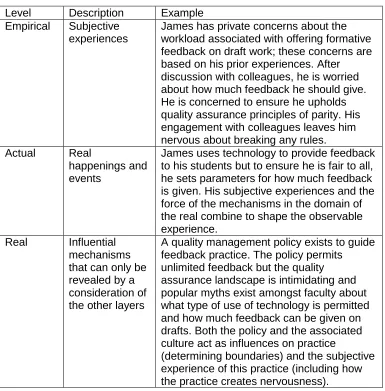
Table 3.1Stratification in relation to lecturer engagement with technology enhanced feedback.
Level Description Example Empirical Subjective
experiences
James has private concerns about the workload associated with offering formative feedback on draft work; these concerns are based on his prior experiences. After discussion with colleagues, he is worried about how much feedback he should give. He is concerned to ensure he upholds quality assurance principles of parity. His engagement with colleagues leaves him nervous about breaking any rules. Actual Real
happenings and events
James uses technology to provide feedback to his students but to ensure he is fair to all, he sets parameters for how much feedback is given. His subjective experiences and the force of the mechanisms in the domain of the real combine to shape the observable experience.
Real Influential mechanisms that can only be revealed by a consideration of the other layers
A quality management policy exists to guide feedback practice. The policy permits unlimited feedback but the quality assurance landscape is intimidating and popular myths exist amongst faculty about what type of use of technology is permitted and how much feedback can be given on drafts. Both the policy and the associated culture act as influences on practice
(determining boundaries) and the subjective experience of this practice (including how the practice creates nervousness).
Table 3.1 illustrates important critical realist principles:
i. Individual experiences can be rooted in personal history and are situated (Maxwell, 2012a);
ii. The empirical can be seen to influence the actual, as behaviours are modified according to the private reality and the internal decision making process;
iii. The essence of the real strata can be understood by the consideration of happenings within other layers (Danermark, 2002).
Causation
41
content, so that causality … is reduced to constant conjunction” (McBreen, 2007 p. 481). By contrast, critical realism seeks to explain causes with rich detail and meaning.
Critical realists do not hold the position on causation that is often adopted by interpretive researchers, where causal claims are made only tentatively. Sayer (2010) describes that researchers in the qualitative realm have only dared make limited claims in relation to causation because they have stood in the shadows of positivist dominance. Critical realists reject the approach of qualitative researchers who claim that causation can’t be found because of their belief that regularity itself can’t be found amongst the complexity of the social world (Maxwell, 2012a; Maxwell, 2012b). Critical realists note that cause need not be conditional on the presence of regularity since “objects and social relations have causal power which may or may not produce
regularities” (Sayer, 2010 p. 2). The pursuit of causation must not to be confused with the search for laws (López & Potter, 2005). Critical realism permits us to “call off the search for ‘general laws’ without simply abandoning the goal of causal explanation” (Gorski, 2013 p. 659). The search for
evidence of causal relationships needs to transcend the different strata and involves piecing together clues (Danermark, 2002).