1
Thesis submitted in accordance
with the requirements of the
University of Liverpool
for the degree of
Doctor of Dental Science
(Orthodontics)
James Davies
A randomised controlled crossover trial to
assess the effectiveness of, preference
for and length of structured reply letters
2
Abstract
Title
A randomised controlled crossover trial to assess the effectiveness of, preference for and
length of structured reply letters when communicating with referring practitioners
Statement
“I have made this letter longer than usual as I lack the time to make it short” (Blasie Pascal
1623-1662)
Objectives
To identify whether :
1. Structured reply letters from consultants were more effective at communicating with
and/ or preferred by practitioners when compared to consultants‟ standard reply
letters.
2. There were differences in the length of the two formats.
Null Hypothesis
No significant difference exists between practitioner‟s awareness of key patient information
when receiving either the structured consultant reply letter or the standard consultant reply
letter. No significant difference exists between the word counts of the two letter formats.
Design
Randomised controlled crossover trial.
Setting
3
Participants and methods
Participants were recruited from practitioners referring orthodontic patients to LUDH.
Seventy five practitioners were stratified by consultant and randomised in blocks to receive
either the structured or standard letter first, followed by the alternative format six weeks later.
For both groups, the word count was recorded by the secretaries. „Knowledge and
satisfaction‟ questionnaires were dispatched with the letters, completed by practitioners and
returned to the department.
Outcome measures
The primary outcome measure was the practitioners‟ awareness of the key information
contained within the letter. The secondary outcome measure was the secretarial typing
times for the letters.
Results
The response rate was 87%. There was a statistically significant improvement in
practitioners‟ awareness of their patient‟s status (odds ratio 8.84 95% CI 1.08, 72.52) and
the action required (odds ratio 4.13 95% CI 1.10, 15.45) after receiving the structured letter.
Practitioners showed a strong preference (p<0.001) for the structured consultant reply letter
which were statistically significantly shorter than the standard format with a mean difference
of 108 + 10 fewer words (mean difference: 108: 95% CI -118.14, -97.86).
Conclusions
This trial demonstrated that there was a statistical significant improvement in practitioners‟
perceptual and actual awareness of their patient‟s status and any action required, having
received the structured letter. The structured reply letters had significantly fewer words than
4
Acknowledgements
I would like offer my sincerest gratitude to my supervisor Dr Jayne Harrison. Having had
little previous experience in conducting research she has guided, inspired and motivated me
to through my three years of studies at the University of Liverpool. Her enthusiasm and
perpetual energy has motivated all her students, including me. Her dedication to numerous
research projects does not go unnoticed and I am sure she worries that she sometimes
spreads herself to thin, but regardless of this almost insurmountable workload she sets an
example of a world class researcher. At times no doubt I have made her feel like she was
knocking her head against a brick wall with frustration, despite this she remained accessible
and forever willing to help me. The experience has broadened my perspectives and outlook
on research and for this I am indebted to her.
I have been delighted to interact with Mr Stephen Rudge over the past three years and thank
him for his clinical and academic support. He once captivated me with a “post it” note
inscribed with three attributes he wanted me to grasp in order to fulfil my potential. I have
found them to be very applicable to all aspects of life not just my research study. They read:
1. Systematic approach, 2. Precision and 3. Attention to detail.
I hope my nomination for him to bear the Olympic torch in 2012 is successful and is received
as a small token of my gratitude.
Further thanks should be offered to David Waring for initiating the trial and those that
assisted me during it. Mrs Sue Pender for her assistance in developing the knowledge and
satisfaction questionnaires. Trish and Jenny, the departmental secretaries, who were
tormented by my impromptu spot checks. Girvin Burnside for his statistical input and the
three orthodontic consultants Dr Jayne Harrison, Mr Stephen Rudge and Professor Neil
Pender. The latter has sculpted an excellent research environment for this study to be both
5 Sacrifice can be defined as:
“Willingly foregoing something of value in the belief that in the future something more
valuable will be attained.”
To my loving wife Rebecca, beautiful daughter Jessica and welsh sheepdog Leo who
undoubtedly made the greatest sacrifices. You have provided unwavering love and support
and I am deeply thankful for this.
6
Consort guidelines
CONSORT, which stands for Consolidated Standards of Reporting Trials, encompasses
various initiatives developed by the CONSORT Group to alleviate the problems arising from
inadequate reporting of randomized controlled trials (RCTs).
The main product of CONSORT is the CONSORT Statement, which is an evidence-based,
minimum set of recommendations for reporting RCTs. It offers a standard way for authors to
prepare reports of trial findings, facilitating their complete and transparent reporting, and
aiding their critical appraisal and interpretation (CONSORT 2010)
7
CONSORT 2010 checklist of information to include when
reporting a randomised trial
*
Section/Topic
Item
No
Checklist item
page
No
Title and abstract1a Identification as a randomised trial in the title 2
1b Structured summary of trial design, methods, results, and conclusions (for specific guidance see CONSORT for abstracts)
2
Introduction
Background and objectives
2a Scientific background and explanation of rationale 16
2b Specific objectives or hypotheses 47-49
Methods
Trial design 3a Description of trial design (such as parallel, factorial) including allocation ratio
50
3b Important changes to methods after trial commencement (such as eligibility criteria), with reasons
N/A
Participants 4a Eligibility criteria for participants 52
4b Settings and locations where the data were collected 51
Interventions 5 The interventions for each group with sufficient details to allow replication, including how and when they were actually administered
62
Outcomes 6a Completely defined pre-specified primary and secondary outcome measures, including how and when they were assessed
62
6b Any changes to trial outcomes after the trial commenced, with reasons
N/A
Sample size 7a How sample size was determined 51
7b When applicable, explanation of any interim analyses and stopping guidelines
51
8 Sequence
generation
8a Method used to generate the random allocation sequence
55
8b Type of randomisation; details of any restriction (such as blocking and block size)
55
Allocation
concealment
mechanism
9 Mechanism used to implement the random allocation sequence (such as sequentially numbered containers), describing any steps taken to conceal the sequence until interventions were assigned
52
Implementation 10 Who generated the random allocation sequence, who enrolled participants, and who assigned participants to interventions
52
Blinding 11a If done, who was blinded after assignment to interventions (for example, participants, care providers, those assessing outcomes) and how
62
11b If relevant, description of the similarity of interventions N/A
Statistical methods 12a Statistical methods used to compare groups for primary and secondary outcomes
63
12b Methods for additional analyses, such as subgroup analyses and adjusted analyses
63
Results
Participant flow (a diagram is strongly recommended)
13a For each group, the numbers of participants who were randomly assigned, received intended treatment, and were analysed for the primary outcome
68
13b For each group, losses and exclusions after randomisation, together with reasons
68
Recruitment 14a Dates defining the periods of recruitment and follow-up 51
14b Why the trial ended or was stopped 52
Baseline data 15 A table showing baseline demographic and clinical characteristics for each group
71,72
Numbers analysed 16 For each group, number of participants (denominator) included in each analysis and whether the analysis was by original assigned groups
70
Outcomes and
estimation
17a For each primary and secondary outcome, results for each group, and the estimated effect size and its precision (such as 95% confidence interval)
9
17b For binary outcomes, presentation of both absolute and relative effect sizes is recommended
76-78
Ancillary analyses 18 Results of any other analyses performed, including subgroup analyses and adjusted analyses, distinguishing pre-specified from exploratory
68-85
Harms 19 All important harms or unintended effects in each group
(for specific guidance see CONSORT for harms)
N/A
Discussion
Limitations 20 Trial limitations, addressing sources of potential bias, imprecision, and, if relevant, multiplicity of analyses
107
Generalisability 21 Generalisability (external validity, applicability) of the trial findings
94
Interpretation 22 Interpretation consistent with results, balancing benefits and harms, and considering other relevant evidence
93
Other information
Registration 23 Registration number and name of trial registry 50
Protocol 24 Where the full trial protocol can be accessed, if available
63
Funding 25 Sources of funding and other support (such as supply of drugs), role of funders
160
10
Table of Contents
Abstract Page 2
Acknowledgements Page 4
Consort guidelines Page 6
Table of contents Page 10
List of tables Page 14
List of figures Page 15
1. Introduction Page 16
2. Literature review Page 20
2.1 Educational content of letters Page 20
2.2 Structured reply letter studies Page 23
2.3 Letter studies from medical specialties Page 23
2.4 Letter studies from dental specialties Page 27
2.5 Randomised Controlled Trials on reply letters Page 28
2.6 Site specific studies Page 29
2.7 Summary of literature review Page 40
3. Aims of study Page 47
4. Objectives of study Page 48
5. Null Hypotheses Page 49
6. Design Page 50
6.1 Ethical approval Page 50
6.2 Sample and Setting Page 51
6.3 Sample size Page 51
11
6.5 Consent Page 52
6.6 Randomisation Page 52
6.7 Stratification Page 53
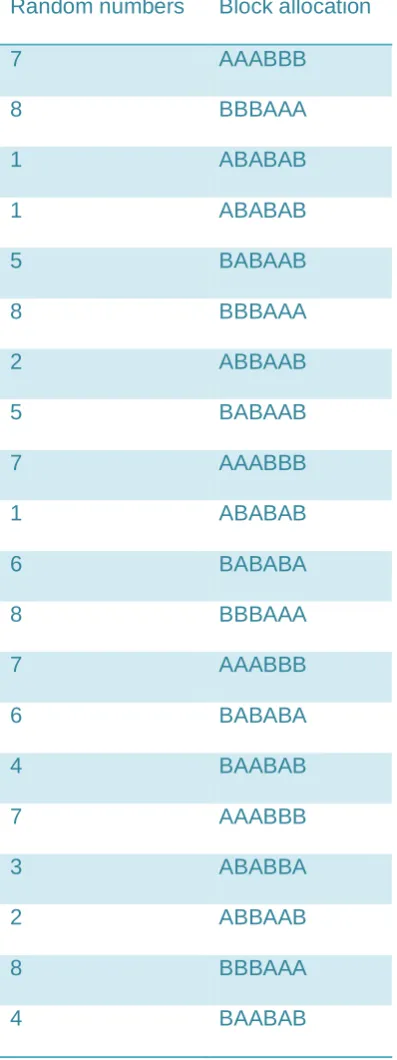
6.8 Randomisation and block design Page 55
6.9 Parallel versus crossover design Page 57
6.10 Recruitment Page 59
6.11 Reply letter dictation Page 60
6.12 Reply letter generation Page 61
6.13 Reply letter dispatch Page 61
6.14 Blinding Page 62
6.15 Intervention Page 62
6.16 Control Page 62
6.17 Both groups Page 62
6.18 Outcome measures Page 62
6.19 Data archiving Page 63
6.20 Data analysis Page 63
6.21 Data protection Page 67
7. Results Page 68
7.1 Introduction Page 68
7.2 Participants flow through the RCT Page 68
7.3 Participants‟ demographics Page 71
7.4 Randomisation Page 74
7.5 Referral to letter generation Page 74
7.6 Primary outcome measure Page 76
7.7 Secondary outcome measure Page 78
7.7.1 Word count by consultant Page 78
12
8. Discussion Page 91
8.1 Summary of the main findings Page 91
8.2 Interpretation of results Page 93
8.2.1 Recruitment Page 93
8.2.2 Participants‟ demographics and referral source Page 94
8.2.3 Letter attributes Page 95
8.2.4 Methodology and Randomisation Page 96
8.2.5 Referral to letter generation Page 97
8.2.6 Key information contained within letters Page 97
8.2.7 Practitioner preferences Page 98
8.2.8 Comparisons with previous research Page 98
8.3 Implications for clinical practice Page 101
8.4 Untoward events during the study Page 104
8.5 Hypotheses Page 106
8.6 Limitations of the trial Page 107
8.7 Suggested improvements Page 109
8.8 Future research Page 110
9. Conclusion Page 113
10. References Page 115
11. Appendices Page 122
11.1 Appendix 1: RCT flow chart Page 122
11.2 Appendix 2: Structured reply letter template Page 124
11.3 Appendix 3: Structured reply letter example Page 126
11.4 Appendix 4: Standard reply letter example Page 128
11.5 Appendix 5: Cover letters Page 130
11.6 Appendix 6: Practitioner Information Leaflet Page 133
11.7 Appendix 7: Consent form Page 138
13
11.9 Appendix 9: Consultants‟ starter pack Page 143
11.10 Appendix 10: Secretaries starter pack Page 147
11.11 Appendix 11: Ethical opinion Page 150
11.12 Appendix 12: Methodology Page 155
11.13 Appendix 13: Financing Page 158
11.14 Appendix 14: Funding Page 160
11.15 Appendix 15: Sponsorship Page 162
11.16 Appendix 16: Project milestones Page 164
14
List of tables
Table 2.1 Summary of the previous studies Page 42
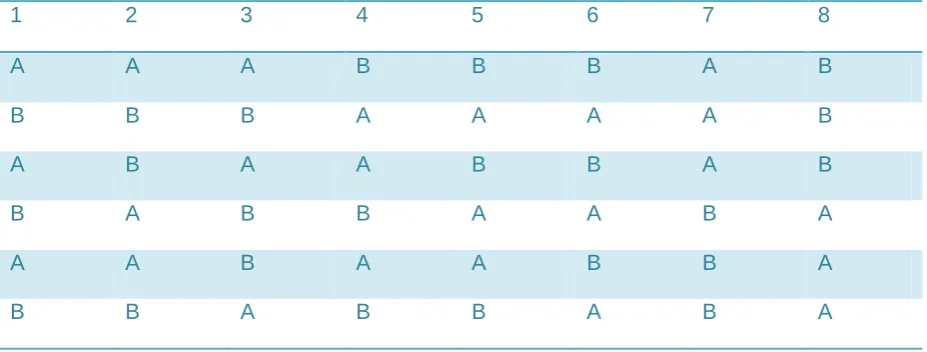
Table 6.8.1 Randomisation allocation Page 56
Table 6.8.2 Block randomisation code Page 57
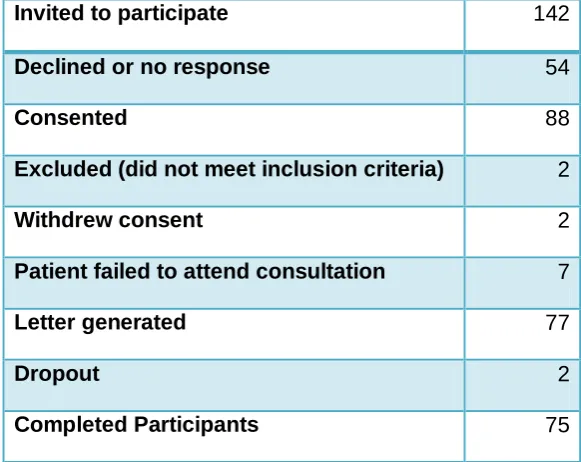
Table 7.1 Participants‟ progress through the trial Page 69
Table 7.2 Participants‟ demographic details Page 71
Table 7.3 Gender of participants Page 72
Table 7.4 Gender of those invited to participate Page 73
Table 7.5 Breakdown of the randomisation Page 74
Table 7.6 Referrals received and letters generated by consultant Page 74
Table 7.7 Participants‟ awareness of what was happening to their patient
having received each of the letter formats Page 76
Table 7.8 Practitioners‟ awareness of action required
in each of the letter formats Page 77
Table 7.9 Word count by consultant on letter A (standard reply letter) Page 79
Table 7.10 Word count by consultant on letter B (structured reply letter) Page 80
Table 7.11 Pooled word count for A (standard letters) and B (structured letter) Page 83
Table 7.12 Participants preference for each letter format Page 85
Table 7.13 Wilcoxon signed rank test to assess practitioners‟ letter preferences Page 86
Table 7.14 Wilcoxon signed rank test to assess specialist practitioners‟
and GDPs letter preferences Page 87
Table 7.15 Wilcoxon signed rank test to assess practitioners‟ letter preferences
for each consultant Page 87
15
List of figures
Figure 1.1 Referral problems solutions and benefactors Page 18
Figure 2.1 An example of a criticised consultant reply letter Page 31
Figure 2.2 Condensed letter from figure 2.1 Page 39
Figure 2.3 Summary of findings from literature review Page 41
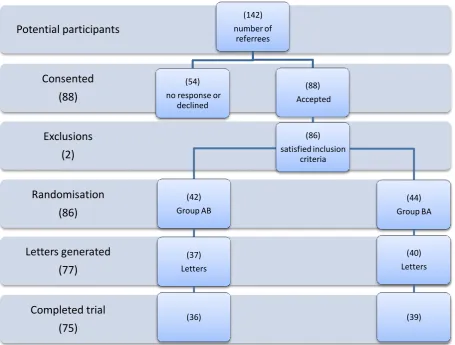
Figure 7.1 Flow diagram of participants Page 70
Figure 7.2 Regional locations of participants Page 71
Figure 7.3 Year of qualification of participants Page 72
Figure 7.4 Mean word count with 95% confidence intervals
for each letter by consultant Page 81
Figure 7.5 Mean difference in word count of structured
and standard letter formats Page 82
Figure 7.6 Word count and 95% confidence intervals for the two letter formats Page 84
Figure 7.7 Mean difference in the word count between standard
16
1. Introduction
„I have made this letter longer than usual because I lack the time to make it short‟
(Blaise Pascal, 1623-1662)
The British medical system is based on the principal of referral and this is likely to continue.
It has been claimed that the communication between hospital Consultants and referring
practitioners has become solely dependent on the letter of referral and reply, a type of two
way exchange, for information, facts and opinions ensuring mutual isolation (Pringle, 1991).
Almost every report published within the National Health Service (NHS) has made reference
to or recommendations to improve this relationship between primary and secondary care.
To date the evidence suggests this remains a formidable task (Tanner, 2006).
As the NHS moves in an increasingly market driven direction, competition between private
sector and neighbouring hospitals may ultimately intensify. The development of a hospital
dental service, which can meet the needs of both General Dental Practitioners (GDPs) and
consumers, is therefore paramount. Communication is one aspect of this which could
improve professional and patient relationships (Pulia, 2011). A referral based service
between GDPs in primary care and consultants in hospital based specialities is well
established. Good communication between these parties is pivotal in ensuring optimal
patient management and continuing education of practitioners (Gagliardi, 2002).
Patient care hinges on an adequate and timely exchange of information between treating
practitioners (Pringle, 1991). Ensuring that letters meet the needs of the letters‟ recipients
potentially saves time for the clinicians and patients, reduces unnecessary repetition while
helping to avoid patients being dissatisfied or confidence in dental professionals being lost
17
Managers and administrators have recognised the additional imperative for addressing
referral communications. Standardised letters have a potential to collect the minimum data
set thereby satisfying the requirements of the Department of Health (Wallis, 1993).
A substantial amount of time is spent by clinicians writing or dictating letters to referring
practitioners (Tattershall, 2002). The extent to which these letters contain the relevant
information that is required by the recipient is largely unknown. Pringle (1991) described the
consultant reply letter as the “most neglected route of GP education”
It is evident that numerous problems exist within our current referral system. The ability to
collect the minimum data set is a requirement set out by the Department of Health, and at
present the referral letters have no means to collect such data. Instead this data is collected
via a separate minimum data sheet. If a standardised letter can be designed in such a way
to collect this information, not only will we satisfy the Department of Health but, it would have
the potential to improve the efficiency of the orthodontic department.
The problem of inadequate communication potentially damages our professional working
relationships and has a resultant impact on effect to the standard of patient care we
ultimately provide. A standardised letter can potentially improve these communication
channels and subsequently improve our professional working relationships and raise
standards of patient care (Pulia, 2011).
The lack and inconsistency of educational content within the current referral system
potentially neglects one of the most important sources of knowledge and educational
exchange between primary and secondary care (Pringle, 1991). A structured reply letter
can potentially improve the uptake of knowledge to GDPs. The letters could also provide
some form of clinical case specific continued professional development allowing the
introduction of continued professional development into referral system (Gagliardi, 2002).
The current referral system is at times inefficient and expensive. The introduction of a
18
departmental consultants and secretaries. In a time of financial difficulties and government
spending reviews, the structured letter has potentially large cost savings to the health
budget. If continued professional development can be provided through our referral system,
then this could potentially ease the burden on the current more expensive methods of
continued professional development delivery.
In summary, it is clear problems exist with the current referral system (Pringle, 1991,
Tattershall, 2002). If it can be proven that a standardised structured letter format is accepted
by our referral source and can deliver the same core information to GDPs then we can
potentially deliver a more efficient and cost effective quality of service to our patients and
referring clinicians. We can revolutionise the way we as a specialism deliver continued
professional development to our GDPs making it more case specific and cost efficient and
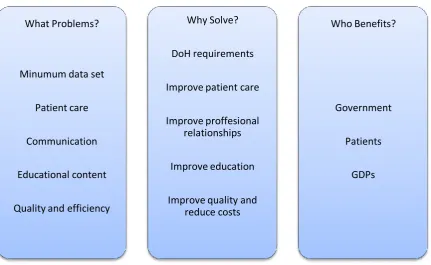
improving the knowledge and education of our practitioners. Figure 1.1 illustrates the
problems associated with our current consultant reply letters, outlines the reasons the letters
[image:18.595.81.513.476.741.2]need to be modified and the benefits in doing so.
Figure 1.1 Referral problems, solutions and benefactors
What Problems?
Minumum data set
Patient care
Communication
Educational content
Quality and efficiency
Why Solve?
DoH requirements
Improve patient care
Improve proffesional relationships
Improve education
Improve quality and reduce costs
Who Benefits?
Government
Patients
19
To date few studies have investigated the information content of consultants‟ reply letters
and recipients‟ preferences. Research in this field appears scarce. This study will aim to
add to the evidence that the introduction of a standardised structured letter pro-forma is of
potentially great benefit to the orthodontic profession.
The recent regional Mersey audit by Waring in 2007 investigated the deficiencies within our
orthodontic referral letter system. The study proposed the use of a structured reply letter
and proposed this be robustly tested by a randomised controlled trial. This audit therefore
20
2. Literature review
Traditional perceptions of the two branches of the medical profession (primary and
secondary care) were summarised rather bluntly by Horder in 1977. He described the
primary care clinicians as being jealous of the status, facilities, and income of their specialist
counterparts. Resentful of their colleagues‟ achievements, relationships were strained for
many decades (Marshall, 1998). He described the specialists‟ view of their referring
practitioners as nothing more than somebody to carry out the task of sorting the minor from
what was major and to refer the latter to the hospital. While it may appear a little
exaggerated much of the literature in the 1960s and 1970s confirmed the problems between
the two parties (Stevens, 1966, Honigsbaum, 1979). More recent research, addressed in
this literature review highlights that there might still be problems with mutual understanding
and communication. Specialists complain about inadequate information and unnecessary
referrals while primary care practitioners express dissatisfaction with the delays and the
content of information received.
2.1
Educational content of letters
Pringle commented in 1991 that „”consultants‟ reply letters are not being utilised as learning
tools for GP education”. This prompted Gagliardi (2002) to undertake a systematic review of
the use of referral reply letters for continuing medical education. She carried out the
systematic literature review between 1990 and 2001 which formed the basis of her MSc
project at the University of Toronto, Canada.
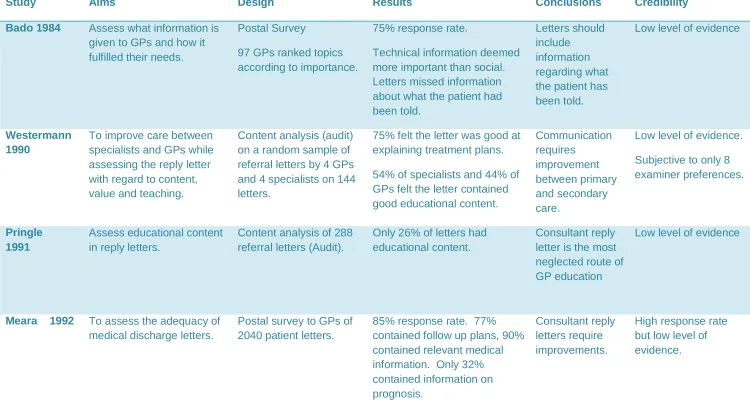
The search strategy identified 1250 articles of which 9 met the inclusion criteria. Three of
the studies were based upon content analysis of replies to referral letters (Pringle, 1991,
Westerman, 1990, Couper, 1996). Pringle (1991) found that 26 % of referral replies had
educational content. Whilst Westerman (1990) reported that 54% of the panel of specialists
21
suitable educational content. The third content analysis study (Couper, 1996) used a
pre/post design to examine the influence of a structured referral letter on the quality of
referral replies. The study found that significantly more information about follow up care was
included in reply letters after the use a pro-forma referral letter.
The remaining six articles were survey studies (McConnell, 1999, Meara, 1992, Van der
Kam, 1998, Newton, 1992, Stalhammer, 1998 and Ghandi, 2000). The surveys
demonstrated that GPs felt that information regarding diagnosis, treatment options,
treatment plan and follow up care were of utmost importance.
Although the Gagliandi (2002) study had numerous exclusions, one of which being „dental
referrals‟, it raises some crucial issues. Her review highlights the importance of the
relationship between primary and secondary care. The review identifies that little
educational content is currently included in reply letters from specialists to GPs. The review
identifies that GPs are receptive to the idea of greater educational content to be contained
within the letters and speculates why educational content is perhaps negated. Generalists
and specialists have opposing perspectives and opinions on the role of the consultation and
use different strategies in caring for their patients which directly influences the referral letter.
Specialists may purposely withhold information of an educational nature from the referral
letter believing that appropriate care would be delivered best within the secondary care
environment or because patients may be privy to the letter. The view that specialists refrain
from providing feedback to avoid seeming patronising was also suggested. The review
demonstrated that GPs would welcome more feedback and that they would prefer teaching
that is directly related to their clinical practice rather than the traditional formal education
such as lectures.
The review reinforces what Pringle (1991) believed, that referral letters were a neglected
route of education to the referring practitioner. It adds weight to the idea that the use of an
22
relevant information from specialists to referring GPs leading to improved continuity and
overall quality of care.
The rate of referrals to and from general practitioners (GPs) to specialists varies, with reports
ranging from 5% to 15% of patients seen (Gagliardi, 2002). GPs usually make referrals to
seek specialist advice on diagnosis and treatment or ask the specialist to direct the patient
care. Many methods of communication are available to clinicians including, telephone,
paper (including mail and fax), “curbside conversations” and electronic mail. It has been
found that structured written formats transmit more information than informal channels
(Anderson, 2000).
Despite the crucial role of consultant referrals, the medical literature suggests that GPs
receive little or no information regarding the care of their patients with studies of referral
letters consistently reporting that practitioners are dissatisfied with their content and quality
(Grol, 2003). The aforementioned study investigated both referral letters and subsequent
reply letters to hospital specialists in the Netherlands. His findings demonstrated that the
quality of both referral and reply letters could be improved. A particularly striking and new
finding, from his study, was the apparent lack of real exchange of information. Reply letters
often contained only standard clinical details with little or no consideration for diagnostic
information. The requests of the referral letter were rarely given an explicit answer. The
study found a weak correlation to the standard of both referral and reply letters, with better
referral letters only partly resulting in better reply letters. It would appear from his study that
the two letter types reflect two unrelated worlds. When the reply letter starts with an explicit
reply to the referral letter‟s specific request an explicit answer is generated four times more
often. It appears most specialists do not consult the referral letter when formulating the reply
letter. Including the reason for referral in the reply letter can potentially improve the
23
2.2
Structured reply letter studies
A number of studies have been undertaken to investigate the quality of referral letters from
General Dental Practitioners (GDPs) (McAndrew, 1997, Hammond, 1996) and medical
practitioners (Rawal, 1993) to hospital consultants. There are very few recent studies that
investigate the content of consultant reply letters (Tomlinson, 2006, Saha, 2006) and fewer
still investigating Orthodontic consultants‟ reply letters.
Lloyd (1993) attempted to improve the quality of correspondence by introducing and
promoting the use of a problem list within the letter. A letter written in a structured format
with both a problem list and management plan was introduced by Rawal (1993).
Rawal (1993) investigated the use of a structured letter containing a problem list and
management proposals. One hundred General Practitioners (GPs) were randomly allocated
to receive either a standard or structured reply letter. He discovered that 88% preferred the
structured reply letter. He found the structured reply letters obliged the writer to state the
problem and detail how it should be managed. It became evident that the majority of GPs
refer to the copies of past correspondence for a summary specific to the patient. He
determined that the structured letters were shorter to dictate and easier to transfer to
computers. Although the letter requires greater discipline, the study highlights how the
structured reply letters were preferred.
A study by Ray (1998) looked at patients attending open access chest pain clinics within the
Royal London Hospital. After attendance by a patient, a response letter was produced and
subsequently assessed by the GPs. Recipients preferred the structured computer
generated reply letters to unstructured dictated letters.
Newton (1992) set up a study to canvass the views of all general practitioners and
consultants in Newcastle regarding the content of referral letters and replies. They aimed to
24
use the information for audit purposes. He recognised that letters were typically the sole
method of communication between general practitioners and hospital specialists and could
function as a means of education between both parties. Since patient care hinged upon this
communication medium, the authors felt that it was very important it should be undertaken
as effectively as possible. In their study they distributed postal questionnaires to all
practitioners and consultants in Newcastle. Two hundred and seventy four doctors replied,
representing a 77% response rate. The results demonstrated that the use of standardised
categories to state the reason for referral was not endorsed. 63% of general practitioners
felt that the consultants reply letter should include the „worth‟ of the referral, however, only
34% of consultants agreed with this. The authors highlighted that the educational element in
the reply letters was some way off performing its function on a regular basis. Newton (1992)
recognised the role standardised reply letters can have in professional led audit while
utilising the administrative values gained from the data.
2.3
Letter studies from medical specialities
A small number of studies have investigated the specialist letters within the cancer care
setting. Bado (1984) highlighted, in a study of 97 GPs, that recipients‟ preferred letters
which contained specific technical information. Specifically, diagnosis, results of any
investigations and any treatment plan. Social details were regarded as less important. The
study demonstrated that 80% of GPs wanted information on patient prognosis, yet only 20%
of letters provided this.
Tattersall (1995), an oncologist from Sydney Australia undertook an audit of his reply letters.
He identified eight items defined as essential by the majority of the letters‟ recipients. These
were:
1. Diagnosis
2. Clinical findings
25 4. Further tests
5. Treatment options
6. Recommendations
7. Prognosis
8. Likely benefits of treatment
9. Possible side effects of treatment
Half of the letters‟ recipients felt medical history, drug and social history were not considered
essential yet many of the letters contained them.
McConnell (1999) investigated letters from oncologists to referring practitioners. A total of 7
oncologists, 11 GPs and 10 surgeons were interviewed and asked to express what
information should be present in the reply letters after the initial oncologist assessment.
They identified thirty two categories of preferred information and compiled a list of the
problems associated with inter professional communication. From this data researchers
developed a questionnaire that aimed to explore the views of a wider sample. A national
Australian survey was conducted on oncologists, surgeons and GPs and identified five key
categories of information from the original 32. These included:
1. History
2. Psychosocial concerns
3. Examination and investigation findings
4. Future management/ expected outcome
5. Treatment management plan
Letters were then gathered by a large group of oncologists, studied for their contents and
compared to the previously outlined preferences. The results demonstrated that letters
26
plan, expected outcome and psychosocial concerns. The study highlighted that a delay in
receiving the letter was of the greatest concern. The study proposed the construction of a
specific template letter for oncologists.
In a recent study Thong (2010) undertook a quality assurance survey to improve
communication between ENT specialists and general practitioners and was recently
published in the literature. The study was based at an Otorhinolaryngology head and neck
department in Singapore and sampled 1700 GPs. Two letter formats were dispatched to the
GPs for their scrutiny. One consisted of free text and the other was in the form of a
structured format with a summary at the beginning. Unfortunately the study had a 32%
response rate which was disappointing and means that the results must be interpreted with
caution. Despite this, the 535 GPs opinions expressed an overwhelming 96% preference for
the structured reply letter which is in broad agreement with other studies. The authors
thought that the structured reply letter format allowed readers to identify the information they
desired easily and this improved the quality of correspondence between specialist and GPs
Scott (2004) set out to evaluate explicitly the quality of reply letters for new patients referred
to clinics at a tertiary teaching hospital in Brisbane, Australia. Letters were audited
retrospectively for 10 different specialties at the Princess Alexandra Hospital over a 3 month
period. The audit assessed 297 new patient referrals against numerous quality attributes.
The study achieved a response rate of 69% and identified specific short falls in reply letters
while suggesting areas for improvement. Specifically, the authors believed that the letters
should contain a list of medical problems, provide education to recipients while minimising
technical jargon. The authors favour listed information, which was felt to reduce redundant
information, while ensuring important information was not overlooked. The study concluded
that the use of structured reply letter templates facilitated a more consistent inclusion of key
27
2.4
Letter studies from dental specialties
Noble (1994) conducted an orthodontic audit to assess how Orthodontists communicated
with their referring practitioners. Over 100 questionnaires were sent to GDPs and an 83%
response rate was achieved. His results demonstrated that 59% of GDPs felt a brief, but
formal, treatment plan was required in the letter. This was seen to assist the GDPs in
answering questions from both patient and parent. It can be concluded from the study that
effective cooperation between the GDP and Orthodontist is essential to ensure the delivery
of high quality care. However, excessive amounts of information can be counterproductive
and wasteful of resources.
Hammond (1996) conducted a study involving 268 GDPs and 13 consultants to determine
the content of reply letters from orthodontists. This study concluded that GDPs valued highly
the following items:
1. Date Seen
2. Name of clinician
3. Treatment plan
4. Short case description
5. Length of wait prior to commencing treatment.
The length of wait was also deemed an important factor by Tomlinson (2006), who thought it
could prevent a possible „loss to care‟.
A peer review amongst restorative specialists, on the quality of their communication with
referring dental practitioners, was undertaken by Rickets (2003). The study aimed to assess
the quality and appropriateness of replies to practitioners from specialists and trainees in
restorative dentistry. Seven practitioners took part in the study and assessed 5 referral and
reply letters for 5 patients they had seen for consultation. These reply letters were peer
28
plan and tooth notation. Interestingly, the study demonstrated a generally favourable
response to the letters which conformed to the agreed criteria. However, particular problems
were identified with the tooth notations, as the reply letters used different forms of tooth
notation including FDI, Palmer and UR / UL / LL / LR. It was concluded that a further study,
by other specialities, would be advisable.
Saha (2006) evaluated the quality of written reports provided by consultants in restorative
dentistry to GDPs in the West Midlands. The study highlighted that the use of bullet points
was deemed important in summarising the content of the letter concisely. Therefore, the
opportunity exists to improve communication by using a structured reply letter with a bullet
point format.
2.5
Randomised controlled trials on reply letters
Two randomised trials into the structured reply letters were identified (Melville, 2002, Wynn,
2004). Melville (2002) undertook a randomised control crossover trial to assess the effects
of structuring clinic correspondence. The study was undertaken at Keele University medical
department and consisted of 32 participants, randomised to read either the unstructured or
the structured letter first. The outcome measures were identified as the number of correct
items recognized, the letter rating, letter preference and reading time. The results suggested
that the structured letter was statistically significantly (p<0.02) better at allowing key points to
be identified. The authors found there to be no reduction in reading time between the two
formats but a statistically significant preference and higher rating in favour of the structured
reply letter. This study does not test the structured reply letter in the “real world” as only one
case scenario was examined and therefore its results may not be generalisable and should
be interpreted with caution. One interesting aspect of the study was that the authors
reviewed psychological literature and suggested that the process of language involves three
brain “modules” interacting. An “orthographic module” interprets lines and curves as
29
They conclude that their findings support the hypothesis that the structured letter enhances
strategic reading, by possibly improving the semantic processing pathways.
The second randomised control trial (Wynn, 2004) took place in Stockport and involved 210
GPs who were randomly allocated to one of four prototype letters. The GPs were asked to
rate the letters on readability, structure, content and overall feel. Unfortunately the study
only achieved a response rate of 42% so is likely to suffer from response bias. However, the
results demonstrated that GPs had a statistically significant preference for structured reply
letters and was in keeping with previous studies. The study suggested that structured reply
letters were deemed easier and quicker to read, easier to extract information from and
generally preferred by the GPs.
2.6
Site specific studies
A more recent audit carried out in Mersey Deanery (Waring, 2007) investigated whether the
content and format of the current orthodontic consultant reply letters were appropriate or
whether they required improvement. The study sought to address whether or not:
1. Orthodontic reply letters were too long or too short.
2. The information given was too much or too little.
3. GDPs were clear as to what was happening to their patient and what actions were
subsequently required.
The study also gathered information to assess:
1. What information was requested by GDPs.
2. What form the reply letter should take.
3. The preferred tooth notation.
4. The preferred communication medium.
The audit revealed that an alarming 29% of GDPs were unaware of the status of their
30
The GDPs expressed a preference for summaries of the diagnosis and treatment plan in a
list format rather than free text. The audit identified that GDPs prefer the Palmer style of
tooth notation. Although this was deemed to be the most popular tooth notation system it
was noted that this can cause difficulties when electronic communication is used. Aspects of
the treatment plan were thought to be more important than information about the
examination. The audit highlighted that GDPs considered that a significant proportion of the
information contained within the reply letters was obsolete and that potentially relevant
information may be poorly communicated. Clearly this is likely to affect the efficiency of the
referral service and may influence the GDPs‟ choice of provider. An improvement in the
quality of reply letters was identified as a necessity. The audit proposed that a structured
reply letter following orthodontic consultation should be introduced within the Liverpool
University Dental Hospital Orthodontic department. The authors considered this to be
greatly beneficial in providing referring primary care dentists with information that they
wanted and to reduce administration time and secretarial workload, thus providing
substantial time and cost benefits. The structured format would also instil a greater level of
consistency to the letters allowing for inclusion of key information.
The structured reply letters were deemed to be quicker to dictate allowing a quicker
response time in communicating with the GDP. If this was correct then a reduction in
secretarial time required and subsequent cost benefits could be expected.
It was from this audit that the current trial was developed. The proposed structured letter
used in the current trial was designed to include three summary boxes. The first for
diagnosis to include the patient‟s age, incisor classification, skeletal pattern and complicating
factors. The second for the treatment plan to contain information regarding the type of
appliance to be used and expected duration of treatment. The final box was entitled “Action
Required” and was to include information on which teeth may require extraction or
31
The structured reply letter was designed to address the needs of the practitioners in the
Mersey region. Practitioners have been critical of previous letters with respect to their length
and the overwhelming amount of obsolete information with little or no relevance to the
recipient. Figure 2.1 is an example of the text contained within one such letter.
Figure 2.1 An example of a criticised consultant reply letter
Dear Mr . . .
Re: Patient . . .
“Thank you for having referred this patient back to me for Orthodontic reassessment, now
that the UL3 has erupted palatally positioned.”
“I saw the patient, initially, in relation to your re-referral on 30th April 2010 when they
confirmed that patient would wear fixed appliances (but still not headgear) but I did note that
his oral hygiene was not yet of a sufficiently high standard to place fixed appliances.
Nevertheless, with respect to the latter, in the hope that it would improve significantly within
a reasonably short period of time, I have referred him for a lateral skull radiograph taken in
the cephalostat so that I could check my clinical impression of the features such as skeletal
pattern and incisor inclination that I had made when I saw the patient previously for a consultation in June 2009.”
“I then saw the patient for a fuller consultation on the 8th July 2010, when my main findings in
relation to the previous diagnosis and treatment plan (June 2009) were as follows:
“The patient is aware of an unerupted tooth, but otherwise happy regarding his malocclusion
and doesn‟t really want to have anything that would involve surgery”
“The skeletal pattern is, clinically, at least, mild Class II, with a Frankfurt mandibular planes
angle which appears to be close to average, or slightly increased, and a slightly increased
32
incisally (mine not his own), there is no obvious mandibular deviation and he reports no symptoms of temperomandibular dysfunction”
“Teeth present were upper 7654321/12C4567 and lower 7654321/1234567”
“The lower arch exhibits probably mild crowding, overall: although there is an approximately
20 degree mesio-buccal rotation of the LL3, there is also a little bit of spacing between the
incisors; LL5 is slightly lingually positioned, LL4 is slightly buccally positioned; as a whole,
the lower labial segment appears clinically proclined. There is a spacing tendancy in the
upper arch, with space between the UR4, UR3, UL4, ULC, UL2, UL1; UR2 is midly
mesio-palatally rotated and there is slight buccal positioning of UR3 and UL5; the upper labial segment is clinically proclined.”
“The molar relationship is bilaterally Class I. The incisor relationship is Class II, division 1
with an overjet of about 6mm and an overbite which is increased and complete. The upper
dental centreline is to the right of the lower and the discrepancy is almost but not quite half
the width of a lower incisor. There is a crossbite tendency of the LL3 with the ULC, but when
the patient closes in centric relationship, there is no obvious mandibular displacement detectable prior to his achieving maximum intercuspation.”
“The oral hygiene and gingival condition are fair/poor in places. There is evidence of some
early attrition having occurred to the LL1, LL2 and possibly UR2. ULC has lost about a third of its clinical crown height through attrition.”
“Radiographs revealed the presence of all permanent teeth to include the third molars, the
crowns of which were still calcifying when the previous OPG radiograph was taken in July
2007; a more recent OPG radiograph taken in May 2009, indicated that there was still a
significant amount of root left of ULC, but UL3 had been moving occlusally, but also mesially,
33
tapered roots, but they are also quite long: in the event of active orthodontic tooth
movement, these teeth can be at an increased risk from root resorption, although I would not
see this as an absolute contraindication to having orthodontic treatment. No lateral ceph
radiograph was taken as it appeared that the patient might not be able to have comprehensive orthodontic treatment without some dento-alveolar surgery, which he didn‟t
want.”
“The patient may need to see his General Dental Practitioner regarding his oral hygiene
procedures. These would need to be of higher standard if orthodontic appliance treatment
was to be considered. You will need to monitor the attrition of the teeth and in the event of
not having orthodontic treatment to discuss the possible restorative dentistry implications in
the ULC region, if this tooth did not last him a lifetime and the UL3 did not erupt, naturally, into a favourable position.”
“If the patient was to have comprehensive treatment for his maloclussion, then this would
involve the fitting of upper and lower fixed appliances and I feel that he would most likely
need to be prepared to wear headgear, if temporary anchorage devices were not available.
Dento-alaveolar surgery would be needed to surgically expose and probably bond a gold
chain to the UL3 and the upper left deciduous canine ULC would also need to be removed.
Details of this treatment would need to be confirmed, probably with the taking of a lateral
ceph radiograph, but one would only take the latter if the patient was definitely prepared to have dento-alveolar, whilst the UL3 remained unerupted.”
“Another possible alternative, if the patient wasn‟t automatically going to have fixed
appliances would be to consider the extraction of the upper left deciduous canine ULC and
still dento-alveolar surgery to expose and possibly bond a gold chain to the UL3, but then to
apply traction to the latter tooth using a removable appliance, not recognising that complete
34
impede full alignment) and then the patient might need to accept the possibility of having fixed appliance treatment.”
“Either of the above orthodontic treatment might need to be followed by a period of retention.
They would be borderline for being carried out by a suitable experience practitioner working outside the hospital service.”
“If the patient was not having orthodontic appliance treatment to actively bring the UL3 down
into alignment, then his options would be:
To just accept the situation and monitor the possible further eruption of UL3. I think that
there is a high chance that UL3 will eventually erupt, naturally, of its own accord, although I
cannot say exactly how soon. However, one could not guarantee that the tooth would then be in good alignment – if the patient was unhappy about the situation then he would have to
accept the possibility of orthodontic appliance treatment (which would be suitable for an appropriately experience practitioner working outside the hospital service to carry out).”
“OR”
“One could consider the extraction of the upper left deciduous canine ULC in the hope that
this would encourage a more normal path eruption of the UL3. There is a possibility that this
might have a positive impact on the situation, but an improvement could not be guaranteed.
If space was being lost, in the meantime, then a removable space maintainer might be fitted.
The main disadvantage of carryout this treatment is that the patient is almost 16 years of age
and this type of interceptive approach is usually recommended in a younger age group. The same consideration regarding possible appliance treatment if the UL3 did erupt l, but wasn‟t
in a good position, would apply as for monitoring option described above. Any orthodontic
35
“At the time of their consultation, I explained to the patient and his mother, in outline form,
the possible options for managing the mal-positioned UL3. It seemed that the patient was
quite certain the he did not want to have any dento-alveolar surgery, but they were
considering the possible extraction of the upper left deciduous canine ULC, but recognising
that the patient is older than average for having this interceptive measure carried out, and
also that it would leave him with a spaced whilst one awaited the possible natural eruption of
the UL3 (but even if it did erupt one could not guarantee that its position would be then
good). I did say that it might be possible to align the UL3 orthodontically, with fixed
appliances, if it erupted, although headgear wear might only be avoided (assuming that
temporary anchorage devices were not available), if the increased overjet was accepted,
although one might need to recognise that the ability to fully align the UL3 might be
influenced by the positions of the lower teeth (and that would require possibly a fixed
appliance to align).
“Having summarised the initial appointment in June 2009 I can inform you that the UL3 has
erupted and the patient is now concerned about the position of UL3 and his slightly
increased incisal overjet. The skeletal pattern was confirmed as being mild to moderate
Class II, with an increased maxillomandibular planes angle and lower anterior face height.
The UL3 has now erupted, it is palatally positioned and slightly rotated. The crowding in the
lower labial segment with respect to the LL3, may be slightly worse; the lower labial is of
normal inclination in relation to the mandibular plane but proclined for the maxillomandibular
planes angle. The oral hygiene and gingival condition are generally reasonable but only fair in some areas. I believe that you have identified that he requires a dental restoration”
“With respect to my treatment plan of June 2009 I think his oral hygiene still needs
36
“If the patient was to have comprehensive Orthodontic treatment for his malocclusion, then I
feel it could either be corrected now with extractions or without i.e on a non extraction basis
(no teeth to be removed). The latter would be, marginally, although not fully my preference
because it would involve the use of headgear which the patient is not currently prepared to
do; additionally interdental stripping in the lower labial segment would be required to provide
the space for alignment in this area. If we did not use interdental stripping the extraction of
lower second premolars could be considered although, I am cautious in this approach as I
feel we may be left with a residual overjet and/or space since there is only minimal crowding.
My preference would be for interdental stripping as it involves no loss of sound teeth. If the
patient was to have extractions, then I feel one could consider the upper and lower left first
premolars (UL4/LL4) and then, only if there were problems in achieving a satisfactory
occlusal result, might one then subsequently consider, possibly although not definitively, similar extractions on the right side”
“Active orthodontic treatment would need to be followed by a period of retention. Six
months‟ full time wear of, for example, removable Hawley type retainers could be followed by
a period, in theory, during which wear was progressively reduced to test the stability of the
tooth positions. However, if the patient was not prepared to accept any return of the
pre-treatment malalignment in the lower labial segment and/or there were concerns regarding a
tendancy for UL3 to re-rotate and/or the overjet reduction was not appearing to remain
naturally stable (I am not sure if the patient has sufficient competence for this however
favourable growth can be surprising in such patients) then long term retention might need to
be considered possibly via a bonded lingual retainer from canine to canine to maintain the
alignment or long term nights only wear of removable retainers. I would personally opt for long term retention because of the patients‟ pre-treatment concerns. However I still have
some doubts with the potential ability of the patient to provide satisfactory oral hygiene
37 Orthodontic treatment.”
“The Orthodontic treatment plan described above should be suitable for an appropriately
experienced practitioner working outside the hospital service to carry out”
“If this patient was having the above orthodontic treatment plan then they would need to
aware of the risk of root resorption to the teeth with fine tapered roots and the likelihood of
long term retention. (on balance on further reflection, probably, via long term nights only wear of removable not fixed retainers)”
“If the patient was not having comprehensive orthodontic treatment for his malocclusion,
then one could alternatively just align the upper teeth with a fixed appliance recognising
there might still be some spacing the upper labial segment and also that his overjet would
not, probably, then be reduced; the resultant alignment might not be perfect and there would
be a risk of some malalignment returning to the UL3 if long term retention was not employed
(either by a bonded lingual retainer from canine to canine or long term nights only wear with
a removable retainer). This orthodontic treatment should definitely be suitable for an appropriately experienced practitioner working outside the hospital service to carry out.”
“Alternatively, if the patient was not having any orthodontic appliance treatment at all for his
maloclussion, then it would need to be essentially accepted from an orthodontic perspective
and any possible restorative dentistry options explored for improving the aesthetics particularly in the UL3 region”
“At the time of their consultation, it seemed as if the patient wanted to opt for comprehensive
orthodontic treatment with the extraction of teeth. They understand that his caries would
need to be completely under control and his oral hygiene of a high standard first. I am
discharging this patient back fully to your care but should his oral hygiene improve
38
(for training purposes but working under my direction), then I would have no objection to you making a re-referral for this”
“I will gladly see this patient again at any time in the future should you require my further
advice”
“Thank you for the loan of the orthodontic study models which I am now returning. If you, or
anybody else involved in the patients care, wanted to view the lateral ceph radiograph taken
then please could I trouble you to contact the X-Ray department, directly as they have the digital image”
It is clear from the above example that the letter contains a detailed explanation of the
patients‟ orthodontic problem and is advantageous from a medico-legal view point. The
letter is presumably addressing a dentist in primary care with a special interest in
orthodontics and in part this may explain the great amount of information contained within it.
However, the letter is approximately 2500 words and contains numerous repetitions.
Excessive amounts of information may be considered to be counterproductive and wasteful
of resources (Noble, 1994). While it describes the consultants‟ thought process and
rationale for his treatment options in great depth it fails to display the relevant information on
the diagnosis, treatment plan and action required by either a specialist practitioner or general
dental practitioner in a simple and easy to read concise format. To dictate and type such a
letter is not only time consuming for the consultant and secretary but also for the practitioner
to read. In a busy clinical environment the practitioner may not be able to read such a
lengthy letter and extract the salient information relevant to their patient. Such a letter may
alienate the consultant and practitioner and may lead to a loss of future referrals. This letter
gives a suitable example of why a structured letter may be a more favourable alternative.
The structured letter could provide the same information in a condensed summarised format
39
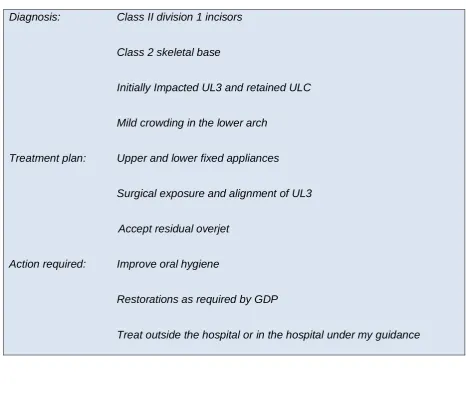
working relationships. Figure 2.2 illustrates that the information can be condensed into the
[image:39.595.63.530.194.599.2]following key points:
Figure 2.2 Condensed letter from figure 2.1
Diagnosis: Class II division 1 incisors
Class 2 skeletal base
Initially Impacted UL3 and retained ULC
Mild crowding in the lower arch
Treatment plan: Upper and lower fixed appliances
Surgical exposure and alignment of UL3
Accept residual overjet
Action required: Improve oral hygiene
Restorations as required by GDP
40
2.7
Summary of literature review
It can be seen that the delivery of healthcare hinges on how effectively information is
conveyed between parties. It can also be seen that many of the studies have limited
generalisability because of the small sample size of referring doctors and specialists.
However, the evidence, albeit weak, would suggest that clinicians in primary care are
dissatisfied with the content of referral replies and therefore, the potential exists to improve
communication and ultimately healthcare standards, by using a structured reply letter.
Studies of the quality of reply letters note that many fail to:
1. Address adequately the issues that prompted the referral (Noble, 1994)
2. Express the reasons behind specialists‟ conclusions and recommendations
(Saha, 2006)
3. Contain sufficient educational content (Pringle, 1991)
4. Be dispatched promptly (McConnell, 1999)
There appear to be clear advantages in introducing a structured format for communicating
with GDPs. These include the use of clear headings to allow the reader to identify the
desired information easily and other obligatory fields to ensure key information is
consistently included. It has been suggested that specialities explore the possibility of
introducing a standard specialty specific letter for use when communicating with GPs and
GDPs alike.
The literature has identified that GPs would prefer teaching that is directly related to their
clinical practice instead of traditional formal education such as lectures. Should a
standardised letter, containing a greatly improved educational content, be developed then it
could provide some basis for Continuing Professional Development (CPD) hours within the
41
A well conducted randomised controlled trial is essential to add a high level of evidence to
[image:41.595.73.517.181.477.2]this subject in the specialty of orthodontics.
Figure 2.3: Summary of findings from literature review
•Communication is important to the standard of care •Referral letters can
improve quality of care
•improves reproducibilty •cost efective •more efficient
•Letters are inexpensive compared to other forms of education
•Standardised letters may offer further cost savings
•letters lack educational content
•GPs prefer clinical based learning
•GPs are receptive