AAEE2012CONFERENCE Melbourne, Australia www.aaee.com.au/conferences/2012/
The impact on values and learning behaviours of
engineering students from an authentic learning
environment: Preliminary Analysis and Observations
Steven Goh, Sandra Cochrane, and Megan Brodie
University of Southern Queensland Email:[email protected]
BACKGROUND
Cochrane & Goh (2008) explore a librarian’s and course examiner’s reflections on an information literacy experiment in a third year Materials Engineering course. Following this experiment, the course was restructured using authentic project-based learning and information literacy strategies. Authentic learning environments open up opportunities to help students learn about the value of research skills and the importance of professional sources. The research is framed around relational and
constructivist pedagogy in that if students are immersed in a rich and authentic professional
environment with real-time input from industry practitioners, they are more engaged with the learning experience as designed. This paper proposes that authentic learning environments designed around scaffolded learning opportunities have the ability to change the values and behaviours of engineering students. This paper provides additional research data that was not previously presented at the preliminary stage of the investigation. The observations and analysis presented are of a preliminary nature, hence, the suggested findings are provided with limitations on its reliability and validity.
PURPOSE
Literature points to the ability of changing values and learning behaviours of students via successful engagement. Two complementary engagement methods used are authentic case studies and/or problem-based learning approaches. This research aims to examine this assertion and proposes that even though certain learning behaviours are changeable via intervention; the underlying values may be too entrenched to be changed in one course, and will require systematic intervention across a program of courses. The initial behavioural change in itself will ultimately become another entrenched behaviour as dictated by the value system that confines it. This case study provides insights and generalisation to highlight this proposition. Further data and analysis is required to validate the proposition.
DESIGN/METHOD
The methodology used in this research is based on description case study approach, and the
preliminary data collected from survey instrument is presented. Here, the descriptions of the impact on values and behaviours at one engineering course are based on observation and surveys applied to the participants. Other relevant data were collected but are not presented in this paper.
RESULTS
Data has been collected from 2009, 2010, 2011, and 2012. The findings suggest that even though the intervention is effective in changing certain behaviours, and definitely provide renewed engagement with the learning opportunities presented, the underlying values and other entrenched behaviours appear to be difficult to change over one semester.
CONCLUSIONS
Authentic learning environments supported by project-based learning and information literacy
strategies does open up opportunities to help students learn about the value of research skills and the importance of professional sources.
KEYWORDS
Introduction
Cochrane & Goh (2008) explore a librarian’s and course examiner’s reflections on an information literacy experiment in a third year Materials Engineering course. Materials Technology (MEC3203) is a third level course offered to both on-campus and off-campus students in the Bachelor of Engineering, Bachelor of Engineering Technology and Master of Engineering Science. This course extends the basic course, Engineering Materials
(MEC1201), to explore the variety of material properties and behaviours and their impact on engineering activities, emphasising failure analysis and materials selection. For further details of the course structure, assessments, delivery methods, refer to Cochrane & Goh (2008).
The course examiner and on-campus students were both dissatisfied with the lecture format employed in the course. A demonstrated lack of student information literacy skills led the course examiner to introduce an authentic learning activity based on a true life case study (Lombardi, 2007) in 2008. As students did not possess sufficient knowledge or skills to solve the case study problems, a series of active and immersive interventions in the form of
problem analysis, research skill and report writing sessions were held. It required students to focus less on knowledge acquisition but more so on synthesis to solve failure analysis and materials selection problems supported by professional level information (handbooks, trade magazines and journals rather than textbooks). Following this experiment in 2008, the course was restructured combining both authentic project-based learning and information literacy strategies.
This paper proposes that authentic learning environments open up opportunities to help students learn about the value of research skills and the importance of professional sources. The research is framed around relational and constructivist pedagogy. Also, if students are immersed in a rich and authentic professional environment with real-time input from industry practitioners, they are more engaged with the learning experience as desired and designed for. This paper also proposes that authentic learning environment designed around
scaffolded learning opportunities have the ability to change the values and behaviours of engineering students, but further analytical work is required to substantiate this claim.
This paper provides additional research data that was not previously presented at the
preliminary stage of the investigation (Cochrane & Goh 2008). The observations and analysis presented are of a preliminary nature, hence, the suggested findings are provided with limitations on its reliability and validity.
Literature
The teaching approach used in this study is guided by Bloom’s taxonomy (Krathwohl 2002) and Biggs’s (2003) theory of constructive alignment, and Ramsden’s (2003) Learning to teach in higher education within a relational pedagogical framework (MacNeill & Silcox 2006). Furthermore, assessment strategy implemented in this course in a continuous improvement approach was guided by Willison & O’Regan’s (2006) work on research skills, Nicol’s (2007) Principles of good assessment and feedback (Engagement-Empowerment; Academic-Social Experience), and further refined with guidance from Boud’s (2010) Assessment 2020: Seven propositions for assessment reform in higher education.
Although a true transformation (Mezirow, 1991) in values resulting in behavioural change was highly desirable, the authors recognise that this is unlikely to be achieved through one set of interventions and within one course (Cochrane & Goh 2008). Cochrane & Goh (2008) suspected that the intervention could help students come to understand the value of
Design/Method
The methodology used is based on description case study approach. The descriptions of the impact in values and behaviours in this engineering course are based on observations (the librarian and the examiner as the researchers) and surveys applied to the participants. The case study method is useful in describing change processes because it provides for
investigation of value and behavioural change within its real-life context (Yin 1984, p23). The conceptual framework for this research is based on relational (MacNeill & Silcox, 2006) and constructivist (Collins & O’Brien, 2003) pedagogy in that if students are immersed in a rich and authentic professional environment with real-time input from industry practitioners, they are more engaged with the learning experience as desired and designed for.
On completion of the interventions, a survey instrument was applied addressing learning styles, learning preferences and perceived benefits of the learning opportunities presented in the interventions. The response rate of roughly 20% (out of approx 80 students yearly) across the 4 years was poor. Although one cannot claim that 20% responses are
representative of the entire cohort or statistically reliable, they provided interesting input into the proposed findings. Survey data on learning style and preferences was also collected but is not presented in this paper.
Interventions
The restructure of the course utilised real-life case studies in developing professional and information literacy skills within an authentic learning environment. During Semester 1 (S1), 2008, a 7 weeks experiment was conducted in the library with the assistance of the librarian using a small sample of about 10 on-campus students. The curriculum design evolved from a “knowledge-transfer” approach to a project-based learning approach using information literacy and synthesis mechanisms. Genuine consulting work was recruited for the students in which they earned $500 for delivering a failure-analysis report on “Corrosion of leach-tank in Mineral Processing”. The students found themselves immersed in the research and problem solving, saw the relevance to their future engineering career. The experiment indicated the students were encouraged to explore and break from their entrenched behaviours. However, it was observed that the newly taught behaviours quickly became entrenched itself when new contexts for problem solving were presented. This does suggest a resistance to sustainable change in behaviours, perhaps governed by strong values (whatever it may be) when it comes to their study approaches.
Learning resources adopting the new course design were developed and executed for S1, 2009 (Authentic Case Study - Leach Tank corrosion in mineral processing industry) and S1, 2010 (Authentic Case Study - Corrosion in valves at the Tugun desalination plant) on which intensive lectures are presented in the first 5 weeks of semester. Then students attended participatory workshops in place of lectures or tutorials. This involved self-managed literature search and synthesis of the resources such as the ASM Handbook Online and journals. This course design is part of an overall learning approach titled “Search, Evaluate, Digest,
Synthesis, Apply (SEDSA)”.
For on-campus students, site visits relevant to the coursework were included as part of the authentic learning environment. A learning resource “pack” containing online tutorials and web-casts were provided for external students in lieu of site visits. These activities formed the basis of supporting students to address assessments for the course; the first assignment emphasising the breadth of knowledge and synthesis that builds towards the second
assignment. The second assignment involves a project-based case study; one part in “failure analysis” and another in “materials selection” emphasising depth and application of
Results
The survey instrument was piloted using a paper-based questionnaire in 2008 with a group of 10 campus students. In 2009 to 2012, the survey instrument was applied to both on-campus and off-on-campus students using an online-based questionnaire. The survey
[image:4.595.79.520.176.311.2]instruments also contained questions on the student’s learning style and preferences. These data are not presented in this paper. Figure 1 to 15 illustrates a selection of the survey results.
Figure 1: Surveyed result Figure 2: Surveyed result
[image:4.595.77.525.428.563.2]Figure 1 and 2 indicate the participating students found the course and case study assignment very challenging in 2009 but progressively moderated from year to year. The reasons for this observation in 2009 may be attributed to the dramatic change in teaching and learning philosophy for this course. Perhaps, the examiner’s expectations for the course were not well articulated; the course philosophy and delivery methods were not explicitly introduced and reinforced during the semester. From 2010 and onwards, the examiner provided more briefings on the course expectations to the students, and reinforced them during the semesters.
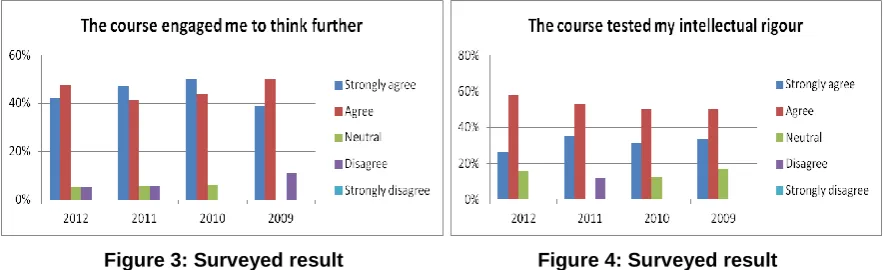
Figure 3: Surveyed result Figure 4: Surveyed result
Figure 3 and 4 indicate the participating students found the course engaging and forced them to think further, and tested their intellectual rigour. This was one of the objectives for the change in course philosophy that we hoped to achieve; that is, changing the course design from textbook learning to creating opportunities for explorative, critical and analytical
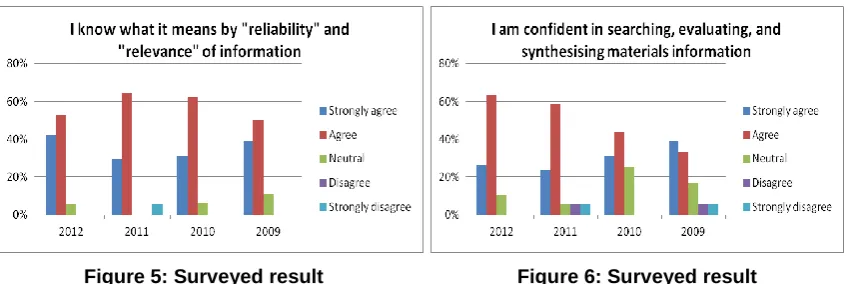
Figure 5: Surveyed result Figure 6: Surveyed result
Figure 5 indicates most students’ responses did suggest they engaged and learnt from the information evaluation activities. It forms the first two stages of the SEDSA process, in “searching” and “evaluating”. Figure 6 suggests the students were confident of the SEDSA process in 2012 and 2011, but were mixed in 2010 and 2009. Perhaps the reasons for the positive results in later years were due to the explicit articulation of the expectations and course delivery methods as mentioned earlier. The two figures do indicate that participating sample of students were changing their learning behaviours. But question here is whether there was a change in values? Our pilot had indicated that though behaviours can be
[image:5.595.85.514.339.481.2]changed through course design, values linked to learning tend to be much difficult to change.
Figure 7: Surveyed result Figure 8: Surveyed result
Figure 7 suggests the participating sample of students did find the case study quite engaging in 2012, with a gradual decline to a rather mixed result in 2009. This scenario is perhaps attributed to the examiner’s articulation of the purposes for scaffolded learning activities, clear expectations for problem solving the case study, and explicitly linking them with the learning objectives for the course.
Figure 8 suggests that the participating sample of students felt that the case study activities were relevant to their future professional practice. The authenticity of the cases and the real-life engagement with practicing professionals operated in those cases may be the reasons for the observations seen in Figure 8. However, it is noted the results in 2011 and 2010 were mixed. This observation may be due to the multi-disciplinary nature of the student cohort; a mix of mechanical and electrical students. It is interesting to note the variance in 2011 and 2012 where the same case was used in both years. One reason to explain this difference is that the course examiner focused on communicating the learning expectations behind the case study in 2012, where as the focus in 2011 was more on explaining the case itself.
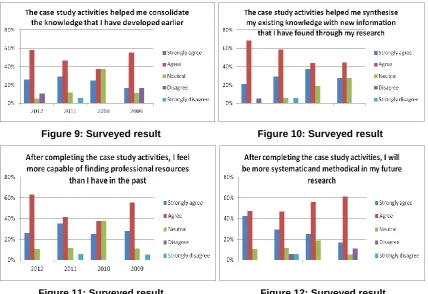
Figure 9 and 10 suggests the participating sample of students found that the case study did helped students consolidate their knowledge with further research and exploration of
Figure 9: Surveyed result Figure 10: Surveyed result
Figure 11: Surveyed result Figure 12: Surveyed result
[image:6.595.82.514.415.567.2]Figure 11 and 12 indicate the participating sample of students found, they were more able to search and critically evaluate information sources, and much more methodical in their approach to their research after the case study activities.
Figure 13: Surveyed result Figure 14: Surveyed result
[image:6.595.187.411.637.770.2]Figure 13 and 14 indicate the participating sample of students consistently found the course design did assist in their learning of the topics. This is viewed as a success in some respect, the ultimate behavioural change was observed in Figure 9, 10, 11 and 12. This is particularly so during 2011 and 2012.
Figure 15 and Table 1 indicate the participating sample of students had to change their learning approach for this course. However, it is noted that there is a progressive creep from 2009 to 2012 to more of a mixed profile. This observation may be the result of the explicit articulation of course expectations and delivery methods as mentioned earlier. In some way, it was instrumental in moderating the “shock” when such a different course design is
introduced into a mix of “traditional” 3rd year courses. Even though we saw a change of learning behaviours, one would suspect that this could be short lived when the students encounters a new course. The experience may have been transformative in setting new approaches and thinking about new learning opportunities, it is unlikely that the values linked to learning (at universities) would have changed much. In saying this, further analyses and possibly more data collection are required to confirm some of the propositions presented here in this paper.
Table 1: Qualitative answer relating to Figure 15
Observations
The responses presented in this paper suggest that this approach had some impact but were not transformational experiences (Mezirow, 1991) in changing entrenched values and
behaviours. One can suggest that these types of interventions may be a starting point to engage students in learning opportunities scaffolded within the coursework;
“He got the people who were interested involved in a real life case study which showed us
how what we were doing is used in day to day engineering”.
“The self learning required really help me to learn the material”.
“Real life examples, informal yet engaging. Made the subject interesting and enjoyable”
It was effective as a learning experience that challenged entrenched thinking and behaviours dominated by instant gratifications and surface learning habits. When students were exposed to professional sources and the professional thinking processes embedded in case study research, it did help students to understand their importance of growing and practicing from a professional knowledge base. Students also indicated that they were becoming more
discerning users of readily available references, and that they were now more able to search and evaluate them (than they were in the past);
“I learnt how to track other peoples research back to its source and draw what info I could out of other industries”.
You had to approach your learning differently in this course?
Assignment 2 in particular was more real-life based which was great and had to approach the assignment with real literature from real sources, not just calculations and info from a textbook or study book.
Most courses instruct students on material to be learned. This course encouraged students to think about what had to be learned in order to solve the problems.
well you weren't spoon feed content, it was up to you to jump in and have a shot, as well as making decisions as to whether you were correct or not, i feel a little more guidance would have been better especially in the beginning.
Assignment based learning is new to me, so instinctively I went about it the old way, but once I got used to it, I found it better.
Most respondents also said that they would expect that their future research activities would be conducted in a more systematic and methodical manner;
“The approach for this course we have found, has encourages us to research information prior to commencing any assessment, and also has helped develop better organisation as well as a more thorough brainstorming scheme. The activities we have done has really assisted”.
Professional level learning within an authentic environment creates a layer of complexity and relies on a reasonable degree of competence in one’s discipline to be truly meaningful. One would suggest that certain competencies need to be substantially addressed before this point so that basic skills are bedded down, and then be synthesized and applied in the case study. It will also allow a constructivist (Collins & O’Brien, 2003) pedagogy to be pursued consistent with the rest of the case study learning.
In this study, one suggests that the interventions were addressed in quite a behaviourist (Collins & O’Brien, 2003) manner. That fact that third year students aren’t competent critical thinkers despite continual instructions, indicates that continuing a behaviourist pedagogy will not result in a change of thinking in terms of values and learning behaviour seen within an authentic construct.
It is observed that most students who took part in the interventions are inquisitive, knowledge seeking, but lacking the efficacy and confidence to acquire, develop and synthesise
knowledge independently; given that the participants are 3rd year students. It is interesting to observe that even though the participants were of the learning style that promote deep and independent learning, the contradictory values and behaviours entrenched by formative learning experiences dictate their resultant behaviours; most likely acquired during secondary school and earlier year in tertiary education.
Most respondents found the case study learning environment challenging and enjoyable, and saw its relevance to their future professional practice. Most also indicated that they
appreciated a combination of “being told” in lectures (and study materials) and “finding out for themselves” through case study research activities. Pleasingly, all respondents reported that the case study activities helped them synthesized existing knowledge with the new
information they gathered and reviewed, and that they‘d learnt “more” and found their learning “useful for future professional practice”;
“A good course, very well run. It was delivered in a professional manner and its expectations are 'of a professional manner'. Having worked within maintenance/engineering for over 20 yrs I found this course to be relevant to the work place and delivered as if you were in one. Well done Steven on identifying the misalignment between 'schooling' and 'skilling' for future employment.”
Conclusion
This paper suggests that authentic learning environment designed around scaffolded learning opportunities have the ability to change the values and behaviours of engineering students. This can be achieved by helping students learn about the value of research skills and the importance of professional sources. The research is framed around relational and constructivist pedagogy in that if students are immersed in a rich and authentic professional environment with real-time input from industry practitioners, they are likely to be more engaged with the learning opportunities presented. It is noted that the explicit articulation of course expectation from the course examiner had a significant impact on behaviours and attitude to learning opportunities. The approach in embedding and scaffolding learning opportunities into an authentic learning situation was a reserved success.
within one course were effective in changing certain behaviours, and definitely provide renewed engagement with the learning opportunities presented, the underlying values around learning (at universities) appeared to have not changed.
There were a number of limitations to this work pertaining to the low survey response rate, and generalisations made in illustrating the preliminary analysis and observations. Further work in the form of a focus group or semi-structured interviews with future cohorts in additions to the survey will be required to validate the propositions made in this paper.
References
Berg, B.I. (2001). Qualitative Research Methods for the Social Sciences, 4th Ed, Allyn and Bacon, Long Beach.
Cochrane, S. & Goh, S (2008). Using an authentic learning environment to help students see that there’s more to research than Google and Wikipedia: a reflection. Proceedings of the 19th Annual
Conference for the Australasian Association for Engineering Education. Yeppoon, 7-10 Dec 2008.
Biggs, John (2003). Aligning teaching for constructive learning. The Higher Education Academy.
Krathwohl, D.R. (2002) A revision of Bloom’s taxonomy: An overview. Theory into Practice. 41:4, 212-218.
Boud’s (2010). Assessment 2020: Seven propositions for assessment reform in higher education, Australian Learning and Teaching Council. Available at
http://www.iml.uts.edu.au/assessment-futures/Assessment-2020_propositions_final.pdf
Collins, J. W., & O’Brien, N. P. (2003). The Greenwood Dictionary of Education. London: Greenwood Press.
Lombardi, M. M. (2007). Authentic learning for the 21st century: an overview. EDUCAUSE Learning
Initiative: Advancing Learning through IT Innovation. Retrieved July 29, 2008, from
http://net.educause.edu/ir/library/pdf/ELI3009.pdf
MacNeill, N. & Silcox, S. (2006). Pedagogic leadership: An alternative view of school leadership,
Perspectives, 1.
Mezirow, J. (1991). Transformative dimensions of adult learning. San Francisco: Jossey-Bass Publishers.
Nicol, D. (2007). Principles of good assessment and feedback: Theory and practice. From the REAP International Online Conference on Assessment Design for Learner Responsibility. 29th-31st May, 2007. Available at http://ewds.strath.ac.uk/REAP07
Ramsden, P. (2003). Learning to teach in higher education. Routledge, London and New York. Willison, J. & O’Regan, K. (2006). Research Skill Development Framework. University of Adelaide.
Available at http://www.adelaide.edu.au/rsd/framework/
Yin, R.K. (1984). Case Study Research: Design and Methods, 1st edn. SAGE, Beverly Hills.
Acknowledgements
The author acknowledges the outstanding support and contribution of Sandra Cochrane in this research and the ongoing effort to encourage and engage students in learning
opportunities within the MEC3203.