“Effectiveness of Dry Needling with Stability Exercises versus
Manual Pressure Release with Stability Exercises for
Non-Specific Low Back Pain – A Comparative study
”
A project submitted in partial fulfilment of the requirements for the degree of
MASTER OF PHYSIOTHERAPY
Submitted by
Register number: 271710204
Under the guidance
PROF. DR. C. SIVA KUMAR, M.P.T(ORTHO), MIAP,PHD,
Submitted to
THE TAMILNADU DR M.G.R MEDICAL UNIVERSITY
CHENNAI-32
P.P.G COLLEHE OF PHYSIOTHERAPY
9/1, Keeranatham road, Saravanampatti Coimbatore-641035
“Effectiveness of Dry Needling with Stability Exercises
versus Manual Pressure Release with Stability Exercises
for Non-Specific Low Back Pain – A Comparative study
”
INTERNAL EXAMINAR:
EXTERNAL EXAMINAR:
A project submitted in partial fulfilment of the requirement for the degree of
MASTER OF PHYSIOTHERAPY
To
THE TAMILNADU DR M.G.R MEDICAL UNIVERSITY,
CHENNAI-32
CERTIFICATE I
This is to certify that the dissertation entitled
“Effectiveness of Dry Needling
with Stability Exercises versus Manual Pressure Release with Stability
Exercises for Non-Specific Low Back Pain – A Comparative study” was
carried
out
by
Register
no:
271710204,
P.P.G
College
of
physiotherapy,Coimbatore-35,affliatedto the Tamil Nadu DR.M.G.R Medical
University,Chennai-32.This study was done under my guidance and direct
supervision.
PROF. DR.C.SIVA KUMAR, M.P.T (ORTHO), MIAP,PHD.,
ACKNOWLEDGEMENT
I thank GOD THE ALMIGHTY for providing me the wisdom and knowledge to complete this study successfully
.
I thank MY HUSBAND,PARENTS AND FAMILY who had given me the opportunity, guidance,encouragement and support through -out the course of my study.
I express my sincere gratefulness to our chairman DR.L.P.THANGAVELU,M.S.,F.R.C.S
and our correspondentMRS.SHANTHI THANGAVELU,M.A.,P.P.G Group of institutions,Coimbatore,for their encouragement and providing the source for the successful of the study.
I express my heartfelt and sincere thanks to my principal and projectguide PROF. DR C.SIVAKUMAR,MPT(ORTHO), MIAP,Ph.D., for his guidance,support, constant encouragement,and timely suggestions through out of this project.
I sincerely thank our vice Principal PROF. DR.M.PRADEEPA,MPT (NEURO),MIAP, for her timely guidance, furnishing words and deeds.
I express my deep gratitude for all the help and support which I received from all my
STAFFS here which made a high way in my path.
I extent my sincere gratitude to our research committee members,and all faculties for making the project coherent&for making the analytical perusal an every stage of this study without their guidance,this project would have not come through.
I extend my gratitude to MR.K.VENUGOPAL, MA, MPhil, Professor, Research& Statistics, for letting me know the intricacies of biostatistics and helping me in making my step into the field of research.
I extent my thanks to PARTICIPANTS,for their willingness and co-operation in the study.
LIST OF CONTENTS
CHAPTER
CONTENT
PAGE NO
I
1.1
1.2
1.3
1.4
1.5
1.6
INTRODUCTION
Background of the study
Need of the study
Aim of the study
Objectives of the study
Hypothesis
Operational definition
1
3
4
4
5
6
II
2.1
2.2
2.3
REVIEW OF LITERATURE
Review related to prevalence of Low
Back Pain
Review related to treatment methods
Review related to outcome measures
3.10
3.11
Procedure
Treatment technique
17
17
IV
4.1
4.2
4.3
4.4
4.5
4.6
DATA ANALYSIS ANDRESULT
Statistical tools
Analysis of descriptive data
Dependent scale t test comparing pre
and post scores of ODI
Independent scale t test comparing
Group A &Group B ODI scores
Dependent scale t test comparing pre
and post VAS scores
Independent scale t test comparing
Group A & Group B VAS scores
22
24
24
25
26
27
V
DISCUSSION
28
VI
SUMMARY AND CONCLUSION
31
VII
LIMITATION AND SUGGESTIONS
32
VIII
BIBLIOGRAPHY
33
LIST OF TABLES
TABLE NO
TOPIC
PAGE NO
I
Dependent scale t test
comparing pre and post
scores of ODI
24
II
Independent scale t test
comparing
Group
A
&Group B ODI scores
25
III
Dependent scale t test
comparing pre and post
VAS scores
26
IV
Independent scale t test
comparing Group A &
Group B VAS scores
LIST OF FIGURES
FIGURE NO
FIGURES
PAGE.NO
1
Table top position exercise
20
2
Four point kneeling single leg side lift
exercise
20
ABSTRACT
BACKGROUND OF THE STUDY:
Low Back Pain (LBP) is a common and disabling disorder among adults in India. Nonspecific back pain, with or without radiation is by poor posture or long term abnormal physiological loads. Physical deconditioning, Lack of exercise, and frequent abnormal loading result in the formation of trigger points in the musculature causing musculoskeletal imbalance.
The Management of LBP including Surgery, Drug therapy and non-medical interventions. Clinicians have been seeking for beneficial non-drug therapies including acupuncture, exercise, and multidisciplinary and behavioural treatment.
The objective of the present study is to determine the effectivenessof dry needling with stability exercises versus manual pressure release with stability exercises for chronic Non-specific low back pain.
METHODOLOGY:
In this experimental study 20 patients with Non-Specific LBP were randomly divided into two Group (A&B). Group A was given Dry Needling with Stability Exercises, and the other Group B was given Manual Pressure Release with Stability Exercises.
Visual Analogue Scale (VAS), Oswestry Low Back Pain Disability Index ODI), Modified Schober Index (MSI)were taken to compare before and after treatment regime of 4 weeks.The baseline measurement was compared to the Data.
RESULTS:
CONCLUSION:
This study found that the reduction of pain, lumbar flexibility and functional improvement were seen in both the Groups.
But Dry Needling with Stability Exercises in Group A has shown more significant effect than Manual Trigger Release with Stability Exercises in Group B.
KEYWORDS
:1
CHAPTER I
INTRODUCTION
1.1 BACKROUND OF THE STUDY:
Chronic Low Back Pain has been a major public health challenge in worldwide,contributing great medical burden and job related disability affecting job performance.About 60-80 per cent of adults experience LBP at some point in their life.
Nonspecific back pain, with or without radiation is by poor posture or long term abnormal physiological loads.Cornwall et al stated that spasm in the Multifidus muscle can cause local and reflected pain. Currently clinicians have been focusing on Manual Therapy techniques to treat the muscular dysfunctions related to spasm andMyofascial Trigger Points (MTrPs).
Dry Needling(DN) as a relatively new treatment modality developed byDr Chan Gunn is often used to treat musculoskeletal pain frequently chronic pain.The DN technique applied to Trigger Points(TrPs),reduces the number and sensitivity of TrPs related to pain and mechanical disruption of TrPs.
Trigger pointsare defined as hyperirritable points in a taut band of skeletal muscles that create pain and cause reflected pain when they are palpated.TrPs are clinically classified as active and latent.Active TrPs are spontaneously painful and they cause reflected pain that produces symptoms when they are palpated.Latent TrPs do not create spontaneous pain but they are a source of reflected pain.
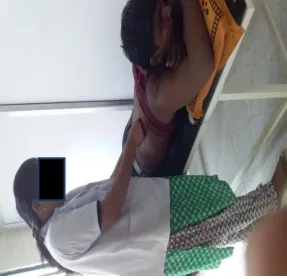
Manual Pressure Release Technique(MPR)known as sustained manual pressure, ischemic compression,inhibition and trigger point release,is the one of the manual therapy technique utilized for the treatment of TrPs. It works through the principle ofSlow Sustained Stretch that produces lengthening in muscle fibresresults in ease of tightness and relief of pain.
2
Core stabilization exercises result in improved function and reduced pain in CNSLBP. Neural adaptation from core training include more efficient neural recruitment patterns, faster nervous system activation, improved synchronization of motor units and a lowering of neural inhibitory reflexes.
In their systematic review, Wang et all found that core exercises produced better outcomes than general exercises during the initial 3 months of intervention in LBP.
3
1.2 NEED OF THE STUDY
Myofascial Trigger Points are one of the common causes for back pain resulting in musculoskeletal imbalance and poor kinetic chain.
4
1.3 AIMS OF THESTUDY
:To know the significance of Dry Needling with stability exercises and Manual Pressure Release Techniques with stability exercises and compare the effectiveness of both treatments in treating Low Back Pain.
1.4 OBJECTIVESOF THE STUDY
To determine the efficacy of Dry Needling with stability exercises.
To determine the efficacy of Manual Pressure release with stability exercises
5
1.5 HYPOTHESIS
NULL HYPOTHESIS
There will not be significant reduction in pain and functional improvement with Dry Needling with Stability Exercises versus Manual Pressure Release with Stability Exercises in cases with Low Back Pain.
ALTERNATIVE HYPOTHESIS
6
1.6 OPERATIONAL DEFINITION
CHRONIC LOW BACK PAIN
Chronic back pain
is defined as pain that lasts for more than three months. It is often progressive and the cause can be difficult to determine.MINNESOTA COMMUNITY MEASUREMENT -2010
NON - SPECIFIC LOW BACK PAIN (NSLBP):
NSLBP is described as a diagnosis of exclusion where pain caused by a suspected or confirmed serious pathology or presenting as a radicular syndrome has been ruledout.
The Diagnosis is dependent on the Clinician satisfaction of having not Specific Causes.
REVIEW ON NATIONAL GUIDELINES.2017
DRY NEEDLING (DN).
US-based,National physical therapy associationand several state boards of physical therapy have defined Dry Needling as an intramuscular procedure. i.e. The insertion of needles into noduleswithin taut bands of muscle,more commonly referred to as Trigger Points or Myofascial Trigger Points. More specifically, these professional organizations have equated the procedure of dry needling with the term “intra muscular manual therapy”(IMT)or “trigger point Dry Needling”(TDN).
IMT and TDN are individual aspects of Dry Needling. Each describes a single framework, paradigm, or approach that falls under the much larger field of Dry Needling.
7
MANUAL PRESSURE RELEASE (MPR).
Simons et al defined Ischemic compression as Trigger points pressure release and described as application of slowly increasing, non- painful pressure over Trigger points until a barrier of tissue resistance is encountered. Contact is maintained until the tissue barrier releases and pressure is increased to reach a new barrier to eliminate the trigger point tension and tenderness.
DIMITRIOS KOSTOPOULOS 2008.
STABILITY EXERCISES
Panjabi suggested that core stability is the integration of passive spinal column, active spinal muscles and the neural control unit which when combined maintaining the intervertebral range of motion with in a safe limit to enable activities to be carried out during daily living.
HIBBS et al, 2008.
TransversusAbdominis,LumbarMultifidus, andother Paraspinal,Abdominal, Diaphragmatic, Gluteal muscles and Pelvic floor are targeted in core stabilization exercises.
MUHAMMAD WASEEM AKHTAR : Pak J Med Sci 2017.
OSWESTRY DISABILITYINDEX(ODI)
ODI was used to measure functional disability level. This self-administered questionnaire consists of 10 Items; each having a score of 0 to 5.ODI total scores ranges from 0 to 50.
8
VISUAL ANALOGUE SCALE(VAS
)Intensity of pain was evaluated with VAS which is reliable and valid measure of pain intensity and it is sensitive to clinical changes in pain .A zero at left end of scale indicates no pain while 10 indicates a worst imaginable pain.
EMINE HTet al.2017
MODIFIED SCHOBER INDEX (MSI):
Lumbar Mobilitywas assessed in using MSI. Patient is standing with his back towards the examiner. The examiner determines the location of the lumbosacral junction by locating the dimples of Venus. The intersection of the top of the dimples of Venus is marked by drawing a horizontal line. This line acts as the landmark. The second line is marked 10 cm above the first line and the third is marked 5 cm below the first line. The difference between the measurements in erect and flexion indicated the mobility of lumbar spine. The validity of this method was proved against radiograph.
9
CHAPTER II
REVIEW OF LITERATURE
2.1 REVIEW RELATED TO PREVALANCE OF LOW BACKPAIN(NON
SPECIFIC LOW BACK PAIN)
ANNA CITKO et al (2018)
He conducted a study in the Department of Family Medicine at Medical University of Bialystok,Poland on prevalence and recurrence of NSLBP and Chronic NSLBP among medical personnel involving 609 patients with30-60 years age.The results of their study indicate that with each year length of employment the frequency of recurrent non-specific back pain decreases significantly, while the frequency of CNSLBP increases significantly. Sedentary lifestyle,such as excessive consumption of coffee increases the risk of NSLBP recurrence 16 times. Predictive factors for disability associated with NSLBP are overweight and obesity. In conclusion over 40% of recurring NSLBP is an important health concern in Nursing and Paramedical professions.
SUDHIR GANESAN et al (2017).
10
HAQ SA et al (2005)
He carried out this survey in a Rural Community, an Urban Slum, and an Affluent Urban Community with samples of 2635,1317,1259 Adults respectively. He did this study in Department of Medicine at Bangabandhu Sheikh Mujib Medical University Shahbagh, Indonesia. Through door- to- door survey with trained interviewers, identified subjects with musculoskeletal pain. Community Oriented Program for Control of Rheumatic Disorders Questionnaire, adapted and validated Bengali version was used as outcome measure. The prevalence of NSLBP were 6.6% in rural,9.9% in urban slum,9.2% in urban affluent community
2.2 REVIEW RELATED TO TREATMENT TECHNIQUES
DRY NEEDLING TECHNIQUE
LIU L,et al(2018)
11
CASTRO SANCHEZ AM,et al(2018)
He did this study in a Department of Nursing, Physical therapy and Medicine, at University of Almeria,Spain. This single- blind Randomized Controlled Trial was conducted in 64 subjects with fibromyalgia to compare the effect of Dry Needling with Myofascial Release.The conclusion is that DN showed higher improvement than Myofascial Release for pain pressure thresholds, body pain vitality and social function,general pain intensity, quality of sleep, fatigue, anxiety,depression and fibromyalgia symptoms.
EMINE HANDAN TUZUN et al(2017)
This single-blind, Randomized Controlled Trial was carried out at the Eastern Mediterranean University Faculty of Health Sciences Department of Physiotherapy and Rehabilitation.34 patients with age 35 to 70 with Chronic LBP were included in the study. The conclusion of the study is that DN technique is useful in the management of LBP with disc herniation.
CEREZO-TELLEZ E et al (2016)
12
MANUAL PRESSURE RELEASE TECHNIQUE
RICHA K et al (2018)
He did this study in the Department of Physiotherapy Prakash Institute of Physiotherapy and Rehabilitation UP,India. The aim of the study is to compare the clinical efficacy of Manual Pressure Release(MPR) and Muscle Energy Technique(MET) in 45 female participants with neck pain with age 18 to 30.the conclusion of the study is that MPR and MET are equally effective in reducing painmuscle tenderness and improving neck disability.
CHAO YW et al(2016)
He conducted this study in 31 subjects in School and Graduate Institute of Physical Therapy, College of Medicine, National Taiwan University, Taiwan. He did a Randomized Control Trial to investigate the effect of Manual Pressure Release (MPR) alone and in combination with Kinesio taping in MTrPs. The conclusion of the study is that MPR and MPR with Kinesio taping are effective in reducing pain in these subjects.
CORE STABILITY EXERCISES.
BRIAN JCOULOMBE et al (2017)
13
MUHAMMAD WASEEM AKHTAR et al (2017)
This is Single Blinded Randomized Controlled trial that was conducted at the department of Physical Therapy Orthopaedic and Spine Institute, Lahore,in which 120 subjectswith chronic nonspecific LBPwith the age 20to 60 were participated.The conclusion of the study is that core stabilization exercise is more effective than routine physical therapy exercises in terms of greater reduction in pain in patients with Non-Specific Low Back Pain.
2.3 REVIEW RELATED TO OUTCOME MEASURES
OSWESTRY DISABILITY INDEX (ODI).
GABEL CP,et al.(2017)
He did this study in Coolum physiotherapy sunshine coast, Queensland, Australia. Sample size of 35,263, age 15-99 were included to analyse the factor structure of the ODI in a large symptomatic LBP population using exploratory and confirmatory factor analysis. The conclusion is that ODI demonstrated a one factor structure in large LBP sample, two-factor model was not found appropriate for constructs of dynamic and static activity moreover the use of single summary score for ODI psychometrically supported but practical limitation reported in clinical and research settings.
CHIAROTTO A et al(2016)
14
VINCENT JI et al (2014)
He did this study in university of western Ontario, at Department of Health and Rehabilitation Sciences,London. Thirty Subjects were included with a mean age of 42.7 years (22-69)with low back pain to assess the psychometric properties of the ODI-Tamil version. The conclusion of the study is that ODI-Tamil version is a valid and reliable tool to measure patient disability in Tamil speaking with LBP.
FROST H,et al(2008)
15
CHAPTER III
MATERIALS AND METHODOLOGY
3.1 STUDY DESIGN
This study was a comparative study.
3.2 STUDY POPULATION
Subjects with Non-specific Low Back Pain were participated in this study.
3.3 SAMPLING SIZE
The sampling size was 20 patients
3.4 SAMPLING TECHNIQUE
2o Subjects were randomly divide in to 2 Groups.
3.5 STUDY SETTING
The study is conducted at ASHWIN MULTISPECIALITY HOSPITAL, GANDHIPURAM.COIMBATORE.
3.6 STUDY DURATION
The study duration was 4 WEEKS
3.7 SELETION CRITERIA
Inclusion criteria
Subjects with history of back pain more than 3 months without any specific pathology and causes.
Subjects with Myofascial trigger points and its symptoms.
Subjects with poor posture with the low back ache resulted from work related causes
Lumbar Disc Herniation.
16
Exclusion criteria
Acute LBP
History of pelvic,spine,surgery,
Acute inflammatory conditions,
Frequent neurological deficits,
LumbarSpondylolesthesis, spinal stenosis,spinal tuberculosis,spinal fracture,
Oncological problems and Pregnancy
3.8 PARAMETERS
Visual Analogue Scale Oswestry Disability Index
Modified Schober Method
3.9 MATERIALS
Treatment table,
VAS scoring sheet,
Inch tap,
Oswestry Disability Index scoring sheet ,
DN needle(acupuncture needle),
DN Needle disposing box,
Alcohol pad,
Cold/hot pack
Skin moisturizer,
Couch,
Pillow,
17
3.10 PROCEDURE
The subjects referred to PPG College of Physiotherapy, Outpatient Department were considered for study. Informed consent was taken from the Participants and they were grouped into two groups i.e. Group A and Group B. Subjects were assessed for baselines data’s of VAS and ODI.
3.11TREATMENT TECHNIQUES
GROUP A: DRY NEEDLING WITH STABILITY EXERCISES
Patients were assessed for needle phobia, hypertension or under any other medication like anti-depression drugetc .
Patients were examined for MTrPs using pinch and flat palpation bilaterally as a taut band either as active TrPs or latent TrPs.
MUSCLE SELECTION
:
These musculature were selected based on different reasons.
Multifidus –fundamental segmental stabilizer,
QuadratusLumboram-spinal stabilizer,
Erector Spinae, Hamstrings, Gluteal Medias,Gastrocnemius-active TPs frequently seen in these muscles.
Patients position for needling Technique
: Gluteal Medias–prone lying position and vertical needling at ‘90’ degree
18
Trigger Pointssensitivity
TrPs sensitivity in the stated muscles were determined by perpendicular thumb pressure on TPS sensitivity levels were recorded using a ranking from 0 to2.
0-Indicates thumb palpation increased sensitivity in TPs area without pain indicates intensity of pain increased and patient reports pain when asked.
1- Indicates that pain intensity increased and Patient spontaneously notes the pain when pressure is applied.
2 -The TPs sensitivity on each muscle were summed and the total recorded as TrPs sensitivity.
Each active MTrPs was diagnosed based on Simons diagnostic criteria- after palpating TrP ,It was marked with pen.Then wiped with alcohol pad.
32 Gauge needle with its plastic guide tube in place was placed over aMTrPs. A tapping motion was used to advance the Needle. Needle movement was performed to elicit twitch response.Needle were kept in place for 5 mints at the 2 mints the needle was rolled to enable re-stimulation or still the trigger releases.
Once needle was removed from a MTrPs,the area was disinfected with a alcohol pad,and asked or observed for side effects such as soreness,local haemorrhages, etc.
Treatment regime:
Two muscles bilaterally treated per session with DN Technique. Followed by Stability Exercises with 5-10 Mints rest interval
20 mints of DN followed by 30 mints of stability exercises per session. Three sessions per week on alternate days for 4 weeks.
19
STABILITY EXERCISES
.Exercises were performed with Abdominal and Pelvic floor Muscles drawing in manoeuvre; maintaining neutral spine with abdominal and pelvic floor muscle activation.
Following exercises were performed in 1st &2nd weeks Table top position
Bridging
Four point kneeling with single arm or single leg lift Bent leg side lift
side leg lift
Third week exercises program Dead bug,
Bridging with single leg raise
Four point kneeling with side leg lift Super- man position,
Fourth weekexercises program
Dead bug,
Super- man position, Side Plank,
20
PHOTOGRAPHIC REPRESENTATION
[image:34.595.72.296.301.426.2]FIGURE: NO: 1 Table-top position exercise
FIGURE :3: Four point kneeling with single leg side lift exercise
[image:34.595.40.328.479.758.2]21
GROUP B:MANUAL TRIGGER RELEASE WITH CORE STABILITY
EXERCISES
For MPR technique the participants were instructed to be relaxed in lying position prior to the application of pressure.
Muscles selection, Subjects positioning,palpation techniques,treatment regime and exercise regime as per dry needling were applied.
22
C
HAPTER IV
DATA ANALYSIS AND RESULTS
4.1 STATISTICAL TOOLS
Statistical analysis is done by using Dependent sample(paired)“t” test and Independent sample(unpaired) “t” test
23
INDEPENDENT SAMPLE “t” test:
24
4.2 ANALYSIS OF DESCRIPTIVE DATA
The descriptive data namely pre and post treatment scores using ODI and pre
and post VAS scores in Group A and Group B was analysed using dependent
sample” t” test and independent sample “t” test .
4.3 DEPENDENT SAMPLE” t’’ TEST:
Comparison of Group ‘A’& ‘B’ pre and post treatment values of ODI scores
TABLE I
S.NO VALUES GROUP A GROUP B
1 Sum of case wise differences 123 74 2 Sum of square case wise differences 1,811 636 3 Mean of case wise
Differences
12.3 7.4
4 Standard deviation 5.75 3.13
5 Standard deviation error mean 1.818 0.989 6 Number of patients 10 10
7 Degrees of freedom 9 9
8 t value 6.76 7.48
25
4.4 INDEPENDENT SAMPLE” t’’ TEST:
Comparison of ODI scores between Group A& Group B
TABLE II
In this Alpha is 0.05, Degrees of freedom is 18, Criticalvalue +2.10 to -2.10; If the‘t’ value is lesser than -2.10 or greater than + 2.10 the hypothesis is rejected. So the hypothesis is rejected and the treatment which is received by Group A is more effective than the treatment received by Group B in this study.
S.NO VALUES RESULTS
1 Mean x1 12.3
2 Mean x2 7.4
3 df1 9
4 df2 9
5 Ss1 297.54
6 Ss2 88.164
7 S2p 21.428
8 N 10
9 Df 18
26
VISUAL ANALOGUE SCALE (VAS)
4.5DEPENDENTSAMPLE‘t’ TEST:
Comparison of Group “A” &”B” pre and post treatment VAS score
TABLE III
S.NO VALUES GROUP A GROUP B
1 Sum of case wise differences 50 38 2 Sum of square case wise differences 262 152 3 Mean of case wise differences 5.0 3.8 4 Standard deviation 1.154 0.918 5 Standard deviation error 0.364 0.290
6 Number of patients 10 10
7 Df 9 9
8 t value 13.73 13.10
27
4.6INDEPENDENTSAMPLE‘t’ TEST
Comparison of VAS score between GROUP A& GROUP B
TABLE IV
S.NO VALUES RESULTS
1 Mean x1 5.0
2 Mean x2 3.8
3 df1 9
4 df2 9
5 Ss1 11.979
6 Ss2 7.578
7 S2p 1.08
8 N 10
9 Df 18
10 T 2.586
28
CHAPTER V
DISCUSSION
In this study the effect of Dry Needling with Stability Exercises versus the effect of Manual Pressure Release with Stability Exercises in the management of Chronic Non- Specific Low Back Pain was studied and the results were compared.
Approximately 84%of people are reported to have an experience of back pain without certain pathology, referred to as Non-Specific Low Back Pain.Chronic Non -Specific Low Back
Pain (CNSLBP) consists of back pain for more than 3 months, pain between the 12th rib and the top folds gluteal with or without leg pain, and abnormal stability, coordination due to spinal muscle imbalance.
The objective of the study is to compare the effect of the above mentioned two treatment methods in the management of CNSLBP. Unlike the acute LBP, the CLBP lead to Personal, Psychological, Social, and Financial problems in patients with CLBP.
The Panjabi’s theory, of spinal stability consists of active, passive and neural components,are called as Spinal Stability Model.Stabilization exercises are classified into local or core stabilization exercises and global stabilization exercises. These types of stabilization exercises are aimed at improving the neuromuscular control, endurance, strength of muscles central to maintain dynamic spinal stability.
Core stabilization exercises are designed to improve spinal segmental stability and coordination in lumbar muscles as instability of the lumbar spine is the most important cause for chronic LBP though loss of muscular strength and neurologic imbalances are contributes to it.
29
Dry needling with stability exercises Group A would be the most effective treatment approach in patients with CNSLBP with statistical improvement in pain reduction, improvedlumbar flexibility and improvement in function is seen in Group A with 4 weeks of follow up measurements. Manual pressure release with stability exercises would be another effective treatment in the management of CNSLBP.
According to Rosen Blueth’s law of denervation, denervated tissue develop super sensitivity, in the musculature this manifests as muscle shortening, development of MTrPs. TrPs causes reduced functional capacity of healthy muscle by mechanical inefficiency.
Trigger points can be deactivated through many methods, such as MPR,stretching and cold spray with stretching and needling have reported.
MPR results in temporary further local ischemia during the application of pressure followed by reactive hyperaemia following the pressure release. This additional blood supply relieves hypoxic state and provides ATP for metabolic demands.Pain relief from counter irritant effect or spinal reflex mechanism for the relief of muscle spasm.
MSI ,VAS,ODI used as outcome measures in this study to assess the quantity of the lumbar flexibility, pain level, and functional disability pre and post level treatment respectively. In this study MSI as a only clinical measurement showed better improvement after treatments. When the out-come measures compared within the same group pre and post treatment level,there is considerable improvement in both the groups.
When pre intervention mean was compared with VAS score, it was found that there was statistically significant difference in means of VAS score for pain between groups.
30
The participants demonstrated a poor ODI score and high VAS score before treatment. Since the dry needling and stabilization exercises improved lumbar flexibility, and functional ability,the patients scored higher ODI score after treatment and lesser in the pain scale (VAS).
In ODI the pain intensity and disability had reduced and showed significant improvement within Group A and Group B separately. When compared group A showed better reduction in pain and better improvement in disability than Group B. The pain reduction was measured using VAS. The subjects showed significant pain relief with in Group A and Group B.
According to the Cochrane collaboration, DN was stated to be the best method of treatment in ChronicTrPs; and recommended as a significant treatment choice for patients in CLBP with TrPs which supports the result of this study.
The DN technique applied to TrPs, reduces the number and sensitivity of TrPsrelated to pain and reduces peripheral - central sensitization, restoration of joint range of motion, and muscle activation.
Group B who received MPR with stability exercises also showed pain reduction, improvement in lumbar function and disability. As it is not the better treatment option to treat the deep seated trigger points in the muscles that contribute for lumbar stability y and mobility though most research performed supported the efficacy of MPR in treating TrPs.
Depending on the clinical and statistical analysis, this study concluded with the result that
dry needling with stability exercises is the best treatment option in the management ofchronic non- specific low back pain in reducing pain and improving lumbar flexibility and functional ability.
31
CHAPTER VI
SUMMARY AND CONCLUSION
SUMMARY
This present study is a comparative study on the effectiveness of Dry Needling with Stability Exercises versus Manual Pressure Release with Stability Exercises in the management of
Chronic Non-Specific Low Back Pain.
20 Subjects were selected based on the selection criteria and randomized sampling method was used to allocate the subjects into two groups. i.eGroup A and Group B.
Group A was administered with Dry Needling with Stability Exercises and Group B was administered with Manual Pressure Release with Stability Exercises and the pre and post test results are evaluated by using VAS,ODI,MSI as the outcome measures.
CONCLUSION:
32
C
HAPTER VII
LIMITATIONS AND SUGGESTIONS
LIMITATIONS
Patients included in this study were limited to those referred to a single out Patient department of PPG College of Physiotherapy
Subjects were evaluated and treated by a single investigator
Study was conducted on a small sample size which might affect the generalization of results.
The study was limited to particular age group.
SUGGESTIONS
Long term follow up is needed to evaluate sustained effect of the treatment and to know the reliability and validity of the treatment.
Studies should be conducted on both acute and chronic cases.
Studies can be conducted on individual of all age group
33
C
HAPTER VIII
BIBLIOGRAPHY
REFERENCES:
1.AliBozorgmehr,ShahlaZahednejad;Relationship between muscular impairments,pain,and disability in patients with chronic non- specific low back pain: A cross sectional study. Journal of exercise rehabilitation 2018;14 (6);1041-1047.
2.Haq SA, Darmawan J, Islam MN :Prevalence of rheumatic disease and associated outcomes in rural and urban communities in Bangladesh. A COPCORD study. J Rheumatol.2005 Feb32(2):348-53.
3.SudhirG,Anita SA:Prevalence and risk factors for low back pain in 1,355 young adults: A Cross-sectional study.Asian Spine J 2017;11(4): 610-617
4.Marienke Van Middelkoop, Sidney M Rubinstein;A systematic review on the effectiveness of physical and rehabilitation interventions for chronic non-specific low back pain.Eur spine J(2001)20:19-39
5.Emine Handan Tuzun,SilaGildir:Effectiveness of dry needling versus a classical physiotherapy program in patients with chronic low back pain : a single-blind, randomized, controlled trial.J.Phys.Ther.Sci.29:1502-1509,2017.
6.Cerezo-tellez E,Torres-Lacomba M:Effectiveness of dry needling for chronic non- specific neck pain :a randomized ,single-blinded, clinical trial.Pain.2016 Sep;157(9)
34
8.Castro Sanchez AM,Garcia Lopez H:Improvement in clinical outcomes after dry needling versus myofascial release on pain pressure thresholds ,quality of life, fatigue, pain intensity, quality of sleep, anxiety, and depression in patients with fibromyalgia syndrome.
Disabil Rehabil.2018 Apr 23:1-12.
9.Lymn H Gerber,SiddharthaSikdar;Beneficial effects of dry needling for treatment of chronic myofascial pain persists for 6 weeks after treatment completion.PMRAuthor manuscript;available in PMC 2018 February 01.
10.LeinidKalichman, Simon Vulfsons:Dry needling in the management of musculoskeletal pain.JABFM September-october 2010 vol.23 no.5
11.Chao YM, Lin JJ:Kinesio taping and manual pressure release :short term effects in subjects with myofascial trigger point. J Hand Ther.2016 Jan-Mar;29(1):23-9.
12.RichaK,Amir I: Controlled intervention to compare the efficacies of Manual Pressure Release and the Muscle Energy Technique for treating mechanical neck pain due to upper trapezius trigger points. Journal of pain research 2018:11
13.Sahem Ahmad Mousa Al-Shawabkah: Manual pressure release versus positional release in treatment of myofascial trigger point of the upper trapezius muscle. A Thesis
14.HughGemmell,Peter Miller: Immediate Effect of Ischaemic compression and trigger point release on neck pain and upper trapezius trigger points; A randomized controlled trial.clinical chiropractic (2008) 11,30-36.
15.Brian J Coulombe,Kenneth E Games:Core Stability Exercises versus General Exercises for Chronic Low Back Pain.Journal of Athletic training 2017;52(1):71-72
35
17.EshaA.Bhadauria,PeeyooshaGurudut;Comparative effectiveness of lumbar stabilization,dynamic strengthening and pilates on chronic low back pain. Randomized clinical trial.journal of exercise rehabilitation 2017;13(4):477-485.
18.Angela E Hibbs,Kevin G:Optimizing performance by improving core stability and core strength.sports med 2008;38 (12):995-1008
19.Arsalan G Horabanpour,MahmoudrezaAzghani: Effectiveness of McGill Stabilization exercises and conventional physiotherapy on pain,functional disability and active back range of motion in patients with chronic non-specific low back pain.J.phys Ther.Sci.30:481-485,2018
20.Chiarotto A, Maxwell LJ. Roland –Morris disability questionnaire and Oswestry disability index:which has better measurement properties for measuring physical functioning in nonspecific Low Back Pain?Systemic review and meta-analysis.Phys ther.2016oct;96(10):1620-1637.
21.Frost H,LambSE:Responsiveness of a patient specific outcome measure compared with the Oswestry Disability Index v2.1 and Roland –Morris Disability Questionnaire for patients with sub-acute and chronic low back pain.Spine(Phila Pa 1976.2008 oct15;33(22):2450-7;discussion 2458.
22.Gabel CP, Cuesta-Vargas A:The Oswestry disability index confirmatory factor analysis in a sample of 35,263 Verifies a One –factor structure but practically issues remain. Eur Spine J.2017 Aug;26(8)2007-2013.
23.VincentJI,Macdermid JC:Translation of Oswestry Disability Index into Tamil with cross cultural adaptation and evaluation of reliability and validity.Open OrthoJ.2014 Jan24;8:11-9.
36
A
NNEXURE I
INFORMED CONSENT FORM
TITLE:
Effectiveness of Dry Needling with Stability Exercises
versus Manual Pressure Release with Stability Exercises for
Non-Specific Low Back Pain – A Comparative study
”
PURPOSE OF THESTUDY:
I---have been informed that this study will help clinicians and Therapists to find out the short term effectiveness of dry needling with stability exercises and manual pressure release with stability exercises –A comparative study
PROCEDURE:
I---understand that I will undergo the experiment with Prof .DR .C. Siva Kumar M.P.T(ORTHO),MIAP,PhD.,under the direct supervision of the physiotherapist. I am aware that I have to follow therapist’s instruction as has been told to me.
RISK AND DISCOMFORT
I--- understand that there are no potential risks associated with this procedure, and understand that---will accompany me during this procedure .there are no known hazards associated with this procedure.
CONFIDENTIALITY:
37
PHOTOGRAPHY CONSENT:
---have explained to me that photography are required in order to illustrate various aspects of the study for the thesis and for the articles and at the presentation or conference. By giving my consent I authorize--- to use any of the photographs taken of me in printed format, in slides for presentation.
REQUEST FOR MORE INFORMATION:
I---understand that I may ask any question about the study at any times---,are available to answer my Question.
Copy of this concern form will be given to me keep for my careful reading.
REFUSAL OR WITHDRAWAL OF PARTICIPATION:
I---understand that my participation is voluntary and I may withdraw consent and discontinue participation at any time after he has explained the reasons for doing so.
INJURY STATEMENT:
I understand that the diagnostic /treatment procedure,under the guidance of my Therapist, is likely to cause any/no injury.in such case medical attention will be provided,but no compensation will be provided.
38
I have read and I have understood this concern to participate as a Subject in this study.
--- ---
SUBJECT DATE
--- ---
WITNESS SIGNATURE DATE
I have explained (---) the purpose of the research, the procedure required and the possible risks and benefits, to the best of my ability.
--- ---
INVESTIGATOR DATE
39
ANNEXURE –II
ORTHOPEADIC ASSESMENT
Name : Age : Occupation : Address : Chief complaints :
HISTORY
Present medical history : Past medical history : Drug history : Surgical history : Personal history : Family history : Socio-economic history : Psychological history : Environmental history : Prior level of activity : Associated problem :
Pain history
Site : Side : Onset :
40
Nature : Intensity : Frequency : Aggravating factors : Relieving factors :
VITAL SIGNS
Temperature : Blood pressure : Heart rate : Respiratory rate :
OBJECTIVE EXAMINATION
On observation : Built :
Posture :
Attitude of limbs : Swelling :
Bony contours : Soft tissue contours : Deformities : Gait :
Tropical changes : Respiration : Type :
Depth : Pattern :
Mode of ventilations : External appliances :
41
ON PALPATION
Tenderness : Warmth : Edema : Pulse :
ON EXAMINATION
Range of Motion :
Region Active Passive Right Left Right Left
End feel : Muscle power : Deep tendon reflexes : Sensation : Limb length discrepancy : Limb girth measurements Postural assessment : Lying : Sitting : Standing : Gait : Stride length : Walking base : Stride period : Single and double support Cadence
Stance swing ratio : Step length :
42
Step period : Abnormal gait : Deformity : Functional assessment : Special test : Investigation : Diagnosis : Problem : Aims : Means : Home program :
43
ANNEXURE III
VISUAL ANALOGUE SCALE
Visual analogue scale (VAS) is a measurement instrument that tries to measure a charteristic or attitude that is believed to range a continuum of values and cannot easily be measured directly.
44
ANNEXURE IV
45
ANNEXURE V
48
ANNEXURE VI