City, University of London Institutional Repository
Citation
:
Sarkisyan, Anna (2011). Three essays on securitisation. (Unpublished Doctoral thesis, City University London)This is the unspecified version of the paper.
This version of the publication may differ from the final published
version.
Permanent repository link:
http://openaccess.city.ac.uk/1171/Link to published version
:
Copyright and reuse:
City Research Online aims to make research
outputs of City, University of London available to a wider audience.
Copyright and Moral Rights remain with the author(s) and/or copyright
holders. URLs from City Research Online may be freely distributed and
linked to.
THREE ESSAYS ON SECURITISATION
ANNA SARKISYAN
A thesis submitted as a part of the requirements for the degree of
Doctor of Philosophy in Finance
Faculty of Finance
Cass Business School
City University London
ii
DECLARATION OF COPYRIGHT
This thesis may be copied in whole or in part without further reference to the author.
The permission covers only single copies made for study purposes, subject to normal
iii
ACKNOWLEDGEMENTS
I would like to sincerely thank my supervisors, Dr. Barbara Casu, Prof. Andrew
Clare, and Prof. Stephen Thomas, for their invaluable guidance and support throughout
the preparation of this thesis. I would also like to express my sincere and deep gratitude
to Barbara for her personal guidance and care.
I thank my PhD examiners, Dr. Elena Kalotychou and Prof. Phil Molyneux, for
their constructive comments and suggestions on the thesis.
I also gratefully acknowledge the PhD bursary received from Cass Business
School and the research support provided by the School throughout the programme.
A special thank you to Dr. Simon Wolfe, who encouraged me to pursue a PhD.
Finally, I am most thankful to my family for their lifetime encouragement and
support. And a very special ευχαριστώ to Christoforos for going with me all the PhD
way with continued understanding, patience, and optimism. Without these people
iv
v
TABLE OF CONTENTS
ABBREVIATIONS ... X
ABSTRACT ... XI
1 INTRODUCTION ... 1
1.1 Introduction ... 1
1.2 Theoretical Framework for the Research ... 3
1.3 Objectives and Contributions ... 4
1.4 Data ... 5
1.5 Empirical Design and Main Findings ... 6
1.6 Conclusion ... 8
1.7 Outline of the Thesis ... 9
2 BACKGROUND ON SECURITISATION ... 11
2.1 Definition and a Brief History of Securitisation ... 11
2.2 Securitisation Process ... 16
2.2.1 Participants and their Roles 16 2.2.2 Securitisation Mechanics 20 2.3 Benefits ... 29
2.4 Risks ... 30
2.4.1 Credit Risk 31 2.4.2 Liquidity Risk 32 2.4.3 Capital Risk 32 2.4.4 Reputation Risk 32 2.5 Summary ... 33
3 LITERATURE REVIEW ... 34
3.1 Motivation for Securitisation ... 34
3.1.1 Economic Motivations 34 3.1.2 Accounting-Based Motivations 41 3.2 Credit Enhancements ... 44
3.2.1 Motives for Credit Enhancements 44 3.2.2 Implications of Credit Enhancements 46 3.3 Lending Behaviour ... 49
vi
4 ESSAY I: SECURITISATION AND BANK PERFORMANCE ... 54
4.1 Introduction ... 54
4.2 Methodological Issues in Estimating Securitisation Effects ... 57
4.3 Propensity Score Matching Approach ... 60
4.4 Data and Preliminary Univariate Analysis ... 66
4.5 Propensity Score Matching Analysis ... 71
4.5.1 First-Time Securitisers and Non-Securitisers 71 4.5.2 Implementation of the Propensity Score Matching 71 4.6 Empirical Results ... 80
4.7 Conclusions... 83
5 ESSAY II: SECURITISATION AND BANK CREDIT RISK TAKING ... 85
5.1 Introduction ... 85
5.2 Data and Descriptive Statistics ... 87
5.2.1 Data and Sample Selection 87 5.2.2 Descriptive Statistics 89 5.3 Empirical Specification... 95
5.4 Empirical Results ... 100
5.4.1 Primary Regression Analysis 100 5.4.2 Robustness Tests 104 5.5 Conclusions... 107
6 ESSAY III: SECURITISATION STRUCTURE AND BANK INSOLVENCY RISK 109 6.1 Introduction ... 109
6.2 Data and Descriptive Statistics ... 113
6.2.1 Data and Sample Selection 113 6.2.2 Descriptive Statistics 115 6.3 Empirical Specification... 125
6.3.1 Bank Risk 125 6.3.2 Securitisation 127 6.3.3 Control Variables 127 6.3.4 Model Specification 128 6.4 Empirical Results ... 129
vii
7 CONCLUSION ... 139
8 REFERENCES ... 144
APPENDICES ... 152
Appendix A Commercial Bank Data Definition and Construction ... 153
Appendix B Bank Holding Company Data Definition and Construction ... 155
Appendix C Correlation Matrix for the Determinants of Bank Credit Risk Taking… ... 160
Appendix D Hausman Specification Test for the Determinants of Bank Credit Risk Taking ... 161
Appendix E Correlation Matrix for the Effects of Securitisation Structures on Bank Insolvency Risk ... 162
Appendix F Hausman Specification Test for the Effects of Securitisation Structures on Bank Insolvency Risk ... 163
viii
LIST OF FIGURES
Figure 1.1 Outstanding US Securitisation 1996-2009 ... 2
Figure 2.1 US Agency Mortgage-Backed Securities Issuance 1970-2009 ... 12
Figure 2.2 US Mortgage-Related Securities Issuance 1996-2009 ... 12
Figure 2.3 US Asset-Backed Securities Issuance 1996-2009 ... 13
Figure 2.4 European Total Securitisation Issuance 2000-2009 ... 15
Figure 2.5 European Total Securitisation Issuance by Country in 2007... 15
Figure 2.6 Securitisation Transaction ... 17
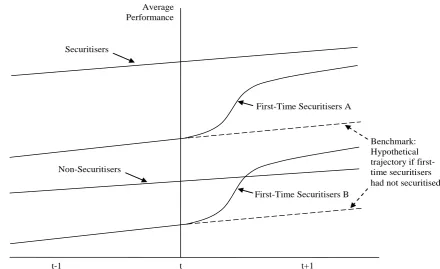
Figure 4.1 Performance Trajectories ... 59
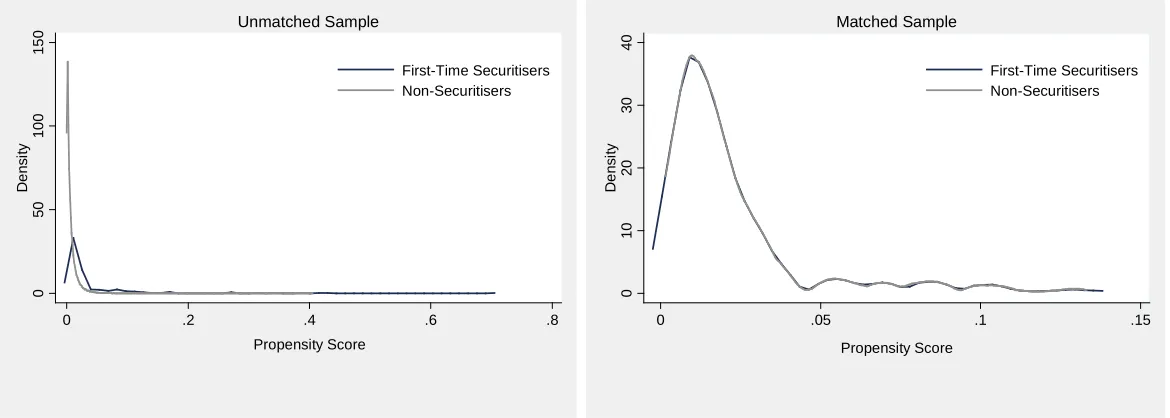
Figure 4.2 Distribution of the Propensity Score of First-Time Securitisers and Non-Securitisers before and after Matching ... 78
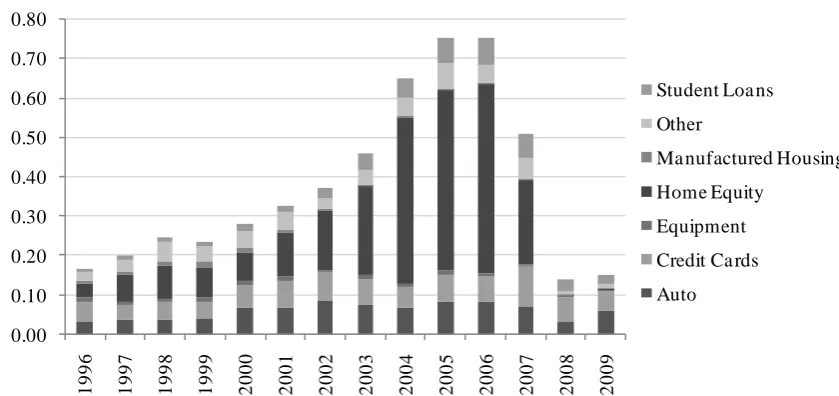
Figure 5.1 Yearly Values of Securitised Assets ... 94
Figure 5.2 Securitisation Breakdown by Asset Type ... 94
ix
LIST OF TABLES
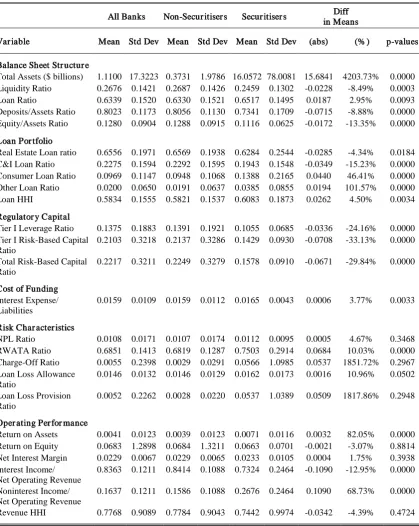
Table 4.1 Summary Statistics for all Sample Banks and Univariate Tests of Differences
in Characteristics between Securitisers and Non-Securitisers ... 67
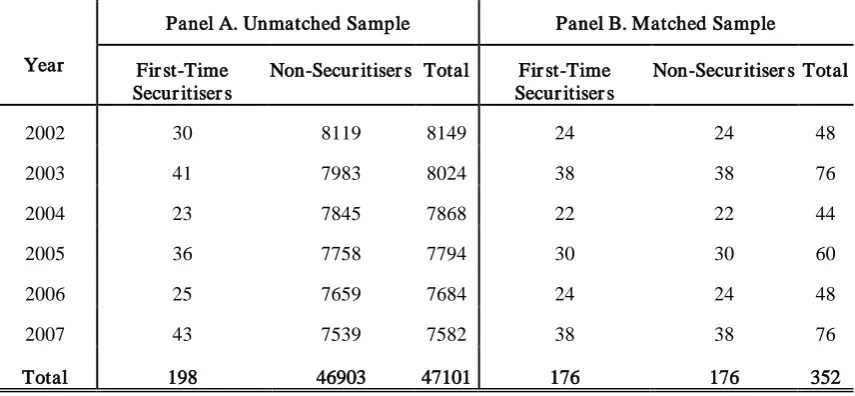
Table 4.2 Statistics on the Number of First-time Securitisers and Non-Securitisers ... 72
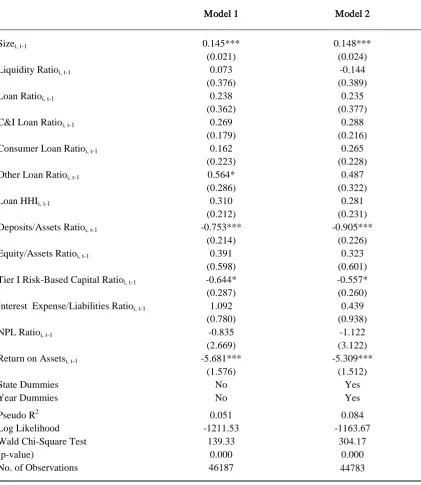
Table 4.3 Determinants of Securitisation Probability ... 75
Table 4.4 T-Test for Equality of Means of Covariates before and after Matching ... 79
Table 4.5 The Effect of Securitisation on Bank Cost of Funding, Risk, and Profitability ... 81
Table 5.1 Summary Statistics for all Sample Banks and Univariate Tests of Differences in Characteristics between Securitisers and Non-Securitisers ... 91
Table 5.2 Definition of Model Variables ... 96
Table 5.3. Determinants of Bank Credit Risk Taking ... 101
Table 5.4. Testing Securitisation by Asset Type... 103
Table 5.5 Robustness Tests for the Determinants of Bank Credit Risk Taking ... 105
Table 6.1 Sample Descriptive Statistics ... 116
Table 6.2 Statistics for Securitisation Activity ... 118
Table 6.3 Statistics for Securitisation Activity by Asset Type ... 122
Table 6.4 Effects of Securitisation Structures on Bank Insolvency Risk ... 131
x
ABBREVIATIONS
ABS - Asset-Backed Securitisation
BHC - Bank Holding Company
CBO - Collateralised Bond Obligation
CDO - Collateralised Debt Obligation
CE IO Strip - Credit-Enhancing Interest-Only Strip
CLO - Collateralised Loan Obligation
CRT - Credit Risk Transfer
EU – European Union
HHI - Herfindahl-Hirschman Index
IO Strip - Interest-Only Strip
MBS - Mortgage-Backed Securitisation
PSM - Propensity Score Matching
SIFMA - Securities Industry and Financial Markets Association
SPV - Special Purpose Vehicle
UK – United Kingdom
xi
ABSTRACT
Securitisation has been viewed as a key bank funding, risk management and
performance improvement tool over the last two decades. However, the financial crisis
of 2007-2009 has shown that engagement in securitisation might create significant
financial problems for banks and consequently lead to widespread problems in the
financial sector. This, therefore, has underlined the importance of understanding banks’
securitisation activities, the benefits and risks inherent, and the consequences for the
financial system.
This thesis comprises empirical research on the effects of securitisation on banks.
The work is presented in three essays. The first essay investigates whether banks
improve their performance through the use of the securitisation market by applying a
propensity score matching approach. Specifically, we attempt to assess whether the
access to the securitisation market led to lower cost of funding, less credit risk exposure,
and higher profitability. Using US commercial bank data from 2001 to 2008, we first
test these hypotheses using univariate analysis and find that securitising banks are, on
average, more profitable institutions, with higher credit risk exposure, and higher cost of
funding. However, the propensity score matching analysis does not provide evidence to
suggest that securitisation had a significant impact upon bank performance. In other
words, the analysis shows that securitisers would have had comparable cost of funding,
credit risk, and profitability had they remained non-securitising. This evidence leads us
to conclude that securitisation does not seem to outperform alternative funding, risk
management, and profitability improvement techniques used by non-securitising banks
that have ex-ante similar characteristics to those securitising.
The second essay investigates the impact of securitisation on the credit-risk taking
behaviour of banks. Using US bank holding company data from 2001 to 2007, we find
xii
portfolios of lower credit risk. Examining securitisations by the type of underlying
assets, we find that the negative relationship between outstanding securitisation and risk
taking is primarily driven by securitisations of mortgages, home equity lines of credit,
and other consumer loans. Securitisations of all other types of assets, on the other hand,
seem to have no significant impact on bank credit-risk taking behaviour. We attribute
these results to the recourse commonly provided in securitisation transactions, as it
might alter the risk-taking appetite of the issuing banks across asset classes. Therefore,
we conclude that the net impact of securitisation on the riskiness of issuing banks, and
consequently on the soundness of the banking system, is ambiguous and will depend on
the structure of transactions. In particular, it will depend on the relative magnitude of
credit support provided by banks.
The third essay examines the relationship between banks’ off-balance sheet
securitisation structures and insolvency risk, with a particular focus on credit and
liquidity support provided by these banks. Additionally, it examines the risk effect of
credit-enhancing facilities and liquidity commitments provided by banks to
securitisation structures of other institutions. Using US bank holding company data for
the period from 2002 to 2007, we first find that credit enhancements provided by
originating banks in their securitisation structures have a significant positive effect on
insolvency risk of the banks. Second, examining credit enhancements by the form of
underlying facility, we find that among credit-enhancing interest-only strips,
subordinated securities, and standby letters of credit, the latter have the greatest positive
association with bank insolvency risk. In contrast, liquidity provisions are found to have
a significant risk-reducing effect. Finally, examining credit and liquidity support
provided by banks to third-party securitisation structures, we find that credit enhancing
third-party securitisations reduces insolvency risk of the banks, while liquidity
xiii
Summarising the main findings, the first essay finds no evidence of significant
causal effects of securitisation on performance of securitising banks. The second essay
finds evidence to suggest that outstanding securitisation has a negative impact on the
credit-risk taking behaviour of banks; while the third essay finds that the interests
retained by banks in connection to securitised assets significantly increase their
insolvency risk. This shows that the net risk transfer for originating banks through
securitisation might be ambiguous; however banks do account for the retained exposure
to the securitised assets reducing credit risk taking. Taken together, the evidence from
the three studies suggests that banks predominantly use securitisation for financing
purposes rather than as a risk management or performance improvement mechanism.
This research contributes to a deeper understanding of the motives for and
consequent implications of securitisation and provides valuable findings for the ongoing
discussion of how to redesign the securitisation model and to reform the supervision and
regulation of banks’ engagement in securitisation activities in response to the recent
1
1 INTRODUCTION
1.1 Intr oduction
Securitisation has been a key bank funding, risk management, and performance
improvement tool over the last two decades. It began with structured financing of
mortgage loans in the 1970s and has expanded remarkably in types of securitised assets,
securitising firms, and investors in securitised products since the 1980s.
The decade preceding the financial crisis of 2007-2009 witnessed a tremendous
growth of the market maintained by growing search for investment opportunities as a
result of global imbalances, persistent demand from institutional investors for low-risk
liquid asset-backed securities, unusually low interest rates and associated credit boom
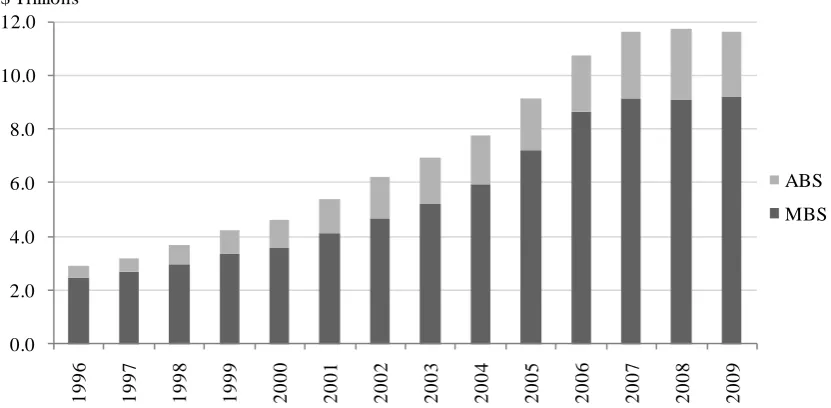
feeding in turn the property and stock markets. As shown in Figure 1.1, the market for
US mortgage-backed securities (MBS) increased from $2.5 trillion in 1996 to $8.6
trillion at year-end 2006. The outstanding volume of asset-backed securities (ABS)
reached $2.1 trillion at year-end 2006 from $0.4 trillion in 1996.
Following the period of extensive credit origination and its subsequent
distribution via securitisation markets, concerns over losses on US subprime mortgage
loans and an associated collapse in investor risk appetite triggered broad-based distress
in markets for securitised instruments in June 2007. The problems started with subprime
mortgage-related instruments, which experienced severe credit quality deterioration as
the period of appreciating house prices in the US came to the end. Losses were
magnified by increasingly illiquid markets and worsened further with a global loss of
confidence following the failure of the investment bank Lehman Brothers in September
2008 and subsequent signs of global recession. As a result, spreads on securitised
2
Figur e 1.1 Outstanding US Secur itisation 1996-2009
0.0 2.0 4.0 6.0 8.0 10.0 12.0 1 9 9 6 1 9 9 7 1 9 9 8 1 9 9 9 2 0 0 0 2 0 0 1 2 0 0 2 2 0 0 3 2 0 0 4 2 0 0 5 2 0 0 6 2 0 0 7 2 0 0 8 2 0 0 9 $ Trillions ABS MBS
Source: Securities Industry and Financial Markets Association (SIFMA)
Currently securitisation markets remain weak with almost no public placement
taking place and the most of new issues being retained by banks and used as collateral
in government refinancing operations. However, policy-makers and market practitioners
acknowledge the potential benefits of securitisation including credit risk transfer and
diversification and attempt to restart securitisation market by introducing changes to the
securitisation model in terms of simplicity and standardisation (ECB, 2009).
Further, reflecting the need to strengthen the regulation and supervision of bank
securitisation activities raised by the financial crisis, the Basel Committee has recently
finalised its proposals for enhancing the Basel II framework in the area of securitisation
(2009). Specifically, proposals mainly focus on: (i) higher risk weights to securitisation
exposures and, hence, higher minimum capital standards (Pillar I); (ii) addressing the
bank’s on- and off-balance sheet securitisations within the frameworks of internal
capital adequacy assessment process and supervisory review and evaluation process
(Pillar II); and (iii) strengthening disclosure requirements with regard to securitisation
[image:16.595.123.539.129.333.2]3
measures are deemed necessary to revive securitisation; however it will take time to
restore the confidence in the market and induce investors to make new investments in
securitised products.
1.2 Theoretical Fr amework for the Resear ch
In general, securitisation can be defined as a structured process whereby a bank
transforms its illiquid assets, traditionally held until maturity, into marketable securities.
A typical securitisation transaction involves the pooling of homogenous assets with
fixed or nearly fixed cash flows and transferring the pool to a special purpose vehicle
(SPV), a bankruptcy-remote entity that in turn finances the purchase through the
issuance of securities backed by the pool. In the most common case, the SPV employs
tranching by issuing securities of different risk, duration, and other characteristics with
the senior tranche of investment grade being supported by mezzanine tranches, which in
turn are supported by an unrated subordinated equity tranche. This tranching technique
enables the SPV to split the credit risk and place it with parties that are willing or best
able to absorb it. To ensure high credit rating for asset-backed securities from rating
agencies, the SPV obtains credit enhancements, most of which typically come from the
originating bank and can be provided in various forms from standby letters of credit to
the purchase of the most subordinated securities issued by the SPV.
In theory, the benefits of securitisation from the originating bank’s perspective
can be substantial. Specifically, by using securitisation, a bank may be able to: (i)
diversify its loan portfolio (Pavel and Phillis, 1987); (ii) focus on activities in which it
has a comparative advantage (Karaoglu, 2005; Pavel and Phillis, 1987; Thomas, 1999);
(iii) finance both ongoing operations and the purchase of new assets (Flannery, 1994;
James, 1988; Karaoglu, 2005; Lockwood, Rutherford and Herrera, 1996); (iv) reduce
4
(Cantor and Rouyer, 2000); and (vi) improve overall performance (Boot and Thakor,
1993; Lockwood, Rutherford and Herrera, 1996; Wolfe, 2000).
However, it has been shown that in practice securitisation might have adverse
implications through a number of indirect channels, and these may include: (i) quality
of assets securitised and of those retained on the balance sheet, which in turn might be
driven by the regulatory capital arbitrage and earnings management motives (Ambrose,
LaCour-Little and Sanders, 2005; Dionne and Harchaoui, 2003; Karaoglu, 2005); (ii)
contractual and non-contractual credit enhancements, which might result in the
originating bank retaining significant interests in the securitised asset pool (Landsman,
Peasnell and Shakespeare, 2006; Niu and Richardson, 2006; Standard and Poor's, 2001;
Wolfe, 2004); and (iii) post-securitisation lending behaviour in terms of both risk taking
and the volume of credit supply (Cebenoyan and Strahan, 2004; Loutskina and Strahan,
2006; Panetta and Pozzolo, 2010; Purnanandam, 2009).
Summarising the previous research, the securitisation process offers substantial
economic benefits for originating banks; however the realisation of these benefits will
depend on the practical implementation of securitisations and the post-securitisation
behaviour of banks. Therefore, the impact of securitisation on banks remains
controversial.
1.3 Objectives and Contr ibutions
This research attempts to provide further insights into banks’ securitisation
activities. It comprises empirical work on securitisation presented in three essays.
The first essay aims to assess whether banks improve their performance through
the use of the securitisation market. The study makes two main contributions to the
empirical literature on securitisation. First, it examines the impact of accessing the
5
and overall profitability. Second, it attempts to gauge the impact of securitisation on
bank performance by comparing securitising banks with non-securitising banks using a
propensity score matching approach. To our knowledge, this methodology has not been
employed in the past in this context.
The second essay aims to investigate the impact of securitisation on the credit-risk
taking behaviour of banks. Specifically, it attempts to answer the following question: if
banks retain significant exposure to the securitised assets through contractual and/or
non-contractual arrangements, does the outstanding securitisation representing this
exposure affect the credit-risk taking behaviour of the banks? The study makes two
main contributions to the literature. First, it examines whether the aggregate outstanding
securitisation affects banks’ risk-taking behaviour. Second, it investigates whether the
effect differs across securitisations of different asset classes.
The third essay aims to examine the relationship between banks’ off-balance sheet
securitisation structures and insolvency risk focusing on different forms of credit
enhancement and liquidity support provided by the banks. Additionally, it attempts to
examine the risk effect of credit-enhancing facilities and liquidity commitments
provided by banks to securitisation structures of other institutions. The study makes
three main contributions to the literature. First, it examines the risk effect of different
credit enhancements including credit-enhancing interest-only strips, retained
subordinated securities, and standby letters of credit. Second, it analyses additional
contractual arrangements such as liquidity support and seller’s interest in their effect on
the risk of the originating bank. Finally, it examines the risk effects of credit and
liquidity support provided by banks to other institutions’ securitisation structures.
1.4 Data
For the empirical analysis we use data for US bank holding companies and
6
the complete balance sheet, income statement, and detailed supporting schedules,
including a schedule of off-balance sheet securitisation activities. These forms are filed
by all US banks on a quarterly basis and have been compiled in a database by the
Federal Reserve Bank of Chicago since 1986.
Starting in June 2001, US regulation requires banks to provide more detailed
information on their securitisation activities in the reporting forms. Specifically, banks
are required to report outstanding securitisation, performance of the securitised assets
including past due amounts, charge-offs and recoveries, and credit and liquidity support
provided to their own and other institutions’ securitisation structures. This securitisation
data are to be reported broken down according to the underlying assets into seven
categories: 1-4 family residential loans; home equity lines; credit card receivables; auto
loans; other consumer loans; commercial and industrial loans; and all other loans, all
leases, and all other assets. The introduction of the new securitisation data in the
regulatory reports determines year 2001 as the start date for our analyses.
1.5 Empir ical Design and Main Findings
In the first essay we evaluate whether banks improve their performance in terms
of the cost of funding, credit risk, and profitability through securitisation using US
commercial bank data. The sample spans from 2001 to 2008 and contains 9,748 banks
including 9,290 non-securitisers and 458 securitisers. We first test the hypotheses using
univariate analysis of securitisers and non-securitisers and find that securitising banks
tend to be more profitable institutions, with higher credit risk exposure, and higher cost
of funding. We then use a propensity score matching analysis to estimate the causal
effect of securitisation. To do so, we focus on the sub-sample of non-securitisers and
176 first-time securitisers extracted from the group of securitisers. Applying propensity
score matching, we build a control group from the non-securitisers to assess what would
7
first-time securitisers would have had comparable cost of funding, credit risk, and
profitability had they remained non-securitising. This leads us to suggest that
securitisation does not seem to outperform alternative funding, risk management, and
profitability improvement techniques used by non-securitising banks that have ex-ante
similar characteristics to those securitising.
In the second essay we investigate the impact of securitisation on the credit-risk
taking behaviour of banks using US bank holding company data. We use data for bank
holding companies rather than for commercial banks because risk and capital
management are typically administered at the highest level of the financial group. The
sample covers the period from 2001 to 2007 and contains 2,190 banks including 1,960
non-securitisers and 230 securitisers. Applying fixed effects regression analysis on the
sub-sample of securitisers, we first find that banks with a greater balance of outstanding
securitised assets choose asset portfolios of lower credit risk. Examining securitisations
by the type of underlying assets, we find that the negative relationship between
outstanding securitisation and risk taking is primarily driven by securitisations of
mortgages, home equity lines of credit, and other consumer loans. Securitisations of all
other types of assets, on the other hand, seem to have no significant impact on bank
credit-risk taking behaviour. We attribute these results to the recourse commonly
provided in securitisation transactions, as it might alter the risk-taking appetite of the
issuing banks across asset classes. Therefore, we conclude that the net impact of
securitisation on the riskiness of issuing banks is ambiguous and will depend on the
structure of the transactions. In particular, it will depend on the relative magnitude of
credit support provided by banks.
In the third essay we use US bank holding company data to examine (i) the
relationship between banks’ securitisation structures and insolvency risk focusing on
credit and liquidity support provided by these banks in their transactions, and (ii) the
8
to securitisation structures of other institutions. The selection procedure determined by
the empirical design of the study leaves us with a sample of 194 securitising banks
covering the period from 2002 to 2007. Using fixed effects regression analysis, we first
find that credit enhancements provided by originating banks in their securitisation
structures have a significant positive effect on insolvency risk of these banks. Second,
examining credit enhancements by the form of underlying facility, we find that among
credit-enhancing interest-only strips, subordinated securities, and standby letters of
credit, the latter have the greatest positive association with bank insolvency risk. In
contrast, liquidity provisions are found to have a significant risk-reducing effect.
Finally, examining credit and liquidity support provided by banks to third-party
securitisation structures, we find that credit enhancing third-party securitisations reduces
insolvency risk of the banks, while liquidity provisions are found to be highly positively
associated with bank insolvency.
1.6 Conclusion
Summarising the main findings, the first essay finds no evidence of significant
causal effects of securitisation on performance of banks. In other words, securitising
banks would have had comparable cost of funding, credit risk, and profitability had they
not securitised. The second essay suggests that outstanding securitisation has a negative
impact on the credit-risk taking behaviour of banks. The third essay shows that the
interests retained by banks in connection to securitised assets significantly increase their
insolvency risk. This result coupled with the finding of the second essay suggests that
the net risk transfer for originating banks through securitisation might be ambiguous
due to retained interests; however banks do account for the consequently arising
exposure reducing credit risk taking. Taken together, the evidence from the conducted
research suggests banks predominantly use securitisation for financing purposes rather
9
This work contributes to a deeper understanding of the motives for securitisation
and consequent implications for banks and thereby the banking system. It provides
findings that are particularly valuable in light of the ongoing policy debate on
redesigning the securitisation model and reforming the supervision and regulation of
banks’ engagement in securitisation activities in response to the recent financial crisis.
1.7 Outline of the Thesis
The remainder of the thesis is organised as follows. Chapter 2 presents
background on securitisation. First it provides the market overview including a brief
history of its development. It then discusses in detail the securitisation process including
the participants and their roles, the mechanics of a securitisation transaction, the benefits
offered to the major parties in the transaction, and the risks inherent in securitisation.
Chapter 3 reviews the relevant literature on securitisation. Specifically, it
organises the literature in three strands. The first strand examines the motives for
securitisation, analyses its potential benefits, and examines its effects. The second
strand relates to the motives for and implications of credit enhancements in
securitisation. The third strand investigates the impact of securitisation on bank lending
behaviour in terms of risk taking and the volume of loan supply.
Chapters 4, 5, and 6 contain the empirical analysis of the thesis presented in three
essays. Specifically, Chapter 4 presents the first essay on securitisation and bank
performance. The study attempts to evaluate whether banks improve their performance
in terms of the cost of funding, credit risk, and profitability through the use of the
securitisation market.
Chapter 5 presents the second essay on securitisation and credit risk taking. The
10
of banks and to examine whether the impact differs across securitisations of different
asset classes.
Chapter 6 presents the third essay on securitisation and bank insolvency. The
study attempts to empirically examine the relationship between banks’ off-balance sheet
securitisation structures and insolvency risk focusing on different forms of credit
enhancement and liquidity support provided by the banks. Additionally, it examines the
risk effect of credit and liquidity support provided by banks to securitisation structures
of other institutions.
Finally, Chapter 7 concludes the thesis. It summarises the main findings of the
three studies, discusses the contribution of the conducted analysis, and suggests scope
11
2 BACKGROUND ON SECURITISATION
2.1 Definition and a Br ief Histor y of Secur itisation
In general, securitisation can be defined as a structured process whereby
homogenous financial assets are packaged, underwritten, and sold in the form of
asset-backed securities. This structured finance technique allows credit originators to manage
credit and concentration risks, diversify funding sources, reduce funding costs, and
improve performance indicators.
Securitisation began in the 1970s with the structured financing of mortgage loans
by a US government-sponsored agency, the Government National Mortgage
Association (Ginnie Mae). As a result, investors were offered a new type of bond – a
mortgage pass-through that passes the principal and the interest payments on mortgages
to the holders of the security. Ginnie Mae was followed by private corporations
chartered by the federal government, the Federal Home Loan Mortgage Corporation
(Freddie Mac) and the Federal National Mortgage Association (Fannie Mae), which
issued mortgage-backed securities in the early 1980s. These government-sponsored
enterprises were to increase homeownership in the US by fostering secondary mortgage
market. The guarantees provided by the government assured investors of the payment of
principal and interest on the securities backed by mortgages and thereby promoted the
growth of the agency securitisation (see Figure 2.1).
Government agencies and government-sponsored enterprises remained the main
issuers in the market until the 1990s when other financial and non-financial institutions
entered the market issuing mortgage-backed securities that in many cases deviated from
the conforming structure of the government-sponsored securitisations. While the first
private mortgage pass-through backed by conventional loans was issued by Bank of
America in 1977, other institutions showed little interest in the area until the 1990s.
12
up until the onset of the financial crisis in 2007 closely reaching the agency issuance
around year 2006 (see Figure 2.2).
Figur e 2.1 US Agency Mor tgage-Backed Secur ities Issuance 1970-2009
0.0 0.3 0.5 0.8 1.0 1.3 1.5 1.8 2.0 2.3 1 9 7 0 1 9 7 2 1 9 7 4 1 9 7 6 1 9 7 8 1 9 8 0 1 9 8 2 1 9 8 4 1 9 8 6 1 9 8 8 1 9 9 0 1 9 9 2 1 9 9 4 1 9 9 6 1 9 9 8 2 0 0 0 2 0 0 2 2 0 0 4 2 0 0 6 2 0 0 8 $Trillions
Ginnie Ma e Freddie Ma c Fa nnie Ma e
Source: Securities Industry and Financial Markets Association (SIFMA)
Figur e 2.2 US Mor tgage-Related Secur ities Issuance 1996-2009
0.0 0.4 0.8 1.2 1.6 2.0 2.4 2.8 1 9 9 6 1 9 9 7 1 9 9 8 1 9 9 9 2 0 0 0 2 0 0 1 2 0 0 2 2 0 0 3 2 0 0 4 2 0 0 5 2 0 0 6 2 0 0 7 2 0 0 8 2 0 0 9 $ Trillions Agency NonAgency
[image:26.595.124.469.196.390.2] [image:26.595.127.469.482.685.2]13
As for asset-backed securitisation, the first transaction dates to 1985 and was
backed by automobile loans, the most straightforward type of collateral due to the
relatively short maturities of the loans that made the timing of cash flows more
predictable and their statistical histories of performance that gave investors confidence.
Auto loan securities were followed by the first issuance of credit card securities in 1986
which was the cornerstone of the asset-backed securitisation due to the revolving nature
of credit card debt and related complications in structuring the transaction. Since then,
the process and the structure of securitisation have evolved significantly, including the
development of private credit enhancements such as over-collateralisation, third-party
and structural enhancements. This expanded the list of securitised assets from three in
1985 to twenty three by 1996 including non-consumer loans and financial securities
(Murray, 2001) and fostered the growth of the asset-backed securities issuance (see
Figure 2.3).
Figur e 2.3 US Asset-Backed Secur ities Issuance 1996-2009
0.00 0.10 0.20 0.30 0.40 0.50 0.60 0.70 0.80 1 9 9 6 1 9 9 7 1 9 9 8 1 9 9 9 2 0 0 0 2 0 0 1 2 0 0 2 2 0 0 3 2 0 0 4 2 0 0 5 2 0 0 6 2 0 0 7 2 0 0 8 2 0 0 9 $ Trillions
Student Loa ns Other
Ma nufactured Housing Home Equity
Equipment Credit Ca rds Auto
[image:27.595.118.538.459.657.2]14
As a whole, the US securitisation market experienced a tremendous growth from
the mid-1990s and up until the financial crisis of 2007-2009. The market for
mortgage-backed securities (MBS) increased from $2.49 trillion in 1996 to $9.19 trillion
outstanding at year-end 2009. The outstanding volume of asset-backed securities (ABS)
reached $2.43 trillion at year-end 2009 from $0.4 trillion in 1996 (see Figure 1.1 on
page 2). Along with the size, the market remarkably expanded in terms of the types of
securitised assets, the issuing firms, and the investor base.
In contrast to the US securitisation market, the development of the European
securitisation market started at the end of the 1990s and was triggered not by
government agencies, but the increased demand from institutional investors,
technological and financial innovation, and the introduction of euro (Altunbas,
Gambacorta and Marques-Ibanez, 2009).
The EU market experienced a strong issuance growth from 2001 onwards (see
Figure 2.4). The outstanding volume of mortgage-backed securities reached €1.21
trillion at year-end 2008, while €0.19 trillion for asset-backed securities (Securities
Industry and Financial Markets Association (SIFMA)). However, as shown in Figure
2.5, the use of securitisation remains heterogeneous across European countries with the
UK dominating the market.
After the extended period of growth, global securitisation markets collapsed
during the financial crisis of 2007-2009, where securitisation was named as one of the
primary causes of the credit market turmoil. Reflecting the generalised loss of investor
confidence, most of the issuance from the mid-2007 onwards has been in the US agency
sector and in European securitisations used for refinancing activities with the European
15
Figur e 2.4 Eur opean Total Secur itisation Issuance 2000-2009
0 0.1 0.2 0.3 0.4 0.5 0.6 0.7 0.8 2 0 0 0 2 0 0 1 2 0 0 2 2 0 0 3 2 0 0 4 2 0 0 5 2 0 0 6 2 0 0 7 2 0 0 8 2 0 0 9 € Trillions
Tota l Volume
Source: Securities Industry and Financial Markets Association (SIFMA)
Figur e 2.5 Eur opean Total Secur itisation Issuance by Countr y in 2007
UK 38%
Multina tiona l 21% Spa in 14% Netherla nds 9% Ita ly 6% Germa ny 4% Portuga l 2% Irela nd 2% Other 4% UK
Multina tiona l Spa in Netherla nds Ita ly Germa ny Portuga l Irela nd Other
Source: European Securitisation Forum
[image:29.595.116.441.128.330.2] [image:29.595.118.494.416.624.2]16
The development of securitisation over the past three decades has had a
remarkable impact on the world financial system. It has modified the functioning of the
banking markets from the traditional hold” model to the
“originate-to-distribute” model, thereby significantly increasing the reliance of financial
intermediaries on the capital market as a source of finance. Despite the weaknesses in
the securitisation process revealed by the crisis, policy-makers as well as market
practitioners acknowledge the potential of securitisation in credit risk transfer and
diversification and attempt to revive securitisation by increasing transparency in the
market and introducing standardisation and simplicity of transactions.
2.2 Secur itisation Pr ocess
2.2.1 Par ticipants and their Roles
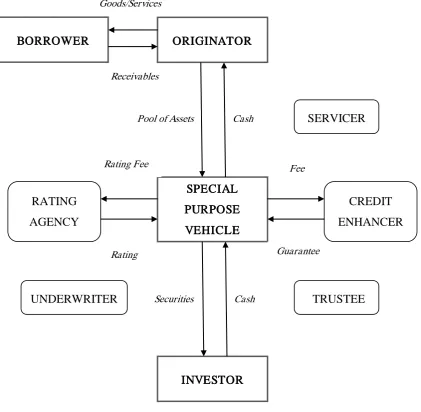
A typical securitisation transaction involves the pooling of assets with fixed or
nearly fixed cash flows that are then transferred to a special purpose vehicle (SPV), a
bankruptcy-remote entity that in turn finances the purchase through the issuance of
securities backed by the pool. This process involves a number of participants: borrower,
originator, servicer, special purpose vehicle, credit enhancer, underwriter, trustee, and
investor (see Figure 2.6).
Borrower
The borrower is the originator’s debtor whose debt is transferred to the SPV; the
customer relationship between the borrower and the originator is usually maintained as
the former does not realise that his/her loans have been sold. As the borrower is
responsible for the payment on the loan underlying the securitisation transaction, his/her
17
Figur e 2.6 Secur itisation Tr ansaction
BORROWER ORIGINATOR
SPECIAL
PURPOSE
VEHICLE
INVESTOR
Goods/Services
Receivables
Pool of Assets Cash
Securities Cash
SERVICER
CREDIT
ENHANCER RATING
AGENCY
UNDERWRITER TRUSTEE
Rating Fee
Rating Guarantee
[image:31.595.116.538.146.558.2]18
Originator
The originator is an entity that creates the assets to be securitised. Originators may
include finance companies, commercial banks, insurance companies, computer
companies, airlines, manufacturers, etc.
Servicer
The servicer is an agent that collects regular payments on the underlying assets
and transfers the proceeds to the special purpose vehicle. This servicing function is
typically retained by the originator for a fixed servicing fee.
Special Purpose Vehicle
The special purpose vehicle (SPV) is a bankruptcy-remote entity set up by the
originator for the specific purpose of the securitisation(s).
Trustee
The trustee is a third party retained for a fee to administer the trust that holds the
underlying assets supporting asset-backed securities and is primarily concerned with
preserving the rights of the investor. Generally, the trustee monitors the compliance by
all the parties to the transaction with the pooling and servicing agreement and oversees
the allocation of cash flows as prescribed by the agreement. The trustee is also
responsible for reviewing periodic information on the performance of the underlying
asset pool received from the originator/servicer and for declaring an event of default or
amortisation based on the observed pool performance indicators.
Credit Enhancer
The credit enhancer is a third party that provides guarantees protecting investors
19
manner the interest and principal due for the securities. This third-party credit support is
used to improve the credit rating and thereby the pricing and marketability of the
securities, which requires the credit enhancer to have a rating at least as high as the
rating sought for the securities. Therefore, third-party credit enhancement is often
provided by a highly rated bank or insurance company.
Rating Agency
The rating agency performs a critical role in the process - evaluating the credit
quality of the transaction. The credit rating for the asset-backed securities assigned by
the agency depends on the quality of underlying assets, the strength of the
originator/servicer, the soundness of the structure, and the extent of provided credit and
liquidity support.
Underwriter
The underwriter in the securitisation transaction is responsible for advising the
originator on the structure of the asset-backed securities as well as the pricing and
marketing them to investors.
Investor
The investors in asset-backed securities may include individual and institutional
investors; the largest investors are typically fund managers, pension funds, insurance
20
2.2.2 Secur itisation Mechanics
The primary difference between securitisation and loan sales is the structuring
process. Before loan pools can be transformed into securities, they must be pooled and
structured to modify the risks and returns to the investors. The structure of a transaction
is governed by the terms of a pooling and servicing agreement, which is the main
contractual document between the originator and the trustee.
The structuring process includes five major stages: (i) segregating the assets from
the originator; (ii) creating a special purpose vehicle and transferring the asset pool to be
securitised to the SPV; (iii) credit enhancing the asset pool; (iv) issuing securities
backed by the pool; and (v) allocating cash flows.
2.2.2.1 Segregating the Assets
In the first stage of the process, the originator designates the accounts’ receivables
to be sold to the SPV so that to create a portfolio whose performance is consistent with
the target quality of the sought securities. To do so, it first determines which accounts
will be “designated” as those from which receivables may be included in the pool. The
selection criteria might include the default performance, geographic location, maturity
date, size of the credit, or age of the account relationship. It then selects the accounts’
receivables to be securitised either on a random basis, in order to create selections that
are representative of the total portfolio, or on an inclusive basis, so that all qualifying
receivables are sold.1
2.2.2.2 Creating a Special Purpose Vehicle and Transferring the Assets
In the second stage, the originator creates a special purpose vehicle for the single
purpose of holding the transferred underlying assets and the subsequent issuance of
1
21
asset-backed securities. The legal form of the SPV may be a limited partnership, a
limited liability company, a trust, or a corporation. Typically, the SPV is thinly
capitalised; it has no independent management or employees; the administrative
functions are performed by the trustee and the assets are serviced via a servicing
arrangement; and finally, the legal structure of the SPV eliminates bankruptcy.2
2.2.2.3 Credit-Enhancing the Asset Pool
Having created an SPV, the originator transfers the designated assets onto the
SPV’s balance sheet. The transfer of assets must be in form of a “true sale”, where the
transferor (i.e., the originator) surrenders control over the financial assets and can,
therefore, remove the assets from its balance sheet. This true sale condition serves as a
protection of the SPV’s and eventually investors’ rights on the cash flows generated by
the underlying receivables in the case of the originator’s bankruptcy.
In the third stage, the SPV obtains credit enhancements in order to reduce credit
risk for investors, thereby increasing the credit rating of asset-backed securities. The
nature and the amount of contractual credit enhancements required to obtain a specific
credit rating for asset-backed securities are determined by the rating agency and
underwriter depending on characteristics of underlying assets.3 These credit
enhancements may take different forms and can be provided internally, externally, or a
combination of both; revolving loan securitisation also incorporate early amortisation
triggers as additional investor credit risk protection.
2
See Gorton and Souleles (2005) for a discussion of special purpose vehicles. 3
22
Internal Credit Enhancements
Internal contractual credit enhancements are those generated by the cash flows
from the underlying assets, by the structure of the transaction, and those provided by the
originating bank. Examples of internal contractual arrangements include excess spread,
spread accounts, subordinated securities, over-collateralisation, and standby letters of
credit; liquidity provisions might also serve as a credit-enhancing facility if they provide
credit support to the structure.
Excess Spread
Excess spread is a general feature of securitisation structures as the yield on the
underlying loan portfolio for a given month generally exceeds the expenses of the SPV
including the interest paid on the asset-backed securities, servicing costs, and expected
losses. The excess spread is typically held on the originator’s balance sheet in the form
of interest-only (IO) strips. IO strips represent, in effect, the present value of the future
expected income that the bank expects to receive on the securitised assets. The
accounting requirement for recording the IO strip typically results in a gain on the sale
of the sold assets since the originating bank is allowed to recognise future expected cash
flows at the time of the sale. This gain in turn is recognised as income, thereby
increasing the bank's capital position (FDIC, 2007).
IO strip is defined as credit-enhancing (CE IO) if it provides credit support to the
securitisation structure, that is, its value declines with credit losses on underlying assets.
In other words, CE IO strips are subordinated securities with no principal that receive
the interest at a strip rate over time and are recorded as “other assets” on the originator’s
balance sheet and as “credit-enhancing interest-only strips” on the off-balance sheet
23
Subordinated Securities
Securitisations typically have a senior/subordinated or the so called tranched
structure, where the senior tranche of investment grade is supported by mezzanine
tranches, which in turn are supported by an unrated subordinated equity tranche. The
latter is the most risky tranche of the securitisation transaction as it absorbs first losses
and is commonly held by the originating bank as retained interest in the structure.4
Seller’s Interest
In securitisation structures with both CE IO strips (which are present in every
structure) and retained subordinated securities, typically the subordinated securities bear
losses after the CE IO strips are exhausted.
Another form of credit enhancing the securitised pool is over-collateralisation;
this represents bank’s ownership interest, or the so called seller’s interest, in the SPV’s
assets that has not been securitised and is, therefore, not pledged to back the issued
securities. The principal amount of the seller’s interest in a structure is defined as the
total principal amount of assets included in the securitisation structure less the principal
amount of assets attributable to investors in the form of issued securities. The size of the
seller’s interest is determined by the rating agency and is to ensure that there will be
sufficient assets available to support the issued asset-backed securities.5
In respect of subordination, the holders of asset-backed securities and the holder
of the seller’s interest have the same priority on claims on the underlying assets; Seller’s interest
can be held in the form of loans and/or securities, reported accordingly on the
originator’s balance sheet.
4
The retained subordinated assets are reflected as “other assets” on the bank’s balance sheet. 5
24
offs are typically shared pro-rata between the seller’s interest and the investors’
securities (FDIC, 2007).
Liquidity Facility
Liquidity facility represents any arrangement, including servicer cash advances, in
which the issuing entity is obliged to provide funding to the securitisation structure to
ensure investors of timely payments on asset-backed securities or to ensure investors of
payments in the event of market disruptions.
Typically, advances under liquidity facility are reimbursed from subsequent
collections from the securitisation structure and are not subordinated to other claims on
the cash flows from the underlying assets and, therefore, should generally not be
construed as a form of credit enhancement. However, if the advances under such a
facility are subordinated to other claims on the cash flows, the facility constitutes a
credit enhancement (FDIC, 2010).
Standby Letter of Credit
A letter of credit provided to a securitisation structure presents an unfunded
commitment that guarantees limited protection against losses, typically catastrophic
losses, on the underlying assets. Issuers of letters of credit are obliged to honour
demands for payment up to the specified amount. The latter is normally set at a fixed
percentage of the asset-backed securities and is usually determined by the perceived
25
Implicit Recourse
Implicit recourse presents a non-contractual credit enhancement that originating
institutions tend to provide in securitisation structures, the so called implicit recourse to
the originator. The provision of implicit recourse violates the “true sale” requirement;
however, it allows originators to maintain their reputation in the securitisation market
for repeated sales.
From the regulatory perspective, recourse in securitisation would require the
originator to hold capital against the entire amount of assets transferred. Therefore,
implicit recourse in securitisation provides scope for regulatory capital arbitrage and is,
consequently, of paramount concern for regulators. In an attempt to control implicit
recourse practices, the Office of the Comptroller of the Currency issued a practical
guidance, OCC Guidance 2002-20, “Interagency Guidance on Implicit Recourse in
Asset Securitisations” (OCC, 2002). The document states that “banking organisations
typically have provided implicit recourse in situations where the originating
organisation perceived that the failure to provide this support, even though not
contractually required, would damage its future access to the asset-backed securities
market”.
According to the OCC guidance, implicit recourse might include the originator: (i)
selling assets to the SPV at a discount from the price specified in the securitisation
documents; (ii) purchasing assets from the SPV at an amount greater than fair value;
(iii) exchanging performing assets for non-performing assets in the SPV; and (iv)
funding credit enhancements beyond contractual requirements.6
6
26
External Credit Enhancements
External credit enhancements presents credit support provided to the securitisation
structure by other institutions and may include a third-party letter of credit, cash
collateral account, and surety bonds.
Third-Party Letter of Credit
A third-party letter of credit is similar to the standby letter of credit discussed
earlier except that it is provided by a third-party institution. The advantage the external
letter of credit is the additional analysis of the transaction by the third-party
credit-enhancement provider, while the downside is the risk that issued asset-backed securities
will be downgraded when the provider of the letter of credit is downgraded.
Cash Collateral Account
Cash collateral account presents a segregated trust account typically funded by a
loan from a third-party bank at the issuance of the asset-backed securities. Cash
collateral account is used to cover shortfalls in interest, principal, or servicing expenses
if the excess spread falls below zero. The size of the loan is determined by the rating
agency depending on the credit ratings sought for the securities; the loan is generally
priced using a specified index plus a fixed spread and is subordinated in the repayment
to the issued asset-backed securities.
Surety Bond
Finally, a surety bond is a guarantee issued by a third party, usually a highly rated
mono-line insurance company. Surety bonds typically guarantee the principal and
interest payments for specified asset-backed securities tranches. The premium paid to
27
and is offset by the lower interest rate paid to the investors holding the insured securities
tranches.
Early Amortisation Protection
In addition to the common credit enhancement techniques, revolving
securitisations, as those backed by credit card receivables or home equity lines of credit,
also use early amortisation triggers as a form of investor credit protection.
Early amortisation allows accelerating the repayment of investors’ principal
payments ahead of the scheduled maturity if the performance of the asset pool
deteriorates. Early amortisation triggers are typically defined in the pooling and
servicing agreement and may include events as: (i) the average excess spread for three
preceding months below the required monthly amount; (ii) the seller’s interest below a
specified required amount; (iii) failure of the originator, servicer, or the credit enhancer
to perform as required by the pooling and servicing agreement (OCC, 1997). In the
accelerated repayment period following an early amortisation event, the investors’ share
of all principal collections is returned immediately as it is received by the SPV. This
allows protecting the investors from prolonged exposure to deteriorating performance of
the underlying assets or the default of the servicer.
In general, securitisation structures may contain any of the credit-enhancing
facilities discussed above. The choice is typically determined by the costs and market
placement factors. Aside from the coupon rate paid to investors, the cost of credit
enhancements tends to be the largest expense. As a result, originating banks are
constantly trying to minimise the costs associated with providing credit protection,
which might be achieved through a greater reliance on the internally provided
enhancements. This, in effect, may result in the banks retaining significant credit risk
exposure in connection to the securitised portfolios through both explicit and implicit
28
2.2.2.4 Issuing Interest in the Asset Pool
In the fourth stage, the SPV issues asset-backed securities. In the most common
case, the securities are issued in tranches of different risk, duration, and other
characteristics with the senior tranche of investment grade being supported by
mezzanine tranches, which in turn are supported by an unrated subordinated equity
tranche. The latter is the most risky tranche of the securitisation transaction and is
commonly retained by the originating bank on its balance sheet. This tranching
technique enables the SPV to split the credit risk and place it with parties that are
willing or best able to absorb it.
2.2.2.5 Cash F low Allocation
Finally, the last stage of the securitisation process includes allocation of the cash
flows received from the securitised assets among the holders of asset-backed securities.
The payment distribution depends on the type of issued securities, which is in turn
determined by the nature of underlying loans.
Pass-Through Securities
The payment distribution for securities backed by instalment loans (“pass
through” securities) is closely tied to the cash flows of the underlying loans.
Specifically, the interest on the pass-through securities is paid monthly, while the
principal included in each payment depends on the amortisation schedule and
prepayment rate of the underlying loans.
Pay-Through Securities
The payment distribution for securities backed by revolving loans such as credit
cards and home equity lines of credit (“pay through” securities) has two phases: (i)
29
During the revolving phase, monthly interest payments on the underlying assets
are used to pay the SPV’s expenses including interest payments on the asset-backed
securities, while the principal collections are used to purchase new receivables
generated in the designated accounts or to purchase a portion of the seller’s interest. In
the following amortisation phase, the principal collections are used to pay down the
outstanding principal amount of the asset-backed securities.
2.3 Benefits
Securitisation offers substantial benefits to each of the major parties in the
transaction, which explains the growth of the market over the past two decades.
F or Originators
Securitisation provides financial institutions with a means to: (i) reduce regulatory
capital requirements by transferring originated assets off the balance sheet; (ii) obtain an
additional source of funding; (iii) lower the cost of funding as the issued asset-backed
securities are typically assigned a higher credit rating than that of the originator; (iv)
diversify portfolio by reducing firm-specific exposure, sectoral and geographic
concentrations; (v) improve credit risk management by shifting the credit risk of the
originated assets to external credit enhancers and investors; and (vi) enhance financial
ratios as a result of the above and the fee income received for continuing loan
origination and the commonly retained servicing function.
F or Investors
Investors benefit from asset-backed securities issued in securitisation as they: (i)
offer higher yields compared to other financial instruments of a similar credit quality7
7
Higher yields are offered as a compensation for a possible prepayment risk and restricted secondary market for these securities.
30
a measure of flexibility as the payment streams can be structured to meet an investor’s
particular requirements; and (iii) release investors from the need to gain a detailed
understanding of the underlying assets as a result of structural credit enhancements and
diversified asset pools. These features of asset-backed securities meet the requirements
of pension funds, insurance companies, and other institutional investors for safe
fixed-income securities with specific payment stream and attractive yields and, therefore,
boost institutional investor demand.
F or Borrowers
Securitisation also benefits borrowers by: (i) increasing credit supply as a result of
lenders being able to raise additional capital for new loans via the market; (ii) reducing
borrowing expense, that is, the capital raised by lenders via the market typically has a
lower cost which, in turn, can be passed onto the borrowers in the form of lower interest
rates; and (iii) increasing availability of credit on terms that lenders may not have
provided had they kept the loans on their balance sheets. As an example for the latter,
the existence of securitisation markets may allow lenders to extend fixed rate debt
preferred by many borrowers over variable rate debt without exposing themselves to
interest rate risk.
2.4 Risks
Realisation of the benefits offered by securitisation requires prudent management
of the risks inherent in the process. The risks arising for a bank from securitisation and
their levels depend on the roles the bank plays in the transaction and the quality of
assets it originates and/or services.
The primary risks associated with bank securitisation activities are identical to
those that banks face in their lending activities and include credit risk, liquidity risk,
31
2.4.1 Cr edit Risk
Credit risk arises from the borrowers’ failures to repay their debts. Securitisation
structures are designed to reduce the credit risk of the originator by transferring the
unexpected portion of the default risk to credit enhancers and investors. However, the
originator typically retains exposure to the securitised pool through credit-enhancing
interest-only strips (CE IO), retained subordinated securities, or other types of credit
enhancement. As the pool performance deteriorates and charge-offs increase, excess
spread and, thus, the value of the CE IO strip decline. Once the excess spread is
exhausted, the risks of credit default then shift to the other credit enhancements,
including those retained by the bank, such as subordinated securities. Therefore, the
originator bears, in effect, a significant portion of the default risk of the securitised
assets.
In addition, poor credit quality and performance of the asset pool may limit the
bank’s future access to the securitisation market, affecting the terms of subsequent
issues or impacting costs from alternative funding sources. Therefore, to maintain its
reputation with the market, the originator may be prone to securitise better quality assets
while retaining lower quality assets on the balance sheet, the process often referred to as
“cherry-picking”.8
8 Selecting receivables of higher or the highest quality for securitisation.
Further, the originator often retains an additional degree of credit
risk in the form implicit recourse. This may result in the originator absorbing more
losses or providing credit enhancements beyond the contractual requirements.
Finally, credit risk exposure can arise from providing credit enhancements to
third-party securitisations. Credit enhancing third-party securitisations exposes a bank
to the credit risk of loans it did not originate and, therefore, requires a thorough
32
2.4.2 Liquidity Risk
Liquidity risk arises from a bank’s inability to manage unplanned changes in
funding sources or in meeting its obligations without incurring significant losses. While
securitisation can provide a bank with an attractive alternative funding source,
significant reliance on securitisation may increase liquidity risk.
The primary liquidity risk arises from the possibility that the securitised asset pool
may require balance sheet funding at unexpected times; in revolving securitisations this
arises from the possible return of receivables to the balance sheet as a result of early
amortisation. The second concern is the risk of a bank not being able to sell new
receivables and the need to fund them on-balance sheet. Finally, liquidity risk may arise
from the bank’s failure to recognise changes in market conditions that may impact its
ability to liquidate assets quickly and with minimal loss.
2.4.3 Capital Risk
Capital risk arises from the possibility that the bank’s capital may be insufficient
to absorb or protect against losses arising from credit and other factors. This implies
having sufficient capital to: (i) possibly fund new receivables if access to the
securitisation market is hindered; (ii) withstand additional costs associated with funding
in poor market conditions; and (iii) support unplanned balance sheet growth related to a
complete withdrawal from the securitisation market.
2.4.4 Reputation Risk
Reputation risk is the risk to liquidity, earnings, and capital arising from negative
market perception. The reputation of a bank in a securitisation market is of great
importance and depends mainly on the quality of the underlying receivables and the
33
servicing failures on existing securitisations may increase the costs and decrease the
profitability of future transactions.
2.5 Summar y
To summarise, securitisation presents a complex structured process involving
transactions among participants with diverse incentives. Banks may engage in
securitisation through a wide range of activities realising the benefits provided to each
of the roles in the process. They may act as an originator of the assets to be securitised,
as a servicing agent, and as a credit enhancer in their own securitisation structures.
Banks may also engage in third-party securitisations acting as a trustee, as a provider of
credit enhancement or liquidity support, as an underwriter of the issue, or as an investor
in asset-backed securities.
However, engagement in securitisation activities also exposes banks to substantial
risks and, if not implemented prudentially, might create significant financial problems
for banks and consequently lead to widespread problems in the financial sector as has
been shown by the recent market turmoil. Therefore, it is crucial to fully understand and
evaluate the risks inherent in the process and manage them adequately while gaining