Exploring the influence of feedback on student social workers’ understanding of child care and protection
Abstract
Social work tutors and practice teachers are under increasing pressure to better prepare students for practice in the area of child care and protection, however, little attention has been given to the role of feedback in this process. This study uses a content analysis of written feedback from tutors and interviews to examine students’ experiences of feedback on a social work course. Findings suggest there is considerable variation in the extent, type and source of feedback in student learning about child care and protection. Students consider feedback to be most effective when it is formative and delivered by an experienced practice teacher during the practice placement. The key factors which mediate upon student experiences of feedback are: the personal and emotive nature of the instruction; the expertise of practice teachers and learning opportunities on placement; and, the quality of relationships between the giver and receiver of feedback. These factors are not exclusive to a particular source or type of feedback. The task for tutors and practice teachers is getting the right balance of factors across the different types and sources of feedback, aligning it with the teaching and learning process and empowering students to participate in feedback practices.
Key words: Child care protection feedback
There is increasing pressure on social work tutors and practice teachers to enhance the effectiveness of teaching and practice when preparing students for the workplace. According to the Social Work Task Force (SWTF) in England (2009, p.16) ‘initial education and training is not yet reliable enough in meeting its primary objective, which must be to prepare students for the demands of frontline practice’. This is particularly concerning in high risk situations where children are involved. Government inquiries arising from a number of high-profile child abuse inquiries and Serious Case Reviews (e.g. Brandon et al., 2008) have raised questions about the role of social work when intervening in the lives of vulnerable children. Inadequacies in training however, are only part of the problem as the culture and structure in many organisations limit the extent to which practitioners can work effectively. Munro (2011, p. 6/7) proposes a range of changes, including:
a radical reduction in the amount of central prescription to help professionals move from a compliance culture to a learning culture, where they have more freedom to use their expertise in assessing need and providing the right help.
Preparing students for the complexities of child care and within workplaces that are not always conducive to best practice is likely to require changes to various aspects of the teaching and learning process both in the classroom and on practice placements. Difficulties in adapting the curriculum to the demands of practice are, of course, not unique to a British context. Laird (2013), for example, highlights ‘gaps’ in the curriculum around child
Whilst this study focuses on feedback as one aspect of the learning process and the way in which it is used in relation to child care and protection in Britain, it will have relevance internationally.
The importance of feedback in closing the gap between current and desired performance has been established for some time (e.g. Sadler, 1989). Social work students receive formative and summative feedback in verbal and written forms from a variety of sources, such as tutors, practice teachers, peers and service users (note: ‘tutor’ is an individual employed by the university and involved in grading/assessing student assignments and ‘practice teacher’ is an individual who supervises and assesses students on their practice placement). Feedback also has a role in the way experts learn (e.g. Klein, 2000) and in enhancing self-regulated learning (Nicol and Macfarlane-Dick, 2006). Whilst the benefits of feedback are well established there are no common frameworks for academics to adopt (Nicol, 2008). This raises fundamental questions about the quality and consistency of feedback within Higher Education Institutions (HEIs) and with field work colleagues when delivering social work qualifying courses. Moreover, it highlights gaps in our understanding of the way students learn about child care and protection issues at the pre-qualification stage.
difficulties in assessment and feedback are raised by academics. Shay (2008), for example, believes there is reluctance within HEIs to acknowledge the ‘crisis’ in assessment and feedback practices. O’Donovan et al. (2008) recognise the deficits in existing practices and suggest that the most effective way forward is to ensure students have greater involvement in the assessment and feedback process. Within the learning process it is important to ensure alignment between key elements such as the course aims, teaching content, assessment, feedback and outcomes (Biggs, 2000). Any attempt to examine feedback requires specific insight into the assessment because they are the two most visible aspects of the learning process where a power imbalance exists between students and tutors: an aspect which may be linked to the low NSS ratings. At present, however, there remains little evidence about the different types and sources of feedback that might be most effective in developing students’ knowledge and skills in relation to child care and protection. This is important because
although student social workers are not expected to undertake child protection work, Brandon et al (2008, p. 24) point out:
We know from studies of serious child abuse that most children who die from abuse or are seriously injured are not child protection cases but children known to have additional needs (Reder and Duncan 1999, Sinclair and Bullock 2002, Brandon et al 2002). As Lord Laming said ‘child protection cases do not always come labelled as such’ (para 17.106 Cm 5730 2003). Increasingly, lead professionals and common assessment framework workers will work alongside these children and their families.
communicating relevant information to qualified colleagues. The expectations on tutors to deliver effective feedback should, however, be understood in a climate where student numbers are increasing for many staff and demands to meet research targets overshadow teaching as a crucial activity within HEIs.
The aims of the study were to examine:
1. the written summative feedback students receive in relation to child care and
protection for two major practice-based assignments known as Practice Study 1 (PS1) and Practice Study 2 (PS2)
2. student perceptions of feedback about child care and protection during the course and its usefulness for learning and practice.
Methodology
Interviews with students and a content analysis of the written feedback from tutors are the methods used to collect data. The data was collected in the second term of year four when students had completed their second practice-based assignment. It was anticipated that all of the students in the study would have some experience and learning about child care and protection issues. Since 2006 students on a social work degree course in Scotland are required to demonstrate ‘Key Capabilities’ in child care and protection. This involves, as a minimum, showing awareness of child care and protection in relation to each placement regardless of the service user group/setting, and on one placement students undertake an assessment of a child or parenting capacity (Key Capabilities, 2006).
Key that whatever practice
To address the first aim of the study a content analysis of the written feedback from tutors was undertaken using Nicol’s (2008) principles of feedback with the PS1 & PS2. Heron (2011) separates the most relevant principles into first and second order principles. The first and second order principles are useful because their presence in written feedback gives an indication of its quality and provides a means of labelling the different instructions given to students so that any patterns and trends can be identified across a student cohort. Making the principles explicit in the learning process also provides students with a framework to help evaluate their own feedback. The first order principles of feedback are:
1. Clarification − information on what good performance is (goals, criteria, standards). 2. Challenging tasks − instruction that directs students to undertake a relevant task. 3. Close the gap − direction that helps students move from current to desired
performance.
The second order principles of feedback are:
4. Self correct − information that helps students work an issue out for themselves. 5. Encourage interaction − meet and have dialogue around learning with others (peers,
academics).
6. Development of self-assessment and reflection in learning −direction that encourages students to think about their self and own actions.
7. Encourage motivation − positive instruction that increases self-belief and self-esteem.
is important, it is the combination of the three first order principles that makes feedback more dynamic. For example, clarifying good performance is important; however, on its own it is rather static because it focuses on what the student has already done. It is the combination of ‘clarifying’ and giving a ‘challenging task’ that enables the student to ‘close the gap’ between current and desired performance, which makes feedback more dynamic. Feedback that also includes evidence of one or more of the second order principles is likely to be enhanced, but they are less crucial to student learning than the first order principles. These seven principles are used to code the written feedback by tutors for the PS1 & PS2 assignments.
The Practice Study is a major assignment based on a practice placement of 80 days. It is a high stakes assignment in that it is worth 60 credits (one half of the credits students require to achieve in an academic year) compared to a standard classroom based assignment of 20 credits. The Practice Study consists of three parts: an organisational critique (1000 words), case study (4000 words) and review of learning (1000 words). The case study is the main part of the assignment and requires an analysis the social work process. The PS1 focuses on the process of engagement, assessment and planning, whereas the PS2 incorporates these
elements in addition to intervention and evaluation. These elements of the case study are used along with the organisational critique and review of learning to examine for evidence of the seven principles of feedback. Recognising that feedback about child care and protection might be provided which is not linked to these specific elements, two broader categories of ‘Case Study General’ and ‘Practice Study General’ were added. Examining evidence of seven principles across seven categories for PS1 and nine categories for PS2 gives 49 and 63
The content analysis uses 50 feedback sheets (25 for PS1 and 25 for PS2). PS1 and PS2 are undertaken on years three and four of the course respectively (note: an undergraduate qualifying course in Scotland is four years and three years in England, Wales and Northern Ireland). Of the 30 students who gave permission for their feedback sheets to be accessed, feedback from 25 students was used. The feedback sheets from the remaining five students were not used because they were not available at the time of the study (e.g. due to the Practice Study being submitted late).
Interviews
The second aim of the study was addressed by using semi-structured interviews to explore student experiences of the range of feedback in relation to child care and protection. A questionnaire was devised to structure the interviews. The majority of questions are rated on a ten-point scale and students have to provide justifications for their answers. A bi-polar scale was used to rate positive and negative experiences of learning. A typical question was:
How would you describe the overall quality of feedback on your practice placements?
1 2 3 4 5 6 7 8 9 10
poor excellent
No reasons were sought from students who did not present for the interview, however, comments by students who did participate indicate that anxiety levels from discussing feedback were quite high and the prospect of this might have been a factor preventing some individuals from participating. It seems plausible to assume that those students who received the most positive feedback during the course would be less anxious and therefore more willing to self-select for the study. As such, the findings may present an overly positive account. Of course, this account may be counterbalanced by students who felt quite
unsatisfied with their feedback and wanted to use the interviews as a way of expressing these negative experiences. Future research that randomly selected students whilst managing to ensure a high participation rate would help to reduce the inherent bias in self-selection.
In an attempt to minimise any bias or unduly influence responses (e.g. acquiescence bias, social desirability bias) two researchers, not involved in the delivery of the course, conducted the interviews and undertook the coding of the feedback sheets. Of the 21 students
interviewed 18 participants were female and 3 were male, between 21-50 years of age and all students described themselves as white Scottish/British (there was one minority ethnic student in the cohort). Three students had a disability. Students participating in the study gave written consent and received a voucher in recognition of the time taken for the interviews. The duration of interviews was approximately 45-60 minutes. All data was anonymised to ensure confidentially and the university’s ethics procedure was followed. Future research on feedback will benefit from examining a more diverse student population, including black and minority ethnic groups and those whose first language is not English.
The results of the content analysis will be examined and followed by the findings from the student interviews. The content analysis addresses the first aim of the study which is to examine the written summative feedback students receive in relation to child care and protection for the PS1 & PS2. Across the PS1 & PS2 there were 113 instances where principles of feedback relating to child care and protection were evident. Of the 25 students (50 feedback sheets), 22 received feedback in relation to child care and protection (14 students received feedback in PS1 and 10 students received feedback in PS2). Only two students received feedback in both PS1 and PS2 and three students got no feedback about child care and protection for either assignment. It would appear that this cohort of students was more likely to get feedback on child care and protection in PS1 compared to PS2. This does not seem the most effective use of feedback in terms of preparing students as newly qualified professionals.
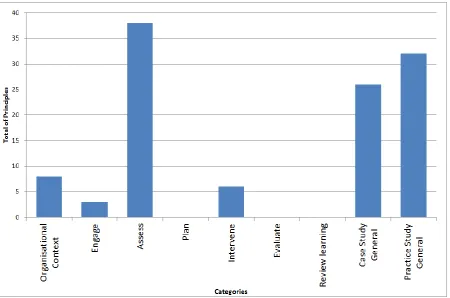
Figure 1: frequency of principles for each of the categories
The principles are spread across four of the seven specific categories and both general categories. For the specific categories there are: eight instances in the organisational context (three for PS1 and five for PS2), three instances for engage (two for PS1 and one for PS2), 38 instances for assessment (24 for PS1 and 14 for PS2) and six instances for intervention (PS2). The assessment of clients is clearly a crucial aspect of social work practice and it is
reassuring that feedback on this aspect of the case study had a relatively high frequency of principles. In the following extract in relation to the category of assessment the tutor
What was less well developed was your role within the assessment process which concentrated almost exclusively on the process of risk assessment within the context of day-to-day activities. You provided little sense of your role within a wider and more holistic assessment process.
The feedback on the category of assessment was, however, concentrated on 13 students across PS1 & PS2 which means that 12 students got no feedback on this category on either assignment. There were no principles of feedback in relation to the categories of plan, evaluate and review learning which suggests tutors are unable to give feedback on these categories or consider them to be less of a priority. In contrast, the categories of Case Study General (seven instances for PS1 and 19 instances for PS2) and Practice Study General (22 instances for PS1 & 10 instances for PS2) show a relatively high frequency of principles in relation to child care and protection. The following extract from the category Case Study General for a P S 1 s t u d e n t i s c l a r i f yi n g ( P r i n c i p l e 1 ) p r o b l e m s i n t h e w a y s e r v i c e u s e r s a r e d i s c u s s e d :
U n f o r t u n a t e l y, m u c h o f t h e d i s c u s s i o n w a s r a t h e r r e m o v e d f r o m t h e t w o s e r v i c e u s e r s , w h i c h m e a n t t h a t a f t e r 4 0 0 0 w o r d s t h e r e a d e r k n e w v e r y l i t t l e a b o u t t h e m ( e . g . w h e n d i d t h e v i o l e n c e t a k e p l a c e , w a s a l c o h o l a n d i l l i c i t d r u gs a f a c t o r , w h e r e w a s t h e b a b y) .
the low frequency of principles in three other categories does raise questions about how students locate child care and protection within the social work process. If assignments are designed to require students to focus on specific areas it seems plausible that feedback from tutors should reflect this specificity. This is not to suggest that general feedback is not useful or appropriate, but it may have to be augmented with feedback on specific aspects of the assignment.
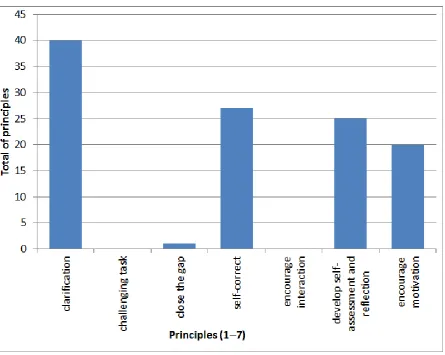
[image:13.595.77.523.315.670.2]The frequency of evidence of the seven principles shows considerable variation in the way tutors give feedback on child care and protection issues (Figure 2).
There are four principles which account for the vast majority of feedback. The clarification (Principle 1) of students’ understanding of child care and protection is clearly a crucial aspect of learning and may reflect the high frequency of this principle. Instances of feedback for the principles of self-correct (Principle 4), develop self-assessment and reflection (Principle 6) and encourage motivation (Principle 7), suggest that comments are aimed at helping students take more individual responsibility and regulate their own learning about child care and protection. The absence of any principles in relation to encouraging interaction (Principle 5) also suggests that feedback is focussed on the individual student. That no principles were evident in relation to challenging tasks (Principle 2) and the very low frequency of principles for closing the gap (Principle 3) suggests that students are seldom given comments that help them to progress from current to desired performance. This appears to reflect a rather static form of feedback which might not be conducive to preparing students for the realities of practice.
Interviews
The interviews addressed the second aim of the study, which was to explore students’ perceptions of feedback about child care and protection during the course and its usefulness for learning and practice. The mean scores for questions were rated between five and eight on a ten-point scale, which suggests students have a relatively positive experience of the
justifications provided by students are organized into themes and whilst these are presented separately in an attempt to enhance clarity, many of the issues overlap. The themes are:
Responding: personal and emotive Content and culture
Relationships
Responding: personal and emotive
Written feedback on summative assignments is considered by students to be the most emotive and anxiety provoking. It is viewed as fixed in that students are unable to change it.
Subsequently, it is one-way information from the tutor to the student. Whilst there are opportunities to discuss feedback with tutors some students believed these to be limited because: (1) those who pass an assignment are usually quite relieved and prefer to direct their attention and energy to forthcoming assignments, and (2) those who fail an assignment often feel embarrassed about getting certain aspects wrong. Yet, students often wish they had discussed summative feedback with tutors irrespective of whether they had passed or failed because it would have given a clearer understanding of the assignment and how to improve future assignments. Whilst it is useful and appropriate to discuss summative feedback immediately after it is received, it might be less emotive and more palatable several months and even years after it has been written. A student offered the following advice to students starting the course:
and protection you don’t realise how much childcare actually goes into every part of social work. There’s no escaping it.
Written summative feedback, although highly emotive, might have longevity that is less apparent for other types of feedback and providing more formal opportunities for students to re-read and discuss it at different stages throughout the course could be productive.
There was considerable variation in the way students viewed child care and protection on the course with some viewing it as an integral aspect, whereas others viewed it as marginal and less relevant. Comments by two students show this contrast:
The hardest part is childcare and protection [it is] in every section of social work and it’s going to be the one thing you’re going to speak about more than anything else in the four years that you are at university. All you hear about is child protection, just listen to tutors because they know what they are talking about.
I am not hugely interested in childcare and protection … I’ve not chosen topics that it has come up in as I tend not to go near children and families.
Students who didn’t engage fully in the teaching about child care and protection on
classroom-based modules might have a more limited understanding on which to interpret any feedback. Moreover, they might have misconceptions about the way in which child care and protection issues are restricted to ‘child care’ social work.
extremely valuable, and several noted that it was highly dependent upon the quality of relationship with the service user:
If you have a good relationship with them they always tend to say good things
whereas if you didn’t then they would probably be not so happy to say your strengths and more your weaknesses. I think that’s quite difficult in terms of the relationship, but getting feedback from service users is always very important.
Students often felt awkward about requesting feedback from service users and preferred the practice teacher to seek this information. Only one student received feedback from a service user specific to child care and protection issues. With the exception of this student, all of those interviewed will enter the workforce with no feedback from service users about their learning and practice in relation to child care and protection. More consideration should be given to the apprehension surrounding feedback and ways in which it is entwined with the student-service user relationship.
Content and culture
The type of practice placement has a strong influence on learning: a children and families placement is considered the best environment in which to learn about child care and
it was the children and families workers who gave the most information relevant to childcare and protection because they were working in it and they were really helpful … they would say that I had done that right, but next time you could improve on this and have a bit more confidence in this, so it was really good because I was able to be practicing alongside them.
Students who gained relevant experience of child care and protection often felt that previous classroom teaching began to make more sense. This integration of theory and practice is clearly a core aim of a qualifying course and it is reassuring that most students had very positive experiences of a children and families placements. This experience equips students to better understand their feedback. Other placements were much less conducive: several students felt there were few genuine child care and protection opportunities during their placements. Opportunities were, however, maximised by a good practice teacher:
Your practice learning depends on who your practice teacher is … my first one was great but my second one wasn’t, so that kind of hindered my learning for me in terms of childcare and protection.
The most preferred form of feedback was informal verbal feedback by a practice teacher. This feedback was generally viewed as a discussion or ‘chat’ about child care and protection, which allowed students to ask questions as part of an on-going dialogue. It was much less anxiety provoking compared to waiting for summative feedback on a high stakes assignment. Informal discussions in classroom were also considered effective for the same reason.
Written summative feedback from tutors was the most criticised type and source of feedback. The main criticisms related to: (1) too much focus on grammar and punctuation at the
expense of other more important aspects; (2) comments deemed to be a criticism of the individual are considered unhelpful and leave students more reluctant to discuss it; and, (3) it is inconsistent and does not reflect the effort students put into assignments. The following comment encapsulates the thrust of these criticisms.
I do think feedback is very varied and I don’t know if a set of common values or standards or framework would be beneficial or even feasible … I don’t think the assignments are marked equally either … one tutor would mark it a grade and then the other one would be different. We all know that, and as students we all talk about it. The first thing you ask them is who marked it, oh god not him or her.
The value of detailed feedback might also be adversely affected by grading practices. A recurring theme from students is the need for more specific instruction about how to improve grades.
There was nothing to say you could have maybe done this to make it better …I got seventy per cent so I was thinking how am I meant to get the extra thirty, how am I meant to get it without coming and chasing you up asking how to get it.
The culture in academia of not grading assignments up to 100% might undermine student confidence in child care and protection. A student that passes with a grade of 45% can be left uncertain about attaining the remaining 55% of the assignment. Getting an ‘equivalent’ proportion wrong in child care and protection practice is likely to have considerable consequences. Even an A graded assignment of 70% can leave a student concerned that an equivalent 30% wrong in child care and protection is highly problematic. Students are faced with the double blow of a flawed marking system and a lack of instruction about how to progress their understanding of child care and protection.
Relationships
The way in which feedback is delivered and received is influenced by the quality of
meetings allow students to have both planned and unplanned contact which facilitates feedback with their practice teacher.
It was useful because supervision, I found to be extremely pro active, in that it was a two- way street…it wasn’t just about my practice teacher telling me what was good and what wasn’t, it was me exploring my own self within that supervision
environment, and I found it so useful, just to say things out loud.
The student- practice teacher relationship appears to be more conducive to good feedback compared to the student-tutor relationship. Many students spend more one-to-one time with their practice teacher over a 16-week period than with their personal tutor over a 4 year period. Practice teachers also facilitate meetings between students and colleagues and other professionals about child care and protection. Issues from these meetings are often fed back into supervision sessions or less formal meetings with the practice teacher. The feedback from practice teachers and colleagues, however, tends to focus on practical activities/tasks and less on theoretical ideas and concepts. As a result, a crucial aspect of learning is not addressed fully in students’ preferred type and source of feedback.
care and protection issues is unnecessary or unimportant, but the effectiveness of written feedback seems to be less when compared to verbal discussions with a practice teacher.
Practice teachers were deemed to have the most credibility, especially if they were qualified social workers with past and current experience in a child care setting. The credibility of tutors was also dependent upon their experience and professional qualification, albeit to a lesser extent. The issue of credibility may explain why many students attribute little value to the views of peers. Whilst students often have very positive relationships and engage in regular dialogue with peers they tend to have little to offer in terms of feedback because they lack experience of child care and protection and are reluctant to give negative comments. It would appear that the value of feedback about child care and protection is not simply about content, but also the relationship between the giver and receiver, perceived levels of
credibility and willingness to honest.
Discussion
Findings from this study show that students experience a variety of different types and sources of feedback about child care and protection throughout the social work course. Learning about child care and protection can be enhanced when students get formative and summative feedback in verbal and written forms from tutors, practice teachers, peers,
instruction that directs students to undertake relevant tasks. These represent two of the three first order principles identified in Heron’s (2011) study and suggest that feedback on child care and protection is rather static because it does not sufficiently progress student learning. Ensuring feedback reflects the three first order principles will give a more dynamic form of feedback and is more likely to better prepare students for practice. The key factors
influencing student perceptions about the quality of feedback are:
emotive- instruction that is overly personal or generates too many negative feelings is
less well received/acted upon
teaching input and practice experience- provides students with a foundation on which
to understand the feedback
accurate and consistent information- gives students greater confidence in feedback
relationships- influence the way students receive and act upon instructions
These factors may be relevant to other areas of learning in social work such as community care and criminal justice and future research could examine the similarities and variations that might exist.
That some students view child care and protection as an integral feature of the course,
whereas others consider it to be marginal is a reminder of the significant differences that exist between individual students in terms of, for example, personal interest, motivation and
understand that this does not negate their responsibility for child care and protection issues. Brandon (2008) reminds us that child protection seldom comes labelled as such. It may be ironic that feedback on child care and protection does not always come labelled either. Tutors, practice teachers and students will therefore have to accept more responsibility and give greater attention to the way feedback enhances learning about child care and protection.
A way forward: maximising feedback in child care and protection
Empowering students more fully in feedback practices is necessary if they are to engage effectively in the teaching and learning about child care and protection. This will require greater consideration of:
expertise and placements relationships
dialogue
better alignment between assignments and feedback
re-thinking the formative component within summative feedback
1 Expertise and placements –student learning is likely to be enhanced when practice teachers are qualified social workers and practice learning placements have a strong focus on child care and protection. The SWTF (2009, p.24) states that:
It is the combination of good learning opportunities and an experienced practice teacher that generates such high quality formative feedback for students. Practice teachers could use the principles of feedback as a framework when giving students verbal and written instructions in relation to their progress. This would help both the practice teacher and student to evaluate the quality of feedback and make informed decisions about the most effective form of feedback for a particular individual and situation. There are likely to be resource difficulties in ensuring that all students get a child care placement and a practice teacher who is social work qualified, however, these have to be resolved if students are to be best prepared for practice.
2 Relationships − the intense and purposeful relationships that can evolve between students and practice teachers allows for regular and effective formative feedback. This conveys a greater sense of partnership compared to the student-tutor relationship. There are competing demands on the workload of tutors and regular one-to-one meetings with students do not appear to be a priority within HEIs. Yet, having more meaningful student-tutor relationships may establish partnerships in which feedback for assignments becomes most effective. Greater attention should also be given to developing peer relationships that enable students to share feedback; after all, this is an essential task in the workplace, not least of all in coping with some of the adverse work cultures identified by Munro (2011). Gaining a better insight into some of their own resistance and apprehensions about feedback might also help students to understand the student-service user relationship and emergent feedback.
Organising a forum prior to students going on placement that invites an informed critique of feedback practices from these stakeholders could be disconcerting for some individuals, for example, due to the imbalance of power between different members. Re-constructing the giving and receiving of feedback as equally important elements within the process provides a useful starting point for discussion, and whilst it does not address power imbalances, it could make them more explicit.
4 Better alignment between assignments and feedback – students should only be assessed on what can be fed back upon with accuracy and consistency. The starting points is not what tutors want to assess, but rather what they are capable of giving feedback on and in a way that facilitates good learning. This should be augmented by a marking system that aligns fully with assessments, rather than conveying that a significant part of student learning is flawed. This will require assessment and feedback practices to be prioritised within tutor workloads and for senior management to break with certain traditions in relation to marking.
perhaps more palatable for many students. Re-engineering feedback in this way would make it an invaluable aspect of an individual’s professional development within the workplace.
Conclusion
The increasing pressure on tutors and practice teachers to better prepare social work students for the realities of practice in child care and protection will require a more robust approach to the way feedback is delivered and received both in the classroom and on practice placements. Findings from this study suggest there is variation in the extent, type and source of feedback and the way in which it influences students’ understanding of child care and protection. Ensuring students are more involved and empowered within feedback practices is likely to enhance their experience. This will require all students to take full responsibility for their learning in relation to child care and protection, irrespective of whether they intend to work in this area post qualified. The factors which make some feedback more effective are not
References
Agathonos-Georgopoulou, H. (1998) ‘Future outlook for child protection policies in Europe’, Child Abuse and Neglect, 22(4), pp. 239-247.
Biggs, J. (2000) Teaching for Quality Learning at University, Buckingham, SRHE and Open University Press.
Brandon, M., Belderson, P., Warren, C., Howe, D., Gardener, R., Dodsworth, J. & Black J.
(2008) Analysing child deaths and serious injury through abuse and neglect: what can we
learn? A biennial analysis of serious case reviews 2003-7, London, Department for Children,
Schools and Families, DCSF-RR023.
Carless, D. (2007) ‘Learning-orientated assessment: conceptual bases and practical implications’, Innovations in Education and Teaching International, 44(1), pp. 57-66.
Heron, G. (2011) ‘Examining Principles of Formative and Summative Feedback’, British Journal of Social Work, 41(2), pp. 276-295.
Klein, G. (2000) Sources of Power: How People Make Decisions? London, MIT Press.
Laird, S.E. (2013) ‘Training social workers to effectively manage aggressive parental
Munro, E. (2011) The Munro Review of Child Protection: Final Report. A child- centred system, London, Department for Education (DfE).
Nicol, D. (2008) Transforming assessment and feedback: enhancing integration and empowerment in the first year, Mansfield, Scottish Quality Assurance Agency for Higher
Education.
Nicol, D. & Macfalane-Dick, D. (2006) ‘Formative assessment and self-regulated learning: A model and seven principles of good feedback practice’, Studies in Higher Education, 31(2), pp. 199-218.
O’Donovan, B., Price, M. & Rust, C. (2008) ‘Developing student understanding of assessment standards: a nested hierarchy of approaches’, Teaching in Higher Education, 13(2), pp. 205-217.
Sadler, D.R. (1989) ‘Formative assessment and the design of instructional systems’, Instructional Science, 18, pp. 119-144.
Scottish Executive (2006) Key Capabilities in Child Care and Protection, Edinburgh, Scottish Executive.
Social Work Task Force (2009) Building a safe and confident future: Implementing the recommendations of the Social Work Task Force, London, Department for Education (DfE).