City, University of London Institutional Repository
Citation
:
MacFarlane, A., Robertson, S. E. and McCann, J. A. (2003). Parallel computing
for term selection in routing/filtering. Paper presented at the 25th European Conference on
Information Retrieval Research (ECIR 2003), 14-04-2003 - 16-04-2003, Pisa, Italy.
This is the accepted version of the paper.
This version of the publication may differ from the final published
version.
Permanent repository link:
http://openaccess.city.ac.uk/4500/
Link to published version
:
Copyright and reuse:
City Research Online aims to make research
outputs of City, University of London available to a wider audience.
Copyright and Moral Rights remain with the author(s) and/or copyright
holders. URLs from City Research Online may be freely distributed and
linked to.
City Research Online:
http://openaccess.city.ac.uk/
[email protected]
Parallel Computing for Term Selection in
Routing/Filtering
A. MacFarlane1, S.E.Robertson1,2 and J.A.McCann3
1Centre for Interactive Systems Research, City University, London 2Microsoft Research Ltd, Cambridge CB2 3NH
3Department of Computing, Imperial College London
{email: [email protected]}
Abstract: It has been postulated that a method of selecting terms in either routing or filtering using relevance feedback would be to evaluate every possible combination of terms in a training set and determine which combination yields the best retrieval results. Whilst this is not a realistic proposition because of the enormous size of the search space, some heuristics have been developed on the Okapi system to tackle the problem which are computationally intensive. This paper describes parallel computing techniques that have been applied to these heuristics to reduce the time it takes to select to select terms.
1. Introduction
This paper describes parallel computing techniques that can be applied to a very large search space for relevance feedback for routing/filtering that has successfully been used on Okapi experiments at TREC [1-4]. The routing task we are considering is the situation where a number of relevance judgements have been accumulated and we want to derive the best possible search formulation for future documents. The filtering task is an extension of this, but a threshold for documents is applied i.e. a binary yes/no decision is made on one document at a time as to whether it will be presented to the user. In [1] it was stated that an alternative to some term ranking methods described would be to "evaluate every possible combination of terms on a training set and use some performance evaluation measure to determine which combination is best". Such a method is very computationally intensive, and certainly not practicable even with parallel machinery. The complexity of one routing session before re-weighting is 2t where t is the
2. Methods used by Okapi at TREC
Okapi at TREC [1-4] applied three algorithms to the term selection problem. Find Best (FB), Choose First Positive (CFP) and Choose All Positive (CAP). With the FB algorithm each term is evaluated in one iteration and the term yielding the best score from the term set chosen: the algorithm stops when a pre-determined threshold is reached. An evaluation in this context is a retrieval followed by the application of some function on the search results to produce a score: for example average precision. Terms that increase this score are retained/removed (see below). The threshold that halts the procedure is reached when there is little or no increase in the score. The other algorithms work in much the same way, but with minor differences. CFP works by choosing the term if it is the first term that increases the score. CAP is an extension of FB/CFP and works by including/excluding all terms that increase the score in an iteration. Each chosen term is accumulated in a query set, the final version of which is applied to a test set. Within each algorithm, two operations for choosing terms can be used: add term to the query or delete term from the query. The add term operation can be augmented by reweighing the retrieval selection value: in the case of the Okapi experiments this is either a reduction by a factor of 0.67 or an increase by a factor of 1.5. The Find Best and Choose All Positive algorithms are Steepest-ascent Hill-Climbers while Choose First Positive is a First-ascent Hill-Climber [5].
3. Applying parallelism to the Okapi methods
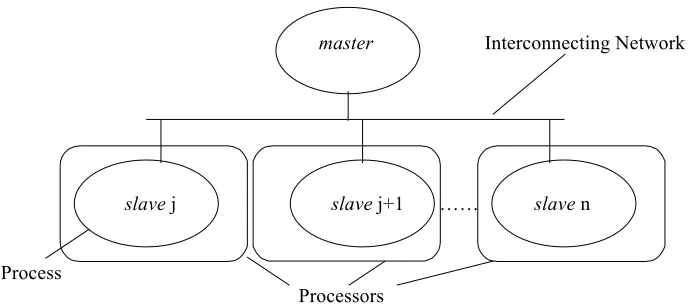
master Interconnecting Network
slave j slave j+1 …… slave n
Process
[image:3.595.127.471.430.582.2]Processors
Fig 1 - Master/Slave Router Topology
as the domain decomposition strategy [6]: the search space is divided amongst available slave processors, controlled by a master process (see fig 1). One of the advantages of this method is that communication costs are kept to a minimum as processes involved in evaluating terms do not need to communicate to complete their task: however there is an overhead associated with checking stopping criterion in every iteration. This overhead involves both the retrieval of the best yielding term or terms from all slaves by the master and broadcast of the best term data back to the slaves. Each slave has access to the training set on its own local disk in order to increase the flexibility of the parallel algorithms and reduce the overheads of broadcasting term information from the master process to slaves. This method of data distribution is known as Replication.
The combinations of algorithms and operations described in this paper are: Find Best, Choose First Positive and Choose All Positive algorithms with add only,
add/remove operations and add with re-weighting. It should be noted that the CAP
algorithm is a purely sequential algorithm to which inter-set parallelism cannot be directly applied, as the results are the cumulative effect of evaluations in one iteration. However the CAP algorithm can be applied to each sub-set of the term set and we refer to revised version as the Choose Some Positive (CSP) algorithm: we can regard CSP as a compromise between the FB/CFP algorithms and CAP algorithm. In the CSP algorithm the best yielding sub-set of the term set from one process only is chosen. CSP is implemented in terms of CAP. Choose First Positive differs slightly in that it is possible that a better term could be chosen in one inner iteration for each smaller sub-set of the term set (or increasing number of processes). It is possible the terms selected by the Find Best algorithm may differ slightly over runs with varying numbers of processes, possibly affecting the evaluation score. This is because two or more terms may have the same effect when applied to the query and the term that is chosen first amongst these equal terms will be the term used. When the number of processors equals the number of evaluation terms, all term selection algorithms are identical; i.e. they all reduce to Find Best.
4. Description of the data and settings used in experiments
The database used for the experiments was the Ziff-Davis collection from the TREC-4 disk 3 that is 349 Mb in size with a total number of 161,021 records [7]. Three databases were created for the Ziff-Davis collection: an extraction database, a selection database (both of which form the training set) and a test database. Our focus here is on the training set. We use the extraction database to choose the initial set of terms for the queries using the relevance judgements, and then train the queries on the selection database using the Okapi Hill-Climbers. We used a total of 19 TREC-4 topics on the Ziff-Davis database for these experiments. These topics were chosen on the basis of the number of relevance judgements available for routing/filtering: it was felt that topics with too few relevance judgements (i.e. one or two) would not be of much use in the optimisation process due to excessive overfitting (overfitting can occur when term selection mechanism overtrains). The distribution of relevance judgements for the database was as follows; 1868 (39%) for the extraction set, 1469 (30%) for the selection set and 1483 (31%) for the test set.
We define selection efficiency as the improvement in average elapsed time by using parallelism. We use the standard parallel measures:
· Speedup: defined as the increase in speed from 1 to n processors and found by dividing time spent on computation using 1 processor by time using n processors.
· Parallel efficiency: defined as speedup divided by n processors giving an idea of how well processors are being used on a parallel system.
· Load imbalance: we use a metric called LI that is the ratio of the maximum elapsed time over all the processors divided by the average elapsed time [8]: a perfect load balance would achieve an LI of 1.0.
As our focus is on speeding up the algorithms, we do not discuss retrieval effectiveness issues: experiments done by Okapi at TREC have shown that an increase in retrieval effectiveness is available [1-4]. We present runs on 1 to 7 processors: the hardware used for the research was the Fujitsu AP3000 at the Australian National University.
5 Experimental results
5.1 Elapsed time for term selection
0 100 200 300 400 500
1 2 3 4 5 6 7
slave nodes
Ti
m
e
:
s
e
c
s
FB CFP CSP
Fig 2. Add only average term selection elapsed time in seconds
0 200 400 600 800 1000 1200 1400 1600
1 2 3 4 5 6 7
slave nodes
Ti
m
e
:
s
e
c
s
FB CFP CSP
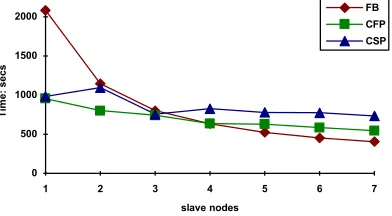
Fig 3. Add remove average term selection elapsed time in seconds
more expensive to use the add/remove operation compared with add only particularly with the FB algorithm.
slave nodes
Ti
m
e: secs
0 500 1000 1500 2000
1 2 3 4 5 6 7
[image:6.595.203.399.182.290.2]FB CFP CSP
Fig 4. Add reweight average term selection elapsed time in seconds
5.2 Load imbalance
1 1.05 1.1 1.15 1.2
2 3 4 5 6 7
slave nodes
LI
[image:6.595.120.472.299.501.2]FB CFP CSP
Fig 5. Add only load imbalance for term selection
1 1.05 1.1 1.15 1.2
2 3 4 5 6 7
slave nodes
LI FB
CFP CSP
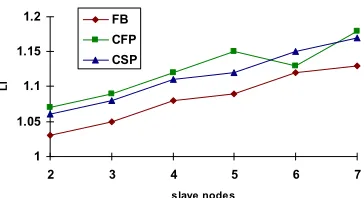
Fig 6. Add remove load imbalance for term selection
1 1.05 1.1 1.15 1.2
2 3 4 5 6 7
slave nodes
LI
[image:7.595.209.391.146.245.2]FB CFP CSP
Fig 7. Add reweight load imbalance for term selection
5.3 Speedup and parallel efficiency
0 1 2 3 4 5
2 3 4 5 6 7
slave nodes Sp e e d u p FB CFP CSP
Fig 8. Add only operation speedup for term selection 0 0.2 0.4 0.6 0.8 1
2 3 4 5 6 7
slave nodes Ef fi c ie n c y FB CFP CSP
Fig 9. Add only parallel efficiency for term selection 0 1 2 3 4 5
2 3 4 5 6 7
slave nodes Sp e e d u p FB CFP CSP
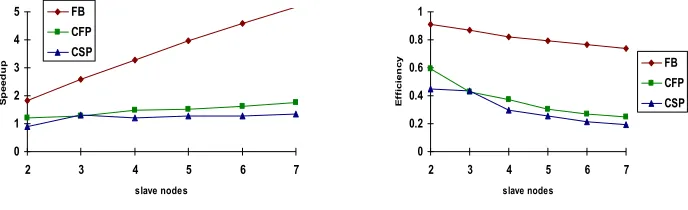
Fig 10. Add remove operation speedup for term selection
0 0.2 0.4 0.6 0.8 1
2 3 4 5 6 7
slave nodes Ef fi c ie n c y FB CFP CSP
Fig 11. Add remove operation parallel efficiency for term selection
[image:7.595.122.475.293.575.2]with add reweight increases the evaluations per topic from 3787 on 1 slave node to 5434 on 7 slave nodes: the same trend is found with other operations.
0 1 2 3 4 5
2 3 4 5 6 7
slave nodes
Sp
e
e
d
u
p
[image:8.595.126.470.183.288.2]FB CFP CSP
Fig 12. Add reweight operation speedup for term selection
0 0.2 0.4 0.6 0.8 1
2 3 4 5 6 7
slave nodes
Ef
fi
c
ie
n
c
y FB
CFP CSP
Fig 13. Add reweight operation parallel efficiency for term selection
Much the same can be said for CSP, apart from add remove operation which does actually show some level of speedup. However, overheads are a much less significant factor for CSP while the increase in evaluations plays a more important part: for example the number of evaluations using the add reweight operation increased from 2766 per topic on 1 slave node to 8234 on 7 slave nodes. There are fewer iterations with the CSP method, but individual iterations are much longer. Slowdown for CSP on add only and add reweight is recorded for 2 slave nodes. It could be argued that using speedup and parallel efficiency to measure the parallel performance of the CSP algorithm is unfair as the parallelism itself imposes an extra workload for the method. However demonstrating that some parallel performance improvement is available while still being able to examine some of the search space is, we believe, worthwhile.
6. Conclusion and further work
We have found a method of parallelism which by focusing on the main task, namely the evaluation of terms, can speed up the computation of the heuristics and examine more of the search space. We have shown that the speed advantage found with the FB selection method is significant. We believe it is possible to improve the selection efficiency of both FB and CSP using some form of dynamic re-distribution technique for terms in the query. Experiments with CFP are less conclusive and show difficulties particularly with load balance. It may be possible to improve the load balance of CFP but only at a large overhead cost.
We could consider the use of machine learning [9] tabu search [6] and pattern
recognition [10] techniques in order to optimise routing/filtering queries. A great deal of
research into search space methods has been done in machine learning using methods such as genetic algorithms and neural networks that are both very computationally intensive processes. Tabu search is a meta-heuristic which can be used to manage other heuristics in order to examine parts of the search space which would not normally be examined with a single search strategy. Some of the selection algorithms used in pattern
recognition are similar to the Hill-Climbers used in this study [10], particularly Find Best
combinations of the query as a pattern. The problem would be to find the best yielding ‘pattern’ in the query. Parallelism could be used to speed up these methods, providing they are able to show retrieval effectiveness benefit on the test set.
7. Acknowledgements
This work was supported by the British Academy under grant number IS96/4203. We are grateful to the Australian National University, Canberra for the of their Fujistsu AP3000 parallel computer in order to conduct these experiments. We owe particular thanks to Gordon Smith, David Hawking and David Sitsky for their advice on many issues. We would also like to thank David Hawking for suggesting the use of replication for the method of data distribution.
References
1. S.E. Robertson, S.Walker, S. Jones, M.M. Hancock-Beaulieu and M Gatford, Okapi at TREC-3. In: D.K.Harman, (ed.): Proceedings of the Third Text Retrieval
Conference, NIST Gaithersburg (1995) 109-126
2. S.E. Robertson, S. Walker, S. Jones, M.M. Beaulieu M. Gatford and A. Payne, Okapi at TREC-4. In: D.K.Harman, (ed.): Proceedings of the Fourth Text Retrieval
Conference, , NIST Gaithersburg (1996) 73-96
3. M.M. Beaulieu, M. Gatford, X. Huang, S.E. Robertson, S. Walker and P. Williams, Okapi at TREC-5. In: Voorhees E.M and D.K.Harman, (eds.): Proceedings of the
Fifth Text Retrieval Conference, NIST Gaithersburg (1997) 143-166.
4. S. Walker, S.E.Robertson and M Boughanem, OKAPI at TREC-6. In: Voorhees E.M and D.K.Harman, (eds.): Proceedings of the Sixth Text Retrieval Conference, NIST Gaithersburg (1998) 125-136
5. A. Tuson, Optimisation with Hillclimbing on Steriods: An Overview of Neightbourhood Search Techniques. Proceedings of the 10th Young Operational
research Conference, Operational Research Society (1998) 141-156
6. F. Glover and M. Laguna, Tabu Search, Kluwer Academic Publishers, 1997.
7. D. Harman, Overview of the Fourth Text REtrieval Conference (TREC-4). In: D.K.Harman, (ed.): Proceedings of the Fourth Text Retrieval Conference, NIST Gaithersburg (1996) 1-24
8. D. Hawking, “The Design and Implementation of a Parallel Document Retrieval Engine”, Technical Report TR-CS-95-08, Department of Computer Science, Australian National University (1995)
9. A. Hutchinson, Algorithm Learning, Clarendon Press (1994)
10. J. Kittler, Feature selection and extraction. In: T.Y. Young and K. Fu, (ed.):
Handbook of Pattern Recognition and Image Processing, Academic Press (1986)