City, University of London Institutional Repository
Citation
:
Kattami, C. (1996). Development of a construction methodology of goal directed,
optimal complexity, flexible and task oriented (GOFT) training materials for novice computer
users: application and evaluation in adults with mental health problems. (Unpublished
Doctoral thesis, City University London)
This is the accepted version of the paper.
This version of the publication may differ from the final published
version.
Permanent repository link:
http://openaccess.city.ac.uk/7779/
Link to published version
:
Copyright and reuse:
City Research Online aims to make research
outputs of City, University of London available to a wider audience.
Copyright and Moral Rights remain with the author(s) and/or copyright
holders. URLs from City Research Online may be freely distributed and
linked to.
OF GOAL DIRECTED,
OPTIMAL CCIPLEXITY,
FLEXIBLE
&
TASK ORIENTED (LOFT)
TRAINING
MATERIALS FOR NOVICE
COMPUTER USERS. APPLICATION
& EVALUATION IN
ADULTS WITH MENTAL HEALTH PROBLEMS.
Christalena Kattami
Doctoral Thesis
CITY UNIVERSITY
Rehabilitation Research Centre,
System Science Department
February 1996
PAGE
NUMBERS
CUT OFF
ACKNOWLEDGMENT
...
7
DECLARATION
...
8
ABSTRACT
...
9
INTRODUCTION
...
10
THEORETICAL BACKGROUND
...
19
1. HUMAN FACTORS ASSOCIATED WITH HCI
...
19
1.1 Basic Processes Affecting The Hci
...
20
1.1.1 Arousal Of The Organism
...
21
1.1.2 Selective Attention
...
22
1.1.3 Sensory - Motor Characteristics ...
25
1.1.4 Working Memory
...
28
1.1.5 Long Term Memory
...
30
1.1.6 Language Comprehension
...
34
1.2 Complex Processes Affecting The Hci
...
36
1.2.1 Skill Acquisition Theories
...
37
1.2.2 Problem Solving Approaches
...
43
1.2.3 Goal Directed Behaviour
...
48
2. HCl FOR THE ADULT, NOVICE LEARNER ...
54
2.1 Issues Related To The Computer User ...
54
2.1.1 The Ways Adult Users Prefer To Learn ...
54
2.1.2 Misconceptions About Computers
...
58
2.1.3 Psychological Factors ...
59
2.1.4 Individual Differences ... 60
2.2 Issues Related To The Computer Features ... 63
2.2.1 The Computer Language
...
63
2.2.2 The Computer Interface
...
64
2.2.3 The Help Facilities
...
66
2.2.4 The Errors Made
...
68
2.2.5 The Computer's Alien Culture
...
69
2.3 Computer Training Models ...
70
3. COMPUTER
TRAINING
IN MENTAL
HEALTH
REHABILITATION
...
77
3.1 Vocational Rehabilitation In Mental Health
...
77
3.2 Computers In Mental Health Rehabilitation
...
81
4.1 The Task Strategies Approach
...
90
4.2 Task Analysis For Knowledge Based Descriptions (TAKD)
...
91
4.3 Command Language Grammar (CLG)
... 92
4.4 External - Internal Task Mapping Analysis (ETIT) ... 94
4.5 Task Action Grammar (TAG)
... 95
4.6 The Goms Family; The Keystroke Model
... 96
4.7 The User - Device Model ... 98
4.8 Information Structure Description Model
... 99
4.9 Decomposition Of Mental Activity
...
100
4.10 Cognitive Task Analysis Model (CTA)
...
101
4.11 Conclusion
...
104
METHODOLOGY & DEVELOPMENT OF GOFT TRAINING MATERIALS... 105
5.1 Methodology Of Training Construction
...
106
5.1.1 Theoretical Premises Of Construction
...
111
5.1.2 Guidelines Of Construction
...
122
5.2 Implemented Theoretical Models
...
126
5.2.1 The Goms Model
...
126
5.2.2 The Cct Model
...
129
5.1.3 Cognitive Task Analysis Of Applications
...
131
5.2.4 Implementation Of The Models
...
136
5.3 Objectives Of The Training Materials
...
137
5.4 Structure Of The Goft Training Materials
...
138
5.4.1 Instructional Part
...
138
5.3.2 The Application Part
...
140
5.5 The Difficulty Evaluation Model
... 143
5.6 The Developed Goft Training Materials
... 149
RESEARCH DESIGNS & FINDINGS
...
151
6. OBSERVATIONAL APPROACH
... 152
6.1 Overall Training Process Observations
... 152
6.2 Case Histories
... 154
6.3 Discussion
...
158
7. RESEARCH DESIGN I
...
160
7.1 Purpose & Hypotheses
...
160
7.2 Variables
...
161
7.3.1 Subjects
...
162
7.3.2 Procedure
...
163
7.3.3 Measurements
...
165
7.4 Results & Discussion ...
167
7.4.1 Participants
...
167
7.4.2 Attendance Rate
...
169
7.4.3 Participation
...
171
7.5 Discussion
...
177
8 EXPERIMENTAL RESEARCH DESIGN
...
179
8.1 Purpose & Hypothesis
...
179
8.2 Variables
...
180
8.3 Method
...
180
8.3.1 Subjects
...
180
8.3.2 Procedure
...
181
8.3.3 Measurements
...
183
8.4 Results
...
185
8.4.1 Demographic Data ...
185
8.4.2 Performance Score Rate ...
185
8.4.3 Questionnaire Results ...
189
8.4.4 Subgroup Analysis Of Variance ...
190
8.5 Discussion ...
198
DISCUSSION & CONCLUSIONS ...
201
9.1 Discussion ...
201
9.2 Critical Review ... 208
9.2.1 Validity Of Research Results ... 208
9.2.2 Transferability Of Construction Propositions
... 209
9.2.3 Applicability Of The Methodology Of Construction
...
214
9.3 CONCLUSION
...
217
APPENDIXES
...
218
REFERENCES
...
248
Table
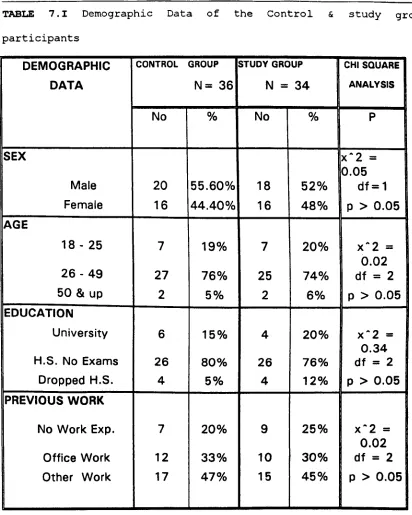
7.1
Demographic
data
of Participants
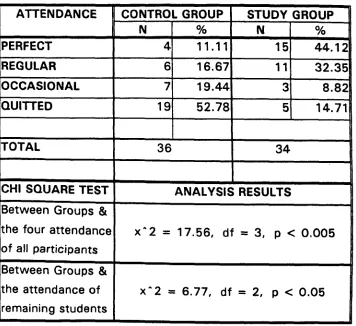
Table 7.11 Distribution of participants accoring to their attendance rates.
Chi-Square
analysis
results
between
groups
and the
number
of participants
& Dropouts
at different
stages
Table 7.111 Number of Participants and Drop outs 175
of both groups at different stages
Table
7. IV
Table
8. I
Performance
Scores
of
each
student
for
Table 8.11
Table 8.111
Table 8. IV
168
170
176
both training methods 188
Summary results
on nine
parameters
for
the
subjective
evaluation
of
both
training
methods
Summary results on the subjective evaluation
of the four goal directed parameter of both training methods
191
192
Distribution
of
negative,
neutral
& positive
scores
of the
nine
Questionnaire's
parameters
of both
training
materials
and the
ChiSquare
analysis
results
195
Table
B. V.
Distribution
of negative,
neutral
& positive
scores
of the
four
Questionnaire's
parameters
of both
training
materials
and the
ChiSquare
analysis
results
196
Table
8. VI:
Results
of Wilcoxon
Pair
Signed
Rank Test
of
the
Questionnaire's
scores
between
training
methods
197
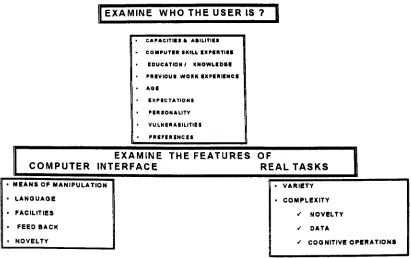
Fig.
5.1
The examined
features
of users
and interface
systems
for
the
construction
of training
108
Fig.
5.2
Users'
& interface
systems'
characteristics
of
the developed
GOFT training
materials
110
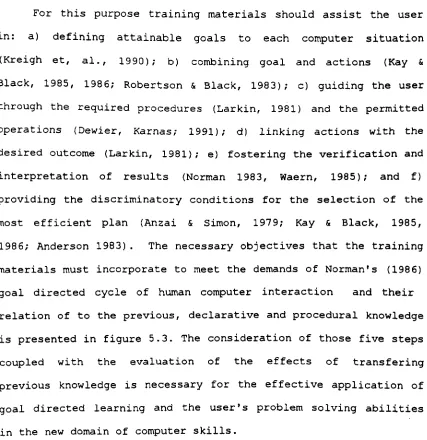
Fig.
5.3
Norman's
cycle
of goal
directed
process,
the
knowledge
demands and the implications
for
the
constuction
of materials
119
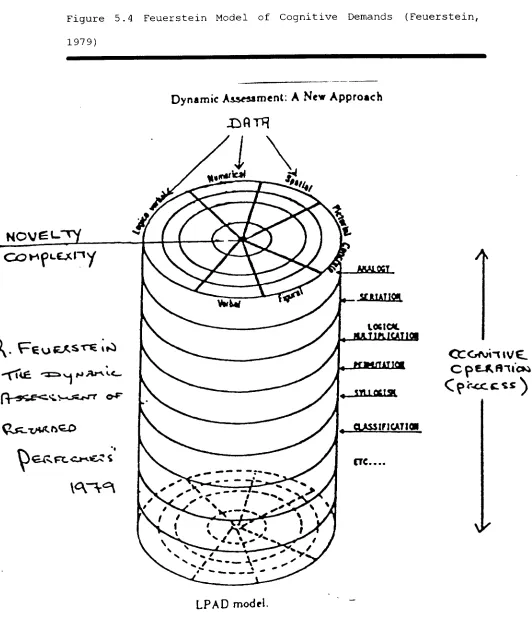
Fig. 5.4 Feuerestein's Cognitive Demands Analysis 133
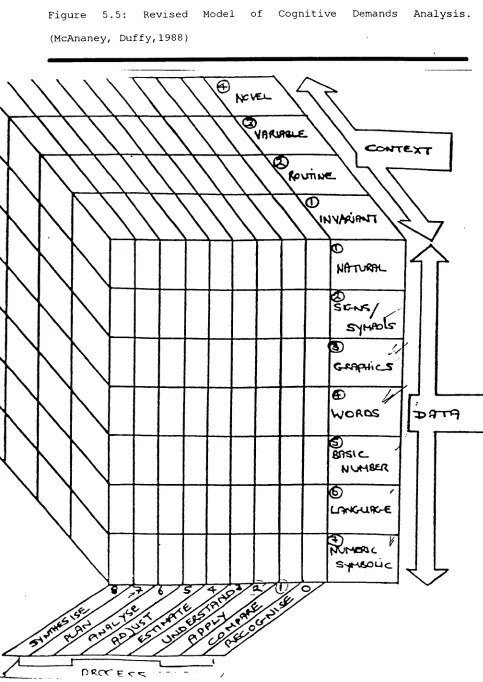
Fig. 5.5 Revised Cognitive Demands Analysis 135
Fig. 5.6 Difficulty Estimation Formula 144
Fig. 5.7 Goal List of Centring text 146
Fig. 5.8 Goal List of Moving text 147
Fig. 7.1 Chart of participants' percentages and percentage difference between the study & control group at
different stages of the program 172
Fig.
7.2
Chart
of drop
out's
percentage
and percentage
difference
between
the
study
& control
group
at
different
stages
of the
program
173
Fig
8.1
Performance
score's
chart
of GOFT & traditional
training
materials
186
Fig 8.2 Chart of mean scores for GOFT and traditional
materials on nine questionnaire parameters 193
Fig
8.3
Chart
of mean scores
for
GOFT and traditional
TO MY HUSBAND, APOSTOLOS
FOR HIS ) RAL
SUPPORT,
CONSIDERATION
&
CONTINUOUS
ENCOURAJMCMENT !!!
TO MY PARENTS
FOR THE ACADEMIC
ASPIRATION
!!!
TO MY CHILDREN,
ELENA & MYRTO
FOR THEIR PATIENCE
!!!
I grant
powers
of discretion
to the University
Librarian
to allow
this
thesis
to be copied
in
whole
or
in
part
without
further
reference
to me. This
permission
covers
only
single
copies
made for
study
purposes,
subject
to normal
A
number
of
information
technology
schemes
have
been
developed
in
order
to provide
people
with
mental
health
problems
the
opportunity
to
acquire
skills
in
micro-computer
technology.
Even though
positive
results
have been
reported
a high
incidence
of dropouts
during
the beginning
of the
training
have been found.
The research is based on the assumption that in order for a computer training method to be effective in fostering computer skills and confidence to adult novice users with mental health problems has to: (a) bridge the gap between the user's capacities, needs, and preferences and the demands of the computer interfaces and their real task applications; (b) consider the ways adult novice users prefer to learn and the skill acquisition theories; (c) facilitate a goal directed interaction with the computer system; (d) maintain an optimal complexity level across training; and (e) allow flexibility of use.
Based on the relevant literature, a methodology model and a set of design propositions and construction guidelines have been derived and have been implemented for the development of Goal- directed, optimal complexity, Flexible & Task oriented (GOFT)
training materials for adult, novice users with mental health problems. The GOFT training materials were based on three different models, the one for the creation of a goal directed
instruction format and the other two for the organisation of the training, and the estimation of the difficulty level of each new computer operation or real task application.
Evaluation
of
use
of
the
GOFT Training
Materials
by
34
adult,
novice
users
(aged
18-51)
with
mental
health
problems
revealed
positive
results.
More
specifically,
the
use of
the
GOFT
training
materials
as compared
to traditional
methods
resulted
in
a significant
increase
in
the
number
of
participants
at
the
different
training
stages
(85.3%
versus
47.2%;
and
44.5% versus
22.2%
at
three
and
twelve
months
respectively),
in
perfect
&
regular
attendance
rate
( 44,12%
versus
11.11%
& 32.35%
versus
16.67%)
and in
the performance
level
(means of 3.75
versus
2.67)
of
the
users. The subjective
evaluation
by the users
also
revealed
significant
differences
between
the
GOFT and traditional
training
materials.
In
their
evaluation
the
GOFT materials
were
rated
significantly
higher
in
terms
of
systematic
arrangement,
personal
affect,
understandability,
task
relevance,
fitness,
sense
of
control,
confidence
in
using
the
mastered
functions
and
in
supporting
goal
directed
learning
approach.
INTRODUCTION
A number of training
projects
in
Information
Technology
have
been
developed
in
order
to
provide
people
with
mental
health
problems
the
opportunity
to
acquire
skills
in
microcomputer
technology
(Evans,
1990).
It
can
be
argued
that
microcomputer
technology
has
not
created
many
new
occupations
but
that
microcomputer
technology
has made existing
occupations
easier
to
enter
for
people
with
mental
health
problems
by providing
greater
flexibility
to work schedules
and working
environments.
The purpose of many of those projects was to give
participants sufficient skills and the opportunity to obtain
qualifications, which would enable them to enter open employment.
Underlying such a rationale was the assumption that chronic
psychiatric patients fail to obtain jobs because of lack of
commercially valued skills as well as because of discrimination
against them. (Lipsedge & Summerfield, Lazzari, & Van Beeston,
1987). Nevertheless, regardless of whether or not computer
training has resulted in employment, participation in a computer
course resulted in the acquisition of highly-regarded skills and
the production of valued work, helping to enhance the self
confidence and self-esteem of people with mental health problems,
thus fulfilling a main objective of rehabilitation.
Even
though
positive
responses
to
the
use
of
computers
in
training
people
with
mental
health
problems
have
been
reported
(Evans,
1990)
nevertheless
a high
rate
of
initial
dropout
was
evident
(Lipsedge
et
al.,
1987,
Summerfield
& Lipsedge,
1987).
This
initial
dropout
can be attributed
to
the
difficulties
every
novice
user
encounters
when
learning
to
use
computerised
confidence, the reduced cognitive abilities and attentional
stamina and the low level of frustration tolerance and high
anxiety level, that characterise people with mental health
problems, lead many of them to quit in the first weeks.
The position contemplated in this research is that in order
for a computer training model to be effective in fostering
computer skills, self confidence and self esteem, it has first
to: (a) consider limitations of the cognitive processes relevant
to computer skill acquisition; (b) analyse the way adults prefer
to learn; (c) take into consideration the common problems and
difficulties novice users face; (d) examine the demands and
characteristics of the interface system; and (e) meet the
specific needs of people with mental health problems which may
hinder the acquisition of computer skills.
From the available literature concerning the above premises
a methodology model, a set of theoretical propositions and
specific construction guidelines were derived for the
development of effective training materials. The training
materials must . (a) encourage an independent, goal-directed
approach, by providing all necessary information; (b) have an
easy, and average difficulty level in every session based on the
complexity of the computer procedures and the difficulty of the
tasks; (c) provide a sufficient number of opportunities to
practise the functions in realistic tasks to ensure mastery and
confidence; (d) preserve privacy and flexibility.
From the
examination
of
the
available
task
analysis
models
of
the
human computer
interaction,
it
was found
that
no single
task
analysis
model
provided
neither
the
necessary
and relevant
information
for
the
user
to
assume
a
goal-directed
problem
solving
approach
nor
a way to
estimate
the
difficulty
level
of
each computer task. For this reason, three different task
analysis models were combined for the formation of Goal-directed,
Optimal difficulty, Flexible, Task Oriented (GOFT) Training
Materials; one for the creation of the format of the instructions
of the training materials and the other two for the construction
of the hierarchy and the context of each training session. More
specifically, the models used included a modified version of the
GOMS model (Carroll, 1987) for the construction of the format;
the
CCT model
(Polson, 1987; Poison & Kieras, 1985a) for theestimation
of
the
complexity
of the
computer
procedures;
and the
Cognitive
Map
Analysis
model
of
Feuerstein
(1979)
which
was
altered
to
meet
the
requirements
of
assessing
the
difficulty
of
real
computer
tasks
(McAnaney,
Duffy,
1988).
Plan of the Report
This
report
is
composed
of
four
different
parts:
the
theoretical background; the development of the GOFT Training
Materials; the research designs and their findings; and the
overall discussion.
The first
section
on the
theoretical
background,
an account
of
the
available
literature
on
topics
relevant
to
the
human
computer
interaction
is
given.
This
section
includes:
(a)
the
limitations
of the
cognitive
processes
relevant
to
computer
skill
acquisition
(chapter
1);
(b) the
ways adult
users
prefer
to
learn
(Chapter
2.1);
(c)
the
common problems
and difficulties
novice
users
face
(Chapter
2.2);
(d)
the
specific
needs of
people
with
the available Task Analysis Models of the Human Computer
Interaction (Chapter 4).
The second section elaborates on the creation of a
methodology for the construction of effective Training Materials
and its application in developing training materials for the use
of adult novice users with mental health problems. The first part
discusses in more detail an overall methodology of effective
training development, the propositions of construction, in
relation to the theories they were derived from, and the
specific guidelines for the format, content, organisation,
difficulty evaluation and way of implementation of effective
training materials in Chapters 5.1,5.1.1, & 5.1.2.
The application of these guidelines in the construction of
the developed training materials for adult novice users with
mental health problems is examined in the second part. A
description of the rationale, structure, applications,
modifications and ways of implementation of the three models used
for the construction of the GOFT Training Materials is included
in Chapter 5.2. The objectives and a detailed description of the
two different components of the GOFT Training Materials, - the
instructional and the application part - in addition to the
developed and used difficulty evaluation model is elaborated in
Chapters 5.3,5.4, and 5.5. Furthermore, a brief account of the
development of the GOFT Training Materials is presented in
Chapter 5.6.
The third
section
describes
the
actual
research
designs
for
the
study
of
the
effectiveness
of
the
developed
Training
Materials
for
novice
users
with
mental
health
problems
at
the
Speedwell
Information
Technology
Project.
In
this
study
the
effects of the developed Training Materials on the computer
training of people with mental health problems have been assessed
through: (a) observations and the personal statements of users
(Chapter 6); (b) the analysis of the results of a quasi
experimental research design evaluating the attendance rate and
the training outcome of two different groups of students (Chapter
7); and (c) the performance and the subjective assessment of
users, who have used the GOFT Training Materials and traditional
stepwise approach for the acquisition of different computer
functions. (Chapter 8). The studied hypothesis, the methodology,
the results and the discussion of the findings of each research
design are discussed.
The last section of the report provides an overall discussion
of the findings in relation to the goals and objectives of the
study, analyses the derived conclusions and outlines future
recommendations.
Aims and objectives
This
study
supported
the
assumption
that
one
of
the
major
reasons
for
the
reported
high
rate
of
initial
dropouts
at
the
different
computer
training
projects
for
people
with
mental
health
problems
was the
lack
of
a suitable
training
model.
The
study
highlighted
the
need for
the
creation
of
a methodology
for
the
development
of
effective
computer
training
model
which
fosters
goal
directed
learning,
will
have
a medium
difficulty
level;
provides
realistic
practice
opportunities
and respects
the
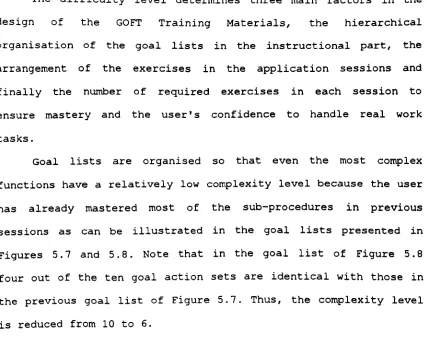
Thus, the main objective of this study was to implement the
derived methodology in the creation of specific Training
Materials, which are effective in developing computer skills,
personal satisfaction and self confidence in adult, novice users
with mental health problems.
The
aim
of
the
research
part
of
this
study
was
to
investigate
whether
the
GOFT Computer
Training
Materials
will
have
a different
effect
on the
outcome
of
computer
training
of
adult
novice
users
with
mental
health
problems.
The set hypotheses
of the
study
were that:
1.
The users
of
the
GOFT Training
materials
will
show
different
ways
of
using
the
materials
during
the
training
to
fit
their
personal
learning
preferences
and needs.
2. The attendance rate of students with mental health
problems trained with the GOFT Computer Training Model
will be significantly higher than that of students
trained with other methods.
3.
The
number
of
students
with
mental
health
problems
that
will
finish
the
initial
three
month
training
at
the
Speedwell
Information
Technology
Project
will
be
significantly
'higher
for
those
students
trained
with
the
GOFT
Training
Materials
than
other
students
trained
with
traditional
methods.
4.
The
number
of
students
with
mental
health
problems
that
will
continue
their
computer
training
after
6 and
9
months
will
be
significantly
higher
for
those
students
who
were
initially
trained
with
the
GOFT
Training
Materials
than
for
other
students
trained
with
traditional
methods.
5.
Performance
of
computer
functions
mastered
with
the
GOFT Training
Materials
will
be significantly
higher
than
that
of
functions
mastered
with
traditional,
long,
stepwise
procedures.
6. The GOFT Computer Training Model will be rated
significantly higher than traditional stepwise
approaches by the same users in ten subjective
parameters measuring: (a) the materials; (b) the
user's control, satisfaction, confidence and mastery;
and (c) the fostering of goal directed, problem
solving approach.
Research & Findings
The GOFT Training Materials have been used as a training
method at the Speedwell Information Technology Project. The
project was designed to provide people with mental health
problems the opportunity to acquire skills in computer
technology.
The gathered observational data supported qualitative
changes in the overall training process when the GOFT Training
Materials were used. The students spent more time working with
the computer, worked more independently, and were better able to
transfer their learning to new tasks when they were using the
GOFT Training Materials. In addition, the students themselves
referred to the different ways they were using the GOFT training
Materials to fit their individual learning style, their interests
The
results
of
two
different
groups
of
novice
users
with
mental
health
problems,
revealed
a significant
improvement
in
the
attendance
rate
of
the
34 users
trained
with
the
GOFT Training
Materials,
compared
to
the
36 users
trained
with
traditional
methods.
The
number
of
students
finishing
their
three
month
initial
training
at the
Speedwell
Information
Technology
Project
was significantly higher for the group that was trained with the
GOFT Training Materials. In addition a significantly higher
number of students continued their computer training after a
period of 6 and 12 months.
The comparative results in the performance of the same 12
users who utilised both the GOFT Training Materials and a
traditional stepwise approach to learn different computer
functions during the same training period showed a significantly
higher score when they were using the GOFT Training Materials.
All users for those functions trained with the developed training
materials demonstrated an independent use of the mastered
functions in new applications.
Finally, a comparative qualitative assessment by the 12
users exhibited a significantly higher score in terms of:
understandability, fitness, task relevancy, organisation,
personal effect, user's control, confidence, mastery and problem
solving process for the GOFT Training Materials compared to
stepwise approaches. In addition the negative scores given to the
traditional materials in the aspects of organisation, relevancy,
user's affect, user's control, and support of goal directed
learning reveals some differentiating features among the
developed and the traditional materials.
These
findings
supported
the position
of this
study
that
the
development
of
specialised
training
materials
that
implement
a
comprehensive
methodology
of
design,
and
construction
propositions
derived
from
relevant
theoretical
background
can
improve
the
outcome
of computer
training
programs
for
people
with
THEORETICAL BACKGROUND
1. HUMAN FACTORS ASSOCIATED WITH HUMAN COMPUTER INTERACTION.
The theoretical background most pertinent for the study of
the human-computer-interaction is provided by the information-
processing psychology, whose aim is to describe how people are
driven by "goals", make up "plans", "interpret" their
environment, and adjust their conceptions as a result of
"feedback" from their actions. (Miller, Galanter & Pribram, 1960)
Psychology has been keen on finding general simple
principles to describe human functioning. The Stimulus-Response
(S-R) principle proposed by the behaviouristic tradition, remains
useful for the description of the kind of behaviour which can be
regarded as "responses" to "stimuli", but another principle has
to be used to capture the human-computer-interaction process.
Miller, Galanter & Pribram (1960) introduced the "test-
operate-test-exit" (TOTE) principle in order to capture the
essential parts of human goal-directed behaviour on which the
human-computer-interaction is based. According to this principle
an action is generated as long as the test condition indicates
that the set goal has not been reached. The TOTE principle
concerns complex cognitive processes like learning and problem
solving as well as mental, operations such as attending,
memorising, and reading comprehension. Since the TOTE process is
based on such processes it can be assumed that the human
computer interaction is affected by the same factors and
limitations relevant to cognitive performance in general.
According
to Baecker
and Buxton
(1987a, b) the
examination
of
those
cognitive
processes
is
essential
for
the
determination
of
the
processing
resources
available
to
the
user
for
handling
the
cognitive
demands of the task.
Balancing
the
available
processing
resources
of
the
user
with
the
critical
resources
required
for
the
user
to
perform
a task
or
execute
a process
is
instrumental
in determining
the
user's
performance.
It was considered necessary for the construction of the
materials to study and analyse the principles governing the
structure and efficiency of those basic operations as well as
of those complex cognitive processes affecting the human-
computer interaction . Special emphasis will be given to
highlighting their implications for the acquisition of computer
skills and for the creation of effective training materials for
the novice user.
1.1
Basic
Processes
affecting
the
HCI.
The Model Human Processor employs a set of three inter-
connected subsystems - perceptual, cognitive and motor, each
consisting of memories and processors. Associated with each
subsystem are four key parameters memory capacity, decay, re-
presentation and processing cycle (Card, Moran, & Newell, 1983)
The processes relevant to the Human-computer Interaction
can be organised in six different categories and include those
processes which concern: (a) the activation status of the
internal environment, the organism; (b) the ability of the
organism to attend to external stimuli; (c) the characteristics
motor
performance;
(d)
the
possibility
of
keeping
knowledge
in
active
use in
working
memory;
(e)
the
knowledge
stored
in
long-
term memory; and (f) the language
comprehension.
1.1.1 Arousal of the Organism
It is widely accepted that the degree of arousal of the
organism affects all types of performance. This relation was
first expressed by the Yerkes-Dodson law (1908) whose main
assumption supports, that performance is optimal "when arousal is
neither too low nor too high"
, or " when a person's body or
mind is stretched to its limits in a voluntary effort to
accomplish something difficult and worthwhile" (Csikszentmihalyi,
1990).
The Yerkes-Dodson law has not only been the
subject of much debate, it has also inspired a lot of research which indicated
that: (a) sleepiness, monotony
and low motivation alone or
together will lead to low arousal ; (b) arousal will affect the
amount of effort which the person may expend on a task; and (c)
task characteristics and the person's judgement of control and
capabilities will affect their willingness to devote energy to a
particular task (Ghani, 1991, Ghani & Deshpande, 1994).
The major implication of the Yerkes-Dodson law
for the human
computer interaction outlines the need to carefully consider what
will happen when a novice user encounters a computer system. It
is probable that their first impressions
of the system will
determine both the setting of goals and the
manner in which the
user
will
approach
the
system.
Perception
of
the
task
challenge
and
the
sense
of
being
in
control
will
affect
the
amount
of
effort the user is willing to spend on accomplishing the tasks
(Ghani 1991).
The training
should
therefore
provide
an optimum
level
of
challenge
to every
skill
level.
If
the
challenge
is too
high,
the
user
will
feel
lack
of
control
over
the
environment
and
will
become anxious
and frustrated.
If
the
challenge
is
too
low,
then
the
users
lose
interest
(Csikszentmihalyi,
1990).
In
addition,
training
must
include
tasks
that
will
foster
the
users
sense
of
control
and of feeling
competent
and self-determined
(Ghani
& Al-
Meer,
1989).
Thus,
keeping
an
optimal
complexity
flow
across
training
will
increase
the
likelihood
of
the
users
to
continue
their
effort
to master
the
system.
1.1.2 Selective attention
Human attention is subjected to certain restrictions in
terms of how many stimuli or tasks can be performed concurrently
and which aspects of a task can be considered simultaneously.
Selective attention comes into play when two or more different
stimuli are impinging simultaneously on our senses and the person
has to decide which to attend to.
Selective
attention
is
necessary
for
two
different
reasons
(Kahneman,
1973).
One is
related
to the
structural
limitations
of
the
visual,
motor
and auditory
systems
of performing
two similar
tasks
concurrently.
The second
is
related
to
general
processing
limitations,
which
are
in
turn
related
to
the
amount
of
effort
the
person
can and is
willing
to expend
for
the
completion
of
a
Early in acquisition, only a small amount of the
available information can be attended to, while later on, the
performer can accomplish the task easily and apparently has
capacity to spare. Performance decrements are anticipated with
secondary loads or distractors in early phase of acquisition.
These decrements will be increasingly diminished in later stages.
(Nissen & Bullemer, 1987) and with sufficient and consistent
practice, two complex tasks verbal or non-verbal can be performed
simultaneously (Shiffrin & Dumais, 1981; Parkin & Rosso, 1990).
Some investigators (Schneider & Fisk, 1983; Schneider &
Shiffrin, 1977; Shiffrin & Dumais, 1981, Damasio, 1989) have
proposed a two process theory of attention to account for these
changes. At first, processing is controlled: that is, it uses
general processing capacities, but it is slow, effortful,
generally serial, under intentional control and involves
awareness. With practice, apparently effortless performance
results from automatic processing, which is fast, parallel,
obligatory, does not require awareness and has low demands on the
processing capacity (Fisher, Duffy, Young & Pollatsek, 1988;
Fisher & Tanner, 1992). These two process theories have been
criticised for the lack of consistency of the definition they
give (Phillips & Hughes, 1988), and for the notion that the
presence of automatic processing is inferred from the performance
that it is invoked to describe (Allport, 1980).
The attention spent on the completion of a task is related
not only to the level of task acquisition but also to the task's
difficulty and familiarity and to the person's motivation and
psychological state. Integrative processes of novel, perceptual-
motor stimuli require full attentional allocation which may not
as
crucial
for
familiar
verbal
stimuli
(Verdolini-Marston,
Balota,
1994).
Furthermore, it has been suggested that people under stress
tend to reduce the number of cues to which they can attend in a
situation (Easterbrook, 1959). It has been found that people who
are anxious, find it difficult to concentrate on a task. A
possible explanation is that anxiety itself or the monitoring of
the anxiety inducing stimuli requires processing effort which
leaves a smaller proportion of attention capacity available for
task relevant processing.
Attention capacity can be increased through attention
training that involves the increase in attention-attraction
strength of consistently trained target stimuli and the decrease
in the attention-attraction strength of non trained or distractor
stimuli (Shiffrin & Czerwinski, 1988). Attention training entails
the preferential response to certain stimuli which once is
encoded, its associated response will automatically be activated
(Rogers, 1992). The consistency in training and practice
opportunities has been found to be crucial in fostering the
selective attention to certain stimuli (Fisher & Tanner, 1992).
The various aspects of selective attention are very
important when it comes to performing tasks with the aid of
computers. Computers require the acquaintance not only with new
stimuli but also the use of perceptual-motor processes in a new
environment. Each task consists of two subtasks: the task it-
self and the handling of the computer. If both these tasks
require attention and share the same processing resources
performance in one or both is likely to suffer since attention
must be divided among the subtasks (Navon, 1984). This will be
processing resources (Navon, 1984), have to be performed under
stress or if those concerned are anxious while they are working.
Thus, it is important to carefully analyze and measure both the
demands of the actual task itself and also of using the system
and learning the computer's procedures so that a novice learner
will not become overloaded, during training. This is particularly
important when the user has no previous experience of the actual
tasks and is prone to become anxious.
1.1.3
Sensory
- Motor
Characteristics
The characteristics of the sensory and motor organs can be
regarded as representing the "bioware" restrictions on the human
system. Human cognitive performance cannot go beyond these
restrictions, however some technical restrictions of computer
systems conflict with them. In such cases the users have to work
at the limit of their capacities and they have to expect both
stress and errors. The Human-computer interaction is generally
based on the screen output given by the computer and the motor
input via the keyboard or mouse provided by the user.
Card,
Moran
&
Newell
(1983)
studied
the
quantitative
characteristics
of
vision,
visual
search
and
motor
performance
using
data
from
the
performance
of
different
subjects
under
different
circumstances.
They
determined
that
three
aspects
of
vision
are especially
important
to consider.
The first
aspect
concerns
the
minimum
duration
required
for
a stimuli
to
be perceived
as
distinct.
The
detection
time
of
visual
stimuli
indicates
that
two
stimuli
presented
successively
within
a period
of
time
less
than
50-200
msec will
be perceived
as one continuous
stimulus.
The second
factor
relates
to
the
decay
rate
in
sensory
memory,
meaning
that
the
interval
between
various
pieces
of
information
that
are
to be integrated
should
be as short
as 90 to
1000 msec in order
to
prevent
the
loss
of
the
sensory
trace
of
one piece
before
the
next
arrives.
The third factor deals with the amount of information
retained immediately after presentation. The amount of processed
information retained depends on the rate of information given and
the demand for meaning in the material presented. So long as the
material is novel and cannot be interpreted, the limited sensory
memory will provide the only way of retaining information.
Screen reading often requires active visual search. Visual
search is a complex task and performance at the novice level is
determined by: the degree to which the user understands task
instructions; the speed with which can encode the memory-set
item; the speed of assessing and matching the items presented in
the display with the desired one; and finally the motor respond
speed (Ackerman, 1988).
In the
case of human computer
interaction
it
has been found
that
reading
from
a screen
is
often
less
efficient
than
reading
from
a paper,
mainly
due to:
(a)
bad quality
of
the
writing
on
the
screen;
(b)
the
presentation
of
text
on the
computer
screen
and the
rate
of
change;
and
(c)
the
segmented
formation
of
the
visual
images.
In
addition
warnings
and
help
are
provided
outside
the
visual
focus
field
of
the
user
and
they
may pass
undetected
by
the
user
unless
they
are
able
to attract
the
user's
attention
or
them.
Training
materials
must
enhance
the
meaning
of
those
warnings
in
order
to
enhance
the
possibility
that
they
will
be
registered
in
the
user's
memory
by
making
them
meaningful
and
relevant
to the
situation.
Every
movement
performed
consists
of
a series
of
discrete
micromovements,
each
requiring
about
70
(30-100)
msec.
Performance
checks
cannot
be made on every
micromovement,
since
feedback
from
action
to
perception
takes
200-500
msec.
Rapid
actions
such as those
involved
in
typing
have
to take
place
in an
automated
sequence
of
actions,
in
which
feedback
loops
must
be
incorporated.
Skilled typists find frustrating the utilisation of the
function keys, since they are located outside the conventional
keyboard movement range, disturbing the trained position of the
fingers on the keyboard leading to mistakes which usually go
undetected until they look at the screen.
Keyboard
keys
are
sensitive
to
the
time
of
pressing
and
combination
function
keys require
the
co-ordination
of two hands,
presenting
a problem
with
people
with
poor
hand co-ordination,
or
slow
motor
skills.
Such
dexterity
difficulties
do
result
in
mistakes
that
confuse
the
users
especially
when
they
don't
know
what to expect
and therefore
cannot
detect
errors.
Direct manipulation devices like pointing, clicking and
dragging require a mean performance time of around 200msec per
movement (Jackson & Roske-Hof strand, 1989). Mackenzie, Seilen &
Buxton (1991) found a substantial variance between pointing and
dragging times of 100 to 300msec respectively. The speed
advantage of pointing can be interpreted by the reduced cognitive
processing requirements and the relative cost of inaccuracy in
the two processes. Unlike pointing, dragging requires a control
movement of the cursor which has direction, a constrained path
and a temporal duration. Recovery from small errors in pointing
requires the simple repositioning of the cursor in contrast to
dragging that necessitates the repetition of the entire procedure
(Gillan, Holden, Adam, Rudsill, & Magee, 1992)
1.1.4. Working Memory
Working memory is a convenient concept for denoting the
information which is being attended to at the present.
Information in working memory lasts only for a short period
estimated to be up to 34 seconds for one chunk (Melton 1963), and
with half the information being lost after about 5 seconds for
three chunks (Murdock 1961).
The short-term memory model proposed by Miller (1956) has
become particularly well known in the human interface literature
but there are several limitations to that model. Miller proposed
that human short-term memory capacity resides in a discrete
buffer that contains 7 (+-)2 items. However, there is much
experimental evidence that does not support this single buffer
model (Broadbent 1975, Monsell 1981). For example, the number of
items that a person can recall decreases as the complexity of the
items increases (Simon 1974). While theorists continue to agree
that the capacity of short-term memory is limited, the discrete-
buffer model of short-term memory has been replaced by models in
which memory resources are dynamically allocated (Moray, 1967).
According to these models, performance may be affected by the
ways in which active processes share resources (Norman & Bodrow