City, University of London Institutional Repository
Citation
:
Brown, A. (2005). Information systems in organisations. (Unpublished Doctoral thesis, City University London)This is the accepted version of the paper.
This version of the publication may differ from the final published
version.
Permanent repository link:
http://openaccess.city.ac.uk/8450/Link to published version
:
Copyright and reuse:
City Research Online aims to make research
outputs of City, University of London available to a wider audience.
Copyright and Moral Rights remain with the author(s) and/or copyright
holders. URLs from City Research Online may be freely distributed and
linked to.
City Research Online: http://openaccess.city.ac.uk/ [email protected]
Information Systems in Organisations
Appendices
Ann Brown, BSc MSc
Submitted as part of a PhD as a staff candidate at City
University
\/ClL
'2-.
Faculty of Management
Cass Business School .
London
Appendices
Appendix 1: The Nine Papers
Appendix 2: Letters from Co-authors
Appendix 3: Related Publications
List of papers
Paperno Short Title
& Name type
1 Integrating Brown A, (1994) 'Getting value from an Journal IS integrated IS strategy', European Journal of
paper Information Systems vol3 no 2 pp 155-165 2 DBM Lewington John, De Chernatony Leslie & Journal model Brown Ann (1996) 'Harnessing the Power of
paper Database Marketing' Journal of Marketing Management vol 12 no 4pp329-346 3 DBM Lewington John, De Chernatony Leslie & Journal construct Brown Ann (1998) 'Building a Scale to Assess
paper Levels of Sophistication in Database Marketing Systems', Journal of Targeting, Measurement and Analysis for Marketing, Vol. 7, no 2 pp.
164 -190
4 Valuing Brown A (1997) , Valuing the soft benefits of Conference email Information Systems: the case of email'
paper Occasional paper based on (1994) 'Appraising intangible benefit from Information Technology Investment' CUBS working Paper and in The Proceedings of the First European Conference on Evaluation ofIT investment, pp 187-199
5 Intranet Heather MagriU &Ann Brown (1998) Conference evaluation 'Evaluating Intranet Applications' The
paper Proceedings of the Fifth European Conference on the Evaluation ofInformation Technology, pp77-109 Reading University
6 Colruyt Janson M, Brown A and Taillieu T (1997) Journal 'Colruyt: An Organization Committed To
paper Communication', Information Systems Journal vol 7 no 3 pp175-199
7 IT for CAT Janson M and Brown A (1998) 'Information Occasional Technology in support of Communicative
paper Action theory: a practical investigation' occasional paper
8 Rationality Cecez-Kecmanovic D, Janson M, Brown A Journal Framework (2002) 'The Rationality Framework for a
paper Critical Study ofInformation Systems' Journal of Information Technology vol 17,no 4 pp215-227
9 ebanking Brown A, Remenyi D and Bajomo A (2004) Journal 'Electronic Banking for SMEs: A case study of
Paper 1
PUBLISH.ED
, .
Paper 2
Lewington John, De Chematony Leslie
&
Brown
Ann
(1996)
'Harnessing the Power of Database Marketing'
PUBLISH.ED
Paper 3
Lewington John, De Chematony Leslie
&
Brown
Ann
(1998) 'Building
a scale to assess Levels of Sophistication in Database Marketing
Systems'
· PUBLISH.ED
Paper 4
Brown A (1997) , Valuing the soft benefits of Information Systems: the
case of email'
City University Business School working paper based on
Brown A (1994) 'Appraising intangible benefits from information
technology investment' , proceedings of the 1
stEuropean Conference on IT
investment Evaluation, OR Society
~
!
1
I
I
!
i
!I
I
Valuing the Soft Benefits of Information
Systems: the case of email
" Ann Brown,
Department of Management, Systems and Information,
City UniversitY'Business School,
Telephone 01714778624 Fax 01714778628 . email [email protected]
©
Ann Brown, 1997. . Frobisher Crescent,
.' ' .
Barbi~anCenter,
'London EC2Y 8HB
Valuing the Soft Benefits of Information Systems: the case of email
Abstract
Valuing the Soft Benefits of Information Systems: the case of email
1 Introduction
As organisations move from computerising basic transactional operations to the more sophisticated applications that support existing job roles or improve the performance of existing operations, productivity gains become less significant. It is the longer term strategic advantage gained or the intangible benefits of quality improvements that emerge as the most valuable potential benefit. These are proving difficult to assess in any effective way. Ignoring these effects as many researchers suggest is the standard approach (Farbey et
aL
1993; Bacon, 1992) jeopardises both good projects (Earl, 1989; Keen, 1991) and the capture of the potential benefit (Zmud and Sambamurthy,1996)
Intangible benefits differ from the indirect or strategic soft benefits in that they are rooted in existing operations. The benefit often comes in the form of quality improvement. Computer Aided Design tools for example. offer presentational possibilities far more powerful than the pencil. Yetton et al (1994) describe a case of an architect's practice and its adoption of CAD. The firm achieved a number of significant productivity gains. But the most valuable benefit came from the increased volume of work developing from the company's ability to give clients a much greater understanding of how their building plans would look when completed. Clients came because they could visualise the final building before plans were finalised. In general intangible benefits that improve existing operations can be attributed to a particular application but cannot be directly
3
linked to cost reduction or revenue generation (Rernenyi et al, 1991). This makes them much more difficult to estimate or measure than hard benefits. Moreover they often only develop their full
potential when changes to the social system also occur (Sproull and Kiesler, 1991a, Walsham, 1993). They can be seen to have a positive effect on the firm's business but the timing and magnitude of this effect on profits is difficult if not impossible to determine (Earl, 1989; Morse, 1993; Willcocks, 1992; Kaplin, 1986).
The value of the intangible benefits of a particular application depend on the business and organisational context within which the application is implemented. There is no obvious routine or simple way of estimating their value. This paper explores the issue of assessment through an investigation of one type of application electronic mail (including computer conferencing). Email has the powerful attribute that it can be used successfully to obtain productivity increases at a very basic level of implementation. It has however many facilities that can yield a wide ranging set of intangible benefits when used by an experienced and skilled group of users. Experience shows that organisations
vary
greatly in their use of it.
Telephone Face-lo-Face Paper Fax Email
P .utidpants joint location in time
in space Same Co- differing differing differing differing present differing differing differing
Speeds: creation
writing speed writing writing speed transmission
slow- speed
Fast for 1 Potentially Fast dependent on page text; Virtually at the rate of speech distance mali system & depends instantaneous
for any amount on no
pages of text reception reading speed reading reading speed
speed
Receiver(s)
Geographic telephone agreed meeting geographic telephone anywhere on location specified place location specified network
specified
number possible one restricted group Large one Large very high,
Marginal Cost high increases with moderate; high low;
as numbers increasing increases in any no at same
increase numbers direct relation cost to no of
recipients
Message;
No Yes Yes
automatic Yes
record made
[image:15.574.37.507.86.568.2]retrieval &. infrequent, manual manual manual Electronic editing options
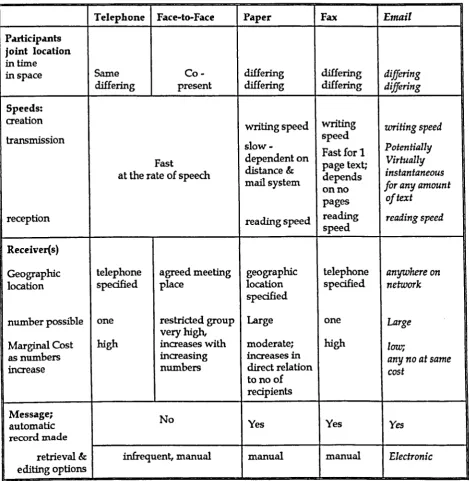
Table 1: The physical characteristics of email compared to other communicating media 2 The basic case for electronic mail
The case made for email is normally based on the benefits obtained by replacing existing communications media for current activities. Traditional financial methods of appraisal are used in which the final value is measured using discounting or costlbenefit techniques (Remenyi et al, 1991; Earl, 1989; Willcocks, 1992). Email
Electronic mail has many facilities (Sproull and Kiesler, 1991a; Nohria and Eccles, 1992). It transfers text messages almost instantaneously from computer to computer connected in a network by telephone or cable. Messages can be sent to a group of thousands as easily as to one and across a continent in the same time as to the next door office. The early packages developed on mainframes had the basic facilities of a moderate text editor. People wrote and received text originated within the email package. Messages received could be electronically filed, edited and returned to sender, printed out (but often with some difficulty), forwarded or simply deleted.Packages developed for PC LANs have led the way towards a more user friendly environment with for example text produced by standard word processors being taken seamlessly into the email package. Current software choices cover a variety of combinations of functions. Some offer more information on the message sent, such as symbols that tell the sender whether his/her message has been opened by the recipient. Some offer more information on the messages received, such as levels of urgency. Some offer better facilities for sending messages such as the attachment of documents to an individual message. The email message acts as a transporting device for documents created in any other package. Some offer more sophisticated filing facilities and text based search routines. Some offer facilities for group messaging such as diary management, bulletin boards, computer conferencing and the creation of distribution lists (OLs).
Table 1 compares the main physical characteristics of five communicating media; telephone, face to face meetings, paper, fax and email. Paper covers all
paper based communications such as memos, letters, bulletins/newspapers and
3
reports. As this table shows, email offers an interesting combination of unique characteristics when compared to telephone, fax and paper mail; faster and easier delivery to many recipients, message pick up at many locations at any time by recipients with an electronic record of the whole communications transaction and the facility for joint editing between sender and recipient.
subjective judgement on time savings, the scale of these effects must be open to dispute.
The most feared disbenefit is that of information overload. The ease with which memos can be sent to large groups can lead
to ~unk email' being received about
subjects of no conceivable relevance to the recipient. Weeding out these messages takes time and reduces both staff effectiveness and productivity. Mature email sites seldom see this as a problem (Finholt and Sproull, 1990; Hiltz & Turoff, 1993; Rudy, 1996). .
The basic case for email can be (and usually is) made on just the hard benefits to be obtained from replacing other communicating media. But these direct effects are far from the complete picture. In
a study of an email implementation within a company in the retail sector (Retail Ltd), and in other published cases a number of additional intangible benefits and disbenefits can be identified. These fall into two main groupings:
• those due to the replacement of existing communications media
• those due to the creation of new types of communication.
Retail Ltd demonstrates many of the intangible benefits to be obtained from the replacement of other media by email for routine administrative messages.
3 Retail Ltd and the proposal for electronic mail
The case follows Retail. Ltd through the proposal for and implementation of an email system. It is based on interviews and some documentary material. Initially the CEO and managers at head office were interviewed on the company's operations and performance. Later after the email
4
system had been implemented a study was carried out into how it was being used by the staff of the company. Interviews were arranged so as to obtain as wide a view of the company and its use of email as possible. Staff included the IS department head, several stores managers and representatives from across the HO departments. The interviews were semi structured with the broad aim of eliciting a description of the respondents job, their use of email and their judgements as to its effect. The principle documentary evidence used was the feasibility report written on the electronic mail system.
The company operates an expanding and very successful chain of many stores, selling mainly to the general public. It sells quality products through a standardised store layout. The company aims for high standards 'in the provision of its advertised products and ensures that they are delivered in well kept surroundings. It has earned a good reputation for reliability and for its ability to identify and respond to changing customer demands.
Decisions on the layout and running of the stores are made centrally, There is little scope for autonomy on the part of the store management. Central departments decide on new product lines, sources of supply, delivery to the stores and prices. They organise special promotions (which are normally offered chain wide simultaneously), specify the layout and allocate space. Stores reorder and sell.
Hence communications between HO and stores are characterised by the outward flow of instructions to all stores and the inward flow of reports and requests for guidance. The mass communications need from HO to all stores is channelled through one department, operations. Such a setup leaves the stores vulnerable to errors or slip ups in other parts of the operation, and hence peculiarly sensitive to the centre's ability to respond to their messages. Head office is just as sensitive to the stores ability to receive and respond quickly to directives.
There are more than eight head office functions most of which are located on one site. Each has a well defined responsibility. One takes care of ordering, for example, another new product choice and promotions. Any change to products will typically involve many departments, entailing considerable cross communication, before the effects reach the stores. Most activities are covered by standard procedures. 'The company culture is based on fonn filling' according to one informant. Confirmation and follow up are core activities for all managers in both stores and at head office.
The proposal to install electronic mail, which emerged from a stores survey .. was seen as a way of ameliorating the perceived dissatisfaction of both stores and HO with existing communication media. The survey brought out a range of concerns. HO dissatisfaction focused on four main areas; the high cost of current methods, poor feedback from stores, the perception that stores response to HO directives was weak, the excessive time needed to get information to them and the disruptive effect of the telephone. The stores had two main concerns; their perception that they obtained poor response from HO and the excessive volume of information and paper that they received, much of it not relevant.
5
These problems divide into those that relate mainly to productivity (cost, volume of information for processing) and the more intangible of those that concern people's ability to do their job well (poor responses, delay in delivery of messages).
A project to assess the value and propose action was initiated by the Managing Director and carried out by a line manager. The final decision to invest was the responsibility of the Board. The Managing Director's perception was that such a project would only gain Board acceptance if the hard cost savings justified it. Not even productivity gains would sway the decision in its favour.
The report carried out an appraisal by cost benefit analysis. Most stores were already linked to the mainframe at HO by terminals and many head office staff already had microcomputers, so the choice of a mainframe electronic mail package seemed obvious. This ensured that the costs of installing the system were not high. Initially only the 'hard' cost savings in paper, postage and telephone were included. Electronic mail was expected to replace at least 1/3 of the paper being carried to stores. The 'knock on' effect on courier service, copying, labour and telephones was based on this assumption. So the direct cost savings estimate used was based solely on the anticipated reduction in the one major communications channel, HO to stores. This showed a small financial net benefit from the first year. When productivity gains were included, based on 7% for HO staff alone, the net benefit became very substantial. Productivity gains far outweighed direct cost reduction and quickly repaid the costs of installing the system.
report did discuss them and a good case was made for email being able to ameliorate many of the problems identified. However these arguments were not carried forward into the final section, in which only the costibenefit was presented. Although the feasibility report went further in identifying intangible effects than comparable studies, the final appraisal and decision were based on the hard cost reductions alone.
4 Valuing the intangible benefits of email at Retail Ltd; replacement of existing communications media
The replacement of existing communication media by email for routine administrative messages at Retail was found to yield 4 different types of benefits;
• cost savings • productivity gains
• improvements to the quality of an operation
• improvements to staff effectiveness
Of these the last two are clearly intangible benefits.
The weekly operation in which stores at Retail Ltd request refills of notices from head office is a good example of the third type. The use of electronic mail was said to have transformed the operation. Notices or tags for new products or prices are ordered centrally in bulk for all stores. Some stores
will
eventually need refills, due to loss,theft or under ordering. This was dealt with at the end of each week and as the deadline for orders approached the demands by telephone escalated, constantly interrupting the operators in their immediate job of filling and loading the orders already on hand. All orders now come
by
electronic mail. This has reduced the direct cost of telephone usage. It has freed the operators to organise their time more efficiently as6
they now no longer have to drop all activity to answer the telephone. The performance of the operation has been improved. Requests can be made closer to the distribution time (ie later) and are being filled with less errors.
Operational improvements of quality such as the tag delivery illustrate the difficulties of putting a value on intangible benefits. The reduction in telephone usage can be estimated and the cost saving measured. Some attempt at estimating the time saving (and hence cost saving) for the men can be made. But how do we assess the value of the improvement in quality to the whole operation - the fact that stores can check their needs for more replacement tags and send an order that will be filled with less chance of error and at a time closer the departure of the delivery van? The value is clearly rooted in both the scale of improvement (how many fewer errors, how much closer to departure time) and the importance of this operation to the company's overall activity.
Similarly improvements to staff effectiveness are difficult to value. At Retail Ltd the electronic mail package recorded the message, the time at which it is sent, and the times at which the recipient read and responded to it. For some staff this was extremely valuable. If we picture each individual working as part of a chain, dependent on information about actions by people further up the chain and themselves having to deliver similar information onwards in circumstances of fairly intense time pressure, we can see how significant this is. Requests and the response obtained for example are now in the public domain. The hand over of responsibility is clearer. For an action orientated organisation with
which is now waiting for others to deal with. I can clear my mind of it and concentrate on the next job'. This member of staff felt that she carried out her responsibilities more effectively as a result. In addition the basic routines should be processed with less error.
Emailing the twice weekly bulletin from Head Office to all stores has produced hard cost gains in the reduction of carrier and paper costs. It has also shown productivity gains in the reduction of time needed from all the contributors involved in its production. Copy is delivered electronically to the editor direct from the originator. Many jobs are no longer necessary in the same way as for newspapers that moved to use of electronic text. Secretarial help, layout specialist and printers are no longer needed. The process is speeded up and has become easier to organise. Through the fusion of several activities, the editor now has fewer people and jobs to co-ordinate. This was an effect that McLuhan (1964) predicted from the use of electronic communication.. Co-ordinating many people's activities is both difficult and time consuming. A great deal of management theorising has centred on how to co-ordinate effectively and efficiently. Reducing the size of the co-ordination job has both quality and productivity benefits. The fewer the number of people the easier it becomes to be effective in co-ordinating their efforts. The editor can now handle a wider range of operations.
Almost every operation investigated at Retail Ltd showed intangible benefits similar to those described above as well as prodUctivity gains. Each individual quality improvement has value for the company in that most appear to support the company's performance in those areas that are thought to be the key to business success, reliability and speed of response. The accumulation of benefits reaped in operation after
7
operation could well be highly significant to the company.
5 The impact of email on routine communications
This case illustrates some of the ways in which email has the capacity to significantly change the character of basic routine communications previously carried out by paper mail, telephone or small face-to-face meetings.
When message content degrades quickly, , telephone or face-to-face discussion would be the preferred media. In such circumstances email can deliver a higher volume of messages to each individual, offers the receiver greater control over the message transaction and keeps a record of it. The receiver has time to formulate a more thoughtful response (by choice of reception, response time and type of response). It is now the receiver who determines the degree of urgency not the sender. Both organisation and individual can retain a memory of the message transaction, clarifying the roles of sender and receiver and keeping the sender informed of reaction to the message.
Many issues can arise suddenly and be quickly overtaken by events. Discussion by conventional media is often perceived to be too time consumijlg or expensive to locate all those concerned and obtain their views.
An email memo through the forward facility can be passed around the relevant group cheaply and quickly, adding comments cumulatively. The ability to hear about issues in time and respond gives the receiver a greater power to affect activities and increases the potential for collaboration. Administrative procedures become more open to debate by those affected by them.
text. The screen imposes a linear progress through any document. Hypertext and paging do not offer the same ease for the reader to jump from item to item as paper. For the newspaper type of document and for lengthy documents electronic media are less attractive except as a transportation vehicle.
In
general we can look for quality improvements in those operations which generate short messages; for which volume of messages is significant; for which the receiver has an important contribution to make; on which many have useful contributions to make but comment can be made sequentially ie there is no need for group discussion; for which a record is valuable either of the message itself or the message transaction and for the co-ordination of administrative actions that are not totally standardised and routinised. Organisations, like Retail, for which administrative efficiency and effectiveness is an important ingredient to their business success stand to gain far more from an email system than the productivity gains usually cited.6 Effects of computer mediated communications on individuals and groups
An important question for any organisation using email is whether and under what conditions computer mediated communications can replace face-to-face discussions between 2 or more individuals. Just as significant is the issue of how the behaviour of both individuals and groups might differ between face-to-face meetings and email discussions. If behaviour patterns can change this will affect the way electronic discussions go and in particular the nature of the decisions made by electronic groups. A considerable amount of research has been carried out into media choice (how individuals and groups choose
8
between media when more than one is available) and into what effects different media have once they have been selected for a message. This section discusses the results of this research and the implications for electronic work teams and electronic discussions and decisions.
Face-to-face meetings are expensive and sometimes impossible to arrange. Hence their replacement by email is of critical significance to many organisations. The focus of the research work relevant to this question has been on media choice. One of
Telephone Face-to-Face Paper Fax Email
Social impact
Cues:
Physical; bodily Verbal tone None None language, verbal Full possible
tone, physical range of physicaL presence
psycho-emotional
Organisational Verbal tone andsodal For sender; job title etc Little, by
position/ status context convention
cues
Emotional; moderately very little written
personal feelings high, Verbal tone
Interaction levels:
Interruption & Possible, Best possible None None None repair restricted conditions
for all
Speed of Feedback Fast, Verbal forms Slow quite slow fast, written of
Speed of learning high interaction moderate moderate moderately
high
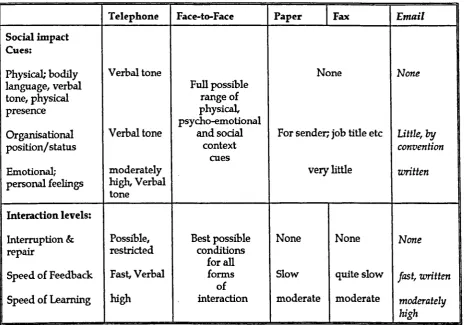
Table 2: Social impact cues and interaction level characteristics of email compared to other communicating media
Some communications media are better at expediting this process than others. Daft and Lengel defined information richness as the ability of a medium to facilitate understanding and convey meaning. The 'richer' the medium, the greater its ability to overcome ambiguity, convey the full expression of each individual's position and hence handle equivacol messages. The original theory ascribes a ranking to each media independent of context. Hence the idea of matching media to type of issue. The original ranking worked up from paper based communications through fax and telephone, with face-to-face being identified as the richest medium available to us. Trevino et al(1990 ) adapted the original ranking to place email between fax and telephone.
Table 2 shows the reasoning behind this
9
ranking. Email conveys little of the non verbal messages or the emotional signals that go to make up the subtleties and richness of social life. Nor can it convey the range of language variety possible in the spoken word. Compared to telephone and face-to-face it has a restricted set of social impact cues. It does better on interaction. Feedback and learning can be comparatively fast, but interruption is not possible. Interactive communication can reach a reasonably high degree, but still less than that possible by the other two media.
[image:22.574.39.504.69.394.2]capacity to handle any but routine messages. This would suggest severe restrictions on the type of group discussions possible via email. However a substantial body of empirical research results appears to offer a modification of information richness theory. Richness is neither an invariant property of a medi~
nor the sole criteria by which individuals choose. The social influence theory (Fulk
et
at,
1990 ) suggests that individuals make media choices on a range of factors, including perceived richness, the attitude and choices of their colleagues, perceived organisational norms, their own skills, their perception of richness, accessibility of the media and time constraints. It could be argued that many of these factors relate to speed of adoption rather than the underlying potential of electronic communications. Hence after the current transition period we may see information richness and physical factors (speed and distance) re-emerging as the dominant choice factors. The argument posed by Lee (1994) and others that richness is a property of both the medium and its organisational context has important implications. He cites a number of examples where email has been used for rich communications (Zuboff 1988; Markus, 1991 ; Yates and Orlikowski, 1992). He gives a detailed analysis of a case example from Markus (1991) in which he concludes that a rich conversation took place through a number of email memos. Lee's analysis brings out the key role of the 6 contributor's common view of the social construction of the organisation within which they worked and to which these memos related. Their understanding of how the organisation functioned, its various constituent parts and the position of some individuals, endowed the memos with a wealth of unwritten meaning and allowed the participants to discuss a complex subject (crossing political and department boundaries responsibility)3
through a lean medium. In the process of analysis, it becomes clear how much more likely it is that media choice is made by a group not an individual. A further implication of this work is that the degree of richness of any media (including face-to-face discussions) will vary according to organisational context and to the degree of shared understanding of those using it.
applying Lee's definition of leanness, 'meanings .. were not limited to those of the dictionary definitions of the words in which it was written .. '
These examples suggest that electronic media can handle a certain type of equivacolity. It seems possible to have discussions on complex subjects, involving some ambiguity, for which there is no clear initial agreement on what constitutes the important question and about which participants may have differing and strong views. This can happen, provided participants have a reasonably clear common framework from which they view the organisational context within which the discussion is taking place (many may have met) and the language and symbols used also have a clearly understood meaning for the group as a whole. An additional factor that appears to be important is that the participants have enough time to converge on an effective end point for the subject. This is also true of course for face-to-face meetings.
The possibility of successful work teams that span large geographical distances have been noted by several writers (Mueller,1991; Rockart and Short, 1991; Zuboff, 1988~ Hiltz & Turoff, 1993). The conditions for such groups to flourish include such factors as the technology and participants experience of it, the structuring of the discussion and the extent to which the elapsed time available for the discussion is enough to deal with the complexity involved. The preceding discussion suggests that the degree and type of equivacolity is also a key factor. It
seems clear that work teams can utilise computer based communications media to substitute for some of the face-to-face meetings that would have taken place
in
more traditional groups. Electronic communications are a powerful addition to all other available media. However4
successful electronic work teams do not happen without careful planning. Osborn (1996) gives us a detailed example of one failure. Some experiences point to the need for at least some face-to-face contact between most members, if these teams are to function successfully (Holtham et al,
1997)
An important debate has arisen over the issue of how email differs from face-to-face communication and whether individual and group behaviour is significantly altered by using it. The results have been conflicting and to some extent mirror the information richness debate. Table 2 establishes the extent of the reduced social impact cues given by electronic media which lies behind the widespread feeling that email is different. We have no sense of physical presence (Short et al, 1976) of the receiver. We cannot see them or their body language. Their emotional commitment is signalled less clearly. We cannot interrupt them. Discussions proceed at a different rate. We 'hear' other contributions more quickly, at the rate of reading but contribute ourselves at our own typing speed. (See physical characteristics in Table 1). There is a public record of the debate. Hence the media can help to create an environment of more even contributions.
of DIALOG, a computer conferencing system at DrugCorp, that 'DIALOG lets me talk to other people as peers. No one knows if I am an hourly paid worker or vice president. All messages have an equal chance because they look alike ... .It strips the halo effects from age, sex or appearance.' An alternative theory is developing that recipients of email messages are most strongly influenced by the social dimension (Spears et ai, 1990) and that almost all behaviour can be explained by the receiver's degree of identification with and perception of the rules of the group to which the message has been sent. As Rudy (1996) points out a significant amount of the empirical work on this subject has been carried out in controlled laboratory-like experiments with groups of subjects that are unlikely to be representative of organisations generally. And these results appear to conflict.
The outcome of this debate affects our views on group decision taking. The way in
which conventional groups reach decisions is fairly predictable. Participation is unequal based on status. Controversy is avoided where possible and group norms dominate. Members tend to converge on a decision quickly. The reduced social impact theory predicts that electronic groups work differently and some empirical results support this. Participation is more equal. High status members do not dominate as much as they do in face-to-face meetings. Electronic groups tend to consult more of their members increasing the number of alternatives considered. They are more likely to ignore faulty reasoning promulgated by people with social skills or high status. They tend to behave with markedly less politeness, experience more conflict and take significantly longer to reach a decision (McKenney et
ai,
1992). Indeed some groups may find reaching one impossible. This is consistent with the forecast made by McLuhan (1964) that5
electronic communications is likely to focus discussion on the issues rather than personalities. The alternative theory suggests that such behaviour could be duplicated in face-to-face. groups given the appropriate social norms.
7 Valuing the Intangible benefits of email; replacement of face-to-face communication
The replacement of existing communication media by email for face-to-face meetings adds a further type of potential benefit to the previous list (shown in section 4);
• cost savings • productivity gains
• improvements to the quality of an operation
• improvements to staff effectiveness • new types of dialogue
Work teams using email to supplement or replace face-to-face meetings and telephone discussions stand to gain much the same range of benefits as was identified for the replacement of other media for routine administrative messages. Direct cost savings arise from reduction in travel, telephone usage, paper and postage. Staff productivity gains are more difficult to identify, but improvements to the quality of any individual operation seem certain. The inclusion of experts that would be beyond reach without email should ensure higher quality output. The Canadian example (Mueller, 1991) demonstrated benefits not only of quality enhancement but also of the speed up of delivery of the
final
product.achieve it, the effect is potentially significant. For organisations where the quality of the decision is more important than the speed and decisiveness with which it is reached, this could be of great value. The characteristics of computer conferencing offer conditions that encourage wider participation in discussion. Decisions could be based on broader participation draw on wider range of knowledge and experience and command more widespread support. We have too little experience or understanding of these processes to make much attempt at valuing this at present.
8 Valuing the intangible benefits of new
connections
Computer based communications media do not function solely as an alternative to other media. In some situations they offer communicating connections that would not otherwise be possible.
The isolated worker can be brought into the organisational discussions. The peripheral worker isolated by physical distance or shift times can obtain a 'window on the corporation' (Sproull & Kiesler, 1991a; Zuboff, 1988; Eveland and Bikson, 1988). Through email they can register OplIDons, influence decisions which concern them and learn what issues are of importance to the rest of the community. The disabled worker can contribute more effectively. At Retail Ltd for example, a deaf office worker found that the installation of email allowed him to discharge a job much closer to his colleagues now that telephones were not the main vehicle of urgent messages. Routine administration by and for these workers would yield similar benefits to those noted in the preceding sections. For these workers face-to-face discussions were a luxury that they could not often afford. Email gives them the chance to
6
partially fill this gap. Apart from the potential to make quality improvements to their current operations, several writers have noted the increased sense of belonging to the community within which they work (Zuboff, 1988). Organisations that we might expect to value these effects more highly than most would include those with a large sales force or like consultancies, with many employees out of contact with the rest of the organisation (both home office and other colleagues) for long periods of time.
ones. It is possible that to their members their large size is masked and the social interaction generated (messages sent) feels similar to a small conventional group. Distribution lists and computer conferences expand our range of contacts but in a highly selective way to a tightly focused group. Email offers each individual worker a tool for maintaining and enhancing their own personal network. 'Does anyone know ... l' is a question that can be asked to very large groups at relatively little cost. In the Tandem example discussed by Sproull and Kiesler (1991b) the entire staff of over 10000 could be reached in this way. The information sought by most originators was typically personal experience or technical knowledge that could not be found in formal documents and most respondents were unknown to the questioner
The case at DrugCorp described by Zuboff (1988) shows how the value of new communications channels like computer conferencing groups depends totally on the nature of the company's business. For one division of DrugCorp computer conferencing was seen as crucial to its strategy. To the rest of the company electronic communications was viewed as a support for basic administrative procedures.
The idea for developing an electronic communications facility originated in the R&D division, who determined that their prime need was for computer conferencing. The in-house version, DIALOG was developed and installed by the Systems Development division. This was primarily designed for the creation and maintenance of computer conferencing. A record of all entries was preserved for members to access at any time. For the first 3 years use was voluntary and most users came from R&D and 2 other staff departments, systems , development and engineering. DrugCorp then decided to install a more
7
conventional email system and extend this to the rest of the company. If usage is a measure of success it seems that DIALOG was a great success in the staff divisions but results were less happy as the system spread.
To the R&D division email was a strategic application. Repeated studies had established that interpersonal communication was the key to innovation. Personal communication far outweighed all other means (libraries, papers) as a source of relevant knowledge and ideas. Innovation was their business and computer conferencing was seen as a way of increasing the personal contacts of all R&D personnel. In implementing DIALOG, the division exercised little control over users. Anyone could organise a conference on any topic. Rules of membership and operation were determined by the founder and the members. Conferences could be private ie secure from any readers but the members. In the early years the growth of conferences was rapid and topics ranged from highly technical to social. The comments by users revealed not only a high level of enthusiasm but an awareness of a new and unique contribution to the quality of debate. 'Many people felt less inhibited with the conferencing system than in direct interaction'. There was a 'sense that the conferencing medium made it easy to disagree with, confront, or take exception to others opinions'. Mastery of one's subject and the ability to share knowledge became new sources of power and influence. The qUality and quantity of personal communication, the key business
too~ appears to have been fundamentally
policies.
To the rest of DrugCorp, electronic communication was seen as a potentially useful support to existing operations, which were conducted on bureaucratic lines. These divisions operated a highly structured chain of command and official communications were handled hierarchically. The flavour of existing conferences ran counter to this culture. As
middle managers began to use the system and discover the nature of exchanges within in particular the social groupings, many responded with anger at the 'nonproductivity' and negativeness displayed. Management began obtain access to 'private' conferences and use the material contained there as a means of control. The almost inevitable result was a dying away of conferences and a change in the nature of the comments.
The business aims and needs of the two parts of DrugCorp differed profoundly. The difference gave computer based communication a strategic role to one and not to the other. The R&D division wanted many of the softer benefits of computer based communication media identified in this section. The main part of the company wanted the basic benefits identified in earlier sections. Both attempted to create the behaviour they wanted by the way they implemented the system. Unfortunately the approaches needed for success differed from group to group. The R&D division managed to align its use of IT with business need and implementation practice. Bu their approach did not work for other divisions.
This example suggests that organisations that sell creativity, whose services or products rely on their employees ability to create or apply new ideas, can derive enormous benefit from any tool that increases effective communication.
8
Effective communication here means putting an individual into personal contact with others working in similar or complementary areas and encouraging the exchange of oplruons, ideas and information along new paths and with less regard for person and more for the points made. The problem is balancing the time of finding and talking to those people likely to spark important ideas with the chance of a payoff. Email offers a way of reducing the time of locating likely sources of inspiration.
9 Assessing the value of the Intangible benefits of email
This paper has identified 6 quite different types of potential benefit to be gained from the use of email;
• cost savings • productivity gains
• improvements to the quality of an operation
• improvements to staff effectiveness • new types of dialogue
• new connections
Whether attempting to cany out an investment appraisal for a proposed new system or a post implementation evaluation, the . analyst faces the same problem of valuation.
Traditional financial methods are designed to measure the effects of the 1 lit two types
of benefits and hence offer an acceptable way to value email if these are the only benefits expected. But these methods are highly inappropriate for the remaining 4 types of benefit.
limited help in identifying and assessing them. Peters focuses on operational improvements and assumes that it is possible both to identify these effects and to translate into cash terms through the use of managerial judgement. Kaplin and Parker et al want to make use of indices. Both are concerned with the problem of producing a
final
score for a particular application that balances all factors realistically. Kaplin produces a method that looks at the organisation as a whole and attempts to capture effects over all activities. Parker offers a way of bringing together all types of effects (direct, intangible, indirect, strategic, technical risk, business risk). They both rely on obtaining their estimates of the various scores from appropriate managers.There has been little work on the estimation of intangible effects. It would be difficult for example to give a realistic judgement on the value of email to any individual organisation without working through a detailed analysis of the full range of potential effects similar to that undertaken in this paper. Each effect would need to be considered for relevance to the business need (Scott Morton, 1991; Earl, 1989; Holtham, 1992; Ward et al, 1990; Kovacevic & Majluf, 1993) and assessed for the type and cost of implementation required in order to realise those of value to the organisation. Using such techniques as Information economics (parker et al, 1989) is of little use without this level of detailed thinking. Only then can managers be asked to make their estimates of the required rankings on risk and value.
10 Conclusions
Electronic mediated communications offer an astonishingly wide range of potential intangible effects. This application demonstrates the range and complexity that intangible effects can take. Replacement of
9
telephone and mail for routine administration can yield at least 4 types of benefit (cost reduction, productivity increase, quality and staff effectiveness improvements) often simultaneously. It is organisations like Retail, for which administrative efficiency and effectiveness is key that stand to gain most from these effects. Replacement of face-to-face meetings promises not only very serious productivity gains and quality improvements but also new types of dialogue that may offer more control over the process of group decision taking. It is organisations with far flung specialist personelle for whom the functioning of their work teams are crucial which stand to gain from these effects. Perhaps the most exciting prospect comes from the new communication connections made possible by email. It is companies for which creativity is key that stand to gain most from the increased level of communication that this makes possible.
Retail Ltd reaped many more benefits from email than the formal feasibility document and basic appraisal methods considered. The company included only the 1 at type of hard benefit in the formal appraisal, although they stood to gain substantially from the intangible benefits of quality and staff effectiveness improvements. The company received many of these benefits from a basic implementation that made little effort to consider or obtain the full potential of the system.
call for the business case to be made in the same way as for strategic initiatives.
References
Bacon C I (1992) The use of decision criteria in selecting Information Systems/Technology Investments MISQ 16(3) P335-350
Daft RL and Lengel RH (1986) Organizational information requirements, media richness and structural design ManageII,lent Science 32(5) p554-571
Earl M. (1989) Management Strategies for Information Technology Prentice Hall
Eveland I D and Bikson T K (1988) Work Group Structures and Computer Support: A Filed Experiment ACM transactions on Office Automation Systems, Vol 6 (4) p354-379
Farbey B, Land F and Targett D (1993) IT investment a study of methods and Practice Butterworth & Heinemann
Finholt T and Sproull S (1990) Electronic Groups at Work Organization Science vol 1 (1)
Fulk I, Schmitz I and Steinfield C (1990) A Social Influence Model of Technology Use in Organizations and Communications Technology (Fulk I & Steinfield C Ed.) Sage Publications
Hiltz SR and Turoff M (1993) The Network Nation MIT Press
Holtham C, D'Cruz M and Tiwari A (1997) Groupware and Collaborative Learning CUBS working paper
Holtham C (1992). in Creating a Business-based IT Strategy (Brown A
Ed.)
Chapman and Hall, London10
Kaplin R (1986) Must CIM be justified by faith alone? HBR 64(2) p87-95
Keen P (1991) Shaping the future Harvard Business School Press
Kovacevic A and Majluf N (1993) Six stages of IT strategic Management SMR 34(4) p77-87
Lee A (1994) Electronic Mail as a medium for Rich Communication: An Empirical Investigation using Hermeneutic Interpretation MISQuarterly Iune p143-157
Markus M L (1991) Is Information Richness Theory Rich Enough? Or How Manager Using Email Cope with Lack of Richness, working paper Anderson Graduate School of Management University of California Los Angeles CA
Markus ML (1994) Electronic Mail as the medium of managerial choice Organisation Science 5(4) pS02-727
McKenney I, ZackM and Doherty V (1992) Complementary Communication Media: A Comparison of Electronic Mail and Face-to-Face Communication in a Programming Team in Networks and Organisation (Nohria and Eccles Ed)
McLuhan M (1964) Understanding Media Routledge and Kegan Paul Ltd, London
Morse C, (1993) Unpublished Notes for MBA(ITM) City University Business School
-Nohria M and Eccles R (1992) Face-to-Face: Making Network Organisations Work in Networks and Organisation (Nohria and Eccles Ed)
Osborn C Staying in TUNE: Distance Learning with Lotus Notes (1996) lEducation for MIS 4(1) P 17-27
Parker, M, Trainor H and Benson R (1989) Information Strategy and Economics Prentice-Hall
Peters G (1990) Beyond strategy - benefits identification and management of specific IT investments nT 5(4) p205-214
Remenyi DSJ, Money A and Twite A (1991) A guide to measuring and managing IT benefits NCC Blackwell
Rockart and Short (1991) The Network Organisation and the management of Interdependence. In The Corporation of the 1990s Information Technology and Organizational Transformation (Scott Morton M Ed.) Oxford University Press
Rudy I (1996) A critical review of research on electronic mail Eur.J.Inf.Systs 4(4) p198-213
Scott Morton M (ed.) (1991) The Corporation of the 1990s Information Technology and Organizational Transformation Oxford University Press
Short J, Williams E and Christie B (1976) The Social Psychology of Telecommunications Wiley, London
Spears R and Lea M (1991) Social influence and the influence of 'Social' in
computer-mediated communications. In Contexts of Computer-Mediated Communication (Lea Ed.) Harvester, London
11
Sproull L and Kiesler S (1991a) Connections New ways of working in the networked organization MIT
Sproull L and Kiesler S (1991b) Computers, Networks and Work HBR September
Stone Rosanne 1991 'Will the real body please stand Up? Boundary stories about virtual cultures' in Cyberspace: First Steps (ed Benedil..1: M) MIT Press
Trevino LK, Daft R & Lengel R (1990) Understanding Managers media choices: a symbolic Interactionist Perspective in
Organizations and Communications Technology (Fulk J & Steinfield C Ed.) Sage Publications
Walsham G (1993) Interpreting Information Systems in Organisations John \Vlley
Ward J, Griffiths P & Whitmore P (1990) Strategic Planning for Information Systems \Viley New York
Willcocks L (1992) Strategy Development and Delivery: dealing with the IT evaluation question in Creating a Business-based IT Strategy (Brown A Ed.) Chapman and Hall
Yates J and Orlikowski (1992) WJ Genres of Organizational Communication: A structural Approach to studying Communication and :Media Academy of
~1anagement Review (17:2) p 299-326
Yetton Philip, Johnson Kim and Craig Jane, 'Computer-Aided architects: a case study of IT and Strategic Change' Sloan
~1anagement Review 199435 (4)
Zuboff S (1988) In the Age of the Smart Machine The future of Work and Power Heinemann
Paper 5
Heather Magrill &Ann Brown (1998) 'Evaluating Intranet Applications'
Proceedings of the fifth European Conference on the Evaluation of IT,
PUBLISH.ED
Paper 6
Janson
M,
Brown A and Taillieu T (1997)
'Colruyt: An
Organization
Committed To Communication',
PUBLISH.ED
,
,.
;.-: .~:.'" :
success is noteworthy considering local business conditions: stringent and wide-ranging governmental regulations and a retail industry dominated by several well-established large food retailers. These competitors worked with paper-thin profit margins, strict hierarchical managerial structures and worker representation by unions of diverging ideologies with extensive influence over local and national government. Colruyt's strategy and approach to running core operations differed markedly from these competitors.
The company has been developing an unusual organizational form since its start-up in 1965. Mr Colruyt, the firm's founder, set out to create a company that not only was profitable but also embodied as far as possible his set of deeply felt values and beliefs. This is unusual in that most new forms are driven by business or technology changes. Few companies are designed with a value set as one of the objectives. An exception in the last century were the Quaker-controlled companies such as Rowntrees and Pilkington (Quinn, 1989), which were developed in com-pliance with a strong belief system. Mr Colruyt had strong beliefs on the rights of customers and employees. Some of his ideas also look remarkably similar to those of post-modemism (Has-sard, 1994). An additional factor of profound importance in the shaping of Colruyt was the early recognition of IT as an essential tool for developing the company in the direction that the founder wished it to go. As a result of these and other influences, Colruyt has developed a unique corporate culture which places great emphasis on obtaining the maximum participation and commitment of each employee.
This paper describes Mr Colruyt's philosophical beliefs and goals and the company he cre-ated. It argues that these beliefs had a profound effect on the eventual structure and form of the Colruyt organization. Over 30 years ago Mr Colruyt had a unique vision of how he wished to operate his company. His model is one that is beginning to have features of interest to a number of companies in the 1990s. The company's experience offers an unparalleled example for learning how to design and manage an organization that can deliver this vision.
Our research will be of value to other executives and business leaders who attempt to pursue innovative approaches similar to those followed by the Belgian company.
RESEARCH METHOD
Our project used an interview-based qualitative method for uncovering and making explicit the conditions and individual actions surrounding the creation and further development of Colruyt (Gummesson, 1991; Millar et a/., 1992; Cassell & Symon, 1994; Walsham, 1995; Remenyi & Williams, 1996). Stake (1995) refers to this procedure as all' Instrumental case study.
The interviews were predominantly carried out between 1992 and 1994. Document analysiS focused on policy statements, work procedures and rules formulated by upper, middle and lower level managers. Also included in the analysis were external documents such as union reports and newspaper and magazine articles. The documents reflect views on corporate objectives, policies and reactions to day-to-day events.
The interviewees were selected from all levels of management. A 4-hour in-depth semi-structured interview was conducted with Mr Colruyt, company founder and president of the
, :
'.'
.;"
-..
' , '. ... : ' ... . . ! .; ,'...
''.
': ".' " ":'.'
" "
--_
..._-board of directors. Further interviews were conducted with general managers for distribution and warehousing, the director for Information systems (IS), the marketing director, store managers and clerks. The interviews focused on top, middle and lower management's thinking about corporate philosophy, customer service, employee relations, union relations and the employee work environment. These Interviews were carried out In four distinct stages. Inter-views completed at one stage were analysed and then used to prepare semistructured Interview plans for the next stage (Lofland & Lofland, 1984).
Because the evolution of the company was closely tied to Mr Colruyt's unique philosophical beliefs system (a mixture of Catholic and Marxist Ideas), we first present these ideas and then show how they Impacted the corporate structure, values, and policies.
MR COLRUYT'S CORE BELIEFS
Mr Colruyt had clear philosophical views on the type of company he wanted to be part of. His views shaped the company at its Inception and many of the company's more unusual characteristics can be traced to his Influence. His major philosophical views stem from his boyhood In Catholic Belgium and his Marxist experiences during and Immediately after World War II, when he was a member of a communist cell in Paris.
Catholicism
Towards the end of the nineteenth century, Pope Leo XIII Issued his Rerum Novarum encyclical letter (Newman, 1979). In this pastoral letter, which was a direct response to Issues raised by socialism, the Pope threw his support firmly behind the emergent Catholic social movement. The encyclical dealt with five topics: the right to private property; the role of the Church In social affairs; social action by the Church; responsibilities of the state; and the right of workers to form voluntary associations such as unions (Newman, 1979). First, the Church concluded that without Its active Involvement no solution to the social questions posed by socialism would be possible. Second, the Church resolved that its care for man would Include his earthly condition as well as his fate In the hereafter. Third, the Church rejected laissez faire economics and held the state responsible for protecting private propertx, regulating working conditions and guar-anteeing workers a living wage. Finally, the Church accorded workers the right to voluntary association such as unions and Church societies preoccupied with social action (Harte, 1979).
The encyclical admonished the employer to pay a living wage, to respect the worker's human dignity and to promote the worker's physic~1 and moral welfare. -Furthermore: the Church suggested that the employer temper instrumental rationality with charity by ensuring job security in the face of short periods of seasonally caused unemployment (Lowrey, 1979). The encyclical admonished the worker to fulfil obligations agreed to in the work contract. The worker had to refrain from idling on the job, coming late, leaving early and committing similar unlawful acts. The Pope's (Giordani, 1979) interest in labour relations emanated from the sanctified character of work: 'Since work is the God-ordained means of man's subSistence, man has both the duty and the right to work.'
C 1997 Blackwell Science Ltd,lnformatlon Systems Jouma/7, 175-199
' ; . .
;~~~;~f~~:
...'
' : .
. $t~.:·
'! •• :. ::':~
"
The encyclical would have had little effect on day-to-day work life were it not for the great Influence that the Catholic Church had and continues to have over large segments of Belgium's social life. For example, In 1963 more than 80% of Belgian youths who had joined organizations were members of Catholic ones, and 25% of Flemish business leaders belonged to the Catholic Association of Business Owners (Dierickx, 1979). Furthermore, in 1963 the Christian Unions had over 800 000 members, whereas the Socialist Union counted 700000 members. Moreover, a survey by Harding at al. (1984) found that 72% of the Belgian population continue to be Roman Catholic. These numbers show that, even today, Catholic ideas are at the centre of cultural life In Belgium.
Mr Colruyt's concem for the rights of customers and his insistence that everyone in his company should participate In corporate life as much as he or she is able can be traced to these religious Ideas. Catholicism also led him to put great value on the honouring of any contractual obligation.
Marxism
Mr Colruyt's experience immediately after World War II when he joined a communist cell had a profound effect on him. In confronting Marxist philosophy he stated:
'Ileamed a completely new language [with which to interpret my life WOrld]. The experience changed my entire way of thinking. [However,] despite the close camaraderie among cell members, my knowledge of Stalin's crimes ultimately prevented me from totally embraCing Communism. I observed that Marxism Is Intensely rational to the point of creating among its adherents a deep-felt emotional need for human contact.'
Asked how his Marxist experiences affected the organization of the company, Mr Colruyt (April 1984) responded with:
'Marxists see alienation as the essence of the modem work process. Nevertheless, I have tried over the years to reduce alienation by the careful organization of work. Naturally, my efforts have only been partially successful but, still, things are better than they used to be.'
Mr Colruyt continued with the following observation:
'It all happened when I was eighteen and nineteen years old. Experiences at that age resonate through the rest of one's life. On the other hand, the experience was not lost on me - during a fifteen-year period I had employees who were Marxist union members. I was able to keep the discussion with these employees going because I placed it in the context of Marxist ideology.'
Despite his attraction to Marxist theory, the results of its Implementation led him in the end to reject it. In rejecting Marxism, he rejected rationality as the sole criterion for decision making. Instead he augmented rationality with emotionality. However, he still valued some of the other Ideas of Marxism. For example, job rotation and job enrichment are at the root of his attempt to counter his perception of the alienating influence of organizations. As he stated:
'A large degree of empowerment and a critical attitude are the signs of a strong involvement In
C 1997 Blackwell Science Ltd. Information Systems Jouma/7, 175-199
:,
,,\,'~,.:tY :;~.:::
,
,',