City, University of London Institutional Repository
Citation
:
Salami, Reza (1997). International technology transfer and its role in the industrialisation of Less Developed Countries (LDCs) such as Iran. (Unpublished Doctoral thesis, The City University)This is the accepted version of the paper.
This version of the publication may differ from the final published
version.
Permanent repository link:
http://openaccess.city.ac.uk/18897/Link to published version
:
Copyright and reuse:
City Research Online aims to make research
outputs of City, University of London available to a wider audience.
Copyright and Moral Rights remain with the author(s) and/or copyright
holders. URLs from City Research Online may be freely distributed and
linked to.
City Research Online: http://openaccess.city.ac.uk/ [email protected]
~f
•
INTERNATIONAL TECHNOLOGY TRANSFER
AND ITS ROLE
IN THE INDUSTRIALISATION OF LESS
DEVELOPED COUNTRIES
(LDCs) SUCH AS IRAN
BY
REZASALAMI
THESIS SUBMITTED FOR THE DEGREE OF DOcrOR OF PHILOSOPHY
DEPARTMENT OF SYSTEMS SCIENCE
THE CITY UNIVERSITY
LONDON
JANUARY 1997
TABLE OF CONTENTS
TABLE OF CONTENTS
LIST OF TABLES AND FIGURES
ACKNOWLEDGEMENTS
ABSTRACT
LIST OF ABBREVIATION
CHAPTER 1: INTRODUcnON
1.1 TIlE OBJECTIVES OF RESEARCH
1.2 TIlE MElHODOLOOY OF RESEARCH
1.3 TIlE STRUCTURE OF TIIESIS
CHAPTER 2: THEORETICAL FRAMEWORK OF TECHNOLOGY
TRANSFER
2.1 INTRODUCTION
2.2 TIIEORETICAL ISSUES OF TECHNOLOOY TRANSFER
2.2.1 The Neo-classical Approach Towards Technology Transfer
2.2.2 The StructuraHst Approach
2.2.3 The Radical Perspectives
2.2.4 The Dependency Theory
2.2.4.1 The Criticisms of Dependency Theory
2.2.5 The Big Push Theory of Industrialisation
2.2.6 The Product life Cycle Theory of Technology Transfer 2.2.6.1 A Critique of Product life Cycle Theory 2.2.7 Technology Gap Theory
2.3 IMPORT SUBSTITIJTION INDUSTRIALISATION STRATEGY
2.4 THE EXPORT PROMOTION INDUSTRIALISATION POllCY
2.5 TECHNOLOGY CHANGE AND GROwn! MODELS
2.6 SUMMARY AND CONCLUSIONS
CHAPTER 3: CONCEPTUAL ISSUES OF TECHNOLOGY TRANSFER
3.1 TECHNOLOGY AND ITS DEFINITIONS 44
3.2 TECHNOLOGY CIASSIFICATIONS AND COMPONENTS 46
3.3 TECHNOLOGY TRANSFER AND ITS DEFINITIONS 50
3.4 TECHNOLOGY TRANSFER CIASSIFICATION 52
3.5 DIAGRAMMATIC REPRESENTATION OF
TECHNOLOGY TRANSFER 53
3.5.1 The Partial Transfer 53
3.5.2 The Incomplete Transfer 54
3.5.3 The Complete Transfer 54
3.5.4 The Barter Transfer 58
3.6 TECHNOLOGY TRANSFER MECHANISM 55
3.6.1 Foreign Direct Investment 62
3.6.2 loint Ventures 66
3.6.3 Ucensing Agreements 70
3.6.4 Patents and the Patent Agreement 74
3.6.5 Know-how and the Know-how Agreement 75
3.6.6 Trade Mark and the trade Mark Agreement 76
3.6.7 Technical Assistance Contracts 76
3.6.8 Turnkey Contract 77
3.6.9 Management Contracts 78
3.6.10 International Subcontracting 79
3.6.11 The Franchising Agreement 80
3.6.12 The Imports of Capital Goods and Machinery 81
3.6.13 Buy-back Agreement 81
3.6.14 Reverse Engineering and Imitation of Foreign Products 82
3.6.15 Original Equipment Manufacturing (OEM) 83
3.6.16 Industrial Espionage 84
3.7 ANALYSES OF THE CHANNELS 84
3.8 TECHNOLOGY TRANSFER PROCESS 93
3.9 FORMUlATION OF THE TECHNOLOGY TRANSFER PROCESS 95
3.10 THE CONCEPT OF THE APPROPRIATE TECHNOLOGY 97
3.11 THE COST OF TECHNOLOGY TRANSFER 101
3.12 FACTORS AFFECTING THE SUCCESS OF TECHNOLOGY
TRANSFER 102
3.12.1 Effective Management 103
3.12.2 Research and Development 103
3.12.3 Market Size 104
3.12.4 The Absorptive Capacity of the Recipient 104
3.12.5 The Government Regulations and Policies 104
3.12.6 The Social and Cultural Values 105
3.12.7 The Willingness of Transferor and Transferee 105
3.12.8 The Export Promotion Policy 106
3.12.9 The Human Resource Development Policies 107
3.13 SUMMARY AND CONCLUSIONS 108
CHAPTER 4: THE EXPERIENCE OF INDUSTRIALISATION AND
TECHNOLOGY TRANSFER IN SOME SELECTED COUNTRIES 125
4.1 INTRODUCTION 125
4.2 S.KOREA 126
4.3 TAIWAN 139
4.4 MAlAYSIA 146
4.5 1HAILAND 154
4.6 INDONESIA 161
4.7 MEXICO 168
4.8 TURKEY 176
4.9 SUMMARY AND CONCLUSION 184
CHAPTER 5: THE KEY SUCCESS FACTORS OF EAST ASIAN FIRST AND
SECOND TIER NICs
5.1 INTRODUCTION
5.2 THE MOST IMPORTANT SUCCESS FACTORS OF
EAST ASIAN NICs
5.2.1 The Role ofGovemment
5.2.2 The Role of Export Promotion PoHcy
203
203
20S
209
5.2.3 The Role of Technology Transfer 221
5.2.4 The Role of Foreign Direct Investment 226
5.2.5 The Role of Human Resource Development 230
5.2.6 The Confucian Cuhure and Ethics 235
5.2.7 The Japanese and US aid 236
5.3 SUMMARY AND CONCLUSION 237
CBAPfER 6: INDUSTRIALISATION POUCIES IN IRAN 248
6.1 INTRODUCTION 248
6.2 AN OVERVIEW OF INDUSTRIALISATION POLICIES
BEFORE REVOLUTION 249
6.3 TIlE POST-REVOLUTIONARY INDUSTRIALISATION POLICIES 259
6.4 PETROCHEMICAL INDUSTRY 277
6.5 IRON AND STEEL INDUSTRY 281
6.6 COPPER PRODUCTS INDUSTRIAL COMPLEX 283
6.7 ALUMINIUM MANUFACTURING PRODUCTS 284
6.8 CAR MANUFACTURING INDUSTRY 284
6.9 REA VY MACIDNERY AND EQUIPMENT INDUSTRY 285
6.10 FOOD, AND FOOD PROCESSING INDUSTRIES 286
6.11 CARPET MANUFACTURING 287
6.12 TEXTILES, KNITTING AND LEATHER INDUSTRY 287
6.13 SUMMARY AND CONCLUSIONS 298
CBAPfER 7: FOREIGN DIRECf INVESTMENT AND TECHNOWGY
TRANSFER IN IRAN 307
7.1 TECHNOLOGY TRANSFER AND FDI INTO IRAN
IN PRE-REVOLUTIONARY PERIOD 307
7.2 FDI AND TECHNOLOGY TRANSFER IN POST-REVOLUTIONARY
PERIOD 315
7.3 HUMAN RESOURCE DEVELOPMENT AND RESEARCH AND
DEVELOPMENT ACTIVITIES IN IRAN 324
7.3.1 The Research and Development Centres in Iran 330
7.4 SUMMARY AND CONCLUSION 335
CIlAYfER 8: DISCUSSION, CONCLUSIONS AND RECOMMENDATIONS 342
8.1 SIMllARITIES IN TIlE SUCCESS FACTORS 344
8.2 POTENTIAL PROBLEMS AND CONSTRAINTS 352
8.3 TIlE LESSONS FOR IRAN 355
8.4 TIlE RECOMMENDATIONS AND POllCY IMPliCATIONS 358
8.5 CONTRIBUTION OF RESEARCH TO KNOWLEDGE 372
8.6 SUGGESTION FOR FURTIIER RESEARCH 374
APPENDICES: 376
APPENDIX A: KOREA'S INDUSTRIALISATION AND TECHNOWGICAL
DEVEWPMENT 378
Al REBUILDING AND RECONSTRUCTION: 1953-1962 379
A2 TRANSmON FROM WW TO HIGH GROWTH,
(EXPORT TAKEOFF) 1960-69 379
A3 HEAVY AND CHEMICAL INDUSTRIES DRIVE (1973-1979) 382
A4 UNSTABLE GROW1H AND RECESSION, 1978-82 385
AS STRUCTIJRAL ADJUSTMENT AND LIBERALISATION POLICIES 386
A6 THE SUCCESS FACTORS OF KOREA'S INDUSTRIALISATION 388
A6.1 The Role of State in Korea's Industrialisation 392
A6.2 The Role of Human Resource Development in
Korea's Industrialisation 394
A6.3 The Importance of Technology Transfer in
Korea's Industrialisation 396
A6.4 The Role of Export-Promotion Policy in
Korea's Industrialisation 404
A6.S The Role of R&D in Technological Development in Korea 402
A7 INDUSTRIAL AND TECHNOLOOICAL POliCIES OF KOREA 409
A8 TIlE PROBLEMS AND OBSTACLES OF KOREA'S TECHNOLOOICAL
A. 9 LESSONS FROM KOREA'S EXPERIENCE IN INDUSTRIALISATION
AND TECHNOLOGICAL DEVEWPMENT 412
APPENDIX B: TAIWAN EXPERIENCE OF TECHNOLOGY AND INDUSTRIAL
DEVELOPMENT 429
B.1 THE ROLE OF EXPORT PROMOTION POLICY 432
B.2 THE ROLE OF TECHNOLOGY TRANSFER AND
FOREIGN DIRECT INVESTMENT 434
B.3 THE ROLE OF GOVERNMENT INDUSTRIAL AND
TECHNOLOGICAL POLICIES 438
B.4 THE ROLE OF HUMAN RESOURCE DEVELOPMENT 443
B.5 THE US AND JAPANESE AID 445
B.6 SUMMARY AND CONCLUSION 446
APPENDIX C: MALAYSIA'S EXPERIENCE IN INDUSTRIAL AND
TECHNOLOGICAL DEVELOPMENT 458
C.1 THE ROLE OF FDI IN MALAYSIA'S INDUSTRIALISATION 471
C.2 THE ROLE OF HUMAN RESOURCE DEVEWPMENT 474
C.3 TIlE ROLE OF TECHNOLOGY IN INDUSTRIALISATION
OF MAlAYSIA 476
C.4 TIlE ROLE OF RESEARCH AND DEVELOPMENT
(R&D) ACTMTIES 482
C.5 SUMMARY AND CONCLUSIONS 483
APPENDIX D: THAILAND EXPERIENCE OF INDUSTRIALISATION 491
D.I THE ROLE OF FDI AND TECHNOLOGY TRANSFER IN
INDUSTRIAL DEVEWPMENT OF 1HAllAND
D.2 HUMAN RESOURCE DEVEWPMENT IN 1HAllAND
D.3 SUMMARY AND CONCLUSIONS
APPENDIX E: INDUSTRY AND TECHNOLOGY DEVELOPMENT IN
VI
502
506
INDONESIA 517
E.l HUMAN RESOURCE DEVELOPMENT POLICIES IN INDONESIA 530
E.2 THE ROLE OF FDI IN TECHNOLOGY TRANSFER TO INDONESIA 532
E.3 SUMMARY AND CONCLUSIONS 537
APPENDIX F: MEXICO'S EXPERIENCE OF INDUSTRIAL AND
TECHNOWGICAL DEVEWPMENT
F.l TRADE LIBERALISATION AND PRIV ATISATION
F.2 FOREIGN DIRECT INVESTMENT IN MEXICO
F.3 TECHNOLOGY TRANSFER IN MEXICO
F.4 THE ROLE OF HUMAN RESOURCE DEVEWPMENT
IN MEXICO'S DEVELOPMENT
F.5 THE MEXICO TECHNOLOGICAL DEVEWPMENT POLICIES
F.6 SUMMARY AND CONCLUSION
APPENDIX G: THE INDUSTRIALISATION EXPERIENCE OF TURKEY
0.1 THE ROLE OF FDI AND TECHNOLOGY TRANSFER
0.2 THE ROLE OF IRJMAN RESOURCE DEVEWPMENT
0.3 SUMMARY AND CONCLUSIONS
546
549
557
561
565
566
566
570
593
599
601
APPENDIX B: PAPER PUBLISHED IN THE PROCEEDINGS OF THE
INTERNATIONAL CONFERENCES, BOOK CBAPfERS AND JOURNALS 613
LIST OF TABLES AND FIGURES
TABLES:
Table 3.1 The mode of foreign technology transfer 60
Table 3.2 Top 10 annual flow ofIDI to Less Developed COlmtries 65
Table 3.3 A three sector model for choosing appropriate technologies 101
Table 4.1 Korea's manufacturing exports by type of products
in million dollars 130
Table 4.2 Technology transfer to Korea, 1962-93
131
Table 4.3 The master's and Ph.D. degrees in science and engineering
among Korea, US and Japan 136
Table 4.4 Some important macroeconomic indicators of Malaysia
during period between 1970-1993 146
Table 4.5 A comparison between some major indicators of
Indonesian economy 164
Table 4.6 The overall trade indicators of Mexico and the impacts of
maquiladoras on trade 171
Table 4.7 Some selected macroeconomic indicators for Turkey 178
Table 5.1 Export composition in some East Asian and Latin American
first and second-tier NICs 214
Table 5.2 A comparison of some of the main macro-economic indicators
between East Asian NICs and Latin American NICs 219
Table 5.3 Major technological focus and industry characteristics
in the Asian and pacific region 225
Table 5.4 Foreign Direct Investment in Selected Asian COlmtries, 1993 229
Table 5.5 Investment in technology and skiDs in some successfid countries 233
Table 5.6 The catching up process of industrial and technological development
in the East Asian first and second-tier NICs (1986-2000) 237
Table 6.1 Average annual growth targets and achievements of
Iran's Five-Year Plans 250
Table 6.2 Production level of selected industries between 1973 and 1975 253
Table 6.3 The projected industrial value-added in the
first plan (83-87) in billion 263
Table 6.4 The industry sector between years (1983-1988) 266
Table 6.5 The growth rate and value added in different sectors of industry
during the Five Year Plan (1989-1993) 269
Table 6.6 A comparison of industrial exports in 1990 and 1991 274
Table 6.7 Iran selected trade partners, 1991-1994 276
Table 6.8 The production capacity and consumption of petrochemicals in 1990
and their predicted figures for 2000 281
Table 6.9 Government development payments for manufacturing
and mining sector 288
Table 6.10 The composition of non-oil exports during the period
between (1971-1992) 292
Table 6.11 The average growth rate of different economic sectors during
the period between (1979-93) 293
Table 6.12 A comparison of planned and actual objectives of
the first five year plan (1989-1993) 293
Table 6.13 Quantitative targets in second five-Year plan (1995-1995) 296
Table 6.14 Projected value of manufactured exports by major product group,
second development plan of the Islamic Republic of Iran (1995-2000) 297
Table 6.15 Foreign exchange projection in second development plan 298 Table 7.1 Payments by Iran for technology transfer in DoDars
during the period 1965-70 307
Table 7.2 Gross inflow of foreign capital and loans to Iran through to
Centre for Attraction and Protection of Foreign Investments in different
industries during (1955-71) 310
Table 7.3 Private foreign investment inflows to Iran through the
Centre for Attraction and Protection of Foreign Investment 312
Table 7.4 A comparison of the industrial value-added in some
Iran's local industries in 1962-1973 313
Table 7.5 The percentage of technology components
in heavy industry and industry sector 320 Table 7.6 A comparison ofnumber of institution and enrolment rate
during (1959-1972) 326
Table 7.7 Number of students by education estabHshments, 1980-1993 328
schools (1989-1990) 328
Table 7.9 A comparison of the full-time personnel and better of
Japan's R&D centres vvith the Organisation for Scientific and
Industrial Researchers in Iran 364
Table 8.1 A comparison of the important success factors in some
selected countries 345
Table 8.2 Some important constraints on technology transfer and
development of some selected countries 354
LIST OF FIGURES
Figures 2.1 A vicious cycle of technological dependency in LDCs 23
Figures 2.2 The product life-cycle 26
Figure 2.3 Technology gap as main factor for technology transfer 28 Figure 3.1 The schematic representation of technology transfer 45
Figure 3.2 The different classification of technology 53
Figure 3.3 The partial transfer 54
Figure 3.4 The incomplete transfer 54
Figure 3.5 The complete transfer 55
Figure 6.3 The barter transfer 55
Figure 3.7 The degree of control and risks for mechanisms oftechnology transfer 92
Figure 3.8 A systematic approach for the technology transfer process 94
Figure 3.9 The appropriate direction for the effective technology transfer 96
Figure 3.10 The key success factors for international technology transfer 107
Figure 4.1 Foreign Direct Investment in Thailand in 1988 158
Figure 4.2 The composition of Mexican Exports during the
period between (1982-1987) 170
Figure 5.1 The share of East Asia in world trade and output by the year 2000 204
Figure 5.2 East Asia first and second-tier NICs 205
Figure 5.3 A comparison share of public expenditure on basic and
higher education in some of the successful East Asian countries 232
Figure 5.4 Some of the most important science & technology indicators
in East Asian first and second-tier NICs 234 Figure 6.1 The Iran's strategic location in the Middle East 249
Figure 7.1
Figure 8.1
Figure 8.2
TABLES:
Table A 1
Table C.l
Table C.2
Table E.l
nGURES: FigureD.l Figure C.l Figure C.2 FigureD.l FigureD.2 FigureE.l FigureF.l FigureF.2
The most important industrial research centres of Iran
A comparison of export expansion and GNP per capita growth for
the selected countries during 1970-1995
The appropriate technology transfer strategy for LDCs
LIST OF TABLES AND FIGURES IN APPENDICES
Korea's industrial and technological development policies
during the past three decades
The important economic indicators of Malaysia during
the period between 1970-1993
Types of technology transfer agreement, 1980-87
Approved FDI in Indonesia during the period
between 1980-May 1993
Characteristics of modem science and technology
and government's role
Malaysia's Industrial Development Plan towards the year 2000 Approved Technology Agreements by country 1989
Technology catch-up patterns of Japan and Southeast Asian developing countries as compared to developed countries
Foreign direct investment in Thailand in 1988
Foreign Direct Investment (FDI) in Indonesia Foreign Direct Investment (FDI) in Mexico
Sabato's model of external relations between
ACKNOWLEDGEMENTS
I would like to express my great thanks and deep gratitude to my supetvisor, Dr Lawrence R.
P. Reavill for his invaluable guidance, strong support, and continuous encouragement. The
completion of this study would not be pOSSlble without his valuable advice, comments and
commitment. My sincere thanks and appreciation is extended to all the members of staff and
the research community from the Department of Systems Science, which provide a warm and
inspiring environment during the course of this research. I would also like to acknowledge the financial support provided by the Ministry of Culture and Higher Education in I.R. Iran for this course of study. Last but not least, I am particularly grateful to my parents for their
consistent encouragement throughout my life, and it is to them that this thesis is dedicated.
Finally, thanks GOD for everything.
ABSTRACf
International Technology Transfer (the transfer of technology across national borders) is
extensively believed to be necessary for the industrialisation of any c01mtry. The experiences of some successful countries in rapid economic and industrial development show that the acquisition of a significant amount of foreign technology has played a crucial role in promoting their managerial and technical expertise as well as increasing their productivity level In particular, the experiences of some successful East Asian Newly Industrialised Countries (NICs) during the past three decades indicate that they could achieve rapid industrialisation and technological development through the adoption of a set of appropriate policies and strategies. The experiences of these countries can have valuable lessons and policy implications for other countries which wish to follow the same path of rapid industrialisation and technological development.
Although many Less Developed Countries (LDCs) have realised the great importance of technological transformation for their rapid economic and industrial development, they have not designed effective and efficient policies and strategies for the transfer of appropriate and high-level technologies. Therefore, it seems necessary for decision makers in these countries to formulate appropriate policies for effective and successful transfer of technology as wen as rapid industrialisation. Iran, as a developing country with large natural and human resources has also attempted to adopt the best approach of technology transfer to improve and promote its technological capability and achieve rapid industrialisation. However, like many other countries, the industrial base of Iran
can
be characterised as being heavily dependent on importing their required parts and components for manufacturing outputs, which in tum isdue to the assembly nature of many of its industries. In other words, Iran as wen as many other developing COWltries has been meed with heavy technological dependency.
The main pwpose of this study is to
identifY
and examine the critical success factors for the effective technology transfer and rapid industrialisation of the LDCs in general and Iran in Particular. Firstly, some of the most important and relevant theoretical frameworks aswen
as conceptual issues of technology transfer and industrialisation of LDCs are analysed. The empirical and practical experiences of some selected colDltries in particular East Asian first and second tier Newly IndustriaHsed Countries (NICs)as
wellas
Mexico and Turkeyare
alsostudied. The critical success mctors of these countries in rapid industrialisation and technological development are identified. Moreover, the past and present industrialisation policies as well as technology transfer status of Iran is investigated in detail to identify and determine the most important strengths and weaknesses which are needed for designing its
future plan. Finally,
a
framework of an appropriate poHcy and strategy for international technology transfer to LDCs in general and Iran in particular is proposed. Some overall recoJDDlelldations and suggestions derived from the research findings and results for the effective and successfhl technologytransfer
andindustriaIisati
ofLDCs in general and IranADD APCIT APO ARC ASEAN DKPM
DPPf
CADeAPFI
CDI CBIR CBSSI CIM CONACYTCPR
CRAESI CRDSTPM CRDT CRPUMP CRSSI CSRP DmI EIUEPP
EPZs ESCAP F.ITVS FDIFTb
GAIT
GDP
GNP BCI HRD IAJV mRD leA ICDI IDD IDRO IEAT ILO IMDDI IMF IMO IMP lSILIST OF ABBREVIATIONS
Asian Development Bank
Asian and Pacific Centre for Technology Transfer
Asian Productivity Organisation Applied Research Centre
Association of Southeast Asian Nations
Indonesian Capital Investment Co-ordination Board
Indonesian Agency for Assessment and Application of Technology Computer Aided Design
Centre for the Attraction and Protection of Foreign Investment Central Bank of Iran
Centre for Heavy Industries Researchers
Centre for Handicrafts and Small Scale Industry Chamber of Industry and Mines
National Council of Science and Technology Centre for Power Researchers
Centre for Research and Abnninium Engineering SeIVices of Iran Centre for Research and Development of Science and Technology of Polymeric Material
Centre for Researchers and Development of Technology
Centre for Research of Properties and Usage of Materials Power Centre for Researchers and SeJt:sufficiency Services
Centre for Science and Research Policy Development and Investment Bank of Iran Economist Intelligent Units
Export Promotion Policy Export Processing Zones
Economic and Social Commission for Asia and Pacific Factory Joint Technical and Vocational Schools Foreign Direct Investment
Free Trade Zones
General Agreement on Tariffs and Trade Gross Domestic Products
Gross National Products
Heavy Chemical Industrialisation Human Resource Development Iranian American Joint Venture
International Bank of Reconstruction and Development Industrial Co-ordination Act
Industrial Credit Bank of Iran Islamic Development Bank
Industrial Development and Renovation Organisation Industrial Estate Authority of Thailand
International Labour Organisation
Industrial and Mining Development Bank of Iran International Monetary Fund
Industrial Management Organisation Industrial Master
PIan
ISIR ITRI
rrr
JICST JIll JIT JRDC KAlST KITA LDCs LMO LPG MCHEMEED
MIDA MITI MOST MNCs NAFfA NDP NEP NICs NIPC NIPO NISI NSRCOECD
OEM
ONIIOPRII
OSIRIPDO
PDA
PLC
QFA RCffD R&D RNTfSEEs
SIRIMTUBITAC
UNCLA UNCfAD UNCfC UNDP UNESCO UNIDO UNIfAR WIPOwro
Institute of Standards and Industrial Research in Iran
Industrial Technology Research Institute International Technology Transfer
Japan Information Centre of Science and Technology Japan Institute of Invention and Innovation
Just-In-Time
Japan Research Development Corporation
Korean Advanced Institute of Science and Technology Korea Industrial Technology Association
Less Developed Countries Literacy Movement Organisation liquefied Petroleum Gas
Ministty ofCuhure and Higher Education
Middle East Economic Digest
Malaysian Industrial Development Authority
Ministty of International Trade and Industry
Ministty of Science and Technology
Multinational Companies
North American Free Trade Agreement National Development Policy
New Economic Policy
Newly Industrialised Countries
National Iranian Petrochemical Company National Iran Productivity Organisation National Iranian Steel Company
National Scientific Research Centre
Organisation for Economic Co-operation and Development Original Equipment Manufacturing
Organisation for National Iranian Industries
Organisation for Promotion and Renovation of Iranian Industries Organisation for Scientific and Industrial Researchers oflran Plan and Budget Organisation
Petroleum Development Act Product Life Cycle
Qeshm Free Authority
Research Centre for Industrial & Trade Development Research and Development
National Registry of Technology Transfer State Economic Enterprises
Standards and Industrial Research Institute Malaysia Turkish Scientific and Technical Research Council United Nations Centre for Latin America
United Nations Conference on Trade and Development United Nations Centre for Transnational Corporations United Nations Development Programs
United Nations Education, Scientific and Cultural Organisation United Nation Industrial Development Organisation
United Nations Institute for Training and Research World Intellectual Property Organisation
CHAFfERl
INTRODUCTION:
It is widely acknowledged that transfer of technology has played a key role in the economic
and industrial development of any nation. It seems that Less Developed Countries (LDCs)
can increase their productivity and efficiency levels through the acquisition of technical
knowledge and skills from the developed countries. The effective transfer of technology
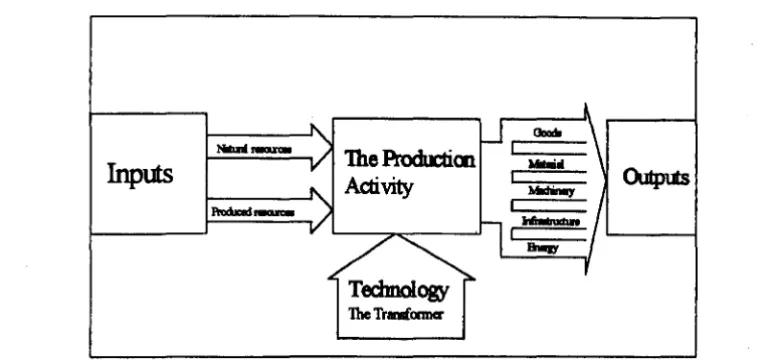
enables these countries to utilise their natural and human resources efficiently through
transformation of inputs into outputs. Therefore, it is essential for LOCs to study and
examine how to exploit and employ their natural and human resources efficiently in order
to expand and develop their technological base.
Technology transfer can be an important tool for this purpose, as it allows LOCs to utilise
their natural and human resources efficiently. It also enables them to build up their
technological capabilities by importing and adopting foreign technology. Technology
transfer is also seen as an important strategic variable which must be integrated into national
development planning of LOCs. As the experiences of some East Asian countries during
the past three decades show, these countries could increase their output, upgrade the skills
of their labour force and accelerate the process of industrialisation through the adoption,
adaptation and absorption of imported technologies.
Technological change has also played a key role in the overall economic and industrial
growth of developed countries in the past. Many studies have indicated that over 50% of
long-term economic growth in advanced countries resulted from technological change which
improved productivity, and contnbuted to higher levels of efficiency and higher quality of
their products. For example, it is estimated that technological progress contnbuted as much as 65% to Japanese economic growth. Moreover, about 29% of the growth in
manufacturing industry in Japan during the period between 1955·1979 could be attnbuted
to technological progress [1].
The fact that the current developed and advanced countries could increase their
technological levels over the last two centuries indicate that LOCs can also catch up with
technologically advanced countries. It can
be said
that LDCs in the current situation cantake the most advantage from the availability of existing technological resources and
therefore do not need to reinvent the wheel. The transfer of technology from the
industrialised countries has enabled most LDCs to benefit from some of the advances made
in the field of technology. Technology transfer has also introduced high-productivity
techniques and in many cases encouraged technical change in LDCs. The acquisition of
foreign technology can also contn"buted to improving competitiveness in the local as well
as the international markets for these countries. However, while the development of
indigenous technology should be encouraged, technology transfer can be considered as a
vital process of industrialisation for LDCs. In other words, industrialisation is a process of
acquiring technological capabilities in the direction of consistent technological change [2].
Despite the great importance of technology transfer in the process of industrial and
technology development ofLDCs, there have been some general problems in the process
of an effective and successful technology transfer. These problems which include mainly the
lack of absorptive capacity in the recipient country, and unwillingness of the transferor in
transferring real technology and technical know-how, have led to unsuccessful technology
transfers. Therefore, it is necessary for these countries to promote their local technological
capability in order to adapt and absorb foreign technologies efficiently to their local needs
and conditions. LDCs should also identify carefully their needs and objectives which they
intend to achieve through the acquisition of foreign technology. It seems also essential for
these countries to identify and improve those elements of technology in which they are
weak, such as developing an appropriate industrial and technological infrastructure. The
imported technologies should also be adapted and matched with the existing technologies
which can lead to the rapid process of industrialisation.
Having recognised the great importance of technology for their development and
industrialisation, LDCs seem to be unable to exercise real choice in designing effective
strategies for their technological transformation. Many developing countries do not appear
to have established the necessary procedures and criteria to choose the effective technology
transfer policy needed for a rapid industrialisation and technological development. In other
words, many LDCs lack an appropriate plan and strategy for an effective transfer of
technology. LDCs are nowadays paying more attention on estab)jshment and implementation
about the significant effects of an effective acquisition of foreign technology on their overall
economic and industrial progress. However, sufficient actions for the formulation of
technology policies and plans have yet to emerge.
It seems that problems associated with technology absotption and adaptation have so far
generally received little attention. Problems of technology transfer can generally be
discussed from different points of view. For example, the major problem for the
macro-economists point of view is to investigate the appropriate technology, how to adopt and
adapt it effectively and use it for the development and industrialization ofLOCs. Another
is the of manager's point of view in LOCs; how do these managers choose the technology
they import and how do they decide the channels through which technology will be
transferred ? Managers in LOCs also consider how to utilise their limited resources
efficiently in order to promote their technological capability. Engineers and scientists are
also more concerned about the technical and scientific aspects of the subject, the process of an effective indigenous technological development, industrial and technological research,
and promotion of the skills and productivity of the labour force.
Technology transfer without promotion of indigenous technological capability has been
especially common as LOCs attempted to increase their production capacities in a minjmal
amount of time. It seems that LOCs prefer to adopt and assimilate new technologies rather
than trying to generate and create them, since it needs less traditional R & 0, but they still require a high level oftecbnical skiDs. Having explained the great importance of technology
transfer in the industrial and technological development of any country, as indicated earlier, there have been little attempts to formulate and design the appropriate plan and strategies
for an effective and successful technology transfer and development. Therefore, it is essential for the policy makers in LOCs to identify the overall goals and objectives which
are needed in designing a suitable policy for their technology transfer and development.
It can also be said that the specific strategy and policy for technology transfer in a country cannot be separated and isolated from the overall national plan for its economic, industrial
and social development. Therefore, the major aims and goals of technology transfer policy
should be concentrated on finding the most appropriate and efficient methods to use
for a LDC, in the formulation of its overall industrial and technology development policy
and strategy, to place more emphasis on such important areas as the interrelation between
the acquisition offoreign technology and promotion of indigenous technological capability,
and the need to reduce the technological dependency on developed countries. In designing
appropriate policies and strategies for their technology transfer and development, LDCs can
also draw valuable lessons from the successful experiences of some Newly Industrialised
Countries (NICs) in East Asia and Latin America.
1. 1 THE OBJECTIVES OF RESEARCH
This research is primarily aimed at examining and analysing the effects of technology
transfer on the industrialisation of Less Developed Countries generally, and Iran in
particular. The main emphasis of this research is placed on Iran, ahhough the overall
problems of LDCs in successful technology transfer and rapid industrialisation are also
investigated. This study also attempts to find answers to such important questions as:
• What are the critical and the most important factors which can lead to a successful
technology transfer and more broadly industrial and technology progress ofLDCs
in general and Iran in particular 1;
• What are the best strategies and policies of technology transfer and industrialisation
that these countries can adopt, in order to promote their technological capability and
industrialisation 1;
• How can foreign technologies be used effectively in order to achieve rapid industrial
and technological development in these countries 1;
• What are the best methods and mechanisms for the efficient acquisition of foreign
technologies in order to maximise the success and effectiveness of technology
transfer 1;
• How can the process and procedures of technology transfer be effectively monitored
in order to attain the highest success in the rapid industrialisation and technological
development of these countries 1.
It is hoped that the answer to these overall questions as well as so many other sub-questions
appropriate plan and strategy for a successful technology transfer and more broadly rapid
industrial and technological development.
1. 2 THE METHODOWGY OF RESEARCH
As indicated earlier, the main objective of this research is to identitY the most important and vital factors which can lead to a successful technology transfer and rapid industrialisation of LDCs in general and Iran in particular. To this end, a comprehensive swvey of most
current literature including the theoretical frameworks, conceptual issues of technology
transfer and industrialisation, as well as empirical and practical experiences of some chosen
co1Dltries in successful technology transfer and rapid industrialisation is undertaken. Based on the main objectives and questions of the research as well as an extensive review of
literature, some important hypotheses can be formulated. For example, it is hypothesised that the process of rapid industrial and technological development in a country to a large
degree depends on the successful acquisition and adaptation of foreign technologies as well
as the development of its indigenous technological capability.
It can also be hypothesised that an effective technology transfer strategy for LOCs is a
simultaneous utilisation of foreign technologies and promotion of local technological
capability. It also hypothesizes that the success in adapting foreign technology to a large
degree depends on the recipient's technological capability and efforts. The other main
hypothesis of the research, which can be derived from the objectives of the research, is that the success of LOCs including Iran relies mainly on the adoption of a set of appropriate
policies including an effective technology transfer strategy, an efficient human resource
development policy, and an outward-oriented export promotion policy.
As indicated earlier, in order to answer the research questions, it is essential to conduct an extensive review and study of most current available information on the general area of the research which is concentrated more on International Technology Transfer and its role in the industrialisation ofLOCs. However, the main methodology of this research is an
in-depth case study analysis of some chosen countries in order to examine and identitY their
key success mctors in effective teclmology transfer and rapid industrialisation. It can be said
study technique and historical analysis are the most appropriate methods for this research
which enable an effective examination of the research hypotheses is to be made based on the
past and current performances and experiences of the selected countries.
According to Marshal and Rossman (1989), ''the historical survey is particularly useful in
obtaining knowledge of previously unexamined areas and in re-examining questions for
which answers are not as definite as desired" [3]. Therefore, countries are chosen on the
basis of their successful past performances and experiences in the rapid industrial and
technological development as wen as their similarity with Iran in terms of economic, social,
cultural and industrial characteristics. Some of the East Asian first and second-tier NICs
including S. Korea, Taiwan, Malaysia, Thailand and Indonesia are selected because of their
significant performances in the successful technology transfer and rapid industrialisation.
Some other countries including Mexico and Turkey are also included in the country surveys
due to their similarity with Iran in terms of the economic and social characteristics.
Each of these countries is studied in terms of its specific post Second World War
industrialisation policy as wen as its experiences of technology transfer and FDI, and human
resource development policies. The main source of data and information which is used for
the analysis of these countries include the most current literature in books, journals,
newspapers, various published and unpublished papers, governmental reports, different
reports and papers published by international organisations, mainly UNCTAD (United
Nations Centre for Trade and Development), UNIDO (United Nation Industrial
Development Organisation), UNESCO (United Nations Education, Scientific and Cultural
Organisation), ILO (International Labour Organisation), ADB (Asian Development Bank),
ESCAP (Economic and Social Commission for Asia and the Pacific), OECD (Organisation for Economic Co-operation and Development), EIU (Economist Intelligence Unit), and
reports by several other international organisations.
As indicated earlier, Iran is the main focus of this research as a LDC which has attempted
to achieve rapid industrialisation through the adoption of effective technology transfer. The
identification of the most vital factors contnDuting to the successful experiences of the
countries of the survey in their rapid industrialisation and technological development can
determine an appropriate policy framework for Iran for an effective and successful
technology transfer and rapid industrialisation which can in tum be useful for the other
LDCs. The proposition of an effective technology transfer as well as industrialisation
policies for Iran can have some useful implications and lessons for not only its own future
overall development planning but also for that of other LDCs as recipients of technology.
Ahhough Iran's overall past and present industrial and technological development policies
as well as its other relevant characteristics will be discussed later in detail, it is noteworthy
to describe briefly the current status of the country's industrial and technological capability:
1. Iran has large natural and physical resources along with significant numbers of
scientists and engineers, plus a substantial body of skilled workers and technicians.
However, it seems that there are not enough, in view of the expansion and
diversification of industry, and the promotion of the indigenous industrial and
technological capability. According to statistics presented by UNESCO (1993), Iran
possessed total numbers of331,481 scientists and engineers and 218,532 technicians
in 1990 [4]. However, these figures need to expand as Iran still faces shortages of
the skilled labour, technicians, scientists and engineers required for its anticipated
future technological development. During the Second Five-Year Plan, the number of technicians is projected to increase to 502,177. The Second Plan (1995-1999)
also aims at the expansion of education at all levels, as well as increasing in the
professional and vocational training of the labour force, and creating two million
new employment opportunities by 1999.
2. In terms of industrialisation policy, Iran has adopted a simuhaneous pattern of
import substitution and export promotion policies during the First Five-Year Plan
(1989-1993). Despite a relatively significant expansion ofIran's non-oil exports
during the period of the FII'St Plan which reached USS 4.5 billion by 1994, this is still
not enough if Iran wishes to reduce its heavy reHance on oil revenues. Non-oil
exports are projected to increase to an average annual value ofUSS 5 billion during
the Second Five-Year Plan (1995-1999). During the First Plan (1989-1993), high
priority was given to reconstruction and development of the industrial infrastructure through the implementation and completion of a large number of industrial and
development projects as well as expansion of technological-based industry and
important basic industries, which are both labour and capital intensive. The Second
Plan is also aimed at continuing the same path with more emphasis on the expansion and diversification of Iran's non-oil exports.
3. Most of Iran's industrial bases can be characterised as heavily dependent on
importing their required parts and components for manufacturing outputs. This
large reliance on the importation of foreign inputs is mainly due to the assembly
nature of many of Iran's industries, and are also financed by oil incomes. Therefore
the performance of the industrial sector in Iran is vu1nerable to the fluctuation of
world oil markets and prices. The country's industrial sector sti1llacks the adequate
efficiency and productivity level needed to compete in the international market. The
Second Plan (1995-1999) has introduced a number of measures to promote the
quantity and quality of the industrial products, improve and develop domestic
technological capacity, and make maximum use of the country's existing industrial
potential. These measures mainly include the reduction of tariff rates to increase the
efficiency in domestic production, continuing the privatisation of non-strategic
industries and increasing incentives for attracting more foreign investment,
encouraging the transfer of appropriate and modern technologies, and promotion of
regional industrial development.
4. Industrial research institutes are being established and developed for the needs and
skills of industry. Moreover, there has been an increasing trend in the research and
development activities. The R&D expenditure as a percentage of GNP during the
period 1989-1993 has been 0.35%, which is projected to increase to over 1% by the end of the Second Plan. However, most R&D funds (over 80%) granted by
government have been allocated to ministries, and the rest to universities and other
research institutes. Although there are skills in Iran for the storage, transfer,
recovery, planning and development of technical information, there seems to be no
overall co-ordination and integration between various research and development
institutes in this regard.
(8.1 %), but more emphasis in the current plan is placed on a steady and sustainable
growth rate. While in the First Plan industrial sector was the main engine of the
growth, in particular the petrochemical and steel industries, the agriculture sector
is annOlDlced to be the main pivot of the growth over the next five years. However,
over the period 1995-1999, the oil sector is projected to grow with an average rate
of3.2%, and the industrial and construction sector with an average annual growth
of 6.2%. The Second Plan also encourages the establishment and development of
small, high-technology, industries linked to medium and large industries through a
variety of subcontracting arrangements. Moreover, the Second Plan emphasises
attracting as much FDI as possible as a major source of the country's technology,
managerial expertise and foreign capital. It is expected that FDI will reach an
average ofUSS2 billion per year over the period 1995-1999. This figure is expected
to be achieved through the introduction of various incentive measures, and the
formulation of new regulation and foreign investment laws.
6. The major objectives of technology development in the current Five-Year Plan are:
expanding the amount offoreign technology into the country in particular through
the attraction more FDI; promoting the country's indigenous technological
capability through increasing the R&D activities; decreasing the dependency on
imported parts and materials required for the production of the industrial outputs
through the development of the supporting intermediate industries; and increasing
the HRD programmes, including training the local technicians and skilled workers
for the effective adaptation and assimilation of imported technologies.
It is hoped that the resuhs and findings of this research would assist the policy makers in the LOCs in general and Iran in particular, to design and formulate an effective policy
framework which can lead to successful technology transfer and rapid industrialisation of
these countries.
1.3 THE STRUCfURE OF THESIS
This research includes eight chapters which start with an introductory overview of the
research topic explaining the general background to the area of the study; the importance
of the area of research; the overall objectives of the research which are explained through
proposing a number of questions and sub-questions; the research methodology which is
defined from the main hypotheses of the research; and finally the organisation of the study.
Chapter two is devoted to an comprehensive review of the most current literature on
technology transfer and industrialisation in LDCs. This includes the critical survey of the
neoclassical approach towards technology transfer; the neoclassical views; the radical
perspectives; the dependency school of thought; the product life-cycle theory; the
technological gap theory and the big push theory of industrialisation. Some of the most
important industrialisation policies including import substitution and export promotion
policies are discussed. The main objective of this chapter is to find the most appropriate
theory which can directly and explicitly be applied to the LDCs current conditions. It is
concluded that despite the existence of various theories and schools of thought which have
been examined in the chapter, there is still no specific theory of technology transfer which
can be precisely applied to LDCs.
It is recognised that some of these theories, in particular the dependency school of thought
and the technological gap theory, can bring about useful implications for policy makers in
LDCs. Theorists in the dependency school of thought strongly urge the LDCs to reduce
their technological dependency through strengthening their domestic technological
cal' abilities and increasing R&D activities. According to the technological gap theory, the
technological gap between LDCs and developed countries can accelerate the process of
catching up technologically between these two groups of countries through adoption of an
effective technology transfer policy based on the acquisition and adaptation of foreign
technology, as well as promotion the indigenous technological capability.
In chapter three, the conceptual issues of technology transfer are extensively analysed
through the definitions of technology and technology transfer; the classification of
technology and technology transfer; the diagrammatic representation of technology transfer;
explaining and examining the various mechanisms of technology transfer; technology
transfer process and its formulation; the concept of appropriate technology; and the cost of
technology transfer. This chapter is aimed at studying and evaluating the various relevant
examining various aspects and features of technology transfer. A systematic model of the
,
technology transfer process is developed in order to analyse in depth the process of
I
successful technology transfer. This model has adopted a systemic approach to determine
and evaluate the different stages of technology transfer process which can assist policy
makers in LOCs to choose the most appropriate technology based on their goals. objectives,
needs and capabilities. Moreover, technology transfer procedures are formulated through
the introducing a Matrix which illustrates the best direction for the effective transfer of
technology. An extensive analysis of various methods of technology transfer is also included
in this chapter in order to identify the most appropriate channels of technology transfer.
Chapter four discusses a series of a comprehensive case studies analysing the experiences
of some selected countries in technology transfer and industrialisation. The main objective
of this chapter is to determine the most important and crucial success factors which led to
effective technology transfer and rapid industrialisation in these countries. The countries are
chosen based on their significant overall performance in rapid industrial and technological
development over the past three decades, as well as the similar characteristics which some of these countries have with Iran. These countries include S. Korea, Taiwan, Malaysia,
Thailand, Indonesia, Mexico and Turkey. It can be said that the identification of the critical
success factor of each COlDltry can have vahJable lessons for other LOCs in general and Iran
in particular in the attempt to achieve an effective technology transfer and rapid
industrialisation.
In Chapter five, the key success factors of the East Asian first and second-tier NICs are specifically examined. The significant performance and successful experiences of these
countries in an effective technology transfer and rapid industrialisation necessitate an
in-depth analysis of their success factors in order to apply them to other LOCs including Iran
which try to follow their model Moreover, despite some slight differences in terms of
technological capability levels, one can find a commonality in their success factors which
could encourage other COlDltries to replicate their model in rapid industrial and technological development. Therefore, LDCs in general and Iran in particular may learn valuable lessons
from the experiences of these countries in successful technology transfer and rapid
industrialisation.
Chapter six examines in detail the industrialisation policies in Iran during the pre and post
-revolutionary period, in order to determine the strengths and weaknesses of these policies
which give a useful insight for the future trend of the country. Moreover, an in-depth
analysis of Iran's past and present industrial performances can be used as a primary basis for
further discussion of technology transfer and FDI status in Iran in next chapter.
In chapter seven, the past and current situation ofFDI and technology transfer, as well as
human resource development and R&D activities in Iran, is investigated. This can give an
overall view of the industrial and technological structure of the country which in tum is
essential for the establishment and implementation of its future technology transfer and
industrialisation policies.
Finally, chapter eight concludes the research findings and results, derived from the
discussion, analysis and conclusions in the previous chapters. The similarities in the success
factors of the countries surveyed in the previous chapters are further discussed in order to
design a common policy framework for an effective and successful technology transfer and
industrialisation in other LDCs in general and Iran in particular. Some problems and
obstacles of the selected countries surveyed are also identified, which can be useful for the other LDCs, including Iran, to avoid in their future path of technology transfer and
industrialisation. A number of recommendations and policy implications for LDCs in general
REFERENCES
1. Hirono, R "Integrated Survey Report in Improving Productivity through Macro-Micro Linkages", Asian Productivity Organisation, Tokyo, 1985.
2. Pack, H And Westphal, L. "Industrial Strategy and Technological Change, Journal
of Developed Economics, Vo1.22, 1986, PP: 87-128.
3. Marshal, C and Rossman, G.B. ''Designing Qualitative Research", Sage
Publications, 1989, P:94.
4. UNESCO, Statistical Year Book, 1993.
CHAPTER 2:
THEORETICAL FRAMEWORK OF TECHNOLOGY TRANSFER
2.1 INTRODUCTION
Historically, as far back as in the work of the classical economists, Adam Smith was one of
the first to examine manufacturing technology systematically in 1776. He began the Wealth
of Nations with an examination of the causes of technical change and productivity [1].
Later, Marx also found a central place assigned to technology.
"
Technology discloses man's mode of dealing with nature, the process ofproduction by which he sustains life ... "[2]
Karl Marx considered technical progress was responsible for the shift from one mode of
production and from one economic system to another. However, Marx's work on
technological change did not have a lasting impact on the concerns of economics. In the
early 20th century, evidence in economic literature of the importance of technical progress
is to be found in the work of Schumpeter [3]. In his analysis of capitalism, the waves of both
short-run cycles and long-run development are, in great measure, attnDutable to technical
progress. But this was treated as an exogenous process. He added that capitalism is
characterized by periodic waves of innovation whereby older, inefficient firms and industries
are replaced by new more efficient firms with newer technologies.
Robert Solow has also contended that technology is the main source of economic growth.
He said that technology alone was responsible for raising the real income of the developed
countries nearly ten times over the last century [4]. According to Solow, technology is
assumed to be a public good, i.e., something that is available to everyone everywhere free
of charge. Gaski, by a process of elimination, has made technology the single cause of the
industrial revolution [5]. More recently, experts from various schools of thought have
recognized the place of technology in explaining growth, usually reflected in a downward
shift of the supply cwve as new technologies are discovered and put to use in the production
of commodities and services. The recent contributions also stress two new perspectives; one
technological knowledge has proven to be more the engine of economic growth than has
capital. The other stems from the appropriate technology movement, which stresses the need
for LDCs to adopt a mix of technologies; some high, but many that are low and of a labour-intensive nature. Once it is accepted that technology is a significant contn'butor to growth
as well as economic development and industrialization, then technology transfer is viewed
as an essential bridge across the wide technological gap which exists between developing
and developed countries. Recognition of the importance of technology has also led to the
effort for technological follower countries to maintain, reduce, or even reverse the
technological gap. The technological development in such follower countries can, in a broad
sense, use a combination of internally available resources and the transfer of technology
from external sources.
It is necessary to have definitions of technology and technology transfer here. An extensive
definition of technology and technology transfer will be considered in the concepts section
of the discussion later, but it is essential to have a clear and accepted meaning in this
occasion to avoid confusion. Many definitions for technology have been stated. Technology
in its broadest sense can be defined as "knowledge, skills, methods, and procedure
associated with production and utilization of goods and services in a given society" [6].
While this definition may be adequate for some pwposes, it should be noted that technology
needs to be reviewed not only as the specific production prices or manufacturing
technology, but also various other types of knowledge and expertise necessary for the
planning, establishment, and operation of a manufacturing plant and associated enterprises.
Technology transfer can be defined as "the acquisition, development, and utilization of
technological knowledge by a country other than that in which this knowledge originated"
[7]. Thus, technology transfer is not simply the reproduction of an identical enterprise in
a second area, but is an adaptation of the original to fit the second region's peculiar, social,
political, technological, climatological, economic, and educational environment.
Rostow (1967) argues that Technology Transfer will lead to increased economic
opportunities for developing countries [8]. Without technology transfer, the difficulties
which confront Third World countries in attempting to create competitive local industries
are enormous. However, technology transfer in itselfwill not lead to economic growth. The
SUcce&§ of technology transfer depends more on the ability and wiDingness of the importing
society to accept and absorb the technology than on the support of the exporter. As Ito
(1986) notes, a successful transfer can occur only if the recipient is sufficiently capable of
maintaining an introduced production system [9]. Local or domestic technological capability
is indispensable in order to alter, modify, and adapt transferred technology to local
conditions.
Gee (1981) suggests that managers must be both oriented towards innovation and sensitive
to their environment in order to implement successfully new technology [10]. Wallander
(1979) implies the need for managers in LDCs to develop managerial skills such as the
ability to plan, organize and solve problems [11]. In essence, it is management skill which
is needed to weld the various elements of knowledge into a viable productive effort [12].
2. 2 THEORETICAL ISSUES OF TECHNOLOGY TRANSFER
According to Beamount and Reithinger (1981), transfer of technology can be examined
from three points of view [13]:
1. The international political framework within which tendencies towards co-operation
or confrontation between the developed and the developing world are largely
determined.
2. The commercial framework in which the interplay of corporate motives and
negotiating strategies determines the outcome of individual projects.
3. The operational framework in which the transferred technology may contribute, or
may fail to contribute, to the recipient's economic and social development.
The theoretical framework of technology transfer has been surveyed in this research through
the analysis ofneo-classical theorists, structuralist, and the radical perspective. Moreover,
the views of the dependency school of thought and the product life cycle theory of
technology transfer have also been discussed in order to identify the most appropriate theory to be applied in LDCs. The Import-Substitution and Export Promotion
Industrialisation policies have also been analysed. Generally, studies of the various aspects
2.2.1 The Neoclassical Approach Towards Technology Transfer
Technology is defined in context of neoclassical theory as the available methods by which
resources or inputs can be converted to products or outputs. Technology transfer in the
view of neoclassical theorists can also be defined as the process whereby technology is
moved from one physical or geographic location to another in order to manufacture
products [14]. This transfer should include both hardware or machinery and equipment, and
software, or technical knowledge and managerial expertise. Most of the earlier neoclassical
approach has been concentrated on the effects of technological change in one country's
pattern of national production, and the levels of its national welfare. However, much recent
literature ofneoclassica1 theorists has focused on the effects of technology transfer from one
country to another or International Technology Transfer.
Having surveyed the views of some writers influenced by neo-classical theories of
international trade, MacCulloch and Yenen (1976) examined the effects of free
dissemination of technology on the recipient national welfare and on the distnoution of
national income between capital and labour [IS]. They found that the supplier of technology may lose welfilre due to the free flow of technology, and the receiver gains national welfilre.
It seems that their conclusion considering the gains of a recipient country from the free
transfer of production technology can be useful for the applicability to the IDCs. However, other authors such as Burgules and Jones (1977), through their primary assumption that
technology is embodied in factors of production, suggested that maxbnization of national
gains from new technology requires the imposition of tariffs on the foreign use of
technology [16]. On the other hand, some other neoclassicalists analysed the effects of
international technology transfer on the recipient country's national welfilre in the presence
or absence of tariff protection and domestic distortions. They concluded that the recipient
country's protectionist measures towards international technology transfer can reduce its
level of national welfare [17]. Therefore, the recipient country can generally gain from
technology transfer when there is no tariff
The neoclassical theorists have also emphasised the role of the market in the more efficient anocation of resources and in the most appropriate teclmologychoice for a developing
country. In their belief: it is market mechanism rather government intervention that can
enable the LOCs to maximise the utilisation of their resources and therefore lead to their
industrial and technological development. The neoclassicalists believe that government
intervention and the resultant price distortions would produce inefficiencies and therefore
the direct role of government in economic decisions should be reduced [18]. Acquiring
technological capability, in their view, has been determined by integration in the world
economy, through importing appropriate technologies from foreign countries. Once the
required technology has been transferred, it must be adapted and absorbed to the local
condition and the know-how can gradually be acquired through some methods such as
imitation and reverse engineering [19].
However, the neoclassical theorists have been criticised by the new institution theorists
(North, 1995) [20] as well as others (Kiely, 1994) [21], who believe that the neo-classical
theory neglects the role of the state in industrialisation of some Newly Industrialised
Countries in South East Asia and Latin America. While some writers influenced by
neo-classical theory argued that the success of the East Asian NICs has been achieved despite
state intervention, there is some evidence which indicates the very effective role of the state
in the promotion of industrial and technological development in these countries. For
example, in Taiwan, the state accounted for 57% of industrial production in 1952, and
although there has been significant privatisation since then, the state's share of gross
domestic investment still stood at 50% in 1980 [22].
As North (1995) stated, the state can never be treated as an exogenous factor in
development policy, and getting the prices right only has the desired consequences when
agents already have in place a set of property rights and enforcement that will then produce
competitive market conditions [23]. Therefore, the new institutionalists believe that the
neoclassica1ist neglected the role of institutions in the development process. According to
North (1989), institutions are a set of rules, enforcement characteristics of rules, and norms
of behaviour that structure repeated human interactions [24].
2. 2. 2 The Structuralist Approach
The structuralist school of thought which contn'buted mostly to development literature in
the 1950s and early 1960s, believed that free trade would not necessarily be to the
advantage of LDCs. Hence, these countries should switch from a reliance upon trade and