City, University of London Institutional Repository
Citation:
Kovacevic, A. ORCID: 0000-0002-8732-2242, Vukasinovic, N., Pavkovic, N. and Horak, P. (2017). Evaluation of “Codeve” methodology for teaching npd to virtual design teams. In: Proceedings of the 19th International Conference on Engineering and Product Design Education (E&PDE17), Building Community: Design Education for a Sustainable Future. (pp. 555-560). Glasgow: The Design Society. ISBN 9781904670841This is the published version of the paper.
This version of the publication may differ from the final published
version.
Permanent repository link:
http://openaccess.city.ac.uk/20574/Link to published version:
Copyright and reuse: City Research Online aims to make research
outputs of City, University of London available to a wider audience.
Copyright and Moral Rights remain with the author(s) and/or copyright
holders. URLs from City Research Online may be freely distributed and
linked to.
INTERNATIONAL CONFERENCE ON ENGINEERING AND PRODUCT DESIGN EDUCATION 7 & 8 SEPTEMBER 2017, OSLO AND AKERSHUS UNIVERSITY COLLEGE OF APPLIED SCIENCES, NORWAY
EVALUATION OF “CODEVE” METHODOLOGY FOR
TEACHING NPD TO VIRTUAL DESIGN TEAMS
Ahmed KOVACEVIC1, Nikola VUKASINOVIC2, Neven PAVKOVIC3, Peter HORAK4 1City, University of London, School of Mathematics, Computer Science & Engineering 2University of Ljubljana, Faculty of Mechanical Engineering
3University of Zagreb, Faculty of Mechanical Engineering and Naval Architecture 4Budapest University of Technology and Economics
ABSTRACT
Studies on the effectiveness of New Product Development (NPD) in countries of partner organizations of EGPR (European Global Product Realisation) course discovered that the end phases of the process are most challenging. These are identification of market needs on one end and commercialization on the other. CODEVE (COllaborative DEsign in Virtual Environment) teaching methodology is developed within EGPR course. EGPR is joint educational project of four European universities running since 2004. CODEVE is tested through the Erasmus+ funded project called NARIP (Networked Activities for Realization of Innovative Products). The goal of developing this teaching methodology was to establish suitable means by which students can learn NPD process and how to implement it in their professional career. NARIP project is funded by EU over three years to develop, test and implement this methodology within partner academic institutions from the UK, Croatia, Slovenia and Hungary. It is expected that the recommendations resulting from this activity will be implemented in academia and industry across Europe and help companies to improve their NPD process.
This paper presents findings of the student surveys from NARIP projects hosted by Zagreb and Budapest in 2015 and 2016 respectively. The study analyses the effectiveness of the NPD process, the engagement of students, knowledge generation of staff and other aspects of the performed NPD process. The analysis lead to recommendations of improving the CODEVE methodology which will be finally tested in the EGPR project hosted in the UK in 2017.
Keywords: Project based learning, virtual academic enterprise, new product development, CODEVE.
1 INTRODUCTION
The need for effective R&D-marketing integration within the New Product Development (NPD) processes has been widely recognized in modern business environments due to the ever changing requirements of fast growing markets [2]. Studies on the effectiveness of New Product Development (NPD) process in companies from the countries of partner organizations of European Global Product Realisation (EGPR) course [3] discovered that the biggest challenge for NPD is in the end phases of the process [4]. These are identification of the market needs at the start of the NPD process and commercialization or the product at the end. It was shown that R&D and marketing functions are not sufficient for an effective transition of the initial idea onto the market in the form of a successful product. Several more functions, such as sales and engineering need to be involved.
assignment given by industry. The objective is to teach students how to effectively design innovative products in a distributed collaborative, multidisciplinary, multinational and multicultural environment [8]. A wide variety of different projects with industrial partners have enabled collection of a broad and valuable insights and experience. A year-long projects change every year and come from different industrial sectors. They vary greatly in complexity and research focus as described in [9] and [3]. The teaching methodology developed through EGPR is aimed to address open issues of effective NPD and to prepare engineering and design students for the start of their employments. Named CODEVE (COllaborative DEsign in Virtual Environment), it was formalised in 2014 as explained in [6].
In this paper, the students’ experiences in realising the first two NARIP projects will be summarised in order to evaluate some aspects of CODEVE teaching methodology. The NARIP project for 2017 will be briefly introduced and will serve as the final validation of CODEVE methodology.
2 CODEVE METHODOLOGY
The design process model applied in CODEVE originates from the model of Pahl and Beitz, [1]. It is extended and adapted to suit fuzzy front end design projects performed in academic virtual enterprises. The differences are; i) the first phase, depending on the type of the project performed in a particular year may depart from the classical ‘Clarification of the task’, and become more of a ‘Fuzzy Front-End problem definition and vision’. Once the requirements are defined teams enter into the classical concept generation phase. ii) There is no clear separation between embodiment and detail design phase. iii) The prototype making and testing phase is introduced at the end of the project. Eventually, the design process resembles more closely to product development of the innovation model described by Roozenburg and Eekels [2]. The process is staged in four main phases, namely Vision, Concept, Details and Prototyping. Each phase finishes with review while the prototyping phase culminates with a week-long final workshop when the students meet in person for the first time to assemble, test and present their achievements. CODEVE teaching methodology defines goals, recommended tasks, expected outcomes and deliverables of each phase. However, students are encouraged to select methods and tools for each phase to best suit the project and the distributed nature of the process.
2.1 Organisational setup
EGPR is a group design project of four European partner Universities and an industrial partner. Final year students from UK, Croatia and Ljubljana come with the engineering background of mechanical, electrical and design engineering courses. Students from Hungary are from product design courses. Students are expected to utilise knowledge and skills acquired through their time at University. Additional lectures and topic specific presentations are required for completing students’ competence and knowledge development [7]. Lectures are delivered using videoconferencing by academic experts from participating universities, external experts, professionals, and the partner company representatives. Each year, lectures are carefully selected and balanced in advance of the course start, to provide students with required information and allow sufficient time for the project work.
The main means of communication and collaboration in a distributed environment is by videoconference and computer communication. The most widely used social platforms are also quite often utilised to manage teamwork. Asynchronous collaboration is through e-mailing lists and a shared workspace available for data exchange and backup. One of the findings from the NARIP project is that such platforms, although convenient, may not be always suitable for this type projects. Full details on the methodology could be found in [6], [7] and [8].
2.2 Teams
communicate, use IT and design methods and to achieve level of collective effort in the project with participation from remote locations. Within the team, not only the task distribution is important, but clear roles have to be set. This comes into focus if project assignment is on a complex technical problem, where teams have to collaborate between teams in addition to the internal team collaboration.
2.3 Partner company and project types
Industrial partner plays critical role for the success of a project [9]. Firstly, in collaboration with the host university, industrial partner prepares project assignment to define project goals and expectations. Projects vary significantly from year to year but they are always related to engineering and product design. Some are focused on industrial machines and mechanisms with more emphasis on performance than on consumers. Other projects are for consumer products focused on specific target user groups. The former often relate to large and expensive industrial prototypes and demand student groups to work on subsystems of a single large prototype. The later are often related to more manageable smaller devices in which each student group works on their own prototype. The type of project assignment depends on the company. Each has own challenges and provides different experience for students. Similarly, the style of how company communicates with students may result in different student experience and perception on the success of the project.
3 NARIP PROJECTS
3.1 Design of a submersible device for inspection of welds in 2015
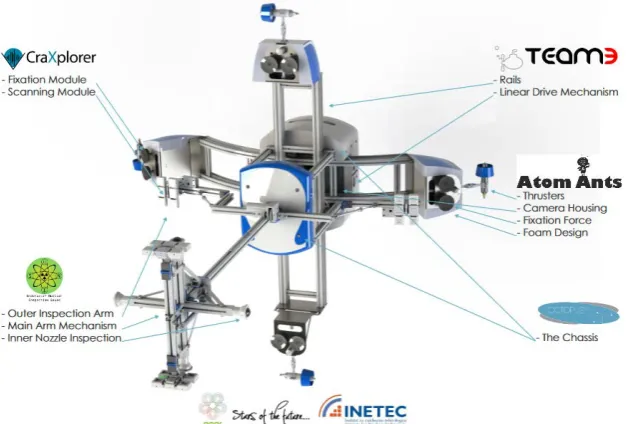
[image:4.595.142.456.400.612.2]The NARIP 2015 was hosted by the University of Zagreb and the industrial partner INETEC - Institute for Nuclear Technology, both based in Zagreb, Croatia. For more than twenty years, INETEC has been a name synonymous for technological and service excellence in nuclear industry. They are active in research, development, design, construction and fabrication of equipment, tools, plugs and probes, including software and instruments for non-destructive examination.
Figure 1. Remotely operated device for inspecting welds in nuclear reactors, Zagreb 2015
In this project, students were faced with the challenging task of designing a remotely operated device for inspecting reactor pressure vessels in nuclear power plants. Many aspects of the problem were investigated including; underwater propulsion, accurate location of vessel features, non-destructive testing methods and scanning procedures, power and data connections, and vehicle control. Total of 35 students from 4 universities were grouped in 5 international teams each focussed on a different subsystem as shown in Figure 1. Students required excellent teamwork and communication in order to ensure compatibility between subsystems in the final prototype.
At the beginning of the project, students struggled to collaboratively work on this large device. This created a need for a cross-team and the update of instructions for different steps in CODEVE especially about the collaboration methods. Students used Conceptboard, an online whiteboard tool which proved suitable to help both in project management and communication.
3.2 Design of consumer lighting products in 2016
[image:5.595.102.504.235.377.2]The host of NARIP 2016 was University of Technology and Economics from Budapest, Hungary. The project partner was Philips Lighting Hungary, subsidiary of Royal Philips of The Netherlands. The company is focused on improving people's lives through meaningful innovation in healthcare, consumer lifestyle and lighting. The project objective was ‘Design of intelligent products for the challenges of the ageing society’. In this design assignment the two most challenging areas are information sensing and processing related to visual and cognitive abilities respectively.
Figure 2. Design of intelligent lighting products for the ageing society, Budapest 2016
39 students were grouped in 5 international teams. Each team developed their own vision which resulted in 5 working prototypes as shown in Figure 2 [5]. Prototypes ranged from the intelligent indoor gardening system to mood control lighting, heat detection system, intelligent stair lighting and stair climbing support systems.
3.3 Design of light weight mobility scooter in 2017
In total 48 students are participating in NARIP 2017 hosted by City, University London with start-up company Betterlife Innovations Ltd as industrial partner. The task is to design lightweight and easy-to-use mobility scooter, suitable for various target easy-to-user groups. The evaluation of CODEVE methodology performed in the first two NARIP projects will help to finally adjust the methodology for 2017 and enable fine tuning of the guidelines for future implementation.
4 SURVEY RESULTS
In order to evaluate student’s views on the last two NARIP projects which used the same CODEVE methodology and yet were much different in nature, the same questionnaire was set to students from 2015 and 2016 cohorts. The questions were set in three groups: a) Students view on achieving project goals, b) the level of achieving product requirements defined in the vision phase, and c) the difficulties which students faced during the project including factors which affected execution of the project and the success of the product. In 2015 almost all students from the cohort participated in the survey, i.e. 33 out of 35 students. However, in 2016 only 30% students returned the survey i.e. 12 out of 39. This was mostly due to administrative error in setting the survey in 2016. The questions are given on the scale 0 to 5. For the first two sections a) and b), value 0 means not achieving objectives and 5 means fully achieved objectives. Despite the low response rate in 2016 the standard deviation for this year is similar to the one in 2015 and ranges from 0.5-1.1.
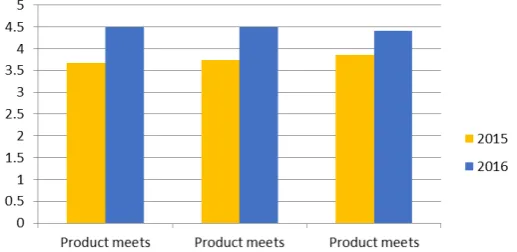
the final product. However, students felt that in both years the company goals were met but the achievement of company needs was overall lower than other individual criteria considered in this group of questions related to projects.
With regards to achieving product specification set by students during the vision phase, it was shown that students who designed products for ageing population in 2016 were more
satisfied with how their products matched specification,
Figure 4. The complex product for industrial use in 2015 achieved only 70% of the target goals set in the vision phase. The consumer products in 2016 reached 90%. This shows that engagement of students in the project and their satisfaction with the results is better if such distributed design projects are related to consumer products. The supervision of the students and implementation of CODEVE methodology is also easier in this case. Although not subject of this study, the survey shows that it is easier for the academic staff to more directly implement CODEVE for projects that address challenges of specific consumer groups through product design. The projects that focus on company engineering challenges are more challenging to realise.
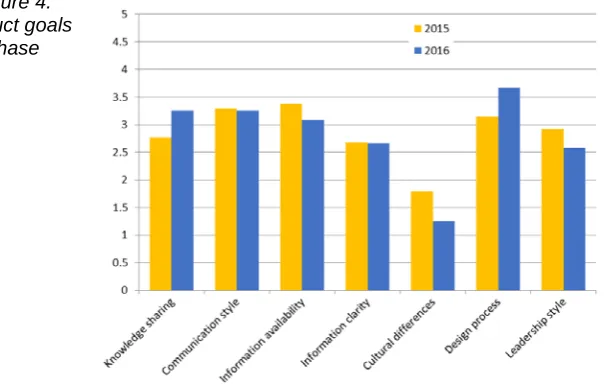
[image:6.595.176.422.509.665.2]The final part of the survey is related to how different factors affect student work in this international collaboration,
Figure 5. Value 0 means no effect while value 5 means large effect. Results from both years are very similar. They show that the lowest impact on the project success is the difference in cultural background. However the highest influence to students work and results is in the selection of design process and tools which are different in product and engineering deigns. For tasks related to consumer products, the selection of available tools is greater and the product design students can contribute more on aesthetics, ergonomics and user perception. Also, this requires engineering students to accept methods which they may not be using regularly in other design courses. Similarly, communication style, availability and clarity of shared information play crucial role in the realisation of the project. The improvements of CODEVE are possible in this area and the authors will consider the ways to enhance the use of existing modern design tools and propose development of new ones. Another important factor is availability of computer tools for methodology used and adaptation of both for more successful projects. This will be considered during the 2017 project and beyond.
[image:6.595.172.431.708.834.2]Figure 4. Achieving
product goals set in the vision
phase
Figure 5. Factors which affect the team work
5 CONCLUSIONS AND FUTURE WORK
This paper discusses experience of students with CODEVE methodology used in NARIP. Surveys conducted in 2015 and 2016 showed that CODEVE methodology could be used for product design of industrial machinery and consumer products. Consumer related design project are easier to manage and are more likely to meet the company project goals and product goals set by students through the ‘voice of customers’. The selection of the design process, the communication style and the availability and quality of information are the most influential factors for the success of distributed design projects. New virtual tools are required for better implementation of CODEVE. NARIP 2017 project is hosted by City, University of London and the start-up company Betterlife Innovations Ltd. from Bristol. Focus is on design of lightweight mobility scooter for consumer groups. The survey will be conducted and students will be asked to produce more evidence on used processes and experiences.
ACKNOWLEDGEMENT
The NARIP project 2015-2017 is a part of Erasmus+ Strategic Partnership program funded by the European Commission. This communication reflects the views of the authors, and the Commission cannot be held responsible for any use which may be made of the information contained therein.
REFERENCES
[1] G. Pahl, W. Beitz, J. Feldhusen and K.H. Grote, Engineering Design: A Systematic Approach, Third Edition, Translators and Editors: K. Wallace and L. T. M. Blessing, Springer-Verlag London Limited, 2007 ISBN-10: 1846283183.
[2] Roozenburg N.F.M., Eekels J., Product Design:Fundamentals and Methods, Wiley, 1995. [3] Kovacevic A., European Global Product Realisation, Available: www.city.ac.uk/egpr, [Accessed
on 2017, 3 March], 2016.
[6] Vidovics B., Vukasinovic N., Pavkovic N., Kovacevic A, Development of Methodology for Distributed Collaborative Design Environment, Proceedings of E&PDE 2016, Aalborg University, Denmark, September 2016.
[7] Horváth I., Design Competence Development in an Academic Virtual Enterprise. In: Proceedings of IDETC/CIE 2006 ASME September 10-13, 2006, Philadelphia, Pennsylvania, USA.
DETC2006-99162.
[8] A. Kovacevic, Competence Development in an International Product Design Course,
Proceedings of International Design Conference – Design 2008, Dubrovnik, Croatia, May 2008. [9] Pavkovic N, Marjanovic D, Kovacevic A, Fain N, Industrial Partnership in Design Education –