Towards a dynamic model of IT innovation in
organisations.
Dr Justin Thurley
Tasmanian School of Business and Economics University of Tasmania
Hobart, Australia
Email: [email protected]
Assoc. Prof. Paul Turner
School of Engineering and ICT University of Tasmania Hobart, AustraliaEmail: [email protected]
Abstract
This research paper presents a multi-case study investigation of organisational approaches and experiences in IT innovation. It aims to extend the existing understanding of IT innovation by incorporating broader elements of contemporary innovation theory informed by an empirical investigation of real world IT innovation practice. The research methodology involved nine organisational cases being purposefully selected because of their involvement in the development, implementation and/or use of IT as part of self-reported IT innovation. Across the nine cases, four cases were selected from the IT producing sector and five from the IT user sector. The key findings associated with this investigation are presented in the form of a dynamic model of IT innovation, grounded in data relating to nine organisational case studies of IT innovation. This model emphasises the importance of mechanisms that combine domain knowledge with new and existing IT assets and capabilities to create platforms for continuous innovation.
Keywords
1
Introduction
Innovation involving the production and/or use of information technology (IT) has been shown to be important for economic growth. IT is routinely adapted and modified for use in a variety of applications and domains and the general-purpose nature of IT provides significant opportunity for it to be directly involved in innovation activity (Brynjolfsson & Saunders, 2010). Innovation involving the application or production of IT is also very pervasive, extending beyond the IT producing sectors into many non-IT producing (IT user) sectors of the economy (Smith 2002, 2005; Smith, O'Brien & Jerrim 2007). Organisation level studies suggest that IT enables innovation and that the probability of innovation increases with the intensity of IT use (OECD 2010). But what is IT innovation, how is IT innovation achieved, and how can IT innovation be analysed effectively?
2
Theoretical framework
A number of important research streams exist within the IT/IS literature that deal with the development, implementation and use of information technology, however IT innovation is rarely defined or explored in its own right. However there are several exceptions. Kwon and Zmud (1987, p. 231) define information systems (IS) implementation as the ‘organisational effort to diffuse and appropriate information technology within a community of users’, they were also among the first to suggest IS implementation was a form of technological innovation. Swanson (1994) describes IT innovation as an ‘innovation in the organizational application of digital computer and communication technologies’. However, despite expanding upon a definition for IT innovation both of these sources and other examples from the IT/IS literature describe IT innovation within the context of organisational diffusion and adoption (Fichman 2004).
In contrast, recent theoretical insights from the innovation literature define innovation more broadly as ‘the implementation of a new or significantly improved product (good or service), or process, a new marketing method, or a new organisational method in business practices, workplace organisation or external relations’ (OECD/Eurostat 2005, p. 46). The term innovation is also used interchangeably to describe both the process of introducing something new and the outcome of introducing something new (an innovation). Contemporary innovation theory highlights the pervasiveness of innovation processes and the important role of collaboration amongst customers (users), competitors and suppliers operating within innovation systems. Innovation theory also emphasises the complex nature of innovation, the role of uncertainty and the emergent non-linear nature of technological developments that are themselves historically constrained and temporally situated.
Previous research has also attempted to resolve these contrasting perspectives on IT innovation by combining the macro-level perspectives of innovation theory with micro-level understandings of IT innovation practice from the IT diffusion and adoption literature (Kwon & Zmud 1987; Mustonen-Ollila & Lyytinen 2003). Swanson (1994) integrates perspectives from organisational innovation to map different types of IT innovation to organisational assets and capabilities; and Lyytinen and Rose (2003) explore IT innovation in the context of disruptive innovation theory, calling for a dynamic theory of IT innovation. Whilst insights at both macro- and micro-levels contribute to our understanding of IT innovation, links to contemporary insights from innovation theory are less clear. These insights emphasise the importance of the objectives and effects of innovation, innovation activities, and linkages in the innovation process for facilitating the transfer and utilisation of knowledge and technology for innovation (OECD/Eurostat 2005).
Lucas, Swanson and Zmud (2008, p. 8) argue that ‘that innovation and innovation-induced transformation provide powerful lenses through which to view the IS field’, suggesting that contemporary innovation theory has the capacity to correct earlier deficiencies in implementation and evaluation research. Lucas, Swanson and Zmud (2008) recommend that IS theory needed to account for the technological, institutional and historical context of IT/IS implementation and that research should be ‘oriented toward telling rich and complete stories of innovation with information technology’ and focus on how IT innovation becomes involved in the creation of organisational capabilities and competitive advantage. A similar view is also supported within the innovation literature. Rosenberg (1994) suggests that to understand innovation beyond more general concepts inevitably involves drilling down into the domain to examine the common patterns and cases.
dimensions of innovation theory may also assist to consolidate IT innovation research. To this end, the high level guidance provided within the Oslo Manual (OECD/Eurostat 2005) provides comprehensive consolidation of innovation theory. It provides specific guidance for innovation data collection founded upon the experience and research knowledge obtained from empirical studies relating innovation.
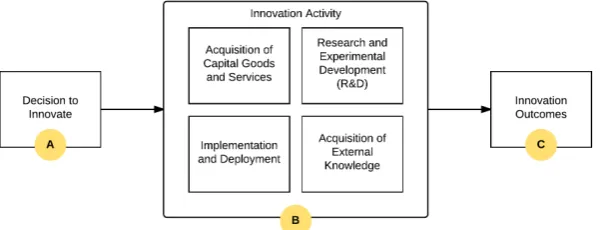
[image:3.595.149.450.203.318.2]Thurley and Turner (2013) reconstruct and summarise the guidance relating to innovation data found in the Oslo Manual (OECD/Eurostat 2005) using a traditional A-B-C antecedents, behaviour and consequences model (Brancheau & Brown 1993; Skinner 1938). In this model Antecedents are represented by IT innovation decisions, behaviour is represented by IT innovation activity and consequences are represented by IT innovation outcomes (see Figure 1).
Figure 1.
Summarised model for innovation data collection adapted from OECD/Eurostat
(2005)
Thurley and Turner (2013) have further elaborated upon this model to accommodate a number of general theoretical characteristics and dimensions associated with innovation, adding elements for pervasiveness and complexity; uncertainty and emergence; collaboration within institutional structures and ecosystems; and path dependence to represent the lasting implications of historical choices and events. The resulting model has been used as heuristic device to guide data collection and to provide an organising framework for data analysis and interpretation in this research.
3
Research methodology
This research was undertaken within a subjective-interpretive philosophical paradigm. A multi-case study design was employed in conjunction with qualitative techniques to explore in-depth-cases of IT innovation within their organisational settings. Nine cases were purposefully selected from organisations involved in the development, implementation and/or use of IT as part of self-reported IT innovation. Cases were selected to maximize the variation of context, and to allow the researcher to explore potential similarities and differences across the different context. Variation in context was achieved by selecting organisational cases where there were different types of innovation, different areas of application, and different organisational types, including organisations of different size, geographical scope and primary business activity. Organisational size ranged from small micro businesses (1-4 FTE) to larger SME style business (250+ FTE), where operational scope spanned regional, national and global contexts. With respect to business activity, prior research had found that innovation involving the application or production of IT frequently extended beyond the IT producing sectors into most non-IT producing (IT user) sectors of the economy (Smith, O'Brien & Jerrim 2007). In response to this finding four of the nine cases were selected from the IT producing sector and the remainder from the IT user sector.
The unit of observation selected for this research were key personnel associated with the organisation, who were closely involved with IT innovation activity. In most cases a single participant was selected to provide an in-depth account of the IT innovation. Where there was substantial specialisation or external sourcing, multiple participants were utilised to provide an adequate account of innovation activity.
1 and designed to generate insight into the antecedents, behaviours and consequences of IT innovation.
[image:4.595.191.406.169.412.2]Data analysis was conducted in two stages (see figure 2) and followed the general regime of data reduction, display and conclusion drawing advocated by Miles and Huberman (1994). The analysis was also structured to incorporate the analysis of behaviours and events associated with the interaction of IT artefacts and social structures to reflect the socio-technical nature of research environment (Lee 2001).
Figure 2. Overview of the data analysis process used in this research
Stage one involved the analysis of data from individual cases and focused on providing a rich description of the particular associated with-in each case. The within-case data analysis also employed the detailed analytical techniques for inductive thematic analysis described by Braun & Clarke (2006) and Attride-Stirling (2001), transitioning through six phases of analysis – familiarisation; initial coding; theme identification; theme review and mapping; theme definition and description; and within-case reporting.
Stage two involved a cross-case analysis, where data were reduced and consolidated in the context of different cases. The cross-case analysis was concerned with deepening understanding and explanation in different contexts, enabling the transition of theory development from the particular towards those elements that were common across the cases. The cross-case analysis followed the guidance provided by Miles and Huberman (1994) where within-case data was partitioned in terms of the high-level research themes described in the theoretical framework and then transitioned through five sub-phases of analysis – clustered cross-case aggregation; cross-case theme review, consolidation and mapping; consolidation of IT artefacts; consolidation of social structures; and cross-case reporting.
Findings from the case data and analysis were then revisited and interpreted to produce an empirically grounded model of IT innovation for the nine case studies of IT innovation practice.
4
Findings: a dynamic model for IT innovation
4.1
The macro perspective
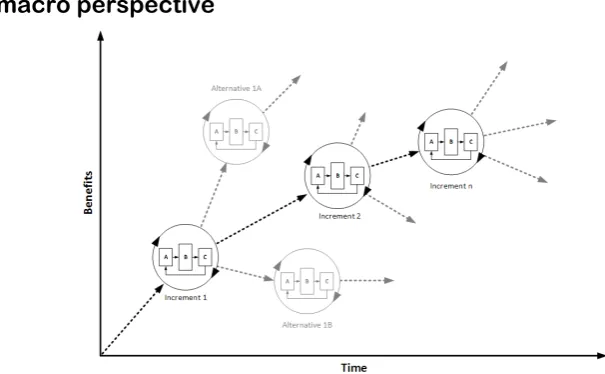
Figure 3 Dynamic model of IT innovation practice – macro perspective.
The macro level perspective is illustrated in figure 3 and describes how each iteration or increment of IT innovation is part of a continuous and dynamic cycle of benefits realisation embedded in broader lifecycle of an IT innovations. Key elements of the macro level model are – (i) that IT innovations have a lifecycle; (ii) IT innovations are continuous but characterised by phases, increments or iterations; (iii) that benefit realisation is non-linear, heterogeneous and sometimes delayed; and (iv) that new problems and opportunities emerge from the feedback of each phase, increment or iteration.
IT innovation can be viewed as continuous and dynamic cycle of benefits realisation that transitions through the lifecycle of the innovation. Albeit there are different rates of IT innovation progress, the case studies of IT innovation practice indicate that IT innovations transition through a lifecycle of varying innovation activity through intensive research and experimental development, operational use and eventually decline. However, IT innovation activity appears to continue, even during the decline. IT innovation can be seen to be continuous throughout its lifecycle but characterised by phases, increments and iterations. Each phase, increment or iteration involves the development and improvement of IT assets and capabilities with the technology artefacts developed and continuously integrated, cycling through phases of IT innovation decision-making, IT innovation activity and IT innovation outcomes.
The benefits associated with IT innovation occur throughout the lifecycle of an innovation, however they are subject to heterogeneity in terms of their type and impact. For example, benefits resulting from IT innovation activity may flow continuously throughout the life of an IT innovation, but the benefits realised during one phase, increment or iteration may have significantly more, or a different type of outcome for an organisation. There is also the prospect of dis-benefits or non-benefits emerging from a phase.
The benefits associated with IT innovation also emerge at different rates. Some IT innovations produce highly successful outcomes in short time frames, whilst others take time to realise substantial benefits. This is most apparent in the data where some cases took many years to realise significant benefits, whilst others produced resounding business outcomes in less than a few years. What is apparent from the case study data is that IT innovation benefits are not simply produced or manufactured, rather they emerge from extended periods of IT innovation decision making and activity. The rate of benefit realisation from IT innovation also appears to be non-linear. IT innovation appears to be contingent on individual and organisational knowledge of the impact and benefit the IT innovation at a specific point in time. Feedback resulting from internal and external stimulus during each phase, increment or iteration allows new problems and opportunities to emerge, thus innovation continues on a dynamic path.
4.2
The micro perspective
are represented by IT innovation decisions, behaviours are represented by IT innovation activity, and consequences are represented by IT innovation outcomes.
Figure 4. Dynamic model of IT innovation practice – micro perspective.
4.2.1
IT innovation decisions (antecedents)
IT innovation decision-making involved processes that influenced IT innovation activity and IT innovation outcomes. IT innovation decisions were also influenced by feedback from IT innovation outcomes, a concept described further within the macro-based perspective. A key process for IT innovation decision-making was the solution search and selection process. This process involved making decisions about existing IT solutions (in-place and commercial) and their fitness for purpose in terms of fulfilling the IT innovation objectives. It also involved making a decision about the approach and direction of IT innovation activity. IT innovation decision making was rarely undertaken in any of the cases by a single individual or agent, it was predominately a collaborative process involving organisational leadership, developers (either internal or external to the organisation), and customers (including users/internal customers).
Types of IT innovation decisions
The case studies revealed two high-level objectives for IT innovation decisions:
• Solving problems (A-1) – finding solutions to information handling problems. In the context
of this research information handling problems pertain to issues associated with the collection, processing, storage and distribution of information.
• Exploiting opportunities (A-2) – using the favourable or advantageous conditions created by
the development, adoption or improvement of new or improved information technology solutions. Opportunities present themselves either as direct IT based products and services or indirect improvements in other product and services enabled by IT innovation.
Important factors influencing IT innovation decisions
A range of factors were identified within the case studies as influencing IT innovation decisions. Many of these factors were specific to the organisational context, but four factors were either common across all cases or understood to be highly influential in several of cases:
• Identifying and evaluating requirements for suitable solutions (A3) – the capacity to identify
• Problems and opportunities emerging from development (A4) – dealing with new problems and opportunities that emerge from IT innovation activity e.g. feedback relating to the resolution of existing problems, the identification of new problems, and/or the identification of new opportunities.
• Responding to competitive pressures (A-5) – where IT innovation decisions focused on
solving problems or exploiting opportunities, competitive pressures appeared to be an important incentivising factor for the decision to innovate.
• IT resource dependencies (A-6) – in most cases the IT innovation was dependent on various
complementary systems and subsystems. Innovators were often challenged by changes or advances associated with the underlying technologies and other complementary IT assets.
4.2.2
IT innovation activity (behaviour)
IT innovation activity represents the behavioural sub-system of the micro model relating to IT innovation. Innovation activity in this context included activities associated with the design, development and implementation of information technology. IT innovation activity was characterised by incremental patterns of design, development, and implementation across all cases. This activity typically involved merging domain knowledge and firm resources via a process of collaboration between innovation stakeholders and developers operating towards an arbitrary set of innovation objectives (formal or otherwise). The key elements of the model for IT innovation activity emerging from the case studies were Agents, Domain knowledge and Firm resources. Between each element three important patterns of interaction were found to be relevant to the case studies.
The agents of IT innovation activity
Agents in the context of the model are the human actors and decision makers involved with micro level IT innovation activity. Two classes of actor are identified as relevant to the key patterns and activities:
• Innovation stakeholders (B-1) – actors and decision makers involved with communicating the
requirements for IT innovation activity, and testing the results of IT innovation activity. Examples from the case studies of IT innovation practice include users, customers (inclusive of organisational leaders).
• Developers (B-2) – actors and decision makers involved in the design, engineering, deployment
and diffusion of IT innovations. Developers typically created or modified firm assets and capabilities for use by customers or users as part of the IT innovation. Developers included actors such software engineers, business/systems analysts, project managers, change managers, and marketing specialists.
An important feature revealed by the case studies of IT innovation practice was that the various agents involved with IT innovation activity where not necessarily confined to a single organisational entity. In fact all the investigated case studies involved permeable organisational boundaries that facilitated the flow of knowledge and the progress of activity associated with IT innovation through collaborative relationships with external actors.
Firm resources – development and interaction
Firm resources in context of the model describe specific assets and capabilities controlled by the primary innovator that are created, modified, and available for use with respect to IT innovation. Capabilities are distinguished from assets within the model, as being resources with the ability or capacity to coordinate other resources for IT innovation activity. The distinction between assets and capabilities is made to clarify differences in the resources and to facilitate theoretical caparison. The case studies revealed interaction and development around three common types of asset (B-3):
• Products and services – commercially distributed assets derived from organisational
processes and in the context of this model, generated by or dependent upon IT innovation activity.
• IT assets – information technology hardware, software and architecture generated or used in
IT innovation activity.
• Data – codified information generated or used in IT innovation activity, with a distinctly
• IT capabilities – the ability to undertake IT design, development and implementation processes and activities. An example from the case studies would be the ability to conduct software development using a set of standardised methods or techniques.
• Information management capabilities – the ability to manage the collection, storage,
processing, and distribution information and data linked to innovation.
• Business capabilities – other commercial abilities, financial, marketing, legal, etc. related to IT
innovation activity. Domain knowledge
Domain knowledge represents understandings of specific areas of scientific, technological and economic activity. In the context of this model, domain knowledge represents understandings of solutions relating to the problem or opportunities implicit in the IT innovation objectives. The case studies reveal a range of domain knowledge being applied during innovation activity. It is possible to consolidate this knowledge into three high level domains:
• IT knowledge (B-5) – understandings of IT design, development and implementation. IT
knowledge is essential for IT innovation and is a key element of IT innovation that distinguishes it from other types of innovation.
• Business knowledge (B-6) – understandings of methods relating good judgment and
decision-making associated with operating a business or running an organisation. It includes but would not be limited to management and leadership, commercial decision-making, marketing, human resource, and financial literacy.
• Area of application knowledge (B-7) – encapsulates the understandings associated with the
industry sector(s), functional area or environment where the IT innovation is to be implemented. Area of application knowledge typically includes methods, processes, rules, and routines associated with information handling that are to be supported or embodied within an IT innovations.
The sources of domain knowledge utilised for IT innovation activity varied with the socio-technical IT innovation context. Specific organisational or technological contexts influence the sources of knowledge required for IT innovation activity.
Important patterns of interaction
There are several patterns of interaction identified within the case studies of IT innovation practice that appear common, important or influential for IT innovation activity. Three interactive mechanisms were identified that combined domain knowledge with new and existing IT assets and capabilities:
• The merging of domain knowledge (B-8) – innovation stakeholders collaborate with
developers by communicating their knowledge of the IT innovation requirements to the developers. Developers interpret these requirements and use their understanding of that domain knowledge in combination with their IT domain knowledge to undertake IT innovation activity (e.g. design, development, implementation, etc).
• The use, creation, modification, and improvement of firm resources (B-9) – using the
requirements interpreted from the domain knowledge, developers utilise, create, modify, and/or improve the pool firm resources. For example, developers may create new IT systems (IT assets) that can be used in processes that support the production of goods and services (product and services assets). In a different IT innovation scenario, developers might adopt a new software development methodology (IT capability) to coordinate the production of software products and services (product and services assets).
• The testing and feedback of IT innovation activity (B10) – IT innovation stakeholders,
particularly the users and customers of IT innovation outcomes, provide testing and feedback (formal or otherwise) to the developers and other innovation stakeholders in regard to the quality and performance of the outcomes of IT innovation activity. Feedback from testing usually takes the form of faults, including failure to meet the quality and performance criteria, suggested enhancement, improvements or changes in the scope of the quality and performance criteria.
development. Thus processes were seen to be ongoing through the lifecycle of an IT innovation and the mechanisms that combine domain knowledge with new and existing IT assets and capabilities created platforms for continuous innovation.
4.2.3
IT innovation outcomes (consequences)
The consequences of IT innovation decisions and IT innovation activity are described in this model as IT innovation outcomes. IT innovation outcomes typically took the form of socio-technical change within the case study organisations. The results of these changes are described within this model in terms of the benefits realised from IT innovation activity. Clearly not all changes contribute to innovation success, but it is very difficult to obtain detailed information on innovation failures.
IT innovation is a complex, dynamic and emergent phenomenon and IT innovation outcomes were seen to be subject to uncertainty, with the benefits IT innovation often being unanticipated and/or exceeding original expectations. This fluidity relates directly to how decisions, activities and behaviours iteratively evolve during the innovation process and how this influences the realisation of benefits. IT innovation was seen to be both an object of organisational investment and an agent of organisational change, in a manner that tended to be non-linear, organic and/or unpredictable. The benefits realised from IT innovation outcomes
IT innovation outcomes and the benefits associated with IT innovation activity varied considerably from context to context. Some innovators achieved large-scale economic benefits associated with global diffusion of their innovation. Other cases achieved significant change confined to the organisational context for which it was developed. Across the cases of IT innovation practice there were four main characteristics associated with the benefits realised from IT innovation outcomes:
• IT innovation as an object of organisational investment (C-3) – A primary benefit derived from IT innovation outcomes was the investment in IT assets and capabilities that could then be either commercialised as new products and services or employed to generate improvements in other firm resources.
• IT innovation as agent of organisational change (C-4) – implicit in the definition of innovation is the notion of improvement or change. For many cases a key benefit of IT innovation was the agency that IT assets and capabilities provided in relation to other firm resources in the context of organisational change.
• Benefits exceeding original expectations (C-5) – IT innovation outcomes often exceeded the expectations or the objectives originally set for the IT innovation. In some instances extended benefits were achieved through a process of continued improvement during the life cycle of the IT innovation. In other instances extended benefits were achieved due to unanticipated effects of the innovation when placed into operation or use. Innovation outcomes where also seen to span organisational boundaries.
• Outcomes yielding unanticipated results (C-6) – The emergent properties of IT innovation yielded outcomes that could not be anticipated or predicted. For as many benefits that were planned and part of the innovation objectives there were as many unexpected and unplanned benefits obtained.
Inherent properties associated with benefits realisation
Uncertainty and emergence are inherent properties of benefits realisation that had important implications for the case studies of IT innovation practice:
• Uncertainty (C-2) – the case studies of IT innovation practice demonstrated that there were
difficulties predicting or forecasting the outcome of IT innovation activity. This often took the form of uncertainty about the requirements, and uncertainty about the technological approach. Uncertainty influenced managerial thinking and subsequent approaches to IT innovation decision-making and IT innovation activity. In some cases experimental research and development approaches were applied to stage outcome delivery to minimise the risks of failure or adverse consequences. In other cases, where entrepreneurial leadership was present, uncertainty was accepted and IT innovation progressed along a specific trajectory with less rigorous control of the delivered outcomes. Both approaches were seen to lead to successful IT innovation outcomes.
• Emergence (C-1) – IT innovation outcomes emerged from a process of interaction between
produce IT innovations. In many cases IT innovation decisions and IT innovation activity were undertaken with specific objectives in mind. Where those objectives were met, IT innovation outcomes were somewhat predictable, albeit something novel and new emerged. However, for many cases IT innovation outcomes where qualitatively different than expected, where outcomes exceeded expectations or realised unanticipated results. Unpredictable results from IT innovation activity contributed to further IT innovation outcomes.
Factors influencing IT innovation outcomes:
Several factors were seen to influence IT innovation outcomes. The diffusion and novelty of IT innovations varied from context to context, and innovators described various issues and challenges they faced obtaining successful outcomes. At the industry level advances in information technology operating platforms, systems and development techniques had a significant impact on IT innovation outcomes. For some innovators these advances were a key enabler for success, opening up new opportunities or new methods for solving problems. For others they represented a challenge, where change was required to maintain existing systems dependencies or to remain competitive. Additionally, several cases involving IT producer organisations gained access to markets through industry networks. Access to these markets positively influenced innovation outcomes, particularly for gaining access to customers and diffusion of their products in complementary markets.
5
Conclusions and future research
The aim of this research was to extend existing studies of IS implementation and incorporate broader elements of innovation theory to further consolidate understanding of IT innovation. The key findings from the multi-case investigation can be summarised as follows:
• IT innovation emerges from diverse sets of inter-relationships within and between individual and organisational decisions, activities, and behaviours relating to information technology. It is intimately associated with the impact on organisational practices arising variously from the development and improvement of IT assets and capabilities. However, it is not causally linked to these practices relying rather on the capacity to leverage the knowledge and IT resources generated through these practices to achieve positive change.
• IT innovation is a complex, dynamic, and emergent phenomenon. Its outcomes are subject to uncertainty, often being unanticipated and/or exceeding original expectations. This fluidity relates directly to how decisions, activities and behaviours iteratively evolve during the innovation process and how this influences the realisation of benefits. IT innovation is both an object of organisational investment and an agent of organisational change in a manner that tends to be non-linear, organic and/or unpredictable.
• IT innovation occurs incrementally with the technology artefact being developed and continuously integrated, cycling through phases of IT innovation decision-making, IT innovation activity, and IT innovation outcomes. The continuation of these cycles always being contingent on individual and organisational knowledge of the impact and benefit of these processes to that point in time.
• Decision-making for IT innovation is predominately influenced by a motivation to solve problems associated with the collection, processing, storage and distribution of information, or a desire to exploit favourable or advantageous conditions created by developing new or improving existing IT solutions. However, decision-making is frequently impacted by difficulties associated with the ability identify or meaningfully evaluate the requirements for suitable IT solutions and the ability to respond appropriately to emergence arising from new problems or opportunities during development, competitive pressures, or dependencies associated with the technological advancement of complementary IT assets and capabilities utilised for IT innovation.
relating to IT innovation found within the IT/IS literature, to allow researchers to explore and analyse IT innovation practice more effectively. Through the research process the heuristic model was reinvigorated and advanced through the development of a dynamic model of IT innovation relating to the case studies of IT innovation practice.
Additional theoretical impact is anticipated in a separate publication that revisits the IT innovation literature in the context of the dynamic model of IT innovation to provide an improved knowledge framework for future IT innovation research.
6
References
Attride-Stirling, J 2001, 'Thematic networks: an analytic tool for qualitative research', Qualitative Research, vol. 1, no. 3, pp. 385-405.
Brancheau, JC & Brown, CV 1993, 'The management of end-user computing: status and directions', ACM Computing Surveys, vol. 25, no. 4, pp. 437-482.
Feibleman, JK 1954, 'Theory of integrative levels', The British Journal for the Philosophy of Science, vol. 5, no. 17, pp. 59-66.
Fichman, R 2004, 'Going beyond the dominant paradigm for information technology innovation research: Emerging concepts and methods', Journal of the Association for Information Systems, vol. 5, no. 8, pp. 314-355.
Kwon, TH & Zmud, RW 1987, 'Unifying the fragmented models of information systems implementation', in RA Hirschheim (ed.), Critical issues in information systems research, John Wiley & Sons, Inc., New York, pp. 227-251.
Lee, AS 2001, 'MIS quarterly’s editorial policies and practices', MIS Quarterly, vol. 25, no. 1, pp. iii-vii. Lucas, H, Swanson, EB & Zmud, R 2008, 'Implementation, innovation, and related themes over the
years in information systems research', Journal of the Association for Information Systems, vol. 8, no. 4, p. 8.
Lyytinen, K & Rose, GM 2003, 'The disruptive nature of information technology innovations: the case of internet computing in systems development organizations', MIS Quarterly, pp. 557-596. Martin, R & Sunley, P 2007, 'Complexity thinking and evolutionary economic geography', Journal of
Economic Geography, vol. 7, no. 5, pp. 573-601.
Miles, MB & Huberman, AM 1994, Qualitative data analysis: An expanded sourcebook, Sage, London.
Mustonen-Ollila, E & Lyytinen, K 2003, 'Why organizations adopt information system process innovations: a longitudinal study using Diffusion of Innovation theory', Information Systems Journal, vol. 13, no. 3, pp. 275-297.
OECD/Eurostat 2005, Oslo Manual: Proposed Guidelines for Collecting and Interpreting Technological Innovation Data., 3rd edn, Paris.
Rosenberg, N 1994, Exploring the black box: technology, economics, and history, Cambridge University Press, Cambridge
Skinner, BF 1938, The behavior of organisms: an experimental analysis, B. F. Skinner Foundation, New York.
Smith, K 2002, Assessing the economic impacts of ICT, Oslo.
—— 2005, 'Measuring Innovation', in J Fagerberg, DC Mowery & RR Nelson (eds), The Oxford handbook of innovation, Oxford University Press, pp. 148-177.
Smith, K, O'Brien, K & Jerrim, S 2007, Innovation in Tasmania, Australian Innovation Research Centre, University of Tasmania, Hobart.
Swanson, E 1994, 'Information systems innovation among organizations', Management Science, vol. 40, no. 9, pp. 1069-1092.