,
..
,
'.
Age-related Changes in Interlimb Coordination
Hakuei Fujiyama
Master of Health and Sport Science, University ofTsukuba, Japan
Submitted in fulfillment of the requirement for the Degree of Doctor of Philosophy
School of Psychology, University of Tasmania, Australia
..
"March 2009
t'1JOl't-~
S
T~S'lt
r-
<..r:r
I
'I
~
N)"
P~l:Y
~~
THE UNIVERSI1Y OF TASMANIA
LIBRARY
---- --- l
r---
A 7002 2072551BJ
I _____ .. _~ _ _ _ _ _ __ . __ _
.; .
... :.~
,
"
•
.
,
.
,
',
'"
.d
' d
...
....
University or any other institution. To the best of my knowledge and belief this thesis contains no material previously published or written by another person except where due acknowledgement is made in the text of the thesis.
Date:
.21. 3.
J..tr'>J
Hakuei FujiyamaThis thesis may be available for loan and limited copying in accordance with the Copyright Act 1968.
Abstract
Age-related changes in motor performance have often been associated with functional
decline with advancing age such as general motor slowing, degraded attentional capacity,
and declined physiological inhibitory control. The overarching aim of the current series of
empirical studies was to investigate the contribution of these functional alterations to
age-related changes in motor function.
The first part of the study investigated age-related changes in inter-limb
coordination and the associated attentional cost using a dual-task paradigm. The primary
task involved the coordination of arm and leg movements performed by limbs on the same
(ipsilateral) or opposite (contralateral) sides of the body. Difficulty of the primary task was
manipulated by varying movement direction (isodirectional vs non-isodirectional) and
movement frequency, with attentional cost being reflected in responses to a secondary
probe reaction time task. The results showed that the performance of older adults
selectively deteriorated depending on task difficulty. That is, the age-difference was
pronounced in the most attentionally demanding' condition in which the movement
frequency was highest and the motor task was performed simultaneously with a reaction
The second part of the study used electroencephalography (EEG) to provide a direct
measure of the eNS activity associated with mental resource allocation in older adults
during the performance of the interlimb coordination task. Attentional resource allocation
was assessed by Event-Related Potentials (ERPs) during concurrent performance of
interlimb coordination tasks and a visual oddball task. The amplitude of the P3b component
of the ERP has been associated with the allocation of attentional resources. For both young
and older adults coordination performance was less stable and visual reaction times (RTs)
were longer during the coordination of ipsilateral limbs than contralateral limbs. Although
older adults showed slower RTs to targets in the visual odd ball task, they exhibited similar
patterns in P3b latency and amplitude to younger adults. Of particular interest was higher a
P3b amplitude at the frontal sites in older adults, suggesting an increased cognitive
monitoring of performance with aging.
In the last part of the research the modulation of cortical activity during interlimb
coordination was examined using transcranial magnetic stimulation (TMS). The length of
the silent period (SP) following a motor evoked potential (MEP) was used as a measure of
corticospinal inhibition during the interlimb coordination task. As expected, older adults
non-isodirectional patterns. SP duration was lengthened, indicating increased inhibition, in the
young group during the performance of the ipsilateral non-isodirectional pattern.
In
contrast, the older group showed a consistent level of cortical inhibition across conditions.
These results suggest that deterioration in motor performance with advancing age might be
Acknowledgements
I would like to thank all the people who supported me during my candidature.
It is difficult to overstate my gratitude to my Ph.D. supervisor, Professor Jeff Summers for all his time, patience, expertise and guidance on this project. I am grateful for his support and supervision throughout my candidature. I would also like to thank Dr. Mike Garry for his support and supervision; finishing this project would have been impossible without him.
I would like to thank Dr. Frances Martin for helpful advice and encouragement. Special thanks to Professor John Kerr and Dr. George Wilson who gave me an opportunity to study at the University of Tasmania. The generous support from the Australian
government and the School of Psychology, University of Tasmania are greatly appreciated. Without their support, my ambition to study abroad could not have been realized. I would also like to express my appreciation to Dave, John, and Vlasti for their technical support. My appreciation also goes to Heather, Lydia, Pam, Peta, and Sue for all their help over. the years.
Many thanks to the Motor Control Laboratory group: Cynthia, Andrea, Sally, Richard, Carla, Christophe, and Bruno, for making life in the laboratory stimulating and enjoyable. Thanks to all of my participants. This thesis would not have been possible without them. A special mention must go to Cynthia, Gillian, Kate, and Sally who helped me and made the Annex a joy to work in. I would also like to extend my thanks to my friends, especially to my former housemates, Aja, Corry, Darryn, Georgie, Julia, and Michael for their friendship and for many enjoyable moments in Australia.
Table of contents
Acknowledgements ... V
Table of Contents ... vi
List of Figures ... .ix
Chapter I Introduction: Overview ... I Chapter 2 Literature Review (Part I) ... 14
2.1 Effect of Aging on Interlimb Coordination ... 14
2.2 Age-Related Changes in Attention ... 23
2.3 Attention and Interlimb Coordination in Older Adults ... 31
2.4 Summary ... 36
Chapter 3 Experimental Study I ... 38
3.1 Introduction ... : ... 38
3.2 Method ... : ... 41
3.2.1 Participants ... 41
3.2.2 Apparatus ... 41 .
3.2.3 Procedure ... : ... 43
3.2.4 Data Analysis and Measures ... 45
3.2.5 Statistical Analysis ... 49
3.3 Results ... 50
3.3.1 Kinematic measures ... 51
3.3.2 Relative phase measures ... 59
3.3.3 Secondary task performance measure (probe RT) ... 62
3.3.4 EMG data ... 63
3.4 Discussion ... 68
Chapter 4 Literature Review (Part 2) ... 82
4.1 Age-Related Changes of Cortical Activation and Cognitive Function ... 84
4.2 Event-Related Potentials (ERPs) ... 89
4.3 Age-related Changes in P3b Component of the ERPs ... 93
4.4 ERPs and Motor Task Performance ... 95
4.5 Summary ... 99
Chapter 5 Experimental Study 2 ... 101
5.1 Introduction ... 101
104-5.2.1 Participants ... 104
5.2.2 Apparatus and Tasks ... 104
5.2.3 Procedure ... 106
5.2.4 Data Analysis and Measures ... 109
5.2.5 Statistical Analysis ... 110
5.3 Results ... 111
5.3.1 Kinematic measures ... 112
5.3.2 Relative phase measures ... 121
5.3.3 Behavioural Data: Visual Task ... 123
5.3.4 Electrophysiological data ... 125
5.4 Discussion ... 129
Chapter 6 Literature Review (Part 3) ... 137
6.1 Age-Related Changes in Inhibitory Processes ... 138
6.2 Transcranial Magnetic Stimulation: Overview ... : ... 140'
6.3 Age-Related Changes in Intracortical Inhibition ... 148·
6.4 Intracortical Inhibition and Interlimb Coordination ...
152'-6.5 Summary ... 155
Chapter 7 Experimental Study 3 ... 157
7.1 Introduction ... 157
7.2 Methods ... 159
7.2. I Participants ... 159
7.2.2 Apparatus ... 160
7.2.3 Procedure ... ... 161
7.2.4 Data Analysis and Measures ... 166
7.2.5 Statistical Analysis ... 168
7.3 Results ... 170
7.3.1 Kinematic measures ... 170
7.3.2 Relative phase measures ... 175
7.3.3 TMS data ... 178
7.4 Discussion ... 185
Chapter 8 Summary and Conclusion ... 196
8.1 Summary of the Present Research ... 196
8.2 General Discussion ... 202
8.4 Conclusion ... 208
References ... 209
Appendices ... 233
Appendix A: Adopted Mini-Mental State Examination ... 233
Appendix B: Screening Questionnaire for the Experiment 2 (ERPs study) ... 236
Appendix C: Screening Questionnaire for the Experiment 3 (TMS study) ... 238
Appendices on CD
List of Figures
Figure 2.1 Basic coordination constraints ... 16
Figure 3.1 Arm and leg displacement and biceps brachii (BB) and rectus femoris (RF) EMG activities at 20, 60, and 100 % of CF. ... 50
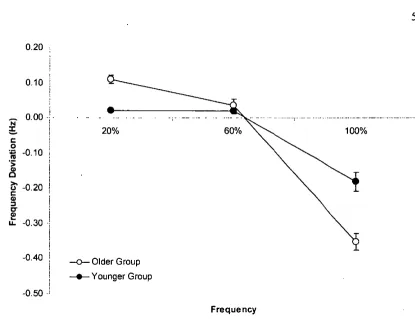
Figure 3.2 Mean frequency deviation ... 53
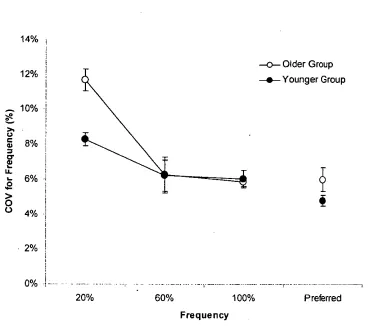
Figure 3.3 Coefficient of variation for movement frequency ... 55
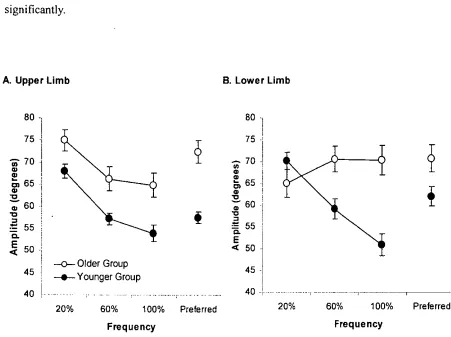
Figure 3.4 Mean movement amplitude of A. Upper- and B. Lower-limb ... 57
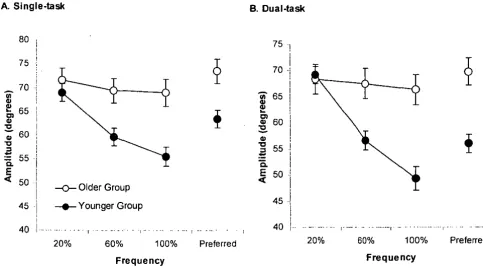
Figure 3.5 Mean movement amplitude of A. Single- and B. Dual-task ... 58
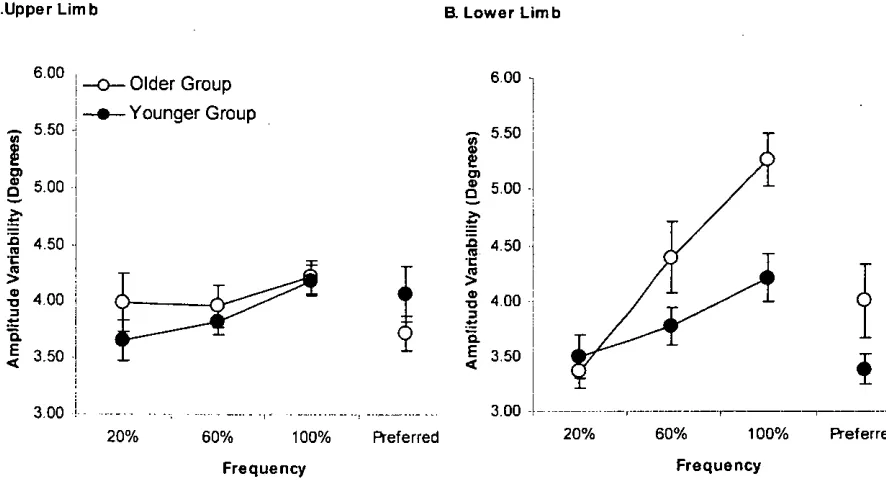
Figure 3.6 Amplitude variability ... 59
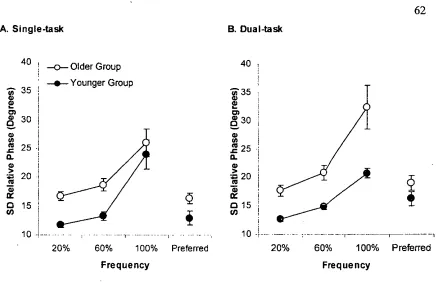
Figure 3.7 Standard deviation of relative phase ... 62
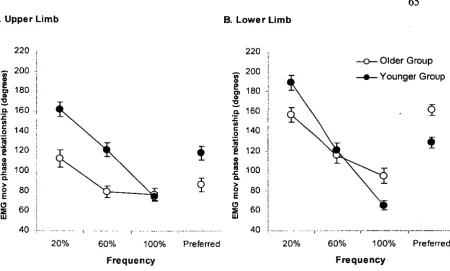
Figure 3.8 EMG and movement phase relationships ... 65
Figure 3.9 EMG phase relationship between biceps brachii and rectus femoris ... 67
Figure 3.10 EMG phase relationship between biceps brachii and rectus femoris ... 68
Figure 4.1 Schematic illustration of the ERP waveform and P300 component. ... 92
Figure 5.1 A typical illustration of a Lissajous figure ... 107
Figure 5.2 Mean movement frequency in A. Single-task and B. Dual-task ... 114
Figure 5.3 Mean movement frequency of A. Upper and B. Lower limbs ... 115
Figure 5.4 Mean movement frequency for younger and older adults during ipsilateral (IPS) and contralateral (CNT) limb combination ... 116
Figure 5.5 Coefficient of variation for movement frequency ... l17 Figure 5.6 Coefficient of variation for movement frequency of A. Upper- and B. Lower-limb ... 118
Figure 5.7 Mean movement amplitude during ipsilateral (IPS) and contralateral (CNT) limb combination ... 119
Figure 5.8 Mean movement amplitude of upper- and lower-limb for younger and older adults in A. Single- and B. Dual-task ... 120
Figure 5.9 Absolute error of relative phase ... 122
Figure 5.10 Mean reaction time ... 124
Figure 5.11 Grand mean averages ... 126
Figure 5.12 Mean P3b amplitude ... 128
Figure 6.1 Schematic illustration ofTMS ... 141
Figure 7.1 The timing of the TMS delivery ... 163
Figure 7.3 Mean movement frequency ... 172
Figure 7.4 Mean movement amplitude ... 174
Figure 7.5 Standard deviation of relative ... 177
Figure 7.6 Prestimulus EMG across conditions ... 179
Figure 7.7 Mean hand position at the time ofTMS ... 180
Figure 7.8 Standard deviation of hand position at the time ofTMS delivery ... 182
Figure 7.9 Mean MEP amplitude in phasic and tonic hand activation ... 183
Chapter 1 Introduction: Overview
The Australian government predicted that by 2051 the proportion of the population older
than 65yrs will double (26-28% of Australia's population) in comparison to that of2004
and half the population in Australia will be older than 50yrs (Australian Bureau of
Statistics, 2006). The projected future health care cost is estimated at an extra 17.07 billion
in today's dollars to provide similar quality and level of health services (Department of
Health and Aged Care, 1999). Facing these predictions, it is reasonable to aim to keep
individuals independent and healthy for as long as possible. Precious resources for the
health system will be conserved by keeping the individual healthy and independent,
reducing avoidable accidents, and minimizing the need for hospitalization or residential
care.
This research aims to contribute to a fundamental understanding of changes to the
human motor control system that occur with age. For older adults the quality of life is
greatly affected by their ability to carry out daily tasks, social activities, and recreational
pursuits with independence, effectiveness, and vigour (Greene & Williams, 1996). Physical
impairments with aging often induce physically, socially, and psychologically negative
(Cummings & Nevitt, 1989; Katz, 1983; Rowe & Kahn, 1987). Above all, declines in
motor and cognitive ability are the most ubiquitous signs of the aging process (Birren,
Woods, & Williams, 1980). Attenuated motor coordination can also be an early sign of
cognitive impairment (Camicioli, Howieson, Oken, Sexton, & Kaye, 1998), and declined
speed on a manual task has been shown to predict loss of functional independence in daily
living skills better than medical examination (Williams, Gaylord, & McGahie, 1990). Thus,
delaying the decline of physical capability, especially motor coordination ability may
contribute to maintaining quality oflife.
In the field of gerontology a large body of research has reported that proficiency
of motor function declines with advancing age (Christou & Carlton, 200 I; Contreras-Vidal,
Teulings, & Stelmach, 1998; Inglin & Woollacott, 1988; Ketcham & Stelmach, 2001;
Melzer, Benjuya, & Kaplanski, 2001; Spirduso, 1995; Stelmach, 1989; Woollacott,
Shumway-Cook, & Nashner, 1986), though, some motor functions appear to remain
relatively intact (e.g., Lee, Wishart, & Murdoch, 2002; Warabi, Noda, & Kato, 1986;
Williams & Bird, 1992; Wishart, Lee, Murdoch, & Hodges, 2000). The three main
hypotheses that have been put forward to explain age-related decline of movement control
Explanations for Age-Related Changes in Movement Control
General slowing hypothesis
The first hypothesis reflects the traditional view of aging that there is an overall slowing in
cognitive, motor, neural, and perceptual processes (e.g., Hunter, Thompson, & Roger,
2001; Morgan et aI., 1994; Salthouse, 1991, 1996). It has been argued that degraded
performance in older adults is due to less efficient and slower processing in underlying
processes, which may lead to the adoption of a strategy by older adults to slow down their
movements. In any kind of motor task, if speed is prioritized, the accuracy degrades, and
vice versa. Therefore it is necessary to constantly balance speed and accuracy for optimal
performance. For older adults, because they tend to be more "error averse" (Goggin &
Stelmach, 1990), they prefer to be slow and accurate rather than moving fast and
inaccurate. The strategy not to hurry may be adopted because older individuals are aware
that their processes become less efficient and slower with age. Thus, it is possible that the
slowing strategy is a response to real declines in cognitive function or neural deficits
(Hedden & Gabrieli, 2004).
Another explanation of general slowing is the notion of increased "noise" in neural
random neural fluctuations (i.e., neural noise) that interfere with the transmission of
information within the CNS which leads to declined performance (Sosnoff & Newell,
2006). The neural noise occurs in afferent pathways and in the brain (Welford, 1988). It has
been argued, for example, that because of the increasing noise in motor and perceptual
systems, older adults tend to make slow movements in order to achieve successful
performance (Walker, Philbin, & Spruell, 1996). Inherent noise in the motor system
disturbs correct execution of motor output (Fitts, 1954) and the greater the amount of force
involved in the movement the greater the motor noise (Schmidt, Zelaznik, Hawkins, Frank;
& Quinn, 1979). The problem is that as the ratio of noise per force level increases with age,
older adults experience greater noise when executing a motor task than younger individuals
who perform the same task with a similar amount of force. That is, older adults need to
produce slower movements compared to young adults in order to maintain similar levels of
accuracy of movement as young adults. In addition to the noise in the motor system, older
adults tend to have more noise than young adults in the perceptual system, particularly the
visual processing system (Cremer & Zeef, 1987; Verrillo & Verrillo, 1985), which
contributes to the slowing down of movement in older adults since visual feedback plays
to choose between making a rapid movement with greater error or an accurate movement at
a slow speed. Similar to the neural noise hypothesis, the loss of complexity hypothesis
provides an useful perspective on age-related behavioral changes (Goldberger et aI., 2002;
Newell, Vaillancourt, & Sosnoff, 2006). In order to perform cognitive or motor tasks,
physiological functions are required to integrate the complex networks of neural control
systems, feedback loops, and other regulatory mechanisms (Lipsitz, 2004). The loss of
complexity hypothesis argues that aging and/or disease are associated with a loss of
complexity in the dynamics of integrated physiological processes leading to a declined
adaptive capacity in older adults (Lipstiz, 2004). The function of the hypothesized
increasing noise and loss of complexity with advancing age is somewhat debatable. Recent
neuroimaging studies have observed "overactivation" in the aging brain (e.g., Heuninckx et
aI., 2004,2008; see Ward, 2006 for review, details of the overactivation in the aging brain
will be outlined in the section 4.1) which can be a generalized nonfunctional spread of
activity attributable to either increased neural noise or loss of neural specialization (loss of
complexity) (Langenecker & Nielson, 2003; Nielson et aI., 2002). Alternatively
overactivation has been linked to compensatory mechanisms for various neurallbehavioral
(Cabeza, 2002; Cabeza, Anderson, Locantore, & McIntosh, 2002; Grady, 2002; Madden,
Turkington et aI., 1999; Reuter-Lorenz et aI., 2000; Reuter-Lorenz & Lustig, 2005). In
general, overacativation in aging brain has not been consistently associated with either the
noise or loss of complexity hypotheses.
Resource allocation hypothesis
The second major hypothesis has focused on cognitive deficits as the underlying
mechanism of age-related deficits in motor performance (Heuninckx, Debaere, Wenderoth,
Verschueren, & Swinnen, 2004; McDowd & Shaw, 2000). In particular, attention is
regarded as a main mediator in the control of "a resource" or "a limited mental capacityl"
(Kahneman, 1973). It has been argued that age-related decline in attentional ability is the
basis for a variety of age-related behavioural inefficiencies (McDowd & Shaw, 2000). A
declined attentional resource in older adults has also been suggested as the basis of changes
in skilled motor performance in older adults (e.g., Shumway-Cook & Woollacott, 2000).
For example, it has been shown that a relatively automatic motor task such as gait requires
more attentional cost for older adults in comparison to young adults (Sparrow, Begg, &
Parker, 2006; Woollacott & Shumway-Cook, 2002).
In addition to the above mentioned hypothesis of a decrease in the amount of
attentional resources, it has been also argued that the regulation of attentional function
declines with advancing age. In order to successfully perform a motor task, it is necessary
to regulate motor output and utilize feedback information from the periphery to adjust
behaviour in an optimal manner (Lajoie, Teasdale, Bard, & Fleury, 1996). However, it has
been argued that processing of feedback information for successful performance becomes
less efficient with age since the ability to divide and / or allocate attentional resources
effectively declines in older adults (Kramer, Hahn, & Gopher, 1999; Serrien, Swinnen, &
Stelmach, 2000). At the same time, increased motor noise (Walker et aI., 1996) or degraded
sensory feedback with age (Skinner, Barrack, & Cook, 1984; Stelmach & Sirica, 1986)
forces older adults to rely more on cognitive control of movements (Albinet, Tomporowski,
& Beasman, 2006). Hence, older adults face a predicament in which there is an increasing
demand for attentional control of movements to detect degraded sensory information, while
attentional processing itself is also becoming inefficient (Lindenberger, Marsiske, & Baltes,
Inhibition hypothesis
The third major hypothesis argues that age-related decline of inhibitory processes underlies
degraded cognitive task (Burke, 1997; Hasher & Zacks, 1988; Kane, Hasher, Stoltzfus,
Zacks, & Connelly, 1994; Kramer, Humphrey, Larish, Logan, & Strayer, 1994) and motor
performance (Dustman, Emmerson, & Shearer, 1996; Dustman, Shearer, & Emmerson,
1993).
In
the CNS neurotransmitters excite two functionally distinct neural pathways,excitation and inhibition. Excitation decreases the threshold of the cell membrane and
enhances the probability of cell firing, while inhibition increases the threshold of the cell
membrane and lowers the probability of cell firing (Creasey & Rapoport, 1985). Human
behaviour involves an ongoing balance between excitation and inhibition mechanisms
within and among neuronal systems (Dustman et aI., 1996). Thus neural mechanisms are
used in performance of motor or cognitive tasks involving the processing task-relevant
information and producing goal-relevant responses as well as ignoring irrelevant
information or responses. However, as older adults generally have reduced inhibitory
functions (Nielson, Langenecker, & Garavan, 2002), it is hypothesized that task
and inhibition with advancing age. Consistent with this hypothesis, a number of studies
employing the transcranial magnetic stimulation (TMS) technique indicate that the level of
cortical inhibition decreases with age (Hortobagyi, del Olmo, & Rothwell, 2006; Kossev,
Schrader, Dauper, Dengler, & Rollnik, 2002; Oliviero et aI., 2006; Peinemann, Lehner,
Conrad, & Siebner, 200 I; Prout & Eisen, 1994; Sale & Semmler, 2005).
In
addition to datasuggesting that declined task performance may be due to the degraded inhibitory control
with advancing age (Hashtroudi, lohnson, & Chrosniak, 1990; McDowd & Filion, 1995;
McDowd, Oseas-Kreger, & Filion, 1995), recent studies using other neurophysiological
techniques including Electroencephalography (EEG) (Dustman et aI., 1996; Dustman et aI.,
1993) and functional magnetic resonance imaging (fMR!) (Nielson et aI., 2002) have
provided evidence of distinct cortical activity patterns in older adults compared to young
adults when performing tasks that require inhibitory control. Using fMR!, for example,
Nielson et al. (2002) found bilateral activation of the left and right hemispheres in older
adults during a button-pressing task requiring response inhibition to non-target stimuli,
whereas in young adults the right hemisphere, particularly prefrontal and parietal areas, was
predominantly engaged during such tasks (e.g., Casey et aI., 1997; Chao & Knight, 1997;
aI., 1996) suggested that homogeneity of brain activity is a sign of reduced central
inhibition with advancing age.
In summary, the above hypotheses have been advanced to explain age-related
changes in motor function and there is empirical support for each hypothesis. However, it is
still unclear the extent to which each hypothesis contributes to the age-related changes in
motor function. It is also possible that the suggested mechanisms underlying performance
changes in older adults operate together at different levels of processing.
Rationale and general aims
Of particular interest in the present research are age-related changes in interlimb
coordination, which involves the spatiotemporal organization of multiple limbs or segments
(Heuninckx et aI., 2004). The ability to produce specific patterns of interlimb coordination
is an essential aspect of daily activities including walking, driving, playing sports and
musical instruments, and manipulating objects. Although a number of studies have
examined interlimb coordination in young adults (see review, Swinnen, 2002), relatively
few studies have investigated age-related changes in interlimb coordination (e.g., Greene &
Swinnen, 2005; Heuninckx, Wenderoth, & Swinnen, 2008; Lee et aI., 2002; Serrien et aI.,
2000; Wishart et aI., 2000). It is important to investigate the effect of aging on interlimb
coordination in relation to the above hypotheses since age-related changes in attentional
and inhibitory processes are possibly interacting with the motor functions required to
perform interlimb coordination. The declined ability to coordinate multiple limbs will
impact on daily living, which eventually decreases the quality of life and functional
independence of older adults.
To this end, the current research consisted of three phases that investigated the
age-related differences in the ability to coordinate upper- and lower-limbs. Part I of the
research investigated the role of movement speed and attentional function in the
performance of interlimb coordination. Previous research has indicated the importance of
controlling for general motor slowing which potentially confounds results by using
standardised movement speeds (Greene & Williams, 1996; Heuninckx et aI., 2004). Thus,
the experimental study of Part 1 examined the attentional cost of maintaining coordination
patterns applying individualised movement speeds. Part 2 of the research further
investigated attentional resource allocation using electroencephalography (EEG) as a
older adults. Part 3 investigated the inhibition hypothesis for age-related changes in motor
function focusing on cortical activity. The experimental study in Part 3 used transcranial
magnetic stimulation (TMS) to measure inhibitory and facilitatory processes within the
motor cortex during coordination of hand and foot movements.
Overview of the thesis
The introductory chapter (Chapter I) outlined current views of motor function in
older adults introducing the three main hypotheses advanced to explain age-related changes,
in motor function. The research was conducted in three phases (Part I to Part 3). Each of
the three phases consists of a literature review of relevant issues and the empirical study.
Part 1 of the thesis starts with Chapter 2 reviewing age-related changes in
interlimb coordination. From the reviewed studies it is suggested that when young and
older adults are compared there is a need to equalize task difficulty by individualizing
movement frequencies to control the effect of general slowing wit age. The subsequent
section of Chapter 2 introduces recent findings on the interplay between attentional
function and interlimb coordination followed by an overview of age-related changes in
importance of applying standardized task difficulty between individuals in the investigation
of age-related changes in interlimb coordination. Chapter 3 describes and reports the results
of the first empirical study investigating age-related changes in inter-limb coordination and
the associated attentional cost with task difficulty standardised between participants.
Part 2 of the research focused on the neurophysiological correlates of central
resource allocation during interlimb coordination in older adults. Chapter 4 outlines the
changes with advancing age in cortical activation and cognitive functions during motor task
performance. Subsections in Chapter 4 include an overview of the neurophysiological
technique Event Related Potentials (ERPs) and age-related changes in the P3b component
of the ERP, followed by a section outlining the advantage of utilizing ERPs for the
investigation of age-related changes in interlimb coordination. Chapter 5 describes the
second empirical study examining age-related changes in central resource allocation during
interlimb coordination utilizing ERPs.
Part 3 of the research investigated motor cortex activity during interlimb
coordination in older adults. The first section of Chapter 6 provides a review of age-related
changes in general inhibitory function and stresses the significance of investigating
magnetic stimulation (TMS). The subsequent sections in Chapter 6 give an overview of the
TMS technique followed by a review of age-related changes in intracortical inhibition. The
last section of Chapter 6 introduces findings of recent studies investigating intracortical
inhibition in the context of interlimb coordination. Chapter 7 describes the third empirical
study using TMS to investigate excitatory and inhibitory processes during interlimb
coordination in young and older adults.
In Chapter 8, an overall summary of the main findings from the three empirical
Chapter 2 Literature Review (Part 1)
Age-related Differences in Interlimb Coordination and Associated Attentional Cost
2.1 Effect of Aging on Interlimb Coordination
Basis of interlimb coordination
Everyday activities including walking, driving a car, playing a music instrument, tying
shoelaces, or opening a bottle are movements involving coordination of several limbs.
These coordination behaviours often require the regulation of the limbs in both amplitude
(spatial) and duration (temporal) to meet specific task requirements (Wenderoth, Debaere,
& Swinnen, 2004). Spatio-temporal control of limbs refers to the regulation of limbs in
both spatial amplitude and temporal duration. There are spatio-temporal constraints, which
regulate interlimb coordination and influence the performance of the coordination pattern
(see review, Swinnen, 2002). For example with respect to a finger tapping task, temporal
constraints explain the phenomenon that performance of tapping is most accurate and
consistent when the fingers move at the same frequency (1: I) than at integer frequency
ratios (1:2 or 1:3) or non-integer polyrhythmic ratios (2:3 or 3:5) (Wenderoth et aI., 2004).
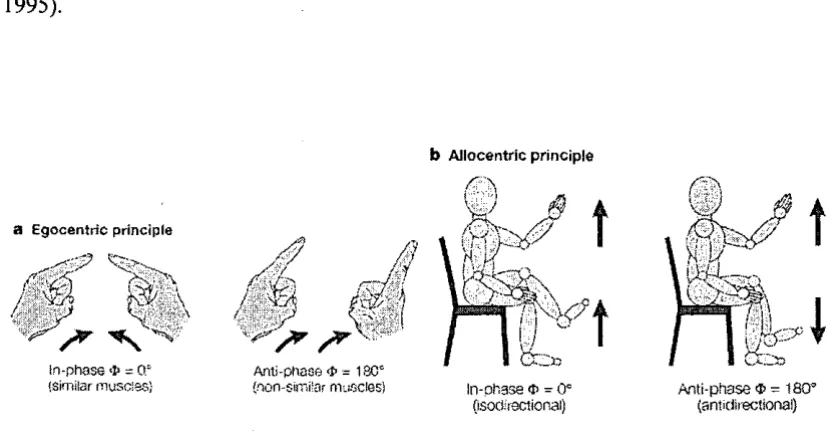
Spatial complexity consists of two constraints, the egocentric and allocentric constraints.
bilateral movement of upper-limbs or lower-limbs towards and away from the body midline
in the horizontal plane, the task can be performed most consistently and accurately when
the limbs are moving in a mirror-symmetrical manner (in-phase) in which homologous
muscles are simultaneously activated compared to limbs moving in a non-symmetrical
manner (anti-phase). In contrast, the aIlocentric constraint operates when upper- and
lower-limbs are moving either in the same or opposite directions (Figure 2.1b). Moving two lower-limbs
in the same direction (isodirection) is more stable than in the opposite direction
(non-isodirection or antidirection) (Baldissera, Cavallari, & Civaschi, 1982; Kelso & Jeka, 1992;
Serrien & Swinnen, 1997; Swinnen, 2002; Swinnen, Dounskaia, Verschueren, Serrien, &
Daelman, 1995; Wenderoth et aI., 2004). Furthermore, it has been shown that there is a
favoured limb combination, that is, performing the non-isodirectional pattern with limbs on
the same side of the body (ipsilateral) is more difficult than with limbs on opposite sides of
the body (contralateral) (Hiraga, Summers, & Temprado, 2004, 2005; Meesen, Wenderoth,
Temprado, Summers, & Swinnen, 2006).
In
addition to the above mentioned spatiotemporal constraints, movement frequencyis another factor which determines the quality of coordination performance (Wenderoth et
at a critical frequency (CF) can be often observed from the non-symmetrical pattern for
bimanual coordination and non-isodirectional pattern for upper- and lower-limb
coordination to the more stable symmetrical and isodirectional patterns (Baldissera et aI.,
1982; Baldissera, Cavallari, Marini, & Tassone, 1991; Carson, Goodman, Kelso, & Elliott,
1995).
a Egocentric principle
!n-phase '1' = 0."
(similar rnusc:es)
Anti-PiluS€! <P = 100e
(non-SirniiBr rnur.;cles) In-phase III = 0'0
(isoclirectional)
[image:29.567.85.504.263.478.2]fv1ti-phase q:, == 180"-(anti(lirectlonal)
Figure 2.1 Basic coordination constraints: a. Egocentric and b. Allocentric. <1>: relative phase. (Adapted from Swinnen, 2002).
The neuromuscular mechanisms underlying the coordination of upper and lower
limbs have been extensively investigated by B.aldissera and Colleagues (e.g., Baldissera,
Borroni, & Cavallari, 2000; Baldissera & Cavallari, 200 I; Baldissera, Cavallari, & Tesio,
1994). Their findings indicate that when two different extremities (e.g., arm and leg) are
timing of muscle activation is required to adjust for delays caused by the different
mechanical characteristics of the two limb segments. For example, Baldissera and
colleagues (Baldissera et aI., 1994) investigated the relationship between onset of extensor
carpi radialis (ECR) hand muscle activity and tibialis anterior (TA) leg muscle activity
during both isodirectional and non-isodirectional cyclical coupling of the right hand and
right foot. The EMG phase difference between the ECR and TA increased in response to an
increment in movement frequency by increasing the ECR muscle burst lead relative to the
TA muscle bust. This form of adjustment reflected the relatively larger influence of inertia
on the hand than the foot (Baldissera et aI., 2000). That is, the phase lag between hand
movement and ECR burst developed more dramatically relative to the phase lag between
foot movement and TA burst with increases in movement frequency. The involvement of
inertia was demonstrated by applying two different types of loading on the hand including
an elastic or inertial load. The load manipulations were clearly fitted to the second-order
model. That is, inertial loading induced an immediate and steep decay of the phase lag
between EMG onset of the ECR and hand movement as a response to increased frequency,
while elastic loading delayed the phase lag development (Baldissera & Cavallari, 2001).
mechanical properties, such as the hand and foot, to maintain coordination the phase
relationship between muscle activation and movement must change with increases in
movement frequency. Of particular interest in the present study was to investigate whether
the ability to modulate the relationship between muscle activation and movement onset is
affected by the aging processes.
Age-related changes in interlimb coordination
In
studies investigating age-related changes in inter-limb coordination, little age-·related decline has typically been found with tasks that require performance at a slow
movement frequency (Greene & Williams, 1996; Heuninckx et aI., 2004), symmetrical
patterns during bimanual coordination (Greene & Williams, 1996; Lee et aI., 2002; Wishart
et aI., 2000), and isodirectional coordination between upper- and lower-limbs (Serrien et aI.,
2000). These results are explained by the nature of symmetricallisodirectional coordination
patterns and general motor slowing. That is, the symmetrical pattern for bilateral
coordination and the isodirectional pattern with upper- and lower-limbs represented
preferred intrinsic coordination tendencies that are more automatically processed than
non-symmetrical and non-isodirectional patterns, respectively (Kelso & Jeka, 1992; Serrien &
course of aging these preferred intrinsic coordination tendencies are strengthened. Wishart
et al. (2000) found declined performance of a bimanual coordination task in older adults
during the asymmetrical coordination pattern, particularly at the higher movement speeds
(1.5 Hz and 2.0 Hz), but not during the symmetrical coordination pattern. Furthermore, it
has been shown that the critical frequency (CF), which is the maximum frequency at which
the coordination pattern can still be accurately performed, is significantly lower in older
adults compared to younger adults (Greene & Williams, 1996; Heuninckx et aI., 2004). For
example, during non-isodirectional hand and foot coordination, Heuninckx and colleagues
(2004) found that the majority of older adults in the sample showed a spontaneous phase
shift to the more stable isodirectional pattern at 1.15 Hz, whereas for younger adults a
phase transition did not occur until a frequency of 1.77 Hz. A similar result has been
reported in a study of bimanual coordination (Greene & Williams, 1996) with older adults
having a lower CF (1.51 Hz) than younger adults (2.16 Hz).
A problem in many previous studies investigating age-related changes in
interlimb coordination is that fixed movement frequencies were used requiring both older
and younger adults to perform a task at the same frequencies. In these studies age-related
non-isodirectional/anti-phase at high movement frequencies. However, the interpretation of
results from studies using fixed frequencies should be made with caution since it is possible
that older adults performed poorly simply because at the higher movement frequency they
are closer to the critical frequency for phase transition than younger adults. It has been
suggested that the process of aging slows down cognitive, motor, neural, and perceptual
speed (Hunter et aI., 2001; Morgan et aI., 1994, Salthouse, 1991; 1996). Thus, at the same
movement frequency maintaining the coordination pattern may be more difficult for older
than younger adults. As mentioned previously, the maximal movement frequency at which
older adults can maintain a coordination pattern is lower than for younger adults (Greene &
Williams, 1996; Heuninckx et aI., 2004). This age difference in CF indicates that the level
of task difficulty at fixed movement frequencies would not be uniform for older and
younger adults due to the general motor slowing with advancing age. The finding by Lee
arid colleagues (Lee et aI., 2002) that older adults sacrificed movement speed during
performance of a bimanual coordination task in order to maintain the required coordination
suggests that older adults may spontaneously adjust task difficulty. Other studies have
similarly reported that older adults tend to stay at a slower speed to maintain accuracy and
of the coordination (Serrien et aI., 2000; Wishart et aI., 2000). As a result of compromising
speed, older adults occasionally outperform younger adults (Lee et aI., 2002). These
findings suggest that in comparing younger and older adults on tasks involving motor
coordination movement frequency should be adjusted to ensure equal levels of task
difficulty between groups.
The speed of a functional movement task is also dependent on an individuals' ability
to accelerate body segments (Evans, 2000; Ploutz-Snyder, Manini, Ploutz-Snyder, & Wolf,.
2002). Muscular power, defined as rapid force development, has a great impact on the
acceleration of body parts. Thus, a decline of muscular power with advancing age is
regarded as playing an important role in the decline of functional movement speed (Evans,
2000) and task performance including the control of postural sway (Izquierdo, Aguado,
Gonzalez, Lopez, & Hakkinen, 1999).
Another factor influencing motor performance is the effective coordination of
muscle groups. For example, during a balance control task, temporal demands to
maintaining balance over time requires rapid activation of task relevant muscles as well as
appropriate coordination of muscle groups. In older adults, patterns of activation of
Compared to younger adults, older adults exhibit a greater tendency of coactivation of
agonists and antagonists muscles (Hortobagyi & DeVita, 2000; Klein, Rice, & Marsh,
2001; Macaluso et aI., 2002; Spiegel, Stratton, Burke, Glendinning, & Enoka, 1996). The
increased coactivation of agonists and antagonists muscles is thought to contribute to joint
stiffness and is beneficial in avoiding disturbances to joint position from external forces
(Milner, 2002). However, increased joint stiffness through coactivation of agonist and
antagonist muscles often degrades the performance of functional movement tasks such as
stair descent (Hortobagyi & DeVita, 2000). Thus, there is some evidence of distinct age.
differences in the coordination of groups of muscles within a limb during motor tasks.
However, age-related changes in the coordination of groups of muscles in different limbs
have not been previously investigated.
In
addition to motor slowing and neuromuscular changes with advancing age, ithas been suggested that age-related changes in cognitive functions, particularly attentional
function, can have a considerable influence on motor performance in older adults
(Woollacott & Shumway-Cook, 2002). The following sections outline age-related changes
in attentional function and discuss the importance of attentional control for interlimb
2.2 Age-Related Changes in Attention
Theoretical approaches to attention and aging
The tenn 'Attention' has been operationally defined in various ways depending on
the theoretical approach adopted by the researcher. Kahnemans's (1973) resource theory
posits attention as the fuel or processing resource for other cognitive processes. An
assumption of this approach is that in order to perfonn a task it is necessary to access a
limited capacity pool of resources. In this sense, if there are two or more tasks to be
performed at the same time and the aggregate of the cost to perfonn these tasks exceeds the
capacity, perfonnance of one or both tasks will be compromised (Neumann, 1984;
Shumway-Cook & Woollacott, 2000; Wickens, 1989). In the context of resource theory,
aging is characterized by a reduction of the attentional resources available for tasks.
Therefore, resource theory has suggested that an age-related change of attentional capacity
is a primary cause of behavioural insufficiency in older adults (McDowd & Shaw, 2000).
Influenced by resource theory, Salthouse (1993; 1996) developed a theoretical approach to
explain the link between attention and aging, named the speed processing approach. A key
resource available for infonnation processing rather than assuming that processing speed is
a separate component in the entire process of infonnation processing (McDowd & Shaw,
2000). The processing speed hypothesis suggests that processing speed as a single factor
can account for a considerable proportion of age-related changes in cognitive processes
(McDowd & Shaw, 2000). Evidence for the processing speed perspective has been mainly
derived from statistical analyses that remove the variance in the component of processing
speed before analyzing the relation between age and cognitive task measures (Salthouse,
1996). In a series of studies it was consistently demonstrated that processing speed was a
major contributor to the age-related decline observed in a variety of cognitive memory
tasks (for more detail see Salthouse, 1996).
Other related theories that have been advanced to explain age-related attentional
changes are inhibitory deficit theory and executive control theory (Hasher & Zacks, 1988;
McDowd & Shaw, 2000). In inhibitory deficit theory2, attention serves as a function which
selectively processes task relevant infonnation, while suppressing irrelevant infonnation
processing and responding (Hasher & Zacks, 1988). In older adults, declined inhibitory
function with age is reflected in declined perfonnance in attentional tasks. The inhibitory
hypothesis has been evaluated by a number of studies using cognitive and motor tasks
which require participants to ignore or suppress the processing of task irrelevant
infonnation (Balota & Black, 1997; Balota & Ferraro, 1993; Brosseau, Potvin, & Rouleau,
2007; Falkenstein, Hoonnann, & Hohnsbein, 2002; Kramer et aI., 1994; Logan, 1994;
Potter & Grealy, 2006, 2008). For example, Potter and Grealy (2008) investigated
age-related change in the ability to inhibit a prepotent motor response during an ongoing action ..
The ongoing action task was copying horizontal hand movements (moving a hand from left'.
to right repeatedly) made by the experimenter as closely as possible, but to ignore any
vertical hand movements. As expected, older adults showed more errors due to a failure to
inhibit incorrect movements than young adults. Brosseau , Potvin, and Rouleau (2007)
using a motor skill learning paradigm also demonstrated that older adults have difficulty
learning a mirror tracing task requiring suppression of incorrect responses.
In
contrast,older participants showed a similar learning rate to younger adults on a task requiring the
tracking of a moving target (Pursuit tracking task). Although the tracking task involved
similar coordinated movements to the mirror tracing, the tracking task required much less
task in older adults was due to a breakdown of inhibitory control. Specifically, the motor
system failed to inhibit incorrect responses produced by inconsistent vi suo-motor
information in the mirror tracking task. The existence of a frontal inhibitory system has
been recently demonstrated in fMRI studies (de Zubicaray, Andrew, Zelaya, Williams, &
Dumanoir, 2000; Garavan et aI., 1999; Konishi et aI., 1999; Liddle, Kiehl, & Smith, 2001).
Using event-related potentials (ERPs), Falkenstein and colleagues (Falkenstein, Hoormann,
& Hohnsbein, 2002) investigated age-related changes in inhibitory control during a
GolNogo task. For Go-trials older adults demonstrated slower RT and longer latency of the
P300 component of the ERP which indexes allocation of attention than younger adults. It
was hypothesised that the slower RT in older adults was due to a declined ability of
inhibitory control which delayed the decision whether to respond or inhibit the motor
response.
A related theory is executive control theory which regards attention as one of the
cognitive functions that is controlled by a superordinate system (McDowd & Shaw, 2000).
In this theory, inhibitory function is also considered as one of the subordinate functions of
executive processes (Verhaeghen & Cerella, 2002). Verhaeghen and colleagues
the processing speed hypothesis in understanding attention in older adults. That is, to
perform a complex cognitive task the coordination of basic components in working
memory is essential and often these tasks require appropriate responses to be made in a
given time frame. An important contribution of inhibitory theory and the executive control
approach to the study of aging is that the theories make a link between anatomical structure
and attentional control, suggesting that age-related decreases in cognitive function are
associated with decreased frontal lobe function (see review West, 1996). Neuroimaging
research has also supported this notion reporting increased activation in frontal regions in
older adults who performed a divided attention task as well as young adults (Heuninckx et
aI., 2005; Heuninckx et aI., 2008; Madden, Turkington, Provenzale, Hawk, & Hoffman,
1997).
In summary, these theoretical approaches provide specific views with regard to
the mechanisms underlying the decreased ability in attentional control with age. That is,
resource theory considers reduced attentional capacity itself as a main cause, while
processing speed theory assumes declined processing speed in older adults. In contrast,
inhibitory and executive control theories suggest that changes to a superordinate system
by older adults. These theoretical frameworks have been suggested as explanations for
age-related changes in attentional function and have contributed to the integration of the
findings from age differences research. The aforementioned theories of attention deal with
the basic mechanisms underlying different functions of attention. The following section
outlines the functional perspective of attention.
Functional perspective of attention in aging
The functional perspective of attention by McDowd and Shaw (2000) provides an effective
way to understand the detail of attentional function. Attention is categorized by its function
into selective, divided, switching, or sustained attention. In selective attention tasks
participants need to allocate their attention only on relevant information, ignoring
distractors, e.g., visual search, stroop task, and negative priming. Although there are a vast
number of studies reporting greater susceptibility to interference in older adults compared
to younger adults (see review McDowd & Shaw, 2000), a number of findings suggest a
general slowing account for the poor selective attention task performance in older adults
Hancock, & Woodard, 1997; Verhaeghen & De Meersman, 1998a, 1998b).
In contrast, divided, switching, and sustained attention studies have shown a
clearer picture with divided attention tasks especially demonstrating consistent age-related
changes (Craik & Bialystok, 1977; Verhaeghen & Cerella, 2002). Furthermore, age
differences in divided attention cannot be accounted for by general slowing alone (Kramer,
1996; Salthouse, Fristoe, Lineweaver, & Coon, 1995) since disproportionate age declines
have been found on complex tasks. There is a general agreement that factors such as task
difficulty and task similarity are largely responsible for age differences in divided attention
tasks requiring concurrent performance of two tasks (McDowd & Shaw, 2000). These
factors appear to underlie two types of interference, capacity and structural interference
(Schmidt & Lee, 1999), which result in performance trade-offs. Capacity interference
occurs when the greater proportion of available resources is allocated to one of the tasks,
resulting in fewer attentional resources for the other task. In contrast, structural interference
stems from processing in tasks sharing similar physical and neurological structures or
processes (Navon, 1985; Navon & Miller, 1987). An example of capacity interference
comes from a study by Lindenberger and COlleagues (2000) in which younger and older
complexity. Both young and older adults showed a reduction in speed and accuracy of
walking in dual-task compared to single-task conditions. Furthermore, age-differences were
greater in the dual-task conditions, especially on the more complex track. The greater
age-difference in the more difficult condition suggested a reduced attentional capacity in older
adults compared to young adults.
In contrast, task similarity has been associated with structural interference.
According to the structure-specific model of dual-task performance (Wickens, 1984),
performance in dual-task situations depends on the extent to which the two tasks share
similar stages of processing, codes of processing, or input-output modalities. Based on this
model, Tsang and Shaner (1998) examined age-related changes in the dual-task
performance of a manual horizontal-line tracking task and either a vertical-axis tracking
task, a spatial orientation task, or a memory task. The structural similarities between these
task combinations varied and the extent of these similarities were clearly reflected in the
performance of the horizontal-line tracking task. That is, the two tracking tasks shared
similar processing structures to a greater extent than the spatial orientation task, while the
memory task had a distinct processing structure to the other tasks. Furthermore, age
between tasks, the greater the age differences in performance.
Similar to divided attention tasks, switching and sustained attention tasks have
demonstrated age-related decrements. Unlike divided attention, in terms of the factors that
mediate the difference, general slowing can account for the declined performance of older
adults in switching attention tasks (Salthouse, Fristoe, McGuthry, & Hambrick, 1998) and
sustained attention tasks (Salthouse, 1993).
In summary, general slowing appears to account for a large proportion of
age-related attentional decrements. In this sense, the processing speed approach by Salthouse
(1991; 1996) well explains the phenomenon, however, especially in divided attention tasks
there are other factors which may modulate the difference between older adults and
younger adults. The particular interest in the present research was to assess the required
attentional cost of motor coordination in older adults utilizing a dual-task paradigm.
2.3 Attention and Interlimb Coordination in Older Adults
Recently a link has been drawn between the stability of a movement pattern and
the central cost required to maintain that pattern (Temprado, Chardenon, & Laurent, 200 I).
utilized to assess the resource demands of cognitive tasks. One of the tasks is designated as
the primary task and participants are instructed to maintain good performance on that task
while performing the other task, called the secondary task, to the best of their ability.
Performance on the secondary task is taken to reflect the attentional demands of the
primary task (Craik & Anderson, 1999). Temprado and colleagues conducted a series of
experiments examining the role of attentional processes in the coordination of bimanual
movements using a discrete probe reaction time task as a secondary task. Their main
findings were that spontaneous transitions from a less stable to a more stable movement
pattern can be delayed by manipulating attention (Monno, Chardenon, Temprado, Zanone,
& Laurent, 2000), and that attentional cost and pattern stability covary (Zanone, Monno,
Temprado, & Laurent, 2001). That is, the more stable behavioural states of the system (e.g.,
in-phase) require less attention to maintain than less stable states (e.g., anti-phase).
Furthermore, increasing the oscillation frequency of a motor pattern reduces its stability
and thereby increases the attentionalload needed to maintain the pattern (Temprado et aI.,
2001). Similarly, Hiraga and colleagues (Hiraga et aI., 2004, 2005) investigated the role of
attention in the coordination of upper- and lower-limbs. In those studies the interplay
comparing symmetrical and non-symmetrical coordination patterns produced with
contralateral and ipsilateral limb combinations. Probe RT, used as an index of attentional
cost, was faster during symmetrical coordination pattern than non-symmetrical coordination
patterns, suggesting that the less stable non-symmetrical coordination pattern required more
attentional cost compared to more stable symmetrical coordination pattern. The results
extended the previous findings of Temprado and colleagues (Monno et aI., 2000; Zanone et
aI., 200 I) demonstrating the contribution of attention in the stabilization of coordination
patterns involving the coordination of upper- and lower-limbs.
In older adults, even relatively highly practiced and maintained behaviours such
as walking (e.g., Lajoie et aI., 1996; Sparrow, Bradshaw, Lamoureux, & Tirosh, 2002) and
bimanual coordination (Sparrow, Lay, & O'Dwyer, 2007) demand more attention compared
to younger adults. Also attention plays a greater role in controlling posture in older adults
(see review, Woollacott & Shumway-Cook, 2002). Thus older adults may achieve similar
levels of motor performance as younger adults, but at an increased attentional cost. Tee
(2002), for example, using the dual-task paradigm, showed that older adults required more
attention to perform a bimanual circling task to the same level as younger adults. Similarly,
paradigm to investigate age-related changes in attentional demands during extended
practice on a high-energy two-hand coordination task requiring either an easy (180°) or
difficult (90°) relative phasing between the hands. Older adults showed higher attentional
demands than younger adults for both patterns throughout practice with greater attentional
cost evident during practice of the 90° pattern which they were not able to learn. It was
hypothesised that the higher attentional cost of the difficult coordination was due to the
necessity to resist attraction to the more stable anti-phase coordination. However, as both
groups of participants were required to perform the high-energy task at the same rate, it is
possible that differences in task difficulty between younger and older participants may
account for the observed differences in attentional demands rather than age-related changes
in the performance of the interlimb coordination task. Some support for this view comes
from the finding that older adults had significantly higher heart rates during task practice
suggesting greater exertion (Sparrow et aI., 2005).
A related study by Heuninckx et al. (2004), which investigated the age-related
difference in coordination of ipsilateral upper- and lower-limbs in a dual-task situation,
found less stable coordination performance in both younger and older adults when
The coordination task involved the performance of isodirectional and non-isodirectional
coordination patterns with ipsilateral limbs at two movement frequencies (1.0 and 1.5 Hz).
The concurrent attentionaltask was a line detection task, which required participants to
match a series of line figures with a previously presented target figure and report the
number of matches at the end of a trial. A pronounced decrease in coordination
performance in older adults was observed at the 1.5 Hz frequency. It was argued, however,
that because of different critical frequencies (See section 2-1), it was more appropriate to
compare the performance of older adults at I Hz with that of younger adults at 1.5 Hz.
When this comparison was made the age-related differences in interlimb coordination
performance disappeared. Although, the authors argued that decreased attentional capacity
was not the primary source of the declined interlimb coordination performance with age,
other studies (Hiraga et aI., 2004; 2005; Monno et aI., 2000; Temprado et aI., 2001; Zanone
et aI., 2001) showing declined interlimb coordination performance in the dual-task
compared to single-task conditions strongly suggested that attention influences the
2.4 Summary
Previous studies suggest that there are age-related changes in attentional function and
declines in motor coordination. At the same time, manipulation of the frequency at which
the motor task is performed is possibly crucial when it comes to the comparison between
younger and older adults since general motor slowing may create a situation where older
adults find a certain movement frequency challenging, while younger adults do not. As task
difficulty has been shown to increase age-related differences in task performance (McDowd
& Shaw, 2000), demonstrated age differences in motor tasks reported in studies using fixed
movement speeds may primarily reflect general motor slowing which has been observed in
a variety of "speeded tasks" (e.g., reaction time) (Salthouse, 2000). Thus, the systematic
manipulation of movement speed while equating task difficulty on an individual rather than
a group level is necessary to fully evaluate age-related changes in motor coordination and
Chapter 3 Experimental Study 1
3.1 Introduction
Previous studies investigating age-related changes in interlimb coordination have
typically observed no age differences when an symmetrical pattern with two hands or an
isodirectional pattern with the upper- and lower-limbs are performed, particularly at slow
movement rates (Greene & Williams, 1996; Heuninckx et aI., 2004; Lee et aI., 2002;
Serrien et aI., 2000; Wishart et aI., 2000). This is possibly because symmetrical and
isodirectional patterns are more automatically processed than asymmetrical and
non-isodirectional patterns (Lee et aI., 2002).
Studies showing age-related interlimb coordination deficits have often employed
fixed movement frequencies, requiring both older and younger adults to perform at the
same frequencies, with age-related impairments being observed when non-isodirectional
patterns are performed at high frequencies. However, this finding does not necessarily
imply that older adults are less coordinated than younger adults. As there is a strong
evidence of a general motor slowing with advancing age (e.g., Hunter et aI., 200 I; Morgan
et aI., 1994), applying the same movement frequencies to younger and older groups may
by the finding that older compared to young adults generally have a lower critical
frequency (CF) at which anti-phase or non-isodirectional coordination patterns can no
longer be maintained accurately (Greene & Williams, 1996; Heuninckx et aI., 2004).
Furthermore, Heuninckx and colleagues (2004) observed no age differences in the
coordination of hand and foot movements after a movement frequency adjustment was
applied. These findings suggest that the effect of aging on movement coordination should
be investigated with task difficulties standardized for each individual.
Another factor which has been shown to affect the stability of motor coordination is
attention. It has been suggested that older adults require more attention in performing
interlimb coordination tasks, especially difficult patterns, i.e., anti-phase and
non-isodirectional coordination patterns (e.g., Lee et aI., 2002; Sparrow et aI., 2005). On the
other hand, as mentioned previously, Heuninckx and colleagues (2004) suggested that a
reduction in attentional capacity with aging was not the main cause of age-related
decreased non-isodirectional coordination performance.
Given the conflicting results evident in previous research, a major aim of the current
experiment was to further examine the relationship between aging, attention, and interlimb
coordination task in which task difficulty was equated at an individual rather than a group
level. It was hypothesized that age-related differences in performance during
non-isodirectional coordination between upper- and lower-limbs would only be observed at
frequencies close to an individual's predetermined critical movement frequency
A second aim was to investigate aging effects on interlimb coordination at the
neuromuscular level. To our knowledge, no previous studies have investigated age-related
changes in interlimb coordination at the neuromuscular level by measuring the temporal
relationship between activations of upper and lower limb muscles. It was hypothesized that·
the degeneration of muscle strength with advancing age would cause a more rapid
development of the phase lag development between movement onset and muscle burst
onset in response to increases in movement frequency in older adults. The phase
relationships between muscles in the upper and lower limbs were investigated using
Electromyography (EMG) to obtain further insight into age-related changes in interlimb
3.2 Method
3.2.1 Participants
Twenty-four healthy right handed volunteers participated in the study, including 12 older
adults (6 males, 6 females, age, M= 67.08 years; range 60-75 years) and 12 younger adults
(6 males, 6 females, age, M = 21.33 years; range 18-26 years). The Mini-Mental State
Examination (Dick et aI., 1984) was used to screen for cognitive deficits in the sample of
older adults. A score of 23 or less is "Suggestive of cognitive impairment" (Dick et aI.,
1984, p.498). The average score of the older participants in this study was (M = 28.82, SEM
=
0.40). All participants were free of any neurological defects, symptomatic cardiovasculardisease, diabetes or hypertension. Written informed consent was obtained prior to
participation in the study. Ethics approval for the study was obtained from the University of
Tasmania Ethics Committee.
3.2.2 Apparatus
Participants were seated in a custom-made chair consisting of a steel frame with a wooden
back support and padded seat. The chair had four aluminium levers against which
participants' arms and legs were held using elastic bandages, which allowed independent
Height adjustable footrests attached to the leg levers were used to support the lower legs.
The position of each lever was fully adjustable such that the axis of rotation could be
aligned coaxial with the elbow or knee joint. Limb position data were obtained using
potentiometers coaxial with each lever's axis of rotation. The voltage output from the
potentiometers was sampled at 500 Hz using a 12-bit AID system and was recorded on a
computer hard drive for analysis off-line. The raw position data were low-pass filtered with
a cut-off frequency of 50 Hz using a dual-pass Butterworth filter. Custom written software
(Microsoft Office Excel 2003) was used to derive and calculate kinematic and
spatiotemporal coordination measures.
A computer placed approximately I meter in front of participants (at eye level) was
used to present a visual metronome which was projected on the computer screen as a 10 cm
diameter circle flashing (at the desired movement frequency) with a duration of lOOms.
Auditory tones (1400 Hz computer-generated signals of 50 ms duration) presented via
loudspeakers were used to investigate reaction time. Responses to these stimuli were
recorded through a microphone attached to headphones on the participant's head. To
examine patterns of muscle activity in upper and lower limbs, surface EMG electrodes for