CHAPTER 1
INTRODUCTION
This chapter 1 is contains about the introduction of the project where it involve of the objectives, problem statements, scope, methodology, and report structure.
1.1 Background
This project is about to design a circuit to control the “on” and “off” of the magnet to pull and float the metal from the magnet. It is operated when a sensor detects the metal and sends the data to the PIC. All devices are coded to differentiate between each other.
In this project, the sensor is used to detect the position of the metal. When the metal is close to the magnet, the sensor at the magnet will detect and send the data to the PIC. Then, the PIC sends back the data to the magnet and the magnet will float the metal. When the metal is going far from the magnet, the other sensor will detect it and send data to the PIC and the magnet will pull the metal.
1.2 Objectives
The main objective for this project is to design the magnetically levitated hardware that works deal with the knowledge of electromagnetism together with the control switching application.
The second objective is to study the process of induction magnet that related to the magnetic levitation project.
The third objective is to design and simulate the system by using simulation software that can send data to the switching circuit.
The forth objective is to develop the printed circuit board of the system and construct a switching circuit that can work the magnetically levitated hardware.
1.3 Problem statement
This project is similar to the maglev train that has been used in Japan. It is a project that levities the metal without touch the magnet. Nowadays, the science concept is used in other to build either transport or other convenience. Same goes to the train that built by using the concept maglev which used the magnet to move the train[1]. Firstly, before doing this Magnetic Levitation project, the literature reviews had been done on the similar projects so that we can do the new Magnetic Levitation. After doing the literature reviews, the suitable circuit can be constructed by using the suitable components. The sensor and Programmable IC is used to fulfill the requirement of the project which are sensors will detect the metal and the Programmable IC will give output to the relays. The 555 timer is used to control the moving of the coils. Recent technologies make it possible to solve the problem.
1.4 Scope
The scopes of this project were focused on the small program for Programmable IC circuit. One of the biggest issues is that we had to consider the program is the data may be sent to the switch from the Programmable IC that will determine whether the magnet will pull or float the metal. The suitable software is used to make sure the programming will work appropriate with the circuit. For the hardware, the suitable circuit is constructed by using the suitable components so that it will work according to the program. To make sure that this Magnetic Levitation project is success, the sensitivity of both hardware and software must be considered.
1.5 Methodology
START
Literature Study
Identify circuit and specify the operation
Circuit design and programming Circuit simulation and experiment Troubleshooting Hardware finalization END No Yes
Component order and receive
Construct circuit
No
Yes
This project starts by searching for literature reviews from readability source as books and journals. A few circuits found are studied to make sure all the information is reliable for the title given.
Then the suitable circuits were identified which were the main circuit and sensor circuit. The first circuit is interfaced to the second circuit because main circuit will send data to the sensor circuit.
After having enough information, circuit is design using PROTEUS and MULTISIM software.
Next, all components need are ordered by referring to the component code that is included in the datasheet. The components that were unavailable at UTeM’s stock were bought at the component’s shop.
Then hardware circuit was transferred to PCB board and the etching process was done. The complete circuit was then interfaced with the model of this project.
Finally, troubleshooting process was done to both circuits until the project functions properly.
1.6 Thesis Layout
This report contains 8 chapters that explain detail of the project. The first chapter is the introduction of the project that included the objectives, scope, problem statement and flow chart for project methodology.
The second chapter is the literature review about Magnetic Levitation, Operational Amplifier, Switch, Transistor, Relay, Sensor, and Timer 555 Programmable IC 16F877A. This chapter explains the sources or articles that are related to the project. It also consists of the products available the market nowadays.
The third chapter is about circuit design that is the main component of the system during designing the project.
The fourth chapter is about the software design of the project.
The fifth chapter is the experiment done, simulation, result, and the analysis of the project.
Sixth is the discussion about the results of this project and mainly about the design process, problem statement and some new ideas.
Seventh are the conclusion and the future recommendation which conclude the final project related to the objectives. A few suggestions are also offered to upgrade the system.
Last is chapter eight where the Gantt chart is showed.
CHAPTER 2
LITERATURE REVIEW
This chapter is to discuss some fundamental ideas of magnetic levitation system. The features of this project are also included. All components used will be explained as well.
2.1 Introduction of Magnetic Levitation
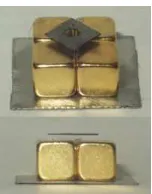
[image:22.612.269.345.522.619.2]Magnetic Levitation is a method by which an object is suspended with the support of magnetic fields. Magnetic pressure is used to counteract with the gravitational of the magnet. To stably the magnet against the gravity, the most impossible way is to use the ferromagnetism concept. Magnetic Levitation is used for maglev train[2].
Figure 2.1 : Levitating pyrolytic carbon
There are three basic schemes using various aspects of diamagnetism that allow the true levitation. Firstly, superconductors are ideal diamagnetic and completely expel magnetic field at low temperatures. For example, a sumo wrestler standing on a levitating magnets platform that floats above a high-temperature superconductor. The superconductor cooled by liquid air that hidden below the platform.
Figure 2.2 : Sumo wrestler standing on a levitating magnet platform Secondly, an object does not need to be superconducting to levitate. Living thing also can levitate themselves if placed in a strong magnetic field. Although the majority of ordinary materials such as wood or plastic seem to be non-magnetic, they also expel a very small portion like 0.00001 of an applied magnetic field.
Figure 2.3 : Frog had been levitate in a very small portion
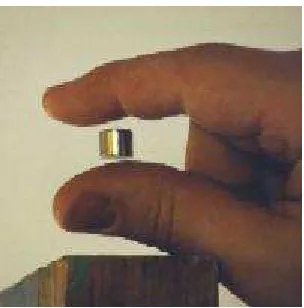
[image:23.612.229.385.507.660.2]Lastly, low temperature such that air turns liquid and powerful magnets such that cooking pans are drawn from a distance of several meters, are not what one is likely to have at home to be able to watch the superconducting or diamagnetic levitation[3].
Figure 2.4 : The real levitation at fingertips
There are several method that magnet can levitate objects. Firstly is the repulsion between like poles of permanent magnets or electromagnets. There need to be a way to constrains the magnets so that they don’t flips over and become attracted to each other. Secondly is the repulsion between a magnet and a metallic conductor induced by relative motion. The magnet needs to be restrained from moving in the same direction as the conductor. Thirdly is the repulsion between a metallic conductor and AC electromagnet. It is possible to shape the magnetic field to keep the conductor constrained in its motions. Then, the fourth is the repulsion between a magnetic field and a diamagnetic substance. This is the case of the floating frog and, and the floating magnet between two diamagnetic disks. The fifth is the repulsion between a magnet and a superconductor which is no constraints are needed. The sixth is the attraction between unlike poles of permanent magnets or electromagnets. This will work as long as there is a mechanical method to constrain the magnets s o they don’t touch. Then, the seventh is the attraction between the open core of an electromagnetic solenoid and a piece of iron or a magnet. The iron or magnet will touch the inside surface of the solenoid. Eight is the attraction between a permanent magnet or electromagnet and a piece of iron. The ninth is the