Open Access
Review
Adding pharmacogenomics to the development of new
marine-derived anticancer agents
José Jimeno*, Miguel Aracil and Juan Carlos Tercero
Address: PharmaMar R & D, Colmenar Viejo, Madrid, Spain
Email: José Jimeno* - [email protected]; Miguel Aracil - [email protected]; Juan Carlos Tercero - [email protected] * Corresponding author
Abstract
Nature has always been a highly productive tool in the development of anticancer therapies. Renewed interest in the potential of this tool has recently been sparked by the realization that the marine ecosystem can be used for the discovery and development of new compounds with clinical potential in advanced resistant tumors. These compounds can be incorporated into combination approaches in a chronic therapy scenario. Our marine anticancer program is using the sea to develop new agents with activity in resistant solid tumors and to identify new cellular targets for therapeutic intervention. This review describes the integration of different pharmacogenomic tools in the development of Yondelis™, Aplidin® and Kahalalide F, three marine-derived compounds currently in Phase II or III development. Our results are reinforcing the targeted selectivity of these agents and opening the gates for customized therapies in cancer patients in the near future.
Introduction
There is no doubt that major progress is being made in cancer treatment. The availability of non-cross-resistant regimens that are active in specific solid tumors means that several lines of therapy can be administered to patients. Thus, even in advanced stages, the disease can be chronified, and long-lasting survival can be achieved in selected responsive patients [1,2]. However, new stand-ards of care are often the results of a trial-and-error approach, which means that large cohorts of patients are treated rather empirically in order to obtain clinical bene-fit in a relatively small proportion of patients.
The identification of specific molecular signatures and genetic polymorphisms that correlate with treatment out-come and treatment-associated toxicity has made it possi-ble to propose "target" populations for cytotoxic therapy in patients with advanced solid tumors and hematologic
malignancies [3,4]. The clinical impact of such an approach can be dramatic. For example, in the target pop-ulation of lung adenocarcinoma patients harboring epi-dermal growth factor receptor (EGFR) tyrosine kinase domain mutations, treatment with EGFR tyrosine kinase inhibitors can achieve long-lasting responses in a high proportion of patients [5,6]. The incorporation of such molecular tools into contemporary drug development is mandatory if we are to optimize the clinical impact of new anticancer agents.
This review summarizes the information gathered from a translational research pharmacogenomic program that is being conducted with Yondelis™, Aplidin® and Kahalalide
F, three marine anticancer compounds that are active in pretreated cancer patients and are currently in phase II or III clinical development [7].
Published: 09 January 2006
Journal of Translational Medicine 2006, 4:3 doi:10.1186/1479-5876-4-3
Received: 12 September 2005 Accepted: 09 January 2006 This article is available from: http://www.translational-medicine.com/content/4/1/3
© 2006 Jimeno et al; licensee BioMed Central Ltd.
YondelisTM (Trabectedin, ET-743)
Yondelis™ is a tetrahydroquinoline alkaloid identified in the Caribbean tunicate Ecteinascidia turbinata (Fig. 1). Ear-lier studies on the mechanism of action of Yondelis corre-lated its antitumor activity with a sequence selective binding to guanine in the minor groove of DNA and with a broad inhibition of activated transcription [8-11].
Yondelis™ is active in patients with advanced soft tissue sarcoma that is resistant or has relapsed after conventional therapies, with evidence of long-lasting objective responses and tumor control in 22% of cases [12-14]. No significant differences were observed in response to Yon-delis™ between chemosensitive and chemoresistant patients. This finding, together with the large differences in survival time observed between responders and non-responders to Yondelis™, may indicate a differential molecular signature that correlates with clinical outcome to Yondelis™, at least in sarcoma patients. Such clinical evidence provided a rationale to look for a potential molecular predictive marker for response to Yondelis™ [15].
In addition to the clinical evidence, strong evidence from the pre-clinical studies indicates that an efficient transcrip-tion coupled (TC) nucleotide excision repair (NER) sys-tem is crucial to the antitumor activity of Yondelis™ [16,17]. TC-NER involves genes that are deficient in rare inborn disorders such as Cockayne syndrome and xero-derma pigmentosum. Patients with mutations in the TC-NER system exhibit an increased predisposition to develop cancer [18]. The TC-NER system is involved in the repair of bulky adducts induced by classical alkylating agents and by platin salts. In fact, cytotoxic drugs are less active in TC-NER-efficient tumors, in contrast to
Yonde-lis™, which requires an efficient TC-NER system. This dif-ferential pharmacodynamic effect led us to investigate a possible correlation between the mRNA expression levels of specific DNA repair genes and the clinical outcome of patients treated with Yondelis™. As a result, a pharmacog-enomic model was implemented to identify a customized therapy for prospective validation (Fig. 2).
The first model included the molecular characterization of a panel of low passage human sarcoma cell lines explanted from chemonaive patients [19], which included different sarcoma sub-types; in this panel of sarcoma cell lines, an IC50 > 1 nM was established as the cut-off for resistance. This concentration may be achieved and main-tained for more than 72 hours in plasma of sarcoma patients treated below the recommended clinical dose incorporated in the phase II trials, and is therefore consid-ered to be therapeutically appropriate for this experimen-tal study [20]. The in vitro results indicated a pattern of primary sensitivity and resistance in cell lines that was in line with the fact that sarcoma patients can be either highly sensitive or fully resistant to Yondelis™. Further-more, a complete lack of cross-resistance with doxoru-bicin, the drug used as first line treatment in sarcoma patients, was observed. In addition, although mutated p53 is associated with resistance to conventional antican-cer therapies and is considered to be a poor prognostic fac-tor for outcome in cancer patients [21], studies suggest a direct correlation between mutated p53 and in vitro sensi-tivity to Yondelis™. These interesting early results are cur-rently being validated in a larger human sarcoma panel.
The full panel of human sarcoma cell lines was further exposed to the clinically relevant concentration of 10 nM Yondelis™ during different incubation times. RNA from the cells was extracted at 0, 6, 24, 48 and 72 hours, and baseline and dynamic gene expression profiles (GEP) were assessed [22], using the Oncochip cDNA microarray (developed by the Spanish National Center for Cancer Research), which includes clones of 6388 cancer related genes [23]. GEP revealed upregulation of 86 genes and downregulation of 244 genes in the cell line panel after in vitro exposure to pharmacological concentrations of Yon-delis™ for 24 hours. This gene expression signature induced after Yondelis™ treatment identified a group of genes involved in cell cycle control, DNA damage response and apoptosis.
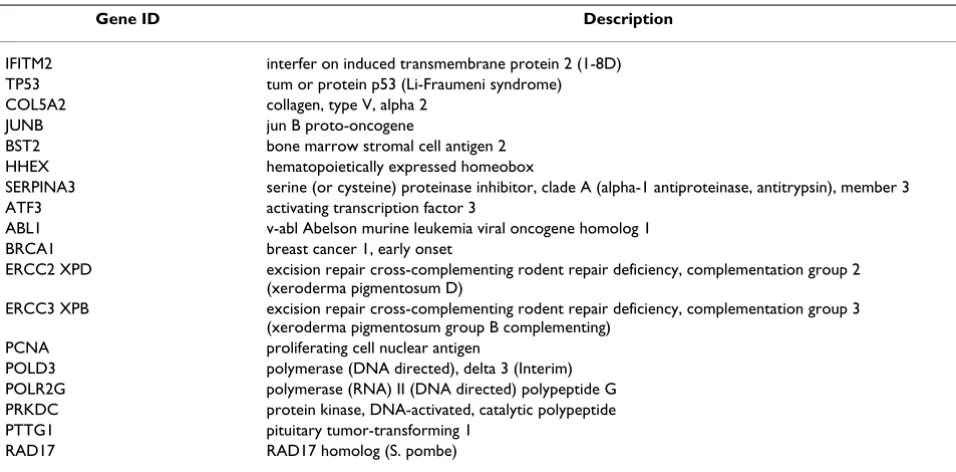
Based on the differential baseline and dynamic GEPs observed in sensitive and resistant sarcoma cell lines, we have drawn up a set of potential genetic markers of response to Yondelis™ and are currently using quantitative RT-PCR to assess their mRNA expression levels and pro-tein expression in tissue arrays from sarcoma patients [24] (Table 1).
Chemical structure of Yondelis™
Figure 1
The correlation between DNA repair capacity and sensitiv-ity to Yondelis™ in experimental models led us to conduct a retrospective study in tumor samples from advanced resistant or relapsed sarcoma patients treated with Yonde-lis™ to correlate DNA repair capacity with treatment out-come [25]. RNA was extracted from paraffin-embedded tumors to determine the mRNA expression levels of ERCC1, BRCA1 and XPD by quantitative RT-PCR. ERRC1 (subunit of a 5'-endonuclease) and XPD (subunit of a DNA helicase) are involved in the NER pathway, and upregulation of these genes in tumors results in a poor outcome to treatment with DNA-interacting agents [26]. BRCA1 is involved in homologous recombination repair and non-homologous end joining in response to double-stranded breaks DNA damage [27]. In lung cancer, upreg-ulation of BRCA1 has been linked to both increased resist-ance to cisplatin and increased sensitivity to taxanes [28,29]. Our retrospective study included 45 heavily pre-treated sarcoma patients; the overall objective response rate was 11%, progression free survival at 6 months (PFS6) was attained by 22% of patients, and the median overall survival was 11.8 months. These findings are fully
consistent with earlier results [15]. The mRNA expression studies indicate that low (below the median) levels of BRCA1 correlate with a higher objective response rate (24% in low levels vs 6% in high levels). Moreover, 36% of patients with low levels attained PFS6, compared to only 6% of those with high levels (P = 0.06). Median sur-vival was 16.8 months in patients with low levels and 6 months in those with high levels (P = 0.02). In contrast, patients with high mRNA expression levels of XPD and ERCC1 showed a tendency towards better response rate and superior PFS6 figures.
In summary, our translational pharmacogenomic research with Yondelis™ in sarcoma has identified a set of genes that correlate with the in vitro response to pharma-cological concentrations of the compound. The data gath-ered in our retrospective analysis of tumor samples from sarcoma patients demonstrate that clinical response to Yondelis™ is modulated by the molecular profile of sev-eral DNA repair genes in a unique differential pattern not applicable to other DNA-interacting agents, such as doxo-rubicin, a drug often used in the treatment of sarcomas. Strategy of the proposed pharmacogenomic program of Yondelis™ in sarcoma patients: Gene expression profiles of tumor samples from sarcoma patients treated with Yondelis will be retrospectively analyzed and correlated with their clinical out-come
Figure 2
Strategy of the proposed pharmacogenomic program of Yondelis™ in sarcoma patients: Gene expression profiles of tumor samples from sarcoma patients treated with Yondelis will be retrospectively analyzed and correlated with their clinical out-come. The DNA repair capability will be analyzed in blood samples of the same patients in order to be used as surrogate marker of response. The putative correlation found between GEP and clinical outcome will be prospectively analyzed in sar-coma patients and further studied in other tumors.
Patient
Sarcoma
Clinical outcome
Tumoral tissue
Blood sample
Resistant
Sensitive
GEP
DRC
Prospective studies in
sensitive patients
Extension of the DNA
repair genes panel
Transtumoral mechanism
GEP: Gene Expression Profile
DRC: DNA Repair Capability
PATTERN?
Aplidin® (Plitidepsin, APLD)
Aplidin® (Fig 3) is a marine depsipeptide found in the
Mediterranean tunicate Aplidium albicans. Aplidin® is an
NCI COMPARE compound that induces G1 cell-cycle arrest and very rapid p53- and MDR-independent apopto-sis [30]. Aplidin®-induced apoptosis seems to be mediated
through mitochondrial pathways involving JNK-depend-ent oxidative stress, activation of p38 and protein C delta kinases, and glutathion depletion [31,32]. Interestingly, Aplidin® affects the endothelial vascular growth factor
(VEGF) pathway, which may account for its apoptotic activity. Aplidin® affects VEGF secretion by inducing a
two-fold inhibition of the autocrine loop and a downreg-ulation of the VEGF flt-1 receptor in acute lymphoblastic leukemia cell lines [33]. However, the reported accumula-tion of the VEGF mRNA transcript suggests a selective impact on VEGF secretion but not VEGF production [34]. An in vivo study in anaplastic thyroid carcinoma studied the changes in GEP in response to Aplidin® and found a
potential effect on the expression of angiogenesis-related genes. RNA was extracted from control and Aplidin®
-treated tumors and hybridized on a cDNA microarray (GEarray Q series Human Angiogenesis Array (HS-009) containing probes from 96 genes involved in angiogen-esis. The results showed a dramatic reduction of VEGF-D expression in the tumors of treated animals as well as a complete loss of other angiogenesis-related genes such as hypoxia inducible factor-1, vasostatin and cadherin. In contrast, in vivo exposure to Aplidin® led to an increase in
the levels of proteins involved in apoptosis, such as PARP-85 and caspase 8 [35].
Aplidin® has demonstrated activity and feasibility in
chemoresistant adult cancer patients, with a remarkably low rate of bone marrow and hematological toxicity. It is currently in active phase II development in solid tumors and hematological malignancies.
The pharmacodynamic impact of Aplidin® in the VEGF
loop, as well as its low rate of hematotoxicity, led us to investigate its effect in hematological malignancies, espe-cially in acute leukemia, lymphomas and multiple mye-loma. A series of experimental studies conducted in leukemia blasts from pediatric and adult leukemia patients confirmed that Aplidin® is able to induce massive
apoptosis at therapeutic concentrations of 5–10 nM [36], with no full cross-resistance to conventional anticancer agents except gemcitabine [37]. The reason for this cross-resistance is so far unexplained and further experiments are planned to elucidate this finding. The in vitro data demonstrates clear differences between blasts from leuke-mia patients who are highly sensitive or resistant to Apli-din® (Fig. 4).
These results with leukemic blasts enabled us to develop a pharmacogenomic model of a molecular fingerprint for sensitivity or resistance of leukemic blasts to Aplidin® .
RNA was isolated from patient blasts and specific GEPs were analyzed in the cDNA cancer specific array
Onco-Table 1: Candidate markers of response* to Yondelis
Gene ID Description
IFITM2 interfer on induced transmembrane protein 2 (1-8D) TP53 tum or protein p53 (Li-Fraumeni syndrome) COL5A2 collagen, type V, alpha 2
JUNB jun B proto-oncogene
BST2 bone marrow stromal cell antigen 2 HHEX hematopoietically expressed homeobox
SERPINA3 serine (or cysteine) proteinase inhibitor, clade A (alpha-1 antiproteinase, antitrypsin), member 3 ATF3 activating transcription factor 3
ABL1 v-abl Abelson murine leukemia viral oncogene homolog 1 BRCA1 breast cancer 1, early onset
ERCC2 XPD excision repair cross-complementing rodent repair deficiency, complementation group 2 (xeroderma pigmentosum D)
ERCC3 XPB excision repair cross-complementing rodent repair deficiency, complementation group 3 (xeroderma pigmentosum group B complementing)
PCNA proliferating cell nuclear antigen
POLD3 polymerase (DNA directed), delta 3 (Interim) POLR2G polymerase (RNA) II (DNA directed) polypeptide G PRKDC protein kinase, DNA-activated, catalytic polypeptide PTTG1 pituitary tumor-transforming 1
RAD17 RAD17 homolog (S. pombe)
[image:4.612.56.534.99.335.2]chip®. The results [38,39] indicated a GEP signature
spe-cific for sensitive and resistant acute myeloid and acute lymphoblastic leukemic blasts (Fig. 5). This model is being incorporated into the ongoing phase II trial with Aplidin® in resistant and relapsed acute lymphoblastic
leukemia. If a correlation is observed between baseline GEP and patient outcome, a target population can be identified for future developmental strategies. The same approach has been implemented in the phase II trial in pretreated multiple myeloma.
Studies of Aplidin® in combination with other agents in
hematological malignances are currently ongoing. In addition, GEP assessment is being incorporated in in vivo
studies to investigate the molecular basis behind the strong synergism of Aplidin® and ARA-C in leukemia and
lymphoma models [40]. Initial GEP analyses in these experimental models, using the U133A GeneChip (Affymetrix), suggest that Aplidin®-ARA-C combination
affects multiple pathways including MAP kinase pathway, WNT signaling pathway, cell cycle regulators and the tri-carboxylic acid cycle. Interestingly, the GEPs from the in vivo combination APLD-ARA-C studies demonstrate a
sig-nificant downregulation of cytidine deaminase, an enzyme that deactivates ARA-C.
Kahalalide F
Kahalalide-F is a cyclic peptide found in the Hawaiian nudibranch E. rufescens (Fig. 6). Kahalalide-F is an NCI-COMPARE compound that induces sub G1 cell-cycle arrest and cytotoxicity independently of MDR, Her2, p53 and blc-2 [41]. It has completed the phase I program with evidence of a positive therapeutic index in patients with solid tumors and prostate cancer [7,42] and is under active phase II development in liver cancer, melanoma and non-small cell lung cancer.
[image:5.612.62.563.85.405.2]The COMPARE analysis in a panel of 60 human cancer cell lines genetically and molecularly characterized for cell proliferation pathways has included Kahalalide-F in the list of new chemical entities that interact with the Erb/ Her-neu pathway [43]. This specific interaction has been described in a translational program that has confirmed a selective downregulation of ErbB3 expression by KF treat-ment. Expression of ErbB3 is seen in many of the same tumor types that overexpress ErbB2, including breast, bladder and melanomas. The involvement of ErbB3 over-Chemical structure of Aplidin®
Figure 3
Chemical structure of Aplidin®.
N
O
NH
O
O
O
O
O
NH
HO
O
O
NH
Me
O
N
OMe
Me
O
N
NMe-L-Tyr
6
L-Thr
1
NMe-D-Leu
7
L-Pro
5
L-Leu
4
Hip
3
Isostatine
2
[
α
-(
α
-hydroxy-
isovaleryl)-propionyl]
O
N
O
expression in the genesis and maintenance of lung adeno-carcinomas has been recently suggested [44]. ErbB3 is a major recruiter of phosphoinositide 3-kinase (PI3K); it often couples to other ErbB receptors to activate the downstream Akt pathway and promotes the cancer phe-notype. Sensitivity to Kahalalide-F significantly correlated with baseline expression levels of ErbB3 (HER3), but not of other ErbB receptors, in a panel of established cell lines from different origins. Furthermore, the downstream PI3K/Akt pathway coupled to ErbB3 receptor is also affected by KF treatment. KF decreases phosphorylated Akt levels and this reduction is associated with cytotoxic-ity in Kahalalide-F-sensitive cell lines [45]. These findings suggest that ErbB3 may be a potential marker for Kahala-lide-F sensitivity in patients.
Discussion
In this review, we have described the different approaches that have led us to propose pharmacogenomic models for
three innovative marine anticancer compounds that are under clinical development.
The dynamic GEP study with Yondelis™ in human sar-coma cell lines has confirmed its impact on transcrip-tional machinery, shedding light on the molecular basis for its antiproliferative effects. The in vitro model has also been instrumental in the identification of differential baseline gene signatures that correlate with sensitivity or resistance to Yondelis™, thus reducing the set of genes that can be considered potential biomarkers for response vali-dation studies. Tumor samples from Yondelis™-treated sarcoma patients are being collected to build tissue arrays to confirm the impact of gene expression levels on patient response. Preliminary data from a small cohort of heavily pretreated sarcoma patients indicates that the SNPs and the mRNA expression levels of a number of DNA repair genes induce a differential response to Yondelis™. These interesting findings confirm that sensitivity to Yondelis™ Aplidin® in vitro differentiation of sensitive and resistant leukemic blasts
Figure 4
Aplidin® in vitro differentiation of sensitive and resistant leukemic blasts.
i-AML/ALL = de novo acute myeloid and lymphoblastic leukaemia
r-AML/ALL = resistant AML and ALL
BM = Bone marrow
PB = Peripheral blood
(*) IC75 values
Resistant
Sensitive
iAL
L
rA
LL
iAM
L
BM
Pb
rA
ML
0.00
0.05
0.10
0.15
0.20
A
p
lidine
µµµµ
M
bears a unique correlation with the NER and the homolo-gous recombination repair systems. Such findings are in contrast with the data on platin salts and other DNA bind-ing agents [26,28] and on taxanes [27], providbind-ing support for the use of Yondelis™ in combination strategies [46-48] to increase disease control in highly resistant patients. These clinically relevant findings are now being validated in a second retrospective cohort of more than 100 sar-coma patients treated with Yondelis™ and will be further confirmed in prospective clinical validation studies.
The impact of DNA repair capacity on treatment outcome with Yondelis™ is not limited to sarcoma but is applicable to other tumors as well. For this reason, pharmacoge-nomic studies in other tumors that are highly sensitive to Yondelis™, such as relapsed ovarian cancer [49], are strongly encouraged.
Pharmacogenomic studies examining baseline GEPs that may be linked to the in vitro response of leukemic blasts to Aplidin® have been incorporated into phase II studies in
relapsed lymphoblastic leukemia and multiple myeloma. Retrospective studies to identify differential GEPs in other solid tumors that are sensitive to Aplidin®, such as
advanced pretreated melanoma [50], are also ongoing. "Preclinical pharmacogenomics" have been instrumental to understand the molecular basis behind Aplidin®
apop-totic effects as well as to provide a basis for combination studies. In fact, recent in vivo dynamic GEP studies have confirmed a major impact on angiogenesis-related genes, thus providing a rationale for combining Aplidin® with
other VEGF-interacting agents.
Experimental evidence for a selective impact of Kahalal-ide-F on the ErbB3 pathway has provided a basis for stud-ies to validate these findings in extremely sensitive or resistant in vitro and in vivo models. Results from these Molecular signatures of sensitivity to Aplidin (APLD) in acute lymphoblastic leukemia (ALL) and acute myeloid leukemia (AML) patient blasts
Figure 5
Molecular signatures of sensitivity to Aplidin (APLD) in acute lymphoblastic leukemia (ALL) and acute myeloid leukemia (AML) patient blasts.
APLD-SENSITIVE samples
APLD-RESISTANT samples
APLD sensitivity signature in ALL
ALL
AML
APLD-SENSITIVE samples
APLD-RESISTANT samples
APLD-SENSITIVE samples
APLD-RESISTANT samples
APLD sensitivity signature in ALL
studies could justify further explorations in tumor sam-ples from patients. This experimental data has established a basis for in vitro and in vivo studies combining Kahalal-ide F with ErbB kinase inhibitors and ErbB monoclonal antibodies.
Conclusion
Our journey into the new era of pharmacogenomics has confirmed that these new tools can potentially elucidate the molecular basis behind individual differences in the pharmacodynamic effects of marine anticancer com-pounds and enable us to design customized models for therapeutic intervention in cancer patients. A better understanding of the molecular determinants of thera-peutic response will help identify patients at risk for severe toxicities or those more likely to respond to a given thera-peutic regimen [51], thus paving the way for customized anticancer therapy to become a reality in the near future. A proactive interaction between researchers, the pharma-ceutical sector and government regulating agencies is cru-cial to the incorporation of this challenging new tool in clinical medicine.
References
1. Hurwitz H, Fehrenbacher L, Novotny W, et al.: Bevacizumab plus irinotecan, fluorouracil and leucovorin for metastatic color-ectal cancer. N Engl J Med 2004, 350:2335-2342.
2. Cunninham D, Humblet Y, Siena S, et al.: Cetuximab mono-therapy plus irinotecan in irinotecan refractory metastatic colorectal cancer. N Engl J Med 2004, 351:337-345.
3. Lenz HJ: The use and development of germline polymor-phisms in clinical oncology. J Clin Oncol 2004, 22:2519-2521. 4. Rosell R, Tarón M, O'Brate A: Predictive molecular markers in
non-small cell lung cancer. Curr Opinion in Oncol 2001, 13:101-109.
5. Rosell R, Ichinose Y, Tarón M, et al.: Non small cell lung cancer (NSCLC) tumors from Gefitinib-responsive patients (pts)
harbor EGFR kinase domain mutations. Ann Oncol 2002:166. (abstr 6280)
6. Lynch TJ, Bell DW, Sordella R: Activating mutations in the epi-dermal growth factor receptors underlying responsiveness of non small cell lung cancer to gefitinib. N Engl J Med 2004, 350:2129-2139.
7. Jimeno J, López Martín JA, Ruiz Casado A, Izquierdo MA, Scheuer P, Rinehart K: Progress in the clinical development of new marine derived anticancer compounds. Anticancer Drugs 2004, 15:321-329.
8. Pommier Y, Kohlhagen G, Bailly C, Waring M, Mazumder A, Kohn KW: DNA sequence- and structure-selective alkylation of guanine N2 in the DNA minor groove by ecteinascidin 743, a potent antitumor compound from the Caribbean tunicate Ecteinascidia turbinata. Biochemistry 1996, 35:13303-13309. 9. Moore BM II, Seaman FC, Hurley LH: NMR-based model of an
ecteinascidin 743-DNA adduct. J Am Chem Soc 1997, 119:5475-5476.
10. Minuzzo M, Marchini S, Broggini M, Faircloth GT, D'Incalci M, Man-tovani R: Interference of transcriptional activation by the anti-neoplastic drug ET-743. Proc Natl Acad Sci USA 2000, 97:6780-6784.
11. Jin S, Gorfajn B, Faircloth G, Scotto KW: Ecteinascidin 743, a tran-scription-targeted chemotherapeutic that inhibits MDR1 activation. Proc Natl Acad Sci USA 2000, 97:6775-6779.
12. Yovine A, Riofrio M, Blay JY, et al.: Phase II study of Yondelis (Trabectedin ET-743) in advanced/pre-treated soft tissue sarcoma patients. J Clin Oncol 2004, 22:890-899.
13. Garcia Carbonero R, Supko JG, Manola J, et al.: Phase II and phar-macokinetic study of Ecteinascidin 743 (ET-743) in patients with progressive sarcomas of soft tissues following failure of conventional chemotherapy. J Clin Oncol 2004, 22:1-11. 14. Le Cesne L, Blay JY, Judson I, et al.: Phase II study of ET-743 in
advanced soft tissue sarcomas: An EORTC soft tissue and bone sarcoma group trial. J Clin Oncol 2005, 23:576-584. 15. Jimeno J, Maki R, Casali P, et al.: Therapeutic impact of ET-743
(Yondelis®, Trabectidin) a new marine derived compound in Sarcoma. Curr Opinion Orthoped 2003, 14:419-428.
16. Erba E, Bergamaschi D, Bassano L, et al.: Ecteinascidin-743 (ET-743), a natural marine compound, with a unique mechanism of action. Eur J Cancer 2001, 37:97-105.
17. Takebayashi Y, Pourquier P, Zimonjic DB, et al.: Antiproliferative activity of ecteinascidin 743 is dependent upon transcription-coupled nucleotide-excision repair. Nat Med 2001, 7:961-966. 18. De Boer J, van Steeg H, Berg RJW, et al.: Mouse model for the
DNA repair/basal transcription disorder trichothiodystro-phy reveals cancer predisposition. Cancer Res 1999, 59:3489-3494.
19. Carnero A, Moneo V, Blanco C, et al.: In vitro activity of ET-743 in a panel of low passaged human sarcoma cell lines. Proceed-ings of the 95th Annual Meeting of the American Association of Cancer Research: 27–31 March, Florida 2004:349. abstr 1513
20. D'Incalci M, Jimeno J: Preclinical and clinical results with the marine natural product trabectedin (Yondelis, Ecteinasci-din-743, ET-743). Expert Opinion Investigational Drugs 2003, 12:1843-1853.
21. Hofseth LJ, Hussain SP, Harris CC: p53, 25 years after its discov-ery. Trends Pharmacol Sci 2004, 4:177-181.
22. Martínez N, Sánchez-Beato M, Carnero A, et al.: Transcriptional signature of ET-743 (Yondelis, Trabectedin) in human sar-coma cells explanted from chemonaive patients. Mol Cancer Ther 2005, 4:814-23.
23. Martínez N, Camacho FI: The molecular signature of mantle cell lymphoma reveals multiple signals favoring survival. Can-cer Res 2003, 63:226-232.
24. Jimeno J, Tarón M, Fernández-Sousa JM, et al.: The pharmacoge-nomics of ET-743 (Yondelis) in sarcoma: Moving towards a targeted approach. Proceedings of the Gene Signature Symposium: 9 March, Madrid 2005:47-48.
25. Van Oosterom A, Maki R, Tarón M, et al.: Correlation between the pattern of DNA repair efficiency and the natural history of patients with advanced sarcoma treated with ET-743 (Yondelis). Proceedings of the 29th Congress of the European Society for Medical Oncology: 29 October – 2 November, Vienna 2004:197. (abst. 7450)
Chemical structure of Kahalalide F
Figure 6
Publish with BioMed Central and every scientist can read your work free of charge
"BioMed Central will be the most significant development for disseminating the results of biomedical researc h in our lifetime."
Sir Paul Nurse, Cancer Research UK
Your research papers will be:
available free of charge to the entire biomedical community
peer reviewed and published immediately upon acceptance
cited in PubMed and archived on PubMed Central
yours — you keep the copyright
Submit your manuscript here:
http://www.biomedcentral.com/info/publishing_adv.asp
BioMedcentral
26. Lord RVN, Brabender J, Gandara D, et al.: Low ERRC1 expression correlates with prolonged survival after cisplatin plus gem-citabine chemotherapy in non small cell lung cancer. Clin Can-cer Res 2002, 8:2286-2911.
27. Ventikaraman AR: Tracing the network connecting BRCA and Fanconi anemia proteins. Nature Cancer Rev 2004, 14:266-276. 28. Taron M, Rosell R, Felip E, et al.: BRCA1 mRNA expression levels
as an indicator of chemoresistance in lung cancer. Hum Mol Genet 2004, 13:2443-9.
29. Lafarge S, Sylvain V, Ferrara M, Bignon YJ: Inhibition of BRCA1 leads to increased chemoresistance to microtubule interfer-ing agents, an effect that involves the JNK pathway. Oncogene
2001, 20:6397-6606.
30. Erba E, Bassano L, Di Liberti G, et al.: Cell cycle phase perturba-tions and apoptosis induced by Aplidine. Brit J Cancer 2002, 86:1510-1517.
31. García-Fernández LF, Losada A, Alcalde V, et al.: Aplidin induces the mitochondrial apotototic pathway via oxidative stress-mediated JNK and p38 activation and protein kinase C delta.
Oncogene 2002, 21:7533-7544.
32. Cuadrado A, García-Fernández LF, González L, et al.: Aplidin induces apoptosis in human cancer cells via glutathion deple-tion and sustained activadeple-tion of the epidermal growth factor receptor, Src, JMK and p38 MAPK. J Biol Chem 2003, 278:241-250.
33. Broggini M, Marchini S, Borsott P, et al.: Aplidine, a new antican-cer agent of marine origin, inhibits VEGF secretion and blocks VEGF-VEGF-1 (flt-1) autocrine loop in human leuke-mic cells molt-41. Leukemia 2003, 17:52-59.
34. Biscardi M, Caporale R, Balestri F, Gavazzi S, Jimeno J, Grossi A: VEGF inhibition and cytotoxic effect of Aplidine in leukemia cell lines and cells from acute myeloid leukemia. Ann Oncol
2005, 16:1667-1674.
35. Straight A, Oakley K, Moores R, Bauer AJ, Patel A, Tuttle RM, Jimeno J, Francis GL: Aplidin reduces growth of anaplastic thyroid can-cer xenografts and expression of several angiogenic genes.
Cancer Chemother Pharmacol 2006, 57:7-14.
36. Erba E, Serafini M, Gaipa G, et al.: The effect of Aplidine in acute lymphoblastic leukaemia cells. Brit J Cancer 2003, 89:763-773. 37. Bresters D, Broekhuizen A, Faircloth G, Jimeno J, Kaspers G: In vitro
cytotoxicity of Aplidine and cross-resistance with other cyto-toxic drugs in childhood leukemic and normal bone marrow and blood samples; a rational basis for clinical development.
Leukemia 2003, 13:1338-1343.
38. Martínez N, Sánchez Beato M, Kaspers G, et al.: Sensitivity and resistance of human leukemic blasts to aplidin: molecular signature by gene expression profiling (GEP). Proceedings of the 16th EORTC-NCI-AACR Symposium on Molecular Targets and Cancer Therapeutics: 28 September – 1 October, Geneva 2004:15. (abstr 37) 39. Martínez N, Sánchez Beato M, Kaspers G, et al.: Molecular
signa-ture associated with sensitivity to Aplidin in leukemic blasts from AML and ALL patients. Proceedings of the 6th International Symposium and Expert Workshops on Leukemia and Lymphoma: 17–19 March, Amsterdam 2005:92. (abstr P-14)
40. Banerjee D, Saydam G, Menon LG, et al.: Gene expression analy-ses as an approach to understanding the mechanistic basis of Aplidin action. Proceedings of the 6th International Symposium and Expert Workshops on Leukemia and Lymphoma: 17–19 March, Amster-dam 2005:68. (abstr O-44)
41. Janmaat M, Kruyt F, Jimeno J, Rodriguez JA, Giaccone G: Kahalalide F induces cell death in HER2/neu overexpressing breast can-cer cells that is independent of caspase, cathepsin B and cathepsin D activity. Proceedings of the 2nd International Symposium on Signal Transduction Modulators in Cancer Therapy: 23–25 October, Amsterdam 2003:60. (abstr B02)
42. Rademaker-Lakhai J, Horenblas S, Meinhardt W, et al.: Phase I clin-ical and pharmacokinetic study of Kahalalide F in patients with advanced androgen refractory prostate cancer. Clinical Cancer Research 2005, 11:1854-1862.
43. Wosikowsky K, Schuurhuis D, Johnson K, Paull KD, Myers TG, Wein-stein JN, Bates SE: Identification of epidermal growth factor receptors and c-erb2 pathway inhibitors by correlation with gene expression patterns. J Natl Cancer Inst 1997, 89:1505-1515. 44. Sithanandam G, Smith GT, Masura A, et al.: Cell cycle activation in lung adenocarcinoma cells by the ErbB3/phospahatidylinosi-tol 3-kinase/Akt pathway. Carcinogenesis 2003, 24:1581-1592.
45. Janmaat M, Rodriguez J, Jimeno J, Kruyt F, Giaccone G: Kahalalide F induces necrosis-like cell death that involves depletion of ErbB3 and inhibition of Akt signaling. Mol Pharmacol 2005, 68:502-510.
46. Grasselli G, Malossi A, Marsoni S, et al.: Phase I and pharmacoki-netic (PK) study of ecteinascidin-743 (ET, Yondelis®) and cis-platin (P) combination in pre-treated patients (pts) with selected advanced solid tumors. Proc Am Soc Clin Oncol 2003, 22:135. (abstr 542)
47. Gianni L, Grasselli G, De Braud F, et al.: Definition of the least toxic sequence (LTS) and optimal therapeutic dose of Yon-delis ™ (ET-743; trabectedin) in combination with doxoru-bicin (doxo) in patients with untreated metastatic soft tissue sarcomas (STS) and advanced pre-treated anthracycline-naïve breast cancer patients (ABC). Proceedings of the 15th AACR-NCI-EORTC International Conference on Molecular Targets and Can-cer Therapeutics: 17–21 November, Boston 2003:62. (abstr A49) 48. Chu Q, Schwartz G, Patnaik A, et al.: Phase I and
pharmacoki-netic study of sequential paclitaxel followed by trabectedin (ET-743) in 24h every 2 weeks in patients with advanced or metastatic cancer. Proceedings of the 29th Congress of the European Society for Medical Oncology: 29 October – 2 November, Vienna 2004:107. (abstr 398P)
49. Sessa C, De Braud F, Perotti A, Bauer J, Curigliano G, Noberasco C, Zaniboni F, Gianni L, Marsoni S, Jimeno J, D'incalci M, Dall'O E, Colombo N: Trabectedin (ET-743) for women with ovarian carcinoma after failure of platinum-taxanes. J Clin Oncol 2005, 23:1867-1874.
50. Eisen T, Thomas J, Van Oosterom A, et al.: Aplidin as second line therapy in patients with advanced melanoma. Ann Oncol 2004, 15:196. (abstr 747O)