R E S E A R C H
Open Access
Effect of different methods of cooling for
targeted temperature management on
outcome after cardiac arrest: a systematic
review and meta-analysis
Lorenzo Calabró
1†, Wulfran Bougouin
2,3,4†, Alain Cariou
3,4,5, Chiara De Fazio
1, Markus Skrifvars
6, Eldar Soreide
7,
Jacques Creteur
1, Hans Kirkegaard
8, Stéphane Legriel
9, Jean-Baptiste Lascarrou
10, Bruno Megarbane
11,
Nicolas Deye
11†and Fabio Silvio Taccone
1*†Abstract
Background:Although targeted temperature management (TTM) is recommended in comatose survivors after cardiac arrest (CA), the optimal method to deliver TTM remains unknown. We performed a meta-analysis to evaluate the effects of different TTM methods on survival and neurological outcome after adult CA.
Methods:We searched on the MEDLINE/PubMed database until 22 February 2019 for comparative studies that evaluated at least two different TTM methods in CA patients. Data were extracted independently by two authors. We used the Newcastle-Ottawa Scale and a modified Cochrane ROB tools for assessing the risk of bias of each study. The primary outcome was the occurrence of unfavorable neurological outcome (UO); secondary outcomes included overall mortality.
Results:Our search identified 6886 studies; 22 studies (n= 8027 patients) were included in the final analysis. When compared to surface cooling, core methods showed a lower probability of UO (OR 0.85 [95% CIs 0.75–0.96];p= 0.008) but not mortality (OR 0.88 [95% CIs 0.62–1.25];p= 0.21). No significant heterogeneity was observed among studies. However, these effects were observed in the analyses of non-RCTs. A significant lower probability of both UO and mortality were observed when invasive TTM methods were compared to non-invasive TTM methods and when temperature feedback devices (TFD) were compared to non-TFD methods. These results were significant particularly in non-RCTs.
Conclusions:Although existing literature is mostly based on retrospective or prospective studies, specific TTM methods (i.e., core, invasive, and with TFD) were associated with a lower probability of poor neurological outcome when compared to other methods in adult CA survivors (CRD42019111021).
Keywords:Targeted temperature management, Methods, Endovascular, Surface cooling, Survival, Neurological outcome, Meta-analysis
© The Author(s). 2019Open AccessThis article is distributed under the terms of the Creative Commons Attribution 4.0 International License (http://creativecommons.org/licenses/by/4.0/), which permits unrestricted use, distribution, and reproduction in any medium, provided you give appropriate credit to the original author(s) and the source, provide a link to the Creative Commons license, and indicate if changes were made. The Creative Commons Public Domain Dedication waiver (http://creativecommons.org/publicdomain/zero/1.0/) applies to the data made available in this article, unless otherwise stated.
* Correspondence:[email protected]
Lorenzo Calabró and Wulfran Bougouin equally contributed as first authors.
†Nicolas Deye and Fabio Silvio Taccone equally contributed as senior
authors.
1Department of Intensive Care, Cliniques Universitaires de Bruxelles Hopital
Erasme, Erasmus Hospital, Université Libre de Bruxelles (ULB), Route de Lennik, 808, 1070 Brussels, Belgium
Introduction
Effective neuroprotective strategies are required to prevent or minimize the development of extended anoxic brain in-jury after cardiac arrest (CA) after the return of spontan-eous circulation (ROSC) [1]. The use of targeted temperature management (TTM) is actually recom-mended in comatose CA survivors, especially after out-of-hospital cardiac arrest (OHCA) with an initial shockable rhythm, although the quality of evidence is moderate to low [2]. In 2002, two randomized clinical trials (RCTs) showed that TTM at 33 °C for 12–24 h was associated with a significantly higher proportion of patients achieving a favorable neurological outcome when compared to any temperature control [3–5]; more recently, a large RCT showed that the target temperature during TTM could be either 33 °C or 36 °C, with an active temperature control required for all patients [6].
Current guidelines recognized some important know-ledge gaps in the use of TTM after CA. In particular, al-though significant delay to initiate TTM could negate the positive effects of such intervention, RCTs showed no benefits from early TTM initiation using cold intra-venous fluids, either during cardiopulmonary resuscita-tion (CPR) or immediately after ROSC, when compared to in-hospital TTM implementation [7,8]. Also, the op-timal TTM duration remains unknown; while prolonged therapy up to 72 h is effective in newborns suffering from anoxic-hypoxic encephalopathy [9], TTM at 33 °C for 48 h did not significantly improve long-term neuro-logical outcome when compared to 24 h duration in adult OHCA [10]. Importantly, all these studies dealing with early or prolonged cooling strategies suffered from significant biases and might have been underpowered. As such, these aspects of TTM after CA, together with some other issues, such as the selection of patients (i.e., shockable vs. non-shockable patients, in-hospital vs. OHCA), the rewarming rate, and the control of post-TTM fever, have not been adequately addressed yet.
Moreover, the most effective method to deliver TTM and how this could influence the patients’outcome is a matter of debate. According to international guidelines, external or internal cooling devices can be used [2]. Sev-eral devices are available for clinicians, with different technical characteristics, possibilities of use (i.e., in-hos-pital vs. out-of-hosin-hos-pital), velocity to achieve target temperature, precision (i.e., maintenance of the target temperature within target ranges), invasiveness, potential side effects, and costs [11]. Furthermore, basic means (such as ice packs, cold fluid, fans) seem of less precision and efficiency than automated method (i.e., automatic adjustment according to patient temperature) [12]. To date, no RCTs showed the superiority of a specific de-vice over another [12,13]. However, most studies found that endovascular cooling devices (EC) enabled a more
precise temperature control when compared to others [14, 15] and some of them also reported a non-signifi-cant trend towards a better survival rate [16,17].
The aim of this metanalysis was therefore to investi-gate whether, in patients resuscitated from cardiac arrest (i.e., participants) undergoing TTM (i.e., intervention), neurological outcome and survival (i.e., Outcomes) could be influenced by the different methods used for TTM (i.e., comparison).
Methods
We adhered to thePreferred Reporting Items for System-atic Reviews and Meta-Analysis-Protocols (PRISMA-P) guidelines [18]. The protocol of this study was registered with the International Prospective Register of Systematic Reviews (PROSPERO) on 25 January 2019 and finally approved on 12 February 2019 (CRD42019111021).
Data sources and search strategies
A systematic literature search was performed up to 30 January 2019 in the MEDLINE/PubMed® database. This approach may have reduced the number of eligible citations; however, other reference libraries have a higher proportion of non-English citations, with prob-ably smaller cohorts of patients for the TTM setting. However, as one study was already accepted for publica-tion at that moment [19], the literature search was extended up to 22 February 2019.
This search included only original studies published in English in peer-reviewed journals. The search was per-formed using the following terms: (“hypothermia” OR
“TTM”OR“cooling”OR“cooling method”OR“targeted temperature management”) AND (“heart arrest” OR
“cardiac arrest” OR“post-anoxic”). In addition, we also searched the reference lists of all eligible studies as well as relevant reviews for additional published and unpub-lished data, searched by contacting experts, and used a web search for abstracts, proceedings, and unpublished studies. More details regarding data collection are pre-sented in Additional file 1: Table S1. Main research questions, with reference to participants, interventions, comparisons, outcomes, and study design (PICOS), are reported in Additional file1: Table S1.
Study screening and selection
cooling methods (i.e., one vs. the other) in adult (> 18 years of age) CA patients; studies could be either retrospective, prospective, or RCTs. Studies conducted in healthy volunteers or in animal/experimental models were excluded. Editorials, commentaries, let-ters to the editor, opinion articles, reviews, meeting abstracts, case reports, and studies published in other languages were excluded; all original articles lacking an abstract and/or quantitative details on neurological outcome and survival were also excluded. None of the authors of the original studies was contacted to obtain further information, as the main outcomes were all clearly stated in the published manuscript.
From this first pool of selected articles, further criteria were established for the inclusion in the quantitative analysis: (a) TTM should be used in both groups (i.e., both methods should be used to induce hypothermia at least at 36 °C or below); (b) when more than one cooling method was simultaneously used for a group, the group was classified according to the most frequently used cooling method used (i.e., if in one group, 90% of pa-tients receive “method A” and 25% “method B,” the groups will be considered as being treated with“method A”); (c) if one of the methods was used only for a limited time period (i.e., only for the induction of TTM) and then discontinued, the study was excluded; and (d) if TTM was attempted using only antipyretics or intraven-ous drugs (i.e., such as neurotensin, clonidine), the study was also excluded.
Definitions
Cooling methods were classified as “core” (i.e., EC, intravenous cold fluids, automated peritoneal lavage, any dialysis technique, extra-corporeal membrane oxygenation, esophageal or trans-nasal) or “surface” (i.e., skin exposure, cooling beds, iced packs, cooling pads, air-circulating or water-circulating blankets, water-filled blankets, air-filled blankets) [11]. Add-itional classifications included “invasive” (i.e., EC, au-tomated peritoneal lavage, any dialysis technique, extra-corporeal membrane oxygenation) or “ non-inva-sive” (all the others) and “temperature feedback de-vices” (TFD, i.e., with a controlled feedback system that continuously measures the patients’ temperature and adjust the temperature of the cooling element ac-cordingly) or “non-TFD.” If a study included multiple methods, the data were aggregated prior to inclusion in the systematic review according to the abovemen-tioned definitions (i.e., EC and esophageal cooling devices would be considered together as “core,” but EC will eventually be included in the “invasive” group while esophageal cooling devices in the “non-invasive” group).
Appraisal of study quality
The level of evidence (LOE) of each study was assessed according to the Grading of Recommendations, Assess-ment, Development and Evaluations (GRADE) evidence system [20]. The risk of bias for RCTs was assessed using a modified Cochrane ROB tool that classifies ROB as “low,” “probably low,” “probably high,” or “high” for each of the following domains: sequence generation, allocation sequence concealment, blinding, selective out-come reporting, and other bias [21]. The risk of bias of non-RCTs was assessed using the Newcastle-Ottawa Scale [22]; in particular, we evaluated three components: (a) selection of cases: studies were considered as “low” ROB if case definition was adequate, cases were repre-sentative, and outcome of interest was not present at the beginning of the study; (b) comparability of cohorts: studies were considered as“low” ROB if adjustment was made for usual prognostic factors (i.e., Utstein variables); (c) exposure and outcome: studies were considered as
“low”ROB if assessment of outcome and follow-up were appropriate. Overall, a study was considered as “low” ROB if each single component was classified as “low.” LOE was further analyzed by two experts (WB, ND) and one independent statistician. Disagreement was resolved by consensus.
Primary and secondary outcomes
The primary outcome evaluated was the analysis of unfavorable neurological outcome, whenever this was collected and defined as cerebral performance category of 3–5, in the“core” vs.“surface” group. The secondary outcome was mortality, whenever this was collected. Similar subgroup analyses were performed in invasive vs. non-invasive methods and TFD vs. non-TFD methods. Pre-defined subgroup analyses were performed in (a) EC vs. surface, (b) EC vs. surface with TFD, (c) surface blan-kets vs. other surface methods, as EC and blanket cool-ing devices, are the most used methods in this settcool-ing worldwide.
Statistical analysis
chance. A substantial heterogeneity was assumed with
I2> 50%. 95% CI for mortality and neurologic outcome were calculated with the Wilson method and placed in forest plots, and statistical significance was assumed for
p< 0.05. The presence of publication bias was evaluated by trim and fill. The trim and fill method estimates the number of missing studies from a meta-analysis due to the suppression of the most extreme results on one side of the funnel plot. Then, this method augments the observed data and recomputes the summary estimate based on the complete data. The trim and fill outputs were obtained with iterations. Analyses were performed for all the selected studies, as well as grouped by RCT vs. observational trials. Statistical analysis was conducted by Review Manager 5.3 software, and funnel and forest plots were developed.
Results
Study selection
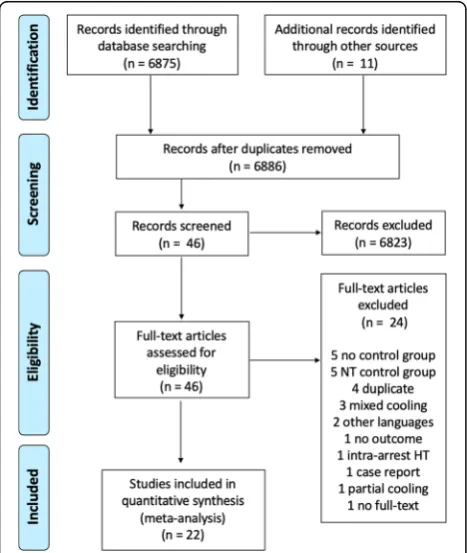
A total of 6886 records were identified after the initial re-search. After the first screening procedure, 46 studies were assessed for eligibility (Fig.1). Of those, 24 were excluded after a full-paper analysis (Additional file 1: Table S2); a total of 22 studies [12–19, 23–37], including 8027 pa-tients, were eventually included for meta-analysis.
Study characteristics
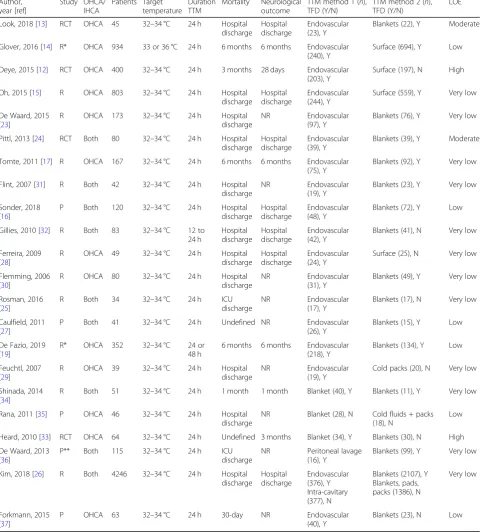
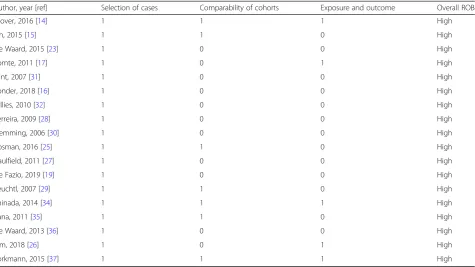
The characteristics of the selected studies are summarized in Table 1 and Additional file 1. We identified 4 RCTs (high quality of evidence for two [12, 33] and moderate for two [13, 24]; Additional file 1: Table S3), four pro-spective studies (low level of evidence [16,27,35,37] with an additional one comparing a prospective cohort with historical controls (very low quality of evidence [36]), and 13 retrospective studies (very low quality of evidence [15, 17,23,25,26,28–32,34]), with two of them being a sec-ondary post hoc analysis of RCTs (low quality of evidence [14,19]). The risk of bias (RB) was low in one study [14] and high for all the others (Tables2and3).
Core vs. surface
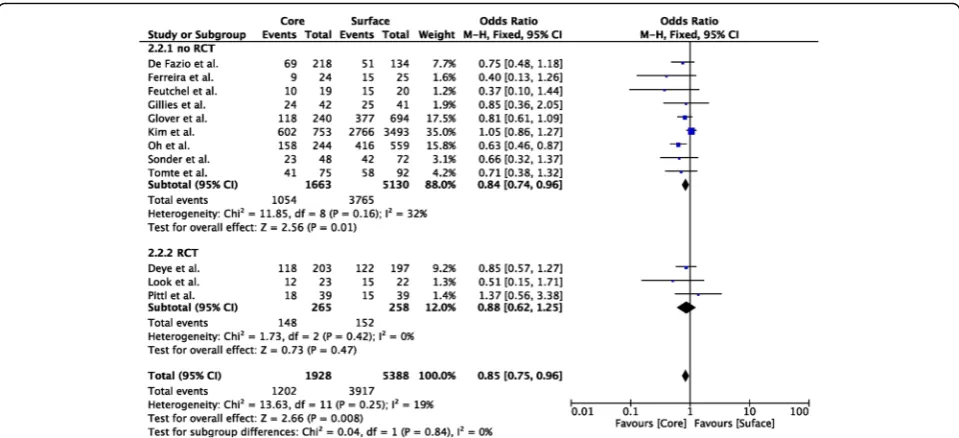
Nineteen studies compared core to surface TTM methods (n= 2174 in the core group; n= 5690 in the surface group) [12–17, 19, 23–32, 36, 37]; unfavorable neurological outcome was reported in 12 studies (n= 1928 in the core group; n= 5388 in the surface group) [12–17, 19, 25, 26, 28, 29, 32]. Core methods showed a lower probability of unfavorable neurological outcome than surface methods (OR 0.85 [95% CIs 0.75–0.96];p= 0.008; Fig.2); however, this was observed in the analysis of non-RCTs, although RCTs showed a similar trend. Core methods showed a similar probability of mortality than surface methods (OR 0.88 [95% CIs 0.62–1.25];p= 0.21; Fig. 3). No significant heterogeneity was observed among studies, both for unfavorable neurological out-come (I2= 19%) and mortality (I2= 0%; Additional file1: Figures S1 and S2).
Invasive vs. non-invasive
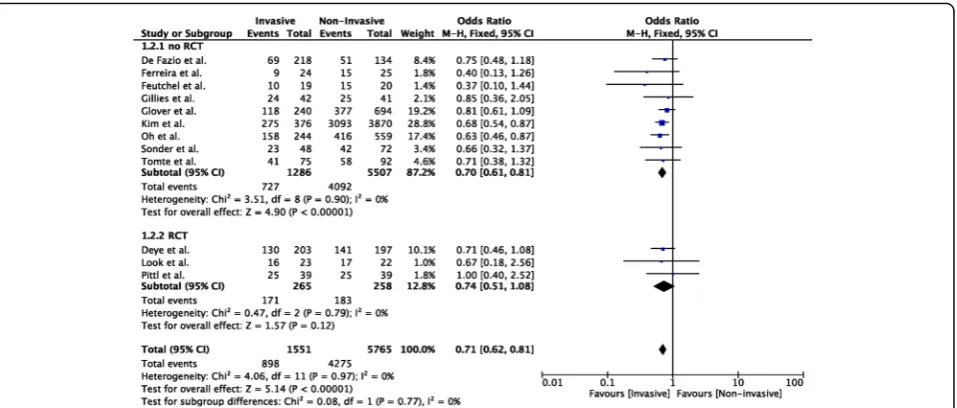
Nineteen studies compared invasive to non-invasive TTM methods (n= 1797 in the invasive group;n= 6067 in the non-invasive group) [12–17, 19, 23–32, 36, 37]; unfavorable neurological outcome was reported in 12 studies (n= 1551 in the invasive group; n= 5765 in the non-invasive group) [12–17,19,24,26,28,29,32]. Inva-sive methods showed a lower probability of unfavorable neurological outcome than non-invasive methods (OR 0.70 [95% CIs 0.61–0.81]; p< 0.001; Fig. 4); however, this was observed in the analysis of non-RCTs, al-though RCTs showed a similar trend. Invasive methods showed also a lower probability of mortality than non-invasive methods (OR 0.84 [95% CIs 0.74– 0.94]; p= 0.002; Additional file 1: Figure S3); however, this was observed only in the analysis of non-RCTs (n= 13). No significant heterogeneity was observed among studies, both for unfavorable neurological out-come (I2= 0%) and mortality (I2= 0%; Additional file1: Figures S4 and S5).
Fig. 1PRISMA flow diagram of the search results for original studies published in English and selection of eligible studies. NT,
[image:4.595.57.291.417.694.2]TFD vs. no-TFD
Eight studies compared TFD to non-TFD TTM methods (n= 2862 in the TFD group; n= 2116 in the non-TFD
[image:5.595.58.540.115.648.2]group) [12,25,26,28,29,32,33,37]; unfavorable neuro-logical outcome was reported in 6 studies (n= 2865 in the TFD group;n= 2076 in the non-TFD group) [12,26,
Table 1Summary of studies comparing different methods for targeted temperature management (TTM) in adult cardiac arrest patients Author, year [ref] Study OHCA/ IHCA Patients Target temperature Duration TTM Mortality Neurological outcome
TTM method 1 (n), TFD (Y/N)
TTM method 2 (n), TFD (Y/N)
LOE
Look, 2018 [13] RCT OHCA 45 32–34 °C 24 h Hospital
discharge
Hospital discharge
Endovascular (23), Y
Blankets (22), Y Moderate
Glover, 2016 [14] R* OHCA 934 33 or 36 °C 24 h 6 months 6 months Endovascular
(240), Y
Surface (694), Y Low
Deye, 2015 [12] RCT OHCA 400 32–34 °C 24 h 3 months 28 days Endovascular
(203), Y
Surface (197), N High
Oh, 2015 [15] R OHCA 803 32–34 °C 24 h Hospital
discharge
Hospital discharge
Endovascular (244), Y
Surface (559), Y Very low
De Waard, 2015 [23]
R OHCA 173 32–34 °C 24 h Hospital
discharge
NR Endovascular
(97), Y
Blankets (76), Y Very low
Pittl, 2013 [24] RCT Both 80 32–34 °C 24 h Hospital
discharge
Hospital discharge
Endovascular (39), Y
Blankets (39), Y Moderate
Tomte, 2011 [17] R OHCA 167 32–34 °C 24 h 6 months 6 months Endovascular
(75), Y
Blankets (92), Y Very low
Flint, 2007 [31] R Both 42 32–34 °C 24 h Hospital
discharge
NR Endovascular
(19), Y
Blankets (23), Y Very low
Sonder, 2018 [16]
P Both 120 32–34 °C 24 h Hospital
discharge
Hospital discharge
Endovascular (48), Y
Blankets (72), Y Low
Gillies, 2010 [32] R Both 83 32–34 °C 12 to 24 h Hospital discharge Hospital discharge Endovascular (42), Y
Blankets (41), N Very low
Ferreira, 2009 [28]
R OHCA 49 32–34 °C 24 h Hospital
discharge
Hospital discharge
Endovascular (24), Y
Surface (25), N Very low
Flemming, 2006 [30]
R OHCA 80 32–34 °C 24 h Hospital
discharge
NR Endovascular
(31), Y
Blankets (49), Y Very low
Rosman, 2016 [25]
R Both 34 32–34 °C 24 h ICU
discharge
NR Endovascular
(17), Y
Blankets (17), N Very low
Caulfield, 2011 [27]
P Both 41 32–34 °C 24 h Undefined NR Endovascular
(26), Y
Blankets (15), Y Low
De Fazio, 2019 [19]
R* OHCA 352 32–34 °C 24 or
48 h
6 months 6 months Endovascular (218), Y
Blankets (134), Y Low
Feuchtl, 2007 [29]
R OHCA 39 32–34 °C 24 h Hospital
discharge
NR Endovascular
(19), Y
Cold packs (20), N Very low
Shinada, 2014 [34]
R Both 51 32–34 °C 24 h 1 month 1 month Blanket (40), Y Blankets (11), Y Very low
Rana, 2011 [35] P OHCA 46 32–34 °C 24 h Hospital
discharge
NR Blanket (28), N Cold fluids + packs
(18), N
Low
Heard, 2010 [33] RCT OHCA 64 32–34 °C 24 h Undefined 3 months Blanket (34), Y Blankets (30), N High
De Waard, 2013 [36]
P** Both 115 32–34 °C 24 h ICU
discharge
NR Peritoneal lavage
(16), Y
Blankets (99), Y Very low
Kim, 2018 [26] R Both 4246 32–34 °C 24 h Hospital
discharge Hospital discharge Endovascular (376), Y Intra-cavitary (377), N
Blankets (2107), Y Blankets, pads, packs (1386), N
Very low
Forkmann, 2015 [37]
P OHCA 63 32–34 °C 24 h 30-day NR Endovascular
(40), Y
Blankets (23), N Low
Pprospective,Rretrospective,RCTrandomized clinical trial,IHCAin-hospital cardiac arrest,OHCAout-of-hospital cardiac arrest,TTMtargeted temperature management,NRnot reported,LOElevel of evidence,TFDtemperature feedback device,Yyes,Nno
28,29,32,33]. TFD methods showed a lower probability of unfavorable neurological outcome than non-TFD methods (OR 0.64 [95% CIs 0.56–0.74];p= 0.003; Fig.5); however, this was observed in the analysis of non-RCTs, although RCTs showed a similar trend. Invasive methods showed also a lower probability of mortality than surface methods (OR 0.81 [95% CIs 0.72–0.91]; p= 0.01; Add-itional file 1: Figure S6). No significant heterogeneity was observed among the studies, both for unfavorable neurological outcome (I2 = 0%) and mortality (I2 = 0%; Additional file1: Figures S7 and S8).
Subgroup analyses
Sixteen studies compared EC to air- or water-circulating blankets for TTM [13–17,19,23–28,30–32,37]; ten of them also reported neurological outcome [13–17, 19, 24, 26, 28, 32]. Endovascular methods showed a lower probability of un-favorable neurological outcome than air- or water-circulating
[image:6.595.63.539.109.376.2]blankets (OR 0.76 [95% CIs 0.66–0.87]; p= 0.002; Add-itional file1: Figure S9); however, this was observed in the analysis of non-RCTs, although RCTs showed a similar trend. Endovascular methods showed also a lower probability of mortality than air- or water-circulating blankets (OR 0.87 [95% CIs 0.77–0.99];p= 0.01; Additional file1: Figure S10); however, this was observed in the analysis of non-RCTs, al-though RCTs showed a similar trend. No significant hetero-geneity was observed among studies, both for unfavorable neurological outcome (I2= 0%) and mortality (I2= 0%; Add-itional file1: Figures S11 and S12). Similar results were found when EC were compared to air- or water-circulating blankets with TFD (Additional file1: Figures S13-S16) [13–17,19,23, 24,26,27,30,31]. Four studies compared air- or water-cir-culating blankets to other surface TTM methods [26, 33–35]; three of them also reported neurological out-come [26, 33, 34]. Air- or water-circulating blankets showed a lower probability of unfavorable
Table 2Summary of the risk of bias (ROB) for non-randomized clinical studies comparing different methods for targeted temperature management (TTM) in adult cardiac arrest patients. LOW ROB = 0; HIGH ROB = 1
Author, year [ref] Selection of cases Comparability of cohorts Exposure and outcome Overall ROB
Glover, 2016 [14] 1 1 1 High
Oh, 2015 [15] 1 1 0 High
De Waard, 2015 [23] 1 0 0 High
Tomte, 2011 [17] 1 0 1 High
Flint, 2007 [31] 1 0 0 High
Sonder, 2018 [16] 1 0 0 High
Gillies, 2010 [32] 1 0 0 High
Ferreira, 2009 [28] 1 0 0 High
Flemming, 2006 [30] 1 0 0 High
Rosman, 2016 [25] 1 1 0 High
Caulfield, 2011 [27] 1 0 0 High
De Fazio, 2019 [19] 1 0 0 High
Feuchtl, 2007 [29] 1 1 0 High
Shinada, 2014 [34] 1 1 1 High
Rana, 2011 [35] 1 1 0 High
De Waard, 2013 [36] 1 0 0 High
Kim, 2018 [26] 1 0 1 High
Forkmann, 2015 [37] 1 1 1 High
Table 3Summary of the risk of bias (ROB) for randomized clinical studies comparing different methods for targeted temperature management (TTM) in adult cardiac arrest patients
Author, year [ref] Sequence generation Allocation concealment Blinding Incomplete data Selective reporting Other bias Overall ROB
Look, 2018 [13] Low Low Probably low Probably low Low Probably high High
Deye, 2015 [12] Low Low Probably low Low Low Low Low
Pittl, 2013 [24] Probably low Probably low Probably low Probably low High High High
[image:6.595.55.539.662.731.2]neurological outcome and mortality than other sur-face TTM methods (Additional file 1: Figures S17 and S18). No significant heterogeneity was observed among studies, both for unfavorable neurological out-come (I2= 0%) and mortality (I2= 0%; Additional file1: Figure S19 and S20).
Discussion
This is the first meta-analysis that evaluated the po-tential effects of the cooling methods on the out-come in patients undergoing TTM after cardiac arrest. Our results can be summarized as follows: core cooling devices are associated with a lower Fig. 2Forest plot of poor neurological outcome in randomized clinical trials (RCTs) or non-RCTs: core vs. surface methods. The size of the squares for the risk ratio reflects the weight of trial in a pooled analysis. Horizontal bars represent 95% confidence intervals
[image:7.595.58.539.441.703.2]probability of unfavorable neurological outcome, but not of survival, when compared to surface cooling devices; similarly, invasive cooling devices and TFD methods were associated with a higher occurrence of favorable outcome and survival when compared to other methods. In particular, endovascular catheter devices were associated with better outcomes when compared to air- or water-circulating blankets, even when blankets were TFD, and blankets had a better outcome than other surface cooling methods. How-ever, most of the available data came from non-RCTs, potentially leading to high risk of bias.
Method of cooling: which is the best TTM device?
The initial studies dealing with the use of TTM after cardiac arrest used external surface cooling devices, either with TFD or without temperature control. Since then, several TTM methods to induce, maintain, or rewarm patients have been developed; these methods have been schematically divided into“core” or “surface” methods [11], although other classifications have been proposed, i.e.,“advanced”methods (using a retro-control according to the patient’s core temperature) vs. “basic” methods (such as cold fluids, ice packs without temperature feedback) [12, 17, 38]. Core and TFD Fig. 4Forest plot of poor neurological outcome in randomized clinical trials (RCTs) or non-RCTs: invasive vs. non-invasive methods. The size of the squares for the risk ratio reflects the weight of trial in a pooled analysis. Horizontal bars represent 95% confidence intervals
[image:8.595.61.540.87.291.2] [image:8.595.58.540.525.703.2]methods enable a more accurate control of patients’ temperature during the cooling phase when compared with surface techniques [12, 17, 19]; nevertheless, current guidelines stated that no recommendation could be given on the optimal method, as there were no data indicating any potential benefits on survival or neuro-logical outcome from one specific TTM device [2]. The use of TFD to better optimize TTM was also recently suggested by a panel of French experts [39], in both adult and pediatric CA, despite the lack of studies clearly demonstrating an effect on the patients’outcome. More-over, more recent invasive TTM devices, such as cold liquid ventilation and esophageal or peritoneal devices, were not included in this consensus.
A major strength of our study is that we demonstrated that core, invasive, and/or TFD methods to provide TTM to CA survivors were associated with an increased probability of favorable neurological outcome. These findings were consistent even in the subgroup analyses, when EC were compared to blanket systems or air- or water-circulating blankets to other surface methods. Moreover, the analyses showed a very low heterogeneity. Unfortunately, findings from RCTs were less convincing. In the largest multicenter RCT available to date, which compared EC to basic external methods (i.e., non-inva-sive, without TFD, n= 400), favorable neurological out-come at day 28 was not significantly different between the groups [12], although a strong trend towards a higher occurrence of intact neurological recovery at day 90 was observed in the EC group (odds ratio 1.51; 95% CIs 0.96–2.35; p= 0.07). In another study (n= 64), TTM using a TFD implementing water-circulating blankets showed a similar proportion of patients with favorable neurological outcome than cooling blankets and ice without TFD (46% vs. 38%); however, considering the total number of patients included, the study was prob-ably underpowered to demonstrate any difference on the patients’outcome [33]. Two other small RCTs, including a total of 125 patients, also showed a non-significant trend for a better outcome in patients treated with EC when compared to TFD blankets [13,24].
How to explain these results? The limited data pro-vided by the selected studies restricted our ability to explore the underlying mechanisms of our findings. Time to target temperature was significantly shorter in core and invasive TTM methods than others [12, 33], although this was not observed in all studies [14, 19]. Moreover, the early initiation of TTM in patients suffer-ing from OHCA, either intra-arrest or immediately after ROSC in the pre-hospital setting, did not show any beneficial effects on survival or neurological outcome when compared to TTM initiated few hours following CA, after hospital admission [8, 40]. Analysis of the rewarming time showed controversial results, with some
studies suggesting a shorter time for EC when compared to non-TFD blankets and other showing similar findings for EC and TFD surface methods [19,25]. Also, the oc-currence of post-TTM fever was similar between EC and surface methods [17, 19]. As such, the main difference between the core and invasive methods, in particular EC, was associated with a more strict maintenance of the target temperature during the cooling phase, fewer periods of over-cooling or unexpected rewarming and less temperature variability [14, 19, 25]. Importantly, temperature variability after CA has not been associated with poor neurological outcome in two retrospective studies [41, 42]. Considering also the higher risk of side effects (i.e., infections, thrombosis, hemorrhage) associ-ated with the use of core and invasive TTM systems, in particular EC [12, 24, 43], further studies evaluating the mechanisms involved in potential neuroprotection for such methods are necessary.
Major weaknesses
methods than those with TFD as this would expose pa-tients to a“poor-quality TTM.”Other relevant aspects on the selection of TTM methods, such the reduced work-load of the nursing team and the feasibility of skin counter warming in case of shivering for EC systems when com-pared to others, should also be assessed in future studies.
Another major issue of this study is the inclusion of different methods (i.e., EC, peritoneal lavage, dialysis techniques) in the same group (i.e., “core”). Also, in some studies, specific TTM methods were combined, in a variable proportion of patients, with cold fluids or iced packs; the role of such additional interventions on the measured outcome remains unknown. However, this allowed the selection of all available studies in the litera-ture comparing at least two different methods of TTM, with a more complete assessment of the study hypoth-esis. Also, some additional data, such as side effects or speed and precision of cooling, were not collected. How-ever, the time from arrest to target temperature was not further analyzed as this information would be largely biased by the retrospective data collection of most of the studies included in this report. Similarly, the issue of the adverse events has already been discussed in another study [5]. Also, the performance for each TTM method was not routinely reported in all studies. Finally, we could not calculate the minimal number of patients to be included in the meta-analysis, and most of the studies had a high risk of bias, which would reduce the robust-ness of our findings.
Conclusions
In this meta-analysis, specific TTM methods (i.e., core, invasive, and with TFD) were associated with a lower probability of poor neurological outcome when com-pared to other methods in adult CA survivors. However, most of the existing literature is based on retrospective or prospective studies, with a high risk of bias, suggest-ing new directions for future trials.
Additional file
Additional file 1: Table S1.Extracted data in each study assessed for eligibility.Table S2.Full text articles excluded, not fitting eligibility criteria.Figure S1.andS2.Funnel plot for studies comparing the impact of core and surface methods on poor neurological outcome (left) and mortality (right). The outer dashed lines indicate the triangular region within which 95% of studies are expected to lie in the absence of biases and heterogeneity. The solid vertical line corresponds to no intervention effect.Figure S3.Forest plot of mortality in randomized clinical trials (RCTs) or non-RCTs: invasive vs. non-invasive TTM methods. Size of squares for risk ratio reflects weight of trial in pooled analysis. Horizontal bars represent 95% confidence intervals.Figure S4.andS5.Funnel plot for studies comparing the impact of invasive and non-invasive TTM methods on poor neurological outcome (left) and mortality (right). The outer dashed lines indicate the triangular region within which 95% of studies are expected to lie in the absence of biases and heterogeneity. The solid vertical line corresponds to no intervention effect.Figure S6.
Forest plot of mortality in randomized clinical trials (RCTs) or non-RCTs: temperature feedback device (TFD) vs. non-TFD TTM methods. Size of squares for risk ratio reflects weight of trial in pooled analysis. Horizontal bars represent 95% confidence intervals.Figure S7.andS8.Funnel plot for studies comparing the impact of temperature feedback device (TFD) and non-TFD TTM methods on poor neurological outcome (left) and mortality (right). The outer dashed lines indicate the triangular region within which 95% of studies are expected to lie in the absence of biases and heterogeneity. The solid vertical line corresponds to no intervention effect.Figure S9.Forest plot of poor neurological outcome in
randomized clinical trials (RCTs) or non-RCTs: endovascular devices vs. air-or water-circulating blankets. Size of squares fair-or risk ratio reflects weight of trial in pooled analysis. Horizontal bars represent 95% confidence intervals.Figure S10.Forest plot of mortality in randomized clinical trials (RCTs) or non-RCTs: endovascular devices vs. air- or water-circulating blankets. Size of squares for risk ratio reflects weight of trial in pooled analysis. Horizontal bars represent 95% confidence intervals.Figure S11.
andS12.Funnel plot for studies comparing the impact of endovascular devices vs. air- or water-circulating blankets on poor neurological outcome (left) and mortality (right). The outer dashed lines indicate the triangular region within which 95% of studies are expected to lie in the absence of biases and heterogeneity. The solid vertical line corresponds to no intervention effect.Figure S13.Forest plot of poor neurological outcome in randomized clinical trials (RCTs) or non-RCTs: endovascular devices vs. air- or water-circulating blankets with temperature feedback device (TFD). Size of squares for risk ratio reflects weight of trial in pooled analysis. Horizontal bars represent 95% confidence intervals.Figure S14.
Forest plot of mortality in randomized clinical trials (RCTs) or non-RCTs: endovascular devices vs. air- or water-circulating blankets with temperature feedback device (TFD). Size of squares for risk ratio reflects weight of trial in pooled analysis. Horizontal bars represent 95% confidence intervals.Figure S15.andS16.Funnel plot for studies comparing the impact of endovascular devices vs. air- or water-circulating blankets with temperature feedback device (TFD) on poor neurological outcome (left) and mortality (right). The outer dashed lines indicate the triangular region within which 95% of studies are expected to lie in the absence of biases and heterogeneity. The solid vertical line corresponds to no intervention effect.Figure S17.Forest plot of poor neurological outcome in randomized clinical trials (RCTs) or non-RCTs: blankets vs. other surface TTM methods. Size of squares for risk ratio reflects weight of trial in pooled analysis. Horizontal bars represent 95% confidence intervals.Figure S18.Forest plot of mortality in randomized clinical trials (RCTs) or non-RCTs: blankets vs. other surface TTM methods. Size of squares for risk ratio reflects weight of trial in pooled analysis. Horizontal bars represent 95% confidence intervals.Figure S19.andS20.
Funnel plot for studies comparing the impact of blankets vs. other surface TTM methods on poor neurological outcome (left) and mortality (right). The outer dashed lines indicate the triangular region within which 95% of studies are expected to lie in the absence of biases and heterogeneity. The solid vertical line corresponds to no intervention effect. (DOCX 6046 kb)
Abbreviations
CA:Cardiac arrest; CPC: Cerebral performance category; GCS: Glasgow Coma Score; EC: Endovascular catheter; OHCA: Out-of-hospital cardiac arrest; RCT: Randomized clinical trial; ROSC: Return of spontaneous circulation; TFD: Temperature feedback device; TTM: Targeted temperature management
Acknowledgements
Not applicable.
Take-home message
This systematic review showed that the use of core or invasive methods to provide targeted temperature management in survivors from cardiac arrest was associated with a lower probability of poor neurological outcome. These differences were observed when non-randomized trials were analyzed.
Tweet
Authors’contributions
FST, LC, ND, and WB conceived the study protocol. FST, LC, WB, CDF, and ND participated in the data collection. WB, AC, MS, ES, and FST analyzed the data. LC, JC, HK, SL, ND, and FST drafted the present manuscript. BM, JBL, AC, and AC critically revised the manuscript. All authors read and approved the final manuscript.
Funding
No funding was provided for this study.
Availability of data and materials
The datasets used and/or analyzed during the current study are available from the corresponding author on reasonable request.
Ethics approval and consent to participate
Not applicable
Consent for publication
Not applicable
Competing interests
FST, AC, and ND received lecture fees from BARD. All other authors declare that they have no competing interests.
Author details
1Department of Intensive Care, Cliniques Universitaires de Bruxelles Hopital
Erasme, Erasmus Hospital, Université Libre de Bruxelles (ULB), Route de Lennik, 808, 1070 Brussels, Belgium.2UFR de Médecine, Université Paris-Descartes-Sorbonne-Paris-Cité, Paris, France.3Paris Sudden Death Expertise Center, Paris, France.4Paris Cardiovascular Research Center, INSERM U970, Paris, France.5Medical ICU, Cochin Hospital, Assistance
Publique-Hôpitaux de Paris, Paris, France.6Division of Intensive Care, Department of Anesthesiology, Intensive Care and Pain Medicine, Helsinki University Hospital and Helsinki University, Helsinki, Finland.7Department of Anaesthesiology and Intensive Care, Stavanger University Hospital, Stavanger, Norway.8Research Center for Emergency Medicine, Department of Anesthesiology and Intensive Care Medicine, Aarhus University Hospital and Aarhus University, Aarhus, Denmark.9Intensive Care Unit, Centre Hospitalier de Versailles, PARCC Inserm UMR 970, Le Chesnay, France.10Medical Intensive Care Unit, University Hospital Center, PARCC Inserm UMR 970, Nantes, France.11Medical and Toxicology Intensive Care Unit, Hôpitaux Universitaires Saint Louis-Lariboisière, Assistance Publique-Hôpitaux de Paris, Université Paris Diderot-Paris 7, Inserm U942, Paris, France.
Received: 2 April 2019 Accepted: 13 August 2019
References
1. Taccone FS, Crippa IA, Dell’Anna AM, Scolletta S. Neuroprotective strategies and neuroprognostication after cardiac arrest. Best Pract Res Clin Anaesthesiol. 2015;29:451–64.
2. Soar J, Callaway CW, Aibiki M, et al. Part 4: Advanced life support: 2015 International Consensus on Cardiopulmonary Resuscitation and Emergency Cardiovascular Care Science with Treatment Recommendations. Resuscitation. 2015;95:e71–120.
3. Bernard SA, Gray TW, Buist MD, et al. Treatment of comatose survivors of out-of-hospital cardiac arrest with induced hypothermia. N Engl J Med. 2002;346:557–63.
4. Hypothermia after Cardiac Arrest Study Group. Mild therapeutic hypothermia to improve the neurologic outcome after cardiac arrest. N Engl J Med. 2002;346:549–56.
5. Arrich J, Holzer M, Havel C, Müllner M, Herkner H. Hypothermia for neuroprotection in adults after cardiopulmonary resuscitation. Cochrane Database Syst Rev. 2016;2:CD004128.
6. Nielsen N, Wetterslev J, Cronberg T, et al. Targeted temperature management at 33°C versus 36°C after cardiac arrest. N Engl J Med. 2013; 369:2197–206.
7. Bernard SA, Smith K, Finn J, et al. Induction of therapeutic hypothermia during out-of-hospital cardiac arrest using a rapid infusion of cold saline: the RINSE Trial (rapid infusion of cold normal saline). Circulation. 2016;134: 797–805.
8. Kim F, Nichol G, Maynard C, et al. Effect of prehospital induction of mild hypothermia on survival and neurological status among adults with cardiac arrest: a randomized clinical trial. JAMA. 2014;311:45–52.
9. Azzopardi D, Strohm B, Marlow N, et al. Effects of hypothermia for perinatal asphyxia on childhood outcomes. N Engl J Med. 2014;371:140–9. 10. Kirkegaard H, Søreide E, de Haas I, et al. Targeted temperature management
for 48 vs 24 hours and neurologic outcome after out-of-hospital cardiac arrest: a randomized clinical trial. JAMA. 2017;318:341–50.
11. Polderman KH, Herold I. Therapeutic hypothermia and controlled normothermia in the intensive care unit: practical considerations, side effects, and cooling methods. Crit Care Med. 2009;37:1101–20. 12. Deye N, Cariou A, Girardie P, et al. Endovascular versus external targeted
temperature management for patients with out-of-hospital cardiac arrest: a randomized, controlled study. Circulation. 2015;132:182–93.
13. Look X, Li H, Ng M, et al. Randomized controlled trial of internal and external targeted temperature management methods in post-cardiac arrest patients. Am J Emerg Med. 2018;36:66–72.
14. Glover GW, Thomas RM, Vamvakas G, et al. Intravascular versus surface cooling for targeted temperature management after out-of-hospital cardiac arrest - an analysis of the TTM trial data. Crit Care. 2016;20:1–10.
15. Oh SH, Oh JS, Kim YM, et al. An observational study of surface versus endovascular cooling techniques in cardiac arrest patients: a propensity -matched analysis. Crit Care. 2015;19:85.
16. Sonder P, Janssens GN, Beishuizen A, et al. Efficacy of different cooling technologies for therapeutic temperature management: a prospective intervention study. Resuscitation. 2018;124:14–20.
17. Tømte T, Drægni T, Mangschau A, et al. A comparison of intravascular and surface cooling techniques in comatose cardiac arrest survivors. Crit Care Med. 2011;39:443–9.
18. Zwinderman AH, Bossuyt PM. We should not pool diagnostic likelihood ratios in systematic reviews. Stat Med. 2008;27:687–97.
19. De Fazio C, Skrifvars M, Soreide E, et al. Intravascular versus surface cooling for targeted temperature management after out-of-hospital cardiac arrest: an analysis of the TTH48 trial. Crit Care. 2019;23:61.
20. Guyatt GH, Oxman AD, Vist GE, et al. GRADE: an emerging consensus on rating quality of evidence and strength of recommendations. BMJ. 2008;336:924–6.
21. Risk of bias in Systematic Reviews 2018 - cited inhttp://www. evidencepartners.com/resources/methodological-resources/risk-of-bias -commentary/.
22. Deeks JJ, Dinnes J, D’Amico R, Sowden AJ, Sakarovitch C, Song F, et al. Evaluating non-randomised intervention studies. Health Technol Assess. 2003;7(27):27.
23. de Waard MC, Banwarie RP, Jewbali LS, et al. Intravascular versus surface cooling speed and stability after cardiopulmonary resuscitation. Emerg Med J. 2015;32:775–80.
24. Pittl U, Schratter A, Desch S, et al. Invasive versus non-invasive cooling after in- and out-of-hospital cardiac arrest: a randomized trial. Clin Res Cardiol. 2013;102:607–14.
25. Rosman J, Hentzien M, Dramé M, et al. A comparison between intravascular and traditional cooling for inducing and maintaining temperature control in patients following cardiac arrest. Anaesth Crit Care Pain Med. 2018;37:129–34.
26. Kim KH, Shin SD, Song KJ, et al. Cooling methods of targeted temperature management and neurological recovery after out-of-hospital cardiac arrest: a nationwide multicenter multi-level analysis. Resuscitation. 2018;125:56–65. 27. Finley Caulfield A, Rachabattula S, Eyngorn I, et al. A comparison of cooling
techniques to treat cardiac arrest patients with hypothermia. Stroke Res Treat. 2011;2011:690506.
28. Ferreira I, Schutte M, Oosterloo E, et al. Therapeutic mild hypothermia improves outcome after out-of-hospital cardiac arrest. Neth Heart J. 2009;17:378–84.
29. Feuchtl A, Gockel B, Lawrenz T, et al. Endovascular cooling improves neurological short-term outcome after prehospital cardiac arrest. Intensivmed und Notfallmedizin. 2007;44:37–42.
30. Flemming K, Simonis G, Ziegs E, et al. Comparison of external and intravascular cooling to induce hypothermia in patients after CPR. Ger Med Sci. 2006;4:Doc4.
32. Gillies MA, Pratt R, Whiteley C, et al. Therapeutic hypothermia after cardiac arrest: a retrospective comparison of surface and endovascular cooling techniques. Resuscitation. 2010;81:1117–22.
33. Heard KJ, Peberdy MA, Sayre MR, et al. A randomized controlled trial comparing the Arctic Sun to standard cooling for induction of hypothermia after cardiac arrest. Resuscitation. 2010;81:9–14.
34. Shinada T, Hata N, Yokoyama S, et al. Usefulness of a surface cooling device (Arctic Sun®) for therapeutic hypothermia following cardiac arrest. J Cardiol. 2014;63:46–52.
35. Rana M, W Schröder J, Saygili E, et al. Comparative evaluation of the usability of 2 different methods to perform mild hypothermia in patients with out-of-hospital cardiac arrest. Int J Cardiol. 2011;152:321–6. 36. de Waard MC, Biermann H, Brinckman SL, et al. Automated peritoneal
lavage: an extremely rapid and safe way to induce hypothermia in post -resuscitation patients. Crit Care. 2013;17:R31.
37. Forkmann M, Kolschmann S, Holzhauser L, et al. Target temperature management of 33°C exerts beneficial haemodynamic effects after out-of -hospital cardiac arrest. Acta Cardiol. 2015;70:451–9.
38. Seder DB, Van der Kloot TE. Methods of cooling: practical aspects of therapeutic temperature management. Crit Care Med. 2009;37(7 Suppl):S211–22.
39. Cariou A, Payen JF, Asehnoune K, et al. Targeted temperature management in the ICU: guidelines from a French expert panel. Ann Intensive Care. 2017;7:70.
40. Castrén M, Nordberg P, Svensson L, et al. Intra-arrest transnasal evaporative cooling: a randomized, prehospital, multicenter study (PRINCE: Pre-ROSC IntraNasal Cooling Effectiveness). Circulation. 2010;122:729–36.
41. Nayeri A, Bhatia N, Holmes B, et al. Temperature variability during targeted temperature management is not associated with neurological outcomes following cardiac arrest. Am J Emerg Med. 2017;35:889–92.
42. Nobile L, Lamanna I, Fontana V, et al. Greater temperature variability is not associated with a worse neurological outcome after cardiac arrest. Resuscitation. 2015;96:268–74.
43. Andremont O, du Cheyron D, Terzi N, et al. Endovascular cooling versus standard femoral catheters and intravascular complications: a propensity -matched cohort study. Resuscitation. 2018;124:1–6.
Publisher’s Note