This is a repository copy of Self-compassion, pain, and breaking a social contract. White Rose Research Online URL for this paper:
http://eprints.whiterose.ac.uk/87790/ Version: Accepted Version
Article:
Purdie, FJ and Morley, SJ (2015) Self-compassion, pain, and breaking a social contract. Pain, 156 (11). 2354 - 2363. ISSN 0304-3959
https://doi.org/10.1097/j.pain.0000000000000287
[email protected] https://eprints.whiterose.ac.uk/ Reuse
Unless indicated otherwise, fulltext items are protected by copyright with all rights reserved. The copyright exception in section 29 of the Copyright, Designs and Patents Act 1988 allows the making of a single copy solely for the purpose of non-commercial research or private study within the limits of fair dealing. The publisher or other rights-holder may allow further reproduction and re-use of this version - refer to the White Rose Research Online record for this item. Where records identify the publisher as the copyright holder, users can verify any specific terms of use on the publisher’s website.
Takedown
If you consider content in White Rose Research Online to be in breach of UK law, please notify us by
1
Manuscript as accepted for publication in Pain
Self-compassion, pain and breaking a social contract
Fiona Purdie and Stephen Morley
University of Leeds
Disclosure statement: The authors declare no conflicts of interest.
Correspondence:
Stephen Morley, Leeds Institute of Health Sciences, University of
Leeds, 101 Clarendon Road, Leeds, LS2 9LJ, UK
Email: [email protected]
2 Abstract
Self-compassion is the ability to respond to one s failures
shortcomings and difficulties with kindness and openness rather than
criticism. This study, which might be regarded as a proof of concept study,
aimed to establish whether self-compassion is associated with expected
emotional responses and the likelihood of responding with problem solving,
support seeking, distraction, avoidance, rumination or catastrophizing to
unpleasant self-relevant events occurring in three social contexts. Sixty
chronic pain patients were presented with six vignettes describing scenes in
which the principal actor transgressed a social contract with negative
interpersonal consequences. Vignettes represented two dimensions: 1)
whether pain or a non-pain factor interrupted the fulfilment of the contract,
and 2) variation in the social setting (work, peer and family). The
Self-Compassion Scale was the covariate in the analysis. Higher levels of
self-compassion were associated with significantly lower negative affect and
lower reported likelihood of avoidance, catastrophizing and rumination.
Self-compassion did not interact with the pain vs. non-pain factor. Work related
vignettes were rated as more emotional more likely to be associated with
avoidance, catastrophizing and rumination and less likelihood of problem
solving. The findings suggest that self-compassion warrants further
investigation in the chronic pain population both with regards to the extent of
its influence as a trait, and in terms of the potential to enhance chronic pain
patients ability to be self-compassionate, with a view to its therapeutic utility
in enhancing psychological wellbeing and adjustment. Limitations as regards
to possible criterion contamination and the generalizability of vignette studies
are discussed.
Key words for indexing
3 1. Introduction
Pain captures attention, disrupts the flow of ongoing behavior and
may elicit negative emotions and fearful thinking about pain [13]. The
continued experience of pain frequently interferes with the performance of
everyday activities [39], engendering conflict between the desire to continuing
to engage in a preferred activity or to transfer available cognitive, behavioral
and emotional resources in an attempt to ameliorate the pain. Disruption of
valued ongoing activities may also have emotional and behavioral
consequences [48] including disruption to social activity where an individual
may break a social contract [2; 8; 29; 61; 66]. Pain-related difficulties in a
social contexts are associated with avoidance [3; 12; 41; 53], and may place
limitations on the benefits of social participation and can impact on the
person s sense of self [27] [62]. Variability in how people respond to
pain-related interference raises the question of which factors might contribute to
moderating response patterns? In this article we examine the impact of
self-compassion.
Self-compassion is conceptualized as a healthy attitude and
relationship toward oneself and there is evidence that in the face of
difficulties self-compassion promotes wellbeing, resilience and coping [32; 33;
46; 69]. Individuals with a self-compassionate attitude view their responses to
difficult events accurately but respond with kindness and compassion rather
than with self-criticism [44], enabling self-soothing and emotion regulation
[21; 22; 31]. In contrast to self-esteem, self-compassion does not rely on
performance-based evaluations of the self, or comparison to idealized
standards, in order to bolster oneself in the face of difficulty. The cultivation
of a process not moderated by evaluation, which can regulate negative affect,
has a particular relevance to a chronic pain population, where self-evaluations
are commonly negative in the face of the perceived failure which persistent
4
is sparse but the data suggest that higher self-compassion is associated with
increased acceptance of pain, lower negative affect, less catastrophizing and
pain disability [10; 70]. Cultivation of compassion through loving-kindness
meditation is also associated with lessened distress and anger [6; 19].
In the present study, which might be regarded as a proof of concept
study, we conjectured that high levels of self-compassion would moderate
affective and cognitive-behavioral responses to unpleasant self-relevant
events occurring in a social context. We compared pain-related and non-pain
events across in three social settings that varied with respect to the presence
of others and likely social obligation. We examined whether the effects of
self-compassion were consistent when the precipitating negative event could
be attributed to pain or whether the presence of pain either facilitated or
inhibited the influence of self-compassion. The presence of an interaction
between pain and self-compassion would be observed in the latter case but
not in the former. We used vignette methodology in which the social context
of events was manipulated with respect to variation in the social setting and
the presence/absence of pain. Participants made judgments about their likely
affective and cognitive-behavioral responses to each vignette.
2. Methods
2.1 Design
We used a 2 X 3 factorial within-subject design to present variation in
the social context. Social context was defined by two factors, the presence or
absence of pain and variation in the presence of others (family, peers and
work). Participants responded to each vignette by rating their expected
affective and cognitive-behavioral responses to the scene represented in the
vignette. The effect of self-compassion was not manipulated but treated as a
trait-like characteristic and assessed as a between-subject covariate rather
5
Ethical approval for the study was given by a UK NHS research and
ethics committees; Bradford Teaching Hospitals Foundation Trust and
Mid-Yorkshire Hospitals Trust Research and Development departments.
2.2. Participants
A condition of ethical approval required that all patients be initially
contacted by clinicians and not by the researchers. Clinicians at two
multidisciplinary pain clinics in two hospitals in West Yorkshire were asked
to refer all patients who fitted the inclusion criteria. The inclusion criteria
were: age 18 years and older (no upper age limit), presence of pain for three
months or more and be accessing treatment and support through the pain
rehabilitation team, English speaking with a level of language fluency
sufficient to complete standardized measures and understand vignettes. The
exclusion criteria were: alcohol and illicit drug use sufficient to impair
performance during the research, known learning disability, currently
actively experiencing an episode of psychosis, a pain condition with a
malignant origin.
2.3 Measures
2.3.1 Pain
Visual analogue scales (VAS 150 mm) were used to measure: pain at
its highest, lowest intensity, usual intensity, and current intensity. All
judgments were made with reference to the past week. The VAS for pain was
anchored no sensation to most intense sensation imaginable [68].
The values were rescaled to a 0-100 scale for comparability with other studies.
2.3.2. The Depression, Anxiety and Positive Outlook Scale (DAPOS)
The DAPOS is an 11-item scale, designed to measure depression,
anxiety and positive outlook in people who suffer from pain [55]. The DAPOS
contains 3 subscales: Depression, Anxiety, and Positive Outlook. Each of these
provides an independent score. There is no total score. The DAPOS has been
6
in a chronic pain population [54]. Values of Cronbach s alphafor the three
scales in the present study were; Depression, = 0.88; Anxiety
Positive Outlook .
2.3.3. Self-Compassion Scale (SCS)
This 26-item scale comprises six subscales (representative items are
shown in parenthesis); Self-kindness (I try to be loving towards myself when
I m feeling emotional pain), Self-judgment I m disapproving and judgmental
about my own flaws and inadequacies), Common Humanity (When things
are going badly for me, I see the difficulties as part of life that everyone goes
through), Isolation (When I think about my inadequacies, it tends to make me
feel more separate and cut-off from the rest of the world), Mindfulness (When
something upsets me I try to keep my emotions in balance) and
Over-identification (When I fail at something important to me I become consumed
by feelings of inadequacy). Responses to each item are made on a five-point
scale from Almost never to Almost always[43]. The total score is the sum
of each subscale after they are rescaled to 1-5, thus the range of the SCS = 6-30.
The scale has good predictive, convergent, and discriminant validity and has
been shown to have good internal consistency when used with a pain
population 0.93 to 0.95) [10; 70]. Cronbach s alpha in the present study
was = 0.91. Neff reports the average total score to be around 18 with values
less than as low and above as high
Self-compassion holds growing research interest, including in the field
of health and pain [10; 36; 64; 70]. Self-compassion is conceptually distinct
from related concepts such as self-esteem since the focus is on a positive
affective response i.e., kindness and warmth, to the self which is unconnected
to personal attributes or social comparison and is based in the idea that all
people are intrinsically valuable and deserving of compassion rather than
feelings of worth per se [45]. In a chronic pain context, where
7
persistent pain imposes [60], this distinction appears particularly pertinent.
The capacity to respond to oneself with kindness and understanding in the
face of the limitations, difficulties and suffering caused by pain would appear
valuable within a chronic pain population.
2.2.3. Social Role Participation Questionnaire: SRPQ
We assessed the participants self-reported social participation across 11
social domains (work, education, intimate relationships,
children/stepchildren/grandchildren, other family, community involvement,
socializing, casual contact with others, travel, physical activity, and hobbies)
specified in the modified 42-item Social Role Participation Questionnaire
(SRPQ) [16; 20].
The SRPQ provides three summary measures: (1) Salience (range 0
60) the extent to which different roles are important to a person, irrespective
of whether or not an individual is currently engaged in that role; (2) Difficulty
(range 0 48) how difficult it is, given their present health status, to
participate in each of the role domains, and; (3) Satisfaction (range 0 60)
the extent of satisfaction in their ability to participate in each of the roles in
the context of the difficulties associated with their health condition.
Cronbach s alpha values in the current study were Salience = 0.77, difficulty = 0.64, and satisfaction = 0.71.
2.3.4. Social Context Vignettes
We constructed six vignettes to represent social situations in which the
primary actor, with whom the participant was asked to identify, negates a
social contract, through being unable to complete an agreed social task or
function. In three vignettes breaking the social contract was attributed to the
conflicting presence of pain and in three it was attributed to a factor related to
the self, such as poor organisational skills or difficulty managing competing
8
parameters of an unpleasant, self-relevant event, occurring within a social
context.
2.3.4.1 Experimental manipulation of the vignette content
The vignette content was manipulated across two dimensions. These
were selected on the basis of literature that indicates that the context of pain,
as well as social context may influence a person s response to unpleasant self
-relevant events. The pain--relevant and non-pain -relevant comparison was
included in order to test if self-compassion would be equally associated with
responses across pain and non-pain contexts. The alternative hypotheses are
that the presence of pain either facilitates or inhibits the association with
self-compassion.
The vignettes were developed and administered in accordance with
recommendations by Paddam et al. [51] and Bradbury-Jones et al. [5]. These
included (i) reading background material, consulting patient narratives and
experts in chronic pain as sources of further information, (ii) gathering
themes, (iii) drafting vignettes to reflect real life experience, (iv) using an
independent panel of experts to assess the vignettes, (v) modifying vignettes
that did not consistently meet the panel s ratings vi reassessment of
vignettes by an expert panel if necessary.
Several sources were consulted to establish plausible depictions of
commonly experienced unpleasant self-relevant events in a social context
when pain is both absent and present e.g., [7; 8; 42; 50]. These included a
recent comprehensive meta-ethnography of patient experience of chronic pain
and consultation with the first author [66] and reviewing interviews with
people with chronic pain conditions available online [15]. From this, specific
examples of unpleasant pain-relevant events, occurring in a social context,
were collected. In order to establish non-pain self-relevant events, Lewinsohn
9
Four clinical psychologists with experience working in chronic pain as
well as one chronic pain patient reviewed six draft vignettes. Reviewers were
asked to rate the face validity of the scenarios on a scale of one to ten and also
provided spontaneous qualitative feedback. We adopted Paddam et al s
criteria and revised vignettes until each vignette achieved a mean rating
above six and a standard deviation below three [51, p. 67]. The final versions
had mean face validity scores of between 7.4 and 8.8 with SDs ranging from
0.84 1.41. The vignettes were constructed to fulfill three conditions: (1) The
main character had made a prior commitment to fulfill a social obligation; (2)
an event attributable to either pain e g a pain flare-up or non-pain e.g., a
competing personal or social demand; (3) the social (negative) consequences
of the interference were described. In order capitalize on one of the
hypothesized mechanisms of self-compassion i.e., the capacity to perceive
events realistically and in a non-self-critical or self-blaming manner [33; 44],
the vignettes were written in a manner which deliberately required
participants to attribute the failure either to themselves or externalize the
failure to another cause. For example, taking a nap during the day and the
alarm not going off could be attributed to either the participant not
prioritizing others needs and being selfish by having a nap, or not having set
the alarm correctly and being incompetent, or due to an external factor
failure of the alarm.
The response items were a series of single item ratings on 0-6 scales.
There were four affective items (sadness, anxiety, anger, embarrassment)
rated as the expected feeling from not at all to extremely strongly and six
cognitive and behavioral responses (problem solving, support seeking,
distraction, avoidance, rumination, and catastrophizing) rated the likelihood
of engaging in the action from not at all to extremely likely The response
scales were adapted from those used by Leary et al. [33] by including Skinner
10
support seeking, distraction, and escape/avoidance, since it has been
suggested that this taxonomy is useful for considering the nature of
self-compassion as a coping strategy [1, p. 109]. In developing the response
scales, in addition to considering the literature on self-compassion, we
considered the chronic pain literature regarding the impact of negative
cognitive styles and avoidance [12; 67]. The set of vignettes and the response
scales are reproduced in Appendix 1.
3. Procedure
Participants were interviewed and tested individually at a location of
their choice. After completing the necessary consent procedure demographic
details were collected. Thereafter the pain rating scale, Social Role
Participation Questionnaire, Self-Compassion Scale and DAPOS were
administered prior to presentation of the vignettes.
3.1. Vignette administration
All testing was completed in a face-to-face interview by the first
author. The administration of the vignettes was designed to engage
participants in each scenario. Each vignette was presented on a separate card
and participants were asked to read them to reduce potential bias caused by
having them read aloud by the researcher. After reading each vignette
participants were asked to consider the impact of the depicted scenario in a
consistent manner. They were asked three standard questions in sequence:
What does this make you think of What emotions would you feel if
you were X? where X was the named main character in the vignette, and (3)
What would you do if you were in X s shoes The prompts were designed to
improve engagement and encourage vivid imagination of them in the
scenario in order to prime them to provide the most realistic response to the
closed questions in the response scales. The vignettes were given in a
counterbalanced order using a 6 x 6 Latin Square. After all measures were
11
3.2. Analysis
After data verification and cleaning the distributional characteristics of
the data set were examined and two extreme cases were identified. After
removing the two outlier cases the distribution of all the dependent variables
fell within the normal limits of skewness and kurtosis. Parametric summary
statistics and correlations were computed for descriptive purposes. The
analysis of responses to the vignette was performed using repeated measures
analysis of covariance. Self-compassion employed as a continuous
between-subjects factor and entered as a covariate. Delaney and Maxwell [17] note
that a potential limitation of the use of ANCOVA is that the main effects can
be obscured and they recommend mean centering the covariate prior to running
the ANCOVA. There were two within-subject factors: levels of pain relevance
(pain versus non-pain relevant) and a 3-level factor of social setting (family,
peer and work context). Apriori contrasts to further investigate differences
between social settings were specified. On the basis of previous work [7; 8; 40;
60; 66] we conjectured that stronger emotional responses and less effective
cognitive behavioral coping responses would be graded across the social
setting from work to friends to family. The two contrasts therefore compared
the work-setting to the combined effect of family and peers and then
compared family with peers. We set a conservative value for all tests at
Olejnik & Algina [49] and Bakeman [4 ] recommend the use of
generalized eta squared ( 2G) rather than partial eta-squared ( 2p) as a
measure of effect size. Olejnik and Algina [49] argued that 2p can be
misleading as an estimate of the proportion of variance accounted for by an
effect. The reason for this is that in the computation of 2p the denominator
comprises sums of squares of the effect plus the sums of square for the error
term use to test the effect. The denominator therefore excludes sources of
variance from other factors and covariates. As a consequence 2p
12
additional sources of variance in the denominator to account for individual
differences and fixed factors. As a consequence the values of 2G will be
smaller than 2p. An advantage of 2G is that it provides an estimate of an
effect that is comparable across between and within subject designs.
Bakeman [4] p suggests that it is appropriate to apply the guidelines
suggested by Cohen [9] for 2. Cohen suggested that a value of 0.02 be
regarded as a small effect, 0.13 as medium and 0.26 as large. We follow this
convention but are mindful that the allocation of descriptors is somewhat
arbitrary.
All analyses were performed using SPSS routines following guidance
set out in Tabachnick and Fidell [63]. In the repeated measures analysis
corrections were applied where the data did not meet sphericity assumptions.
2G was computed from the relevant sums of squares provided by the SPSS
output.
4. Results
4.1 Participants
The clinicians referred 96 patients who agreed to be contacted. Of these
13 were not contactable, 8 did not meet the inclusion/exclusion criteria and 9
were unwilling to participate once the study had been explained. 66 people
entered the study: 2 were unable to complete and withdrew, 2 provided
incomplete data for the repeated measures analysis, and 2 were excluded
after being identified as extreme statistical outliers on the vignette ratings
following data screening. Of the 60 participants included in the final analysis
there were 47 women (76%). The mean age of the sample was 46.9 years (SD
= 11.6: range 22 - 69) and the mean age at onset of pain was 33.2 years (SD =
13.2) with a mean duration of pain of 13.9 years. The self-reported average
typical intensity of pain (rescaled to 0-100 scale) was = 58.2 (SD = 20.4). The
sample was drawn from a pain rehabilitation assessment clinic. The
13
associated with degenerative changes (35%), patients with chronic
widespread pain (23.3%), patients with other diagnoses including
inflammatory arthritis (1.6%) adhesions (1.6%), Guillain-Barré syndrome
(1.6%), and patients with no known formal diagnosis (36.7%).
4.2 Mood
Mean scores on the DAPOS were: depression = 14.9 (SD = 5.6), anxiety
= 9.2 (SD = 3.5) and positive outlook = 8.7 (SD = 3.4). These values are in-line
with those reported in the development and validation of the scale [54; 55] in
a chronic pain sample.
4.3. Social role participation
The mean score for total role salience was 44.49 (SD =7.81). The mean
score for total role satisfaction was 20.61 (SD = 6.73). Overall mean scores for
satisfaction were low and across all social roles, participants were the most
likely to report that they were not at all satisfied with their social
participation. The area of social participation in which participants were the
least satisfied was physical leisure (M = 1.34, SD = 0.54) and participants were
more satisfied with ability to fulfill roles as parents and grandparents (M =
2.58, SD = 1.40), family members (M = 2.39, SD = 1.17) and partners (M = 2.35,
SD = 1.52). The mean score for total role difficulty was 30.19 (SD = 5.44). The
frequencies revealed that overall, participants were the most likely to report
having a lot of difficulty in all aspects of social participation with the
exception of casual contacts (phone calls, emails) in which the majority
reported having some difficulty
4.4. Self-compassion
The mean total score on the SCS was 15.24 (SD = 3.8). Using Neff s
descriptors the average self-compassion score was on the borderline between
average and low. The value observed in this sample is slightly lower by 3-4
points that the values reported by Costa and Pinto-Gouveia [10] and Wren et
14
musculo-skeletal pain in the context of obesity). The SCS score did not
correlate significantly with any of the VAS ratings of pain (range of
correlations -0.082 to -0.134, n = 60 all P values > 0.3).
4.5. Vignettes
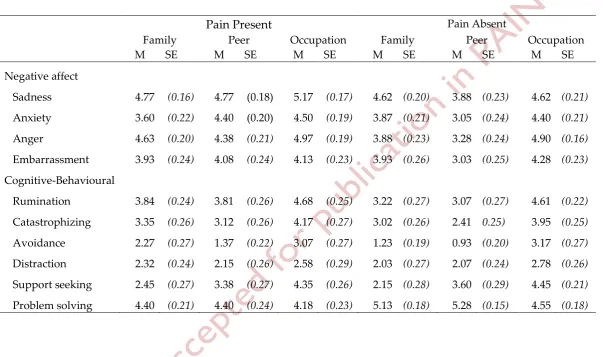
Table 1 reports the covariate adjusted means and standard errors for
participant ratings of their anticipated affective and cognitive-behavioral
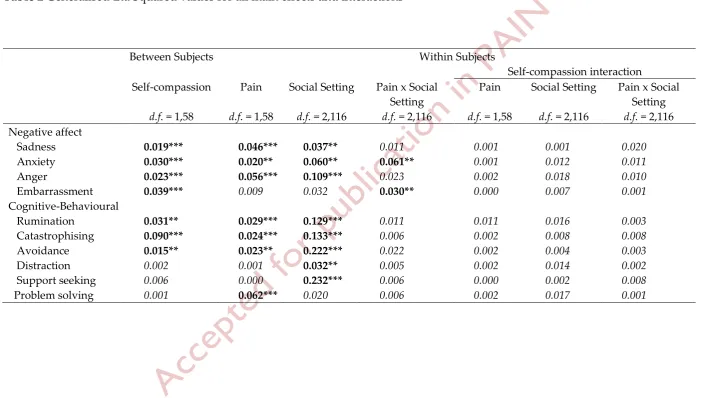
responses to each of the vignettes. In an attempt to report the analysis clearly
without the inclusion of many F values in the text we summarize the analysis
in Table 2, which reports 2G values. The first column shows the effect for the
between-subject covariate of self-compassion, followed by within subject
main effects (presence vs. absence of pain; variation in social setting) and the
interaction between each factor and the between subject covariate. The 2G
values are coded so that all values associate with a significant F test ( value<
0.01) are shown in bold and all other values in italics. We first comment on
the overall pattern of results and then report further details of the a priori
contrast analyses comparing variations in social setting.
--- Tables 1 and 2 about here ---
4.5.1. Self-compassion
There are two notable findings with regard to self-compassion. First,
there was a consistent effect of self-compassion across all four of the affect
measures (sadness, anxiety, anger and embarrassment) and the three
cognitive behavioral responses associated with affect (rumination,
catastrophizing and avoidance). Higher levels of self-compassion were
associated with lower self-reported affective responses, less rumination,
catastrophizing and avoidance. In contrast there was no relationship
between self-compassion and distraction, support seeking and problem
solving. The 2G values for these findings are small according to Cohen s
description. To explore the magnitude of the significant effects in terms of the
15
ratings. The regression coefficients (b) and correlation coefficients (r) for each
measure for the significant effects were: Catastrophizing (b = -9.55, r = -0.54),
embarrassment (b = -6.89, r = -0.51), anxiety (b = -5.56, r = -0.50), rumination (b
= -5.53, r = -0.39), anger (b = -4.84, r = -0.46), avoidance (b = -3.99, r = -0.35),
sadness (b = -3.83, r = -0.39). The effects are illustrated in Figure 1 in which
the mean ratings for those with low self-compassion (n = 32) versus those
with moderate/high self-compassion (n = 28) are plotted. We used the cut
scores for low/medium/high self-compassion suggested by Neff [43] to form
the groups rather than the sample-dependent median split method. Only
four participants scored above the high cut point and we combined these with
the moderate group.
--- Figure 1 about here ---
The second notable feature was that there was no evidence that
variation in self-compassion interacted with variation in the manipulated
content of the vignettes i.e., the presence vs. absence of pain or the social
setting. None of the F values approached significance and the values of 2G
were very small (last three columns of Table 2). This pattern of data
suggested that in this experiment self-compassion does not interact with the
presence or absence of pain or variation in the social setting.
4.5.2. Social context
The effects of variation in the social context and perceived cause of the
negation of the social contract e.g., pain vs. other, are reported in the columns
headed Pain, Setting and Pain x Setting in Table 2. The overall impression
given by the pattern of data is that there are predominantly main effects
attributable to presence vs. absence of pain in the vignette and to variation
across the three social settings (family vs. friends vs. work) but there is
minimal evidence of interaction effects of the two manipulated factors.
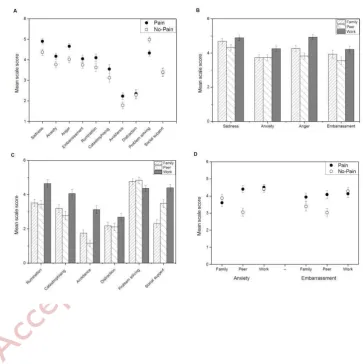
Pain. The presence of pain in the vignette was associated with reports
16
reports of a greater likelihood in engaging in rumination, catastrophizing and
avoidance (Figure 2, Panel A) but less likelihood of engaging in problem
solving activity. There was no effect of the presence of pain with respect to
anticipated embarrassment or the likelihood of distraction or support seeking
activity. The values of 2Gwould be classified as small using Cohen s
descriptive nomenclature [9].
Social setting. The variation in social setting was also associated with
anticipated differences in negative affect, with the exception of
embarrassment. In comparison with the pain factor variation in social setting
had a more marked effect on the reported likelihood of all the
cognitive-behavioral coping responses with the exception of problem solving. The 2G
values for the cognitive-behavioral responses were generally larger and using
Cohen s terminology they would be categorized as medium rather than small
The a priori defined contrasts indicated that the work setting was
associated with greater sadness (p < 0.01), anxiety (p < 0.001) and anger (p <
0.001) in comparison to the combined family and peer settings (Figure 2,
Panel B). Similarly the work setting was associated with greater anticipated
likelihood of catastrophizing, avoidance, rumination and distraction but less
support seeking (p values for all contrasts < 0.001) (Figure 2, Panel C). There
were few differences for the second a priori contrast (family vs. peers).
Participants rated the likelihood of avoidance as less when their peer group
was present (p < 0.01) but in the same context they thought that they would
be more likely to engage in problem solving activity (p < 0.01).
There was minimal evidence of interaction between the pain and social
setting factors. The significant interactions (p < 0.01) were restricted to the
anticipated emotional states of anxiety and embarrassment. The source of the
interaction is shown in Figure 2, Panel D. The anticipated experiences of
anxiety and embarrassment were greater when experiencing pain in the
17
--- Insert Figure 2 about here ---
4.6. Correlational data
We computed several sets of correlations to explore the relationship
between responses to the vignettes and other measured variables. When n =
60 the critical value for r for a two-tailed test with isr = 0.33.
The ratings for each of the 10 vignette response variables were
averaged over the six vignettes. There were no significant correlations
between the average vignette response ratings and the participants ratings of
pain or with the duration of pain, the age at onset of pain or other
demographic characteristics. Similarly there was no observed relationship
between the positive outlook subscale score of the DAPOS with vignette
response. Unsurprisingly the two affective (depression and anxiety)
subscales of the DAPOS correlated positively with the affective ratings (Mdn r
= 0.42, range 0.28 (ns) to 0.59) and also correlated positively with ratings of
rumination and catastrophizing (Mdn r = 0.45, range r = 0.39 to 0.58) and
negatively with the SCS (Depression, r = -0.70 and Anxiety, r = -0.52). The
later correlations confirm the previously observed relationships between
mood and self-compassion.
The relationship between responses to the vignettes and the
self-reported measure of social role performance (SPRQ) was also explored. We
conjectured that of the three SPRQ scales associations between vignette
ratings would be more likely for the role difficult measure as opposed to
either role salience or role importance. Overall there were few significant
relationships (30 correlations in total) between the vignette measures and the
SPRQ but the role difficulty subscale correlated with the embarrassment (r =
0.38) and avoidance (r = 0.34) ratings.
5. Discussion
Higher levels of self-compassion were associated with lower intensities
18
behavioral avoidance regardless of whether the context contained
pain-relevant or non-pain information. These findings are consistent with previous
research that indicates that self-compassion is associated with emotional
resilience [64; 70] and reduced likelihood of engaging in coping responses that
are associated with poorer mental health and wellbeing [32; 33; 46; 57].
Importantly there was no interaction between self-compassion and the
presence of pain in the vignette. The effect of self-compassion was consistent
across social contexts despite the likely variation in personal significance and
implication for social status across the three contexts depicted [14; 25].
Could the associations between the SCS covariate and responses to the
vignettes be accounted for by generalized negative affect, criterion
contamination or method variance? While these cannot be definitively
excluded there are factors which counter these explanations. The definition of
self-compassion includes attention and intention towards alleviating distress
[36]. Self-compassion is a response to negative affect. It is associated with the
presence of negative affect but it is not negative affect per se. There are two
differences between the measure of self-compassion and the affect ratings
completed by the participants. While the SCS aims to assess this reflexive
component the scale is not perfect and there are some items that make a
reference to negative emotion e.g., feeling of inadequacy, but these are in the
minority. In addition, only 4 out of the 10 ratings directly assessed affect the
other 6 assessed expected cognitive behavioral responses. Indeed we would
expect these ratings to be subject to greater criterion contamination with the
SCS as both measures assess a response, but the effects here were variable in
comparison to the 4 affect ratings. With respect to method variance the
vignettes required participants to generate their expected responses to
scenarios prior to making their ratings rather than simply endorse predefined
19
It seems unlikely that the consistent effect of self-compassion is an
artifact of a general response bias because there was systematic marked
variation in the pattern of responses to the different vignettes. Vignettes in
which pain was depicted as the cause of social interruption and negative
social consequences were associated with higher levels of sadness, anxiety
and anger, a higher reported likelihood of rumination, catastrophizing and
behavioral avoidance but a lower reported likelihood of problem solving.
Several factors may have contributed to the responses to pain-relevant events.
The degree of perceived threat associated with pain might have been higher
than that occurring for non-pain relevant events. Second, the literature
suggests the incorporation of self-with-pain into one s identity is associated
with significant internalized stigma and shame [7; 60; 66]. Vignettes which
depicted a work scenario were associated with greater ratings of emotion and
likelihood of rumination, catastrophizing, avoidance and distraction but less
likelihood of engaging in problem solving. The variation between social
settings is consistent with findings that social context is an influential factor
regarding the degree of distress experienced, as well as the likelihood of
maladaptive coping strategies, in response to negative events in a chronic
pain population [7; 26; 60; 66]. Failure in an occupational context may have
greater significance since it poses a public threat to social identity, as well as
financial security [14; 25]. Hughes and Huby [28, p.384] note there is potential
for the vignettes not to match the participants real world experience We
attempted to mitigate this problem and to ensure validity in the development
of the vignettes by extensive sampling of the literature, consultation and
through clinician and patient ratings. The attempt to develop realistic
vignettes was traded-off against a high degree of standardization i.e., keeping
the content of the vignettes constant apart from one or two key elements.
Nevertheless the use of only six vignettes limits the generalizability of the
20
the development of realistic laboratory tasks. Differences between the social
settings might also be attributable to extraneous features in the vignettes
rather than the manipulated content. In the absence of replication across
social settings using other vignettes there is no way within the current data
set to disambiguate the two interpretations, namely the specific vs.
non-specific (extraneous) features of the vignette. Further potential limitations
were the constrained nature of the vignettes and the range of responses
available. In the vignettes, actors were depicted as allowing pain to interrupt
the social contract with negative social consequences. This might not
necessarily have been consistent with participants typical responses and the
use of limited set of cognitive-behavioural options may not have captured the
full range of potential participant responses.
We consider several plausible alternative explanations for the findings.
The association between self-compassion and depression is consistent with
previous research but we note that correlations do not necessarily imply
construct redundancy c.f. [24]. The correlation between self-compassion and
depression may be a function of item contamination since the items in the
DAPOS depression scale predominantly employs items that depict
self-critical and self-blaming cognitions e g I am disappointed with myself
These items also load highly when measuring self-compassion [47; 58]. There
is evidence that self-compassion attenuates depression and anxiety by
lowering depressive rumination, indicating a primary effect of
self-compassion [56]. Second, social desirability can influence responding to
vignettes [38] and we tried to obviate this bias by using character names in
the vignettes to provide a level of externalization, and asking participants to
complete the vignette ratings independently. Future studies examining
self-compassion, social functioning and chronic pain might benefit from the
inclusion of direct observations chronic pain patients social behavior and
21
the demographics in this study with the UK National Pain Audit suggests
that the sample was consistent with that found in pain services in terms of age
and gender [65]. The levels of self-compassion found in the study are similar
to that reported in other chronic pain populations [10] in the UK. The fact
that a significant proportion of our sample was not in employment may have
influenced responding to the work related vignettes. Finally, the results
might be a statistical artifact. However we set both a conservative alpha level
(p < 0.01) and effect sizes 2G) estimator.
5.1. Clinical implications
The results suggest self-compassion may be one mechanism by which
the impact of maladaptive cognitions in response to unpleasant self and
pain-relevant events might be significantly attenuated in a chronic pain
population. Since the arousal of negative emotions can trigger, maintain, or
exacerbate pain and is associated with poorer adjustment to pain overall [30;
35] the potential for self-compassion to positively influence emotion
regulation in response to negative events in a chronic pain population has
implications for improvements in psychological wellbeing and adjustment. In
addition the findings that self-compassion was associated with lower levels of
catastrophizing, rumination and avoidance suggests that enhancing
self-compassion may have a beneficial effect given the evidence that negative
cognitive styles are have a detrimental impact on pain-related coping and
adjustment [35]. For example, avoidance responses to pain have been
postulated as central to pain-related functioning and social disability [3; 12].
The relationship between self-compassion and affect regulation has
been extensively considered by Gilbert [21]. He proposes that
self-compassion activates a self-soothing affect regulation system underpinning
mammalian attachment and kinship. Affiliative and attachment relationships
have a physiologically soothing quality which not only reduce threat
22
implication is that self-compassion may provide the means to replicate this
process intrapersonally. We are unaware of any published studies
documenting the effects of a compassion-focused intervention in a chronic
pain population, although the results of a loving kindness meditation showed
promising results in terms of pain reduction and adjustment [2]. Gilbert has
documented compassion-focused therapeutic interventions in other clinical
populations in which enhanced psychological wellbeing, lower self-criticism
and self-attacking were reported [9]. Neff et al. [18] also documented the
effectiveness of brief therapy in enhancing self-compassion using a Gestalt
technique intended to reduce criticism and facilitate greater
self-compassion. This theorized regulation of difficult emotions is consistent with
our findings that people with a greater ability to be self-compassionate
reported they would feel lower intensities of emotion in response to
unpleasant self-relevant events.
5.2. Conclusion
This is essentially a proof of concept study demonstrating an
association between self-compassion and responses to unpleasant social
events in chronic pain. Experimental manipulation of self-compassion is
required to establish the causal sequence. Techniques based on clinical
interventions might be adapted for this purpose [23]. The measure of
self-compassion was a single scale whose construct validity has yet to be fully
established. Further experimental research is required to demonstrate that
self-compassion has incremental validity and utility beyond more general
constructs such as negative affectivity in accounting for variation in
23 Acknowledgements
We thank Katherine Wright, Romy Sherlock, Francine Toye, Fiona
Thorne, Nigel Wainwright, Vivienne Laidler and Steph Andrews for their
various contributions to this research.
Fiona Purdie was funded as a trainee in clinical psychology by Health
Education England, Yorkshire and the Humber.
24 References
[1] Allen AB, Leary MR. Self-Compassion, Stress, and Coping. Soc Personal
Psychol Compass 2010;4(2):107-118. doi:
10.1111/j.1751-9004.2009.00246.x.
[2] Arnold LM, Crofford LJ, Mease PJ, Burgess SM, Susan C, Abetz L, Martin
SA. Patient perspectives on theimpact of fibromyalgia. Pat Edu Coun
2009;73(1):114-120.
[3] Asmundson GJ, Norton GR, Jacobson SJ. Social, blood/injury, and
agoraphobic fears in patients with physically unexplained chronic
pain: are they clinically significant? Anxiety 1996;2(1):28-33.
[4] Bakeman R. Recommended effect size statistics for repeated measures
designs. Behav Res Meth 2005;37(3):379-384.
[5] Bradbury-Jones C, Taylor J, Herber OR. Vignette development and
administration: a framework for protecting research participants. Int J
Soc Res Method 2014;17 (4):427-440. doi: 10.1080/13645579.2012.750833.
[6] Carson JW, Keefe FJ, Lynch TR, Carson KM, Goli V, Fras AM, Thorp SR.
Loving-kindness meditation for chronic low back pain: results from a
pilot trial. J Hol Nursing 2005;23(3):287-304. doi:
10.1177/0898010105277651.
[7] Charmaz K. Loss of self: A fundamental form of suffering in the
chronically ill. Sociol Health Illness 1983;5(2):168-195.
[8] Charmaz K. From the "sick role" to stories of self: understanding the self in
illness. In: RJ Contrada, RD Ashmore, editors. Self, social identity, and
physical health, Vol. 2. Oxford: Oxford University Press, 1999. pp.
209-239.
[9] Cohen J. Statistical Power Analysis for the Behavioral Sciences. Hillsdale,
NJ: Erlbaum, 1988.
[10] Costa J, Pinto-Gouveia J. Acceptance of pain, self-compassion and
25
identify patients subgroups. Clin Psychol Psychother
2011;18(4):292-302. doi: 10.1002/cpp.718.
[11] Cozolino L. The neuroscience of human relationships: Attachment and
the developing brain. New York: Norton, 2007.
[12] Crombez G, Eccleston C, Van Damme S, Vlaeyen JW, Karoly P.
Fear-avoidance model of chronic pain: the next generation. Clin J Pain
2012;28(6):475-483. doi: 10.1097/AJP.0b013e3182385392.
[13] Crombez G, Viane I, Eccleston C, Devulder J, Goubert L. Attention to
pain and fear of pain in patients with chronic pain. J Behav Med
2013;36(4):371-378. doi: 10.1007/s10865-012-9433-1.
[14] Dandeneau SD, Baldwin MW, Baccus JR, Sakellaropoulo M, Pruessner JC.
Cutting stress off at the pass: Reducing vigilance and responsiveness to
social threat by manipulating attention. J Pers Soc Psychol
2007;93(4):651-666. doi: 10.1037/0022-3514.93.4.651.
[15] Database of Patient Experiences (DIPex). Health Talk Online. 2013;
http://healthtalkonline.org/. Date Accessed.
[16] Davis AM, Wong R, Badley EM Gignac M There s more to life than
everyday function: the challenge of measuring social role participation
in ankylosing spondylitis. Nature Clin Pract Rheumatol
2009;5(1):46-51. doi: 10.1038/ncprheum0978.
[17] Delaney HD, Maxwell SE. On using analysis of covariance in repeated
measures designs. Mult Behav Res 1981;16(1):105-123. doi:
10.1207/s15327906mbr1601_6.
[18] Depue RA, Morrone-Strupinsky JV. A neurobehavioral model of
affiliative bonding: implications for conceptualizing a human trait of
affiliation. Behav Brain Sci 2005;28(3):313-350; discussion 350-395. doi:
26
[19] Galante J, Galante I, Bekkers MJ, Gallacher J. Effect of kindness-based
meditation on health and well-being: A systematic review and
meta-analysis. J Consult Clin Psychol 2014. doi: 10.1037/a0037249.
[20] Gignac M, Backman CL, Davis AM, Lacaille D, Mattison CA, Montie P,
Badley EM. Understanding social role participation: what matters to
people with arthritis? J Rheumatol 2008;35(8):1655-1636.
[21] Gilbert P. Introducing compassion-focused therapy. Advances in
Psychiatric Treatment 2009;15(3):199-208. doi:
10.1192/apt.bp.107.005264.
[22] Gilbert P. Compassion: Conceptualisations, research and use in
psychotherapy. London: Routledge, 2013.
[23] Gilbert P, Procter S. Compassionate mind training for people with high
shame and self criticism: overview and pilot study of a group therapy
approach. Clin Psychol Psychother 2006;13(6):353-379.
[24] Gracely RH. Evaluation of multi-dimensional pain scales. Pain
1992;48(3):297-300.
[25] Grunewald TL, Kemeny ME, Aziz N, Fahey JL. Acute threat to the social
self: Shame, social self-esteem, and cortisol activity. Psychosom Med
2004;66:915-924.
[26] Hadjistavropoulos T, Craig KD, Duck S, Cano A, Goubert L, Jackson PL,
Mogil JS, Rainville P, Sullivan MJ, Williams ACdeC, Vervoort T,
Fitzgerald TD. A biopsychosocial formulation of pain communication.
Psychol Bull 2011;137(6):910-939. doi: 10.1037/a0023876.
[27] Harris S, Morley S, Barton SB. Role loss and emotional adjustment in
chronic pain. Pain 2003;105(1-2):363-370.
[28] Hughes R, Huby M. The construction and interpretation of vignettes in
27
[29] Kappesser J, Williams ACdeC. Pain judgements of patients' relatives:
examining the use of social contract theory as theoretical framework. J
Behav Med 2008;31(4):309-317. doi: 10.1007/s10865-008-9157-4.
[30] Keefe FJ, Lumley M, Anderson T, Lynch T, Carson KL. Pain and emotion:
new research directions. J Clin Psychol 2001;57(4):587-607.
[31] Kelly AC, Zuroff DC, Leybman MJ, Gilbert P. Social Safeness, Received
Social Support, and Maladjustment: Testing a Tripartite Model of
Affect Regulation. Cog Ther Res 2012;36(6):815-826. doi:
10.1007/s10608-011-9432-5.
[32] Krieger T, Altenstein D, Baettig I, Doerig N, Holtforth M. Self-compassion
in depression: Associations with depressive symptoms, rumination,
and avoidance in depressed outpatients. Behav Ther
2013;44(3):501-513. doi: 10.1016/j.beth.2013.04.004.
[33] Leary MR, Tate EB, Adams CE, Allen AB, Hancock J. Self-compassion
and reactions to unpleasant self-relevant events: the implications of
treating oneself kindly. J Pers Soc Psychol 2007;92(5):887-904. doi:
10.1037/0022-3514.92.5.887.
[34] Lewinsohn PM, Mermelstein RM, Alexander C, MacPhillamy DJ. The
Unpleasant Events Schedule: a scale for the measurement of aversive
events. J Clin Psychol 1985;41(4):483-498.
[35] Lumley MA, Cohen JL, Borszcz GS, Cano A, Radcliffe AM, Porter LS,
Schubiner H, Keefe FJ. Pain and emotion: a biopsychosocial review of
recent research. J Clin Psychol 2011;67(9):942-968. doi:
10.1002/jclp.20816.
[36] MacBeth A, Gumley A. Exploring compassion: A meta-analysis of the
association between self-compassion and psychopathology. Clin
28
[37] MacCallum RC, Zhang S, Preacher KJ, Rucker DD. On the practice of
dichotomization of quantitative variables. Psychol Methods
2002;7(1):19-40.
[38] Miles MB. New methods for qualitative data collection and analysis:
vignettes and pre structured cases. Int J Qual Stud Edu
1990;3(1):37-51.
[39] Morley S. Psychology of pain. B J Anaes 2008;101(1):25-31. doi:
10.1093/bja/aen123.
[40] Morley S, Doyle K, Beese A. Talking to others about pain: suffering in
silence. In: M Devor, MC Rowbotham, Z Wiesenfeld-Hallin, editors.
Progress in Pain Research and Management, Vol. 9. Seattle: IASP Press,
2000. pp. 1123-1129.
[41] Morley S, Eccleston C. The object of fear in pain. In: GJ Asmundson, J
Vlaeyen, G Crombez, editors. Understanding and treating fear of pain.
Oxford: Oxford University Press, 2004. pp. 163-188.
[42] Neff JA. Interactional versus hypothetical others: The use of vignettes in
attitude research. Soc Sci Res 1975;64(1):105-125.
[43] Neff KD. Development and validation of a scale to measure
self-compassion. Self and Identity 2003;2(3):223-250. doi:
10.1080/15298860309027.
[44] Neff KD. Self-compassion. An alternative conceptualization of a healthy
attitude toward oneself. Self and Identity 2003;2:85-102.
[45] Neff KD, Hsieh Y-P, Dejitterat K. Self-compassion, achievement goals,
and coping with academic failure. Self and Identity 2005;4(3):263-287.
[46] Neff KD, Kirkpatrick K, Rude SS. Self-compassion and its link to adaptive
psychological functioning. J Res Pers 2007;41:139-154.
[47] Nicholls JG, Licht BG, Pearl RA. Some dangers of using personality
questionnaires to study personality. Psychol Bull 1982;92(3):572-580.
29
[48] Oatley K. Best laid schemes: the psychology of emotions. Cambridge:
Cambridge University Press, 1992.
[49] Olejnik S, Algina J. Generalized eta and omega squared statistics:
measures of effect size for some common research designs. Psychol
Methods 2003;8(4):434-447. doi: 10.1037/1082-989X.8.4.434.
[50] Osborn M, Smith JA. The personal experience of chronic benign lower
back pain: An interpretative phenomenological analysis. Brit J Health
Psychol 1998;3(Part 1):65-83.
[51] Paddam A, Barnes D, Langdon D. Constructing vignettes to investigate
anger in multiple sclerosis. Nurse Researcher 2011;17(2):60-73.
[52] Panksepp J. Affective Neuroscience. Oxford: Oxford University Press,
1998.
[53] Philips HC. Avoidance behaviour and its role in sustaining chronic pain.
Behav Res Ther 1987;25(4):273-279. doi: 0005-7967(87)90005-2 [pii].
[54] Pincus T, Rusu A, Santos R. Responsiveness and construct validity of the
Depression, Anxiety, and Positive Outlook Scale (DAPOS). Clin J Pain
2008;24(5):431-437. doi: 10.1097/Ajp.0b013e318164341c.
[55] Pincus T, Williams ACdeC, Vogel S, Field A. The development and
testing of the Depression, Anxiety, and Positive Outlook Scale
(DAPOS). Pain 2004;109(1-2):181-188. doi: 10.1016/j.pain.2004.02.004.
[56] Raes F. Rumination and worry as mediators of the relationship between
self-compassion and depression and anxiety. Pers Indiv Diff
2010;48(6):757-761. doi: 10.1016/j.paid.2010.01.023.
[57] Samaie G, Farahani HA. Self-compassion as a moderator of the
relationship between rumination, self-reflection and stress. Procd Soc
Behv 2011;30:978 - 982. doi: 10.1016/j.sbspro.2011.10.190.
[58] Sanson A, Prior M, Kyrios M. Contamination of measures in
30
[59] Skinner EA, Edge K, Altman J, Sherwood H. Searching for the structure
of coping: a review and critique of category systems for classifying
ways of coping. Psychol Bull 2003;129(2):216-269.
[60] Smith JA, Osborn M. Pain as an assault on the self: An interpretative
phenomenological analysis of the psychological impact of chronic
benign low back pain. Psychol Health 2007;22(5):517-534. doi:
10.1080/14768320600941756.
[61] Sofaer-Bennett B Walker J Moore A Lamberty J Thorp T O Dwyer J
The social consequences for older people of neuropathic pain: a
qualitative study. Pain Med 2007;8(3):263-270. doi:
10.1111/j.1526-4637.2006.00222.x.
[62] Sutherland R, Morley S. Self-pain enmeshment: future possible selves,
sociotropy, autonomy and adjustment to chronic pain. Pain
2008;137(2):366-377. doi: 10.1016/j.pain.2007.09.023.
[63] Tabachnick BG, Fidell LS. Using Multivariate Statistics. New York:
Harper Collins, 2007.
[64] Terry ML, Leary MR. Self-compassion, self-regulation, and health. Self
and Identity 2011;10(3):352-362. doi: Doi 10.1080/15298868.2011.558404.
[65] The British Pain Society. The national pain audit: Final report 2010-2012.
2012;
http://www.britishpainsociety.org/members_articles_npa_2012.pdf
Date Accessed.
[66] Toye F, Seers K, Allcock N, Briggs M, Carr E, Andrews J, Barker K. A
meta-ethnography of patients' experience of chronic non-malignant
musculoskeletal pain. Health Services Delivery Research 2013;1(12).
doi: 10.3310/hsdr01120.
[67] Vlaeyen JW, Linton SJ. Fear-avoidance and its consequences in chronic
musculoskeletal pain: a state of the art. Pain 2000;85(3):317-332. doi:
31
[68] Wade JB, Dougherty LM, Archer CR, Price DD. Assessing the stages of
pain processing: a multivariate analytical approach. Pain
1996;68(1):157-167.
[69] Wei M, Liao KY, Ku TY, Shaffer PA. Attachment, self-compassion,
empathy, and subjective well-being among college students and
community adults. J Pers 2011;79(1):191-221. doi:
10.1111/j.1467-6494.2010.00677.x.
[70] Wren AA, Somers TJ, Wright MA, Goetz MC, Leary MR, Fras AM, Huh
BK, Rogers LL, Keefe FJ. Self-Compassion in Patients With Persistent
Musculoskeletal Pain: Relationship of Self-Compassion to Adjustment
to Persistent Pain. J Pain Symptom Manage 2012;43(4):759-770. doi:
32
Table 1 Covariate adjusted means (M) and standard errors (SE) for all vignette conditions
Pain Present Pain Absent
Family Peer Occupation Family Peer Occupation
M SE M SE M SE M SE M SE M SE
Negative affect
Sadness 4.77 (0.16) 4.77 (0.18) 5.17 (0.17) 4.62 (0.20) 3.88 (0.23) 4.62 (0.21)
Anxiety 3.60 (0.22) 4.40 (0.20) 4.50 (0.19) 3.87 (0.21) 3.05 (0.24) 4.40 (0.21)
Anger 4.63 (0.20) 4.38 (0.21) 4.97 (0.19) 3.88 (0.23) 3.28 (0.24) 4.90 (0.16)
Embarrassment 3.93 (0.24) 4.08 (0.24) 4.13 (0.23) 3.93 (0.26) 3.03 (0.25) 4.28 (0.23)
Cognitive-Behavioural
Rumination 3.84 (0.24) 3.81 (0.26) 4.68 (0.25) 3.22 (0.27) 3.07 (0.27) 4.61 (0.22)
Catastrophizing 3.35 (0.26) 3.12 (0.26) 4.17 (0.27) 3.02 (0.26) 2.41 0.25) 3.95 (0.25)
Avoidance 2.27 (0.27) 1.37 (0.22) 3.07 (0.27) 1.23 (0.19) 0.93 (0.20) 3.17 (0.27)
Distraction 2.32 (0.24) 2.15 (0.26) 2.58 (0.29) 2.03 (0.27) 2.07 (0.24) 2.78 (0.26)
Support seeking 2.45 (0.27) 3.38 (0.27) 4.35 (0.26) 2.15 (0.28) 3.60 (0.29) 4.45 (0.21)
33
Table 2 Generalised Eta Squared values for all main effects and interactions
Between Subjects Within Subjects
Self-compassion interaction Self-compassion Pain Social Setting Pain x Social
Setting
Pain Social Setting Pain x Social Setting
d.f. = 1,58 d.f. = 1,58 d.f. = 2,116 d.f. = 2,116 d.f. = 1,58 d.f. = 2,116 d.f. = 2,116 Negative affect
Sadness 0.019*** 0.046*** 0.037** 0.011 0.001 0.001 0.020
Anxiety 0.030*** 0.020** 0.060** 0.061** 0.001 0.012 0.011
Anger 0.023*** 0.056*** 0.109*** 0.023 0.002 0.018 0.010
Embarrassment 0.039*** 0.009 0.032 0.030** 0.000 0.007 0.001
Cognitive-Behavioural
Rumination 0.031** 0.029*** 0.129*** 0.011 0.011 0.016 0.003
Catastrophising 0.090*** 0.024*** 0.133*** 0.006 0.002 0.008 0.008
Avoidance 0.015** 0.023** 0.222*** 0.022 0.002 0.004 0.003
Distraction 0.002 0.001 0.032** 0.005 0.002 0.014 0.002
Support seeking 0.006 0.000 0.232*** 0.006 0.000 0.002 0.008
34
Legends for Figures
Figure 1. Illustrates the magnitude of the main effect for
self-compassion for the response scales where a significant effect (p < 0.01) was
observed. The plot shows the mean ratings for participants with low
self-compassion (n = 32) and those with moderate and high self-self-compassion (n =
28).
Figure 2. Responses to vignette characteristics. All responses were
made on a 0-6 numerical rating scale. The data are covariate adjusted
marginal means and standard errors. Panel A shows the mean responses for
the vignettes in the pain and non-pain conditions. Panel B shows the means
for ratings of anticipated emotions on the affect scales for sadness, anxiety,
anger and embarrassment for the three social settings. Panel C shows the
data for the rating of likely cognitive-behavioural responses across the three
social settings. Panel D shows the interaction of pain and social settings for
37 Appendix
Design, content and response of experimental vignettes
1. Factorial design of vignettes.
2. Content of vignettes
The main character is identified in bold text.
Vignette 1. Sue has agreed to go to an important event with her friend Mandy.
Mandy has been a big support to Sue over the past months. Mandy is very
nervous about the event and wants Sue to come along and support her. But,
as Sue is getting ready for the event her pain flares up. She calls Mandy to let
her know she will be unable to attend. Mandy sounds really upset on the
phone.
Vignette 2.Jenny has agreed to help her pregnant friend, Kay by babysitting
for her to give her a night off. Kay is a single mother and has been really tired
recently. However, at the last minute Jenny is told she needs to work and so
she can't help Kay out. She calls Kay to tell her. Kay tells her she is really
disappointed because she really needed the break.
Vignette 3. Mikeand his wife are having friends round for dinner Mike s wife
has asked him to help her get the house ready by vacuuming. Mike has only
been doing this for a few minutes when his pain begins to flare up. He tells Vignette #
Pain/Non pain relevant Context
Shared factor Socially unpleasant event
38
his wife he needs to rest and she becomes very upset with him. She says she
knows it isn t his fault but feels like she has to do everything these days
Vignette 4. Sarahs husband Will has been working away from home for a few
days. She has told him she will cook him a special meal for when he gets
back. Will works really hard to support their family. Sarah has been tired
lately, so she decides to take a short nap before getting started. Sarah wakes
up hours later to realise her alarm did not go off. Her house is untidy. She
has not cooked any food. Her husband is due back any minute. Will walks
through the door and looks really hurt. He tells her how much he had been
looking forward to the meal.
Vignette 5. Anne really likes her job, but it has become very difficult to keep
up with it because of her pain. Her boss says she needs an easier role. This
will be a step down from her last job. She has also heard her co-workers
making unkind comments about her. They said that she is bone idle and that
she has it easy now.
Vignette 6. Mo has been trying really hard to do better at work. But he keeps
missing targets because he takes too much on. The head of service says they
need to drop some of his duties. As he leaves the meeting, he overhears his
workmates saying he is bad at his job. They say that they could do much
39
3 Response sheet for vignettes
Thinking about the scenario you have just read try to put yourself in the
place of the character and answer the following questions.
How much would you imagine you much would feel each of the following?
Not
at all
Moderately Extremely
strongly
Sad
(including feeling dejected, down or depressed)
0 1 2 3 4 5 6
Nervous
(including feeling tense, worried, or anxious)
0 1 2 3 4 5 6
Angry
(including feeling irritated, frustrated or hostile)
0 1 2 3 4 5 6
Embarrassed
(including feeling humiliated, disgraced or ashamed)
0 1 2 3 4 5 6
How likely do you think you would be to react in the following ways?
Not at all Moderately likely Extremely likely
Find some way of solving the problem / making things better
0 1 2 3 4 5 6
Talk the situation through with another friend or family member
0 1 2 3 4 5 6
Do something to take my mind off the situation
0 1 2 3 4 5 6
Try to avoid them as much as I can 0 1 2 3 4 5 6
Replay the situation in my mind for a long time afterwards
0 1 2 3 4 5 6
Think of all the bad things which might come next