DEVELOPMENT OF REMOTE CONTROLLED MOBILE ROBOT THROUGH WI-FI OR IOT PLATFORM
This report submitted in accordance with requirement of the Universiti Teknikal Malaysia Melaka (UTeM) for Bachelor Degree of Manufacturing Engineering
(Robotics & Automation) (Hons.)
By
SHAHIRUL ASHRAF BIN SOHAIMEH B051410081
931028-05-5325
i
ABSTRAK
ii
ABSTRACT
iii
DEDICATION
iv
ACKNOWLEDGEMENT
First and foremost, I would like to bid Alhamdulillah to the Almighty Creator, The Most High. From which from his grace I have been able to successfully complete my Final Year Project.
Secondly, I would like to convey my deepest gratitude to my respected supervisor, Dr. Mohd Hisham Bin Nordin for his encouragement, guidance and enthusiasm given throughout the progress of this project. Without his continued support and interest, this project would not have been the same as presented here.
My next appreciation goes to my parents and family who has been so tolerant and supports me all these years. Thanks for their encouragement, love and emotional support that they had given to me.
A special thanks to Armila Azira bt Mohd Shariff for being there through ups and down, supporting me, always stay beside me when I need someone for the most. Next, thanks to Mohd Aiman Afnan bin Mohd Yusoff, Alfiera bt Anuar, Ashvinaa Baskaran and Mohd Akhmal Syafi bin Md Yazid for helping me, giving idea and share knowledge.
v
TABLE OF CONTENTS
ABSTRAK i
ABSTRACT ii
DEDICATION iii
ACKNOWLEDGEMENT iv
TABLE OF CONTENTS v
LIST OF TABLES ix
LIST OF FIGURES x
LIST OF ABBREVIATIONS, SYMBOLS AND NOMENCLATURE xi
CHAPTER 1 : INTRODUCTION 1
1.1 Project Background 1
1.2 Problem Statement 2
1.3 Objective 3
1.4 Scope 3
1.5 Report Structure 4
CHAPTER 2 : LITERATURE REVIEW 5
2.1 Internet of Things (IoT) 5
2.1.1 Internet of Robotic Things (IoRT) 6
2.1.2 Essential IoT technologies 7
2.1.2.1 Radio frequency identification (RFID) 7
vi
2.1.2.3 Middleware 8
2.1.2.4 Cloud computing 9
2.1.2.5 IoT applications 9
2.1.3 Application of IoT 10
2.1.3.1 Aerospace and aviation (green operations, systems status monitoring) 10 2.1.3.2 Automotive (V2V and V2I communication, systems status monitoring) 11
2.1.3.3 Telecommunications 11
2.1.3.4 Intelligent Buildings (home automation/ automatic energy metering/
wireless monitoring) 12
2.1.3.5 Medical Technology, Healthcare (real time location systems,
monitoring of parameters, personal area networks, positioning) 13 2.1.3.6 Independent Living (wellness, mobility, monitoring of an aging population) 13
2.1.3.7 Pharmaceutical 14
2.1.3.8 Retail, Logistics, Supply Chain Management 14
2.1.3.9 Manufacturing, Product Lifecycle Management (from cradle to grave) 15
2.1.3.10 Processing industries -Oil and Gas 15
2.1.3.11 Safety, Security and Privacy 16
2.1.3.12 Environment Monitoring 16
2.1.3.13 People and Goods Transportation 17
2.1.3.14 Food traceability 17
2.1.3.15 Agriculture and Breeding 18
2.1.3.16 Media, entertainment and Ticketing 18
2.1.3.17 Insurance 19
2.1.3.18 Recycling 19
2.2 Industry 4.0 20
2.2.1 Nine pillars of technology 21
2.2.1.1 Big Data Analytic 22
2.2.1.2 Autonomous Robots 22
2.2.1.3 Simulation 23
2.2.1.4 Horizontal and Vertical System Integration 23
vii
2.2.1.6 Cybersecurity 24
2.2.1.7 The Cloud 25
2.2.1.8 Additive Manufacturing 25
2.2.1.9 Augmented Reality 26
2.3 Wi-Fi 27
2.4 Summary 28
CHAPTER 3 : METHODOLOGY 29
3.1 Overall Flowchart 29
3.1.1 Research Flowchart 30
3.1.2 Functional Block Diagram 31
3.1.3 Operational Flowchart 32
3.2 Experiment Setup 33
3.2.1 Hardware 33
3.2.2 Controller Interface for IoT Platform 35
3.3 Design of Experiment 36
3.3.1 Reliability Test 36
3.3.2 Performance of Mobile Robot With Respect to Distance Test 38 3.3.3 Performance of Mobile Robot With Respect to Various Environment Test 39
3.4 Summary 39
CHAPTER 4 : RESULTS AND DISCUSSIONS 40
4.1 Establishment of Connection 40
4.2 Reliability Test 41
4.3 Distance Test 42
4.4 Environment Test 44
4.5 Sustainability 45
viii
CHAPTER 5 : CONCLUSION AND RECOMMENDATIONS 46
5.1 Conclusion 46
5.2 Recommendation 47
REFERENCES 48
ix
LIST OF TABLES
2.1 IoT Application Domains - Description and Examples 10
3.1 Example of tabulation data for the reliability test of the controller 37 3.2 Example of tabulation data for the performance of mobile robot with
respect to distance test 38
3.3 Example of tabulation data for the performance of mobile robot with
respect to noisy environment test. 39
4.1 Tabulation data for reliability test for the controller 41 4.2 Tabulation data for the performance of mobile robot with respect to distance test 43 4.3 Tabulation data for the performance of mobile robot with respect to
x
LIST OF FIGURES
2.1 Example of Architecture of the proposed simulator 12
2.2 Emergence of Industry 4.0 20
2.3 Nine Technologies Are Transforming Industrial Production 21 2.4 Changing Traditional Manufacturing Relationships In Industry 4.0 26
3.1 Research Flowchart. 30
3.2 Functional Block Diagram. 31
3.3 Operational Flowchart. 32
3.4 Building up mobile robot 33
3.5 Schematic diagram of a mobile robot 34
3.6 IoT Platform 34
xi
LIST OF ABBREVIATIONS, SYMBOLS AND
NOMENCLATURE
IoT - Internet of Things
IoRT - Internet of Robotic Things AGV - Automated Guided Vehicle RFID - Radio Frequency Identification EPC - Electronic Product Code DOE - Design of Experiment PSM - Projek Sarjana Muda PSM I - Projek Sarjana Muda 1 PSM II - Projek Sarjana Muda 2
1
CHAPTER 1
INTRODUCTION
This chapter presents a brief introduction about the project. The first topic is project background development of remote controlled mobile robot through Wi-Fi or IoT platform. Then, the detail of the problem statement of the project and followed by the objectives of the project. Based on the problem statement and the objectives of the project, the scope of this project is identified. Finally, it presents the report structure of this project.
1.1 Project Background
2 Nowadays Internet of Things (IoT) is one of the important things in the world. IoT is an internet working of mechanical, electrical, digital machine that collect and transfer the data without requiring human interaction. The meaning of without requiring human interaction is such that the IoT can control remotely and sense the object through the network and wireless technologies. The benefits of IoT will give a high impact to the manufacturing, infrastructure, food services, hospitality, transportation, oil, gas and mining. Many of the big companies already using the IoT include Google, Microsoft and Hitachi.
The aim of this project is to establish communication mobile robot with IoT platform, controlling mobile robot through Wi-Fi or IoT platform and evaluate the performance of the remote control mobile robot using Wi-Fi or IoT. Based on the objective, research is done on topic of the IoT, Industry 4.0 and Wi-Fi. Then, the idea to create design of experiment is developed. Basically development remote controlled mobile robot using Wi-Fi or IoT, need to have a hardware and software. The hardware and software that will be use is Arduino robot and ESPresso Lite.
1.2 Problem Statement
3
1.3 Objective
i. To establish communication of mobile robot with IoT platform. ii. Controlling mobile robot through Wi-Fi and IoT platform.
iii. Evaluate the performance of the remote controled mobile robot using Wi-Fi or IoT.
1.4 Scope
4
1.5 Report Structure
The report is organized as follows:
i. Chapter 2 consists of literature review on IoT, Industry 4.0 and Wi-Fi. This chapter gives definition of IoT, explains the essential IoT technologies, elaborates application of IoT, and explains the meaning of Industry 4.0, nine pillars of technology and Wi-Fi.
ii. Chapter 3 describes the methodology of this project. This chapter discusses the overall flowchart of the research methodology, functional block diagram, operational flowchart and design interface for IoT platform. Then, it shows the experiment setup and design of experiment.
iii. Chapter 4 elaborates and discusses on design of experiment. Basically, it involves the procedural steps on how to develop of the remote controlled mobile robot through Wi-Fi or IoT platform. Next, the result and discussion on design of experiment.
5
CHAPTER 2
LITERATURE REVIEW
In this chapter, there are 3 main topics IoT, Industry 4.0 and Wi-Fi. The first topic that is IoT, it will give a definition of IoT, explain the essential IoT technologies and elaborates the application of IoT. Next topic is Industry 4.0, which explains the meaning of Industry 4.0 and nine pillars of technology. Last topic is about Wi-Fi and summary for this chapter.
2.1 Internet of Things (IoT)
6 The idea of Internet of Things can be viewed as an expansion of the current connection between people and applications through the new measurement of "Things" correspondence and coordination. IoT will include esteem and expand the abilities of customary and restricted abuse of programmed recognizable proof and information catch (AIDC) and other interfacing "edge" advancements and illustrations of imagined IoT applications will be given in the accompanying areas (Harald, 2010).
The paradigm in Internet of Things (IoT) that is quickly making progress inside the modern telecommunications technology facilities provided. The fundamental thought of this idea is the widespread presence around us of many things or objects which, through unique addressing schemes, that can connect with each other and collaborate with their neighbors in order to achieve the same goal such as mobile phones , Radio-Frequency Identification (RFID) tags, actuators, sensors, etc (Hamraz, 2013).
2.1.1 Internet of Robotic Things (IoRT)
“Connected robots give intelligent devices the ability to manipulate the world around them, rather than simply sending and receiving passive data.”(mcorley, 2016) “As the IoRT becomes more prevalent, it will become harder and harder to tell robots apart from everyday objects such as toasters and laundry machines that also will become increasingly intelligent and aware, notes Egerstedt.”(Shein, 2016).
7 The research study shows the introduce of the concept Internet of Robotic Things (IoRT), where use intelligence to determine a best course of action, intelligent devices can monitor events, fuse sensor data from a variety of sources and then act to control or manipulate objects the physical world, and in some cases while physically moving through that world. By business models built upon passive interaction to physical and dynamic relationships between the physical and digital world, the incorporation of the robotics aspect into the wider IoT transforms the landscape currently dominated (ABIresearch, 2014).
2.1.2 Essential IoT technologies
2.1.2.1 Radio frequency identification (RFID)
Data capture and automatic identification is allowed by Radio frequency identification (RFID) through a reader, radio waves and a tag. The tag can store more data than traditional barcodes. The form of the Electronic Product Code (EPC) contains data of the tag, by the Auto-ID Center a global RFID-based item identification system developed (Lee, 2015).
8 2.1.2.2 Wireless sensor networks (WSN)
Crucial role in the IoT will be played by sensor networks. The fact, to better track the status of things, they can cooperate with RFID systems. A very large number of nodes is may consist in sensor networks. As today there is a scarce availability of IP addresses that would result in obvious problems (Luigi, 2010).
Sensing can be deployed only on the several sensors that perform. Communications topology and the positions of the sensors are carefully engineered. Data are fused and Computations are performed when they transmit time series of the sensed phenomenon to the central nodes. Sensor networks which are densely deployed either very close to the phenomenon or inside, it is composed of a large number of sensor nodes (Akyildiz, 2002).
2.1.2.3 Middleware
9 2.1.2.4 Cloud computing
“Cloud computing provides an ideal back-end solution for handling huge data streams and processing them for the unprecedented number of IoT devices and humans in real time.” (Lee, 2015).
2.1.2.5 IoT applications
10 2.1.3 Application of IoT
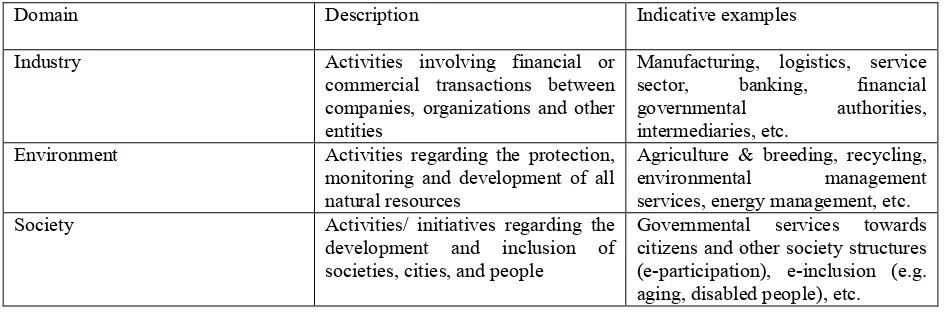
[image:22.612.78.551.206.362.2]Table 2.1 shows the description and examples of the IoT application Domain in industry, environment and society.
Table 2.1: IoT Application Domains - Description and Examples (Harald, 2010).
Domain Description Indicative examples
Industry Activities involving financial or
commercial transactions between companies, organizations and other entities
Manufacturing, logistics, service
sector, banking, financial
governmental authorities,
intermediaries, etc.
Environment Activities regarding the protection,
monitoring and development of all natural resources
Agriculture & breeding, recycling,
environmental management
services, energy management, etc.
Society Activities/ initiatives regarding the
development and inclusion of societies, cities, and people
Governmental services towards citizens and other society structures (e-participation), e-inclusion (e.g. aging, disabled people), etc.
2.1.3.1 Aerospace and aviation (green operations, systems status monitoring)
11 2.1.3.2 Automotive (V2V and V2I communication, systems status monitoring)
A 'thing' is considered as the vehicle itself, empowering it to make programmed crisis calls or breakdown calls when proper, gathering however more information that could reasonably be expected from encompassing 'things'. The utilization of remote identifiable gadgets makes a difference the partners to pick up knowledge into where everything is so it is conceivable to quicken get together procedures and find autos or parts in a small amount of the time. Remote innovation is perfect in real-time locating systems (RTLS) and interfacing with other IoT sub systems, enhancing management and vehicle tracking and supporting car producers better in overseeing the way toward testing and checking vehicles falling off the mechanical production system (Harald, 2010).
2.1.3.3 Telecommunications
12 2.1.3.4 Intelligent Buildings (home automation/ automatic energy metering/ wireless
monitoring)
Many studies have been done on the advantages and the possibility of "smart homes". As the advances develop and wireless communication became much cheaper, the scope of utilization is turning out to be much more extensive (Harald Sundmaeker, 2010).
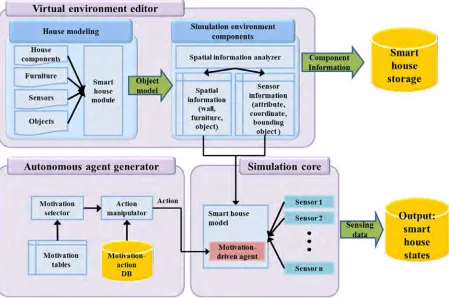
[image:24.612.90.539.349.647.2]Smart Home (SH) guarantees the possibilities for the client to gauge home conditions (e.g., luminosity, temperature, humidity, and so on.), control home HVAC (heating, ventilation and air conditioning) apparatuses and control their status with least client's intercession (Moataz, 2013) .