Int. J. Electrochem. Sci., 4 (2009) 672 - 683
International Journal of
ELECTROCHEMICAL
SCIENCE
www.electrochemsci.org
Simultaneous Determination of Dopamine, Ascorbic Acid and
Uric Acid at Poly(Patton and Reeder’s) Modified Carbon Paste
Electrode
M.Pandurangachar1, B.E. Kumara Swamy 2, *, Umesh Chandra, Ongera Gilbert 2 and B.S.Sherigara2
1
Department of Chemistry, SSMRV Degree College, Jayanagara 4T Block, Banglore-41, Karnataka, INDIA
2
Department of PG Studies and Research in Industrial Chemistry, Kuvempu University, Shankaraghatta - 577 451, Shimoga, Karnataka, INDIA
*
E-mail: [email protected]
Received: 20 March 2009 / Accepted: 4 April 2009 / Published: 4 May 2009
Polymerized film of Patton and Reeder’s was prepared on to the surface of carbon paste electrode in alkaline solution by cyclic voltammetric (CV) technique after pretreatment by H2SO4 media. The
poly(PR) film coated on carbon paste electrode (CPE) exhibited excellent electrocatalytic activity toward the oxidation of dopamine (DA), ascorbic acid (AA) and uric acid (UA) in acetate buffer solution at pH 5.4. The modified CPE showed excellent electrocatalytic activity for selective detection of DA in the presence of AA and UA. Detection limit of DA was 1x10⁻⁸M. The present technique provides a novel method for selective determination of DA, AA and UA in biological sample.
Keywords: Poly(Patton and Reeder’s) modified carbon paste electrode, Dopamine, Ascorbic acid, Uric acid
1. INTRODUCTION
potentials always are close to that of DA. Therefore, it is a significant attempt to separate the oxidation peak potentials of DA, AA and UA of many electrochemical approaches have been used to implement the above goal [6-12]. Among these methods, using electroactive polymer-coated electrode to determine DA in the presence of AA and UA displayed excellent selectivity and sensitivity. For example a poly(phenosafranine) film modified glassy carbon electrode exhibited potent and persistent electron–mediating behavior followed by well separated oxidation peak toward AA, DA and UA and serotonine with activation over potential which is 200mV lower than that of the bare electrode for AA oxidation [13]. In addition there were reports using N,Ndimethylamine modified electrode by Roy et. al [14] Hong et. al [15], using 2,2-Bis (3-amino-4-hydroxyphenyl) hexafluoropropane [16] by G. Milczarek et. al, sulfosalicylic acid [17]. H. Zhao et. al, as monomer to modify electrode for detection of DA in presence of AA.
As a part of our research work on the electro organic reactions at the surface of the electrodes we extended our work on the modification of carbon paste electrode [2, 3, 18]
In this paper, an electropolymerization film of Patton’s and Reeder’s (PR) was prepared on to the surface of CPE by CV technique. The poly(PR) on to the surface of the CPE had high concentration of negative charged function group -SO3- and COO- and the electron rich oxygen atoms
on its surface. The poly(PR) film at the electrode consciously enhanced the redox peak current of DA and could separately determine DA. The separation of oxidation peak potential is of DA-AA and UA-DA was 163mV and 125mV respectively by CV. The detection limit of UA-DA was found to be 1x10⁻⁸M, which was more sensitive and excellent than that reported in literature [12, 17, 19-23]. Thus present study provides novel method of selective, sensitive detection of DA in presence of other two species AA and UA, which has a significant attraction in biological and chemical fields.
2. EXPERIMENTAL PART
2.1. Chemical
DA stock solution was prepared by dissolving in 0.1M perchloric acid, UA in 0.1M sodium hydroxide solution and AA in double distilled water. All are Analytical grade and are used without further purification. Acetate buffer solution (ABS) prepared by standard method. All experiments were performed at room temperature.
2.2. Apparatus and Procedure
by hand mixing for about 30 minute to get homogenous mixture. The paste was packed into the cavity CPE and smoothened on weighing paper.
2.3. Preparation of pre treated and poly PR modified CPE
The 1mM PR was placed in the electrochemical cell with 0.05M H2SO4. The CPE was
pretreated by scanning in the solution from –400 to 1400mV at 100mVs-1 for 20 times. After this, the same CPE has enforced under sweeping from –400 to 1400mV at 100mVs-1 for multiple cycles (20 cycles) in the solution containing 1mM PR with 0.01M NaOH. The poly (PR) fabricated modified CPE after polymerization washed with water and data were recorded in pH 5.4 ABS.
3. RESULTS AND DISCUSSION
[image:3.612.140.471.370.625.2]3.1. Formation of poly(PR) film and its electrochemical properties
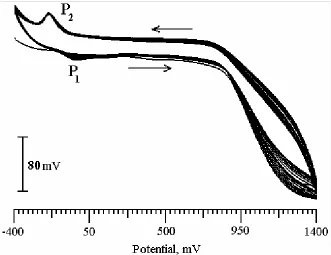
Fig.1 displays the CV graph of (PR) electro polymerization over range of -400 to 1400mV at 100mV/s for 20 cycles.
Figure 1. Cyclic voltammogram of preparation of poly(PR) film coated CPE. 1mM PR in 0.01M NaOH at 20 cycles with sweep rate of 100mVs-1.
incessant scans and peak current also decreased continuously. Both p1 and p2 trends will be stabilized after 20 cycles, these facts suggests that the initial formed poly(PR) film had a leaching process with scan cycles increasing up to 20 times, which may be implied a self adjustment of the polymer film thickness at CPE. The electro deposited behavior of PR at modified CPE was similar to some reports [24-26] referring to the electrochemical responses of few azo compounds at solid electrode. The reaction mechanism could be explained as fallows [Scheme. 1] PR (A) was first deposited at surface of CPE and oxidized to form a benzoquinone diimine structure (B) (peak 1); (2) and then the benzoquinone diimine structure (B) was reduced to PR (A) (peak 2) at the surface of CPE. Fig 1 exhibits the typical voltammogram of poly (PR) electrode.
Scheme 1. Mechanism of poly(PR) electrode reaction
[image:4.612.141.472.398.687.2]
3.2. Electrocatalytic oxidation of DA at poly (PR) modified CPE
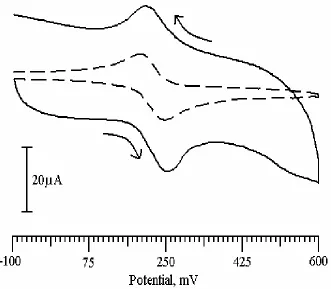
Cyclic voltammogram of DA in pH 5.4 ABS at a bare CPE and poly (PR) film modified CPE was recorded (Fig. 2). At bare CPE (dashed line) a pair of redox peak showed poor electrocatalytical activity with anodic peak potential of 282mV and cathodic peak potential of 227mV. Under the same condition poly (PR) modified CPE (solid line) gave birth to significantly enhanced peak current and more reversible electron transfer process to DA with slight shift in redox peak potentials. A well defined redox wave of DA was observed with anodic and cathodic peak potential at 248mV and 192mV respectively. Intensive increase in peak was also observed owing to the improvement in reversibility of electron transfer process and the larger real surface of poly (PR) film. This suggests an efficient oxidation reaction toward DA at the poly(PR) modified CPE.
[image:5.612.161.451.241.677.2][image:6.612.131.484.157.451.2]
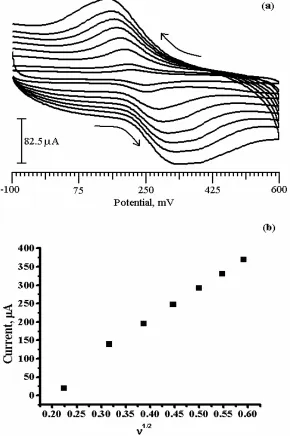
The effect of scan rate on the anodic peak current of DA was studied by cyclic voltammetry. The scan rate increasing, the anodic peak current (Ipa) increased (Fig.3a and Fig.3b). A good linearity between the square root of scan rate and Ipa was obtained with the range of 50-350 mV/s, suggesting a surface controlled process on the modified electrode surface. The correlation coefficient was found to be 0.9956.
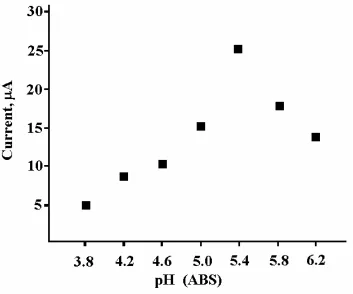
Figure 4. Graph of DA current vs different pH
The effect of pH of the formal potential E0, peak current were examined by cyclic voltammetry in the presence of 1x10⁻⁴M DA (Fig.4). With increase of pH 3.8 to 6.2 both the Epa shifted negatively and were dependent linearly on pH. It could be observed that both oxidation and reduction peak current obtained maximum at pH 5.4, which could be partially explained on the basis of the dissociation ability of –SO3- and COO- groups of poly(PR) film in different pH environment. When the
solution pH 5.4, -SO3
and COO- group of poly (PR) film could dissociate favorably into negative charge group under this condition the alkaline NH2 group of DA molecule could obtain and form the
positive ion of DA. The negative charge group of –SO3 and COO- on the surface of poly (PR) modified
electrode had a well affinity to DA positive ion and could catalyze and promote the oxidation of DA in the weak acidic mediator [pH 5.4]. While pH was below 5.4 the –SO3- and COO- group of poly (PR)
could form –SO3- and COO- and exclude the DA positive ion. However when pH value was beyond
be overlooked that poly (PR) film at electrode acted as mediator of electron transfer for DA’s oxidation. Whose electron transfer process could be affected by pH. Indeed, the anodic peak current of poly (PR) film reaction at CPE was observed to increase with increase pH of 3.8 to 5.4.
It identified that with increase in pH the rate of electron transfer of poly(PR) film could also increase gradually, which was advantageous to the electrocatalytic reaction of DA at the poly(PR) coated electrode. Thus pH was a dual – conditioner to the oxidation of DA at poly(PR) coated CPE. On one hand, increase in pH of electrolyte solution from 3.8 to 5.4 could promote the formation of the –SO3- and COO- on poly (PR) film, resulting in that poly(PR) modified electrode had well affinity to
the DA positive ion and enhanced the oxidation of peak current of DA. On the other hand it could lower the rate of electron transfer of poly(PR) leading to the decreased oxidation peak current of DA. The result shows at pH 5.4 was an optimum protocol on the electrocatalytic oxidation of DA at poly(PR) modified CPE. According to the above discussions, the course of DA’s oxidation at the poly(PR) membrane modified CPE could be described as in the scheme. 2 [12, 27, 28].
Scheme 2. Mechanism of DA reaction at the poly(PR) CPE
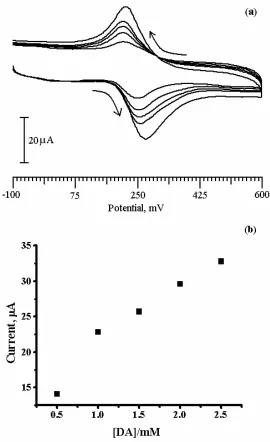
Figure 5. (a) Cyclic voltammogram of DA at different concentration (a – e; 0.5X10⁻⁴M, 1X10⁻⁴M, 1.5X10⁻⁴M, 2X10⁻⁴M, 2.5X10⁻⁴M).(b) Graph of current vs concentration of DA.
3.3. Electrocatalytic oxidation of AA at poly (PR) modified CPE
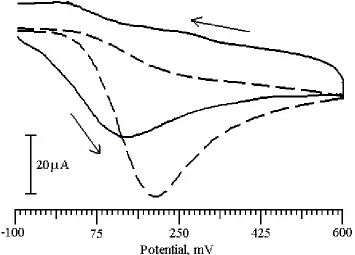
Figure 6 shows cyclic voltammagram of AA 1x10⁻³M in pH 5.4 ABS at a bare CPE (dashed line) and poly(PR) film modified (solid line) CPE at 50mV/s. At the bare CPE and a wide oxidation peak at a potential of about 228mV was observed.
[image:8.612.169.439.76.518.2][image:9.612.128.483.147.402.2]
within the range of 50 to 350mV/sec implicating that the electrocatalytic oxidation of AA, the poly (PR) coated electrode was controlled by diffusion process. The effect of pH on the response of poly (PR) modified CPE toward AA was examined by CV in solution. It could be observed that anodic peak current reaches maximum at pH 5.4.
Figure 6. Cyclic voltammogram of 1X10⁻³ M AA in 0.2 M acetate buffer solution of pH 5.4 at bare CPE (dashed line) and poly(PR) film coated CPE (solid line).
3.4. Electrocatalytic oxidation of UA at poly (PR) modified CPE
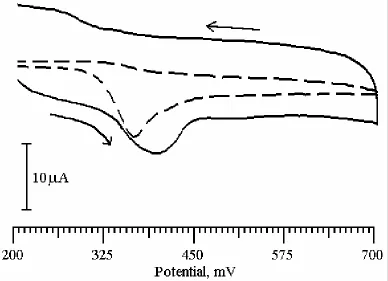
In pH 5.4 ABS, the poly (PR) modified CPE also possessed strongly electrocatalytic action for UA (Fig. 7). Regardless at a bare CPE or at the poly(PR) coated electrode, only could the oxidation peak be observed in pH 5.4 ABS, which confirmed that electrochemical reaction of UA was an irreversible process. At the bare CPE the oxidation peak observed for 1x10⁻³M was patulous with potential of about 412mV. Meanwhile at the poly(PR) modified CPE, the anodic peak potential produced a little positively shifted and the shape of the oxidation became high, short and symmetrical at the potential of 302mV. It certified that the poly(PR) film at electrode coat intensively catalyzed the electrochemical oxidation of UA in pH 5.4 ABS.
Figure 7. Cyclic voltammogram of 1X10⁻³ M UA in 0.2 M acetate buffer solution of pH 5.4 at bare CPE (dashed line) and poly(PR) film coated CPE (solid line).
3.5. Simultaneous determination of DA, AA and UA in the same sample by CV
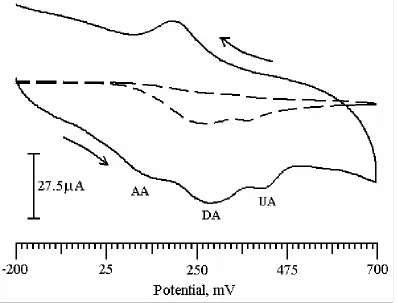
Based on the electro catalytic action of poly (PR) film to DA, AA and UA, it was supposed that the poly (PR) modified electrode could conspicuously improve the voltammetric resolution of DA, AA and UA. To ascertain the presumption, the cyclic voltammagram of mixture solution containing 2.5X10⁻⁴M DA, 1X10⁻³M AA and 5X10⁻⁴M UA in ABS of pH 5.4 were recorded with the rate of 50mV/sec at a bare CPE and modified PR CPE as shown in the Fig.8
[image:11.612.109.507.127.430.2]
pretreated electrode. It further identified that poly (PR) modified CPE possessed higher active surface area and excellent electrocatalytic activity for the oxidation of DA, AA and UA.
Figure 8. Simultaneous determination of 2.5X10⁻⁴M DA,1X10-3M AA and 5X10⁻⁴M UA at bare CPE (dashed line) and at poly(PR) film coated CPE ( solid line).
4. CONCLUSIONS
The prepared poly (PR) film modified CPE exhibits highly electrocatalytic activity to the oxidation of DA, AA and UA. The modified electrode displaces higher selectivity in voltammetric measurements of DA, AA and UA in the mixture solutions. The separations of the oxidation peak potentials for AA – DA and DA – UA are about 163mV and 125mV respectively by cyclic voltammetry with good sensitivity; excellent detection limit 1X10⁻⁸Mand the proposed technique provides a possibility for simultaneous detection of DA, AA and UA in biological samples.
References
2. R. Raghavendra Naik, E. Niranjana, B. E. Kumara Swamy, B. S. Sherigara, H. Jayadevappa Int. J. Electrochem. Sci., 3 (2008) 1574.
3. Ongera Gilbert, Umesh Chandra, B.E. Kumara Swamy, M. Panduranga Char, C. Nagaraj, B.S. Sherigara Int. J. Electrochem. Sci., 3 (2008) 1186.
4. R. M. Wightman, L. J. May, A. C. Michael, Anal. Chem., 60 (1988) 769A.
5. K. Hayash, Y. Iwaski, R Kurita, K. Sunagawa, O.Niwa, Electrochem Commun. 5 (2003) 1037. 6. K.H. Xue, F.F. Tao, W. Xu, S.Y. Yin, W. Shen, W. Xue, Chem. Phys. Lett. 391 (2004) 243. 7. J. Wang, M. Li, Z. Shi, N. Li, Z. Gu, Microchemical Journal, 73 (2002) 325.
8. Q. Li Y.Wang G.Luo, Mater. Sci. Eng. C 11 (2000) 71.
9. H. Razmi; M. Agazadeh; A. B. Habibi, J. Electroanal.Chem. 547 (2003) 25. 10.Y. Shuai, H. Shengshui, Electrochimica Acta, 49 (2004) 4287.
11.W. Yan, L. Maoguo, J. Shoufeng, H. Qinan, W. Guangfeng, F. Bin, Electrochimica Acta, 52 (2006) 766.
12.T. Selvaraju, R. Ramaraj, Electrochemistry Communications, 5 (2003) 667. 13.R.R. Protiva, O. Takeyoshi, O.Takeo, Bioelectrochemistry, 59 (2003)11. 14.M. Grzegorz, C. Aleksander, Electroanalysis, 16 (2004) 1977.
15.Z. Hong, Z. Yuzhong, Y. Zhuobin, Analytica Chimica Acta, 441 (2001) 117. 16.M. C. Shen, I. L. Meei, Journal of Electroanalytical Chemistry, 579 (2005) 153. 17.X. C. Chen, H. X. Kuan, Microchemical Journal, 61 (1999) 183.
18.E. Niranjana, R. Raghavendra Naik, B.E. Kumara Swamy, B.S. Sherigara, H. Jayadevappa, Int. J. Electrochem. Sci., 2 (2007) 923.
19.F. K. Tian, L. S. Guo, Q. Y. Ru, Talanta, 43 (1996) 2007.
20.X. Fang, G. Mengnan, W. Lin, S. Guoyue, Z. Wen, J. Litong, J.Jiye, Talanta, 55 (2001) 329. 21.X. Zhiyin, C. Chenxin, X. Wei, L. Tianhong, Journal of Electroanalytical Chemistry, 545 (2003)
19.
22.M. D. Rubianes, G. A. Rivas, Analytica Chimica Acta, 440 (2001) 99.
23.M.Z. Dong, X. J. Huang, Y.C. Hong, Journal of Electroanalytical Chemistry, 408 (1996) 219. 24.A. Eriksson, N. Leif, Electrochimica Acta, 44 (1999) 4029.
25.A. Eriksson, N. Leif, Electrochim. Acta. 496 (2001) 1113.
26.S. Michael, P. Marianne, E. Kerstin, Journal of Electroanalytical Chemistry, 95 (1979) 123. 27. R.L.C. Thiago, Paixão, B.Mauro, Electrochimica Acta, 52 (2007) 2181.
28.K. Yoshitomo, K. Chikara, K. Futoshim, O. Tetsuya, Electrochimica Acta, 52 (2007) 2045.