City, University of London Institutional Repository
Citation
:
Swan, J., Scarbrough, H. & Ziebro, M. (2016). Liminal Roles as a Source of Creative Agency in Management: The Case of Knowledge-Sharing Communities. Human Relations, 69(3), pp. 781-811. doi: 10.1177/0018726715599585This is the accepted version of the paper.
This version of the publication may differ from the final published
version.
Permanent repository link: http://openaccess.city.ac.uk/12611/
Link to published version
:
http://dx.doi.org/10.1177/0018726715599585Copyright and reuse:
City Research Online aims to make research
outputs of City, University of London available to a wider audience.
Copyright and Moral Rights remain with the author(s) and/or copyright
holders. URLs from City Research Online may be freely distributed and
linked to.
City Research Online: http://openaccess.city.ac.uk/ [email protected]
Liminal Roles as a Source of Creative Agency in Management: The Case of
Knowledge-Sharing Communities
Accepted for publication in Human Relations
Jacky Swan
Warwick Business School, University of Warwick.
Harry Scarbrough
Cass Business School, City University London.
Monique Ziebro
National Institute of Business Research
Acknowledgements
The authors would like to acknowledge the contributions to the empirical study of Professor Davide Nicolini and Dr Juliane Schwarz.
Liminal Roles as a Source of Creative Agency in Management: The Case of
Knowledge-Sharing Communities
Abstract
Studies suggest that the experience of liminality – of being in an ambiguous, ‘betwixt and
between’ position – has creative potential for organizations. We contribute to theory on the
link between liminality and creative agency through a study of the coordinators of
‘knowledge-sharing communities’; one of the latest examples of a ‘neo-bureaucratic’ practice
that seeks to elicit innovative responses from employees while intensifying control by the
organization. Through a role-centred perspective, our study found that both the structural and
interpretive aspects of coordinators’ role enactments promoted a degree of creative agency.
‘Front-stage’ and ‘back-stage’ activities were developed to meet the divergent expectations
posed by senior management and community members, and the ambiguity of their roles
prompted an array of different role interpretations. Our findings contribute to theory by
showing how the link between liminality and creative agency is not confined to roles and
spaces (consultancy work, professional expertise) that are positioned across organizational
boundaries, or free from norms and expectations, but may also apply to roles that are
ambiguously situated within organizational contexts and which are subject to divergent
expectations. This shows how neo-bureaucratic forms may be both reproduced and renewed
through the creative responses of individual managers.
Keywords: Liminal, managerial practice, role enactment, knowledge-sharing community,
Introduction
The notion of ‘liminality’ has proven to be a powerful concept for addressing the experience
of individuals who find themselves ‘betwixt and between’; at the limits of existing structures
(Turner, 1995). From a construct developed in the field of anthropology (Gennep, 1960), this
notion has also begun to be applied to individuals working within conventional organizational
settings (Czarniawska and Mazza, 2003; Garsten, 1999). In these latter studies, researchers
have found liminality to be a source of ‘creative/ learning potential’ (Sturdy et al., 2009).
Such potential is attributed to the suspension of the usual constraints of organizational life –
routines, rules, boundaries and the expectations of others (Tempest and Starkey, 2004; Sturdy
et al., 2009; Gioia et al., 2010) – and to the ambiguous nature of the positions held by these
individuals (Garsten, 1999; Iedema et al., 2004). Liminality in organizational settings has
also, however, been associated with negative consequences arising, for example, from lack of
affiliation, weakened power and reduced access to opportunities for learning (Tempest and
Starkey, 2004; Borg and Soderlund, 2015).
The present study aims to build on this recent work in several ways. While previous work has
focused on inter-organizational roles - for example, consultants (Sturdy et al., 2009) or
mobile project workers (Borg and Soderlund, 2015) - the primary aim of our study is to apply
the notion of liminality to the conduct of certain managerial roles within organizations.
Specifically, we address the question of liminality’s creative potential (Tempest and Starkey,
2004), through an empirical study of how such liminal roles are enacted by the individuals
concerned, thus recognizing the scope for creative agency in relation to the structural
attributes of a particular role within an organization.
A secondary aim of our work is to situate liminality and its creative potential within a wider
organizations. Neo-bureaucracy has been defined as a hybrid form in which ‘new and more
distributed modes of organization (are) juxtaposed with bureaucratic modes of coordination
and control’ (Farrell and Morris, 2013, p. 1389). The notion of liminality has been used to
better understand the way certain occupational groups have experienced this shift in
organizational life. Liminality is discussed as the ‘modern condition’ for such groups
(Czarniawska and Mazza, 2003). It is seen as reflecting the conflicting demands that
neo-bureaucracy places on employees through its combination of the intensified control of work
and the pursuit of innovation and creativity (Garsten and Haunschild, 2014). However, while
writers have argued that a shift towards neo-bureaucracy is transformative of the work
experience deep within corporate organizations and not simply at the periphery (Sturdy et al.,
2015), much of the work on liminality to date has focussed either on groups situated outside
or at the margins of such organizations (such as temporary workers). Much less is known
about the liminality experienced by managerial groups within organizations under the
conflicting pressures of neo-bureaucratic conditions.
A focus on managerial roles within organizations thus enables us to relate liminality to the
more pervasive spread of neo-bureaucracy. That spread has previously been characterised in
terms of the adoption of innovative management practices, such as project-based organizing
within large hierarchical organizations (Garsten and Haunschild, 2014; Clegg and
Courpasson, 2004). We therefore focussed our inquiry empirically on one such practice,
namely organizationally-based knowledge-sharing ‘communities’, which has been adopted
by an number of large organizations in both public and private sectors. Like project-based
forms of organizing, these communities exemplify the neo-bureaucratic attempt to mitigate
the rigidities of corporate hierarchies (Clegg and Courpasson, 2004). They operate alongside
project team and functional structures, and have been developed to improve organizational
boundaries (Kirkman et al., 2013). As such, they provide an interesting site to study the
enactment of liminal roles.
To ground our inquiry empirically, we focus on the managerial role most closely associated
with these communities. In broad terms, the role of ‘community coordinator’, as we term it in
this paper (other labels include network leader and facilitator), involves developing and
directing communities’ knowledge-sharing efforts (Wenger et al., 2002). We identified
community coordinators as a suitable group for our study, not only because their role reflects
the ‘neo-bureaucratic’ condition identified in previous work, but also because it can be
readily characterised as liminal since its occupants are situated ‘betwixt and between’ senior
management and the communities that they support.
Our analysis of this group provides us with important insights into the enactment of liminal
roles, showing how both the structural and interpretive aspect of such roles may be a source
of creative agency within management. This analysis, in turn, contributes to a greater
understanding of managers’ capacity to accommodate the conflicting demands created by
neo-bureaucracy within their organizations.
Liminality and creative agency
The notion of liminality was originally used to describe the experience of individuals
undergoing ‘rites of passage’ (van Gennep, 1960), and was subsequently defined by Turner to
encompass activities and people which lie ‘betwixt and between the positions assigned and
arrayed by law, custom, convention and ceremony’ (1977: 95). In reviewing the literature that
has applied the concept to organizational settings, Beech (2011) makes a helpful distinction
2012), and another where it encompasses an enduring ‘experience of ambiguity and
in-betweenness within a changeful context’ (p. 288). This latter strand is the focus of this paper,
and within this literature we include both those studies which have explicitly used the term
‘liminality’, and other work that has addressed the experience of ambiguity within
organizational roles. This inclusive view of liminality thus takes in a variety of occupational
groups and organizational settings including the work of consultants, temporary staff and
contractors (Garsten, 1999; Czarniawska and Mazza, 2003; Sturdy et al., 2009; Borg and
Soderlund, 2015).
Although the primary emphasis in many of these studies is on liminality’s implications for
organizational subjectivity and self-identity (Garsten, 1999; Ybema et al., 2009; Ellis and
Ybema, 2010), one recurrent theme, which we outline below, is the perceived association
between liminality and the creative agency of individuals and organizations. This theme is
consistent with Turner’s (1982) argument that actors in a liminal position are ‘temporarily
undefined, beyond the normative social structure’ (p.27). This is seen as being a source of
weakness, but also ‘liberates them from structural obligations’ (p.27), hence encouraging
playfulness and the exploration of new possibilities (Turner 1982, 1987).
In the management and organization studies literature, this liberating aspect of liminality may
be seen as manifesting itself in a number of different ways. It may be the result of
individuals’ attachment to radical values and beliefs which makes them ‘outsiders within’
organizations whose ‘enduring ambivalence’ is seen as having creative and transformational
potential (Meyerson and Scully, 1995; Meyerson, 2003). In other studies, the liberating effect
of liminality is viewed, rather, in terms of temporary or equivocal organizational membership
(Garsten, 1999; Wright, 2009), and the ‘spaces’ in which change agents and consultants
In each of these arenas, liminality’s creative potential in overcoming the constraints posed by
traditional organizational structures is underlined. One study of temporary workers, for
example, argues that ‘for organizations, the release from structures that bind too tightly can
be positive for organization performance, for example promoting innovation as liminal
situations are conducive to transcendence and play’ (Tempest and Starkey, 2004: 509).
Similarly, Garsten (1999) sees the individual in a temporary work role as ‘an ambiguous
figure, capable of upsetting normative orders and of transcending institutional boundaries’
(p.607). Meanwhile, Howard-Grenville et al. (2011) find that liminality may help insider
groups to produce cultural change by ‘opening crevices in the everyday for change’ (p. 523).
This enables them to recombine ‘new cultural resources with elements of an organization’s
existing cultural repertoire’ (p.523), such that new management ideas and approaches to
sustainability, for example, can be combined with elements of existing managerial practice in
this area.
However, there is also evidence in the literature for what Turner terms the ‘weakness’ of
liminal positions, with studies highlighting their negative as well as their positive aspects.
Czarniawska and Mazza (2003), for instance, note that liminality may be both exhilarating
and frustrating for those experiencing it. Others relate these ‘frustrations’ to the influence of
the wider context on liminality. As Howard-Grenville et al. (2011) note, liminality needs to
be viewed relationally, inasmuch as it draws ‘from the symbols and meanings that operate in
the more structured or routine aspects of cultural life’ (p. 525). Similarly, Sturdy et al. (2006)
see liminal spaces as existing in parallel to more formal organizational spaces, and conclude
that they can be ‘highly structured and conservative as well as being creative and unsettling’
(p. 931).
This ongoing debate in the literature between the structured and creative, or the frustrating
to inform theory on the relationship between liminality and creative agency by showing how
liminal roles are enacted within the structured contexts of organizational settings. In doing so,
we respond to calls to extend research on liminality to different organizational contexts (Borg
and Soderlund, 2015). Following the previous work outlined above, we also set ourselves the
broader aim of situating liminality within the emergent phenomenon of ‘neo-bureaucratic’
forms of organizing. Our study therefore focusses on liminal managerial roles situated within
organizations rather than on their periphery. Here our concern with managerial roles (a
primary expression of bureaucracy - Clegg and Courpasson, 2004) is consistent with this
broader aim, and is also underlined by studies suggesting that role characteristics may be
important in shaping the scope and effects of liminality (Ellis and Ybema, 2010; Sturdy et al.,
2009).
Liminality and organizational roles
To address our research aims, our study applies the theoretical lens of organizational roles.
Our starting point for this is conventional role theory, where a role is defined as a position
occupied by an individual in the context of a social relationship (Merton, 1949). This is seen
as shaped by the interactions and expectations of a role incumbent and the groups relevant to
their work (Biddle and Thomas, 1966), thereby underlining the point that roles may be a site
of tensions and role conflict (Katz and Kahn, 1978). This conventional view thus draws
attention to the structural aspect of liminality – the in-betweenness of the role – and the
pressures exerted by role expectations and norms.
In this perspective, liminality might be defined in terms of the weak or non-existent influence
that existing norms and expectations exert on individuals in liminal positions. Following this
structural context to be the primary source of the creative potential in liminal roles (Garsten,
1999; Tempest and Starkey, 2004). Such roles might then be contrasted with individuals
occupying more ‘embedded’ (i.e. long-established and structurally central) positions which
are seen as more subject to the ‘perceived expectations’ of powerful actors (Cornelissen,
2012).
However, there is another important strand in work on organizational roles which questions
this structural emphasis on norms and expectations. This highlights the scope for individuals
to make sense of, and ‘enact’ their roles, even within these constraints (Fondas and Stewart,
1994; Mantere, 2008; Borg and Soderlund, 2015). As Lynch puts it, ‘individuals do not
simply play the roles that are handed to them; rather, they ‘make’ the roles they enact’
(Lynch, 2007: 384). This emphasis on enactment suggests that the ambiguity of liminal
positions may contribute to creative agency by providing individuals with greater flexibility
to make sense of their role (Sveningsson and Alvesson, 2003; Weber and Glynn, 2006).
Liminal roles and the organizational context
Liminal roles in organizations fall into the category of a more enduring form of liminality
(Beech, 2011). Recent studies have helped to shed some light on the characteristics of such
roles, albeit with a focus primarily on groups operating outside or across organizational
boundaries (Ellis and Ybema, 2010; Borg and Soderlund, 2015). Thus, a study of
‘Inter-Organizational Relationship’ (IOR) managers (Ellis and Ybema, 2010) defined their
liminality in terms of the boundary position that they occupied in-between different firms.
This ambiguous position – ‘both an insider and an outsider at the same time’ (ibid. p. 301) -
is seen as requiring them ‘to navigate between multiple and sometimes contradictory
p. 281). This study thus underlines how role characteristics are important constituents of
liminal work in organizations, especially where the work involves responding to expectations
from different groups. Borg and Soderlund (2015) show, further, how mobile project
workers’ differing interpretations of ostensibly similar roles generate variety in their
competencies.
At the intra-organizational level, a few studies have been conducted on groups whose roles
may involve some experience of liminality. These include ‘knowledge brokers’ -
professionals, scientists and others - whose work can be said to span groups or organizational
boundaries ( Zabusky and Barley, 1997; Hargadon, 1998; Iedema et al., 2004). One recent
example is provided by a study of individuals occupying formally designated roles as
knowledge brokers in the English healthcare system (Chew et al., 2013). This found that,
while many of these individuals experienced ambiguity and isolation in their roles, some
were able to view this ambiguity positively as allowing them freedom to respond to their
context.
Compared to the above groups, less attention has been paid to liminality amongst managers.
An important exception here, and a useful parallel to the present study, is provided by the
work of Wright (2009) on ‘internal consultants’ within organizations. This group occupy an
‘ambiguous organizational location, being permanent employees but also operating outside
the traditional activities and structures of the business organization’ (Wright, 2009: 310). This
study found that individuals operating in this ambiguous location sought to construct a
variety of distinct identities for themselves ranging from ‘trusted adviser’ or ‘partner’ to
‘expert’ and ‘service provider’. For many internal consultants, the structural ambiguity of
their roles was seen as supporting individual agency by promoting ‘a strongly positive
Some individuals, however, felt themselves marginalized, seeing themselves as ‘outcasts’
from the mainstream organization.
In constructing these identities, however, individuals faced constraints on the extent to which
a more autonomous, elite identity could be accepted within the organization, as opposed to a
more traditional bureaucratic role. They also found it necessary to pursue senior management
patronage and organizational legitimacy for their activities. Similar findings emerge from a
study of another liminal group; ‘staff professionals’ in the area of Occupational Health and
Safety (Daudigeos, 2013). This group also suffered from a lack of hierarchical power and
formal authority, but overcame their marginal positions by networking and engaging in
‘unobtrusive influence tactics’. While not the principal focus of the studies described above
(which are more concerned with issues of power and identity), such findings do underline the
need to address the influence of the structural context if the agency of individuals is to be
fully understood.
Liminal roles: the case of the coordinators of knowledge-sharing communities
In recent decades, organizations across a range of sectors (Argote and Miron-Spektor, 2011)
have ‘translated’ (Gherardi, 2009) the original concept of a ‘community of practice’ (Lave
and Wenger, 1991; Handley et al., 2006) into a practical mechanism for encouraging
knowledge-sharing amongst their members so as to address organizational goals. This has
involved host firms providing financial and IT support (McDermott and Archibald, 2010) for
what have been termed ‘Organizational Communities of Practice’ (Kirkman et al., 2013).
Our empirical study focusses on the ‘coordinators’ who manage such communities within
organizations. Despite some variation in job titles, these individuals carry out broadly similar
roles in developing and directing communities’ knowledge-sharing efforts (Wenger et al.,
described in the existing literature (Beech, 2011). Their roles are ambiguous and relatively
underspecified, often lacking formal job description. They are also liminal in employment
terms, since many coordinators carry out their work as an add-on to a full-time job. In
structural terms, these roles are also situated ‘betwixt and between’ since their work with
knowledge-sharing communities typically falls outside the mainstream organization structure
(Agterberg et al., 2010), yet they remain accountable (to varying degrees) to higher levels of
management for their activities.
These features of the role are a reflection of the uncertain status of the communities which
they serve. These communities have been developed to overcome the constraints on
collaboration posed by organizational boundaries, and hence are overlaid upon, and
juxtaposed with, existing structures and have to operate with, at best, limited organizational
support and resources (Wenger et al., 2002). Hence they provide interesting example of
neo-bureaucratic organization, as defined by Farrell and Morris (2013). Rather than pursuing
specific task objectives, their aim is to promote voluntary knowledge-sharing amongst a
dispersed community membership. As a result, they may also conflict with formal job
descriptions and reporting relationships (Wenger et al., 2002).
Our empirical study sought to contribute to theory by focussing on the role enactments of this
particular managerial group. Our specific aims were to identify how liminality was
manifested in these role enactments, and its implications for the creative agency of the
individuals concerned. Role enactment was defined in an inclusive way to include; a) the
individual’s perceptions of the expectations of other relevant groups with respect to his/her
role (Cornelissen, 2012; Mantere, 2008), and b) the interpretation and situated practices
which individuals creatively developed in their interactions with other groups (Bechky,
Methods
Sample and Context
Our sample of knowledge-sharing community coordinators had roles with characteristics
typical of liminal positions, including a lack of standardized job titles or, in some, cases any
formal title whatsoever. Further, these roles were typically (in over 80% of cases) held on a
part-time basis, being appended to jobs within an existing department or function, without
any formal position in the hierarchy, career or performance evaluation structure. While a few
coordinators were relative newcomers, the vast majority had held the position for at least 12
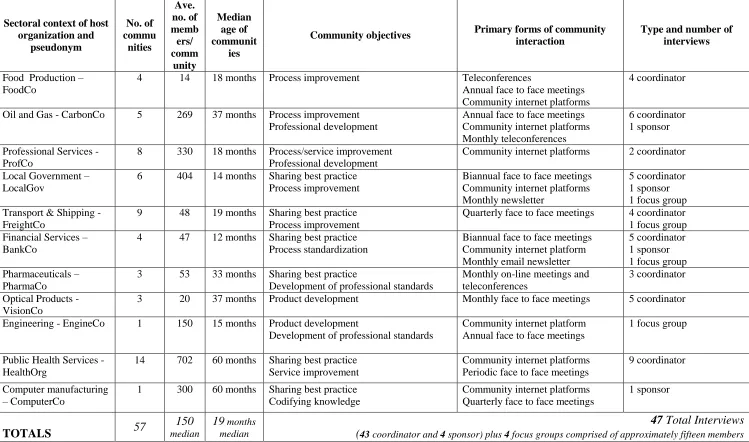
months. Our final sample comprised 43 coordinators, spanning a total of 57 communities and
11 organizations (the norm was one coordinator for each community, but in a few cases, the
coordinator role was shared between individuals, and in others one individual coordinated
multiple communities).
To ensure that group selected for study were indeed coordinating ‘knowledge-sharing’
communities, albeit being given different labels within their organizations, our inclusion
criteria were as follows: at least ten active members; some degree of formal recognition by
the organization; designated managerial roles; knowledge-sharing centred on organizational
goals; and collaboration and dialogue across organizational boundaries (as opposed to
within-function groups or activities focused on dissemination only, such as email distribution
lists or information posts - Faraj et al., 2011).
To help generalize our findings, we sought a diverse range of communities and host
organizations, including different industrial settings and representation from both public and
access, and the still limited number of organizations which have made serious progress in
developing these communities. Of the sample as a whole, 20 of the communities were hosted
by public sector bodies (6 in local government and 14 in the health sector) and 37 were
hosted by nine private sector multinationals (encompassing petroleum, foodstuffs,
pharmaceutical, consultancy, transport, manufacturing and high technology sectors). The
median age of the sample of communities was 19 months, underlining their relative novelty
within organizational settings. They employed a mix of communication media to support
member interactions, including face to face meetings, email, and internet-based platforms of
varying levels of sophistication. Details of community characteristics are shown in Table 1.
INSERT TABLE 1 NEAR HERE
Data Collection
The primary method of data collection involved semi-structured interviews with each
community coordinator (n= 43) and, in a few cases, senior managers sponsoring the
communities (n=4). For certain communities, this was supplemented with ‘focus group’
interviews comprised of community members (see Table 1). Interview methods were chosen
for two main reasons. First, as discussed above, role enactments encompass both the
individual’s perceptions of the expectations of other relevant groups (Cornelissen, 2012) and
the interpretations and situated practices which individuals creatively develop (Bechky,
2006). Coordinators themselves, then, are key informants on their own role expectations and
practices, as well as motivations and understandings that underpin them (Mantere, 2008).
The second reason was pragmatic. Whilst other studies (e.g. Bechky, 2006) have used direct
observation to study role practices, this would have been very problematic in this setting,
where much of the coordinator activity and interaction was on-line, widely dispersed and
opportunities presented themselves. Very extensive periods of shadowing would be needed in
such a setting if anything other than a small glimpse of role enactments were to be observed.
While this might be interesting for future work, it would have severely limited the practicable
size of our sample and the generalizability of our findings.
Individual interviews were conducted at the workplace and lasted from approximately
forty-five minutes to one hour and fifteen minutes. In the event that a face-to-face interview was
not possible, the interview took place via telephone (n=19). The purpose of the interviews
was to develop an understanding of the community and, in particular, the community
coordinator’s role within it. Interview questions focussed on their personal involvement in
activities, perceptions of expectations, and challenges encountered. These data were
supplemented with the management sponsor interviews and focus-groups, as well as any
documented information on the community’s development, objectives and achievements, in
order to create a rich context for interpreting the coordinators’ responses.
Data Analysis
To address our objectives, we applied a broadly inductive approach to our data analysis,
while ensuring that this was informed by relevant theory in our construction of thematic
headings. The use of existing themes to inform analysis did not prevent the possibility of new
interpretations and theoretical contributions (Eisenhardt and Graebner, 2007), but, rather,
helped to generate multiple interpretations for the overall data set. The analysis incorporated
three distinct steps. The first sought to examine role expectations as perceived by the
coordinators, while the second identified the specific role practices enacted by coordinators.
The third step examined the ways coordinators interpreted their roles and their creative
agency in enacting them.
This began by identifying all the statements in the coordinator interviews that related to the
outcomes and contributions desired of their community activities via open coding (Locke,
2001). It became clear early on that these statements concerned, on the one hand, the needs
and expectations of the community and its members and, on the other, needs and expectations
of senior managers, with very little overlap between the two. For this reason, we clustered
data around expectations relating to members and managers as different interest groups. For
each cluster, we formed provisional categories (first-order codes), using NVIVO software to
support the coding process. We then moved to axial coding (Strauss and Corbin, 1990),
integrating first order categories into higher order, researcher-induced themes pertaining to
perceived role expectations. For example, first order categories relating what members hoped
to get out of joining the community (e.g. skills development, improved profile, freedom to
explore) were grouped together into the theme of ‘motivation’. Although not our primary
concern, we did observe that all of the higher order themes identified in interviews were also
discussed by other groups in our sample (e.g. senior managers), so lending some
corroboration to our categories.
Step 2 - Role Practices.
Again we used open coding on all coordinator interviews to identify any specific practices
described by coordinators (i.e. things they ‘did’ in their role). These statements were then
grouped into first-order codes (e.g. things they did to identify members) and consolidated into
higher order themes (categories of practice in this case - Strauss and Corbin, 1990). For
example, first order codes about ‘identifying members’ and ‘managing membership’ became
part of the higher order theme ‘developing membership’. We recognize the difficulties of
linking statements to themes in this way, not least that some themes overlap or are not
mutually exclusive. The whole team then discussed whether there were any underlying
categories revealed and existing theory. This led to a further observation that some practices
seemed to be oriented internally toward the community itself, whilst others were oriented
externally (in the sense of being focussed outside the community) towards the concerns of
senior management. Drawing on Goffman (1959) and Faraj et al. (2011), we labelled these
role practice orientations as ‘back stage’ and ‘front stage’, respectively. Having determined
this as a potential framework, we then re-examined how far the original categories fitted with
our emergent theoretical understanding (Locke, 2001).
Step 3 - Role Enactments and Creative Agency.
In this step we wanted to develop a richer account of creative agency in role enactments by
analysing narrative accounts given by coordinators of how they experienced their roles and
how they developed (or tried to develop) communities in their organizations. We began by
identifying larger segments of text where interviewees had given accounts that tried to make
sense of their roles, the practices they had engaged in and the challenges they had faced in
developing communities. These might entail, for example, stories about of how they came to
be in the role, particular examples of success and failure, and hurdles encountered and/or
overcome. Thus we focused on the ‘realm of experience’ where speakers laid out how they
experienced certain events and conferred their subjective meaning onto these experiences
(Bamberg, 2010). Whilst, as our analysis below shows, liminality certainly featured in these
accounts and provided opportunities for (and challenges to) creative agency, it was also clear
that the coordinators applied their creative agency in diverse ways. Next, we searched across
these narrative accounts for patterns in how roles were enacted by coordinators, focussing on
the creative agency entailed and the practices (identified in Step 2) that were emphasized.
The idea here was not to develop a ‘typology’ of liminal roles but, rather, to identify patterns
in terms of how role incumbents creatively enacted their liminal roles. To ensure
approach based on ‘peer debriefings’ and ‘intercoder agreement assessments’ (see Gioa et al,
2010).
Findings
Role Expectations
Figure 1 shows the structure and ordering of the data on coordinators’ perceived expectations
of their roles (step 1) moving from first order categories to researcher-induced second order
themes. Table 2 provides data (in the form of illustrative quotes) on the major themes that
emerged from our analysis of role expectations.
INSERT FIGURE 1 AND TABLE 2 NEAR HERE
Coordinators generally saw the role expectations arising from senior management as rather
stable, clearly defined (hence measurable), and explicitly normative in relation to tangible
outputs and benefits for the organization (hence the focus on justification and alignment).
They provided a tightly defined frame for the coordinators’ role performance; namely, to add
financial value to the business. In contrast, expectations of community members were viewed
as less explicitly normative, more ambiguous and more changeable. These focused more on
the need to develop the community and grow participation organically (hence the emphasis
on emergence), and to provide mutually supportive, ‘open’ spaces where individuals were
motivated to share ideas that would be helpful to them in their work and careers.
Role Practices
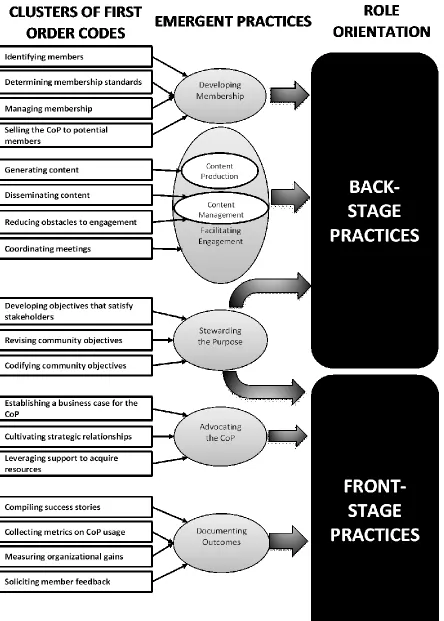
Figure 2 shows the structure and ordering of data on coordinator practices (step 2). We found
here that, despite diverse organizational settings, coordinators had developed five broadly
similar practices in enacting their roles. These we labelled as follows: developing
and documenting outcomes. 74% of informants discussed all five practices in some capacity
during the interview, and 94% discussed at least four of the five. Data on these practices is
illustrated in Table 3.
INSERT FIGURE 2 AND TABLE 3 NEAR HERE
This analysis revealed some practices as entailing interactions with community members and
others as entailing interactions with senior managers of the host organization, mirroring the
divergence in coordinators’ perceived expectations of these groups, seen above. In labelling
these practices as ‘front-stage’ and ‘backstage’ we find a useful analogy with Goffman’s
(1959) theory of self-presentation. Here, front stages are where individuals produce a
managed presentation for an audience, often in pursuit of financial gain. The back stage area,
however, is hidden from the audience, and behaviour is more informal and unstructured. We
acknowledge that our use of these terms does not fully convey some aspects of Goffman’s
original theorizing, but we found them helpful as a shorthand way of highlighting the division
between ‘externally’ and ‘internally’-facing practices, and of distinguishing between
activities which are more visible and formally accountable, and those which are more opaque
to the organization.In their account of on-line communities, Faraj et al. (2011) similarly draw
on Goffman’s terms to differentiate between an outward, public facing narrative produced by
a community and the ‘back narrative’ where the informal and emergent aspects of a
community can assert itself.
In our case, front-stage practices (advocatingthe community and documenting outcomes)
were carefully designed to appeal to an audience of senior managers. Here, the appropriate
norms of the performance seem to have been strongly shaped by coordinators’ perceptions of
the expectations of senior managers described above. Advocating sought to elicit senior
community in terms of its contribution to organizational goals, often in the form of a
‘business case’, using financial metrics to dramatize potential gains. As Justin (CarbonCo)
observed; ‘If I just said to some executive manager I have a way to save a hundred million
dollars, as kooky as I may look…a hundred million dollars doesn’t cost them a cent to listen
and hear what I have to say. You’ve woken them up’. Documenting entailed quantifying
evidence of community usage, successes and organizational gains. The many different
measures developed for this purpose are testimony to the scale of the challenge coordinators
faced in creating justifications of their communities’ existence.
In contrast, back stage practices were opaque to the senior management group, and aimed
instead at creatively developing membership and facilitating engagement among members.
As seen in Table 3, developing membership involved such activities as identifying potential
members, ‘selling’ the community to members and determining membership standards.
Facilitating engagementencompassed, both contributing content to the community (for
example, producing on-line posts, newsletters, themed events, topic reports) and encouraging
others to contribute. Coordinators also sought to build an infrastructure for community
interactions and reduce obstacles to engagement via their scheduling of meetings and the
community’s portal and intranet.
Finally, the practice of stewardship was centred on establishing the community’s purpose and
was directed towards reconciling the expectations of both groups of stakeholders. Most
coordinators were charged with composing an official mandate or objective for their
community. Given the differing expectations involved, this was a very delicate affair, as
objectives agreed on the front-stage with senior management had to be reconciled with the
expectations of community members.
Experiencing liminality - It’s not part of my (or their) day job
When coordinators were asked to describe their role enactments (step 3), they were quick to
mention the vague nature of their jobs with such statements as, ‘My job description is really
quite vague’ (Alex, ProfCo) and ‘In the beginning no one could really tell what a community
was let alone a leader of it’ (Katherine, PharmaCo). Given that roles were only loosely, if at
all, defined, coordinators stressed their efforts in constructing the role for themselves, which
included balancing this role against their full-time role. As one explained, ‘It’s not part of my
day job. It’s something I do in addition. So it’s not, you know, a focussed or dedicated role.
So for me the knowledge champion role is something I have to do in evenings and weekends’
(Aubrey, HealthOrg). Another joked, ‘If you count phone calls at 7 in the morning or ten at
night as just a normal day then yes its part of my day job (laughter)’ (Steve, FoodCo).
Some coordinators found it difficult to cope with a lack of clarity in the role, ‘I don’t think
we have a clear idea of how to work with a community of practice. It’s not like before when I
had a long term project which had a very clear focus’ (Esther, LocalGov). Many also
struggled to gain organizational support. One commented; ‘A number of members were
interested to join but it wasn’t a priority in their day job so their managers didn’t support
them’ (John, FoodCo).
Creative Agency in Role Enactments
While the liminality of the role, and lack of fit with formal processes and budget lines, was
often cast in negative terms, it was also seen as an opportunity for creative agency. For one, it
afforded coordinators greater flexibility; ‘In terms of hierarchy it’s kind of vague unlike other
parts of the organization, which is why we have a lot of flexibility in the things we do… it’s
actually one of the less negative things about working in this job (laughs)’ (Arthur, ProfCo).
way to describe it because you can go after specific strategic things but you also need to
create the space to communicate and unlock potential areas’ (Pauline, FoodCo). The
liminality of the role was also seen by some as politically advantageous, allowing them to
work ‘under the radar’ of senior management. As one explained, ‘In the beginning our
steering committee said ‘A nice idea but don’t do it officially please’ [laughs]. So we did it
unofficially. We are working underground… To be honest I don’t think a formal position
would be a good idea. Then the bosses would expect countable results’ (Aubrey, HealthOrg).
Our analysis also suggested differences across coordinators in terms of how they interpreted
and enacted their roles in the face of the opportunities for creative agency that these role
afforded. In particular, we identified five distinct patterns of role enactments, discussed next.
These are summarised in Table 4 (together with additional illustrative quotes to those below).
While these patterns were somewhat aligned with organizational affiliations, there were also
variations in enactments within organizations, reflecting individuals’ interpretations of their
role.
(i) Knowledge Broker.
Around a third (15/43) of coordinators enacted their roles in a way that we term ‘Knowledge
Broker’; i.e. as facilitators and nurturers (rather than leaders) of others’ knowledge-sharing
practices, including organizing community activities and acting as a point of contact for
forging new relationships across otherwise disconnected areas. As one coordinator put it, ‘I
am not a leader or guider of it. I organize it. I started the community but a community in my
opinion doesn’t need a real leader…It’s more a contact or broker than someone that just
organizes meetings’ (Jean, VisionCo).
Knowledge Brokers often, but not always, assumed these roles because they were subject
lack of resources was seen as a non-issue, even sometimes as beneficial for securing
engagement: ‘So that’s why we worked out it is not going to cost you anything, no
budget,…and here’s how we will contribute to the bottom line’ (Ralph, FoodCo). Rather
than seek their own resources, they found creative ways to ‘piggyback’ on mainstream work:
“I just hop on the back of our monthly meetings with our community stuff. Then I can say ‘it
doesn’t cost you anything and you get extra value from these boring meetings’. What’s not to
like?” (Steve, FoodCo).
Back-stage, community-facing practices aimed at developing membership and securing
engagement by brokering relationships dominated the accounts of Knowledge Brokers: ‘It’s
about engagement, it’s about getting the right people supporting the right activities’ (Pauline,
FoodCo). Knowledge Brokers aimed such engagement activities clearly at current business
problems: ‘I deliberately set out with a doable objective of, not just creating a network of
awareness, but also to physically do a project on a community-wide basis to show people that
this is what we need’ (Steve , FoodCo). They often emphasised a ‘bottom up’ approach – ‘It
came bottom-up and I think that approach has maintained its way’ (Tim, LocalGov) – with an
emphasis on ‘doing things behind the scenes’ (Mark, Local Gov) in order to get others to lead
on community activities.
Positioning their role as ‘central conduits’, however, created its own challenges, especially in
terms of juggling this with other demands: ‘I call my job like spinning plates. You can look
away and start a new area and then a plate can fall’. Many expressed anxiety about the
benefits that their community actually offered to their organization, given that this was often
not directly measured: ‘It’s a platform of opportunity. I don’t know if it’s worked or not in
terms of benefits for the organization’ (Mark, Local Gov) and were worried that, without
(ii) Internal Consultant
Other coordinators (11 in total) constructed their roles as ‘Internal Consultants’, responsible
for the strategic leadership of their communities and accountable to senior management. One
coordinator explained, ‘You’ve got to really put on your consulting hat and understand, sit
down and do a lot of listening about what their business challenges are’ (Dale, BankCo).
Another commented, ‘In our team we try to function as a kind of start-up consultancy within
a large company, and that’s not easy to do’ (Grant, CarbonCo). Others described their work
as business change agents, commenting, for instance, that; ‘For me that’s interesting, to work
like a change agent, so I see an opportunity and I try and aggressively go out for it’ (David,
BankCo).
Creative agency in this group included convincing senior management to allocate resource to
support the community in the form of dedicated time and a small budget from central funds.
In order to do this, these coordinators emphasised a strategic approach, centred on
establishing a convincing business case for the community and measuring its success in hard
economic terms and/or against key performance indicators. One put the case like this; ‘You
will see increased participation and you will see increased human productivity gains and
business value. And we’ve clearly documented the linkage between the two with our success
story programme’ (Grant, CarbonCo).
Strategic rhetoric, emphasising ‘excellence’, ‘vision’, and ‘critical success factors’, was very
evident in their descriptions of role enactment, with such comments as, ‘We’ve got a vision
and there are a number of objectives in there that …will take the whole community forward
and increase its contribution to the organization’ (Betty, BankCo). Front stage practices were
thus very much at the forefront, in particular compiling and documenting success stories and
metrics of community benefits and benchmarking community performance. As one
result’ (David, BankCo). These front stage practices were seen as key to actually generating
participation in the community: ‘So I try to push the most realistic key performance
indicators on everything we do to measure the benefits of collaboration that’s going on. We
would never be able to have as many people working in this area and to be as successful as
we’ve been without right from the beginning documenting success’ (Brad, CarbonCo).
Enacting their roles as Internal Consultants brought with it, however, pressures to deliver in
return for allocated resources; ‘I must demonstrate change improvement in quality so
programme managers can see’ (Thomas, BankCo). Coordinators felt vulnerable if they failed
to deliver added value from the community vision: ‘So if we don’t get this right the senior
people that look to us could quite easily look elsewhere’ (Brad CarbonCo). This kind of role
enactment also generated challenges in terms of securing trust and participation from
community members sometimes suspicious of these coordinators’ apparent alignment with
senior management. As Brad further explained; ‘So we are in communication with Big
Brother, but we are not here as a big stick, we just want to help and that’s the tactic we are
taking. But convincing them is not easy’.
(iii) Avant-Garde.
A third pattern of role enactment (found among 8 coordinators) is characterised by the words
of one coordinator; ‘I see this as an avant-garde role. We forge ahead and use this approach
ourselves and try to demonstrate what comes out of it. So we hold online conferences to
promote the community and …weuse the knowledge that is generated through these
events…to share our products and services’ (Esther, LocalGov). These coordinators saw
themselves as part of an innovative group of self-starters, pushing the boundaries in their
organizations by developing a new way of working – ‘You know we do innovative stuff. It’s
There were no specific resources or time allocated to the role among this Avant-Garde group.
Rather, it was assumed as part of the ‘day job’ primarily because coordinators saw personal
benefit in terms of promoting their own work (products and services) and boosting their
careers within (and sometimes beyond) their organization. In the words of one coordinator;
‘Right now the biggest beneficiary of it is me, in the sense that I get to do things that I
wouldn’t otherwise get to do. I struggle to think of anyone who has benefitted from it more
than I have’ (Esther, LocalGov). Another discussed the benefits of the role for enhancing
their own career, ‘So I’ve built it into my day job myself because I can see the benefit I can
get from networking. It’s a good way to get known in the region’ (Petra LocalGov). The
dominant role practices among this group were hence focussed back-stage on developing
engagement, albeit these were performed in a largely opportunistic, ad-hoc, kind of way:
‘Generally, my approach is suck it and see basically’ (Daniel, FreightCo).
Those constructing their roles as avant-garde saw them as providing unique opportunities to
do novel and interesting work. However, this approach brought with it challenges, in
particular in attaining legitimacy among senior managers. As Matthew (LocalGov) explained;
‘I will be frank here. I think it’s a new way of working and we are kind of bureaucratic and
senior management are sort of wary about being too much associated with it’. All spoke,
also, of the ongoing challenges of engaging community members with this highly ad-hoc
approach – such comments as, ‘I think we’ve got a community of lurkers’ (Petra, LocalGov)
– with the general view being that overcoming these challenges ‘ultimately depends on how
much extra effort you’re prepared to put in and what I get out of it’ (Daniel, FreightCo).
(iv) Service Provider
In this pattern (found among 6), coordinators enacted roles as if they were providing a service
to customers. One coordinator summed up this pattern; ‘In a broad sense I would say they are
community system, and if there are certain drawbacks of the system, they will let us know
and I will gather those requirements, trying to make the system such that it meets their needs’
(Alex, ProfCo). Creative agency here entailed developing backstage practices geared toward
relevant content for community members and revising objectives on an ongoing basis
(stewarding), the latter being seen as crucial if they were to meet ‘customer’ needs. As one
put it; ‘I’m giving them visibility of what the community system can offer so if members
have any questions or want it to be used in another way, we try and provide for that”
(Cecelia, HealthOrg). They involved such activities as gathering information on business
requirements, developing standardised processes and systems (including training for new
members), gathering metrics on community participation (e.g. numbers participating in
events, pages accessed on-line), and feeding back information to senior management.
This group, like Knowledge Brokers, relied on business units for resources, and some had
created formalised processes for charging these units. However, this pattern of role enactment
was more reactive as, once support for a community was in place, it was left to members to
use it; ‘So community members need to be really proactive or nothing much happens’ (John
FoodCo). This left this group vulnerable to lack of engagement and dissatisfaction amongst
members and their managers. Creative agency hence meant treading a line between meeting
the needs of community members and those of operational/business leaders and senior
managers; ‘…keeping everyone on the same page, keeping everyone happy’ (John, FoodCo).
(v) Orphaned Child
The final pattern, seen among 3 coordinators, we termed the Orphaned Child. As one
explained; ‘I found myself like an orphaned child without parents and didn’t know how to
turn and where to turn to. And I think a level of frustration set in because we felt we had
some ideas and we wanted to push some stuff forward and we had no mechanism for doing
abandoned, without support or direction. One recounted her experience of organizing
community events; ‘I thought about organizing another meeting and thought, I will have to
do everything and serve it to them on a silver platter. Because I have worked on this stuff like
a horse for a full year. I’ve worked like crazy and 80% of my colleagues wouldn’t even
recognise what I did because they weren’t interested, they are so busy’ (Katherine,
PharmaCo).
Compared to other patterns, creative agency here was less in evidence. Rather, coordinators
gave accounts of how they had been frustrated and disempowered by lack of support and
feedback from management; ‘So there hasn’t been anybody to act as editor for the discussion
board and it needs somebody watching it every day or else you start to get some dodgy
postings shall we say. So in the end it just became unmanageable so we’ve had to suspend
that’. (Nancy, HealthOrg). Unable to get senior management to attend to their concerns,
these coordinators turned mostly to backstage practices, promoting engagement by, for
example, asking for member contributions and discussion topics.This, however was not
always forthcoming: ‘I am so disappointed. I thought, man! I mean I don’t mind being the
driving force but I want some feedback and I want some help. I am not going to do
everything on my own just to serve my colleagues. They come, discuss, have a nice time get
rid of their emotions and then there is me, the idiot, who does all the work’ Katherine,
PharmaCo).
Analysis
As discussed above, the enactment of organizational roles involves responding to the
expectations attached to a particular position, while interpreting what the role means both for
of the social structure within which a role is embedded, and the agency of the individual who
interprets the role within that structure (Mantere, 2008; Whittington, 1992).
As our findings indicate, coordinators experienced both the ‘liberating’ and the ‘frustrating’
aspects of liminality in their roles. Our analysis, however, allows us to distinguish the way in
which liminality is manifested through these role enactments. In short, liminality in our study
was found to be multi-faceted. It involved not only a structural position of being ‘in-between’
senior managers and community members, but also the related interpretive ambiguity about
the nature of the role itself which was enhanced by its relative novelty and marginal status
against the mainstream organization (the ‘day job’). The implications for creative agency are
therefore discussed, next, in terms of these different facets of role position and role
interpretation. Note, however, that this is a strictly analytical distinction, since both positions
and interpretations are mutually constituted in role enactments.
Role position
In structural terms, the positioning of these roles ‘betwixt and between’ between senior
management and community members meant that, as outlined in Table 2, coordinators
needed to address divergent sets of expectations. As a result, and as summarised in Table 3,
this positioning shaped their practices, producing a division between front and back-stage
practices, together with ‘stewarding practices’ which sought to reconcile divergent
expectations.
The creative agency of individuals emerged through performing on these different stages
since it afforded them greater flexibility to improvise responses to emergent communities on
the back-stage, and to create new forms of justification in front-stage settings (Fondas and
Stewart, 1994). This finding resonates with Zabusky and Barley’s (1997) study of scientists
themselves on the spot for different audiences at different moments’ (p. 282). On the
back-stage then, this agency manifested itself through new practices, such as the use of blogs,
on-line forums and other novel methods designed to increase member engagement. On the
front-stage, it often involved a combination of existing and new ‘cultural resources’
(Howard-Grenville et al., 2011). Evidence for this ‘recombining’ comes from coordinator attempts to
develop measures of community performance that would be acceptable within a corporate
vocabulary. At CarbonCo, for instance, we noted how the coordinator linked their ‘success
story programme’ with business value.
This structural positioning was also reflected in the discursive accounts of our respondents,
where coordinators frequently represented themselves as situated in-between the expectations
ofsenior managers and community members. As indicated in our quotes, coordinators
typically refer to both community members and senior managers in the third person, as
‘them’ and ‘their’ (cf. the references to ‘us’ and ‘our’ organization in the Ellis and Ybema
(2010) study), implicitly distancing themselves and their roles from both these groups.
The importance of divergent expectations in promoting creative agency can be contrasted
with other work which has viewed liminality in terms of relative freedom from norms and
expectations (Lynch, 2007; Tempest and Starkey, 2004). Thus, the Zabusky and Barley
(1997) study found that the scientists’ lack of any allegiance to a particular group allowed
them to remain ‘constantly adrift’ while enabling them to ‘safeguard the integrity of the
mission itself’ (p. 395). Similarly, Ellis and Ybema (2010) in their study conclude that a ‘lack
of attachments…is critical for providing liminal individuals with room for manoeuvre’ (p.
282).
In our study, however, as shown by the close relationship between the expectations outlined
influenced by the expectations of others. The resulting contrast with previous work on the
liberating effects of liminality may reflect a structural difference between the structural
in-betweenness of the coordinator roles in our study and liminal roles played out across the
inter-professional or inter-organizational boundaries seen in other studies (e.g. Czarniawska
and Mazza, 2003; Iedema et al., 2004; Zabusky and Barley, 1997).
Role interpretation
Role enactments not only reflected the structural aspects of role position but were also closely
implicated with individuals’ sense-making, both of the role and of their own personal
involvement in it (Gotsi et al., 2010; Borg and Soderlund, 2015). As Pratt et al. (2006) note;
‘What one does is often compared with expectations about who one is to motivate the
construction process’ (p. 255). Here, we found that the ambiguity of the coordinator role
supported five distinct role interpretations: namely, knowledge broker, internal consultant,
avant-garde, service provider and orphaned child. While certain of these roles (for example,
‘Internal Consultants’ or ‘Avant Garde’) seem to reflect aspirations to preferred or elite
self-identities (as also found in Wright, 2011), in describing their roles, individuals typically drew
on language circulating within the wider organizational context. For example, their accounts
include references to ‘innovation’, ‘change agents’ the ‘bottom line’, and ‘key performance
indicators’. This underlines the extent to which individual sense-making, even for liminal
roles, draws on the symbols and meanings that circulate within the more structured or routine
aspects of organizational life (Howard-Grenville et al., 2011). In the case of the Internal
Consultants, in particular, it also reinforces recent studies suggesting that managerial roles are
increasingly drawing on the discourse and practice of consultancy (Sturdy 2011; Sturdy et al.,
2014).
While role positions and expectations informed the division into front and back-stage
front and back-stage domains. As a result, despite the commonality in many of their
practices, coordinators presented themselves in very different guises to their front and
back-stage audiences. These ranged from more proactive interpretations (as seen with Knowledge
Brokers and Internal Consultants) to more subordinate or even negative ones (the Service
Provider and the Orphaned Child). These interpretations closely informed the focus of
individuals’ creative agency, supporting a wide range of actions aimed at developing
communities and improving engagement, as well as defining a strategic rationale and
justification for their existence. The Service Provider and Orphaned Child interpretations
were, however, the least supportive of the creative agency of coordinators, with the latter
providing a striking parallel to the ‘outcast’ identity described by Wright (2009).
Outlining the importance of these role interpretations for individual agency is not to say that
they were unproblematic, or freed individuals from any further constraints. Rather, the
coordinators’ role enactments were constrained in ways which reflected both their role
position (for example, the lack of resources and acceptance within host organizations), and
the problems which emerged due to their particular interpretation of it. As detailed in Table 4,
the resulting constraints were experienced in both their front and back-stage work. For
example, Internal Consultants were under pressure to deliver results from their work, while
suffering from a lack of trust and suspicion on the part of community members. The
Avant-Garde group not only struggled to achieve legitimacy with senior management, but also
found it difficult to achieve member engagement. Such ‘frustrations’ seen in our study
underline the potentially negative psychological consequences which may flow, as Beech
Discussion and Conclusions
The principal aim of our study was to better understand the link between liminality and
creative agency. We highlighted different aspects of that link seen in previous work, with
some studies emphasizing freedom from structural constraints as a source of creative agency,
and others the enactment of ambiguous roles. We integrated these different aspects of liminal
roles in our analysis of role position and role interpretation. This showed that the structural
context is important, with similar role positions being reflected in the development of broadly
similar practices. However, we also found that creative agency does not depend on freedom
from the expectations given by an organizational context (as has been suggested for some
external or peripheral occupational groups), but may actually be enabled by the divergent
expectations placed on liminal roles within management. By requiring individuals to perform
on different ‘stages’, such expectations stimulated creative agency in the development of
novel practices, and the combination of new and existing cultural resources.
Divergent expectations and the ambiguity of liminal roles (Borg and Soderlund, 2015)
involved significant sense-making efforts on the part of community coordinators in our
setting, producing five distinct patterns of role enactment. These expressed the scope of
individuals’ creative agency, but also its limitations since the different enactments drew to a
large extent on the existing cultural and discursive resources available within their
organizations. At the same time, these enactments helped to define the way in which the
constraints on individuals’ agency manifested themselves (the ‘challenges’, outlined in Table
4). Thus our analysis helps to develop a more nuanced understanding of the ‘frustrations’ and
negative consequences of liminal positions by suggesting that they are not pre-determined by
In helping to unpack the link between liminal roles and creative agency, our analysis also
speaks to the wider debate on the extent and implications of neo-bureaucracy. This is seen as
creating conflicting demands on employees, subjecting them to greater control but
simultaneously seeking to elicit greater creativity from them in the form of novel ideas and
solutions (Sturdy et al. 2014; Garsten and Haunschild, 2014). The liminal roles in our study
arose from an innovative management practice (knowledge-sharing communities) which
sought to overcome the limitations of conventional hierarchical forms. Our analysis of the
influence of divergent expectations on these roles suggests that the demands of
neo-bureaucratic conditions may be accommodated (if not reconciled) through the creative
interpretations and role enactments of individual managers. The potentially negative
psychological consequences of doing so, as observed in our study, may thus be seen as the
result, in part, of neo-bureaucracy’s tendency to place ‘particular strain…on employees, who
are controlled according to two principles’ (Bolin and Härenstam, 2008, p. 559).
Overall, our study makes several contributions to the literature. First, we introduced a
role-centred perspective to the theorizing of liminality. By encompassing the interplay between
role position and role interpretation in the enacted role, our analysis integrated the different
aspects of liminality discussed in previous work (that is, structural in-betweenness, and
ambiguity) and provided important empirical evidence on their implications for creative
agency. This perspective helps to increase our understanding of the importance of role
commitments to the experience of liminality (Sveningsson and Alvesson, 2003; Weber and
Glynn, 2006), and contrasts with previous work which has related liminality to ‘spaces’
(Sturdy et al., 2006), organizational membership (Garsten, 1999) (Wright, 2009), identities
(Ellis and Ybema, 2010), and the values and beliefs of individuals (Meyerson, 2003).
Second, we showed that the concept of liminality is relevant even for management groups
hybrid forms, combining flexibility with control, this gives liminality wider purchase as a
theoretical lens in organization studies. The structural in-betweenness experienced by this
management group can be contrasted with previous work, which has focussed on groups
whose liminality is the product of working across the boundaries of organizations. Our
findings may thus be more widely relevant to middle management groups, and to
boundary-spanning or brokering individuals within organizations (Sturdy and Wright, 2011; Hargadon,
1998).
Third, our study suggests that liminality may be a source of creative agency not only for
groups, such as temporary/mobile workers, consultants and staff professionals, situated
outside the mainstream organizational hierarchy (Borg and Soderlund, 2015; Tempest and
Starkey, 2004; Ellis and Ybema, 2010; Daudigeos, 2013), but for roles which are
ambiguously situated within such contexts. This contributes significantly to our
understanding of the scope for change and innovation by liminal groups situated within
organizations as opposed to external groups of change agents (Howard-Grenville et al., 2011;
Meyerson, 2003).
Finally, our focus on organizational roles directly addresses the tension between agency and
structure which are seen as key to understanding liminality (Ellis and Ybema, 2010). In broad
terms, this contributes to an appreciation of the agency of managerial groups, in particular, in
exploiting the contradictions within social structures (Whittington, 1992; Daudigeos, 2013;
Weber and Glynn, 2006). More specifically, by showing how liminal roles interact with the
conflicting demands of neo-bureaucratic conditions, we help to show how the creative agency
of managers may be instrumental in reproducing and renewing such conditions, thereby
presenting liminality as related to, and not divorced from, its structural context (Sturdy et al.,