Developing the ICT workforce for the future:
Breaking down
disciplinary silos to create an authentic work integrated learning
experience
KATJA FLEISCHMANN LINDSAY WARD
James Cook University, Townsville, Queensland, Australia
Work Integrated Learning activities including industry placements are supported both by the requirements of professional societies and by the drive of Universities to ensure that their programs have practical relevance. However, this may not be feasible for Information Communication and Technology (ICT) programs in a regional area where local industry is unable to provide sufficient student placements. To overcome this limitation and facilitate the development of work-ready skills, James Cook University ICT students take on work-like roles in multidisciplinary collaborative teams to develop website projects for an industry client. Students receive guidance and feedback from the client and an industry expert to direct their learning towards workplace requirements. A two-year study was conducted using surveys of 53 ICT students to analyse their perceptions of this authentic learning environment. Results show that this approach is well received and contributes effectively to students’ development of work-ready skills required in the ICT industry.
Keywords: Work integrated learning (WIL), professional skills, multidisciplinary collaboration, industry feedback, authentic learning, Information Communication and Technology ICT
INTRODUCTION
ICT educators are continuously challenged by the need to adjust their courses to the ongoing technological developments in the field to provide up to date and industry relevant learning experiences for students (Janicki, Cummings & Kline, 2013). Adding to the challenge, there is a perceived gap between ICT industry and university, with some research reporting that ICT graduates are not sufficiently prepared when entering the workplace (e.g. Aasheim, Lixin, & Williams, 2009; ISIS, 2011). In particular, professional skills, those usually developed in professional context and over time, seem to be underdeveloped in ICT graduates. Work Integrated Learning (WIL) can help students develop those skills. WIL encapsulates ‘a range of approaches and strategies that integrate theory with the practice of work within a purposefully designed curriculum’ (Patrick, Peach, Pocknee, Webb, Fletcher, & Pretto, 2008, p. iv). WIL activities are supported both by the requirements of professional societies in the ICT sector, such as the Australian Computer Society, and by the drive of Universities to ensure that their programs have practical relevance.
While the Australian ICT industry clearly ‘values models of WIL that involve direct experience within a workplace environment’ (Ogunbona, Koppi, Armarego, Bailes, Hyland, McGill, . . . Roberts, 2013, p. 116), not all universities can provide sufficient internship opportunities. ’Many regional and rural universities … would have difficulty in sourcing appropriate industry placements within their immediate location’ (Pilgrim, 2011, p. 2; Ogunbona et al., 2013, p. 112). This is certainly the case at the regional campuses of James Cook University (JCU) in Townsville and Cairns where the small size of the local ICT industries means they are unable to provide sufficient relevant student placements. Alternative industry-relevant experiences to provide ‘students with an improved understanding of professional responsibility and the attainment of generic skills’ (Ogunbona et al., 2013, p. 8) need to be explored.
WORKPLACE REQUIREMENTS FOR ICT GRADUATES
Nagarajan and Edwards (2012) claim that ‘many IT graduates with good technical skills do not get jobs, mainly because of their poor professional skills’ (p. 480). Professional skills are described as non-technical skills or behavioral skills and include skills such as leadership, communication and teamwork. A longitudinal study conducted by Aasheim, Shropshire, Lixin and Kadlec (2012) revealed that the nine highest ranked skills (evaluated by 315 ICT managers) are all personal and interpersonal skills, namely honesty/integrity, attitude, willingness to learn new skills, communication skills, analytical skills, professionalism, ability to work in teams, flexibility/adaptability and motivation (Aasheim, Shropshire, Lixin & Kadlec, 2012, p. 198). Similar results were produced by other studies. Swinarski, Parente and Noce (2010) found that successful ICT professionals ‘need a proper mix of both “soft” skills … and “hard” IT skills’.
REFLECTING INDUSTRY PRACTICE IN THE LEARNING ENVIRONMENT
Teaching ICT students how to communicate and how to work in teams in a professional context does not appear to require direct workplace experience. Hernandez (2014) argues that ‘companies hire people for core technical depth. … they spend a fair amount of time and effort with recent graduates integrating them into teams, coaching them to be effective in what is rapidly becoming a more team-oriented environment’. Indeed, ICT ‘is increasingly becoming interdisciplinary’ (Goldberg & White, 2014, p. 457). The sophistication and diversity driving many ICT projects requires specialised expertise beyond the capacity of any one individual (Kacmarek, 2001; Womack, 2005). Websites for example ‘have evolved from simple “brochureware” to sophisticated “megasystems”, and this logical progression has led to the challenge of successfully developing complex websites’ (Waltuch, 2001, p. 154).
Although working as part of a multidisciplinary team appears to be a common industry practice, especially for Web development, ICT education generally does not reflect this, resulting in students being poorly prepared for the realities of the workplace. In particular, the lack of teamwork skills has been identified in ICT students (e.g. CCI, 2011; ISIS, 2011). Hernandez (2014) suggests giving ‘students experiences and opportunities where they can develop those skills as part of their academic achievement’.
Contextualising learning through WIL activities can include industry-based learning, industry examples in case studies and industry-linked projects which are seen as authentic engagement and ‘have the potential to bring significant benefits to all stakeholders’ (Pilgrim, 2011, p. 1). Working on authentic projects provided by industry clients and interacting with professionals from the industry in the learning environment can increase students’ ability to tackle unfamiliar problems and build their confidence in presenting outcomes (Beaubouef, Zhang, Alkadi & Yang, 2011). Ogunbona et al. (2013) highlight that ‘a successful WIL experience provides students with an improved understanding of professional responsibility and the attainment of generic skills which are strongly valued by industry’ (p. 8).
Responding to identified shortfalls, the development of the learning environment was guided by current industry requirements for attributes and skills of graduates and the description of a future graduate required by both ICT and creative industries as being ‘T-shaped’ (Kelly, 2005). A T-shaped graduate is a specialist with a set of broader skills or understanding (Hernandez, 2014), able to work effectively in multidisciplinary teams due to their ability to contribute specialised skills to a collaborative work process and their understanding of the other disciplines involved.
Breaking down disciplinary boundaries to reflect industry practice in the classroom, 2nd year Web
Programming students from the Bachelor of Information Technology and 2nd year design students from
professional who provided feedback, benchmarking the projects against industry standards. In the final week, students formally presented their finished sites to the client who also provided feedback to students.
METHODS
This research study was conducted over two years (one trial each year) applying a pragmatic approach (Creswell, 2008; Punch, 2009). The study focused on exploring the extent to which multidisciplinary teamwork and engagement with an industry professional provided students with an authentic learning experience relevant to industry requirements. Students were surveyed immediately after their participation in the subject using an online questionnaire designed to collect both quantitative feedback through multiple-choice questions and qualitative feedback by asking respondents to provide a rationale for the provided answer. Quantitative data were analysed using statistical functions provided by the online survey tool, SurveyMonkey. Qualitative data were coded using the research analysis software NVivo.
53 ICT students across both trials provided feedback, a response rate of 79.1%. Although all participating disciplines were surveyed, the focus of this paper is on the learning experience of ICT students.
FINDINGS
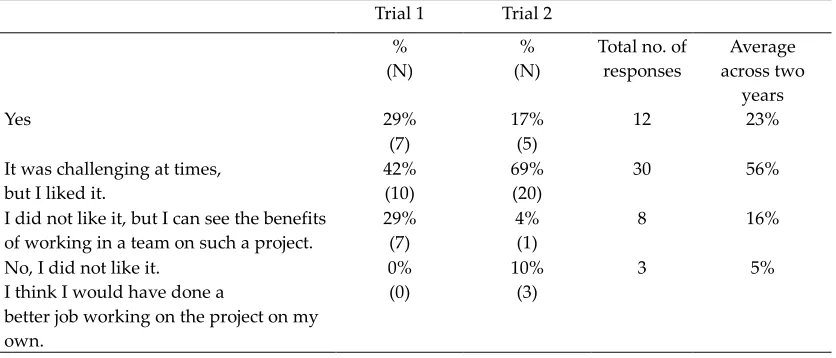
[image:3.595.85.503.439.618.2]The reflections of ICT students are presented in the following. Table 1 presents students’ reflections on the multidisciplinary teamwork process, and Table 2 provides insight into the extent to which students were able to develop an understanding of how to work with other disciplines.
TABLE 1: ICT students’ reflections on the multidisciplinary teamwork process
The development of the website was a team project. Did you like working in a multidisciplinary team?
Trial 1 Trial 2 %
(N)
% (N)
Total no. of responses
Average across two
years
Yes 29%
(7)
17% (5)
12 23%
It was challenging at times, but I liked it.
42% (10)
69% (20)
30 56%
I did not like it, but I can see the benefits of working in a team on such a project.
29% (7)
4% (1)
8 16%
No, I did not like it. I think I would have done a
better job working on the project on my own.
0% (0)
10% (3)
TABLE 2. ICT students’ reflections on the extent to which they were able to develop an understanding of multidisciplinary teamwork processes
Do you think that you have developed a better understanding on how people from ICT and Design could work together or are working together on such projects?
Trial 1 Trial 2 %
(N)
% (N)
Total no. of responses
Average across two years
Yes 100%
(24)
86% (25)
49 93%
No 0%
(0)
14% (4)
4 7%
Overall, the outcomes are positive. Table 1 provides evidence that 79% of ICT students surveyed across two years found the multidisciplinary learning experience beneficial. Furthermore, 16% of students stated that although they did not like the experience they could see the benefit of working in multidisciplinary teams, clearly emphasising the value of the experience. Only three students across two years thought they would have produced a better outcome when working on their own.
Overwhelmingly positive was the feedback that nearly all students (93% across two years) were able to develop a better understanding of how students from different disciplines work together in multidisciplinary teams (Table 2).
When students were asked to reflect on what they would do differently if they were to start over with the team project, the following key themes emerged:
- organise more time for collaboration; - assign a team leader;
- ensure good and active communication between all team members; - take more control of milestones and have meetings more often; and - start implementing the design from an earlier time.
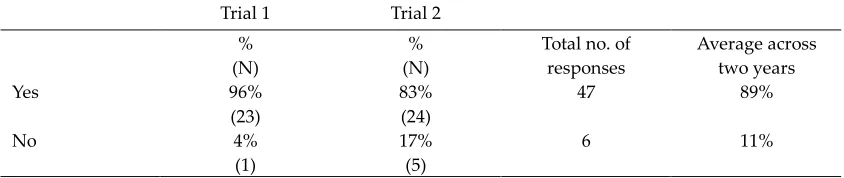
[image:4.595.84.506.559.648.2]Table 3 provides insight into ICT students’ reflection on the effectiveness of directly interacting with an ICT industry professional.
TABLE 3. ICT students’ reflections on the effectiveness of integrating an ICT industry professional in the learning environment
Did you like having the creative industries professional giving feedback about your project?
Trial 1 Trial 2 %
(N)
% (N)
Total no. of responses
Average across two years
Yes 96%
(23)
83% (24)
47 89%
No 4%
(1)
17% (5)
6 11%
Room for enhancement identified in the collaborative project was of an organisational nature in that students suggested that the industry feedback could be given earlier during the project and feedback sessions could be longer. Some students found engaging in the multidisciplinary teamwork process challenging, and a small number of students would have preferred to not work in teams and/or did not respond positively to engaging with industry.
CONCLUSION
Throughout the two-year trial, the learning experience provided students with insights into issues and processes similar to what they would encounter in the workplace including teamwork, project management, and communication issues. These issues are all directly related to the kind of professional skills that the literature suggests is needed by ICT graduates in the workplace (e.g. Aasheim et al., 2011; Janicki et al., 2013). While not all teams were equally successful in terms of project outcomes, the students were able to reflect on the experience including considering how to organise multidisciplinary teamwork differently in future, showing evidence of positive learning outcomes.
The feedback from students on the experience was very positive overall and showed that students were able to gain insights into how different disciplines operate, an understanding that is important for their future work environments. Student reflections suggest that some would approach the teamwork process differently the next time. It is notable that this was the first time these students engaged in multidisciplinary teamwork in their ICT subjects. It would be valuable to continue research to evaluate whether students find multidisciplinary collaboration less challenging in subsequent subjects. Furthermore, suggestions in regards to the organisational nature of the interaction with the industry professional (e.g. providing feedback earlier during project development) need to be implemented and evaluated in the future.
Overall, engaging students in authentic learning activities by combining multidisciplinary teamwork on a real world project with industry involvement and feedback can be a suitable substitute for industry placements by providing an effective WIL experience that helps students to develop work-ready skills to improve their transition from university to the workplace.
REFERENCES
Aasheim, C., Lixin, L., & Williams, S. (2011). Knowledge and Skill Requirements for Information Technology Graduates: a Comparison of Industry and Academia. Journal of Information Systems Education, 20(3), 349-356. Aasheim, C., Shropshire, J., Lixin, L., & Kadlec, C. (2012). Knowledge and Skill Requirements for Entry-Level IT
Workers: A Longitudinal Study. Journal of Information Systems Education, 23(2), 193-204.
Beaubouef, T., Zhang, W., Alkadi, G., & Yang, K.-P. (2011). Beyond The Computer Science Curriculum: Empowering Students For Success. Journal of Computing Sciences in Colleges, 26(4), 21-27.
CCI (2011). Working in Australia’s Digital Games Industry - Consolidation Report. Australian Research Council Centre of Excellence for Creative Industries and Innovation and Queensland University of Technology in partnership with the Games Developers Association of Australia. Retrieved on 7 January 2011 from <http://www.cci.edu.au/content/games-industry-skills-project>.
Creswell, J. W. (2008). Research Design: Qualitative, Quantitative, And Mixed Methods Approaches (3rd ed.). Thousand Oaks: Sage.
Drew, L. (2007). Designing the Interface Between Research, Learning and Teaching. Design Research Quarterly, 2(3), 5-11.
Goldberg, D. S., & White, E. K. (2014). E Pluribus, Plurima: The Synergy Of Interdisciplinary Class Groups. Paper presented at SIGCSE Conference, March 5–8, at Atlanta, Georgia, USA, pp. 457-462.
Hernandez, R. (2014). What Industry Needs: T-Shaped Graduates. Retrieved on 25 April 2014 from http://blogs.oregonstate.edu/industry/2014/04/10/industry-needs-t-shaped-graduates/
ISIS Interactive Skills and Integration Scheme. (2011). Curriculum Report 1: Overview of Interactive Media and Gaming courses in Australia.
Janicki, T. N., Cummings, J., & Kline, D. (2013). Information Technology Job Skill Needs and Implications for Information Technology Course Content. Paper presented at the Information Systems Educators Conference, 7 - 10 November, San Antonio, Texas, USA.
Kacmarek, M. (2001). Engineers Are from Mars, Designers Are from Venus: Creating Peace through Collaboration. In S. Heller (Ed.), The Education of an E-Designer (pp. 196-200). New York: Allworth Press.
Nagarajan, S. (2012). Work Integrated Learning For The Development Of Professional Skills Of Information Technology Graduates. Australian Collaborative Education Network (ACEN) National Conference, 29 October - 2
November, Deakin University, Geelong. Retrieved on 25 April 2014 from
http://acen.edu.au/2012conference/wp-content/uploads/2012/11/ACEN-2012-National-Conference-Proceedings.pdf.
Nagarajan, S., & Edwards, J. (2010). The Role Of Universities In Preparing Work Ready Information Technology Graduates. Australian Collaborative Education Network (ACEN) National Conference, 27 September - 1 October, Curtin University, Perth. Retrieved on 25 April 2014 from http://epress.lib.uts.edu.au/research/handle/10453/16272. Ogunbona, P., Koppi, T., Armarego, J., Bailes, P., Hyland, P., McGill, T., . . . Roberts, M. (2013). Addressing ICT
Curriculum Recommendations From Surveys Of Academics, Workplace Graduates And Employers. Sydney: Office for Learning and Teaching.
Patrick, C.-j., Peach, D., Pocknee, C., Webb, F., Fletcher, M., & Pretto, G. (2008). The WIL (Work Integrated Learning) Report: A National Scoping Study [Final Report]: Queensland University of Technology.
Pilgrim, C. (2011). Work-integrated Learning in ICT Degrees. Proceedings of the 13th Australasian Computing Education Conference (ACE 2011), 17 – 20 January, Perth, Australia. Retrieved from 25 April 2014 from
http://dl.acm.org/citation.cfm?id=2459951.
Punch, K. (2009). Introduction To Research Methods In Education. London: Sage.
Swinarski, M. E., Parente, D. H., & Noce, K. (2010). Are All IT Professionals Created Equally? Journal of Behavioral Studies in Business, 2, 1-11.
Waltuch, L. (2001). On-the-Job-Training. In S. Heller (Ed.), The Education of an E-Designer (pp. 154-163). New York: Allworth Press.
Womack, D. (2005). Writing: The Future of Digital Media. In S. Heller (Ed.), The Education of a Graphic Designer (2nd ed., pp. 189-191). New York: Allworth Press.
Copyright © 2014 Katja Fleischmann & Lindsay Ward