“ Schools can
put disengaged
learners back in
the driving seat…”
PUPIL POWER
thinkers and host thought-provoking events. We have spent over 20 years at the centre of the policy debate, with an overarching mission to bring politics closer to people.
Demos has always been interested in power: how it works, and how to distribute it more equally throughout society. We believe in trusting people with decisions about their own lives and solving problems from the bottom-up.
We pride ourselves on working together with the people who are the focus of our research.
Alongside quantitative research, Demos pioneers new forms of deliberative work, from citizens’ juries and ethnography to ground breaking social media analysis.
Demos is an independent, educational charity, registered in England and Wales (Charity Registration no. 1042046).
First published in 2016 © Demos. Some rights reserved Unit 1, Lloyds Wharf, 2–3 Mill Street, London, SE1 2DB, UK
ISBN 978-1-909037-99-1 Series design by modernactivity Typeset by Chat Noir Design, Charente
Set in Gotham Rounded and Baskerville 10
Open access. Some rights reserved.
As the publisher of this work, Demos wants to encourage the circulation of our work as widely as possible while retaining the copyright. We therefore have an open access policy which enables anyone to access our content online without charge.Anyone can download, save, perform or distribute this work in any format, including translation, without written permission. This is subject to the terms of the Demos licence found at the back of this publication. Its main conditions are:
· Demos and the author(s) are credited
· This summary and the address www.demos.co.ukare displayed · The text is not altered and is used in full
· The work is not resold
· A copy of the work or link to its use online is sent to Demos
Acknowledgements 7
Executive summary
9Introduction
291
Pilot and evaluation design
392
Baseline data
553
Pupil Power in action
694
Impact
735
Process
93Conclusion
105Appendix A: Session plan from the initial
staff training session
113Appendix B: Characteristics of participants
and the comparison group
117Appendix C: Responses to pupil surveys
119Appendix D: Responses to teacher surveys
121Notes 123
Acknowledgements
First and foremost we would like to thank the Paul Hamlyn Foundation for their generous support of this project, without which the pilot would not have been possible. In particular we would like to thank Louise Palomino and Sarah Beckett from the PHF for their support and feedback during the research.
We would like to thank Tricia Nicoll for her invaluable advice on putting coproduction into practice in the early stages of the pilot. This included help in designing and delivering training sessions for school staff and students. We are also grateful to TeachFirst for assistance with recruiting participating schools.
We owe a huge thanks to all of the school staff involved in delivering Pupil Power. This includes participating staff who worked tirelessly to make the project a success; and a large number of other school staff working behind the scenes – managing and supporting the delivery of the pilot, administering surveys, and passing relevant data to Demos researchers for the evaluation. We would of course also like to thank the many participating students who kept us inspired over the two years with their achievements.
We have also benefited a great deal from the expertise of representatives from a range of education and youth
organisations that were invited to discuss our interim findings at a roundtable in July 2014. Particular thanks are due to Lucie Stephens of the New Economics Foundation, and Cerise Abel-Thompson of Learn to Lead, who gave presentations.
This report would not have been possible without the help and support of our excellent colleagues at Demos. We would like to thank Claudia Wood, who first proposed the pilot and supported us throughout. We are also grateful to many colleagues and interns for their research support over the two years, including Abby Smith, Sarah Stopforth, Marco Bartholdy, Mansor Rezaian, Shada Yousef, Laila Ezz, Heather Vernon, Phillip Bray, and Theo Bass. We would also like to thank Laura Kent, Megan Poole and Sophie Gaston for their work guiding the report through the publication and dissemination process. Any errors and omissions are the authors’ own.
Executive summary
Over the two academic years 2013/14 and 2014/15, Demos worked with four secondary schools across England to test the potential of ‘coproduction’ as a means of tackling educational disengagement.
This report presents the findings of our evaluation of the pilot, known to schools as Pupil Power. The report covers both our ‘impact’ findings – measurable changes seen in the pupils and staff who participated, and any wider impacts in the four schools – and also ‘process’ findings, relating to how successfully the pilot was implemented and the lessons for other practitioners interested in the approach.
Educational disengagement
Disengagement is a persistent and pervasive issue in education. One study has shown that almost half (45 per cent) of pupils have become disengaged from school by the time they sit their GCSEs.1
The longer-term consequences of disengagement are also clear: wasted talent, poor employment outcomes, greater
prevalence of risky and harmful behaviours, and so on. Currently more than one in ten 16–24-year-olds are NEET (not in
employment, education or training), not only shutting doors to those individuals, but also harming the wider economy.5
A particular kind of solution: coproduction
In this pilot we sought to introduce a new way of working with disengaged pupils – ‘coproduction’ – to try to break the cycle of disengagement. The causes of disengagement are, of course, multiple and complex. We chose a particular phase in the educational journey to intervene – key stage 3 – seen as a critical window to prevent disengagement.
Coproduction describes a particular way of conceptualising public services. It seeks to reframe the traditional
provider–service-user relationship, recasting traditional ‘recipients’ of services as active partners in their design and delivery.
We chose to test coproduction in education because the evidence from health and social care settings – where
coproduction is most developed – suggests this type of approach can help to achieve better outcomes, and has successfully re-engaged those who have disre-engaged from their care or treatment. While there are examples of coproduction in education, it is under-explored in schools in England, and particularly so in the context of disengagement where it may have the most impact.
Our intention throughout this pilot was to put disengaged students back in the driving seat, giving them new opportunities – working in partnership with teachers and school staff – to set their own learning goals and to undertake projects outside lessons in order to make positive changes to the school environment.
Four key principles
While coproduction is related to ‘student voice’ initiatives already going on in schools, it is more than just listening to what pupils think. It provides a conceptual framework for how to treat pupils in school and how to provide more empowering
opportunities.
Our approach has been informed by four key principles, first developed by social reformer and innovator Edgar Cahn:
· To treat people as assets: Disengaged students should not be, or
feel, defined by their disengagement; they should feel that people are interested in their talents and ideas and how these can be used for the benefit of the school community.
· To redefine work: Success at school is not just about grades, but
rather all effort to make the school community a better place for learning. Where poor academic outcomes drive disengagement it is important to bring forward other things that are of value.
· To promote reciprocity: This involves a big shift in expectations:
disengaged students take on responsibilities for doing things for other students, even staff – things that might formerly have been assumed to be the responsibility of staff.
· To build social networks: Using relationships and networks beyond
the classroom, and fostering new ones, are vital activities for enriching learning and opening up opportunities.
The fidelity to these four key principles has been one of the ways in which we have judged the success of the pilot, and we return to them below.
Pilot set-up
Four schools were recruited from across the country to take part in the pilot, with the assistance of TeachFirst. The schools were:
· John Whitgift Academy, in Grimsby · Greenwood Academy, in Birmingham · Firth Park Academy, in Sheffield
The four schools vary significantly in size and pupil characteristics, providing very different contexts for conducting the pilot. All four have above the national average proportion of pupils eligible for free school meals (FSM).
Over the two years, 64 pupils participated in Pupil Power, making it necessarily a small, experimental pilot – a pathfinder from which we intended to develop lessons and good practice principles. In each school, four year 7 students and four year 9 students were selected to take part in each pilot year. Schools were asked to select students who were either already dis-engaged or at risk of becoming so – showing signs of academic underperformance or challenging behaviour, or missing lessons.
Two school staff were responsible for delivering the pilot at each school at any one time. In total, 15 teaching and non-teaching staff had been involved in delivery by the end of the pilot.
At the beginning of each pilot year, Demos researchers and a coproduction consultant delivered staff training and a pupil briefing, details of which are in the main text.
Intervention
Participating staff were asked to meet students for weekly co-production sessions. Schools were given considerable flexibility over what these sessions looked like, but we encouraged and saw two main approaches. Most common were group-led projects, where pupils worked together to identify an issue or problem in the school and then designed and implemented a solution to it. The second approach was to hold one-to-one sessions, where students set their own personal learning goals and targets with staff. Both types of session were intended as regular spaces for pupils to ‘be in charge’, with staff acting in a facilitation role, drawing out the students’ strengths and interests.
Evaluation design
As explained, our evaluation sought to measure the impact of the pilot (measured in outcomes for students, staff and school), and
to explore key success factors and challenges in the process of implementing it.
To meet our evaluation aims, we used the following research methods:
· collection and analysis of school data to measure ‘hard’ outcomes for students – data on attainment, attendance, punctuality and behaviour
· baseline and post-intervention surveys of participating students, designed to capture changes in motivation and self-esteem · baseline and post-intervention surveys of subject teachers,
designed to capture changes in the motivation and work ethic of pupils
· coproduction session observation (ethnography) · interviews with participating students at the end of each
pilot year
· interviews with participating school staff at the end of each pilot year
· interviews with school senior leaders
Alongside measuring changes in the participant group, we asked schools to recruit a comparison group of students to try to help isolate the independent impact of the intervention. While the comparison group was broadly similar to the participant group in its members’ characteristics, baseline surveys revealed substantial differences in attitudes to school and therefore it is of limited use as a comparison.
The main text explains how each component of quantitative data presented its own challenges and should be interpreted carefully. We bring to the foreground the qualitative findings, which are necessarily important for understanding the impact of this small explorative study.
Baseline data
schools at baseline showed the following about pupils who participated over the two pilot years:
Executive summary
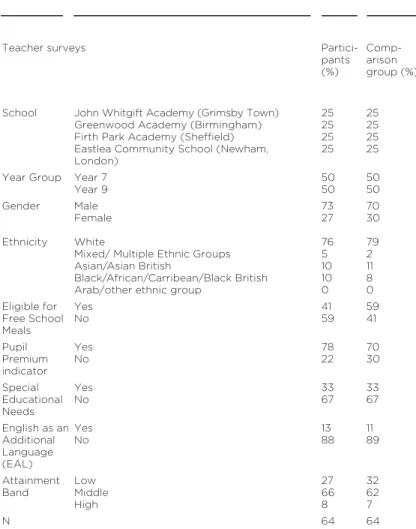
· Gender: 73 per cent were male and 27 per cent female.
· Ethnicity: 76 per cent were White British; 24 per cent were
minority ethnic pupils.
· Deprivation: 41 per cent were eligible for FSM, while 78 per
cent had been eligible for them within the last six years (compared with 16 per cent and 29 per cent of all secondary pupils nationally).
· Special educational needs (SEN): 33 per cent received some form of
support for SEN (compared with 18 per cent nationally).
· English as an additional language (EAL): 13 per cent had EAL
(compared to 14 per cent nationally).
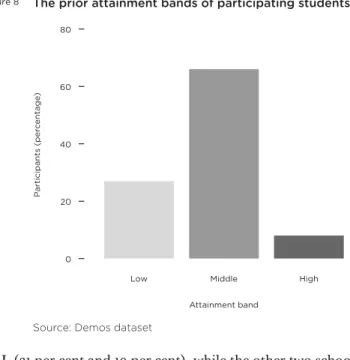
· Prior attainment band:27 per cent had low prior attainment at the
end of primary school (compared with around 21 per cent nationally), 66 per cent were in the middle prior attainment band, and 8 per cent had high prior attainment.
Contrary to expectations, baseline surveys showed that the majority of students (72 per cent) said they liked being at school, and scored positively on other motivation items, raising
questions about whether the right students were selected for the project. However, a small majority (53 per cent) were considered by teachers to have behavioural issues, while more than three-quarters (77 per cent) were thought to be underachieving.
What pupils did
It is important to note that there was a spectrum of participation among targeted students. In practice, it was most often a smaller, ‘core’ group of regular attendees who were the driving force behind the group-led projects.
A lunchtime sports club in Grimsby
Students in Grimsby identified a lack of lunchtime activities as a cause of boredom and disruptive behaviour. They put the case for a lunchtime football club to the head of PE, who agreed. The students were involved in all aspects of setting up and running the club; they approached staff who might be willing to supervise it, ensured equipment was available, and advertised it around the school. They also dealt with problems collectively as they arose – for example, deciding how to deal with older students who caused disruption, and discussing how to ensure that girls were involved as well as boys.
Launching a petition to change school uniform, Newham
Students voted on things they wanted to change in school. They decided to campaign to change the school uniform, and the member of staff working with them supported them to design a petition, which they circulated around school at break and lunchtime. Unfortunately, the school senior leadership team did not allow student petitions at the school without their
permission. The students were disappointed, but met members of the team who offered feedback on what changes they would be more or less receptive to.
Tidying and replanting a school garden, Birmingham
In Birmingham, students raised funds to replant a neglected garden on the school site. They brainstormed ways to raise money, and decided to run a tombola, which they advertised around school. Participating staff accompanied the students on a trip to source plants, and students kept a running total of how much they had left to spend. Students showed Demos researchers ‘before’ and ‘after’ shots showing the completed garden.
Supporting Tour de France celebrations, Sheffield
staff participants saw the whole-school celebrations as a welcome opportunity for the Pupil Power students to be involved. Students were given a choice over how to be involved (eg making things and creating displays), and were encouraged to divide up tasks as a group.
In addition to group work, almost all participating students discussed their personal goals with staff. The focus of these one-to-one sessions tended to be on behaviour, and on individual barriers to engaging in particular lessons. Staff helped students to make changes such as:
Executive summary
· changing a seating plan so it was no longer in register order · making history lessons more interactive
· being able to wear shoes, rather than trainers, to school · completing homework more frequently
· designing a practical experiment for a science lesson
Student and staff impressions
A staff participant told us:I think the best thing about the project is that what you’re basically saying to these students [is] that we’re interested in what you’ve got to say – you’ve got useful things to say and important things to say and we’re going to listen to them.
Those students whose involvement in the pilot was regular and maintained throughout the year were enthusiastic about Pupil Power in interviews, appreciating the element of choice, the ability to speak freely, and the opportunity to draw on their personal talents.
Some of the challenges with the approach identified by students included not being allowed to progress with an idea because of school processes, and having focused too much on individual behaviour rather than spoken about wider things in school.
understood and saw the value of coproduction, and felt that the logic of using the approach to tackle disengagement was right. However, some staff felt that they had had to compromise on some of the principles of coproduction in the interests of getting things done (discussed further below).
Findings: impact
Below we summarise the findings of our impact evaluation for pupils, staff and the wider school. Under each heading we provide a snapshot finding in italic.
It is important to note that the percentages discussed below are each for a sample of approximately 64 pupils – and combine pupils from both pilot years. Therefore fairly substantial percentage point changes can indicate relatively minor actual changes.
Pupils
Impact was mixed for participating pupils. In part this can be explained by the different levels of participation, while many of our research methods measured impact at the whole-group level. For those who did engage with the pilot, the clearest impacts were seen in improved behaviour, confidence and soft skills, and in their relationships with teachers.
Attainment
Academic progress was small for most participants over the period of intervention, and impact on academic outcomes hard to quantify or to attribute to participation in the pilot.
The period over which we were measuring academic outcomes was very short, limiting the scope for measuring substantial academic progress.
appreciable difference between the outcomes of the participant group and the comparison group.
Surveys found a small increase in the proportion of
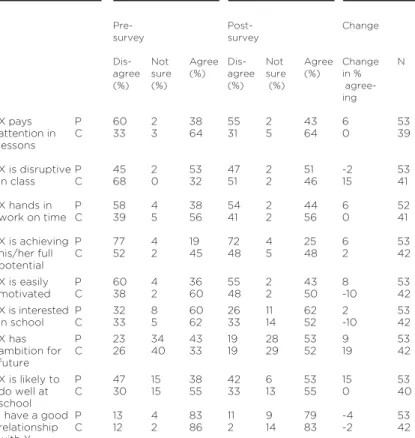
participating pupils considered to be achieving their potential by teachers (from 19 per cent to 25 per cent of pupils, an increase of six percentage points); but a decrease in the proportion of pupils themselves who thought they were (from 79 per cent to 70 per cent, a decrease of nine percentage points).
In interviews, staff participants felt that the impact on academic outcomes was hard to quantify or to attribute to participation in the pilot. This was especially so for students who were involved in other schemes or supported in other ways that could also explain any progress made. However, one staff participant felt that the pilot had addressed students’ ‘softer skills’ (see below), and that this in itself could have encouraged more academic progress. Another felt particular students were taking more ‘responsibility’ for their learning through having participated in Pupil Power.
Behaviour
There were some very positive changes in individual students’ behaviour, which were attributed by staff to the pilot, but no improvement in behaviour among other pupils.
Participants had a great variety of behaviour records over the course of the pilot year. Some pupils’ behaviour acted as a barrier to participation in the project. However, we heard some very positive anecdotes about changes in other participants’ behaviour. In one case, staff felt the pilot had helped to avoid an exclusion.
Staff participants reported that individual students had not only improved their own behaviour but had the potential to be a positive influence on others. Some staff reported that students were ‘taking charge’ or ‘taking ownership’ of their behaviour since participating in the pilot. Often, the examples cited in interviews were small but staff thought they were significant (sometimes they identified a change in attitude that may pre-empt a more substantial change in behaviour).
Data we gathered from schools to measure changes in termly behaviour incidents showed a mixed picture for all pupils. The behaviour of almost half (45 per cent) improved over the course of the intervention, while it deteriorated for three in ten (30 per cent). In surveys, the proportion of pupils who said they get into trouble at school often or always decreased from 37 per cent to 26 per cent (by 11 percentage points), while the
proportion considered disruptive in class by teachers decreased from 53 per cent to 51 per cent (by two percentage points). There were fewer positive changes in the comparison group but members had been better behaved at baseline.
Attendance
The majority of students did not have many unauthorised absences during the intervention.
The vast majority of participants were not frequently truants – though the data suggest that a small number may have sometimes been absent from school without authorisation. Almost a third (31 per cent) of participants had no unauthorised absences during the year in which they participated, while 5 per cent of participants missed more than 15 per cent of sessions through unauthorised absences.
The termly unauthorised absences showed that attendance levels of 13 per cent of participants improved over the year, but that of 46 per cent worsened. One school told us to expect a higher rate of term-on-term unauthorised absences, as rates rise in the summer term – and this was also the case in the
comparison group.
Outcomes on punctuality were mixed.
change was seen in the comparison group, but those in the comparison group were generally more punctual than the participants in our study.
Self-esteem
Student surveys showed high levels of self-esteem at baseline, which reduced slightly over the course of the intervention, as it did in our comparison group.
While a range of positive changes emerged in our
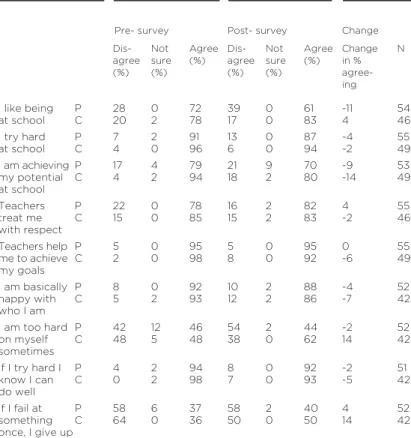
interviews about some participants’ confidence (see below), our surveys of all participants found small negative changes (to no change) on the majority of self-esteem measures over the course of the pilot, from strong baseline positions. For example, the proportion of selected pupils saying they are basically happy with who they are decreased from 92 per cent of pupils to 88 per cent (four percentage points). There were similar results in the comparison group.
Motivation in school
Several participants were very motivated by the pilot, though it is unclear how this related to motivation in school in general.
Some staff believed that the mere fact of having been selected to take part in something was motivating for the pupils who engaged. Staff participants felt that the pilot had been
motivating because it had given students a sense of ‘value’ in the school community – a sense that people were interested in what they thought and were capable of contributing to the school. Conversely, while being listened to was motivating for students, not being listened to was demotivating.
While several of the participating pupils were motivated by the projects they were undertaking, it is not clear to what extent the pilot had an effect on motivation in general at school – for example, the extent to which pupils liked being at school, and were interested in lessons.
As stated above, survey data showed that, contrary to expectations, the majority of participants scored positively on motivation measures at baseline. In this context, motivation in
school for participants – and also the comparison group – actually decreased on the majority of measures over the relevant pilot year. For example, the proportion of selected pupils who said they like being at school decreased from 72 per cent to 61 per cent (11 percentage points)
Interestingly, the teacher surveys showed teachers had a slightly more positive view of participants’ motivation. For example, the proportion of pupils they thought to be easily motivated increased from 36 per cent to 43 per cent (eight percentage points).
Confidence and soft skills
The pilot appears to have had a significant impact on the confidence and soft skills of individual students.
Several students we interviewed spoke about being more ‘involved’ or ‘more active’ in school because of the pilot. The words ‘confidence’ and ‘skills’ were mentioned several times, and many said they were having more interactions with people than previously. Several participants enjoyed working in a team and with new people, and being more visible in the school. Some students identified in particular that their ability to communicate ideas and feelings and other soft skills had improved. Others were taking on additional responsibilities in the school since participating in the pilot – for example, one pupil had signed up to help with the school’s transitions programme for new primary school pupils.
While staff participants felt the pilot’s impact depended on the student in question, they too reported a fairly wide range of positive impacts for those students who engaged with the project, including in their confidence and independence. Staff described individual students as, variously, ‘more mature’, ‘more engaged’, ‘more focused’ and more capable of ‘indepen-dent thought’.
Staff–student relationships
Interviews with staff and student participants revealed several examples of relationships established or improved between staff and students through coproduction. The pilot offered all participants the opportunity to be seen differently, challenging unhelpful fixed roles of ‘strict teacher’, ‘naughty student’.
Students and staff both reflected on how the pilot had helped develop ‘trust’. One student, for example, talked about feeling more ‘relaxed’ with staff, while staff spoke about students being more ‘open’ and being able to build greater rapport with them. More generally staff felt that the pilot was beneficial insofar as it gave new opportunities for positive interactions outside lessons.
Our student and staff surveys found that for all selected pupils there were small (to no) changes on measures of positive student–staff relationships. Most notably the proportion of students who felt they get on well with teachers often or always increased from 43 per cent of participants to 53 per cent (by nine percentage points).
Staff
The pilot was very demanding on staff time and workload.
Participating in the pilot placed significant demands on staff in scheduling meetings, supporting student projects, and helping Demos researchers with data. A range of ‘process’ challenges identified by staff are outlined in more detail below. The pressures of administrating the pilot applied to staff participants with and without teaching responsibilities, and the situation was generally the same, or not improved, in the second year.
Staff identified benefits of coproduction in terms of professional development and relationships with students.
The large majority of staff – including those who found participation the most difficult – were convinced of the value of the pilot. They reported personal outcomes such as greater
‘awareness and responsiveness to pupils’, and developing new skills in mentoring and coaching. Other staff identified different skills that they had developed through helping students to undertake projects in school – including junior staff having more contact and negotiations with senior staff.
The wider school
Staff and students reported limited whole-school awareness of the pilot.
Staff participants in all four schools reported that the pilot had had limited impact, or none at all, at the whole-school level. Occasionally, projects that students were completing as part of Pupil Power were visible around the school – as, for example, the gardening project at the school in Birmingham – which raised awareness. But this tended to be the extent of the project’s impact.
Although one staff participant questioned whether the lack of whole-school impact mattered, in the main, staff and student participants reported that they would have preferred more involvement from people and awareness across the school.
Process
This project was a small scale exploratory study, and part of our work was to establish what was possible within the constraints of the systems in place in participating schools.
Below we outline the key lessons from the formative part of the evaluation.
Schools provided very different operating contexts for the pilot – some more, and some less, conducive to coproduction.
secondary to more curriculum-based interventions. This was reflected in the planning and support put in place for Pupil Power.
The aspect of process that was of greatest concern to staff was the selection of students, in particular the level of disengagement.
Staff at different schools, and even within the same school, had starkly divided opinions on how disengaged participating students should be. Some staff felt that the right students had been chosen – because ‘no one ever tries with them’. Other staff argued in favour of a different selection of students, saying that the pupils were ‘maybe too far past’ an intervention like Pupil Power. They suggested more time and effort could have been spent in identifying pupils who would really engage and benefit from the project (particularly new year 7s) – perhaps involving pupils who, because of their popularity, would be able to motivate other pupils.
Three factors informed staff selection that also affected the success of the pilot: time and availability, seniority and prior relationships with students.
Executive summary
· Time and availability: Non-teaching staff generally had more
availability and flexibility than teaching staff.
· Seniority: When required, teaching staff generally found it easier
than non-teaching staff to negotiate with senior staff when supporting students to action their chosen projects.
· Relationship with students: In general relationships were more
easily established with non-teaching staff – perhaps because it was difficult for students to overcome established attitudes towards those with a teaching role.
Some staff felt the pilot lacked the positive supporting structure needed within their school.
participant suggested there should be a more senior staff member involved in the delivery, while another suggested that ‘pilot coordinator’ should have been a named job role.
Barriers to implementing coproduction were overwhelmingly practical – in particular the scheduling of sessions.
Scheduling coproduction sessions posed a challenge in all four schools. This was because of staff and student timetables – and particularly where student participants were already subject to a number of interventions. In some schools, relying on students to remember that they had a session was a significant difficulty.
The question of whether sessions should take place during or outside lesson time was a fraught one. We heard concerns expressed by senior staff that missing lessons could be
‘counterproductive’ to learning. However, other staff suggested that so long as the same lessons were not being missed each week, a positive space such as that provided by Pupil Power could be beneficial to learning and that, furthermore, ‘taking time’ from students would feel punitive. A happier medium was found where projects gathered momentum and students became more willing to give up their own time.
Group-led sessions were a more popular approach to implementing coproduction, but both group sessions and one-to-one sessions had benefits and challenges.
Opportunities for team-working was identified as a benefit by both students and staff in the group sessions, but we found that group sessions presented challenges for behaviour management. Staff told us about the importance of building a good working dynamic, and suggested they should have concentrated more on team-building to start with.
Fidelity to coproduction
In order to draw conclusions about how useful coproduction is as a tool for tackling disengagement, it is important to
understand how well it was realised in this project. Different staff felt they had been more or less true to the four key coproduction principles outlined above. We return to those principles here.
People are assets
This was perhaps the best realised of the four principles. Students who benefited from Pupil Power did more than tell staff that they were unhappy about certain things in school; staff acted as facilitators for students to take action on problems they identified, using their strengths and interests.
Valuing work differently
Where best realised, project-based sessions offered an
opportunity for pupils to focus on, and be recognised for, non-academic achievements in school. Perhaps one of the most encouraging findings from our interviews with students and staff was that students felt a higher sense of ‘value’ in the school community. Sessions became more fraught when the focus was on falling behind academically.
Reciprocity
Students who benefited from Pupil Power did take on new responsibilities in school, including doing things for other pupils and the wider school community, which might ordinarily have fallen to school staff to do. However, reciprocity was the principle over which there was most slippage following good starting intentions, with staff members themselves admitting to doing things that they thought pupils could have done.
Building social networks
Pupils who engaged noted that team-working was an aspect of social networking they particularly enjoyed. Insofar as projects
connected pupils to different people in the school community, networks were improved. However, participating staff thought that the use of wider networks beyond the school – for example local businesses – to create opportunities for students could have been improved.
Conclusion: coproduction as a tool for tackling
disengagement
Participating in the Pupil Power pilot was a very positive experience for a small number of students who were enthused by the approach. Students designed and delivered a range of projects in their schools, and were actively engaged by staff in setting their own learning goals. In some cases, pupils recognised as disengaged and challenging thrived on the opportunities provided, and were seen in a new light by school staff – as more responsible and mature, even leaders.
However, many other participating pupils did not engage nor benefit in the same way. As a result, the picture painted by the school and survey data is one of the project having a fairly insignificant impact. In answering the question ‘is coproduction a useful tool for tackling disengagement?’, the answer from this pilot can only be: it depends.
Introduction
This report presents the findings from a two-year pilot that explored the potential for coproduction to address educational disengagement among secondary school students.
Despite there being extensive research into the causes, manifestations and effects of disengagement, and successive policy and practice efforts aimed at tackling it, disengagement remains an intractable and costly challenge for UK schools. Funding pressures have led the education system to prioritise interventions targeted at vulnerable student groups that are more clearly defined, and where outcomes are more easily measured and communicated: children who fall behind in literacy, those with SEN and disabilities, and those in receipt of FSM. Our own findings suggest there is a substantial crossover between these groups and disengaged students, but not complete identity; some of the students chosen to take part in our pilot were ‘coasting’, falling short of their potential but not subject to other interventions in school.
There remains a need for a solution applicable to the wider cohort of disengaged students. To that end, this pilot has looked to potential lessons from health and social care, where the ethos of coproduction – fundamentally changing the relationship between the provider and the user of a service – has already proven effective.
Educational disengagement
In the short term, disengagement from education is associated with poorer levels of attainment, attendance and behaviour at school. Each year around three in ten students getting their GCSE results have not made the expected progress in English since they started secondary school, while a third have not done so in maths.6According to national statistics, across all state-funded schools in England in 2013/14 there were on average around 26 permanent exclusions and 1,420 fixed period exclusions per day – most commonly as a result of persistent disruptive behaviour.7As many as 12 million school days are lost each year to unauthorised absences.8 Students who are disengaged are disproportionately likely to contribute to these troubling statistics.
The longer-term consequences of disengagement from school are also clear: wasted talent, poor employment outcomes, greater prevalence of risky and harmful behaviours, and so on. The number of young people who are NEET is now a common litmus test for the success of the Government’s
education and wider youth policy. Although the numbers are declining, still more than one in ten (12 per cent) 16–24-year-olds currently fall into this category, with the total number standing at close to 848,000.9The UK ranks higher (worse) than the OECD average for the proportion of 15–19 and 20–24-year-olds who are NEET – a performance related to its high levels of economic inequality.10The cost of allowing this generation to fall so far short of its potential has been estimated at £22 billion.11
Tackling disengagement
A number of factors militate against finding a solution to educational disengagement. First is the sheer scale of the problem. It has been suggested that almost half (45 per cent) of students are disengaged from school by the time they sit their GCSEs.12This is despite a raft of initiatives to tackle poor attendance and challenging behaviour – estimated at a total cost over £1 billion in the 15 years to 2006.13
Second, disengagement eludes easy definition. Within school, disengaged students are not hard to identify; all teachers can readily point to the students on their school roll who simply do not ‘see the point’ in school. Research has looked in detail at the attitudes of disengaged students; a report by the National Centre for Social Research found that, among disengaged 14–16-year-olds, just 30 per cent thought working hard at school would help them get on in life, compared with 67 per cent of engaged students (a 37 percentage point difference).14However, addressing disengagement effectively necessitates more than the ability to ‘know it when you see it’; it requires a good understanding of its underlying causes.
Existing evidence identifies a range of cognitive, behavioural and emotional risk factors. Student-level factors include low levels of core academic skills, low levels of social and emotional skills, having a SEN, and having poor mental health and wellbeing. Also important are environmental-level risk factors, such as parenting style, school context, peer group and bullying, through to structural factors including economic disadvantage.15For example, we know that students eligible for FSM are more likely to be excluded from school than other students.
A large body of evidence from the UK and internationally shows how positive relationships and interactions with teachers boost grades and reduce truancy. Conversely, evidence shows that a breakdown in relationships with staff can spur a down-ward spiral of increasing disengagement.16Age and stage, too, is important, with the transition from primary to secondary school recognised as a ‘critical window’ for intervening to prevent or mitigate disengagement. Students aged 12–14 are more likely than any other age group to be excluded from school.17
this introduction explains coproduction in more detail, summarises the evidence for its effectiveness, and outlines the features which we believe make it a promising approach for addressing disengagement.
Coproduction
Coproduction describes a particular way of conceptualising public services. Developed by social reformer and innovator Edgar S Cahn, coproduction seeks to reframe the traditional provider–service-user relationship, recasting traditional ‘recipients’ of services as equal and active partners in their design and delivery. As Cahn puts it in his book No More
Throwaway People:
Introduction
[Coproduction] springs from an observation that something is missing in social programmes. That ‘something’ is the contribution that the ultimate beneficiary must supply in order to achieve the end result ultimately sought by producer and consumer... Coproduction entails a simple but profound shift in relationships… The relationship between professional and non-professional shifts from one of subordination and dependency to parity,
mutuality, and reciprocity.18
Cahn outlines four key principles of coproduction, which are illustrated in box 1. These principles informed the design of our pilot programme.
Box 1 The four key principles of coproduction19
· Principle 1 Treat people as assets
Often, when someone needs extra support, their illness or impairment becomes all we see about them.
services. Disengaged students should therefore not be, or feel, defined by their disengagement and its
consequences – as ‘the naughty kids’, ‘the absent kids’, ‘the underachieving kids’ and so on. Instead, they should feel that people are interested in their talents and ideas and how these can be used for the benefit of the school community.
· Principle 2 Value work differently
The principles of co-production remind us that we need to see and use the gifts and skills people have to offer; we also need to find ways to reward this ?work? in ways that are not just about paying people in cash.
This stems from the idea that in society we tend to value what is done for money, giving less attention to all the unpaid work done for, by and between families, neighbours and communities. In the school setting, an analogy can be drawn with the way in which academic achievement is of primary value, with other activities and contributions to the school community attracting fewer rewards (and less investment).
· Principle 3 Promote reciprocity
This is about making sure that people are not just seen as, treated as, or expected to behave as ‘people who need help’. Everyone needs to be needed and valued… [not as a] big ‘problem’ for services to sort out.
· Principle 4 Build social networks
This is about remembering that people build and sustain communities and you have to be present to be included.
The fourth principle recognises the importance of building social networks in order for people to flourish. In the same way that individuals are assets who can be drawn upon in designing and delivering the services they access, so too are the people and institutions around them. In our context, this involves using relationships and networks beyond the classroom, to enrich learning and open up new opportunities.
Evidence from health and social care
The cornerstone of social care policy and practice in England is personalisation, or person-centred care. It is one of the founding principles of the modern English care system, as set out in the Care Act 2014. Coproduction is the fundamental process of achieving this.
Providers are now judged on their ability to provide care and support packages that meet the specific needs and goals of each individual care user. They are expected to work in partnership with individuals, using an asset-based approach – rather than ‘doing to’ and focusing on what people cannot do for themselves.
This represents a paradigm shift in the relationship between the service provider and the service user, which has demanded no less accommodation from the latter than the former. Service users have to take an active role in defining the objectives they hope to achieve, and then design and manage their care plan accordingly.
A considerable body of evidence suggests this approach improves health and care outcomes for individuals, and boosts a sense of independence, autonomy and ‘ownership’ for
individuals who might otherwise be passive recipients of support and health services. For example, the Department of Health’s
pilot Year of Care programme explored how to involve people with long-term conditions (using diabetes as an exemplar) in their own care planning, across three locations in England. The programme evaluation recorded patients reporting an improved experience of care and professionals reporting improved knowledge and skills.20Such approaches can save the public purse, too. Nesta, which has collated much of the evidence on this topic, suggests savings from the programme People Powered Health could be equivalent to £4.4 billion across England per year, through reduced expenditure on A&E attendances, planned and unplanned admissions, and outpatient admissions.21
While personalisation in schools is not a new concept, and has made some headway, a belief that personalisation would allow each pupil to set their own curriculum and timetable – logistically very challenging in English schools – meant this approach has only had a limited impact on education policy. Coproduction, as a separate but related approach– focusing on partnership, asset-based approaches, and empowerment as a means of engaging service users (in this case, pupils) – has not been widely attempted. Demos wanted to transfer the learning from health and care and apply it to an education setting, to see whether the improved outcomes achieved in the former via coproduction could be reproduced in the latter.
Application in education
While coproduction in education is not as well developed as it is in the health service – especially so in the context of tackling disengagement – there are examples in this country and internationally which helped to inform our approach. These include:
emotional skills for students, as well as commitment to learning and to school.22
· Project-based learning (PBL), popularised in the US by the High Tech High charter schools. The idea of PBL is that projects grounded in real-world problems and issues drive the
curriculum. Evidence from the US suggests that this approach can increase long-term retention of knowledge, problem-solving and collaboration skills, and positive attitudes towards learning. The Innovation Unit is currently running a related pilot in 24 secondary schools in England called REAL projects, sponsored by the Education Endowment Foundation.23Evaluators from the universities of Durham and York will report on the findings in spring 2017.24
· The Kunskapsskolan Education Programme (KEP), originating in Sweden, aims to ‘put the student at the centre of the school’. At Kunskapsskolan schools, students and their parents are involved in designing individual learning plans, with students encouraged to learn at their own pace and in line with their own goals. Staff act as personal coaches, and deliver workshops, seminars and lectures on their subject specialism. In Sweden the performance of KEP schools is above the national average, and KEP schools outperform other schools with similar student demographics.25The KEP approach has expanded
internationally, and the company Kunskapsskolan Education currently sponsors three academies in England through the Learning Schools Trust.
Introduction
Our approach differs from the above initiatives in two important respects. First, it is a targeted approach at students who are disengaged. Second, we have sought to test what is possible to achieve with coproduction within the constraints of the English school system and curriculum, rather than – as in the case of KEP – seeking a more radical departure from that system.
same as these initiatives, however; particularly if these initiatives boil down to simply asking students what they think.
Coproduction is a certain way of giving students both voice and opportunities to act – in line with the principles outlined above. A parallel development in education policy which merits mention is the renewed focus on the development of social and emotional skills. Skills like resilience, perseverance and ‘grit’ (being able to bounce back in the face of adversity); cooperation and pro-social skills; and self-control (good behaviour, and the ability to delay gratification) have been linked – like educational engagement – to desirable outcomes in education and later life. Moreover, there are clear affinities between the principles and practice of coproduction and the need to provide young people with the opportunity to develop such skills. Hence, a secondary aim of this pilot was to contribute to the growing evidence base for the importance of these skills and how best to develop them.26
This pilot
1
Pilot and evaluation
design
The Pupil Power pilot was designed to test whether copro-duction might be an effective means of tackling educational disengagement in secondary schools. We are interested in two aspects of effectiveness:
· We are concerned with the impact on student outcomes including attainment, attendance, behaviour and other ‘softer’ measures such as self-esteem and motivation, as well as the impact on staff delivering the programme and the wider school. · Recognising that interventions can have an impact without being
effective (for example, because the cost, time demands or disruption of implementing them outweighs any gains), we have also evaluated the practicability of coproduction within the constraints of the English schools system.
The pilot objectives can be summarised as follows:
· Up to 64 young people will have improved attendance, behaviour and performance in school, and express an increased sense of engagement, purpose and motivation regarding their educational journey.
· Eight teachers have learnt and built new skills to engage demotivated pupils through coproduction and encouraging a sense of ownership of educational outcomes.
· Four schools have improved their coproduction techniques and gained insights into what pupils want and value from school. · The evidence base we create of the impacts of coproduction and
pupil-led outcomes will inform both policy and practice.
Pilot and evaluation design
Figure 1
Pilot design
The Pupil Power pilot ran over the two academic years 2013/14 and 2014/15, in four secondary schools across the country.
Schools
Demos received some support from TeachFirst to identify and recruit four suitable schools to take part in the pilot. Three schools were identified through TeachFirst from among their host schools, and the fourth (in London) was recruited by Demos independently.
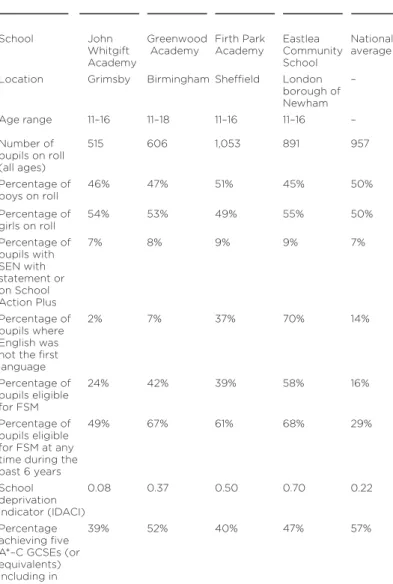
Table 1 presents the characteristics of the four schools. For ease of reference, the four schools are referred to in the rest of this report by their location (Grimsby, Birmingham, Sheffield, London) rather than by name.
As the figures in table 1 show, three of our four schools scored in the uppermost quintile on the Income Deprivation Affecting Children Index (IDACI) – the common measure of school deprivation, which is used by TeachFirst to select partner schools. All four schools were mixed, and all four had a
comprehensive (as opposed to selective) admissions policy. Three were academies associated with a sponsor, and one was local authority maintained.
The four schools vary significantly in size, proportion of pupils with EAL, and the proportion of pupils eligible for FSM (although, on the latter measure, all four are above the national average). Our schools therefore provided four very different contexts for conducting this pilot – as appropriate for a formative evaluation. Wherever feasible in our evaluation, we have interrogated the quantitative and qualitative data with a view to commenting on common or context-specific success factors or barriers to coproduction.
Students
Pilot and evaluation design
Table 1 The characteristics of the schools in the Pupil Power
pilot study
School John Greenwood Firth Park Eastlea National Whitgift Academy Academy Community average
Academy School
Location Grimsby Birmingham Sheffield London – borough of Newham
Age range 11–16 11–18 11–16 11–16 –
Number of 515 606 1,053 891 957
pupils on roll (all ages)
Percentage of 46% 47% 51% 45% 50%
boys on roll
Percentage of 54% 53% 49% 55% 50%
girls on roll
Percentage of 7% 8% 9% 9% 7%
pupils with SEN with statement or on School Action Plus
Percentage of 2% 7% 37% 70% 14%
pupils where English was not the first language
Percentage of 24% 42% 39% 58% 16%
pupils eligible for FSM
Percentage of 49% 67% 61% 68% 29%
pupils eligible for FSM at any time during the past 6 years
School 0.08 0.37 0.50 0.70 0.22
deprivation indicator (IDACI)
Percentage 39% 52% 40% 47% 57%
achieving five A*–C GCSEs (or equivalents) including in English and maths
primary to secondary school is a risk factor for disengagement, and that the years before GCSE represent a ‘critical window’ for intervening to prevent disengagement. Schools were asked to select students who were either already disengaged or at risk of becoming so – showing signs, for example, of academic underperformance or challenging behaviour, missing lessons, and so on. Schools were also asked to take into account which students were most likely to benefit from participating. Therefore the students selected in any one school were not necessarily the
most disengaged. For example, students with very low attendance
or at very high risk of exclusion would be unlikely to benefit, because of the practicalities of ensuring their participation, while students whose barriers to engaging fully with school were primarily ‘external’ (eg they had high levels of SEN or poor home circumstances) would be unlikely to benefit from an intervention aimed at ‘internal’ drivers of disengagement, such as attitudes to learning.
Staff
Eight school staff were chosen to work with the selected students over the two years. While we had envisaged the pilot being run by year 7 and year 9 form tutors in each school, we allowed schools to select the staff they thought were best suited to delivering the programme based on factors such as their
availability, relevant skills or needs for professional development, and relationships with students. As discussed in detail later, three of the four schools had at least one member of non-teaching staff delivering the pilot in at least one year.
Figure 2 summarises the model.
Staff training
Figure 2
Staff training was delivered in a single session of 1.5–3 hours, and consisted in:
· an exercise focused on the causes and symptoms of disengagement
· an introduction to coproduction in theory and practice, including an outline of the four key principles (students as assets, valuing work differently, reciprocity, and networks and connections)
· an exercise encouraging staff to identify existing tools or initiatives within the school that shared some of the features of coproduction (box 2 lists the suggestions made by staff as part of this exercise at one of our schools)
· an introduction to a practical toolkit to use in initial sessions with students
· an exercise exploring ‘hopes and fears’ for the pilot
Across all schools, staff expressed a strong degree of understanding of the concept of coproduction following training, and reported that they were confident in being able to put it into practice. Staff at all schools could readily draw connections between the ideas introduced in the training and existing initiatives within their school. There was widespread agreement that the underlying logic of the pilot made sense as a strategy for tackling disengagement.
Box 2 Suggestions made in a staff training exercise seeking to
identify current practice in participants’ schools that has features in common with coproduction
· Extended Services (an initiative whereby the school offers
extracurricular activities within and outside term-time, as well as adult education)
· ViVo points (a school reward system, including for non-academic achievement)
· students taking on teacher role (as a teaching method) · student reception
· a healthy fruit tuck shop
Student briefing
Participating students attended an initial session with Demos and the external consultant. These briefing sessions included:
Pilot and evaluation design
· a (tailored) introduction to coproduction in theory, and an explanation of the practicalities of the pilot; the project was branded Pupil Power to make it accessible and engaging · an opportunity to ask questions of the research team · an exercise brainstorming what participants thought was
‘working’ and ‘not working’ in school
The aim of the brainstorming exercise was twofold:
· to motivate students to take part – based on the premise that the motivation to work towards a goal starts from identifying something one wants to change
· to provide participating staff with initial ideas for potential areas of focus for the pilot
Students wrote ideas on green and red cards, which were displayed for the whole group to see. The research staff delivering the training discussed students’ suggested improvements in detail, encouraging them to provide more detail or clarification, prioritise improvements, and suggest ways of enacting them. Box 3 lists the answers students gave during this exercise at one of our schools.
The majority of participating students also said they had good knowledge of the pilot following our meeting with them.
Intervention
support provided by Demos as and when required. Staff were asked to meet students for weekly sessions, but schools were otherwise given discretion over all other aspects of these meetings, including their scheduling, duration, composition (one-to-one or group; single year group or mixed year group), and structure and content, though the training encouraged them to involve students in deciding these.
Box 3 Responses by students to the question: ‘What’s working / not working about school?’
Working (green Not working Ideas for things
cards) (red) to change
· Some lessons are · Boring · Longer break fun
· Not as much · Better lessons – · Some good lessons practical work more fun, more
practicals · History · The lessons aren’t
hands-on · More hands-on work · PE
· Hardly any active · More to do at break · When you can lessons and dinner, eg
change what you football
want to do
· Teachers blame · More school · Younger teachers the naughtier ones competitions
aren’t as boring as
the older teachers · Teachers don’t · Have more respect get involved
· Basketball training · Cinema is not used is good after · There is hardly enough
school no fun and too
much homework · More school trips · Clubs after school
· Not enough time · More PE · Time to do work set to bring/do
homework · More football things like Astroturf · Meals don’t taste
Collective meetings tended to consist in identifying a problem in the school and working together to design and implement a solution (with school staff acting in a facilitating role); during one-to-one sessions students set their own personal goals and targets. Over the course of the pilot we observed a combination of the two approaches, though the group-based activities were more common.
Evaluation methodology
As explained above, our evaluation sought to measure two things:
Pilot and evaluation design
· the impact of the pilot (the outcomes for participating students, staff and the school as a whole)
· the process of setting up and implementing the pilot – with a view to identifying success factors and challenges to inform change between pilot years, and yield lessons for a wider audience (‘formative evaluation’)
A summary of the research activities undertaken as part of this two-pronged evaluation process is given below.
Collection and analysis of school data to measure ‘hard’ outcomes for students
During the pilot we gathered data on participating students’ academic performance (attainment), attendance, punctuality and behaviour, permitting us to analyse changes in these variables over the course of the relevant academic year. To obtain this ‘hard’ data, we established a formal arrangement with the data manager at each school, and were sent updates each term. We gathered the same data for a comparison group to help us try to isolate the impact of the intervention (see section below).
Characteristics
eligibility for FSM. Comparing this with the school profile as a whole (based on internal reports provided by each school, and analysis of publicly available, school-level RAISEonline data), we were able to see whether pupils with certain characteristics were over- or under-represented among the targeted participants. This allowed us to better understand how schools had selected participants, and gave an insight into the profile of students perceived to be at greater risk of disengagement within each school context. Participant characteristics are discussed in detail in chapter 2.
Attainment
To capture changes in academic performance (attainment and progress), we used teacher assessment data received from each of the schools. The majority of students were assessed (at least) each term using key stage 3 sub-levels, which we converted to point scores for the analysis.28
Our intention was to calculate the proportion of students making expected progress in three core subjects – English, maths and science – between the autumn and summer terms, and compare these data to those for the comparison group. This method was complicated by some schools switching to using a key stage 4 (GCSE-level) grading system for the year 9 students. We therefore also converted key stage 4 grades into points scores (a different points system), and used this to calculate the proportion of all students making progress (on any measure). In one case, where the transition between grading systems was made mid-year, we were unable to use the data.
Attendance
worse in the summer term, making the use of a comparison group more important.
Feedback from schools indicated that punctuality was more of a challenge than truancy for the majority of participating students. We therefore measured changes in punctuality (as recorded by session in school registers) between terms.
Behaviour
Each school had a different system for monitoring behaviour, making it difficult to capture the whole picture. We gathered data from each school based on reported incidents or ‘behaviour points’, and again calculated the difference on these measures between the autumn and summer terms for students, and compared this to our comparison group. Because the schools use different measurements, we have simply identified proportions of participating students for whom the recorded data show
improvements, no change, or getting worse over the pilot, on whichever system the schools used. One school did not have any points system, so has not been included in the results.
Baseline and post-intervention surveys of participating students Students completed surveys before and after taking part in the pilot. The comparison group also completed them. For practical reasons, these were administered to students by school staff on behalf of the research team. Schools were given the option of completing surveys online (via SurveyMonkey) or in hard copy (in which case they were returned via post). Hard copy was generally preferred by schools.
Our survey design was based on a review of existing surveys administered to secondary school age pupils – in particular, tools aiming to capture similar variables, such as feelings about school and motivation. We also included a small number of questions adapted from the Rosenberg Self-Esteem Scale, a standardised tool for capturing the self-esteem of secondary age pupils.29Our questions were designed to capture changes in students’ reported engagement with school, self-esteem, behaviour and relationships with staff. The surveys also
probed some contextual factors – for example, how involved students felt that their parents were in their education – to further inform our picture of participants’ characteristics. The survey questions and responses are listed in appendix C.
Baseline and post-intervention surveys of subject teachers ‘Perception’ surveys were administered to subject teachers at baseline and at the end of each pilot year. We asked questions about teachers’ perceptions of each participating student and comparison group student, in relation to the same indicators as the student surveys – attitudes towards school, motivation, and so forth.
Our aim was for surveys to be completed by each student’s English, maths and science teachers, so that we could compare their perceptions with students’ actual performance over the year in those subjects (according to the attainment data). However, as we had a low response rate, in the final analysis we used a single, ‘reference’ teacher’s baseline and post-intervention surveys for each student. The survey questions and responses are listed in appendix D.
The majority of staff and student survey questions used a five-point Likert scale, asking respondents the extent to which they agreed with a series of statements. We measured the change in the proportion of respondents agreeing before and after the intervention.
Coproduction session observation
Interviews with participating students
We conducted interviews at the end of each pilot year with the students who participated. We sought to gain general feedback on the experience of taking part in the pilot: what students had done, whether they found it worthwhile, and what improvements they would like to make for future students. We also asked what changes students had seen over the course of the year –
academically and otherwise – and whether they would attribute any of these to their participation in Pupil Power.
Interviews with participating school staff
We asked staff what they thought had changed for participating students over the course of the year, both academically and non-academically, and to what extent they would attribute any changes to the pilot. We also asked a range of questions relating to the pilot’s effect on the staff member’s own skills and
relationships with students, challenges of implementation, and what improvements could be made to the project (for the formative element of the evaluation).
Interviews with school senior leadership teams
In the course of each pilot year, the research team sought feedback from the schools’ senior leadership teams about the progress of the pilot, and the impact (if any) they felt it was having on students, staff and the school as a whole. Again, this was an opportunity for staff to raise any concerns about any actions required to be taken at senior leadership level to improve the process (for example, timetabling changes).
Comparison group
Separately from choosing participants, we asked schools each year to select a second group of eight students who would not participate in the pilot but would act as a comparison group. The same quantitative data were collected on these students as on participating students, which allowed us to attempt to isolate the independent impact of the pilot. We asked schools to select
students for the comparison group who were broadly similar to the participant group in their characteristics and baseline attendance, attainment and behaviour data.
It was not our aim to create a strictly matched control group (which would have represented a significant burden for participating schools, and may not have been possible given data limitations). Nonetheless, the two groups – participants and comparison – were very similar on the majority of their characteristics, including gender, ethnicity, prior attainment band, eligibility for FSM in the last six years (Pupil Premium indicator), EAL and SEN status (see appendix B). However, the baseline student surveys found more significant differences in the two groups’ attitudes to school, and therefore the usefulness of the comparison group for identifying impact is limited. Furthermore, we anticipated correctly that some participating students might drop out of the pilot in the course of each year. Where this occurred in the first term, we allowed schools to substitute students who were in the designated comparison group where they wished to do so, judging that it was preferable to maintain the number of participants rather than ensure the robustness of the comparison sample. Four such substitutions were made. Where this occurred, we recruited new students to the comparison group, and re-administered baseline surveys.
Data limitations
Where we discuss the results of surveys and data analysis below, the samples are up to 64 for the selected students and
comparison group. However, for the surveys we have included only pupils completing both baseline and post-interventi