Basic Japanese language animation is an 2D animation about basic Japanese language that commonly used for speaking. As we know Japanese language is a third language and its quite hard to learn for people who does have any basic. This project help people to learn Japanese quickly and for people to use it when traveling to Japan. This project is developed by using Adobe Flash platform which is a vector-based software for creating animated and interactive content. The animation target user is around 12 to 45 years old. In terms of objective, this project goals is to develop an animation that teaches basic Japanese language and effectiveness and acceptance of the animation among communities. Lastly, this project expected will be acceptance by everyone although have specific audience target
Keywords:Japanese, animation, language, children, learning
I. INTRODUCTION
J
apanese culture is currently widespread throughout the country. Based on Japan National Tourism Organization (JNTO) (2019), there are 67,600 Malaysians tourist visit Japan. Japanese is popular in making an anime and video games. That are some reason of people come visit the country. The communication is important to speak and communicate with people at there. People must know the basic Japanese language to interact with people [1-11]. At least, they can understand and ask with Japanese. Many people think that learning Japanese language is hard. But, learning Japanese is not hard as they think because "there are heaps of English loan words in Japanese". Many people nowadays especially kids and teenagers like watching animation such as 2D animation and 3D animation. The animation of basic Japanese language is developed to help the people to learn Japanese in easy way. With the era technology comes along, people are more attracted to a cartoon animation. In addition, by learning Japanese language through the animation, they can have fun to learn and, they can faster catch up. It is because, an animation including the sound and music background can have more fun and interesting.II. BACKGROUND OF THE PROJECT People are immersed with the technology such as smartphones, tablet, laptop and computer. They can search and find all information in easy way. Some people are get
Revised Manuscript Received on October 05, 2019. * Correspondence Author
Hamzah Asyrani Bin Sulaiman*, Department of Interactive Media, Universiti Teknikal Malaysia Melaka, Durian Tunggal, Melaka. Email: [email protected]
Nurul Afifah Binti Md Rashidi, Department of Interactive Media, Universiti Teknikal Malaysia Melaka, Durian Tunggal, Melaka. Email: [email protected]
easily bored when reading a book. By developed this animation, it can help them to learn Japanese language in a fun way. They can study this language without feel bored and sleepy. Every person has a different skill to study. Some people are slow to understand and slow to catch up what they learn in class. They need an animation to help them to easily get understand. With this animation, they can follow the voice of character to speak Japanese and at the same time they understand the meaning of sentence.
The 2D animation was developed to the target user around 12 to 45 years old. The scope of this project will only focus on learning Japanese language and how to pronounce it. This project will develop by using Adobe Flash platform which is a vector-based software for creating animated and interactive content. The audio will download from Google and will add into this project to make sure the pronunciation is correct and to make an animation more interesting and attractive. It is used for children who really want to learn Japanese language. This animation can help them for easier understand and faster learning with using this platform. As for adults, it can help them when they meet Japanese people or when they traveling to Japan. It is because, Japanese people use their own language to speak in their country.
With this 2D animation, children and adults can learn this language and can practice speaking with each other. The 2D animation has included a character movement and a simple facial expression.
III. LITERATURES
After do some studies and finding process, the domain of this project is 2D animation. Animation is one of the multimedia elements and there are three types of animation which is 2D animation, 3D animation and stop motion animation. Animation is the illusions of movement created by displaying a series of picture or frames.
Based on Animation Host (2012), the animation that "created using two dimensional drawings is called 2D animation while 3D refers to Computer Generated Images (CGI) that create the illusion of three-dimensional space with great accuracy." According to Gamedesigning (2019), differentiate between 2D and 3D is "a 2D object can only be measured in height and width and exists on a 2D space, like a piece of paper, while a 3D object has a surface, casts a shadow, and can be measured by length, width, depth, or weight."
"A 2D animation focuses on creating characters, storyboards and backgrounds in two-dimensional environment. A 2D animation uses bitmap and vector graphics to create and edit the animated images."(Learn.org 2003).
Animated Basic Japanese Language for Children
Learning
Computer 3D animation is more complex than 2D animation which is consists x-axis and y-axis. In 2D animation, an artist’s draw the images and then photographs them one image at a time to give the drawings the illusion of movement.
A 2D animation usually used in advertisement, films, television shows, computer games and websites. Nowadays, entertainment of animation is more famous and get more attention from Malaysia society. This method can spread the learning through animation such as in video clip, video and cartoon because it like to be more interesting and more attracting the audience. We can conclude that animation can help the people in learning process.
IV. PREVIOUS STUDY
[image:2.595.367.483.318.592.2]The existing system is examined, references, case study and other result that related to this project. The related existing systems to this project are the YouTube channel "Basic Chinese Greetings - Beginner Conversational Mandarin" and “Greeting Train to learn Japanese for kids by Vocaloid". These related projects use a different techniques and concept to teach the people a language by using an animation.
Figure 1: Basic Chinese Greetings (Adaption from YouTube)
[image:2.595.49.292.340.476.2]Basic Chinese Greetings is the one of video animation that teach Chinese language. This video animation is simple and easy to understand and learn. The duration of this animation is 1 minute. In this animation, there are provided Chinese word and its meanings. There has also provided a readable text that the audience can read and say. The audio in this animation is so clear to make sure the audience can hear and speak. This video animation has been uploaded on YouTube platforms and the target audience is for everyone. The character in this animation use a simple expression to express the feeling to audience. This video was published on 24 October 2011.
Figure 2: Greeting Train to learn Japanese (Adaptive from YouTube)
Greeting Train to Learn Japanese animation is one of the methods learning process for kids. The audio pronounces the word one by one. It is so clear to hear and understand what it says. This animation is very suitable for those who are the first beginner in learning Japanese even though the target audience is for kids. The duration for this animation is 1 minute. The audience easily gets understand it within a few minutes. The design of this animation is colorful that can attract the audience to watch it. This video animation also has been uploaded in YouTube platforms. This video was published on 29 June 2014.
V. PROJECT FRAMEWORK
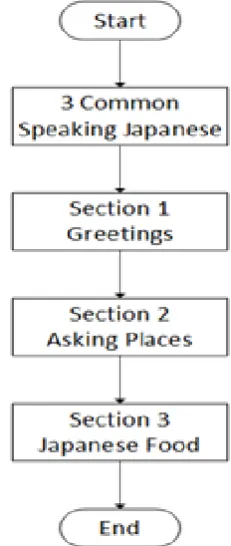
The analysis of the project will start with current analysis scenario. The overview of the flow is ambiguously identified. Current scenario analysis will contain the generic flow of existing scenario representation. For non-existing video animation represent the analysis in the form of flow chart. In this case, previous video animation has already been created and will refer to the current video animation. Figure 3 shows the current scenario analysis for this project development.
Figure 3: Flow chart of current scenario analysis
The aim of this project is to develop an animation by implementing the Japanese culture elements in this animation. Basic Japanese Language Animation is an animation that everyone can watch on YouTube by using a variety of devices. This animation focuses on learning basic Japanese language that commonly used in daily speaking.
[image:2.595.50.292.640.764.2]Next, in section two, this animation teaches about how to ask places to people. Lastly, in part three, this animation shows some of Japan's most popular types of food.
For the storyline is quite different with the existing animation like Basic Chinese Greetings - Beginner Conversational Mandarin because Basic Japanese Language animation teach on basic language that regular used to speak. While Basic Chinese Greetings only teach about greetings. This project is similar with Basic Chinese Language on learning greetings, but this project develops an extra learning and information for audience.
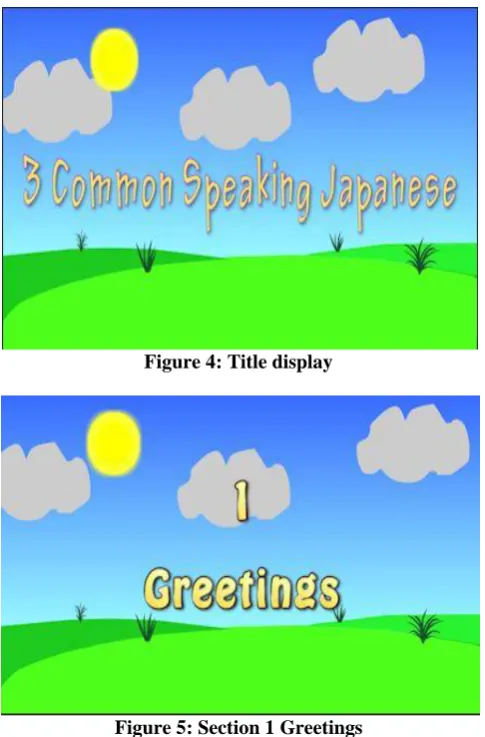
[image:3.595.305.548.53.452.2]User interface design consist of title, section 1, Section 2 and section 3 in the animation.
Figure 4: Title display
[image:3.595.307.550.53.244.2]Figure 5: Section 1 Greetings
[image:3.595.60.386.197.781.2]Figure 6: Section 2 Asking Places
Figure 7: Section 3 Japanese Food
Figure 8: Character 1 using Adobe Illustrator
[image:3.595.49.292.208.577.2] [image:3.595.305.551.446.629.2]A. Character Design
First, the character began by sketching the character on Adobe Illustrator for sketching and modeling in this project. The drawing based on three poses like front, side and back. Then, the created character will export into .png image and import it to flash. The character created image will trace the arm and leg in flash to create a movement the characters. Frame sets for this project are using 24 frames per second which is standard frame rate. The ratio of this animation is use 1280(width) x 720(height) for standard ratio, and it will be suitable by all hardware like laptops, smartphones and others. Figure 8 to 11 shows some character, and other animation elements that has been created along with the flowchart of the production animation. Multimedia element integration method will require a few software lists that can arrange and integrate all these components. The multimedia elements consist of text, graphic, audio, video and animation. The main platforms used for animation are Adobe Flash and Adobe Premiere.
[image:4.595.43.559.46.456.2]VI. ANALYSIS TESTING
The purpose of the study is to collect information from the questionnaire from three components of the chapter that are population respondent, animation technique, and respondent point of perspective view. The survey takes 2 days to spread the link animation and responses from respondents to answer the questionnaire.
Part A: Demographic evaluation
In this section, there are four multiple-choice questions that must be answered by respondents based on demographic evaluation.
Figure 12: Result of question 1 Part A Question 1.
[image:5.595.51.239.411.507.2]The pie chart shows most of them are female which is 60% responses this questionnaire. There are 12 female respondents while 40% of male responses the survey. As the results, the majority that answer the questionnaire are female respondents.
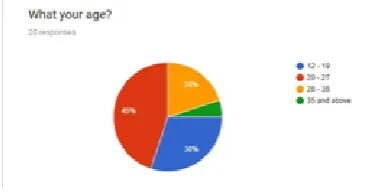
Figure 13: Results of question 2 Part A Question 2.
The pie chart shows that the majority respondents that responses the questionnaire are with age around 20 years until 27 years old which are 9 respondents (45%). Meanwhile, the age around 12 years until 19 years old has 6 respondents (30%) while there are 4 respondents (20%) are age 28 years until 35 years old who have response the questionnaire. Finally, the age who are 35 years old and above also have responses which is 1 response (5%). As the results, most of them who has age 20 years old until 27 years old are major that response the questionnaire.
Figure 14: Results of question 3 Part A
Question 3.
The pie chart shows all the respondents like to watch an animation. There are 100% which are 20 respondents really like to watch an animation. As the results, the animation is well accepted among the community.
Figure 15: Results of question 4 Part A Question 4.
The pie chart shows the results of people who like Japanese language. Most of them which is 95% of responses (19 responses) are like Japanese language while only 5% which is only 1 response does not like Japanese language. As the results, that 1 respondent might think that Japanese language are difficult to understand to make he or she does not like Japanese language.
Part B: Technical evaluation
In this section, there are three scaling questions that must be responses by respondents based on technical evaluation.
Scaling: 1. Strong poor / 2. Poor / 3. Moderate / 4. Good / 5. Strongly good
Figure 16: Results of question 1 Part B Question 1.
From the graph, most of them are rate good for the graphic of an animation. There are 10 responses (50%) of total saying that the graphic is good while 4 responses (20%) are rate a strongly good which the graphic of an animation is good for them. Lastly, only 6 responses (30%) are rate moderate for the graphic animation. As the results, the animation graphic which consists brightness, lighting, animation elements, designing and theme are good enough in the animation.
[image:5.595.318.545.466.544.2]Figure 17: Results of question 2 Part B
Question 2.
Based on the graph, 10 responses (50%) are rate the sound in the animation are good. 6 responses of them are rate strongly good about the sound while the remainder which is 4 responses (20%) are rating the sound as moderate. As the results, the audio and the music background in the animation are good although some of them are not interested it.
Figure 18: Results of question 3 Part B Question 3.
From the graph, the majority of responses which is 10 respondents (50%) are rate the text in the animation are strongly good. Meanwhile, 9 responses (45%) are rate as good and another 1 (5%) responses rate as moderate for the text in the animation. As the results, the text in animation including the main titles, subtopics and the text in dialog box are easy to understand and clearly to read.
VII. RESULT AND DISCUSSION
The animation provides the good graphic, sound and text of the animation. The graphic of the animation is in a good design based on the elements and theme. Respondents also like the text in the animation because the text is clear to understands. The results of technical evaluation show that the development of animation was success and have been accepted
However, there are some weakness of this product. Regarding the analysis and feedback from respondents, the product are lack with the audio including the music background and the voice of character which is the pronunciation are not clear. One of them said that the animation should make a simple conversation for easier to learn and understand especially for kids learning although the animation is suitable for everyone. One out of eight responses said the animation should provide some overview after learning Japanese language to let they know what they have
learn so far.
In the conclusion, the development of product "Basic Japanese Language" animation are successfully meeting the objectives of this project. The animation has been successfully giving effectiveness and has been acceptance among the community. However, the product needs to improve from time to time to make a great in terms of quality of the animation. Hopefully, this animation project can be used wisely for learning education.
ACKNOWLEDGMENT
We would like to thank to Universiti Teknikal Malaysia Melaka for facility and environment support for this project.
REFERENCES
1. Lee, A. and P. Mok, Acquisition of Japanese quantity contrasts by L1 Cantonese speakers. Second Language Research, 2018. 34(4): p. 419-448.
2. Wang, S., et al., Adaptive learning material recommendation in online language education, in Lecture Notes in Computer Science (including subseries Lecture Notes in Artificial Intelligence and Lecture Notes in Bioinformatics). 2019. p. 298-302.
3. Jin, Y., K. de Bot, and M. Keijzer, Affective and situational correlates of foreign language proficiency: A study of Chinese university learners of English and Japanese. Studies in Second Language Learning and Teaching, 2017. 7(1): p. 105-125.
4. Gnevsheva, K. and D. Bürkle, Age Estimation in Foreign-accented Speech by Native and Non-native Speakers. Language and Speech, 2019.
5. Itoh, N. and K. Sagawa, Aging effects of inner character space and line space of Japanese language, in Advances in Intelligent Systems and Computing. 2019. p. 153-157.
6. Nishioka, H., Analysing language development in a collaborative digital storytelling project: Sociocultural perspectives. System, 2016. 62: p. 39-52.
7. Chichon, J.P., An analysis of instructors' perspectives to first language (L1) use in monolingual Japanese university contexts. Journal of English as an International Language, 2018. 13(2): p. 100-121.
8. Inui, T. and Y. Nakano. An Analysis of Japanese Named Entity Recognizer Specialized for Person and Organization Entities. in
Proceedings of the 2018 International Conference on Asian Language Processing, IALP 2018. 2019.
9. Sato, M. and R. Hishiyama. An Analysis of Multi-language Simultaneous Display in the Translation System. in Proceedings - International Computer Software and Applications Conference. 2017. 10. Okano, K., et al., Analysis of specification in Japanese using natural
language processing, in Smart Innovation, Systems and Technologies. 2019. p. 12-21.
11. Cao, Y., et al. Analyzing vocabulary commonality index using large-scaled database of child language development. in LREC 2018 - 11th International Conference on Language Resources and Evaluation. 2019.
AUTHORS PROFILE
Hamzah Asyrani Sulaiman His research expertise currently on computer graphics and visualization where it covers collision detection system, subdivision technique, parallel programming using GPU acceleration and physic and particle system in virtual environment world research area. He had Phd in Mathematics with Computer Graphics in 2015.
[image:6.595.56.288.318.426.2]