COLLABORATIVE ENTREPRENEURIAL INNOVATION
Benjamin John Heslop
August 2012
The work in this thesis is my own except where otherwise stated.
Acknowledgements
Many helped me on this long, ten-year journey: Gerard let me do what I wished.
Tony treated me like a son. Boyd persevered.
Annalese listened and read.
Abstract
Innovation is an often used yet poorly understood word. A critique of government policy to promote innovation demonstrates it to be incoherent and not informed by theory. Its fragmented approach is shown to not overcome market failures to innovate, while creating bureaucratic load for applicants. It is proposed that a deeper understanding of collaboration should inform government policies intended to promote market-based innovation.
Table of Contents
INTRODUCTION
1.1 Australian Innovation ... 1
1.2 Research Aims ... 3
DISCUSSION
2.1 Knowledge Transfer ... 52.2 Explanations for Failure ... 8
2.2.1 Failure of Policy ... 8
2.2.2 Failure of Theory ... 8
2.2.3 Failure of Experiment ... 11
2.3 Addressing Complexity ... 13
METHOD
3.1 Critical Thinking ... 153.1.1 Early Presumptions ... 16
3.1.2 Iteration and Recursion ... 18
3.2 Data Sources ... 18
3.2.1 Gaining Access ... 19
3.2.2 Interview Technique ... 20
3.3 Cognitive Mapping ... 21
3.3.1 Transcribing to Textboxes ... 21
3.3.2 Visual Geography ... 22
3.4 Initial Model ... 22
3.4.1 Aural Immersion ... 22
3.4.2 Induct Parameters ... 23
3.4.3 Deduct Impacts ... 23
3.4.4 Comments on Initial Model ... 24
3.5 Interim Model ... 24
3.5.1 Examine Maps ... 25
3.5.2 Displace Memory ... 25
3.5.3 Converge Theory... 25
3.5.4 Comments on Initial Model ... 26
3.6 Final Model ... 27
3.6.1 Logical Testing ... 27
x
RESULTS
4.1 Defining Parameters ... 29
4.1.1 Parameter Potential ... 29
4.1.2 Parameter Memory ... 29
4.1.3 Impact Equations ... 30
4.2 Impacts of Transfer ... 31
4.2.1 Impact of Transfer upon Activity (T→A) ... 32
4.2.2 Impact of Transfer upon Knowledge (T→K) ... 33
4.2.3 Impact of Transfer upon Identity (T→I) ... 33
4.2.4 Impact of Transfer upon Cohesion (T→C) ... 34
4.3 Impacts of Activity ... 35
4.3.1 Impact of Activity upon Knowledge (A→K) ... 36
4.3.2 Impact of Activity upon Transfer (A→T) ... 36
4.3.3 Impact of Activity upon Identity (A→I) ... 36
4.3.4 Impact of Activity upon Cohesion (A→C) ... 37
4.4 Impacts of Knowledge... 38
4.4.1 Impact of Knowledge upon Activity (K→A) ... 38
4.4.2 Impact of Knowledge upon Transfer (K→T) ... 39
4.4.3 Impact of Knowledge upon Identity (K→I) ... 40
4.4.4 Impact of Knowledge upon Cohesion (K→C) ... 40
4.5 Impacts of Identity ... 41
4.5.1 Impact of Identity upon Activity (I→A) ... 42
4.5.2 Impact of Identity on Transfer (I→T) ... 43
4.5.3 Impact of Identity upon Knowledge (I→K) ... 43
4.5.4 Impact of Identity upon Cohesion (I→C) ... 44
4.6 Impacts of Cohesion... 45
4.6.1 Impact of Cohesion upon Activity (C→A) ... 46
4.6.2 Impact of Cohesion upon Transfer (C→T) ... 46
4.6.3 Impact of Cohesion upon Knowledge (C→K) ... 47
4.6.4 Impact of Cohesion upon Identity (C→I) ... 47
ANALYSIS
5.1 The Decision to Engage ... 495.2 Captive Engagement (tribe) ... 51
5.2.1 Captive Identity ... 51
5.2.2 Captive Activity ... 52
5.2.3 Captive Knowledge ... 52
5.2.4 Captive Cohesion ... 53
5.3.1 Selective Identity ... 54
5.3.2 Selective Activity ... 54
5.3.3 Selective Knowledge ... 54
5.3.4 Selective Cohesion ... 54
5.3.5 Selective Transfer ... 55
5.4 Novel Engagement (town) ... 55
5.4.1 Novel Identity ... 55
5.4.2 Novel Activity ... 56
5.4.3 Novel Knowledge ... 56
5.4.4 Novel Cohesion ... 56
5.4.5 Novel Transfer ... 56
5.4.6 Early Abduction Proven? ... 56
5.5 Mammalian Collaboration ... 57
5.5.1 Mammals’ Expression of Impacts ... 57
5.5.2 Empathy and Conscience ... 60
5.5.3 Early Deduction Proven? ... 61
5.6 Model Behaviour ... 62
5.6.1 Self-feedback (0th order) ... 62
5.6.2 First Order Feedback ... 63
5.6.3 Interpreting the Feedback Model ... 64
5.6.4 Early Induction Proven? ... 66
EVIDENCE
6.1 Reconceptualisations ... 676.1.1 Money and Collaboration ... 67
6.1.2 Impulse Innovation ... 69
6.1.2 Emergent Innovation ... 69
6.1.3 Quotient Innovation ... 70
6.2 Evidentiary Instances ... 70
6.2.1 Silicon Valley ... 70
6.2.2 Open Innovation ... 73
6.2.3 Street University ... 75
6.2.4 Circumstantial Evidence? ... 76
POLICY
7.1 Leadership Roles ... 777.1.1 Facilitators optimise Cohesion ... 77
7.1.2 Entrepreneurs optimise Identity ... 77
7.1.3 Experts optimise Transfer ... 78
7.1.4 Planners optimise Activity ... 78
xii
7.2 Government Oversight ... 79
7.2.1 Not as Collaboration Leaders ... 79
7.2.2 Dual Objectives ... 80
7.3 Recommended Policies ... 81
7.3.1 Collaboration Tax Offsets ... 81
7.3.2 Reduced Patent Terms ... 83
7.3.3 Collaboration Vouchers ... 85
7.3.4 Freedom from Government ... 86
CONCLUSION
8.1 Thesis Summary... 878.2 Observations ... 89
8.2 Future Work ... 89
8.4 Closing Comments ... 90
REFERENCES
APPENDIX A: CRITIQUE OF POWERING IDEAS
A.1 Innovation Defined ... 103A.2 Market Failure ... 104
A.3 Priorities and Principles ... 106
A.4 Failure to Learn... 109
APPENDIX B: ITERATIVE THEORY BUILDING
B.1 System Dynamics ... 113B.1.1 System Dynamics Elements ... 113
B.1.2 System Dynamics Iteration ... 114
B.2 Grounded Theory ... 116
B.2.1 Grounded Theory Elements ... 116
People who make it into the establishment work and play well with others. They are part of the
same overlapping social networks, and inevitably begin to perceive the world in similar,
conventional ways. They thrive in institutions where people are not rewarded for being
cantankerous intellectual bomb-throwers (1)1
Chapter 1.
Introduction
Innovation usually connotes consumer gadgets and factory production lines, but this research is concerned with innovation in the context of collaboration and entrepreneurship. Specifically, how can entrepreneurs innovate more successfully from within diverse collaborations, such as those between business owners and university researchers?
The author began this research when part of a university technology project. There was an interesting aim: use of ex-television spectrum radio waves to connect remote communities to the internet. The project needed to find business partners to produce, on a commercial scale, transceivers we had designed. One partner was a large corporation that, in order to make an investment, needed us to form a venture separate from the university; a spin-out. It was however revealed that, since our project leader was a university employee, they owned our project’s intellectual property [IP]. Since the university had no interest in forming a risky, complicated spin-out, the project eventually died. These events did however spike the author’s interest in policy on collaboration and innovation, and led to this research.
1.1
Australian Innovation
Australia places fourth last in collaboration between universities and firms. Worse is venture capital involvement in high-technology companies, in which Australia places absolute last. While there is not a diametric correlation between nations in Figs. 1 and 2 since their variables are merely indicative, the message is nevertheless that collaboration and innovation tend to fail or succeed in tandem, since:
As the volume of knowledge grows, complex technologies proliferate, and supply chains become more specialised, it is getting harder and harder to innovate in
isolation. Networking and collaboration are essential. Australia’s weakness in this area puts us at a serious disadvantage. (2 p. 59)
1
Figure 1: Firms collaborating in innovation with higher education institutions, 2002–04 (3)
Figure 2: Share of high-technology sectors in total venture capital (3)
With increasing complexity and competitiveness of technology and supply lines, innovation requires access to global markets of knowledge. Business culture must not only embrace new ideas, but build external linkages. This becomes most obvious when dealing with the sometimes-antithetical priorities of business and academia.
[image:14.595.29.469.342.596.2]bright idea; businesspeople cold-call researchers with their latest problem. This is not collaboration. Collaboration is about building lasting relationships based on shared trust, shared goals, and shared respect for each party’s expertise. (2 p. 62)
With collaboration providing an environment conducive to innovation, the aims of this research are now stated.
1.2
Research Aims
The Australian government’s most recent policy document on innovation is extensively critiqued in Appendix A. Its recommendations are found to be unsupported by theory or by case study, but rather underpinned by two assumptions: that innovation should be directly funded by government and that outcomes must be numerically countable (§A.2). This research will show that both approaches are ineffective for promoting innovation, and rather lead to undesirable consequences. An alternative approach will be created.
First Aim: Create a useful theory of innovation
Theory must always be subject to testing, but in the human realm this is not straightforward. Innovation requires people to dedicate their time, energy and money, making experiments impractical, expensive and possibly unethical. Requiring significant investment, full scale trials are politically sensitive and success takes years to prove. Yet political considerations can still allow success stories to be ignored (§A.4). This research will endeavour to find instances of functional innovation to compare with, and hopefully support, theory.
Second Aim: Find evidence to support theory
After theory has been created and validated by case study, this research will strive to develop coherent policy to promote innovation; one that replaces the current confusing multiplicity of funding programs and exclusive reliance upon accountability-in-hindsight (§A.3).
Third Aim: Recommend coherent policy
Over the past century or so, people have built various systems to help them understand human
behaviour: economics, political science, game theory and evolutionary psychology. These
systems are useful in many circumstances. But none completely explain behaviour because
deep down people have passions and drives that don’t lend themselves to systemic modelling.
They have yearnings and fears that reside in an inner beast you could call The Big Shaggy (4)
Chapter 2.
Discussion
Powering Ideas (2) has established that modern innovation requires collaboration and the author has hypothesised that collaboration is founded on knowledge transfer. It will be demonstrated why this latter logic fails to deliver useful theory; an understanding which will give rise to the more comprehensive methodology of Chapter three.
2.1 Knowledge Transfer
Market competition and division of labour separates knowledge into silos whilst collaboration allows combining of diverse skills and experience. On the assumption that knowledge transfer is critical to collaboration, knowledge and transfer are first explored individually before being examined in concert. ‘Knowledge’ has two dictionary interpretations as a noun (5).
The fact or condition of knowing something with familiarity gained through experience or association;
Acquaintance with or understanding of a science, art, or technique
‘Transfer’ is a transitive verb with three meanings (6).
To convey from one person, place, or situation to another;
To cause to pass from one to another;
To make over the possession or control of
In all but one of the five interpretations of knowledge and transfer, transfer’s third, a person is explicitly required to be involved. It is evocative of conveyance of property title; “to make over the possession or control of.” This requires legal ownership, which can include incorporated entities. However both definitions of knowledge require 'knowing' or 'familiarity' and these cannot be achieved collectively. An entity cannot 'know' or gain 'familiarity' as a person does. A reasonable assertion therefore is knowledge transfer requires two2 people, one choosing to
2
make knowledge available before the other chooses to absorb it. Any intervening documentation or other communication is merely the medium by which transfer occurs. Knowledge Management (7) has a slightly contrary view, with knowledge being perceived by two prominent authors as:
…a fluid mix of framed experiences, values and contextual information, and expert insight that provides a framework for evaluating and incorporating new experiences and information. It originates and is applied in the minds of knowers. In organisations, it often becomes embedded not only in documents or repositories but also in
organisational routines, processes, practices and norms. (7 p. 5)
The first sentence broadly accords with Merriam-Webster while the second makes human involvement necessary. The third sentence expands the definition to include knowledge codified within the inanimate mediums or systems of an organisation, confusing storage with familiarity.
According to the dictionary meaning of knowledge and transfer, knowledge is in transit until a human understands it. If instructions are followed without comprehension, no knowledge is involved. Only if there is some conscious manipulation of knowledge can it be considered transferred. Knowledge creates artefacts3 that can be used without technical appreciation. The importance of absorbing knowledge, rather than blindly acting upon or utilising it, is subtly corroborated later by the same author.
While we’ll consider various knowledge transfer issues and strategies in this chapter, many of them come down to finding effective ways to let people talk and listen to one another. (7 p. 88)
The sentiment is repeated at the conclusion of the same chapter.
Too often, knowledge transfer has been confined to such concepts as improved access, electronic communication, document repositories and so forth. We believe it is time for firms to shift their attention to the more human aspects – from access to attention, from velocity to viscosity, from documents to discussion. (7 p. 101)
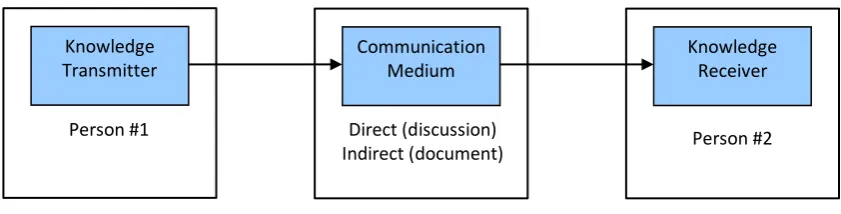
It is however possible to unite “documents” and “discussion” since both implicitly require comprehension. An ‘indirect’ communication medium such as a document still transfers knowledge from the writer to the reader, but without physical or temporal co-location. This is a more robust approach to knowledge transfer.
Knowledge transfer involves two actions: transmission (sending or presenting knowledge to a potential recipient) and absorption by that person or group. If knowledge is not absorbed, it has not been transferred. (7 p. 101)
3
Rather than residing in an inanimate object, knowledge may be considered en route from a transmitter to a receiver. This holds true for conversation, where communication includes some combination of words, tone of voice and body language. A unification of direct and indirect mediums gives rise to a model of knowledge transfer (Fig.3).
[image:19.595.117.538.158.265.2]The OECD makes a similar distinction between types of industry-science collaboration (Fig. 4).
Figure 4: Industry-science relationships (3)
[image:19.595.126.442.313.602.2]The ‘tip of the iceberg’ is collaboration characterised by quantifiable agreements. Joint labs are formal arrangements between university and industry laboratories to share research findings. Spin offs are formal agreements between university researchers and investors to commercialise research within a dedicated vehicle. Licensing is a formal agreement between a researcher and industry partner to license a research discovery for use in commercial production. Research contracts are paid arrangements where companies pay researchers to Figure 3: Model of knowledge transfer Knowledge
Transmitter
Knowledge Receiver
Person #2 Communication
Medium
pursue a line of enquiry, or solve a problem. All are identified by formal agreements that policy makers can easily attribute as successful outcomes.
Supporting these formal agreements are more numerous direct knowledge transfers below the ‘waterline’. People interact with one another, be it at a conference, a workplace or to complete a publication. As indicated by the BER policy response (§A.4) they are of less interest to governments since they are difficult to measure, and therefore to provide accountability for. This research aims to find theory allowing better policy that does not discriminate against direct knowledge transfer that is critical for collaboration and thereby innovation.
2.2 Explanations for Failure
Powering Ideas (2) does not have a monopoly on theoretical paucity or policy incoherence. Four policy documents from the first decade of the 20th century, one British and three Australian and are now briefly mentioned. Thereupon, failures of theory and experiment (including the author’s) are explained.
2.2.1
Failure of Policy
The featured policy documents are similar to Powering Ideas in that little theory is cited. The Lambert Report (8) is convincing and globally-lauded with findings taken up elsewhere (Australia excepted). The Standing Committee on Science and Innovation (9) puts a range of views without making firm recommendations, with Lambert among those considered. The Productivity Commission (10) defends the status quo with selective case studies and unfounded assertions. This is endorsed by a response to the draft report written by eight of Australia’s universities (11) - complaints the final report ignored.
While the Productivity Commission is criticised by the author for using opaque, inconsistent rationale, Lambert himself only relies upon deductive logic and common sense. Given a lack of theoretical basis for decision-making, government policy cannot explain why theory is not utilised. Guidance can however be found in the reasons preferred by social scientists themselves for not resolving complexity.
2.2.2
Failure of Theory
an abstraction like ‘innovation’ is that none of these can be described with any surety. Any one instance of innovation is different to another, and it is awkward to unite them coherently. Building theory of collaboration is further challenged by a lack of numerical data that would otherwise allow objective analysis. The Lambert Report drew upon numerical data when it could, but where it could not, used common sense in place of true theory. Its comparative success is explained by the other reports being written in a political context, whereas Lambert seemed to have free reign to address the subject. Additionally, Lambert put his name to the report while others were collectively authored by committee (discussed later §7.6).
This alludes to the second problem where ‘success is claimed by all but failure is an orphan.’ Every member of a particular group has a subjective opinion of why it has succeeded, but failure usually involves blaming someone else (13). We are genetically inclined to see ourselves and our actions in a positive light as a result of ancestors who fought and survived against overwhelming odds (14). This inherent subjectivity means there is no “problem statement” since in any collaboration everyone has a different idea of the problem, confounding data gathering (15). All of social science involves collaboration to some extent, and this explanation goes part way to understanding why no definitive theory has arisen.
By their very nature the problems imposed on organisational theorists involve so many assumptions and such a mixture of accuracy and inaccuracy that virtually all
conjectures and all selection criteria remain plausible and nothing gets highlighted or rejected. (12 p. 521)
In managing this multiplicity of plausible conjectures Thorngate (16) suggests not attempting universally-applicable theory. Thorngate’s postulate of commensurate complexity, cited by Weick (17), states it is impossible for a theory of social science to be simultaneously general, accurate and simple since “the more general a simple theory is, for instance, the less accurate it will be in predicting specifics” (17 p. 35). Ignoring this apparently-immutable reality exacts a price for the researcher.
Failure to accept the inevitable trade-offs implied in the GAS (Generality-Accuracy-Simplicity) formulation seems to be at the heart of many current research problems. Investigators act as if they simultaneously accomplish all three aims in their
explanations, and that delusion is at the heart of much trivial, inconclusive research. (17 p. 36)
Regardless of how the trigger to theorising is described, it consists of some description that can vary in fineness of detail, accuracy, and explicitness of assumptions which it incorporates. The theoretical problem that trial and error thinking tries to solve is equivalent to the adaptation problem that trial and error locomotion tries to solve. A conjecture that solves a theoretical problem is equivalent to an action that discovers a niche. In both cases, the likelihood of a solution is determined in part by the way the environment is represented or perceived. The two cases differ, however, in a crucial way. Theorists both choose the form of the problem and declare when their thought trials have solved the problem they pose, a sequence that resembles artificial
selection. Theorists are both the source of selection and the source of variation. (12 p. 520)
Weick believes the only path for social science to achieve an approximation of GAS is the summation of heterogeneous conjectures. Achieving this requires “blind thought trials” that allow the process to be “smarter than the people who run it.” Grafted from the scientific standard of ‘double blind trials’ Weick believes that if social scientists are unaware of how their conjecture fits, the best truth of many can be selected. Limiting truths means attendant limitations of scope while “middle range theories” allow accuracy and simplicity to be maintained:
Middle range theories are solutions to problems that contain a limited number of assumptions and considerable accuracy and detail in the problem specification. The scope of the problem is also of manageable size. To look for theories of the middle range is to prefigure problems in such a way that the number of opportunities to discover solutions is increased without becoming infinite. […] When faced with a problem, the theorist generates conjectures about how to solve it. These conjectures, usually in the form of if-then sentences, vary at least in the number of trials generated and the heterogeneity between the trials. In general, a theorising process
characterised by a greater number of diverse conjectures produces better theory than a process characterised by a smaller number of homogenous conjectures. (12 p. 521)
Putting aside fallacious comparison with the natural sciences, Weick’s recommendation of heterogeneous theory is highly problematic. Since human reality cannot be cleanly delineated, separate theories in different problem spaces allow policy makers resort to select whichever theory they wish. This decision will be typically based upon either good intentions or political self-interest, but as Powering Ideas has shown, the former can be just as detrimental without comprehensive understanding.
In addition, policy duplication is expensive, confusing to participants and adds bureaucratic load, such as writing grant proposals4. Also, because the electorate is unable to evaluate multiple policy initiatives with multiple theoretical justifications, they cannot punish bad governments nor reward good ones. For these reasons, and even though it declaims the idea,
4
Powering Ideas’ morass of funding schemes and committees is doomed to failure5. Even if it succeeded, how can the public appreciate policy without underlying theory that takes decades to deliver results?
2.2.3
Failure of Experiment
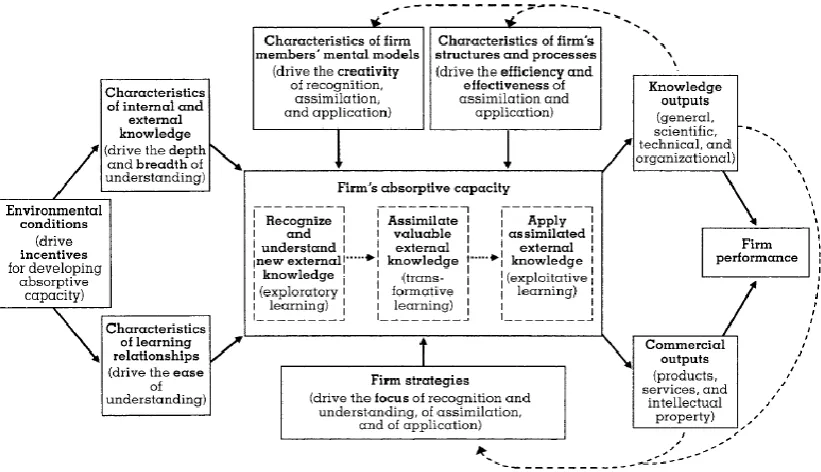
When applied to innovation research, the heterogeneous approach was also found to be deficient by Lane et al (18) in their review of Absorptive Capacity literature. Absorptive Capacity is a firm’s ability to utilise externally-sourced knowledge and involves three sequential processes (19 p. viii).
Recognising and understanding potentially valuable new technology outside the firm through exploratory learning.
Assimilating valuable new knowledge through Transformative Learning
Using the assimilated knowledge to create new knowledge and commercial outputs
Yet Lane (2006) concludes that over a decade of citation and research, the field had failed to usefully converge.
…while many of the empirical studies have focused on similar R&D contexts, they have tended to use differing measures, with little concern for triangulation with prior studies. This has resulted in a scattered pattern of knowledge accumulation, in which studies are statistically significant, but theoretically fragmented, a problem common to most areas of organizational research. (18 p. 27)
To attempt to unify the field Lane et al (2006) models a business using transformative learning (Fig. 5). In proposing such a holistic theory, Lane has identical intent to this research and indeed, the author published a model (Fig. 6) showing remarkable similarity. The line of enquiry was however abandoned since it risked inaccuracy when applied to different contexts and was too complex for general policy recommendations.
This demonstrated to the author that extrapolating theory from knowledge transfer did not lead to a GAS theory. Yet policy application the strictures on GAS theory must be somehow defeated. From a systems perspective, this means finding a method to address and manage complexity that allows convergence across multiple problem spaces.
5
Figure 5: A Process Model of Absorptive Capacity, Its Antecedents and Its Outcomes (18 p. 856)
Figure 6: Process Model of University-Business Collaboration, edited6 for (20)
6
Originally published 2004 (231).
2. Project Funding
13. KTF-Arranged Interaction
12. KTF Contacts
9. Stakeholder Support
1. Institutional Support
5. Policy Intelligence 6.KTF Quality
10. KTO Autonomy 11. Programme
Coordination 4. Information
Infrastructure
8. Opportunity 3. Project
Participation
[image:24.595.75.474.349.641.2]2.3 Addressing Complexity
Heterogeneous theory is impractical because multiple independent research endeavours cannot easily be combined. Unlike the immutable, fundamental variables of the natural sciences, each social scientist invents their own. Lane et al. found that such a strategy led to shallow, scattered theory, and blamed the pressure to publish and journals’ rejection of repeated experiments7.
In short, we suspect that the pressures to jump on emerging research bandwagons, to publish quickly, and to avoid replication are the root causes of the reification of absorptive capacity. While we have no data to verify this, we find this explanation far more plausible than the alternative explanation that the reification was done for other, more self-serving reasons. Moreover, given the increasing pressures to publish and the increasing number of calls for interdisciplinary research, we believe that these potential problems are a timely and important issue for all social scientists. (18 p. 27)
Complexity Theory (21) asserts that repeated cycles of theoretical testing against reality will uncover complexity. Apparent or perceived complexity is related to the length of the algorithm (or equation) that can reproduce the data, known as Algorithmic Information Content [AIC]. Einstein was celebrated for finding equations with very low AIC8, while programs that predict the stock market are incomprehensibly long. Restricting research time keeps theory long (and non-GAS) as Lane et al confirmed regarding pressure to publish (Fig. 6).
Complexity implies interdependency, and theorising from the perspective of a single parameter (such as knowledge transfer) is unlikely to reveal the whole. Rather all parameters must be discovered in concert by examining multiple problem spaces, which for maximum efficiency requires a single team or even a single mind. Numerous teams of researchers
7
Rejection of repeated experiments is ironic considering Weick’s desire to replicate scientific trials. 8
[image:25.595.118.530.440.604.2]E=mc2
Figure 7: Algorithmic Information Content
Figure 36: Effective complexity AIC
Time
Dawning understanding as sufficient ‘processing time’ allows the observer to see
patterns
Effective Complexity is reached when more time does not provide
further insight
attempting to do so would suffer from communication inefficiencies and disagreement that hinder convergence.
If the problem space has more than one pattern to be discovered, more time is required. Some patterns are hidden deeply or require further data to understand, and lead to plateaus waiting for the next discovery. The researcher’s growing comprehension of underlying patterns that explain more data and make the problem seem less complex (21) is made apparent In ‘Stepped AIC’ (Fig. 8).
A theorist translates raw data into theory by finding patterns within data. Complexity theory postulates a universal machine that can find patterns within any digital (for example, 010100011) string. If the data string is allowed to be qualitative, the theorist becomes a universal machine.
Complex brains are good at […] creating high-level neural patterns to make sense of the world. We lack a word to describe this function, but instances abound. A simpler example is our normal three-dimensional visual perception. Here, a network of
neurons in the visual cortex compares the slightly offset two-dimensional inputs it gets from each eye. The comparison is used to create an image of a three-dimensional world. Thus we literally see - and not merely infer - real depth. (22)
Our sight observes a three dimensional world, but a complex system can have more than three dimensions. This research will tease out the complexities of innovation using the mind’s capacity to identify patterns, sufficient time to discover them and finding data on collaborative behaviour that is most objective.
AIC
Time Easier-to-find patterns
[image:26.595.71.478.223.384.2]Difficult-to-find patterns
Figure 8:Stepped AIC
Paine believed that societies exist in an “eternal now.” That something has existed for ages
tells us nothing about its value. The past is dead and the living should use their powers of
analysis to sweep away existing arrangements when necessary, and begin the world anew. He
even suggested that laws should expire after 30 years so each new generation could begin
again (23).
Chapter 3.
Method
This research builds theory of collaboration by combining engineering from System Dynamics (§B.1) with social science via Grounded Theory (§B.2) alongside Critical Thinking (24).
3.1 Critical Thinking
Philosophy’s Charles Sanders Peirce has three approaches utilising conceptual information: induction, deduction and abduction. Induction builds theory directly from observed patterns in data.
Induction allows inferring 'a entails b' from multiple instantiations of a and b at the same time. Induction is the process of inferring probable conditional relevance as a result of observing multiple antecedents and consequents. An inductive statement requires empirical evidence for it to be true (25).
For example, the author inducted that direct (a) and indirect (b) mediums of communication constitute knowledge transfer, similarly evidenced by the OECD ‘iceberg’ graphic (Fig. 4) that differentiated between formal and informal collaboration. While induction is useful when data patterns are apparent, deduction can otherwise map disparate logics to an eventual solution. If however assumptions are incorrect, deduced theory will be flawed.
Deduction allows deriving c as a consequence of d. In other words, deduction is the process of deriving the consequences of what is assumed. Given the truth of the assumptions, a valid deduction guarantees the truth of the conclusion (25).
In Chapter two, dictionary definitions of transfer and knowledge (c) allowed deduction of a human-centric model of knowledge transfer (d) (Fig. 3). Induction finds patterns in data while deduction extends logic, but abduction can infer false explanations for patterns that appear true. Since there can be multiple explanations for a particular effect, abduction is the most tenuous mental tool.
The first instance of abduction was that collaboration consisted of multiple knowledge transfers.
Abduction allows inferring e as an explanation of f. Because of this, abduction allows the precondition e to be inferred from the consequence f. Deduction and abduction thus differ in the direction in which a rule like ‘e entails f’ is used for inference (25).
Since communication appeared fundamental, it was thought that all instances of collaboration (f) could be explained purely as an environment for knowledge transfer (e). This was found to be incorrect through deduction that some model predictions do not accord with reality. For instance, the variable ‘autonomy’ (Fig. 6) pre-supposed facilitators’ wisdom relative to university administrators, but this was clearly unrealistic. Facilitators are human and make mistakes, rendering their autonomy an unreliable parameter. This does not however invalidate facilitators’ or knowledge transfer’s role in collaboration, and both demonstrate their importance later in the research.
3.1.1
Early Presumptions
Humans may survive as individuals, but only prosper in cooperative groups (26). This implies humans have behavioural patterns that allow effective, reliable collaboration (27). If collaboration is systemic, then its parameters have been evolutionarily selected for. Identifying these parameters may give rise to a model of collaboration.
And it turns out that people are extremely social animals, our species really relies on social interactions to survive or at least it did while we were evolving in the wild and so we have similar unconscious processes that give us a social picture that take
information beyond what’s actually the data that’s out there and factor that in and present to us a filled in, clear looking image that we perceive as being real but is really constructed by our brain just as the visual image is constructed. And that leads to certain kinds of illusions called cognitive illusions that are really the analogies of optical illusions but I really want to stress that the unconscious mind is a gift, even though it is interesting in studying how it works, to examine the illusions, it really works very well and for the most part the illusions are not important. And what is important is that it allows us to function smoothly and quickly whether we are travelling through the physical world or the social world. (28)
Given the number of factors potentially affecting survival, parameters must be prominent or evolution cannot select for them. It is abducted that specific parameters would be foremost in governing behaviour during collaboration.
Early Abduction: Evolved parameters guide decisions when in collaboration
parameters will make better decisions (30). Those who do so will find evolutionary success, and make permanent the interaction. For example, if the value of a certain parameter is unknown, a new connection to another known parameter would infer it.
If the collection of parameters is considered an engineering system, then parameters are included (or endogenous) only when fully connected9. An interaction may be slight, but will always be consistently positive or negative. If inconsistent, a third endogenous parameter must be included in the system or else the early abduction is incorrect.
Early Deduction: All parameters within the ‘collaboration system’ affect one another
A system must behave reliably for traits to experience evolutionary forces. This would indicate that the macro behaviour tends towards stability, with collaboration capable of innovation but only through atypical effort. Genes mutate only occasionally, with only a small percentage being desirable and so too would collaboration be dominated by ‘business as usual.’ Ability to cooperate reliably and efficiently is important in a majority of situations.
Nevertheless, collaboration must have capacity for change in an ‘adapt or perish’ scenario. Archaeological evidence shows that humanity may have survived a super volcanic eruption with as few as 1000 breeding pairs (31). Others reject this and instead believe that the inherent adaptability of humans minimised the catastrophe’s impact (32), which only highlights the importance of group innovation. Surviving occasional but nevertheless unavoidable threats such as food shortages means overcoming a natural resistance to change. Genetic selection had reason to choose both stability and adaption, but stability would dominate given that unless conditions have changed substantially, traditional approaches are usually superior.
Early Induction: Collaboration is dominated by stability
Using principles of evolution and biological systems, three presumptions summarise the original premise of this research, with Chapter five later examining their accuracy. Considering the Early Deduction (All parameters within the ‘collaboration system’ affect one another), the number of interconnections has a factorial relationship to the number of parameters. This potentially-high complexity shows the difficulty of the task, where no one parameter can be considered in isolation.
9
3.1.2
Iteration and Recursion
Iteration is taking the result of a completed function and feeding it in next time the function is required. Recursion is nested repetition of a function without the first iteration having finished, but later allowed to. Abduction, induction and deduction can be iterated in sequence, however when flaws become evident, recursion is required.
System Dynamics and Grounded Theory both employ recursive iteration to develop theory (§B.1.2, §B2.2). The former is designed for quantitative applications and the latter qualitative. System Dynamics models a physical system to understand how to optimise it and what undesirable behaviours might arise. Systems can be optimised such as for cost, safety or performance, but since optimisation can lead to fragility, engineers require accurate models to understand their potential for catastrophe10. Grounded Theory on the other hand focuses on the vastitudes of qualitative data, with only vague attention given to system behaviour. System Dynamic’s first step in theory building is specification of the system boundary, which the Early Deduction has already accomplished. This methodology’s next phase utilises Grounded Theory’s identification and utilisation of data sources, explained in the next section. The third step draws upon both schools as well as Critical Thinking to begin building the collaboration model.
3.2 Data Sources
The most valuable attribute of data is objectivity, and from the author’s experience, the most objective participants in academic-business collaboration were professional facilitators (§7.1.1) employed by the university. In having concurrent and successive responsibility for project outcomes, they have incentive to be objective in assessing reasons for success or failure. Additionally, university-business collaboration provides the most diverse problem space since a university encompasses many academic specialisations, and each invention produced by them requires different paths to market.
At time of writing Australia's university systems of innovation were haphazard and under-performing, representing an unsatisfactory data source. Two English-speaking nations with a lengthy record of effective innovation policiesare the United States and Britain. The US has the longest, but is unfortunately the least ‘naturalistic.’
10
In interviews conducted during the past 15 years the answer to the question ‘what motivates your technology transfer activity’ quite often was ‘we were told to’. That same response often explained much about the increase in CRADA (industry-research collaborations) signings. In short, much public sector technology transfer activity…was a direct result of formal mandate, not bottom-up in the way of doing business. (33 p. 644)
American academics were encouraged to innovate by being given automatic ownership over their intellectual property [IP] regardless of where funding had originated (8). The arbitrariness of this approach contradicts the author’s wish to find systemically-reliable collaboration. British universities had various rules; Cambridge followed the American model, but elsewhere ownership was shared amongst funders and institutions. Additionally, the British government had for some years provided dedicated funding for innovation personnel and infrastructure, and this had had time to bear fruit.
The Thatcher administration allowed each university to decide their approach to research commercialisation, and then funded the best plans. Large variations resulted, providing valuable diversity in problem space, which in Britain were in relatively close geographic proximity. With the author’s budget11 limited, Britain was selected, and preference given to universities with longer records and maximum variance in approach.
Oxford University possessed an impressive and lengthy record of research commercialisation for both licensing and spin-outs.
Surrey was proximate and had strong links to the largest technology park in Europe. Strathclyde had a highly successful early technology incubator as well as dedicated research into, and teaching of, entrepreneurship.
Bath had a world-famous system of student internships into business, undertaking applied research supervised by academics, often leading to permanent employment. The next was task was gaining access to these locales.
3.2.1
Gaining Access
To gain access, a relationship was first established with a central commercialisation office, assisted by the offer of a full briefing at the conclusion of proceedings. Since they were usually grappling with the difficult task of managing the system, the opportunity for an external perspective was appreciated. This meant being given status approaching that of consultant,
11
with access to employees. After gaining access to each university, interview subjects were selected on depth of experience commercialising academic research.
3.2.2
Interview Technique
Interviews were best delivered when the subject was relaxed and did not feel expectations were being placed upon them. If disclosure was flowing, little attempt was made to guide the interview beyond prompting for extra information, or to move to a new topic once the current one was exhausted.
Forrester (1980) identified three types of data needed to develop the structure and decision rules in models: numerical, written and mental. Numerical data are the familiar time series and cross-sectional records in various databases. Written data includes records such as operating procedures, organisational charts, media reports, emails and any other archival material. Mental data span all the information in people’s mental models, including their impressions, stories they tell, their understanding of the system and how decisions are actually made (as opposed to what is written in procedures manuals), how exceptions are handled etc. Mental data cannot be accessed directly but must be elicited through interviews, observations and other methods. The numerical data contain only a tiny fraction of the information in the written database, which in turn is miniscule compared to the information available only in people’s mental models. Most of what we know about the world is descriptive, impressionistic, and has never been recorded. Such information is crucial for
understanding and modelling complex systems. (34 p. 125)
In order to more-fully engage with the subject, and avoid the distraction (to both parties) of note-taking, interviews were recorded rather than transcribed. In seeking permission to record from the subjects, most expressed no reservations, and many commented positively12 on the accuracy of the approach.
During the interviews themselves, the major danger was in not reaching beyond formulaic responses. To create a state whereby information was openly divulged, it was sometimes necessary to play mental games. For instance, offering alternative solutions to answers given by the subject created a sense of competition that would prompt further disclosure. Alternatively, one might inject childish enthusiasm into the interview13 by expressing (usually sincere) wonder at, for instance, the wider implications of a project they had facilitated or enacted. In general, the aim was to bring the subject out of their ‘professional detachment’ and enable a state where they enthused about their experiences and opinions.
12
Upon concluding an interview, subjects occasionally expressed disquiet at their revelation of confidential information.
13
It is worth noting that people prefer to speak in terms of what has rather than what hasn’t worked in order to avoid embarrassment to themselves or their colleagues. Yet failures can make invaluable data, since success can remain opaque, but those behind failure are usually painfully obvious – especially to a facilitator not wishing to repeat the mistake on other projects. Insofar as it was appropriate, any hint of past failure attracted immediate attention.
3.3 Cognitive Mapping
[image:33.595.123.540.280.548.2]In forming a bridge between unstructured interview data and the modelling process, cognitive mapping preserved integrity and richness while allowing extraction of qualitative data. The first step is listening to recordings and transcribing statements to concept maps.
Figure 9: Sample screen shot14 of concept mapping
3.3.1
Transcribing to Textboxes
Statements made by the subject are recorded within individual text boxes (Fig 9), and numbered for cross-referencing and reproduction. These are joined by causal arrows to show cause and effect, which may be different to the order it was enunciated. Similarity or reference between two statements is indicated by a connotative (dashed) link providing clarification of the subject’s rationale. Conflict links (red) highlight a point of tension within the
14
subject’s perception, ambiguity between assertions or an explicit problem raised by the subject.
3.3.2
Visual Geography
In preserving richness, it is preferable to maintain the visual ‘geography’ of conversation threads as they are laid out. This allows better synchronisation of aural and visual memory. When later recalling and re-examining maps, the geography helps to trigger the recall of details such as tone of voice and inflection. Given the complexity, subtlety and extent of the data, with interviews often approaching an hour, maps allow for quick reference as the data accumulates over many interviews. With the assistance of these visual cues, there was no need to return to the recording, saving time while also reinforcing structured memory.
3.4 Initial Model
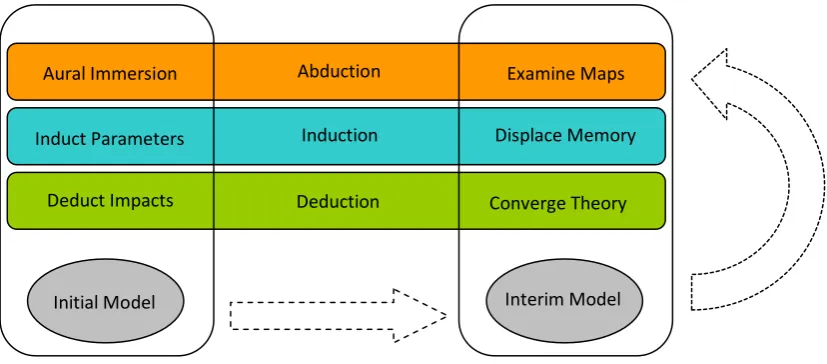
The initial model constitutes the first conception of the collaboration model, and provides a base upon which further development can occur. The process iterates between parameter and impact identification. Initially a large number of variables impose a substantial load on cognition, but these gradually resolve into fewer constructs. As iterations of freshly-memorised data and model assessment occurs, parameters and impacts are refined (Fig. 10).
…while coding we are constantly moving between inductive and deductive thinking. That is, we deductively propose statements of relationships or suggest possible properties and their dimensions when working with data, then actually attempt to verify what we have deduced against data as we compare incident with incident. There is a constant interplay between proposing and checking. This back and forth movement is what makes our theory grounded (35 p. 111)
3.4.1
Aural Immersion
In the time taken to visually examine cognitive maps, the modeller can lose track, especially if a number of provisional assumptions are being held. Without context the mind has difficulty absorbing even a relevant piece of data, and a contradictory piece of data calls into question theory to date. With the interview data having thousands of pieces, such destruction is difficult to protect against in early stages of theory development. Aural immersion is undertaken before theory is attempted, since re-listening to number of interviews creates a deeper understanding of the problem space. The brain can then sift data free from expectations of consistency with early theory.
true, your first impressions, thoughts and directions to yourself. You can be as insecure as you want in these early stages. Just remind yourself, that if you or even others knew all the answers, there would be no reason to do this particular research. (35 p. 204)
3.4.2
Induct Parameters
The conscious mind has a cognitive limit (36) that prevents immediate creation of theory amid complex data. Using the unconscious, memorised data is correlated and over time patterns emerge from which a set of parameters is inducted.
3.4.3
Deduct Impacts
[image:35.595.114.528.125.307.2]After settling on a set of parameters, memorised data identifies the existence of impacts between them. As stronger impacts are highlighted, those remaining appear progressively less certain. At the same time, conflicts arise, often as a result of the definition of a parameter ‘deformed’ by competing rationalisations of impacts. When conflicts arise, the instinctive response is to tighten a loose definition, broaden a tight one or else redefine parameters to achieve separation. However without having the ability the consciously track the full ramifications of a change, it may violate an unconscious but nevertheless important condition. If too broad, intersection with another parameter may arise when examined in a particular context. Reducing the scope may means it cannot accommodate all impacts. If badly cast, different contexts will give rise to inconsistency within the parameter itself. Unless a conflict can be resolved with a minor change, it preferable to start afresh: removing all impacts and re-inducting the parameters.
Figure 10: Iterative/recursive process using Critical Thinking Aural Immersion
Induct Parameters
Deduct Impacts
Induction
Deduction
Abduction Examine Maps
Displace Memory
Converge Theory
3.4.4
Comments on Initial Model
Regrettably the mind has a tendency for ‘fractured thought’ that reduces its effectiveness as a universal machine. This is similar to George Orwell’s ‘double think’ (37) where an assumption can be made in one circumstance is contradicted in another15. The problem is exacerbated when there is insufficient personal experience to ground different circumstances. To counteract inadequate detection of conflicting assumptions, it is necessary to explicitly detail the rationale behind all parameters and impacts.
Validating one’s theory against the data completes its grounding. One does this by laying out the theory in memos either diagrammatically or narratively. Then
statements regarding the category relationships under varying contextual conditions are developed and finally validated against the data. (35 p. 133)
A written record allows the mind to reliably compare and contrast the assumptions behind conclusions it has drawn, thus revealing inconsistencies. It also helps the unconscious mind to reorganise its data when an inconsistency is detected. The unconscious is powerful, but not necessarily well-ordered.
Fewer parameters reduce the total information in the model, and confidence can requires the number of parameters to be tractable. The unconscious inducts parameters, and is not logically definitive. Parameters are left vague in the expectation they will eventually be revealed16 but impacts are given explicit attention. The principles of triangulation of evidence means rigorous authentication of impacts against diverse data. Once the initial model adequately represents internalised memory, cognitive maps are examined separately in detail.
3.5
Interim Model
Iterating the interim model requires a different approach to that used for the initial model. Whereas previously internalised data generated the model, now cognitive maps are used directly. The mind’s tendency to ignore information it does not understand is overcome by exclusively focussing on particular interviews. Forcing the interim model to reflect a cumulative proportion of individual interviews improves both it and the modellers’ understanding.
15
The human mind has evolved to deal with only a single social reality and is why ‘culture shock’ occurs. 16
This identification problem plagues both qualitative and quantitative approaches. In the qualitative realm, ambiguity arises from the ability of language to support multiple meanings. In the quantitative realm, engineers and econometricians have long
struggled with the problem of uniquely identifying the structure and parameters of a system from its observed behaviour. Elegant and sophisticated theory exists to delimit the conditions in which one can identify a system from its behaviour alone. In practice, the data are too scarce and the plausible alternative specifications are too numerous for statistical methods to discriminate among competing theories. The same data often support wildly divergent models equally well, and conclusions based on such models are not robust. (34 p. 25)
Identifying relevance to the interim model requires the modeller to comprehend interview data and then compare it with an internal framework, represented by the model (17). Recognition between the cognitive map and interim model sparks further investigation.
3.5.1 Examine Maps
No version of the interim model can fully encapsulate a particular cognitive map since an amount of data will represent exogenous factors. This is a judgement of relevance and veracity, meaning the data is perceived as sufficiently relevant to the theoretical conflict and representative of collaboration rather than aberrant. If the interim model cannot be altered to accommodate disparities, problematic statements are noted and the next map begun. Sometimes the story is powerful but the conflict is incidental or slight, and can be ignored until further confirmation is found.
3.5.2 Displace Memory
As the interim model improves, previous maps are returned to, and new recognitions or conflicts occur. Gradually the modeller develops an ability to distinguish between useful (endogenous) patterns in the data. Earlier conceptions must be degraded through continuous absorption of new data and mental reconfiguration, and cessation of this process may allow them to be re-established. Difficulty arises in prioritising induction of parameters over deduction of impacts since cognition prefers logic.
3.5.3 Converge Theory
methodology was fully adopted, convergence occurred. Developing this methodology was itself exploratory.
3.5.4 Comments on Interim Model
A representative interim model minimises the need to memorise and navigate between large blocks of data. This not only reduces the number of developmental steps, but also means that new data is categorised more accurately. Strauss expresses interplay of relational memory in the unconscious with analytical rationale in the conscious as inductive and deductive thinking respectively.
As you have probably noticed, while coding we are constantly moving between inductive and deductive thinking. That is, we deductively propose statements of relationships or suggest possible properties and their dimensions when working with data, then actually attempt to verify what we have deduced against data as we compare incident with incident. There is a constant interplay between proposing and checking. This back and forth movement is what makes our theory grounded! (35 p. 111)
Extensive conflict between data and the interim model may either indicate that the subject possessed unique insights or the interim model is flawed, and earlier data was incorrectly interpreted.
To learn we must use the limited and imperfect information available to us to
understand the effects of our own decisions, so we can adjust our decisions to align to the state of the system with our goals (single loop learning) and so we can revise our mental models and redesign the system itself (double loop learning). Yet much of the information we receive is ambiguous. Ambiguity arises because changes in the state of the system resulting from our own decisions are confounded with simultaneous changes in a host of other variables. The number of variables might affect the system vastly overwhelms the data available to rule out alternative theories and competing interpretations. (34 p. 25)
If it is impossible to know which of these has occurred, the modeller has no choice but to return to earlier versions of the interim model until the conflict disappears. This necessitates complete reinterpretation of relevant interview data, a process that recurs until convergence has recommenced.
3.6
Final Model
Strauss and Corbin (1990) state that modelling concludes when marginal improvements become allowably small. As the definition of abduction warns (§3.1), abstracted theory can contain flaws that the data appear to support, particularly in a relatively small sample size (twenty five interviews). While the data was rich, and diverse university systems investigated, reaching a final model requires testing of internal consistency to establish theoretical coherency.
3.6.1
Logical Testing
A major use of System Dynamics is the battery of tests that may be applied to models. While many are implicitly used in this research, the primary test is structure assessment which asks:
…whether the model is consistent with knowledge of the real system relevant to the purpose. Structure assessment focuses on the level of aggregation, the conformance of the model to basic realities such as conservation laws, and the realism of the decision rules for agents. (34 p. 860)
The early deduction suggests that information relating to parameters is aggregated and utilised as a basis for decision-making by members. Chapter four will show this to be an internal process occurring in all members of collaboration, and is further explored in Chapter five (§5.1).
3.6.2
Summary of Methodology
A method of discriminating patterns in complex data was developed by combining quantitative and qualitative techniques with Critical Thinking. This required selection of appropriate interview subjects in diverse problem spaces, and a method for translating recorded interview data to paper.
People are born with natural desires to be admired and to be worthy of admiration. They are
born with moral emotions, a sense of fair play and benevolence. They are also born with
darker passions, like self-love and tribalism, which mar rationalist enterprises. We are
emotional creatures first and foremost, and politics should not forget that (23).
Chapter 4.
Results
The collaboration model parameters are defined (38) and impacts explained in terms of decisions made by collaboration members. The structure assessment test is applied via equations that explore member behaviour given parameter-specific exogenous factors.
4.1 Defining Parameters
Two primary attributes defining parameters are potential and memory (also discussed §5.6.1).
4.1.1
Parameter Potential
Each parameter is defined conceptually, but also via individual ‘potential.’ Collaboration performance is the aggregation of member contributions, but is not limited by the sum of their potentials. This implies that members can exceed their individual potential when in collaboration (discussed further §6.1.2). However, members of a poorly-performing collaboration will have low parameter levels compared to their respective potentials.
Transfer describes the rate at which collaboration members receive and transmit knowledge, measured as the rate of information absorption (receipt).
Activity is the rate of constructive work accomplished by members of the collaboration, measured exergy or ‘useful work.’
Knowledge is theoretical and practical knowledge held by the group, measured as known - and therefore accessible -expertise.
Cohesion is the health of relationships within collaboration, measured as emotional energy invested.
Identity is the importance members place upon their position within the collaboration, measured as anticipated distress should it be lost or the collaboration close.
4.1.2
Parameter Memory
upon the current state of the system. Each of the five collaboration variables is now investigated for memory and therefore accumulation.
Plans and timelines coordinate Activity for efficient resource utilisation. Deviation is undesirable since tasks cannot be commenced or halted without repercussion. The parallel considerations of planning make Activity a variable with memory.
People tend to acclimatise to a level of knowledge transfer based upon their accustomed rate of information processing (39). A mind made sharper demands to be exercised with new inputs, and seeks to output knowledge to others. Those unaccustomed to mental exercise find it difficult to quickly adapt to a high rate of knowledge transfer. Transfer is therefore seen to have memory.
According to the model of knowledge transfer, knowledge only resides in the mind. Learning allows knowledge to build slowly, and is only gradually forgotten. Knowledge is therefore seen to accumulate.
Artists commonly feel they are ‘only as good as their latest work,’ which suggests Identity is changeable. If work is received poorly, the subsequent loss of confidence will cause a sudden drop in Identity. Entrepreneurs are known for their chameleon-like ability to suppress or evoke ego depending upon the situation. This implies that Identity is an instantaneous variable.
Relationships take time to grow or deteriorate, and only children will make friends without question. While friends can be ‘dropped’ in an instant, the relationship nevertheless persists emotionally. It is more usual for relationships to grow or die over time, and in this sense, Cohesion has memory.
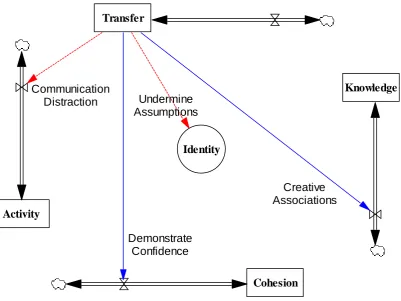
The parameters are now shown in the form of a stock and flow diagram (Fig. 11). Flows supply the attached ‘stocks’ (parameters with memory) and allow it to be emptied into, or filled by, the ‘infinite source’ (shown as a cloud), depending upon the directionality of flow.
4.1.3
Impact Equations
Impact destination flow (Positive | Negative) = ƒsource parameter (Level, Factor/s)
[image:43.595.125.535.168.467.2]Certain exogenous factors have a bearing on decision-making regarding a source parameter, and are introduced at the beginning of each section. Consistency of impact (negative or positive) must be established to satisfy the structure assessment test.
Figure 11: Collaboration model components
4.2 Impacts of Transfer
Knowledge transfer is unique17 among the parameters in that it intrinsically involves at minimum two people. Even if the audience is unknown to the speaker or writer, it is necessary to consider their likely response to the information spoken or written.
When the knowledge transfer is without precedent, and no collaboration yet exists, it is reasonable to posit that occurrence of Transfer invokes the full collaboration model. Invoking the collaboration model provides a means of harmonising future interaction. This means that transmitter and receiver are, however temporarily or slightly, considered in collaboration as a result of their having participated in knowledge transfer. The collaboration might never go
17
A relationship can be ‘one sided,’ such as the fans of music idols, but still have relevance to decision-making. Identity
Transfer
Knowledge
Cohesion Activity
Instantaneous variable
Flow (bi-directional)
Stock