COMMISSION OF THE EUROPEAN COMMUNITIES
Brussels, 7.6.2000 COM(2000) 335 final
2000/0143 (CNS)
COMMUNICATION FROM THE COMMISSION TO THE COUNCIL, THE EUROPEAN PARLIAMENT,
THE ECONOMIC AND SOCIAL COMMITTEE AND THE COMMITTEE OF THE REGIONS
TOWARDS A COMMUNITY FRAMEWORK STRATEGY ON GENDER EQUALITY
(2001-2005)
Proposal for a
COUNCIL DECISION
on the Programme relating to the Community framework strategy on gender equality (2001-2005)
1. INTRODUCTION
This Communication sets out the Commission’s ideas towards a strategy on gender equality over the next five years. Its purpose is to establish a framework for action within which all Community activities can contribute to attain the goal of eliminating inequalities and promoting equality between women and men, as set out in Article 3(2) of the Treaty.
In order to prepare this Communication, the Commission analysed the following key aspects of policy at Community level in this area over the past years:
– the legislative acquis in the area of equal opportunities and the relevant case-law of the European Court of Justice;
– the Community commitment and follow-up to the Platform for Action adopted at the Fourth UN World Conference on Women in Beijing in 1995;
– the implementation of the past Community programmes on equal opportunities for women and men and, in particular, of the medium-term Community action programme (1996-2000), which reinforced the gender mainstreaming strategy;
– the Structural Funds' contribution to gender equality over the last ten years through specific actions, in particular the NOW initiative, and the new regulations (2000 - 2006), as well as the valuable contribution of the European Employment Strategy since 1997;
– the initiatives in the field of external relations, development cooperation policies as well as the promotion and protection of the human rights of women;
– the fresh impulses provided by the European Parliament and the Council; and
– the strengthened provisions of the Amsterdam Treaty on equality between women and men1.
Gender equality today: towards an inclusive democracy
Democracy is a fundamental value of the European Union, Member States, EEA States and applicant countries. It is also a key part of external development policy in the Union. Its full realisation requires the participation of all citizens women and men alike to participate and be represented equally in the economy, in decision-making, and in social, cultural and civil life.
1
The EU has a long-standing commitment to promoting gender equality, enshrined in the Treaty since 1957. The Community legal framework ensures that women and men are equal before the law. The promotion of gender equality is an important element of the European Union’s external relations and of its development cooperation policies and, in particular, the promotion and protection of women's rights is an integral part of the EU’s human rights policies in third countries. Moreover, equal treatment legislation is a firmly established integral part of the acquis communautaire that countries applying for EU membership have to respect.
Considerable progress has been made regarding the situation of women in the Member States, but gender equality in day-to day life is still being undermined by the fact that women and men do not enjoy equal rights in practice. Persistent under-representation of and violence against women, inter alia, show that there are still structural gender inequalities.
This situation can be tackled efficiently by integrating the gender equality objective into the policies that have a direct or indirect impact on the lives of women and men. Women's concerns, needs and aspirations should be taken into account and assume the same importance as men's concerns in the design and implementation of policies. This is
the gender mainstreaming approach, adopted in 1996 by the Commission2 which the Commission intends to operationalise and consolidate through this proposal.
In parallel to gender mainstreaming, persistent inequalities continue to require the implementation of specific actions in favour of women. The proposed framework strategy is based on this dual-track approach.
2. THE STRATEGY
2.1. A gender equality framework strategy to embrace all policies and a programme in support of the framework strategy
Future Community work towards gender equality will take the form of a comprehensive strategy, which will embrace all Community policies in its efforts to promote gender equality, either by adjusting their policies (pro-active intervention: gender mainstreaming) and/or by implementing concrete actions designed to improve the situation of women in society (reactive intervention: specific actions).
The new approach will raise the profile of the wide range of existing Community activities for the promotion of gender equality, ensure their global consistency by identifying overlaps thus optimising their efficiency and rendering them visible inside and outside the Commission. A framework global strategy will also ensure that results can be monitored and disseminated better.
In order to develop the horizontal and coordinating actions (such as networking, awareness-raising, analysis and assessment tools, monitoring, reporting and evaluation) required to implement successfully the framework strategy, the Commission is proposing a supporting programme, financed under budget heading B3-4012. This Programme, to be adopted by a Council Decision, is based on Article 13 of the Treaty establishing the European Community3.
2.2. Subsidiarity and complementarity
While Member States, EEA States and applicant countries are pursuing gender equality policies, important discrepancies remain in implementation This is true for legislation, institutional mechanisms, specific initiatives (e.g. for positive action) and public awareness. Past programmes and initiatives at Community level have assisted Member States and NGOs in developing more effective gender policies (added value).
The Community however will not aim to pursue those activities that, by reason of nature and/or extent, can be better performed at national, regional or local level.
Complementarity amongst the different Community actions and between the Framework Strategy and Member State's activities will be ensured to avoid overlaps4 and to draw maximum benefit from the results obtained.
3. SETTING THE OBJECTIVES
In order to deliver its full potential, the Community Framework Strategy will address the challenges of bringing about the structural change required for achieving gender equality. The Commission has identified five inter-related fields of intervention for the framework strategy. Within each of them operational objectives will be pursued to chart the course towards gender equality over the next five years. Under the framework strategy, all Community gender related initiatives will be explicitly linked to one or more of the following areas of intervention: economic life, equal participation and representation, social rights, civil life and gender roles and stereotypes.
3
The Commission has already announced its intention to propose a new programme on gender equality, with a specific budget, in its Communication on Article 13 (COM(1999) 564 final of 25.11.1999.
4
Gender equality dimension in the enlargement of the European Union as well as in the Community external relations and development cooperation policies will permeate all areas of intervention of the framework strategy.
The next section describes operational objectives and target actions as a non-exhaustive illustration of the potential of the Framework Strategy. The actions will be implemented by the Commission, the Member States and key actors (NGOs, social partners), as appropriate.
3.1. PROMOTING GENDER EQUALITY IN ECONOMIC LIFE
The European Council of Lisbon5 invited the Commission and the Member States to further all aspects of equal opportunities in employment policies, including reducing occupational segregation and helping to reconcile working and family life, in particular by setting a new benchmark for improved childcare provision. Furthermore, the Lisbon European Council set quantitative targets of the utmost importance for achieving gender equality in economic life, such as that of raising women's employment rate from the average figure of 51% today to more than 60% by 2010. In this context, particular attention should be paid to the full integration of women into the new economy. It is also essential to foster and mainstream ways of giving women equal access to the knowledge-based economy as well as helping them to participate in it as information and communication technologies (ICT) are affecting employment in all sectors more and more
Structural funds constitute the Community's main financial instrument for fostering cohesion, improving employment prospects and promoting sustainable development. They already serve as an important tool for promoting gender equality. The new regulation of the Structural Funds6 already provide for greater weight of gender equality in the process of programming, implementing, monitoring and evaluation.
3.1.1. Operational objective: Strengthen the gender dimension in the European Employment Strategy
Actions:
With a view to deepening the Luxembourg employment process, the framework strategy will:
• Encourage lifelong learning and access to active labour market measures for women.
• Promote the employability and the access of women to IT jobs, particularly by enhancing participation of women in relevant education and training.
• Support further development and coordination of national statistical systems where required, in order to allow for better monitoring of gender related issues in the European Employment Strategy (supporting programme).
• Support an expert group on gender equality in the economy to assist the Commission in these tasks (supporting programme).
3.1.2. Operational objective: Improve the use of the Structural Funds for the promotion of gender equality
Actions:
• Propose a Commission communication on the implementation of gender mainstreaming in the new programming documents, including highlighting of best practice.
• Improve gender mainstreaming in the Structural Funds and their Community initiatives (EQUAL, Interreg, Urban, Leader). Strengthen cooperation mechanisms within the Commission in order to monitor the implementation of gender mainstreaming.
• Provide support at Community level and encourage Member States to provide support for information and awareness-raising actions to promote equality between women and men in the framework of the Structural Funds. Develop links between the actions funded by the Structural Funds and the rural development measures funded by the Guarantee section of the EAGGF, and other Community policies that also promote gender equality.
• Support desegregation of the labour market, in particular, via the human resource Community initiative EQUAL.
• Support the setting up of a network of persons responsible in the Member States for issues concerning equality in the Structural Funds.
Actions:
• Propose a Commission communication on social issues in public procurement.
• Integrate gender analysis in development cooperation policy into the design, implementation and evaluation of measures, especially those relating to macro-economic policies and poverty reduction.
• Develop dialogue with the top management of enterprises operating in Europe, in particular in cooperation with the social partners, on their contribution to gender equality in economic life.
• Create a European label (equality prize or certificate) to be awarded annually to enterprises which have developed good practice to promote gender equality (supporting programme).
3.2. PROMOTING EQUAL PARTICIPATION AND REPRESENTATION
The persistent under-representation of women in all areas of decision making marks a fundamental democratic deficit which requires Community level action.
Along these lines the EU Council adopted on 22 October 1999 conclusions7 on the subject of gender balance in all decision-making processes and took note of the set of indicators for measuring gender balance in political decision-making. The Commission's report on the implementation of the Council Recommendation on the balanced participation of women and men in decision-making8 concluded that the overall outcome of the policies applied since 1996 was positive. However it did not match the expectations set out in 1996 and, therefore, further action was required.
In its relations with third countries, and more particularly its human rights policies, the Community actively promotes the equal participation of men and women in civil society, in economic life and in politics and promotes the participation of specific groups, particularly women, in the electoral processes.
3.2.1. Operational objective: Improve the gender balance in political decision-making
Actions:
• Encourage the development of networking of elected women at European, national, regional and local levels, by encouraging the networking of Parliamentary committees on equal opportunities for women and men in the EU Member States and in the European Parliament (supporting programme).
• Promote awareness of gender discrimination and the need for a gender balance in civic education.
• Assess the influence of electoral systems, legislation, quotas, targets and other measures on gender balance in elected political bodies (supporting programme).
• Support schemes to enhance developing countries' institutional and operational capacities for integrating gender issues at national and local level and in civil society, including legislative and administrative actions on equal rights for women and men.
• Monitor improvements in the gender composition of committees and expert groups set up by the Commission; promote the implementation of Council Recommendation 96/694 and monitor its follow-up.
• Conduct awareness-raising activities addressed to citizens on the need for a gender balance both in elected public bodies and inside the political parties' structures as well as to encourage women to become politically active with a particular view to the European Parliament elections in 2004 (supporting programme).
3.2.2. Operational objective: Improve the gender balance in economic and social decision-making
Actions:
• Monitor and evaluate the transition from education and training to working life, recruitment and career development of potential female top managers.
3.2.3. Operational objective: Improve the gender balance in the Commission
Actions:
• Monitor the results of the Commission departments efforts to promote a gender balance in decision-making positions, including the development of timetables, indicators and benchmarks.
• Develop strategies, as part of the Commission Reform, for improving use of time and organisation of work at all levels, including management level.
• Continue and enhance gender-specific training, awareness raising and information in all Commission departments, in particular at decision-making level and in Commission delegations, and introduce gender issues as a regular element of other management training.
• Gender-assess and improve the present systems for recruitment and promotion in Commission departments, in particular by ensuring that there is a gender balance in juries and on selection boards and by examining the content and methodology of the entrance competitions for possible gender bias.
3.3. PROMOTING EQUAL ACCESS AND FULL ENJOYMENT OF SOCIAL RIGHTS FOR WOMEN AND MEN
Equal access and full enjoyment of social rights are among the pillars of democratic societies. Yet, many women do not have equal access to social rights either because some of these rights are based on an outdated male breadwinner model or they do not take into account that women predominantly carry the burden of having to reconcile family and professional life. This is evident in many social protection systems, which in turn is one of the explanations of the feminisation of poverty in the European Union (career-breaks, part-time work, lack of education and training). In many cases, women just do not access or have access to the proper information about existing social rights. Some of these rights have already become European legislation. The actions will aim at improving the application of Community legislation in particular on social protection and in the areas of parental leave, maternity protection and working time. In addition, the actions will include better information dissemination.
3.3.1. Operational objective: Improve the knowledge and monitor the relevant Community legislation in the social sphere (parental leave, maternity protection, working time, part-time and fixed-term contracts)
Actions:
• Propose a directive based on Article 13 of the Treaty to ensure equal treatment for women and men in matters other than occupation and employment.
• Ensure the follow-up and assessment of implementation in the Member States of existing legislation in the social sphere.
• Support awareness of the EU legislation in the social area and the case-law amongst NGOs, the social partners, labour inspectorates and the legal professions (supporting programme).
• Support information and dissemination activities regarding EU social legislation, aimed at EU citizens (supporting programme).
3.3.2. Operational objective: Monitor the integration of a gender perspective in the design, implementation and evaluation of Community policies and activities influencing the daily life of women and men, (such as: transport, public health, external relations, including human rights policies and the Community programme to fight discrimination based on Article 13 of the Treaty).
Actions:
• Mainstream gender equality within the area of social protection and in respect of all objectives of social protection identified by the Council.
• Mainstream a gender perspective in all Community measures to prevent and combat social exclusion, particularly in view of the increasing feminisation of poverty.
• Improve the knowledge and understanding and, if required, propose new Community legislation in the social field
• In the area of development cooperation, support actions and programmes which facilitate equal access of women and men to nutrition, education, health care, reproductive rights, property and justice.
3.4. PROMOTING GENDER EQUALITY IN CIVIL LIFE
The aim of promoting equality in civil life relates to the question of the full enjoyment of human rights and fundamental freedoms by both women and men, regardless of race or ethnic origin, religion or belief, disability, age or sexual orientation. It also relates to strengthening and furthering the development of the enforcement mechanisms of the equal treatment legislation, together with better awareness of and training on equality rights and the human rights of women.
Actions will include training on equality legislation for the legal professions as well as informing NGOs on this legislation. Moreover, particular attention needs to be paid to women who are subject to multiple discriminations (such as migrant women or women with disabilities, older women, women at risk of social exclusion, etc) or who face violence and/or sexual exploitation.
The European Union has developed a European-wide policy to combat violence against and trafficking in women. One central instrument is the STOP11 programme, set up to reinforce cooperation against trafficking in women and children. This was followed by the DAPHNE initiative and the new DAPHNE programme (2000-2003), both aiming at improving information and protection of victims of violence. An awareness-raising campaign to combat domestic violence against women was launched in 1999. A survey carried out by the Commission12shows the need for further action in the area at EU level.
3.4.1. Operational objective: Monitor Community law and case law on equal treatment of women and men and, if required, propose new legislation.
Actions:
• Review Directive 75/117 and explore possibilities for its improvement, in particular, look at the functioning of legal remedies and call on the Member States to reinforce the role and powers of the labour inspectorate bodies with regard to equal pay legislation.
• Conduct research and collect data on the gender dimension of health and safety at the workplace. On the basis of it, explore the need for adapting legislation.
• Support specific information and training on equality legislation and the human rights of women aimed at the legal professions, labour inspectorates and social partners in the EU and in the applicant countries (supporting programme)
• Monitor the development of structures in support of the implementation of the
acquis communautaire in gender equality matters in the applicant countries
• Support a network of legal experts in the Member States and the applicant countries to assist the Commission in the implementation of the tasks related with this objective.
• Support information activities targeted at NGOs to increase awareness on Community legislation on equal treatment for women and men (supporting programme).
3.4.2. Operational objective: Promote women's rights as human rights
Actions:
• Support awareness-raising actions and campaigns in the EU and in the applicant countries aimed at empowering women by enforcing their human rights, in particular women facing multiple discrimination (especially migrant women and women from ethnic minorities).
• Support networking in order to systematically collect comparable data on gender-related violations of human rights and sex discrimination cases in the Member States and in the applicant countries (supporting programme).
• Strengthen cooperation and exchanges of information on human rights of women, with relevant NGOs and international organisations, within the European Union, the applicant countries and in the context of development cooperation.
• Support awareness-raising of gender-related violations of human rights in armed conflict situations.
• Promote that the specific needs and/or particular situations of women are duly taken into account, where relevant, within initiatives in the field of asylum and in the field of entry and stay of third country nationals on the territory of the Member States.
3.4.3. Operational objective: Fight gender-related violence and trafficking of human beings for the purpose of sexual exploitation
Actions:
• Strengthen and support the fight against and prevention of violence against women, in particular through the DAPHNE and STOP programmes.
• Support information campaigns in the countries of origin, transit and destination outside the EU, in particular the applicant countries, as well as within the EU itself in cooperation with national authorities and NGOs.
within the EU and, in particular, between the EU and the candidate countries to combat trafficking in human beings.
• Grant short-term residence permits to victims of trafficking for the purpose of sexual exploitation in accordance with the principles set up in the 1998 Commission communication on future actions in the fight against trafficking in women.
• Continue to develop action to combat domestic violence against women in the EU, in the applicant countries and in third countries (supporting programme).
• Support research, data collection and dissemination of information on violence against women, in the EU and in the applicant countries
3.5. PROMOTING CHANGE OF GENDER ROLES AND STEREOTYPES
This field of intervention addresses the need to change behaviour, attitudes, norms and values which define and influence gender roles in society through education, training, the media, arts, the culture and science. Elimination of existing cultural prejudices and societal stereotypes is paramount for the establishment of gender equality.
Perpetuating negative or stereotyped images of women, in particular in the media and computer-mediated information and entertainment, in advertising, and in educational material, does not provide an accurate or realistic picture of women's and men's multiple roles in and contributions to a changing world. Without detriment to their freedom of expression, the media and culture industries should, as opinion formers and means of shaping values, contribute to changing gender stereotypes in the public perception and to presenting a fair portrayal of gender.
3.5.1. Operational objective: Raise awareness about gender equality issues
Actions:
• To support strengthened efforts to eradicate stereotypical gender discrimination in education, for example in educational materials, and to develop good practice in this field
• Develop awareness-raising activities on women's contribution to the European project and European culture and the importance of gender equality in our modern democratic society.
• Organise every year a European week on a priority topic of the framework
strategy, in cooperation with the Member States authorities
3.5.2. Operational objective: Overcome gender stereotypes in and via relevant Community policies
Actions:
• Monitor the integration of a gender perspective in policies of particular relevance in overcoming gender stereotypes such as education, training, culture, research, media and sport policies and promote equality through all future programming phases of the current Community programmes, such as Socrates, Leonardo, Youth, Culture, Research and other relevant programmes and initiatives.
• Discuss with the existing national ethical committees the inclusion of a gender dimension in their remit as well as the support for networking of National Ethical Committees.
• Ensure, where appropriate, that Commission departments take into account in their information policies specific women' needs and perspectives, in close cooperation with Commission's representations in Member States.
• Promote the exchange of views and good practices in the media and create a group of media representatives to assist the Commission to implement the talks under this objective of the framework strategy (supporting programme).
4. TOOLS AND MECHANISMS:
Policy-making for gender equality needs specific methods and tools (such as networking, data collection, training or gender impact assessment). The supporting programme of the Community framework strategy will analyse the effectiveness of the existing instruments and support the development of new and more efficient ones. This will be accompanied by the development of common indicators and the setting of benchmarks to allow for more efficient monitoring and evaluation. Activities and strategies might, in this way, be refocused if deemed necessary, or new ones developed during the period covered by the framework strategy.
4.1. Reinforcing cooperation with the EU national gender equality authorities and coordination of the activities
The framework strategy will actively encourage the exchange of good practice among the EU and the EEA Member States and the applicant countries involving governments, social partners and the civil society.
Once a year, the Commission will organise a high-level meeting with senior officials from the Member States with responsibility for gender mainstreaming.
The Commission Advisory Committee for Equal Opportunities for Women and Men will continue to assist the Commission throughout the implementation of the framework strategy. Its role will be vital in providing expertise and information on Member States gender related policies, in particular as regards the benchmarking, monitoring and reporting exercises of the framework strategy.
4.2. Reinforcing of Commission structures
The Group of Commissioners on Equal Opportunities will continue to play a major role in giving political impetus to the Commission's gender mainstreaming and equal opportunities strategy and actions. It will also continue to ensure adequate coordination between the departments involved and will monitor progress being made in the implementation of the Framework Strategy and, if necessary, make appropriate recommendations.
The Commission's Inter-service Group on Gender Equality will coordinate the activities of the various Commission departments regarding the implementation of actions covered by the Framework Strategy on Gender Equality in their respective policies as well as the annual work programme for their respective policy area. Within the Inter-Service Group, the Commission departments will develop, implement, monitor and evaluate a set of gender indicators and benchmarks and report regularly on the progress made to the Group of Commissioners on Equal Opportunities. This will also include further development of gender impact analysis and assessment of Community policies, gender mainstreaming training of officials.
4.3. Reinforcing cooperation among the Community institutions
The Commission will encourage inter-institutional cooperation amongst all Community institutions in order to facilitate and enhance gender mainstreaming. The Commission will also facilitate networking among European research institutions on gender equality.
4.4. Strengthening partnership
4.4.1. Cooperation with the social partners at European level
The Amsterdam Treaty has assigned a major role to the European social dialogue and has given the social partners substantial responsibilities and powers. The Commission confirms its commitment to encourage the social partners to make a full contribution to promoting gender equality, in particular to assess the impact of their framework agreements. The Commission, for its part, will support a network of social partners' representatives on the question of gender equality in businesses, and information and awareness-raising measures, in partnership with the social partners, on the pay gap between women and men.
4.4.2. Cooperation with NGOs
NGOs are an important element of civil society and major players in the promotion of a gender democracy. The existing forms of Commission-NGOs cooperation and partnership will be the basis for enhancing the dialogue and improving mutual information and exchange of best practice regarding gender activities and policies. It will also encourage NGOs which do not specialise in women's issues to integrate a gender perspective in the activities.
4.4.3. Cooperation with other international organisations
Cooperation with other international organisations such as the United Nations (follow-up to the Beijing Platform for Action), the Council of Europe (Steering Committee for Equal Opportunities) and the OSCE (new action plan on gender equality) will be encouraged in order to build on the expertise of these organisations and avoid duplication on the ground.
4.5. Setting indicators and benchmarks
The setting of indicators and benchmarks is a determining factor for the success of the Framework Strategy in order to make the progress achieved measurable and visible and to monitor trends and translate idealistic ultimate goals (the strategic objectives) into realistic stages or phases (the operational objectives). Indicators and benchmarks provide incentives for greater sustained efforts, help determine responsibility for achieving targets and, finally, allow progress to be rewarded by general recognition.
In order to monitor progress made in meeting the various strategic objectives, systematic production and availability of statistical data both at EU and national levels will be supported. The range of harmonised and comparable data should be enlarged by carefully selecting the statistics allowing effective monitoring of the Framework Strategy.
4.6. Ensuring information, reporting and evaluation 4.6.1. Information
The Framework Strategy will be accompanied by an integrated information strategy, providing for an Internet web-site with information on the different initiatives of the supporting programme and on the gender-related activities of the Commission departments
4.6.2. Reporting
The Commission will be accountable for the implementation of the framework strategy and will regularly report on it. To this aim, the approach of the Annual Report on Gender Equality will be revised to include more information on the implementation of the framework strategy (inter alia, budgetary information on allocation and expenditure) and on developments at national level, including progress in reaching the benchmarks, and assessment of the results achieved.
Every year, the Commission will adopt the annual work programme of the framework strategy, including the priority actions that will be developed under the in the current year. A global report, covering the entire implementation of the Framework Strategy as well as the results of the external evaluation (see below), will be adopted by the Commission.
4.6.3. Evaluation
All actions implemented under the framework strategy on gender equality will be subject to continuous internal evaluation.
The framework strategy will be subject to an independent external evaluation, which will start as soon as possible after its adoption. The external evaluation team will provide the Commission with an intermediate evaluation report. This external report will be annexed to the Commission interim evaluation report on the framework strategy and its supporting programme that will be submitted to the European Parliament, the Council, the Economic and Social Committee and the Committee of Regions by the end of December 2003.
ANNEX I
WOMEN IN THE LABOUR MARKET
Women are not integrated into the labour market as well as men. They generally have less regular and secure jobs and carry more of the burden of care for children and other dependants, which means that there are still serious gender problems in the labour market. Although gender equality policy has been focussed on women in the economy, there are very few cases where women in Member States have, on average, achieved parity with men.
1. In almost all Member States and a majority of the applicant countries, the unemployment rate remains systematically higher for women than for men and long-term unemployment hits women harder than men.
[image:18.595.63.514.357.590.2]2. The gender gap in employment rates is, on average, 20 percentage points. Women's employment rates remain low in many Member States (Table 1). The female employment rate remains below 40% in Spain and Italy. The gender gap is highest in Spain, Greece, Italy and Luxembourg, where it is above 30 percentage points.
Table 1
EMPLOYMENT RATES OF WOMEN IN THE EUROPEAN UNION MEMBER STATES (% ) 1994 AND 1998
0 20 40 60 80 100
Source: ELFS 1998.
Note: Comparative 1994 European Labour Force Survey data for Austria, Sweden and Finland is not available. %
1994 1998
1994 44,8 67,1 55 37,1 30,2 51,3 39,8 35,6 44,9 52,7 54,1 61,1 48,4
1998 47,5 70,3 55,6 40,3 34,8 52,9 48,2 37,1 45,6 58,9 59 58,3 60,5 66,4 63,2 51,2
B DK D GR E F IRL I L NL A P FIN S UK EU12/15
Table 2
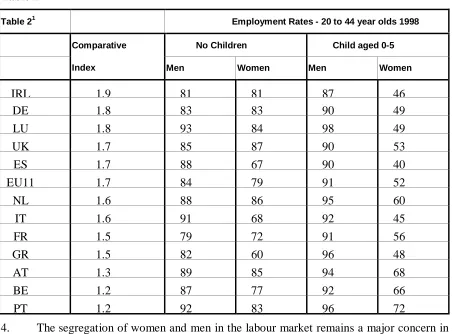
Table 21 Employment Rates - 20 to 44 year olds 1998
No Children Child aged 0-5
Comparative
Index Men Women Men Women
IRL 1.9 81 81 87 46
DE 1.8 83 83 90 49
LU 1.8 93 84 98 49
UK 1.7 85 87 90 53
ES 1.7 88 67 90 40
EU11 1.7 84 79 91 52
NL 1.6 88 86 95 60
IT 1.6 91 68 92 45
FR 1.5 79 72 91 56
GR 1.5 82 60 96 48
AT 1.3 89 85 94 68
BE 1.2 87 77 92 66
PT 1.2 92 83 96 72
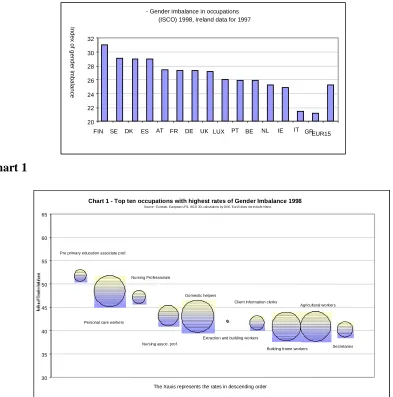
4. The segregation of women and men in the labour market remains a major concern in the EU, also in those countries where women have achieved high employment rates (Table 3). The index of gender imbalance2 shows that three countries (Finland, Sweden and Denmark) with relatively high employment rates for women also have fairly highly segregated occupational structures.
1
Comparative index: Women and men's employment rates are compared without the presence of any children and with the presence of a child aged 0 to 5. The close the value of the index to one the more similar the impact of parenthood on the employment rates of women and men. Values over one suggest that the impact of parenthood on females has reduced the change of employment relative to the experience of males.
2
Recent data on horizontal segregation are presented in chart 1, showing, at EU level, the ten occupations with the highest rate of gender imbalance; the size of the 'bubbles' representing the number of people involved. The chart shows the dominance of women in caring professions and the dominance of men in building and agricultural jobs.
Table 3
Chart 1
Chart 1 - Top ten occupations with highest rates of Gender Imbalance 1998 Source : Eurostat, European LFS, ISCO 3D, calculations by DG5. Eur15 does not include Irland.
Pre primary education associate prof.
Personal care workers
Nursing Professionals
Nursing assoc. prof.
Domestic helpers
Extraction and building workers Client information clerks
Building frame workers Agricultural workers
Secretaries
30 35 40 45 50 55 60 65
The Xaxis represents the rates in descending order
- Gender imbalance in occupations (ISCO) 1998, Ireland data for 1997
20 22 24 26 28 30 32
FIN SE DK ES AT FR DE UK LUX PT BE NL IE IT GREUR15
Index
of
gender
im
bal
anc
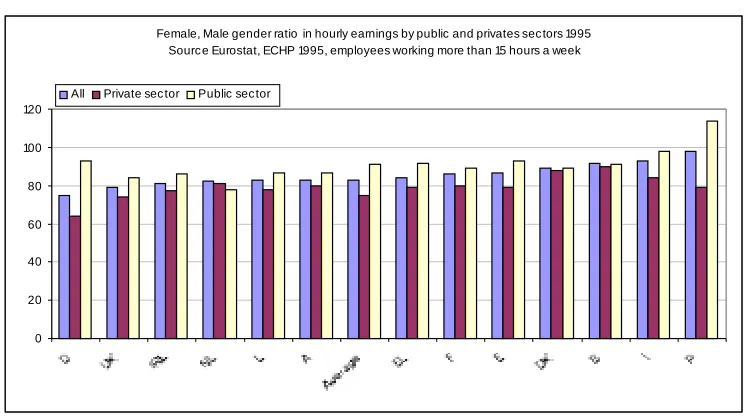
5. Women are paid less than men for the same work or for work of equal value. The pay gap is greater in the private sector (25%) than in the public (9%). Structural effects such as age, occupation and sector of activity fail to account for the gender wage gap. There is still a 15% difference in average earnings (Table 4)3
Table 4
Female, Male gender ratio in hourly earnings by public and privates sec tors 1995 Sourc e Eurostat, ECHP 1995, employees working more than 15 hours a week
0 20 40 60 80 100 120
ANNEX II WOMEN IN POLITICAL DECISION-MAKING
Although there was steady progress in the representation of women in the decision making bodies of the EU institutions, the 1999 annual report on equal opportunities in the EU shows that women are still disproportionately under-represented in political decision-making in the EU and its Member States. This underscores the importance of strategic objective 2 "Equal participation and representation".
Women's representation in the European Commission, the Court of Justice and the Court of Auditors (at the end of 1999)
Since 1995, 25% of the Members of the European Commission have been women. Of the Director-Generals in the Commission, 2.8% are women. Until 1999, there was never a female judge in the European Court of Justice. With the appointment of one in 1999, there are now 6.6% women. In 1999, a second women was appointed member of the European Court of Auditors, which brings the percentage of women up to 13.3%.
Women in the European Parliament - elections of 1999
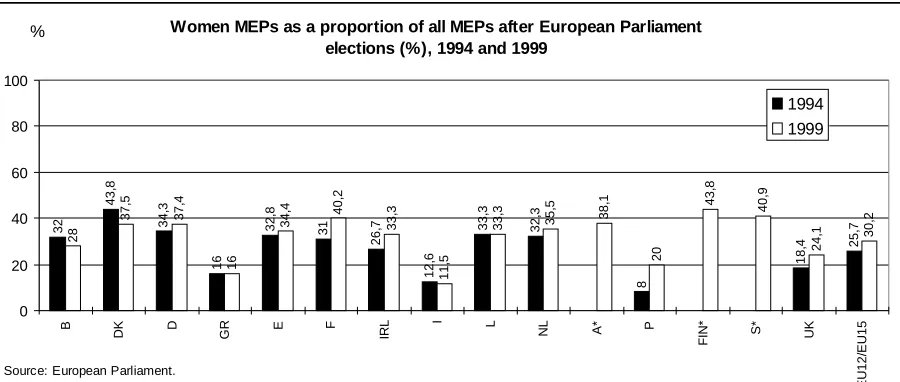
[image:22.595.74.524.415.606.2]Women’s representation in the European Parliament has increased steadily with each election since 1984. Yet, at 30.2%, women continue to be under-represented in the European Parliament in the period 1999-2004.
Table 1
Women MEPs as a proportion of all MEPs after European Parliament elections (%), 1994 and 1999
32 43, 8 34, 3 16 32, 8 31 26, 7 12, 6 33, 3 32, 3 8 18, 4 25, 7 28 37, 5 37, 4 16 34, 4 40, 2 33, 3 11, 5 33, 3 35, 5 38, 1 20 43, 8 40, 9 24, 1 30, 2 0 20 40 60 80 100 B
DK D GR E F IRL
I L
NL A* P
FIN* S* UK
EU
12/
EU
15
Source: European Parliament.
Note: *A, FIN and S acceeded to the European Union in 1995. New A, FIN and S MEPs officially took up their seats in Parliament in 1996.
%
1994 1999
The President of the European Parliament for the period 1999 to 2001 is a woman. There are 7% women among the Vice-Presidents and 29% of the presidents of the Standing Committees of the European Parliament are women.
Gender balance in parliaments of the European Union
Table 2
PARTICIPATION OF WOMEN IN THE NATIONAL PARLIAMENTARY ASSEMBLIES OF THE EU MEMBER STATES, THE EUROPEAN PARLIAMENT AND THE PARLIAMENTARY ASSEMBLIES OF LIECHTENSTEIN, ICELAND AND NORWAY (%)
1998 AND 1999
17,2 37,1 30,1 5,7 19,5 8,9 13,7 10,8 18,3 30,9 23,7 13 34 42,7 11,6 17,5 26,8 4 25,4 36,4 25,3 37,7 29,7 6,3 22,2 8,8 14,6 10,3 16,7 33,8 23,5 20,1 37 43,6 12,8 18,6 30,2 4 34,9 36,4 0 20 40 60 80 100
B DK* D GR E F IRL I L NL A P FIN S UK** EU15 EP FL IS N
%
1998 1999
Source: FrauenComputerZentrum Berlin and Deuce. Data for 1998 updated June 1998; data for D and S updated September 1998.
1999 data updated June. Data for E, F, IRL, P, A and UK updated November.
Note: DK: Data for Lower Chamber excludes 4 members elected in Greenland and Faroe Islands. UK (1999 Data) One seat vacant.
Women’s presence in national governments
The increase in the number of women holding positions in national government is somewhat more significant and illustrates the impact of new policy thinking in relation to gender equality. The share of women members of cabinet (ministers and junior ministers) rose from 21.9 to 24.1% (1998-1999). In Belgium, Finland and Iceland the increased participation of women in parliaments was mirrored by significant increases in the proportion of women in their governments. In Portugal, the participation rate of women in government fell slightly. In Sweden, women held a majority (52.6%) in national government. The combined impact of cross-party groupings, quotas and alternating male/female lists in elections go some way towards explaining women's equal presence in Swedish government.
Women in the parliaments of applicant countries
[image:24.595.72.523.266.564.2]The latest available complete data on the representation of women in the national parliaments of the 13 applicant countries were collected and published by the Council of Europe in December 19991, showing large differences between the countries. The average is 10,5% women in the national parliamentary chambers. This is well below the EU average of 18.6%, which only Lithuania and Estonia exceed. It is particularly regrettable that, for instance, in Hungary in 1980, there were 30% women in the National Assembly, while now there are only 8%. Similar trends were observed in other applicant countries.
Table 3
1
Proportion of Women in the National Parliamentary Assemblies of the Candidate Countries (%), 1999
17,8 17,5 17 13,3 12,55 12 10,8 9,2 8,3 7,8 5,4 4,35 4,2 18,6 30,2 0 5 10 15 20 25 30 35 Estoni a Lithuani a(1) Latv ia Slov ak Repub lic Czec hRe publ ic(2 ) Pol and( 2) Bulgar ia Mal ta Hungar y(1) Slov enia( 1) Cyp rus( 1) Rom ania( 1)(2) Turk ey EU (3) EP( 3)
Source: Council of Europe Note: (1) figures from the Inter-Parlamentary Union
(2) average rates for the two Chambers of the National Parliamentary Assembly
(3) source:
Proposal for a
COUNCIL DECISION
EXPLANATORY MEMORANDUM
The Community's overall strategy on gender equality
The EU has a long-standing commitment to promoting gender equality, enshrined in the Treaty in 1957, in directives and a corpus of case law. The Community legal framework ensures that women and men are equal before the law and a wide range of action has been taken at European and national level. But gender equality in the EU is still being undermined by the fact that women and men do not have equal rights in practice and under-representation of and violence against women show that there are structural gender inequalities.
The Commission proposes a new approach to promoting gender equality through a framework strategy embracing all Community policies in its efforts to promote achieving gender equality. The framework strategy will be accompanied by a supporting programme that will develop the necessary horizontal activities and improve coordination of gender-related activities in the various policy areas, in order to ensure coherence and develop synergy.
This draft decision covers the supporting programme. It will be financed under budget heading B3-4012.
Fields of intervention of the framework strategy
The Commission has identified five inter-related fields of intervention for the framework strategy. Within each of them operational objectives will be pursued to chart the course towards gender equality over the next five years. Under the framework strategy, all Community gender related initiatives will be explicitly linked to one or more of the following areas of intervention: economic life, equal participation and representation, social rights, civil life and gender roles and stereotypes.
Gender equality in the enlargement of the European Union as well as the gender dimension of the Community external relations and development cooperation policies are horizontal issues which will permeate all areas of intervention of the framework strategy.
In order to develop the horizontal and coordinating actions (such as networking, awareness-raising, analysis and assessment tools, monitoring, reporting and evaluation) required to successfully implement the framework strategy, the Commission is proposing a supporting programme.
Objectives of the supporting programme
The supporting programme shall therefore coordinate, support and finance horizontal and coordinating activities of the global framework strategy on gender equality.
The programme shall have the following objectives:
(a) To promote and disseminate the values and practices underlying gender equality;
(c) To develop the capacity of key players (independent bodies responsible for the promotion of gender equality, social partners and non-governmental organisations, especially at national, regional and local levels) to promote gender equality effectively, in particular through support for the exchange of information and good practice and networking at European level.
The supporting programme will help to integrate the gender dimension into all policies and use their potential to promote gender equality.
Actions
To meet these objectives, the supporting programme will use existing instruments and tools effectively and develop new ones. Three principle strands of actions have been identified and will run concurrently:
Strand 1: Awareness raising
This strand will focus on promoting gender equality as a European value and publicising the results of the programme. It will include communication, publications, campaigns, conferences and events in support of the implementation and application of legislation and policy in the field of gender equality. To influence public opinion in general, the supporting programme will concentrate on raising the awareness of opinion formers.
These actions will be highlighted during a European gender equality week which will be held simultaneously in all Member States. All activities will focus on one particular theme, to be chosen in cooperation with the Committee of the Programme referred to in Article 6 of the Decision.
An annual European prize for gender equality is also to be awarded to encourage business to take action for the promotion of gender equality.
Strand 2: Analysis and evaluation of factors and policies relating to gender equality.
This strand will include the understanding of issues related to gender inequality by determining where it exists and to what extent and by evaluating legislation, policies, practices and societal structures that have an impact on gender inequality (gender impact assessment). It will involve collection of further statistical evidence, development of benchmarks and indicators to assess the effectiveness of gender equality promotion and analysis and evaluation of those policies as well as effective dissemination of the lessons learned from the process.
This strand will also provide for the possibility, if necessary, of funding European expert groups, active in the different key areas concerned by the framework strategy to enable them to contribute effectively to the further development of European policy for the promotion of gender equality. The expert groups will be open to the participation of experts from the applicant countries.
Strand 3: Strengthening key players' capacity for promoting gender equality
(a) Strengthening cooperation with Member States
The Commission will implement this programme in close partnership with the Member States and a variety of social and economic actors. This will involve supporting the transnational exchange of good practice between key players at national, regional and local level and of information on experiments already taking place in the Member States.
The Commission will organise a meeting once a year with high level officials in the Member States in charge of gender mainstreaming
(b) Strengthening the partnership with the social partners and NGOs at European Union level
Previous Community programmes and initiatives have demonstrated the need to mobilise key economic and social actors.
The Treaty of Amsterdam upgraded the role of social dialogue by conferring important responsibilities and powers on the social partners at European level. The Commission will continue to encourage the social partners' contribution to the promotion of gender equality.
Non–governmental organisations are an important element of civil society and major players in the promotion of a gender democracy. The existing forms of Commission-NGOs cooperation and partnership will form the basis for enhancing the dialogue and improving the mutual information and exchange of best practice regarding gender activities and policies.
Cooperation with international organisations will be encouraged in order to build on the expertise of these organisations and avoid duplication on the ground
Information, reporting and evaluation
The supporting programme will be accompanied by an integrated information strategy, involving an Internet web-site with information on the overall implementation of the framework strategy, publication of studies and funding of expert groups.
Every year, the Commission will adopt the annual work-programme, including the priority actions that will be developed in the current year. The Commission will present an interim evaluation report of the framework strategy and the Programme by December 2003. The report will be forwarded to the Council, the European Parliament, the Committee of Regions and the Economic and Social Committee.
At the end of the fourth year of implementation of the Programme, the Commission will announce its preliminary intentions for the continuation of its gender equality policy after the end of the framework strategy. A final evaluation report of the framework strategy and the Programme will be adopted by the Commission and forwarded to the Council, the European Parliament, the Committee of Regions and the Economic and Social Committee, by the end of December 2006.
Subsidiarity and complementarity
While Member States, EEA States and applicant countries are pursuing gender equality policies, important discrepancies remain in implementation This is true for legislation, institutional mechanisms, specific initiatives (e.g. for positive action) and public awareness. Past programmes and initiatives at Community level have assisted Member States and NGOs in developing more effective gender policies.
The added value of the supporting action programme will accrue from its capacity for enhancing the overall impact, profile and visibility of the Community gender equality policy.
The Community however will not aim at conducting those activities that, by reason of nature and/or extent, can be better performed at national, regional or local level.
Complementarity amongst the different Community actions and between the framework strategy and Member State's activities will be ensured to avoid overlaps1 and to draw maximum benefit from the results obtained.
Complementarity and synergy between the framework strategy and the national gender equality actions or plans will be ensured by developing appropriate cooperation mechanisms. The Advisory Committee on Equal Opportunities for Women and Men will play an important part here.
Cooperation with third countries
2000/0143 (CNS)
Proposal for a
COUNCIL DECISION
on the Programme relating to the Community framework strategy on gender equality (2001-2005)
[Text with EEA relevance]
THE COUNCIL OF THE EUROPEAN UNION,
Having regard to the Treaty establishing the European Community, and in particular Article 13 thereof,
Having regard to the proposal from the Commission1,
Having regard to the opinion of the European Parliament2,
Having regard to the opinion of the Economic and Social Committee3,
Having regard to the opinion of the Committee of the Regions4,
Whereas:
(1) The principle of equal treatment for women and men is a fundamental principle of Community law and the Directives and other acts adopted in keeping with it have played a major part in improving the situation of women.
(2) Experience of action at Community level has shown that promoting gender equality in practice calls for a combination of measures and, in particular, of legislation and practical action designed to reinforce each other.
(3) The persistence of gender inequality justifies the continuation and strengthening of Community action in the field.
(4) The European Parliament, in its resolution on the interim report on the implementation of the medium-term Community action programme on equal opportunities for men and women (1996-2000)5, has called on the Commission to submit a proposal for a fifth action programme.
1
OJ C 2
OJ C 3
OJ C 4
(5) The Council, in its conclusions of 22 October 1999 has stressed the importance of a new action programme to promote equality for women and men.
(6) The new Community strategy for gender equality6 is embodied in a framework strategy that embraces all Community policies in its efforts to achieving gender equality and in this Programme, that will provide the structure for the horizontal and coordinating activities necessary to ensure coherence and to develop synergies with regard to the gender-related activities of all Community policies.
(7) In order to reinforce the added value of Community action, the Commission, in cooperation with the Member States, should ensure, at all levels, the coherence and complementarity of actions implemented in the framework of this Decision and other relevant Community policies, instruments and actions, in particular those under Articles 125 to 130 of the Treaty concerning a coordinated strategy for employment, and under the European Social Fund.
(8) It is necessary for the success of any Community action for the results to be monitored and evaluated against the aims.
(9) In accordance with Article 2 of Council Decision 1999/468/EC of 28 June 1999 laying down the procedures for the exercise of implementing powers conferred on the Commission7; measures for the implementation of this Decision should be adopted by use of the advisory procedure provided for in Article 3 of that Decision.
(10) Provision should be made to open up this Programme to the applicant countries of Central and Eastern Europe, in accordance with the conditions established in the Europe Agreements, in their additional protocols and in the decisions of the respective Association Councils, to Cyprus, Malta and Turkey, funded by additional appropriations in accordance with the procedures to be agreed with those countries.
(11) In accordance with the principles of subsidiarity and proportionality as set out in Article 5 of the Treaty, the objective of the proposed action by the Community, namely to promote gender equality, cannot be sufficiently achieved by the Member States by reason of, inter alia, the need for multilateral partnerships, transnational exchange of information and Community-wide dissemination of good practice, and can therefore, by reason of the scale and effects of the action, be better achieved by the Community. This Decision confines itself to the minimum required in order to achieve that objective and does not go beyond what is necessary for that purpose,
HAS ADOPTED THIS DECISION:
Article 1
Establishment of a Programme
Article 2
Principles
1. The Programme is related to the Community's overall strategy on gender equality, which embraces all Community policies geared to achieving gender equality, including gender mainstreaming policies and specific actions targeted at women.
2. The Programme shall coordinate, support and finance horizontal and coordinating activities under the fields of intervention of the Community strategy on gender equality. These are economic life, equal participation and representation, social rights, civil life, gender roles and stereotypes. Gender equality in the enlargement of the Community as well as the gender dimension of the Community's external relations and development cooperation policies are horizontal issues which will permeate all areas of intervention of the framework strategy.
Article 3
Objectives
The Programme shall have the following objectives:
(a) To promote and disseminate the values and practices underlying gender equality;
(b) To improve the understanding of issues related to direct and indirect gender discrimination by determining where it exists and to what extent and by evaluating the effectiveness of policies and practice;
(c) To develop the capacity of key players (independent bodies responsible for the promotion of gender equality, social partners and non-governmental organisations, especially at national, regional and local levels) to promote gender equality effectively, in particular through support for the exchange of information and good practice and networking at Community level.
Article 4
Community actions
1. With a view to achieving the objectives set out in Article 3, the following actions will be implemented within a transnational framework:
(a) Awareness-raising
(b) Analysis and evaluation
Analysis of factors and policies relating to gender equality, including the collection of statistics, studies, gender impact assessment, tools and mechanisms, development of indicators and benchmarks and effective dissemination of results. This will also include monitoring of the implementation and application of Community equality law by evaluating legislation and practice in order to assess their impact and effectiveness.
(c) Capacity building
Transnational cooperation between key players through the promotion of networking and exchange of experiences at Community level between national authorities, social partners and non-governmental organisations.
2. Arrangements for the implementation of the actions described in paragraph 1 are set out in the Annex.
Article 5
Implementation of the Programme and cooperation with Member States
1. The Commission shall:
(a) ensure the implementation of the Community actions covered by this Programme in accordance with the Annex;
(b) regularly exchange views with the Members of the Committee referred to in Article 6, with representatives of social partners at Community level and non-governmental organisations on the implementation and follow-up of the Programme and on related policy orientations.
(c) promote active partnership and dialogue between all the partners involved in the Programme, inter alia to encourage an integrated and coordinated approach to promote gender equality.
2. The Commission, in cooperation with the Member States, shall take the necessary steps to:
(a) promote the involvement in the Programme of all the parties concerned;
(b) ensure the dissemination of the results of the actions undertaken within this Programme;
Article 6
Committee
1. The Commission shall be assisted by a committee composed of representatives of the Member States and chaired by the representative of the Commission (hereinafter referred to as "the Committee").
2. Where reference is made to this paragraph, the advisory procedure laid down in Article 3 of Decision 1999/468/EC shall apply, having regard to the provisions of Article 7 thereof.
3. The representative of the Commission shall in particular consult the Committee on:
(a) the general guidelines for the implementation of the Programme;
(b) the annual budgets and the distribution of funding between measures;
(c) the annual plan of work for the implementation of the Programme's actions.
4. The representative of the Commission shall also consult the Committee on other appropriate matters concerning the implementation of this Programme.
5. To ensure the consistency and complementarity of this Programme with other measures referred to in Article 7, the Commission shall keep the Committee regularly informed about other Community action contributing to promote gender equality. Where appropriate, the Commission shall establish regular and structured cooperation between this Committee and the monitoring committees established for other relevant policies, instruments and actions.
Article 7
Consistency and complementarity
1. The Commission shall, in cooperation with the Member States, ensure overall consistency with other Union and Community policies, instruments and actions, in particular by establishing appropriate mechanisms to coordinate the activities of this Programme with relevant activities in particular relating to research, employment, non-discrimination, social inclusion, education, training and youth policy, justice and home affairs and in the field of enlargement and of the Community's external relations.
2. The Commission and the Member States shall ensure consistency and complementarity between action undertaken under this Programme and other relevant Union and Community actions, in particular under the Structural Funds, the Community Initiative EQUAL and the Community action programme to combat discrimination (2001-2006).
Article 8
Participation of EFTA/EEA countries, the associated countries of Central and Eastern Europe, Cyprus, Malta and Turkey
This Programme shall be open to the participation of:
(a) the EFTA/EEA countries in accordance with the conditions established in the EEA Agreement;
(b) the applicant countries of Central and Eastern Europe (CEECs) in accordance with the conditions established in the European Agreements, in their additional protocols and in the decisions of the respective Association Councils;
(c) Cyprus, Malta and Turkey, funded by additional appropriations in accordance with procedures to be agreed with those countries.
Article 9
Monitoring and evaluation
1. The Commission shall regularly monitor this Programme in cooperation with the committee referred to in Article 6.
2. The Programme shall be evaluated by the Commission at its mid-term and at the end of the Programme with the assistance of independent experts. The evaluation will assess the relevance and effectiveness of actions implemented with regard to the objectives referred to in Article 2. It will also examine the impact of the Programme as a whole. The evaluation will also examine the complementarity between action under this Programme and that pursued under other relevant Community policies, instruments and actions.
3. The Commission shall submit an interim evaluation report by 31 December 2003 at the latest to the European Parliament, the Council, the Economic and Social Committee and the Committee of Regions.
Article 10
Addressees
This Decision is addressed to the Member States.
Done at Brussels,
ANNEX
I. AREAS OF ACTION
The Programme may operate in one or more of the following fields of intervention:
1. Economic life
The area relates to the remaining gender gaps in the labour market and the ways to tackle them. The aims are to increase the employment rate of women, to reduce the unemployment rates among women, the gender segregation of the labour market and the gender pay gap.
2. Equal participation and representation
The area addresses the lack of women's participation in decision-making bodies. The actions deal with strategies to promote women in political, economic and social decision-making, including activities in external relations and development cooperation.
3. Social rights
Effective gender mainstreaming needs to be applied to all policy areas which have an impact on women's daily life such as transport, public health and the fight against discrimination on other grounds. The actions will aim at improving the application of Community legislation in particular on social protection and in the areas of parental leave, maternity protection and working time.
4. Civil life
The area addresses the enforcement of the human rights of women. The actions will promote the recognition of human rights of women, enforce equal opportunity rights and strengthen the fight against gender related violence and trafficking in women.
5. Gender roles and stereotypes
The area addresses the stereotyped images of women and men and the need to change behaviour, attitudes, norms and values which define and influence gender roles in the society. The actions cover gender mainstreaming in particular in education, training, culture, science, media and sport policies.
II. TYPES OF ACTION
The following measures may be supported by the Programme, in a
Strand 1 - Awareness raising
(1) The organisation of conferences, seminars and events at European level;
(2) The organisation of a European Equality week at Community level and in each Member State at the same time under the same topic coordinated by the Commission and conducted by the responsible authority in each individual Member State;
(3) The organisation of European media campaigns and events to support the transnational exchange of information and the identification and dissemination of good practice, including the award of an annual prize to companies successful in promoting gender equality and with a view to strengthen the visibility of gender issues;
(4) The publication of materials to disseminate the results of the Programme, including the construction of an Internet Site providing examples of good practice, a forum for the exchange of ideas and a database of potential partners for transnational exchange actions as well as e-links to the existing relevant web-sites in the Member States;
(5) The implementation of transnational initiatives such as meetings, seminars, campaigns, etc, on particular topics approved annually, after discussion with the Committee of the Programme. The aim of these activities is to support and improve the synergy among national policies on gender equality and to develop a Community added value;
(6) Organisation of seminars in support of the implementation of Community law in the field of gender equality.
Strand 2 - Analysis and evaluation
(1) The development and dissemination of comparable statistics, broken down by sex, statistical series on women and men's situation in different policy areas;
(2) The development and dissemination of methodologies and indicators for evaluating the effectiveness of gender equality policies and practice (benchmarking);
(3) The analysis of women's situation in the labour market, implementation of equality legislation in the Member States, influence and impact of social protection and taxation on women and men and advancement of women in decision making levels will be carried out and the results and lessons learn will be disseminated;
(4) The collection and evaluation of updated information and experience on successful initiatives, methods and techniques related with women and the media, including overcoming gender stereotypes and promoting positive portrayals of women and men in the media;
(5) The publication of an Annual Report on Gender Equality in the European Union including the progress towards reaching of the benchmarks and the evaluation of the results achieved;
In implementing this strand the Commission will in particular ensure consistency and complementarity with the activities conducted by other Commission services or by European agencies; in particular, the European Foundation for the Improvement of working and living conditions and the Community RTD Framework programme.
Strand 3 - Strengthening capacity
The following measures may be supported in order to improve the capacity and effectiveness of key players involved in promoting gender equality:
– Transnational exchange actions, involving a wide range of players, to transfer information, lessons learned and good practice. These activities may be conducted by NGOs or social partners at European level and transnational networks of regional or local authorities and of organisations which aim to promote gender equality.
– These activities may include comparison of the effectiveness of processes, methods and tools related to the chosen themes, mutual transfer and application of good practice, exchanges of personnel, joint development of products, processes, strategy and methodology, adaptation to different contexts of methods, tools and processes identified as good practice, and/or dissemination of results, profile-raising materials and events.
III. METHOD OF PRESENTING APPLICATIONS FOR SUPPORT
Strand 1 Actions (2), (3) and (4) of this strand will be implemented in response to open calls for tenders. Actions (5) and (6), to be implemented by the Member State authorities in charge of gender equality or by equality bodies, may be subsidised in response to restricted calls for proposals addressed to the Member States.
Strand 2 Actions under this strand will be implemented via the Commission, normally in response to calls for tenders. Action (1) will be implemented following the relevant Eurostat procedures.
Strand 3 Strand 3 will be implemented in response to open calls for proposals organised by the Commission, which will vet the proposals. The actions may be implemented by NGOs or social partners at European level, transnational networks of regional or local authorities or by transnational networks of organisations, which aim to promote gender equality
IV. CARRYING OUT THE ACTIONS
(1) The actions to be taken may be funded by service contracts following calls for tender or by subsidies for joint financing with other sources. In the latter case, the level of financial assistance by the Commission may not exceed, as a general rule, 80% of the expenditure actually incurred by the recipient.
(3) In carrying out the Programme, the Commission may have recourse to technical and/or administrative assistance, to the mutual benefit of the Commission and of the beneficiaries, related to identification, preparation, management, monitoring, audit and control.
(4) The Commission may also undertake information, publication and dissemination actions. It may also undertake evaluation studies and organise seminars, colloquia or other meetings of experts.
(5) The Commission will prepare annual work plans setting out the priorities and actions to be undertaken. Moreover, it will also specify the arrangements and criteria to be applied in selecting and financing actions under this Programme. In so doing, it will seek the opinion of the Committee mentioned in Article 6.