Submitted by: Sumeet Om Sharma
PhD Candidate (Student id – 148065)
Principal Supervisor:
Assoc Professor Martin Grimmer
Co-supervisor:
Assoc Professor Angela Martin
Tasmanian School of Business and Economics
University of Tasmania
PhD THESIS
Appraising the construct validity of Product
Appraising the construct validity of Product
Innovation Capability and identifying its association
with Firm Performance through meta-analysis
Sumeet Om Sharma
Bachelor of Engineering (Mechanical)
Master of Business Administration
A thesis submitted to the
University of Tasmania in fulfilment
of the requirements for the degree of
Doctor of Philosophy
Appraising the construct validity of Product
Innovation Capability and identifying its association
with Firm Performance through meta-analysis
Sumeet Om Sharma
Bachelor of Engineering (Mechanical)
Master of Business Administration
A thesis submitted to the
University of Tasmania in fulfilment
of the requirements for the degree of
Doctor of Philosophy
DECLARATION OF ORIGINALITY
“This thesis contains no material that has been accepted for a degree or
diploma by the University or any other institution, except as duly
acknowledged in the text of the thesis, and to the best of my knowledge and
belief, the thesis does not contain any material that infringes copyright and
intellectual property of their rightful and respective owners.”
……….
Sumeet Om Sharma
………...
Date
AUTHORITY OF ACCESS
This thesis may be made available for loan. Copying of any part of this thesis
is prohibited for two years from the date this statement was signed; after that
time, limited copying and reproduction is permitted in accordance with the
Copyright Act 1968.
……….
Sumeet Om Sharma
………...
Date
CONFERENCE PAPER ARISING FROM THE THESIS
A paper arising from the thesis Chapters-2 and 3, was presented at ANZAM
2013 held at Hobart, Tasmania, but was opted-out from publication in the
Conference Proceedings.
Sharma S.O. (2013) “Towards a comprehensive operationalisation of dynamic
capabilities: Gap identification in product innovation capability measurement
models” presented to Australia and New Zealand Academy of Management
(Authorship 100%)
This thesis is dedicated to my wonderful family and supervisors. I could
soldier on and endure dire hardships during my PhD candidature by virtue of
having unshakeable support from my family and supervisors. Although my
faith in Providence shook during the PhD journey, deep down I know that the destination was reached with God’s blessings.
I am extremely fortunate to have very supportive supervisors, Assoc
Professors Martin Grimmer and Angela Martin, who exemplify professional
excellence and kindness. Without their constant guidance, competent
supervision and steadfast friendship, completion of the thesis was not
possible and I am profoundly grateful to them for their belief in me.
The support of my family, wife Archna, adorable sons Rahul and Rohan,
mother Abha, brother Mudit and father, also ensured that obstacles could be
overcome. My spouse and children endured all challenges with me without
complaining and displayed remarkable patience in times of distress. Although
we often floundered, our familial bond kept us afloat. My mother and brother
provided every possible help and encouragement, and my Uncle Professor
D.C. Sharma was a source of spiritual wisdom and strength throughout the
candidacy. My friends and colleagues, particularly, Hormoz, Yasamine,
Sophie, Leanne and Kiros, helped along the way and I cherish their friendship.
I gratefully acknowledge the support provided by Professor Andrew Wells
during the candidature. Hopefully, the pursuit of PhD would serve as a shining
example of perseverance and resilience to Rahul and Rohan in their lives,
and would demonstrate to them that the battles of life can be won with
fortitude. In offering inspiration to my children, the struggles of PhD candidacy
as a self-funded international candidate would be well worth the effort and that
would be the true measure of my success.
Declaration of Originality i
Authority of Access ii
Conference paper arising from the thesis iii
Acknowledgement iv
Table of Contents v
Table of Figures xi
Table of Matrices xii
Abstract xiii
Chapter 1: INTRODUCTION 1
1.1. Background for the study 1
1.2. Research gaps and aims 3
1.3. Significance and justification of the study 7
1.4. Overview of research methodology 8
1.4.1. Theoretical triangulation 9
1.4.2. Meta-analysis 9
1.5. Definitions of key constructs 10
1.6. Scope of the study 11
1.7. Thesis structure 13
1.8. Chapter summary 14
Chapter 2: REVIEW OF LITERATURE 15
2.1. Introduction 15
2.2. DC, Ambidexterity and Process 17
Management Theories: A Triangulation
2.2.2. DC and Process Management Theories 22
2.3. Conceptualisation and measurement of PIC: 25
Overlapping constructs and multidimensionality
2.3.1. Overlapping constructs and inconsistencies 26
2.3.2. PIC, R&D and technological capability overlaps 28
2.3.3. The preponderance of effects and resource-input 29
measures
2.3.3.1. Overview of PIC measures 29
2.3.3.2. Gaps in the validity of innovation and 32
dynamic capability constructs
2.3.4. The challenge of capturing multidimensionality 33
2.4. Understanding the PIC–firm performance link 36
2.4.1. Market dynamism: A potential moderator 37
2.4.2. Technological turbulence as a driver of 40
market dynamism
2.5. Measures of firm performance 42
2.6. Review of meta-analyses investigating 43
innovation constructs and firm performance
2.7. Chapter summary 48
Chapter 3: THEORY DEVELOPMENT 49
3.1. Introduction 49
3.2. Incorporation of the productivity dimension 50
to capture PIC multidimensionality
3.3. The underpinnings of the effectsize 54
weighting scheme
commitments
3.3.2. Curvilinearity of association between firm size 57
and resource commitments
3.3.3. Selection of an appropriate firm size metric 59
3.3.4. The primacy of comparative measures 60
3.3.5. The similarity in firm size distributions 61
3.4. Framework for the effect size weighting scheme 62
3.5. Moderation effects and hypotheses development 63
3.5.1. Industry type 66
3.5.2. Firm size 67
3.5.3. Technological turbulence 70
3.6. Chapter summary 71
Chapter 4: RESEARCH DESIGN AND METHODOLOGY 73
4.1. Introduction 73
4.2. Fundamental decisions concerning study 74
design and methodology
4.2.1. The selection of Random-effects (RE) model 75
4.2.2. The choice of effect size metric 76
4.2.3. Computational approach 77
4.3. The computational procedure for the 77
weighting scheme
4.3.1. The choice of central tendency measure 78
4.3.2. Computation of study-specific weights 79
4.3.3. Assignment of adjustment factors to effect sizes 80
4.3.4. Unreported average firm size values 83
4.4.1. Study inclusion criteria 86
4.4.2. Study coding for data extraction 90
4.4.3. Development of the study coding protocol 91
and reliability of coding
4.4.4. Detection and coding of moderator variables 93
4.4.4.1.Industry type 94
4.4.4.2.Firm size 94
4.4.4.3.Technological turbulence 95
4.5. Correcting the effect sizes for artifacts 96
4.5.1. Correction for sampling error 97
4.5.2. Correction for measurement error 98
4.6. Summary effect size computation 100
4.6.1. Averaging correlations within studies 100
4.6.2. Aggregating correlations across studies 101
4.7. Outliers and sensitivity analyses 102
4.8. The assessment of publication bias 104
4.9. Meta-analysis software 106
4.10. Chapter summary 107
Chapter 5: DATA ANALYSIS AND FINDINGS 108
5.1. Introduction 108
5.2. Study characteristics and overview of coded data 109
5.2.1. Extracted effect sizes (correlation coefficients) 109
5.2.2. Reported and unreported reliability estimates 109
5.2.3. Characteristics of firm samples 110
5.3. The summary effect size and heterogeneity 116
analysis
5.3.1. Summary effect size and associated results 116
5.3.2. Heterogeneity analysis 121
5.3.2.1.Testing for the presence of heterogeneity in 121 true effect sizes
5.3.2.2.Segregation and estimation ofheterogeneity 123 components
5.4. The results of moderation analyses 125
5.4.1. Industry type 125
5.4.2. Firm size 126
5.4.3. Technological turbulence 127
5.4.4. Overview of moderations results 128
5.5. Outliers and sensitivity analyses 129
5.6. Publication bias 130
5.6.1. Trim-and-fill method 131
5.6.2. Rosenthal’s fail-safeN 133
5.7. Chapter summary 134
Chapter 6: DISCUSSION AND CONCLUSION 135
6.1. Introduction 135
6.2. Discussion of effect size adjustments 136
6.3. Discussion of results 137
6.3.1. Discussion of RQ-1 138
6.3.2. Hypothesis corresponding to RQ-2 139
6.3.3. Hypotheses corresponding to RQ-3 140
6.3.3.2. Firm size 142
6.3.3.3. Technological turbulence 143
6.4. Implications for theory and practice 145
6.5. Potential limitations 151
6.5.1. Industry representativeness of 151
incorporated firm-samples
6.5.2. Imperfect validity and lack of perfect 152
congruency in PIC measures
6.5.3. General limitations of meta-analytic reviews 153
6.6. Agenda for future research 154
6.7. Conclusion 157
References
158
Appendices
184
TABLE OF FIGURES
3.1. The convergence on efficiency of resource utilisation 51
3.2. The weighting scheme for PIC–firm performance effect sizes 62
3.3. The PIC–firm performance meta-analytic model 65
5.1.* Funnel plot for publication bias based on standard 131
errors and z-transformations
5.2.* Funnel plot for publication bias based on study 132
precision and z-transformations
*The figures marked with [*] are imported in MS Word from the analysis module of Comprehensive Meta-Analysis (CMA) software. Some compatibility issues between the two softwares may have caused these plots to not display optimally. Notwithstanding the formatting limitation, CMA plots are imported in MS Word and presented in the thesis as they are scientifically validated and quite legible. CMA software developers are working towards resolving the compatibility problem so that CMA-generated plots can be optimally displayed in the future.
1.1. Definitions of the central constructs 11 employed in the thesis
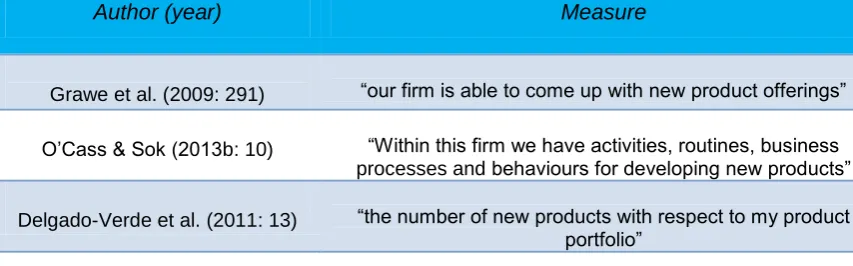
2.1. Illustrative examples of PIC effects measures 30
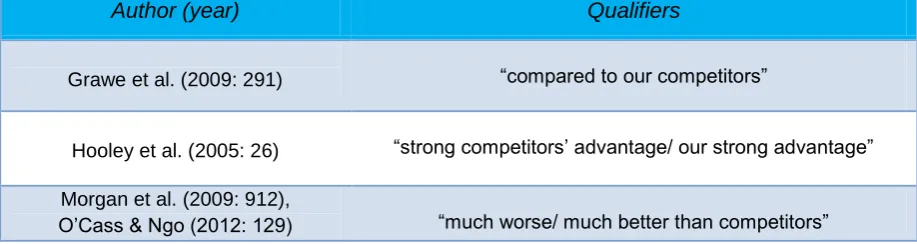
2.2. Examples of comparative qualifiers for PIC measures 31
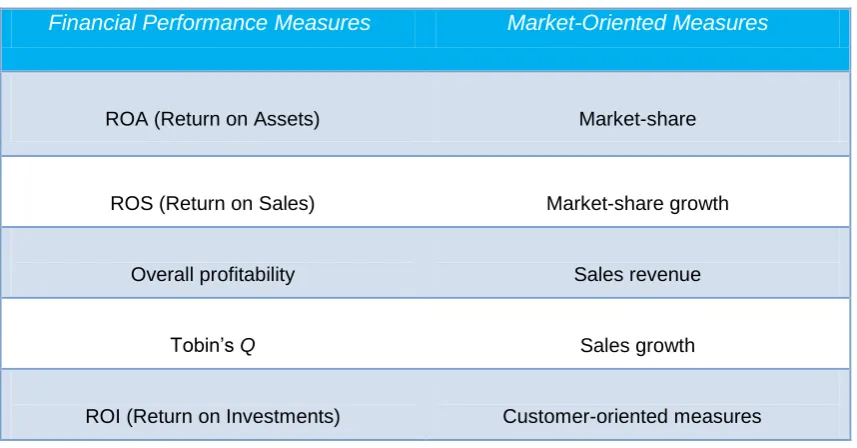
2.3. Objective firm performance measures used 42 frequently in studies
2.4. The scope and findings of meta-analyses investigating 46 the relationships between innovation constructs and
firm performance
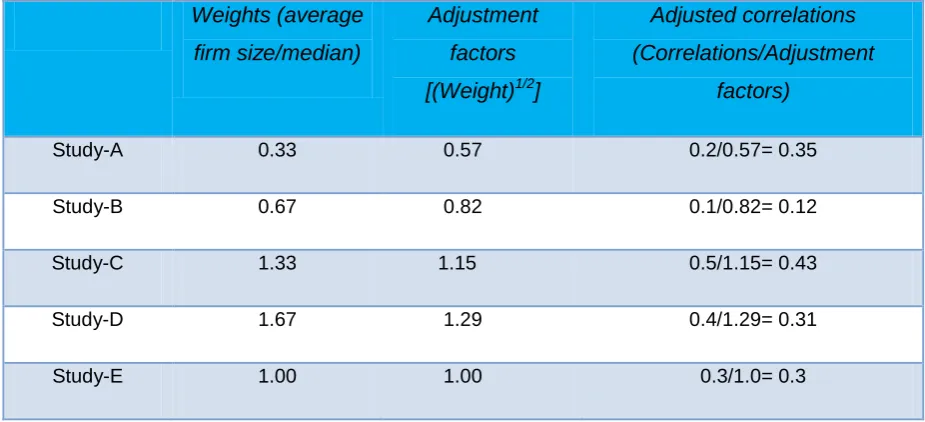
4.1. Information reported in primary studies and weights 80 computation
4.2. Adjustment factors and adjusted correlations 82
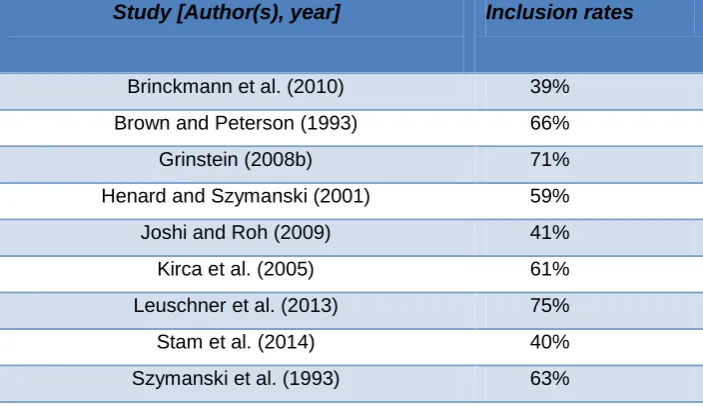
4.3. Study inclusion rates 89
5.1. Basic study coding data 111
5.2. Summary of data on moderator variables 114
5.3.* The summary effect size and CI 118
5.4.* Statistics for individual studies and forest plot 119
5.5. Statistics for heterogeneity assessment 122
5.6.* Moderation results for industry type 126
5.7.* Moderation results for firm size 127
5.8.* Moderation results for technological turbulence 128
5.9. Summary of sub-group analyses 128
*The tables marked with [*] are imported in MS Word from the analysis module of Comprehensive Meta-Analysis (CMA) software. Some compatibility issues between the two softwares may have caused these Tables to not display optimally. Notwithstanding the formatting limitation, CMA Tables are imported in MS Word and presented in the thesis as they are scientifically validated and quite legible. CMA developers are working towards resolving the compatibility problem so that CMA-generated tables can be optimally displayed in the future.
In the literature focused on dynamic capability and innovation constructs, a
prominent theme is the identification and analysis of antecedents that drive
firm performance. In particular, the dynamic capability construct of product
innovation capability (PIC), and its implications for firm performance, has
spurred substantial scholarly interest. This has eventuated into a considerable
amount of theoretical and empirical literature on the PIC and firm performance relationship. The accumulation of empirical evidence on the PIC–firm
performance relationship has attained a critical mass that warrants and
enables a systematic synthesis of findings.
Notwithstanding the advancements made in understanding PIC, and its
relationship with firm performance, several gaps and contradictions persist in
the literature. For example, empirical findings concerning the relationship are
often mixed, and theoretical contentions of Dynamic Capability (DC) Theory in
general, have sometimes remained empirically unsubstantiated. The present
study aims to advance DC Theory and innovation literatures by:
1. Undertaking a review of PIC measurement using theoretical triangulation,
that entails a multi-theoretical appraisal of PICconstruct validity.
2. Formulating an innovative meta-analytic methodology and conducting an investigation of the PIC–firm performance relationship and its moderation
effects via a statistical synthesis of findings.
In undertaking a meta-analysis of the relationship between PIC and firm
performance, the thesis firstly focuses on operationalisation of PIC in order to
assess its construct validity as a dynamic capability construct. High construct
validity of PIC is a necessary condition for enabling the development,
empirical testing and application of DC Theory. Attaining high validity of PIC is
also imperative for an assessment of its association with firm performance.
the theoretical and empirical underpinnings of the theory. A critical gap is
identified in PIC measurement models and a novel meta-analytic methodology
for addressing the validity problem is developed and employed in the study.
The meta-analysis of the PIC–firm performance relationship aggregates 81
effect sizes (correlations), extracted from 57 studies, representing the
magnitude and direction of this relationship. The synthesis enables the
computation of a summary (cumulative) effect size for the relationship under
investigation. The synthesis also offers insights into certain boundary
conditions, under which the magnitude and/or direction of the focal
relationship undergo a change. This is accomplished through a priori
identification and sub-group analyses of potential moderator variables. By ascertaining the moderation effects concerning the PIC–firm performance
relationship, DC Theory can also be better understood.
The meta-analytic results demonstrate a positive and strong association
between PIC and firm performance, supporting the hypothesised relationship
and yielding a point estimate for the true (i.e., construct-level) relationship. In
other words, the current study provides a summary estimate of the actual
underlying bivariate relationship of interest, by overcoming an identified
construct validity problem that limits the existing PIC operationalisation
methods. The validity problem in PIC, as determined through triangulation and
relevant arguments, and the development of a unique meta-analytic model in
this study, provide a broad spectrum of opportunities for further research.
Page | 1
CHAPTER ONE
INTRODUCTION
1.1. BACKGROUND FOR THE STUDY
Demystifying the antecedents of sustainable competitive advantage and
consequent firm performance is a major aim of management research
(Barney, 1991; Crook, Ketchen, Combs & Todd, 2008). Innovation has
arguably been the most prominent subject of these research endeavours, for
several decades (Damanpour & Aravind, 2012; Wolfe, 1994). Industry
practitioners and researchers constantly strive to manage and investigate
innovative activities (Artz, Norman, Hatfield & Cardinal, 2010; Marsh & Stock,
2003), including product innovation capability (PIC), as key determinants of
firm performance. PIC enables the pursuit of critical success factors such as
the introduction of innovative products that facilitate attainment of competitive advantage (O‘Cass & Ngo, 2012; Porter, 1985; Verona, 1999).
Alongside the research focus on innovation, in their quest to answer the
question of ―why some organisations outperform others‖ (Crook et al., 2008:
1141), scholars have also directed substantial attention towards Dynamic
Capability (DC) Theory. The theory has its genesis in the Resource Based
View of the firm (Morgan, Vorhies & Mason, 2009; Schilke, 2014). DC Theory
explains the rapid adjustments in organisational strategies/tactics that are
necessitated by a constantly shifting business landscape (e.g., see Eisenhardt
& Martin, 2000; Teece, Pisano & Shuen, 1997). The overarching applicability
of DC Theory in explaining predictors of firm performance has led to its use in
diverse fields, including (but not limited to) international business, marketing,
operations management and entrepreneurship.
Dynamic capability is defined by Teece et al. (1997: 516) as ―the firm‘s ability
Page | 2
key dynamic capability, it can be considered as a focal point of convergence between DC Theory and innovation research (e.g., see O‘Reilly & Tushman,
2008; Rosenbusch, Brinckmann & Bausch, 2011; Schilke, 2014).
Despite the popularity of DC Theory, it is still nascent and emerging (Di
Stefano, Peteraf & Verona, 2010; Helfat & Peteraf, 2009). Several
researchers contend that there remain research gaps that warrant attention
for theoretical and empirical advancement (e.g., Barrales-Molina,
Martínez-López & Gázquez-Abad, 2014; Vogel & Güttel, 2013; Zahra, Sapienza &
Davidsson, 2006). Particularly, problems such as inconsistent measurement
and conceptual vagueness of dynamic capabilities continue to persist (see
Wang, Senaratne & Rafiq, 2015; Zheng, Zhang, Wu & Du, 2011).
The empirical investigation of the relationship between dynamic capabilities
and firm performance has revealed inconsistent results. In particular, the
relationship of PIC with firm performance is characterised by mixed findings,
making it difficult to definitively determine if dynamic capabilities enhance firm
performance (e.g., see Drnevich & Kriauciunas, 2011; Katila & Ahuja, 2002;
Schilke, 2014). For example, several studies report a positive association
between these constructs (e.g., Panayides, 2006; Tatikonda &
Montoya-Weiss, 2001; Wolff and Pett, 2006), but a few also report a negative one (e.g.,
Katila & Ahuja, 2002; Penner-Hahn & Shaver, 2005). Such contradictory
findings indicate that the theoretical contentions of DC Theory proponents,
that higher levels of dynamic capabilities lead to superior firm performance,
are not clearly supported (e.g., see Eisenhardt & Martin, 2000; Teece &
Pisano, 1994).
Consequently, to gain insights into this pivotal relationship, a meta-analysis of empirical research that has accumulated on PIC–firm performance
relationship is warranted. As meta-analyses generate summary estimates of
the relationships of interest (Cooper, 2010; Hunter & Schmidt, 2004), a meta-analytic review of the PIC–firm performance link is undertaken in this research.
Additionally, since researchers have recently underscored the urgent need for
Page | 3
et al., 2015), an appraisal of PIC construct measurement is undertaken using
theoretical triangulation. The method of theoretical triangulation combines
multiple theoretical frameworks to gain a superior understanding of the
construct under investigation. Importantly, it has been demonstrated by
researchers that triangulation enhances the construct validity of the variables
of interest (e.g., see Halcomb & Andrew, 2005; Shih, 1998). Construct validity
is ―the degree of correspondence between constructs and their measures‖,
and it is ―a necessary condition for theory development and testing‖ Peter
(1981: 133). As the attainment of high construct validity is a pre-requisite for
ensuring the expansion of substantive empirical literature (Cronbach, 1971;
Nunnally, 1967), an assessment of PIC validity provides a foundation for
conducting the meta-analysis.
1.2. RESEARCH GAPS AND AIMS
The central relationship in DC Theory that commands most attention in
research is the one between dynamic capabilities and firm performance
(Barreto, 2010). However, the empirical evidence of the relationship is
conflicting not only in terms of magnitude but also direction (as highlighted in
the previous Section-1.1). This inconsistency in findings leads to a degree of
uncertainty with regards to the core relationship between dynamic capabilities
and firm performance.
To better understand the relationship between PIC and firm performance, it is
vital to gain a deeper understanding of PIC as a dynamic capability construct,
and the extent to which its measures and conception correspond to each
other. The present study aims to demonstrate that PIC measures are limited
by a substantial measurement deficiency which also potentially influences
other dynamic capability constructs. Due to the measurement deficiency of
PIC in the literature, this study brings into focus the (lack of) construct validity
Page | 4
revealed by theoretical triangulation and a priori contentions, which
collectively facilitate an assessment of the degree of consistency between
commonly used measures of PIC and its conception as a dynamic capability.
To address the operationalisation problem that causes PIC construct validity
to be called into question, a unique meta-analytic model is presented in the
thesis. The model seeks to provide a summary effect size (i.e., weighted
correlation coefficient) as an estimate of the true relationship of interest, by
accounting for the validity problem of PIC. Consequently, the proposed model
maintains the focus of this research on construct-level relationship between
PIC and firm performance. The use of the word true highlights the fact that
meta-analyses aim to surmount primary study imperfections (e.g., sampling
and measurement errors), thereby yielding accurate summary estimates of
the relationships under investigation (Hunter & Schmidt, 2004; Schmidt &
Hunter, 1996). The use of the word true also reflects the focus of
meta-analyses on the population from which firm-samples are drawn and
investigated in individual studies (Aguinis, Gottfredson & Wright, 2011). Thus,
through a meta-analysis, the present study aims to resolve the contradictory findings of the PIC–firm performance relationship by determining an estimate
of the strength and direction of the relationship. There has been no direct
attempt to synthesise findings on the association of a prominent dynamic
capability, such as PIC, with firm performance, and the current study fills this
gap in DC Theory literature.
Furthermore, understanding the conditions under which a relationship
changes in direction and/or magnitude is vital for theory development and testing (Viswesvaran & Ones, 1995). Thus, moderators of the PIC–firm
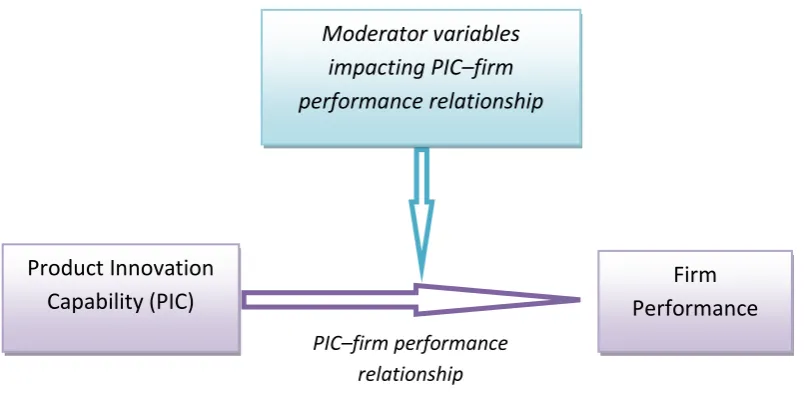
performance relationship are also identified. Substantive (theory-derived)
moderators identified are industry type, firm size and technological turbulence.
These moderators have been a focal point of research in DC Theory and
innovation literatures for various relationships under investigation (e.g.,
Damanpour, 1991; Rogers, 2004; Rubera & Kirca, 2012; Song, Droge,
Hanvanich & Calantone, 2005). However, as boundary conditions of DC
Page | 5
moderators and their effects on the PIC–firm performance relationship are of
substantial importance (see Schilke, 2014; Wilhelm, Schlömer & Maurer,
2015).
The following research questions are formulated on the basis of identified
gaps pertaining to the construct validity of PIC and a need for estimating the true PIC–firm performance relationship along with its boundary conditions.
Research questions:
1. To what extent are PIC measures valid when examined using theoretical triangulation of complementary theories?
2. What is the magnitude and direction of the true (construct-level) relationship between PIC and firm performance?
3. Do industry type, firm size and technological turbulence moderate the relationship between PIC and firm performance?
The research questions are predicated on understanding the focal relationship
and delineating its boundary conditions, common to most meta-analyses in
social sciences (see Aguinis et al., 2011; Hunter & Schmidt, 1990; 2004). The
study investigates construct validity of PIC through theoretical triangulation
that entails integration of DC, Organisational Ambidexterity and Process
Management Theories. The central rationale of Organisational Ambidexterity
(henceforth, referred to only as Ambidexterity) is that organisations have two
broad mechanisms/strategies for learning that have been labelled exploitation
and exploration (Atuahene-Gima & Murray, 2007; Baum, Li & Usher, 2000;
Danneels, 2008; Levinthal & March, 1993). Process Management Theory, on
the other hand, is focussed on process improvement and productivity (i.e.,
efficiency) enhancement (e.g., see Deming, 1986). Researchers have also
emphasised the importance of Process Management Theory in examining
Page | 6
Wolfe, 1994). Importantly, PIC is frequently modelled as a processor as being
embedded in processes in empirical research (Schilke, 2014). The
process-based view of dynamic capabilities has emerged as a dominant paradigm in DC Theory (e.g., see Agarwal & Selen, 2009; Helfat, Finkelstein, Mitchell,
Peteraf, Singh, Teece & Winter, 2007). Therefore, the current study adopts a
process-based conception of PIC, and Process Management Theory is used
in theoretical triangulation along with Ambidexterity and DC Theories.
The review of PIC measures through the lens of construct validity addresses
the first research question by highlighting a deficiency that prevails in PIC
measurement. The identification of the construct validity problem paves the way for devising an innovative methodology that underpins the PIC–firm
performance analysis undertaken in this research. The proposed
meta-analytic methodology is centred on making adjustments to correlation
coefficients (or simply, correlations), which are extracted from incorporated
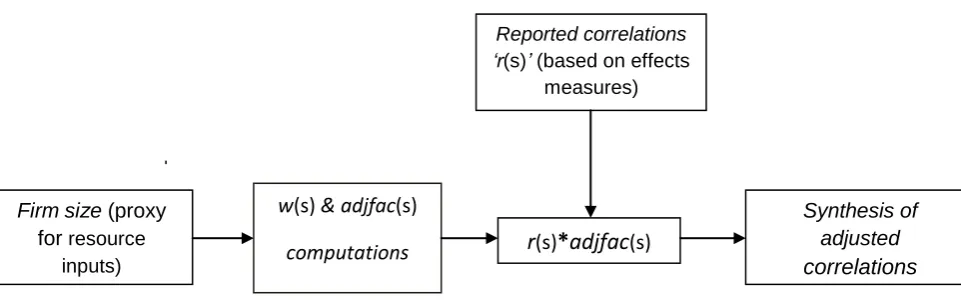
studies. The methodology is referred to as an effect size weighting scheme
and it entails modifications to reported correlations. The correlations are the
effect size metric in the current study and represent the direction and magnitude of the PIC–firm performance relationship. Hence, the two terms
(i.e., correlation and effect size) are used interchangeably in the thesis.
Subsequently, the study synthesises empirical findings on the relationship of
interest in order to directly address the second research question. The
emphasis on true relationship reflects the primary aim of meta-analyses in
attempting to determine construct-level associations (see Hunter & Schmidt,
2004). Substantive moderators potentially influencing the focal relationship
are then identified and their moderation effects ascertained through sub-group analyses. Thus, determination of the boundary conditions of the PIC–firm
Page | 7
1.3. SIGNIFICANCE AND JUSTIFICATION OF THE STUDY
The study contributes to the existing literature and knowledge base along
multiple pathways as outlined in this Section.
First, by highlighting the construct validity problem of PIC, the study
postulates a measurement approach that can guide empirical research in both
DC Theory and innovation domains. By addressing the validity problem
identified in this research, PIC can be measured more comprehensively,
because constructs are captured adequately via the enhancement of their
validity (see Cronbach, 1971; MacKenzie, Podsakoff & Jarvis, 2005; Nunnally,
1967; Nunnally & Bernstein, 1994). As already stated, the construct validity
problem of PIC is identified using theoretical triangulation entailing a review of
PIC measurement models and its conceptualisation as a dynamic capability.
Discernment of the deficiency in PIC measurement is an important
contribution of the thesis to DC Theory literature, as overcoming any gaps in
construct operationalisation enables the development of valid measures (see
Thorndike & Hagen, 1977). Consequently, empirical advancement of DC
Theory can progress ―beyond evidence of an ad hoc [emphasis in original]
and piecemeal nature‖ (Wang et al., 2015: 28).
Triangulation also affords a greater level of clarity to the conception of PIC,
thereby helping reduce the problem of conceptual vagueness in dynamic
capability constructs (e.g., see Di Stefano et al., 2010; Peteraf, Di Stefano &
Verona, 2013; Priem & Butler, 2001; Wilhelm et al., 2015; Williamson, 1999). In the specific context of the PIC–firm performance meta-analysis, the
construct validity assessment is argued to be critical for substantively
addressing the research questions of the thesis. This is because the greater
the extent to which PIC measures are valid; the computed summary effect
size would better estimate the true relationship of PIC with firm performance.
Second, the thesis presents an innovative meta-analytic methodology that
Page | 8
problem in PIC measurement. Development of the methodology is a salient
contribution of this research as the formulation of such a method is
unprecedented. Consequently, the thesis advances the applicability of
meta-analyses by establishing a methodological procedure enabling post hoc (i.e.,
after findings have been reported and accumulated for synthesis) adjustments
in reported effect sizes. The methodology enhances the validity of PIC, thereby yielding a superior summary effect size estimate of the PIC–firm
performance relationship. The computed summary effect size represents the
magnitude and direction of the relationship through aggregation of empirical
findings (Lipsey & Wilson, 2001). The generation of a summary effect size will
resolve the contradiction in research findings, thus clarifying the nature of the
relationship under examination and making another contribution to DC Theory
(e.g., see Drnevich & Kriauciunas, 2011; Schilke, 2014).
Third, the determination of potential moderation effects of the focal
relationship by industry type, firm size and technological turbulence offers
insights into the boundary conditions of DC Theory. Considering the centrality
of market dynamism in DC Theory, the thesis also sheds light on its
moderation impact on the relationship of interest (e.g. see Protogerou,
Caloghirou & Lioukas, 2012; Schilke, 2014; Wilhelm et al., 2015). This is
achieved by drawing inferences from the moderation effect of technological turbulence on the PIC–firm performance relationship as technological
turbulence is treated as a proxy for the market dynamism construct, in
addition to being a substantive moderator per se.
1.4. OVERVIEW OF RESEARCH METHODOLOGY
Page | 9
1.4.1. Theoretical triangulation
The method of theoretical triangulation is employed for reviewing the
congruency between PIC conceptualisation and measurement. This method
has been used by researchers to enhance construct validity in diverse fields
of scientific enquiry (e.g., see Halcomb & Andrew, 2005; Shih, 1998).
Triangulation generally facilitates a superior understanding of constructs (and
their validity) than is possible with a single theory used in isolation (e.g., see
Breitmayer, Ayres & Knafl, 1993; Shih, 1998). Laying emphasis on the
benefits of triangulation, Halcomb and Andrew (2005: 73) assert that ―the
triangulated approach provides a completeness of understanding of the concept under investigation‖. Specifically, the importance of examining
innovation constructs from multiple theoretical viewpoints is underscored in
the literature (e.g., see Abrahamson, 1991; Poole & Van de Ven, 1989; Wolfe,
1994).
For undertaking triangulation, fundamentals of DC, Process Management and
Ambidexterity Theories are used in the research. Ambidexterity is employed
as there are similarities identified between DC Theory and Ambidexterity by researchers (e.g., O‘Reilly & Tushman, 2008; Vogel & Güttel, 2013). Inclusion
of Process Management in triangulation is justified on the grounds that a
process-based view of PIC is explicitly subscribed to in the thesis.
Subsequent to a construct validity appraisal of PIC, empirical findings are
statistically synthesised using a meta-analytic review to determine the nature of the PIC–firm performance relationship and its boundary conditions, as
explained below.
1.4.2. Meta-analysis
Meta-analyses incorporate statistical techniques for combining independently
reported findings through robust procedures (Brinckmann, Grichnik & Kapsa,
2010; Cooper, 2010; Lipsey & Wilson, 2001). Meta-analyses generate useful
and practical knowledge through the integration of empirical findings that
Page | 10
Jackson, 1982). Generally, they enable the testing of hypothesised bivariate
relationships by correcting for errors due to sampling and measurement
(Crook et al., 2008; Hunter & Schmidt, 2004).
Meta-analyses largely gained popularity due to the recognition of the
limitations of qualitative narrative reviews (see Hunter et al., 1982), and a
need for statistical rigour in the synthesis of empirical findings (see Glass,
1976). Their application in social science research is growing steadily as
evidenced by an increasing number of meta-analytic reviews being published
in academic journals (see Aguinis et al., 2011).
Additionally, meta-analyses provide insights into moderator variables that may
account for variations in the relationship of interest, thereby assisting
researchers in theory development and testing (Viswesvaran & Ones, 1995).
The ability to assess moderation effects is a pivotal strength of meta-analyses
over narrative reviews (Aguinis et al., 2011).
The current research endeavours to expand the applicability of meta-analyses
by demonstrating how construct validity gaps can be bridged by overcoming
operationalisation deficiencies. By making adjustments to effect sizes, the study offers a better understanding of the true PIC–firm performance
relationship and its moderation effects.
1.5. DEFINITIONS OF KEY CONSTRUCTS
Due to the diversity of concepts employed in the thesis and their varied use in
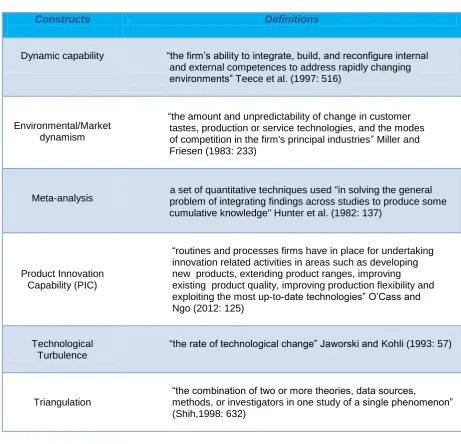
the literature, Table 1.1 lists the definitions of central constructs (in
Page | 11 Table 1.1: Definitions of the central constructs employed in the thesis
Constructs Definitions
Dynamic capability
―the firm‘s ability to integrate, build, and reconfigure internal and external competences to address rapidly changing environments‖ Teece et al. (1997: 516)
Environmental/Market dynamism
―the amount and unpredictability of change in customer tastes, production or service technologies, and the modes of competition in the firm's principal industries‖ Miller and Friesen (1983: 233)
Meta-analysis
a set of quantitative techniques used "in solving the general problem of integrating findings across studies to produce some cumulative knowledge" Hunter et al. (1982: 137)
Product Innovation Capability (PIC)
―routines and processes firms have in place for undertaking innovation related activities in areas such as developing new products, extending product ranges, improving
existing product quality, improving production flexibility and exploiting the most up-to-date technologies‖ O‘Cass and Ngo (2012: 125)
Technological Turbulence
―the rate of technological change‖ Jaworski and Kohli (1993: 57)
Triangulation
―the combination of two or more theories, data sources,
methods, or investigators in one study of a single phenomenon‖ (Shih,1998: 632)
Additionally, Appendix-1 presents a glossary of acronyms/abbreviations used
in the thesis. The definitions of other terms which are listed in this Appendix
are explained as they appear in the text of the thesis.
1.6. SCOPE OF THE STUDY
The research is confined within certain delimitations in terms of its scope,
Page | 12
Notwithstanding sustainable competitive advantage being a core construct in
the strategic management literature including DC Theory (see Barreto, 2010;
Grant, 1996b; Teece, 2009), its operationalisation is generally not undertaken. According to Weerawardena and O‘Cass (2004), competitive advantage
refers to the attainment of a position by a firm that confers superiority upon it
in its market and financial positions, which along with the competitive strategy
of the firm, is immune to duplication by competitors. As affirmed by Crooket al.
(2008: 1152) that ―competitive advantage is difficult to measure, and its direct assessment is seldom attempted‖. Therefore, as competitive advantage does
not render itself to robust and reliable measurement (Ketchen, Hult & Slater,
2007), the measures of actual firm performance are usually deployed as a
proxy for quantifying competitive advantage (Barney & Arikan, 2001). The
underlying premise here is that superior performance is a reflection of
competitive advantage (Crook et al., 2008), thereby justifying the use of
performance metrics to operationalise competitive advantage. Thus, rather
than competitive advantage, the current study employs firm performance (with
measures such as sales/market growth and return on assets) as the
dependent variable. This is also necessary given the use of meta-analysis (as
a methodology) in the current study, as the empirical studies make use of firm
performance rather than competitive advantage (e.g., see Crook et al., 2008;
Krasnikov & Jayachandran, 2008).
Amongst the studies incorporated in the meta-analysis, very few are
longitudinal, with most being cross-sectional in nature. This distinction in
research design is important in that it bears on the extent of confidence that
can be placed in inferring causality between the dependent and independent
variables (see Forza, 2002; Van de Ven & Huber, 1990; Ware, 1985).
Causality between the variables can be inferred with longitudinal designs but
such an inference is not justifiable with cross-sectional designs (Forza, 2002).
Thus, in the context of the current meta-analytic review, conclusive inferences
about PIC and firm performance causality should be drawn with caution due
to incorporated studies being mostly cross-sectional.
Additionally, the study investigates the presence of potential moderators that
Page | 13
study characteristics, that may also moderate the relationship of interest are
not included in the meta-analysis (e.g., see Rosenbusch et al., 2011). This is
primarily because the latter (empirical) moderators are not theory-derived per
se, but consequent to research design and operationalisation choices made
by researchers.
1.7. THESIS STRUCTURE
The thesis is structured into six Chapters and an overview of the research is
provided in this introductory Chapter.
Chapter-2 presents a literature critique that entails theoretical triangulation
between DC, Ambidexterity and Process Management Theories. The
triangulation and a priori arguments enable the identification of a gap in PIC
operationalisation. Additionally, a review of innovation literature will highlight
inconsistencies that have persisted in empirical research. The Chapter also
reviews meta-analytic studies conducted on innovation-focussed constructs
(e.g., R&D capability) and firm performance as independent and dependent
variables, respectively.
Chapter-3 describes a methodology (labelled weighting scheme) that aims to
overcome the validity problem of PIC by undertaking adjustments to reported
effect sizes. Based on theoretical rationales, the Chapter also proposes
moderator variables that are expected to impact the relationship under
investigation.
Chapter-4 presents the design and methodological framework employed in
the study. The framework chiefly concerns: 1. a computational protocol for the
weighting scheme and 2. conventional meta-analytic procedures that include
study coding, summary effect size computation, moderation and sensitivity
Page | 14
Chapter-5 presents a summary of the dataset, heterogeneity analysis, as well
as the core findings of the meta-analysis including summary effect size,
moderation and sensitivity analyses, and file drawer analysis.
Chapter-6 presents a discussion of the findings in terms of research questions
and hypotheses. Discussions of the implications of this research for theory
and practice, and potential limitations are also presented. The Chapter
concludes with prospects for future research.
1.8. CHAPTER SUMMARY
The current research is conducted in order to shed light on the true PIC–firm
performance relationship, and models PIC as a dynamic capability. The thesis
presents a quantitative review and empirical generalisation of the relationship
under investigation through a meta-analysis that is underpinned by a
triangulation of three prominent theories. The thesis aims to expand the
present state of knowledge concerning a prominent dynamic capability
construct (i.e., PIC), the relationship between PIC and firm performance, and
the impact of relevant moderator variables on the relationship. In addition, the
presentation of an unprecedented methodological procedure in the thesis
Page | 15
CHAPTER TWO
REVIEW OF LITERATURE
2.1. INTRODUCTION
In the research centred on examining the antecedents of firm performance,
innovation is arguably the most extensively investigated subject
(Jiménez-Jiménez & Sanz-Valle, 2011; Merrilees, Rundle-Thiele & Lye, 2011; Rubera &
Kirca, 2012). Researchers contend that innovation is critical for keeping pace
with shifts in the business environment (e.g., Kim & Maubourgne, 2005;
Schumpeter, 1934; Slater, Mohr & Sengupta, 2014; Thornhill, 2006). Within
innovation literature, product innovation commands a high level of scholarly
attention (Ar & Baki, 2011; Artz, Norman, Hatfield & Cardinal, 2010;
Delgado-Verde, Castro & Navas-Lopez, 2011).
Innovation capability as a determinant of innovation outcomes is asserted by
researchers as a very potent driver of firm performance (e.g., Hooley, Greenly,
Cadogan & Fahy, 2005; Hult, Hurley & Knight, 2004; Hurley & Hult, 1998;
Merrilees et al., 2011; Porter, 1990; Schumpeter, 1934; Weerawardena & O‘Cass, 2004). Innovation capability has been subjected to examination in
diverse contexts such as small and medium enterprises (SMEs),
business-to-business and emerging economies (e.g., see Branzei & Vertinsky, 2006;
Calantone, Cavusgil & Zhao, 2002; Merrilees et al., 2011; O‘Cass & Ngo,
2012; O‘Cass & Sok, 2013a; 2013b; Sok & O‘Cass, 2011; Thornhill, 2006;
Wong & Merrilees, 2005).
Research also indicates that dynamic capabilities perform a central role in
facilitating innovation as a means to attaining superior performance levels
(e.g., see Lawson & Samson, 2001; Levinthal, 2000; Lichtenthaler & Muethel,
2012; Menguc & Auh, 2006; Teece, 2007; Teece, 2009; Teece & Pisano,
Page | 16
the capacity of organisations for adapting to environmental changes (Benner,
2009), explaining the role of dynamic capabilities under shifting environmental
conditions has emerged as a focal point of attention (e.g., see Drnevich &
Kriauciunas, 2011; Schilke, 2014). In essence, DC Theory seeks to provide
answers to fundamental questions such as, how do routines and processes
stimulate organisational change and adaptation, thereby enabling a firm to
remain in sync with the environmental shifts, and outperform rivals.
Researchers acknowledge PIC to be a key dynamic capability (e.g.,
Barrales-Molina et al., 2014; Eisenhardt & Martin, 2000; O‘Reilly & Tushman, 2008;
Rosenbusch et al., 2011; Schilke, 2014). PIC is a very prominent research
construct as it is at the crossroads of multiple interconnected streams, such
as DC Theory, innovation, Ambidexterity, knowledge management and
organisational adaptability (e.g., see Cepeda & Vera, 2007; López, 2005;
Vogel & Güttel, 2013). As innovation encompasses the introduction of new
products, PIC is deemed a subset of the overarching innovation capability
construct in this thesis (see Calantone et al., 2002; Oke, Burke & Myers, 2007;
Zhang, Garrett-Jones & Szeto, 2013). O‘Cass and Ngo (2012) define PIC as
routines or processes embedded in firms that enable the pursuit of critical
success factors such as new product development, re-engineering of
production and distribution mechanisms and deployment of latest technologies. This definition of PIC as provided by O‘Cass and Ngo (2012) is
the one chosen for the current research as it attempts to encapsulate the
multidimensional essence of PIC. The chosen definition is largely reflective of PIC‘s conception as a dynamic capability construct. Given the significance
accorded by researchers on dynamic capabilities and innovation in enhancing
firm performance, PIC can be asserted to be a key determinant of
performance.
This Chapter reviews the literature on innovation and dynamic capabilities
(PIC in particular), and the association of PIC with firm performance, with the
latter (i.e., the focal relationship) primarily from the DC Theory perspective.
The Chapter commences with a theoretical triangulation between DC,
Page | 17
multidimensional nature of PIC. Complementarities identified amongst the
three theories are then deployed as a lens to review the conception and
operationalisation of PIC, in order to gain insights into its construct validity.
Underpinned by triangulation, a review of relevant and overlapping innovation constructs is also undertaken. The PIC–firm performance relationship is
subsequently outlined and reviewed in relation to market dynamism, as a
potential moderator of the relationship of interest (see Schilke, 2014). The
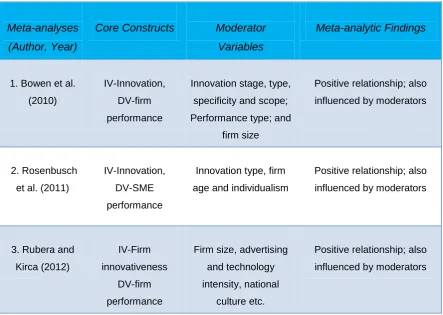
Chapter concludes with a content analysis of meta-analyses recently
conducted, that investigate the firm performance implications of several
innovation-focussed and capability constructs. The content analysis is
undertaken in order to establish an imperative for a meta-analytic review on the PIC–firm performance relationship.
2.2. DC, AMBIDEXTERITY AND PROCESS
MANAGEMENT THEORIES: A TRIANGULATION
The emergence of DC Theory has followed an evolutionary trajectory and
does not owe its origins to any single moment of truth. However, seminal
articles such as Teece and Pisano (1994), Teece et al. (1997), Eisenhardt
and Martin (2000), and Makadok (2001), published in the last two decades,
have contributed immensely in systematically organising and popularising DC
Theory. Notwithstanding the growth and promise of the theory, it is still
nascent and undergoing consolidation (Di Stefano et al., 2010; Helfat &
Peteraf, 2009). Refinements of core constructs of the theory and empirical
investigations are facilitating further advancements (Barrales-Molina et al.,
2014). This offers substantial opportunities for further research in the realm of
DC Theory.
The literature ascribes a competitive advantage-creating characteristic to
dynamic capabilities under changing environmental conditions (e.g.,
Eisenhardt & Martin, 2000; Grant, 1996b; Makadok, 2001; Rosenbusch et al.,
Page | 18
to enable a firm to achieve superior performance levels (see Barney, 1991;
Newbert, 2007; Porter, 1985). DC Theory emphasises the pivotal contribution
of dynamic capabilities in the attainment of competitive advantage and
consequent performance through the reconfiguration and redeployment of
resources owned and controlled by the focal firm (e.g., Barreto, 2010; Teece
et al., 1997). The performance-enhancing characteristic of dynamic
capabilities is underscored by a statement made by Zollo and Winter (2002: 341) that ―both superiority and viability will prove transient for an organization that has no dynamic capabilities.‖ In a similar vein, Teece (2007: 1320) affirms that ―dynamic capabilities lie at the core of enterprise success (and failure).‖
The agreement in the research community regarding the ability of dynamic
capabilities to enhance firm performance arguably stems from the conception
of and a priori deductions concerning the dynamic capability construct. As the
conception of dynamic capabilities is largely based on organisational
adaptation, learning and knowledge creation (e.g., see Denford, 2013); their
contribution to firm performance becomes mostly self-evident. Thus, the
dynamic capability construct has also come under criticism by some
researchers who claim that conceptions of dynamic capabilities are
tautological and vague (e.g., Priem & Butler, 2001, Williamson, 1999). Further
research such as the present study, can potentially aid in overcoming such
criticisms surrounding DC Theory.
To identify the constituents of dynamic capabilities, a group of scholars argue
that dynamic capabilities are collective manifestations of micro-level factors
such as individual-level cognitions and interactions, memory systems and
other micro-processes that are together referred to as micro-foundations (e.g.,
Argote & Ren, 2012; Felin, Foss, Heimeriks & Madson, 2012; Teece, 2007).
This viewpoint is an emergent field within DC Theory (Helfat & Peteraf, 2014),
and explains the creation and enhancement of dynamic capabilities from
micro-foundational level. On the other hand, the conventional and (hitherto)
mainstream paradigm conceptualises dynamic capabilities at firm- and
functional-level (e.g., see Barrales-Molina et al., 2014; Danneels, 2012;
Page | 19
they approach the theoretical conception of capabilities at different levels;
therefore they are not contradictory but appear complementary. Empirical
literature is predominantly focussed on the latter view (i.e., firm-level) and
owing to the nature and scope of the current study (i.e., being a meta-analytic
review), it is the firm-level conceptualisation of dynamic capabilities that is
employed. The preceding description of the two distinct (yet complementary)
streams of DC Theory research assumes importance for understanding the
level of analysis at which the present study operates (for a detailed discussion,
see Forza, 2002).
Dynamic capabilities are argued by several researchers to have a broad role
that encompasses opportunity seeking and seizing on one end, to productivity
enhancement on the other (e.g., see Agarwal & Selen, 2009; Benner &
Tushman, 2003; Ghemawat & Costa, 1993; O‘Reilly & Tushman, 2008).
Makadok (2001: 389) highlights the productivity-enhancing function of dynamic capabilities by asserting that ―the primary purpose of a capability is to enhance the productivity of other resources that the firm possess‖. The
overarching role attributed to the dynamic capability construct also highlights
its multidimensionality (see Agarwal & Selen, 2009; Barreto, 2010).
With the development of DC Theory in the last two decades, there has been a
simultaneous development of Ambidexterity Theory with a seminal publication
by March (1991). A group of researchers maintain that DC Theory and
Ambidexterity exhibit overlaps and complementarities (see Benner &
Tushman, 2003; Danneels, 2008; Day, 2011; Ghemawat & Costa, 1993; O‘Reilly & Tushman, 2008). Such comparisons between the two theories
warrant a review of overlaps, as such an analysis can facilitate a superior
understanding of PIC and its operationalisation. Thus, a review of DC Theory
and Ambidexterity is presented next. This review of overlaps between the two
Page | 20
2.2.1. Overlaps between DC and Ambidexterity Theories
The central rationale of Ambidexterity is that organisations have two broad
mechanisms/strategies for learning that have been labelled Exploitation and
Exploration (e.g., Atuahene-Gima & Murray, 2007; Baum et al., 2000;
Danneels, 2008; Levinthal & March, 1993; March, 1991; Raisch & Birkinshaw,
2008). Exploitative mechanisms revolve around the fine-tuning and
optimisation of existing resources and capabilities (Lubatkin, Simsek, Ling,
Veiga, 2006; Sirén, Kohtamäki & Kuckertz, 2012), whereas exploratory
mechanisms are centred on augmenting new resources and capabilities to
develop a broader set of diverse functional activities (Danneels, 2002; 2008;
Uotila, Maula, Keil & Zahra, 2009). Broadly, exploitative learning and related
organisational activities aim at the enhancement of productivity and
predictability of existing routines and outcomes. Therefore, organisational
objectives are attained through exploitative activities that encompass a
diverse range of initiatives, such as Total Quality Management, Six Sigma and
Benchmarking (Day, 2011), that primarily serve to enhance organisational
efficiency. By contrast, the aim of exploratory activities is achieved through
active experimentation, risk taking and flexibility (Day, 2011), which principally
improve the effectiveness of firms. From the Ambidexterity standpoint,
Danneels (2008) and Day (2011) propose that capabilities function either to
enable exploitation of resources possessed by the firm, or to facilitate
effective exploration and seizure of new opportunities. It is chiefly the latter
function (i.e., exploration and opportunities seizing) that has been ascribed to
dynamic capabilities (e.g., PIC) by them. The former function (i.e., exploitation
of resources) has mostly been attributed to operational capabilities by these
researchers.
A somewhat different viewpoint is proposed by another group of researchers
who assert that dynamic capabilities perform an overarching function
encompassing both exploitative and exploratory activities (e.g., Benner & Tushman, 2003; Ghemawat & Costa, 1993; O‘Reilly & Tushman, 2008). Benner and Tushman (2003: 238) affirm that ―dynamic capabilities are rooted
Page | 21
and endorsing the comprehensive functionality attributed to dynamic capabilities, O‘Reilly and Tushman (2008) demonstrate substantial overlaps
between DC Theory and Ambidexterity. They maintain that dynamic
capabilities cover a broad spectrum of activities from exploration to
exploitation, and they arrive at this conclusion through a systematic comparison of fundamental tenets of DC Theory and Ambidexterity. O‘Reilly and Tushman (2008: 190, 185) further highlight that ―dynamic capabilities are at the heart of the ability of a business to be ambidextrous—to compete simultaneously in both mature and emerging markets—to explore and exploit‖; and that ―ambidexterity acts as a dynamic capability‖. Similar arguments
about dynamic capabilities residing at the core of both exploratory and
exploitative innovations are underscored by other scholars (e.g., Ancona,
Goodman, Lawrence & Tushman, 2001; Raisch & Birkinshaw, 2008; Schreyoegg & Kliesch-Eberl, 2007; Tushman & O‘Reilly, 1996). A bibliometric
review by Vogel and Güttel (2013) has identified Ambidexterity as a field of
research within DC Theory, thereby providing further evidence that overlaps
between DC and Ambidexterity Theories are now well established and
recognised in the research community. In light of the preceding discussion, it
is contended that accounting for both exploitative and exploratory functions is
vital for PIC operationalisation.
Makadok (2001) emphasises that capabilities (in general) are created for the
primary purpose of productively utilising the other resources with which a firm
is endowed. This contention further highlights the resource
productivity-enhancing characteristic of dynamic capabilities, in addition to their key role in
facilitating exploration. Additionally, researchers opine that the conception and
development of operational capabilities (that drive exploitative activities) are
enabled by dynamic capabilities (e.g., see Danneels, 2008; Day, 2011;
Drnevich & Kriauciunas, 2011; Helfat & Peteraf, 2003; Teece et al., 1997;
Winter, 2003; Zahra et al., 2006). This implies that organisational outputs and
performance are also indirectly driven by dynamic capabilities (Cepeda &
Vera, 2007; Helfat & Peteraf, 2003; Protogerou et al., 2012), via creation of
operational capabilities. These assertions also underpin the contention that
Page | 22
and exploitation, with the latter being driven both directly and indirectly (via
creation of operational capabilities) by dynamic capabilities.
The broad applicability of DC Theory is underscored by Eisenhardt and Martin
(2000) in their influential paper, as they maintain that the empirical research
on dynamic capabilities extends well beyond the realm of the Resource Based
View (RBV) of the firm. They state that ―dynamic capabilities actually consist
of identifiable and specific routines that often have been the subject of extensive empirical research in their own right outside of RBV‖ (Eisenhardt &
Martin, 2000: 1107). Several specific examples of dynamic capabilities, such
as that of product development processes and knowledge creation processes
have been cited by them to contend that dynamic capabilities have been
empirically investigated extensively, even if not explicitly recognised within the
RBV and DC Theory frameworks. This is an important observation as it
justifies the inclusion of studies in the current meta-analysis to those that are
not explicitly conducted within the RBV and DC Theory frameworks, in order
to enhance the statistical power of the meta-analysis.
Underpinned by the exploitation dimension of PIC, it is argued that the
measurement models of PIC must include the dimension concerning the
efficiency of resource utilisation. Therefore, the PIC measurement models
must contain measures that enable evaluation of the degree of productivity
with which resources are leveraged for producing product innovation
outcomes. It is concluded that the complementarities amongst DC and
Ambidexterity Theories clearly point to an imperative for PIC measurement
models to operationalise the construct from both exploratory and exploitative
standpoints.
Dynamic capabilities are frequently conceptualised by DC Theory proponents
as processes (e.g., Eisenhardt & Martin, 2000; Teece et al., 1997), and recent
empirical research on dynamic capabilities has adopted this view (e.g., see Li
& Liu, 2014; Schilke, 2014). Owing to the process-based conception of the
dynamic capability construct, PIC will now be discussed in the context of
Page | 23
Process Management Theories is the subsequent step in theoretical
triangulation.
2.2.2. DC and Process Management Theories
Process Management is centred on process mapping, improvement and
adherence to improved organisational systems (Benner & Tushman, 2003),
and has overarching applicability in diverse areas (Bergman & Klefsjo, 1990;
Ravichandran & Rai, 1999). Process Management paved the way for quality
and productivity programs such as Total Quality Management (Hackman &
Wageman, 1995), in addition to Business Process Re-engineering, Statistical
Quality Control and Six Sigma (see Benner & Tushman, 2002). In essence,
Process Management is largely focussed on process improvement and
efficiency enhancement. The recurrent theme of process efficiency and
improvement is the productivity with which resources are utilised
(Ravichandran & Rai, 1999). Thus, it can be contended that the emphasis
placed on resource productivity maximisation in Process Management largely
corresponds with resource exploitation and resource leveraging dimensions of
Ambidexterity and dynamic capabilities respectively.
Helfat et al. (2007) highlight the ever-increasing popularity amongst
researchers of a process-based conceptualisation of dynamic capabilities,
and PIC is frequently modelled as processes (e.g., see Eisenhardt & Martin, 2000; Li & Liu, 2014; O‘Cass & Ngo, 2012; Schilke, 2014). The process-based
conceptualisation is critical for facilitating empirical investigation of dynamic
capabilities (Schilke, 2014). Importantly, research on dynamic capabilities has
demonstrated the benefits of applying Process Management in the area of
new product development (e.g., see Benner, 2009; Garvin, 1995; Harry &
Schroeder, 2000). Consequently, the conception of PIC as a process warrants
an examination from the lens of Process Management (Benner & Tushman,