Rochester Institute of Technology
RIT Scholar Works
Theses Thesis/Dissertation Collections
10-28-2011
Disengagement
Petra TunsFollow this and additional works at:http://scholarworks.rit.edu/theses
This Thesis is brought to you for free and open access by the Thesis/Dissertation Collections at RIT Scholar Works. It has been accepted for inclusion in Theses by an authorized administrator of RIT Scholar Works. For more information, please [email protected].
Recommended Citation
R!I!T
DISENGAGEMENT
BY
PETRA TUNS
THESIS
Submitted in Partial Fulfillment of the Requirements for the Degree of Master of Fine Arts in Imaging Arts
School of Photographic Arts and Sciences College of Imaging Arts
Rochester Institute of Technology Rochester, NY
October 28, 2011
Carla Williams, Chair Date
Jessica Lieberman, Committee Advisor Date
- ACKNOWLEDGEMENTS -
I would like to thank everyone who helped me through this emotional process, especially to Dan, Alex, Chip, Carla, Jessica and Suz for each having a unique hand in supporting my work.
Humans are flawed creatures, but we are best when challenged by our very nature. The explorations in both my work and research have altered me in the most profound manner and will forever change how I look at art and humanity.
This thesis work is for all those who have suffered and will suffer from depression.
DISENGAGEMENT
By
Petra Tuns
B.F.A., Studio Art, Florida Atlantic University, 2007
M.F.A., Fine Art Photography, Rochester Institute of Technology, 2011
ABSTRACT
Disengagement is a body of photographic work that recounts my memories of suffering from depression. My aesthetic is directly influenced by the pathology of the illness. My thesis aims to let the viewer witness how depression has impacted me, so they can understand the disease on a more personal level rather than a stereotypical image, such as TV commercials for anti-depression medication. I analyze both depression in art and the history of depression through the writings of Christine Ross, and Michel Foucault. Freudian and Lacanian psychoanalytic theory also inform my work. They are also the foundation from which I defend my work. Through the personal we attempt to understand the universal, and by sharing my struggle with depression, I seek to give the viewer a window into the depressive experience and to shed light on this taboo subject.
- TABLE OF CONTENTS -
List of Figures . . . v.
Introduction . . . 1.
1.0 Pathology and Creative Process . . . . . . 2.
2.0 Initial Inspirations . . . 8.
2.1 Miss Havisham . . . 8.
2.2 Christine Ross Disengagement . . . 11.
3.0 Metaphor as a Visual Language . . . 15.
4.0 The Mirror . . . 17.
5.0 Generalizing Illness. . . 20.
6.0 History of Madness . . . 22.
7.0 Exhibition . . . 24.
Conclusion . . . 28.
Selected Bibliography . . . 31.
- LIST OF FIGURES -
1. Radiator and Slip 2009 . . . 5.
2. Left: Image of my room in Rochester, Right: Window From My Bed 2009 . . 7.
3. 1st photograph in the Series of Nine 2009 . . . 10.
4. Left: Series of Nine 2008, Right: Carving: A Traditional Sculpture 1972 . . . . 11.
5. Shower Curtain 2009 . . . 16.
6. Left: Spring to Summer, Center: Winter, Right: Summer to Fall 2009 . . . 17.
7. Split Mirror 2009 . . . 18.
8. Cymbalta Commercial Stills . . . 21.
9. Show Installation Shot . . . 24.
10. Series of Nine in the gallery . . . 25.
11. Bed Piece Installation . . . 26. 12. Image of cake on the table at the opening of Disengagement by Dan Larkin . 27.
INTRODUCTION
Disengagement is a body of photographic work that depicts the deadening
experience I have felt while living with clinical depression. The photographs in this series
restage memories of depression, and use the photograph as a coping mechanism. I also
employ techniques such as repetition and metaphor to illustrate my emotional state.
Recording the minutiae of my journey was the best way to create a visual language
through which the viewer could connect with the work.
The term “disengagement” refers to a set of seemingly contradictory concepts
inherent in my work. On the one hand, the pictures present the distancing from a social
reality. On the other hand, the act of creating this series—and its ultimate existence as a
concrete reality outside of myself—allowed me to disengage from my role as the
depressed subject and engage with my viewers. Disengagement thus represents both the
unrelenting grasp of depression and the escape from its clutches.
Together the images have a visceral presence that illustrates my struggle with
depression in a way that far surpasses any verbal explanation I can possibly give. My
pictures present a raw, detached reality, one that erects an emotional barrier between
viewer and subject. Ironically, it also beckons the viewer to try to understand the
depressed state of mind simply by existing in a public space. Disengagement was initially
formed to help me step away from my illness and see it from a different perspective.
Although my experience with depression was personal, my thesis has been
influenced and enriched by photographers and writers such as Liza May Post, Christine
1.0 Pathology and Creative Process
In looking at my work it is important to understand that not all who suffer from
depression are in a severe, disabled state. Some live in a more lucid condition in which
they temper the disease and are able to function somewhat normally. The DSM-IV-TR in
Action defines medical depression as:
Major depression: This disorder is characterized by depressed mood most of the day, nearly every day. Clients report these symptoms and often state that they are feeling sad, lost, and alone. Often they might appear sad and tearful upon discussion of the simple unassociated events or issues. These individuals report markedly diminished interest or pleasure in all, or almost all activities most of the day, nearly every day. Appetite and weight loss or gain may occur. Guilt and feelings of worthlessness or excessive or inappropriate guilt occur nearly every day with difficulty concentrating.
Dysthymia: Similar to the major depressive disorder found within the major depressive episode, accompanying symptoms include: disturbances in appetite (lack of appetite or overeating) and sleep (insomnia or hypersomnia); low energy or fatigue; low self-esteem; poor concentration; difficulty making decisions; and feelings of hopelessness. Although the symptoms of dysthymia have traditionally been considered less severe when compared to major depressive disorder, it can still have grave consequences, including severe functional impairment and increased morbidity from physical disease.1
My depression falls into the latter category. These photographs are more than a
documentation of my depression and coping mechanisms—they were themselves coping
mechanisms. How I created Disengagement stems from the way I deal with my
depression. For example, I find great comfort in doing repetitive tasks because it gives
me a sense of control over my environment. This is paradoxical because the compulsion
to repeat tasks is a symptom of depression, which is influencing my actions. My thesis
images developed from repetitively photographing objects and myself in the same
situations. While I did not see this at the time, I realized in retrospect that my obsessive
behavior is a way of coping with depression and it is a foundational part of my character.
My aesthetic derives from and is driven by habit formed as a mode of self-preservation.
In other words, it is therapeutic.
The creation of the images is a form of therapy because my work allowed me to
use my symptoms as a means of self-examination thus helping me to recognize and work
through the depression enough to function normally and cope with the illness. Freud
wrote on repetition, “The greater the resistance, the more extensively will acting out
(repetition) replace remembering.”2 Repetition became a replacement for having to deal
with being depressed. I only became aware of my compulsion to do repetitive tasks after I
saw these traits forming a pattern in my images. Once my depression became visual it
wildly altered my view of it and this is one of the most valuable things I learned about
myself from Disengagement.
Depression is a complex mental illness and it is often paired with other mental
disorders that are an offshoot of the initial disease. On the website for the National
Institute of Mental Health it describes other illnesses that are commonly associated with
those that I experienced:
Illnesses often co-exist with depression: • Obsessive-Compulsive Disorder
• Social Phobia
• Generalized Anxiety Disorder3
My thesis demonstrates how the pathology of depression has shaped me. It is easy
to see traits of obsessive disorder in my work because of the ritualistic manner in which I
photograph. I found objects that I projected elements of myself onto and I revisited them
repeatedly such as the radiator in my room, a bunch of dried up thistles, and my empty
bed. This simple, repetitive act of photographing the same objects over and over was the
best way for me to have something I could control, because depression took away my
ability to control my emotions.
Social phobia!how impossible it was to see myself in a world with others!was
a driving force in Disengagement. This is why my photographs have no other figures
other than myself, which coupled with the other objects I shot, represent aspects of my
emotional state. Depression always made me feel like I was suffering alone. I
photographed myself in the mirror several times because it became a place to affirm that I
still existed, even if all I could perceive was that depression had distorted me.
My aesthetic choices of muted color and simple, uncluttered compositions are
largely tied with how depression makes it hard for me to deal with reality. I was unable to
remember all the details of how my environment really looked. Therefore when I would
shoot a certain object or even myself, I would take out everything in the space that I
could not remember with clarity. I also muted the color because that was another detail
that was not important enough to remember, and it represented color draining away as a
3 National Institute of Mental Health, “Depression,”
sign of illness. This left me with only the ideas and objects that were important to the
inward examination of my mental state. I was drawn to anything that reminded me of
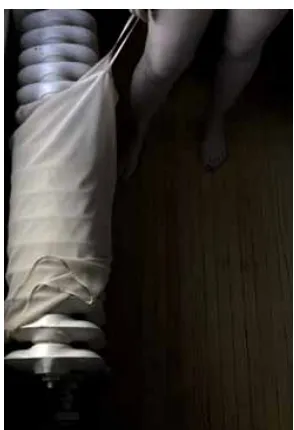
how I was feeling. Elements such as the radiator reminded me of my inability to feel
complete (figure 1). The dried thistle represented the empty husk of myself (figure 6),
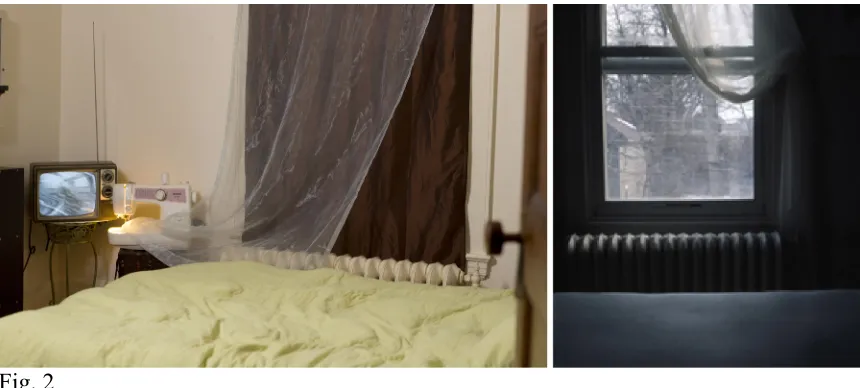
and the empty bed (figure 2 right) became the vast horizontal plane of depression from
[image:11.612.250.397.244.459.2]which I found it hard to escape.
Fig. 1
My photographs suggest the Freudian notion of the uncanny because they present
images of a home that mimics the look of a prison rather than the comfort of a lived
space. In his essay “The Uncanny,” published in 1919 Freud states, “the uncanny is that
class of the frightening which leads back to what is known of old and long familiar.”4
The uncanny suggests that which is both familiar and unfamiliar, much like in the
photographs of life-like dolls created by German artist Hans Bellmer. Upon first glance
they seem to be figures in odd positions, but on closer inspection they are strangely
articulated dolls built by the artist. These dolls are frightening in the same way for
example that disfigured war solders are frightening, because they resemble people but
they also seem to no longer be people.
Freud’s concept of the uncanny helps elucidate how my photographic
manipulation of familiar objects evokes an unsettling emotional response from the
viewer. In his essay, the titled is originally in German, where the word uncanny is
translated from the phrase un-heim-lich meaning “un-home” like. The home is thought to
be a sanctuary, my apartment, as represented in my images, becomes uncanny or
un-home like in this way because it is not presented as a safe comfortable place. My
photographs are shot to resemble a prison because it is the place where I confine myself.
The stringent editing of the images also suggests this. Figure 2 on the left shows how the
light looked in my bedroom during the daytime; the right image, Window from my bed,
shows how I perceived my room during a long bout of depression. The comfortable
clutter of my apartment was purposely not shown in the photographs, only the objects
that represented my figure and me. This makes the space resemble an empty prison cell.
The desaturated colors are representative of a place that is more like an institution than a
domestic living space. Seeking to make my images look haunting was the best way to
describe my emotional state, and how extremely different my environment felt through
Fig. 2
I was not capable of creating images of my personal experience with depression
as the people around me would have seen it, because it would not have revealed to the
viewer how I experienced it. My aesthetics are influenced by the way in which I
perceived my environment while depressed. Despite the fact that my images contain
simple objects in familiar spaces, they are strictly edited to resemble my distorted
memory of them.
Although the aesthetics of Disengagement is heavily influenced by depressive
pathology I was not aware of this when I initially began shooting the images for the
series. It became apparent only after analyzing my photographic process.
There were two major points of inspiration by means of which Disengagement
developed. The first was a photographic study I did of Charles Dickens’s character Miss
Havisham, from his novel Great Expectations. This eventually evolved into a
retrospective look at myself. The second was a book called The Aesthetics of
Disengagement: Contemporary Art and Depression by Christine Ross. Aside from
several artists who also use the depressive state as a means for creating art. These
references are the critical foundation upon which my thesis imagery is constructed.
2.0 Initial Inspirations:
2.1 Miss Havisham
The literary figure of Miss Havisham provided the initial impetus behind
Disengagement. The following passage from Dickens’s novel Great Expectations
provides some insight into the original main character of my photographs that evolved
from character to self-portrait. Told from the perspective of Pip, a young boy, it consists
of a haunting description of Miss Havisham, a reclusive, aging spinster. On the day of her
wedding she was jilted by her fiancé. The description below is her resulting state.5
Pipp’s first impressions are disjointed and raw:
I saw that everything within my view which ought to be white, had been white long ago, and had lost its luster, and was faded and yellow. I saw that the bride within the bridal dress had withered like the dress, and like the flowers, and had no brightness left but the brightness of her sunken eyes. I saw that the dress had been put upon the rounded figure of a young woman, and that the figure upon which it now hung loose, had shrunk to skin and bone. 6
The scene described by the disturbed little boy evokes the sense that he has just
stumbled into a world in which a petrified past is contrasted with a bleak present. Miss
Havisham’s tragic inability to recapture a happier past and the grotesque present reality
demonstrate her futile attempts to halt time. She seems precisely to capture the stilted,
quiet desperation I felt during my depression.
Bruce Conner, an American artist, was also inspired by the Dickens classic. In his
1960 sculpture The Bride he appropriates several common materials such as wood, nylon,
string, wax, paint, candles, costume jewelry, marbles and paper dollies, which are
constructed together. The work, which is 36 inches tall, is covered with so many layers
of webbing that it becomes a specter of a figure that has been enveloped by the past. This
piece is remarkable and it powerfully visualizes the severity of Miss Havisham’s halted
existence.
Disengagement is replete with images that evoke a sense of time forever frozen. A
skeleton-like radiator, dried-up thistles, my figure trapped inside mirrors or waiting in
shadowy outlines behind frosted windows—all of these encapsulate an eerie, sad
atmosphere, a life that has come to a halt.
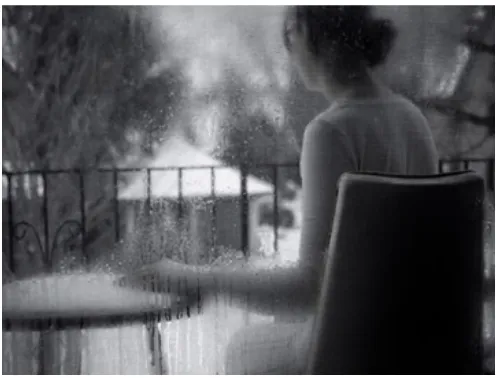
In an attempt to relate to the character of Miss Havisham I began photographing
myself outside a window during winter (figure 3). This untitled photograph is an
embodiment of what it felt like to be both depressed and alone. It encompassed more than
a photographic retelling of Miss Havisham. I was not just imitating Dickens’s character I
was also using it as a foundation for my own, more complex, story. The image consists of
me alone on a balcony in my pajamas, despite the cold and the snow, waiting for
something that cannot be seen in the photograph. This was the first time I created an
image that was a visual metaphor for the experience of my depression. Figure 3 was the
first successful image of Disengagement. It became part of my Series of Nine, a
collection of photographs composed the same way as the original but taken at different
Fig. 3
Seeing the seasons change and alter my environment, while I sit virtually
unchanged, helped to express my inability to tell others how I feel. In the same way Miss
Havisham is unable to move on from her past, I am unable to live a life without
depression.
As I continued to try and recreate this image a poignant thing happened: I saw
that despite the changing of the seasons I remained the same, which was one of the major
themes for how a lot of people I know describe depression. Taking the same photograph
daily was the first step in creating a visual language to let others grasp my experience.
Little by little, this freed me from feeling alone with depression. I felt that now I was
“sharing” the experience by making it visual and concrete. My exploration of the
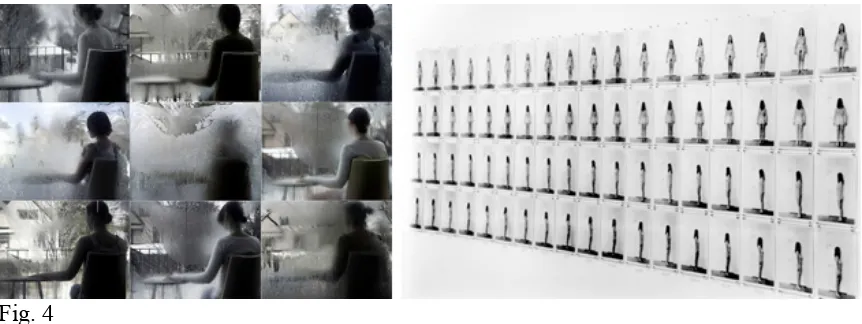
Fig. 4
My Series of Nine was inspired by Eleanor Antin’s Carving: A Traditional
Sculpture (1972) above right. I use repetition to help the viewer understand the concept
of a changing environment around my unchanging mental state (figure 4). Antin’s nude
self-portraits use repetition to show how she can sculpt her body by means of losing
weight, addressing the complex issue of body image for women7. Repetition allows the
viewer to see how depression has impacted the way I perceive myself even as time
passes. I am frozen in a state of waiting for the illness to end, despite knowing that it
most likely, will not. This was my personal version of that very idea manifested in visual
form.
2.2 Christine Ross Disengagement
My thesis title is derived from Christine Ross’s book The Aesthetics of
Disengagement: Contemporary Art and Depression. The word “disengagement” reminds
me of Miss Havisham’s broken wedding engagement. It also is a foundational idea for
7 The Art Institute of Chicago, “About this Artwork,”
how the illness has affected me. The Aesthetics of Disengagement studies how
contemporary art appropriates and modifies scientific definitions of depression. Rather
than interpreting art through the psychoanalytic lens of desire, Ross argues that
disengagement plays a vital role in understanding contemporary art:
[D]epression … is both a question brought to art and a paradigm in which art actively participates. As such, it is a means by which contemporary art has redefined itself through the deployment of new subjects (both in and before the image) whose subjectivity is shaped not so much by laws of desire as by rules of disengagement, subjects mobilized by the repeated task yet concomitant fatigue of being a self without others.8
Ross continues that while this work embodies a “depreciation of…the relational,
that is, not only the viewer’s connection to the image but also intersubjectivity,” it
simultaneously presents “an exertion to activate the current debate around depression.”9
The viewer of this art is engaged paradoxically with the idea of disengagement.
According to Ross, art can be a vehicle for the contemporary artist to discuss an
individual’s isolation as well as a culture’s alienation, or detachment from society.10 In
her book Ross examines the difference between melancholia of the past, which was seen
as an artist’s creative genius, and the depression of today being a driving force behind
how art now seems to use the symptoms of depression as a catalyst.
What makes the artists that Ross examines different from my work is that she
argues that they are not suffering from depression. Instead, they are using art as a means
to discuss the symptoms of depression, whereas my work is specifically about my
8 Christine Ross, Aesthetics of Disengagement Contemporary Art and Depression, (Minneapolis: University of Minnesota Press, 2006), xv.
experience with the disease. 11 The works of these artists are not therapeutic to them, but
rather a commentary on depression in today’s society. I regard her examination of these
artists as a good stepping-stone to begin to visualize how I would visually represent my
own depression. Ross talks about several artists, however, I identified most with the work
of Liza May Post and Ugo Rondinone. Their work features subjects who are disengaged
from reality, alienated, and questioning their position in the world. I studied these ideas
as a way to help me to begin to try and make images that communicated to the viewer my
experience with depression.
Ugo Rondinone’s 1995 installation Heyday is an example of an artwork that uses
disengagement from reality as a means to examine the figure. It consists of a mostly
empty gallery space, a window showing the outside of the gallery, and a life-like dummy
of the artist slumped against a side wall. This has similar elements to Series of Nine
where there is a passive individual separated from reality and the movement of life.
Depression has been said to be an isolating experience for those who suffer from it, and
Rondinone’s work addresses Ross’s idea of “a self without others.” His installation
reaches out to others by having them become part of the work by standing in the space
with the slumped figure of the artist against the wall. They too are alone in the room
unable to reach the bus station; it represents reality and is highlighted by the figures
inability to reach it, and is then alienated from the movement of life.
In Disengagement, my figure and the objects that represent or stand-in for me, such
as the thistle and radiator, serve as subjects who cannot experience reality because of
mental illness. This is suggested by the confinement of the photograph’s frozen moment
just as Rondinone’s figure cannot reach the reality of the gallery outside the window.
The work of Liza May Post presents a similar separation of subject and reality.
Her 2001 film While consists of a group of people who are passively sitting while confetti
rains down on them. The subjects do not look at each other; they are in a self-absorbed
trance, unable and unwilling to change their circumstances. As Ross explains, “the
subject is defined through an animated logic of inanimate waiting, a logic that breaks
communicational exchange or reduces it to its functional minimum.”12 Passively waiting
is a way of avoiding or ignoring the reality of the situation. I create work that embodies
the idea of disengagement and represents the subject “imprisoned in time.”13 By showing
myself passively waiting in Series of Nine, I am not acknowledging the pain of sitting
outside in the cold.
My work examines aspects of what Ross calls a “self without others.” All the
images were taken from inside a house that represents a mental space that others are not
able to inhabit. In my environment I see only fragments of myself, unable to see past my
own depression to reality. For example, in my image Radiator and Slip (figure 1) there is
a radiator photographed from an elevated position. Beside it are two bare legs and two
fingers of a hand that is mostly out of the frame and trailing a woman’s slip. It is gently
draped over the radiator’s sharp edges whose outline can be seen under the negligee. In
this picture I am examining my environment and construing myself in what the objects
themselves represent—the radiator edges pressing through the silk resemble bones. I am
draping a slip over the radiator to make the inanimate object resemble what I recognize in
myself. The slip evokes skeletal imagery but it only enhances the fact that I may never
feel like a whole person. I will never be a person without depression, just a person who
12 Ibid., xvi.
copes with it.
Understanding how the subject of depression was being discussed in current art
forced me to struggle with how to represent my depression in my own photographs.
Exploring visual metaphors of the memories I had of depression enabled me to tackle the
complex ideas I had experienced in ways that I hoped my viewers could easily
understand.
3.0 Metaphor as a Visual Language
Disengagement depicts how suffering from depression altered my perception of
my environment. The metaphors I use come directly from the surreal experiences I had
while depressed, and become a latticework of ideas that give the audience a “Rosetta
Stone” for interpreting the work. By taking a complex illness such as depression and
creating metaphors for how I felt, I give my viewers the ability to connect with my
experiences. My use of metaphor became a powerful tool that can help connect the
experience of one individual to the experience of another.
As an artist, I found that describing my struggle with depression was more
poignant and eloquently expressed through photography than trying to explain it verbally.
It is not possible for the viewer to have been present during the experiences detailed in
my images. My thesis is a collection of images that representing the experience of my
Fig. 5
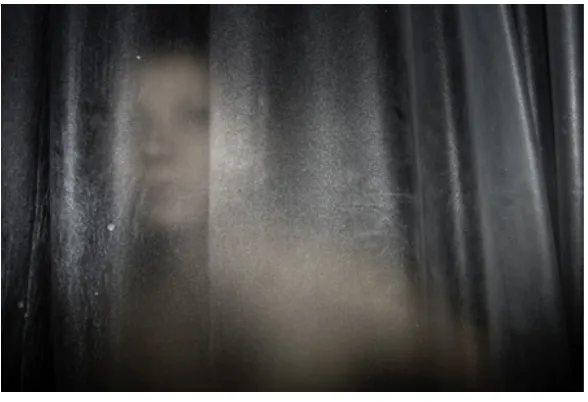
For example, in Shower Curtain I am hidden behind a plastic curtain. This is a
metaphor for how I felt to be disintegrating under the mental burden of depression.
Increasingly, I could no longer comprehend myself with any clarity. This image also
suggests to the viewer that I am in some way diminished, that I cannot see my
environment clearly. The curtain becomes the mechanism by which the image engages
the audience. The obscured, haunting figure behind the curtain is far more evocative than
a figure looking at the viewer in the eye and plainly stating, “I am depressed.” Thus,
opacity in my photographs provides further insight. I use it to show the viewer how it felt
to be depressed and it suggests a way to visualize that experience.
While not all people have had depression, many people have experienced what it
is like to see through a matte shower curtain. This gives them an entry into the work.
What is important is that the viewer use their own experience to form a relationship with
the images that will ultimately help them understand how illness has affected me and to
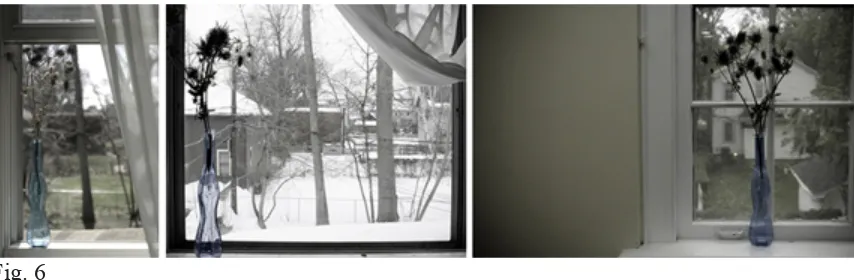
Another photograph that demonstrates this idea is Summer to Fall (figure 6, left).
The dried thistles represent my mental state. The flowers had been without water for so
long that they had become only a withered husk. Each bloom was like a gathering of
needles with an empty center. I photographed this bunch of flowers during several
seasons and like my Series of Nine it is another representation of my depression as time
[image:23.612.113.540.250.390.2]passed.
Fig. 6
It was very hard for me to find a self-portrait that spoke to the emptiness I felt
while depressed, so I turned to the objects in my room. The thistle was an apt
representation of something that was both unchanging and that had an air of malice to it
due to the sharpness of the petrified spines. The flower protects itself with the needles
even though the inside is mostly hollow. I saw myself in these flowers; I also liked how
the flower represents the feminine, and I knew that would allude to me.
4.0 The Mirror
Another important metaphor that I use in a few of my photographs is the mirror. It
alludes to the psychological manner in which I perceive myself. Depression makes me
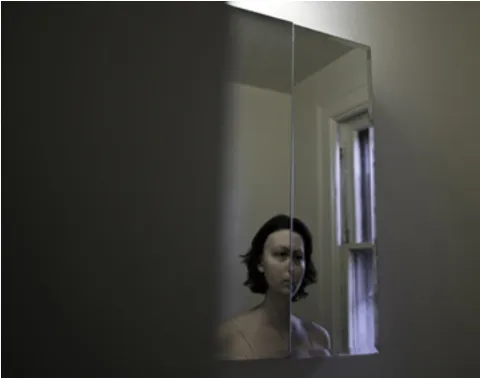
medicine cabinet mirror made the refection of my face appear sliced in half. Entirely by
accident I realized here too a potential metaphor for my condition. I shot this image from
several angles to create Split Mirror (figure 7). Fragmentation of the psyche is portrayed
in Disengagement by distorting or disjointing my face using mirrors, as well as how I
positioned myself within the frame. This illustrates the psyche or self as fragmented,
[image:24.612.204.444.238.427.2]since it does not suggest me as a whole complete body.
Fig. 7
The famed French psychoanalyst Jacques Lacan came up with a concept called
the mirror stage, in his theory of the subject. He describes this as, "a phenomenon to
which I assign a twofold value. In the first place, it has historical value as it marks a
decisive turning-point in the mental development of the child. In the second place, it
typifies an essential libidinal relationship with the body-image".14 What Lacan is talking
about is how the mirror serves as a place for self-discovery, like in the case of a child
witnessing itself for the first time or how it becomes a marker for how we perceive
ourselves. He furthermore enlists the mythological example of Narcissus fascinated with
his own image in the pool of water in support of his ideas. I look into the mirror in order
to rediscover myself through the rudimentary act of seeing, much like a baby discovering
its physical self for the first time. The mirror becomes a place for self-refection and
examination. This image is similar to Nan Goldin’s portrait done in 1988 Self-Portrait in
the Mirror, The Lodge, Belmont, MA. In my image the act is a manifestation of a need to
escape the disorientation of depression, yet what the mirror reveals is an incomplete or
partial self.
Lacan continues, “The function of the mirror stage thus turns out, in my view, to
be a particular case of the function of imagos, which is to establish a relationship between
an organism and its reality—or, as they say, between the Innenwelt and the Umwelt.”15
These terms translate to “inner world” and “environment or surroundings.” In Split
Mirror the body is broken apart to symbolize a psyche divided. One half of the face is lit
by a dim twilight coming in through the window. This light does not strike the other half
of the face. The two sides of the face thus seem to reside in different worlds.
Disconnection of the mind from reality is implied where the center of the face has been
lost between the places where the mirror is split.
The mirror is a common visual device used in art to depict complex issues. One
example of this is found in the work of Dieter Appelt, a photographer who has used the
mirror as a means of self-examination. In Der Fleck auf dem Spiegel, den der Atemhauch
schafft (1977) that translates to “the mark on the mirror, which the breath creates,” he
photographs himself standing before a mirror using his breath to create a haze on the
glass obscuring his face. Both Appelt and I use the mirror as a means to make
self-reflection visual. The mirror shows a distorted figure that is not the actual artist, but
perhaps a visual representation of his soul. He obscures himself with his breath, so we
don’t see his face, but the resulting image is much more informative than a
straightforward self-portrait would have been.
Using the mirror for self-refection was a way to further imbed myself within my
images and to get away from trying to define depression as a whole. I use it to make
visual my experience. My work is personal; it is not meant as a general overview of the
condition. Disengagement gives the audience an account by means of which to begin to
understand the illness in concrete terms.
5.0 Generalizing Illness
Unless dealing with mental illness themselves or in one’s immediate family most
people are exposed to generalizations of the experience. Generalizing depression gives
society a distorted perception of what it is like and thus removes us from the reality of the
experience. One conventional way that society is exposed to stereotypes of depression is
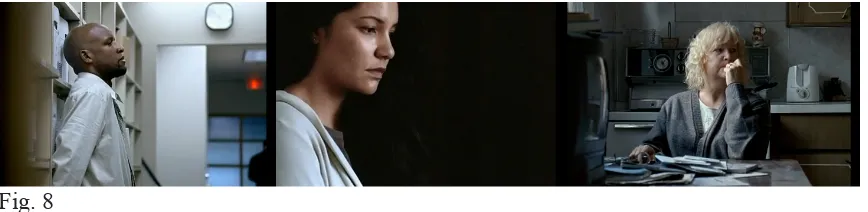
through commercials for anti-depression medication. For example, in the commercial for
Cymbalta,16 a name brand depression medication manufactured by the pharmaceutical
company Eli Lilly. The images have an aesthetic that is very similar to my photographs
(figure 8). They are pared down in color and simply composed.
16 YouTube, “Cymbalta Commercial (real one),” commercial,
Fig. 8
The commercial illustrates a few of the common emotions people experience
while depressed such as anxiety and loneliness. The images lack depth because
depression is a complex mental illness that cannot possibly be summed up in the short
span of a commercial. Yet this is one of the ways people commonly see depression
portrayed on TV. Its frequent repetition makes it easier to trivialize the illness.
The Cymbalta commercial uses paid actors. The viewer is unable to learn how
depression truly impacts people because the commercial’s main message is about selling
a product. This obscures its ability to make thoughtful connections about depression. My
work aims to make my audience more emotionally invested in the images and, by means
of this, to understand more critically the depressive state. I accomplish this by being
honest enough to share my story, despite how vulnerable it made me fell. My thesis
speaks directly about a real person with whom the viewer can hopefully connect.
For example, in Snow Print, even though I am not physically present, the marks I
leave behind are mine. This photograph consists of a chair and table in the snow viewed
through a dirty window. There is a handprint in the snow where I had been sitting. This
tells more about me by implying I had been sitting in the bitter cold long enough to leave
an icon and an index. The handprint is mine; it was specifically made by me and it
resembles my hand. Much like in Joseph Wright of Derby’s painting of The Corinthian
soldier, so that even when he is gone there is trace of him still there with her. My
handprint becomes an icon for my ever present depression because on a certain level part
of me is still there.
I regarded Snow Print as an extension of the Series of Nine images. It was a way
for me to look at how mentally I never really left the chair, because my presence was still
there. In not always showing myself in the images the viewer has to spend more time
looking into the photographs. I leave it to the viewer to discover what is occurring in the
work, giving them a greater appreciation for the complexity of my experience.
My work is about sharing myself with my audience so they can understand
depression directly from an individual who suffers from it. I intend for this to encourage
the audience to be more open to listening to others who suffer from depression. Those
who have it tend to be isolated and to isolate themselves, which I experienced until I
began talking about depression in my work.
6.0 History of Madness
Disengagement is furthermore a statement about how illness separates us from
society and reality. My work struggles against the long-standing trend in Western society
of relegating diseased people to the fringes and isolating them. In his influential History
of Madness, Michel Foucault talks about leper colonies as one example of how people
were forced into isolation due to their illness. 17 These colonies were society’s solution to
get rid of something frightening they did not understand. Foucault explains that even with
the gradual disappearance of the disease, the stigma attached to those who suffered from
it remained:
Leprosy retreated, and the lowly spaces set aside for it, together with the ritual that had grown up not to suppress it but keep it at a sacred distance, suddenly had no purpose. But what had lasted longer than leprosy, and persisted for years after the lazar houses had been emptied, were the values and images attached to the leper, and the importance for society of this insistent, fearsome figure, who was carefully excluded only after a sacred circle had been drawn around him.18
Foucault suggests that once lepers dwindled in numbers, people with madness took
their place.19 The result, he argues, is that “[s]ince the mid-seventeenth century, madness
has been linked to this place of confinement, and to the gesture that designated it as its
natural place.”20 The societal convention of confinement that Foucault describes is not
natural, but obviously forced upon those suffering from mental illness. A more
appropriate phrase than “natural place” would be perhaps “safe place.” I found that
depression made me feel unnaturally forced away from those that could not understand
what I was going through. My images certainly suggest—in their cold, awkward,
confinement—that I am alone and confined by the frame of the camera, in a box, literally
and figuratively. Although I felt forced away I also ironically found a strange sense of
safeness hiding away; it allowed me an escape from the judgment of others.
In my pictures the viewer is to understand that the subject is actively disengaged
from the camera, as well as the viewer and society as a whole. My thesis depicts the place
in which I am confined mentally and—in an ironic turn of events—now the home in
which I hide myself. However, since Disengagement was intended to be exhibitedin a
gallery the viewer is force to explore my depressive experience. This hopefully creates a
18 Ibid., 5.
dialogue between us. I exhibited this work in a gallery setting because I knew that the
only way to find a new understanding of my depression was to share it with my viewers.
This also provided me the chance to witness it from a different perspective. A public
space encourages more people to share their personal stories and it helps to foster a
society that regards people suffering from illness with compassion.
7.0 Exhibition
Fig. 9
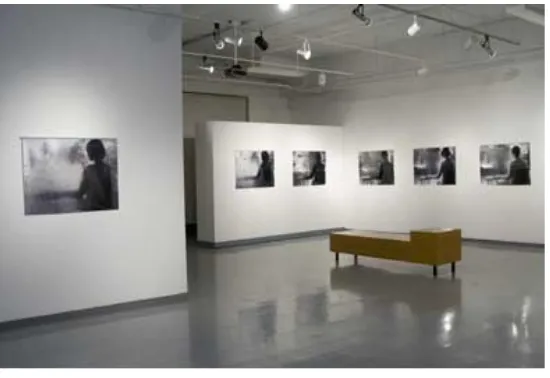
The exhibition images in the first room of the gallery (figure 9) were framed
simply using glass and white wooden frames in order to mimic the look of the windows
in some of my photographs. These piecesutilize the idea of the image becoming a place
to bear witness. The window-like appearance of the work encourages viewers to look
beyond the photograph before them and to find a place of introspection. What are they
bringing to the interpretation of the work? What are the objects referencing for them?
There is no direct narrative, only a loose interpretation going from image to
Fig. 10
I decided to hang the Series of Nine on the other side of the gallery (figure 10).
These prints were hung from a single bar of wood from the top due to the large size of the
images, each measuring 40" x 30". The first image of the series is set apart from the
others in order to coax the viewer into the small space where the rest of the images are
cloistered together. The Series of Nine prints are placed only fifteen inches apart so the
viewer can take them in all together. The photographs from the Series of Nine may at first
glance look identical; upon closer inspection they are all subtly different. Because of this,
there is a bench to encourage the audience to sit down and spend some time with the
work.
Although people usually think of a traditional gallery as a sterile environment, I
saw the emptiness and the white walls as a fitting accompaniment to the cold stillness of
Fig. 11
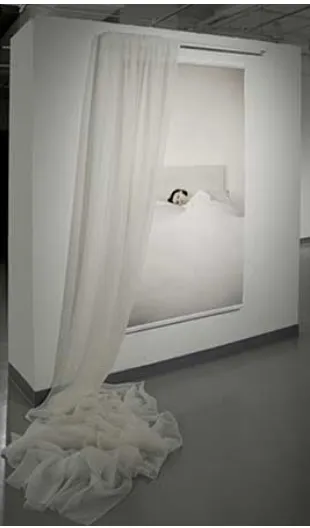
Figure 11 shows Bed Piece, which I decided to exhibit apart on its own wall. It is
the simplest and most straightforward of all my images. It was mounted close to the door
at the back of the gallery where the breeze could push and pull the curtain as if moving it
aside would give the viewer access to another room in the gallery. The image itself was
the only one where the viewer can see my figure directly. I wanted it to feel like the
viewer could move aside the curtain and come into my space, because the image is close
to life size. My depression is not something that will disappear; it is always a part of me,
therefore, I wanted to have this piece as a constant marker that I still live with it. Due to
the size of this installation, dedicating it to its own wall was the best way to showcase
such a large image without overwhelming the other photographs.
All of the images in the series have small details, which tie them together. These
details are either objects that repeat, or the desaturated colors that give the different
I felt that it was not the ideal way to experience the work. Because my subject matter is
personal it benefits the audience to see it without others to distract from the quietness of
self-refection. I want the gallery to be as quiet as the moments I portray in my
photographs. Before the opening I was able to spend a lot of time alone in the gallery
looking at the work. That was when the images had the most impact for me, without the
distraction of other people’s conversations.
For the opening reception I decided—in the spirit of my initial inspiration, Miss
Havisham—to have a white table filled with wedding-like cakes. Everything on the table
was either white or clear, serving as a performance piece in itself, and paying homage to
Miss Havisham’s decaying wedding reception table. Each person ate cake, slowly
eroding away the food as time itself would. Dan Larkin took the picture shown below at
the opening, after much of the food had already been eaten. I liked the idea of watching
something as temporal as food disappearing, while the images, much like my depression,
[image:33.612.213.439.459.630.2]remain a constant part of my life.
Fig. 12
The show lasted for a little more than two weeks, in which time viewers had the
the show and not really understanding what the images were about. He called me a month
later to tell me that after a long time of self-reflection he started to finally see, in his own
life, the details of things I had chosen to shoot in my images, and how important they
were in recalling his own depression. The way we remember many of the events in our
lives is through the subtle details that slowly distort over time. He was not the only
person to have a similar experience. Seeing my work in the gallery was both
overwhelming and a bit like taking a big boulder off my back. It was the summation of an
epic task I was not sure I could even do, which was to find a way to communicate my
experience with depression through photographic images.
CONCLUSION
Disengagement detailed my personal journey, and opened up a discussion with
the audience, which changed my perception of being alone with depression. My images
have helped me view it in a new light and move past the alienation I suffered. They are
thereby therapeutic. Although I was suffering from depression my goal is that anyone
who has suffered from a devastating illness can find a common thread between my
perception of living with illness and their own experiences.
My work aims to establish a dialogue about depression with the audience by
taking a taboo and deeply personal topic and making it public. It allows the viewer to
witness something they could not normally experience. It also attempts to get the viewer
to question how depression is portrayed in society, against how it is personally
universal and that in helping the subject of depression become public, society can feel
more comfortable talking about it.
Seeing this thesis through to its completion was liberating to me in that it was
uniquely informed by my personal experience and it gave rich insight into how I have
been shaped by it. I have no doubt that if other photographers made work about their
experience with depression it would have its own unique aesthetic, because each person
experiences depression so differently.
Disengagement is meant to expose the audience to a personal account of
depression. It seeks to encourage people with and without depression to see illness not as
something society has to hide, but as something that is an important and unavoidable part
of the human condition throughout history. Depression has been commonly discussed in
art and art history as melancholia, a condition of sadness thought to be caused by one of
the four bodily humors, that evolved into an early term for the depressive state before it
was classified in modern terms. My thesis is part of a long history of artists using the idea
of melancholia to both create art and understand their own inner workings. From
Melencolia I Albrecht Dürer’s etching created in 1514, in which creative genius becomes
the artist’s burden resulting in depression, to Edvard Munch’s painting Melancholy done
in 1891, showing a slumped, pensive figure by a body of water; it culminates in Sigmund
Freud’s theories of melancholy, as the mourning something lost that cannot be identified,
postulated in the early 1900’s.21 Depression has been a significant issue for art and a
21 Michael Ann Holly, "Interventions: The Melancholy Art," The Art Bulletin, Vol. 89 No. 1 (March 2007), 7-17.
powerful vehicle for its creation throughout history. It is often said that those who suffer
the most are also the most creative and the most in touch with their inner feelings.
As a society we must look to the individuals who have suffered from depression
and become informed by their experience, which, in turn, will give us a better
- SELECTED BIBLIOGRAPHY -
The Art Institute of Chicago. “About this Artwork.”
http://www.artic.edu/aic/collections/artwork/144356 (accessed August 16, 2011).
Dickens, Charles. Great Expectations. (New York: Penguin Group, 1996).
Dziegielewski, Sophia F. DSM-IV-TR in Action. (Hoboken, NJ, USA: Wiley, 2010).
Foucault, Michel. History of Madness. Edited by Jean Khalfa. Translated by Jonathan Murphy and Jean Khalfa. (New York: Routledge, 2006).
Freud, Sigmund. Sigmund Freud The Uncanny. Translated by Penguin Books. (New York: Penguin Books, 2003).
Freud, Sigmund. “Remembering repeating and working through.” The Standard Edition of the Complete Psychological Works of Sigmund Freud. Vol. XII. Edited by James Strachey. (London: Hogarth Press, 1961).
Holly, Michael Ann. "Interventions: The Melancholy Art." The Art Bulletin, Vol. 89 No. 1. (March 2007), 7-17.
Lacan, Jacques. Écrits. Translated by Bruce Fink. (New York: W.W. Norton & Company, 1966).
National Institute of Mental Health. “Depression.”
http://www.nimh.nih.gov/health/publications/depression/complete-index.shtml (accessed September 25, 2011).
Ross, Christine. Aesthetics of Disengagement Contemporary Art and Depression. (Minneapolis: University of Minnesota Press, 2006).
YouTube. “Cymbalta Commercial (real one).”