2 Kathrin Cresswell, Chief Scientist Office Chancellor’s Fellow, Director of Innovation, Usher Institute of Population Health Sciences and Informatics, The University of Edinburgh, UK
Margaret Callaghan, Decision Support Evaluation Research Manager, Usher Institute of Population Health Sciences and Informatics, The University of Edinburgh, UK
Hajar Mozaffar, Lecturer in Innovation, Business School, The University of Edinburgh, UK
Aziz Sheikh, Professor of Primary Care Research & Development and Director, Usher Institute of Population Health Sciences and Informatics, The University of Edinburgh, UK
Report submitted to the Digital Health & Care Institute in March 2019
Acknowledgements: We gratefully acknowledge all participants’ time and input, and Ann Wales’
advice throughout the process of the evaluation.
Cite this document: Cresswell, K., Callaghan, M., Mozaffar, H., Sheikh, A., & Digital Health & Care Institute (DHI) (2019).
3
Executive summary
Context: The Scottish Government recognises the importance of decision support to improve knowledge management in health and care settings as a strategic priority. To this end, they funded the 2015 National Decision Support Roadmap. This laid out a plan for procuring and building a Decision Support Platform delivering a range of small-scale demonstrators (including several mobile platforms for specific user groups e.g. polypharmacy and diabetes), and building clinician and policy engagement for further funding.
Aims: We were commissioned to undertake a formative evaluation of the National Decision Support Programme to help facilitate the effective roll-out of systems included in the Roadmap more widely.
Methods: We collected qualitative data through a series of in-depth interviews and observations of workshops demonstrating technological systems. Participants included policy makers and clinical leads involved in the National Decision Support Programme. As the Programme was in the early stages of strategy development and system implementation at the time of data collection, we focused on exploring expectations and drivers of Cambio (a pilot platform) being tested in primary care. This system delivers an open standards based algorithm editor and engine which is linked with bespoke decision support applications delivered as web and mobile products and integrated into primary care electronic health record systems. The web and mobile solutions linked to the Cambio algorithms platform were developed by Scottish partners (Tactuum and University of West of Scotland).
Employing a flexible methodological approach tailored to changing circumstances and need offered important opportunities for realising true impact through ongoing formative feedback to policymakers and active engagement of key clinical stakeholders. Our work was informed by sociotechnical principles and a health information infrastructure perspective. Qualitative data were coded with the help of NVivo software and analysed through a combination of inductive and deductive approaches.
Findings: We collected data through 30 interviews and eight non-participant ethnographic observations of early stakeholder engagement workshops. We developed and applied a theoretically-informed evaluation framework, which we refined throughout our analysis.
Overall, we observed a strong sense of support from all stakeholders for Cambio as an exemplar of an open standards based, customisable decision support platform, and proposals to roll this model out across NHS Scotland. Strategic drivers included facilitating integration of care, preventative care, patient self-management, shared decision-making, patient engagement, and the availability of information. However, in order to achieve desired benefits, participants highlighted the need for strong national leadership, system usability (which was perceived to be negatively affected by alert fatigue and integration with existing systems), and ongoing monitoring of potential unintended consequences emerging from implementations (e.g. clinical workloads).
4
Introduction
There is a national strategic drive towards participatory, personalised, predictive and preventive medicine.(1) Decision support systems (DSS) are key enablers in the delivery of such a vision. DSS are characterised as information systems that draw on an active knowledge base to support the decision making of its user.(2) They are used globally by health and social care professionals and now also by citizens who have an interest in tracking and quantifying their health and activities (e.g. in diaries, appointment reminders, wearables).
Electronic health record (EHR) infrastructures and the drive to integrate additional data streams, ranging from administrative, social, genetic and patient-generated wearable data, harbour the potential for a major step-change across the Scottish health and care landscape. Yet, using appropriate data to improve health and care outcomes, is dependent on an evidence-based strategy and associated delivery framework for a Scotland-wide DSS. This is reflected in the development of the national Decision Support Roadmap for NHS Scotland to support the implementation of the decision support objectives within the national eHealth Strategy.(3) The Roadmap widens the scope of DSS from professionals (which was the focus of the previous eHealth Strategy) to citizens and shared decision-making. The development of a new National Digital Platform is an associated new development and is in the longer term likely to have an impact on DSS.(4)
5
Analytical approach and conceptual framework
The development of our evaluation framework was based on the sociotechnical approach.(14) This focuses on exploring both structural technological factors and associated social processes as well as the interrelationship between the two during implementation and optimisation (see Figure 1). The sociotechnical approach has been applied widely to understanding, for example, how technological change can result in changes to work practices of healthcare professionals, and vice versa, how users can shape technological designs.
The majority of existing empirical work on the implementation/optimisation of information systems and associated care and business process transformation across sectors – i.e. not only in health and social care – strongly suggests that paying attention to sociotechnical factors is imperative to achieve improvements in processes and outcomes. These are not only dynamically linked, but also evolving over time. Key tenets here include:
Achieving joint optimisation of social, technical and organisational sub-systems. Inadequate attention to one or more of these components may jeopardise optimisation of the whole system (e.g. focusing solely on improving technological functions may sub-optimise the overall system performance as humans will no longer be satisfied with their tasks and lose motivation).
As the technological, social and organisational sub-systems are interdependent (Figure 1), changes in one sub-system are likely to affect the other. Careful attention therefore needs to be paid to adjust work and organisational processes if technological elements are changed.
[image:5.595.145.396.452.704.2]Insights obtained through the application of the sociotechnical framework are formative and summative in nature, informing ongoing implementation/optimisation activities (the formative component), and also giving an overall assessment of merit (the summative component).(15-17)
Figure 1: Illustration of sociotechnical systems
In addition to sociotechnical approaches, we also drew on the health information infrastructures (HII) perspective. This highlights how simple, stand-alone “discrete” information technology (IT) systems become knitted together into increasingly complex “systems of systems”.(18) DSS needs to be seen
Wider macro-environment
Organisational context
Social/human factors
6 as one part of this evolving health information infrastructure. HIIs emerge and evolve over extended periods of time. They are never finished. Major upgrades (for example through the acquisition of a “mega-software” packages) are extremely expensive, slow and difficult to implement. Generic options available within the package have to be matched against the specific methods and procedures of particular settings and specialties. Benefits evolve only slowly as organisational stakeholders learn to exploit the new functionality. Eventually the package becomes taken for granted – “invisible except on breakdown”– when organisation members feel they cannot do their work without it.(19)
Aims and objectives
The methods of this work have evolved significantly over the course of the project. When commissioned, our aims were to:
1. Develop an evaluation framework to enable Scotland’s health and social care to measure and optimise the impact of developments delivered through the national Decision Support Roadmap
2. Refine this framework and apply it to selected settings (i.e. the Demonstrator Projects delivered through the Roadmap currently in progress)
3. Inform the development of the national decision support infrastructure and its roll-out by providing formative and summative feedback to Scottish Government and NHS Scotland eHealth Leads
To keep the project manageable and achieve immediate impact, we decided in collaboration with funders to apply the evaluation framework to the Cambio system in primary care rather than the full range of demonstrator projects included in the Roadmap. This focus would mean that the work could contribute to the business case for national roll-out and continuous evaluation of DSS in Scotland.
Methods
7
Figure 2: Illustration of the three originally proposed WPs
8 After liaising with funders and scoping existing needs, the methods were revised to reflect a closer focus on the various stakeholder needs and the potential impact delivered through the Cambio decision support platform (Figure 3) in primary care. Cambio integrates with primary care systems to combine patient-specific information with existing guidelines. It issues alerts and provides applications including shared decision-making tools in the context of the individual patient record. These alerts and applications provide recommendations and options to guide clinical decisions and shared decisions in collaboration with patients. Applications are delivered as web solutions and downloadable mobile apps as well as embedding in the patient record. The open standards based approach adopted by Cambio means that it is vendor-neutral, so can provide a common decision support platform that integrates with multiple EHR systems.
[image:8.595.52.508.332.747.2]The implementation of decision support in live electronic health record systems is dependent on the approval of a national business case and on implementation of new and updated primary care systems through a major reprocurement process taking place at the same time as the DSS pilot. Therefore, while the mobile and web solutions were released as live products, embedding of DSS could at the time of the research only be observed in test environments. We therefore decided to focus on qualitative methods of enquiry, as concrete outcome measures would not be realised during our work.
9 The 2015 DSS Roadmap was informed by a literature review of DSS in health and social care settings conducted by Scottish Government in 2014.(20) This clearly highlighted the significant potential of these systems. Since then there has been increasing policy interest the potential of DSS linked to artificial intelligence (AI) and machine learning (ML),(21,22) but these are new technologies and their impact and associated challenges are to date uncertain. Therefore, we began a systematic literature review to identify the existing evidence base surrounding the effectiveness of data-driven AI to support decision making in health and social care, which is still in progress (see Appendix 2 for protocol).
Ethical approval
We obtained Institutional Review Board (IRB) approval for interviews and observations from the Centre for Population Health Sciences at The University of Edinburgh. All places, names and organisations have been anonymised to ensure confidentiality. Individual participants provided written informed consent for participation.
Design
We conducted a formative qualitative longitudinal evaluation consisting of a combination of face-to-face/telephone interviews and observations of workshops with representatives of different stakeholder groups including policy and strategy leads, system vendors and clinical opinion leaders (primarily general practitioners (GPs) and pharmacists).
Sampling
Sampling was facilitated by Scottish Government who helped to establish contacts with key stakeholder groups. We used purposeful sampling to select stakeholders that were involved in planning, comissioning, development, and early testing/use of Cambio and DSS more generally.(23) We attempted to ensure maximum variation in terms of background (clinical, managerial, strategic) and geographical location.
To address the potential risks of bias caused by purposeful sampling facilitated through Scottish Government, we used a degree of respondent-driven sampling to promote a maximum variation sample.(24)
Data collection
We used semi-structured interviews as the main method of data collection. We also undertook non-participant observation of workshops where Cambio with its linked web and mobile solutions was demonstrated to clinical leads to observe the dynamics of prospective user reactions in situ (see Appendix 3 for interview topic guides and observation recording sheet). Combining different methods enabled us to triangulate the data sources to validate emerging findings.(25)
The interviews consisted of open-ended questions about the experiences of existing solutions and expected outputs of a Scotland wide system. The interview guides were tailored to the roles and organisations of individuals. Each interview took between 20 minutes to one hour. Interviews with policymakers explored strategic drivers for decision support systems and how these fit within the wider political and supplier landscape within NHS Scotland. Interviews with clinicians explored their attitude towards DSS, how it would impact their work and how it could be integrated with existing practices and designed most successfully.
During workshops, the researcher (MC) recorded the layout of the room, the actors and their roles, how Cambio with its linked web and mobile solutions was perceived to be received, emerging attitudes and reactions, and the researcher’s own impressions/feelings in relation to the observation.
10
Data analysis
Data were thematically analysed, initially within WPs in order to explore different viewpoints and triangulate data sources. We drew on our previous work in this area as a deductive coding framework, where possible. In addition, we inductively identified emerging themes.(26) Themes were developed based on frequency of occurrence and salience amongst different stakeholder groups. Negative cases, i.e. those that did not fit within the narrative, were explored, keeping potential implications for the national DSS strategy and evaluation framework in consant focus.
Findings across WPs were then compared in analysis meetings of the research team. This involved discussing commonalities and differences across data sources and participant groups, as well as exploring potential underlying explanations for differences and remaining tensions. Although we observed subtle differences across participant groups (which we explain in the Results section), our general findings were comparable, so consensus was achieved though aggregating findings at higher analytical levels.
Development of evaluation framework
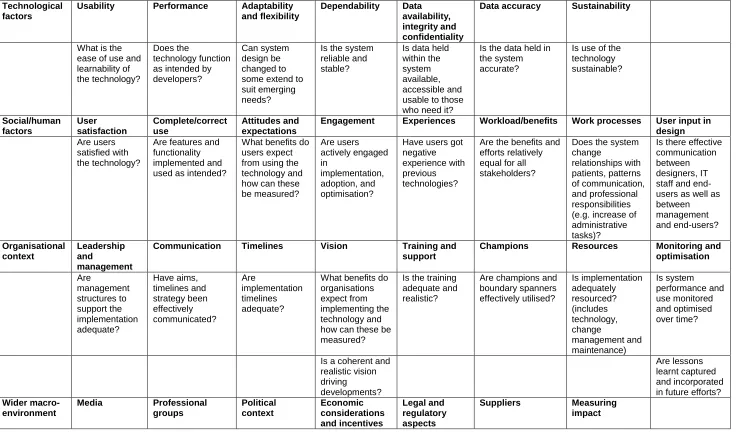
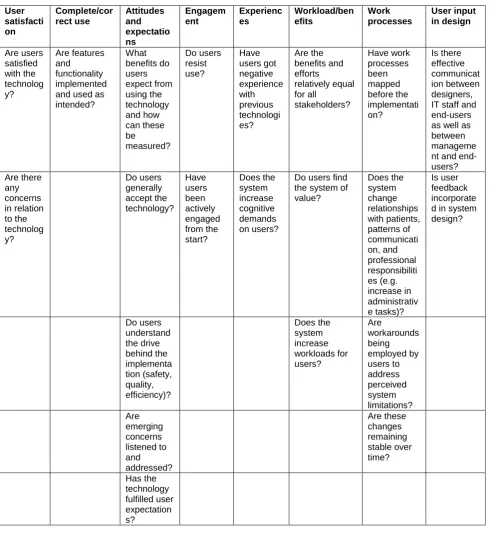
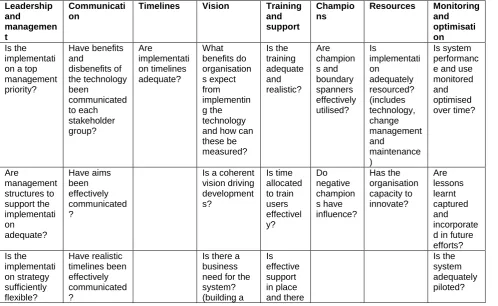
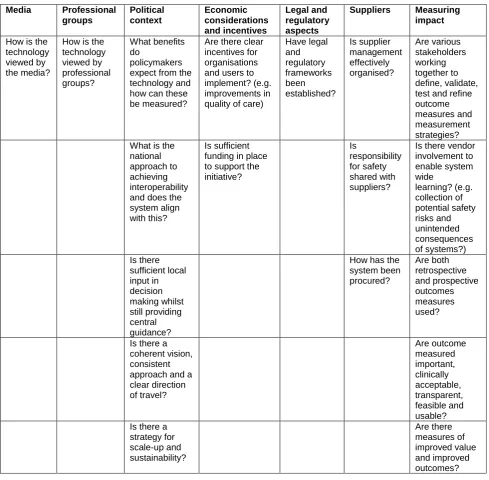
The evaluation framework is shown in Table 1 (we also provide an extended version in Appendix 4). It was developed iteratively based on emerging findings and the existing literature. We updated our previous work exploring the implementation and adoption of health information systems records as a basis for developing the initial version of the evaluation framework.(27) In doing so, we identified technological, social/human, organisational and wider macro/environmental dimensions, which we integrated with more recent literature (Figure 1). Each of the overall headings in the evaluation framework includes a range of more detailed evaluation questions that we have iteratively built on during the conduct of this evaluation.
11
Table 1: Evaluation framework for the National Decision Support Roadmap
Technological factors
Usability Performance Adaptability and flexibility
Dependability Data availability, integrity and confidentiality
Data accuracy Sustainability
What is the ease of use and learnability of the technology?
Does the
technology function as intended by developers?
Can system design be changed to some extend to suit emerging needs?
Is the system reliable and stable?
Is data held within the system available, accessible and usable to those who need it?
Is the data held in the system accurate?
Is use of the technology sustainable? Social/human factors User satisfaction Complete/correct use Attitudes and expectations
Engagement Experiences Workload/benefits Work processes User input in design Are users
satisfied with the technology?
Are features and functionality implemented and used as intended?
What benefits do users expect from using the technology and how can these be measured? Are users actively engaged in implementation, adoption, and optimisation?
Have users got negative experience with previous technologies?
Are the benefits and efforts relatively equal for all stakeholders?
Does the system change relationships with patients, patterns of communication, and professional responsibilities (e.g. increase of administrative tasks)?
Is there effective communication between designers, IT staff and end-users as well as between management and end-users? Organisational context Leadership and management
Communication Timelines Vision Training and support
Champions Resources Monitoring and optimisation Are management structures to support the implementation adequate? Have aims, timelines and strategy been effectively communicated? Are implementation timelines adequate?
What benefits do organisations expect from implementing the technology and how can these be measured?
Is the training adequate and realistic?
Are champions and boundary spanners effectively utilised? Is implementation adequately resourced? (includes technology, change management and maintenance) Is system performance and use monitored and optimised over time?
Is a coherent and realistic vision driving developments? Are lessons learnt captured and incorporated in future efforts? Wider macro-environment Media Professional groups Political context Economic considerations and incentives Legal and regulatory aspects
12 How is the
technology viewed by the media?
How is the technology viewed by professional groups?
What benefits do policymakers expect from the technology and how can these be measured?
Are there clear incentives for organisations and users to implement? (e.g. improvements in quality of care)
Have legal and regulatory frameworks been established?
Is supplier management effectively organised?
Are various stakeholders working together to define, validate, test and refine outcome measures and measurement strategies? What is the
national approach to achieving interoperability and does the system align with this?
Is sufficient funding in place to support the initiative?
Are outcome measured important, clinically acceptable, transparent, feasible and usable? Is there a
13
Results
We conducted 30 one-to-one interviews and observed eight workshops between 10th of May 2018 and 30th of October 2018. Participants interviewed are summarised in Table 2.
Table 2: High-level interview participants
Participant number Gender Background
1 Male Primary care
2 Female Social care
3 Male Patient
4 Male Performance and delivery
5 Female Prescribing
6 Male Public health
7 Female Planning and quality
8 Male Doctor
9 Male Developer
10 Female Social services
11 Female Public health
12 Female Nursing
13 Male Doctor
14 Male Doctor
15 Male Consultant
16 Male GP
17 Female Pharmacist
18 Male GP
19 Female Pharmacist
20 Male GP
21 Male GP
22 Male Pharmacist
23 Male GP
24 Female Pharmacist
25 Male GP
26 Male GP
27 Female GP
28 Male GP
29 Female GP
30 Male Pharmacist
The following paragraphs will summarise our emerging findings. We have identified four key themes which we explore in detail with illustrative quotes:
Widespread recognition of the potential value of DSS
Leadership and strategy to implement DSS nationally
The important role of usability and interoperability
Potential of unintended consequences emerging from implementations
Widespread recognition of the potential value of DSS
All interviewees and workshop attendees agreed that, in line with existing empirical evidence, the strategic decision to implement DSS in NHS Scotland was the right way forward.
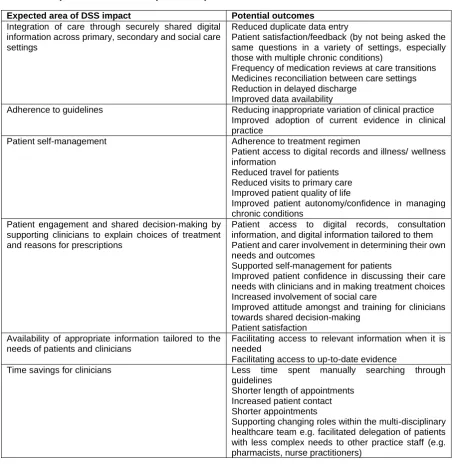
14 Participants expected DSS to have a positive impact on safety, quality and efficiency. Areas and potential outcomes mentioned most frequently are summarised in Table 3.
Table 3: Expected areas of impact and potential outcomes of DSS
Expected area of DSS impact Potential outcomes Integration of care through securely shared digital
information across primary, secondary and social care settings
Reduced duplicate data entry
Patient satisfaction/feedback (by not being asked the same questions in a variety of settings, especially those with multiple chronic conditions)
Frequency of medication reviews at care transitions Medicines reconciliation between care settings Reduction in delayed discharge
Improved data availability
Adherence to guidelines Reducing inappropriate variation of clinical practice Improved adoption of current evidence in clinical practice
Patient self-management Adherence to treatment regimen
Patient access to digital records and illness/ wellness information
Reduced travel for patients Reduced visits to primary care Improved patient quality of life
Improved patient autonomy/confidence in managing chronic conditions
Patient engagement and shared decision-making by supporting clinicians to explain choices of treatment and reasons for prescriptions
Patient access to digital records, consultation information, and digital information tailored to them Patient and carer involvement in determining their own needs and outcomes
Supported self-management for patients
Improved patient confidence in discussing their care needs with clinicians and in making treatment choices Increased involvement of social care
Improved attitude amongst and training for clinicians towards shared decision-making
Patient satisfaction Availability of appropriate information tailored to the
needs of patients and clinicians
Facilitating access to relevant information when it is needed
Facilitating access to up-to-date evidence
Time savings for clinicians Less time spent manually searching through guidelines
Shorter length of appointments Increased patient contact Shorter appointments
Supporting changing roles within the multi-disciplinary healthcare team e.g. facilitated delegation of patients with less complex needs to other practice staff (e.g. pharmacists, nurse practitioners)
The expected areas of impact frequently aligned with important policy drivers around guideline implementation and Realistic Medicine.(28) For example, stakeholders talked of giving patients more power to decide on their own treatment. A typical response was:
“…the drive with the polypharmacy guideline and realistic medicine [will] help doctors to have a better understanding of the risks and benefits of treatments that they’re offering, to try and help patients have and then, as a knock-on effect, patients have a better understanding of risks and benefits of a treatment that is being considered...” Participant 22, Male, Tayside Pharmacist
15 dependent on the DSS application in question, and some interviewees were not entirely clear which functionality was included in the Roadmap.
“I come across decision support in various different guises. Or for what I would consider decision support.” Participant 13, Male, Clinical Lead
Despite the overall positive attitudes amongst participants, we also observed concerns that expectations may not necessarily match system functionality. For example, many clinicians discussed a more general problem of information overload and the difficulty of navigating different sources of information. One GP stated that she often had open 10 tabs on her computer at a time, whilst another mentioned going in and out of different systems, and several stated carrying folders of paper-based records. Participants therefore highlighted evaluation of benefits as a priority area.
Leadership and strategy to implement DSS nationally
Whilst no participant expressed a negative opinion on the concept of DSS, early and ongoing engagement with clinicians and other healthcare staff was viewed as crucial during system development and implementation. At one workshop, a male GP emphasised that his comments should not be seen as negative but “in the spirt of improving the system”. Typical comments in relation Cambio were:
“So their forward travel seems to be in the right direction providing that…the final product will work as it’s supposed to work…we’ve got 10 minutes. That has a big impact on your time whereas if you’ve got something popping up that can do these things then it should work far more efficiently.” Participant 20, Female, GP, Tayside
Ongoing stakeholder engagement was also stated to be necessary to raise the profile of the Roadmap amongst the wider healthcare workforce.
“The actual workshop…was a good step in the right direction, but I think for people who aren’t aware of these things, not just GPs but pharmacists, nursing and other kind of clinicians, I think a wee bit of work needs to be done to raise its profile. I really enjoyed looking at the screens and saw great potential.” Participant 27, Female, GP, Glasgow
We also observed a tension between a perceived lack of strong national level leadership (which was considered to be needed for the successful implementation of the strategy) and staff changes within the eHealth Directorate at Scottish Government. Several interviewees stated that these changes caused challenges surrounding strategic priorities and direction of travel.
“…my preference is…we have a sense of where we’re going to prioritise the initial investment and that that is all coordinated from the one position, rather than from a variety of different piecemeal pockets and funded…it needs the central coordinating function.” Participant 13, Male, Clinical Lead
Whilst calling for central leadership and direction, participants also acknowledged that a variety of different projects had to be managed under a portfolio-based approach. Here, there appeared to be a tension between the perceived need to have a firm direction of travel beyond Cambio implementation and the multitude of ongoing DSS initiatives across settings (including primary, secondary and social care). Whilst leadership was seen to be required to ensure alignment of initiatives and avoid silos, there was also a perceived need to recognise that strategy was sufficiently agile to cope with changing demands and stakeholder experiences.
16 the now. But we know that the world is changing…as technology’s concerned it’s changing really, really quickly. So, we need to be preparing ourselves for that next leap, as well.” Participant 12, Female, Policy
System usability and interoperability
The Digital Health and Care Strategy provides a mandate for integration of digital health systems in Scotland and Cambio (which adheres to OpenEHR and Fast Healthcare Interoperability Resources (FHIR) open standards) fits in well with this.(21) However, it did at the time of our work not integrate with EMIS and Vision, primary care systems procured centrally in Scotland. Participants expressed hope that this integration would be possible in the future. In the interim, developers had created temporary interfaces.
“I think it will have to [integrate], but how we get to that point, I'm not sure. So we do have a contractual requirement for [developer] to deliver, and interact with our clinical decision support systems. So any supplier would, notionally, at least, have to be able to do that.” Participant 14, Male, Clinical Lead
“What we do now is we are using a demonstrator environment with the look and feel exactly like it will look in reality, but for the real integration we will most likely use a third-party developer in the first phase.” Participant 9, Male, Developer
System integration was also perceived to be crucial from a usability viewpoint and clinical interviewees expressed strong concerns that Cambio may not effectively integrate with other primary and secondary care systems (as well as their existing inbuilt CDS). This lack of integration, it was feared, may lead to slowing down of existing systems and parallel data entry (leading to duplication and data inconsistency).
“We feel like we’ve got lots of systems that work separately. Now, they don’t talk to each other...so you end up having to put data into more than one system…so if they could talk to each other a bit better I think that would help.” Participant 25, Male, Consultant, Tayside
Another perceived factor potentially affecting end-user usability was perceived to be the degree of local customisation needed to tailor the number of pop-ups to local needs and avoid alert fatigue. Clinicians also mentioned that they were already presented with pop-ups in their own GP systems and that alerts from various sources needed to be aligned and thresholds for alerting set carefully in close consultation with them to ensure usability.
“Pop-ups come up from all different places, so there’s the notes that practices put on the systems to try and remind you to do something…you’re potentially going to throw another set of pop-ups in there to have your clinical decision support…” Participant 21, Male, GP, Glasgow
Potential of unintended consequences emerging from implementations
As clinicians had only seen pilot versions of the software in test environments and some had previous negative experiences of using new digital systems, there were uncertainties around the use of Cambio in real-life settings. For example, clinicians mentioned the risk of duplication of work and increased workloads despite their desire for more time with patients.
“… to introduce that amount of potentially new information into a consultation that’s very, very tight time wise is always going to be a challenge.” Participant 21, Male, GP, Glasgow
17 “It’s useful to see amount of information available, but it could lead you down the wrong pathway and be in charge rather than the doctor. They [GPs] have the background knowledge of the patient and want to use their expertise.” Glasgow Workshop, Table Feedback
Several stakeholders in the workshops and in interviews also highlighted some potential tensions between decisions of clinicians and patients, with GPs generally being more risk averse than patients. Some therefore argued that DSS should be patient-informed and not patient-led, with the ultimate decision of treatment being in the hands of the clinician.
“Patients take more risks than doctors but the clinician is responsible for them it should be patient-informed but not patient-led.” Participant 20, Male, GP, Tayside
Another concern expressed at workshops and in interviews was that, for clinicians, the Realistic Medicine policy may be in direct contrast to other policy drivers such as efficiency and patient outcomes. GPs described scenarios where patients might choose minimal intervention and therefore have a worse outcome.
“You’re trying to reduce variability for drugs etc. but this can go against Realistic Medicine where you are giving personal choice. How can success be measured?” Glasgow Workshop Table Feedback
Discussion
Summary of key findings
Overall, we observed a strong sense of support from all stakeholders for the Cambio platform model and capabilities as well as associated plans to roll it out across NHS Scotland. Its development and implementation is well-aligned with existing strategic priorities and has traction with national clinical leads.
As this was a first-of-type and as Cambio, at the time of our evaluation, only existed in pilot settings, there were also some tensions.
Key observations in our work included:
Leadership: There was a perceived tension between strong national level leadership (which was perceived to be needed for the successful implementation of the strategy) and the ongoing changes at Scottish Government and staff changes within the eHealth Directorate.
Strategy: Participants highlighted that the perceived need to have a firm direction of travel beyond Cambio implementation may be at odds with the multitude of ongoing DSS initiatives across settings and including a multitude of different systems in various settings (e.g. Hospital Electronic Prescribing and Medicines Administration (HEPMA) in some hospitals, patient-facing apps).
Benefits realisation: Policymakers highlighted the need for the Roadmap to align to existing national strategic priorities surrounding value and efficiency. Whilst clinical leads did not discount the importance of these, they did highlight emerging local priorities as being an important driver of adoption behaviour.
18
Unintended consequences: Although clinicians stated that Cambio had the potential to save time allowing them to focus on more complicated patients, there were some concerns around duplication of work and increased workloads.
Strengths and limitations
This evaluation offered important opportunities for realising true impact through ongoing formative feedback to policymakers. In doing so, our written progress reports have informed a business case submitted to Scottish Government in October 2018 for further funding of the Cambio platform beyond pilot sites. Our methods also allowed to adjust flexibly to changing policy landscapes and emerging priorities and contributed to building clinical- and policy-level engagement.
The formative real-time nature of this work has, however also posed some challenges for all involved. Changes in policy priorities and emerging findings necessitated flexible changes to our initially planned methodology over the course of our work in order to ensure that it remained relevant. For example, although we had initially planned to work with settings that had implemented systems as part of the Roadmap, only some functionality existed at the time we began our work.
Moreover, our funders also acted as gatekeepers to participants and workshops. The sample may therefore not be representative of wider stakeholder groups surrounding the DSS landscape. As a result, our findings are likely to provide an incomplete picture of reality and should be interpreted with caution, despite (or precisely because of) fulfilling their purpose of delivering political impact.
It is further important to recognise that this work presents only a snapshot of an early evaluation of the beginnings of a national programme. This calls for more in-depth and longitudinal work to assess ongoing developments over time.(29) For example, it was in some instances not clear to us if clinicians and policy makers really understood the implications of using Cambio in the “real world” as the workshop demonstrations were based on an idealised scenario. Real challenges may only come out when the system is used in practice.
Integration of findings with the current literature
Emerging issues in this work reflect tensions present in many large scale digital change initiatives in healthcare settings. Whilst the rationale for change and the value proposition of DSS was clear to all participants in this work, the leadership and governance model going forward was an important concern. One common theme was the agreement that there needed to be a mixture between “bottom-up” and “top-down” approaches to implementation, ensuring a degree of central leadership and direction whilst also allowing for local input in decision making.(30) This balance is crucial, as many existing “failed” change initiatives such as the National Programme for Information Technology (NPfIT) have illustrated that national “top-down” approaches alone are insufficient to realise the anticipated benefits. In the NPfIT, “top-down” strategies were superseded by locally driven strategies and ultimately changed to a more “middle-out” model, where national strategic direction aligned more closely with local strategy.(31)
Both clinical and policy stakeholders in our sample had a strong desire for systems to save time and improve safety, quality and efficiency of care. Time savings, however, stand in stark contrast to the often long and painful implementation experiences in healthcare settings where benefits of digital systems can take a long time to materialise, and where benefits are often not visible to those who take the additional burden associated with their implementation.(32,33) This long pathway to benefits is partly due to social dimensions surrounding the technology, including for example adverse impacts on work practices and increased workloads, the potential introduction of new errors, adverse impacts on time spent with patients, and unrealistic stakeholder attitudes/expectations.(34-36)
19 specifically usability and integration with existing workflows. Issues with system usability adversely affecting adoption patterns feature consistently in the empirical literature. In particular, the issue of alert fatigue in CDS and information overload amongst clinicians remains an unresolved area internationally.(37,38) There is a degree of trade-off between the number of alerts and the attention of clinicians, which has led some to advocate the use of a limited user-determined number of carefully designed pop-ups.(39)
An increasing number of interfaces can adversely impact system performance and usability. They can also lead to the introduction of new errors.(40,41) We have shown this in the context of hospital electronic prescribing systems, where we observed that integration and interfacing problems in some cases inhibited effective information transfer, leading to duplicate data entry and adverse effects on the availability of information.(40,41)
Policy recommendations and implications for practice
Recognising the early stages of this evaluation, our work has some preliminary implications for policy to ensure long-term sustainable delivery of the Roadmap. Most importantly, sufficient time and resources need to be made available to implement Cambio and manage its optimisation over time. This will need to include plans for knowledge management with iterative stages involved in monitoring systems over time.(17)
There is a need to have overall national ownership to support the implementation of the Roadmap within the eHealth Directorate potentially supported by NHS National Services Scotland as the delivery partner, whilst the implementation of individual applications needs to be devolved. This work also needs to be closely aligned with the development of the National Digital Platform as part of the wider HII and the wider Scottish Digital Health and Care Strategy to facilitate alignment with national strategic priorities.(4,18,19) Should this work not be supported going forward, there is a danger that stakeholders will be disillusioned and this may contribute to negative narratives surrounding national digital health initiatives in NHS Scotland.
As technology landscapes and needs are constantly changing, future iterations of the Roadmap have to be sufficiently agile. Revisiting the original document at pre-defined time points informed by ongoing evaluation and stakeholder engagement is likely to facilitate these developments. This should also be accompanied by ongoing communications about the current strategy and associated timescales, stakeholder engagement opportunities and resulting actions, as well as “hands-on” experience of system use.
In order to promote usability, there is a need to negotiate seamless integration with existing primary care systems, as temporary interfaces can adversely impact on user experiences. The negotiation with primary care system suppliers and promoting seamless integration through effective user interfaces is therefore key going forward. At the time of writing, Cambio does not integrate with the three re-procured GP systems that have now been confirmed for use in primary care from 2020 onwards, but agreement with suppliers to implement this integration has been reached.
There are further a number of potential ways to tackle tensions between local and national dynamics. We recommend the following:
Developing a strategy allowing for a degree of local customisation of systems and managed tailoring of alerts. The devolving of responsibility to local level needs to be tempered by the legal requirement to comply with the Medical Device Regulations for DSS that are classified as medical devices.
20
Local organisations need to recognise the value of systems – a limited number of pilots that are carefully evaluated will help to engage other organisations yet to implement and will help to identify and mitigate emerging risks early.
There is a need to develop a nuanced benefits realisation framework that combines smaller and locally relevant measures determined by implementing sites with national progress measures.
Promoting informal knowledge flows to create a national digital learning economy surrounding Cambio will be an important accelerator of learning going forward. This may consist of for instance creating national risk registers or sharing of implementation and optimisation experiences through formal and informal channels.
As this evaluation has focused on the very early stages of piloting, our findings are preliminary. We strongly recommend ongoing formative evaluation of DSS implementation through longitudinal work to ensure effective alignment with wider strategy, and continuous stakeholder engagement. This work needs to include a designated strand exploring evolving policy and supplier landscapes and market management. Our evaluation framework developed as part of this work, is designed to guide implementers and evaluators through this journey (see Appendix).
Conclusions
21
Appendix 1 – Original study protocol
WP1: Creation of an evaluation framework for decision support solutions in Scotland
This WP will be concerned with developing an initial evaluation framework that will then be applied and refined in the subsequent WPs. WP1 will consist of two components:
WP1a - Exploring the relevant academic and grey literature and undertaking interviews with key topic experts: This will involve a review of the existing literature to scope existing national and international DSS developments, outcome measures, and evaluation frameworks. It will build on previous systematic reviews we have been involved in on EHRs, CPOE, DSS, telehealth, and consumer informatics tools.(1) Approximately five targeted qualitative interviews with key international experts will complement this. We have previously used this approach and found it to be very helpful in adding depth of insight.(2) We will begin by consulting individuals who we already have established relationships with and who are international leaders in the field of DSS and wearables (Prof Robert Greenes from Arizona State University and Prof Karandeep Singh from the University of Michigan).(3) We will draw on the DSS knowledge management lifecycle as an initial structure for the first iteration of the evaluation framework.
WP1b - Assessing to what extend the developed framework is applicable to Scotland and exploring existing barriers/facilitators to its application: In order to refine the framework developed in WP1a and explore potential barriers to and facilitators for its application, we will conduct approximately 10-15 interviews with selected representatives of different stakeholder groups including health and social care providers from Demonstrator Projects of the Roadmap, policymakers, system vendors (including app developers, TrakCare, Cambio Healthcare Systems), and healthcare managers. Participants will be snowball sampled in collaboration with the funders, through our extensive existing networks, the Scottish Government and Healthcare Improvement Scotland. We will attempt to ensure maximum variation in terms of background (clinical, managerial, strategic) and geographical location. Discussions will be structured around the evaluation framework components identified in WP1a including evaluation methodology, definitions of success, quantitative indicators and risk management. They will be digitally recorded and transcribed verbatim for analysis. The number of interviews will be determined through the principle of thematic saturation, that is we will stop collecting new data when no significantly new themes emerge in the concurrent analysis. Thematic analysis will lead to the creation of a refined evaluation framework.
Deliverables
Completion of a draft evaluation framework for DSS in Scotland (there may be more than one suitable framework version tailored to different health and social care settings)
Completion of alignment of the framework with the higher-level evaluation of the Primary Care Strategy
WP2: Application and piloting of the framework
The prototype framework developed in WP1 will then be refined throughout WP2 through identifying barriers and potential strategies to overcome these to maximise successful routine application. We will initially pilot and refine quantitative indicators for impact assessments on dummy datasets, in order to minimise disruption to NHS services and explore potentially adverse consequences early. We have access to asthma related data using the Optimum Patient Care Research Database (OPCRD) free of charge. This has data on six million patients and is available in the University safe haven following development of an Anonymised Data Ethics & Protocol Transparency Committee (ADEPT) protocol.
22 (i.e. DSS functionality delivered through EMIS-PCS, mobile apps, rule-based platforms, web page access linked to TrakCare). These settings will be conceptualised as case studies and purposefully sampled according to type outlined in the Roadmap (increased shared decision-making, self-management and enablement, personalised care provided closer to home, focus on quality and reducing unwarranted variation).(4)
Sampling: Within each case, we will use purposive sampling to identify a diverse range of stakeholders including users of the technology (health and care staff, patients, citizens), implementers (managers), and system vendors (those providing individual systems, hardware, as well as infrastructures, including app developers, TrakCare, Cambio Healthcare Systems, EMIS Health).
Data collection: Data collection at each site is anticipated to consist of semi-structured in-depth one-to-one or (if necessary due to distance or more convenient for interviewees) telephone interviews (approximately six per case study site) to capture perspectives on different components of the evaluation framework. We have considerable experience with conducting such case studies.(28,29) Interviews will be conducted with topic guides exploring views on usability, integration, expected and experienced benefits, early experiences, lessons learnt, safety threats, and perceived barriers/facilitators. They will, with permission, be recorded and transcribed verbatim together with accompanying field notes.
Data generation will end when saturation has been reached and no new relevant data are being collected. The above described numbers of interviews are based on our previous experience and should therefore be seen as indicative; they will be adjusted as necessary.
Analysis: Qualitative data collection and analysis will be iterative, allowing emerging themes to be explored further and disconfirming evidence to be sought. Thematic analysis will allow us to access a diverse range of settings/uses, interviewees/perspectives, technologies and contexts. Detailed within case analysis will be followed by analysis across cases to identify over-arching themes, similarities and differences between cases, and implications for revising the evaluation framework. Our findings will feed into Phase 3 of the Roadmap (i.e. the national roll-out of the decision support infrastructure).
Deliverables
Production of quantitative indicators for the framework
Completion of framework application to selected settings and report on impact of the decision support developments delivered through the Decision Support Roadmap
Production of version two of the framework based on this
WP3: Facilitating continuous evaluation and quality improvement of decision support
solutions and their implementation
This WP will explore the potential applicability of the framework beyond case study settings and inform its roll-out nationally (Phase 3 of the Roadmap).
Design: We will conduct a multi-disciplinary round-table discussion in focus group format with a designated facilitator to explore different perspectives and dynamics. We have significant experience with this format.(5-7)
23
Data collection: The preliminary evaluation framework will provide structure to the discussion, focusing on placing it within the wider socio-political context and on identifying mechanisms for continuous refinement structures (including services and resourcing required to support evaluation, governance structures and processes, how to address barriers and facilitators, and potential future developments e.g. wearables). The group discussion will be audio-recorded and transcribed. In addition, we will take field notes relating to perceived dynamics and interactions between participants.
Data analysis: Transcribed data will be integrated (triangulated) with findings from WPs 1 and 2. This will involve combining findings, identifying common themes, and consolidating these in the refined evaluation framework and implementation roadmap; as well as examining areas of convergence and divergence. It will also involve integrating findings with the theoretical frameworks outlined above. Results will be fed back to and discussed with Scottish Government and NHS Scotland leads in eHealth.
Deliverables
Production of the third iteration of the framework
Release recommendations on the service model for application of the evaluation framework to continuously monitor and maximise impact of decision support
References
1. Black AD, Car J, Pagliari C, Anandan C, Cresswell K, Bokun T, McKinstry B, Procter R, Majeed A, Sheikh A. The impact of eHealth on the quality and safety of health care: a systematic overview. PLoS medicine. 2011 Jan 18;8(1):e1000387.
2. Davidson EM, Liu JJ, Bhopal RA, White M, Johnson MR, Netto G, Wabnitz C, Sheikh A. Behavior change interventions to improve the health of racial and ethnic minority populations: a toolkit of adaptation approaches. The Milbank Quarterly. 2013 Dec 1;91(4):811-51.
3. Key Advances in Clinical Informatics: Transforming Health Care through Health Information Technology. A. Sheikh, K. Cresswell, A. Wright, D. Bates (eds.). Elsevier.
4. Crowe S, Cresswell K, Robertson A, Huby G, Avery A, Sheikh A. The case study approach. BMC medical research methodology. 2011 Jun 27;11(1):100.
5. Cresswell KM, Slee A, Coleman J, et al. Qualitative analysis of round-table discussions on the business case and procurement challenges for hospital electronic prescribing systems. PLoS ONE 2013;8(11):e79394.
6. Cresswell KM, Slee A, Coleman J, Williams R, Bates DW, Sheikh A. Qualitative analysis of round-table discussions on the business case and procurement challenges for hospital electronic prescribing systems. PLoS One. 2013 Nov 19;8(11):e79394.
24
Appendix 2 – Investigating the use of data-driven artificial intelligence
in health and social care decision support systems: a systematic
review protocol
Background
Increasing focus on health information technology (HIT) to improve quality, safety and efficiency of care
Decision support systems (DSS) have been shown to impact on improving practitioner performance
Significant potential of DSS linked to artificial intelligence (AI) and machine learning (ML) in this respect but these are new technologies and their impact and associated challenges are to date uncertain
Definitions
AI can be defined as a technology or system that can emulate human performance typically by learning, coming to conclusions, appearing to understand complex content, engaging in natural dialogues with people, enhancing human cognitive performance or replacing people on the execution of non-routine tasks
AI technologies can be divided into two broad categories:
o Data-driven AI: typically these technologies are driven by analysis of patterns and models emerging from very large datasets (‘Big Data’)
o Knowledge-driven AI: takes the form of expert systems – software that is programmed to provide advice. These technologies are driven by logical reasoning through an existing knowledge base – often from research or guidance where data has already been synthesised and analysed.
In reality there is some overlap between the two types of technologies, as the existing research knowledge base can feed into ML technologies, and algorithms derived from other types of AI can feed into expert systems.
Overall aim
The overall aim of this work is to identify the existing evidence base surrounding the effectiveness of data-driven AI to support decision making.
Research questions
What types of data-driven AI are used to support decision-making in health and social care settings?
What is the evidence surrounding effectiveness of AI to support decision-making in improving the quality, safety and efficiency of care?
P (population) Health and social care users (patients and citizens), healthcare professionals
I (intervention) AI used to support decision making
C (comparator(s)) Non-AI based approaches O (outcomes) Practitioner performance
25
METHODS AND ANALYSIS Design
We will undertake a systematic review of published empirical research.
Eligibility criteria
We will include studies in health and social care settings published in English that focus on:
ML, natural-language processing (NLP) and deep learning
the use of systems for clinical, managerial and self-management decision-making
The following study designs will be potentially eligible for inclusion: Randomised controlled trials (RCTs)
Studies will be excluded if they:
Fall outside our scope of interest, for example if they:
o Evaluate technology that is not commonly associated with technologies that are driven by analysis of patterns and models emerging from very large datasets
o Focus on the implementation of HIT in developing countries due to different contextual circumstances
o Include settings that are outside health and social care
Outcome measures Primary outcomes
o Impact on practitioner performance
o Impact on patient outcomes Secondary outcomes
o Methods used
o Intervention/technology
Search methods
We will search the published empirical literature from 2013 until 2018 for work investigating AI to support decision making. We will search the following major biomedical databases: MEDLINE and EMBASE.
We will also search the following specialist databases and conference repositories, as much work in this area in not published in biomedical sources: IEEE Xplore, Annual Conference on Neural Information Processing Systems (NIPS), International Conference on Machine Learning (ICML), International Conference on Artificial Intelligence and Statistics (AISTATS)
Specific search strategies will be employed for each database.
Search terms
We will divide search terms into three groups:
Technology AI-related including: ML, AI, deep-learning, algorithm, automated, data-driven, computer-assisted, expert-systems, neural networks, support vector machines, decision trees, logistic regression, statistical mapping, statistical learning
Decision support related: decision support, clinical support, computerised physician order entry
26 Terms within groups will be combined using the Boolean operator OR and groups were combined using the Boolean operator AND.
Study selection
Titles and abstracts of studies identified from the searches will be checked by two investigators. The full text of all retrieved potentially eligible studies will be independently assessed against the above criteria. The investigators will decide which of the studies satisfy the inclusion criteria and the methodological quality of eligible studies will be recorded (discussed below). Any disagreements will be resolved by discussion, with referral to a third member of the research team, if necessary.
Quality assessment and analysis
Formal quality assessment of eligible studies will be independently undertaken by two reviewers using the methods detailed in section eight of the Cochrane Handbook for Systematic Reviews of Interventions. Disagreements will be resolved through discussion, with arbitration by a third reviewer if agreement cannot be reached.
Data extraction
Data will be abstracted onto a customised data extraction sheet by two independent reviewers. Any disagreements will be resolved through discussion, with arbitration by a third reviewer if necessary. Variables to be extracted will include: author and year; title of the study; country of origin; health/care setting; technology application(s); impact on practitioner performance; impact on patient outcomes; estimates of effectiveness; barriers and facilitators identified. Key findings from each study will be summarised and presented in tables.
Data analysis
A quantitative synthesis is likely to prove inappropriate due to the heterogeneity of technologies and care contexts. Data will therefore be descriptively summarised and narratively synthesised. We will follow four main steps in conducting an interpretive synthesis of our findings: (1) noting the range of functions and uses of existing systems; (2) noting the various methods used to measure impact and their appropriateness; and (3) summarising evidence of effectiveness.
ETHICS AND DISSEMINATION Ethical issues
Formal ethical approval and informed consent is not required, as this work does not draw on primary data from human participants.
Publication plan
27
Appendix 3 – Topic guides and observation recording sheet
Sample topic guide for interviews with policymakers
Background and role of intervieweeWhat is your understanding of what DSS is?
Where does decision support fit into the services you are delivering?
Views on DSS systems: expected benefits/impact of and drivers for DSS – which domains are of particular policy interest
Prompts:
Self-management
Shared decision-making
Strengthening prevention and improving public health
Reduction of unwarranted variation and harm
Collaboration and coordination of care across sectors
Maximising efficiency by reducing over-use of services.
What might enable the realisation of these benefits and over what time frame
Views on how impact can be achieved within and across settings and how it can be measured Potential challenges implementing/using proposed solutions as well as ways to address these and ensure sustainability
What are potential unintended consequences and how can these be minimised/mitigated? How would you like/expect the DSS landscape to evolve over the medium to longer-term? How do you think the future of DSS could/should look like?
Definitions of “success” from various perspectives
In your area what would make it worthwhile to fund DSS work going forward? Prompts:
Which areas? Do any of the current early adopter /proof of concept projects seems especially relevant to your needs?
Economic factors
Any technical/technology related factors?
Expected challenges? Anything else?
Sample topic guide for interviews with clinical leads
The interviews will follow user groups organised by Scottish Government (a few days after the demo to let interviewees digest the content). Some interviewees may not have been to the system demos – these will be shown a short demo by the interviewer before the interview.
Phase 0 - background
28
o Informatics literacy and skills
Phase 1 – wider impact of Decision Support Systems, what Scottish Government hopes Decision Support Systems will achieve more generally – what do they think?
o Expected impact/benefits (prompt: align with outcomes identified by Scottish Government in WP1)
o How can these be measured
o Can use Diabetes as a prompt: The system was associated with improved efficiency in working practices, but at the same time has resulted in a dramatic improvement in adherence to national guidelines – patients were 3-4 times more likely to receive appropriate screening for diabetes-related complications.
Phase 2 – exploring reactions to the system demo
Experience of using Cambio and initial impressions of use – in relation to clinical scenarios
o Positive features
o Expected impact/benefits and how these could be measured
o Initial and expected problems and concerns as well as ways to address these and ensure sustainability
o Changes in work practices (new practices, workarounds, impact on the way the team functions and on patients/carers) and perceptions surrounding impact on skills and knowledge (and resulting attitudes and behaviours)
o Changes that the user would like to see happening in the system (prompt: extra functionality)
o Perceived/anticipated consequences of the system on the quality of care, information flow, patient experience, roles and practices of (health and care) professionals, the organisation, the local community, efficiency? Data use?
o Training received and ongoing support that may be needed
Phase 3 - What further development of the Decision Support Systems/wider system are needed to help realise more of theseScottish Government goals?
Views on how it will integrate with existing local and national systems
Views on multi-channel, vendor neutral nature of system
Thoughts on the national and local implementation strategy
What will “success” look like to you?
Sample observation schedule
At the start of the user group, during the welcome and introduction slot, the researcher will be introduced to the group by the meeting chair. The facilitator will reiterate that participants can withdraw their consent at any time. There will also be dedicated time to ask the researcher questions and participants will be encouraged to approach the researcher directly, should they have any questions. During the introduction, every participant will introduce themselves so that the researcher can locate those who have consented to observation and note the locations of those to be omitted.
29 will not be recorded and the job title of those present will only be recorded if it is volunteered at the beginning of the meeting.
Should there be any late additions, these will be approached by the researcher directly in order to re-state their role.
During observations of a user group workshop, the researcher will focus on observing participants and the way information is shared regarding facilitators and barriers to implementing and evaluating Decision Support in practice.
The researcher will not record any part of the discussion in which a non-participant is speaking. The researcher will aim at recording/noting descriptive elements including the following:
• Description of the layout and the way a facilitator uses the space;
• Description of the actors – the gender and job title (the researcher will not record names) • Insights to process – The way a system was conceived, implemented and used
• Evaluation pathways and methodologies
• Insights to outcome – practice/skills, workflow, behaviour/attitudes • Reactions of actors to specific questions
• Feelings – researcher’s own impressions/feelings in relation to the observation
30
Appendix 4 – Extended version of the framework and integration with
the literature
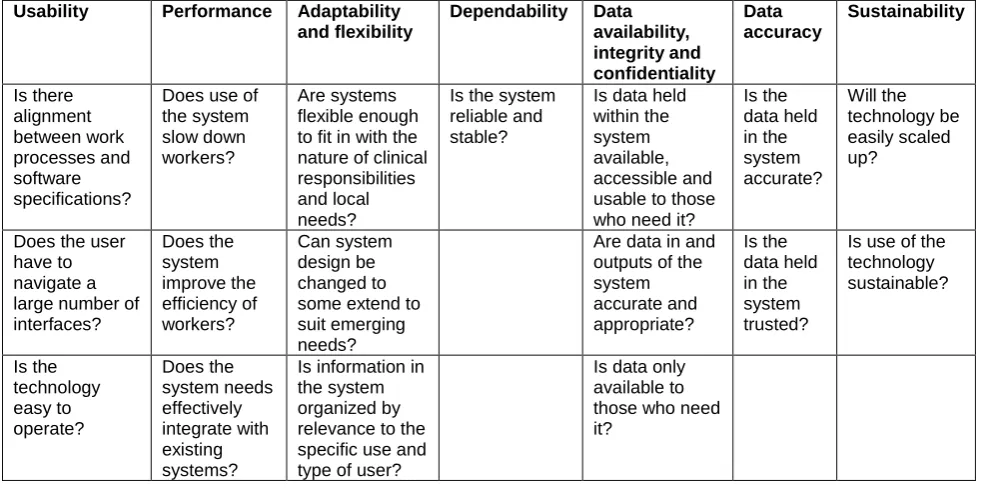
[image:30.595.53.549.164.408.2]Technological factors
Table 1: Technological factors impacting implementation, adoption and optimisation based on the literature
Usability Performance Adaptability and flexibility
Dependability Data availability, integrity and confidentiality Data accuracy Sustainability Is there alignment between work processes and software specifications?
Does use of the system slow down workers?
Are systems flexible enough to fit in with the nature of clinical responsibilities and local needs?
Is the system reliable and stable?
Is data held within the system available, accessible and usable to those who need it?
Is the data held in the system accurate? Will the technology be easily scaled up?
Does the user have to navigate a large number of interfaces? Does the system improve the efficiency of workers? Can system design be changed to some extend to suit emerging needs?
Are data in and outputs of the system accurate and appropriate? Is the data held in the system trusted?
Is use of the technology sustainable? Is the technology easy to operate? Does the system needs effectively integrate with existing systems?
Is information in the system organized by relevance to the specific use and type of user?
Is data only available to those who need it?
References
Shaw J, Shaw S, Wherton J, Hughes G, Greenhalgh T. Studying scale-up and spread as social practice: theoretical introduction and empirical case study. Journal of medical Internet research. 2017 Jul;19(7).
Sittig DF, Ash JS, Singh H. The SAFER guides: empowering organizations to improve the safety and effectiveness of electronic health records. Am J Manag Care 2014;20:418–23.
Greenhalgh T, Stramer K, Bratan T, Byrne E, Mohammad Y, Russell J. Introduction of shared electronic records: multi-site case study using diffusion of innovation theory. BMJ 2008 Oct 23;337:a1786.
Doebbeling BN, Chou AF, Tierney WM. Priorities and strategies for the implementation of integrated informatics and communications technology to improve evidence-based practice. Journal of general internal medicine. 2006 Feb 1;21(2):S50.
Beuscart-Zéphir MC, Anceaux F, Crinquette V, Renard JM. Integrating users’ activity modeling in the design and assessment of hospital electronic patient records: the example of anesthesia. International journal of medical informatics. 2001 Dec 1;64(2-3):157-71.
Keshavjee K, Bosomworth J, Copen J, Lai J, Kucukyazici B, Lilani R, Holbrook AM. Best practices in EMR implementation: a systematic review. InAMIA 2006.