Software and Data Ecosystem for Scientific Inquiry
Tech Report No. ICL-UT-17-08
Edited by Mark Asch and Terry Moore
January 2018
Prepared by:
EXDCI PROJECT OF EU-H2020 PROGRAM and
UNIVERSITY OF TENNESSEE,
Contributing authors:
J.-C. Andre G. Antoniu M. Asch R. Badia Sala M. Beck P. Beckman T. Bidot F. Bodin F. Cappello A. Choudhary B. de Supinski E. Deelman
J. Dongarra A. Dubey G. Fox H. Fu S. Girona W. Gropp
M. Heroux Y. Ishikawa K. Keahey D. Keyes W. Kramer J.-F. Lavignon
Y. Lu S. Matsuoka B. Mohr T. Moore D. Reed S. Requena
Contents
Executive Summary v
1 Introduction 1
1.1 Disruptive Partitions in Two Current Paradigms . . . 2
1.1.1 First Partition: Recent Split in Software Ecosystems . . . 2
1.1.2 Second Partition: Inherent Split in the Legacy Paradigm . . . 4
1.2 Pathways Overview: Prospects for Convergence at Three Different Levels . . . 7
2 Emerging Convergence in Large Scale Scientific Applications 9 2.1 Common Context: A Shared Model of Scientific Inquiry for Infrastructure Planning . . . 9
2.2 Classification of Application-Workflow Archetypes . . . 12
2.3 Exemplars of Application-Workflow Convergence: Science at the Boundary of Observation and Simulation . . . 15
2.3.1 Plasma Fusion . . . 16
2.3.2 Earth, Planetary, and Universe Sciences . . . 18
2.3.3 Data Assimilation in Climate. . . 20
2.3.4 Cancer Diagnosis and Treatment . . . 21
2.3.5 Numerical Laboratories . . . 23
3 Challenges to Converged Infrastructure in Edge Environments 26 3.1 Common Context: Converging on a New Hourglass . . . 27
3.2 Common Context: A Common Distributed Services Platform for Data Logistics . . . 29
3.3 Strategies for Processing and State Management between the Edge and the Centralized Computing Facility . . . 32
3.3.1 Strategy 1: Streaming . . . 32
3.3.2 Strategy 2: Content Delivery Networks (Processing In-Transit) . . . 33
3.3.3 Strategy 3: Computing at the Edge (at the Source) . . . 34
4 Pathways to Convergence for Large, Logically Centralized Facilities 34 4.1 Common Context: Energy as an Overarching Challenge for Sustainablity . . . 37
4.2 Common Context: Data Reduction as a Fundamental Pattern in HPC and Big Data Convergence 38 4.3 Architecture . . . 40
4.3.1 Radically Improved Resource Management for Next-Generation Workflows . . . 40
4.3.2 Considering Containerization as the New “Narrow Waist” . . . 43
4.4 Software . . . 45
4.4.1 Software Libraries for Common Intermediate Processing Tasks. . . 45
4.4.2 Math Libraries, Software Ecosystems for Application Development . . . 46
4.4.3 Interoperability between programming models and data formats . . . 47
5 Conclusions and Recommendations 48 5.1 Global Recommendations. . . 48
5.2 Recommendations for Decentralized Facilities for Edge and Peripheral Ecosystems . . . 48
5.3 Recommendations for Centralized Facilities . . . 49
A List of Acronyms and Abbreviations A-1
Although the“big data” revolution first came to public prominence (circa 2010) in online enterprises like Google, Amazon, and Facebook, it is now widely recognized as the initial phase of a watershed transformation that modern society generally—and scientific and engineering research in particular—are in the process of undergoing. Responding to this disruptive wave of change, over the past four years, the Big Data and Exascale Computing (BDEC) project organized a series of five international workshops that aimed to explore the ways in which the new forms data-centric discovery introduced by this revolution might be integrated with the established, simulation-centric paradigm of the high-performance computing (HPC) community. These BDEC workshops grew out of the prior efforts of the International Exascale Software Project (IESP)—a collaboration of US, EU, and Japanese HPC communities that produced an influential roadmap for achieving exascale computing early in the next decade. It also shared the IESP’s mission to foster the co-design of shared software infrastructure for extreme-scale science that draws on international cooperation and supports a broad spectrum of major research domains. However, as we argue in more detail in this report, subsequent reflections on the content and discussions of the BDEC workshops make it evident that the rapid proliferation of digital data generators, the unprecedented growth in the volume and diversity of the data they generate, and the intense evolution of the methods for analyzing and using that data, are radically reshaping the landscape of scientific computing.
At a time when science is, and needs to be, more international and interdisciplinary than ever, this data-driven upheaval is exacerbating divisions, both recent and longstanding, in the cyberecosystem of science; it is thereby raising a host of conceptual, political, economic, and cultural challenges to future cooperation. The BDEC community’s sustained examination of these changes focused on the problems in two different divisions in the ecosystem that the big data revolution has either produced or destabilized.
1. The split between the traditional HPC and high-end data analysis (HDA). The divide between HPC and HDA software ecosystems emerged early this century when software infrastructure and tools for data analytics that had been developed by online service providers were open sourced and picked up by various scientific communities to solve their own data analysis challenges. Major technical differences between the HPC and the HDA ecosystems include software development paradigms and tools, virtualization and scheduling strategies, storage models (local vs. cloud/storage area network), resource allocation policies, and strategies for redundancy and fault tolerance. These technical differences, in turn, tend to render future cross-boundary collaboration and progress increasingly problematic.
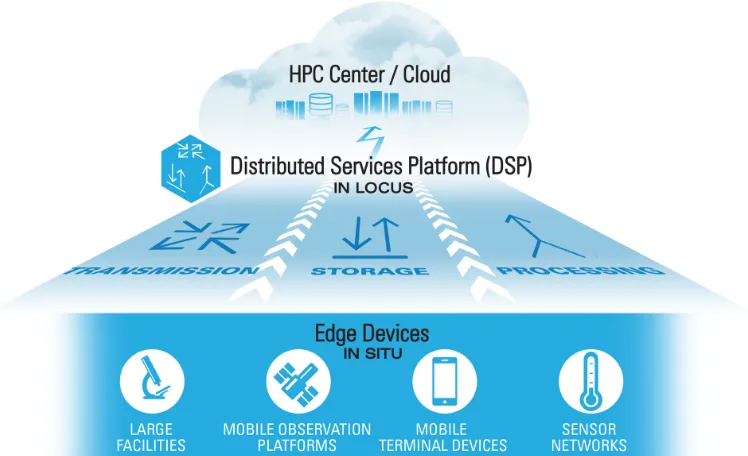
strategy of back hauling all data across a fast link to the cloud or data center is no longer a viable option for many applications. Hence, the intense commercial and research interest in “fog” or “edge” computing infrastructure, which—in one way or another—is supposed to solve this fundamental problem by combining processing, storage/buffering, and communication in a converged distributed services platform (DSP) that can be deployed in edge environments.
Looking toward the future of cyberinfrastructure for science and engineering through the lens of these two bifurcations made it clear to the BDEC community that, in the era of big data, the most critical problems involve the logistics of wide-area, multistage workflows—the diverse patterns of when, where, and how data is to be produced, transformed, shared, and analyzed. Consequently, the challenges involved in codesigning software infrastructure for science have to be reframed to fully take account of the diversity of workflow patterns that different application communities want to create. For the HPC community, all of the imposing design and development issues of creating an exascale-capable software stack remain, but the supercomputers that need this stack must now be viewed as the nodes (perhaps the most important nodes) in the very large network of computing resources required to process and explore rivers of data flooding in from multiple sources.
Against that background, we suggest that the prospects for integration of technological infrastructures and research ecosystems need to be considered at three different levels—or from three different perspectives. First, we discuss opportunities for convergence of research applications and workflows, where, despite the impediments of the ongoing cyberecosystem Balkanization, progress toward a research paradigm that combines both HPC and HDA is already being made. Such success with application-workflow communities both orients and motivates efforts at the other two levels. Second, we offer an account of some of the problems involved with creating a converged infrastructure for distributed edge, or “peripheral,” environments (i.e., shared infrastructure that can be deployed throughout the network in a scalable manner to meet the combined data processing, communication, and buffer/storage requirements of massive data workflows). Third, we focus on some opportunities for software ecosystem convergence in large, logically centralized facilities that execute large-scale simulations and models and/or perform large-scale data analytics. Finally, we offer some conclusions and recommendations for future investment and policy review. We briefly summarize each of these parts of the report below.
Challenges to Converged Infrastructure in Edge Environments. The proliferation of huge and het-erogeneous flows of data generated outside of commercial clouds and HPC centers (i.e., across the wide area network [WAN] in peripheral environments), as well as the need to distribute large datasets from such centralized facilities to the edge, represents a highly disruptive development that makes the way forward in many different areas of research uncertain. At the core of this uncertainty is the fact that the explosive growth of digital data producers at the edge, or in the periphery, creates problems that are highly multidimensional. Looking at the properties of the data flows being generated, they exhibit a range challenging characteristics, including their volume, velocity, value, variety, variability, and veracity. The most general designation for the field that must study and understand the problems that these data flows present is “data logistics” (i.e., the management of the time-sensitive positioning and encoding/layout of data relative to its intended users and the computational resources that they can apply). But problems of data logistics affect not only wide area workflows, but also workflows in the machine room. For example, whether you are talking about the output of a major instrument or a large HPC simulation, some form of data reduction has to be applied locally before any further data movement can be attempted. Hence, one can think of data logistics as defining a continuum, with I/O issues inside the Internet data center (IDC) or supercomputing facility falling at one end, and data-intensive workflows that begin at remote and/or distributed data sources—possibly scattered across edge environments—falling at the other.
Creating a common, shared software infrastructure that can address the logistical challenges of application workflows along this entire continuum is a critically important challenge for the scientific community in the coming decade. We use DSP as a generic characterization of the infrastructure/ecosystem that the community must develop in order to support such compute- and/or data-intensive workflows between the ingress/egress of the IDC or HPC center and the network edge. We present two pieces of common context for this discussion. First, we preserve continuity with the traditional TCP/IP + Unix/Linux paradigm by reiterating the importance of the hourglass architecture, and the “spanning layer” at its waist, as the foundation for ecosystem interoperability. Second, since these workflows are inherently stateful processes, it is clear that an adequate DSP must be not only wide-area capable, but must also offer processing, memory/storage, and communication as shareable resources. Satisfying these requirements in a common, open, and interoperable way, which is essential for the broad science and engineering community but would also benefit society as a whole, will be no mean feat. We conclude this section by briefly reviewing some of the strategies (e.g., stream processing, content delivery networks [CDNs], and edge computing) that are currently being deployed to address different problem areas on the data-logistics continuum.
Pathways to Convergence for Large, Logically Centralized Facilities. Today, most scientific research programs are striving to integrate both advanced computing and data analytics, and the drive to fuse these two methodologies strongly motivates the integration of the associated software with hardware infrastructures and ecosystems. However, this desired fusion raises a number of challenges: overcoming the differences in cul-tures and tools; dealing with shifting workforce skills; adopting new infrastructure; ensuring the coexistence of stream and batch models; computing at the edge; and implementing virtualization for sharing, resource allocation, and efficiency. We have also identified two major cross-cutting challenges: energy sustainability and data reduction. As far as architectures are concerned, radically improved resource management is indispensable for next-generation workflows, and—in this context—containerization is a promising candidate for the narrow waist, or spanning layer, of the hourglass model.
models and languages poses a convergence issue—not only with regard to interoperability of the applications but also to the interoperability between data formats from different programming languages.
Conclusions and Recommendations. Following the above structure of the document, we have divided our findings and recommendations into three categories: (1) global recommendations, (2) recommendations for edge environments, and (3) recommendations for centralized facilities. However, our ultimate goal is to lay the ground work for the kind of community-driven “shaping strategy” [43,44] that we believe would be both more appropriate and more successful overall (Section1.2). Consequently, the conclusions as they appear below may have to be refactored to serve the shaping strategy model.
Our primary global recommendation would be to address the basic problem of the two paradigm splits: the HPC/HDA software ecosystem split and the wide area data logistics split. For this to be achieved, new standards are needed to govern the interoperability between the data paradigm and the compute paradigm. These new standards should be based on a new common and openDSPthat offers programmable access to shared processing, storage, and communication resources and that can serve as a universal foundation for the component interoperability that novel services and applications will require.
We make five recommendations for decentralized edge and peripheral ecosystems, listed below.
1. Converge on a new hourglass architecture for a common DSP. 2. Target workflow patterns for improved data logistics.
3. Design cloud stream processing capabilities for HPC.
4. Promote a scalable approach to content delivery/distribution networks. 5. Develop software libraries for common intermediate processing tasks.
We make five actionable conclusions for centralized facilities, listed below.
1. Energy is an overarching challenge for sustainability. 2. Data reduction is a fundamental pattern.
3. Radically improved resource management is required.
4. Both centralized and decentralized systems share many common software challenges and opportunities: (a) leverage HPC math libraries for HDA;
(b) more efforts for numerical library standards;
(c) new standards for shared memory parallel processing; and (d) interoperability between programming models and data formats.
1
Introduction
This report, and the series of Big Data and Exascale Computing (BDEC) workshops that it summarizes, is part of the response from the high-performance computing (HPC) community to two major inflection points in the growth of scientific computing in the 21st century. The first marks the disruptive changes that flowed from the end of Dennard Scaling, c. 2004 Dennard et al. [24], which gave rise to the era of multi-core, many-core, and accelerator-based computing, as well as a variety of other complex and closely related problems of energy optimization and software complexity. The second, occurring nearly simultaneously, was the relatively rapid emergence (c. 2012) of “big data” and large-scale data analysis as voracious new consumers of computing power and communication bandwidth for a wide range of critical scientific and engineering domains. Because the BDEC community has its roots in traditional HPC, the marked difference in the ways in which this community has struggled to absorb and adapt to these two watershed transitions, with varying degrees of success, provides essential context that informs the reading of this report.
To those who witnessed previous transitions from vector and shared multiprocessor computing, the response to the end of Dennard scaling was comparatively familiar and straightforward. Indeed, the dramatic effects of the end of Dennard scaling on processor and system designs were very much on the mind of the HPC leaders who gathered at the 2009 International Conference for High-Performance Computing, Networking, Storage and Analysis (SC09) to form what would become the International Exascale Software Project (IESP) [27]. Along with the European Exascale Software Initiative (EESI)1and a parallel effort in Japan, these grass roots exascale efforts were the progenitors of the BDEC.
Although the challenges that confronted the IESP’s vision of exascale computing were unquestionably formidable—orders of magnitude more parallelism, unprecedented constraints on energy consumption, heterogeneity in multiple dimensions, and resilience to faults occurring at far higher frequencies—they fit within the problem space and the ethos that defined traditional HPC. Participants in that planning effort worked successfully over the next three years to draft a technology roadmap leading to a common, high-quality computational environment for exascale systems [5,27]. What the HPC community did not adequately anticipate was the eruption of interest in infrastructure and tools for doing large-scale data analysis in cloud computing environments. In the United States, this fact was revealed in the surprise that accompanied the Presidential strategic initiative [29,30] that emphasized the importance of big data and HPC ecosystem convergence.This has been echoed in recent EC/EU communications on the “European Data Infrastructure” and the “European Open Science Cloud,”2where HPC has been completely “absorbed” into a broader “digital single market” and only appears as a component in this global system. In Japan, as well as in China, the latest national roadmaps are focused on combining HPC with artificial intelligence (AI) that itself is tightly linked to the big data revolution. The Japanese program provides for a 107.8 billion yen ($1 billion) commitment over the next 10 years on inter-ministry AI-related research that encompasses big data, machine learning and the Internet of things (IoT). In China’s 5-year plan for exascale systems, big-data analytics has been considered as a major application category. As clearly stated in the requirements for their exascale pilot systems, deep learning benchmarks are an important metric for evaluating the capability and efficiency of the proposed new hardware architectures.
The rapid transition of the earlier IESP roadmap activities to the BDEC effort shows how quickly the community recognized that high-end data analytics (HDA) and HPC needed to have equal status in an integrated computing research and development agenda. However, although the BDEC effort aims to expand the general mission of the IESP—to foster the co-design of software infrastructure for extreme-scale science drawing on international cooperation and supporting a broad spectrum of major research domains— subsequent experience has shown that adding the HDA dimension to the scientific computing problem space
1http://www.eesi-project.eu
Ethernet
Switches Local NodeStorage
X86 Racks + GPUs or Accelerators In-situ Processing Infiniband + Ethernet Swtiches
SAN + Local Node Storage
Commodity X86 Racks
Lustre (Parallel
File System) Batch Scheduler(e.g., SLURM)
HDFS (Hadoop File System) MonitoringSystem Tools
Applications and Community Codes
Hbase BigTable (key-value store)
AVRO Sci. Vis.
Zookeeper (coordination)
Map-Reduce Storm Hive Pig Sqoop Flume
Mahout, R and Applications
Domain-specific Libraries FORTRAN, C, C++ and IDEs
Cloud Services (e.g., A
WS))
Virtual Machines and Cloud Services
Containers (Kubernetes, Docker, etc.) (Singularity, Shifter, etc.)Containers
DATA ANALYTICS ECOSYSTEM COMPUTATIONAL SCIENCE ECOSYSTEM
[image:10.612.71.541.68.352.2]MPI/OpenMP +Accelerator Tools Numerical Libraries Performance & Debugging (e.g., PAPI)
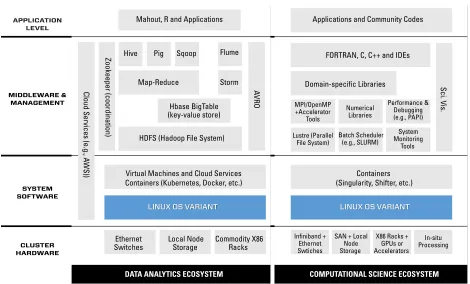
Figure 1: Different software ecosystems for HDA and traditional computational science. Credit: Reed and Dongarra [66].
radically transforms it. As we argue below, it raises a host of conceptual, political, economic, and cultural problems and places several of the existing paradigms and assumptions underlying traditional scientific computing and computational science into question.
1.1 Disruptive Partitions in Two Current Paradigms
The BDEC community’s sustained examination of the changes wrought by the ongoing big data revolution has revealed at least two different—and somewhat orthogonal—ways that the cyberinfrastructure on which science and engineering communities depend is becoming—or has long been—bifurcated. One of these splits—between the traditional HPC approach and strategies that leverage or model commercial cloud computing—emerged early this century as an unexpected byproduct of the explosive growth of data associated with online commerce and social media. The second split—between stateless datagram–delivery networks (e.g., the Internet) and stateful services provided by network-attached end systems (e.g., supercomputers, laptops, sensors, mobile telephones)—is fundamental to the cyberinfrastructure paradigm that has been in use for well over three decades. Unfortunately, as we explain below, the big data revolution has also rendered an entrenched bipartite cyberinfrastructure paradigm that is highly problematic. As reflected in the analysis below, we believe that any planning for cyberinfrastructure convergence today has to take into account the partitioning of both types.
1.1.1 First Partition: Recent Split in Software Ecosystems
emblematic of the ongoing bifurcation of the software ecosystems that were being deployed for data analytics and scientific computing. The computational science ecosystem developed and flourished over the course of roughly four decades (primarily) to increase the capabilities of scientists to model and simulate (i.e., to enable scientists and engineers to project, in more detail, the consequences of theories that had been—or could be—expressed mathematically). Meanwhile, the rapid growth of the data analytics ecosystem has occurred largely during the last fifteen years. For the most part, however, it is not being developed by the scientific computing community to explore the rising flood of data from new instruments and sensor systems, but rather by an equally thriving group of academic and commercial software developers to process the torrents of business, industrial processes, and social network data now being generated by consumer devices and the burgeoning IoT. The pace of change in the data analytics ecosystem is extraordinary, already rendering obsolete some of the elements in the figure above.
Thus, at least some of the major differences between the HPC and the HDA ecosystems—software devel-opment paradigms and tools, virtualization and scheduling strategies, storage models (local vs. cloud/storage area network [SAN]), resource allocation policies, strategies for redundancy, and fault tolerance—can be accounted for by the fact that each evolved during a distinctly different phase of the ongoing digital revolution, driven by distinctly different optimization criteria.3 For example, it can be reasonably argued that scientific “big data” has existed for more than a decade, but that it remained essentially “dark” (i.e., unavailable for analysis) until commercial cloud technology and content distribution networks began to provide broader access to the computing power and data logistics needed by the communities who wanted to analyze it.4 By contrast, the HPC infrastructure model—a system of regional and national supercomputing centers connected together by high-performance research networks—was already fully mature at the beginning of the century and serving the needs of the modeling and simulation-centered parts of the scientific community relatively well.
But even the ultimate convergence of the HPC and HDA ecosystems, could it be achieved, would not help with the ongoing breakdown of the other, more basic paradigm—namely, the one in which networks only forward datagrams, while all other storage and computation is performed outside the network.
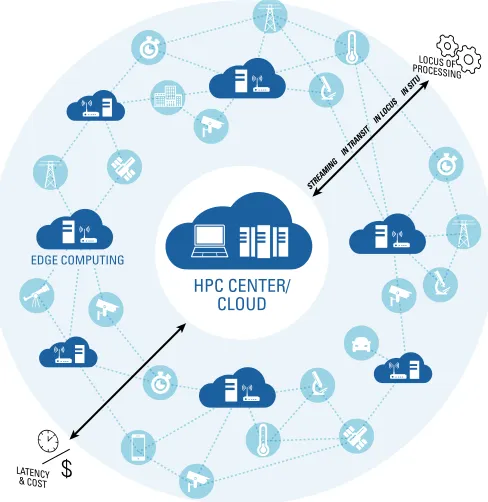
The problem is that much, if not most, of the explosive growth in data generation today is taking place in “edge environments” (i.e., outside of—and across the network from—both HPC data centers and commercial cloud machine rooms [Figure2]). This includes not only major scientific instruments, experimental facilities, and remote sensors (e.g., satellite imagery), but even more importantly, the incredible welter of digital data generators with which the plans for “smart cities” and the IoT [41] are replete. For example, a recent National Science Foundation (NSF) workshop on the future of wireless networking concluded that the ubiquitous deployment of sensor technologies that are a standard element in such plans will “. . . generate massive data inflows [that produce] as much if not more data and network traffic than the World Wide Web,” and will therefore “. . . reverse current loads, where most data is produced in the cloud and consumed at the edge.” [8] Likewise, the authors of the 2017 European Network on High Performance and Embedded Architecture and Compilation (HiPEAC) report concluded that “. . . to stem the flood of data from the Internet of things, we must employ intelligent local data processing on remote devices that use minimal energy. . . . This may well require us to break away from the traditional von Neumann architecture and to rethink device technology.” [28]
3The system and application software of the original dot.com revolution had much in common with contemporary HPC infrastructure. That is far less true today.
HPC CENTER/ CLOUD
[image:12.612.185.429.90.341.2]EDGE COMPUTING
Figure 2: Current problem of data logistics: The highest concentrations of computing power and storage are in the “center” (i.e., in commercial clouds or HPC Centers), but much of the rapid increase in data volumes and the dramatic proliferation of data generators is occurring in edge environments, where the processing and storage infrastructure needed to cope with this rising flood of data isad hocand under provisioned at best.
Thus, this remarkable reversal of direction of the data tide, which turns the familiar “last mile problem” into a multidimensional “first mile problem,” represents a challenge for which neither cloud-based HDA nor center-based HPC have a solution. In fact, explosive growth in data generation in edge environments seems to clearly indicate that revolutionary innovation in distributed computing systems is becoming an increasingly urgent requirement [17,21,37,62]. As argued below, we believe this represents the breakdown of the bipartite cyberinfrastructure paradigm that has been dominant for nearly three decades, making the problem of convergence substantially more complex and momentous.
1.1.2 Second Partition: Inherent Split in the Legacy Paradigm
Some historical perspective is required to understand the other “divergence” or paradigm breakdown that the proliferation of data generators seems to be causing. If one were to try to mark the year in which the two parts of the dominant research cyberinfrastruture paradigm of the last twenty-five years—TCP/IP and Unix/Linux–were first fused together, 1989 would make a very plausible candidate. In June of that year, the Berkeley Software Distribution (BSD) of Unix, including a Defense Advanced Research Projects Agency (DARPA)-approved version of the TCP/IP protocol stack, was made freely available under an open-source license. Their combination in that form was especially well received by the research community:
community. Much of the [computer science] research community began to use Unix BSD for their day-to-day computing environment. Looking back, the strategy of incorporating Internet protocols into a supported operating system for the research community was one of the key elements in the successful widespread adoption of the Internet. [54]
Although TCP/IP and Unix/Linux became complementary parts of one integrated package, they supported two different software ecosystems for two separate but complementary infrastructures. The former laid the software foundation for a globally scalable data network that offered one fundamental service: unicast datagram delivery to move/copy data from one location (buffer/host/end system) to another. The latter, by contrast, was designed to provide an application interface to end systems of all kinds, ranging from personal computers to “middle boxes” to supercomputers; its purpose was to enable applications and services that required the full complement of basic resources—processing power, storage, and networking. But to understand our current dilemma, we should recognize at least three additional factors that helped foster the rapid spread of this composite paradigm through the global research community.
1. Both components were open source, public domain, and designed to support broad experimen-tation and rapid evolution. The TCP/IP-Unix/Linux platform was introduced when the highly competitive (not to say ferocious) battles between different proprietary computing strategies (e.g., mainframe, minicomputer, PC), desktop operating systems (e.g., MS-DOS, Windows, OS2, macOS), and local area networking technologies (e.g., Novell, Apple, DECnet, Systems Network Architec-ture [SNA]) were still ongoing. Avoiding high costs, loss of control of one’s own tools, barriers to collaboration, and other perils of “vendor lock in” made the open source and public domain character of this new paradigm especially attractive. At the same time, as we discuss in Section3.1, both halves of the dominant paradigm were designed in a way that facilitated freedom of innovation and speedy growth, making it especially well suited to the inclinations and the aptitudes of the science and engineering communities.
2. Each component embodies a different model of resource sharing. Finding ways to share com-putational resources has long been a fundamental part of the cyberinfrastructure problem, and time sharing operating systems and digital data networking have long been essential parts of the solution. But the two parts of the dominant paradigm under discussion support resource sharing in different ways and with different consequences for their overall design [9]. In the context of large, shared systems, Unix/Linux was designed to allow the sharing of valuable processor, storage, and other system resources with authentication and access controls that created a secure environment supporting free sharing of most resources. Enforcement of storage quotas in Unix was a later adaption necessary in more highly shared/public data center environments, and CPU metering and rationing has been implemented in specialized high-value supercomputing systems. By contrast, the TCP/IP was designed to facilitate communications among an enormous variety of devices used by a global community of indefinite size. With maximum deployment scalability as its goal, it shares available bandwidth in limited lightweight allocations that are easy to access and that typically lack significant admission or accounting controls. The incredible power of this model of resource sharing, especially in terms of its network effects, is manifest.
IP Multicast
ROUTER
SOURCE DESTINATION
Web Caching
CACHE PROPRIETARY SERVER
NETWORK
Content Delivery Network
SERVER
[image:14.612.108.510.79.181.2]Cloud
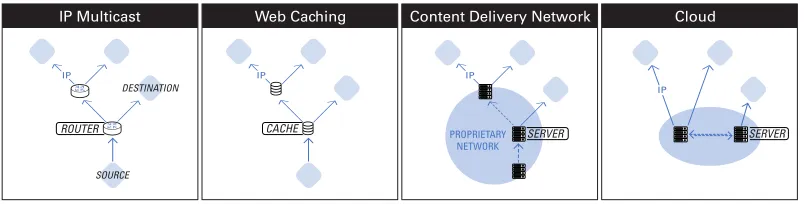
Figure 3: Evolution of the network to deal with growth in data volumes and rapid fluctuations in their popularity. The need to be able to use storage and computation at intermediate nodes (e.g., for asynchronous point-to-multipoint transfer) stimulated the development of content delivery networks (CDNs) and clouds with proprietary networks and server replication using standard IP to reach clients at the network edge. Credit: Beck et al. [12]
states, and a wide range of mechanisms have been implemented to serve that purpose; these end points manage all the state information required to use the network. The Internet community has traditionally held this design, which keeps the core of the network simple and passive by keeping services other than datagram delivery (e.g., a storage service for caching and prefetching) out of network layer of the TCP/IP stack. This design has been essential to the remarkable scalability that the Internet has demonstrated. And so long as applications and services could be factored into two phases—using the datagram service to move data between end systems and then applying end system resources to achieve complex application or service goals—this symbiotic union of stateless and stateful systems was able to support an immense range of applications.
infrastructures [10,16,49,68,72]. For perhaps obvious reasons, which we explicate in part in Section3, we view the creation of a future-defining distributed services platform that meets the fundamental requirements of the scientific community to be—at best—a difficult problem full of unknowns and fraught with economic and political obstacles. More immediately, this assessment has influenced the structure of this report, as we describe next in our document overview.
1.2 Pathways Overview: Prospects for Convergence at Three Different Levels
As noted at the outset of this report, the transition from the IESP to the BDEC project forced a radical shift in perspective on the part of HPC community participants. In contrast to the “big machine” focus of traditional HPC, the center stage in the era of big data has to be given to the many unsolved problems surrounding wide-area, multistage workflows—the diverse patterns of when, where, and how all that data is to be produced, transformed, shared, and analyzed. Consequently, the challenges involved in codesigning software infrastructure for science have to be reframed to fully take account of the diversity of workflow patterns that different communities want to create. All of the imposing design and development issues associated with creating an exascale-capable software stack remain; however, the supercomputers that need this stack must now be viewed as the nodes (perhaps the most important nodes) in the very large network of computing resources required to process and explore gigantic rivers of data.
As discussed above, the dominant cyberinfrastructure paradigm that has been the foundation of such workflows for decades is now eroding—if not collapsing—under the onslaught of this growing data deluge. Unfortunately, this fact requires the BDEC community to find a new way to express its results. IESP participants were able to successfully produce an influential technology roadmap [27] for creating a software stack to support science applications on extreme-scale platforms. However, the IESP had the advantage of targeting a shared goal that was different in scale, but not different in kind, from less extreme goals that had been achieved before. For BDEC, the shared goal is not so clear. Arguably, the main cyberinfrastructure challenge of the big data era is to adapt or replace the legacy paradigm with a new type of distributed services platform (DSP)—one that combines computing, communication, and buffer/storage resources in a data processing network that is far more integrated than anything hitherto available. But since there is no widely agreed upon model for this platform, traditional technology road mapping techniques seem to be inapplicable. Instead, we suggest that the development of a community-driven “shaping strategy” [43,44] would be a far more appropriate goal to pursue. A shaping strategy is a plan for changing the infrastructure/ecosystem of a market, industry, or community by proposing a well-defined concept of a technical platform that can support many kinds of applications or enterprises, and combining that platform with an inspiring vision of the mutually beneficial future that could be created through its widespread adoption and use. By offering a range of possible incentives to all the stakeholders who would benefit from such convergence, shaping strategies seek to coordinate and direct the creativity and energy of participants who might build on this platform in a way that leverages network effects and produces positive externalities. Shaping strategies are thought to be especially appropriate when the absence or breakdown of an established infrastructure/ecosystem paradigm has disrupted or unsettled some large field of endeavor. With the era of big data, this is precisely the situation that the scientific community now confronts.
Against that background, the reflections of BDEC participants over the course of successive workshops have suggested that the prospects for integration of technological infrastructures and research ecosystems needs to be considered at three different levels, or from three different perspectives. The three major sections of this document, in turn, focus on one of these levels, as listed below.
begin by examining the forms of inquiry, new and old, that a converged infrastructure for research is supposed to support. Second, pushing back against the popular idea that HDA represents a distinctly new paradigm of scientific methodology, we argue that HDA actually represents the computerization of two phases of the classic model of the scientific method, which had heretofore been far less digitally empowered. Accordingly, we offer examples in which HPC and HDA applications are being composed in workflows that embody the entire inference cycle of scientific inquiry.
2. Issues in the creation of a converged infrastructure for large-scale,logically decentralized facili-ties (Section3): This section offers one account of some problems associated with creating a converged infrastructure for distributed edge environments, one which can be deployed—in a scalable manner—to meet the data processing, communication, and storage requirements of massive data workflows in the wide area. Developing such a “next-generation Internet” for the big data era in science and engineering is fraught with challenges in various dimensions. There is, however, a great deal of excitement and activity in this part of the infrastructure convergence space under the heading of “fog” and/or “edge” computing, but there are also very high levels of uncertainty. Consequently, although we survey and discuss some of the prominent ideas and strategies, our review is by no means exhaustive.
3. Opportunities for convergence of infrastructures of large, logically centralized, resource-rich facilities (Section4): The third major section of this report focuses on major facilities that execute large-scale simulations and models or that perform large-scale data analytics. We refer to such systems as “logically centralized” because, whether or not they are actually physically distributed, they present themselves as being under the control of a single administrative domain, and users are required to interact with them in that form. Such facilities are already supporting some of the converged applications and workflows previously discussed, and some convergence at this level can and is already occurring.
Drawing on discussions at the BDEC workshops5, we begin each of the major sections by suggesting some points of plausible consensus that are intended to provide common context for cyberinfrastructure planning, especially for the development of a community-driven shaping strategy. These points of convergent opinion include an integrated conception of the general process of scientific inquiry, the overarching issue of energy efficiency as critical for sustainability, the new importance of questions of “data logistics,” and prevalence of the “hourglass” model as a paradigm of good infrastructure/ecosystem design. We have assigned these assumed pieces of common context to the major sections that seemed most appropriate, but admittedly some are of a general nature and certainly apply in other sections as well.
Since the idea developing a community-driven shaping strategy for a new DSP for science was arrived at late in the BDEC reporting process, we do not describe even a strawman version of such a plan here. Nonetheless, we believe that the various observations, arguments, and conclusions we record in what follows should feed directly into the dedicated community effort that will be required to develop such a plan. For example, the argument for focusing on the careful design of the “spanning layer” at the waist of the hourglass model (Section3.1) dovetails perfectly with the need to define an attractive “shaping platform” that many stakeholder communities will build on and use, and such a platform definition is one of the primary constituents of a successful shaping strategy. Likewise, we believe that analyzing and building on the application-workflow exemplars of the kind we describe and classify in Sections2.2and2.3is an essential step in developing the “shaping view” that successful strategies must have in order to incentivize participation and motivate adopters and users. Accordingly, as we note in Section5, we offer our final conclusions and recommendations with the intention of preparing the groundwork for a new community effort to develop the kind of shaping strategy for future cyberinfrastructure that the scientific community must have in order to thrive in the ongoing data revolution.
2
Emerging Convergence in Large Scale Scientific Applications
Despite the manifest challenges of a converged cyberinfrastructure for multidisciplinary research, the scientific and engineering opportunities are compelling. Many science communities are driven by a combination of computing tasks and managing large-scale data volumes resulting from data flows that range from continuous to sporadic. The associated computations may come from large-scale workflows that orchestrate simulations or from different stages of large-scale analysis pipelines for data generated by simulations, experiments, or observations, including the transitions between these stages and provenance tracking. Communities that would benefit substantially from application and workflow convergence are abundant, spanning all of science and engineering. Examples include: (1) multi-scale materials science; (2) integrative environmental modeling and analysis; (3) astronomy and cosmology; (4) aerospace; (5) autonomous vehicles; (6) weather and climate prediction; (7) smart cities; (8) health and biomedicine; and (9) exploration geophysics and seismology. Several of these application communities are highlighted below in our examples of convergence.
It is important to note that when we talk about “applications” and “workflows” in this context, we are not talking merely about isolated software tools or application codes but rather about complex (and changing) configurations of software, hardware, and data flows that support long-running science and engineering campaigns and research practices. For this reason, we prefer to structure the discussion below around three computational archetypes that provide broader categories than specific traditional formulations (e.g., partial differential equations [PDEs], principal component analysis [PCA]) or approaches (e.g., implicit method, randomized singular value decomposition [SVD]). These three archetypes will instead furnish a convenient grouping of collaborations by the users’ “culture.”
To provide the intellectual context for this analysis of application-workflow level convergence, we begin by describing a unified model of an inference cycle for the process of scientific inquiry, pushing back against the popular idea that computational science and data science represent disparate paradigms in the search for new knowledge (Section2.1). After presenting the rationale for our division of application-workflow archetypes, we illustrate them with exemplars thatfollow the data, since it is the data that carry the costs (time, energy, human labor needed to produce and manage the data). We address three modalities of data provenance: (1) data arriving from the edge (often in real time), never centralized; (2) federated multi-source archived data; and (3) combinations of data stored from observational archives with a dynamic simulation. These exemplars make it evident that the concept of workflows has become pivotal for understanding the convergence paradigm between data and simulation. Notably, however, we leave out of this account—but discuss later (Section3)—many issues surrounding the data logistics infrastructure that would, and will be, needed to support our exemplar workflows.
2.1 Common Context: A Shared Model of Scientific Inquiry for Infrastructure Planning
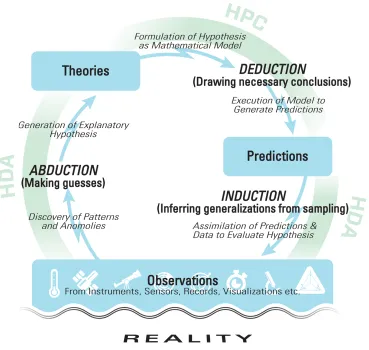
Figure 4: The inference cycle for the process of scientific inquiry. The three distinct forms of inference (abduction, deduction, induction) facilitate an all-encompassing vision, enabling HPC and HDA to converge in a rational and structured manner.
A recent white paper from the Computing Community Consortium addressed this question, presenting a generic account of the “scientific process” that accommodates a more unified point of view [48]. Following that suggestion, and for the moment leaving aside some important socio-economic aspects of the problem, Figure4presents a simplified version of the key logical elements of that model.6It expresses the classic view that the scientific method is a complex inferential process that seeks to improve our predictive understanding of nature by building on a foundation of thorough and carefully controlled observation. The three distinct forms of inference it identifies, (1) abduction (i.e., guessing at an explanation), (2) deduction (i.e., deter-mining necessary consequences of a set of propositions), and (3) induction (i.e., making a sampling-based generalization), are the chief elements in the “logic of discovery” first articulated by American scientist and polymath Charles S. Peirce [13].
Likewise, In a more contemporary treatment of the same topic, Richard Feynman’s account of the logic of discovery for physical laws can be summarized as having essentially the same three steps or stages [33].
1. We guess at a law that would explain what is currently inexplicable. 2. We derive the consequences of the law that we guessed.
3. We make further observations to see if the consequences predicted match the reality we find.7 6Adapted from illustration inAbduction and Induction: Essays on their relation and integration[34].
On this analysis, all three steps taken in combination are required to increase our predictive understanding of the world (i.e., to really make our knowledge grow).
Now, if we accept this model as a plausible hypothesis, then we can draw at least two conclusions that are directly relevant to the problem of cyberinfrastructure convergence. First, by viewing the transformation of science in the era of digital computing through the lens of this model, we can see that there is an alternative way to account for these changes—one that does not require us to posit substantially new paradigms of scientific inquiry. Namely, rather than forking new methodological branches, one can explain the more rapid emergence of computational science, and the slower and later emergence of data-intensive science, by examining the factors that made it possible to apply vast amounts of computing power to the deductive stage of the inference cycle far earlier than to the abductive and inductive stages.
As conventionally defined, computational science primarily covers the deductive part of the inferential process: computer-based simulation and modeling shows what a given theory, expressed mathematically, predicts for a given set of input data. This could equally be viewed as mapping complex models to data. By the middle of the twentieth century, when the power of microprocessors began to follow their amazing exponential arc upward, many physical sciences already had well established mathematical models of their target phenomena but had access to only enough computing power to solve them for relatively small problems and/or for cases where inherent uncertainties were not take into account. The impact of Moore’s law was, therefore, immediate and explosive.
By contrast, the gathering and analysis of observational data have always been the focus of the abductive and inductive stages of scientific inquiry. Whether data are being explored to discover novel patterns or anomalies that might initiate new inquiry or being carefully examined for some predicted phenomena that would test (i.e., further confirm or potentially falsify) some well-formulated theory, data analysis strives to put the reasoning of scientists and engineers into relatively direct contact with the realities they are trying understand. When the data are digital, such analyses obviously require computational power. But in a mirror image to the HPC situation, so long as the data volumes remained tractable, concerns about the amount of computational power required to do the necessary data analysis could be sidelined: either a small cluster could be used to analyze data where it was collected (e.g., at the site of the instrument), or, when necessary, the raw data could be transferred via a high-performance network to a supercomputing center for analysis.
Of course, since the turn of the century, these flows have become progressively more intractable, as remarkable improvements in sensor technology and other data gathering capabilities produce exponential growth in research data flows. This data deluge was spotted on the horizon early in the first decade [46], with projects like the Large Hadron Collider serving as a harbinger of unprecedented increases in data rates across a wide variety of fields. Yet despite the burgeoning quantities of data that needed to be processed, the big data revolution was not really launched until the end of the decade, when the explosion of consumer/customer usage being collected and utilized by online companies (e.g., Google, Amazon, Facebook) motivated the build out of massive, private, cloud computing infrastructures to store and process it all.
As we discuss in more detail below (Sections4and3.2), this proliferation of distributed data sources means that scientific cyberinfrastructure design must focus as never before on issues of workflow and data logistics, thereby covering the full path of data use from its collection to its use as a decision-making aid. Moreover, this focus is required in no small part by the new efforts, in line with the cycle of inquiry illustrated in Figure4, to synthesize elements of HPC and HDA in new application-workflow hybrids. In short, the concept of a scientific application, familiar from the heyday of traditional computational science, is being gradually redefined. To set the stage for our application “exemplars,” we first briefly discuss the new perspective on application workflows that is now emerging.
2.2 Classification of Application-Workflow Archetypes
A good first step in understanding any new area typically consists of working out some rough classification of the different types of objects that make it up. It is no surprise, then, that every BDEC meeting has dedicated substantial amounts of effort to categorize the various data-intensive, compute-intensive, and hybridized applications and application workflows. Viewed from a relatively traditional standpoint, the categories or classes most frequently discussed included simulations, database and data management problems, scientific data analysis, and commercial data analytics. The last three have many examples in the National Institute of Standards and Technology’s (NIST’s) collection of 51 big data use cases,8and simulations are illustrated in many HPC benchmarks (e.g., the NASA Advanced Supercomputing [NAS] Parallel Benchmarks) and the Berkeley Dwarfs. The ways in which such applications are driving new software infrastructure developments was a frequent point of interest. For example, we noted that MapReduce was originally introduced to parallelize basic database operations as seen in Apache Hive, but Andrew Ng from Stanford9 observed that many machine learning algorithms exhibited the “summation form” and could be parallelized with MapReduce. It was later noted that this could be optimized with so-called Iterative MapReduce—a model supported by Apache Spark and Flink.
One BDEC white paper by Fox et al. [36] noted that the comparison of simulation and big data problems can be made more precise by distinguishing data and models for each use case and carefully making model-to-model and data-to-data comparisons and not confusing them. This paper introduced a common set of 64 properties or facets, divided into four views, that could be used to characterize and compare use cases within all the application classes defined above. As an example, the first “problem architecture” view includes four very common facets describing the synchronization structure of a parallel job: (1) pleasingly parallel, (2) MapReduce, (3) Iterative MapCollective, and (4) Map Point-to-Point. Another important problem architecture facet is “Map Streaming,” seen in recent approaches to processing real-time data. Other well known facets in this view are single program, multiple data (SPMD) and bulk-synchronous processing. An execution view includes relevant facets like model size, variety, data volume, velocity, and veracity. The third data view includes storage and access models and relevant information on IoT, Geospatial Information Systems (GIS), and need for provenance. The final processing view includes algorithm characterizations like optimization, alignment, N-body method, spectral method etc. One can look at use cases, assign facets, and use this information to understand commonalities and differences and how this is reflected in the hardware and software.
Complicating this algorithmic perspective of the classification problem is the fact that—from a strictly data/workflow point of view—data analysis is usually an iterative process. The model is often unknown beforehand, since principled statistical model selection is not solved in a general setting. Moreover, data must be interactively understood, and often “debugged”—that is, we need to find anomalies in the data and detect wrong assumptions on the data. In this context, schemes of distributed computing are evolving, but users often do not rely on distributed computing, hence the data analysis operations are not expressed in a language that renders distributed computing suitable.Typical code is a succession of operations written in an imperative way. Here, it is useful to think of the computing as adataflowgraph, since access to data (and related bandwidth) can often be a bottleneck.
Three dataflow schemes are often encountered:
1. Extract, transform, and load (ETL): pipelines that apply transformations known beforehand, often encountered in data-input pre-processing. This is already done in distributed environments (e.g.,with Hadoop). It can lead to data-parallel pipelines.
2. Database-centric distributed computing, as with Spark: heavily out-of-core, simple operations.
Opera-8http://dsc.soic.indiana.edu/publications/NISTUseCase.pdf
Training set Testing set
A B C D E A B C D E
Training set Testing set
ROIs estimation
Harvard-Oxford Yeo
ICA MSDL
K-Means Ward
Time series
extraction Matrix estimation
Correlation
Partial correlation
Tangent embedding
Classification
Ridge classifier SVC-Intra-site cross-validation
Subjects from each site are proportionnaly split
R-fMRI ROIs
Time series
4
1 2 3
Site A Site B Site C Site D Site E Site A Site B Site C Site D Site E
A B C D E
[image:21.612.75.540.68.324.2]Inter-site cross-validation A site is left out for validation
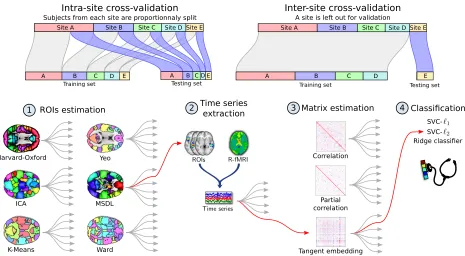
Figure 5: A functional magnetic resonance imaging (MRI) analysis pipeline with cross-validation schemes. Regions of interest (ROIs) are deduced from predefined (Harvard-Oxford, Yeo) or data-driven atlases (K-means, ICA, MDSL) and result in dimension reduction. Extracted time series are fed into a correlation matrix estimator that finally feeds into the classifer that distinguishes between Autism Spectrum Disorder (ASD) and Typical Controls (TC). Credit: Abraham et al. [1].
tions are then specified in a data-oriented language, often not imperative, such as the Structured Query Language (SQL) or Scala. Such a language requires more training to perform complex processing pipelines.
3. Machine-learning on streams: stochastic gradient descent, as in deep learning. Here, distributing the model fit needs to be tackled with a different paradigm. However, applications often require fitting many models independently, which is embarrassingly parallel.
A typical dataflow is illustrated in Figure5, where several hundred gigabytes of data from the Autism Brain Imaging Data Exchange are treated and analyzed to extract the most predictive biomarkers. It should be noted that I/O is critical in this pipeline, and data reduction dominates the computational costs. The results obtained in Abraham et al. [1] required two months of computation on a high-end cluster with a dedicated, local network attached storage housing the data. Obviously, this does not scale, and the need for more efficient data communication and reduction, as well as convergence with an HPC environment, are clearly needed here.
of batch-oriented scientific simulations, we therefore consider three types of workflows—each of has its own niche of applications, its own software stack, and its own user community.
To large-scale
simulation To data analytics
To machine learning
Simulation provides: — Physics-based
“regularization”
Data for training, augmenting real-world data Analytics provides: Steering in high-dimensional parameter space; in-situ processing
[image:22.612.107.505.109.305.2]— Feature vectors for training Learning provides: Smart data compression; replacement of models with learned functions Imputation of missing data; detection and classification —
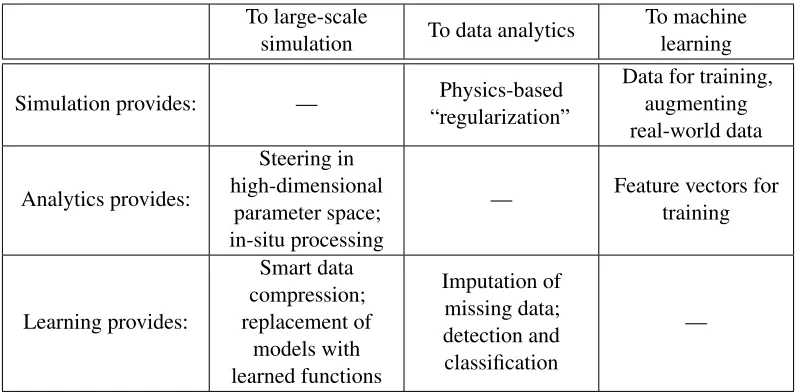
Table 1: A 3×3 matrix showing beneficial interactions in the six off-diagonal locations between large-scale simulation, data analytics, and machine learning.
As indicated in the first column of the matrix, to take advantage of advances in analytics and learning, large-scale simulations should evolve to incorporate these technologies in situ, rather than as forms of post processing. This potentially reduces the burden on file transfers and on the runtime I/O that produces the files. In some applications at major computing centers (e.g., climate and weather modeling), I/O is well documented [57] as consuming more resources than the computation itself. In-situ data analytics allows the simulation to avoid writing data that is needed only to advance the simulation, though this does not apply to post examination. However, the benefits go far beyond this and into the realm of steering. Smart steering may obviate significant computation—along with the I/O that would accompany it—in unfruitful regions of the physical parameter space, as guided by the in-situ analytics. In-situ machine learning offers additional benefits to large-scale simulation, beginning with smart data compression, which complements analytics in reducing I/O and storage use. Beyond assisting with the performance of the known implementation, machine learning has the potential to improve the simulation itself. This is because many simulations incorporate empirical relationships like constitutive parameters or functions that are not derived from first principles but are tuned from dimensional analysis, intuition, observation, or other simulations. For such components, common in multi-scale and multi-physics models, machine learning in the loop may ultimately (or already) be more effective than the tuning of expert scientists and engineers. Such learning would “probe” a simulation, necessitating an in-situ process.
from experimentation and observation. A traditional advantage of simulation over experiment is emphasized in this context: some interesting regions of the parameter space—physically realizable in principle or representing an extreme limit that is not realizable (e.g., flow with zero viscosity)—can be opened up to a learning algorithm.
The other two nontrivial elements of the matrix are between the two workflows within big data. For machine learning, analytics can provide feature vectors for training. In return, machine learning can provide analytics with the imputation of missing data and functions of detection and classification. For any of these “off-diagonal” fruits to be harvested efficiently, the corresponding workflows should be co-hosted. The scientific opportunities are potentially important enough to overcome the enormous inertia (and spur convergence) of the specialized communities that have gathered around each of these tremendously successful paradigms.
2.3 Exemplars of Application-Workflow Convergence: Science at the Boundary of
Obser-vation and Simulation
Over the course of successive BDEC workshops, it quickly became apparent that application communities would be leading the drive towards convergence. Given the “converged” model of scientific inquiry described above (Section2.1), this is more or less to be expected. Indeed, recent developments show that it is already happening. One contrast with commercial cloud computing that these developments highlight is based on the fundamental difference between the data generated by human interaction with computers (such as social media and other commercial sites) and data collected from sensors and observations. The latter is governed by some underlying physical process even if it is a non-deterministic one or one that has not been understood yet. The analysis performed on scientific data may, sometimes, resemble that performed on commercial data—that of drawing inferences without a hypothesis or conjecture. However, such analysis is limited to instances where there is little or no prior knowledge about the underlying physical processes. In those instances, inferences help to formulate hypotheses and ultimately the theory. More often some theory exists, and the observations collect data that is used to prove or falsify a derived prediction that helps refine the theory. Examples of the different, rough, and overlapping patterns with these research workflows include the following:
• Patterns of interplay between simulation and data analysis:High-energy physics (HEP) has several examples where interplay between simulations and data analysis plays a critical role in scientific insight. One example is large experiments like CERN’s Large Hadron Collider (LHC), which currently generates about 30 petabytes of data per year, which is expected to grow to 400 petabytes in a decade. Experiments need support from theory which is provided by the simulations. Confronting data generated from the simulations with the observational data helps tune both the model and the experiment design (see the inference cycle in Section2.1). Another example of synergy between simulations and experimental data is in determining the placement of sensors in an experiment. This has been used in designing high-energy density physics laser experiments, where simulations can predict where to place the measuring instruments to have the best chance of detecting features being formed. Without this interaction between simulation and placement of instruments in experiments, entire features can be missed and have been known to have done so in the past. Use of simulations to determine the placement of instruments or sensors is now making its way into many areas, including environmental and climate observations.
analysis where data pipelines can be complex and need to be run many times. Demands on I/O can vary due to the nature of the simulations and the fine-grained nature of the outputs (many small files). An example of such complex workflows is in dark energy research where understanding Type Ia supernovae is critical. A typical workflow requires running a model simulation, post processing it, and running it through another computational stage that results in generating the spectra and the intensity curves. On the other side, similar artifacts are generated for comparison from the observational data through various stages of analysis. An important challenge faced in this kind of workflow is data movement. Large volumes of data are generated both from observations and from computations—typically at different sites. It is not just the processing, but also the curation, migration, and archiving of data that becomes the scientists’ concern. Good science requires provenance of data involved in scientific discovery, which makes the task of managing the data pipelining highly resource intensive for many scientists.
• Patterns of multi-messenger scientific inquiry:Several discussions at the BDEC workshops high-lighted the way in which the application of different observational modalities, which can now be simultaneously applied to the same object, promises to dramatically increase our predictive under-standing of those objects. Generalizing the idea “multi-messenger astronomy,” [75] we refer to this application-workflow pattern as “multi-messenger scientific inquiry.”10 The ability to predict the effects that result from interactions between physical or biological systems, or to predict patient outcomes or treatment responses, hinges on the accurate multi-resolution characterization of the objects and systems involved. Happily, the dramatic reduction in costs required to obtain imaging and sensor data has made it increasingly feasible to capture the necessary data.
The general approach, which cuts across the many relevant application domains, is to carry out and synthesize the diverse, data streams that record different types of sensor observations of the same object, or set of objects; and in many such scenarios, analysis and integration of data streams from different types of sensors is coupled with simulations. The earth sciences offer a number of outstanding examples, as in the study of the earths magnetic field, where satellite data, ground instruments, paleo databases, and simulation are all combined. Aspects of this huge field are briefly surveyed below (Sections2.3.2and2.3.3). Likewise, biomedicine also contains a rich and growing collection of multi-messenger use cases, where—for example—integration of information from pathology, radiology, and molecular studies is becoming increasingly crucial in guiding cancer therapy (Section2.3.4). Finally, light and neutron source beamline analyses constitute a third collection of multi-messenger use cases. Requirements have a great deal of commonality across, beamlines and scientific projects. Beamline experiments frequently generate data that, when reconstructed, can be used to characterize properties of materials, tissue, or chemical systems.
The examples of convergent application workflows shown here highlight the factors that will have to be taken into account when developing the platform infrastructure to support them. These considerations led to a number of pertinent questions that will feed into the following two sections and motivate our discussions in follow-up BDEC meetings.
2.3.1 Plasma Fusion
Building the scientific foundations needed to accelerate the delivery of fusion power can best be accomplished by engaging the predictive capability of modern big-data-driven statistical methods featuring machine learning
and deep learning. These techniques can be formulated and adapted to enable new avenues of data-driven discovery in key scientific applications areas such as the quest to deliver Fusion Energy.
An especially time-critical and challenging problem facing the development of a fusion-energy reactor is the need to deal reliably with major, large-scale disruptions in magnetically confined tokamak systems like to-day’s EUROfusion Joint European Torus (JET) and the upcoming International Thermonuclear Experimental Reactor (ITER). The JET team led the development of supervised machine-learning, support vector machine (SVM) based predictive methods, which have achieved over 80% predictive capability for disruptions that occur 30 ms prior to damaging events—far exceeding current HPC “first principles” approaches. However, ITER will require∼95% or better predictive accuracy with less than 5% false positives at least 30 ms before disruptions. Accordingly, this requirement will demand the deployment of improved physics-based classifiers that encompass multi-dimensional features—a machine learning challenge for training that exceeds the current capabilities of SVM methods.
Very encouraging advances in the development and deployment of deep learning recurrent neural nets were recently demonstrated in the results obtained by the team at the Princeton Plasma Physics Laboratory (PPPL). The results have already exceeded those of SVM methods (i.e., better than 90% predictive accuracy with 5% false positives at least 30 ms before the occurrence of JET disruptions). Moreover, scalability studies of the Fusion Recurrent Neural Net (FRNN) deep learning code—first on 200 GPUs on Princeton University’s “Tiger” cluster and then on 6,000 GPUs on Oak Ridge National Laboratory’s (ORNL’s) “Titan”
leadership-class supercomputer—show encouraging results that indicate that sufficiently rapid training of higher physics fidelity classifiers is now feasible.
FRNN uses the well-known “Theano” and “Tensorflow” (from Google) back ends to train deep neural networks (e.g., stacked, long short-term memory [LSTM]). With this approach, a replica of the model is kept on each worker, processing different mini-batches of the training dataset in parallel. The results on each worker are combined after each epoch using standard message passing interface (MPI) methods, and the model parameters are synchronized using parameter averaging. The learning rate is adjusted after each epoch to improve convergence.
This project has direct access to the huge EUROfusion JET disruption database (over 500 terabytes of data) to drive these studies. Since the JET signal data comes in sequences of variable length, the training of recurrent neural networks (RNNs) for time intervals as long as 2,000 time-steps is challenging but achievable in that FRNN uses a technique of patches and chunks that make it possible to capture physical patterns that are only visible for significantly long sequences (i.e., about 1–2 seconds). The FRNN project will explore the viability of modern deep learning code for deployment on leadership-class supercomputers that feature a very large number of modern Pascal P100 GPUs (e.g., “Piz Daint” at the Swiss National Supercomputing Centre and “Tsubame 3.0” at the Tokyo Institute of Technology) and future Volta GPUs (e.g., Summit at ORNL).
With the establishment of rapid training capability for deep-learning features, we will be able to develop high-fidelity classifiers to deliver further improvements in disruption predictions. In doing so, there will also be a natural complementary element in exascale HPC codes that can accelerate the pace of identifying supervised machine learning classifiers.
2.3.2 Earth, Planetary, and Universe Sciences
Data Generation
Discovery, Insights, Prediction
Data analytics,
Mining, unsupervised
learning
[image:26.612.86.515.113.445.2]data processing, transformation
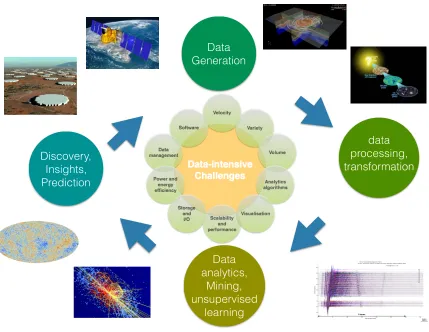
Figure 6: Full data path for Earth, Planetary, and Universe sciences.
The Earth, Planetary, and Universe (EPU) sciences are exemplary in their sharing of scientific culture with observational, data-driven research practices that cover a wide spectrum of spatial and temporal scales. EPU research addresses fundamental problems associated with the understanding of the formation, structure, and evolution of EPU systems in their environment (e.g., stellar and fluid envelopes); transient events (e.g., stellar explosions, earthquakes, volcanic eruptions) and their radiation (e.g., high-energy astro particles and gravitational, electromagnetic, acoustic, and seismic waves); and associated applications of societal and economic impact (e.g., prevention and risk mitigation of volcanic and seismic hazards, exploration and management of energetic resources, evaluation and monitoring of environmental changes, and spatial meteorology).