“Change content and aid effectiveness: How the size of
change content affects implementation of technical assistance
recommendations in developing Pacific Island countries."
A 152.785 (30 credit) research report presented in partial fulfilment of the requirements for the degree of Masters of Management at Massey University
MARGARET ELIZABETH COTTON
Abstract
International aid agencies offer development aid with the expectation that developing
countries will transform to such an extent that they can look after themselves, yet many
countries have not developed as expected. This study identifies how the size of the
change content of technical assistance recommendations affects their implementation:
Technical assistance recommendations from the Pacific Financial Technical Assistance
Centre, Fiji, to developing Pacific Island countries were studied. A content analysis was
conducted to assess size using traditional transactional and transformational change
definitions, and a survey questionnaire was used to assess size from the perspective of
the technical assistance recipients. The content analysis findings suggest the majority
of the changes are transactional, whereas, the recipients have rated the majority of the
changes as large. The recipient’s perspective of size was most indicative of the likely
implementation of the change. Changes rated as ‘small’ by the recipients are almost
certain to be implemented whereas changes rated as ‘large’ have only a one-in-three
chance of being implemented. If technical assistance recommendations are
transactional manageable reforms in the eyes of aid agencies but are not seen the same
way by recipients the chances a recommendation will be implemented, and the
technical assistance successful, are compromised. The study supports the notion that to
be effective technical assistance recommendations need to be seen through the eyes of
Table of Contents
Abstract ... ii
Table of Contents ... iii
List of Tables ... v
List of Figures ...vi
Acknowledgements ... vii
Chapter 1: Change Content and Aid Effectiveness ... 1
1.1 Contextual Background ... 1
1.2 Purpose of the Research ... 1
1.3 Research Question ... 2
1.4 Importance of the Research ... 2
1.5 Overview of Research Methods ... 3
1.6 Overview of the Findings ... 4
1.7 Organisation of the Research Report ... 5
Chapter 2: Study Context ... 7
2.1 Context and Setting ... 7
2.2 Development Aid ... 7
2.3 The International Monetary Fund’s Technical Assistance Programme ... 8
2.3.1 The Pacific Financial Technical Assistance Centre ... 9
2.4 Summary ... 9
Chapter 3: Literature Review ... 10
3.1 The Aid Conundrum ... 10
3.1.1 Aid effectiveness studies are fraught. ... 11
3.1.2 Can development aid assist transformational change? ... 14
3.2 Change Literature ... 15
3.2.1 Themes of change management. ... 15
3.2.2 Transactional and transformational change. ... 16
3.2.3 The macro-micro debate: perspective of size matters. ... 17
3.3 The Intersection of Technical Assistance Aid and Change Management ... 19
3.4 Cross-Cultural Management Sounds a Caution ... 21
3.5 Summary ... 22
Chapter 4: Research Method ... 24
4.1 The Research Question ... 24
4.2 Population and Sample Selection ... 24
4.3 Choosing an Assessment Model ... 25
4.4 Data Collection ... 27
4.5 Data Analysis ... 29
4.5.1 Content analysis. ... 29
4.5.2 Analysing the recommendations. ... 32
4.5.3 Statistical analysis. ... 33
4.6 Reliability and Validity ... 33
4.6.1 Content analysis. ... 33
4.6.2 Survey questionnaire. ... 34
4.7 Ethical Considerations... 34
4.7.1 Risk of harm. ... 34
4.7.2 Informed and voluntary consent. ... 35
4.7.3 Conflict of interest ... 35
4.8 Assumptions and Limitations ... 36
Chapter 5: Findings ... 38
5.1 Findings from the Document Review ... 38
5.2 Findings from the Survey Questionnaire ... 39
5.2.1 Size of the recommendations. ... 40
5.2.2 Outcome of the recommendations. ... 41
5.2.3 Status of the recommendations. ... 43
5.2.4 Factors determining size and status of the recommendations. ... 45
5.2.5 Findings from general questions ... 46
5.3 Findings from the Content Analysis ... 48
5.4 Linking the Questionnaire Findings and the Content Analysis ... 50
5.4.1 Difference between respondents’ perspectives of size and content analysis. ... 50
5.4.2 Difference in outcome between respondents’ perspective and content analysis. 51 5.4.3 Difference in status between respondents’ perspective of size and the content analysis assessment of size. ... 53
5.5 Summary of Findings ... 55
Chapter 6: Discussion ... 57
6.1 Themes from the Literature Review ... 57
6.1.1 Myth or reality - technical assistance recommendations are still transformational. ... 57
6.1.2 Myth or reality – to be successful changes need to be seen through the eyes of the recipient. ... 59
6.1.3 Myth or reality - large changes can be overwhelming and can lead to paralysis. .. ... 60
6.1.4 Myth or reality – a strategy of small wins might be preferable... 60
6.1.5 Myth or reality – North American theories in non-North American countries are ethnocentric and expensive. ... 61
6.1.6 Myth or reality - the size of a change or series of changes depends on the perspective of the observer. ... 62
6.2 Support for Reception-based Content Analysis ... 62
6.3 Autonomy and Ownership or Paternalism ... 63
6.4 Summary ... 63
Chapter 7: Conclusion ... 65
7.1 Summary of the Study... 65
7.2 The Recipient’s Perspective of Size Matters Most ... 66
7.3 The Size of the Change Content does Affect Implementation ... 67
References ... 70
Appendices ... 73
Appendix 1: Letter Requesting Access to PFTAC reports ... 73
Appendix 2: Example Covering Letter ... 76
Appendix 3: Participant Information Sheet... 77
Appendix 4: Sample Questionnaire ... 79
Appendix 5: Content Analysis – Coding Dictionary ... 81
Appendix 6: Content Analysis – Coding Form ... 82
Appendix 7: Size of Recommendations by Country ... 83
Appendix 8: Outcome of Recommendations by Country ... 84
Appendix 9: Status of Recommendations by Country and Size ... 85
Appendix 10: Respondents’ Responses to the General Questions ... 86
Appendix 11: Content Analysis – Size of Recommendations by Country ... 87
Appendix 12: Content Analysis – Outcome of Recommendations by Country ... 88
List of Tables
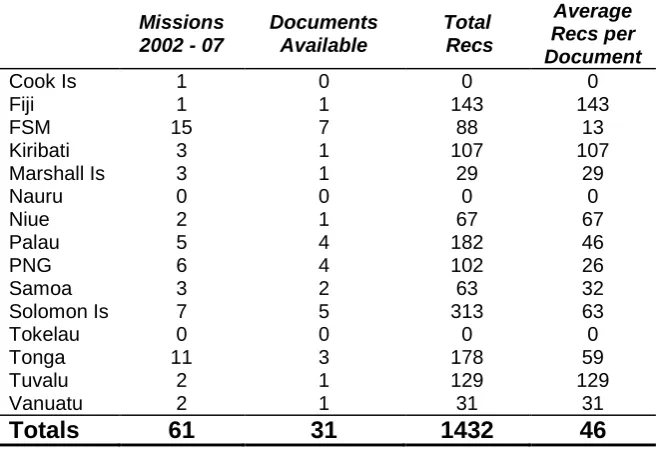
Table 1: Missions, Documents and Recommendations by Country ... 38
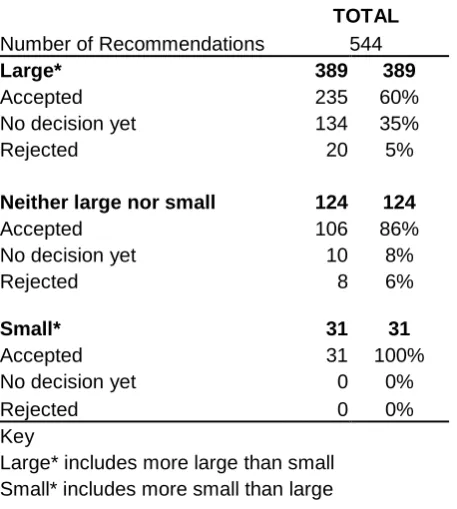
Table 2: Summary: Outcome of the Recommendations by Size ... 43
Table 3: Summary: Status of the Recommendations by Size ... 44
Table 4: Size of Recommendations by Country ... 83
Table 5: Outcome of Recommendations by Country ... 84
Table 6: Status of Recommendations by Country and Size ... 85
Table 7: Content Analysis – Size of Recommendations by Country ... 87
Table 8: Content Analysis – Outcome of Recommendations by Country ... 88
List of Figures
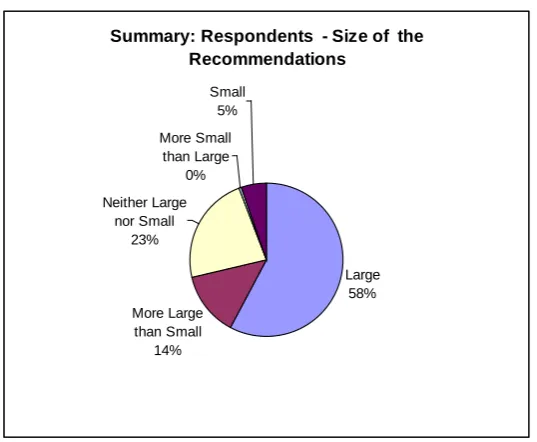
Figure 1: Summary: Respondents’ Ratings - Size of the Recommendations ... 40
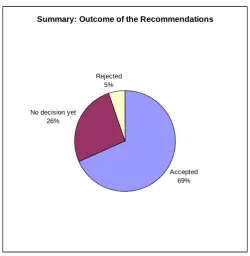
Figure 2: Summary: Outcome of the Recommendations ... 42
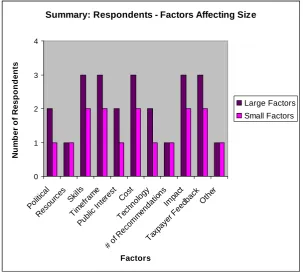
Figure 3: Summary: Respondents - Factors Affecting Size ... 45
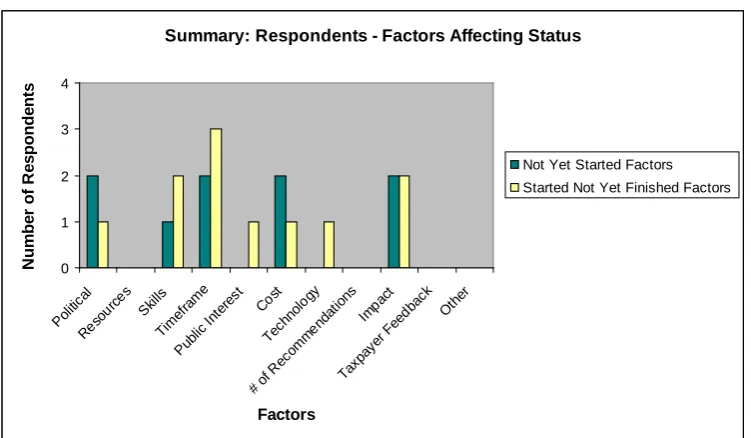
Figure 4: Summary: Respondents - Factors Affecting Status ... 46
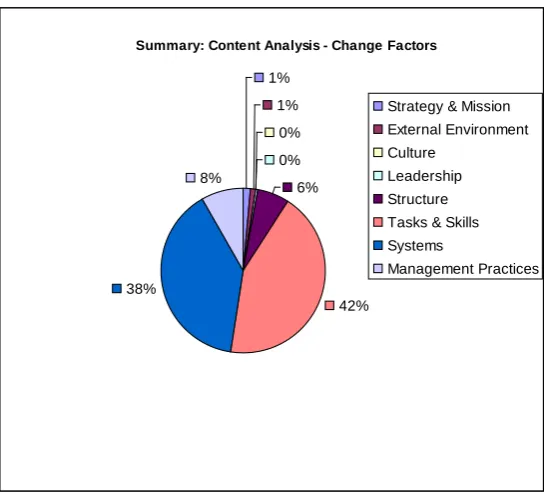
Figure 5: Summary: Content Analysis – Change Factors ... 49
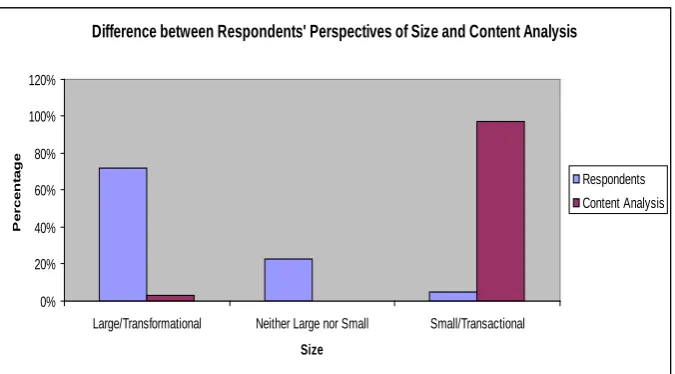
Figure 6: Difference between Respondents’ Perspectives of Size and Content Analysis ... 51
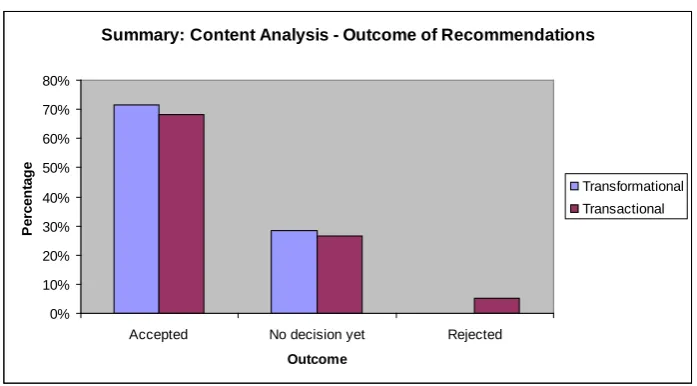
Figure 7: Summary: Content Analysis – Outcome of Recommendations ... 52
Figure 8: Difference in Outcome between Respondents’ Perspectives and Content Analysis ... 53
Figure 9: Summary Content Analysis – Status of Recommendations ... 53
Acknowledgements
I would like to thank Dr Alan Coezter for his able supervision throughout the research project.
I would particularly like to thank Dr Susan Adams, PFTAC Co-ordinator, for agreeing to make the PFTAC reports available to me, without this there could have been no project. Elenoa Bogiwalu, PFTAC Administration officer, also assisted with the locating the documents and copying them for me.
I would also like to thank the Hon. Siosiua U’toikamanu, former Minister of Finance Tonga; Mr Shadrach Fanega, Permanent Secretary Department of Finance and Treasury Solomon Islands; and Mr Finley Perman, Secretary of Finance and Administration, Federated States of Micronesia for generously giving their time to assist with this study.
Thank you to Pamela Todd, for generously giving her time and knowledge to assist with editing and structuring the report.
Chapter 1: Change Content and Aid Effectiveness
This chapter introduces the current study. It outlines the contextual background and
purpose of the research. The research question is posed, the importance of the research
is explained, and the methodology used is described. This chapter also outlines the
structure of this report and the contents of each chapter.
1.1 Contextual Background
International aid agencies offer money and expertise to ‘kick start’ development with
the expectation that developing countries will transform to such an extent that they can
look after themselves (Ellerman, 2007). Consultants from international agencies like
the International Monetary Fund visit developing countries to undertake diagnostic
missions. They then provide the public sector leaders with recommendations coupled
with an implicit assurance that implementation of the recommendations will transform
their organisations into modern, efficient and effective engines well equipped to meet
the demands of a modern public sector.
The difficulty with this “big-push-investment-project” approach was expressed as early
as 1958 by Albert Hirschman. He contended “if a country had the capacity to plan,
co-ordinate, implement, and absorb the “big push,” then it would hardly be an
underdeveloped country in the first place.” (Ellerman, 2007, p. 562).
Despite receiving billions of dollars in development aid, developing countries have not
achieved the growth aid agencies expected. This should perhaps come as no surprise.
The plethora of literature on organisational change focuses on North American
experiences where the success rate for change programmes is said to be as low as 30
percent (Beer & Nohria, 2000). It is, therefore, axiomatic that wide-scale change in
developing countries is also fraught.
1.2 Purpose of the Research
The purpose of this research is to identify how the size of the change content affects
recommendations made to developing countries are typically ‘big push’ or
transformational in nature, the success rate for implementation of these changes would
be likely to match that of developed countries or be lower. This research will assess the
size of change recommendations made to developing countries. The findings will
contribute to the debate on aid effectiveness and the nature of change in developing
countries.
The literature on organisational change has North American origins and is typically
based on intra-country population samples. Yet the nature of development assistance,
and specifically technical assistance, is cross-cultural. It is possible that the labels
describing change concepts in North American literature may not be widely known, or
understood in developing countries. Nevertheless, the concepts may be known and
understood if different labels are used. When the underlying change concepts are
understood, discussions about proposed changes and the challenges of implementation
can be held from a common perspective. If the change concepts are not commonly
understood, any discussion about change is unbalanced and positive change outcomes
will be harder to achieve. To overcome possible cross-cultural differences the research
will examine the size of the change content from the perspective of both the consultant
advisor and the recipient public sector leader. This will identify if there is a common
understanding of the size of the technical assistance recommendations.
1.3 Research Question
This study poses the following research question: how does the size of change content
affect the implementation of technical assistance recommendations in developing
Pacific Island countries? The cross-cultural nature of this study calls for the size of the
change content to be assessed from the perspective of both the consultant advisor and
the recipient public sector leader. This will help identify if implementation of the
recommendations is affected by perceptions of the size of the change content.
1.4 Importance of the Research
Aid effectiveness literature questions whether the ‘big push’ transformational change
studies show an approach which starts where the countries are, and sees the changes
through their eyes is more effective in achieving the desired changes (Ellerman, 2007).
This is consistent with the small-win theories of Karl Weick (1984) and John Bryson
(1988), in the change management literature, that suggest people can be overwhelmed
by big transformational changes to such an extent that they do nothing. However,
where changes are small and transactional in nature people are not overwhelmed and
are able to make a series of small changes leading to a bigger overall change.
The Ellerman, Weick, and Bryson theories are relevant to the current study. If the
technical assistance recommendations given to public sector leaders in developing
countries are transformational in nature, the leaders may be overwhelmed by the
changes to such an extent that implementation of the changes may be affected. If, on
the other hand, a series of small changes is recommended there may be a greater
likelihood of successful implementation. What is the nature of change content in
technical assistance recommendations? Do perceptions of the size of the
recommendations differ between the advisor and the recipient? How important is the
encouragement to ‘see it through their eyes’?
The researcher has not been able to find any studies which assess how the size of
change content affects the implementation of changes in developing countries. The gap
in the literature filled, in part, by this study is the application of the small-win strategy
theory to public sector change in developing Pacific Island countries. To the extent that
the size of the change content influences the implementation of the recommendations,
the findings will also be valuable for consultant advisors and donor agencies.
Consultant advisors will be able to repackage their advice and donor agencies will be
able to redefine technical assistance outcomes.
1.5 Overview of Research Methods
The research question arises from the nexus between three complementary disciplines:
change management, cross-cultural management, and aid effectiveness. The researcher
was not able to locate a similar study from which to replicate a research methodology.
The research methods used were document review, survey questionnaire and content
recommendations. The recommendations were then categorised using content analysis
techniques. The technical assistance recipients’ perceptions of the size of the changes
were obtained from a survey questionnaire.
The researcher is a consultant to the International Monetary Fund in the area of tax
policy and administration and was given permission to use technical assistance
documents in her area of expertise provided to Pacific Island countries. Data were
collected from archival documents and a survey questionnaire. The content analysis of
technical assistance report recommendations was undertaken to categorise the size of
the recommendations using transformational and transactional change concepts.
Recognising that there may be a difference between the researcher’s classification of
the change content and that of the recipient public sector leaders, survey questionnaires
were sent to the recipients asking them to classify the change content in the
recommendations against a 5-step Likert scale. Recipients were also asked about the
outcome and status of the recommendations. The integrative approach to ascertaining
the size of the recommendations helped to identify if technical assistance
recommendations are of ‘big push’ or transformational in nature and also whether there
are differences in perceptions of the size of change content.
1.6 Overview of the Findings
The findings suggest the size of the change content differs depending on the assessment
method used. The content analysis suggests that the majority (97%) of the
recommendations relate to transactional changes. However, survey questionnaire
respondents have rated the majority of the recommendations as ‘large’ and ‘more large
than small’ (72%). If size is assessed against traditional definitions of transformational
and transactional change the findings suggest that transformational recommendations
are less likely to be implemented (21%) than transactional recommendations (38%).
When size is viewed from the perspective of the recipients ‘small’ changes are
significantly more likely to be implemented (97%), nearly half (48%) of changes rated
as ‘neither large nor small’ are implemented and only 30% of ‘large’ and ‘more large
than small’ changes are implemented. Assessing change content as transformational is
indicative of a change least likely to be implemented. However, assessing a change as
transactional does not allow further analysis of the affect of size on implementation.
Assessing the size of the change content from the recipients’ perspective is more
indicative of the effect size has on implementation.
1.7 Organisation of the Research Report
This Chapter has introduced the current study. The remainder of this report adopts a
standard research report structure as follows.
Chapter 2: Study Context. This chapter outlines the contextual background to this
study. The chapter defines development aid and provides an overview of the
International Monetary Fund’s technical assistance programme, particularly that
provided through its Pacific Financial Technical Assistance Centre based in Fiji.
Chapter 3: Literature Review. This chapter frames the research against the three areas
of scholarship: aid effectiveness, change management, and cross-cultural management.
The aid conundrum is outlined with a particular focus on aid effectiveness literature.
The concept of transformational change in the context of development aid is introduced
to draw the nexus with change literature. Next the change literature is reviewed,
particularly as it relates to transformational and transactional change concepts and the
macro-micro debate on managing change. The literature review then draws the threads
from each of these areas of scholarship together to a natural intersection, which frames
the research question. Finally cross-cultural management literature is outlined
recognising that care needs to be taken when applying theories from one culture into
another.
Chapter 4: Research Method. This chapter sets out the research question, and the
population and sampling approach used in the study. The data collection methods used
in the study - document review and survey questionnaire - are explained and justified.
The use of content analysis techniques to analyse the data and the processes used to
ensure validity and reliability of the findings are also explained and justified. Finally
Chapter 5: Findings. This chapter outlines the findings from the document review,
survey questionnaire and content analysis. The findings from the survey questionnaire
and the content analysis are then reviewed to identify differences between the
respondents’ perspectives of size and the content analysis findings. The chapter
concludes with findings that indicate the effect the perspective of the size of the change
content has on the outcome and implementation status of the recommendations.
Chapter 6: Discussion. This chapter links the main findings from the study with the key
themes in the literature review. The key themes are outlined and the findings in relation
to each of the themes are discussed. The chapter concludes with a brief discussion of
the advantages of reception-based content analysis in the context of this study, and the
fine balance between seeing change through the eyes of the recipient and paternalism.
Chapter 7: Conclusion. This chapter summarises the study undertaken and the main
findings. Conclusions reached from the study are presented together with questions for
aid agencies and consultant advisors to consider when applying the learnings in
practical settings. The chapter also includes suggestions for further research,
particularly understanding the difference in perspectives of the size of the change
Chapter 2: Study Context
This Chapter provides the context and setting for the current study, and defines
development aid. This chapter also provides an overview of the International Monetary
Fund’s technical assistance programme, in particular that provided through its Pacific
Financial Technical Assistance Centre.
2.1 Context and Setting
Development aid and technical assistance are growing features of international
relations. Significant amounts of money have been, and are continuing to be, spent on
development aid in Pacific Island countries. Notwithstanding the large and increasing
aid envelope, very few Pacific Island countries display economic indicators showing
significant improvement. Opportunities exist for studies that explore the reasons why
the desired changes are not materialising.
The primary focus of this study is the change content of technical assistance
recommendations and how the size of the change content affects the implementation of
technical assistance recommendations. The broad context of the study is the
multi-cultural environment of international development aid. The specific setting is technical
assistance provided by the International Monetary Fund in the Pacific region.
2.2 Development Aid
Development aid, also known as development assistance, is the term used to describe
the general aid and assistance given by developed countries to support and help grow
developing countries. Development aid given on a country-to-country level is known
as bi-lateral aid. Development aid given on an agency-to-country level is known as
multi-lateral aid. Aid agencies include organisations like the World Bank, the United
Nations and the International Monetary Fund. Development aid has a long-term focus
on alleviating poverty and does not encompass humanitarian aid, which is provided in
times of war and natural disaster to alleviate short-term poverty. Development aid is
2.3 The International Monetary Fund’s Technical Assistance Programme
This study is concerned with the provision of technical assistance, specifically technical
assistance provided by the International Monetary Fund through its Pacific regional
technical assistance centre.
IMF technical assistance supports the development of the productive resources of member countries by helping them to effectively manage their economic policy and financial affairs. The IMF helps these countries to strengthen their capacity in both human and institutional resources, and to design appropriate macroeconomic, financial, and structural policies. (IMF, 2008c, p. 1)
The technical assistance offered by the International Monetary Fund is provided to
recipient countries through missions (visits) of varying duration during which time
technical and diagnostic advice is provided, and training courses and seminars are
delivered. In some cases, on-line advice and support is provided (IMF, 2008c).
In 1993, to overcome difficulties meeting the technical assistance requests of small
island countries, the International Monetary Fund, in collaboration with donor agencies
from New Zealand, Australian, Japan and Korea, and the Asian Development Bank,
established a Pacific regional technical assistance centre known as the Pacific Financial
Technical Assistance Centre. Since that time a further five regional technical
assistance centres have been established recognising the need for “better tailoring of
assistance to the particular needs of a region” (IMF, 2008a).
In 2004 approximately 10 percent of the International Monetary Fund’s total
administrative budget was allocated to technical assistance (IMF, 2005a), rising to
approximately 24 percent of the administrative and management budget in 2007 (IMF,
2007). It is not possible to do a direct comparison between these figures. Some of the
increase will be attributed to the establishment of a sixth regional office in 2007.
Suffice to say there has been a sizeable increase in the technical assistance budget
2.3.1 The Pacific Financial Technical Assistance Centre
The Pacific Financial Technical Assistance Centre, established in 1993 and based in
Fiji, provides technical assistance in four core areas: public financial management,
macroeconomic and financial statistics, central banking, and tax policy and revenue
administration. Long-term advisors are engaged by the International Monetary Fund to
provide full-time technical assistance in each of these four areas to the Pacific Island
countries served by the Centre. Short-term advisors are also engaged on a needs basis.
Most of these advisors have been from Australia, New Zealand or the United States of
America.
Ninety percent of the International Monetary Fund technical assistance is provided to
low and low-middle income countries (IMF, 2007). All 15 Pacific Island countries
serviced by the Pacific Financial Technical Assistance Centre are in this category. The
countries are Cook Islands, Federated States of Micronesia, Fiji, Kiribati, Nauru, Niue,
Palau, Papua New Guinea, Republic of the Marshall Islands, Samoa, Solomon Islands,
Tokelau, Tonga, Tuvalu and Vanuatu. The budget for the Pacific Financial Technical
Assistance Centre technical assistance for the financial years 2009 to 2011 is
$USD10.5m (IMF, 2008b), a 33% increase on the $USD7m budget for the financial
years 2005 to 2008 (IMF, 2005b).
2.4 Summary
This chapter provided the contextual background to this study and defined development
aid. To further help locate the study in time and culture, the chapter has also provided
an overview of the International Monetary Fund’s technical assistance programme
particularly the regional Pacific Financial Technical Assistance Centre. The tax policy
and revenue administration technical assistance provided by the Pacific Financial
Chapter 3: Literature Review
This chapter frames the research against three areas of scholarship: aid effectiveness,
change management, and cross-cultural management. The aid conundrum is outlined
with a particular focus on aid effectiveness literature. The concept of transformational
change in the context of development aid is introduced to draw the nexus with change
literature. Next the change literature is reviewed, particularly as it relates to
transformational and transactional change concepts and the macro-micro debate on
managing change. The literature review then draws the threads from each of these areas
of scholarship together to a natural intersection, which frames the research question.
Finally cross-cultural management literature is outlined recognising that care must be
taken when applying the theories of one culture into another culture.
3.1 The Aid Conundrum
This section outlines the aid conundrum by discussing the evolution of themes in
development literature with a particular focus on aid effectiveness literature. The
concept of transformational change in the context of development aid is also introduced
to draw the nexus with change literature.
Philanthropy and largesse shown by developed countries towards developing countries
have been growing features of international relations in the last 60 years. International
aid agencies offer money and technical expertise to ‘kick start’ development with the
expectation developing countries will transform to such an extent that they can look
after themselves (Ellerman, 2007). Aid theories, objectives, and approaches have
changed during those years as macro-economic factors and international relations have
changed. Typically, these changes have reflected the current thinking and policies of
the donors rather than the needs of the developing countries (Pronk, 2001).
Development aid in the Pacific is somewhat more youthful, only coming to the fore as
countries sought independence and the policies and programmes of the colonial rulers
were replaced by national government initiatives. Despite the relative youthfulness of
consumers of development aid and routinely feature among the top ten recipients of
international aid (Jayaraman & Choong, 2006).
Total development aid funds spent in Pacific Island countries (Cook Islands, Federated
States of Micronesia, Fiji, Kiribati, Nauru, Niue, Palau, Papua New Guinea, Republic
of the Marshall Islands, Samoa, Solomon Islands, Tonga, Tuvalu, Vanuatu) in the 14
years to 2000 exceeded $USD11.6 billion (Yager, 2001). Notwithstanding, the large
and increasing aid envelope, very few Pacific Island countries display economic
indicators showing significant improvement. Evaluation reports by the major bilateral
and multilateral providers raise questions about the effectiveness of much of the aid in
the Pacific (ADB, 2007; Bucknall, Allan, & Vaai, 2004; IMF, 2004, 2005a, 2005c;
Pacific Islands Forum Secretariat, 2005; Pennington, 2005; World Bank, 2005; Yager,
2001). The Organisation for Economic Co-operation and Development (OECD) has
established a Working Party on Aid Effectiveness globally and there is a growing body
of academic literature questioning the effectiveness of the current application of
development aid (Ellerman, 2007; Jayaraman & Choong, 2006; Sobhan, 2002).
In the seven decades that development aid has featured in international relations, a vast
body of literature has also evolved focussing on four principal areas: motives;
objectives; effectiveness, and impact (Pronk, 2001). The recent writings on aid
effectiveness are relevant to the current study.
3.1.1 Aid effectiveness studies are fraught.
Aid effectiveness studies are fraught, not the least because of the difficulties with
establishing a control environment and generalising the findings from one aid initiative
into another environment with different cultural, political, institutional capacity and
stability features. Features of good aid are said to include aid that is adapted to the
technical and institutional capacity of the recipient; aid that is compatible with the
country; aid that is demand driven; aid that does not seek to replace local skills with
foreign skills, and aid which does not lead to distortions in the local salary structures
(Pronk, 2001, p. 620). Perhaps not surprisingly, these features are also reflected in the
More recently the aid effectiveness debate has centred on selectivity and which
countries are deserving of aid; should aid be used as a reward for good behaviour, and
progress with governance and policies approved of by the donor agencies or should aid
be directed at countries where there is no tangible progress but there is a will to change.
Pronk (2001) argues that it may be, inter alia, a lack of capacity, institutional weakness
of government, and inadequate policy experience and skill level of the administration
that is behind the failure to implement changes. Therefore, he concludes: “countries
should be helped (his emphasis) to stabilize, to adjust, to perform and to develop, rather than being expected to achieve all this under their own steam” (2001, p. 627).
Implicit in Pronk’s conclusion is the notion that donor agencies, via their consultants,
provide technical assistance and policy guidance to the recipient countries and then
leave the countries to implement the advice under their own steam. On the basis of
recent debate, if the country does not then implement the recommended changes, it
would not be selected for future aid because to reward the country for inactivity would
be inappropriate: the reward (additional development aid) should go to those countries
that have shown improvements in policy and good governance. The irony of this
outcome is evident.
The disparity between the approach of aid agencies expecting outcomes and countries
achieving the changes is not new. Ellerman (2007) argues that much international
development aid is actually unhelpful aid because the same basic “big push”
development strategy applicable in the 1940s and 1950s is extant nearly 70 years later.
The difficulty with the “big-push-investment-project” approach was expressed as early
as 1958 by Albert Hirschman. He contended “if a country had the capacity to plan,
co-ordinate, implement, and absorb the “big push,” then it would hardly be an
underdeveloped country in the first place.” (Ellerman, 2007, p. 562).
Recent literature in development studies suggest the two features of good aid that
typically lead to positive results are autonomy and ownership (Bucknall et al., 2004;
Ellerman, 2004a, 2007; OECD, 2005; Pronk, 2001, 2003; Sobhan, 2002; World Bank,
2000). These features were somewhat belatedly recognised by the Organisation for
Economic Co-operation and Development member countries in the Paris Declaration
Autonomy exists where the recipient decides what to focus on and understands the
motivations behind that decision rather than being driven by external constraints
attached to receipt of the aid. Ownership embodies responsibility and accountability for
the change in the developing country. Ownership is important because developing
countries that are motivated to change are likely to find ways to make the changes a
reality. At face value these two features suggest a simple answer to encouraging
change: aid agencies should step away from imposing conditional aid and wait for
motivated countries to request help. Given the scale of development aid programmes
today, the simplicity of this statement is fanciful. Aid agencies would be better placed
to ask how they can provide technical assistance in a manner that is more likely to lead
to implementation. What can be done differently? Ellerman (2007, p. 575) suggests a
somewhat simplistic approach to encouraging self-help: start from where the countries
are and see the world through their eyes. This approach is simple in its description but
difficult to achieve in practice. He suggests that by respecting the autonomy of the
developing country, one provides the proverbial fishing rod and not the fish.
There are a number of difficulties for aid agencies with an approach which starts where
the countries are and sees the changes through the countries’ eyes when cross-cultural
environments are involved. First, if technical advisors do recommend transformational
change, this is large-scale, long-term and susceptible to high rates of failure (Beer &
Nohria, 2000) even in developed countries. If transformational change is prone to
failure in developed countries, which ostensibly have the wherewithal to succeed, it is
not difficult to imagine the size of the challenge in developing countries. Secondly,
results-based management and outcome-focussed aid agencies struggle with the
gradualist approach necessary for transformational change because the agencies
constantly demand results, which often cannot be seen for generations. Thirdly, the
‘iceberg syndrome’ is notoriously difficult to overcome. Technical advisors
recommend changes to what they see in the institutional framework of the country, i.e.,
what is above the waterline. Often they cannot or do not understand the political,
3.1.2 Can development aid assist transformational change?
Aid effectiveness commentators do not seem to be rejecting the notion of aid agencies
recommending transformational change; rather they are suggesting a step-by-step,
gradualist, evolutionary or incremental approach should be recognised as most likely to
lead to sustained change (Ellerman, 2007; Pronk, 2003).
Historically, transformational change in the context of aid was described as “the dream
of socially engineering economic development on a broad scale” (Ellerman, 2004b, p.
312). For ‘broad’ one can read national scale. Well-meaning aid agencies with the
benefit of hindsight could see what needed to happen to develop a country then, armed
with funding, skills and other resources attempted to jump-start all the “mutually
reinforced economic processes within the recipient country at one time” (Ellerman,
2004b, p. 312). This approach came to be known as the balanced growth debate.
Critics rejected the balanced growth approach in favour of Albert Hirschman’s
unbalanced growth approach, which focuses on small achievable changes. Once a
small success manifested, it was said this would create additional pressures on other
areas in the organisation (or country) to learn and change (Ellerman, 2004b; Pronk,
2003).
The unbalanced growth approach supports a success-breeds-success notion. The value
of the approach derives from how the approach overcomes psychological barriers to
change:
The successes when broadcast horizontally to those facing similar problems will start to break down the paralyzing beliefs that nothing can be done and will fuel broader initiatives that take the earlier wins as their benchmark. (Ellerman, 2004b, p. 317) (my emphasis)
If we have to take all the variables into account at the same time, the picture can become so complicated that we become paralysed about how to act and conclude that it is better to refrain from any action at all. (Pronk, 2003, p. 387)
The connection between psychological factors and change will be explored
further in the section on change literature: The Macro-Micro Debate: Big Wins
To conclude this section, significant amounts of money are spent on development aid
(ninety percent of the International Monetary Fund’s current focus is on technical
assistance) which is said to still be encouraging if not demanding transformational
changes in the recipient countries. The changes are not manifesting in the manner that
aid agencies expect given the level of their investment of time and money. Critics of
the big push, transformational change approach suggest a new unbalanced growth
approach where agencies look at what needs to be done through the eyes of the country
and start from the recipient country’s starting point. The aid thus supports the recipient
country as it learns and grows, and acts as a catalyst to enable the bigger picture
(transformation) to be broken down into manageable chunks.
3.2 Change Literature
Coinciding with the genesis of development aid, Kurt Lewin developed his three-phase
model for successfully managing change – unfreeze, change, refreeze (1947; 1951).
Since that time, a vast body of literature has evolved on organisational development
and change, most of which has focused on North American experiences (Faucheux,
Amado, & Laurent, 1982). There is, now, a growing body of change literature detailing
studies from Latin, European, and Asian countries but the researcher has not been able
to find any change literature involving experiences in Pacific Island countries or
comparable developing regions like the Caribbean.
This section briefly covers the development of themes in change literature with a
particular focus on transformational and transactional change content and the
macro-micro approach to managing change. Literature from adjacent disciplines that might
shed light on the macro-micro debate is reviewed, enabling the connection between the
North American change literature and the development aid conundrum described earlier
in this chapter to be drawn.
3.2.1 Themes of change management.
The literature on change management covers four recurrent themes: change content,
context, process, and outcomes (Armenakis & Bedeian, 1999). Change content is the
substance of the change and is organisation specific (Walker, Armenakis, & Bernerth,
internally and externally to the organisation. Change process is what happens to
manage the change, and the intended actions that need to occur to bring about the
desired outcome. Change outcome is the outcome of the change effort, both intended
and unintended outcomes.
The complexity and multi-dimensional nature of change arises because whilst each of
the four key themes - content, context, process, and outcomes - are inter-related
variables they also have significant influences independent of each other (Devos,
Buelens, & Bouckenooghe, 2007). In the absence of any change literature focussing on
Pacific Island experience, it seems prudent to start by considering one of the more
objective themes, change content, than by delving into the more complex arena of
context. Consequently this literature review and study focus on change content; the
other variables are not addressed directly.
3.2.2 Transactional and transformational change.
Change content is often described as incremental transactional change or fundamental
transformational change. These terms and many others embodying similar concepts
have been used. For example: first order and second order change; convergent or
incremental change and radical change (Devos et al., 2007); continuous, evolving and
incremental change; episodic, discontinuous or intermittent change, (Idenburg, 1993;
Weick & Quinn, 1999); or simply small and big change (Bryson, 1988; Krieger, 1986).
These semantic differences aside, the concepts of small and big, transactional and
transformational, continuous and episodic, first and second order change are not
dissimilar. Small, transactional, continuous, and first order changes are changes that
occur gradually and are small scale, less drastic, and enhance efficiency or overcome
stagnation and do not affect the core of the organisation (Devos et al., 2007). Big,
transformational, episodic, and second order changes are more radical changes which
can be disruptive and result in a complete change to the fabric of the organisation.
Such changes are said to be episodic because they are intermittent and typically occur
at the behest of external environmental factors rather than being internally driven.
In this study, the concepts of transactional and transformational change are defined
Performance and Change (1992). Transactional change factors are structure,
management practices, systems (policies and procedures), work unit climate,
motivation, task requirements and individual skills, individual needs and values, and
individual and organizational performance. Transformational factors of change include
the external environment, leadership, mission and strategy, organisational culture and,
individual and organisational performance.
3.2.3 The macro-micro debate: perspective of size matters.
Placing semantic differences to one side, the size of a change reflects the perspective of
the observer (Weick & Quinn, 1999). At a macro level, an observer might see “what
looks like repetitive action, routine and inertia dotted with occasional episodes of
revolutionary change”, but from a closer view a micro analysis might suggest ongoing
adaptation and adjustment (p. 362). The notion of ‘perspective of the observer’ is
relevant to the current study: if the categorisation of the size of a recommendation using
North American theories is different from the recipient’s perspective of the size of the
recommendations this will affect the answer to the research question. Intriguingly, if
one looks back to Weick’s earlier writings in the field of psychology, this notion of a
micro view of a macro problem is mooted (Weick, 1984).
In the late 1970s and early 1980s, the concept of an accumulation of co-ordinated small
steps to achieve transformational change was mooted (Mintzberg, 1987; Quinn, 1978,
1979; Weick, 1984). Writing in the psychology field Weick (1984) opined:
The massive scale on which social problems are conceived often precludes action because the limits of bounded rationality are exceeded and arousal is raised to dysfunctionally high levels. People often define social problems in ways that overwhelm their ability to do anything about them. (p. 125)
In this context, arousal is equivalent to the degree of stimulation or, at worst, the degree
of stress an individual feels when confronted with a situation. Where a problem is
described as complex or serious, people become highly aroused; this is appropriate if
they know what to do. If people do not know what to do, the heightened arousal can
lead to them becoming overwhelmed to the point where it is detrimental to completion
described as minor, lower levels of arousal result, which allow the learning of new
responses (Weick, 1984, p. 41).
Weick suggests an accumulation of co-ordinated small wins is more likely to achieve
transformational change than a single, large stride. He describes small wins variously
as:
Quick, opportunistic, tangible first steps only modestly related to the final outcome … driven less by logical decision trees, grand strategy … than by action that could be built upon, action that signalled intent as well as competence. (p. 42)
A small win is a concrete complete, implemented outcome of moderate importance. By itself, one small win may seem unimportant. A series of wins at small but significant tasks, however, reveals a pattern that may attract allies, deter opponents, and lower resistance to subsequent proposals. Small wins are controllable opportunities that produce visible results. (p. 43)
Relating his theory to episodic and incremental change concepts Weick concludes: “A
series of small wins can be gathered into a retrospective summary that imputes a
consistent line of development, but this post hoc construction should not be mistaken
for orderly implementation” (p. 43). Thus large-scale change can be achieved through a
series of small wins. The small wins pave the way for the larger change, which would
not be possible without those earlier building blocks generating a sense of achievement
and “heightened interest in attempting a second win” (Weick, 1984, p. 44). In common
parlance this might be described as ‘success breeds success’.
Weick’s theory on small wins is expanded upon in John Bryson’s article Strategic planning: big wins and small wins (1988). Bryson’s focus is on public sector and voluntary organisations facing external pressures to make fundamental changes. He
draws a connection between big wins and transformational change, and small wins and
changes in degree (previously referred to as transactional changes). Bryson suggests a
“think big act small” (1988, p. 15) approach to achieving the fundamental changes
facing the public sector. To that end, a series of small wins informed by an overall
The importance of small wins in organisational development has been the subject of
many articles (Bryson, 1988; Griffiths & Haigh, 2004; Reay, Golden-Biddle, &
Germann, 2006) and featured in widely recognised texts Leading Change (Kotter, 1996) and The Leadership Challenge (Kouzes & Posner, 2002). The notion of small wins has withstood the test of time and is still favourably recognised (Foster-Fishman
et al., 2006; Griffiths & Haigh, 2004; Reay et al., 2006).
To conclude this section, it is probable that when viewed prospectively, change might
be considered transformative and episodic. But when viewed retrospectively change is
actually transactional and continuous: a series of small steps each building on the
success of the other. It is also probable that when viewed through the eyes of an
experienced practitioner or consultant, a proposed change may be viewed differently
from the way that same change would be viewed through the eyes of an inexperienced
person or developing country. What does this mean for development aid?
3.3 The Intersection of Technical Assistance Aid and Change Management
Economic growth and the pace of change in many developing countries are not at a
level that reflects the development aid invested in such countries. The countries are not
alone. Despite the various models for managing change that have been debated over
time, failure rates for organisational change remain high in developed countries. And
leaders in developed countries have the benefit of time, education and exposure to
others, something that not all Pacific Island leaders have. Perhaps the expectation of
success for developing countries is greater than the reality of success in North
American and allied developed countries.
Recent commentators in development studies are critical of the big push approach and
suggest that an unbalanced growth approach using a gradualist or step-by-step change
might be preferable to encourage ownership and autonomy, and build successes. Could
a small win strategy also be a refreshing change for technical assistance? A small win
strategy would be in marked contrast to the rational planning approach (identifying the
changes required and developing a high level plan to achieve the change) typically used
small win approach would not be entirely novel as it has been shown to work in
developing South Asia (Edwards, 1999).
The recent criticisms and the calls for autonomy, ownership, ‘starting where they are’
and ‘seeing it through their eyes’ in development studies literature mirror developments
in change literature. In the case of technical assistance, autonomy and ownership
manifest as formal requests for assistance and input into the terms of reference for the
assistance (typically the relevant Minister, permanent secretary or equivalent, or the
head of the government department is involved). Despite the country or organisation
being involved in the design of the technical assistance the outcome of the technical
assistance may not be successful implementation of the changes recommended. Is the
size of the technical assistance recommendations part of the reason change is not
achieved rather than lack of autonomy and ownership? If a technical advisor saw the
changes though the eyes of the recipient, might they see a very different challenge?
Could a small win strategy also be a refreshing change for technical assistance?
Ellerman (2007) and Pronk (2003) both argue that aid is still transformational in nature.
Is this true for technical assistance provided by the International Monetary Fund’s
Pacific regional assistance centre? If the technical assistance is recommending
transformational change, might the recipient country or organisation be overwhelmed
by the size of the changes and end up doing nothing? When seen through the eyes of a
manager in a developing Pacific Island country is the size of the task facing the
organisation so overwhelming as to be considered impossible by that person as change
leader? If a strategy of small wins is recommended, might the changes be seen as more
manageable and the Pacific Island manager more disposed to make the recommended
changes?
These questions, drawn from the intersection of development studies and change
literature, form the basis of this study. However, before finalising the research question,
3.4 Cross-Cultural Management Sounds a Caution
The researcher’s interest in this study arises from the point where the organizational
development and cross-cultural management scholarly communities intersect with the
international development community. The small wins concept emanates from North
America as does development aid. The link, or rather the disconnect, between North
American management theories and non-North American organisations began to be
recognised in the late 1970s. Nancy Adler (1983c; 2002) identified that extant
management writings typically reflected the North American experience and that
models and theories true for North Americans working in the United States of America
might not be true for workers and organisations across the globe. Aid agencies, like the
World Bank, International Monetary Fund and United Nations, seek to overcome this,
inter alia, by employing staff from around the world; nevertheless, in the case of any
one aid worker or aid team, the literature suggests it is important to stand back and
repackage the question or challenge in the linguistic, cultural, and values environment
of the recipient country or organisation.
Herein lays the collision of viewpoints and literature gap relevant to the current study.
The international development strategy seeks transformational change in developing
countries, which extant management theory suggests needs strategic planning and
change management techniques. However cross-cultural management theory suggests
if such techniques and tools developed in North America and allied countries are
applied outside those countries, the expected results might not occur.
Expecting transformational change in the absence of systematic research and models
appropriate for developing countries is expensive and ethnocentric (Adler, 1983b). In
the absence of any change research specific to developing Pacific Island countries, it is
useful to start by considering the factors that may influence a leader’s decision to
implement change recommendations. Identifying influencers on change in the public
sector in developing Pacific Island countries is one step towards understanding how
change is managed in this group. If there is a relationship between the size of the
change content and the subsequent action taken by the recipient, it can be postulated
that a greater degree of change might be achieved by technical assistance that delivers a
series of small win recommendations informed by an overall strategic direction rather
It is, however, probable that consultants, primarily sourced from New Zealand,
Australia and the United States of America will, consciously or unconsciously, follow
North American change theories when packaging their technical assistance. To that end
it is also possible they may consider their advice is in the nature of small win
recommendations informed by an overall strategic plan. It is not the purpose of this
study to ascertain the actual thinking of consultants when packaging their advice;
however, recognising the caution from the cross-cultural literature, the study will
consider whether the recommendations meet the criteria for transactional or
transformational change as defined by Burke and Litwin (1992).
The researcher has not been able to find any studies that compare different perspectives
of the size of change content between a consultant advisor and a recipient business
leader. The absence of any research in this area and any change research in Pacific
Island countries has limited the researcher’s ability to identify suitable research
methods for this study and to identify assumptions and limitations that might affect the
findings. However, the literature outlined in this chapter shows a confluence of
scholarly disciplines. This confluence makes the research viable and will make the
findings a valuable addition to the literature in this area of scholarship.
3.5 Summary
This chapter has described the literature from aid effectiveness, change management
and cross-cultural management disciplines relevant to this study. Specific focus has
been given to three emerging themes: first, the need for development aid to shift from a
big-push approach to one where aid agencies see the proposed changes through the
eyes of the country or organisation and start from where the country or organisation is;
secondly, the difference between transformational and transactional change which can
loosely be described as big and small change; and thirdly, the caution that North
American management theories do not automatically apply in non-North American
organisations. Drawing these themes together, it is possible that the labels used to
describe the size of change content in North American change theories may be different
from how leaders in developing countries would describe the size of the change
magnitude of the change content facing public sector leaders in developing Pacific
Chapter 4: Research Method
This chapter sets out the research question, and the population and sampling approach
used in the study. The data collection methods used in the study - document review
and survey questionnaire - are explained and justified. The use of content analysis
techniques to analyse the data and the processes used to ensure validity and reliability
of the findings are also explained and justified. The chapter also outlines how ethical
issues were addressed.
4.1 The Research Question
The research question to be answered from this study is how does the size of change
content affect implementation of technical assistance recommendations in developing
Pacific Island countries? This requires two key research variables – size of the change
content and the implementation status of technical assistance recommendations - to be
assessed. Specifically, what is the size of the change content contained in the technical
assistance recommendations; and were the recommendations implemented? The first
variable will be assessed against accepted definitions of transformational and
transactional change as discussed in the literature review, as well as from the
perspective of the recipients of the technical assistance documents. This will allow
differences in perceptions of the size of the change content to be identified. The second
variable will be assessed by self-report from the recipients.
4.2 Population and Sample Selection
The population for this research comprises all technical assistance missions on tax and
policy administration provided to the 15 Pacific Island countries to whom PFTAC
provides assistance: Cook Islands, Federated State of Micronesia, Fiji, Kiribati, Nauru,
Niue, Palau, Papua New Guinea, the Republic of the Marshall Islands, Solomon
Islands, Samoa, Tonga, Tokelau, Tuvalu and Vanuatu.
It was originally proposed to undertake a census approach to the research. The period
under review was the six years from 2002 to 2007 inclusive. The census approach was
written request was made to the Pacific Financial Technical Assistance Centre for
access to the technical assistance documents. A copy is attached at Appendix 1.
Approval to access the documents was given by Dr Susan Adams, co-ordinator of the
Pacific Financial Technical Assistance Centre office. A list of known missions was
provided to the researcher together with electronic and paper copies of the documents.
Of the 61 technical assistance missions conducted during the review period 31 aide
memoires and other reporting letters were available. Each of the documents was
reviewed and the recommendations extracted. To ensure all recommendations were
extracted, the ‘find’ function in Microsoft Word was used to identify all references to
the word recommendation, and derivatives thereof. Simultaneously, the paper-based
files were scanned manually and marked as each recommendation was extracted. A
total of 1432 recommendations were extracted relating to 13 countries. There were no
missions to Nauru or Tokelau in the review period. At this point a decision was made to
delimit the study.
Purposeful sampling was undertaken to identify the countries that had received the
most technical assistance in the review period. The amount of technical assistance was
determined by the number of missions undertaken in each country during the review
period. It was expected these purposefully selected countries would be information
rich and therefore would “illuminate the questions under study” (Patton, 1990, p. 169)
The three countries that had received the most missions were the Federated States of
Micronesia, Tonga and the Solomon Islands respectively. This result also gives wide
regional coverage: the Federated States of Micronesia is in Micronesia, Tonga is in
Polynesia and the Solomon Islands ares in Melanesia.
4.3 Choosing an Assessment Model
There are two widely recognised diagnostic models available to assess change content
and magnitude – the Model of Organizational Performance and Change known as the
Burke-Litwin model (Burke & Litwin, 1992) and the Transformation Imperative model
(Burke & Litwin, 1992; Vollman, 1996). The Burke-Litwin model divides change
content into transformational and transactional change and suggests an extensive
150-item diagnostic questionnaire be completed. The Transformation Imperative model,
adopt comprehensive systematic approaches to planning and evaluating the content of
the change initiatives. Neither of these models was considered suitable in the current
research for two main reasons.
1) To make the findings of this study useful to consultant advisors, aid agencies,
and public sector leaders in developing countries it is necessary to identify the
content of the specific recommendations that are considered big and small not
the overall impact of the combined recommendations.
2) To address possible differences between the consultant advisors and the
recipients of the recommendations the study compares the perceptions of the
recipients with the findings from a content analysis using traditional definitions
of transformational and transactional change. It is not practical or reasonable to
expect a technical assistance recipient to use either of these two diagnostic
models. Indeed, it is unlikely that persons in their positions would use the
models in practice; the models are more typically used by change advisors.
This study used a two-pronged approach to obtain data assessing the size of the change
content – document review and survey questionnaire. These methods overcome:
• the impracticalities of the Burke & Litwin and Vollman models in the
context of the current research,
• the difficulties of cross-cultural research highlighted by Schaffer and Riordan
(2003), and
• the absence of any existing research from which to duplicate the research
design.
The researcher notes her background as a white-middle-class New Zealander brings
with it certain values and expectations which will be different from those held by the
authors of the technical assistance recommendations and by the recipients of the
recommendations. In the light of the cautions in the cross-cultural management
literature, the integrative research design provided an opportunity to test the size of
4.4 Data Collection
Data were collected in two phases. Phase one involved a document review to identify
the technical assistance recommendations. Phase two involved a survey questionnaire
to determine how the recipients would categorise the magnitude of the
recommendations on a 5-point Likert scale. The recipients were also surveyed to
determine the implementation status of the recommendations.
Phase one of the data collection involved a document review of archival documents,
specifically technical assistance documents prepared by the resident Pacific Financial
Technical Assistance Centre tax policy and administration advisors and peripatetic
advisors for Ministers of Revenue (or their equivalent) or Chief Executive Officers of
the Revenue Administrations from 2002 to 2007 inclusive. The purpose of the review
was to identify the recommendations made. Technical assistance documents were
defined as aide memoires and other similar formal reports and included end of
mission reporting letters if there were no formal reports prepared. Powerpoint
presentations prepared during missions which summarised mission findings, were not
included because this would lead to duplication of recommendations.
One advantage of document review is the availability and accessibility of the archival
material (Berkeley Thomas, 2004; Sonpar & Golden-Biddle, 2005, 2007). Both hard
and soft copies of the documents were able to be obtained, which addressed issues of
authenticity and survivability (Scott, 1990). Authenticating the documents ensured that
one version did not differ from the other. Reviewing both hard and soft copies
provided additional assurance that any generalisations drawn from the documentary
data are not biased by selective survival of the documents.
The authors of the documents changed over the research period but this inconsistency
(Scott, 1990) was not considered to adversely affect this research. The construct being
assessed is the size of the change content of the recommendation not the subject matter
of the documents, comparisons between the recommendations or changes in the
recommendations over time. The archival nature of the material precludes any
influence that might otherwise arise by the researcher’s presence or the existence of the
Phase one resulted in all of the recommendations being extracted from the technical
assistance documents available. Phase two of the data collection focussed on the
recommendations made to the three countries with the highest number of technical
assistance missions.
The second phase of the data collection involved a survey questionnaire. Participants in
the survey were the recipients of the reports as identified from the technical assistance
document, or where the recipient was no longer available, the current office holder.
The purpose of the survey was twofold.
1) To identify the recipient’s perception of the size of the change content of
each recommendation, and
2) To identify the implementation status of the recommendations.
A questionnaire was developed measuring the two key constructs - the size of the
recommendations and the recipient’s action after receiving the recommendations.
Respondents were asked to rank the size of the content of the recommendations as
‘large’ or ‘small’ using a 5-point Likert scale. The labels, transformational and
transactional change and their inherent qualities may not be widely known to the
respondents and were not used in the questionnaire. To avoid pre-empting or biasing
their responses definitions of ‘large’ and ‘small’ were not provided. Respondents were,
however, asked to identify which of a series of factors they took into account in
determining whether the recommendations were ‘large’ or ‘small’. An open option
‘Other please specify” was also included. This approach enabled differences between
the features of transformational and transactional change and the factors respondents
noted as affecting their definitions of ‘large’ and ‘small’ to be identified.
Respondents were also asked whether each recommendation was accepted or rejected
and the status of the change contained in each recommendation. Respondents were also
asked to tick the factors that they took into account when deciding the size of a
recommendation and which factors affected the status of a recommendation particularly
whether it was not yet started or not yet finished. The factors given were: political,
resources available, skills, timeframe, public interest, cost, technology, number of