EFFECTIVENESS OF STRUCTURED TEACHING
PROGRAMME ON KNOWLEDGE AND ATTITUDE
REGARDING CORD BLOOD STEM CELL THERAPY AMONG
ANTENATAL MOTHERS IN SELECTED PRIVATE HOSPITALS
Dissertation Submitted To
THE TAMIL NADU DR.M.G.R.MEDICAL UNIVERSITY
CHENNAI
IN PARTIAL FULFILMENT OF REQUIREMENT FOR THE DEGREE OF
MASTER OF SCIENCE IN NURSING
EFFECTIVENESS OF STRUCTURED TEACHING
PROGRAMME ON KNOWLEDGE AND ATTITUDE
REGARDING CORD BLOOD STEM CELL THERAPY AMONG
ANTENATAL MOTHERS IN SELECTED PRIVATE HOSPITALS
Dissertation Submitted To
THE TAMIL NADU DR.M.G.R.MEDICAL UNIVERSITY
CHENNAI
IN PARTIAL FULFILMENT OF REQUIREMENT FOR THE DEGREE OF
MASTER OF SCIENCE IN NURSING
OCTOBER 2016
INTERNAL EXAMINAR: EXTERNAL EXAMINAR:
Signature: Signature:
EFFECTIVENESS OF STRUCTURED TEACHING
PROGRAMME ON KNOWLEDGE AND ATTITUDE
REGARDING CORD BLOOD STEM CELL THERAPY AMONG
ANTENATAL MOTHERS IN SELECTED PRIVATE HOSPITALS
2015-2016
COLLEGE SEAL:
SIGNATURE: _________________
PROF. Mrs. V. KAVITHA M.SC (N) .,
Principal, Arvinth College of Nursing,
2/191, Ellaikkal Medu,
Mettupatti (Post),
Namakkal Dist - 637020
Dissertation Submitted To
THE TAMIL NADU DR.M.G.R.MEDICAL UNIVERSITY
CHENNAI
IN PARTIAL FULFILMENT OF REQUIREMENT FOR DEGREE OF
MASTER OF SCIENCE IN NURSING
EFFECTIVENESS OF STRUCTURED TEACHING
PROGRAMME ON KNOWLEDGE AND ATTITUDE
REGARDING CORD BLOOD STEM CELL THERAPY AMONG
ANTENATAL MOTHERS IN SELECTED PRIVATE HOSPITALS
2015-2016
Approved by Dissertation Committee on: 15.04.2016
Research Guide: _____________________________
PROF. Mrs. V. KAVITHA M.SC (N) ., Principal, Arvinth College of Nursing, 2/191, Ellaikkal Medu,
Mettupatti (Post), Namakkal Dist.- 637020
Clinical Guide : _____________________________ Mrs. V.THENTRAL M.SC (N) .,
Associate Professor, Arvinth College of Nursing, 2/191, Ellaikkal Medu,
Mettupatti (Post),
Namakkal Dist.- 637020
Dissertation Submitted To
THE TAMILNADU DR.M.G.R MEDICAL UNIVERSITY, CHENNAI
IN PARTIAL FULFILMENT OF REQUIREMENT FOR THE DEGREE OF
MASTER OF SCIENCE IN NURSING OCTOBER 2016
CERTIFICATE
This is to certify that, this thesis, titled, “A STUDY TO ASSESS THE EFFECTIVENESS OF STRUCTURED TEACHING PROGRAMME ON KNOWLEDGE AND ATTITUDE REGARDING CORD BLOOD STEM CELL THERAPY AMONG ANTENATAL MOTHERS IN SELECTED PRIVATE HOSPITALS AT NAMAKKAL DISTRICT ”, submitted by Mrs. S.GOMATHI., II year M.Sc., Nursing (2014-2015 Batch) Arvinth College of Nursing in partial fulfillment of the requirement of the Degree of Master of Science in Nursing from The Tamil Nadu Dr. M.G.R Medical University is her original work carried out under our guidance.
PROF. Mrs. V. KAVITHA M.Sc (N) .,
Principal, Arvinth College of Nursing,
2/191, Ellaikkal Medu,
Mettupatti (Post),
ACKNOWLEDGEMENT
“The lord is my shepherd; I shall not want”
The journey from the basic search from dissertation up to this bound book is solitary. In a project like this, the investigator requires assistance, encouragement and support from many. I am fortune to have an abundance of all requisites at every step.
I wish to acknowledge first, The Lord almighty for his abundance blessing, will power, strength and health throughout the dissertation.
At the outset I the researcher of this study, express my heartfelt gratitude to the honorable Dr. K. MANI M.S. ORTHO., D. ORTHO., CHAIRMAN, Arvinth College of Nursing, Namakkal for giving me an opportunity to carry out this study successfully.
I express my immense thanks to DR.M.DHANABAKIYAM,M.B.B.S Vice chairman of Arvinth College of Nursing for constant support and encouragement throughout the course of study.
I express my gratefulness to PROF. Mrs. V. KAVITHA, M.Sc., (N),PRINCIPAL, Arvinth College of Nursing, honorary professor in Community Health Nursing for her valuable guidance,and motherly care and affection thoughtful suggestions and constant encouragement and tender reboke throughout the study.
I owe my genuine gratitude and heartfelt thanks to Mrs. V. THENDRAL, M.Sc., (N),
ASSOCIATE PROFESSOR, Head of the department of Maternal Nursing, Arvinth College of Nursing, without whose input, guidence,motivation and untried efforts, I would not have accomplished this venture so I very much greatful together for moulding and constructing me as a student.Without her help this study would not have been possible.
My deepest gratitude and immense thanks to Mrs. R. RUCKMANI, M.Sc., (N), ASSOCIATE PROFESSOR, Head of the Department of Medical Surgical Nursing and coordinator of Msc (N) programme for her constant guidence, patience, constructive effort,insprirational and valuable suggestions throughout the study.
I also thank all the faculty members of Arvinth College of Nursing, Namakkal, who helped me in conducting the study.
I thank our librarian, Mr. R. RAMAN Arvinth College of Nursing, Namakkal.
I express my sincere gratitude to Mrs.E.SUGUNA, Mr.RAMKEE office staff for rendering their help in all the way.
I wish to extend my sincere thanks to administration and faculty members of JAYAA AND SUGUNA HOSPITAL, TIRUCHENGODE to allow me to conduct my data collection in your esteemed hospital .
I express my sincere and special thanks to Mr.G.K.VENKATRAMAN, Statistician for his valuable guidance and advice in statistical analysis and presentation of data.
It is privilege to express my deep sense of gratitude to Mr.SANTHANA GOPALAKRISHNAN M.A,M.Ed., Tamil Literature, Mr.C.V.SANTHOSH, M.A, B.Ed.,.,
English Lecturer for their valuable editorial support.
We are what, we are with the blessing and love of our dear and near one. It would not have been possible for me to complete this work, without the love and support of my parents and my friends, who initiated me to take up this noble profession and also for their strong support, prayers and encouragement throughout my carrier.
I extent my deep sense of gratitude to my lovable parents , heartfelt love and gratitude to my beloved husband Mr.N.V.KAVIN PRASATH,B.Tech for his efforts, sacrifice, guidance, encouragement, invaluable support, to complete this project and to my lovely son
N.K.VIVAAN PRASATH for his cooperation and sacrifice and adjustments.
I render my deep sense of gratitude to all my classmates, seniors and friends for their constant help throughout the study.
I thank all my well wishers who helped me directly and indirectly.
INDEX
CHAPTER CONTENT
PAGE NO
I
II
III
INTRODUCTION
Background of the Study Need for the Study
Statement of the problem Objectives of the study Hypothesis
Operational definition Assumptions
Delimitations
REVIEW OF LITERATURE
Review of Literature Conceptual Framework
RESEARCH METHODOLOGY
Research Approach Research Design Variables
Setting of the study Population
Sample Sample size
Criteria for selection of samples Sampling technique
Development and description of the tool Content Validity
Reliability Pilot Study
Procedure for data collection Plan for data analysis
IV
V
VI
VII
VIII IX
DATA ANALYSIS AND INTERPRETATION
DISCUSSION
SUMMARY,CONCLUSION,NURSING
IMPLICATIONS, RECOMMENDATIONS AND LIMITATIONS
REFERENCE
APPENDICES ABSTRACT
33-46
47-49
50-56
57-61
LIST OF TABLES
TABLE NO TABLES PAGE NO
1 2 3 4 5 6 7 8
Frequency and percentage distribution of demographic variables of antenatal mothers
Frequency and percentage distribution of pretest and post test level of knowledge regarding cord blood stem cell therapy among antenatal mothers.
Frequency and percentage distribution of pretest and post test level of attitude regarding cord blood stem cell therapy among antenatal mothers.
Comparison of pretest and post test knowledge scores regarding cord blood stem cell therapy among antenatal mothers.
Comparison of pretest and post test attitude scores regarding cord blood stem cell therapy among antenatal mothers.
Correlation between post test knowledge and attitude scores regarding cord blood stem cell therapy among antenatal mothers.
Association of post test level of knowledge regarding cord blood stem cell therapy among antenatal mothers with selected demographic variables.
Association of post test level of attitude regarding cord blood stem cell therapy among antenatal mothers with selected demographic variables.
LIST OF FIGURES
FIGURES NO
TITLE PAGE NO
1 2 3
4
Conceptual framework
Schematic representation of research methodology Percentage distribution of pretest and post test level of knowledge regarding cord blood stem cell therapy among antenatal mothers
Percentage distribution of pretest and post test level of attitude regarding cord blood stem cell therapy among antenatal mothers
23 28
37
LIST OF APPENDICES
APPENDIX
TITLE PAGE NO
I II III IV V VI VII VIII IX X XI XII
Letter seeking permission to conduct study
Letter seeking expert‘s opinion for content validity List of experts for content validity
Format for content validity
Informed consent form
Content validity certificateCertificate for English Edition
Certificate for Tamil Edition
Lesson Plan (English)Lesson Plan (Tamil)
Data Collection Tool (English)
Data Collection Tool (Tamil)1
CHAPTER –I
INTRODUCTION
BACKGROUND OF THE STUDY
Cell is the structural and the functional unit of all the organisms on the earth and Cell Science is a scientific discipline that studies the structure and the physiological characters of these cells. Human beings are multi-cellular organisms with an estimated 100,000,000,000,000 cells.
Cord blood stem cell research has been extensively explored worldwide to enhance human health in medical setting. Stem cells have tremendous promise to helping us to understand and treat a range of various diseases, injuries and other health-related conditions. Their potential is evident in the use of cord blood stem cells to treat diseases of the blood, A cord blood stem cell therapy has saved the lives of thousands of children with leukemia; and can be seen in the use of stem cells for tissue grafts to treat diseases or injury to the bone, skin and surface of the eye. Important clinical trials involving stem cells are underway for many other conditions and researchers continue to explore new avenues using stem cells in medicine.
Cord blood stem cell research has the potential to teach us more about how birth defects occur and how these can be prevented or possibly reversed. An understanding of the regulation and chemical triggers of stem cell proliferation and differentiation are key to addressing birth defects.
Cord blood stem cells are undifferentiated biological cells that can differentiate into specialized cells and can be divided and to produce more cord blood stem cells. Stem cells sources are A. Adult/somatic stem cell 1. Bone marrow (drilling into femur or iliac crest) 2. Adipose tissue – lipids cells extr1acted by liposuction. 3. Blood – Blood from the donor passed through a machine that extracts stem cells. B. Umbilical cord blood C. Blastocyst
2
potential treatments of patients.They still have so much to learn, however, about how stem cells work in the body and their capacity for healing , safe and effective treatments for most of the diseases, various conditions and different types of injuries are in the future.
Cord blood stem cells are the foundation for every organ and tissue in our body. There are many different types of stem cells that comes from different places in the body are formed at different times in our lives. These include 1. Embryonic stem cells.
2.Tissue-specific stem cells 3.Mesenchymal stem cells–Bone Marrow 4. Induced pluripotent stem cells – Skin Cells to embroyonic 5.Haematopoietic stem cells found in umbilical cord.
Embryonic stem cells are obtained from the inner cell mass of the blastocyst, a mainly hollow ball of cells, in the human, forms between three to five days after an egg cell is fertilized by a sperm. A human blastocyst is about the size of the dot above this ―I.‖ Embryonic stem cells are pluripotent, meaning they can give rise to every cell type in the fully formed body, but not the placenta and umbilical cord.
Tissue-specific stem cells (also referred to as somatic or adult stem cells) are more specialized than the embryonic stem cells. Typically, these stem cells can generate different cell types for the specific tissue or organ in which they live. For example, blood-forming (or hematopoietic) stem cells in the bone marrow can give rise to red blood cells, white blood cells and platelets.Tissue-specific stem cells are difficult to find in the human body, and they don‘t seem to self-renew in culture as easily as embryonic stem cells do.
Mesenchymal Stem Cells are multipotent stem cells normally found in the bone marrow and are derived from mesenchyme. They differentiate into adipocytes, chondrocytes, osteoblasts, myocytes and tendon. Mesenchymal Stem Cells can also be extracted from blood, fallopian tube, fetal liver and lungs.
3
The umbilical cord blood contains haematopoietic stem cells - similar to those found in the bone marrow - and which can be used to generate red blood cells and cells of the immune system. Cord blood stem cells are currently used to treat a range of blood disorders and immune system conditions such as leukaemia, anaemia and autoimmune diseases. These stem cells are used largely in the treatment of children but have also started being used in adults following chemotherapy treatment.
The future experts believe that umbilical cord blood is an important source
of haematopoietic stem cells and expect that its full potential for treatment of blood
disorders is yet to be revealed. Other types of stem cells such as induced pluripotent
stem cells may prove to be better suited to treating non-blood-related diseases, but
this question can only be answered by further research.
NEED FOR THE STUDY
This study aimed to assess the level of stem cell knowledge, attitude toward stem cell application in medicine.Now-a-days prenatal mothers may have inadequate knowledge and attitude regarding Cord blood stem cell therapy.Umbilical cord blood supplies are not sufficient to meet the high transfusion needs. This study was designed to determine opinion about preservation of umbilical cord blood, identify the reasons for the lack of motivation to donate umbilical cord blood and allow experts to establish better recruitment campaigns to enrich the donor pool.
Cerebral palsy, a condition where the brain is unable to control the muscles of the body, impacts as many as 10,000 newborns each, according to the Center for Disease Control (CDC). An experimental procedure at Duke University in North Carolina is being used with great success to treat this condition. Children with cerebral palsy are being infused with their own cord blood stem cells to heal and repair damaged brain tissue.
4
For those who are already suffering from a disease that stem cells can treat, such as certain cancer types, stem cells may currently have more personal importance and relevance. For others, it is likely that at some point in their life, they or a loved one will be affected by a disease that stem cells can treat, so it's good to keep abreast of stem cell research. Improve the health and well being of the person those love by preservation of umbilical cord blood stem cells.
As Cord blood stem cells have an ability to grow and differentiate, they are being considered as the treatment option to replace the diseased cells, tissue repairs so as to improve the efficiency and working of a failing organ and organ system e.g. failing heart to function due to damage to the cardiac tissues and muscles. Thus stem cells offer the possibility of a renewable source for replacement of the affected cells and tissues to treat variety of diseases, trauma and injuries. Stem-cell banks help to preserve the embryonic stem cells that can be used to treat diseases in adult-life and this practice of preservation is the boon for the mankind.
Genetic disorder rate in india 64.4 % (per 1000 live births),Rao and Ghose (2005) report that 1 out of 20 children admitted to hospital has a genetic disorder that ultimately account for about 1 out of 10 childhood deaths. In India ultimately urban area are affected with congenital malformation and genetic disorder are the third most common cause of mortality in newborns.
5
In Namakkal district (3 male and 0 female) among men head and neck cancers (10 cases) and genitor urinary cancer (9 cases are prevalent)
Umbilical cord blood collected at birth is a rich source of stem cells that can be used in research and in the clinic to treat various diseases of the blood and immune system. With the consent of the parents, blood can be collected from the umbilical cord of a newborn baby shortly after birth. This does not hurt the baby or the mother in any way, and it is blood that would otherwise be discarded as biological waste along with the placenta (another rich source of stem cells) after the birth.
The Cord blood stem cell therapy is needed to treat children with cancerous blood disorders such as leukemia, or genetic blood diseases like fanconi anaemia.The cord blood is transplanted into the patient , where the (HSCs) Haematopoietic stem cells can make new, healthy blood cells to replace those damaged by the patient‘s disease or by a medical treatment such as chemotherapy for cancer.
Researcher have a own interest to do research on knowledge and attitude regarding stem cell therapy among antenatal mothers.
STATEMENT OF THE PROBLEM
A study to assess the effectiveness of Structured Teaching Programme on knowledge and attitude regarding cord blood stem cell therapy among antenatal mothers in selected private hospitals at Namakkal dist.
OBJECTIVES
1. To assess the pre test knowledge and attitude regarding cord blood stem cell therapy among antenatal mothers
2. To assess the effectiveness of structured teaching programme on cord blood stem cell therapy among antenatal mothers
3. To correlate knowledge and attitude regarding cord blood stem cell therapy among antenatal mothers
6
HYPOTHESIS
H1- There will be significant difference between pre and post test knowledge and attitude score regarding cord blood stem cell therapy among antenatal mothers.
H2- There will be significant association between post test knowledge and attitude score with selected demographic variables such as (Age, Religion, Gravida, Education, Previous source on cord blood stem cell therapy)
H3-There will be relationship between post test knowledge and attitude with selected demographic variables such as (Age, Religion, Gravida, Education, Previous source on cord blood stem cell therapy).
OPERATONAL DEFINITIONS Assess
It refers to value the level of knowledge and attitude regarding cord blood stem cell therapy among antenatal mothers
Effectiveness
It refers to significant gain in knowledge and attitude as determined by significant difference between pre and post test knowledge and attitude score after structured teaching programme.
Structured teaching programme
It refers to the systematically arranged information regarding Introduction, Normal cell structure, Normal cell division, Definition, History, Types,Properties,Diseases treated by umbilical cord blood,Procedure,Nurses responsibilities of cord blood stem cells.
Knowledge
7
Score level of knowledge
≤50% Inadequate Knowledge
51 – 75% Moderately Adequate Knowledge >75% Adequate Knowledge
Attitude
An attitude is a expression of Strongly Agree, Agree, Neither Agree nor Disagree, Disagree, Strongly Disagree, response of a antenatal mothers towards stem cell therapy
Classification of attitude by score
Score Attitude Level
≤50% Favorable attitude
51 – 75% Moderately Favorable attitude >75% Unfavorable attitude
This is for positive statements. It will be reversible for negative statements.
Antenatal Mothers
It refers to the women who all are pregnant from the time of conception to the term of pregnancy and attending antenatal checkups in selected private hospitals regularly.
Cord blood stem cell therapy
Refers to meaning of Normal cell structure, Normal cell division, Definition, History, Types,Properties,Diseases treated by umbilical cord blood, Procedure, Nurses
responsibilities of cord blood stem cells as stated in structured teaching programme.
ASSUMPTIONS
The study assumes that;
8
2. Structured teaching programme can be an effective tool for creating awareness on knowledge and attitude regarding cord blood stem cell therapy.
DELIMITATION
1. The study is delimited to antenatal mothers only 2. The study is delimited to six weeks only , 3. The study is delimited to 30 samples only.
9
CHAPTER - II
REVIEW OF LITERATURE
Review of literature is a systematic search of literature to gain information about a research topic (Polit and Hungler).The literature review was based on an extensive survey of journal, books, and articles.
A literature review is body of text that aims to review the critical points of knowledge on a research and evaluate report of information found in the literature to evaluate and clarifies. The main purpose of the literature review is to convey the readers about the work already done and knowledge and ideas that have been already established on a particular topic of the research.
This chapter deals with the related literature review which aids to generate a picture of what is known and not known about a particular situation.
An extensive review of literature was done by the investigator to gain an insight into the problem, collect maximum information from systematic and critical review of scholarly publications, unpublished scholarly print materials. The logical sequence of the chapter is organized on the following sections:
PART - I: REVIEW OF RELATED LITERATURE
The reviews related to the study are carried out on the following headings,
Literature related to knowledge and attitude regarding cord blood stem cell therapy.
Literature related to structured teaching programme on cord blood stem cell therapy.
10
PART - 1
REVIEW OF LITERATURE
Literature related to knowledge and attitude regarding cord blood stem cell therapy Hend S. Mohammed and Hend A. EL Sayed (2015) conducted a study on Knowledge and attitude of maternity nurses regarding cord blood collection and stem cells: An educational intervention . Quasi-experimental design (pre and post intervention) was utilized. A total sample of 53 staff nurses were recruited in the study. The study was conducted at two settings. The results revealed that 88.7% of nurses had poor knowledge before intervention. However, 90.6% and 81.2% of them had good knowledge immediately and after three months of intervention respectively. As well as, only 1.9% of the studied nurses had positive attitude toward cord blood collection and stem cells before intervention. Meanwhile, immediately and after three months of intervention the positive attitude changed to 66.0% and 69.8% respectively.
11
study suggests that various educational programs onstemcellshould be implemented considering the religion, cultural, social, and behavioral determinants in the population to improvestemcellknowledge and encourage a more positive attitude towardsstem cells in medicine among these nursing students.
Manal Farouk Moustafa1& Entisar Mohammad Youness (2015). Conducted a study on Nurses, Knowledge about Umbilical Cord Blood Banking and it's Barriers. Aim of the study was Researchers sought to assess nurses' knowledge regarding umbilical cord blood banking and identifying the barriers of it to be applied as their support is crucial to the success of development and functioning of cord blood banks in Women's Health Hospital, Assiut University Hospitals, Egypt. Research design used for this study was Descriptive study design was utilized in this study. Subjects and Methods are all nurses who work in Obstetrics and Gynecological department, Women's Health Hospital, Assiut University, Egypt, were included in the study between October 2014 and January 2015. Data were collected in interviews by using an interview form developed by the researchers according to the literature. All nurses were 150. Results shows that nurses' Knowledge about UCBB are lacking , inadequate knowledge represented 79.7% and they identified from their point of view that the costs of the umbilical cord blood banks, policies and procedures are barriers of conducting such new technology in their hospitals. Conclusion and Recommendations: Nurses' level of knowledge on UCBB is inadequate and this indicates the necessity of creation of educational programs and continual training with the use of UCBB. Also nurses must be equipped to know the approved standards and understanding UCBB.
12
researchers according to the literature. The form included demographic characteristics of participants and 20 questions about stem cells, storing cord blood and banking and 10 independent attitude statements. The majority of the participants had a lack of knowledge about stem cells and cord blood banking and wanted more information. Before pregnancy, they received some information through the media (newspaper, Internet, television, etc.), but unintentionally. It was determined that they wanted information before becoming pregnant, more from their obstetrician but also from nurses and midwives. The majority also wanted to store their infants' cord blood and stated that they would be more likely to choose a public cord blood bank.
Kaitelidou et al., (2014) who conducted a study on Health Professionals‘
knowledge and attitude towards the Umbilical Cord Blood donation. The study was conducted from April 25th 2012 to May 7th 2012. The sample consisted of 109 Health Professionals from 3 provincial hospitals and 2 hospitals in Thessaloniki. In order to collect the data, a questionnaire was used. The questionnaire was designed by the researcher and a group of experts to serve the mission of the present study. From the 130 questionnaires sent, 109 were completely answered (response rate 84%). Results shows that Of those who participated to the research, 23.9% were physicians, 34.9% were midwives, and 34.8% were nurses. As far as the Health Professionals‘ knowledge on the Umbilical Cord Blood is concerned, only 15.6% of the participants declared to be quite or well informed on the collection methods and the usage of Umbilical Cord Blood. The vast majority of the participants (89%), declared that a well-organized program on a continual training is very essential. 93.5% of the participants declared that in the last 5 years received no or very little training regarding the collection, storing and transplantation of Umbilical Cord Blood.
13
further exploration. In this study, 25 patients with traumatic spinal cord injury (injury time > 6 months) were treated with human umbilical cord blood stem cellsviaintravenous and intrathecal injection. The follow-up period was 12 months after transplantation. Results found that autonomic nerve functions were restored and the latent period of somatosensory evoked potentials was reduced. There were no severe adverse reactions in patients following stem cell transplantation. These experimental findings suggest that the transplantation of human umbilical cord blood stem cells is a safe and effective treatment for patients with traumatic spinal cord injury.
Bincy thomas (2012) who conducted a study to assess the knowledge and preference among 1,000 cord blood donors and 300 pregnant women regarding donating umbilical cord blood to a public bank or storing it in a private bank in Italy. The study results shows that, most blood donors as well as the majority of pregnant women had some general knowledge about umbilical cord blood (UCB) 89% and 93% respectively and were aware of the possibility o donating it (82% and 95%). However the level of knowledge regarding current therapeutic use is generally low, only 91 (10%) among informed blood donors and 69 (31%) among informed pregnant women gone a correct answer. The study concluded that, preference for voluntary donation both among blood donors (76%) and among pregnant women (55%). But minority of blood donors (65%) and of pregnant women (9%) would opt to store UCB for private bank.
14
the therapeutic benefits of cord blood, of which 21% received information from midwifes and obstetricians. A total of 89% of respondents would opt to store CBUs. The first clinically documented use of cord blood stem cells was in the successful treatment of a six-year-old boy affected by Fanconi anemia in 1988. Since then, cord blood has become increasingly recognized as a source of stem cells that can be used in stem cell therapy.
Shini SA (2011), A study was conducted on effectiveness of self instructional module on the knowledge regarding placental cord blood utilization and banking among staff nurses in selected hospitals in kasargoad, by approaching one group pre test post -test design. The sample consisted 60 staff nurses selected by convenient sampling and data was collected by using structured knowledge questionnaire. The result showed the difference suggesting that self- instructional was effective in increasing the knowledge of staff nurses (t=14.34). The mean post- test knowledge (x2=43.17) higher than the mean pre test knowledge (x1=30.40). There was association between the age and level of post test knowledge scores and in selected demographic variables.
15
become increasingly recognized as a source of stem cells that can be used in stem cell therapy.
Jeddian a (2013) who conducted a quality study on experiences of iranian hematopoieticstemcelltransplantation recipient patients andnurses. This study explored the state of hematopoieticstemcelltransplantation (hsct) recipient patients and problems experienced by them and nurse about these state and problems, in Iran. Qualitative content analysis was used for analyzing semi-structured interviews with 12 hsct recipient patients and 18nurses. Results shows three main categories described the hsct state and problems: shadow of death, living with uncertainty, and immersion in problems. Patients treated with risk variety in continuity with probability of death. The patients lived with uncertainty. Consequently these resulted immersion in problems with four sub-categories including: (a) physical problems, (b) money worries, (c) life disturbances, and (d) emotional strain. Conclusion of the study hsct patients live in a state of limbo between life and death with multidimensional problems. Establish centers for supporting and educating of patients and their families, education of health care providers, enhancement of public knowledge about hsct along with allocating more budgets to take care of these patients can help patients for passing from this limbo.
Literature related to structured teaching programme on cord blood stem cell therapy
16
Banking does not appear to be correlated with household income. The extent of commercial marketing of cord blood banks in mass media highlights the importance for obstetric providers to play a central role in raising women‘s awareness early during their pregnancy with evidence based medical information about banking options.
Rosamund Scott ( 2012) conducted a ethnographic study that explored the views, values and practices of professional staff in relation to embryo donation for research purposes, particularly for hESC research. The study sites were three ACUs in teaching hospitals in England, which offer a mixture of National Health Service (NHS), privately, or ‗self-funded‘ NHS treatment, and three stem cell laboratories at the universities associated with these hospitals. The clinics provide a range of assisted conception services including in vitro fertilization (IVF). Following national and local research ethics committee approvals, the study methods included clinic and laboratory observations, interviews and ethics discussion groups (EDGs) (Alderson et al. 2002) with staff from ACUs and linked stem cell laboratories in the UK. Staff disciplines included nursing, obstetrics and gynecology, embryology, genetics, stem cell science, counseling and clinical and research management. Nurses in two ACUs and clinicians in the third ACU reported from here (at the times when our fieldwork took place) were responsible for discussing the initial HFEA consent forms. In two clinics donations for hESC research were not being sought at the time we commenced our interviews although they had been previously.
Ruth Williams (2011) states that Neurons made from human embryonic stem
cells (hESCs) can both send and receive nerve impulses when transplanted into the
mouse brain, according to a report published on November in Proceedings of the National
Academy of Sciences. The discovery provides some of the strongest evidence that
hESC-derived neurons, which could be used to treat a variety of neurological disorders such as
epilepsy, stroke, and Parkinson‘s disease, can fully integrate and behave like regular
neurons when transplanted into the brain.
17
umbilical cord blood (UCB) have been shown to be a suitable source of hematopoietic stem cells (HSCs) for hematopoietic reconstitution. UCB increases in hematopoietic transplantation, additional potential application of UCB include immune therapy, tissue engineering and regenerative medicine. UCB banking has improved with time largely due to involvement of professional organization and their published standards. However accreditations of these organizations remains voluntary, and in India three of ten banks are public with the remaining being private. The study concluded that UCB banking using the stem cell for therapeutic use.
Renece waller-wise (2011) states that Childbirth educators may be one of the main sources that an expectant family depends on to gain more knowledge about cord blood banking in order to make an informed decision. Preserving umbilical cord blood in public banks is advisable for any family; however, it is recommended that expectant families only consider private cord blood banking when they have a relative with a known disorder that is treatable by stem cell transplants. The childbirth educator is encouraged to be well versed on the topic of cord blood banking, so that as questions from class participants arise, the topic can be explored and addressed appropriately.
Randy Louis Regna (2010) states Stem cells can be pluripotent or multipotent. Pluripotent stem cells are embryonic in origin and can be isolated from embryos ranging from a few days old to 8 weeks of fetal development. Embryonic stem cells arising from a blastocyst are comprised of 50 to 150 cells and have the greatest potential to develop into 200 cell types. Adult stem cells are the only stem cells commonly used to treat human disease. Successful treatments have been demonstrated through bone marrow transplants for leukemia, lymphoma, aplastic anemia and other blood and autoimmune disorders. Clinical potential exists in the treatment of diabetes and advanced kidney cancers.
18
cord banks throughout the world to treat several ailments and save lives. More than 45 diseases have now been treated using cord blood cells. These include malignant diseases like leukaemia, lymphoma, neuroblastoma and retinoblastoma, and several other non-malignant diseases as well. Non- non-malignant diseases are primarily inherited disorders of the blood and immune systems, or are genetic diseases affecting metabolism. There have been over 15,000 cord blood transplants worldwide through 2009. In the United States, more than one half of all stem cell transplants from unrelated donors in children now use cord blood. In Japan, this is true for adults as well. This program has provided cord blood units for transplantation to over 3,500 recipients to date, about one fourth of all cord blood transplants from unrelated donors. In India, there are approximately 72000 births daily, which results in discarding 72000 umbilical cords a day. The storage of stem cell rich blood derived from these umbilical cords can prove to be the best possible insurance against life threatening diseases.8.Indians have high incidence of diseases like Diabetes and Heart ailments, in the treatment of which cord blood can be a godsend, The potential of these stem cells are far higher because they prevent Graft versus Host Disease.
Cedar SH.(2009) states that Nurses and midwives are part of health care in all the stages of our lives from preconception to death. Recent scientific advances have introduced new techniques of screening and diagnosis linked to stem cell isolation and therapies. These could affect us at any age and therefore nurses will be involved as careers and patients advocates for these techniques. In this article stem cell techniques and therapies are outlined, as well as some of the ethical challenges faced by various nursing groups, whether in adult, learning difficulties, mental health, paediatric, primary care, public health or health visiting areas. Nurses represent all parties in these therapies and act as advocates for every patient group. They need to act in an interprofessional environment to promote the best interests of all their clients, both clinically and ethically.
19
20
PART II
CONCEPTUAL FRAMEWORK
The word conceptual framework represents a less formal attempt at organizing a phenomenon. Conceptual model deals with concepts that are used as building blocks and provide a conceptual perspective regarding inter related phenomena which are closely structured.
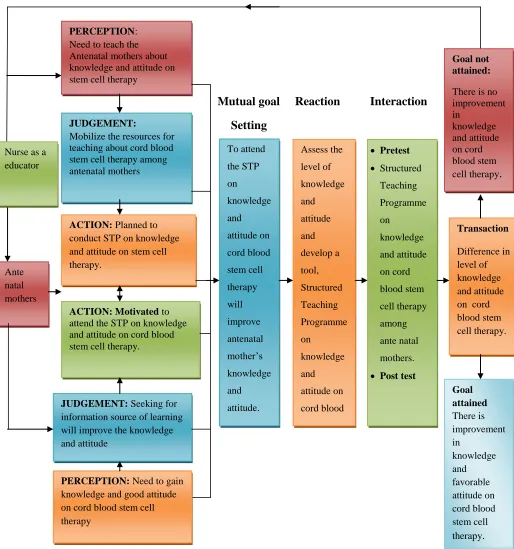
The central focus of Imogene King‘s framework is man as a dynamic human being whose perception of objects, person and events influence his behavior, social interaction, and health. Imogene King‘s conceptual frame work includes three interacting system which each system having its own distinct group of concepts and characteristics. These systems include personal system, interpersonal system and social system. King‘s basic assumption maintained that nursing is a process that involves caring for human beings which health being the ultimate goal (Torres,1986) the three system that constitute King‘s conceptual framework provide the basis for development of her theory of goal attainment.
The personal system refers to the individual. The concept within the personal system and fundamental in understanding human beings are perception, self, body image, growth and development, time and space. Imogene King viewed perception as the most important variables because perception influences behavior. King summarized the connections among the concepts in the following statement. An individual‘s perception of self, body image, time and space influence the way he or she responds to persons, objects and events in his or her life. As individuals grow and develop through the life span, experiences with changes in structure and function of their bodies over time influence their perception of self, interpersonal systems involve individuals interacting with one another.
21
a health care organization to help and to be helped to maintain a state of health that permits functioning in roles. King believed that interactions between the nurse and mothers results in goal attainment.
This theory is based on the concepts of the personal and interpersonal systems including interaction, perception, transaction and action. A basic theory for conceptual framework, which is aimed to assess the effectiveness of structured teaching programme on knowledge and attitude regarding stem cell therapy among antenatal mothers. The major concepts are described as follows.
1. Perception
Perception is the person‘s representation of the reality. It influences all other behavior of a person and it is more subjective and unique to each person. The researcher perceives that the antenatal mothers have inadequate of knowledge and poor attitude regarding cord blood stem cell therapy.
2. Judgement
The judgment is a decision made by the researcher and the antenatal mothers. Here the researcher judges that teaching the antenatal mothers regarding cord blood stem cell therapy.
3. Action
It refers to the changes that have to be achieved. The researcher‘s action is planned and motivated to conduct structured teaching programme on knowledge and attitude on cord blood stem cell therapy among antenatal mothers.
4. Mutual goal setting
22
5. Reaction
Reaction means decision to act. In this study the researcher developed a tool to assess the existing knowledge and attitude regarding cord blood stem cell therapy among antenatal mothers.
6. Interaction
Interaction is a process of perception and communication between person to person, represented by verbal and nonverbal behaviors that are goal directed. Here the researchers gave pretest conducted structured teaching programme on knowledge and attitude on cord blood stem cell therapy among antenatal mothers and post test.
7. Transaction
The transaction is purposeful interaction that leads to goal attainment, between the researcher and the antenatal mothers. Here the researcher assesses the effectiveness of structured teaching programme on knowledge and attitude regarding cord blood stem cell therapy by post test by using the same tool.
Positive outcome is adequate knowledge and attitude regarding cord blood stem cell therapy among antenatal mothers which has to be enhanced further. Negative outcome is moderate and inadequate knowledge and attitude regarding cord blood stem cell therapy among antenatal mothers.
23
[image:35.612.62.576.110.659.2]Mutual goal Reaction Interaction Setting
Fig. 1 Conceptual Framework Based on Modified Imogene King‟s Goal Attainment Model
PERCEPTION: Need to teach the Antenatal mothers about knowledge and attitude on stem cell therapy
JUDGEMENT:
Mobilize the resources for teaching about cord blood stem cell therapy among antenatal mothers
ACTION: Planned to conduct STP on knowledge and attitude on stem cell therapy.
ACTION: Motivated to attend the STP on knowledge and attitude on cord blood stem cell therapy.
JUDGEMENT: Seeking for information source of learning will improve the knowledge and attitude To attend the STP on knowledge and attitude on cord blood stem cell therapy will improve antenatal mother‘s knowledge and attitude. Nurse as a
educator Ante natal mothers Assess the level of knowledge and attitude and develop a tool, Structured Teaching Programme on knowledge and attitude on cord blood stem cell therapy. Pretest Structured Teaching Programme on knowledge and attitude on cord blood stem cell therapy among ante natal mothers.
Post test
Goal not attained:
There is no improvement in knowledge and attitude on cord blood stem cell therapy.
Transaction
Difference in level of knowledge and attitude on cord blood stem cell therapy.
24
CHAPTER - III
RESEARCH METHODOLOGY
Methodology of research organizes all the components of study in a way that most likely we need to valid answers for the problems that have been posted.
(Burns and Groove, 2008)
This chapter deals with the methodology adopted for the study. It includes the research approach, research design, variables, setting, population, sample and criteria for selection of the sample, sample size, sampling technique, development and description of the tool, content validity, pilot study and reliability of the tool, data collection procedure and plan for data analysis.
RESEARCH APPROACH:
A evaluative research approach has been used for the study.
RESEARCH DESIGN:
25
The schematic representation follows
Group Pre-test
(01)
Intervention ()
Post-test
(02) Antenatal mothers Assessment of pre
test level of knowledge and attitude regarding cord blood stem cell therapy.
Structured teaching programme
On knowledge and attitude regarding cord blood stem cell therapy.
Assessment of post test level of knowledge and attitude regarding cord blood stem cell therapy.
VARIABLES
Dependent variable
The dependent variables in this study are knowledge and attitude.
Independent variable
The independent variable in this study is structured teaching programme on cord blood stem cell therapy.
Extraneous Variable
The extraneous variables in this study are educational status, occupation, income.
SETTING
26
POPULATION Target Population
The target population for this study was antenatal mothers.
Accessible Population
Antenatal mothers in Jayaa hospital and Suguna hospital at Tiruchengode.
SAMPLE
The sample for this study included antenatal mothers who meet inclusive criteria.
SAMPLE SIZE
It consists of 30 antenatal mothers. Samples were selected from Jayaa and Suguna hospitals, Tiruchengode.
CRIETERIA FOR SAMPLE SELECTION Inclusion criteria
The study include
Antenatal Mothers who attend Outpatient department in selected private hospitals at Namakkal district.
Mothers who are willing to participate in the study
Mothers who are available at the time of data collection
Mothers parents are able to read and write.
27
Exclusion criteria
The study excludes,
Mothers who are all having any hearing and visual problem. Mothers who already registered for cord blood stem cell therapy.
SAMPLING TECHNIQUE
Thirty (30) antenatal mothers were selected by non probability convenient sampling technique from Jayaa and Suguna hospitals, Tiruchengode.
DEVELOPMENT AND DESCRIPTION OF TOOL
28
Fig: 2 SCHEMATIC REPRESENTATION OF RESEARCH METHODOLOGY
EVALUATIVE APPROACH
RESEARCH DESIGN: Pre Experimental One Group, Pretest and Post Test Design
STUDY SETTING: Jayaa and suguna Hospitals at Tiruchengode.
TARGET POPULATION: Antenatal Mothers.
ACCESSIBLE POPULATION:
Antenatal Mothers Who Meet Inclusive Criteria.
SAMPLING TECHNIQUE: Non probability convenient sampling Technique.
PRE TEST: Assessment Of Knowledge And Attitude Regarding cord blood stem cell therapy among Antenatal Mothers.
INTERVENTION: Structured Teaching Programme on cord blood stem cell therapy among Antenatal Mothers
POST TEST : Assessment Of effectiveness of structured teaching programme on cord blood stem cell therapy among Antenatal Mothers.
DATA ANALYSIS: Descriptive And Inferential Statistics.
29
DATA COLLECTION TOOL
The tool consists of three sections
SECTION – A
It deals with demographic variables,which includes Age,Religion,Gravida, Education,Occupation,Types of family,Previous source on stem cell therapy.
SECTION – B
This section consists of structured questionnaire to assess the knowledge among antenatal mothers. It consists of 40 multiple choice questions. Scoring was done for each items. In each question there was only one right choice. Each correct answer was given a score of one and wrong answer carries score of zero. Knowledge was measured in terms of knowledge score. The total scores of knowledge were 40.
Scoring key each correct answer carries – 1 mark Each incorrect answer carries – 0 mark,
and it is classified as
Score level of knowledge
≤50% Inadequate Knowledge
51 – 75% Moderately Adequate Knowledge >75% Adequate Knowledge
SECTION - C
30
Scoring key
Each item has 5 options such as Strongly Agree, Agree, Neither Agree nor Disagree, Disagree, Strongly Disagree.
The scores for those who strongly agree 5 points, 4 points for agree, 3 points for neither Agree nor Disagree, 2 points for disagree, 1 point for Strongly Disagree.
This is for positive statements. It will be reversible for negative statements.
Score Attitude Level
≤50% Favorable attitude
51 – 75% Moderately Favorable attitude >75% Unfavorable attitude
INTERVENTION
Structured teaching programme on cord blood stem cell therapy among antenatal mothers.
CONTENT VALIDITY
31
RELIABILITY
Polit and Hungler (1999) state that one important characteristics of measuring tool is its reliability, which refers to the degree of consistency or accuracy with which an instrument measures an attribute. The structured interview questionnaire was tried on 30 antenatal mothers selected in Jayaa and Suguna hospitals Tiruchengode at Namakkal district. Reliability was found out by split half method using spearman Brown‘s formula. The reliability of the knowledge questionnaire was found to be r = 0.83 and for attitude r= 0.87 Hence the tool was found to be statistically reliable for the study.
PILOT STUDY
Pilot study is a trial run for major study to test the reliability, practicability, appropriateness and flexibility of the tool for the study. The investigator conducted a pilot study in the month of January with 5 samples selected in Raji hospital Tiruchengode at Namakkal district. The data was analyzed by using descriptive statistics that is mean, percentage and standard deviation of the variables and were calculated and compared. Results revealed that there was a positive correlation. The tool was found feasible and practicable. The investigator proceeded for the main study. No modification was done in the methodology and tool.
PROCEDURE FOR DATA COLLECTION
The main study was conducted after obtaining formal permission from the principal,Arvinth College of Nursing, Ethical Committee clearance and written
permission was obtained from the doctors of Jayaa and Suguna hospital,Tiruchengode, Namakkal district.
32
A brief introduction of self explanation on the purpose of the study was given. The written consent was obtained from the antenatal mothers.
The investigator collected socio demographic data and assessed their knowledge and attitude on cord blood stem cell therapy on first day and structured teaching programme on cord blood stem cell therapy among antenatal mothers was given on the same day for 45 minutes to 1 hour. Post test knowledge and attitude was assessed on 8th day by using same tool as used for the pre test.
No of samples Date of Pre test Date of post test
7 03/02/2016 10/02/2016
4 04/02/2016 11/02/2016
3 05/02/2016 12/02/2016
6 06/02/2016 13/02/2016
5 07/02/2016 14/02/2016
5 08/02/2016 15/02/2016
PLAN FOR DATA ANALYSIS
The data obtained were analyzed using both descriptive and inferential statistics.
Descriptive statistics used to find out frequency, percentage, mean and standard deviation.
―t‟ test was used for comparing the knowledge and attitude.
Correlation was used to find out the relationship between knowledge and attitude among ante natal mothers.
33
CHAPTER – IV
DATA ANALYSIS AND INTERPRETATION
This chapter deals with the analysis and interpretation of data collected from 30 antenatal mothers in selected private hospitals at Namakkal District, to assess the effectiveness of Structured Teaching Programme on knowledge and attitude regarding cord blood stem cell therapy among antenatal mothers. The data collected for the study was grouped and analyzed as per the objectives set for the study. The findings based on the descriptive and inferential statistical analysis are presented under the following sections.
ORGANIZATION OF DATA
The findings of the study were grouped and analyzed under the following sessions.
Section A : Description of the demographic variables.
Section B : Assessment of pretest and post test level of knowledge and attitude regarding cord blood stem cell therapy among antenatal mothers.
Section C : Effectiveness of structured teaching programme on knowledge and attitude regarding cord blood stem cell therapy among antenatal mothers.
Section D : Relationship between post test knowledge and attitude scores regarding cord blood stem cell therapy among antenatal mothers.
Section E : Association of post test level of knowledge and attitude regarding cord blood stem cell therapy among antenatal mothers with selected
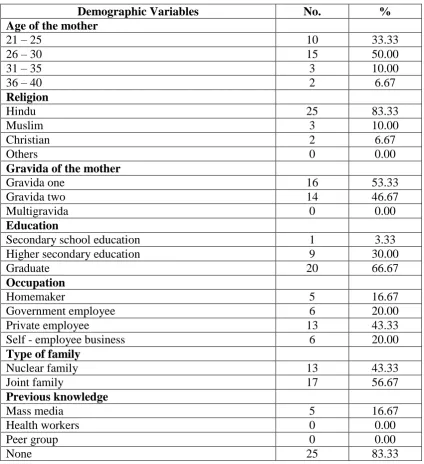
34
[image:46.595.102.527.199.664.2]SECTION A: DESCRIPTION OF THE DEMOGRAPHIC VARIABLES. Table 1: Frequency and percentage distribution of demographic variables of antenatal mothers
n = 30 Demographic Variables No. %
Age of the mother
21 – 25 10 33.33
26 – 30 15 50.00
31 – 35 3 10.00
36 – 40 2 6.67
Religion
Hindu 25 83.33
Muslim 3 10.00
Christian 2 6.67
Others 0 0.00
Gravida of the mother
Gravida one 16 53.33
Gravida two 14 46.67
Multigravida 0 0.00
Education
Secondary school education 1 3.33 Higher secondary education 9 30.00
Graduate 20 66.67
Occupation
Homemaker 5 16.67
Government employee 6 20.00
Private employee 13 43.33
Self - employee business 6 20.00
Type of family
Nuclear family 13 43.33
Joint family 17 56.67
Previous knowledge
Mass media 5 16.67
Health workers 0 0.00
Peer group 0 0.00
35
36
[image:48.595.103.552.239.369.2]SECTION B:ASSESSMENT OF PRETEST AND POST TEST LEVEL OF KNOWLEDGE AND ATTITUDE REGARDING CORD BLOOD STEM CELL THERAPY AMONG ANTENATAL MOTHERS.
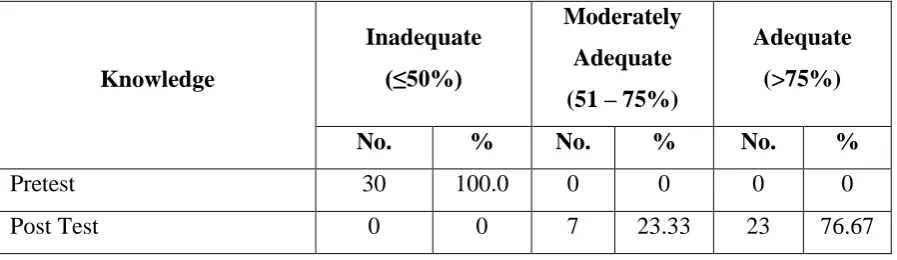
Table 2: Frequency and percentage distribution of pretest and post test level of knowledge regarding cord blood stem cell therapy among antenatal mothers.
n = 30
Knowledge
Inadequate (≤50%)
Moderately Adequate (51 – 75%)
Adequate (>75%) No. % No. % No. %
Pretest 30 100.0 0 0 0 0
Post Test 0 0 7 23.33 23 76.67
37
Fig :3 Percentage distribution of pretest and post test level of knowledge regarding cord blood stem cell therapy among antenatal mothers
0 10 20 30 40 50 60 70 80 90 100
Inadequate Moderately Adequate Adequate
100
0
0 0
23.33
76.67
P
e
rcen
ta
ge
Level of Knowledge
Pretest
38
Table 3: Frequency and percentage distribution of pretest and post test level of attitude regarding cord blood stem cell therapy among antenatal mothers.
n = 30
Attitude
Unfavourable (<50%)
Moderately Favourable (50 – 75%)
Favourable (>75%) No. % No. % No. %
Pretest 25 83.33 5 16.67 0 0
Post Test 3 10.0 6 20.0 21 70.0
39
Fig : 4 Percentage distribution of pretest and post test level of attitude regarding cord blood stem cell therapy among antenatal mothers
0 10 20 30 40 50 60 70 80 90 100
Unfavourable Moderately Favourable Favourable
83.33
16.67
0 10
20
70
P
e
rcen
ta
ge
Level of Attitude
Pretest
40
SECTION C: EFFECTIVENESS OF STRUCTURED TEACHING PROGRAMME ON KNOWLEDGE AND ATTITUDE REGARDING CORD BLOOD STEM
[image:52.612.106.545.239.306.2]CELL THERAPY AMONG ANTENATAL MOTHERS.
Table 4: Comparison of pretest and post test knowledge scores regarding cord blood stem cell therapy among antenatal mothers.
n = 30 Knowledge Mean S.D Paired „t‟ Value
Pretest 11.50 2.70 t = 57.742
p = 0.000, S***
Post Test 33.06 3.93
***p<0.001, S – Significant
41
Table 5: Comparison of pretest and post test attitude scores regarding cord blood stem cell therapy among antenatal mothers.
n = 30 Attitude Mean S.D Paired „t‟ Value
Pretest 40.26 11.98 t = 18.758 p = 0.000, S***
Post Test 78.40 14.31 ***p<0.001, S – Significant
42
[image:54.612.101.546.239.307.2]SECTION D: RELATIONSHIP BETWEEN POST TEST KNOWLEDGE AND ATTITUDE SCORES REGARDING CORD BLOOD STEM CELL THERAPY AMONG ANTENATAL MOTHERS.
Table 6: Correlation between post test knowledge and attitude scores regarding cord blood stem cell therapy among antenatal mothers.
n = 30
Variables Mean S.D „r‟ Value
Knowledge 33.06 3.93 r = 0.715 p = 0.000, S**
Attitude 78.40 14.31
**p<0.01, S – Significant
43
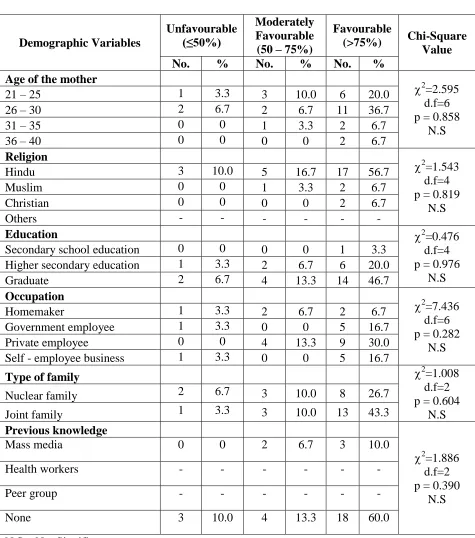
SECTION E: ASSOCIATION OF POST TEST LEVEL OF KNOWLEDGE AND ATTITUDE REGARDING CORD BLOOD STEM CELL THERAPY AMONG ANTENATAL MOTHERS WITH SELECTED DEMOGRAPHIC VARIABLES. Table 7: Association of post test level of knowledge regarding cord blood stem cell therapy among antenatal mothers with selected demographic variables. n = 30
Demographic Variables
Moderately Adequate (51 – 75%)
Adequate (>75%)
Chi-Square
Value No. % No. %
Age of the mother
2
=1.118 d.f=3 p = 0.773
N.S
21 – 25 3 10.0 7 23.3
26 – 30 3 10.0 12 40.0
31 – 35 1 3.3 2 6.7
36 – 40 0 0 2 6.7
Religion
2
=0.783 d.f=2 p = 0.676
N.S
Hindu 0 0 19 63.3
Muslim 1 3.3 2 6.7
Christian 0 0 2 6.7
Others - - - -
Education 2
=0.932 d.f=2 p = 0.628
N.S Secondary school education 0 0 1 3.3
Higher secondary education 3 10.0 6 20.0
Graduate 4 13.3 16 53.3
Occupation
2
=0.932 d.f=3 p = 0.818
N.S
Homemaker 2 6.7 3 10.0
Government employee 1 3.3 4 13.3 Private employee 3 10.0 12 40.0 Self - employee business 1 3.3 4 13.3
Type of family 2=0.001
d.f=1 p = 0.977
N.S Nuclear family 3 10.0 10 33.3
Joint family 4 13.3 13 43.3
Previous knowledge
2
=0.932 d.f=1 p = 0.334
N.S
Mass media 2 6.7 3 10.0
Health workers - - - -
Peer group - - - -
None 5 16.7 20 66.7
44
45
Table 8: Association of post test level of attitude regarding cord blood stem cell therapy among antenatal mothers with selected demographic variables.
n = 30
Demographic Variables
Unfavourable (≤50%)
Moderately Favourable (50 – 75%)
Favourable
(>75%) Chi-Square Value No. % No. % No. %
Age of the mother
2
=2.595 d.f=6 p = 0.858
N.S 21 – 25 1 3.3 3 10.0 6 20.0
26 – 30 2 6.7 2 6.7 11 36.7
31 – 35 0 0 1 3.3 2 6.7
36 – 40 0 0 0 0 2 6.7
Religion
2
=1.543 d.f=4 p = 0.819
N.S Hindu 3 10.0 5 16.7 17 56.7
Muslim 0 0 1 3.3 2 6.7
Christian 0 0 0 0 2 6.7
Others - - - -
Education 2
=0.476 d.f=4 p = 0.976
N.S Secondary school education 0 0 0 0 1 3.3
Higher secondary education 1 3.3 2 6.7 6 20.0 Graduate 2 6.7 4 13.3 14 46.7
Occupation
2
=7.436 d.f=6 p = 0.282
N.S Homemaker 1 3.3 2 6.7 2 6.7
Government employee 1 3.3 0 0 5 16.7 Private employee 0 0 4 13.3 9 30.0 Self - employee business 1 3.3 0 0 5 16.7
Type of family 2=1.008
d.f=2 p = 0.604
N.S Nuclear family 2 6.7 3 10.0 8 26.7
Joint family 1 3.3 3 10.0 13 43.3
Previous knowledge
2
=1.886 d.f=2 p = 0.390
N.S Mass media 0 0 2 6.7 3 10.0
Health workers - - - -
Peer group - - - -
46
47
CHAPTER - V
DISCUSSION
This chapter discusses in detail the findings of the study derived from the statistical analysis and its pertinence to the objectives of the study and further discussion exemplify these objectives were satisfied by the study.The purpose of the study was to assess the effectiveness of structured teaching programme on knowledge and attitude regarding cord blood stem cell therapy among antenatal mothers. The findings based on the descriptive and inferential statistical analysis are presented under the following sections.
Description of the demographic variable among antenatal mothers with cord blood stem cell therapy
With regard to the demographic variables majority 15(50%) of antenatal mothers were in the age group of 26 – 30 years, 25983.33%) were Hindus, 16(53.33%) were gravida one, 20(66.67%) were graduates, 13(43.33%) were private employee, 17(56.67%) belonged to joint family and 25(83.33%) had no previous knowledge on cord blood stem cell therapy.
The first objective was to determine the pretest and posttest level of knowledge and attitude regarding cord blood stem cell therapy among antenatal mothers
Findings of pretest, almost all 30(100%) had inadequate knowledge whereas in the post test after imparting structured teaching programme majority 23(76.67%) had adequate knowledge and only 7(23.33%) had moderately adequate knowledge regarding cord blood stem cell therapy among antenatal mothers.
48
attitude, 6(20%) had moderately favourable attitude and 3(10%) had unfavourable attitude regarding cord blood stem cell therapy among antenatal mothers.
The second objective was to assess the effectiveness of structured teaching programme on knowledge and attitude regarding cord blood stem cell therapy among antenatal mothers.
The comparison tables showed that in the pretest, the mean score of knowledge was 11.50 with S.D 2.70 whereas in the post test the mean score of knowledge was 33.06 with S.D 3.93. The calculated paired ‗t‘ value of t = 57.742 was found to statistically significant at p<0.001 level. This clearly shows that the structured teaching programme imparted to antenatal mothers had significant improvement in the post test level of knowledge regarding cord blood stem cell therapy.
The table 5 shows that in the pretest, the mean score of attitude was 40.26 with S.D 11.98 whereas in the post test the mean score of knowledge was 78.40 with S.D 14.31. The calculated paired ‗t‘ value of t = 29.885 was found to statistically significant at p<0.001 level. This clearly shows that the structured teaching programme imparted to antenatal mothers had significant improvement in the post test level of attitude regarding cord blood stem cell therapy.
Hence the hypothesis H1- There will be significant difference between pre and post test knowledge and attitude score regarding cord blood stem cell therapy among antenatal mothers.
The third objectives was to relationship between post test knowledge and attitude scores regarding cord blood stem cell therapy among antenatal mothers.
49
regarding cord blood stem cell therapy among antenatal mothers increases their attitude level also increases.
Hence the hypothesis H2- There will be significant association between post test knowledge and attitude score with selected demographic variables such as (Age, Religion, Gravida, Education, Previous source on cord blood stem cell therapy)
The fourth objective was to associate the post test level of knowledge and attitude regarding cord blood stem cell therapy among antenatal mothers with selected demographic variables.
Table 7 shows that all demographic variables had not shown statistically
significant associatio