WILDERNESS MANAGEMENT:
HUMAN WASTE & WATER QUALITY
Sign at Pelion Plains
By Juliette Brassington BA
Submitted in partial fulfillment of the requirements for the degree of Master of Environmental Management
Centre for Environmental Studies
School of Geography and Environmental Studies
STATEMENT
I declare that this thesis contains no material which has been accepted for the award of any other higher degree or graduate diploma in any tertiary institution and that, to the best of my knowledge and belief, the thesis contains no material previously published or written by another person, except where due reference is made in the text of the thesis.
Juliette Brassington
J. Brassington
ABSTRACT
Human wastes in wilderness areas have a number of impacts. Many of these impacts relate to inadequate disposal methods which are unable to contain harmful pathogens
found in human wastes nor prevent animal contact with them. This situation can lead to contamination of surface waters, thereby posing a public health risk. These issues are
compounded by the dramatic rise in visitation to these areas and a lack of research or baseline data from which to make informed management decisions.
A case study was undertaken at Pelion Plains in the Tasmanian World Heritage Area to examine the impact of human waste on water quality. Pelion Plains is a heavily used area, and there is anecdotal evidence linking the area to a number of health related problems. Using the traditional indicator method, Faecal coliform levels taken over five sample occasions ranged from 1-410 (cfu) per 100 mL water and Faecal streptococci levels ranged from 1-420 per 100 mL. Results indicate that the water is not suitable for
drinking. Currently no warning is provided advising visitors of a potential health risk associated with the consumption of untreated water.
The faecal sterol method was also used due to its ability to differentiate human and herbivore faecal matter. Results indicated that contamination was herbivore in origin. Due to lack of (antecedent) rain during sampling, however, results were not considered to be truly representative in this study. A limited macroinvertebrate analysis was also undertaken to provide much needed baseline data, which may be useful as a pollution
indicator for the detection of long term ecological impacts.
This research has demonstrated that inadequate disposal of human wastes is influencing water quality in a wilderness area, and that associated issues of public health are not being
addressed. In particular this research demonstrated that the existing toilets and camping activities at Pelion Plains are implicated in the contamination of surface water which is
ACKNOWLEDGMENTS
Many people are to be thanked for their help throughout this thesis. Thanks to my supervisor Associate Professor John Todd especially for his presence in times of absence.
Thanks to Mike Driessen from Parks and Wildlife, firstly for providing financial support
without which this thesis would not have been possible, and for his insistence on sharing the experience of standing in the freezing waters of Douglas Creek with me very early one morning. Thanks also to the Rangers of Cradle Mountain National Park for giving me a lift to Pelion in the helicopter.
Thanks to Dr Rhys Leeming from CSIRO for not only lending me equipment, but for
'engineering' it to making it suitable for use in a remote area on such short notice, and for generously donating much needed advice, time and materials.
Thanks to Jen and Roger for their help and company in the field on the long walk in and out of Pelion in some pretty ordinary weather. Thanks to John Ashworth for his valuable assistance with the macroinvertebrate identification and software ordeals and to Dr Peter McQuillan for statistical support. Thanks also to Dr Garland and staff of the Aquahealth laboratory for the faecal analysis and advice.
TABLE OF CONTENTS
CHAPTER 1: INTRODUCTION 1
1.1 INTRODUCTION 1
1.2 THE GROWTH OF WILDERNESS VISITATION 2
1.3 WILDERNESS MANAGEMENT 2
1.4 VISITOR IMPACT RESEARCH 4
1.5 RESEARCH OUTLINE 5
1.6 Aims AND HYPOTHESIS 6
1.7 THESIS OUTLINE 7
CHAPTER 2: HUMAN WASTE IN WILDERNESS AREAS: ISSUES AND IMPACTS 9
2.1 INTRODUCTION 9
2.2 PROBLEMS OF HUMAN WASTE DISPOSAL 9
2.2. / The Composition of Human Waste 10
2.2.1.1 Faecal Wastes 10
2.2.1.2 Environmental Influences on the Decomposition of Faecal Waste 10
2.2.1.3 Urine and Menstrual Waste 12
2.2.2 Social Considerations of Human Waste Disposal 13
2.3 MANAGEMENT PRACTICES 13
2.3.1 Areas With no or Unusable Toilet Facilities 14
2.3.1.1 The Carry-Out Campaign 15
2.3.1.2 Shallow-Burial of Faeces: an Assessment 15
2.3.2 Toilets in Wilderness Areas 17
2.4 CONCLUSIONS 19
CHAPTER 3: WILDERNESS WATER MICROBIOLOGY 20
3.1 INTRODUCTION 20
3.2 MANAGEMENT PROBLEMS 20
3.3 WHY Do VISITORS CONSUME CONTAMINATED RAW WATER? 22 ' 3.4 A REVIEW OF STUDIES INVESTIGATING HUMAN USE AND FAECAL CONTAMINATION OF
SURFACE WATERS 23
3.4.1 Findings with no Connection Between Visitation and Faecal Contamination 23 3.4.2 Studies With a Connection Between Visitation and Faecal Contamination 24
3.4.3 Problems with these Studies 26
3.5 PATHOGEN TRANSMISSION IN THE WILDERNESS ENVIRONMENT WHERE THE MAJOR
RESERVOIR IS HUMAN FAECES 27
3.6.1 Parasitic Zoonoses 28
3.6.1.1 Giardia 28
3.6.1.1.1 Examples of Giardiasis in Wilderness Areas 30
3.6.1.2 Ctyptosporidium 31
3.7 BACTERIAL DISEASES 31
3. 7.1 Bacterial Zoonoses 32
3.7.1.1 Salmonella (Typhoid or Paratyphoid fever) 32
3.7.1.2 Campylobacter 32
3.7.1.3 Yersinia enterocolitica 33
3.7.1.4 Leptospira 33
3.7.2 Other Bacterial Waterborne Diseases Which are not Zoonoses 33
3.7.2.1 Vibrio cholerae (Cholera) 33
3.7.2.2 Shingella 33
3.7.2.3 E. coli 34
3.8 VIRAL PATHOGENS 34
3.9 CONCLUSIONS 34
CHAPTER 4: SITE DESCRIPTION OF PELION PLAINS 36
4.1 INTRODUCTION 36
4.2 VALUES 38
4.3 FAUNA 38
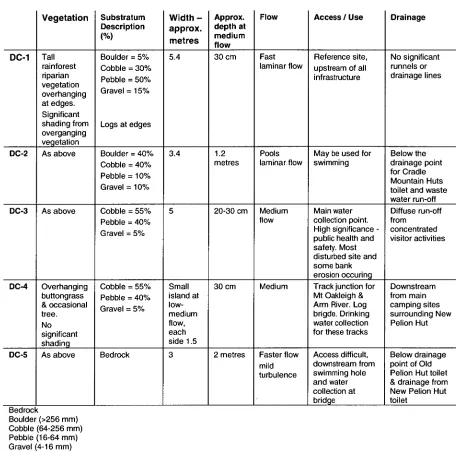
4.4 DESCRIPTION OF SAMPLE SITES ALONG DOUGLAS CREEK 39
4.4.1 Sample Site Selection 39
4.5 CLIMATE 41
4.6 HUMAN HISTORY AND LAND USE 42
4.7 MANAGEMENT 42
4.7.1 Zoning 43
4.8 VISITOR PROFILE 43
4.9 COMMERCIAL OPERATIONS 43
4.10 TOILET SYSTEMS AT PELION PLAINS 44
4.11 WATER SUPPLY AT PELION PLAINS 44
4.12 CONCLUSIONS 45
CHAPTER 5: MICROBIOLOGICAL INDICATOR ORGANISMS AND DOUGLAS CREEK 46
5.1 INTRODUCTION 46
5.2 METHOD 46
5.2.1 Sampling 47
5.2.2 Sample Collection Procedure 48
5.2.3 Microbiological Sample Collection 49
5.2.4 Detection of Faecal Bacteria 49
5.3.1 Flow Rate Measurements 50
5.3.2 Rainfall Data 51
5.4 MICROBIOLOGICAL INDICATOR ORGANISMS: THE RESULTS 51
5.4.1 Faecal coliforms 51
5.4.2 Faecal streptococci 55
5.5 STANDARDS FOR WATER QUALITY IN AUSTRALIA 56 5.6 DISCUSSION OF MICROBIOLOGICAL QUALITY AT DOUGLAS CREEK 57
5.6.1 Faecal coliform and streptococci Survival Rates 57
5.6.2 Contamination and its Relationship to Rainfall 58
5.7 A DISCUSSION OF THE RELATIONSHIP BETWEEN MICROBIOLOGICAL QUALITY AND THE
TOILET SYSTEMS OF PELION PLAINS 59
5.7.1 Clivus Multrum Toilet - Cradle Mountain Huts 60
5.7.2 Cage Batch Toilet - New Pelion Hut 61
5.7.3 Pit Toilet - Old Pelion Hut 63
5.8 SWIMMING IN DOUGLAS CREEK AND OTHER ACTIVITIES AFFECTING WATER QUALITY 65
5.9 FACTORS INFLUENCING RISK OF ILLNESS 66
5.9.1 Acquired Immunity 66
5.10 CONCLUSIONS 67
CHAPTER 6: ALTERNATIVE METHODS FOR INVESTIGATING WATER QUALITY:
FACEAL STEROLS AND MACROINVERTEBRATES 69
6.1 INTRODUCTION 69
6.2 TRADITIONAL INDICATOR METHOD 69
6.3 FAECAL STEROLS 70
6.4 METHOD FOR THE INVESTIGATION OF FAECAL STEROLS 72
6.4.1 Sampling 72
6.4.2 Sampling Conditions 72
6.4.3 Results 72
6.4.3.1 ANALYSIS OF FAECAL STEROLS 73
6.4.4 Discussion 73
6.5 MACROINVERTEBRATES 74
6.5.1 Method of Macroin vertebrate Investigation 75
6.5.1.1 Site Selection 75
6.5.1.2 Sampling 75
6.5.1.3 Macroinvertebrate Identification 76
6.5.1.4 Data Collation and Analysis 76
6.5.1.5 Limitations 76
6.5.2 Results 77
6.5.3 Discussion 80
6.5.4 Conclusions 81
CHAPTER 7: CONCLUSIONS AND RESEARCH RECOMMENDATIONS 82
7.1 CONCLUSIONS 82
7.2 RESEARCH RECOMMENDATIONS 85
REFERENCE LIST 87
PERSONAL COMMUNICATIONS 99
APPENDIXES 100
APPENDIX 1: RAINFALL DATA FOR CRADLE VALLEY AND LAKE ST CLAIR 101
APPENDIX 2: MICROBIOLOGICAL RESULTS FOR CRADLE VALLEY 103
APPENDIX 3: FULL TAXA LIST FOR DOUGLAS CREEK 105
LIST OF FIGURES
FIGURE 4.1 LOCATION MAP OF CRADLE MOUNTAIN, PELION PLAINS AND LAKE Si CLAIR, TASMANIA 36
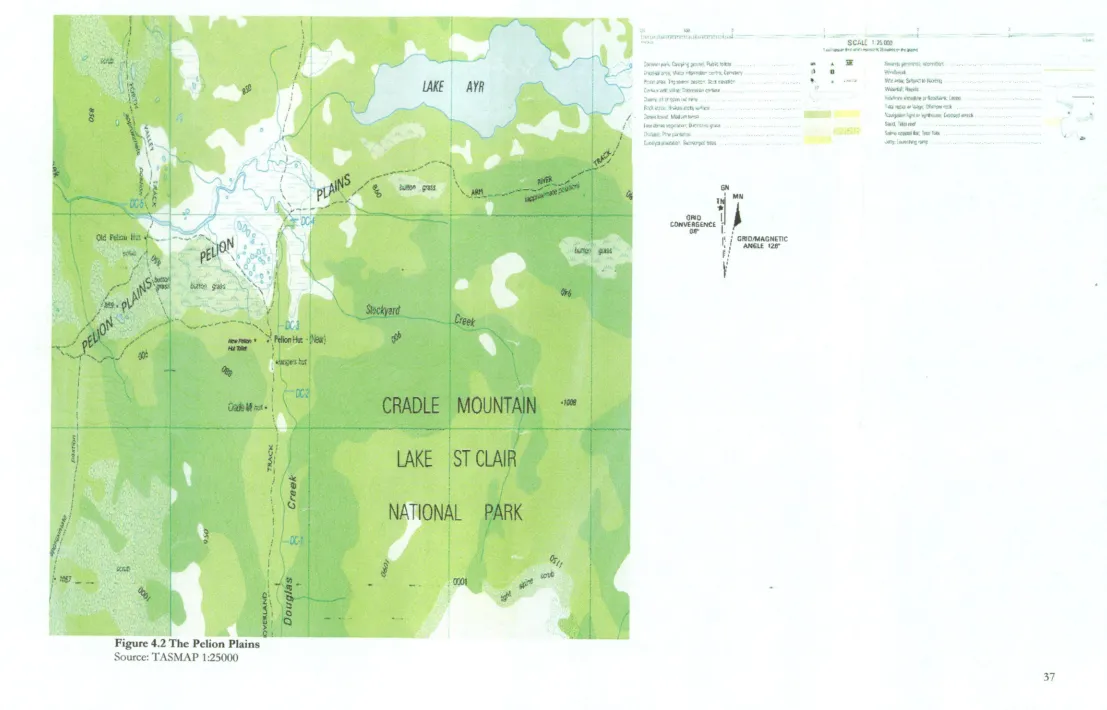
FIGURE 4.2 THE PELION PLAINS 37
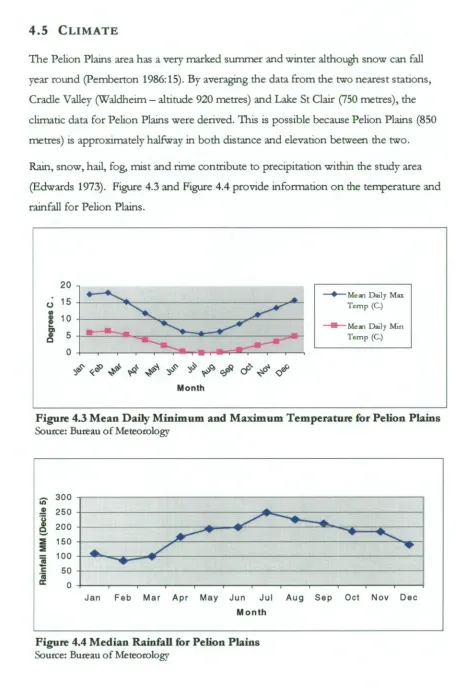
FIGURE 4.3 MEAN DAILY MINIMUM AND MAXIMUM TEMPERATURE FOR PELION PLAINS 41
FIGURE 4.4 MEDIAN RAINFALL FOR PELION PLAINS 41
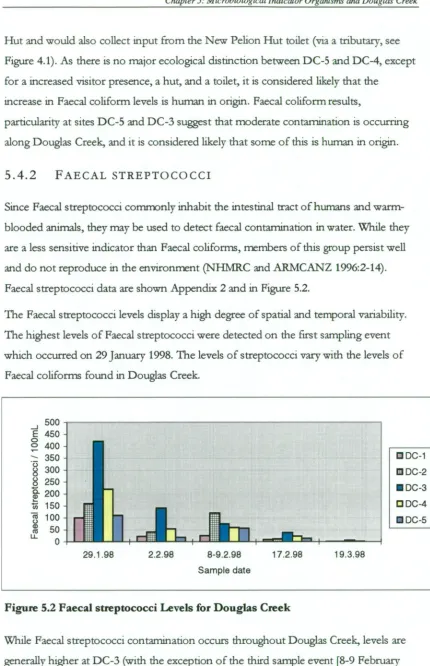
FIGURE 5.1 FAECAL COLIFORM LEVELS AND RAINFALL DATA FOR DOUGLAS CREEK 52
FIGURE 5.2 FAECAL STREPTOCOCCI LEVELS FOR DOUGLAS CREEK 55
FIGURE 6.1 ORDINATION OF DOUGLAS CREEK SITES BASED ON UNTRANSFORMED DATA WITH
SIGNIFICANTLY (P< 0.05) CORRELATED TAXA FITTED IN THE SAME ORDINATION SPACE 79
LIST OF TABLES
TABLE 4.1 DOUGLAS CREEK SAMPLE SITE DESCRIPTIONS 40
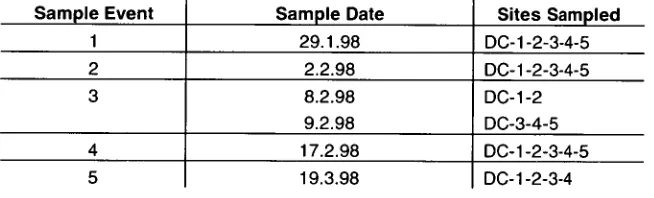
TABLE 5.1 MICROBIOLOGICAL SAMPLING EVENTS 47
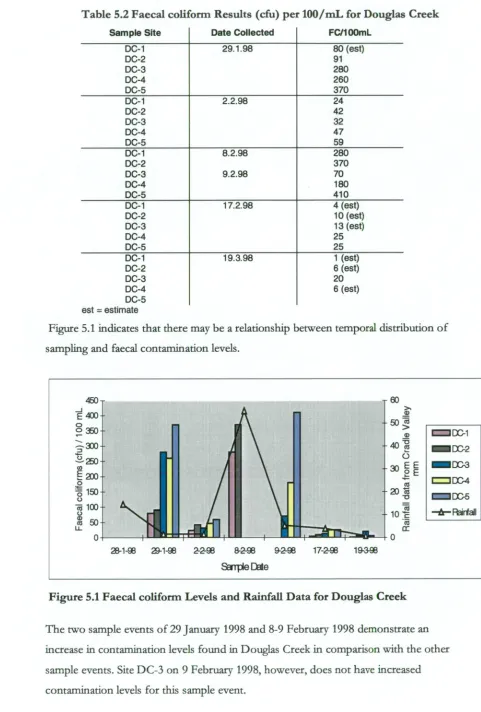
TABLE 5.2 FAECAL COLIFORM RESULTS (CFU) PER 100/ML FOR DOUGLAS CREEK 52
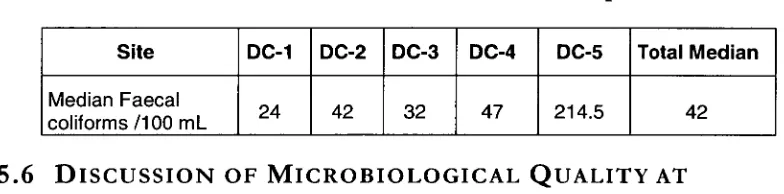
TABLE 5.3 MEDIAN FAECAL COLIFORM VALUES FOR FIVE SAMPLES 57
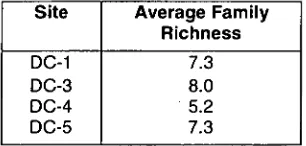
TABLE 6.1 AVERAGE FAMILY RICHNESS AT EACH SAMPLING SITE AT DOUGLAS CREEK 77 TABLE 6.2 THE INFLUENCE OF SITE AND SUBSTRATE AND THEIR INTERACTION ON RICHNESS (ANOVA
FOLLOWED BY A POST-HOC DUNNETT'S T3 TEST) 78
TABLE 6.3 T-TEST DETERMINING DIFFERENCE BETWEEN RIFFLE AND FLAT 78
TABLE 6.4 RESULTS OF ANOVA AND POST-HOC DUNNETT'S T3 TESTS 78
TABLE 6.5 CORRELATION COEFFICIENTS AND THEIR SIGNIFICANCE VALUE FROM ORDINATION USING
LIST OF PLATES
PLATE 5.1 HELICOPTER REMOVING HUMAN WASTES FROM THE CRADLE MOUNTAIN HUTS TOILET. .61 PLATE 5.2 NEW PEL1ON HUT CAGE BATCH TOILET EFFLUENT 62
PLATE 5.3 OLD PELION HUT PIT TOILET 64
PLATE 5.4 OLD PELION HUT TOILET CLOSED SIGN 65
CHAPTER 1
Introduction
1.1 INTRODUCTION
A well-recognised and potentially problematic relationship exists between the
maintenance of wilderness and pressures to facilitate visitation within these natural environments. In general terms this is referred to as the wilderness paradox, where the presence of people who visit wilderness to gain recreational pleasure represents the
major threat to wilderness through their associated impacts (Kirkpatrick 1991:85). Similar situations are also experienced in remote backcountry environments and other natural areas. Human impacts are cumulative and increasing rapidly in response to the unprecedented rise in visitation rates since the 1960s (Cole 1996). The continuation and growth of visitation and associated impacts has critical implications for the management
of these areas as it not only threatens their integrity but also the quality of visitor experience (Cole 1996; Martin, McCool and Lucus 1989:623).
The importance of effective management can not be underestimated. Many studies attest to the continued and extensive damage that can occur if visitation is not properly directed (Cole 1990; Hammitt
et al.
1992; Hawes 1994). There are many obstacles, however, which must be overcome when combining the joint management of people and of the natural environment. Finding a suitable equilibrium between ecologicalintegrity and visitor requirements has become the major challenge facing management agencies today.
This thesis attempts to bridge this gap with relation to one specific, often neglected area - that of human waste management. The impacts relating to inadequate human
waste management within wilderness environments have serious and far-reaching consequences. This thesis will examine factors influencing and impacts arising from the
disposal of human wastes in wilderness areas, whilst also evaluating a number of
methods for assessing these impacts.
1.2 THE GROWTH OF WILDERNESS VISITATION
It is often argued that the arrival of a large number of visitors to wilderness areas is, in a broad sense, partly a manifestation of growing community awareness and concern for the environment (Valentine 1992:108; Figgis 1993:8). The growing interest in these
areas arguably 'reflects the emergence of a paradigm shift, where biodiversity
conservation and sustainable development issues gained increased attention
(Ceballos-Lascurain 1996). With growing environmental awareness, many people began to seek a travel experience contained within, and focused on, a natural setting. Increased
participation in wilderness visitation is also inextricably related to technological developments; in particular, advances in the production and marketing of lightweight ergonomic camping equipment. This equipment acts to make wilderness environments
safer, more comfortable and therefore more accessible to a larger audience.
Corresponding to these changes has been the demand for increased access to, and the provision of, a wide range of recreational and tourism options within natural
environments (Inter-agency Working Party 1997:25). The desire for conservation and pressure for increased access can act as opposing and counterproductive forces if management agencies are forced to base decisions on inadequate information. Management agencies charged with the conservation of wilderness areas are often forced to devise new solutions related to the emergence and implications of these two
often-competing and opposing demands.
1.3 WILDERNESS MANAGEMENT
While the growth in wilderness visitation has fortunately been accompanied by a
growing realisation of the necessity for management, it still presents a paradox for many
people and is a relatively recent idea (Nash 1973). The management of wilderness areas to both sustain wilderness value and to facilitate visitation remains precarious for many reasons. Tourism can bring many economic and social benefits and experiences, such as
foreign exchange and employment in regional areas; however, it may also bring
environmental, social and cultural deterioration (Craik 1991 :xi; Commonwealth
Department of Tourism 1994:5).
It is well established that in the absence of any form of visitor or resource management, ecological disturbances occur even with low levels of use (Cole 1981:86). For example
Hawes (1994:17) reports a non-linear use-impact curve for Tasmanian wilderness areas,
where low use can cause disproportionately high levels of most types of impact.
Furthermore, as more and more people visit wilderness areas, previously unvisited areas
become more attractive to those with more experience and a desire to avoid the presence of other people. This situation increases the need for management of areas
that previously required minimal attention as they received very few or no visitors. This situation also increases the range of responses that are required by management as new
areas are being exposed to new impacts.
Management of 'remoter' areas may also be hindered because baseline ecological
information is needed to compare and assess human influences, and to help determine the extent to which wilderness values are being maintained (Hendee, Stankey and Lucus 1978:371; Boo 1990:2). Studies to establish these baseline or natural conditions in wilderness areas have been seriously lacking. This situation creates a major predicament for management agencies. For effective management, agencies must have knowledge of
natural conditions as well as their direction and rate of change as dictated by ecological processes. These problems have been compounded by the expeditious upsurge in visitation, so that improvements in wilderness management have not kept abreast with the ever increasing size, diversity and range of challenges offered by visitor activities (Cole 1990:363).
Visitors to wilderness areas are also participating in an ever increasing variety of pursuits such as bushwalking, skiing, snowboarding, mountaineering, rockclimbing, ice-climbing, hunting, fishing, sea kayaking, numerous river-based activities such as rafting,
as well as being used for scientific, management or study purposes (Lynch 1996). As the range of these pursuits is broad, so too are the responses required from management to
help mitigate impacts. For example, each of these activities require a different approach to human waste management and all too often their differing needs are covered by a
limited range of policy instruments.
The methods promoted by these policies often assume an ideal situation that ignores
many practical considerations. For example, in high altitude areas the ground is often steep and the soil hard, shallow or covered by snow making disposal particularly
initially remove waste from view but with glacial movement and recession waste may eventually contaminate the nearest water source. Rockclimbers on a long route may
defecate on a ledge or into a bag which is then tossed to the ground. Rockclimbers, mountaineers or ice-climbers then, due to the nature of their activities, may not be able
to adhere to the given policy.
1.4 VISITOR IMPACT RESEARCH
Evidence of concerns over recreational impacts in wilderness areas began to appear in
the literature as early as 1913 in the United States, where managers noted problems relating to fire and sanitation (Downing and Clark 1979:18). Despite this early
recognition of problems, minimal research was undertaken on the impact of visitation in wilderness areas. In a review of visitor impact research, Cole (1990) concluded that
the quality of publications is relatively poor and that large knowledge gaps remain. Cole (1990) avers that, because of such deficiencies in ecological knowledge, management decisions are often based on, and assessed in, aesthetic terms. The majority of studies, he concludes, examine tangible aspects and pay scant regard to what is not immediately visible. Research effort in Tasmania, according to Hawes (1994 vol 111:8), suffers a
similar fate, as it is largely uncoordinated, inadequate and generally confined to qualitative statements.
While impacts traditionally receiving the most attention are the aesthetic ones (such as
track erosion or issues affecting vegetation), issues relating to sanitation remain the most difficult and often neglected (Hawes 1994 vol III:11-18; Parks and Wildlife Service [PWS] 1996). The consequences of this can be disastrous. In the United States, for example, more money is spent mitigating track impacts than on any other form of
wilderness impact. At the same time the flagellated protozoan pathogen of the small
intestine,
Giardia,
spread to nearly all surface water in wilderness areas (Cole 1985).Giardia
is now so widespread in the United States and Canada that it is known colloquially as 'backpackers disease' or 'beaver fever' 2 respectively.2 The term 'beaver fever' arose in Canada, where beavers became infected with
Giardia.
Once infected, like many other native animals, beavers shed cysts in large numbers in their faeces thereby contaminating surface waters (Yapp 1989:74).Until approximately 20 years ago, no one in the United States ever considered it unsafe to drink directly from mountain streams (Meyer 1994:15). In 1977 the Sierra Club
backpacker's guide touted drinking directly from wilderness waterways as one of the
'very special pleasures of backcountry travel' (Meyer 1994:15). In contrast, it is now widely accepted that no surface water in the United Stated is safe to drink due to the
presence of enteric indicator bacteria (Suk, Sorenson and Dileanis 1987:71). Sources of contamination are commonly believed to include human and animal faeces. Clearly
inadequate disposal of human wastes has rendered untreated surface waters throughout the entire United States unsafe for consumption (Meyer 1990:285). This lack of
effective management has resulted in the loss of one of the 'special pleasures' associated with wilderness travel. While there are several other impacts associated with the
inadequate disposal of human wastes in remote areas, such as olfactory and aesthetic aggravation, the transmission of enteric disease remains the most harmful and
problematic. Transmission principally occurs through faecal contamination of surface water. Other avenues of transmission include direct human oral contact, or via animals
(for example, insects).
Microbiological water contamination from human faeces presents one of the most
serious impacts associated with human wastes in wilderness areas. While the remote nature of wilderness areas precludes the provision of certified water sources or common sanitary facilities, adequate alternatives have not always been found. In particular, this is due to the harsh environmental conditions found in some remote wilderness areas. Whilst it is difficult to ascertain the exact impact that humans have on water quality in wilderness areas (because not all water pollution is directly caused by
humans), research remains inadequate.
1.5 RESEARCH OUTLINE
Visitor impact research in wilderness areas is rudimentary at best. The situation with regards to human waste disposal is particularly poor. Human wastes in wilderness areas remain problematic despite increased visitation rates. Greater research into the sanitary
significance and environmental impacts of human wastes in wilderness areas is urgently
required.
Research- on the impact of human waste disposal requires the integration of a range of
traditionally separate areas of knowledge. Current methods and practices for the
the difficulties that emerge from working in a wilderness area. The sanitary significance,
however, remains unchanged. Given this situation, policies surrounding the disposal of
human wastes may not be satisfactory and it is possible that serious issues of public health are being ignored.
Throughout many areas of the Tasmanian World Heritage Area (WHA) the toilet systems fail to work successfully. It is often argued that this is due to the harsh
environmental conditions. Minimal research has been conducted on the impacts that human wastes might have within the Tasmanian WHA, or on the effectiveness of
current disposal policy. The ability of managers to implement effective policies is, therefore, seriously limited due to a lack of baseline data from which to make
assessments. This thesis represents an attempt to fill some of the gaps that exist in the knowledge regarding human wastes in the Tasmanian WI-LA, with particular emphasis on the potential for surface water contamination.
In order to investigate impacts and risks associated with human wastes in the wilderness environment, a case study was undertaken focusing on one site within the Tasmanian WI-LA. Pelion Plains on the Overland Track was selected as the focus area for detailed investigation. As a preliminary literature review revealed that surface water
contamination represents one of the greatest risks from human wastes, this became the focus of the case study investigation. While the research is broadly centred on the process of contamination, finding an appropriate and suitable method of assessment became one of the greatest challenges.
The primary objective for undertaking a case study was to assess the appropriateness and suitability of various methods used for the detection of faecal contamination in surface waters in a remote area. Pelion Plains was selected as a suitable location for
undertaking a case study for a number of reasons. Pelion Plains, a high use area within the Tasmanian WI-IA has a combination of infrastructure, is accessible and has anecdotal evidence of a pre-existing water quality problem.
1.6 AIMS AND HYPOTHESIS
This thesis investigates the hypothesis that human wastes produce a detectable impact
at the Pelion Plains region. One aim of this thesis, therefore, is to investigate if any evidence of human waste impacts exists particularly in relation to water quality. This
thesis also aims to appraise the traditional method used for assessing human waste
impacts on water quality for its use in wilderness environments. The anal aim of this thesis is to highlight issues related to the management of human waste in wilderness
areas with particular emphasis on public health.
1.7
THESIS OUTLINEThe following chapter of this thesis, Chapter 2, introduces the topic of human wastes,
and highlights problems which may be experienced with their
in-situ
disposal inwilderness areas. Environmental conditions influencing biodegradation are considered, as is the effectiveness of toilet systems currently operating in many wilderness areas in
containing the pathogenic content of human wastes.
The impact which human wastes may have on surface water quality in wilderness areas
is considered in detail in Chapter 3. The management problems associated with water quality are explored, as are factors resulting in consumption of potentially contaminated water. A review of studies that have investigated human use and faecal contamination of surface waters, is provided along with details of the pathogens commonly associated
with human wastes.
Chapter 4 introduces the case study used in this thesis, providing a description of the Pelion Plains region of the Tasmanian WHA and an overview of environmental and
social factors operating within this area.
Chapter 5 details the investigation of traditional microbiological indicator organisms (Faecal coliforms and Faecal streptococci), which were used to assess the surface water quality of Douglas Creek, the main source of drinking water at Pelion Plains. The
findings and the discussion arising from this investigation are explored in detail, as is general information relating to water quality and its management at Pelion Plains and the Tasmanian WHA in general.
Chapter 6 evaluates the usefulness of the traditional method of assessing
microbiological water quality as it relates to wilderness areas. Two approaches are investigated for their effectiveness in the management of wilderness water quality,
faecal sterols and benthic macroinvertebrates. The results of these two methods are presented and discussed in this chapter with particular emphasis on their applicability
Chapter 7 draws together the conclusions identified throughout the previous chapters
and highlights their significance for the management of human wastes in the wilderness,
with particular reference to water quality. Recommendations for areas requiring further
research are also outlined.
CHAPTER 2
Human Wastes in Wilderness Areas:
Issues and Impacts
2.1
INTRODUCTIONManaging human wastes in wilderness areas remains a difficult and complex problem. In areas both with and without toilet infrastructure, heavy visitation rates have resulted in problems ranging from visual and olfactory aggravation to serious issues of public
health. Furthermore, the provision of infrastructure to address these problems has the potential to alter the wilderness values deemed important in these areas. Due to the ongoing rise in visitor numbers the management of human wastes has therefore emerged as an issue requiring the urgent attention of wilderness managers.
The aim of this chapter is to examine
in
-situ
human waste disposal in wildernessenvironments and some of the problems associated with it. 3 This chapter outlines the composition of human wastes and explores the many obstacles that may prevent
successful disposal of wastes in wilderness areas. This will include an examination of environmental and social conditions that are required for successful decomposition of human wastes, and a brief outline of why specific toilet systems might not be effective under particular environmental conditions. This background information will then be used to explain why faecal pathogens may be transported and contacted by humans and
animals in these areas.
2.2
PROBLEMS OF HUMAN WASTE DISPOSALTo understand the difficulties involved in human waste management in wilderness environments, it is necessary to consider many interrelated factors including: the
Chapter 2: Human Wastes in Wilderness Areas: Issues and Impacts
composition of human wastes; environmental influences on the decomposition of that waste and; the movement of pathogens through soil.
Human wastes are deposited in wilderness areas in a number of forms including faecal,
urine and menstrual wastes. Each of these may be harmful in varying forms for reasons
discussed below.
2.2.1 THE COMPOSITION OF HUMAN WASTE
2.2.1.1 Faecal Wastes
Humans excrete on average between 100-400 grams (wet weight) of faeces per day
(Bitton 1994:140). Human faecal waste includes organic matter as undigested or transformed foodstuffs, various compounds containing nitrogen, phosphorous (as P2O5), potassium (as K2O), calcium (as CaO), carbon, and a number of pathogenic and non-pathogenic organisms. The bacterial content of faeces represents approximately
nine per cent of the wet weight (Bitton 1994:140).
The pathogenic content of faecal matter is potentially dangerous if other animals or humans come into contact with it. Pathogens are disease causing organisms and those present in human faeces include bacteria, viruses, protozoa and helminths (Crennan 1992:14). Some of these pathogens are a hazard to public health (Geldreich 1966:1). Human waste also contains non-pathogenic organisms. The high nutrient content of faecal excrement in the natural environment may also artificially raise nutrient levels, having deleterious effects on local native plants encouraging invasion by exotic species
(Smith 1990:2). A number of potential consequences of exposure to faecal wastes in wilderness environments will be discussed in detail in Chapter 3.
2.2.1.2 Environmental Influences on the Decomposition of Faecal
Waste
Biodegradation (the breaking down of organic compounds by microorganisms) remains
the most effective means of eliminating the capacity,of most organic materials and
compounds to pollute the environment (Fuller and Warwick 1985:24). Biodegradation therefore represents the chief rationale behind
in-situ
waste disposal in wilderness areas.Other factors include aesthetics, public health, and the reduction of environmental
impacts.
Chapter 2: Human Wastes in Wilderness Areas: Issues and Impacts
Numerous methods are employed by managers to facilitate biodegradation. The various
impacts or benefits of these approaches are discussed later in this chapter. Firstly, however, it is important to understand the decomposition process itself, examine the
implications of this process, and why it may fail to operate successfully in wilderness
areas.
Rapid aerobic decomposition occurs when oxygen can reach wastes and beneficial soil organisms can compete vigorously with faecal pathogens. In a compost pile (such as in
a composting toilet), supplying additional organic matter and controlling pile moisture levels stimulates the aerobic decomposition process. During aerobic decomposition, the metabolic activity of soil organisms becomes rapid and generates significant heat
(Plumley and Leonard 1981:19). The end product of this process (under suitable conditions) is a pathogen-free humus-like substance. Various authors (Plumley and Leonard 1981:19; Fuller and Warwick 1985:27; Lynch 1996:12) state that aerobic decomposition depends on a number of favourable conditions which also determine
the rate of decomposition:
1. temperature (cold inhibits decomposition);
2. moisture of the soil or surrounding medium (high moisture favours pathogen growth and retards oxidation of organic waste);
3. nutrient status of soil (high carbon/nitrogen ratio in soil promotes the growth of beneficial organisms thereby inhibiting pathogen growth);
4. the abundance of other beneficial organisms able to out-compete faecal pathogens;
5. filterability or percolation rates; 5. slope of the terrain;
6. general exposure to environmental conditions; and 7. insect habitation.
Optimum moisture levels for maximum biodigestion occur where the amount of water occupying the soil channel walls and pore space does not interfere with soil oxygen exchange with the atmosphere (Fuller and Warwick 1985:26). If the soil is waterlogged
(either at the surface or some depth below), oxygen, which is essential for aerobic
Chapter 2: Human Wastes in Wilderness Areas: Issues and Impacts
Pathogenic destruction occurs through competition between pathogens and other biological organisms. Under anaerobic conditions, however, when the anaerobic and
facultative anaerobes dominate, decomposition slows down. In these circumstances
pathogens remain viable for a longer time and it may take two years or longer for decomposition to completely occur. Viruses can retain their infectivity and survive in
soil for up to six months without significant interference from existing soil micro-flora. Viruses will also survive better at lower rather than higher temperatures (Bitton 1980
cited in Lynch 1996:12). As camping or hut sites are typically determined by access to a reliable water source, if adequate provisions are not made available for waste disposal or conditions are not suitable for biodegradation, the potential exists for the surrounding water to be contaminated by human faecal products.
2.2.1.3 Urine and Menstrual Waste
Human urine, while containing large amounts of nitrogen, has negligible pathogenic content unless voided by an unwell person (Leonard and Plumley 1978:350). While the
nitrogen in urine can artificially raise nutrient levels, the issue is not explored in detail here due to limited management options and its negligible pathogenic content. It is important to note, however, that urine can have a detrimental effect on pit and composting toilets by increasing the moisture content and liquid run-off (O'Loughlin 1988). Trials in Tasmania where people were requested not urinate in these toilets have met with limited success (O'Loughlin 1988).
Menstrual wastes contain blood, mucous and endometrial sheds from the lining of the
uterus (Lynch 1996:6). The disposal of menstrual wear poses specific concerns for women in wilderness areas. A New Zealand study, conducted by Lynch (1996),
investigates in detail problems associated with menstrual wastes in the backcountry. In this study, Lynch (1996) highlights lack of information as a major problem, noting that
waste management literature has not traditionally made the distinction between menstrual waste and general toilet waste.
Many of the chemicals used in menstrual wear are deodorants and organochlorines designed to kill bacteria and other microorganisms. If such articles are buried the
chemicals may affect micro-flora in the soil, thus delaying their decomposition. Lynch (1996) notes that using toilets to dispose of wastes is the most common method of
disposal where one was available and if not, common practice is to bury wastes in the
ground. The disposal of menstrual wastes in toilet systems commonly found in remote
Chapter 2: Human Wastes in Wilderness Areas: Issues and Impacts
areas is not a suitable approach, as they are very slow to decompose and may alter soil
micro-flora. There is very limited literature dealing with this issue and in that which does, visitors are advised to carry out all menstrual waste products, except in grizzly
bear country (Meyer 1994). It appears that some women, however, do not view this approach as appropriate (Lynch 1996:23-24). The report by Lynch (1996) concludes
that there is a real lack of information available to women on the environmental impacts of menstrual waste, on alternative behaviours which reduce those impacts, or
on ways to make it more appealing to carry wastes out (Lynch 1996:30). Problems will only get worse as more and more women are visiting wilderness areas (Lynch 1996:27).
2.2.2 SOCIAL CONSIDERATIONS OF HUMAN WASTE
DISPOSAL
Faecal matter represents an inevitable by-product of human life. Issues relating to its disposal in wilderness areas are compounded by the fact that in the western world we generally take for granted access to appropriate sanitation infrastructure. Wilderness areas, however, by their very nature and remoteness, preclude access to this
infrastructure and to the sanitation experiences of home.
Inadequate disposal of human wastes not only has many ecological side effects and public health implications, it also presents a social impact to visitors by corrupting their
wilderness experience. The sight of human excrement or toilet paper reflects the lack of care someone else has taken and highlights their presence, thereby diminishing feelings
of being in an area of high environmental quality and remoteness. For all the reasons discussed above, problems of adequately disposing of human wastes in remote wilderness areas remain one of the most perplexing issues facing conservation and management agencies today (Office of National Tourism 1996:10).
2.3 MANAGEMENT PRACTICES
Several toilet systems and approaches to human waste management exist throughout
the world, all operating with varying degrees of success. From about the 1980s onwards attempts have been made to treat and compost wastes
in-situ
in areas deemed suitable for infrastructure. These attempts have met with limited success. The more commonChapter 2: Human Wastes in Wilderness Areas: Issues and Impacts
2.3.1 AREAS WITH NO OR UNUSABLE TOILET FACILITIES
In wilderness areas, toilets can be flyblown, full and unusable or not present. In these situations, guidelines exist for the appropriate disposal of faecal wastes. In Australia it is
recommended that a lightweight hand-trowel be used to bury wastes (including toilet
paper) 15 cm deep within the soil's organic layer, 100 metres from watercourses or campsites. The rationale for this method is founded on concerns for sanitation and aesthetics (O'Loughlin 1988:48).
Shallow-burial information is generally disseminated through education campaigns such as the Minimal Impact Bushwalking (MIB) campaign in Tasmania, or the
Leave-No-Trace campaign in the United States. These campaigns, however, are limited in scope, as they are specifically targeted to bushwalking as indicated earlier (Chapter 1, section 1.3).
The need for privacy is another practical consideration reducing the likelihood of
compliance. Visitors may head for an area with adequate cover rather than considering distance from water or camp. Expediency may also override the desire to be consistent
with minimal impact principles if a rapid response is required (O'Loughlin 1988:47). In certain weather the impetus to travel 100 metres may dwindle or the nature of the terrain may prevent compliance. Furthermore, trowels can be forgotten, lost or broken and some visitors may not believe that the advised method is correct and do whatever they think is more appropriate.
Research conducted in Tasmania in 1986 indicates that 37.9 per cent of walkers covered wastes with rocks, leaves or twigs. In the same year (1986) an unusually high number,
around 25 per cent, of visitors on the Overland Track in the Tasmanian Wilderness WI-LA contracted gastroenteritis (O'Loughlin 1988:47-48). The next year (1987), after the introduction of the MIB campaign, saw the incidence of gastroenteritis drop to
around eight per cent. This reduction has been largely attributed to an increasing connection being made by visitors between what they do with their wastes and whether
they get sick (O'Loughlin 1988:vii and 47-48). This suggests that increasing awareness of the dangers posed by faecal exposure heightened visitor awareness of waste disposal
issues and may have acted to change hygiene habits in areas without toilets.
Another method that has recently been developed is the
smearing
technique. Thismethod is only recommended for alpine or arid environments which receive minimal
visitation, where burial is inappropriate or impossible. The technique involves smearing
Chapter 2: Human Wastes in Wilderness Areas: Issues and Impacts
the waste in a thin layer on a rock. A faeces dry, the sun's ultra-violet rays destroy
harmful pathogens and when dry the faecal matter is blown away (Toplis 1994:16). Recently, questions have been raised about the aesthetic and ecological impacts of this
approach. Research on the impacts and appropriateness of smearing is continuing in
the United States over the summers of 1999-2000 (Ells pers. comm. 1998).
2.3.1.1 The Carry-Out Campaign
While the concept of human waste removal was originally conceived to reduce the impacts of river rafters (where it has received considerable acceptance), adoption by
other forms of recreation has been slow (for a detailed discussion see Meyer 1994; Lewis 1997, Nickel 1997). The Australian Wilderness Society advises wilderness visitors to remove
all
their wastes, including excrement, toilet paper and menstrual wear. The total removal method can greatly reduce impacts in sensitive areas. In some areas,particularly alpine environments, soils are shallow and digging a small personnel burial hole destroys root systems of slow growing flora.
One of the primary obstacles preventing the success of total removal is the lack of appropriate technology that could alter peoples' perceptions regarding this practice (Lynch 1996:13). This lack of suitable technology ensures that total removal remains unpopular due to the risks involved in handling and transporting human wastes. Further factors impeding the success of a removal system include a lack of education
and management attention (Lynch 1996:13).
2.3.1.2 Shallow-Burial of Faeces: an Assessment
While shallow-burial is the recommended method of human waste disposal in areas
with no toilet facilities, as discussed above, limited research exists with which to estimate the potential health and environmental hazards caused by this practice in wilderness environments. There have been many studies on the survival of intestinal
bacteria, including some virulent pathogens in soil (Temple, Camper and Lucus 1982:357). This information, however, has generally been gleaned from studies on
agricultural soils which have microbial populations distinct from those soils commonly found in wilderness areas (Temple, Camper and McFeters 1980:794). The advice
disseminated to wilderness visitors may therefore be based on untested assumptions of soil ecology. For example there is a serious paucity of research on optimal defecation
Chapter 2: Human Wastes in Wilderness Areas: Issues and Impacts
Under good composting conditions, mixing faeces with certain soil types promotes
rapid growth of soil microbes and alien organisms disappear over time (Temple,
Camper and Lucus 1982:357). The method recommended by the MIB campaign, however, does not prescribe the mixing of soils and faeces. Faeces are simply deposited
in a shallow hole and covered with a thin layer of soil. 'If a disposal method could be devised that mixed soil and feces, then the usual complex of composting reactions
should result in a more rapid decline of the intestinal organisms
[sic]'
(Temple, Camper and Lucus 1982:358).Temple, Camper and McFeters (1980:794) conducted a notable study to test the
hypothesis that 'enteric bacteria disappear rapidly after shallow-burial of feces
[sic]'.
The study was conducted over a 51-week period in a high mountainous area and included sites with organic soils and a matrix of vegetation types. The most important finding was thatEschelichia coli
andSalmonella N,himurium
survived in appreciable numbers forthe entire season during which the area was available for recreational hiking (Temple, Camper and McFeters 1980:796). The depth of burial (between 5 and 20 cm) had no effect on the persistence of enteric bacteria and differences recorded among the sites were minor. The absence of inter-site differences indicates that survival may be general, although it is quite possible that warmer or wetter sites produce different survival patterns and rates (Temple, Camper and McFeters 1980:796).
Temple, Camper and McFeters (1980) conclude that it is unrealistic to hope for a rapid
die-off of intestinal bacteria when the shallow-burial method is used, and state that for some intestinal viruses, survival times longer than 51 weeks must be anticipated. The authors also warn that the presence of intestinal pathogens at some wilderness sites may become a health hazard in the future. Several other authors commenting on human
excrement in wilderness areas conclude that the time required for decomposition of buried human excrement and deactivation of associated bacteria, even under the best conditions, is generally more than one year (Cole 1989; Meyer 1994; Lynch 1996:12).
The recommendation of shallow-burial as the best method for faecal disposal in remote areas is not supported by the studies discussed above. Shallow-burial is, however,
considered preferable to surface disposal. While surface disposal renders faeces available for drying, which in turn accelerates bacterial destruction, it is considered
aesthetically objectionable and can present significant health hazards. For example
surface disposal increases the likelihood of insect transmission of disease and of the
Chapter 2: Human Wastes in Wilderness Areas: Issues and Impacts
contamination of surrounding water sources. Issues of water contamination are
discussed in detail in Chapter 3.
2.3.2 TOILETS IN WILDERNESS AREAS
In sensitive remote areas, toilets may be installed to help overcome problems associated
with concentrated visitor presence. It is important to note, however, that the provision of toilets does not guarantee environmental quality, as toilets may be under-maintained, inadequate or inappropriately designed. Some visitors for example, find toilets
inconvenient, unhygienic, or too malodorous to use. Given these circumstances visitors
act as if there is no toilet, defeating the initial rationale for provision: environmental impact reduction. There are a variety of toilet systems available, ranging from the simple pit toilet (anaerobic) to the newer composting varieties (aerobic).
Pit toilets require minimal maintenance but fail to eliminate odour, or to compost or
treat wastes. A pit toilet is simply a hole in the ground with a toilet pan and building on top. When full, lime is added and the pit is then covered with soil and another hole dug nearby. Whilst this is a relatively inexpensive form of waste management, it is far from ideal. As wastes remain untreated the potential exists for the dispersal of harmful bacteria, viruses and protozoan into the surrounding environment. Foul odours associated with intermediate sulphur compounds are always produced in an anaerobic process such as in a pit toilet (Plumley and Leonard 1981:19). This not only attracts
large quantities of flies, but can greatly reduce the likelihood of visitors actually using a toilet as it is deemed too malodorous.
Pit toilet systems, which are common in Tasmania, are often dug down to the bedrock. The restriction of soil drainage by an impermeable layer of soil or bedrock can lead to saturated flow conditions in a zone at, and just above, the contact between the
permeable soil and the impermeable material.
A study on the movement of bacteria and nutrients from pit toilets in the United States
found that when only a thin mantle of soil existed over bedrock there was a good chance that micro-organisms were being transported to surface waters (Nichols,
Prettyman and Gross 1983:179). Bacteria from sewage in pit toilets were recorded from three to 70 metres from the source (Nichols, Prettyman and Gross 1983:172). In
another investigation King and Mace (1974:2457), concluded that the most likely source
Chapter 2: Human Wastes in Wilderness Areas: Issues and Impacts
each site investigated. One reason for this is that shallow soils with underlying bedrock
do not impede seepage appreciably (King and Mace 1974:2457).
It is possible then that a pit toilet may not prevent the transmission of pathogens into
the environment under certain environmental conditions. If a pit toilet is available and
used, however, it may limit the numbers of personal burial-holes being dug in a concentrated area. While pit toilets may also superficially limit animal contact with
human faecal matter, animals are still able to dig into and around the pit as no effective barrier is provided.
While several alternative systems have been employed in various wilderness areas, many
have proved incompatible in harsh environmental conditions - especially those in wet and cold areas.
A large number of different composting toilets are available worldwide, although the basic concepts are similar. Models include: the Phoenix; Skagit; Cliv -us Multrum; Cage Batch system and the Rota-Loo (Crennan 1992). Dehydration toilets Mailed throughout the United States include the Shasta Waterless Toilet and a prototype called the Rocky Mountain Toilet. All of these systems have proven incapable of achieving successful
operation in cold and wet environments. One of the main problems with all
composting toilet varieties is their inability to deal with effluent that leaches through the pile, and which may then enter surface waters.
Developments have also been made into using solar energy to assist in composting. One of the first of this kind was the Mount Whitney Solar toilet which proved
expensive to install. More recent attempts at using solar energy have been employed in
Yosemite National Park (Lachapelle, Land and Clark 1997) and the Muir Snowfield at Mount Rainier in the United States (Ells 1997). The high cost of solar toilets and the ongoing maintenance requirements, however, prohibits their use in most wilderness areas.
As suggested by the name, fly-out holding tanks hold the untreated waste
in-situ.
Whenfull, the unit is sealed and removed by helicopter for treatment and disposal. While this system prevents any possibility of harmful pathogens entering the environment there is
a limit on usage, the system can become malodorous and they are expensive to service. The major benefit of holding tanks is that as long as visitors use them, there is no
chance of environmental contamination from human wastes. They also require minimal
maintenance and are relatively cheap to make. The likelihood of animals contacting the
Chapter 2: Human Wastes in Wilderness Areas: Issues and Impacts
faecal wastes is also eliminated as is handling of human wastes by management staff.
Wastes can be directly treated and disposed of by appropriate agencies trained in the handling of hazardous wastes.
Many of the above mentioned systems require the use of helicopters to remove wastes
from remote areas. However, both the cost and the impact on the wilderness
experience of visitors limit the use of helicopters. Use of helicopters in a non-peak time,
however, can minimise the impact on visitors and maximise their cost effectiveness as at the end of the seasonal peak toilets are generally at their fullest. Removal at the end of each season also ensures that wastes are not left
in-situ
for the non-peak period,which generally is cold, wet, or both thereby decreasing chances of surface water contamination.
2.4 CONCLUSIONS
If faecal wastes remain untreated in the environment, and if human and animal contact with this waste is possible, then issues of public health are not being adequately
addressed. Clearly, more research is required to help find solutions which prevent human excrement from leaching into surface waters. The effectiveness of the current precaution of burial in areas without toilets remains largely untested, and some toilet
designs are neither adequately maintained nor suitable. Whilst conditions will clearly not always be ideal for the biodegradation of faecal wastes, the limited amount of
information on the subject compounds the difficulty of making informed management decisions.
Issues relating to the disposal of menstrual wastes are also largely ignored by management agencies and current literature, creating a situation where appropriate
disposal information is largely unavailable. This chapter suggests the urgent need to expand both the research on, and outlook of, appropriate disposal methods, and highlights the importance of education for visitors to these areas. The current situation
clearly does not adequately contain the pathogenic content of human faecal matter or stop it from entering the surrounding environment. This has serious implications for
both ecological and public health. It is to the potential impacts that the pathogens present in faecal matter may have in wilderness environments that this thesis will now
CHAPTER 3
Wilderness Water Microbiology
3.1 INTRODUCTION
Most remaining high-quality water found today occurs near the headwater of river
systems. These areas are also commonly valued for their recreation potential. Frequently an assumption is made that these surface waters are safe for untreated consumption due to the remote or 'pristine' nature of the surrounding environment. There is much evidence both anecdotal and scientific, to suggest that this is not the
case. A study by Fair and Morrison as early as 1967 concluded that even supposedly high quality mountain stream water may be a potential source of waterborne disease transmission due to faecal contamination.
With increasing visitation to wilderness environments, issues relating to water quality will be exacerbated (Gustafson and Dille 1986). This chapter will explore a number of
the problems associated with this particular type of impact. It will also highlight reasons why it may have been disregarded as a management issue, such as lack of information
and suitable technology.
Initially this chapter will examine management issues surrounding water quality in
wilderness environments, and reasons why visitors may consume contaminated water. It will then analyse the limited literature that is available on this topic, whilst outlining problems associated with these studies. Finally, this chapter will explore the most common pathogens that are, or might be found, in wilderness surface waters and
further emphasise the need for increased attention to this area.
3.2 MANAGEMENT PROBLEMS
Deteriorating water quality in wilderness areas creates a number of difficult problems
for managers. Important barriers to improved management of faecal contamination include insufficient research and lack of monitoring, poor communication among
managers, poorly defined objectives and inadequate technology (Cole 1985:138). Most
Chapter 3: Wilderness Water Microbiology
deficit of field testing procedures. Often the cost, time and logistics involved in testing render water quality assessments and monitoring in remote areas a low priority for
managers (Tunnicliff and Briclder 1984:909). However, this forms only part of the problem.
As there is a real lack of baseline or monitoring data, it is often impossible to determine
the full extent or water contamination or assess any deterioration of surface water quality (Cole 1990:361; Yapp 1989:69). While lack of assessment information and
evidence of declining water quality was highlighted in the United States as early as 1979, United States management agencies and others with similar visitor, environmental and
recreational patterns, failed to record basic water quality information (Silverman and Erman 1979:73).
A compounding issue for management is the lack of information regarding visitor morbidity. This information is often achieved anecdotally due to difficulties in gathering
this kind of epidemiological information. Doctors tend to treat patients with
gastrointestinal upsets empirically due to high costs involved in pathological testing. This means that the causative agent of these diseases often remains unknown, as many enteric diseases present similar symptoms and may be treated with a 'blanket'
medication. Wilderness visitors are often transient and delays in the outbreak of symptoms mean difficulties arise in accurately placing the actual site of contamination. The problem is compounded as visitors often seek medical advice a long way from the
site of contamination. Certain individuals may also fail to seek medical advice for gastrointestinal problems, believing it does not warrant a doctor's visit. To better understand these problems, epidemiological studies of visitors to wilderness areas should, according to Yapp and Wade (1989:7), acquire a high priority.
Another major obstacle limiting effective management of water quality arises due to problems of accurately locating the source of water contamination, as both human and animal excrement may be washed into surface waters when it rains. Difficulties arise in
differentiating these sources. Drinking water, for example, is usually subjected to tests
for microbial indicators (ANZECC 1992:4-5). The microbial quality of water is generally assessed by determining the incidence of various indicator bacteria. The
coliforrn group (aerobic and facultative anaerobic, gram negative, non-spore-forming, rod-shaped bacteria) and Faecal streptococci are the most frequently used indicator
Chapter 3: Wilderness Water Microbiology
recent faecal contamination. These methods are not only complex, difficult and costly (ANZECC 1992:1-5), but they fail to differentiate between human and other animal
excremental pollution. Common indicators, while verifying faecal contamination, are unable to adequately locate the source. The inability to locate the actual source of
contamination inhibits management decisions with regards to water quality issues (this
issue is discussed further in Chapter 6, section 6.2).
Management difficulties are further augmented by problems including: how to assess the risk to visitors and the danger to acute casualties in remote areas; how to determine the distribution of contamination and its impact; and the potential build-up of a
reservoir of infection in native wildlife. Concern must also be given to the legal
responsibility management has to visitors and the implications surrounding the problem of issuing or not issuing a health warning (Yapp 1989:69).
Whilst managers are on one side charged with conservation or protection, another
aspect of their role includes protection of people (Yapp 1989:69). Each of these factors discussed above combine to make decision making and effective management of wilderness water quality a difficult, complex and challenging problem.
3.3
WHY DO VISITORS CONSUME CONTAMINATED RAWWATER?
Visitors to wilderness areas drink raw water for a variety of reasons. Warnings may not
be given by the responsible management agency because they have no method for assessing the quality of water. The education campaign may not reach some visitors until it is too late and they arrive for a trip unprepared for water treatment. Visitors may not give credence to warnings as they personally have visited an area many times but
have never been ill. Managers may be reluctant to give warnings because they personally drink the water without recognising any ill effect (perhaps because they have developed immunity, which other visitors may not have). A health warning may be perceived to
infer that an area is not as 'pristine' as expected so that managers may not provide one
for fear of deterring visitors or creating the wrong impression. Visitors may not own or have access to a water purification devise and therefore not carry one. Consumption may occur inadvertently when swimming or crossing a river. People may believe an area
along the trail away from a hut or camp to be safe when it is not. There are therefore
many reasons why visitors to wilderness areas may drink raw water believing it to be
Chapter 3: Wilderness Water Microbiology
safe. The following section will now examine studies that have investigated the relationship between human use and levels of faecal contamination in surface waters.
The implications of these findings will provide important considerations for the management of wilderness water quality.
3.4 A REVIEW OF STUDIES INVESTIGATING HUMAN USE AND
FAECAL CONTAMINATION OF SURFACE WATERS
There is a limited amount of literature concerning water quality within wilderness areas that examine the relationship between bacterial content and human use. Of those that do exist, the vast majority have been conducted within the United States with limited research available from other countries. This is surprising given the recreational and
visitation semblance between the United States and other areas, and widespread evidence of problems in those areas.
3.4.1 FINDINGS WITH NO CONNECTION BETWEEN
VISITATION AND FAECAL CONTAMINATION
Lee, Symons and Robeck (1970), in a detailed investigation of a remote high elevation
watershed, analysed the effect of three different human use levels on water quality. They found no measurable influence could be determined on bacterial indicator population densities because of the increase in human use level (though enteric pathogens were found in remote sampling stations). They did, however, recommend that watersheds with higher human use levels should be studied to determine at what use level influences might occur.
Carswell, Symons and Robeck (1969) upon reviewing five different studies concluded that little or no deterioration in bacterial water quality occurred when recreation was permitted in a watershed. According to Christensen etal. (1978:108) other studies have
also demonstrated little or no influence on water quality from human use, including
Skinner etal. (1974). Rosebery (1964), in a 1958-60 study of recreational use in a municipal water supply in Missouri, concluded that high recreational usage was not reflected by a proportional increase in bacterial counts. They did find, however, that the
site with the greatest recreational activity had the highest mean count of bacteria in
Chapter 3: Wilderness Water Microbiology
In a study that is often cited to claim that recreation does not affect water quality, Stuart
et aZ
(1971) found that a watershed closed to public entry since 1917 yielded water with four to six times the coliforrn count found in an adjacent mountain watershed open to recreational activities. The authors postulate that 'human activity' coincided with anunexpected lower bacterial count and that a rethink on water standards was necessary as
a result. However, it must be emphasised that 'human activities' in this study include logging, which undoubtedly will drive from the watershed any wild animal populations that would contribute to the bacterial pollution.
In a more recent study, Ells (1997) found little evidence of Faecal coliforms, Faecal
streptococci or enterococci in run-off along the most frequently used ascent route to the summit of Mount Rainier, which sees up to 10 000 people attempt to reach the summit per year. During this five-week sampling, no faecal microorganisms were found in the run-off. However, computer modeling of the predicted flow paths of run-off
completed after the fieldwork indicated that the main areas of run-off might be hydro-geologically different from the areas that were sampled (Ells 1997).
While none of these investigations find a direct correlation between human use and faecal microorganisms, there are a number of issues with the studies that must be examined. All, with the exception of Ells (1997), fail to include the possibility of precipitation or run-off as an influence on bacterial counts, or to recognise the role of
sediment in trapping microorganisms.
One study which did consider the implication of precipitation is that by Silverman and
Erman (1979). They investigated alpine lakes in the Kings Canyon National Park in California to ascertain baseline conditions and potential visitor effects. They found signs of increased bacteria concentration after precipitation and concluded that water is
generally safe for consumption except immediately after rain.
3.4.2 STUDIES WITH A CONNECTION BETWEEN
VISITATION AND FAECAL CONTAMINATION
In contrast to the investigations detailed above, there have been numerous studies attesting that human use does influence the microbiological quality of surface water.
Bacteriological examination of water samples from 16 mountain streams in Colorado,
located in areas with no permanent human habitation, showed Faecal coliform
Chapter 3: Wilderness Water Microbiology
contamination in each stream. Interestingly, the highest concentration occurring
between June and August (500 Faecal coliforms per 100 mL) indicating a seasonal
pattern correlating with visitation (Craun 1979:132). The author concludes that human faecal excrement was contaminating the surface waters.
Gustafson and Dille (1986) surveyed drinking water sources for sanitary quality at five backcountry camping sites in the Pisgah National Forest of North Carolina. The
disposal of human faecal material was left to the individual where it was usually buried in shallow holes (Gustafson and Dille 1986:245). Faecal coliforms were found to be present in 60 per cent of stream samples and Faecal streptococci in all samples. Results
indicate that bacterial contamination was occurring and, although tentative, the authors conclude the contamination source was definitely human on one of the site visits.
Varness, Pacha and Lapen (1978) studied the effect of dispersed recreational activities on the microbiological quality of forest surface water. The area studied received heavy camping but had no sanitary facilities. The authors found that indicator densities increased during weekend human-use periods compared to weekdays. Increases were
noted downstream from heavily used camping areas when compared to upstream sites. Diurnal rhythms of indicator densities correlated directly with human activity. The question of rapid entry of faecal matter was raised by the authors, who concluded that bacterial indicators were surviving in sediments underlying the surface waters which are stirred up during periods of human use. The authors concluded that a health hazard existed in the watershed, and that a relationship between increased human use and increased indicator densities exists. Results also indicated a rapid seasonal impact of
recreation on water quality (Varness, Pacha and Lapen 1978:102).
Stuart etal. (1976) investigated aquatic indicator bacteria from a high alpine zone. They found coliforms and Faecal streptococci in alpine mountain streams and lakes in Grand
Teton National Park Wyoming. Again in Wyoming, Skinner etal. (1974) investigated the effects of summer use of a mountain watershed on bacterial water quality, and found
that concentrations of total coliforms and Faecal coliforms and enterococci varied seasonally, indicating a correlation between human use and increased concentration of
coliform bacteria.
Wagenet and Lawrence (1974) investigated a water supply reservoir deemed heavily
Chapter 3: Wilderness Water Microbiology
localised recreational effect upon water quality, which was limited to areas of
high-density use at peak periods.
Surgenor (1977), in a study initiated by the Appalachian Mountain Club, found minimal
amounts of faecal contamination, with the highest levels being recorded at inlets, small streams and lakes. While no effort to disclose the source of contamination was made,
the author concludes that human contamination is possible from both inappropriate individual behaviour and from failed waste disposal systems (1977:533).
King and Mace (1974) found recreational use of campsites highly effected coliform bacteria populations between campsites and reference sites. They conclude that effluent from pit toilets was the probable source of the bacteria due to the shallow soils
(1974:2459).
Christensen etal. (1978), in a two-year study of human use in a dispersed recreation area in Washington, found potential risk exists for unfavourable impacts on the ecology and
on user health and enjoyment of the area. The results of this study suggest that human waste disposal does have an effect on water quality. More toilet tissues were observed at the site where increases in bacteria were found. Human waste was also found
inadequately buried within eight metres from a water source. The study suggests 'a potential relationship between increased human use and increased densities of bacteria' (Christensen et al. 1978:115). The authors also question the ability of bacteria to enter
the surface water in the absence of rain at rapid rates and believe that bacteria may be surviving in the sediments and are stirred up by people playing in the water.
3.4.3 PROBLEMS WITH THESE STUDIES
For effective management of water quality, accurate information concerning the source of contamination is fundamental. The above studies, while investigating faecal
contamination, largely fail to accurately locate the source. Some correlations were made regarding increased or intensive usage and a rise in coliform counts, however, the cause or reasons for this are largely ignored. While some authors suggest that the source of
contamination is human, as visitors are stirring up sediments, the original source of
faecal pollution in the sediment was not adequately addressed. Therefore it remains unknown if the source of contamination is animal or human. Information of this nature is essential for developing baseline data, however, it offers limited potential for abating