COMMISSION OF THE EUROPEAN COMMUNITIES
Brussels, 17.02.1999 COM(1999) 61 final
REPORT FROM THE COMMISSION
ECONOMIC AND STRUCTURAL REFORM IN THE EU
Table of contents
EXECUTIVE SUMMARY
A INTRODUCTION
B . MAIN AREAS OF STRUCTURAL POLICIES
1. Improving the functioning of product (goods and services) markets
1.1 Evidence on the functionjng of product markets
1.2 Policies aiming at-improving the functioning of product markets
2. Financial markets
2.1 Progress infinancial integration 2.2 The /~'{ J response
2.3 National reforms are laking off
3. Labour markets
3.1 High structural unemployment, but a strongly diversified picture 3.2 The EUresponie ·
3.3 Responses by national governments and social partners
4. Public finances
4.1 Social protection expenditure and population ageing 4.2 Towardr.efficienl:and employment-friendly taxation
JREJPOR1l ON IECONOMITC ANlDl §1lRlUC1llUJRAJL RJEJFORM liN 1llHIIE IElU Eucudnve Sunnnmary
At the Cardiff European Council in June 1998, Europe's leaders underlined the important contribution of structural and economic reform in the fight against unemployment. In this report, the European Commission presents a broad-ranging analysis of recent progress in this area and priorities for the future. This so-called "Cardiff II" report follows an earlier document on the functioning of product and capital markets published on 20 January 1999 ("Cardiff I") and also draws on Member States progress reports and national action plans on employment. The aim is to contribute to the preparation of the broad economic policy guidelines which will be agreed at the European Council in June and to feed into discussions on the new Employment Pact proposed by the German Presidency.
The central message of the report is that structural reform is essential to foster employment and growth in Europe. Many reforms have already been undertaken in all Member States but their implementation. across fields and countries varies considerably. This diversity reflects the different economic and political situations in Member State, but it also points to the need for intensified cooperation of economic policies at European level.
The other main message is the importance of taking due account of the interaction between the various aspects of structural reform and macroeconomic policies. In particular, Member States should make every effort to achieve :
• Coherence between reforms of different markets. Goods markets are generally well integrated, but lack of capital market integration hinders the creation of ·new enterprises and jobs due to constraints on risk capital, especially for SMEs. Further improvement in the integration of goods markets also needs to be accompanied by better functioning labour markets providing adequate skills and incentives to take up new job opportunities.
• Coherence between reforms of product markets. Integration of goods markets needs to go hand-in-hand with further liberalisation of service sectors. Further integration of product markets should not be accompanied by increases in state aids which reduce competition in such markets.
• Coherence between reform ·of labour markets and public finances. · Increased efforts to prevent long-term unemployment through early use of .
active labour market policies must be accompanied by reductions in the incentives to remain in benefit schemes. Reforms should also make sure that the unemployed are not simply transferred from assistance to other benefits schemes.
however, tax reform (especially much-needed reductions in the taxation of labour) must be mindful of further necessary budget consolidation.
Economic and structural reform contributes to job creation.
Structural reform increases the EU's job-creating potential and is therefore fundamental to the task of reducing the high levels of structural unemployment. · It will achieve this by enhancing 'the EU's competitiveness and sustainable long-run economic growth rate, as well as its ability to deal with globalisation and
technological change. ·
Structural reform, in conjunction with a sound macro-economic policy, 1s also essential to the success of Economic and Monetary Union; by improving the operation of markets, macroeconomic policy will not be leH to bear the burden of market adjustment in the face of shocks alone. Indeed, by removing supply-side bottienecks, structural . reform wiil allow the EU to run a more accommodating macroeconomic policy.
Awareness of these virtues has led to widespread ill)plementation of reforms throughout the EU. Thanks to the Single Market Programme, today's European product markets work much better than they did in the 1970s. ·Establishing the euro will improve the operation of capital and financial markets. Labour markets and welfare systems are being reformed. Nonetheless, individual Member States' progress in developing these reforms is very variable. As a result, employment and innovation in some sectors, especially services, is disappointing.
This Report details many structural reforms already undert~en. It finds that implementation of reforms remains uneven across fields and across Member States. In general, progress is relatively satisfactory in goods and capital markets, but less so for services and labour markets. In addition, countries which have rriade most progress in product markets also seem to have advanced most in capital and labour markets. Nonetheless, labour productivity, employment and GDP per capita arc all · significantly higher in the US than in the EU, indicating that structural ,deficiencies continue to be important across the Union.
The Single Market has improved the functioning of product markets, although problems remain in public procurement, standa:rds, and state aids.
markets ("Cardiff I" - see below), some Member States have relatively poor record in transposition of single market measures and this must be rectified; beyond that, market developments must be monitored in order to identify problem areas and ensure effective enforcement of Single Market rules. Already, two problem areas stand out: the opening-up of public procurement, and differing Member State technical standards. Concerning competition policy, increased competitive pressure following introduction of the euro and deepening of the Single Market may stimulate demands for State aids .. These must be resisted by stricter control of State aids, otherwise the positive effects of market liberalisation may be offset by market distortions created by government support for selected sectors. The Commission will maintain a strict application of Community state aid rules but the Member States should make a concerted effort to reduce the level of aids, especially ad hoc and sectoral aids.
Regulatory reforms to lower prices for consumers and burdens for business The EU' s product and capital markets operate within regulatory frameworks. Regulatory reform to optimise these frameworks is another cornerstone of efforts to improve the functioning of product and capital markets. Regulatory reform consists of
imp~oving the quality of regulations, and may or may not involve deregulation.
Between EU countries and between sectors, the progress of regulatory reform varies widely. Done properly, however, experiences in Member States and other OECD countries show that it can significantly improve the functioning of targeted sectors. Member State records vary considerably, but broadly speaking, liberalisation is most advanced in telecommunications (causing prices to fall), road haulage and non-reserved postal services. Some progress has also been achieved in energy sectors, the regulation of retail distribution (land use and opening hours) and regulations relating to business start-ups (which mainly affect SMEs). Liberalisation in railways and water, on the other hand, is virtually non-existent. One lesson_ from the experience of liberalisation is that the public will accept it more if its positive impact on price and quality is quickly experienced by consumers and industrial users. Establishing effective, independent regulatory bodies is essential for this to happen.
The SMP and the introduction of the euro will accelerate the emergence of an integrated European financial market. However, differences in national regulations and tax regimes prevent deeper capital markets and constrain expansion of risk capital for SMEs and R&D
Reforms of labour markets 2..Jre II.R!mder way. But inadlequmte in.vestme~mt
m
human capital and incentnves to cre~te and! take up jobs still hamper job creatnonLow employment rates and .high and persistent levels of structural unemployment suggest that, in· addition to the remaining problems in product and capital markets highlighted above, labour markets function relatively poorly in the EU. However, closer examination suggest that the problem differs a great deal between Member States, between regions within Member States, and between categories of labour. These differences also suggest a number of lessons: (1) differences between Member States indicate that countries which have undertaken comprehensive structural reforms, rather than scattered measures, have been able to improve their employment performance; (2) differences in regional unemployment in several countries highlight the need to account for regional productivity differences in collective bargaining; and (3) the particularly high inCidence of unemployment among certain categories of labour (low.:skilled, females, youngsters) reflects the high cost of specific labour categories (in particular unskilled workers), the inadequacy ·of skills, recruitment patterns and de facto discrimination.
To tackle these problems, the Employment Guidelines foresee structural reforms in four areas: employability, entrepreneurship, adaptab,ility and equal opportunities. Efforts by Member States to implement the whole of set of Guidelines are monitored and analysed 'in the annual Joint Employment Report. The Vienna European Council called on Member States to define policies and specify deadlines and quantified targets in their National Action Plaris for, employment. The present Report concentrates on reforms of tax/benefit systems and regulation.
Member States have not just started the process of structur(ll labour market reforms. Most are making great efforts to switch employment policies towards a more preventive approach involving early use of active labour market policies as reque~ted
by the Employment Guidelines. Many Member States have also introduced targeted measures designed to increase the demand for unskilled labour, often in the context of reforms of tax and benefit systems aimed at reducing labour costs. Several tax and benefit reforms designed to provide incentives for unemployed or inactive persons to seek and take up work or training opportunities have also been implemented. What seems to be lacking, however, is coherence between the different measures. This confirms the need, as foreseen in the 1999 Employment Guidelines, to. review and adapt the tax and benefit systems to ensure that they actively support employability and job creation. These reforms, should be viewed, as recommended in the Broad Economic Policy Guidelines, in relation to labour market regulations.
An intense budgetary consolidation effort has taken place with the Maastricht objectives. However, pressure on welfare spending, high tax levels and inadequate tax co-ordination jeopardise the sustai.nability of government finances and the efficiency of the Single Market
Second, the structure of EU tax systems tends to impose a particularly heavy burden on labour, but again there are significant differences between Member States. Third, the efficiency of tax systems requires a higher degree of co-ordination between national tax systems to better ensure the smooth functioning of the Single Market. In addition, it reinforces the burden of taxation on labour, since capital is more easily able to move towards EU countries with low tax rates.
As a result of the budgetary consolidation associated with the Maastricht objectives, the tax burden has stopped increasing in nearly all Member States and currently stands well below historical peak levels in half of the cases. At the same time, a number of Member States have implemented important ~ax reforms designed to simplify the system, broaden the tax base and reduce the taxation on labour. Scope for further reform, in particular in favour of labour, remains ample. But reform is also politically intricate since it involves either lowering both taxation and government expenditure so as to maintain budgetary discipline and price stability, or shifting some of the tax burden to other tax bases. Finally, as noted by the Cardiff I Report, the higher economic integration associated with EMU implies greater interaction between national tax systems. In this context, while recognising that tax competition between countries can be healthy, Member States should strive to co-ordinate their tax systems so as to eliminate harmful competition which could endanger the functioning of the internal market and the provision of desirable public services. They should also adopt legislation designed to achieve an origin-based VAT system, to remove all remaining obstacles to cross-border integration of product markets and to allow a real single market for financial services.
A INTRODUCTION
Structural reforms have an important role to play in fostering economic growth and employment, since they help ensure sustainable long-run growtl~, reinforce competitiveness and increase the job-content of growth. This growing awareness has led to the implementation ofreforms throughout the EU. Indeed, the 1970s' image of Europe hampered by widespread structural rigidities does no longer correspond to reality. Low employment rates and persistent high unemployment, together with higher price levels in the EU than in the US, point, however, to the need for continued reform efforts. So does the fact that reform efforts have been uneven across fields and Member States.
Globalisation and technological developments bring structural changes; which can be more or less painful depending on the economies capacity to create new business · opportunities and on people's ability and readiness to shift jobs. Adequate regulations·.
and in~titutions, including a weB-functioning welfare state, are required to smooth the
adjustment. Structural reforms also contribute to a balanced policy mix between macroeconomic and microeconomic policies in EMU, by reducing the burden on macroeconomic policies in the event of shocks and by enhancing their effectiveness in sustaining growth and s~abilising the cycle.
To reap the full benefits of structural reforms a comprehensive and coherent approach, that addresses the interests of consumers and producers, is necessary to take account · of the interlinkage between the different markets and areas. Thus reforms in the goods and capital markets have to· be accompanied by more reform efforts in service and labour markets to produce welfare and jobs. Within the different markets reform efforts have to be coherent. State aids should not replace technical .barriers ih goods markets. Neither should early retirement benefits or other passive measures replace unemployment benefits for the unemployed.
Co-ordination at the EU and EMU level will enhance the success of reform efforts. The Cardiff European Council, asked for closer monitoring on and co-ordination of economic reform. This report identifies structural problems and reviews different policy solutions, taking into account existing policy recommendations in the structural areas. It brings together and builds on a number of EU initiatives in the area of structural reforms. Namely: the process of monitoring of the functioning of the Single Market; the EU employment strategy and the surveillance of product and capital market reforms, also established in Cardiff (Cardiff I and national reports). It deals with areas where there are clear Community competencies, areas where competencies are shared between the union and the Member States and, finally, areas_ where the responsibility lies at the national level. The report should form a· basis for Ministers' discussion of the structural reforms deemed appropriate/necessary to foster growth
B MAIN AREAS OF STRUCTURAL POLICIES ' .. ;·
1. IMPROVING THE FUNCTIONING OF PRODUCT (GOODS AND SERVICES) MJ\RKETS
1.1 Evidence on the fun~_~ioning of product markets ...
Well-functioning markets are an essential ingredient of a dynamic economy. Progress made towards market integration and the degree of market efficiency' i.e. whether markets respond rapidly and adequately to price impulses, are assessed below by tracking various indicators. As these indicators may be ambiguous and difficult to interpretl, they are used here in combination. -/ · ... .
. ::(~·. r·
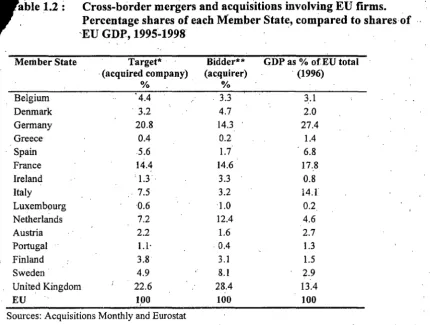
• As the Cardiff I Report shows, market integration has developed over the period 1993-97: intra-EU trade has continued to grow with Member States increasingly trading in similar products (e.g. cars for cars, rather than cars for coal), possible evidence that -their industrial structures are becoming more similar. If so, and helped by the diffusion of information technology, the Member States are likely to become less susceptible to asymmetric economic shocks and their business cycles more synchronised. Furthermore, the process of industrial restructuring is increasingly taking place at the Europea.n level, reflected by growing foreign direct· investment flows and cross-border
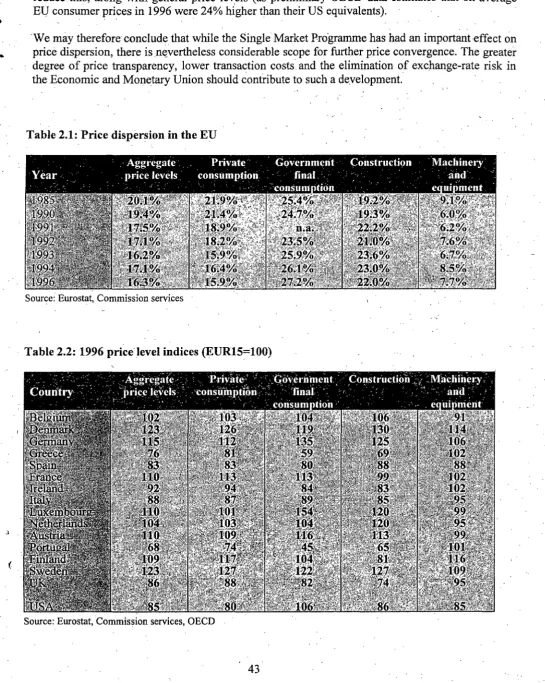
merger'acti~ity. On the othet:.hand, declines in price dispersion recorded between 1985 and 1993 carrte to a halt in th~ mor~··feceht pe~iod:: . .
~ -,~;~
• "~.v·
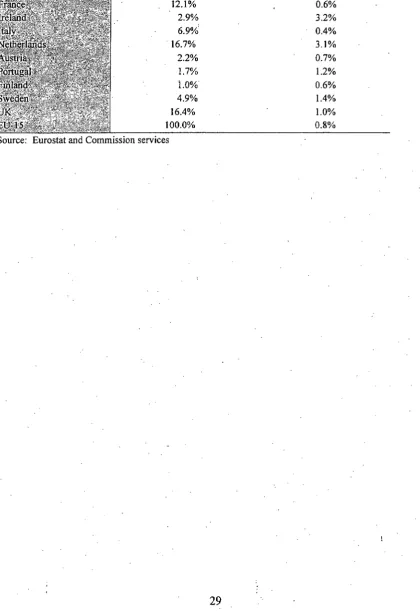
e. Some Member States are more closely integrated with the rest of the EU than others, in particular, Belgium-Luxembourg, Ireland, the Netherlands and the United Kingdom (see graphs 1.1 and 1.2, plus tables 1.1 and 1.2). Greece, Italy and Austria seem less well integrated.· However, this might be due to factors unrelated to markets such as geographical location·'i,(Greece), dat~ 9f accession (Austria) or strikingly different regional industriaf"structures (Italy) .. ... . .. ~-'
• '· • ·~. ..~·, ~,!!' ' • . • .... ~::,~
e Despite increased intra:.Eu integration;: the indicators appear to show that EU product markets are somewhat less efficient than those in the United States. In 1996, the EU'
s
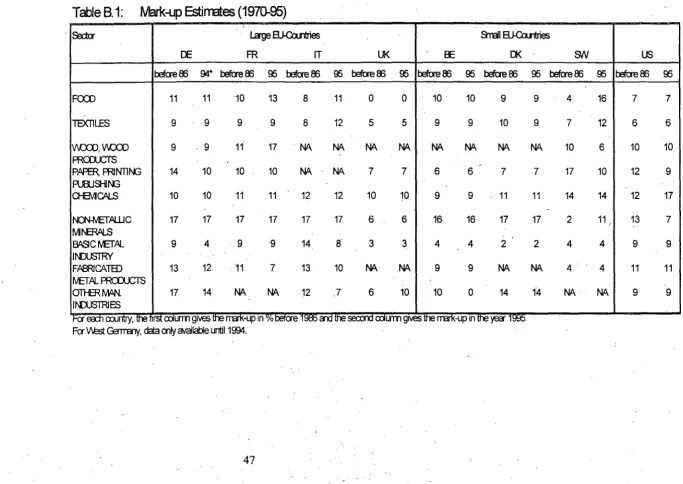
extra-EU trade to GDP ratio, an indicator of its exposure to external competition, was 16% compared to 18.,8% ~or the US, and EU consumer price levels were an average 24% Q.igher than in the US (see annex A). However, many factors may explain the higher price levels in the EU as compared to the US. Differences in indirect tax levels may account for some of this, as consumption taxes drive a 20% wedge between prices . paid by consumers and prices received by producers, compared to less than 7% in the US2 . Other explanations arc the EU's generally higher price cost margins (sec annex B) and its les_s efficient and competitive wholesale and retail distribution network.I Fo~ example, firms may engage in M&A activity either to exploit the opportunities of growing market integration or·else to try to maintain segmented domestic markets. The data cannot distinguish between the two. Similarly, using price-cost margins as an indicator of market integration is undermined by the fact that market integration and increasing market efficiency should impact on both prices and costs. . _,,,.
2 The consumption tax wedge is calculated
as
the ratio ·of consumption tax revenues to the value of · consumption net of taxes. Since implicit consumption tax rates (see table 3.3) are calculated on thebasis of the value of consumption including taxes, consumption tix wedges are higher than implicit tax rates.
8
Exchange rate developments may also affect relative price levels expressed m a common currency.
' '
o Average price levels differ significantly between EU Member States. Price levels are particularly generally high in Denmark, Sweden and Germany and lower in Portugal, Greece and Spain.· To some extent, this reflects differences in GDP per capita and indirect tax rates (see table 1.3). Nevertheless, . analysis allows identification of . countries whose pre-tax price levels are particularly 'striking even given their standards
of living. Early evidence suggests that prices are above expectations in Finland and Sweden and below in Italy and United Kingdom. Various explanations may account for this. The UK's record\ for example, may partly be due to its openness to international trade or to low price-cost margins. Other countries with relatively low price-cost margins include Belgium and following recent declines, Germany. Sweden's price-cost margins are low as well despite its high price levels. Countries with relatively high price-cost margins are Denmark, France and Italy.
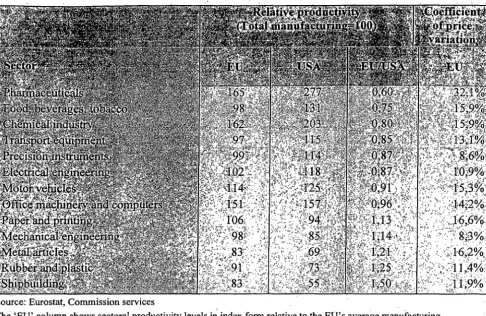
• There are also· significant sectoral differences in market efficiency. The most and least efficient sectors are not necessarily the same in all Member States. Analysis of productivity developments in manufacturing sectors (see table 1.4) shows that the EU compares badly to the US. in pharmaceuticals, chemicals, food, beverages and tobacco and to a· lesser extent ~n transport equipment, precision instruments, electrical engineering and motor vehicles. In some of these sectors, EU markets arc highly segmented due to business strategies, regulation or structural factors such as differences in taste or high transport costs. This market segmentation is often reflected in a high degree of price dispersion between EU Member States (pharmaceuticals, chemicals, beverages, and motor vehicles). Interestingly, taxation rates and price-cost margins in .some of these sectors (pharniaceuticals, beverages) are relatively. high as welL
• Differences in price levels for manufacturing products between countries also reflect the prices of services used in both the manufacturing and distribution of those products. The relative performance of different services sectors in the various EU Member States has been assessed by comparing· their prices or charges. This shows' significant differences between the EU Member States. Interesting sectors are wholesale ahd retail. trade (with high prices relative to other services sectors in Denmark, Austria, Sweden and the UK), as well as public administration (with high charges in Belgium, Greece and Luxembourg). The cost of transport and communication is high in Ireland, whilst Germany and the Netherlands have high prices in real e~tate.
Summing up, three conclusions can be 'drawn, in line with the Cardiff I Report:
1. Product markets within the EU are relatively well integrated, but some problem areas remain. High levels of price dispersion for some goods and services that mainly supply the public sector suggest that public procurement markets remain relatively poorly integrated. The weaker integration of service markets (by comparison with goods
markets), as highlighted in the Cardiff I Report, is confirmed by the observation that price dispersion in services is double that of goods. Other indications that room for improvement remains in the functioning of EU markets are the large price differences between Member States on the one hand, and between the EU and the US on the other hand.
2. Significant price dispersion within the EU may be attributed to one or more of the following factors - structural (Member States' differences in living standards and tastes, transport costs, etc.), regulatory (consumption and other taxes, non-tariff barriers) and firm strategies (concentration, differentiated products, advertising, etc.). Introduction of the euro; especially by enhancing price transparency, in combination with competition policy should put pressure on firms seeking to segment markets. That leaves regulation and taxation as areas needing further co-ordination efforts.
3. 'Measures to improve the functioning of EU markets would be the most efficient if targeted first at the less well-integrated countries and at major se.ctors with segmented markets (as reflected by significant EU-wide price dispersion, high price-cost margins and poor productivity performance relative to the US) - e.g., pharniaceutica_ls, chemicals, precision instruments, food, and motor vehicles. Similarly, many sectors (telecommunications, transport, energy and distribution) have remained sheltered from international competition until recently and are only now starting to enjoy the benefits of liberalisation.
1.2 Policies aiming at improving tllle lfumdioning of product maJr!kell:s
The Single Market
The Single Market Action Plan has made a significant contribution to improving the performance of the Single Market since its adoption in June 1997. By the end of December 1998, the fragmentation factor- i.e., the number of directives not yet implemented in one or more Member States - was only 14%, down from 35% in June 1997. Nonetheless, the backlog was not eliminated by 1 January 1999, when the Action Plan came to an end. Non-transposition of directives is worst in telecommunications, public procurement, transport, and intellectual and industrial property. Amongst the Member States, Finland, Denmark and Sweden have the best transposition records, Italy, Portugal and Luxembourg the worst. Some Member States- Austria, Germany and Sweden·- have substantially improved theit records between November 1997 and December 1998.
As the Cardiff I Report says, all Member States, ·especially those with a poor transposition record or where progress has been slow (Italy, Portugal, Luxembourg and Ireland) must take measures to rectify the situation. The Cardiff I Report also stresses the need to monitor market developments in order to identify remaining problem areas and ensure effective enforcement of Single Market rules.
accelerate reform in 1999 specifically to improve transparency and openness in public procurement,· especially for SMEs. Much more use of electronic commerce is a key plank of their strategy, an approach shared by the UK whose government is committed to purchasing 90% of central government goods electronically by March 2001. However, as indicated in the Cardiff I Report and in a majority of the national progress reports, the efforts to promote greater competition in this field have not yet produced sufficient tangible benefits. Therefore, this is an area to which the Commission will attach special attention in the future reports.
Correct and uniform enforcement of the legislation is also needed, but this is not always happening - the number of infringement proceedings opened by the Commission against Member States for alleged failure to apply Single Market rules continues to grow. Generally, such enforcement problems concern the large Member States. However, amongst the large Member States, the French record is particularly bad, whilst the UK record is particularly good. Amongst the small Member States, Greece and Belgium have the worst records. Beyond legislation, other problems continue to fragment Member State markets including complicated national and local regulations, state aids, difficulties with VAT systems, and deliberate market-segmenting business strategies, especially in the distribution sector, designed to make cross-border market access difficult.
Competition policy
The Single Market has had a strong pro-competitive effect, which will be reinforced by EMU and ongoing technological progress such as electronic commerce. However, a risk exists that companies whose market powe'r is threatened by such developments will attempt to maintain their position through anti-competitive behaviour. Furthermore, increased competitive pressure resulting from monetary union may lead to new demands for state aid to support firms and sectors. Competition policy (including the control of state aid) . therefore has an important role to play in safeguarding or enhancing the flexibility of product and service markets.
A number of Member States have recently adopted new competition legislation bringing national law more closely into line with ·that of the Community (Denmark and the Netherlands in 1997, Germany, Finland and the UK in 1998). In eight Member States4, the national competition authorities now have powers to enforce Articles 85-86 · of the EC Treaty, dealing with agreements between enterprises and abuse of dominant positions. From 2000, the UK competition authority will also have such powers. This arrangement helps streamline enforcement of these articles, as responsibility otherwise falls on national . courts or the Commission. Competition law enforcement has also been tightened up in Spain and Sweden, whilst the Austrian government has announced its intention of introducing legislation to create an independent Cartel ·Office and align Austrian competition law more closely with that of the Community.
Even if the amount of approved State aids has slightly declined since 1990, they remain one of the major sources of distortions within the Single Market. Over the period 1994-1996, total non-agricultural aids represented 1.4% of the Community's GDP (84 billion ECU per year), compared to 1.7% in the period of the previous survey (1992-1994). However, aid levels are still high in Italy (2.1% of GOP) and Germany (1.9%). On the other hand,
Finland, the U.K., Austria and the Netherlands have very low levels of aid (between 0.4% and 0.7% of GDP). Although the trend in state aid shows an encouraging overall decline, aid to the coal industry and resq.Ic and restructuring aid arc two areas of particular concern and regional aid needs closer scrutiny.
In particular, the Commission has noted a worrying increase in the amount of aid granted to rescue and restructure firms in difficulty. Excluding aid granted in the context of special measures for the new German Landers, the share of such aid in the total increased from 6% in 1992 to 16% in 1996. France, Italy and Spain accounted for more than 80% of this rescue and restructuring aid. As noted in France's report on economic reform, preference should be given to generic measures to improve the ability of firms to adapt and innovate.
The Commission will maintain a strict application of Community state aid rules, but the Member States themselves have to institute more sustained discipline. The exercise of stricter self-discipline might be facilitated by a concerted effort of all Member States to reduce the overall level of aids. As the Cardiff I Report recommends, Member States should set precise obje:ctives and establish a timetable for the reduction of state aids. They should also modify the structure of state aids to redirect them away from ad hoc and sectoral aids towards aids designed to correct market distortions (such as aid in favour of SMEs, R&D).
Market liberalisation and regulatory reforms
Market liberalisation generally accofupanies regulatory reforms.· An improvement in the regulatory environment does not necessarily mean deregulation and it may also entail re-regulation provided that the new· rules are better adapted to the new economic environment. Efforts to simplify and avoid unnecessary regulatory burdens on business have been pursued at the Community level, notably through the SLIM initiative. The Cardiff I Report
sugges~s applying the same methodology to national regulations.
The issue of reguhtion is particularly important for the network industries (telecommunications, postal services, air-, rail- and urban transport, electricity, gas and water), retail distribution, road freight transport and financial services (this last is discussed in Chapter 2). ·
Network industries make up 5% of EU GDP and employment, but their economic importance is still greater because the price and quality of their outputs is essential for the growth and competitiveness ofEuropean industries, for the operation of the Internal Market and for the European consumers' living standards . This is reflected by the importance attached to this issue in the national country reports and in the Cardiff I Report. The regulatory regime of some of these sectors can also affect the functioning of TENs which are vital for the integrati:on of European product markets.
Due to many factors, including technical change and fiscal constraints, a gradual and differentiated liberalism:ion process is taking place at the EU level via a wide array of legislative measures de!;igned to open up markets while permitting Member States to take appropriate steps to en:mre the fulfilmen.t of universal service obligations. However, the progress of liberalisati.on varies greatly between countries and sectors. In general,
liberalisation has advanced ·furthest in the UK andr the Nordic countries, where liberalisation in several sectors has preceded the enactment of relevant EU · 9irectives. According to the national reports, other countries have made significant progress over the recent period as well -e.g., Germany (in railways and postal services), the Netherlands (in railways}, and Spain (in electricity). Within Member States there can also be wide variations between sectors. For example, Spain's new electricity law, adopted in 1997, goes well beyond the requirements of the EU Directive.
Liberalisation is most advanced in the telecommunications, road haulage and non.:reserved . postal services. In air transport progress has been made as well, but bilateral "open skies" agreements and the system of slot allocation pose important obstacles to competition. By contrast; liberalisation is only starting in the energy sectors and very much slower in the water and railway sectors. Evidence provided in the Commission's Fourth Report on Implementation of the Telecommunications Regulatory Package6, as well as in the national reports show.s a link between liberalisation and lower prices. For example, countries such as Germany, France, Finland, the Netherlands and the United Kingdom reported falls in telecom prices following liberalisation. In the electricity sector, price reductions occurred in Germany, Spain, Finland and the United Kingdom and in regional transport in Denmark and Sweden.
However, changes brought about by competitiOn can sometimes i1Tiply short-term adjustment costs Gob losses). These adjustment costs pose three major policy challenges:
1. Acceptance of the liberalisation process will be greateF if its positive effects in terms of pr,ices, choice, quality and universality of services are clearly identified. Therefore, as the Cardiff I . Report says, the Member states should ensure that these benefits are transmitted to industrial users and consumers without delay. Effective and independent regulatory authorities are therefore essential. However, in· many Member States the regulatory authorities have been set up only recently and have yet to develop adequate expertise. In some sectors (e.g. railways, electricity and gas) many Member States have not yet established regulatory authorities
· 2. In some cases, workable competition within the market is difficult or impossible to achieve, e.g. the management of infrastructure, which constitutes a natural monopoly. 'In such cases, it may nevertheless be possible to achieve efficiency gains by instituting competition for the market, i.e. by awarding .contracts or licences for the provision of the services in question on the basis of a public tendering procedure. This approach has been followed with various degrees of success in the field of local and regional passenger transport in Denmark, Sweden and the UK.
3. Many services provided by the network industries have come to be regarded as essential. public services which should be widely available at "affordable" prices and with assured quality .. As the free operation of the market may· not always meet these requirements, Member States may impose universal service obligations. The definition. of these obligations, their financing and the selectior of the enterprises charged with carrying them out should not create unnecessary distortions of the market or impede.the process of integration.
Retail distribution in Europe is another sector subject to a number of types of regulation that could impede efficiency and contribute to higher price levels. Apart from labour market regulations, these include restrictions on land use and opening hours. The importance of these restrictions varies widely between Member States. In the Netherlands there are very few 'Hypermarkten', mainly due to land-use planning regulations. In most Member States, local authorities are the main decision-making bodies in the field of land-use planning, but some countries (Belgium, Germany, France, and Portugal) also impose restrictions at the national level. Special problems may arise when the authorities are subject to strong pressure from small traders to block the establishment of large shops. Opening hours are still subject to significant restrictions in Germany, Austria, Portugal and Finland, although in Germany and Austria, the restrictions have been relaxed over the last two years. Germany plans to review the situation in the middle of 1999. A wide-ranging liberalisation of the retail sector is being implemented in Italy.
Finally, in the road freight transport sector, Greece and Italy still apply prite controls on domestic road freight transport.
SMEs and entrepreneurship
SMEs account for between 60% (the Netherlands) and 80% (Italy) of employment in the EU7. SMEs are also the major drivers of net job creation as entrepreneurs start up new enterprises and small enterprises grow. However, as less than half of SMEs survive beyond five years, they also account for a large part of gross job losses.
In recent years, governments have become increasingly aware of obstacles hindering SMEs from exploiting their full job creating potential. The main obstacles have been identifi~d as lack of access to capital (see Chapter 2) and administrative burdens. The result is less job creation, and reduced competitive and innovative pressures on markets. The USA seems to set better conditions for job creation especially by SMEs. The average number of procedures, for example, to establish a company in Europe is II, against 6 in the USA.
Many Member States are well aware of these difficulties and have undertaken progran1mes and measures to improve the conditions for SMEs, including simplification of legislation, especially relating to start-ups (Germany, France, Sweden, Denmark), small size thresholds for administrative burdens (Netherlands), consulting procedures (Denmark), etc. In addition, some Member States have lightened tax burdens on SMEs (France, Spain) and there are a number of schemes for providing guarantees or subsidised loans. At the Community level measures have been undertaken as ·well. The BEST report and the related Commission Action Plans recently came up with recommendations on how to improve the regulatory environment on the European level and the Business Test Panel has been established to assess the compliance costs and administrative burdens linked with new legislative proposals.
R&D and innovation
Europe lags behind both the USA and Japan in terms of innovative capacity. R&D intensity in the EU was 1. 9 % of GOP in 1996, against 2.6 % in USA and 2.8 % ( 1995) in Japan.
7 European Observatory for SME, Annual Report 1997.
The level ofR&D expenditure by European companies is 1.2% ofGDP, against 1.8% for American firms and 2 % (1995) for the Japanese9, Within Europe, Sweden has the highest level of R&D expenditure (3.5 %) followed by a group of countries with shares around 2% (Denmark, France, Finland, Germany, the Netherlands and the UK ). Another group can be identified around 1.5 % (Austria, Belgium and Ireland). Finally, Italy, Greece, Spain and Portugal have percentages of R&D expenditures equal to or below 1 %.
R&D expenditure tends to be concentrated in high-technology sectors like aerospace, computers, electronics, chemicals, pharmaceuticals and motor vehicles. However, only 13% of EU expo_rts are high-tech products, around half the share in Japan or the USA. Furthermore, the EU trade balance in high-tech products has been worsening in recent years. Though the EU performs relatively well in scientific research (NSE graduation rates, PhD awards, publications, etc.) this does not translate into technological and economic performance. For example, only 48 ·% of patents applied for in the European Patent Office stem from European industry. There is thus a scope for improving the EU patent system. Similarly, the EU is lagging behind the USA regarding the development of commercially relevant innovation and their diffusion.
The importance of R&D and innovation has long been recognised by the Commission. In this respect, the first Action Plan for Innovationto and the 5th Framework Programme for
research, technological developments and demonstration activities! I are the main policy
instruments of the EU. However, according to reports on economic reforms, several . Member States have also taken measures to promote R&D and innovation. Spain has . . identified
a
need to strengthen R&D and innovation and has introduced new tax incentivesand other measures to promote industrial innovation. In France, the high costs of patents and an unsatisfactory venture capital market have been identified as barriers and a new act on the exploitation of research will soon be introduced. In the UK, SMEs' R&D record is. poor~ so the Government is considering new measures to tighten relations between SMEs and centres for higher education. Austria has put aside 1 billion A TS (revenue from privatisation) to increase R&D spending and co-operation between science and business.·
2. FINANC-IAL MARKETS
2.1 Progress infinancial integration
Monetary union has come, at a time of increased competit!on in the financial field as a result of the completion of the Internal Market, continuing deregulation of financial . markets in general, and rapid technological progress. As a result of the interaction of these processes, there will be an acceleration in the emergence of an integrated European financial market. This market should be more liquid, mature and efficient than existing national markets.
Key features of financial markets in the EU include the following:
9 S~cond European Report on S & Tindicators, Key Figures, May 1998.
10 First Action Plan for Innovation in Europe, ISBN 92-827-9111-4.
11 5th Framework Programme of the E~ropean Comm~ity for Research, Technological Developments
o VIewed as. a single set of markets, the value of EU bonds, equities, and bank loans in European capital markets totalled more than $27 trillion at the end of 1995. That compared to $23 trillion in the US capital markets, and $16 trillion in Japan. At the same time, domestic equity markets are relatively small. In 1996 the combined domestic market capitalisation of all 15 EU equity markets was around US$ 3.5 trillion,.compared tp well over US$ 6.5 trillion for the New York and NASDAQ markets. Following the introduction of the euro, EU equity markets will profit from a wider investor base and a larger, more efficient market.
" Although the integration of financial markets is advanced, obstacles to further integration remain. These barriers . have been ·identified in the Commission Communication "Financial services: a framework for action" (COM(l998) 625 Final) and were discussed in the Cardiff I Report. They include differences in the interpretation and implementation of (EU) financial market legislation; the absence df harmonisation measures in some areas such as pension funds; differences in national fiscal regimes; and technical barriers, for example in the field of payment systems. Given the importance of financial services in the EU . economy (some 6% of EU GDP and for 2.5% of EU employment - substantially
higher in the UK), it is essential that these barriers to integration be removed.
G Badly functioning financial. markets impact especially on SMEs. SMEs are very dependent on banks and tend to pay higher interest rates than larger enterprises. In 1996, for example, the share of financial debt was 37% in SMEs against 28% in ·large enterprises12. Yet, SMEs have much less bargaining power with banks. New and rapidly growing firms may also face credit rationing due to lack of collateral. SMEs often do not have access to stock exchanges or other regulated markets for capital. Private equity and venture capital markets for SMEs are in most Member States quite small and insignificant. This, in combination with substantial minimum capital requirements - particularly high in Austria and Germany .;_ may hinder the creation o{ new firms.
These observations lead to the following conclusions:
1. More integrated capital and credit markets should greatly enhance the capacity of Member States to respond to shocks in EMU. Capital markets help in smoothing shocks by facilitating adjustment via the cross ownership of productive assets and 1
. through lending and borrowing on national credit markets. · · :
2. The need to remove the remaining obstacles to financial markets, including a . better access o.f SMEs to risk capital,
Is
clearly acknowledged, and a series of actions at national and EU level are underway as described below.3. The-removal of currency risk, which the introduction of the euro entails, means that institutional investors are no longer limited to domestic ma~kets, but can seek out the opportunities provided by the increased depth and liquidity of the whole euro-denominated market. Nevertheless, quantitative restrictions remain on the type of asset in which investments can be made. These both distort the structure of
12 European Commission, BACH-database ..
institutional investor portfolios and reduce competition m the single financial market.
2. 2 The EU response
· As recalled in the Cardiff I report, three key developments in 1998 have the aim of ensuring further integration of European financial markets. First, as mentioned above, the Commission's Communication identified the key remaining barriers to the integration of financial markets and actions for dealing with them. Second, in response to the Communication, Ministers of Finance agreed to create a temporary high level group, to be chaired by the Commission, which will submit a report to the ECOFIN Council in June 1999 identifying the political priorities for the completion of the single market in the area of wholesale and retail financial services. Thirdly, the Commission published a Communication on "Risk Capital: a key to job creation in the EU" (SEC (98) 552) and proposed an Action Plan of measures necessary to · facilitate the development of a European risk capital market.
As to specific measures, the EU has created the Eurotech Capital scheme to promote the provision of venture capital for cross-border high-technology projects undertaken by SMEs and has recently launched a number of new venture capital initiatives. A new start up equity financing scheme has been launched by ElF.
2.3 National reforms are taking off
Legal/regulatory framework
The legal and the regulatory framework in Member States is undergoing major changes. In some cases, these changes are broad reaching in scope as in the UK, with the establishment of a single statutory regulator, the Financial Services Authority and the enactment of the Financial Services and Markets Bill, and in France where a proposed law on savings and financial security should improve the organisation ·and operation of supervision in the financial sector. Improving the overall efficiency and competitiveness of the financial sector is also the aim of the Third Financial Market Promotion Law in Germany (amending laws on stock exchanges and securities, on investment companies, and on equity investment companies), and of the Capital markets law in Spain. Other reforms are more specific in nature, aiming, for example, · to improve the efficiency of mutual funds by increasing the scope of their investment activities (Spain), or to improve the funding of investments in the public interest by amending rules governing interest on private savings ("livret A" in France).
Stock markets
nine European stock exchanges (London, Frankfurt, Paris, Amsterdam, Brussels, Madrid, Milan, Stockholm· and, outside the EU, Zurich) to work together .on establishing the basis for· a pan-European equity market, is a significant development. The creation of a network of "New Markets" for young expanding firms has been an important development in Germany, France, Belgium, the Netherlands, and most recently in Italy. This network will expand in 1999 to include Sweden and Denmark. Other developments which arc facilitating the access of SMEs to capital markets include the Alternative Investment Market (AIM) in the UK and the European-wide EASDAQ.
Venture capital and access ofsmall businesses to financing.
In the recent past a variety of initiatives have begun in the Member States to facilitate financing for SMEs and for start ups. In some cases these are specific financing programmes or funds (in Austria, "seed-financing", a Business Angels Initiative, a "High Tech Venture Fund", and
a
"Young Entrepreneur Assistance Programme"); while in others the legal framework has been made more favourable: in Spain new regulations allow venture capital providers greater flexibility in investment decisions, and changes in the regulation of Reciprocal Guarantee Companies make the system more accessible to business. The government also intends to facilitate the securitisation of loans to companies by providing guarantees which should be of particular benefit to small companies ..Other actions are broader in nature. In Ireland, 75% of the recommendations of Task Force on Small Business on tackling _problems such as raising capital, rewarding risk and reducing administrative burdens have been fully or partially implemented. The Small Business and Services Forum will complete a review of these recommendations in the light of the changing environment in which business operates by early 1999. In Spain an SME Observatory has been set up to study how red tape for SMEs might be reduced and access to external finance improved. Finally, as barriers to exit inhibit risk taking, some Member States (France, the Netherlands) are also planning to review bankruptcy regulations to make failure less punitive for entrepreneurs.
Corporate governance
The Risk Capital Action Plan has also recognised that good corporate governance is essential for stimulating the development of capitaJ. markets. Again Member States have undertaken a variety of actions. In Italy reforms to the regulatory framework in 1998 substantially modified the system of corporate governance, particularly in the fields of minority shareholders' protection and the contestability of control of listed companies. In France the Company Law Act will be reformed in 1999 to improve the transparency of companies vis-a-vis their shareholders, particularly minority shareholder. Provisions for compulsory administration or liquidation proceedings which can be lengthy and inefficient will also be reviewed in 1999. In Belgium a flexible approach has been adopted, relying on self-regulation and the pressure. of financial markets themselves rather than on the legal or regulatory framework. Three voluntary codes on principles of corporate governance were published at the beginning of 1998 by the Belgian Stock Exchange, the Belgian- Federation of Enterprises, and the Banking and Finance Commission.
3. LABOUR MARKETS
3.1 High structural unemployment, but a strongly diversified picture
Twenty years ago the EU employment rate matched that in the US. By I 997 it was I 4 percentage points lower, at 60.5% compared with 74% in the US. Over the period 1985-97, the employment rate remained virtually unchanged overall, while in the US (and Japan) they increased significantly. Unemployment in the EU averaged 10.6% of the labour force il) 1997, only slightly lower than the peak rate in 1994 and over twice the rate in the US (4.9%). Whereas the rate in the US has fallen steadily since the early 1980s, apart frorri during the recession of 1990-92, the rate in the EU has shown an upward trend since the mid- I 970s 13. ·
As shown in tables 3. I and 3 .2, and graph 3.1, these aggregate figures, however, conceal a highly diversified scenario. In summary:
• There are considerable differences among Member States. Austria, Denmark, Sweden and the UK have employment rates of about 70% and above, compared to around 50% or below in Italy and Spain. Within the euro area large differences exist between Member States. Whilst unemployment· remains high, though on a decreasing path, in Spain (over 20%) and· is I2-13% in Italy, France and Finland; it has decreased substantially in countries like the Netherlands and ·Ireland. Outside the euro area, unemployment is low in DK and the UK, but it remains relatively high in Sweden.·
• Within a number of countries, there exist striking regional differences: in Italy, Germany, Spain, Belgium and Finland, situations of relatively low unemployment · in certain regions co-exist with very high unemployment in other parts of the country.
• An analysis of employment rates by age group shows where the differences between the EU and the US lie. While employment rates for prime age males (25-54) are very similar to the US, employment rates for yourig people (15-24), for prime age womeri and for older people (55-64), especially men, are much lower in Europe than in the US. However, the unemployment rate for EU prime age males (8.1% in 1997) is significantly above the US level. Unemployment is particularly high for the.case of these disadvantaged categories of labour. A hard core of long temi, hard to place unemployed is mainly composed of females, low ~killed, youngsters and older workers.
• As a share of total working age population, EU employment amounted in 1997 to · 3.1 % in agriculture, 18.2 % in industry and 39.2 % in serviCes. For the US, the corresponding figures are 2.0 %, 17.7 % and 54.2%. Future increases in the overall EU employment rate will depend on an expansion of jobs in services for which there is considerable potential.
These observations indicate the following:
1. The . vast array of differences across countries, compared to the increasing homogeneity in ·the business cycle, especially in the euro zone, suggests ·that the
rise in unemployment is not a simple effect of inappropriate aggregate demand management.
2. Countries such as the UK, Denmark, Netherlands, Ireland and, more recently, Spain, have undertaken a more integrated approach to structural reforms, rather than scattered measures. As to labour market reforms, in the Netherlands, Ireland and Spain, these reforms were introduced in agreement with the social partners. Although important problems remain in those countries, the reform package, together with high growth of GDP in the past years, has contributed to· reduce structural unemployment.
3. The difference in regional unemployment in several countries, apart from highlighting the importance of regional and cohesion policies, also points to the need to take into account the highly differentiated levels of productivity and, more generally, economic development, into their collective bargaining.
3.2 The EU response
As laid out in the Broad Economic Policy Guidelines and confirmed in the EU employment strategy, tackling unemployment requires a sound, stability-oriented macroeconomic framework coupled with structural reforms. As an ex ante application of the new Employment Title of the Amsterdam Treaty, a co-operative effort in overhauling Europe's employment systems was put in place in the Jobs Summit in Luxembourg in November 1997. The process was further strengthened by the Vienna European Council in December 1998 which stated that employment policy has to be embedded in a comprehensive approach encompassing macroeconomic policies directed towards growth and stability, economic reform promoting competitiveness, and the Employment Guidelines. It mentioned that the surveillance of ·the implementation of the Guidelines- to be carried out via the Joint Employment Report - is an essential element of the Luxembourg process, which needs to be reinforced. It invited the Commission to present a communication on mainstreaming employment policies at Community level.
The Employment Guidelines represents an integrated strategy organised under the four headings of employability, entrepreneurship, adaptability and equal opportunities. Whilst it is still too early for a thorough evaluation; the Luxembm,rrg process has helped to focus the political attention on the employment challenge and has acted as a catalyst for a co-operative efforts in fostering structural reforms in the Member States. The European Employment Pact put forward by the German . Presidency aims at strengthening further the EU strategy and making it more
compelling. · ·
3.3 Responses by national governments and social partners
creating a better business climate, exammmg tax-benefit systems, supporting the participation of older workers, and promoting the inclusion of disadvantaged groups. The Commission intends to take up these points with Member States and monitor progress in the context of the submission of Member States' National Action Plans for 1999. As a contribution to this work the present report concentrates on tax-benefit - . . systems, including the reduction of labour costs for the low-skilled.
Reforms of tax andbenejit systems .
The need to reform tax and benefit systems to tackle the problem of high structural unemployment has long been part of the EU political agenda and are taken up in both the 1998 Broad Economic Policy Guidelines and the 1999 Employment Gui.delines. Progress in most ·countries in implementing taxation reforms is still gradual. Considerations of revenue loss have prevented many Member States from implementing taxation reforms to foster job creation more vigorously·.
Europe's social protection systems need to adapt to meet existing demand and respond to new needs, changing circumstances and the increasing pressure to contain costs. At the same time they should str~ngthen economic growth and job creation, and shift towards a more active policy designed· to get people into employment rather than merely transferring income to them when they arc not working.
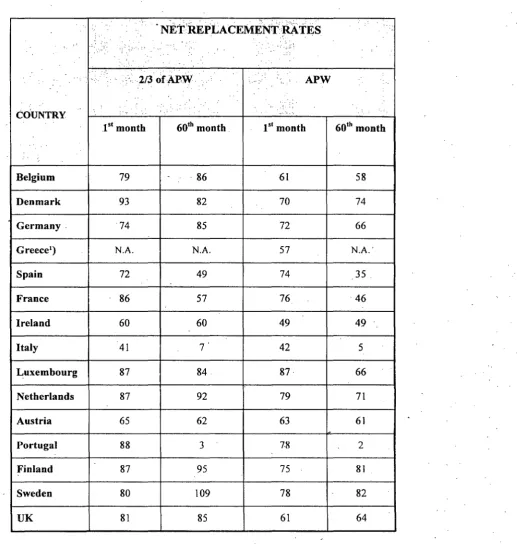
Such reforms are under way throughout the EU, with the emphasis on curbing expenditure growth and dependency on social protection. Eligibility criteria have been tightened, with stricter definitions of availability for work and tougher sanctions on those refusing to take up a job (or a training course). The duration of benefits and/or replacement ratios have been reduced in an attempt to curb alleged work disincentives. In-work benefits to top up low wages have been modified to minimise the risk of 'poverty traps'. Action to curb high marginat" effective tax rates has been taken in several countries. Lower marginal taxes, by affecting wage setting, may also have positive effects on labour demand. ·
A number of targeted measures to reduce labour costs for the low-skilled have been put in place to increase the demand for low-skilled labour. In many cases, these . measures were implemented in the context of reforms of tax and benefit systems aiming at reducing marginal effective tax rates. Whilst reductions in non-wage labour costs may be useful, it is important that they are comple~ented by effective active labour market policies to improve human capital. Furthermore, agreements between the social partners and labour and product market reforms are important to prevent reductions. in non-wage labour costs simply being offset, as so often in the past, by increases in profits or direct wages.
Work organisation and working time flexibility
An important aspect of organisation innovation is working time flexibility. In most Member States working time flexibility is still relatively low, whereas regulations and collective agreements often allow more flexibility than is actually utilised. In addition, recently, Austria and Spain undertook significant steps to liberalise working hours, . -but also in France, Italy, Finland and Greece regulations restricting unusual working hours were eased during the nineties. In Belgium, Spain and France it became possible for the social partners to agree on the annualisation of working hours. In Austria it became possible to exchange overtime with time off. Besides, in countries like Germany or Portugal, enterprises and social partners increasingly usc the flexibility offered in existing legislation.
Reducing the weekly working time has been a prominent feature for European policy makers. If well designed, these working time reductions can lead to a redistribution of work towards the unemployed, as some company examples show. This, however, requires several, often difficult-to-meet conditions, among others cost neutrality or the availability of suitable replacements from the stock of unemployed. Across the board working time reductions not agreed with the social partners are likely to be counter-productive as they risk increasing unemployment, in the short run, and be inconsistent with preparing for the ageing of the population, in the longer run. Removing obstacles to voluntary part-time work or allowing social partners to bargain the appropriate working time at the company or branch level, as in the Netherlands (over 35% of part-time workers on total employment), Denmark and Sweden (between 20 and 30%) may help fostering employment opportunities.
Reforms of employment protection legislation
An employment-friendly regulatory framework is important to foster structural change and respond to economic shocks. The key issue for workers, management, the social partners and policy makers alike is to strike the right balance betweenjlexibility
and security. Italy, Spain or Portugal are traditionally seen to have the strictest
Employment Protection Legislation (EPL) among the Member States, whereas it is
generally considered that EPL is least strict in the UK and Denmark. In some low-protection countries, including Denmark, however, ·employment low-protection clauses are embodied in collective agreements. Recent reforms in the area EPL have been undertaken by the Netherlands, Portugal and Spain. In Spain, in particular, the approach of liberalisation "at the margin" which had aggravated the segmentation of the labour market between permanent and temporary workers in the 1980s, has been reversed with the agreement of the social partners. In a number of countries (notably Italy), job-security requirements have been eased in the context of policy packages aimed at tackling regional unemployment. Whilst most of the recent changes go in the direction of making job-security provisions more flexible, in some countries, such as Fr;mce,· EPL became tighter during the nineties, and in Germany the new coalition government is planning to reverse a recent law facilitating dismissals especially for SMEs.
modernise the organisation of work, inCluding flexible working amingements, with the aim of making undertakings productive and competitive, Public authorities should provide the enabling framework for this.
4. PUBLIC FINANCES
Both the size and the structure of public expenditures and taxation have an important . impact on economic efficiency. As shown in tables 4.1 to 4.3, the broad picture of public finances in the EU is the following:
• The size of the public sector in the EU is large compared with the US or Japan. In 1998, total government €xpenditures amounted to 48% of EU GDP, which compares with 34% in the US and 38% in Japan. Accordingly, the lax revenue, as a per cent of GDP in the EU (43%) was at least 12 percentage points higher than in the US (31 %) and in Japan (28%). However, EU averages conceal wide differences across Member States. The size of public sector within the EU ranges from a maximum of 62% of the GDP in Sweden to a minimum of 31% in Ireland. • A distinguishing feature of EU countries is the size of the welfare state. Current
transfers to households (which include pensions, health care and unemployment and other benefits) amount to almost 20% of the GDP in the EU, and it is above this figure in the euro zone, compared with 14% in the US and 16% in Japan. In some Member States (B, F, L, NL) this indicator of social protection amounts to 23-24% of the GDP, while in others (GR, E, IRL, P, UK) the shares are as low as
12-17%. . .
• All in all, there is a quite significant correlation between levels of welfare spending and the degree of economic development. Apart from the UK, the lowest levels of social protection in the EU are found in the cohesion countries~ It should also be borne in mind that the differences in the level of spending on welfare services in industrial countries arc much more limited when both public and private spending are taken into account. For instance, the difference in total welfare spending between the two _countries at the opposite end of the spectrum, Sweden and the US, is reduced to some 7 points of GDP (35% of the GDP in
Sweden and 28% in the US). ·
o Whilst EU countries have widely different tax structures,. a common element, with few exceptions, is the high tax burden on labour - and especially on low-skilled workers - which has been steadily growing in line with social protection expenditures. Consumption and corporate taxes differ widely in the EU, and so do taxes · on interest income, in particular withholding taxes, resulting . in discriminatory treatment in favour of non-residents.