This is a repository copy of The ability of regional coordination and policy integration to
produce coherent marine management : Implementing the Marine Strategy Framework
Directive in the North-East Atlantic.
White Rose Research Online URL for this paper:
http://eprints.whiterose.ac.uk/97942/
Version: Accepted Version
Article:
Cavallo, Marianna, Elliott, Michael, Touza, Julia M. orcid.org/0000-0001-8170-1789 et al.
(1 more author) (2016) The ability of regional coordination and policy integration to
produce coherent marine management : Implementing the Marine Strategy Framework
Directive in the North-East Atlantic. Marine policy. pp. 108-116. ISSN 0308-597X
https://doi.org/10.1016/j.marpol.2016.02.013
[email protected] https://eprints.whiterose.ac.uk/
Reuse
Items deposited in White Rose Research Online are protected by copyright, with all rights reserved unless indicated otherwise. They may be downloaded and/or printed for private study, or other acts as permitted by national copyright laws. The publisher or other rights holders may allow further reproduction and re-use of the full text version. This is indicated by the licence information on the White Rose Research Online record for the item.
Takedown
If you consider content in White Rose Research Online to be in breach of UK law, please notify us by
The ability of regional coordination and policy integration to produce coherent
1
marine management: implementing the Marine Strategy Framework Directive
2
in the North-East Atlantic
3
Cavallo, Marianna1, 2, *, Elliott, Michael2, Touza-Montero, Julia3, Quintino, Victor4
4
1. Department of Applied Economics, University of Vigo,Vigo, 36310, Spain.
5
2. Institute of Estuarine & Coastal Studies (IECS), University of Hull, Hull, HU6 7RX, UK.
6
3. Environment Department, Wentworth Way, University of York, Heslington, York, YO10 5NG, UK.
7
4. Department of Biology & CESAM, University of Aveiro, 3810-193 Aveiro, Portugal.
8
*corresponding author: [email protected]
9
10
11
Abstract
12
The transboundary nature of the marine environment requires concerted actions among neighbouring
13
countries to improve its quality in an effective way. Coordination at international level is particularly
14
important during the implementation of environmental policies aimed at reducing the widespread pressures
15
derived from activities, such as shipping and fishing. The European Marine Strategy Framework Directive
16
(MSFD) aims to protect and improve the status of a wide range of ecosystem components with a regional
17
focus, promoting cooperation among countries and integration with other environmental policies. In 2014,
18
the European Commission assessed the level of adequacy, consistency and coherence achieved by Member
19
States during the implementation of the first phase of the MSFD and hence this paper focuses on the
cross-20
border coherence and coordination within one marine region in order to achieve the goals of the Directive.
21
In particular, it identifies and analyses the main differences among the results of the implementation of the
22
first phase of the MSFD across the North-East Atlantic region. This analysis shows that, in general, the use
23
of existing data, methodologies and targets from related environmental policies corresponds to the higher
24
levels of coherence among countries while a limited use of such policies produces less coherence. This
25
suggests that the European Commission, Regional Seas Conventions and Member States should work
26
together to identify the real connection between the MSFD and other policies to make a proper use of
27
existing data and approaches and to harmonise different policy objectives. In particular, the review shows
28
what might be termed a Ôparadox of coherenceÕ amongst Member States where coherence of action has to be
29
achieved within a European policy of subsidiarity, the act of Member States having control over the way
30
they implement framework directives. This can be regarded as a fundamental flaw in having a ÔFramework
31
DirectiveÕ instead of the greater control in a ÔDirectiveÕ.
32
Keywords: Marine Strategy Framework Directive, coherence, policy integration, regional coordination,
33
cooperation.
34
The growing importance of maritime activities such as fisheries, shipping, resource extraction, tourism and
36
offshore renewable energy across European seas, requires strong political coordination among countries that
37
share the same marine area to ensure a more sustainable management of the marine environment. The
38
exchange of information and knowledge between countries can improve the understanding of ecosystem
39
dynamics and the ability to solve problems through involving different actors. Moreover, coordination
40
between different institutions responsible for developing and implementing environmental policies is
41
essential to avoid contradicting policy outcomes and duplication of work (Maier, 2014). Management
42
measures taken to meet the requirements of sectoral policies, their lack of coherence, the unclear definition
43
of competencies and the consequent waste of resources are considered the main obstacles towards an
44
effective implementation of marine legislation (COM (2002) 539:16; Juda, 2007; Bondareff, 2007;
45
Koivurova, 2009).
46
The ecosystem-based approach to the management of marine environment underpins the Marine Strategy
47
Framework Directive (MSFD, 2008/56/EC), which aims to achieve Good Environmental Status of all
48
European marine regions, promoting cooperation and coordination between countries and integration with
49
other environmental policies (Borja et al, in press). The four European regions are the Mediterranean Sea,
50
North-East Atlantic Ocean, Black Sea and Baltic Sea, each of which has a Regional Sea convention,
51
respectively the Barcelona, OSPAR, Bucharest and HELCOM Conventions. The MSFD framework has
52
been transposed into national legislation by specific marine strategies whose preparation (the first phase),
53
started with the assessment of the characteristics of marine waters (Article 8) including a detailed study of
54
the main pressures and impacts and an economic and social analysis. On the basis of such an assessment,
55
Member States defined what they consider Good Environmental Status (GEnS1) of their marine waters
56
(Article 9) and established a set of environmental targets (Article 10) to achieve it. In 2014, monitoring
57
programmes were established to assess the progress towards GEnS (Article 11) and during 2015-2016
58
Member States are developing and implementing a programme of measures (Article 12) to achieve GEnS.
59
These five steps will be revised and repeated during the second cycle (2018-2021) taking into account the
60
experiences gained.
61
During the MSFD legislative process, some Member States opposed a binding regional approach in the
62
implementation phase (Maier, 2014). However, after a long consultation, the parties agreed to implement the
63
MSFD with a regional focus (Article 4, 5 and 6) but specific governance structures were not stipulated (van
64
Tatenhove et al., 2014). Regional coordination relies upon existing structures, including the four European
65
Regional Sea Conventions, but decisions taken through these are not binding. However, these structures
66
should allow an exchange of information and good practices related to approaches to assess status,
67
environmental targets and management measures common to the entire region. This paper questions whether
68
this is the case.
69
European coordination structures have been analysed in relation to the implementation of the MSFD
70
(Raakjaer et al., 2014) identifying the main strengths and weaknesses (Freire-Gibb et al., 2014) and
71
developing alternative governance models (Van Tatenhoven et al., 2014; Van Tatenhoven, 2013). Van Hoof
72
et al. (2014) analyse the aspects of integration and regionalisation of the Integrated Maritime Policy, the
73
Marine Strategy Framework Directive and the Common Fisheries Policy, while Van Leeuwen et al. (2014)
74
includes policy coordination as one of the key four potential impediments to implementing the MSFD.
75
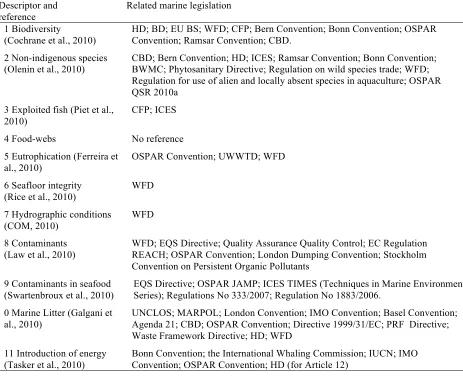
In 2014, the European Commission assessed the level of adequacy, consistency and coherence among
76
Member States during the implementation of the first phase of the MSFD. The current paper focuses on the
77
level of coherence across the North-East Atlantic region (hereinafter NEAR). In particular, it investigates
78
whether the integration with existing environmental policies is related to the different levels of coherence
79
and if a proper use of existing data, methodologies and targets has improved the coherence among countries.
80
As such, this paper aims to identify impediments to a coherent implementation of the future phases of the
81
MSFD in the NEAR.
82
2. Coordination structures in the North-East Atlantic Region (NEAR)
83
2.1 OSPAR Commission
84
The NEAR is the biggest sea region in Europe and has been subdivided into four according to its
85
characteristics: the Greater North Sea, the Celtic Sea, the Bay of Biscay and the Iberian Coast and the
86
Macaronesian subregions. These cover highly diversified marine landscapes with fjords, estuaries, bays and
87
wetlands, which all support extremely productive ecosystems but also important human activities2. It
88
encompasses OSPAR, an international convention ratified by fifteen NEAR countries to protect and
89
improve the quality of the marine environment3. Although originating in 1972 to cover land and sea-based
90
pollution, an annex on biodiversity and ecosystems was adopted in 1998 to cover non-polluting human
91
activities that can adversely affect marine quality. To support the implementation of the MSFD in this
92
region, in 2010 OSPAR adopted the North-East Atlantic Environmental Strategy (OSPAR, 2010a) which
93
includes six thematic strategies to identify specific emerging issues such as Biodiversity and Ecosystem,
94
Eutrophication, Hazardous Substances, Offshore Industry, and the Joint Assessment and Monitoring
95
Programme (JAMP).
96
2.2 The role of the European Commission
97
The so-called Common Implementation Strategy (CIS), was established at European level to coordinate
98
Member State actions. It was set up in 2001 under the Water Framework Directive (WFD) mainly to (i)
99
develop a common understanding and approaches to improve the status of superficial waters; (ii) elaborate
100
informal technical guidance including best practice examples; (iii) share experiences and resources, and (iv)
101
avoid duplication of efforts (CIS, 2003). In the MSFD, the CIS comprises several Working Groups: the
102
group on Good Environmental Status (WG GES) assists countries during the definition of GEnS; the group
103
on Information Exchange (WG DIKE) supports countries in reporting data, and the working group on
104
2 http://www.ospar.org/convention/the-north-east-atlantic
Economic and Social Analysis (WG ESA) develops common methodologies and approaches to carry out the
105
socio-economic analysis of the activities affecting marine waters.
106
The Marine Strategy Coordination Group is responsible to oversee the work of these three Working Groups
107
and to report the information to national Marine Directors. The Marine Directors give inputs to the
108
documents prepared by the Marine Strategy Coordination Group and their role is focused on more political
109
and technical issues that could not be resolved by the coordination group. During their informal meetings,
110
Marine Directors exchange views, build trust and understanding and eventually consolidate the results of the
111
CIS process (CIS, 2013). During these meetings Member State representatives also discuss how to integrate
112
the work of existing European and international policies, but they cannot amend them, so coordinating
113
different Directorates-General to harmonize different pieces of legislation remains a challenge (Boyes and
114
Elliott, 2014; Van Leeuwen et al., 2014). Moreover, during the first phase of the MSFD, bilateral and
115
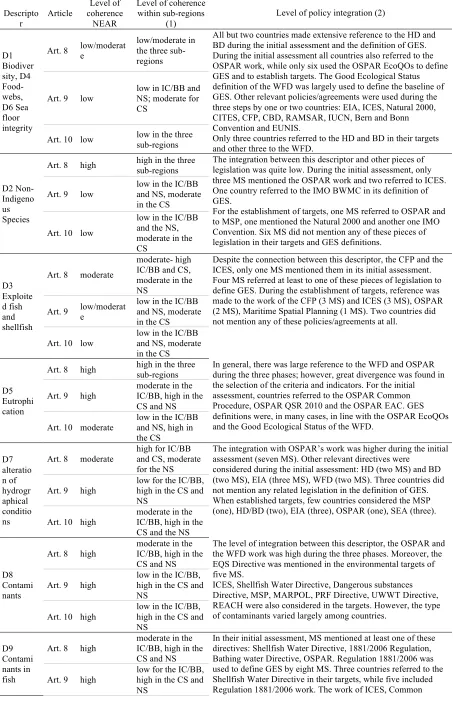
trilateral meetings were organised at regional and subregional level, allowing Member States to exchange
116
their knowledge (OSPAR, 2012). However, it is not clear to what extent the solutions proposed and
117
discussed during these informal meetings were then considered during the development of national
118
strategies.
119
3. Lesson learned on coordination during the implementation of relevant policies
120
Some of the problems facing the MSFD in relation to an effective regional coordination were already
121
identified during the implementation of other European environmental policies. For example, coordination
122
among countries to adopt coherent tools and approaches for the definition of Good Ecological Status was
123
achieved during the WFD intercalibration exercises (Borja et al., 2010). This exercise also improved
124
cooperation between scientists and managers responsible for surface water assessment (Borja et al., 2010).
125
The MSFD does not require such intercalibration exercises, but it recommends adopting coherent methods
126
and approaches that can be compared within the same region. The progress made during the implementation
127
of the WFD in coordinating countries to develop common approaches and understanding could be used to
128
improve coherence during the different phases of the MSFD. However, while the WFD was criticised for
129
being the result of a bottom-up approach, which allowed Member States greater latitude in implementing it
130
as they chose (termed subsidiarity by the EU), an approach which then required intercalibration (Hering et
131
al, 2010), it was hoped that the MSFD would be stipulated in greater detail, and more as a top-down
132
approach, thus reducing the need for the intercalibration necessary for coherence (Borja et al, 2010). This
133
has not turned out to be the case.
134
The Common Fisheries Policy (CFP) established in the early 1970s, is one of the first environmental
135
policies adopted in the European Union. The CFP governance system includes three main
politico-136
administrative levels: the European Commission, the Regional Advisory Councils and the Member States
137
(Hegland et al., 2012). Therefore, the CFP and MSFD are also considered bottom-up hierarchical policies,
138
both characterised by a decentralised (regional) authority but with several differences in the role that
139
Member States and the European Commission play as competent authorities. Coordinated actions between
140
countries of the North-East Atlantic region have contributed to achieve a more sustainable fishing activity
141
for an increasing number of stocks since 2007 (EEA, 2015). This experience could be used as reference to
set common targets and establish coordinate measures to reduce the pressure of fisheries in the context of
143
the MSFD (Descriptor 3).
144
The European Habitats and Birds Directives are considered as two of the most well-developed international
145
legal tools for nature conservation (Pullin et al., 2009, Evans, 2012). The Natura 2000 is the result of the
146
combination between these two directives and its implementation aimed for the creation of a network of
147
protected areas across Europe (Boyes and Elliott, 2014) which also contributes to achieving the United
148
Nation Convention on Biological Diversity objectives (Popescu et al., 2014). The Natura 2000 designation
149
may represent the best comparator for the implementation of the MSFD since its Directives (for Habitats
150
and Wild Birds) already encounter policy integration and Member State coordination. Member States have
151
attempted to adopt common criteria and to identify the levels of coverage of species and habitat types for
152
meeting the obligations of the Habitats Directive (Evans, 2012). In 2012 the European Commission
153
launched the Natura 2000 Biogeographical Process to support the exchange of information and experiences
154
between countries, as well as to establish common objectives for a more coherent management of the Natura
155
2000 Network with the view of achieving a Favourable Conservation Status in the context of the Habitats
156
Directive.
157
4. Integration of the MSFD with relevant policies
158
Despite the considerable connections between the MSFD with other European and international pieces of
159
legislation (Boyes and Elliott, 2014), limited indications are given in the MSFD to what extent existent data,
160
approaches and objectives have to be taken into account. More specific recommendations on how Member
161
States should integrate other policies are given in the COM Decision 2010/477/EU (COM, 2010) and in the
162
reports prepared by different task-groups for each qualitative descriptor (listed in Annex I of the MSFD,
163
except for D7 for which there was no task-team) (Table 1). It is this valuable to illustrate the similarity
164
between the MSFD and relevant policies and how the work already carried out in these contexts can be
165
integrated in the MSFD.
166
---[TABLE 1
HERE]---167
4.1 The MSFD and the Water Framework Directive (WFD)!
168
The Ecological Quality Status in the WFD expresses the structure of aquatic biological quality elements
169
(WFD Art. 2(21)) while in the MSFD, the concept of Good Environmental Status takes into account a wide
170
range of environmental pressures (i.e. fishing, marine litter and introduction of energy) and components (i.e.
171
seafloor and food-webs). The WFD is limited to coastal waters (to 1 nm, and internal waters) while the
172
MSFD is exclusively for marine waters from the coastline (and estuarine bay-closing lines) out to the
173
Economic Exclusive Zone (200 nm) (Borja et al., 2010). Despite these differences, the two frameworks
174
share several common aspects. The methodologies developed to assess the Ecological Quality Status in the
175
WFD, the data collected since 2000 and the definitions of Good Ecological Status if used, would ensure a
176
better comparability of results among countries in the MSFD.The definitions of Good Ecological Status and
177
Ôreference conditionsÕ (conditions with very low human pressure) were harmonised during the WFD
178
intercalibration process, where Member States held a common view and so similar levels of ambition of
water quality in the regions. Such harmonised definitions could be used as reference to set environmental
180
targets and to define Good Environmental Status in the context of the MSFD (Borja et al., 2010). Despite
181
this, the actions during the implementation of the WFD need to be adapted to a more oceanic context to be
182
applicable to the MSFD (Borja et al., 2010).
183
4.2 The MSFD, the Common Fisheries Policy and the International Council for the Exploration of the Sea.
184
The reformed Common Fisheries Policy (CFP) is the main policy instrument for sustainably managing fish
185
stocks in European seas and it could play a critical role in supporting a coherent implementation of the
186
MSFD across Europe, as both policies aim to achieve a sustainable exploitation of fish stocks. Given that
187
the descriptors of the MSFD are correlated to each other and hierarchical (Borja et al, 2010), the work
188
already developed under the CFP could help Member States to achieve GEnS for D3-commercial fish and
189
shellfish, which will also reduce the impacts of fishing activities on D1-biodiversity, D4-food-webs and
D6-190
seafloor integrity. The International Council for the Exploration of the Seas (ICES) has also developed
191
advice to ensure consistency across Europe on the assessment of the status of D1-biodiversity and
D3-192
commercial fish and shellfish.
193
4.3 The MSFD, the Birds and Habitats Directives and the Convention on Biological Diversity
194
The Natura 2000 Directives (Habitats and Birds), together protect all wild birds present in Europe, more
195
than 1000 other species and over 230 habitats both terrestrial and marine (EC, 2012). The integration of
196
these policies with the MSFD is essential to achieve a comprehensive GEnS for biodiversity, food-webs and
197
seafloor integrity descriptors, but it is necessary to have a clear understanding of the potential synergies
198
between them and how they complement each other. For example, the main aim of the MSFD is to achieve
199
and maintain GEnS of all the components of marine environment, while the Habitats and Birds Directive
200
objectives are to achieve Favourable Conservation Status (FCS) of particular habitats and species in the
201
whole European territory (not only the marine environment). However, while the GEnS will refer to all
202
features in an area, FCS only refers to the conservation elements (species, habitats) for which an area was
203
designated.
204
4.4 The MSFD and the OSPAR strategies
205
The major contribution to a coherent implementation of the MSFD in the North East Atlantic comes from
206
the OSPAR Convention and both have the same objectives and principles, with the implementation of the
207
ecosystem-approach at their core (OSPAR, 2012). The ICG-COBAM (Intersessional Correspondence
208
Group-Coordination of Biodiversity Assessment and Monitoring) provides technical support to the
209
development of common approaches and methods to assess the status of biodiversity descriptors. ICG
210
Eutrophication, ICG Marine Litter, ICG Environmental Assessment Criteria, ICG on Cumulative Impacts of
211
Human Activities and ICG Socio-Economic Analysis are other OSPAR expert groups through which
212
Contracting Parties cooperate for determining GEnS, setting targets and associated indicators (OSPAR,
213
2012).
214
The six parts of the OSPAR North-East Atlantic Environment Strategy (see section 2.1) encompasses the
215
MSFD objectives. Since 2010, the OSPAR monitoring and assessment has been guided by the Strategy for
the Joint Assessment and Monitoring Programme (JAMP) which includes, in particular, the Coordinated
217
Environmental Monitoring Programme (CEMP). More support to a comprehensive assessment of the main
218
environmental issues in the NEA comes from OSPAR Quality Status Report (OSPAR, 2010b). Moreover,
219
OSPAR adopted a number of Ecological Quality Objectives (EcoQOs) and also a set of common indicators
220
for some of the MSFD descriptors. Finally, the OSPAR Intersessional Correspondence Group for the
221
Implementation of the Marine Strategy Framework Directive coordinates the OSPAR role with respect to
222
the regional implementation of the MSFD.
223
5. Levels of coherence in the NEAR during the first phase
224
During the first phase of MSFD implementation, several meetings were organised both by the European
225
Commission (by the CIS) and OSPAR where the parties exchanged their views and provided guidelines to
226
support a common understanding of initial assessment, determination of GEnS and establishment of
227
environmental targets. However, the outcomes of the first phase show that both GEnS and environmental
228
targets have been defined at different levels, from descriptor level to indicator level, making their
229
comparison difficult across the region. Moreover, the methodologies and approaches adopted in the initial
230
assessment in some cases are not consistent among Member States. Among the three subregions, the lowest
231
levels of coherence were identified in the Bay of Biscay and Iberian Coasts during the three phases.
232
It is of value to identify here the main differences between approaches adopted by countries of the NEAR,
233
on the basis of the assessment carried out by the European Commission under Article 12 on the level of
234
adequacy, consistency and coherence in the four regions (EC, Annex 2014) and on the Member States
235
reports prepared by Milieu Ltd. (2014a-k)
236
5.1 The initial assessment (Article 8)
237
According to the Directive (Article 8.3(a)), when preparing the assessment on the status of marine waters,
238
Member States have to make every effort to ensure that the methodologies are consistent across the marine
239
(sub)region. This phase is an important starting point which indicates the gap between the current state and
240
the definition of GEnS, taking into account the essential features, pressures and impacts on the national
241
marine environment.
242
Across the region, the levels of coherence during the initial assessment were considered low for the
243
biodiversity-related descriptors (D1, D4, D6) and moderate for D3-exploited fish and shellfish and
D7-244
alteration of hydrographical conditions (Table 2, columns 3 and 4). For biodiversity descriptors, the level of
245
coherence among countries on pressures and impacts was relatively high, while it was low in the assessment
246
on biological features. For example, to report on the status of highly mobile species groups (birds,
247
mammals, reptiles, fish and cephalopods) two Member States reported only on species groups, one only on
248
functional groups, one reported on individual species and the remainer used a mixture of these approaches.
249
For D3-exploited fish and shellfish, the level of coherence was moderate since Member States used different
250
ICES reference points: one country used F (fishing mortality), six countries adopted FMSY (Fishing mortality
251
consistent with achieving Maximum Sustainable Yield) and two did not specify which ICES reference
points had been used. Moreover, six different reference points were used in relation to the assessment of
253
spawning stock.
254
The moderate level coherence on the assessment of D7-alteration of hydrographical conditions reflected the
255
fact that this descriptor has received low attention and support at European level (with no Task Group) and
256
by Member States (OSPAR, 2012). Some Member States have produced a very general assessment, focused
257
only on coastal areas and without a proper analysis on pressures and impacts (Milieu Ltd., 2014f).
258
5.2 The definition of GEnS (Article 9)
259
For each marine (sub)region concerned, Member States have to determine a set of characteristics for GEnS
260
on the basis of the eleven qualitative descriptors (Art. 9.1). In the first cycle, GEnS should rely on existing
261
data and assessments (WG GES 2011) as well as on the criteria and indicators recommended in the
262
Commission Decision 2010/477/EU. As in the case of the initial assessment, the lower levels of coherence
263
among definitions were associated to biodiversity descriptors (D1, D4, D6), D2- non-indigenous species and
264
D11- introduction of energy (Table 2, column 3 and 4). For D1-biodiversity and D4-food-webs, the level of
265
coherence was low since none of the 10 Member States have defined the GEnS in the same way (or even
266
similarly) (Milieu Ltd., 2014f). In fact, GEnS definitions were made on the bases of different species and
267
habitats and also the level of details varied greatly from descriptor to indicator level and the chosen criteria
268
and indicators. As for D1 and D4, GEnS definition of D6-seafloor integrity varied largely among countries:
269
most Member States defined GEnS using at least one of the two criteria of the Common Decision, while two
270
Member States reproduced the text of Annex I of the MSFD (descriptor level). Only one Member State
271
included a quantitative indicator, the Benthic Quality Index, related to the WFD and other two countries
272
referred to this directive more in general (Milieu Ltd., 2014f). GEnS for D2 and D11 was defined in a rather
273
vague way and with differences in the level of detail and focus.
274
5.3 The establishment of environmental targets (article 10)
275
Environmental targets should be based primarily on pressure and impact since this is the most effective way
276
to achieve GEnS (WG GES, 2011). The MSFD requires environmental targets be SMART (Specific,
277
Measurable, Achievable, Realistic and Time-bound) and associated to the indicators outlined in the COM
278
Decision 2010/477/EU. If targets are not sufficiently well-defined then monitoring for compliance with
279
those targets is inherently difficult (Elliott, 2011).
280
There were significant differences between the approaches used to set environmental targets for each
281
descriptor and, in some cases, Member States reports did not demonstrate that their targets are suitable to
282
achieve GEnS. Moreover, despite the considerable importance to establish environmental targets in a
283
coordinated way across the region, the level of coherence was considered high only for three of the eleven
284
descriptors: D7-alteration of hydrographical conditions, D8-Contaminants, D9-contaminants in fish, (Table
285
2, column 3 and 4). For example, the set of environmental targets established for D8 across the region was
286
consistent although the number of targets varied greatly as well as the level of detail. Most Member States
287
used Environmental Quality Standards and/or OSPAR work (Ecological Quality Objectives (EcoQOs) or
288
Environmental Assessment Criteria) as reference levels. All Member States (but one) set a target on acute
pollution events, targeting illegal discharges and oil spills (Milieu Ltd., 2014f). Six Member States have
290
used the common OSPAR target on the minimisation of acute pollution events and their impacts on biota or
291
a similar target (Milieu Ltd., 2014f).
292
Targets defined for D8, were applied to D9 as they address the same sources of contamination. During the
293
set of targets for D9, Member States referred to the concentration levels to comply with EU Regulation
294
1881/2006 on contaminants in foodstuffs. Sometimes, however, the reference to relevant legislation was
295
implicit in expressions such as Ônational and international legislationÕ, ÔCommunity legislationÕ, ÔEU limitsÕ,
296
etc. A few Member States have also included compliance with the Shellfish Water Directive (repealed in
297
2013 and subsumed into the WFD) to encompass microbial pathogens (Milieu Ltd., 2014f). Some countries
298
did not set any targets for D6, D7 and D11.
299
---[TABLE 2 HERE]---
300
301
6. Relationship between policy integration and coherence among countries
302
It is of value to compare the results on the level of coherence with the level of policy integration in the
303
NEAR during the first phase. Countries should refer to the work carried out in the WFD in seven of the
304
eleven descriptors (Table 1). However, good and clear reference to the WFD was made only for
D1-305
biodiversity, D5-eutrophication, where in many cases Member States used GEcS to define GEnS, and for
306
D8-contaminants, where most countries have referred to the WFD monitoring methodology (Milieu Ltd.,
307
2014f) (Table 2, column 5). Reference to the WFD for the D7-hydrological condition was quite limited and
308
vague.
309
Member States should consider data and approaches developed in the context of the CFP and ICES in four
310
descriptors (Table 1). However, references to the CFP was minimal in the region, where just one country
311
mentioned this policy in its initial assessment, another one in its definition of GEnS, while three countries
312
considered the CFP in their targets (Table 2, column 5).
313
The Natura Directives were often mentioned in the Member States national reports although it was expected
314
(EC JRC, 2014) that a much larger use of the work already occurred in the context of the two directives. The
315
reference to these directives and the Convention on Biological Diversity varied largely among countries and
316
among descriptors and within the same descriptor among criteria and indicators considered (Table 2, column
317
5). Only half of the Member States in the region referred to specific habitats and species in their GEnS
318
definitions (Milieu Ltd., 2014f), while others generally included species/habitats covered by relevant
319
international and European legislation without specifying which legislation.
320
The wide reference to the OSPAR work in national reports reflects the considerable effort the OSPAR
321
Commission made in supporting Member States in all the phases of the implementation of the MSFD
322
(column 5, Table 2). However, the use of data, approaches, indicators and targets from OSPAR work varied
323
largely between countries and descriptors (column 5, Table 2).
There was, in general, a higher level of coherence between countries when they referred clearly to relevant
325
policies. In fact, the levels of coherence were higher for D5-eutrophication, D7-alteration of hydrographical
326
conditions, D8-contaminants, D9-contaminants in fish and D10-marine litter which also correspond to the
327
major level of policy integration, where all countries of the region made reference to one or more related
328
directive. On the other hand, significant differences in approaches were observed for D2 and D11, where six
329
Member States did not mention any legislation in any of the three articles, while the rest of the countries
330
mentioned the work of five different strategies/conventions, making results difficult to compare. The
331
moderate level of coherence among results achieved for D3-exploitable fish and shellfish was probably the
332
result of a different use of ICES reference points.
333
Despite the large reference made to relevant existing policies for the three biodiversity related descriptors
334
(D1, D4, D6), these showed the lowest levels of coherence where no country defined the GEnS in the same
335
way (Milieu Ltd., 2014f).
336
At the Member State level, there was also inconsistency among the three articles for the same descriptor,
337
since GEnS was defined without fully considering the initial assessment and the environmental targets
338
sometimes were not in line with GEnS definition (EC, 2014). For example, for D3-exploitable fish and
339
shellfish there was a weak link between the baselines stated within the initial assessments and the targets to
340
achieve GEnS (EC, Annex 2014). The consistency among articles was also rather low between the targets
341
established for D1-biodiversity which, in some cases, were not linked to the specific pressures and impacts
342
identified in the initial assessment (EC, Annex 2014). It should be highlighted, however, that a good level of
343
consistency among the three articles was achieved for D5, which reflects the proper use of definitions,
344
baseline and methodologies from the WFD and OSPAR.
345
7. Concluding Remarks
346
This review has shown that coordinated actions within regions during the implementation of the MSFD can
347
produce a more effective improvement of European environmental quality, as well as the integration of
348
sectoral policies and hence a more sustainable management of marine resources. Despite that, there are
349
many examples where coordinated actions have not been made. Member States have recognised that some
350
mistakes were made during the development and implementation of their national strategies and that, in
351
some cases, the OSPAR and the CIS Working Groups work came too late (EC, 2014). In fact, only in 2012
352
did OSPAR publish advice documents on descriptors of GEnS (OSPAR, 2012) while the GES Working
353
Group prepared a document with a clearer indication on how to implement the three articles at the end of
354
2011 (WG GES, 2011). These guidance documents, however, may produce a more coordinate
355
implementation of the MSFD during the second cycle, starting in 2018.
356
It is concluded here that a way to gain coherence in the identification of a common list of marine species and
357
habitat that have (sub)regional distribution (e.g. for highly mobile species) could be a more extensive use the
358
work already carried out in the context of the Habitats and Birds Directive, Bern and Bonn Conventions,
359
OSPAR Convention, Convention on Biological Diversity, Ramsar Convention, Common Fisheries Policy
360
and ICES. Such a list will be extremely important not only to know the actual status of such species but also
to develop more effective protection actions. For the same reason, a common target list of non-indigenous
362
species and type of contaminants should be developed at the regional level.
363
Despite the above, it is not yet clear how countries can improve coherence in their GEnS definition and
364
targets for biodiversity-related descriptors. The implementation would benefit from a top-down (i.e. more
365
centralised) further specified extent to which countries have to be coordinated, for example, in the selection
366
of those species/populations, habitats (and related criteria and indicators) that are relevant at (sub)regional
367
scale, taking also in consideration national and local characteristics. However, such a centralisation may be
368
counter to the European principle of subsidiarity, i.e. the ability to take decisions at the level closest to the
369
people. This appears to be the central paradox here, what may be termed a Ôparadox of coherenceÕ amongst
370
Member States where coherence of action has to be achieved and balanced within a European policy of
371
subsidiarity, the act of Member States having control over the way they implement framework directives.
372
Thus the more freedom a Member State has to implement a directive in its own way then the greater scope
373
for anomalies and non-coherence (and thus the greater need for intercalibration and intercomparison
374
exercises). As shown largely by the Water Framework Directive and now, as indicated here possibly also by
375
the Marine Strategy Framework Directive, this can be regarded as a fundamental flaw in having a
376
ÔFramework DirectiveÕ instead of the greater control shown in a ÔDirectiveÕ.
377
The pick-and-choose approach, shown in this paper, of the use of relevant legislation in the region during
378
the first phase, could be either the result of allowing Member States freedom to implement the Directive as
379
they want within the overall framework, or be the result of a limited knowledge of the real connection
380
between such policies and the MSFD. To avoid this occurring during the next phases, Member States
381
together with the Regional Seas Convention, should identify those policies that better fit with each of the
382
descriptors and phases to harmonise results and avoid duplication. Moreover, meetings at regional and
383
subregional level could be valuable to identify those gaps in data and knowledge that determined a different
384
selection of criteria and indicators and to communicate to OSPAR and to the European Commission if
385
further research is needed to fill such gaps. Given the above, considering the results of the present analysis,
386
strengthening the integration of the MSFD with relevant environmental policies remains a major challenge
387
for the European Commission, Regional Seas Convention and Member States.
388
Acknowledgements
389
This manuscript has partly resulted from the DEVOTES (DEVelopment Of innovative Tools for
390
understanding marine biodiversity and assessing good Environmental Status) project, funded by the
391
European Union under the 7th Framework Programme, ÔThe Oceans of TomorrowÕ Theme (grant agreement
392
no. 308392), www.devotes-project.eu. Moreover, one of the co-author was supported by FCT/MEC through
393
CESAM RU (UID/AMB/50017) national funds and, where applicable, co-financed by the FEDER, within
394
the PT2020 Partnership Agreement.
395
References
396
Bondareff, J.M., 2007. The EU adopts an integrated maritime policy and action plan: is the U.S. far behind
397
or ahead? Sustainable Development Law & Policy 8, 47:52, 85-86.
Borja, ç., Elliott, M., Andersen, J.H., Berg, T., Carstensen, J., Halpern, B.S., Heiskanen, A-S., Korpinen, S.,
399
Lowndes, J.S.S., Martin, G., Rodriguez-Ezpeleta, N., (accepted). Integrative assessment of marine systems:
400
the Ecosystem Approach in practice. Frontiers in Marine Science.
401
Borja, ç., Elliott, M., Carstensen, J., Heiskanen, A.S., van de Bund, W., 2010. Marine management Ð
402
towards an integrated implementation of the European Marine Strategy Framework and the Water
403
Framework Directives. Marine Pollution Bulletin. 60, 2175-2186.
404
Boyes, S.J. and Elliott M., 2014. Marine legislation Ð The ultimate ÔhorrendogramÕ: International law,
405
European directives & national implementation. Marine Pollution Bulletin 86, 39-47.
406
Cochrane, S.K.J., Connor, D.W., Nilsson, P., Mitchell, I., Reker, J., Franco, J., Valavanis, V., Moncheva, S.,
407
Ekebom, J., Nygaard, K., Serrao Santos, R., Naberhaus, I., Packeiser, T., van de Bund, W., Cardoso, A.C.,
408
2010. Marine Strategy Framework Directive Ð Task Group 1 Report Biological Diversity. Office for Official
409
Publications of the European Communities, EUR 24337 EN Ð Joint Research Centre, Luxembourg.
410
CIS, 2003. Common Implementation Strategy for the Marine Strategy Framework Directive 2013. Learning
411
the lessons and launching a re-enforced phase of implementation Final version agreed by Marine Directors
412
on 5/12/2013. pp. 14-16
413
CIS, 2013. Common Implementation Strategy for the Water Framework Directive (2000/60/EC) 2003.
414
Carrying forward the Common Implementation Strategy for the Water Framework Directive -Progress and
415
Work Programme for 2003 and 2004. As agreed by the Water Directors 17 June 2003. pp. 2 European
416
Commission, Brussels.
417
COM, 2002. Communication from the Commission to the Council and the European Parliament 2002.
418
Towards a strategy to protect and conserve the marine environment (COM (2002) 539 final). European
419
Commission, Brussels.
420
EC, Annex 2014 Staff Working Document. Accompanying the document. Commission Report to the
421
Council and the European Parliament. The first phase of implementation of the Marine Strategy Framework
422
Directive (2008/56/EC) Ð SWD (2014) 49 final, European Commission, Brussels.
423
EC, 2014 Staff Working Document. The first phase of implementation of the Marine Strategy Framework
424
Directive (2008/56/EC) Ð SWD (2014) 49 final, pp. 7, European Commission, Brussels.
425
EC, 2008. Council Directive 2008/56/EC of the European Parliament and of the Council of 17 June 2008
426
establishing a framework for community action in the field of marine environmental policy (Marine Strategy
427
Framework Directive). European Commission, Brussels.
428
EC, 2010. Commission decision of 1 September 2010 on criteria and methodological standards on good
429
environmental status of marine waters. European Commission, Brussels.
430
EC, 2012. Links between the Marine Strategy Framework Directive (MSFD 2008/56/EC) and the Nature
431
Directives (Birds Directive 2009/147/EEC (BD) and Habitats Directive 92/43/EEC (HD)). European
432
Commission, Brussels.
EC, JRC 2014. In-Depth Assessment of the EU Member State Submissions for the Marine Strategy
434
Framework Directive under articles 8, 9 and 10. European Commission, ISPRA, Italy.
435
EEA, 2015. State of Europe's seas. Luxembourg: Publications Office of the European Union, 2015.
436
Elliott, M. 2011. Marine science and management means tackling exogenic unmanaged pressures and
437
endogenic managed pressures Ð a numbered guide. Marine Pollution Bulletin. 62: 651-655.
438
Evans, D. 2012. Building the European Union's Natura 2000 network. Nature Conservation 1, 11-26.
439
Ferreira, J.G., Andersen, J.H., Borja, A., Bricker, S.B., Camp, J., Cardoso da Silva, M., GarcŽs, E.,
440
Heiskanen, A.S., Humborg, C., Ignatiades, L., Lancelot, C., Menesguen, A., Tett, P., Hoepffner, N.,
441
Claussen, U., 2010. Marine Strategy Framework Directive Ð Task Group 5 Report Eutrophication. Office for
442
Official Publications of the European Communities, EUR 24338 EN Ð Joint Research Centre, Luxembourg.
443
Freire-Gibb, L.C., Koss, R., Margonski, P., Papadopoulou, N., 2014. Governance strengths and weaknesses
444
to implement the marine strategy framework directive in European waters. Marine Policy 44, 172Ð178.
445
Galgani, F., Fleet, D., van Franeker, J., Katsanevakis, S., Maes, T., Mouat, J., Oosterbaan, L., Poitou, I.,
446
Hanke, G., Thompson, R., Amato, E., Birkun, A., Janssen, C., 2010. Marine Strategy Framework Directive
447
Ð Task Group 10 Report Marine litter. Office for Official Publications of the European Communities, EUR
448
24340 EN Ð Joint Research Centre, Luxembourg.
449
Hegland, T.J., Ounanian, K. and Raakjaer, J. 2012. What does ÔregionalizationÕ mean? An exploratory
450
mapping of options on reform of the Common Fisheries Policy. Maritime Studies, 11:8.
451
Hering, D., Borja, A., Carstensen, J., Carvalho, L., Elliott, M., Feld, C.K., Heiskanen, A.S., Johnson, R.K.,
452
Moe, J., Pont, D., Solheim, A.L., van de Bund, W., 2010. The European Water Framework Directive at the
453
age of 10: A critical review of the achievements with recommendations for the future. Science of the Total
454
Environment. 408(19): 4007-4019.
455
Juda, L., 2007. The European Union and ocean use management: the marine strategy and the maritime
456
policy. Ocean Development and International Law 38, 259-282.
457
Koivurova, T., 2009. A note on the European UnionÕs integrated maritime policy. Ocean Development and
458
International Law 40, 171-183.
459
Law, R., Hanke, G., Angelidis, M., Batty, J., Bignert, A., Dachs, J., Davies, I., Denga, Y., Duffek, A., Herut,
460
B., Hylland, K., Lepom, P., Leonards, P., Mehtonen, J., Piha, H., Roose, Tronczynski, J., Velikova, V.,
461
Vethaak, D., 2010. Marine Strategy Framework Directive Ð Task Group 8 Report Contaminants and
462
Pollution Effects. Office for Official Publications of the European Communities, EUR 24335 EN Ð Joint
463
Research Centre, Luxembourg.
464
Maier, N. 2014. Coordination and cooperation in the European Marine Strategy Framework Directive and
465
the US National Ocean Policy. Ocean & Coastal Management 92, 1-8
466
Mee, L.D., Jefferson, R.L., Laffoley, Dd., Elliott. M. 2008. How good is good? Human values and EuropeÕs
467
proposed Marine Strategy Directive. Marine Pollution Bulletin, 56(2): 187-204.
Milieu Ltd. 2014a. Article 12 Technical Assessment of the MSFD 2012 obligations North-East Atlantic
469
Ocean. Milieu Ltd., ChaussŽe de Charleroi 1121060 Brussels, Belgium.
470
Milieu Ltd. 2014b. Article 12 Technical Assessment of the MSFD 2012 obligations North-East Atlantic
471
Ocean. Germany. Milieu Ltd., ChaussŽe de Charleroi 1121060 Brussels, Belgium.
472
Milieu Ltd. 2014c. Article 12 Technical Assessment of the MSFD 2012 obligations North-East Atlantic
473
Ocean. Denmark. Milieu Ltd., ChaussŽe de Charleroi 1121060 Brussels, Belgium.
474
Milieu Ltd. 2014d. Article 12 Technical Assessment of the MSFD 2012 obligations North-East Atlantic
475
Ocean. France. Milieu Ltd., ChaussŽe de Charleroi 1121060 Brussels, Belgium.
476
Milieu Ltd. 2014e. Article 12 Technical Assessment of the MSFD 2012 obligations North-East Atlantic
477
Ocean. Ireland. Milieu Ltd., ChaussŽe de Charleroi 1121060 Brussels, Belgium.
478
Milieu Ltd. 2014f. Article 12 Technical Assessment of the MSFD 2012 obligations North-East Atlantic
479
Ocean. North-East Atlantic. Milieu Ltd., ChaussŽe de Charleroi 1121060 Brussels, Belgium.
480
Milieu Ltd. 2014g. Article 12 Technical Assessment of the MSFD 2012 obligations North-East Atlantic
481
Ocean. Netherland. Milieu Ltd., ChaussŽe de Charleroi 1121060 Brussels, Belgium.
482
Milieu Ltd. 2014h. Article 12 Technical Assessment of the MSFD 2012 obligations North-East Atlantic
483
Ocean. Portugal. Milieu Ltd., ChaussŽe de Charleroi 1121060 Brussels, Belgium.
484
Milieu Ltd. 2014i. Article 12 Technical Assessment of the MSFD 2012 obligations North-East Atlantic
485
Ocean. Spain. Milieu Ltd., ChaussŽe de Charleroi 1121060 Brussels, Belgium.
486
Milieu Ltd. 2014j. Article 12 Technical Assessment of the MSFD 2012 obligations North-East Atlantic
487
Ocean. Sweden. Milieu Ltd., ChaussŽe de Charleroi 1121060 Brussels, Belgium.
488
Milieu Ltd. 2014k. Article 12 Technical Assessment of the MSFD 2012 obligations North-East Atlantic
489
Ocean. United Kingdom. Milieu Ltd., ChaussŽe de Charleroi 1121060 Brussels, Belgium.
490
Olenin, S., Alemany, F., Cardoso, A.C., Gollasch, S., Goulletquer, P., Lehtiniemi, M., McCollin, T.,
491
Minchin, D., Miossec, L., Occhipinti-Ambrogi, A., Ojaveer, H., Rose Jensen, K., Stankiewicz, M.,
492
Wallentinus, I., Aleksandrov, B., 2010. Marine Strategy Framework Directive Ð Task Group 2 Report
Non-493
indigenous Species. Office for Official Publications of the European Communities, EUR 24342 EN Ð Joint
494
Research Centre, Luxembourg.
495
OSPAR, 2010a. The North-East Atlantic Environment Strategy. Strategy of the OSPAR Commission for the
496
Protection of the Marine Environment of the North-East Atlantic 2010Ð2020.
497
OSPAR, 2010b. Quality status report 2010. London.
498
OSPAR, 2012. Finding common ground - Towards regional coherence in implementing the Marine Strategy
499
Framework Directive in the North-East Atlantic region through the work of the OSPAR Commission.
500
Piet, G.J., Albella, A.J., Aro, E., Farrugio, H., Lleonart, J., Lordan, C., Mesnil, B., Petrakis, G., Pusch, C.,
501
Radu, G., Ratz, H.J., 2010. Marine Strategy Framework Directive Ð Task Group 3 Report Commercially
Exploited Fish and Shellfish. Office for Official Publications of the European Communities, EUR 24316 EN
503
Ð Joint Research Centre, Luxembourg.
504
Popescu, V. D., Rozylowicz L., Niculae I.M., Cucu A. L., Hartel T. 2014. Species, Habitats, Society: An
505
Evaluation of Research Supporting EU's Natura 2000 Network. PLoS ONE 9, 11.
506
Pullin, A.S., Baldi, A., Can, O. E., Dieterich, M., Kati, V., 2009. Conservation Focus on Europe: Major
507
Conservation Policy Issues That Need to Be Informed by Conservation Science. Conservation Biology 23,
508
818-824.
509
Raakjaer, J., van Leeuwen, J., van Tatenhove, J., Hadjimichael, M. 2014. Ecosystem-based marine
510
management in European regional seas calls for nested governance structures and coordination - A policy
511
brief. Marine Policy 50, 373-381
512
Rice, J., Arvanitidis, C., Borja, A., Frid, C., Hiddink, J., Krause, J., Lorance, P., Ragnarsson, S.A., Skold,
513
M., Trabucco, B., 2010. Marine Strategy Framework Directive Ð Task Group 6 Report Seafloor Integrity.
514
Office for Official Publications of the European Communities, EUR 24334 EN Ð Joint Research Centre,
515
Luxembourg.
516
Swartenbroux, F., Albajedo, B., Angelidis, M., Aulne, M., Bartkevics, V., Besada, V., Bignert, A.,
517
Bitterhof, A., Hallikainen, A., Hoogenboom, R., Jorhem, L., Jud, M., Law, R., Licht Cederberg, D.,
518
McGovern, E., Miniero, R., Schneider, R., Velikova, V., Verstraete, F., Vinas, L., Vlad, S., 2010. Marine
519
Strategy Framework Directive Ð Task Group 9 Report Contaminants in Fish and Other Seafood. Office for
520
Official Publications of the European Communities, EUR 24339 EN Ð Joint Research Centre, Luxembourg.
521
Tasker, M.L., Amundin, M., Andre, M., Hawkins, A., Lang, W., Merck, T., Scholik-Schlomer, A.,
522
Teilmann, J., Thomsen, F., Werner S., Zakharia M., 2010 Marine Strategy Framework Directive Ð Task
523
Group 11 Report Underwater noise and other forms of energy. Office for Official Publications of the
524
European Communities, EUR 24341 EN Ð Joint Research Centre, Luxembourg.
525
Van Hoof , L., Hendriksen, A., Bloomfield, H., 2014. Sometimes you cannot make it on your own; drivers
526
and scenarios for regional cooperation in implementing the EU Marine Strategy Framework Directive.
527
Marine Policy 5, 339Ð346.
528
Van Leeuwen, J., Raakjaer, J., van Hoof, L., van Tatenhove, J., Long, R., Ounanian, K. 2014. Implementing
529
the Marine Strategy Framework Directive: A policy perspective on regulatory, institutional and stakeholder
530
impediments on effective implementation. Marine Policy 50, 325-330
531
Van Tatenhove, J., Raakjaer, J., van Leeuwen, J., van Hoof, L. 2014. Regional cooperation for European
532
seas: Governance models in support of the implementation of the MSFD. Marine. Policy 50, 364-372
533
Van Tatenhove J. 2013. How to turn the tide: developing legitimate marine governance arrangements at the
534
level of regional seas. Ocean and Coastal Management 71, 296-304.
535
WG GES, 2011. Common Understanding of (Initial) Assessment, Determination of Good Environmental
536
Status (GES) and Establishment of Environmental Targets (Art. 8, 9 & 10 MSFD).
Table 1 List of key policies, regulations and conventions related to each Descriptor in the Marine Strategy Framework
538
Directive
539
540
Descriptor and reference
Related marine legislation
1 Biodiversity
(Cochrane et al., 2010)
HD; BD; EU BS; WFD; CFP; Bern Convention; Bonn Convention; OSPAR Convention; Ramsar Convention; CBD.
2 Non-indigenous species (Olenin et al., 2010)
CBD; Bern Convention; HD; ICES; Ramsar Convention; Bonn Convention; BWMC; Phytosanitary Directive; Regulation on wild species trade; WFD; Regulation for use of alien and locally absent species in aquaculture; OSPAR QSR 2010a
3 Exploited fish (Piet et al., 2010)
CFP; ICES
4 Food-webs No reference
5 Eutrophication (Ferreira et al., 2010)
OSPAR Convention; UWWTD; WFD
6 Seafloor integrity (Rice et al., 2010)
WFD
7 Hydrographic conditions (COM, 2010)
WFD
8 Contaminants (Law et al., 2010)
WFD; EQS Directive; Quality Assurance Quality Control; EC Regulation REACH; OSPAR Convention; London Dumping Convention; Stockholm Convention on Persistent Organic Pollutants
9 Contaminants in seafood (Swartenbroux et al., 2010)
EQS Directive; OSPAR JAMP; ICES TIMES (Techniques in Marine Environment Series); Regulations No 333/2007; Regulation No 1883/2006.
0 Marine Litter (Galgani et al., 2010)
UNCLOS; MARPOL; London Convention; IMO Convention; Basel Convention; Agenda 21; CBD; OSPAR Convention; Directive 1999/31/EC; PRF Directive; Waste Framework Directive; HD; WFD
11 Introduction of energy (Tasker et al., 2010)
Bonn Convention; the International Whaling Commission; IUCN; IMO Convention; OSPAR Convention; HD (for Article 12)
541
Abbreviations:BD= Birds Directive; BWMC= Ballast Water Management Convention; CBD= Convention of
542
Biological Diversity; CFP= Common Fisheries Policy; CITES= Convention on International Trade in Endangered
543
Species of Wild Fauna and Flora; EU BS= European Biodiversity Strategy; EIA= Environmental Impact Assessment
544
Directive; EQS= Environmental Quality Standard Directive; EUNIS= European Nature Information System; HD=
545
Habitats Directive: ICES= International Council for the Exploration of the Seas; IUCN= International Union for
546
Conservation of Nature; OSPAR EcoQOs= OSPAR Ecological Quality Objectives; OSPAR EAC= Environmental
547
Assessment Criteria; OSPAR QSR= OSPAR Quality Status Report; MARPOL= International Convention for the
548
Prevention of Pollution from Ships; MPS= Marine Spatial Planning; PRF= Port Reception Facilities Directive; SEA
549
Directive= Strategic Environmental Assessment; UNCLOS= United Nations Convention on the Law of the Sea;
550
UNEP= United Nations Environment Programme; UWWTD= Urban Wastewater Treatment Directive; WFD= Water