FORMULATION DESIGN, DEVELOPMENT AND INVITRO EVALUATION OF MOUTH DISSOLVING TABLETS OF SUMATRIPTAN SUCCINATE
A Dissertation submitted to
THE TAMIL NADU DR. M.G.R. MEDICAL UNIVERSITY, CHENNAI- 600 032
In partial fulfilment of the award of the degree of
MASTER OF PHARMACY IN
Branch-I -- PHARMACEUTICS
Submitted by
Name: SENTHILKUMAR. M REG.No.261510261
Under the Guidance of
Dr. R. Sambathkumar, M.Pharm., PhD, DEPARTMENT OF PHARMACEUTICS
J.K.K. NATTARAJA COLLEGE OF PHARMACY KUMARAPALAYAM – 638183
FORMULATION DESIGN, DEVELOPMENT AND
INVITRO
EVALUATION OF MOUTH DISSOLVING TABLETS OF
SUMATRIPTAN SUCCINATE
A Dissertation submitted to
THE TAMIL NADU DR. M.G.R. MEDICAL UNIVERSITY,
CHENNAI - 600 032
In partial fulfilment of the award of the degree of
MASTER OF PHARMACY
IN
Branch-I -- PHARMACEUTICS
Submitted by
Name: SENTHILKUMAR. M
REG.No.261510261
Under the Guidance of
Dr. R. Sambathkumar, M.Pharm., PhD,
DEPARTMENT OF PHARMACEUTICS
J.K.K. NATTARAJA COLLEGE OF PHARMACY
KUMARAPALAYAM – 638183
TAMILNADU.
This is to certify that the dissertation work entitled
“FORMULATION DESIGN, DEVELOPMENT AND INVITRO
EVALUATION OF MOUTH DISSOLVING TABLETS OF SUMATRIPTAN
SUCCINATE”, submitted by the student bearing Reg. No:
261510261 to “The Tamil Nadu Dr. M.G.R. Medical University –
Chennai”, in partial fulfilment for the award of Degree of Master
of Pharmacy in Pharmaceutics was evaluated by us during the
examination held on………..……….
This is to certify that the work embodied in this dissertation
entitled “FORMULATION DESIGN, DEVELOPMENT AND INVITRO
EVALUATION OF MOUTH DISSOLVING TABLETS OF SUMATRIPTAN
SUCCINATE”, submitted to “The Tamil Nadu Dr. M.G.R. Medical
University- Chennai”, in partial fulfilment and requirement of university
rules and regulation for the award of Degree of Master of Pharmacy in
Pharmaceutics, is a bonafide work carried out by the student bearing
Reg.No. 261510261 during the academic year 2016-2017, under the
guidance and supervision of Dr. R. Sambathkumar, M. Pharm., PhD.,
Professor & Head, Department of Pharmaceutics, J.K.K. Nattraja College
of Pharmacy, Kumarapalayam.
Place: Kumarapalayam Date:
CERTIFICATE
Dr. R. Sambathkumar, M. Pharm., PhD.,
Professor & Principal,
J.K.K. Nattraja College of Pharmacy.
This is to certify that the work embodied in this dissertation
entitled “FORMULATION DESIGN, DEVELOPMENT AND INVITRO
EVALUATION OF MOUTH DISSOLVING TABLETS OF SUMATRIPTAN
SUCCINATE”, submitted to “The Tamil Nadu Dr. M.G.R. Medical
University - Chennai”, in partial fulfilment and requirement of
university rules and regulation for the award of Degree of Master of
Pharmacy in Pharmaceutics, is a bonafide work carried out by the
student bearing Reg.No. 261510261 during the academic year
2016-2017, under my guidance and d i r e c t supervision in the Department of
Pharmaceutics, J.K.K. Nattraja College of Pharmacy, Kumarapalayam.
Place: Kumarapalayam Date:
CERTIFICATE
Dr. R. Sambathkumar, M. Pharm., PhD.,
Professor & Head,
Department of Pharmaceutics
J.K.K. Nattraja College of Pharmacy.
DECLARATON
I do hereby declared that the dissertation “FORMULATION
DESIGN, DEVELOPMENT AND INVITRO EVALUATION OF MOUTH
DISSOLVING TABLETS OF SUMATRIPTAN SUCCINATE” submitted to
“The Tamil Nadu Dr. M.G.R Medical University - Chennai”, for the
partial fulfilment of the degree of Master of Pharmacy in
Pharmaceutics, is a bonafide research work has been carried out by me
during the academic year 2016-2017, under the guidance and
supervision of Dr. R. Sambathkumar, M. Pharm., Ph.D., Professor &
Head, Department of Pharmaceutics, J.K.K. Nattraja College of
Pharmacy, Kumarapalayam.
I further declare that this work is original and this dissertation has
not been submitted previously for the award of any other degree,
diploma, associate ship and fellowship or any other similar title. The
information furnished in this dissertation is genuine to the best of my
knowledge.
Place: Kumarapalayam Mr. SENTHILKUMAR. M
Dedicated to
Parents,
Teachers &
ACKNOWLEDGEMENT
I am proud to dedicate my deep sense of gratitude to the founder,
(Late) Thiru J.K.K. Nattaraja Chettiar, providing the historical institution to study.
My sincere thanks and respectful regards to our reverent
Chairperson Smt. N. Sendamaraai, B.Com., and Director
Mr. S. Omm Sharravana, B.Com., LLB., J.K.K. Nattraja Educational Institutions, Kumarapalayam for their blessings, encouragement and
support at all times.
It is most pleasant duty to thank for our beloved Principal and my
guide Dr. R. Sambathkumar, M.Pharm., Ph.D., Professor & Head, Department of Pharmaceutics, J.K.K. Nattraja College of Pharmacy,
Kumarapalayam for ensuring all the facilities were made available to me
for the smooth running of this project and tremendous encouragement at
each and every step of this dissertation work. Without his critical advice
and deep-rooted knowledge, this work would not have been a reality.
Our glorious acknowledgement to our administrative officer
Dr. K. Sengodan, M.B.B.S., for encouraging using kind and generous manner to complete this work.
My sincere thanks to Dr. S. Bhama, M. Pharm., Associate Professor Department of Pharmaceutics, Mr. R. Kanagasabai, B.Pharm, M.Tech., Assistant Professor, Mr. K. Jaganathan, M.Pharm., Assistant
Professor, Mr. C. Kannan M.Pharm., Assistant Professor,
Mr. V. Kamalakannan M.Pharm., Assistant Professor, and
Ms. S.Sivashankari, M.Pharm., Lecturer, Department of pharmaceutics for the in valuable help during my project.
My sincere thanks to Mr. N. Venkateswaramurthy, M.Pharm.,
Veni, M.Pharm., Assistant Professor, Mrs. P. Kavitha M.Pharm,
Assistant Professor, Mr. R. Kameswaran M.Pharm, Assistant Professor,,
Dr. Taniya Jacob, Pharm.D., Lecturer, Dr. V. Viji Queen, Pharm.D.,
Lecturer, Mr. C. Sampushparaj, Lecturer, Mr. T. Thiyagarajan M.Pharm Lecturer, and MS. C. Sahana, M.Pharm., Lecturer, Department of Pharmacy Practice, for their help during my project.
It is my privilege to express deepest sense of gratitude toward
Dr. M. Vijayabaskaran, M.Pharm., Professor & Head, Department of Pharmaceutical chemistry, Dr. S. P. Vinoth Kumar M.Pharm.,
Assistant professor, Mrs. S. Gomathi M.Pharm., Lecturer, Mrs. B. Vasuki, M.Pharm., Lecturer and Mrs. P. Devi, M.Pharm., Lecturer, for their valuable suggestions and inspiration.
My sincere thanks to Dr. V. Sekar, M.Pharm., Ph.D., Professor and Head, Department of Analysis, Dr. I. Caolin Nimila, M.Pharm., Ph.D., Assistant Professor, and Ms. V. Devi, M.Pharm., Lecturer, Department of Pharmaceutical Analysis for their valuable suggestions.
My sincere thanks to Dr. Senthilraja, M.Pharm., Ph.D., Associate
Professor and Head, Department of Pharmacognosy,
Dr. M. Rajkumar, M.Pharm., Ph.D., Associate Professor,
Mrs. Meena Prabha M.Pharm., Lecturer, Department of Pharmacognosy and Mrs. P. Seema, M.Pharm., Lecturer, Department of Pharmacognosy for their valuable suggestions during my project work.
My sincere thanks to Dr. R. Shanmugasundaram, M.Pharm.,
Ph.D., Vice Principal & HOD, Department of Pharmacology,
Mr. V. Venkateswaran, M.Pharm., Assistant Professor, Mrs. M. Sudha M.Pharm., Lecturer, Mrs. R. Elavarasi, M.Pharm.,
I greatly acknowledge the help rendered by Mrs. K. Rani, Office Superintendent, Mr. E. Vasanthakumar, MCA, Assistant Professor,
Miss. M. Venkateswari, M.C.A., typist, Mrs. V. Gandhimathi, M.A., M.L.I.S., Librarian, Mrs. S. Jayakala B.A., B.L.I.S., and Asst. Librarian for their co-operation. I owe my thanks to all the technical and
non-technical staff members of the institute for their precious assistance and
help.
Last, but nevertheless, I am thankful to my lovable parents and all
my friends for their co-operation, encouragement and help extended to
me throughout my project work.
Mr. SENTHILKUMAR. M
CONTENTS
S.NO.
CHAPTER
PAGE NO
1
INTRODUCTION
1
2
LITERATURE REVIEW
19
3
AIM AND OBJECTIVES
22
4
PLAN OF WORK
23
5
DISEASE PROFILE
24
6
DRUG PROFILE
27
7
EXCIPIENTS PROFILE
29
8
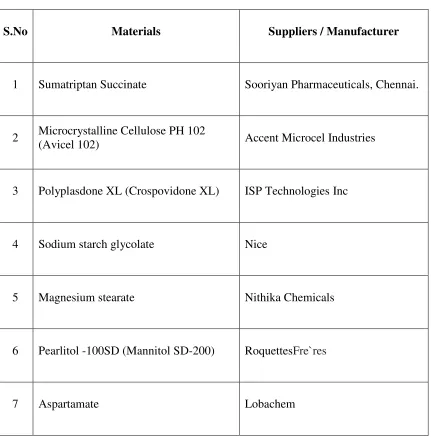
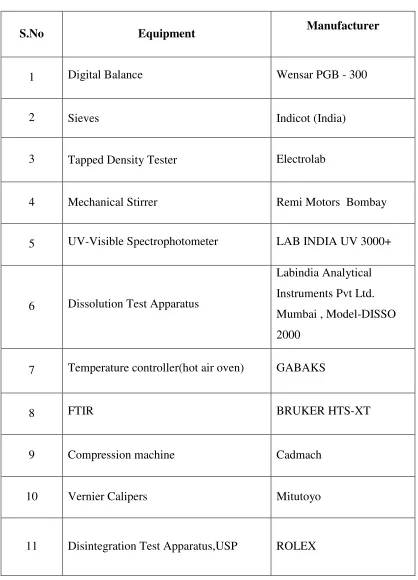
MATERIALS AND EQUIPMENTS
35
9
PREFORMULATION
37
10
FORMULATION
44
11
EVALUATION
45
12
RESULTS AND DISCUSION
54
13
SUMMARY AND CONCLUSION
69
SYMBOL INDEX
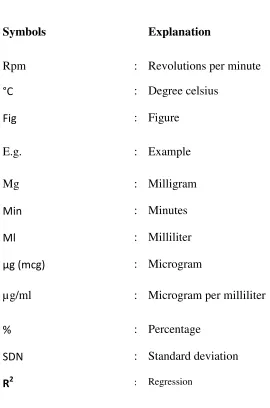
Symbols Explanation
Rpm : Revolutions per minute
°C : Degree celsius
Fig : Figure
E.g. : Example
Mg : Milligram Min : Minutes Ml : Milliliter
µg (mcg) : Microgram
µg/ml : Microgram per milliliter
% : Percentage
SDN : Standard deviation
[image:14.612.189.459.120.528.2]FORMULATION DESIGN, DEVELOPMENT
FORMULATION DESIGN, DEVELOPMENT
FORMULATION DESIGN, DEVELOPMENT
FORMULATION DESIGN, DEVELOPMENT
AND
AND
AND
AND
INVITRO
INVITRO
INVITRO
INVITRO
EVALUATION OF MOUTH
EVALUATION OF MOUTH
EVALUATION OF MOUTH
EVALUATION OF MOUTH
DISSOLVING TABLETS OF
CHAPTER 1
CHAPTER 1
CHAPTER 1
CHAPTER 1
CHAPTER 2
CHAPTER 2
CHAPTER 2
CHAPTER 2
CHAPTER 3
CHAPTER 3
CHAPTER 3
CHAPTER 3
AIM AND OBJECTIVE
AIM AND OBJECTIVE
AIM AND OBJECTIVE
CHAPTER 4
CHAPTER 4
CHAPTER 4
CHAPTER 4
CHAPTER 5
CHAPTER 5
CHAPTER 5
CHAPTER 5
CHAPTER 6
CHAPTER 6
CHAPTER 6
CHAPTER 6
DRUG PROFILE
DRUG PROFILE
DRUG PROFILE
CHAPTER 7
CHAPTER 7
CHAPTER 7
CHAPTER 7
CHAPTER 8
CHAPTER 8
CHAPTER 8
CHAPTER 8
MATERIALS AND
MATERIALS AND
MATERIALS AND
MATERIALS AND
CHAPTER 9
CHAPTER 9
CHAPTER 9
CHAPTER 9
PREFORMULATION
PREFORMULATION
PREFORMULATION
CHAPTER 10
CHAPTER 10
CHAPTER 10
CHAPTER 10
FORMULATION
CHAPTER 11
CHAPTER 11
CHAPTER 11
CHAPTER 11
EVALUATION
CHAPTER 12
CHAPTER 12
CHAPTER 12
CHAPTER 12
RESULTS AND
RESULTS AND
RESULTS AND
RESULTS AND
CHAPTER 13
CHAPTER 13
CHAPTER 13
CHAPTER 13
SUMMARY
SUMMARY
SUMMARY
SUMMARY
AND
AND
AND
AND
CONCLUSION
CONCLUSION
CONCLUSION
CHAPER 14
CHAPER 14
CHAPER 14
CHAPER 14
BIBILOGRAPHY
CHAPTER-1 INTRODUCTION
J.K.K.NATTRAJA COLLEGE OF PHARMACY Page 1
1.
INTRODUCTION
1.1. ORAL DRUG DELIVERY SYSTEM
Oral drug delivery has been known for decades as the most widely utilized route of
administration among all the routes that have been explored for the systemic delivery of
drug via various pharmaceutical products of different dosage forms. The reason that the
oral route achieved such popularity may be attributed to its ease of administration as well
as the traditional belief that by oral administration the drug is well absorbed as the food
staffs ingested daily. In fact the development of pharmaceutical products for oral
delivery, irrespective of physical form involves varying extents of optimization of dosage
form within the inherent constraints of GI physiology. Therefore a fundamental
understanding of various disciplines, including GI physiology Pharmacokinetics,
pharmacodynamics and formulation design are essential to achieve a systemic approach
to the successful development of an oral dosage form. The more sophisticated a delivery
system the greater is the complexity of these various disciplines involved in the design
and optimization of the system. In any case the scientific development of oral drug
delivery system consists of a basic understanding of the following there aspects1.
a) Physicochemical, pharmacokinetic and pharmacodynamic
characteristics of the drug.
b) The anatomic and physiologic characteristic of the GIT.
c) Physicochemical characteristic and the drug delivery mode of the
dosage form to be designed.
Many patients have difficulty swallowing tablets and hard gelatin capsules and
consequently do not take medications as prescribed. It is estimated that 50% of the
population is affected by this problem which results in a high incidence of
non-compliance and in effective therapy. It has been reported that dysphagia (difficulty in
swallowing) is common among all age groups and more specific with pediatric, geriatric
population along with institutionalized patients and patients with nausea. Because of the
increase in the average human life span and the decline, with age, in swallowing ability,
oral tablet administration to patients is a significant problem and has become the object of
public attention. The problem can be resolved by the creation of rapidly dispersing or
CHAPTER-1 INTRODUCTION
J.K.K.NATTRAJA COLLEGE OF PHARMACY Page 2
are placed in the mouth, allowed to disperse or dissolve in the saliva, and then are
swallowed in the normal way.
The orally disintegrating tablets are also caused as oro dispersible tablet, quick
disintegrating tablets, fast disintegrating tablets, porous tablets rapimelts. However of all
the above terms, United States pharmacopeia (USP) approved these dosage forms as
ODTs. Recently, European pharmacopeia has used the term “orodispersible tablet” for
tablets that disperse readily and within three minutes before swallowing. United States
food and drug administration (FDA) defined ODT as “A solid dosage form containing
medicinal substance or active ingredient which disintegrates rapidly usually within a
matter of seconds when placed upon the tongue”. The disintegration times for ODTs
generally range from several seconds to about a minute.
Mouth dissolving tablets are most widely used dosage form because of it’s
convenience in terms of self-administration, compactness and ease in manufacturing. Fast
disintegrating tablets rapidly gaining acceptance as an important new drug technology.
These dosage forms dissolve or disintegrate in oral cavity within a minute even without
the need of water or chewing.
1.1.1MOUTH
The mouth also referred to as the oral (or) buccal cavity is formed by the cheeks,
hard and soft palates and tongue. The cheek from the lateral walls of the oral cavity. They
are covered externally by skin and internally by a mucous membrane ,which consist of
nonkeratinized stratified squamous epithelium buccinators muscles and connective tissue
lie cheeks. The anterior portions of the cheeks end at the lips. The lips (or) labia are
freshly folds surrounding the opening of the mouth. They contain the orbicularisoris
muscle and are covered externally by skin and internally by a mucous membrane. The
inner surface of each lip is attached to this corresponding gum. By a midline fold of
mucous membrane called the labial frenulum. During chewing contraction of the
buccinators muscles in the cheeks and orbicularisoris muscle in the lips helps keep food
between the upper and lower teeth. These muscles also consist in speech.
The oral vestibule of the oral cavity is a space bounded externally by the cheeks
and lips and internally by the gums and teeth. The oral cavity proper is a space that
CHAPTER-1 INTRODUCTION
J.K.K.NATTRAJA COLLEGE OF PHARMACY Page 3
oropharynx. The palate is a wall (or) septum that separates the oral cavity from the nasal
cavity, forming the loof of the mouth. This important structure makes it possible to chew
and breath at the same time. The hard palate the anterior portion of the loof of the mouth
is formed by maxillae and palatine bones and is covered by a mucous membrane it forms
a bony partition between the oral and nasal cavity. The soft palate, which forms the
posterior portion of loof of the mouth is an arch-shaped muscular partition between the
[image:32.612.172.436.233.473.2]oropharynx and nasopharynx that is lined with mucous memberane.
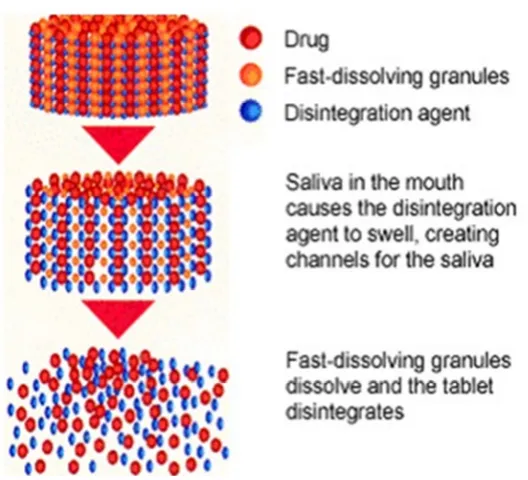
Figure 1: Drug Release from tablets
1.2. DESIRED CRITERIA FOR MOUTH DISSOLVING DRUG DELIVERY
SYSTEM
The tablet should:
Not require water to swallow, but is should dissolve (or) disintegrate in the mouth
in matter of seconds.
Be compatible with taste masking.
Be portable with taste masking.
Have a pleasing mouth feel.
Leave minimal (or) no residue in the mouth after oral administration.
CHAPTER-1 INTRODUCTION
J.K.K.NATTRAJA COLLEGE OF PHARMACY Page 4
Allow the manufacture of tablet using conventional processing and packaging
equipment at low cost,
Allow the manufacture of tablet using conventional processing and packaging
equipment at low cost.
1.3. SALIENT FEATURES OF MOUTH DISSOLVING TABLET
Ease of administration to patient who refuses to swallow tablets, such as
pediatric, geriatric and psychiatric patients.
No need of water to swallow the dosage form, which is highly convenient feature
for patients who are travelling and do not have immediate access to water.
Rapid dissolution and absorption of drug which will produce quick onset of
action.
Some drugs are absorbed from the mouth, pharynx, and esophagus as the saliva
passes down into the stomach in such cases bio-availability of drugs in increased.
Pre-gastric absorption can result in improved bio-availability and as a result of
reduced dosage. Improve clinical performance through a reduction of unwanted
effects.
1.4. ADVANTAGES OF MOUTH DISSOLVING TABLETS
Improved patient compliance.
Rapid onset of action and may offer an improved bio-availability.
Patient having difficulty in swallowing tablet can easily administer this type of
dosage form.
Useful fro-pediatric, geriatric and psychiatric patients.
Suitable during travelling where water is may not be available.
Gives accurate dosing as compared to liquids.
Good chemical stability.
Free of need of measuring, an essential drawback in liquids.
1.5. LIMITATION OF MOUTH DISSOLVING TABLETS
The tablets usually have insufficient mechanical strength. Hence careful handling
is required.
The tablets may leave unpleasant taste and for grittiness in mouth if not
CHAPTER-1 INTRODUCTION
J.K.K.NATTRAJA COLLEGE OF PHARMACY Page 5
These tablets usually have low hardness, so they are friable or brittle. They are
difficult to handle.
And require specialized packaging.
1.6. SIGNIFICANCE OF DISSOLVING TABLETS
They provide good stability, accurate dosing, easy manufacturing small packaging
size and easy to handle by patients.
No risk of obstruction of dosage from, which is beneficial for travelling patients
who do not have access to water.
Easy to administer for pediatric, geriatric and institutionalized patients.
(especially for mentally retarded and psychiatric patients)
Rapid disintegration of the tablet results in quick dissolution and rapid absorption
which provide rapid onset of action.
Medications as “bitter pill” has changed by excellent mouth feel property
produced by the use of flavors and sweeteners in mouth dissolving tablets.
Bioavailability of drugs that are absorbed from mouth, pharynx and oesophagus is
increased.
Pregastric absorption of drugs avoids hepatic metabolism, which reduces the dose
and increase the bioavailability.
Improved taste and not produce any residue in the mouth.
Insensitive to environmental conditions.
1.7. FORMULATION ASPECTS IN DEVELOPING MDT
Mouth disintegrating tablets are formulated by utilizing several process, which
differ in their methodologies and the MDTs formed vary in various properties such as,
Mechanical strength of tablets
Taste and mouth feel
Swallowability
Drug dissolution in saliva.
Bioavailability
CHAPTER-1 INTRODUCTION
J.K.K.NATTRAJA COLLEGE OF PHARMACY Page 6
1.7.1. VARIOUS APPROACHES FOR MOUTH DISSOLVING TABLETS
The property of mouth dissolving tablets is attributable to a quick intake of water
in to the tablet matrix resulting rapid disintegration and instantaneous dissolution of the
tablets.
• Maximizing the pore structure of tablet matrix.
• Using highly water soluble excipients in the formulation.
• Incorporating appropriate disintegrating agents.
Disintegrates act by any one of the following mechanisms,
Capillary action
High swell ability
Release of gas by chemical reaction.
1.7.2.METHODS FOR THE FORMULATION OF MOUTH DISSOLVING
TABLETS
Various processes employed in formulating MDTs are described below.
A.PATENTED TECHNOLOGIES
1. ZYDUS TECHNOLOGY
This technology involves physical trapping of drug in a matrix composed of a
saccharide and a polymer .The polymer generally used are partially hydrolyzed gelatin,
hydrolyzed dextran, dextrin, alginate, polyvinyl alcohol, polyvinyl pyrrolidone, acacia
and these mixtures. The methodology involves solution or dispersion of components is
prepared and filled in to blister cavities, which are frozen in a liquid nitrogen
environment. The frozen solvent is removed or sublimed to produce porous wafers.
Peelable backing is used to pack zydis units. These formulations are sensitive to moisture
and may degrade at humidity greater than 65% zydis is patented by R.P. Scherer.
2. LYOC
Oil in water emulsion is prepared and placed directly in to blister cavities
followed by freeze drying. Non homogeneity during freeze drying is avoided by
incorporating inert filler to increase the viscosity finally the sedimentation. The
CHAPTER-1 INTRODUCTION
J.K.K.NATTRAJA COLLEGE OF PHARMACY Page 7
3. QUICK SOLV
Methodology includes dissolving matrix components in water and the solution or
dispersion is frozen. Then dry the matrix by removing water using an excess alcohol
(solvent extraction). The product formed has uniform porosity and adequate strength for
handling. This technology patented by Jassen Pharmaceuticals.
4. NANOCRYSTAL TECHNOLOGY
Nano crystal technology includes lyophilization of colloidal dispersion of drug
and water soluble ingredients filled into blister pockets. This method avoid
manufacturing process such as granulation, blending and tableting. This method is
advantageous for highly potent and hazards drugs, manufacturing losses are negligible
and the process is small quantities of drugs. This methodology is patented by Elanking of
Prussia.
5. FLASH TAB TECHNOLOGY
This technology includes granulation of excipients by wet granulation method and
follow by compressing in to tablets excipients used in this technology are of two types.
Disintegrating agents include reticulated polyvinyl pyrolidone or carboxy methyl
cellulose, starch, modified starch, microcrystalline cellulose, carboxy methylated starch,
etc. tablets formed have satisfactory physical resistance. Disintegration time is within 1
minute. This methodology patented by Ethypharm, France.
6. ORASOLV TECNOLOGY
This includes use of effervescent disintegrating agents compressed with low
pressure to produce MDTs. The evaluation of carbon dioxide from the tablet produces
fizzing sensation, which is a positive organoleptic properties. Concentration of
effervescent mixed usually employed is 20-25%of tablet weight .as the tablets prepared at
low compression force, they are soft and fragile in nature. This is initiated to develop
paksolv, a special packaging to protect tablets during storage and transport. Paksolv is
dome-shaped blister package, which prevents vertical movements of tablets in the
CHAPTER-1 INTRODUCTION
J.K.K.NATTRAJA COLLEGE OF PHARMACY Page 8
7. DURASOLV TECNOLOGY
This methodology utilized conventional tableting equipment and tablets are
formulated by using drug non-direct compression fillers and lubricants. Non direct
compression fillers are dextrose mannitol, sorbitol, lactose, and sucrose which have
advantages of quick dissolution avoid gritty structure (which is generally present in direct
compressible sugar)The tablets formed are strong and can be packed in conventional
packing in bottles and blisters. Nondirect compressible fillers generally used in the range
of 60-95%,lubricants in 1-2.5%.this technology patented by CIMA labs. Durasolv
products include Nulev (hyoscyaminesulphate),Zoming ZMT(Zolmitraptan).
8. WOW TAB TECNOLOGY
This technology utilizes conventional granulation and tableting methods to
produce MDTs employing low-and high moldability saccharides. WOW means with out
water. Low moldabilty saccharides are lactose, mannitol, glucose, sucrose and xylitol.
High moldability saccharides are maltose, maltitol, sorbitol and oligosaccharides. When
these two type saccharides used alone tablets obtained do not have desired properties of
rapid disintegration and hardness, so combination are used. This technology involves
granulation of low-moldable saccharieds as a binder and compressing in to tablets
followed by moisture treatment. So the tablets formed showed adequate hardness and
rapid disintegration .this technology patented by Yamanouchi. WOW tab product include
Benadryl allergy and sinus fast melt (OTC).
9. DISPERSIBLE TABLET TECNOLOGY
It offers development of MDT improved dissolution rate by incorporating 8-10%
of organic acid and disintegrating agents. disintegrating agents facilitates rapid swelling
and good wetting results in quick disintegration. Disintagrants include starch, modified
starches, microcrystalline cellulose, alginic acid, cross linked sodium carboxy methyl
cellulose and cyclodextrines. Combilnation of disintegarants improved disintegration
usally less than 1 minutes. The methodology patented lek, Yugoslavia.
10. PHARMA BURST TECNOLOGY
It utilize co proceed exicipients to develop MDT which dissolves within 30-40
CHAPTER-1 INTRODUCTION
J.K.K.NATTRAJA COLLEGE OF PHARMACY Page 9
compression in to tablets. The tablets obtained have sufficient strenghth so they can be
packed in blister packs and bottles. This technology patened by SPI pharma, new castle.
11. FROSTA TECHNOLOGY
It utilizes the concept of formulating plastic granules and compressing at low
pressure to produce strong tablets with high porosity. Plastic granules composed of
porous and plastics material, water penetration enhancer and binder. The process involves
mixing the porous plastic material with water penetration enhancer and followed by
granulating with binder. The product showed excellent hardness and rapid disintegration
within 15-30 seconds. This methodology patented by Akina.
12. ORAQUICK
It utilize taste masking microspheres technology called as micro mask, which
provides superior mouth feel, significant mechanical strength and quick disintegration
and dissolution of the products. This process involves preparation of micro particles in
the form of matrix that protects the drug which can be compressed with sufficient
mechanical strength. Low heat of production in this process make it suitable for heat
sensitive drug. The products formed dissolves within few seconds. The methodology
patented by K.V Pharmaceuticals.
13. ZIPLETS OR ADVATAB
It utilize water insoluble gradients combined one are more effective disintegrants
to produce MDT s with improved mechanical strength and optimum disintegration time
at low compression force. Advantage of the method include high drug loading, formation
of coated particles and does not require special packaging. This technology patented by
pessano con Bornago.
14. FLASHDOSE
The flash dose tablets consists of self binding shear form matrix termed as floss.
Shear form matrices are prepared by flash heat processing. This technology patented by
Fluzisz. Egibuprofen melt in mouth tablets.
B.CONVENTIONAL METHODS
1. LYOPHILIZATION OR FREEZE-DRYING
Lyophilization is a process which includes removal of a solvent from a frozen
CHAPTER-1 INTRODUCTION
J.K.K.NATTRAJA COLLEGE OF PHARMACY Page 10
additives imparts glossy amorphous structure resulting in highly porous and light weight
product. The resulting tablet has rapid disintegration and dissolution when placed on a
tongue and the freeze dried leutin dissolves instantly to release the drug. MDT s formed
by lyophilization have some demerits like low mechanical strength, poor stability at
higher temperature and humidity. Use of expensive equipment for freeze drying is
another demerits of the process.
2. MOULDING
Molding process include moistening, dissolving or dispersing the drug with a
solvent then molding the moist mixer in to tablets(compression molding with a low
pressure than conventional tablet compression )evaporating the solvent from drug
solution, or suspension at ambient pressure respectively. The molded tablets formed by
compression molding are air dried. As the compression force employed is lower than
conventional tablet, the molded tablet results in highly porous structure, which increase
the disintegration and dissolution of the product. To further improve the dissolution rate
of the product powder mixer should be sieved through very fine screen. This process is
applied usually with soluble ingredients (saccharides) which offer improved mouth feel
and disintegration of tablets. Some of the demerits observed are the tablet formed by this
process shows low mechanical strength, which results in erosion and breakage during
handling.
3. COTTON CANDY PROCESS
Cotton candy process involves formation of matrix of polysaccharides or
saccharides by simultaneous action of flash melting and spinning. The matrix formed is
partially recrystallized to have improved flow properties and compressability. This candy
floss matrix is then milled and blended with active ingredients and excipients and
subsequently compressed to MDTs. This process is so named because it utilizes a unique
spinning mechanism to produce floss-like crystalline structure, which mimic cotton
candy. The main merits of this method are the process can accommodate high doses of
drug and offers improved mechanical strength. The main demerit is the use of high
CHAPTER-1 INTRODUCTION
J.K.K.NATTRAJA COLLEGE OF PHARMACY Page 11
4. SPRAY DRYING
In this method MDTs formulated by using hydrolyzed / unhydrolyzed gelatin as
supporting agent for matrix, mannitol as bulking agent and sodium starch glycolate or
croscarmellose sodium as disintegrating agent. Disintegration and dissolution were
further improved by adding effervescent components.ie citric acid (an acid) and sodium
bicarbonate (an alkali). The formulation was spray dried to yield a porous powder. The
products formed are highly porous fine powders and are disintegrated in<20 seconds.
Allen et al utilized this method for preparing MDTs.
5. MASS EXTRUSION
It involves softening the active blend using the solvent mixture of water soluble
polyethylene glycol and methanol and subsequent expulsion of softened mass through the
extruder or syringe to get a cylinder of the product in to even segments using heated
blade to forms tablets. (yadav A.V et al,2010)
6. COMPACTION MELT GRANULATION
The method involves incorporation of hydrophilic waxy binder (super poly state.)
PEG -6-sterate. Super poly state is a waxy material with an M.P of 33-37c. and an
hydrophilic lipophilic balance of 9. It act as binder, increase the physical resistance of
tablets and it helps the disintegration of tablets as it melt in the mouth and solubilizes
rapidly leaving no residue. Super poly state incorporated in the formula by melt
granulation method, where granules are formed by the molten form of the material. eg
crystallized paracetamol was used as model drug and in addition mannitol added as water
soluble excipient and cross carmellose sodium as disintegrating agents. Abdlbary et al
prepared MDT by this method.
7. PHASE TRANSITION PROCESS
Kuno et al investigated disintegration of MDTs are formulated by sugar alcohols
using erythriol (M.P 122C), xylitol (m.p 93-95), trehalose (97c) and mannitol (166c).
This method involves compressing a powder containing two sugar alcohols with high and
low-melting points and subsequent heating at temperature between their melting points.
Before heating process the tablet do not have sufficient hardness because of low
CHAPTER-1 INTRODUCTION
J.K.K.NATTRAJA COLLEGE OF PHARMACY Page 12
of interparticular bonds or bonding surface area in tablets induced by phase transition of
low melting point sugar alcohols.
8. SUBLIMATION
The method involves addition of volatile salt to the tableting components, mixing
and volatilizing the volatile salt creates pores in the tablets come in contact with saliva.
Camphor, naphthalene, urea, ammonium bi carbonate etc., can be used to prepare porous
tablets of good mechanical strength. koizumi et al used mannitol as diluents and camphor
as volatile material to prepare porous compressed tablet. The tablets were subjected to
vaccum at 80 c for 30 minutes to eliminate camphor and thus form the pores in the tablet.
The tablet formed have highly porous matrix which is the key factor for rapid
disintegration.
C.OTHER METHODS
Other methods includes dry granulation, wet granulation and direct compression
methods. The important components used in these methods are super disintegrants.
1. DRY GRANULATION
In this technique there is no use of liquids. The process involves the formation of
slugs. Then slugs are screened are milled to produce granules. The granules formed are
then compressed to form tablet.
2. WET GRANULATION
The process involves addition of liquids to a powder in a vessel equipped with any
type of agitation that will produce agglomeration or granules. These granules after drying
are compressed to form tablets. This method have more operational manipulation and is
more time consuming than other methods. this method is not suitable for drugs which ass
thermo labile or hydrolysable by presence of water in the liquid binder.
3. DIRECT COMPRESSION
In direct compression method, of powder blends of active ingredients and suitable
excipients, which will flow uniformly in the die cavity and formed a film compact
(Banker G.S et al 1987).direct compression method are very popular because it reduse
the number of steps involved and the materials required.
Advantages
CHAPTER-1 INTRODUCTION
J.K.K.NATTRAJA COLLEGE OF PHARMACY Page 13
2. Low manufacturing cost.
3. Use of conventional equipment and commonly available excipients.
[image:42.612.116.441.64.469.2]4. High quality finished product.
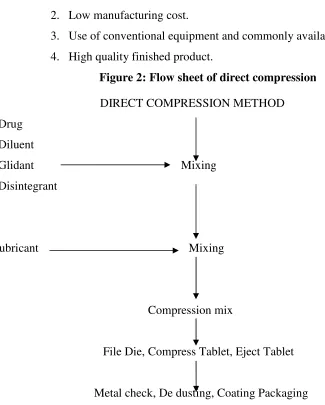
Figure 2: Flow sheet of direct compression
DIRECT COMPRESSION METHOD
Drug
Diluent
Glidant Mixing
Disintegrant
Lubricant Mixing
Compression mix
File Die, Compress Tablet, Eject Tablet
Metal check, De dusting, Coating Packaging
Super Disintegrants in Immediate Release Tablets
Super-disintegrants are effective at low concentration and have greater disintegrating
efficiency and they are effective intra-granularly as well as extra-granularly. But have
one drawback that it is hygroscopic therefore not used with moisture sensitive drugs.
These super-disintegrants act by swelling and due to swelling pressure exerted in the
outer direction or radial direction, it causes tablet to burst or accelerate the absorption of
water leading to an enormous increase in the volume of granules to promote
CHAPTER-1 INTRODUCTION
[image:43.612.97.548.283.722.2]J.K.K.NATTRAJA COLLEGE OF PHARMACY Page 14
Fig 3: Mechanisms of Super-disintegrant swelling
Granules with super disintegrant Swelling of granules in aqueous medium due to super-disintegrant
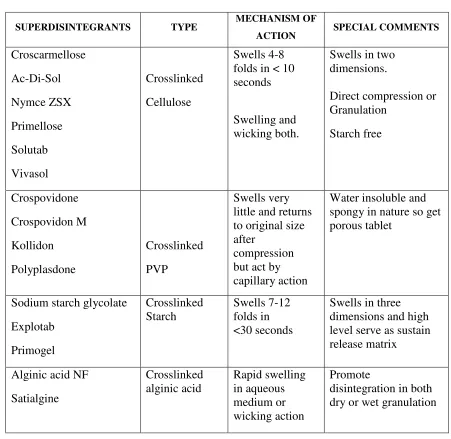
Table 1: LIST OF SUPERDISINTEGRANTS
SUPERDISINTEGRANTS TYPE MECHANISM OF
ACTION SPECIAL COMMENTS
Croscarmellose Ac-Di-Sol Nymce ZSX Primellose Solutab Vivasol Crosslinked Cellulose Swells 4-8 folds in < 10 seconds
Swelling and wicking both.
Swells in two dimensions.
Direct compression or Granulation Starch free Crospovidone Crospovidon M Kollidon Polyplasdone Crosslinked PVP Swells very little and returns to original size after
compression but act by capillary action
Water insoluble and spongy in nature so get porous tablet
Sodium starch glycolate
Explotab Primogel Crosslinked Starch Swells 7-12 folds in <30 seconds
Swells in three dimensions and high level serve as sustain release matrix
Alginic acid NF
Satialgine Crosslinked alginic acid Rapid swelling in aqueous medium or wicking action Promote
CHAPTER-1 INTRODUCTION
[image:44.612.97.550.136.398.2]J.K.K.NATTRAJA COLLEGE OF PHARMACY Page 15
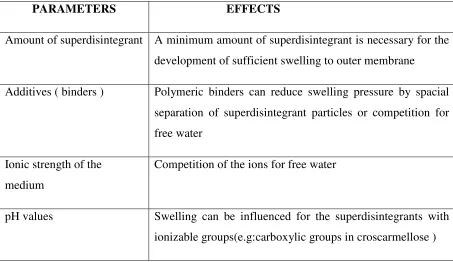
Table 2: PARAMETERS INFLUENCING THE SWELLING BEHAVIOUR OF
SUPERDISINTEGRANTS (6-8)
EFFECT OF EXCIPIENTS USED IN THE FORMULATION:
a) Effect of fillers:
The solubility and compression characteristics of fillers affect both rate and
mechanism of disintegration of tablet. If soluble fillers are used then it may cause
increase in viscosity of the penetrating fluid which tends to reduce effectiveness of
strongly swelling disintegrating agents and as they are water soluble, they are likely to
dissolve rather than disintegrate. Insoluble diluents produce rapid disintegration with
adequate amount of disintegrants. Tablets made with spray dried lactose (water soluble
filler) disintegrate more slowly due to its amorphous character and has no solid planes on
which the disintegrating forces can be exerted than the tablet made with crystalline
lactose monohydrate.
PARAMETERS EFFECTS
Amount of superdisintegrant A minimum amount of superdisintegrant is necessary for the
development of sufficient swelling to outer membrane
Additives ( binders ) Polymeric binders can reduce swelling pressure by spacial
separation of superdisintegrant particles or competition for
free water
Ionic strength of the
medium
Competition of the ions for free water
pH values Swelling can be influenced for the superdisintegrants with
CHAPTER-1 INTRODUCTION
J.K.K.NATTRAJA COLLEGE OF PHARMACY Page 16
b) Effect of binder:
As binding capacity of the binder increases, disintegrating time of tablet increases
and this counteract the rapid disintegration. Even the concentration of the binder can also
affect the disintegration time of tablet.
c) Effect of lubricants:
Mostly lubricants are hydrophobic and they are usually used in smaller size than
any other ingredient in the tablet formulation. When the mixture is mixed, lubricant
particles may adhere to the surface of the other particles. This hydrophobic coating
inhibits the wetting and consequently tablet disintegration. Lubricant has a strong
negative effect on the water uptake if tablet contains no disintegrants or even high
concentration of slightly swelling disintegrants. On the contrary, the disintegration time is
hardly affected if there is some strongly swelling disintegrant present in the tablet.
Methods of addition of Disintegrants:
Disintegrating agent can be added either prior to granulation (intragranular) or
prior to compression (after granulation i.e. extragranular) or at both processing steps.
Extragranular fraction of disintegrant (usually, 50% of total disintegrant requires)
facilitates breakup of tablets to granules and the intragranular addition of disintegrants
produces further erosion of the granules to fine particles.
1.5 Tablet Compression
After the preparation of granules (in case of wet granulation) or sized slugs (in
case of dry granulation) or mixing of ingredients (in case of direct compression), they are
compressed to get final product. The compression is done either by single punch machine
(stamping press) or by multi station machine (rotary press).
The tablet press is a high-speed mechanical device. It 'squeezes' the ingredients
into the required tablet shape with extreme precision. It can make the tablet in many
shapes, although they are usually round or oval. Also, it can press the name of the
CHAPTER-1 INTRODUCTION
J.K.K.NATTRAJA COLLEGE OF PHARMACY Page 17
granules inside a die, made up of hardened steel. The die is a disc shape with a hole cut
through its centre. The powder is compressed in the centre of the die by two hardened
steel punches that fit into the top and bottom of the die.
The punches and dies are fixed to a turret that spins round. As it spins, the
punches are driven together by two fixed cams - an upper cam and lower cam. The top of
the upper punch (the punch head) sits on the upper cam edge .The bottom of the lower
punch sits on the lower cam edge .The shapes of the two cams determine the sequence of
movements of the two punches. This sequence is repeated over and over because the
turret is spinning round.
The force exerted on the ingredients in the dies is very carefully controlled. This ensures
that each tablet is perfectly formed. Because of the high speeds, they need very
sophisticated lubrication systems. The lubricating oil is recycled and filtered to ensure a
continuous supply.
Common stages occurring during compression:
Stage 1: Upper punch is withdrawn from the die by the upper cam. Lower punch is low
in the die so powder falls in through the hole and fills the die.
Stage 2: Lower punch moves up to adjust the powder weight-it raises and expels some
powder.
Stage 3: Upper punch is driven into the die by upper cam and lower punch is raised by
low cam . Both punch heads pass between heavy rollers to compress the powder.
Stage 4: Upper punch is withdrawn by the upper cam and lower punch is pushed up and
expels the tablet. Tablet is removed from the die surface by surface plate.
1.3.2. FACTORS AFFECTING THE DRUG RELEASE:
Factors of in-vivo important that can affect and hence absorption can be
categorized into 2 classes.
1. Physicochemical properties of drug and
CHAPTER-1 INTRODUCTION
J.K.K.NATTRAJA COLLEGE OF PHARMACY Page 18
The various physicochemical properties of drug that effect drug dissolution and
its rate are – solubility, particle size, polymorphism, salt form, pseudo-polymorphism,
complexation, wettability, etc.
Dosage form factors include manufacturing process and excipients incorporated
in them. Several manufacturing processes influence drug dissolution form. Processes of
such importance in manufacture of tablets are:
1. method of granulation and
2. Compression force.
The excipients such as binders, lubricants, disintegrants., etc influence the drug
CHAPTER- 2 LITERATURE REVIEW
J.K.K.NATTRAJA COLLEGE OF PHARMACY Page 19
2. LITERATURE REVIEW
Nyol Sandeep., et. al, studied of all dosage forms tablet is the most popular dosage form existing today because of its convenience of self administration, compactness and easy manufacturing, sometimes immediate onset of action is required than conventional therapy in many cases. So that to overcome these drawbacks, immediate release dosage form has emerged as alternative oral dosage forms. Immediate drug release dosage forms disintegrate rapidly after administration with enhanced rate of dissolution. The basic approach used in development tablets is the use of superdisintegrants like Cross linked Polyvinylpyrrolidone or crospovidone (Polyplasdone), Sodium starch glycolate (Primogel, Explotab), carboxymethylcellulose (Croscarmellose) etc. The development of immediate release therapy also provides an opportunity for a line extension in the marketplace, a wide range of drugs e.g., neuroleptics, cardiovascular drugs, analgesics, antihistamines and other drugs can be considered candidates for this dosage form.
Mayank Bansal., et. al, studied on an immediate release tablet of Zaltoprofen for the treatment of pain and inflammation, by using superdisintgrant such as Croscarmellose sodium and different grades of microcrystalline cellulose. Immediate release tablets of Zaltoprofen were prepared by direct compression method using superdisintgrant such as Croscarmellose sodium and different grades of microcrystalline cellulose in different ratios. Sodium starch glycolate was added to aid disintegration. Tablets were found to be satisfactory when evaluated for thickness, hardness, friability, weight uniformity, drug content, disintegration time and in vitro drug release. The tablet disintegration time was less than one minute for all the tablet formulations. The in vitro drug release in optimized formulation F14 was found to be 98.89 % in 45 min.
CHAPTER- 2 LITERATURE REVIEW
J.K.K.NATTRAJA COLLEGE OF PHARMACY Page 20
Rupture and dissolution tests were performed using the USP XXIV paddle method at 50 rpm in 0.1 N HCl. The lag time of the pulsatile release tablets decreased with increasing levels of swelling layer. Increasing levels of the ethylcellulose coating retarded the water uptake and thus prolonged the lag time.
Jigar A Patel., et. al, studied on developing immediate release tablet is accomplished by using a suitable diluents and super-disintegrants. Faster disintegration of the tablet administrated orally minimizes absorption time and improves its bioavailability in less time. Immediate Release tablet of Antibiotic drug is formulated using dry granulation using super disintegrant croscarmellose sodium. One of the important studies included in the present investigation is of study on process parameter effect on performance of the Immediate Release tablets. The effect of selected process parameters on critical properties of immediate release (IR) tablets were studied, like effect of disintegration time, friability, dissolution profile.
Ujwala R. Bagmar., et. al, carried a research work is to develop immediate release tablets of Fexofenadine hydrochloride. The rate of dissolution and bioavailability of the Fexofenadine HCL may be increased by using superdisintegrant in its immediate release tablets. Direct compression method was adapted to prepare the tablets by using lactose, microcrystalline cellulose as filler, crospovidone and sodium starch glycolate as superdisintegrant in different concentration (2-8%). Disintegration time decreased with increase in the level of crospovidone. Whereas, disintegration time increased with increase in the level of sodium starch glycolate. The results indicate that the selected batch of tablet formulation containing crospovidone provides DT between 3-6 minutes with sufficient crushing strength and accepted friability. It was concluded that immediate release tablet for Fexofenadine hydrochloride can be formulated for fast treatment of allergic rhinitis.
CHAPTER- 2 LITERATURE REVIEW
J.K.K.NATTRAJA COLLEGE OF PHARMACY Page 21
tablets compared by various test like disintegration time, dissolution test, wetting time & maximal water uptake study of Zolpidem Tartrate immediate release tablets. The rapid disintegration observed for the Ac-Di-Sol containing tablets, comparing three classes of superdisintegrants represented by Ac-Di-Sol, Crospovidone, Sodium starch glycolate (SSG). The disintegration efficiency was found in following decreasing order Ac-Di-Sol, Crospovidone and Sodium starch glycolate.
CHAPTER-3 AIM OBJECTIVES
J.K.K.NATTRAJA COLLEGE OF PHARMACY Page 22
3. AIM AND OBJECTIVES
The present study is planned to develop Sumatriptan Succinate into
immediate release tablets by direct compression Method.
Sumatriptan Succinate, is a synthetic drug belonging to the triptan class.
Structurally, it is an analog of the naturally occurring neuro-active alkaloids
dimethyltryptamine (DMT), bufotenine, and 5-methoxy-dimethyltryptamine,
with an N-methyl sulfonamidomethyl- group at position C-5 on the indole
ring.
Sumatriptan Succinate, is a medication used for the treatment of migraine and
cluster headaches.
The poor hydrophilicity of the drug results in variable dissolution rate and
poor bioavailability. In this study, we tried to prepare Sumatriptan MDT by
CHAPTER- 4 PLAN 0F WORK
J.K.K.NATTRAJA COLLEGE OF PHARMACY Page 23
4. PLAN OF WORK
Preformulation Studies
Solubility
Drug and excipient compatibility studies by FTIR
Bulk density
True density
Carr’s index
Hausner’s ratio
Angle of repose
Formulation development
Evaluation Studies
• Hardness
• Friability
• Thickness
• Weight variation
• Content uniformity
• Invitro Dissolution study
DISEASE PROFILE
Department of Pharmaceutics Department of PharmaceuticsDepartment of Pharmaceutics
Department of Pharmaceutics Page Page 24Page Page 242424
5. DISEASE PROFILE
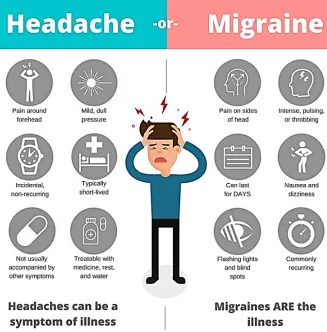
A migraine is a primary headache disorder characterized by recurrent headaches
that are moderate to severe. Typically, the headaches affect one half of the head, are
pulsating in nature, and last from two to 72 hours. Associated symptoms may include
nausea, vomiting, and sensitivity to light, sound, or smell. The pain is generally made
worse by physical activity. Up to one-third of people have an aura, typically a short
[image:53.612.162.489.229.561.2]period of visual disturbance which signals that the headache will soon occur.
Figure No.3 : Difference between head ache and Migraine.
SIGNS AND SYMPTOMS:
Migraines typically present with self-limited, recurrent severe headache
associated with autonomic symptoms. About 15–30% of people with migraines
experience migraines with an aura and those who have migraines with aura also
frequently have migraines without aura. The severity of the pain, duration of the
DISEASE PROFILE
Department of Pharmaceutics Department of PharmaceuticsDepartment of Pharmaceutics
Department of Pharmaceutics Page Page Page Page 25252525
hours is termed status migrainosus. There are four possible phases to a migraine,
although not all the phases are necessarily experienced:
• The prodrome, which occurs hours or days before the headache
• The aura, which immediately precedes the headache
• The pain phase, also known as headache phase
DISEASE PROFILE
Department of Pharmaceutics Department of PharmaceuticsDepartment of Pharmaceutics
Department of Pharmaceutics Page Page Page Page 26262626
TREATMENTS AND DRUGS
Although a number of medications have been used for the prevention of migraines, the medications that have been shown to be effective in controlled clinical trials, and are therefore recommended by the American Headache Society and the American Academy of Neurology (AAN) migraine prevention guidelines include:
• Divalproex sodium/sodium valproate
• Topiramate
• Metoprolol
• Propranolol
• Timolol
• Sumatriptan Succinate
Other medications that are used to prevent migraine headaches include: ACE Inhibitors
• Lisinopril
Angiotensin II Receptor Antagonists (ARBS)
• Candesartan Beta-blockers
• Atenolol
• Nadolol Calcium Channel Blockers
• Diltiazem • Nimodipine • Verapamil Tricyclic Antidepressants • Amitriptyline • Nortriptyline • Imipramine • Doxepin • Protriptyline Other Antidepressants • Paroxetine • Fluoxetine • Sertraline Antiseizure Medications • Topiramate • Gabapentin
• Divalproex sodium Herbals
• Feverfew
• Butterbur
• Coenzyme Q10
CHAPTER-6 DRUGPROFILE
J.K.K.NATTRAJA COLLEGE OF PHARMACY Page | 27
6. DRUG PROFILE-ESCITALOPARAM
6.1. Description
sumatriptan succinate, a selective 5-HT1B/1D receptor agonist. Sumatriptan
succinate is chemically designated as
3-[2-(dimethylamino)ethyl]-N-methyl-indole5-methanesulfonamide succinate (1:1),
Chemical Structure of sumatriptan succinate
6.2. CHEMICAL DATA
Empirical formula - C14H21N3O2S
Molecular weight - 295.401 g/mol
CAS Registry No. - 103628-46-2
6.2.1. Systemic (IUPAC) Name:
1-[3-[2-(dimethylamino)ethyl]-1H-indol-5-yl]-N-methyl methane
sulfonamide
6.3. Pharmacology: 6.3.1Indication
For the treatment of migraine attacks with or without aura.
6.3.2. Pharmacodynamics
Sumatriptan, an antimigraine drug, is a selective agonist of vascular serotonin
((5-hydroxytryptamine; 5-HT) type 1-like receptors, likely the 5-HT1D and 5-HT1B
subtypes. It has no significant affinity (as measured using standard radioligand binding
assays) or pharmacological activity at 5-HT2, 5-HT3 receptor subtypes or at alpha1-,
alpha2-, or beta-adrenergic; dopamine1; dopamine2; muscarinic; or benzodiazepine
CHAPTER-6 DRUGPROFILE
J.K.K.NATTRAJA COLLEGE OF PHARMACY Page | 28
6.3.3. Mechanism of action
The 5-HT1B and 5-HT1D receptors function as autoreceptors, which inhibit the
firing of serotonin neurons and a reduction in the synthesis and release of serotonin upon
activation. After sumatriptan binds to these receptors, adenylate cyclase activity is
inhibited via regulatory G proteins, incrases intracellular calcium, and affects other
intracellular events. This results in vasoconstriction and inhibtion of sensory nociceptive
(trigeminal) nerve firing and vasoactive neuropeptide release.
6.3.4. Pharmacokinetic Parameters:
Bio-availability – 15%
Half life – 2.5 hours
Metabolism – Hepatic. In vitro studies with human microsomes suggest that
sumatriptan is metabolized by monoamine oxidase (MAO), predominantly the A
isoenzyme.
CHAPTER-7 EXCIPIENTS PROFILE
J.K.K.NATTRAJA COLLEGE OF PHARMACY Page | 29
7.
EXCIPIENTS PROFILE
7.1. Cellulose, Microcrystalline Nonproprietary Names
BP: Microcrystalline Cellulose JP: Microcrystalline Cellulose PhEur: Cellulose, Microcrystalline USP-NF: Microcrystalline Cellulose
Synonyms: Avicel PH
Chemical Name and CAS Registry Number: Cellulose [9004-34-6]
Empirical Formula and Molecular Weight:
(C6H10O5)n≈36 000
where n ≈ 220.
Structural Formula
Functional Category
Adsorbent, suspending agent, tablet and capsule diluents, tablet disintegrant.
Description
Microcrystalline cellulose is purified, partially depolymerized cellulose that occurs as a white, odorless, tasteless, crystalline powder composed of porous particles. It is commercially available in different particle sizes and moisture grades that have different properties and application.
The different commercial grades are available based on particle size distribution (µm)
Solubility:
Slightly soluble in 5% w/v sodium hydroxide solution, practically insoluble in
water, dilute acids, and most organic solvents. They partly dissolve in dilute alkali and swell in it.
Table No 3: Uses of microcrystalline cellulose
Uses Concentration %
CHAPTER-7 EXCIPIENTS PROFILE
J.K.K.NATTRAJA COLLEGE OF PHARMACY Page | 30
7.2
.
Croscarmellose Sodium Nonproprietary NamesBP: Croscarmellose Sodium JP: Croscarmellose Sodium PhEur: Croscarmellose Sodium USP-NF: Croscarmellose Sodium
Synonyms: Ac-Di-Sol, crosslinked carboxy methyl cellulose sodium, Explocel, modified cellulose gum, Nymcel, ZSX Pharmacel XL, Primellose, Solutab, Vivasol.
Chemical Name and CAS Registry Number:
Cellulose, carboxymethyl ether, sodium salt, crosslinked [74811-65-7]
Empirical Formula and Molecular Weight :
The USP 32 describes carboxymethylcellulose sodium as the sodium salt of a polycarboxymethyl ether of cellulose.
Structural Formula
Functional Category: Tablet and capsule disintegrant.
Description: Croscarmellose sodium occurs as an odorless, white or grayish white powder.
Solubility
Insoluble in water, croscarmellose sodium rapidly swells to 4–8 times its original volume on contact with water. Practically insoluble in acetone, ethanol and toluene.
Applications in Pharmaceutical Formulation or Technology
• Croscarmellose sodium is used in oral pharmaceutical formulations as a
disintegrant for capsules, tablets, and granules.
• In tablet formulations, croscarmellose sodium may be used in both
direct-compression and wet-granulation processes.
• Croscarmellose sodium at concentrations up to 5% w/w may be used as a tablet
CHAPTER-7 EXCIPIENTS PROFILE
J.K.K.NATTRAJA COLLEGE OF PHARMACY Page | 31
7.3
.
Sodium Starch Glycolate Nonproprietary NamesBP: Sodium Starch Glycolate PhEur: Sodium Starch Glycolate USP-NF: Sodium Starch Glycolate
Synonyms: Carboxymethyl starch, sodium salt, carboxymethylamylum natricum, Explosol, Explotab, starch carboxymethyl ether, sodium salt, Tablo,Vivastar P.
Chemical Name and CAS Registry Number:
Sodium carboxymethyl starch [9063-38-1]
Empirical Formula and Molecular Weight :
The molecular weight is typically 5X10⁵–1106.
Structural Formula
Functional Category: Tablet and capsule disintegrant.
Description: Sodium starch glycolate is a white or almost white free-flowing very hygroscopic powder. When examined under a microscope it is seen to consist of granules, irregularly shaped, ovoid or pear-shaped, 30–100 mm in size, or rounded, 10– 35 mm in size, compound granules consisting of 2–4 components occur occasionally. The granules show considerable swelling in contact with water.
Solubility
In water, sodium starch glycolate swells to up to 300 times its volume.
Applications in Pharmaceutical Formulation or Technology
• Sodium starch glycolate is widely used in oral pharmaceuticals as a disintegrant in
capsuleand tablet formulations.
• It is commonly used in tablets prepared by either direct-compression or
wet-granulation processes.
• The usual concentration employed in a formulation is between 2% and 8%, with
the optimum concentration about 4%, although in many cases 2% is sufficient.
• Disintegration occurs by rapid uptake of water followed by rapid and enormous
swelling. Although the effectiveness of many disintegrants is affected by the presence of hydrophobic excipients such as lubricants.
• Increasing the tablet compression pressure also appears to have no effect on
CHAPTER-7 EXCIPIENTS PROFILE
J.K.K.NATTRAJA COLLEGE OF PHARMACY Page | 32
7.5. Mannitol Nonproprietary Names
BP : Mannitol JP : D-Mannitol PhEur : Mannitol USP : Mannitol
Synonyms: Cordycepic acid, C Pharm Mannidex, E421, Emprove, manna sugar.
Chemical Name and CAS Registry Number: D-Mannitol [69-65-8]
Empirical Formula and Molecular Weight: C6H14O6 and 182.17
Structural Formula
Functional Category
Diluent, plasticizer, sweetening agent, tablet and capsule diluents,
therapeutic agent, tonicity agent.
Description
Mannitol is D-mannitol. It is a hexahydric alcohol related to man