GraniteNet Phase 2
Evaluation Report
Written by Catherine Arden
Centre for Research in Transformative Pedagogies Faculty of Education
University of Southern Queensland Toowoomba QLD 4350
April, 2009
www.granitenet.com.au
Acknowledgements
Sincere thanks go to the members of the
Critical Reference Group (Granite Belt Learners) who were indeed critical to this evaluation!
Michelle Conkas Trevor Cooper
Therese Crisp Robyn Hansen
Judy Johnson Kath McLachlan
Trish Maher Kerry Marie Carlin McKee Sheila Stebbings Dianne Whitford
My thanks also to all those who have contributed to the evaluation by participating in workshops, completing surveys and questionnaires, attending
meetings, participating in the Moodle collaborative workspace, providing facilities and resources and otherwise giving your time, energy and feedback.
Arden, C.H. (2009)
Centre for Research in Transformative Pedagogies, University of Southern Queensland, Toowoomba
Thank you to the Queensland Government Department of Communities for funding this
“Computers and imagination go together.
We need to explore the possibilities that computers offer
for transformation and expanding our horizons.”
Dr. Fiona Kumari Campbell
Table of Contents
Executive Summary... 8
Part 1: Stanthorpe Community Profile ... 11
Part 2: Background to the GraniteNet Project ... 15
Part 3: Evaluation Framework and Methodology ... 16
3.1 Purpose and Aims ...16
3.2 Focus and Scope...17
3.3 Over-arching Evaluation Framework ...17
3.4 Evaluation Questions ...18
3.5 Approach, Stakeholders and Participants...18
3.6 Data Sources and Instruments ...19
3.7 Ethical Considerations and Limitations ...21
Part 4: Summary of Evaluation Findings ... 22
4.1 Formative Evaluation Processes and Outcomes...22
4.2 Summative Evaluation Results...24
4.2.1 Governance Model...24
4.2.2 Community Engagement Framework ...27
4.2.3 Portal Environment...39
4.2.4 Achievement of Project Objectives...44
4.2.5 Other Considerations ...47
Part 5: Applying Lessons Learned ... 50
5.1 Recommendations for Phase 3 ...50
5.2 Application to Other Contexts and Contribution to Knowledge ...52
References... 57
Executive Summary
The GraniteNet vision is to establish a sustainable community designed, owned and managed portal that will support Stanthorpe’s development as a learning community. Typical of smaller, rural communities west of the ‘great divide’, Stanthorpe has an ageing community, a low median income, a lower proportion of the population with post-compulsory education qualifications and lower use of information
communication technologies (ICT) in comparison with Brisbane metropolitan and larger coastal centres in Queensland1, all of which are considered risk factors in terms of the community’s continued prosperity and longer term sustainability2.
The GraniteNet project, as a learning community initiative, aims to maximise the use of Information Communication Technologies to support community and individual development and capacity building. The project is a Participatory Action Research (PAR) partnership between the University of Southern Queensland and the Stanthorpe community. Perceived benefits of GraniteNet for Stanthorpe include that it will be a tool that people of all ages and from all sectors of the community can use to share information, promote community activities and events, and promote and foster
learning opportunities. It is hoped that GraniteNet will become a valuable community asset that will enhance existing social networks, provide opportunities for growth and development and bridge the ‘digital divide’ that is said to exist between rural and metropolitan communities.
With funding from the Queensland Government Department of Communities, the GraniteNet Interim Board commissioned this evaluation of the second phase of the GraniteNet project in order to ensure that Phase 3 – the proposed twelve-month pilot of the community portal – is informed by a sound evidence base. The evaluation was facilitated by the USQ Principal Researcher in collaboration with members of the Granite Belt Learners Group, who acted as the Critical Reference Group (CRG) for the evaluation, during the period March to November, 2008. Using data from surveys, questionnaires, interviews, workshops and Critical Reference Group meetings, and an online collaborative workspace established to supplement the face-to-face evaluation activities, formative, summative and research evaluation activities were conducted focusing on project governance, community engagement and the GraniteNet portal environment.
Analysis of project records indicates that:
• approximately 50 community members were actively involved in Phase 2 of the project (including Board members, CRG members, project team members and interested community members who participated in workshops and training activities)
• an additional 160 community members responded to evaluation surveys, interviews and questionnaires
• two university students contributed their time and expertise whilst on work placement with the project, and
• around 40 community groups are currently represented on the GraniteNet site.
A review of performance against three sets of project objectives indicate that the project has largely achieved what it set out to do in Phase 2, which was to develop, trial and systematically evaluate prototypes, governance and operational models and engagement strategies to inform subsequent phases of the project. Structuring the project as a Participatory Action Research (PAR) and Evaluation process is likely to have contributed to the project staying ‘on track’ with its stated objectives.
The following recommendations are made for Phase 3 of the Project based on the evaluation findings:
Governance
1. Retain current GraniteNet Board structure as a subcommittee of CDS for Phase 3
2. Clarify the Board’s role in relation to project management and evaluation (refer Research and Evaluation below)
3. Confirm and resource governance structure and processes
4. Address human resource requirements, ensuring appropriate leadership, knowledge, skills and expertise available on Board and project team; identify training and support needs
5. Make explicit specific contributions of members to the project (position descriptions and portfolios) and provide differentiated opportunities to contribute
6. Establish Phase 3 objectives and develop strategic and business plans with a focus on sustainability
7. Prioritise funding (including revenue generation through GraniteNet) and resourcing of project, with an emphasis on the Website Administrator role 8. Revisit project mission, vision, values, principles, goals and objectives at the
start and communicate these to all stakeholders using a variety of strategies and at regular intervals
9. Document and implement policies and procedures, with a focus on Internet Governance as core business (infrastructure and standardisation, legal and ethical, economic/commercial, developmental, socio-cultural), and Community Engagement (Management of community relations and expectations,
engagement and participation; development of networks and partnerships) 10. Explore funding and partnership opportunities
Community Engagement
1. Develop a Community Engagement Plan for Phase 3
2. Focus engagement activities for phase 3 in the following areas: a. Maintaining and growing participation of community groups b. Involving local businesses
c. Involving the youth sector through a ‘strengths based’ approach d. Exploring opportunities for involving people with disabilities
e. Exploring opportunities for training and skills development of project team and community members in ICT and related areas
f. Establishment of work placement, structured volunteering and service learning opportunities for school, university and TAFE students as well as unemployed
g. Continued provision of training and support, particularly to older members of the community and people with disabilities
h. Development of strategic partnerships to enhance sustainability i. Keeping the community informed about the progress of the project. 3. Develop a communication strategy that focuses on the use of everyday
language and keeps people informed
4. Put together a GraniteNet ‘prospectus’ document to give to new Board members, interested community members and prospective partners.
Portal Environment
1. Continue development of the portal environment using the ModX Content Management System platform with a range of open source ‘plug-ins’ 2. Be guided by the identified “Critical Success Factors for GraniteNet” at
Appendix 4d
3. Establish mechanisms for sourcing feedback from users and develop strategies for ensuring feedback contributes to continuous improvement of the portal 4. Prioritise development of the “Community Marketplace” aspect of the portal 5. Target local businesses and provide opportunities for commercial involvement
and investment
6. Explore opportunities with project partners for development of “Healthy Ageing” and “Health Informatics” services
7. Consider the development of an online community of practice for GraniteNet project team members, as well as a range of informal and formal online learning opportunities for GraniteNet users, as part of the “My Learning Space” component of GraniteNet
Project Research and Evaluation
1. Determine project methodology for Phase 3
2. Identify priorities and a simplified strategy for evaluation in Phase 3, including use of GraniteNet for evaluation purposes
3. Develop a strategy for ensuring Phase 3 is adequately documented 4. Consider priorities and strategies for research in Phase 3, including:
a. Continued development of the community ICT profile as baseline data, including administering a statistically valid survey based on the
GraniteNet survey with a purposive samples across different sectors of the Stanthorpe community
b. Identification of individuals with ICT skills and experience who may be able to contribute to the project
c. Continued research into e-governance and community informatics initiatives across Australia and overseas
d. Establishment of performance indicators for GraniteNet. 5. Consider sourcing an independent, external evaluator for summative
evaluation of Phase 3 (possibly a postgraduate university student needing a practical project)
6. Clarify roles and responsibilities for project evaluation and project
management. Consider establishing a Critical Reference Group of community members who would meet on a regular basis to engage in formative evaluation and formally report to the Board at regular intervals.
7. Ensure that evaluation processes are inclusive and avoid ‘academic speak’ 8. Implement strategies to ensure that the Action phase of the formative
evaluation cycle occurs (see above)
9. Conduct a review (meta-evaluation) of the participatory action learning and evaluation process undertaken in Phases 2 and 3 in order to account for any benefits gained from these processes.
The evaluation has also resulted in a number of ‘key learnings’ that can be passed on to other rural communities in Australia wishing to undertake a similar
Community Informatics project. These learnings relate to project structure and methodology, community engagement, governance, and the community portal platform itself. Other factors considered are related to organisational structure, human resource requirements and project evaluation methodologies.
Contributions to knowledge are also identified along with recommendations for further research.
Sustainability is identified as the biggest challenge for the ongoing success of the project, and further research and evaluation activities will seek to make a
Part 1: Stanthorpe Community Profile
Stanthorpe is located on the Granite Belt of South East Queensland (approximately 140 km south of Toowoomba), with a population of approximately 10,600, of which around half live in the town of Stanthorpe and the remainder dispersed throughout the thirteen surrounding villages and farm properties covering a geographical area of 2669 square kilometres. At an altitude of around 900 m above sea level, Stanthorpe enjoys a temperate climate that supports established primary industry including agriculture (fruit and vegetables), viticulture, and sheep and cattle grazing. Industry sectors making a significant contribution to Stanthorpe’s economic base include agriculture, forestry and fishing; education, government and financial services;
property and business services; retail and commerce; manufacturing and construction; and tourism, health and recreational services. Compared with the rest of Queensland, the economy of Stanthorpe is “up to eight times more reliant on agriculture and primary industries than other areas”3.
Since the amalgamation of Stanthorpe and Warwick Shire Councils as part of local government reforms in March 2008, Stanthorpe is now part of the Southern Downs Regional Council, with offices currently located in Warwick and Stanthorpe. According to the Stanthorpe 2020 Community Plan4, 2006 ABS census data show Stanthorpe as having the following characteristics:
• Population growth of 0.5% per year.
• The age structure reflects a “gap” of young people and a relatively high proportion of people over the age of 55 years.
• The Stanthorpe Shire has a family structure that has a higher proportion of people who live as couples without children.
• The population of the Stanthorpe Shire is less ethnically diverse than the population of Queensland. Of those people born overseas, a high proportion originates from the UK and Italy.
• The population of the Stanthorpe Shire is relatively highly employed with increasing part time employment.
• Employment in the Stanthorpe Shire is concentrated in agriculture, retailing, health care and social assistance, and manufacturing.
• In the Stanthorpe Shire, both family income and individual income are relatively low compared to incomes in Queensland. However, a statistical anomaly means that data excludes some parts of the community that are likely to have higher incomes.
• People in Stanthorpe Shire as a whole have a lower level of educational attainment compared to the state. However, like many regions, there has been a marked improvement in the level of education of the population.
• Residents in Stanthorpe Shire have a relatively high level of home ownership. The housing stock in the Stanthorpe Shire consists almost overwhelmingly of single detached houses.
Stanthorpe itself is well serviced by a range of health, educational, business, cultural and recreational services and facilities including a local hospital, post office,
community and dental health centre, library, museum, community learning centre, civic centre, youth centre, two high schools, two primary schools, four child care centres, a neighbourhood centre and community service ‘hub’, a Wine Tourism College, swimming pool, Girraween and Sundown National Parks, Storm King Dam Recreation Centre, Quart Pot Creek and town parklands. To this list can be added a host of medical and allied health services, churches, community halls, sporting grounds, community service and sporting clubs, restaurants, cafes, wineries, hotels and accommodation options. Of the 13 villages surrounding Stanthorpe – from Dalveen in the north through to Wallangarra in the south, and from Eukey in the east to Amiens in the west – many have their own primary schools, community halls, churches, post offices, rural fire brigades, corner stores, hobby, craft, environmental and horticultural groups and other interest groups, not to mention a strong sense of community identity!
ABS data show that – typical of smaller, rural communities west of the ‘great divide’ – Stanthorpe has an ageing community, a low median income, a lower proportion of the population with post-compulsory education qualifications and lower use of information communication technologies (ICT) in comparison with Brisbane metropolitan and larger coastal centres in Queensland5, all of which are considered risk factors in terms of the community’s continued prosperity and longer term sustainability. An action group, which calls itself the “Granite Belt Learners” and is comprised of local community members who are passionate about the value of lifelong learning for the continued well-being and prosperity of their community, identified these risk factors and explored the opportunities presented by the learning community concept adapted for the Australian context. They subsequently worked with the Stanthorpe Shire Council to have Stanthorpe declared a “learning
community” at the Adult Learners’ Week celebrations in September, 20056. In the context of learning communities in rural and regional areas of Australia, and increasingly in developing countries across the globe, information communication technology (ICT) is seen as both tyrant and enabler: both as a cause of rural decline and a widening ‘digital divide’ as well as a solution that will help those same communities overcome the disadvantages posed by distance and isolation through provision of increased access to information, knowledge and learning opportunities. Thus, a central tenet of the learning communities movement is to enable individuals and communities to make best use of advances in ICT to build stronger community networks and relationships and support the development of local economies. According to the 2009 Horizon Report:
Information technologies are having a significant impact on how people work, play, gain information and collaborate. Increasingly, those who use
technology in ways that expand their global connections are more likely to advance, while those who do not will find themselves on the sidelines (p. 5) Despite purporting to have “all the usual telecommunications facilities”, with residents able to “choose from” dial up, satellite, broadband, fiberoptic cable and wireless internet connections, mobile and broadband internet coverage on the Granite
Belt is still regarded as “patchy”, as service provision struggles to meet increasing demand for faster and more reliable communications7. This is supported by recent ABS data, which show that in 2007-08, 67% of Australian households had home internet access and 52% of households had broadband connections8, compared with 47.8% of Stanthorpe households with internet access, and 20% with broadband (2006 data)9. Among the challenges and opportunities for the Stanthorpe community
identified in the Stanthorpe 2020 Community Plan, enhanced local opportunities for education and training, business development and the development of creative industries and new technology-based businesses all depend on improved access to fast, reliable internet connections.
Results of surveys and interviews conducted as part of Phase 2 of the GraniteNet project are helping to paint a picture of computer and internet access and use by people from different sectors of the community. Of the 124 community members who have completed GraniteNet surveys to date10, only 12 reported not having a computer at home with access to the internet. Bearing in mind that 44 respondents are over the age of 60 years (with 13 over the age of 70 years), these are encouraging results in terms of community members’ access to home computers and the internet, and reflects the recent trend for larger percentages of older generations to be doing more activities online.11 Having said this, only 42 respondents (34%) reported having high-speed broadband access, even though a significant majority (almost 70%) are living in the town area.
Of the GraniteNet survey respondents reporting barriers to accessing computers and the internet (45% of respondents), the major barriers reported were related to
accessibility and connectivity, lack of computer knowledge and skills and a requisite need for training12 and a lack of available time. The “fear factor” was identified by community representatives from welfare service organizations, disability support services and a senior’s group as a significant barrier to technology take-up by some members of the community, even when they had identified a need for the technology (such as wanting to use email to keep in touch with family, for example).
The results of the needs analysis conducted with 20 community members with a significant disability showed that although all respondents reported being able to access a computer and the internet, most were using older machines with limited capabilities and did not have a home internet connection, but were relying on community centres to access the internet. Of the 20 respondents, only three felt “reasonably confident” using a computer (this can be compared to the 56% of respondents to the GraniteNet survey, who reported their level of computer skills to be “good” or “very good”). Barriers to use of computers and the internet for
respondents with a disability included having to use outdated equipment (due to the cost of purchasing new computers being prohibitive), having to access the internet in community settings rather than at home, low awareness of available hardware, software and connectivity options, and a lack of skills and confidence in using
7 SDRC, 2008a, pp. 38, 54 8 ABS, 2008
9 ABS, 2006 (Note that this percentage would have increased significantly in the last two years, but is likely to be still well below the national figures)
10 As at 20 March, 2009 11 PEW/Internet, 2009
computers (often coming as a result of previous negative education and training experiences).
The development of a “Community ICT Profile” for Stanthorpe is an important ongoing task for the project team and partners to ensure a clear understanding of community members’ use of and access to Information Communication Technologies, the influencing factors and opportunities for individual and community learning, growth and development.
Part 2: Background to the GraniteNet Project
Informed by the principles of lifelong learning and learning communities, the Granite Belt Learners identified Information Communication Technologies (ICT) as a
potential tool for supporting a learning community initiative and proposed the re-development of GraniteNet – an existing but disused virtual community portal. The group, however, recognised the need for additional expertise and through the benefit of existing relationships, a research and development partnership was established with the University of Southern Queensland which adopted a Participatory Action
Research (PAR) approach to the design of a three phase project that would culminate in the development and implementation of a community owned, designed and
managed virtual community portal that would support Stanthorpe’s development as a learning community13.
With some initial seed funding from the Queensland Department of Communities under their “Blueprint for the Bush – Building Links” program, a team of academic and professional staff and students from the Faculties of Education and Arts, the Division of ICT Services and the Division of Academic Information Services at USQ was able to work with the community on the GraniteNet Phoenix Project to develop a business case proposal and prototype for the portal, which constituted the first phase of the project.
Further funding was subsequently received for Phase 2 (again, from the Queensland Government Department of Communities under “Blueprint for the Bush – Building Rural Links” program). Phase 2 has focussed on development and trial of an incubator portal environment as well as a governance framework, operating model and community engagement strategy. As part of the service funding agreement, these project components would be subject to comprehensive evaluation in order to ensure that the proposed third phase of the project – the 12-month pilot of the community portal – would be informed by a sound evidence base that would help to ensure longer-term sustainability. This evaluation report seeks to fulfil that component of the agreement.
The GraniteNet project, as a learning community initiative, aims to maximise the use of Information Communication Technologies to support community and individual development and capacity building. The GraniteNet vision is to establish a sustainable community designed, owned and managed portal that will support Stanthorpe’s development as a learning community. Perceived benefits of GraniteNet for
Stanthorpe include that it will be a tool that people of all ages and from all sectors of the community can use to share information, promote community activities and events, promote and foster learning opportunities. It is hoped that GraniteNet will
become a valuable community asset that will enhance existing social networks and provide opportunities for growth and development14.
Project partners include Community Development Services Inc (auspicing organisaton), the Granite Belt Learners (a group of “learning community”
champions), the University of Southern Queensland, the (former) Stanthorpe Shire Council, and Granite Belt Community Engagement Network.
The Phase 2 Service Agreement Period is 2 January – 24 Dec 2008, subsequently extended to 31 March 2009. Phase 3 begins in May, 2009.
Part 3: Evaluation Framework and Methodology 3.1 Evaluation Purpose and Aims
With funding from the Queensland Government Department of Communities, the GraniteNet Interim Board commissioned this evaluation of the second phase of the GraniteNet project in order to ensure that Phase 3 – the proposed twelve-month pilot of the community portal – is informed by a sound evidence base.
The aims of the evaluation are to work with the members of the Critical Reference Group15 to:
1. Clarify and document Phase 2 objectives and strategies informed by the outcomes of GraniteNet Phase I
2. Document and review Phase 2 processes and outcomes
3. Facilitate ongoing review and critical reflection on progress and identify opportunities for improvement
4. Develop a profile of Information Communication Technology (ICT) skills, needs, use and infrastructure in the community that can serve as baseline data for future evaluation and research as well as to identify and explore the significant contextual factors impacting on the project
5. Research similar projects that have been/are being conducted in Australia and other parts of the world
6. Draw conclusions about the effectiveness of the models and processes used in Phase 2 used the value of outcomes achieved
7. Make recommendations for subsequent phases of the project, and 8. Share experiences with the broader research community.
It should be noted that it was never the intention that this evaluation should be an ‘arms-length’, objective assessment of the worth and success of this project, but rather a collaboration with community stakeholders to document and evaluate progress and outcomes with a view to informing subsequent action. As such, the report and recommendations represent the results of this process as they are seen through the eyes of the evaluator as a participant rather than an objective and unbiased outsider. This participatory, collaborative style of research and evaluation is said to result in the production of information that is usable, and more likely to be used by project team members.16 Having said this, the evaluation has been conducted using a process of
14 Arden, McLachlan and Cooper, 2008
collaborative critical inquiry, and the results analysed and reported with a critical eye in order to ensure that the findings represent a credible and trustworthy account. 3.2 Evaluation Focus and Scope
The three primary components of the project that have been subject to evaluation are: 1. the Governance Model adopted for Phase 2
2. the framework used to guide community engagement activities during Phase 2 (Community Engagement Framework), and
3. the “incubator” portal environments and strategies that have been trialled during Phase II for the GraniteNet community portal.
Two additional aspects that have also been subject to evaluation are: 4. University student practical work placements
5. Use of the Moodle collaborative workspace. 3.3 Over-arching Evaluation Framework
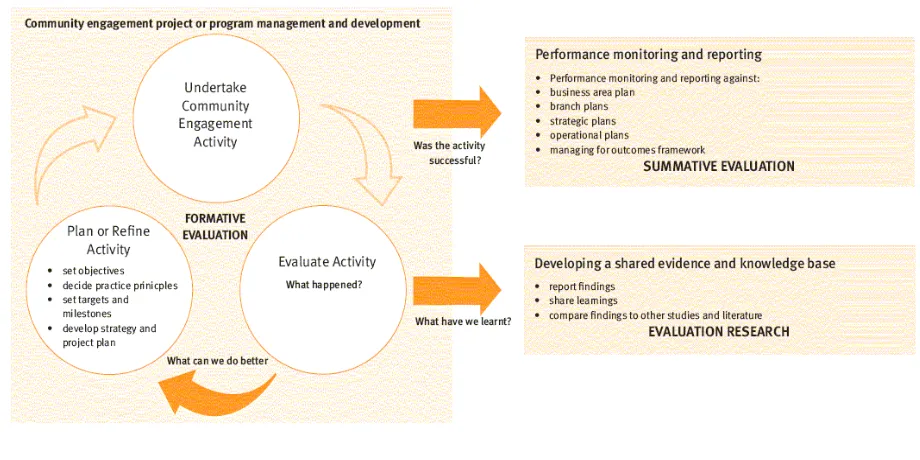
The evaluation model incorporates formative, summative and research evaluation, as shown in Figure 3.1 below. As shown in the diagram, formative evaluation is a cyclical process of planning, taking action, review and refinement (similar to an action learning cycle) and answers the question “What can we do better?”
[image:17.595.74.534.452.682.2]Summative evaluation seeks to make judgements about the success, or otherwise, of the activity, at a particular point in time, and evaluation research is about sharing what has been learned with the broader community.
3.4 Evaluation Questions
Specific questions that guided the evaluation in each of the above areas include: Formative Evaluation Questions
1. Are we doing what we said we would do? If not, why not?
2. What is working well and what isn’t? Why? How do we know? What can we do differently?
3. What actions do we need to take to address identified weaknesses and threats? 4. What are the important learnings for this and subsequent phases of the project? Summative Evaluation Questions
1. Models and Frameworks Used in Phase 2
How useful, appropriate and sustainable are the models, frameworks and strategies used for each of the major project components (Governance, Community Engagement, Portal Environment)?
2. Achievement of Project Objectives
What did we set out to do and why? Have we done what we set out to do? If not, why not? What factors have influenced our decisions? Which critical contextual factors have impacted most on the success of the project? How suitable were the objectives in the first place?
3. Key Learnings and Critical Success Factors
Which have been the most successful aspects of the project and why? Which have been the least successful aspects of the project and why? What are the most significant impacts or changes achieved and why are they seen as significant? What are the key learnings from Phase II, and what are the implications for subsequent phases of the project? What are the critical success factors?
Research Evaluation Questions
How does our project compare with other Community Informatics projects? How does our experience compare with the experience of others? What have we learned that could help other groups and communities working on similar
projects? What new knowledge have we gained and contributed to the field? What research do we still need to do?
3.5 Evaluation Approach, Stakeholders and Participants
Evaluation of Phase 2 of the GraniteNet Project was specified as a requirement of the Service Agreement with the funding body (the Queensland Government Department of Communities) and USQ, as a nominated Project Partner, was commissioned by the GraniteNet Interim Board to conduct the evaluation. The evaluation has been
in consultation and training workshops and participated in the trial of the two GraniteNet platforms (Drupal and ModX).
The approach adopted to the evaluation combined a number of methods designed to facilitate formative, summative and research evaluation, including:
Participatory Action Research (PAR) and Action Learning/Action Research (ALAR)17 and evaluation processes facilitated by the Principal Researcher in collaboration with the Critical Reference Group, who act as co-researchers
Fourth Generation Collaborative Evaluation (FGE)18 (also known as Empowerment19 and Constructivist Evaluation20), an approach to process
evaluation where the evaluator (Principal Researcher) acts as facilitator and coach to support others to conduct evaluation of their own project. This is particularly important for building a culture of evaluation into this and subsequent phases of the project
Establishment of an online collaborative workspace using the university’s
Learning Management System (called Moodle), which was designed to serve as a central repository for information, documentation and data and to provide a collaborative working and learning environment for the Critical Reference Group members and other project participants to supplement face-to-face meetings and workshops. A brief evaluation of the Moodle collaborative workspace has been included in this report.
These approaches were adopted in order to ensure that the evaluation served the purpose and aims outlined above, to increase the relevance and usefulness of the findings and to establish evaluation as an integral component of all future projects undertaken by the group. Refer to Appendix 3a for a concept map of the evaluation.
3.6 Evaluation Data Sources and Instruments
The following strategies were used to gather information to answer the above evaluation questions:
GraniteNet Surveys
A survey instrument (refer GraniteNet Survey at Appendix 3b) was designed by the project team members in collaboration with the principal researcher and evaluator to seek information from key stakeholders, targeted groups and members of the broader community to inform evaluation of the community engagement model and incubator portal environment in particular. Demographic data collected as part of this survey also contributes to building a “Community ICT Profile” and to answering the above evaluation research questions. A total of one hundred and twenty-four (124) survey responses have been analysed for this evaluation.
Needs Analysis (Interviews with Community Members with a Disability) Also contributing to the evaluation is a needs analysis undertaken with twenty (20) members of the community who have a significant disability. This needs analysis was conducted by Therese Crisp, CEO of the Granite Belt Support Services, as part of her practical work placement with the GraniteNet Project attached to her university
studies. The needs analysis was in the form of individual interviews and the interview questions were designed to closely align with the questions on the GraniteNet survey to facilitate data analysis.
Evaluation Workshops – Governance, Community Engagement and Portal Environments
A series of three evaluation workshops was conducted in order to review each of the three main project components (i.e. Governance Model, Community Engagement Framework and Portal Environment) with the key stakeholders. A total of eight (8) CRG members participated in workshops evaluating the Phase II governance model and operations, community engagement framework and strategies and a number of possible portal environments and six (6) participated actively in follow-up activities on the Moodle site.
Key Stakeholder Questionnaires
An anonymous questionnaire was distributed to 20 key project stakeholders (project team members, CRG members, Interim Board members and other interested
community members) to explore in more depth important factors relating to the three project components (Portal Environment, Governance Model and Community
Engagement Framework) and to identify other emerging issues. Demographic data collected as part of this questionnaire also contributes to building a “Community ICT Profile” and to answering the above evaluation research questions. At total of 10 responses was received. A copy of this questionnaire is at Appendix 3c.
Analysis of documents, records and statistical data
This aspect of the project is about (a) ensuring that the project is adequately documented and (b) building a Community ICT Profile that can be used to inform subsequent phases of the project, both of which are essential to evaluation of Phase 2. An online collaborative learning space was established using an instance of the
Moodle Learning Management System and members of the Critical Reference Group collaborated in the sourcing of relevant documents and statistical data for the
Community ICT Profile as well as collecting information about similar projects in other communities for research and evaluation purposes.
A review of key documents, statistical data and relevant literature has been
undertaken to inform development of the Community ICT Profile. Project records and other relevant data captured during the evaluation have also been subject to analysis to help answer the evaluation questions. An analysis of activity on the GraniteNet website contributes to evaluation of the “Portal Environment” and “Community Engagement” components of the project.
GraniteNet Training Workshop Feedback Sheets
A series of training workshops was conducted with 18 community group
representatives during Phase 2, of whom 10 submitted feedback sheets designed to evaluate the training, the website and to obtain feedback that could contribute to evaluation of the community engagement strategy (refer Appendix 3d).
Student Work Placement Evaluation Questionnaires
In addition, a separate Student Work Placement Evaluation Questionnaire was
administered to the two university students who completed practical work placements with the GraniteNet project as part of their university studies. A copy of this
Moodle Collaborative Workspace
Finally, analysis of activity on the Moodle online collaborative workspace provides useful data for determining the suitability of such an environment for future project phases.
3.7 Ethical Considerations and Limitations
The evaluation received ethics clearance from the University’s Ethics Committee and project participants and respondents were issued with Information Sheet and Consent Form (see Appendix 3f) and gave formal, written consent prior to participating in the evaluation. The normal precautions have been taken to protect the privacy and confidentiality of respondents’ information. Data collected from members of the broader community by the members of the Critical Reference Group and GraniteNet project team have also contributed to the evaluation (GraniteNet surveys and training feedback sheets). Consent for this data to be used for the purpose of this evaluation has been incorporated into the consent forms utilised by the project team under the auspices of the organisation conducting the GraniteNet Project, Community Development Services Inc. An education/information session on ethical issues in research and evaluation was conducted with the members of the Critical Reference Group at its first meeting. To date no ethical dilemmas have emerged as a result of this research.
Limitations affecting the quality and sufficiency of the data gathered include: • The GraniteNet survey instrument has been administered by members of the
project team in collaboration with the project evaluator for the purposes of developing a picture of ICT use, needs, barriers and attitudes in the
community. The sampling strategy has been purposive and pragmatic, with surveys being completed by targeted groups of respondents at community meetings and events. For this reason, the resulting data – whilst providing useful information to the project team about community ICT use, needs and barriers as well as attitudes towards the concept of GraniteNet –should not be seen as being representative of the broader community, nor as statistically valid data.
• The small numbers of participants/respondents involved in the three evaluation workshops (a total of eight individuals, all of whom were also members of the Critical Reference Group) necessarily limits the scope of this component of the evaluation, however this has to some extent been mitigated by the relatively broad representation of respondents who completed the anonymous Key Stakeholder Questionnaires and ModX Training Workshop Feedback Sheets.
• The role of participant evaluator in the project has presented particular challenges in terms of maintaining a level of objectivity. With regard to limitations, it is worth reiterating here that this evaluation is not intended to be a completely objective and unbiased assessment of the worth and success of this project. Rather, the role of the evaluator has been to work with the community stakeholders to document and evaluate progress and outcomes with a view to informing subsequent action. As such, the report and
recommendations represent the results of this process as they are seen through the eyes of the evaluator and as a facilitator-participant rather than an
conducted using a process of collaborative critical inquiry, and the results analysed and reported with a critical eye in order to ensure that the findings represent a credible and trustworthy account.
Correlation of data from a variety of sources – surveys, questionnaires, interviews, workshops, training evaluations, the Moodle site – has resulted in a reasonably strong data set for the purposes of this qualitative, constructivist evaluation.
Part 4: Summary of Evaluation Findings
The results of the evaluation are presented under the following headings: 4.1 Formative Evaluation Processes and Outcomes
4.2 Summative Evaluation Results (includes Key Learnings and Critical Success Factors)
Evaluation findings contributing to the broader knowledge base are discussed in Part 5 (Applying Lessons Learned).
4.1 Formative Evaluation Processes and Outcomes
This section presents a brief overview of formative evaluation processes and outcomes and considers the effectiveness of the formative evaluation component of the project.
As shown in Figure 3.1 on page 16, the formative evaluation component is a cyclical process of planning, taking action, review and refinement (similar to an action learning cycle) and answers the over-arching question “What can we do better?” Primary aims of the evaluation approach adopted are to build a culture of evaluation within the project and develop the capacity of community members to evaluate their own projects over time.
The Critical Reference Group (CRG), comprising of eight members of the Granite Belt Learners as well as the Project Manager and Website Administrator, served as the reference group for the formative evaluation process, collaborating in the planning and design of the project evaluation strategy and data collection instruments, the review and analysis of evaluation data and the identification of recommendations for action. The group met on five occasions during the period August to November, 2008 to plan, review, analyse and discuss evaluation processes and findings and to identify emerging issues and opportunities for action and improvement in relation to Phase 2 of the GraniteNet project as well as the evaluation process itself. Meetings were usually of 2-3 hours duration and were held at the Community Learning Centre. The evaluator acted as facilitator and chairperson at the CRG meetings, which followed a formal plan or agenda adopting a meeting/workshop format where open
communication, dialogue and collaborative, critical reflection were encouraged within a supportive “learning” environment. In addition to participating in these meetings, six CRG members also actively participated in evaluation activities on the Moodle site, which was set up to complement the face-to-face meetings and serve as a repository for evaluation information, documentation and data.
Outcomes from this formative evaluation process include that:
• Understanding of the project and the relevant issues was enhanced for the participants involved
• Participation in formative evaluation is likely to have enhanced and strengthened community networks and resulted in instrumental, social and transformative learning outcomes for participants.
Strong and consistent attendance at and participation in CRG meetings is an indicator that the process was valued by participants, as are the following comments from CRG members taken from the Key Stakeholder Questionnaires:
Some challenges and weaknesses of the formative evaluation process have also emerged, and include:
• The need to use Plain English and avoid academic jargon. A critical incident in the initial Evaluation Planning Workshop with the Critical Reference Group in Phase 2 of the GraniteNet Project illustrated the need for the evaluator-facilitator to be mindful of establishing common ground – beginning where people are and moving ahead from there – and a positive and inclusive learning environment (keeping language simple, avoiding the use of jargon and increasing self-efficacy and confidence of participants).21
• The Action phase doesn’t always happen. It was found that the action planning phase that should occur following review, analysis and evaluation needs to be much better facilitated. Whilst adequate time was given to review, analysis and evaluation, it was often the case at meetings that inadequate time was allowed for planning of up actions, which often resulted in no follow-up action being taken. Attempts to facilitate this follow-follow-up action planning using the Moodle collaborative experienced limited success. If formative evaluation processes such as these are to work, there needs to be a link between learning, knowledge acquisition, insights and action.
21 McLachlan & Arden, 2009
Comments from CRG Members (Key Stakeholder Questionnaires)
I have enjoyed the challenge of understanding and contributing to this project with people of similar views. Sometimes challenging but that is a
good learning opportunity.
Has had some weaknesses…still has provided a learning curve for the constant and consistent participants.
Initially I was quite confused and it took several months for me to understand the technical terms (I.T. language) and some of the concepts – I
was also wondering if we would ever “do” something because it seemed to be a very slow process. Now however, it’s moving along wonderfully and
it’s very exciting – all that planning I snow paying off with great results.
• Where does project evaluation stop and project planning and management start? It was often difficult to differentiate between formative evaluation processes and project planning processes, which at times served to confuse the roles of evaluator, project team members and the Board. Clarity of roles and responsibilities needs to be maintained.
A formal review by CRG members of the formative evaluation process was not conducted, so it is difficult to draw further conclusions about the benefits and
limitations of the formative evaluation process. Inclusion of a formal meta-evaluation with CRG members at the conclusion of Phase 2 would have provided useful data about the extent to which formative evaluation has (a) enhanced project outcomes and (b) served to build capacity of participants through learning.
4.2 Summative Evaluation Results
In this section, a summary of the findings against the summative evaluation questions outlined on page 18 is presented.
Evaluation questions: How useful, appropriate and sustainable are the models, frameworks and strategies used for each of the major project components (Governance, Community Engagement, Portal Environment)? What are the key learnings from Phase II, and what are the implications for subsequent phases of the project? What are the critical success factors?
4.2.1 Governance Model
Recommendations for GraniteNet governance from Phase 1 of the project were that the governance model adopted for Phase 2 needed to have the following
characteristics:
• Be a local, community-based entity • Operate in a “not-for-profit” environment
• Operate democratically, transparently and openly
• Have a hierarchical management structure with distributed management • Have equitable representation from community sectors
• Be comprised of members with appropriate expertise to drive phase 1 • Adopt commercial business management principles to ensure accountability
and sustainability.
It was felt that different governance models might be required for different phases of the project, and that the model adopted for Phase 3 (the 12 month pilot) might not necessarily be the same as the model adopted for Phase 2 (the development phase), as the functional, leadership and management requirements would be different in each of these phases, as well as over the longer term operation of the portal. It was
With this in mind, the governance body for Phase 1 was established as a
subcommittee of Community Development Services Incorporated (the auspicing body for the project funding). The incumbent Community Development Officer was appointed as Project Manager and a long-standing community volunteer and member of the Granite Belt Learners group, who was seen to have appropriate skills, was appointed as Website Administrator. The Project Manager worked within the broader CDS governance structure to establish the GraniteNet Interim Board, which
comprised of an over-arching Management team (Chair, Secretary, Treasurer) and a number of operational “Subcommittees” reflecting the key activities of Phase 2. The “Chair” of each of these subcommittees would represent their group on the Board Management team in a reporting and liaison role (refer Appendix 4a for a diagram of the Interim Board Structure). A set of policies to guide the operation of the Interim Board was developed by the Project Manager based on the established policy framework of the umbrella organization.
In relation to the governance model itself, having the GraniteNet Interim Board as a subcommittee of the auspicing, umbrella organization (CDS Inc) was seen by participants as a strength as it provided a strong organisational structure and policy framework that allowed for the employment of staff, promotes a professional
impression to the community and funding bodies and represents a community-based, democratic and participatory model that aligns well with the GraniteNet vision, values and philosophy. Interestingly, it was also seen as a weakness by some. This was related to a lack of clarity about the autonomy of the Board in relation to decision-making powers, roles and responsibilities of the CDS Management Committee and their representative on the GraniteNet Board, and a top-heavy subcommittee structure not suited to the small number of actively involved members. In hindsight, a smaller, more manageable steering committee structure could have been more appropriate for Phase 2, with the GraniteNet Board – as a subcommittee of CDS Inc – being
established to lead Phase 3 of the project.
Other weaknesses identified by participants relating to the operation of the Interim Board included:
• the low numbers of active board members (with the loss of a number of members in the first three months of the project)
• a lack of strategic planning and focus on internet governance aspects • difficulties with decision-making between monthly Board meetings
• a lack of clarity for members about what is expected and how they can make a worthwhile contribution, and
• a lack of clear direction, vision and purpose in the project.
relate in part to a combination of poor timing, poor planning and poor management of expectations, which could have impacted on the engagement of Board and
Subcommittee members, particularly in the earlier stages of Phase 2.
The comments below serve to illustrate some of these issues.
Recommendations for improvement from respondents included:
• enhancements to recruitment, orientation and induction of Board and project team members
• more effective communication protocols and processes • better links between policy and practice, and
• a stronger focus on strategic and business planning and internet governance as core business.
Critical success factors relating to Governance identified from the evaluation include: • Continued funding (including revenue generation from diverse sources) to
ensure sustainability
• High levels of commitment, enthusiasm and participation of Board members based on people’s belief in the project and the benefits it will bring to the community and their belief that they are able to make a valuable contribution, regardless of their level of IT knowledge and skills
• Management of a relevant, responsive, dynamic and vibrant community website.
Strong organisational structure provides solid foundation and engenders confidence of community and funding bodies.
(Governance Evaluation Workshop)
Strategic and business planning has been poor – we didn’t do it early enough in the process.
(Governance Evaluation Workshop)
Participation was good at the start but was not sustained – did we bring people in too early before we were ready and before there was a clear role
for them?
(Moodle Governance Evaluation Forum)
Our goals and expectations have been well researched and planned, even if their execution is sometimes disappointing.
(Key Stakeholder Questionnaire Response)
My expectations were that the project would progress more quickly and with clearer direction.
(Key Stakeholder Questionnaire Response)
At this stage, a community-based, incorporated association structure is seen as the most suitable governance model for Phase 3 of the project, however a longer term strategy may need to include the possibility of separation from the umbrella organization as the project matures. In the meantime, it is felt that the governance model established for Phase 2 will continue to serve the project well. Continued funding and commitment of Board members were identified as critical for sustainability, and a number of critical success factors have been identified for a successful governance model for Phase 3 based on the outcomes of the evaluation to date.
Experience in Phase 2 of the project has demonstrated the importance of the following six aspects of governance which need to be prioritised for action at the beginning of Phase 3 to ensure that critical success factors are addressed:
• Revisit project mission, vision, values, principles, goals and objectives at the start and communicate these to all stakeholders using a variety of media and at regular intervals
• Confirm and resource governance structure and processes (financial management, funding, accountability, legal liability and risk management, decision-making, communication and reporting protocols, meeting procedure and etiquette)
• Address human resource requirements: ensure appropriate leadership, knowledge, skills and expertise available on Board and project team; make explicit specific contributions of members to the project (portfolios) and provide differentiated opportunities to contribute; identify training and support needs
• Develop strategic and business plans with a focus on sustainability and prioritise funding and resourcing of project
• Document and implement policies and procedures, with a focus on Internet Governance as core business (infrastructure and standardisation, legal and ethical, economic/commercial, developmental, socio-cultural), and
Community Engagement (Management of community relations and
expectations, engagement and participation; Development of networks and partnerships)
• Establish mechanisms for self-evaluation and continuous improvement. 4.2.2 Community Engagement Framework
The community engagement framework adopted for Phase 2 of GraniteNet emerged from the literature review undertaken in Phase 1 and is based on the IAP2 Public Participation Spectrum in Figure 4.1 on the following page. The framework was designed to serve as a blueprint for involving members of the Stanthorpe and district community in the planning, development, implementation and ongoing monitoring and evaluation of the GraniteNet community portal. Research in Australia and overseas has shown that community Information Communication Technology (ICT) initiatives such as GraniteNet that are community owned and driven have a much greater chance of success, and that sustainability is more about community
engagement than financial viability, although financial and other resources have an important role to play22.
Figure 4.1 : GraniteNet Community Engagement Continuum. Adapted from the International Association for Public Participation (IAP2) Spectrum of Engagement. In GraniteNet
Community Engagement Framework (May, 2007).
The following “community engagement guideposts” were identified to guide Phase 2 community engagement activities:
Effective community engagement is built on trust, goodwill and respect and should be driven by a set of principles, not shaped by particular techniques. Consistent
application of these principles may not guarantee a successful process in all circumstances, but it will help you avoid the most common mistakes.
(Woolcock & Brown, 2005, p. 6)
Regarding all participants in an engagement process as learners in a learning situation, all bringing a different set of skills and experiences, is a way of minimising impediments to dialogue and enterprising action that can result from the
A community engagement planning workshop conducted in September, 2008 resulted in the development of a set of broad community engagement objectives based on the outcomes of Phase 1 as shown in Appendix 4c. A community engagement plan was then developed outlining strategies, resources and timelines for achievement of objectives.
Engagement activities conducted during Phase 2 included:
• Phase 2 “Startup Workshop” attended by 24 community members
• Marketing, promotion and publicity of GraniteNet through brochures, posters, business cards, newspaper column and articles, newsletters etc
• Presentations at public events such as the Learning Fiesta, Southern Downs Regional Council Community Planning Workshop, and Stanthorpe Show • Presentations to local community groups and organisations (for example,
Rotary, Stanthorpe Community Network, University of the Third Age) • GraniteNet community training workshops (Drupal and ModX) (attended by
18 community members)
• GraniteNet community surveys (completed by 124 community members) • Needs analysis of 20 community members with a disability (university student
practical placement)
• Informal networking activity.
Evaluation results are presented below under each of the Community Engagement Framework headings, and should be viewed in light of the broad community engagement objectives outlined at Appendix 4c.
INFORMING THE COMMUNITY ABOUT GRANITENET
The level of awareness of GraniteNet in the community is difficult to determine, and trying to establish a link between specific engagement activities and levels of
community awareness an even more formidable task! Nonetheless, a review of feedback obtained anecdotally23 during the second half of 2008 indicated an increased ‘brand awareness’ of GraniteNet in the broader community being achieved through marketing, promotion, publicity and networking activity (i.e. people had heard of the name and had an awareness of the existence of something called “GraniteNet” that had something to do with computers, the internet and a community website; people were asking questions). An example provided by one participant reported enquiries received by Centrelink from clients wanting to make contact with GraniteNet to obtain computer training and support. Another example was of an individual in the community who was said to have declared at a public meeting, that the people
involved in the GraniteNet project were “blowing it out their a*#$s” and anyone who was interested in setting up a community website should come and see him/her! Evidence of an increased awareness of the existence of GraniteNet is also reported by Board members who represent other community groups and organizations such as Rotary and the Granite Belt Wine Tourism Association.
When reflecting on this question, Critical Reference Group members noted although there were some indications of an increased awareness of GraniteNet in the broader community, there is limited understanding of the broader purpose and vision of GraniteNet – particularly in relation to the need for community participation and ownership – which may result in negative perceptions of progress achieved to date. This was exacerbated during most of 2008 by the delays experienced in getting a user-friendly website up that was able to demonstrate to the broader community what progress had been made. (Having said this, data from key stakeholders indicates that “the community” doesn’t want to know about purpose and process – they just want to see the website up and running.) The trial with 14 community group representatives of the Drupal platform hosted by USQ was also problematic, as it proved to be slow and difficult for community members – even those with good computer skills – to use, and may well have resulted in a degree of disillusionment and alienation of project
stakeholders and community members. It is nonetheless possible that all these
supposed “faults” with the project are issues that it may well be impossible to prevent in the implementation of such an experimental project and in such a complex
environment.
The establishment late in 2008 of the new website using the ModX platform, combined with a series of training workshops conducted by the Website
Administrator with 18 community group representatives resulting in the uploading of content and subsequent demonstration of the website at the Stanthorpe Show in January, 2009, appears to have made a significant contribution to raising community awareness of GraniteNet and engaging community members in the project. An analysis of activity and traffic on GraniteNet between 1 January and 18 March
revealed a total of 1,689 visits to the site, of which roughly half were repeat visits and the vast majority from within Australia24 , and to date there are 40 community groups represented on the GraniteNet site.
Reviewing performance against the objectives outlined in the INFORM column at Appendix 4c, it could be said that progress has certainly been made towards achieving the first three objectives(i.e. to tell people about the project and make contact with and inform key stakeholders and potential partners). In relation to raising awareness of the benefits of GraniteNet for individuals, groups and the community, there is still plenty of work to be done. It is in the area of keeping people informed about the progress of the project as well as the broader purpose and vision that appears to have been wanting in this Phase, particularly as it relates to managing broader community expectations as well as the expectations of those coming on to the Board. This is something that needs to be top of mind in the next phase of the project. This issue is explored further as part of the summative evaluation of the portal environment.
CONSULTING THE COMMUNITY ABOUT GRANITENET
Consultation with people from different sectors of the community about their use of computers and the internet, their perceived skill levels and barriers, and perceptions of the benefits and limitations of GraniteNet for the Stanthorpe community is building a set of data that can be used to inform ongoing development of the portal environment and related community engagement activities, such as provision of computer skills training for different groups in the community.
Of the 124 people completing the GraniteNet survey, almost half indicated that they “would use GraniteNet”, and when asked “what for?”, most of these said they would use GraniteNet to access information relating to the Stanthorpe community (i.e., for general community information, events, services, groups etc.). When asked about the benefits of GraniteNet, most saw benefits to be gained from having a central point for local information sharing, and many could see the benefits in terms of community participation, engagement and networking. Whilst just over one third of respondents reported that they would have “no concerns” about using GraniteNet, a number of respondents had concerns about privacy and security, the accuracy and currency of information available, and the accessibility and usability of the site. Whilst many were unsure about whether they would use GraniteNet or not, only 16 people said they would definitely not used GraniteNet, with the majority of these citing a lack of interest and being able to obtain all the information they need from the world wide web (which perhaps reflects a lack of awareness about the potential benefits of a local community portal). Of the 20 members of the community with a disability who were interviewed, all agreed that they would use a facility such as GraniteNet to find out more about what is happening in their local community. Results from these surveys and interviews are encouraging and indicate a reasonably strong level of interest from respondents in the concept of a community portal, with many seeing real benefits to be gained.
The following responses from the community members who participated in the GraniteNet Content Editors’ Training Workshops along with responses to the Key Stakeholder Questionnaires demonstrates a strong belief by these stakeholders in the benefits that GraniteNet can bring to the community:
How do you think the GraniteNet community portal will benefit, you, your organization and the Stanthorpe community?
(Training Workshop Evaluation Responses)
It can give people a common, free web site for distribution of information. My organisation works with people with disability and I can see enormous benefits for our client base. I'm hoping that Granite Net will be a vehicle that will enable our
clients to access and contribute to their own community and the wider community. The major groups I am involved with are Rotary, Probus, Meals on Wheels and Carramar. I can envisage the portal to be of great use re coming events/meetings/ rosters/ reminders, etc - again, providing it is user-friendly. I know I keep using the
term 'user friendly', but I am absolutely convinced that this is critical. Allows our organisation to have a website without the hassle of fully setting it up.
Easy to hand-over to a new person in time. Will allow us to have up to date information available to members competitors & exhibitors. Able to have good
information about other organisations.
I think it will be a great tool not just from my point of view but for the whole community. I can see a great many uses for this site, and hopefully in the future all
residents of Stanthorpe will access and find some useful information on it This will be a great way to let people know about the organisation I am
GraniteNet surveys and interviews have also started to provide useful information about needs and barriers for people from different sectors of the community in relation to use of computers and the internet. In terms of access, of the 124 community members who have completed GraniteNet surveys to date25, only 12 reported not having a computer at home with access to the internet. Bearing in mind that 44 respondents are over the age of 60 years (with 13 over the age of 70 years), these are encouraging results in terms of community members’ access to home computers and the internet. Having said this, only 42 respondents reported having high-speed broadband access, even though a significant majority (almost 70%) are living in the town area.
Of the GraniteNet survey respondents reporting barriers to accessing computers and the internet (45% of respondents), the major barriers reported were related to
accessibility and connectivity, lack of computer knowledge and skills and a requisite need for training (35% of respondents identified training and skills-related barriers and 10% reported having “poor” or “fair” literacy skill levels), and a lack of available time. The “fear factor” (otherwise known as technological neurosis26), was identified
25 As at 20 March, 2009. Refer to Appendix 4d demographics of survey respondents.
26 This term was used at the GraniteNet Community Engagement Evaluation Workshop by Dr Fiona Kumari Campbell from Griffith University’s Research Centre for Clinical and Community Practice Innovation to describe the phenomenon whereby people are afraid to use information communication
Do you think the GraniteNet project will benefit the broader Stanthorpe community, and if so, how?
(Key Stakeholder Questionnaire Responses)
The groundwork has been done…The base is there for it to become a useful community information network. There is no reason why it won’t work – we just have
to keep it simple and do it right.
Possibilities and opportunities that will strengthen and unite the community. Eventually assist with learning options.
By enhancing communication and providing a ‘one-stop’ point of information.
In so many ways – physically, mentally, economically, socially and spiritually! It will give opportunities to everyone in their daily lives – work, family study, recreational time. With dedicated members overseeing such a potentially dynamic, all-important
project, and with continued funding, the project can only succeed!
I am not sure.
Yes, it will help me to find out what’s going on in the community – particularly services, training etc. The interest of the community is there.
by community representatives from welfare service organizations, disability support services and a senior’s group as a significant barrier to technology take-up by some members of the community, even when they had identified a need for the technology (such as wanting to use email to keep in touch with family, for example).
Consultations with representatives from two community organizations with a significant seniors membership have helped to identify some of the needs, barriers and opportunities for older members of the community, and the 60+ age group has been well represented in the survey data to date (approximately 30% of respondents).
The results of the needs analysis conducted with 20 community members with a significant disability showed that although all respondents reported being able to access a computer and the internet, most were using older machines with limited capabilities and did not have a home internet connection, but were relying on community centres to access the internet. Of the 20 respondents, only three felt “reasonably confident” using a computer (this can be compared to the 56% of respondents to the GraniteNet survey, who reported their level of computer skills to be “good” or “very good”). Barriers to use of computers and the internet for
respondents with a disability included having to use outdated equipment (due to the cost of purchasing new computers being prohibitive), having to access the internet in community settings rather than at home, low awareness of available hardware, software and connectivity options, and a lack of skills and confidence in using computers (often coming as a result of previous negative education and training experiences). The needs analysis report concludes that lack of appropriate and relevant training and support is the primary barrier for community members with a disability that is likely to prevent them from accessing and using GraniteNet, and therefore from maximising the opportunities for greater community inclusion and participation that might be possible.
Reviewing performance in light of the broad community engagement objectives under CONSULT at Appendix 4c, it is ev