Rochester Institute of Technology
RIT Scholar Works
Theses
12-10-2014
Typography for Non-Designers
Caitlyn Redden
Follow this and additional works at:
https://scholarworks.rit.edu/theses
This Thesis is brought to you for free and open access by RIT Scholar Works. It has been accepted for inclusion in Theses by an authorized administrator of RIT Scholar Works. For more information, please [email protected].
Recommended Citation
Caitlyn Redden
for the Master of Fine Arts Degree
Partial
in Visual Communication Design
School of Design
College of Imaging Arts and Sciences
Rochester Institute of Technology
December 10, 2014
Caitlyn Redden | 10 December 2014
2
Thesis Committee
Advisor Signatures
Marla Schweppe Date
Chief Advisor, Professor School of Design
Bruce Ian Meader Date
Associate Advisor, Professor School of Design
Daniel Deluna Date
Associate Advisor, Associate Professor School of Design
Peter Byrne Date
Administrative Chair School of Design
Caitlyn Redden Date
3 Caitlyn Redden | 10 December 2014
Table of Contents
5 Abstract
6 ProblemStatement
7 Audience
8 Research
10 Literature Review
Process
12 Ideation 14 Storyboarding 15 Typeface Choices 16 Design Considerations 17 Animation
19 Scripting & Narration
Usability
20 Testing Results
21 Testing Results Analysis
22 Conclusion
23 Bibliography
24 Appendix A: Storyboards
29 Appendix B: Testing
4
Caitlyn Redden | 10 December 2014 13 Fig1 Early Topic Breakdown
13 Fig2 Final Topic Breakdown
15 Fig 3 Primary Typeface
15 Fig4 Supporting Typefaces
16 Fig5 Early Color Palette Concepts
16 Fig6 Final Color Palette
17 Fig7 Alignment: Triplicate Information
17 Fig8 Hierarchy: Captioning Design
18 Fig9 Circle Animation,Variation of Captions
18 Fig10 Highlighter
20 Fig 11 Testing Results
20 Fig 12 Testing Before Viewing the Videos
20 Fig13 Testing After Viewing the Videos
21 Fig14 Critical Comments
21 Fig15 Positive Comments
Table of Contents
5 Caitlyn Redden | 10 December 2014
Abstract
Keywords: Typography, Type, Design, Non-designer
Understanding typography is an essential part of visual
communication. Typography communicates the message of the
design. I plan to create a piece that will inform the non-designer
about the basic rules of typography in a quick and engaging motion
graphics animation.
With the expansion of the digital world, design has become
accessible to anyone with an internet connection through software
applications and tutorials. Even with these tools, there is a significant
lack of design knowledge available. I will guide the audience
6 Caitlyn Redden | 10 December 2014
Problem Statement
Creating a document with good typography is a difficult skill to
master. The amount of information and technology that is available
today, has made the ability to design accessible to anyone. This is
a problem because these tools are being used without knowledge
of design principles. Many people who are exposed to typography
every day only see the text. Others, recognize good typographic
design on a subconscious level, but don’t understand the ideation
behind it. With hundreds of software applications, and thousands of
typefaces to chose from, it can be difficult to pick-up these concepts
unassisted.
Many software applications come with default fonts, swatches,
margins, and layouts that, in the hands of a designer, can be
modified and used to convey information in interesting and coherent
ways. These softwares are readily available to anyone. Without a
basic design education, use of the defaults can be understood as
good design.
7 Caitlyn Redden | 10 December 2014
Audience
Non-designers
The inspiration for this project came from real life projects that
this author worked with in the RIT Center for Campus Life creating
promotional materials for clubs, organizations and departments.
Despite the free design services provided by the Center for Campus
Life, many organizations prefer to create there own promotional
materials and ask only for distribution services. Some of the
materials received were so saturated in text, and effects, that the
message is not discernible. It is these non-designers who have a
desire to create, but are in need of guidance.
The audience for this project is non-designers, but the term
covers such a wide range of people that it is necessary to define
“non-designer.“ This series of videos would not benefit someone
completely uninterested in design. A non-designer, would be
without professional design training, who is still in constant contact
with design tools, and has an interest in learning.
This audience would include people who are responsible for
“everyday“ typography including reports, presentations, emails,
8 Caitlyn Redden | 10 December 2014
Research
Research began with collecting several existing samples that
represent the problem stated. I surveyed these examples and
critiqued each one to find the most common and dominant
mistakes. The most obvious problems were related to typeface
choices, placement of text, color choices, and over use of effects.
With a pool of specific problems, research progressed on
typographic principles and techniques to improve these designs.
It became clear that many of the problems came from over-design
or adding effects for the sake of having effects. This same issue is
addressed in Timothy Samara’s twenty rules for making good
design: “Communicate—don’t decorate.”
1This author started with resources that are meant for designers to
get the best understanding of why the samples were inaccurate.
There were two main categories of literary research: scholarly and
content-heavy resources, such as The Elements of Typographic
Design by Robert Bringhurst, and casual resources meant for
designers, such as The Visual Dictionary of Typography by Gavin
Ambrose and Paul Harris. The content-heavy resources provided
in-depth analysis of typography including the history, psychology, and
anatomy of letters. The casual resource provided the simplification
of information that I would need to simplify even further for
non-designers. The Visual Dictionary of Typography was a great resource
for simplified information. Each page of the book is dedicated
to one term of concept and all the information must fit or be
demonstrated on that one page.
It was also important to find design sources and material that
were directed towards the audience of non-designers such as,
the Non-Designers Type Book by Robin Williams. This source
had perhaps the largest impact on the final piece because of the
examples and visual comparisons that demonstrated different
concepts. It was helpful to see what other professionals considered
the most important principles of design, and to see how they
simplified the information.
9
Caitlyn Redden | 10 December 2014
Research
The main conflict of the project became finding middle ground
between these two categories of information. How do you take
a complex web of concepts (on which there are unlimited of
professional opinions) and simplify it enough for beginners without
losing the original intent. For example: readability is how easily a
viewer can read a large portion of text. The concept of readability
is simple, but it is affected by every choice a designer could make:
typeface and color choices, line spacing, alignment, imagery,
document size, point size, etc. Each one of those keywords could
is a concept in its self. If the goal of the this topic was to teach the
audience about readability, I also needed to show what design
choices effect, help, and hinder it.
Research also included viewing existing motion graphics pieces
that were meant to be educational and/or about typography. It
was important to see what kind of material already existed that was
based on typography.
One of the closest related approaches was Karen Kavitt’s Intro to
Typography series on Youtube. Her entire channel is dedicated to
helping people understand how to make better design choices.
Her typography series used real world type examples, like shop
signs, and placed graphics over top of the letters to demonstrate
vocabulary word such as x-height. Thus explaining concepts with
examples that the audience can directly relate to. This approach
resulted in more still images, and less animation.
10
Caitlyn Redden | 10 December 2014
Literature Review
Post-proposal Additions
Intro to Typography
Kavett, Karen. “An Intro to Typography.” YouTube video, 2:59, Accessed September 22, 2013. https://www.youtube.com/
watch?v=tWFWJGA7qrc&list=TLosQIlg1Rwq2VRZqsQ835bqYJ7i1TUaCP
A video with using graphics to point out typogrphic rules and vocabulary.
A Brief History of Type: PART FOUR: MODERN (DIDONE)
I Love Typography blog. http://ilovetypography.com/2008/05/30/a-brief-history-of-type-part-4/
The entry A Brief History of Type compares modern typefaces, and
discusses their proper uses. The blog had several other interesting entries on typography including the origins of letters, most popular typefaces of the year lists, and weekly/monthly updates on newly designed typefaces.
Serif vs. Sans: the final battle
Kole, Stacey. Web Designer Depot blog. http://www.webdesignerdepot. com/2013/03/serif-vs-sans-the-final-battle/
An info-graphic comparing the pros and cons of serif and sans serif typefaces.
Most Popular WebINK Web Fonts of 2013
Paull, Amanda. Web INK blog. http://blog.webink.com/popular-webink-web-fonts-2013/ December 3, 2013
Hyperactivitypography from A to Z
https://www.behance.net/gallery/497306/Hyperactivitypography-from-A-to-Z
Graphic Design for Non-Profit Organizations
Vignelli, Mossimo and Peter Laundy. Graphic design for non-profit organizations. New York, NY: The American Institute of Graphic Arts, 1980. http://rationale-design.com/archives/graphic-design-for-non-profit-organizations/
11
Caitlyn Redden | 10 December 2014 ECAbrams Youtube Channel
Abrams, Evan. “ECAbrams.” Accessed March14, 2014. https://www.youtube.com/ channel/UCF5pdu3Z2Hk8bouDB_C3zFg
Evan Abrams channel has several AfterEffects video tutorials. While I didn’t use any particular one for this thesis, I did apply some of his techniques for smoothing and easing animation, and bringing layers from Illustrator to After Effects.
RIT Center for Campus Life
Gospel Fellowship Flyer_2013.pdf. Image. September 6, 2013. Art Request Archive. RIT Center for Campus Life, Rochester, NY.
Praise Party_Landscape_2013.pdf. Image. September 6, 2013. Art Request Archive. RIT Center for Campus Life, Rochester, NY.
[email protected], e-mail message to Marketing Graduate Assistant, mktgccl@ rit.edu, May 4, 2013.
Examples from the Center for Campus Life image archive and emails from Bedazzle My BonBons. The images from the archive are Art Requests submitted by organizations on the RIT campus for display. The emails are advertisements that are recieved on a regular basis, all with similar formating. I chose these examples because of their bad typographical choices. They are created by the audience I wished to educate and are inspirations for the project. I researched the problems and possible solutions for each one, as preparation for the project.
Literature Review
12
Caitlyn Redden | 10 December 2014
Process
Ideation
Initial conceptualization began with researching existing examples
of typographic designs created by non-designers. Research also
consisted of existing rules for typographic design, including sources
related to professionals and beginners or non-designers
Using the examples collected from less than good typographic
design, an initial list of problems was developed. This list included
very specific details from the examples that I wanted to correct
like, using glows on text, hot pink Comic Sans, paragraphs of
centered type, stretching type, and sporadic placement of important
information. The list of problems then grew into a list of solutions
(topics) to be considered for the scope of the thesis application.
Early considerations for the look of the piece included type
interacting with itself and 3D paper folds. The paper folding concept
evolved from the thought, while professional design has leaped to
digital space, non-professional design is still largely print based.
However, incorporating the 3D effects was also irrelevant to the fact
that most of the design I was attempting to improve was designed
in 2D space on a computer screen.
13
Caitlyn Redden | 10 December 2014 Fig 2 Final Topic Breakdown
Legibility & Readability
Typefaces Choices Leading Color Contrast Stroke Weight Typeface Classification Serif Sans Serif Slab Serif Script Decorative Alignment Left Right Center Justified Grids Organization Structure Hierarchy Signals Importance Effects
Fig 1 Early Topic Breakdown
Legibility & Readability
Text type Display type Typeface Choice Message Mixing Alignment Grids Organization Hierarchy Signals Importance Effects Drop Shadows Glows Outlines
The figures below show the changes in the topic breakdowns
from the beginning to the final version. There were two major
changes to the final breakdown. First,
Grids
became its own section
incorporating
Organization
and
Structure
. Second, the
Effects
section in the early breakdown, was removed, though touched on
briefly in the
Hierarchy
section of the final list. The
Effects
section
was removed because it focused to heavily on what the audience
was doing wrong, rather than how to work with typography in a
constructive way.
Process
14
Caitlyn Redden | 10 December 2014
Process
Storyboarding
15
Caitlyn Redden | 10 December 2014
Process
Typeface Choices
Typeface choices are critical to the demonstration of the
typographic principles. As stated by Robert Bringhurst:
Some of the greatest typographers who ever lived had no
more than one roman font at a time [...]. Today, the
typographer can buy fonts by the thousand on compact discs,
and use the telephone to download thousands more: more
fonts than any human could use, yet never a complete library.
2Originally, free typefaces we considered as primary typefaces.
A license for Univers or Futura can cost hundreds of dollars. A
non-designer attempting to create a flier for an office meeting
would not be expected to purchase an expensive type license.
Thousands of typefaces are available online for free, however
many of those typefaces are incomplete or badly designed.
Avenir was chosen as the primary typeface for content, captions,
and titles. It is a very clean sans serif, making it very readable on
screen, and is available in a variety of weights
The supporting typefaces were chosen based on classical use,
accessibility, and relationship to the topics. For example, Univers
and Futura were chosen because they are classic typefaces
with a large family that are commonly used by designers. It
was important show the audience examples of well designed
typefaces. Didot and Garamond were chosen to demonstrate
differences in stroke contrast.
Lovello and Kaiju were chosen examples of free typefaces. Both
of which are ornamental typefaces uses mainly for titles, so a large
variety of weights and characters is less crucial. When searching
for free typefaces it was important that the samples were well
designed and popular with the online design community.
Fig 3 Primary Typeface Avenir Book
a b c d e f g h i j k l m n o p q r s t u v w x y z A B C D E F G H I J K L M N O P Q R S T U V W X Y Z 1 2 3 4 5 6 7 8 9 0
Avenir Black
a b c d e f g h i j k l m n o p q r s t u v w x y z A B C D E F G H I J K L M N O P Q R S T U V W X Y Z 1 2 3 4 5 6 7 8 9 0
Fig 4 Supporting Typefaces
Univers Futura Akzidenz Grotesk Garamond Didot Lovelo Grand Hotel Kaiju
16
Caitlyn Redden | 10 December 2014
Process
Design Considerations
The first round of storyboards contained the color palette that
would be use through the duration of the project. The colors were
chosen based on screen visibility, compatibility, and gradation.
The palette is also wide enough to support future videos. Of the 6
pairs, only 5 were used for the videos.
It was important that each topic be a different color, to separate
the content enough to commit key pieces of information to
memory. The gradation is used, and could be used in the future,
to indicate which topics relate to one another based on the colors
around it.
During the earl
y
storyboarding for
Hierarchy
, it was decided that
there needed to be captioning for some of the descriptions. As
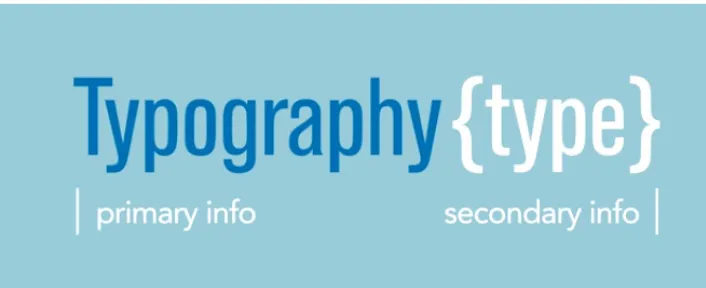
the words “Typography {type}“ change, a white rule appears and
the keyword descends. This captioning technique was also used
in Typeface
Classification
and
Legibility
&
Readability
. It created
consistency where ever captions were needed, they appeared in
the same region of the screen.
There is also a repetitious circular animation, which is the only
non-typographical feature in the series. This circular mark is used
to draw attention to specific aspects of the content. In
Alignment
,
the circles point out the roughness or smoothness of the starting
points for lines. In
Grids
, they point out the irregular placement
of the words: structure, organization and develop consistency. In
Legibility & Readability
(Fig. 10), the circles highlight the “vs,“ to
communicate to the audience that I am comparing two different
options.
Fig 5 Early Color Palette Concepts
17
Caitlyn Redden | 10 December 2014
Process
Animation
Alignment
was the most recognized concept of all the videos.
Changing the alignment of text in basic word processor is common
knowledge. The goal of this clip was to present the best uses for
each, and explain why you might use one alignment over the other.
Each alignment is demonstrated by animating the placement,
narration, and a block of text that mimics the narration. The triplicate
presentation of information (two visuals and audio) that reinforces
the idea to the viewer.
Hierarchy
was the first video enter the animation phase, and the last
to be completed. The
Hierarchy
clip, informs the audience of the
importance of their message. The original concepts for
Hierarchy
had only narration and visual examples. Shortly into the animation
phase, the same triplication of information that was achieved with
the Alignment
video, through the use of captions (Fig. 8). Keywords
appear in-line with animation and narration to reinforce key points.
Fig 8 Hierarchy: Captioning Design
Fig 7 Alignment:
[image:18.612.217.570.578.722.2]18
Caitlyn Redden | 10 December 2014
Process
Animation
To keep all the clips consistent in their animation, there are two
main transitions used throughout the clips: flipping and sliding.
The sliding is used for each of the titles, all the captions, throughout
the Alignment
and
Grids
content. The flipping was used to show
quick transitions of large amounts of content, such as the paragraphs
in Legibility & Readability, Hierarchy,
and
Alignment
. By flipping the
paragraphs one line at a time, the content/concept changes while
maintaining the real estate of the composition. The
Legibility &
Readability
also introduces the use of a highlighter box (Fig. 10) that
indicates the better example. The highlighter was added because
this clip showed several comparisons of large amounts of text which
could be confusing without another indicator.
Fig 9 Circle Animation,
19
Caitlyn Redden | 10 December 2014
Process
Scripting and Narration
Scripting began at the same time as the storyboarding process.
It was a combination of storyboarding and script writing that
helped narrow down content and define the final breakdown.
During the first reading, the narrator found it difficult to read each
of the scripts in one recital. Even when if the words were correct,
pronunciation and delivery varied. This problem was solved by
breaking the script down into individual sentences. This also
made the editing slightly easier because I could piece the best
portions together.
The script underwent several re-writes over five recording sessions.
Many of the rewrites happened during the sessions when the author
and narrator were able to work together. It was a collaborative
process listening to the narrator’s input and hear different variations
on the script.
20
Caitlyn Redden | 10 December 2014
Typeface Classification Grids
Legibility & Readability Hierarchy Alignment 15% 15% 49% 76% 46%
Usability
Testing Results
Fig 11 Testing Results
6 questions 12 respondents age ranges 14+
30% increase in correct scores
Typeface Classification Grids
Legibility & Readability Hierarchy Alignment 38% 69% 65% 92% 100%
Fig 12 Testing before viewing the videos
21
Caitlyn Redden | 10 December 2014
Usability Testing
Fig 14 Critical Comments
A little too much information
-User Interface Designer
Would benefit from all inclusive video fixing one horribly designed paragraph, using all topics from start to finish.
- Network Administrator
Audio levels varied between and throughout videos
- Game Developer
Some of the vocab needs explained
- Director of Instruction
Testing took place in two sessions. The first stage was online.
A test web page was built to host all the videos at once: http://
typographyfornondesigners.weebly.com/. The link was sent
to subjects within my audience parameters along with a list of
questions pertaining to subjects in the videos. The subjects were
required to take the test twice, once before viewing the videos,
and once after. The results were recorded and compared.
The second session of testing took place in an open lab. Viewers
could volunteer to take the test before and after. This session
allowed me to see reactions to the videos and interact with the
audience in a way the online session hadn’t. Even if viewers
refused to participate in the testing, they were able to view the
videos and express feedback vocally.
During both testing sessions, some viewers participated
incorrectly by not taking both tests. Theses tests were not
considered for the final results, but they contained valuable
comments about the success of the videos.
The testing over had a 30% increase in correct answers.
Alignment
had the greatest jump in scores going from 46% correct to 100%,
a 54% increase.
Legibility & Readability
, showed the least amount
of improvement with a 16% increase in correct answers.
Fig 15 Positive Comments
I was actually thinking about getting Internet karma by sharing these videos to a large population of the Internet. I think a lot of people could benefit from them.
- Network Administrator
Picked basic and complex info and made it easy to use. I will show it to my freshman class!
- Graphic Design Professor
It was very simple, yet told me what I needed to know. The visuals were very nice, as well; really kept my attention while listening to the audio.
- Marketing Management MBA
Very interesting. These elements should be discussed w/ MHS students.
22
Caitlyn Redden | 10 December 2014
Conclusion
Challenges and Success
One of the biggest challenges I faced was the preproduction
process. Even when I knew the direction I wanted to go with the
project, narrowing down the topics took almost as much time
as the actually production process. Scripting was also a never
ending process. Because I was constantly trying to narrow down
information, the script also constantly changed.
I also struggled with use of filler text. When creating an animation
about typography, words need to demonstrate the concepts.
This is especial true for the alignment clip, that required blocks of
text. Initially, I considered using pop culture references, or humor,
in an attempt to engage the audience. Upon storyboarding
with text unrelated to the topic of typography, I decided that it
would be distracting and confusing for viewers. As I mentioned
in the process section of this thesis, the triplication of information
(visuals, narration, and text relating to the narration) proved the
more effective way to relay information.
Another challenge I faced was the audio integration. I had
never used Adobe Audition extensively before, and with this
project the audio was absolutely a necessity. The narrator was
incredibly patient, when I asked her to return to the studio, and
record a total of 6 times. Each time with re-writes to the script
as I narrowed down my topics. In the end, my inexperience with
audio and the multiple sessions resulted in varying audio levels,
which was commented on during the usability testing.
Over all, I do believe the project was successful. Despite the
criticism of the audio and the saturation of information, the
23
Caitlyn Redden | 10 December 2014
Bibliography
Abrams, Evan. “ECAbrams.” Youtube Channel. Accessed March14, 2014. https:// www.youtube.com/channel/UCF5pdu3Z2Hk8bouDB_C3zFg
Barrett-Forrest, Ben. “The History of Typography - Animated Short.” YouTube. Accessed September 22, 2013.
http://www.youtube.comwatch?v=wOgIkxAfJsk.
Bringhurst, Robert. The elements of typographic style: verson 3.2. 3rd, expanded and rev. ed. Point Roberts, Wash.: Hartley & Marks, Publishers, 2008.
Hoefler & Co. .I Love Typography blog. A Brief History of Type: Part Four Modern.
http://ilovetypography.com/2008/05/30/a-brief-history-of-type-part-4/
Kavett, Karen. “An Intro to Typography.” YouTube video, 2:59, Accessed September 22, 2013. https://www.youtube.com/
watch?v=tWFWJGA7qrc&list=TLosQIlg1Rwq2VRZqsQ835bqYJ7i1TUaCP
Kole, Stacey. Web Designer Depot blog.
http://www.webdesignerdepot.com/2013/03/serif-vs-sans-the-final-battle/ [email protected], e-mail message to Marketing Graduate Assistant, [email protected], May 4, 2013.
Paull, Amanda. Web INK blog. http://blog.webink.com/popular-webink-web-fonts-2013/ Accessed December 3, 2013
RIT Center for Campus Life.Gospel Fellowship Flyer_2013.pdf, Praise Party_ Landscape_2013.pdf. Image. September 6, 2013. Art Request Archive. RIT Center for Campus Life, Rochester, NY.
Samara, Timothy. Design Elements: A Graphic Style Manual. MA: Rockport Publishers, 2007.
Studio 3. Hyperactivitypography from A to Z.
https://www.behance.net/gallery/497306/Hyperactivitypography-from-A-to-Z
24
Caitlyn Redden | 10 December 2014
Appendix A
25
26
27
28
29
Caitlyn Redden | 10 December 2014
Appendix B
30
31
32
34
36 Caitlyn Redden | 10 December 2014
38 Caitlyn Redden | 10 December 2014
39
40
41
42
43
44
45
46
47
48
49
50
51
52
54
56 Caitlyn Redden | 10 December 2014
58 Caitlyn Redden | 10 December 2014
59
60
61
62
63 Caitlyn Redden | 10 December 2014
64
65 Caitlyn Redden | 10 December 2014
67 Caitlyn Redden | 10 December 2014
69
70
71
72
73 Caitlyn Redden | 10 December 2014
74
75 Caitlyn Redden | 10 December 2014
77 Caitlyn Redden | 10 December 2014
79
80
81
82
83 Caitlyn Redden | 10 December 2014
84
85 Caitlyn Redden | 10 December 2014
87 Caitlyn Redden | 10 December 2014
Appendix C
88 Caitlyn Redden | 10 December 2014
Caitlyn Redden
Thesis Proposal for the Master of Fine Arts Degree
Rochester Institute of Technology College of Imaging Arts and Sciences School of Design
Computer Graphics Design October 21, 2013
89
Caitlyn Redden | 10 December 2014
Keywords: Typography, Type, Design, Non-designer
Understanding typography is an essential part of visual
communication. Typography communicates the message of the
design. I plan to create a piece that will inform the non-designer
about the basic rules of typography in a quick and engaging motion
graphics animation.
With the expansion of digital world, design has become accessible
to anyone with an internet connection through software applications
and tutorials. Even with these tools, there is a significant lack of
design knowledge available. I will guide the audience through
concepts that are most often used inappropriately. The concepts
include: alignment, grid structure, hierarchy and typeface choice.
How will your thesis be of value to this audience?
My thesis will be of value to this audience because it will provide basic design knowledge for future use. It will be visually interesting and easier to watch and understand than a step by step tutorial.
How will your design contribute to the design field in
a meaningful way? How will it contribute to society?
This design will contribute to society by exposing the audience to the errors in everyday design. By educating this audience, their future contributions in society will be informed by design.
How practical is your design problem (Is it within your
ability to realize it)?
What design theories and methodologies are you
comfortable with now?
I am comfortable in using typography, designing typographic elements, and the principles of animation.
What design concepts will you need to research
to complete your thesis?
• How specific typefaces were designed. • How certain typeface work together. • Combining 2D and 3D type
What technical aspects are you comfortable with now?
I am comfortable using...
What technical concepts will you need to research
to complete your thesis?
• Compositing 2D and 3D elements together • Sound recording / editing
How is your thesis project larger in scope than a
mere portfolio example?
It could set the standard for a series of pieces that could become a collection in design education.
90
Caitlyn Redden | 10 December 2014
Using typography correctly is a difficult skill to master. The amount
of information and technology that is available today, has made the
ability to design accessible to anyone. This is a problem because
these tools are being used without knowledge of design principles.
Many people who are exposed to typography every day only see the
text. Others, recognize good typographic design on a subconscious
level, but don’t understand the ideation behind it. With hundreds of
software applications, and thousands of typefaces to chose from, it
can be difficult to pick-up these concepts unassisted.
Many software applications come with default fonts, swatches,
margins, and layouts that, in the hands of a designer, can be
modified and used to convey information in interesting and coherent
ways. These softwares are readily available to anyone. Without a
basic design education, use of the defaults can be understood as
good design.
Online tutorials have attempted to provide this information.
Unfortunately, most tutorials are software, tool, and effect based.
Meaning, they teach one set of steps, one skill. Online tutorials do
for design what Sparknotes did for reading. Tutorials supply short
term answers to design problems, but provide little comprehensive
understanding of design.
I plan to create a motion graphics piece, that will inform
non-designers on the rules of typography that will help them make
informed design choices. Animation is an engaging way to convey
information quickly and clearly. The animated nature of the video will
allow me to show the continuous relationship between incorrect uses
of typography, and the corrected uses.
91
Caitlyn Redden | 10 December 2014 Design
Research on typographic design, history and current related pieces.
The Elements of Typographic Style
Bringhurst, Robert. The elements of typographic style: version 3.2. 3rd, expanded and rev. ed. Point Roberts, Wash.: Hartley & Marks, Publishers, 2008.
This is an all things typography hand book. It includes everything from letter forms, to page layout, to punctuation. This text, is also much more detailed than any of the other texts, referenced.
Thinking with Type
Lupton, Ellen. Thinking with type: a critical guide for designers, writers, editors, & students. New York: Princeton Architectural Press, 2004.
A typographic history, analysis and structure, broken up into 3 main sections: Letter, Text, and Grid. This book also contains layout/grid exercises.
Typography
Ambrose, Gavin, and Paul Harris. Typography. New York: Watson-Guptill Publications, 2005.
A book on creative typography basics. Each concept is accompanied by a real examples that visualize the idea.
Making and Breaking the Grid: a Graphic Design Layout Workshop
Samara, Timothy. Making and breaking the grid: a graphic design layout workshop. Gloucester, MA: Rockport Publishers, 2002.
The most interesting section is on the Grid Basics. Samara expresses how to break up the page to create a grid. It’s interesting concept to think of the page first and then the grid, since I thought the first step was to make a grid. He also discusses structures/layouts that are not dependent on a grid.
The History of Typography
Barrett-Forrest, Ben. “The History of Typography - Animated Short.” YouTube. accessed September 22, 2013. http://www.youtube.com/watch?v=wOgIkxAfJsk.
This piece is a stop motion animation on typography. The narration allows for less text and therefor less reading on screen. Is different, because it is a historical time-line of typography, rather than a lesson on how to use typography.
92
Caitlyn Redden | 10 December 2014 Subject
Research related to design knowledge, design teaching and education.
Understand Music
“Understand Music,” Vimeo video, 2:47, posted by “finally.,” Accessed Sept. 20, 2013, https://vimeo.com/54763818.
This piece demonstrates a seamless integration of 2D and 3D motion graphics. It also demonstrates good use of sound as cues for pacing. The piece also contains a large amount of information in the form of text and graphics.
The Animals of the Eastern Zodiac
“Animals of the Eastern Zodiac.“ Vimeo video, 1:00, posted by “Minji Aye Hong,“ Accessed Sept. 20 2013, https://vimeo.com/40132261
A motion graphics piece about the Easter Zodiac. The pacing of the video is very interesting, though much to fast for the amount of information I wish to convey. The beat of the sound actually points out words, and aid in reading. I would like to incorporate sound in this way.
The Crystal Goblet or Printing Should Be Invisible
Warde, Beatrice. “The crystal goblet.” In The crystal goblet: sixteen essays on typography. Cleveland: World Pub. Co., 1956. 11-17.
An essay comparing typographic design to a wine glass. The typography is the vessel that is perfectly crafted to display the wine, or information. Event the subtlest defects in typographic design, are picked up by the audience. Even inexperienced readers subconsciously detect flaws in design. The essay has several other great comparisons of type to song, art, and windows.
Are Designers The Enemy Of Design?
Nussbaum, Bruce. “Are designers the enemy of design?” Bloomberg Businessweek. March 18, 2007. Accessed September 22, 2013. http://www.businessweek.com/ innovate/NussbaumOnDesign/archives/2007/03/are_designers_t.html.
This article discusses the ignorant side of design. Designers are blamed for all the bad design in the world, because they don’t embrace what they didn’t design. Perhaps, “bad“ design, is just discriminated against, but is still a legitimate thing.
93
Caitlyn Redden | 10 December 2014 Chapter 17: Writing as Design, Design as Writing
Norman, Donald A. Chapter 17: Writing as Design, Design as Writing. Turn Signals are the Facial Expression of Automobiles. 1992. http://www.jnd.org/dn.mss/chapter_17_ writing_.html
Compares teaching design to teaching writing. Teaching people how to write is difficult, because not everyone has the same reading level. Writing something that is easy to understand requires the same analysis as designing something easy to understand.
Teaching the Arts of Design
Gropius, Walter. “Teaching the arts of design.” College Art Journal 7, no. 3 (1948): 160-164. http://www.jstor.org/stable/773 (accessed September 22, 2013).
This journal article emphasizes the importance of experience when learning any form of art and design. Though the text pre-dates the current digital
interpretations of design, the principles of visual communication are still relevant.
The Sound of Silence: Re-visiting Silent Design in the Internet Age
Candi, Marina. The Sound of Silence: Re-visiting Silent Design in the Internet Age. Design Studies, 31, no. 2 (2010): 187-202. Accessed September 22, 2013.
A technical assessment of how silent design compares to overt design. More relevant to my research it contains studies on the effects of the internet on non-designer work, where it comes from, how it is recognized, and why it exists.
For Some, Non-Interactive Media Plays Best
King, Brad. “For some, non-interactive media plays best.” MIT Technology Review. Accessed October 21, 2013. http://www.technologyreview.com/view/406070/ for-some-non-interactive-media-plays-best/.
This article reports MIT study findings that users respond more positively to sequences of images shown to them, rather than sequences under their control. Findings also show that users have a longer attention span for sequences out of their control. This proves, that in some cases interactivity is not the best form of communicating information.
94
Caitlyn Redden | 10 December 2014 Cinema 4D paper / folding / animation tutorial
Tennemann, Kay . “Cinema 4D paper / folding / animation tutorial - YouTube.” YouTube. http://www.youtube.com/watch?v=MxAGU68F3Eo
(accessed October 21, 2013).
This tutorial shows how to fold geometry in Cinema 4D.
Deformations - Lattices
Maestri, George . “Deformations - Lattices.” Lynda.com. Accessed October 21, 2013.http://www.lynda.com.ezproxy.rit.edu/home/ Playeraspx?lpk4=25203&playChapter=False.
This is a basic maya tutorial on lattices, which may be used to fold geometry. Technology
Software tutorials for technical aspects of development
95
Caitlyn Redden | 10 December 2014
Intro
Title
Alignment
Grid
Or ganization
Structure
Alignment
Message
Serif / sans seri f
Do not use too many typefaces
Signals
Importance
Size, weight, color , and contrast
Distortion: squashing and st retching
Default bold/italics buttons
96
Caitlyn Redden | 10 December 2014
Typefaces
Primary
Avenir &
Avenir Black
abcdefghijklmnopqrstuvwxyz ABCDEFGHIJKLMNOPQRSTUVWXYZ 1234567890
Secondary
Georgia
abcdefghijklmnopqrstuvwxyz
ABCDEFGHIJKLMNOPQRSTUVWXYZ 1234567890
Memphis & Memphis Bold
a b c d e f g h i j k l m n o p q r s t u v w x y z A B C D E F G H I J K L M N O P Q R S T U V W X Y Z 1 2 3 4 5 6 7 8 9 0
London
a b c d e f g h i j k l m n o p q r s t u v w x y z
A B C D E F G H I J K L M N O P Q R S T U V W X Y Z 1 2 3 4 5 6 7 8 9 0
Wisdom Script
a b c d e f g h i j k l m n o p q r s t u v w x y z
A B C D EF G H I J K L M N O P Q RS T U V W X Y Z
1 2 3 4 5 6 7 8 9 0 1 2 3 4 5 6 7 8 9 0
Color Palette
97
Caitlyn Redden | 10 December 2014
Storyboard Sample
98
Caitlyn Redden | 10 December 2014
Storyboard Sample
99
Caitlyn Redden | 10 December 2014
Design Approach
Research existing examples of uninformed design, by scouting
on and off-campus examples. Determine Audience
Research design education. Refine research to basic rules/ideas
for non-designers to follow.
Write a script on based on the top rules non-designers should
follow to achieve an informed design.
Storyboard each section, creating even transitions between the
different rules and their environmental components.
Develop the proposed project
Collect feedback with a before design test, and
after-watching-the-video test.
Make video available to the public via social media and
video blog sites. (Facebook, Twitter, Vimeo, Youtube, etc.)
Project Design
The project will be a motion graphics animation for screen. It will be a
combination of 2D and 3D elements.
Target Audience
The target audience for this project would be non-designers with
computer word processing experience. The target age will 14 and
up. At 14, users are joining the high-school reading and writing level.
They can comprehend design ideas and begin implementing them in
assignments such as papers and presentations. The adult audience
can use this experience for everyday tasks as simple as emails and
invitations, or as complex as presentations and reports.
Software Components
100
Caitlyn Redden | 10 December 2014
Animated video | 3-4 minutes
3D Models
Paper surfaces (folding elements)
Final Output
Quicktime
1080p HD video
Rules to Include
Font Choice
Readability vs Legibility
Number of Fonts
Text type vs. Dysplay Type
Serif vs. Sans serif
Grid
Alignment
Hierarchy
Size
Weight
Color
Contrast
Effects
Bold/Italics/Underlines
Stretching Type / Extended and Condensed
Deliverables
1
2
3
101
Caitlyn Redden | 10 December 2014
This thesis requires a solid knowledge of typography and animation
principles. I have received a vast amount of training in both areas,
and done a great deal of research in preparation. Any future
complications will be combated with further research.
102
Caitlyn Redden | 10 December 2014
The final product will be distributed
via internet outlets:
Vimeo
YouTube
Website
Blog
Design Competitions
Adobe Design Achievement Awards
Behance Talent Search
Communication Arts Design Competition
MotionTV “Made with After Effects“ Competition
Vimeo Festival and Awards
New Media Film Festival
Spark Awards
How Design Awards
103
Caitlyn Redden | 10 December 2014
The effectiveness of the video will be evaluated with a concept test. It
will require a small group of participants within the target audience.
The subjects will design a flyer with a set of given specifications and
information.
After the completion of the first flyer, the subjects will watch the
video. Then the participants will have a second chance to design the
same information, with there newly acquired knowledge.
The results of the test will be evaluated by seeing what ideas of the
video were implemented in the second design.
The second analysis of feedback will be quantitative. I will create a
short survey that questions the participants on the knowledge they
gained.
104
Caitlyn Redden | 10 December 2014
Adobe Creative Cloud Suite
$20 per month
$160
Garage Band
$15
Undetermined Competition Fees $150
105
Caitlyn Redden | 10 December 2014
Thesis Timeline Thesis Title: Motion Graphics Animation
by Caitlyn Redden
MONTHS October November December January February March April May
DATES
Milestones
7 - 13
14 - 20 21 - 27 28 - 3 4 - 10 11 - 17 18 - 24 25 - 1 2 - 8 9 - 15 16 - 22 23 - 29 30 - 5 6 - 12 13 - 19 20 - 26 27 - 2 3 - 9 10 - 16
17 - 23 24 - 1 2 - 8 9 - 15 16 - 22 23 - 29 30 - 5 6 - 12 13 - 19 20 - 26 27 - 3 4 - 10 11 - 17 17 - 23
Graduat
ion - May 24, 2013
Literature Review Write Abstract Flow Chart Research Content Thesis Website Document Project Final Proposal Committee Meeting Finalize Committee Committee
Meeting Committee Meeting
Develop Content Outline
Develop Soundtrack
Develop Storyboards
Develop Working Prototype
Complete Beta Version of Project
Testing/Feedback Finish Final Project Thesis Report Publish Report Report Revisions Show Prep Defense Prep ___ Proposal accepted ___ Flow chart
finished ___ Web site started
___ 1st committee meeting
___ Content finalized ___ Storyboards done
___ 2nd committee meeting ___ 1st prototype done
___ 3rd committee meeting ___ Pass thesis defense ___ Beta prototype done
___ 4th committee meeting ___ Complete final project
___ Thesis report online
___ Last committee meeting ___ Thesis show ___ Graduation
106
Caitlyn Redden | 10 December 2014 “Animals of the Eastern Zodiac.“ Vimeo video, 1:00, posted by “Minji Aye Hong,“
Sept. 20 2013, https://vimeo.com/40132261
Ambrose, Gavin, and Paul Harris. Typography. New York: Watson-Guptill Publications, 2005.
Bringhurst, Robert. The elements of typographic style: verson 3.2. 3rd, expanded and rev. ed. Point Roberts, Wash.: Hartley & Marks, Publishers, 2008.
Candi, Marina. The Sound of Silence: Re-visiting Silent Design in the Internet Age. Design Studies, 31, no. 2 (2010): 187-202. Accessed September 22, 2013.
Gropius, Walter. “Teaching the arts of design.” College Art Journal 7, no. 3 (1948): 160-164. accessed September 22, 2013. http://www.jstor.org/stable/773.
King, Brad. “For some, non-interactive media plays best.” MIT Technology Review. Accessed October 21, 2013. http://www.technologyreview.com/view/406070/ for-some-non-interactive-media-plays-best/.
Laundy, Peter, and Massimo Vignelli. Graphic design for non-profit organizations. New York: American Institute of Graphic Arts, 1980.
Lupton, Ellen. Thinking with type: a critical guide for designers, writers, editors, & students. New York: Princeton Architectural Press, 2004.
Nussbaum, Bruce. Are Designers The Enemy Of Design?. March 18, 2007
http://www.businessweek.com/innovate/NussbaumOnDesign/archives/2007/03/ are_designers_t.html
Norman, Donald A. Chapter 17: Writing as Design, Design as Writing. Turn Signals are the Facial Expression of Automobiles. 1992. http://www.jnd.org/dn.mss/
chapter_17_writing_.html
107
Caitlyn Redden | 10 December 2014 Maestri, George . “Deformations - Lattices.” Lynda.com. Accessed
October 21, 2013. http://www.lynda.com.ezproxy.rit.edu/home/ Playeraspx?lpk4=25203&playChapter=False.
Samara, Timothy. Making and breaking the grid: a graphic design layout workshop. Gloucester, MA: Rockport Publishers, 2002.
Tennemann, Kay . “Cinema 4D paper / folding / animation tutorial - YouTube.” YouTube. http://www.youtube.com/watch?v=MxAGU68F3Eo
(accessed October 21, 2013).
“Understand Music,” Vimeo video, 2:47, posted by “finally.,” Sept. 20, 2013. https://vimeo.com/54763818.
Warde, Beatrice. “The crystal goblet.” In The crystal goblet: sixteen essays on typography. Cleveland: World Pub. Co., 1956. 11-17.
Caitlyn Redden
for the Master of Fine Arts Degree
Partial
in Visual Communication Design
School of Design
College of Imaging Arts and Sciences
Rochester Institute of Technology
December 10, 2014